
Submitted:
02 April 2025
Posted:
03 April 2025
You are already at the latest version
Abstract
Objectives: Finding correlations between vitamin D deficiency and thyroid autoimmune pathology in a group of patients from Dobrogea, the non-endemic geographical area, with a high degree of sunshine.An important factor in maintaining immunological balance is represented by an adequate level of vitamin D, multiple studies suggesting that vitamin D deficiency is associated with a higher incidence of autoimmune diseases. Recent studies analyze the possible effect of this factor in promoting autoimmunity, the serum level of BAFF being often increased among patients with systemic autoimmune diseases. Methods : The study included 80 patients with autoimmune thyroid pathology, from Dobrogea area. The entire study group (n = 80) was divided according to the established diagnosis into two study groups: Group 1 – including 62 patients with CAT and Group 2 – including 18 patients with GD. Results: Vitamin D study average values of 25-OH-vitamin D found statistically significant differences between vitamin D values in the two groups (p = 0.018). Determination of BAFF serum levels among patients with CAT and GD obtained a lower mean value of BAFF for the CAT group compared to GD group. The evolution of BAFF serum level related to the serum levels of the antithyroid antibodies ATPO and ATG was also analyzed. For patients with GD, BAFF was not correlated with the value of ATPO or ATG, but in the patients with CAT, a correlation was found between the value of BAFF and the level of ATG but not with ATPO level. Conclusions: The study analyzed BAFF serum levels in patients with CAT and respectively GD as a result of that BAFF acts as a stimulatory factor of immunoglobulin production in autoimmune diseases. These results require clarifying the role and therapeutic benefits of supplementing vitamin D intake in patients with autoimmune diseases.
Keywords:
lymphocyte activating factor (BAFF)
; thyroid autoimmune pathology
; vitamin D
1. Introduction
Autoimmune diseases are characterized by changes in immune homeostasis, leading to erroneous self-antigen recognition, followed by destruction of the involved tissue by autoreactive immune cells [1].
Genetic, epidemiological [2,3] but also environmental factors contribute to the occurrence of autoimmune diseases. An important factor is the availability of an adequate level of vitamin D, multiple studies suggesting that vitamin D deficiency is associated with a higher incidence of autoimmune diseases [1,4,5]. Experimental and clinical data provide evidence that vitamin D is one of the environmental factors that can increase the prevalence of autoimmune diseases (systemic lupus erythematosus, rheumatoid arthritis, insulin-dependent diabetes, multiple sclerosis and inflammatory bowel diseases) [6,7]
Autoimmunity is involved in the pathogenesis of some thyroid diseases, including Graves' disease (GD) and chronic autoimmune (Hashimoto's) thyroiditis (CAT/HT). BAFF (B lymphocyte activating factor) belonging to the tumor necrosis factor (TNF) family is a vital cytokine for B cells that helps regulate both innate and adaptive immune responses. Elevated serum levels of BAFF are found in a number of different autoimmune diseases, and BAFF is found at inflammatory sites where there is lymphoid neogenesis. BAFF antagonism has been used in several autoimmune disease models, resulting in B cell depletion, decreased T cell and DC activation, and a reduction in the overall inflammatory burden. BAFF, through its interaction with its receptor (BAFF-R), is required for the survival of mature naïve B cells, all of which are depleted by blockade of BAFF [8].
Being a cytokine belonging to the TNF family, BAFF is expressed by B cells, T cells, neutrophils, monocytes, dendritic cells, stromal lymphoid cells, respectively malignant B cells. As a result of the binding of BAFF to the specific receptor, there is a stimulation of B cells that leads to increased production of antibodies by increasing the survival time of the B cell, to the proliferation and blocking of autoreactive B cells. Consequently, recent studies analyze the possible effect of the BAFF factor in promoting autoimmunity [9]. The serum level of BAFF was also increased among patients with autoimmune diseases with varied tissue substrate such as: Sjogren's syndrome, rheumatoid arthritis, autoimmune hepatitis and primary biliary cirrhosis [10,11].
Studies of GD and associated orbitopathy regarding the effect of BAFF on disease progression reported higher BAFF concentrations in patients with GD compared to controls but no difference between patients with active or inactive GD. BAFF concentrations were also significantly correlated with serum ATG antibodies but not with age, sex, smoking or treatment. Also no correlations were found with the serum level of ATPO or TRAb [12].
Another study on autoimmune thyroid diseases in which patients with HT and GD were enrolled studied the effect of BAFF and 28 other circulating factors (IFN-α, IL-4, TNF-α, eotaxin, etc.) in the evolution of these pathologies. It was reported that BAFF is the best circulating indicator to identify GD and HT among all 29 chosen biomarkers and could be used to predict disease severity in HT and active GD. Significant associations of serum BAFF and TNF-α levels with serum free thyroxine (FT4) were found in TH patients and in active BG, serum BAFF was also correlated with serum FT4 [13].
The association of some autoimmune diseases in certain categories of patients suspects etiopathogenic interferences, with a common lesional substrate [14].
2. Materials and Methods
The observational clinical study included a number of 80 patients with autoimmune thyroid pathology, from the Dobrogea area. The entire study group (n= 80) was divided according to the established diagnosis into two study groups: Group 1 – including 62 patients (77.5%) with CAT and Group 2 – including 18 patients (22.5%) with GD.
Evaluation of the patients in the study followed the following stages: anamnesis, clinical examination and paraclinical examination which included: hormone dosage - TSH, FT4, ATPO, ATG, TRAb and 25-OH-vitamin D dosage, as well as the classification of patients according to the value obtained ( severe deficiency < 10 ng/ml; deficiency: 10-20 ng/dl; insufficiency 21-29 ng/ml; optimal level > 30 ng/ml). Serum BAFF levels were measured. Lymphocyte-activating factor (BAFF) was analyzed for both study groups, relative to demographic factors, serum vitamin D level, and factors specific to thyroid dysfunction.
Statistical Analysis
For the interpretation of the obtained results, the following were used: the Chi square test for the non-numerical parameters, the frequency distribution being analyzed; student t test; linear regression – simple and multifactorial (Pearson r coefficient); ANOVA test to compare the results of the two groups.
3. Results
The CAT group included 62 patients (50 women and 12 men) and the GD group included 18 patients (17 women and 1 man) aged between 18-75 years.
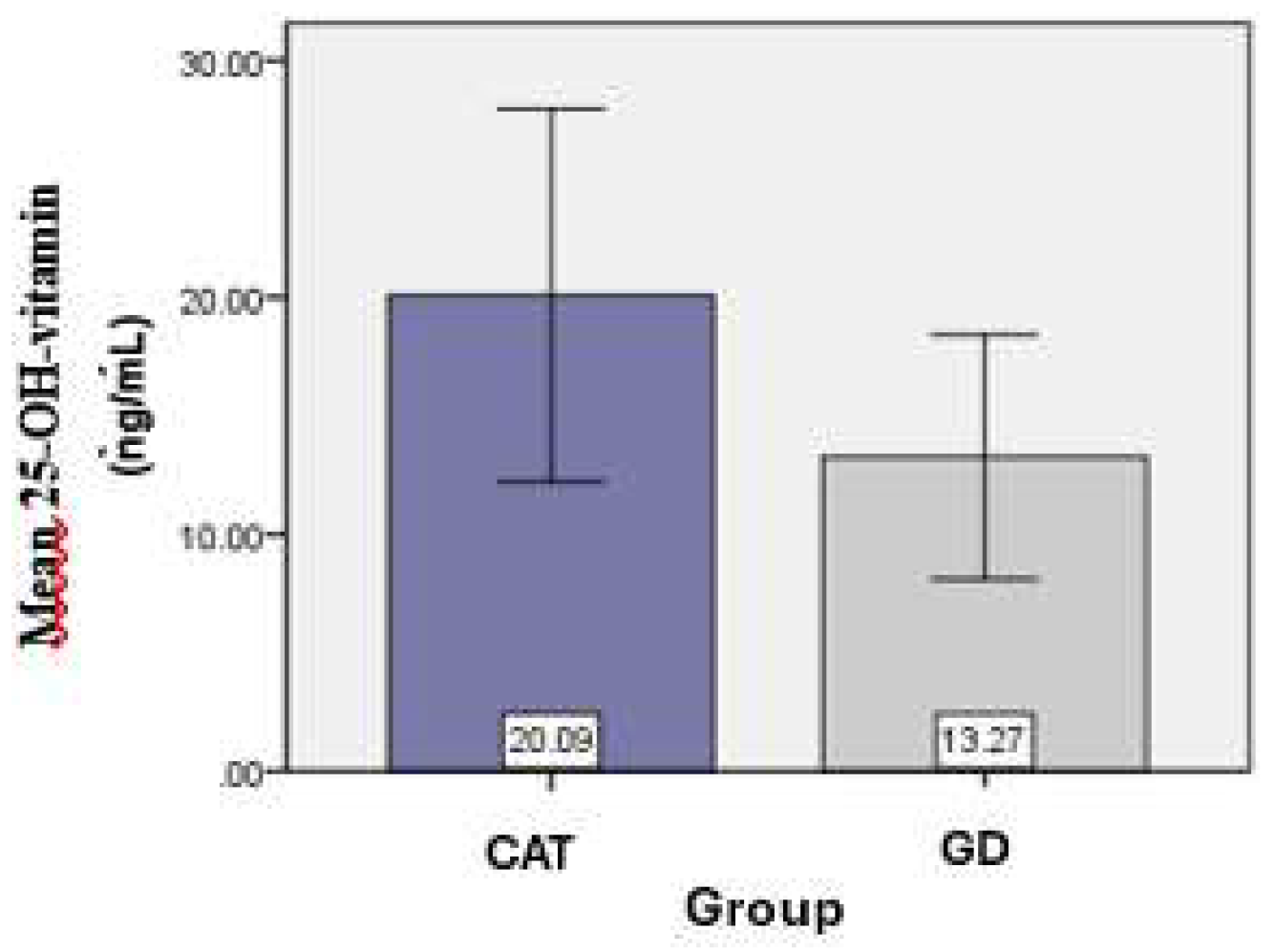
Vitamin D was valued as an essential element of the present study. The average value of 25-OH-vitamin D obtained for the CAT group (N = 62) was 20.09 ± 7.87 ng/ml and for the GD group (N = 18) the average value of 25-OH-vitamin D is 13.27 ± 5.16 ng /ml, finding statistically significant differences between the vitamin D values between the two groups (p = 0.018). (Table 1)
Figure 1.
- Graphic representation of the average values of vitamin D for the analyzed groups.
Based on the serum values of vitamin D obtained, they were divided into categories of severity both in the group of those with CAT and those with GD. (Table 2)
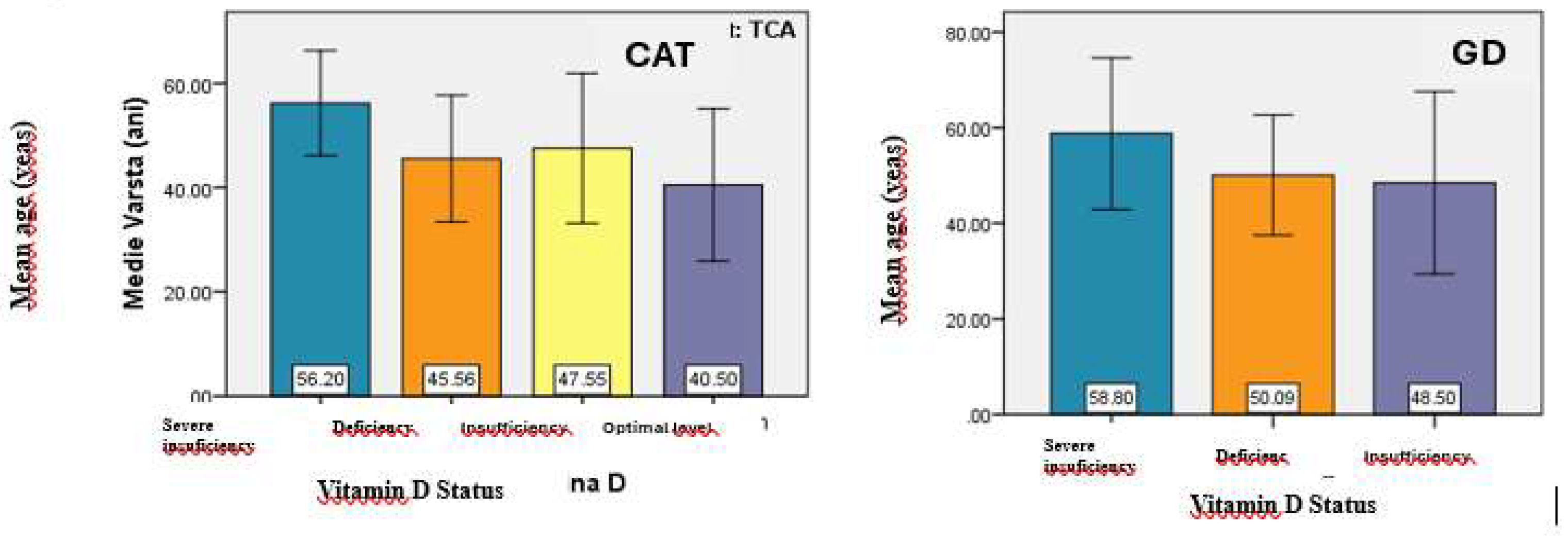
The analysis of the vitamin D status related to the age of the patients noted a slightly higher average value of the age of patients with hypovitaminosis D compared to the average value of the age corresponding to an optimal level both in patients with CAT and in those with GD.
There are significant differences between the average age values for at least two of the analyzed groups - corresponding to the average values for the groups severe deficiency and deficiency, severe deficiency and insufficiency, severe deficiency and optimal level (p < 0.05).
Figure 2.
and Figure 3 - Graphic representation of mean values of age for both study groups.
The analysis of the vitamin D status among the two groups studied in relation to sex indicated for the group of patients with TCA - a number of 54 patients had low vitamin D levels, of which 44 were female and 10 were male. For the group of patients with GD – all patients showed a low level of vitamin D, of which 17 were female and 1 male patient. (Table 3).
Although hypovitaminosis D is notable in female patients compared to male patients where vitamin D values were slightly higher, from a statistical point of view, there was no relationship of dependence between the two variables studied in the CAT group (p = 0.457) and the group with GD (p = 0.714), a fact explained in the second group, by an inequality of the group in terms of gender distribution.
Determination of the serum level of ATPO and ATG antibodies in relation to vitamin D status is an element of interest for patients with CAT and GD respectively.
For patients in the CAT group, the mean serum level of ATPO did not have significant differences (p = 0.931) in relation to vitamin D status, but it is noted that for patients with severe vitamin D deficiency, the minimum value is significantly higher but also a lower maximum level compared to the minimum and maximum values in the other subgroups: deficiency, insufficiency and optimal level. (Table 4).
Figure 5.
and 6 - Graphic representation of mean values of ATPO and ATG for CAT patients.
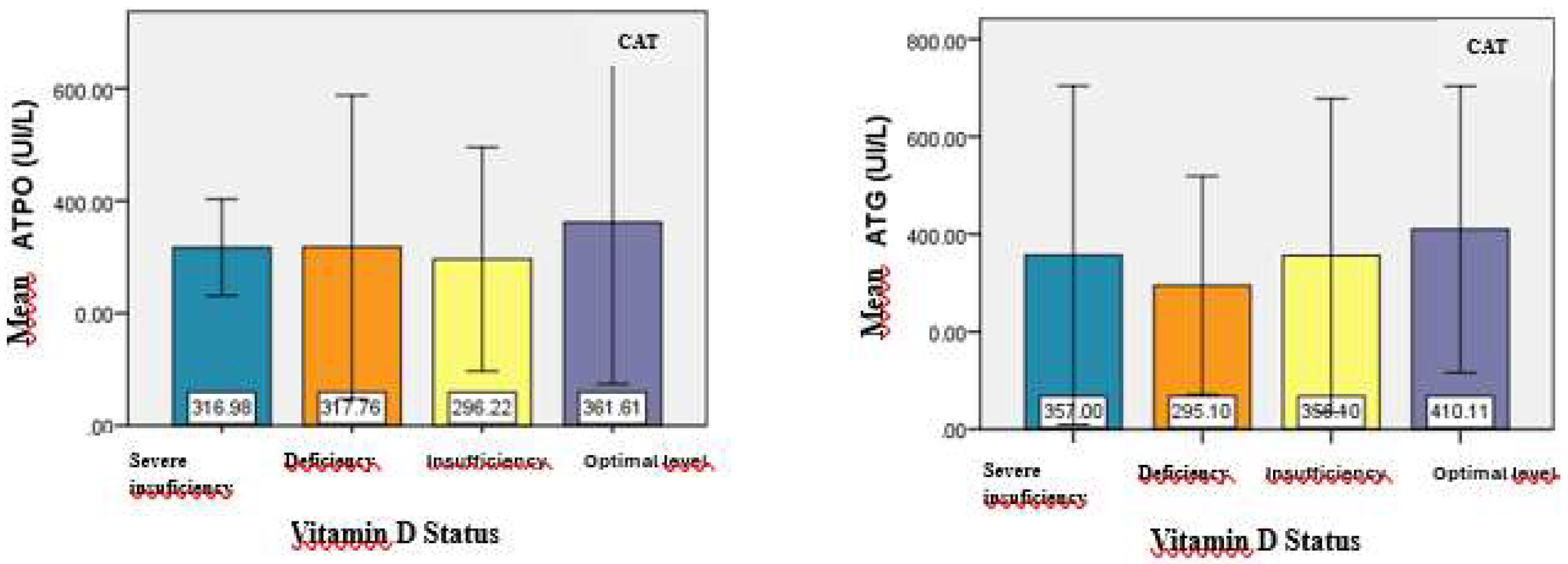
The determination of the relationship between ATG and vitamin D status indicates that there are no significant differences between the average values of ATG, similar to the average values of ATPO, although there is no statistically significant association between the type of antibodies present and the status of vitamin D (p = 0.718), the majority of patients with severe deficiency, deficiency and insufficiency, respectively, had both types of positive antibodies.

Table 5.
Establishing the type of antibodies present among CAT patients in relation to vitamin D status in the CAT group.
Table 5.
Establishing the type of antibodies present among CAT patients in relation to vitamin D status in the CAT group.
| ATPO/ATG/ATPO+ATG | Total | |||||
| ATPO+ | ATG+ | ATPO/ATG+ | ||||
| Vitamin D Status | Severe deficiency | Count | 2 | 0 | 3 | 5 |
| % of Total | 3.2% | 0.0% | 4.8% | 8.1% | ||
| Deficiency | Count | 5 | 3 | 19 | 27 | |
| % of Total | 8.1% | 4.8% | 30.6% | 43.5% | ||
| Insufficiency | Count | 8 | 2 | 12 | 22 | |
| % of Total | 12.9% | 3.2% | 19.4% | 35.5% | ||
| Optimal level | Count | 1 | 1 | 6 | 8 | |
| % of Total | 1.6% | 1.6% | 9.7% | 12.9% | ||
| Total | Count | 16 | 6 | 40 | 62 | |
| % of Total | 25.8% | 9.7% | 64.5% | 100.0% | ||
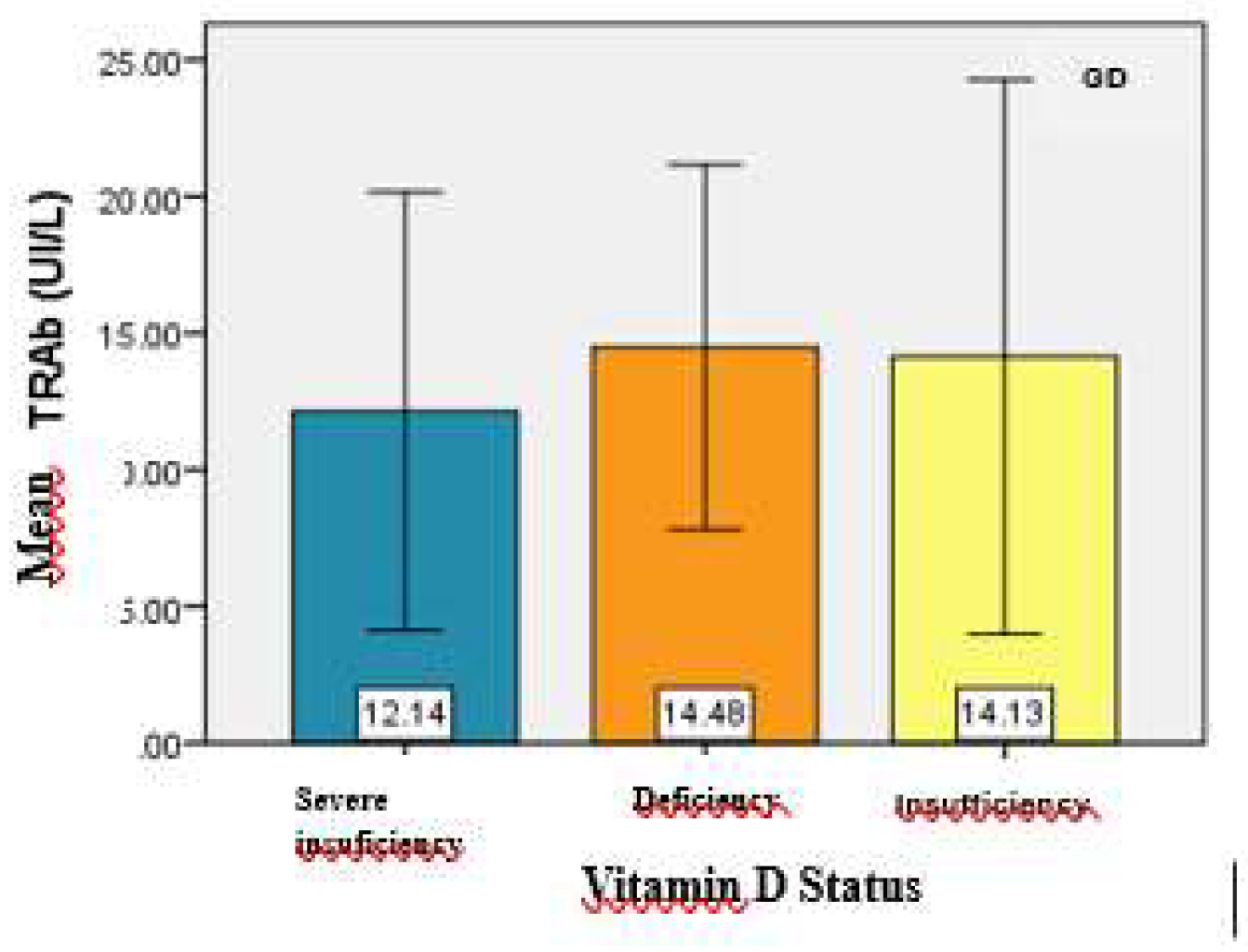
For the group with GD – TRAb is the marker of the condition and its average values were also analyzed for the existence of an association between the level of TRAB and vitamin D status in patients with GD, however, no statistically significant result was obtained between the two studied variables. (Figure no. 7)
Figure 7.
- Graphical representation of the mean values of TRAB for the analyzed groups.
The determination of the lymphocyte activating factor (BAFF) was performed with the aim of looking for the existence of associations between its serum level, variations of vitamin D deficiency and thyroid hormone variations and to understand if there is a possible involvement of BAFF in the amplification of the thyroid autoimmune process.
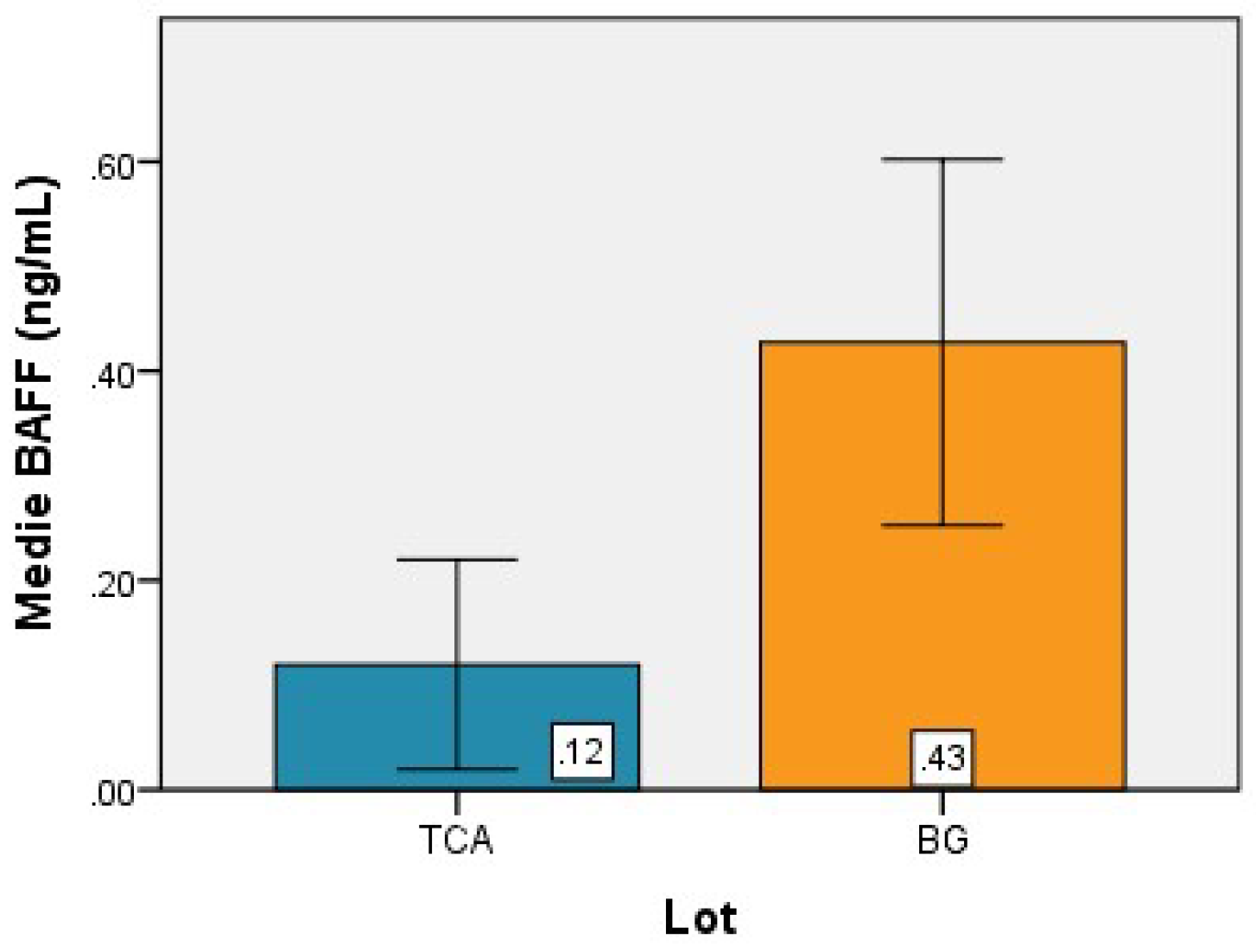
Determination of the serum level of BAFF (pg/ml) among patients with CAT and GD obtained an average value of BAFF for the CAT group is 0.12 ± 0.10ng/ml and for the BG group the average value of BAFF was 0.43 ± 0.17 pg/ml. (Table 6)
From a statistical point of view, it is found that there are significant differences between the average BAFF values of the TCA and GD groups (p < 0.001).
Figure 8.
Graphic representation of the average BAFF values for the analyzed groups.
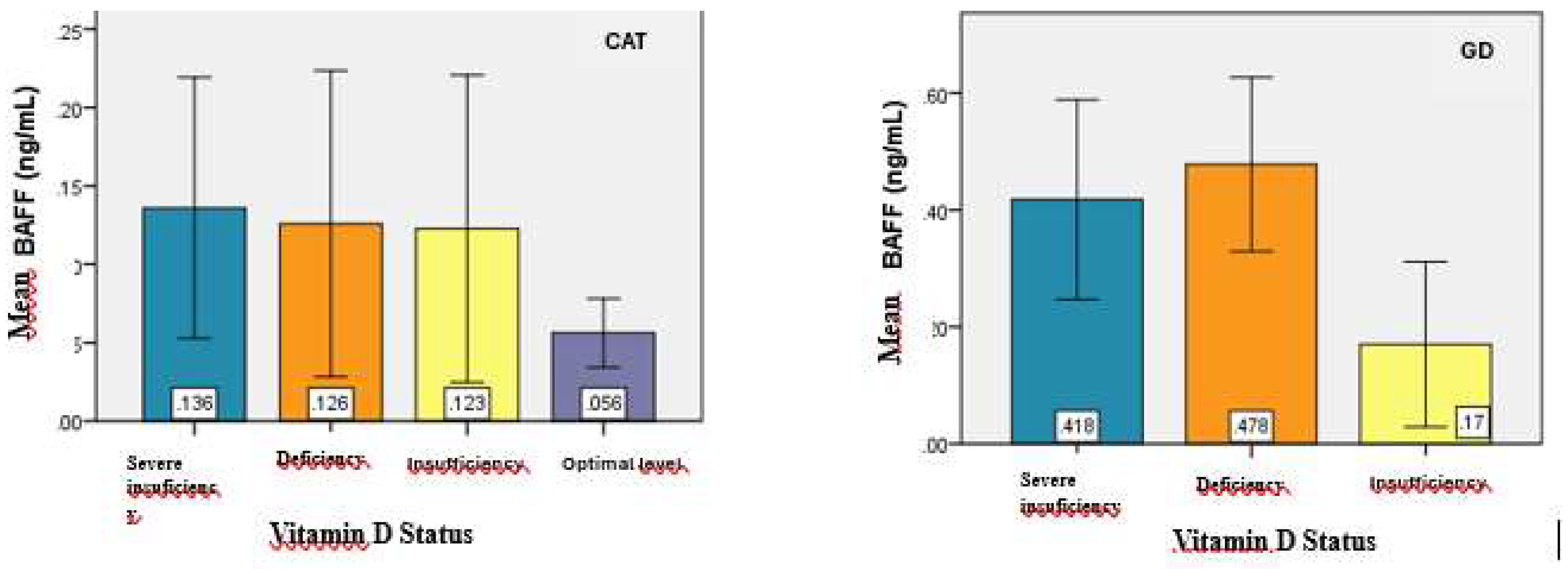
The analysis of the serum BAFF level among the two study groups CAT and GD compared to the serum level of vitamin D revealed slightly higher values of BAFF in patients with hypovitaminosis D than in patients with CAT and higher values of BAFF, proportional to the vitamin deficiency D, in patients with GD (Table 7)
The statistical analysis shows that there were significant differences (p = 0.031) between the average values of BAFF for at least two of the analyzed groups - between patients with severe deficiency and optimal level, deficiency and optimal level, insufficiency and optimal level (p < α = 0.05).
Figure 6.
and Figure 7 - Graphic representation of mean BAFF values for the study groups.
The study of BAFF serum level according to age among the studied patients indicates that the two variables are not correlated.
The evaluation of the BAFF serum level according to gender among the studied patients shows for CAT patients an average BAFF serum value recorded among the female sex of 0.11 ± 0.9 pg/ml and among the male sex the average BAFF value was 0.14 ± 0.12 pg/ml. In the group of patients with GD, the average serum value of BAFF recorded for the female sex was 0.42 ± 0.18 pg/ml and for the male sex the value was 0.56 pg/ml. (Table 8). Following the correlation test both in the CAT group (p = 0.246) and among the GD group (p = 0.929) to determine the existence of a correlation between the serum BAFF and ATPO level among the two study groups, it was proven that the two variables did not are correlated. (Table 9)
Regarding the determination of the existence of a correlation between the serum level of BAFF and ATG among the two study groups, following the correlation test in the group of patients with CAT the two variables are correlated (p = 0.038) For the group with GD, the two variables are not correlated (p = 0.204) (Table 10)
The determination of the BAFF serum level and the type of antibodies present among the two study groups described among the CAT group the minimum serum value of BAFF for patients with ATPO and ATG present was 0.01pg/ml and the maximum value was 0.30 ng/ml.Among the GD group, the minimum value of BAFF for patients with ATPO and ATG present was 0.07 ng/ml and the maximum serum value of BAFF was 0.59 ng/ml. The analysis of BAFF serum level in the group of patients with GD indicated an average value of 0.39±0.18 pg/ml for patients with ATPO, ATG and respectively TRAb - positive.For patients with positive ATG and TRAb, the average value of BAFF was 0.56 ± 0.02 pg/ml DS and for those with positive ATPO and TRAb, the average value was 0.42 pg/ml ± 0.2DS (Table 11)
4. Discussion
BAFF is a protein belonging to the TNF factor family [15], having an important role in regulating the recombination and selection of autoreactive B cells. The mechanism by which the level of BAFF is regulated is not fully specified, however, BAFF concentrations depend, in particular, on the number of B cells as well as on the expression of BAFF binding receptors [16]. These findings raise the question of a significant difference in the "intensity" of the autoimmune process in these diseases.
In this sense, the study analyzed the serum level of BAFF in patients with CAT and respectively GD as a result of the fact that BAFF acts as a stimulating factor of immunoglobulin production in autoimmune diseases.
The average BAFF value obtained indicated significant differences between the average BAFF values of the CAT and GD groups (p < 0.001), a fact reported in similar studies [17] These findings raise the issue of a significant difference in the "intensity" of the autoimmune process in these diseases.
It was aimed to determine the existence of a possible association between the serum level of 25-OH-vitamin D and the serum level of BAFF among the two groups studied, but despite the fact that the serum level of BAFF was significantly higher in patients with BG and hypovitaminosis D was more importantly, no statistically significant correlation was identified between BAFF serum level and vitamin D serum level across study groups.
The evaluation of the BAFF serum level as a function of age determined among the two study groups slightly higher values of BAFF in patients with GD and the fact that the BAFF level is directly proportional to the age of the patients in this category of patients [17].
The determination of the BAFF serum level according to gender among the studied patients identified that both in the CAT group and in the GD group, the average values were higher in male patients, although in the specialized literature, the BAFF value is higher in among women with autoimmune thyroid diseases, having as an explanation the fact that the level of estrogen can modulate the expression of BAFF, thus determining a higher incidence of autoimmune thyroid pathology in women [18].
The evolution of the BAFF serum level related to the serum level of the antithyroid antibodies ATPO and ATG was also followed. For patients with BG, BAFF was not correlated with the value of ATPO or ATG, but in the case of patients with CAT, a correlation was found between the value of BAFF and the level of ATG but not with the level of ATPO. In particular, for GD – the BAFF serum level was analyzed in relation to TRAb serum level, which were not correlated, however.
It should be mentioned that a possible explanation for the significantly increased BAFF values among patients with GD is that 55% of them also presented with ophthalmopathy. Data from the literature [19] indicate a significantly increased BAFF level among patients with GD associating eye damage [20].
5. Conclusions
The obtained results demonstrate the complexity of the autoimmunity activation process but also the individual variability of its expression.
The evaluation of the serum level of 25-OH-vitamin D as well as of BAFF can be useful in establishing the thyroid autoimmune status with diagnostic, functional, evolutionary and individual prognostic implications.
Extensive studies are needed to establish diagnostic criteria and therapeutic principles in patients with autoimmune thyroid disease.
At the same time, it is necessary to specify the role and therapeutic benefits of supplementing the intake of vitamin D in patients with autoimmune thyroid diseases.
Author Contributions
All authors have read and agreed to the published version of the manuscript.
Funding
This research received no external funding.
Institutional Review Board Statement
The study was conducted in accordance with the Declaration of Helsinki, and approved by the Institutional Ethics Committee of University Ovidius Constanta, Romania for studies involving humans (approval code: Romania 4155; approval date: 2021-03-26).
Informed Consent Statement
Informed consent was obtained from all subjects involved in the study.
Acknowledgments
The authors acknowledge the cooperation of all the participants in this study.
Conflicts of Interest
The authors declare no conflicts of interest.
Abbreviations
The following abbreviations are used in this manuscript:
| CAT | Chronic autoimmune thyroiditis |
| GD | Graves disease |
| BAFF | B-Cell activating factor |
| ATPO | Antithyroid- peroxidase |
| ATG | Antuthyroglobulin antibody |
| TRAb | TSH-R antibody |
References
- Prietl, Barbara, et al. "Vitamin D and immune function." Nutrients 5.7 (2013): 2502-2521. [CrossRef]
- Becker, Kevin G. "The common genetic hypothesis of autoimmune/inflammatory disease." Current opinion in allergy and clinical immunology 1.5 (2001): 399-405.
- Moroni, Luca, Ilaria Bianchi, and Ana Lleo. "Geoepidemiology, gender and autoimmune disease." Autoimmunity reviews 11.6-7 (2012): A386-A392. [CrossRef]
- Zittermann, Armin. "Vitamin D in preventive medicine: are we ignoring the evidence?." British Journal of Nutrition 89.5 (2003): 552-572. [CrossRef]
- Cantorna, Margherita T., et al. "Vitamin D status, 1, 25-dihydroxyvitamin D3, and the immune system." The American journal of clinical nutrition 80.6 (2004): 1717S-1720S.
- Zold, Eva, et al. "Vitamin D deficiency in undifferentiated connective tissue disease." Arthritis research & therapy 10.5 (2008): R123. [CrossRef]
- Koehler, Viktoria F., Natalie Filmann, and W. Alexander Mann. "Vitamin D status and thyroid autoantibodies in autoimmune thyroiditis." Hormone and Metabolic Research 51.12 (2019): 792-797. [CrossRef]
- Moisini, I., & Davidson, A. (2009). BAFF: a local and systemic target in autoimmune diseases. Clinical & Experimental Immunology, 158(2), 155-163. [CrossRef]
- Vannucchi, Guia, et al. "Serum BAFF concentrations in patients with Graves' disease and orbitopathy before and after immunosuppressive therapy." The Journal of Clinical Endocrinology 97.5 (2012): E755-E759. [CrossRef]
- Lied, G. A., and A. Berstad. "Functional and clinical aspects of the B-cell-activating factor (BAFF): a narrative review." Scandinavian journal of immunology 73.1 (2011): 1-7.
- Lin, Jiunn-Diann, et al. "Analysis of associations of human BAFF gene polymorphisms with autoimmune thyroid diseases." PLoS One 11.5 (2016): e0154436. [CrossRef]
- Vannucchi, Guia, et al. "Serum BAFF concentrations in patients with Graves' disease and orbitopathy before and after immunosuppressive therapy." The Journal of Clinical Endocrinology 97.5 (2012): E755-E759. [CrossRef]
- Cheng, C. W., Wu, C. Z., Tang, K. T., Fang, W. F., & Lin, J. D. (2020). Simultaneous measurement of twenty-nine circulating cytokines and growth factors in female patients with overt autoimmune thyroid diseases. Autoimmunity, 53(5), 261-269. [CrossRef]
- Yamashita, Hiroyuki, et al. "High prevalence of vitamin D deficiency in Japanese female patients with Graves' disease." Endocrine journal 48.1 (2001): 63-69. [CrossRef]
- Mackay, Fabienne, and Pascal Schneider. "Cracking the BAFF code." Nature reviews immunology 9.7 (2009): 491-502.
- Cheema, Gurtej S., et al. "Elevated serum B lymphocyte stimulator levels in patients with systemic immune–based rheumatic diseases." Arthritis & Rheumatism: Official Journal of the American College of Rheumatology 44.6 (2001): 1313-1319.
- Jin R, Kaneko H, Suzuki H, Arai T, Teramoto T, Fukao T, Kondo N. Age-related changes in BAFF and APRIL profiles and upregulation of BAFF and APRIL expression in patients with primary antibody deficiency. Int J Mol Med. 2008 Feb;21(2):233-8. PMID: 18204790. [CrossRef]
- Cheng, Chao-Wen, et al. "Possible interplay between estrogen and the BAFF may modify thyroid activity in Graves’ disease." Scientific Reports 11.1 (2021): 21350. [CrossRef]
- Kreuzaler, Matthias, et al. "Soluble BAFF levels inversely correlate with peripheral B cell numbers and the expression of BAFF receptors." The Journal of Immunology 188.1 (2012): 497-503. [CrossRef]
- Vannucchi, Guia, et al. "Serum BAFF concentrations in patients with Graves' disease and orbitopathy before and after immunosuppressive therapy." The Journal of Clinical Endocrinology 97.5 (2012): E755-E759. [CrossRef]
- Fabris, M., et al. "BLyS and April serum levels in patients with autoimmune thyroid diseases." Autoimmunity reviews 9.3 (2010): 165-169. [CrossRef]
Table 1.
- Determination of the main statistical indicators of the serum level of vitamin D, comparatively, among the two study groups.
Table 1.
- Determination of the main statistical indicators of the serum level of vitamin D, comparatively, among the two study groups.
| 25-(OH)-Vitamin D (ng/mL) | |||
| Lot | |||
| TCA | BG | ||
| N | Valid | 62 | 18 |
| Mean | 20.09 | 13.27 | |
| Median | 19.10 | 11.65 | |
| Mode | 16.00 | 11.00 | |
| Std. Deviation | 7.87 | 5.16 | |
| Minimum | 7.00 | 7.00 | |
| Maximum | 39.00 | 28.00 | |
| Percentiles | 25 | 14.75 | 9.93 |
| 50 | 19.10 | 11.65 | |
| 75 | 25.00 | 16.25 | |
Table 2.
Distribution of patients from both study groups depending on the vitamin D status.
| Vitamin D Status | Total | ||||||
| Severe Deficiency | Deficiency | Insufficiency | Optimal Level | ||||
| Lot | CAT | Count | 5 | 27 | 22 | 8 | 62 |
| % of Total | 6.3% | 33.8% | 27.5% | 10.0% | 77.5% | ||
| GD | Count | 5 | 11 | 2 | 0 | 18 | |
| % of Total | 6.3% | 13.8% | 2.5% | 0.0% | 22.5% | ||
| Total | Count | 10 | 38 | 24 | 8 | 80 | |
| % of Total | 12.5% | 47.5% | 30.0% | 10.0% | 100.0% | ||
Table 3.
Gender distribution of vitamin D status among CAT and GD groups.
| Gender | Total | ||||
| F | M | ||||
|
Vitamin D Status CAT |
Severe deficiency | Count | 5 | 0 | 5 |
| % of Total | 8.1% | 0.0% | 8.1% | ||
| Deficiency | Count | 23 | 4 | 27 | |
| % of Total | 37.1% | 6.5% | 43.5% | ||
| Insufficiency | Count | 16 | 6 | 22 | |
| % of Total | 25.8% | 9.7% | 35.5% | ||
| Optimal level | Count | 6 | 2 | 8 | |
| % of Total | 9.7% | 3.2% | 12.9% | ||
| Total | Count | 50 | 12 | 62 | |
| % of Total | 80.6% | 19.4% | 100.0% | ||
|
Vitamin D Status GD |
Severe deficiency | Count | 5 | 0 | 5 |
| % of Total | 27.8% | 0.0% | 27.8% | ||
| Deficiency | Count | 10 | 1 | 11 | |
| % of Total | 55.6% | 5.6% | 61.1% | ||
| Insufficiency | Count | 2 | 0 | 2 | |
| % of Total | 11.1% | 0.0% | 11.1% | ||
| Total | Count | 17 | 1 | 18 | |
| % of Total | 94.4% | 5.6% | 100.0% | ||
Table 4.
Establishing the main statistical indices for ATPO and ATG values related to vitamin D status in the CAT group.
Table 4.
Establishing the main statistical indices for ATPO and ATG values related to vitamin D status in the CAT group.
| ATPO (UI/mL) | |||||
| N | Mean | Standard deviation | Minimum | Maximum | |
| Severe deficiency | 5 | 316.98 | 85.86 | 229.00 | 410.00 |
| Deficiency | 27 | 317.76 | 270.02 | 11.00 | 850.00 |
| Insufficiency | 22 | 296.22 | 198.98 | 15.00 | 600.00 |
| Optimal level | 8 | 361.61 | 287.53 | 23.00 | 875.00 |
| ATG (UI/mL) | |||||
| N | Mean | Standard deviation | Minimum | Maximum | |
| Severe deficiency | 5 | 357.00 | 347.30 | 20.00 | 790.00 |
| Deficiency | 27 | 295.10 | 224.37 | 17.00 | 898.00 |
| Insufficiency | 22 | 356.10 | 321.80 | 15.00 | 890.00 |
| Optimal level | 8 | 410.11 | 293.93 | 23.00 | 879.00 |
Table 6.
- Determination of the main statistical indicators of BAFF among the two studied groups.
| BAFF (pg/mL) | |||
| Group | |||
| CAT | GD | ||
| N | Valid | 62 | 18 |
| Mean | .12 | .43 | |
| Median | .09 | .49 | |
| Mode | .04 | .56 | |
| Std. Deviation | .09 | .17 | |
| Minimum | .01 | .07 | |
| Maximum | .40 | .59 | |
| Percentiles | 25 | .05 | .34 |
| 50 | .09 | .49 | |
| 75 | .15 | .56 | |
Table 7.
- Determination of BAFF serum level (ng/ml) among studied patients according to vitamin D status.
Table 7.
- Determination of BAFF serum level (ng/ml) among studied patients according to vitamin D status.
| BAFF (pg/mL) | ||||||
| Group | N | Mean | Standard deviation | Minimum | Maximum | |
| TCA | Severe deficiency | 5 | .14 | .08 | .04 | .20 |
| Deficiency | 27 | .13 | .10 | .02 | .40 | |
| Insufficiency | 22 | .12 | .10 | .01 | .40 | |
| Optimal level | 8 | .06 | .02 | .03 | .10 | |
| BG | Severe deficiency | 5 | .42 | .17 | .12 | .55 |
| Deficiency | 11 | .48 | .15 | .09 | .59 | |
| Insufficiency | 2 | .17 | .14 | .07 | .27 | |
Table 8.
Correlation according to age and BAFF serum level obtained -within the two groups.
| Groups | Age (years) | ||
| CAT | BAFF (pg/mL) | Pearson Correlation | .214 |
| Sig. (2-tailed) | .094 | ||
| N | 62 | ||
| GD | BAFF (pg/mL) | Pearson Correlation | .059 |
| Sig. (2-tailed) | .816 | ||
| N | 18 | ||
Table 9.
Correlations between BAFF and ATPO level among the two study groups.
| Group | ATPO (UI/mL) | |||
| CAT | BAFF (pg/mL) | Pearson Correlation | -.150 | |
| Sig. (2-tailed) | .246 | |||
| N | 62 | |||
| GD | BAFF (pg/mL) | Pearson Correlation | .023 | |
| Sig. (2-tailed) | .929 | |||
| N | 18 | |||
Table 10.
- Correlation between BAFF and ATG level among the two study groups.
| Group | ATG (UI/mL) | ||
| CAT | BAFF (pg/mL) | Pearson Correlation | -.264* |
| Sig. (2-tailed) | .038 | ||
| N | 62 | ||
| GD | BAFF (pg/mL) | Pearson Correlation | .314 |
| Sig. (2-tailed) | .204 | ||
| N | 18 | ||
Table 11.
Distribution of patients with GD according to the type of antibodies and BAFF level.
| ATPO/ATG/ATPO+ATG | N | Minimum | Maximum | Mean | Standard deviation | |
| ATPO+ | BAFF (pg/mL) | 4 | .12 | .54 | .42 | .20 |
| ATG+ | BAFF (pg/mL) | 3 | .55 | .58 | .56 | .02 |
| ATPO/ATG+ | BAFF (pg/mL) | 11 | .07 | .59 | .39 | .18 |
Disclaimer/Publisher’s Note: The statements, opinions and data contained in all publications are solely those of the individual author(s) and contributor(s) and not of MDPI and/or the editor(s). MDPI and/or the editor(s) disclaim responsibility for any injury to people or property resulting from any ideas, methods, instructions or products referred to in the content. |
© 2025 by the authors. Licensee MDPI, Basel, Switzerland. This article is an open access article distributed under the terms and conditions of the Creative Commons Attribution (CC BY) license (http://creativecommons.org/licenses/by/4.0/).
Copyright: This open access article is published under a Creative Commons CC BY 4.0 license, which permit the free download, distribution, and reuse, provided that the author and preprint are cited in any reuse.


