

Submitted:
28 March 2025
Posted:
28 March 2025
You are already at the latest version
Abstract
Lagochilascariasis is a neglected zoonotic helminthiasis caused by Lagochilascaris minor with a complex and not well understood cycle of transmission. This parasitic disease, endemic to Latin America (especially Brazil), is linked to rural and forested areas, where humans may serve as accidental hosts. The southeastern region of the state of Pará has the highest number of cases, which gives greater epidemiological relevance to the state. Wildlife species, especially carnivores and rodents, are considered to be important as definitive and intermediate hosts, respectively. Although lagochilascariasis can have severe clinical manifestations, including those associated with chronic soft tissue infections and possible involvement of the central nervous system, lagochilascariasis is probably underdiagnosed when our estimation makes it difficult to distinguish from manifestations of fungal and bacterial diseases. Anthropization of the Amazon Biome, both by deforestation and habitat fragmentation, and intensification of human-wildlife interaction, may be modulating the epidemiology of this parasitosis. This review seeks to summarize the present understanding of L. minor transmission routes, the contribution of wildlife to the maintenance of its cycle and how environmental alterations affect the patterns of disease. Such insights are key for One Health strategies, which merge human, animal, and environmental health approaches to reduce the burden of disease.
Keywords:
One Health
; Wildlife reservoirs
; Helminthiasis
; Zoonotic transmission
1. Introduction
Lagochilascariasis is an emerging zoonotic disease caused by the parasitic nematode Lagochilascaris minor. It remains a concern for health authorities worldwide, especially in tropical areas. Lagochilascariasis is under-diagnosed due to symptoms overlapping with other diseases [1].Order of carnivores and rodents is an important aspect of the life cycle of the parasite and the consequences of anthropization. This emphasizes the need for research covering disease specific e pyemiological features, which are pivotal for identifying and their distribution and frequency in various habitats [2]. Clarifying the details of the various phases within this life cycle will provide insight into the transmissibility dynamics within impacted populations. Having a clear understanding on how these factors differ across demographics is crucial to promote identification and management of the disease as early as possible [3].
The other important issue is the difficulties of diagnosis experienced to detect Lagochilascariasis. Thinking about the current state of diagnostic technologies and methodologies will help us to enhance our detection and treatment of this disease. As technological capabilities continue to grow, their integration into public health systems is essential for robust management of infectious diseases. Such high levels of interaction between humans and wildlife, particularly in biodiversity-rich regions like the Amazon, pose a considerable risk of zoonotic disease transmission. This makes it clear just how crucial an integrated approach is to understanding the ways that environmental change affects disease cycles [4].
Lagochilascariasis is a condition in which health inequalities need to be explored at the socio-economic level. Socio-economic status affects health outcomes and has a significant impact on the treatment and care received, acting as a barrier. This indicates the importance of complete interventions covering these socioeconomic determinants to achieve effective disease management. Public health implications: relevant policies can guide resource allocation towards effective management and preventive strategies as well as the effectiveness of current treatment modalities, including antiparasitic medications and surgical approaches in severe cases. The One Health approach to Lagochilascariasis will ensure that it is understood by people from diverse fields, and will foster communication and collaboration between disciplines in order to better address the multiple facets of Lagochilascariasis affecting humans, animals and the environment [5].
Finally, the review will identify the existing gaps in the research on Lagochilascariasis. Recognising these gaps is crucial for informing future research that has the potential to advance our understanding and stimulate novel strategies to prevent and manage disease. Finally, these policies will be informed by regional insights and practical case studies on the socio-epidemiological consequences that Lagochilascariasis has on local populations [6]. Hence this study is a descriptive research work following the narrative review of literature that provides platform for in-depth understanding of Lagochilascariasis elaborating its overview of lagochilascariasis; epidemiology of lagochilascariasis; role of wildlife in disease transmission; impact of anthropization on disease dynamics; public health implications; diagnostic challenges; educational strategies for public awareness; and research gaps and future directions.
2. Materials and Methods
This study is a descriptive research project with a narrative literature review, ac-cording to the definition given by Grant and Booth [7]. Because this topic is of a large scale and considering the existing knowledge regarding Lagochilascariasis diseases in Ama-zon Biome and its integration to the One Health, we opted for this style of review. To guarantee methodological rigor, the search strategy applied using several electronic da-tabases, such as Periódicos Capes, PubMed, Scopus, ResearchGate, Scielo, Google Scholar and Academia. edu, BDTD, Redalyc, Science. gov; ERIC; ScienceDirect; SiBi; World Wide Science; PePSIC; and Scholarpedia. The search terms used—see independently or com-bined—were lagochilascariasis, neglected zoonosis, Brazilian Amazon Biome, epidemi-ology, anthropization, one health, wildlife reservoirs, helminthiasis, zoonotic transmis-sion. Inclusion criteria for selecting publications are: articles published in peer-reviewed journals or established and credible scientific sources good addressing the defined search terms; articles with relevant data or knowledge concerning wild animals in the Amazon Biome and/or connections to One Health or zoonotic disease transmission. Exclusion cri-teria included articles not directly related to the Amazon Biome, and/or studies with lim-ited attention to parasitic diseases in wildlife. An evaluation of the included publications for their methodological rigor, sample sizes, and relevance to the scope of the review was performed in order to determine the quality of the sources. Seventy-five unique publications were identified, with an overlap rate of 95% across the consulted databases. All identified publications were included in the present review as there were few references available regarding this topic. This transparent methodology facilitates reproducibility of this re-view and ensures that its findings are a robust synthesis of the extant literature on this important topic
3. Review
3.1. Overview of Lagochilascariasis
Lagochilascariasis is a type of parasitic disease with the nematode Lagochilascaris minor (Figure 1) as its causative agent and has received rising attention for its interactions with wildlife and humans in diverse environments, especially in tropical areas [8]. Given the role of wildlife in the epidemiological trends of Lagochilascariasis, it becomes crucial to comprehend how environmental changes, human behavior and socioeconomic variables are interrelated in the transmission patterns of this disease [6]. Reports state the anthropization of the Amazon Biome, through deforestation, habitat fragmentation, and increased human-wildlife interaction, may be changing the epidemiology of this parasitosis. This observation highlights the need for public health policies to keep up with the changing paradigm of disease transmission as human activities increase in biodiverse regions [9–12].
According to these factors, such as temperature and humidity, environmental components play a vital role in determining the life cycle and transmission dynamics of Lagochilascaris minor. For example, humidity affects egg viability, while temperature influences rates of larval development. These factors play a crucial role in determining how well the parasite can transfer between both its definitive and intermediate hosts. The role of these environmental parameters in the transmission dynamics of these diseases can inform public health interventions, especially considering regions subject to climatic variation. As mentioned earlier, environmental factors significantly play a role in shaping the dynamic of zoonotic disease transmission, particularly regarding land use, water quality, and wildlife interaction. Approaches to reduce these changes need to align with local environmental conditions to be efficacious [13–15].
Diseases clinical evidence of Lagochilascariasis is different, often vary in various demographics and geographic areas [9,11,13]. Infection may cause serious health complications, although it can affect the respiratory system, and different clinical manifestations could depend on host factors like the age and immune response. Symptoms can many times overlap with those of other diseases, making timely diagnosis difficult [16,17]. With the emergence of molecular diagnostics, it seems that we may see increased rates of Lagochilascariasis detection, particularly in underdiagnosed areas. This is critical to preventing outbreaks from spiraling out of control and threatening already vulnerable populations [18,19].
The social economic conditions of individuals suffering from lagochilascariasis affect their overall healthcare access and treatment results. Barriers to receiving adequate medical care for low socioeconomic groups can worsen the severity of disease and transmission [20,21]. Current research highlights improved socio-economic conditions are so important for effective management of Lagochilascariasis because the extreme relationship between socio-economic status and health implies that this is a determinant of health and reinforces the need for integrated public health. This is important for the effective management of disease through comprehensive policies addressing the determinants of health and equitable access to care. Because of this, a One Health approach that brings together human health, animal health, and environmental health in one conversation can aid in the more comprehensive understanding of Lagochilascariasis management [22,23]. This framework, by promoting interdisciplinary collaboration, has the potential to enhance surveillance, prevention, and eventually, health outcomes. This integration is especially beneficial in the comprehensive analysis of ecological aspects contributing to the transmission of Lagochilascaris minor and in working out integrated actions [20–23].
Despite the recognition of Lagochilascariasis, there are gaps in current knowledge which impede the development of effective disease management and intervention strategies. Recognizing these gaps is key to guiding new research that will broaden the evidence base and develop new approaches. Such research must also aim to understand the impact of climate change on Lagochilascariasis, which might include the shifting of ecological boundaries and increased wildlife reservoir and human population contact [24,25]. Therefore, timeliness lagging more than areas of inquiry will need to be crucial for investigations in developing, effective intervention able to coping with the evolving landscape of disease transmission. This needs to spread enlightenment of optimized policies of public health to improve resource allocation and preventive intervention of Lagochilascariasis [26]. This knowledge allows policy-makers to develop specific strategies that are more likely to lead to successful results based on the complex interactions between epidemiology, socio-economics, and environmental factors [24–26].
3.2. Epidemiology of Lagochilascariasis
Knowledge of this neglected zoonotic disease’s epidemiology and transmission dynamics is critical to the design of appropriate public health interventions. Based on global prevalence data, we have observed that Lagochilascariasis is endemic in certain parts of South America, especially within the Amazon region, where ecological conditions facilitate its spread (Figure 2). The disease seems to be underreported, in part because its clinical picture overlaps with other infectious diseases, making diagnosis and management challenging and requiring an emphasis on strengthening regional health infrastructures [27–29].
Temperature and humidity are the main environmental factors that determine the epidemiological profile of Lagochilascariasis. The survival and development of Lagochilascaris minor eggs in the environment are highly dependent on high humidity levels, while the temperature influences larval development rate. As a result, areas with drastic shifting in the climate will likely experience changes in transmission patterns. As such, research has further highlighted environmental determinants of zoonotic disease transmission dynamics, so that local climatic realities must be incorporated into the disease spread control measures [29–31].
Lagochilascariasis epidemiology is also deeply shaped by human-wildlife interactions. In many ecosystems, but especially in biodiverse ecosystems, such as the Amazon, wildlife reserve high numbers of the parasite making the zoonotic spillover risk to humans much higher. With habitat loss from increasing humans encroachment into wildlife habitats, the increasing human–wildlife interaction may lead to more opportunities for human contact with infected wild animals. The study's importance lies in that wild canids are reservoirs for zoonotic helminths and, therefore, can play an important role in the transmission of disease to humans [29]. This underscores the importance of combining wildlife management and public health strategies to reduce threats arising from such interactions [27–31].
Lagochilascariasis transmission dynamics are both impacted by land use changes in the form of deforestation and urban expansion. Firstly, these anthropogenic actions significantly alter or destroy traditional habitats leading to the alteration of parasite distribution patterns and the creation of settings that may be more favorable to the parasite. The changes in habitat result in changing wildlife populations, which could lead to increased disease spillover. The effects of these changes are felt most acutely in areas where agricultural development has densified human populations near animal reservoirs. The link between environmental degradation and zoonotic disease emergence highlights the significance of sustainable land use practices [32–34].
The socio-economic conditions of the population in these areas play an important role in both the incidence and management of Lagochilascariasis. This is further compounded by the lack of availability of healthcare services and preventative measures in low-income communities, contributing to an increased disease burden in these populations. Improving health outcomes is thought to stem from improved socio-economic conditions. It has been claimed that enhanced socio-economic conditions are vital for better control of Lagochilascariasis. It follows therefore, that exhaustive public health strategies should also target the underlying socio-economic determinants to efficiently comply with the disease [35,36].
New human encroachment leading to emergence of Lagochilascariasis hotspots might result new epidemiological patterns [36]. As more people move into urban settings and others expand their range into new, previously nonurban areas, the opportunities for transmission of zoonotic disease increase. In such areas, effective monitoring and intervention strategies are needed to avert the outbreaks. Also, different diagnostic capabilities in various geographical areas greatly affect the surveillance and treatment of Lagochilascariasis. Access to sophisticated diagnostic techniques still remains limited in many endemic areas, making the diagnosis and management of the disease more difficult [37].
In response to the multifactorial threat of Lagochilascariasis, we need context-specific, evidence-based preventive tools to address the diverse epidemiological context of the affected areas. A One Health approach that takes into account the interaction between animal health, human health and environmental factors can help structure more efficient prevention measures. This is due to the fact that, as highlighted, a One Health perspective that incorporates the health of animals, humans, and the environment, is needed to establish efficient preventive measures examining Lagochilascariasis through this holistic lens can integrate efforts to mitigate its public health impact [5,28,35].
3.3. Role of Wildlife in Disease Transmission
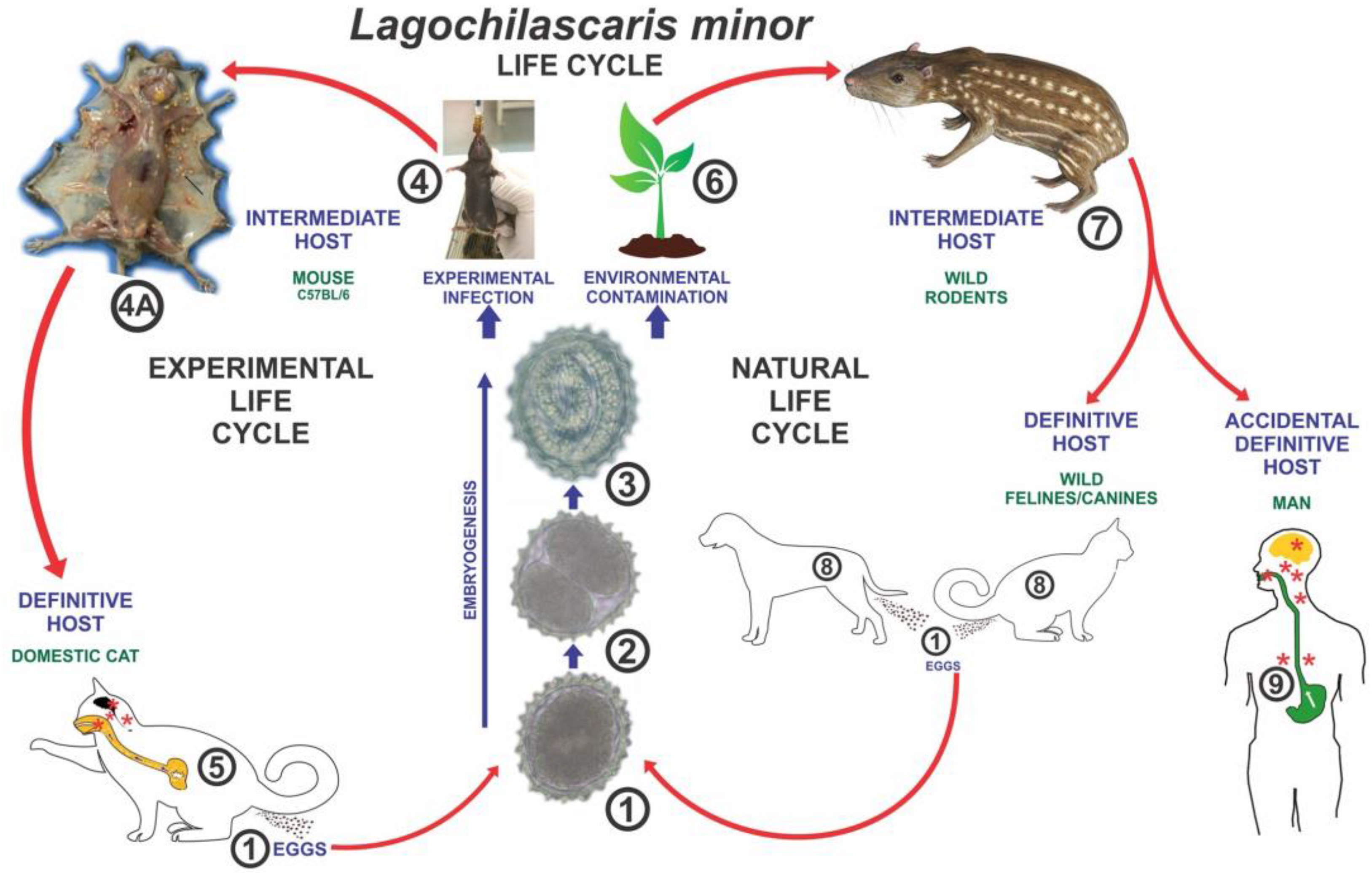
Lagochilascariasis the disease associated with the infection of the nematode Lagochilascaris minor has its transmission dynamic affected by wildlife, as do Healer zoonoses. Knowing how wildlife, especially carnivores and rodents, can be a reservoir of this parasitic infection is important for designing effective public health interventions. The life cycle of Lagochilascaris minor involves vectors such as carnivores (e.g., wild canids) and small mammals, which are key players in the transmission of the parasite between environment and human populations (Figure 3) [31].
A number of species have been recognized as important reservoirs for Lagochilascaris minor, with primary hosts consisting mainly of foxes, domestic dogs, and a variety of small rodents. They have a great impact based on their behaviours, like their foraging and defecation behaviours, on the levels of infection on humans. These animals, for example, tend to reside near human habitation, which increases the chances of human-wildlife encounters that facilitate transmission. Hence, the niche and behavioral aspects of this wildlife species are crucial to understand for disease transmission pathways and control options [9,29,32,33,38].
The broader context is that as people spread out into natural habitats, fragmentation occurs, creating an unbalanced ecosystem and more opportunities for wildlife reservoirs interacting with communities. This disturbance enables the spread of Lagochilascariasis, as both wild and domestic animal species are forced to scavenge for new habitats and resources; their increased proximity to humans leads to more frequent transmissions. Habitat fragmentation not only increases zoonotic transmission, but can also alter wildlife population dynamics, including prevalence among animals and interaction with humans [5,29,30,36,40]
Climate change and deforestation result in environmental alteration, which also aggravates the epidemiology of Lagochilascariasis. These changes can alter the habitats of both wildlife and the parasite in ways that affect their survival and reproduction. Similarly higher temperatures may increase larval development rates of Lagochilascaris minor and extend the geographical range of this parasite, thus putting new human populations at risk of infection. It highlights the need to consider such environmental dynamics when assessing risk factors for zoonotic diseases in terms of changing climatic conditions and rising human pressures [5,29,30,36,40].
Wildlife management strategies impact human incident rates of Lagochilascariasis. This can include initiatives such as policies that promote biodiversity conservation, which can help to reduce risks associated with human-wildlife interactions. Additionally, protected areas that have been designated to preserve wildlife habitats might also function as buffers that limit the transmission of disease by keeping wildlife populations healthy and preventing overpopulation of animals in the boundaries where humans live. Conversely, poor management practices, such as unregulated hunting or habitat destruction, can increase the spread of disease and increase the risk of zoonotic infection [41–43].
Human-wildlife interactions determining the transmission of Lagochilascariasis are additionally shaped by socio-economic factors. People from lower socio-economic backgrounds generally live in areas with higher degrees of wildlife interaction, and simply may not have the ability to adopt measures to prevent zoonotic transmission. The association between socio-economic conditions and the prevalence of parasitic zoonoses highlights the critical need for integrative public health strategies focused on education and sanitation improvement. Combating these secular econ constructs is critical in creating holistic plans going past disease spread and empowering communities to control their health hazards [44–47].
Although there is much more related to how it works, from the One Health perspective (the integrative effort of multiple disciplines working locally, nationally, and globally to attain optimum health for people, animals and our environment); this perspective offers a unified research framework, encompassing Lagochilascariasis’ transmission routes . This integrative approach encourages interdisciplinary collaboration to monitor and manage zoonoses in an effective manner. The importance of a One Health perspective is only reinforced through the statement that the One Health approach highlights the interconnectedness of environmental, animal and human health, emphasising the necessity of having strategies in place that are specifically designed to reduce zoonotic disease transmission. This method will allow public health to respond more holistically to the complexities of zoonotic illnesses that originate from wildlife [48–50].
3.4. Impact of Anthropization on Disease Dynamics
The dikaryphic-antropization, anthropization being defined as all the changes made to the environment as urbanization, deforestation, and habitat fragmentation have been shown to affect not only human health but also those of wildlife and those in an environment have been shown to interact and transmission in both directions. As ecosystems continue to change, it becomes increasingly important to understand how these dynamics affect the epidemiology of Lagochilascaris minor [36,40,43].
Certain environmental alterations driven by anthropization also have considerable impact on the life cycle and transmission routes of Lagochilascaris minor. Increasing urbanisation and agricultural practices will create suitable conditions for the parasite to persist. An example of how this theory could work in practice is through expanded disturbance of the ecosystem which allows for a greater production of intermediate hosts (rodents) that play an integral role in the life cycle of the parasite. In addition, land use plays a determinant catalytic role in the change in the local climate conditions (i.e., temperature and humidity) which can turn the eggs and larvae in the factor of non-existence. Different environmental factors have a major role in influencing the transmission dynamics of zoonotic disease especially land use practices,water quality, wildlife interaction .This direct effect of human induced factors points to the importance of sustainable land-use practices that could help bolster the risks of zoonotic diseases [51–53].
This accumulation of human-wildlife interactions, driven by land use changes, facilitates the emergence of Lagochilascariasis in different geographical locations. As urban space invades wildlife environments, the contacts between humans and wildlife reservoirs become more frequent and the source of the emergence of common zoonoses in the new territories. Those dynamics increase the possibility of outbreaks, particularly in regions with underdeveloped health infrastructure or insufficient preparedness for such challenges. Therefore, the consequences are not just limited to health risks; Urbanization-related socio-economic factors like poverty, and inadequate access to healthcare, further increase the vulnerability of affected individuals and communities. The complex globalized interaction of socioeconomic level with health status adds another level of complexity to the management of Lagochilascariasis in an evolving context [54–57]
More integrated conservation approaches can help prevent the risks of zoonotic transmission in highly anthropized regions. By defending biodiversity and ecological integrity by creating protected spaces and including communities in wildlife management, it is possible to protect human populations from exposure to zoological pathogens. Additionally, employing a One Health approach, which acknowledges the interconnectedness of human health, animal health, and ecosystem health, could lead to more integrative public health policies. This scenario allows sectors to work together to devise interventions tailored to the multifaceted nature of disease dynamics driven by anthropization [58].
3.5. Public Health Implications
The public health aspects of Lagochilascariasis are complex and multifactorial, requiring an integrative focus that incorporates environmental factors, management strategies, resource distribution policies, and socio-economic determinants of health. Kai highlighted that you are starting to develop effective intervention to limit impact of Lagochilascariasis on specific community affected. Lagochilascariasis could be prevented through dedicated and public health policies that could improve resource allocation to the prevention and management of the disease. Such policies should mobilize resources towards health education campaigns aimed at the general public as well as healthcare providers to ensure that these health workers are better equipped to recognize early-stage symptoms to enable timely diagnosis of the disease. Also, investing in effective disease monitoring systems is important to assess the incidence and spread of Lagochilascariasis over time as this information can inform public health actions and target resources. This will guide the establishment of multidisciplinary health models that involve actors from different sectors to reach a collective understanding of the disease and the intervention strategies that offer the greatest potential to slow down its spread [59–62]
Interdisciplinary collaboration is key to providing pragmatic management approaches to Lagochilascariasis. These specific interventions must be identified within the wider portfolios of knowledge, accountability and responsibility that are held by stakeholders across sectors in recognition that the changing determinants of disease transmission and management require expertise from multiple sectors. This includes, for example, using veterinary research to gain insight into the role that wildlife reservoirs play in the dynamics of disease transmission, and implementing environmental policies that safeguard biodiversity and decrease habitat disruption. Moreover, research on new diagnostic technologies and treatment protocols that could advance public health responses may be done through interdisciplinary collaborations [63–65].
3.6. Diagnostic Challenges
Diagnosis of Lagochilascariasis can be a challenge for the clinicians as symptoms might mimic many other diseases preventing an accurate diagnosis of this perilous condition. The symptoms (fever, malaise, cervical masses) may lead you to think more common infections or conditions. That overlap can contribute to delays in proper care, further worsening health outcomes for these patients. The lack of specificity in clinical presentation requires a higher index of suspicion by health care providers, to prevent overlooking Lagochilascariasis. Human case detection of Lagochilascaris minor could be improved in endemic areas, possibly supported by new molecular diagnostic tools. More sensitive methods, like PCR and sequencing, can yield more accurate results, reducing misdiagnosis rates. Integrating these advanced methods has the potential to streamline the detection of this neglected zoonosis and enable prompt intervention [5,37].
The accessibility and effectiveness of diagnostic methods are further complicated by socio-economic factors. In low resource settings, patients often encounter challenges in accessing timely and quality diagnostic services. People from lower socio-economic groups struggle to access medical care for financial, transportation, or education about risk reasons. Moreover, this phenomenon underscores the necessity of the interplay of socioeconomic factors with health status. Improved socio-economic conditions directly correlate with improved Lagochilascariasis controls, as the interrelated nature between socio-economic status and health outcomes illustrates the importance of integrable public health strategies. Public health efforts must be in these communities with better access to healthcare and improved diagnostic techniques. Increasing evidence for the necessity of a standardized diagnostic approach for Lagochilascariasis has been made from varied endemic centres. Standardized diagnostic protocols would allow health care providers to work with a shared understanding of the disease and its manifestations, leading to better, earlier diagnosis and improved health outcomes. Also, combining diagnostic data with epidemiological studies will further help in improving our knowledge about the transmission dynamics of Lagochilascariasis, which will in turn be essential for designing suitable interventions for the disease. Relying on the integration of genomic and non-genomic data can open up important insights in transmission, as well as lay the groundwork for effective local public health responses [66–69].
3.7. Educational Strategies for Public Awareness
By adopting local cultural factors and community dynamics, different educational strategies can be developed to generate knowledge about Lagochilascariasis in its surrounding communities. Public health education should not merely be good but effective, that is engaged, culturally relevant, and collectively designed. A core strategy in these approaches is the use of community health workers . As members of the community, they can work between the hands of health to ensure that information about the prevention and treatment of Lagochilascariasis is spread directly. Experience of a community enables a community health worker to conduct outreach more effectively, developing health messages that are tailored to the beliefs, values, and practices of the local people [70–72]
When creating learning materials, good incorporation of local cultural knowledge is key. It could involve creating content in local dialects or applying culturally relevant frames of reference to explaining the disease’s modes of transmission. The need for context-specific information is further underlined by the recognition that “effective management of COVID-19 requires targeted diagnostic tools, public health education to raise awareness about transmission risks, and health care accessibility to remove the overarching socio-economic barriers. Thus, educational campaigns should address local hazards and use the cultural strengths of the community to institute effective preventative and environmental health behaviors that reduce transmission [5,41,73]
Technological and social media tools can be powerfully used to improve educational approaches to public awareness of Lagochilascariasis. Today, the landscape of communication, which is immediate and can spread rapidly to reach diverse collections of people, provides the potential for an original narrative to be spread, and to cross cultural boundaries, with little effort. Social media platforms can reach younger age groups, who may have a higher risk of disease; they can indeed facilitate an ongoing discussion of the disease. In particular, individualized messages that encourage healthy behaviors among priority populations can be designed into informational videos, infographics, and community forums, speaking to the unique concerns and interests of these populations and making public health messages more relatable and actionable [74,75]
Another promising approach for increasing awareness about zoonotic diseases such as Lagochilascariasis is the use of peer education models. There is evidence that community members, trained as peer educators, can lead them to share with individuals in their networks, creating a sense of ownership regarding the health of the community as a whole. Making things well explain to colleague at work may help more people to find out how to get information, how to get testing, how to get resources needed, educate people of methods by reducing stigma of the disease [43,46,53].
Moreover, to sustain educational programs around zoonotic diseases, public health policies will need to emphasize and commit funding for longer-term investments in education, outreach, and community engagement. Policymakers should reward partnerships between public health and education organizations, and support strategies that build community capacity to address health risks proactively. Involving it with local leaders in these campaigns and their development can help to expand its impact, as these local leaders are often responsible for shaping their community beliefs and practices. Engaging them in the design and delivery of health education would be a more relevant way of addressing Lagochilascariasis with likely greater public health benefit [43,46,53].
3.8. Research Gaps and Future Directions
All these gaps indicate the need of research in Lagochilascariasis. Targeted research initiatives are warranted to elucidate the complexities surrounding its epidemiology, clinical implications, and socio-economic contexts. Filling these evidence gaps is imperative to optimize prevention interventions and inform public health measures at the community level in these endemic settings. Technological advancements in diagnostics, socio-economic impacts on disease management, and interdisciplinary collaboration are some key areas identified for future research [5].
In addition, climate change data must be incorporated into Lagochilascariasis research. Discerning how climate fluctuations affect the distribution of Lagochilascaris minor and its hosts will help elucidate projected epidemiological trends. As the impact of climate change continues to reshape ecosystems, we need to know how changes in temperature and precipitation are affecting parasite life cycles and host interactions in order to inform proactive public health interventions. In addition, data driven interventions should be designed to strengthen public health policies that tackle Lagochilascariasis in high-risk groups. These plans must not only include the management of disease, but also the chronic socio-economic disparities that drive health inequities. Policymakers should work to clearly understand the systemic barriers that exist to accessing the health care they need and implement broad public health initiatives that empower community resilience [40,43,68].
And finally, the One Health framework must be fine-tuned to tackle emerging zoonoses particularly in fast-evolving ecosystems like Lagochilascariasis. Research initiatives need to encourage partnerships among public health officials, veterinarians, environmental scientists and policymakers for coordinated responses to zoonotic disease emergence. These integrative approaches will reinforce preparedness and adaptable capabilities against future health threats [70,74]
4. Conclusions
In the context of Lagochilascariasis, the epidemiologic importance reveals the significant interaction between environmental, biological, and social determinants. That the anthropization of the Amazon Biome, through deforestation, habitat fragmentation, and increased human-wildlife interaction, is likely changing the epidemiology of this parasitosis highlights the importance of adaptive public health policies that take into account the ecological repercussions of human activity. These findings direct future public health efforts targeting the control of Lagochilascariasis through consideration of sustainable land use and appropriate wildlife management—critical factors for halting the transmission of the disease. Future investigations must bridge the significant knowledge gaps surrounding Lagochilascariasis, especially with regard to its social and economic determinants. Improving socio-economic conditions is vital for the better management of Lagochilascariasis, given the critical association between socio-economic status and health outcomes, which highlights the importance of integrated public health strategies. Incorporating socio-economic factors into public health strategy can allow stakeholders to design targeted interventions that can empower at-risk communities and improve health literacy regarding the disease.
Lagochilascariasis management can be framed from a One Health perspective, since there is a complex interaction between animal health, human health, and environmental factors. A One Health approach, that includes animal health, human health, and environmental factors, is critical in order to develop appropriate preventative measures. This multiqueue approach enables transdisciplinary collaboration and coordinated response to alleviate the burden of this zoonosis on vulnerable populations.Moreover, community involvement is essential for strengthening the effectiveness of educational outreach programs aimed at preventing Lagochilascariasis. To raise awareness and encourage individuals to take preventive actions, local leaders and community health workers can play a vital role. Researchers contended that: community engagement in health education around Lagochilascariasis can empower individuals to adopt preventive measures and enhance community resilience. Such initiatives could instil greater sense of ownership in managing health followed by collective health improvement.
Author Contributions
Conceptualization, F.M.S., K.P.P.C., F.R.C.d.S., and C.D; methodology, F.M.S., K.P.P.C., F.R.C.d.S., and C.D; formal analysis, F.M.S., K.P.P.C., F.R.C.d.S., and C.D; data curation, F.M.S., K.P.P.C., F.R.C.d.S., and C.D; writing—original draft preparation, F.M.S., K.P.P.C., F.R.C.d.S., and C.D; writing—review and editing, F.M.S.; supervision, F.M.S. All authors have read and agreed to the published version of the manuscript.
Funding
This research received no external funding.
Institutional Review Board Statement
Not applicable.
Informed Consent Statement
Not applicable.
Data Availability Statement
No new data were created or analyzed in this study. Data sharing is not applicable to this article.
Acknowledgments
The authors are grateful to CNPq (Conselho Nacional de Desenvolvimento Científico e Tecnológico), FAPESPA (Fundação Amazônia de Amparo a Estudos e Pesquisas do Estado do Pará), CAPES (Coordenação de Aperfeiçoamento de Pessoal de Nível Superior), and PROPESP-UFPA (Pró-Reitoria de Pesquisa e Pós-Graduação da Universidade Federal do Pará).
Conflicts of Interest
The authors declare no conflicts of interest.
References
- Campos, D.M.B.; Freire Filha, L.G.; Vieira, M.A.; Paçô, J.M.; Maia, M.A. Experimental Life Cycle of Lagochilascaris Minor Leiper, 1909. Rev. Inst. Med. Trop. São Paulo 1992, 34, 277–287. [Google Scholar] [CrossRef] [PubMed]
- Paçô, J.M.; Campos, D.M.B.; de Oliveira, J.A. . Wild Rodents as Experimental Intermediate Hosts of Lagochilascaris minor Leiper, 1909. Mem. Inst. Oswaldo Cruz 1999, 94, 441–449. [Google Scholar] [CrossRef] [PubMed]
- Barreto, L.F.; D'Anunciação, L.; Plisker, P.; Werkema, F.; Berenstein, C.K. Lagochilascariasis: Case Report. J. Bras. Patol. Med. Lab. 2018, 54, 245–248. [Google Scholar] [CrossRef]
- Orihuela, R.; Botto, C.; Delgado, O.; Ortiz, A.; Suarez, J. A.; Arguello, C. Human Lagochilascariasis in Venezuela: Description of a Fatal Case. Rev. Soc. Bras. Med. Trop. 1987, 20, 217–221. [Google Scholar] [CrossRef]
- Salvarani, F.M.; Oliveira, H.G.S.; Correa, L.Y.S.; Soares, A.A.L.; Ferreira, B.C. The Importance of Studying Infectious and Parasitic Diseases of Wild Animals in the Amazon Biome with a Focus on One Health. Vet. Sci. 2025, 12, 100. [Google Scholar] [CrossRef]
- Fraiha Neto, H.; Leão, R.N.Q.; Costa, F.S.A. Lagoquilascaríase humana e dos animais domésticos. Zoonoses - Rev. Int. 1989, 1, 23–33. [Google Scholar]
- Grant, M.J.; Booth, A. A typology of Reviews: An Analysis of 14 Review Types and Associated Methodologies. Health Info. Libr. J. 2009, 26, 91–108. [Google Scholar] [CrossRef]
- Moncada, L.I.; Alvarez, C.A.; Castellanos, C.; Caceres, E.; Nicholls, S.; Corredor, A. Lagochilascaris minor in a Patient from the Colombian Amazon: A Case Report. Rev. Inst. Med. Trop. São Paulo 1998, 40, 387–389. [Google Scholar] [CrossRef]
- Roig, J.L.; Roig-Ocampos Forteza, J.L.; Granato, L.; Serafini, D.P. Otomastoidititis with Right Retroauricular Fistula by Lagochilascaris Minor. Braz. J. Otorhinolaryngol. 2010, 76, 407. [Google Scholar] [CrossRef]
- Bento, R.F.; Mazza, C.C.; Motti, E.F.; Chan, Y.T.; Guimaraes, J. R.; Miniti, A. Human Lagochilascariasis Treated Successfully with Ivermectin: A Case Report. Rev. Inst. Med. Trop. São Paulo 1993, 35, 373–375. [Google Scholar] [CrossRef]
- Aquino, R.T.R.; Magliari, M.E.R.; Vital Filho, J.; Silva, M. A. L. G.; Lima, C. A. C.; Rocha, A. J. Lagochilascariasis Leading to Severe Involvement of Ocular Globes, Ears and Meninges. Rev. Inst. Med. Trop. São Paulo 2008, 50, 355–358. [Google Scholar] [CrossRef] [PubMed]
- Veloso, M.G.; Faria, M.C.; de Freitas, J.D.; Moraes, M.A.; Gorini, D.F.; de Mendonça, J.L. Human Lagochilascariasis: Three Cases Encountered in the Federal District, Brazil. Rev. Inst. Med. Trop. São Paulo 1992, 34, 587–591. [Google Scholar] [CrossRef] [PubMed]
- Moraes, M.A.; Arnaud, M.V.; de Macedo, R.C.; Anglada, A.E. Fatal Pulmonary Infection Caused by Lagochilascaris sp., Probably Lagochilascaris Minor Leiper, 1909. Rev. Inst. Med. Trop. São Paulo 1985, 27, 46–52. [Google Scholar] [CrossRef]
- Rosemberg, S.; Lopes, M.B.S.; Masuda, Z.; Campos, R.; Vieira-Bressan, M.C.R. Fatal encephalopathy due to Lagochilascaris minor infection. Am. J. Trop. Med. Hyg. 1986, 35, 575–578. [Google Scholar] [CrossRef]
- Volcan, G.S.; Medrano, P.C.E.; Payares, G. Experimental heteroxenous cycle of Lagochilascaris minor, 1909 Leiper (Nematoda, Ascarididae) in white mice in cats. Mem. Inst. Oswaldo Cruz 1992, 87, 525–532. [Google Scholar] [CrossRef]
- Semerene, A.R.; Lino Junior, R.S.; Oliveira, J.A.; Magalhães, A.V.; Stefani, M.M.; Barbosa, A.P.; Campos, D.M.B. Experimental lagochilascariosis: histopathological study of inflammatory response to larval migration in the murine model. Mem. Inst. Oswaldo Cruz 2004, 99, 393–398. [Google Scholar] [CrossRef]
- Aguilar-Nascimento, J.E.; Silva, G.M.; Tadano, T.; Valadares Filho, M.; Akiyama, A.M.; Castelo, A. Infection of the soft tissue of the neck due to Lagochilascaris minor. Trans. R. Soc. Trop. Med. Hyg. 1993, 87, 198. [Google Scholar] [CrossRef]
- Barbosa, C.A.; Campos, D.M. Assessment of ivermectin therapeutic efficacy on fourth-stage larvae of Lagochilascaris minor in experimentally infected cats. Rev. Soc. Bras. Med. Trop. 2001, 34, 373–376. [Google Scholar] [CrossRef]
- Campos, D.M.B.; Barbosa, A.P.; Oliveira, J.A.; Barbosa, C.A.L.; Lobo, T.C.; Silva, L.G.; et al. Evaluation of the therapeutic efficacy of levamisole hydrochloride on third-stage larvae of Lagochilascaris minor in experimentally infected mice. Rev. Inst. Med. Trop. São Paulo 2016, 58, 1–5. [Google Scholar] [CrossRef]
- Moura, M.Q.; Jeske, S.; Gallina, T.; Borsuk, S.; Berne, M.E.A.; Villela, M.M. First report of Lagochilascaris (Nematoda: Ascarididae) eggs in a public park in Southern Brazil. Vet. Parasitol. 2012, 184, 359–361. [Google Scholar] [CrossRef]
- Sudré, A.P.; Uchôa, F.; Brener, B. Lagochilascariasis in a housecat and the potential risk for human disease. Braz. J. Infect. Dis. 2012, 16, 111–112. [Google Scholar] [CrossRef] [PubMed]
- Queiroz-Telles, F.; Salvador, G. Nodular human Lagochilascariasis lesion in hunter, Brazil. Emerg. Infect. Dis. 2019, 25, 2331–2332. [Google Scholar] [CrossRef] [PubMed]
- Solano-Barquero, A.; Estrada, A.; Medaglia, A.; Montenegro, V.M.; Rojas, A. Emerging Lagochilascaris minor infections in domestic cats from Costa Rica: A zoonotic threat for the region. Vet. Parasitol. Reg. Stud. Rep. 2022, 36, 100797. [Google Scholar] [CrossRef] [PubMed]
- Cunha, F.R.; Lignon, J.S.; Martins, N.S.; Dos Santos, T.S.; Martins, K.R.; Cunha, R.C.; de Oliveira, R.; Valente, C.L.; Scheid, H.V.; Pappen, F.G.; Pinto, D.M. Atypical Case of Recurrent Otitis with Polyp Formation in the Ear Canal Associated with Lagochilascariasis in a Domestic Feline in Brazil. Vet. Parasitol. Reg. Stud. Rep. 2025, 57, 101177. [Google Scholar] [CrossRef]
- Lignon, J.S.; Pinto, D.M.; dos Santos, T.S.; et al. Survey of Parasitic Fauna Data from Wild Animals through Coproparasitological Diagnosis in Southern Brazil. BMC Vet. Res. 2025, 21, 7. [Google Scholar] [CrossRef]
- Fagundes-Moreira, R.; Schwartz, C.I.; de Sousa, F.A.B.; et al. Zoonotic Lagochilascaris minor and Nine Other Parasites in a Cat. Parasitol. Res. 2024, 123, 392. [Google Scholar] [CrossRef]
- Flores, B.M. , Montoya, E., Sakschewski, B. et al. Critical transitions in the Amazon forest system. Nature, 2024, 626, 555–564. [Google Scholar] [CrossRef]
- Uribe, M.; Brabec, J.; Chaparro-Gutiérrez, J.J.; Hermosilla, C. Neglected Zoonotic Helminthiases in Wild Canids: New Insights from South America. Front. Vet. Sci. 2023, 10, 1235182. [Google Scholar] [CrossRef]
- Saldanha, B.M.; Chame, M.; Nunes, G.K.M.; Sianto, L.; Leles, D. Parasites of the Brazilian Rock Cavy, Kerodon rupestris: Revealing Their History in the Brazilian Semiarid Region. J. Parasitol. 2022, 108, 395–402. [Google Scholar] [CrossRef]
- Assy, J.G.P.L.; Esper, H.R.; Quiroga, M.M.M.; Brandão, A.D.S.; Said, R.D.C.; Pinheiro, O.C.; Ribeiro, A.P.D.S.; Santo, M.C.C.D.E.; França, F.O.S. Unusual Case of Lagochilascariasis with Breast Involvement: The First Case Report in Pregnancy. Rev. Inst. Med. Trop. São Paulo 2020, 62, e86. [Google Scholar] [CrossRef]
- Campos, D.M.B.; Barbosa, A.P.; Oliveira, J.A.; Tavares, G.G.; Cravo, P.V.L.; Ostermayer, A.L. Human Lagochilascariasis—A Rare Helminthic Disease. PLoS Negl. Trop. Dis. 2017, 11, e0005510. [Google Scholar] [CrossRef] [PubMed]
- Trindade, M.A.C.; Macedo, M.R.P.; Drehmer, C.J.; Muller, G. First Record of Lagochilascaris minor (Nematoda: Ascarididae) in Leopardus geoffroyi (Carnivora: Felidae) in Brazil. Rev. Bras. Parasitol. Vet. 2019, 28, 812–815. [Google Scholar] [CrossRef] [PubMed]
- Vizcaychipi, K.A.; Rinas, M.; Irazu, L.; Miyagi, A.; Argüelles, C.F.; DeMatteo, K.E. Neotropical Zoonotic Parasites in Bush Dogs (Speothos venaticus) from Upper Paraná Atlantic Forests in Misiones, Argentina. Vector Borne Zoonotic Dis. 2016, 16, 664–672. [Google Scholar] [CrossRef] [PubMed]
- de Moura, M.Q.; Jeske, S.; Gallina, T.; Borsuk, S.; Berne, M.E.; Villela, M.M. First Report of Lagochilascaris (Nematoda: Ascarididae) Eggs in a Public Park in Southern Brazil. Vet. Parasitol. 2012, 184, 359–361. [Google Scholar] [CrossRef]
- Ortiz-Prado, E.; Yeager, J.; Vasconez-Gonzalez, J.; Culqui-Sánchez, M.; Izquierdo-Condoy, J.S. Integrating Environmental Conservation and Public Health Strategies to Combat Zoonotic Disease Emergence: A Call to Action from the Amazon Rainforest. Front. Cel.l Infect. Microbiol. 2024, 14, 1405472. [Google Scholar] [CrossRef]
- Silva Junior, C.H.L.; Pessôa, A.C.M.; Carvalho, N.S.; Reis, J.B.C.; Anderson, L.O.; Aragão, L.E.O.C. The Brazilian Amazon Deforestation Rate in 2020 Is the Greatest of the Decade. Nat. Ecol. Evol. 2021, 5, 144–145. [Google Scholar] [CrossRef]
- Martinez-Hernandez, F.; Prado-Calleros, H.M.; Ramirez-Hinojosa, J.P.; Figueroa-Angel, V.; Lopez-Reynoso, M.T.; Jimenez-Andrade, M.D.C.; Estrada-Moscoso, I.; Rivas, N.; Escobedo-Ortegon, J.; Flisser, A.; Romero-Valdovinos, M.G.; Maravilla, P. An Unexpected Case of Lagochilascariasis: Interdisciplinary Management and Use of 12S and 18S rDNA Analysis. Am. J. Med. Sci. 2020, 359, 235–241. [Google Scholar] [CrossRef]
- Scioscia, N.P.; Olmos, L.; Gorosábel, A.; Bernad, L.; Pedrana, J.; Denegri, G.M. Natural Infection in Pampas Fox (Lycalopex gymnocercus) by Lagochilascaris major Leiper, 1910 (Nematoda: Ascarididae) in Buenos Aires, Argentina. Parasitol. Res. 2018, 117, 3023–3027. [Google Scholar] [CrossRef]
- Castro, M.C.; Baeza, A.; Codeço, C.T.; Cucunubá, Z.M.; Dal’Asta, A.P.; Leo, G.A.D.; Dobson, A.P.; Carrasco-Escobar, G.; Lana, R.M.; Lowe, R.; et al. Development, Environmental Degradation, and Disease Spread in the Brazilian Amazon. PLOS Biol. 2019, 17, e3000526. [Google Scholar] [CrossRef]
- Antunes, A.P.; Fewster, R.M.; Venticinque, E.M.; Peres, C.A.; Levi, T.; Rohe, F.; Shepard, G.H. Empty Forest or Empty Rivers? A Century of Commercial Hunting in Amazonia. Sci. Adv. 2016, 2, e1600936. [Google Scholar] [CrossRef]
- Marchi, S.; Guarducci, G.; Marotta, M.G.; Peccetti, B.; Viviani, S.; Messina, G.; Montomoli, E.; Martella, V.; Camero, M.; Trombetta, C.M. Improving the One Health Approach: A Lesson from SARS-CoV-2 Pandemic. J. Prev. Med. Hyg. 2024, 65, E312–E322. [Google Scholar] [CrossRef] [PubMed]
- Horefti, E. The Importance of the One Health Concept in Combating Zoonoses. Pathogens 2023, 12, 977. [Google Scholar] [CrossRef]
- Ferrante, L.; Fearnside, P.M. Brazil Threatens Indigenous Lands. Science 2020, 368, 481–482. [Google Scholar] [CrossRef] [PubMed]
- Winck, G.R.; Raimundo, R.L.G.; Fernandes-Ferreira, H.; Bueno, M.G.; D’Andrea, P.S.; Rocha, F.L.; Cruz, G.L.T.; Vilar, E.M.; Brandão, M.; Cordeiro, J.L.P.; et al. Socioecological Vulnerability and the Risk of Zoonotic Disease Emergence in Brazil. Sci. Adv. 2022, 8, eabo5774. [Google Scholar] [CrossRef]
- Wegner, G.I.; Murray, K.A.; Springmann, M.; Muller, A.; Sokolow, S.H.; Saylors, K.; Morens, D.M. Averting Wildlife-Borne Infectious Disease Epidemics Requires a Focus on Socio-Ecological Drivers and a Redesign of the Global Food System. EClinicalMedicine 2022, 47, 101386. [Google Scholar] [CrossRef]
- Fagre, A.C.; Cohen, L.E.; Eskew, E.A.; Farrell, M.; Glennon, E.; Joseph, M.B.; Frank, H.K.; Ryan, S.J.; Carlson, C.J.; Albery, G.F. Assessing the Risk of Human-to-Wildlife Pathogen Transmission for Conservation and Public Health. Ecol. Lett. 2022, 25, 1534–1549. [Google Scholar] [CrossRef]
- Rahman, M.T.; Sobur, M.A.; Islam, M.S.; Ievy, S.; Hossain, M.J.; El Zowalaty, M.E.; Rahman, A.T.; Ashour, H.M. Zoonotic Diseases: Etiology, Impact, and Control. Microorganisms 2020, 8, 1405. [Google Scholar] [CrossRef]
- Ellwanger, J.H.; Kulmann-Leal, B.; Kaminski, V.L.; Valverde-Villegas, J.M.; Veiga, A.B.G.; Spilki, F.R.; Fearnside, P.M.; Caesar, L.; Giatti, L.L.; Wallau, G.L.; et al. Beyond Diversity Loss and Climate Change: Impacts of Amazon on Infectious Diseases and Public Health. Ann. Acad. Bras. Cienc. 2020, 92, e20191375. [Google Scholar] [CrossRef]
- Allen, T.; Murray, K.A.; Zambrana-Torrelio, C.; Morse, S.S.; Rondinini, C.; Marco, M.D.; Breit, N.; Olival, K.J.; Daszak, P. Global Hotspots and Correlates of Emerging Zoonotic Diseases. Nat. Commun. 2017, 8, 1124. [Google Scholar] [CrossRef]
- Bonilla-Aldana, D.K.; Suárez, J.A.; Franco-Paredes, C.; Vilcarromero, S.; Mattar, S.; Gómez-Marín, J.E.; Villamil-Gómez, W.E.; Ruíz-Sáenz, J.; Cardona-Ospina, J.A.; Idarraga-Bedoya, S.E.; et al. Brazil Burning! What is the Potential Impact of the Amazon Wildfires on Vector-Borne and Zoonotic Emerging Diseases?—A Statement from an International Experts Meeting. Travel Med. Infect. Dis. 2019, 31, 101474. [Google Scholar] [CrossRef]
- Rupasinghe, R.; Chomel, B.B.; Martínez-López, B. Climate Change and Zoonoses: A Review of the Current Status, Knowledge Gaps, and Future Trends. Acta Trop. 2022, 226, 106225. [Google Scholar] [CrossRef] [PubMed]
- Aguirre, A.A. Changing Patterns of Emerging Zoonotic Diseases in Wildlife, Domestic Animals, and Humans Linked to Biodiversity Loss and Globalization. ILAR J. 2017, 58, 315–318. [Google Scholar] [CrossRef] [PubMed]
- Breitschwerdt, E.; Kordick, L. Bartonella Infection in Animals: Carriership, Reservoir Potential, Pathogenicity, and Zoonotic Potential for Human Infection. Clin. Microbiol. Rev. 2000, 13, 428–438. [Google Scholar] [CrossRef] [PubMed]
- WHO. New Report Highlights the Impact of Changes in Environment on One Health; WHO: Geneva, Switzerland, 2022; Available online: https://www.who.int (accessed on 27 March 2025).
- Daszak, P.; Cunningham, A.A.; Hyatt, A.D. Emerging Infectious Diseases of Wildlife—Threats to Biodiversity and Human Health. Science 2000, 287, 443–449. [Google Scholar] [CrossRef]
- Ruaro, R.; Ferrante, L.; Fearnside, P.M. Brazil’s Doomed Environmental Licensing. Science 2021, 372, 1049–1050. [Google Scholar] [CrossRef]
- Anderson, B.D.; Barnes, A.N.; Umar, S.; Guo, X.; Thongthum, T.; Gray, G.C. Reverse Zoonotic Transmission (Zooanthroponosis): An Increasing Threat to Animal Health. In Zoonoses: Infections Affecting Humans and Animals; Sing, A., Ed.; Springer: Cham, Switzerland, 2023. [Google Scholar] [CrossRef]
- Keatts, L.O.; Robards, M.; Olson, S.H.; Hueffer, K.; Insley, S.J.; Joly, D.O.; Kutz, S.; Lee, D.S.; Chetkiewicz, C.B.; Lair, S.; et al. Implications of Zoonoses from Hunting and Use of Wildlife in North American Arctic and Boreal Biomes: Pandemic Potential, Monitoring, and Mitigation. Front. Public Health 2021, 9, 627654. [Google Scholar] [CrossRef]
- Patz, J.A.; Graczyk, T.K.; Geller, N.; Vittor, A.Y. Effects of Environmental Change on Emerging Parasitic Diseases. Int. J. Parasitol. 2000, 30, 1395–1405. [Google Scholar] [CrossRef]
- Bezerra-Santos, M.A.; Ramos, R.A.N.; Campos, A.K. Didelphis spp. Opossums and Their Parasites in the Americas: A One Health Perspective. Parasitol. Res. 2021, 120, 4091–4111. [Google Scholar] [CrossRef]
- Morand, S.; Lajaunie, C. Outbreaks of Vector-Borne and Zoonotic Diseases Are Associated with Changes in Forest Cover and Oil Palm Expansion at Global Scale. Front. Vet. Sci. 2021, 8, 661063. [Google Scholar] [CrossRef]
- Otranto, D.; Deplazes, P. Zoonotic Nematodes of Wild Carnivores. Int. J. Parasitol. Parasitol. Wildl. 2019, 9, 370–383. [Google Scholar] [CrossRef]
- Confalonieri, U.E.; Margonari, C.; Quintão, A.F. Environmental Change and the Dynamics of Parasitic Diseases in the Amazon. Acta Trop. 2014, 129, 33–41. [Google Scholar] [CrossRef] [PubMed]
- Vasconcelos, M.P.A.; Sánchez-Arcila, J.C.; Peres, L.; Sousa, P.S.F.; Santos Alvarenga, M.A.; Castro-Alves, J.; Ferreira-da-Cruz, M.F.; Maia-Herzog, M.; Oliveira-Ferreira, J. Malarial and Intestinal Parasitic Co-infections in Indigenous Populations of the Brazilian Amazon Rainforest. J. Infect. Public Health 2023, 16, 603–610. [Google Scholar] [CrossRef] [PubMed]
- Lima, V.F.S.; Ramos, R.A.N.; Giannelli, A.; Schettino, S.C.; Galina, A.B.; Oliveira, J.C.P.; Meira-Santos, P.O.; Alves, L.C. Zoonotic Parasites in Wild Animals such as Carnivores and Primates That are Traded Illegally in Brazil. Braz. J. Vet. Med. 2021, 43, e113720. [Google Scholar] [CrossRef] [PubMed]
- Pozio, E. How Globalization and Climate Change Could Affect Foodborne Parasites. Exp. Parasitol. 2020, 208, 107807. [Google Scholar] [CrossRef]
- Deiana, G.; Arghittu, A.; Dettori, M.; Castiglia, P. One World, One Health: Zoonotic Diseases, Parasitic Diseases, and Infectious Diseases. Healthcare 2024, 12, 922. [Google Scholar] [CrossRef]
- Chakraborty, S.; Andrade, F.; Smith, R.L. An Approach to One Health: Course Design, Development, and Delivery. J. Vet. Med. Educ. 2022, 49, 568–574. [Google Scholar] [CrossRef]
- Bruno, A.; Arnoldi, I.; Barzaghi, B.; Boffi, M.; Casiraghi, M.; Colombo, B.; Di Gennaro, P.; Epis, S.; Facciotti, F.; Ferrari, N. The One Health Approach in Urban Ecosystem Rehabilitation: An Evidence-Based Framework for Designing Sustainable Cities. iScience 2024, 27, 110959. [Google Scholar] [CrossRef]
- Plowright, R.K.; Reaser, J.K.; Locke, H.; Woodley, S.J.; Patz, J.A.; Becker, D.J.; Oppler, G.; Hudson, P.J.; Tabor, G.M. Land Use-Induced Spillover: A Call to Action to Safeguard Environmental, Animal, and Human Health. Lancet Planet. Health 2021, 5, e237–e245. [Google Scholar] [CrossRef]
- Tasker, A.; Braam, D. Positioning Zoonotic Disease Research in Forced Migration: A Systematic Literature Review of Theoretical Frameworks and Approaches. PLoS ONE 2021, 16, e0254746. [Google Scholar] [CrossRef]
- Narrod, C.; Zinsstag, J.; Tiongco, M. A One Health Framework for Estimating the Economic Costs of Zoonotic Diseases on Society. EcoHealth 2012, 9, 150–162. [Google Scholar] [CrossRef]
- Oppenheim, B.; Gallivan, M.; Madhav, N.K.; Brown, N.; Serhiyenko, V.; Wolfe, N.D.; Ayscue, P. Assessing Global Preparedness for the Next Pandemic: Development and Application of an Epidemic Preparedness Index. BMJ Glob. Health 2019, 4, e001157. [Google Scholar] [CrossRef] [PubMed]
- Romero-Sandoval, N.; Cifuentes, L.; León, G.; Lecaro, P.; Ortiz-Rico, C.; Cooper, P.; Martín, M. High Rates of Exposures to Waterborne Pathogens in Indigenous Communities in the Amazon Region of Ecuador. Am. J. Trop. Med. Hyg. 2019, 101, 45–50. [Google Scholar] [CrossRef] [PubMed]
- Scholthof, K.G. The Greening of One Health: Plants, Pathogens and the Environment. Annu. Rev. Phytopathol. 2024, 62, 401–421. [Google Scholar] [CrossRef] [PubMed]
Figure 1.
a) Anterior end of Lagochilascaris minor (lateral view): Post-labial groove (Pol.g) and interlabia (il). Bar = 0.04 mm; (b) Posterior end (lateral view) of male showing the ejaculatory duct (Ej.d) and spicule (sp.). Bar = 0.05 mm; (c) Egg. Bar = 0.05 mm. [8].
Figure 1.
a) Anterior end of Lagochilascaris minor (lateral view): Post-labial groove (Pol.g) and interlabia (il). Bar = 0.04 mm; (b) Posterior end (lateral view) of male showing the ejaculatory duct (Ej.d) and spicule (sp.). Bar = 0.05 mm; (c) Egg. Bar = 0.05 mm. [8].
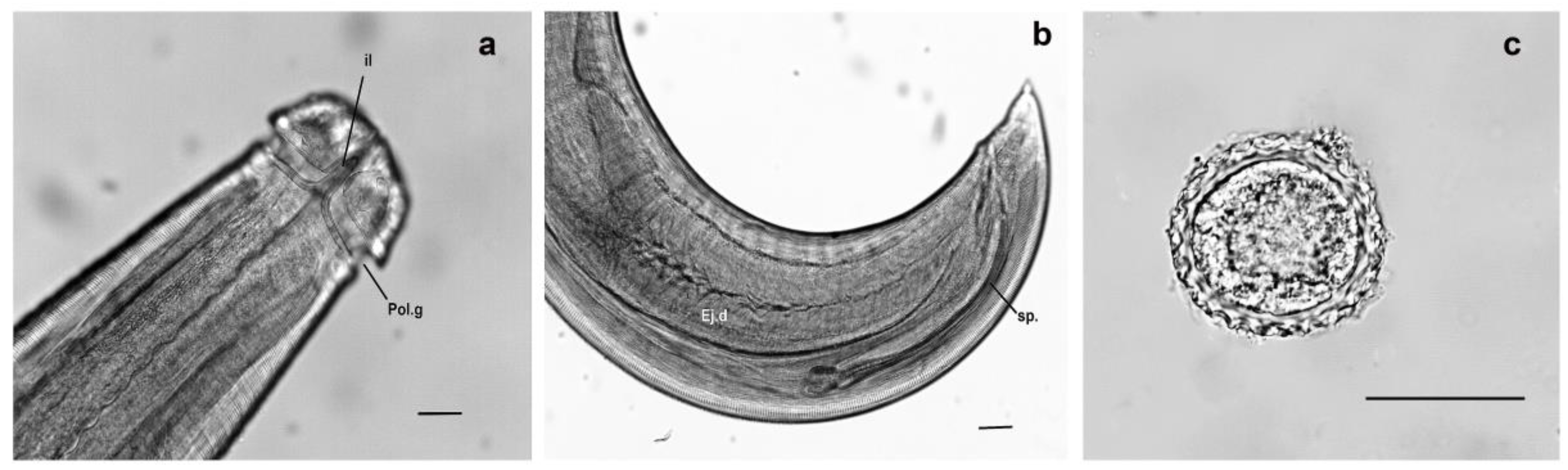
Figure 2.
a, Changes in the dry season (July–October) mean temperature reveal widespread warming, estimated using simple regressions between time and temperature observed between 1981 and 2020 (with P < 0.1). b, Potential ecosystem stability classes estimated for year 2050, adapted from current stability classes (Extended Data Figure 1b) by considering only areas with significant regression slopes between time and annual rainfall observed from 1981 through 2020 (with P < 0.1) (see Extended Data Figure 3 for areas with significant changes). c, Repeated extreme drought events between 2001–2018 (adapted from ref. [39]). d, Road network from where illegal deforestation and degradation may spread. e, Protected areas and Indigenous territories reduce deforestation and fire disturbances. f, Ecosystem transition potential (the possibility of forest shifting into an alternative structural or compositional state) across the Amazon biome by year 2050 inferred from compounding disturbances (a–d) and high-governance areas (e). We excluded accumulated deforestation until 2020 and savannas. Transition potential rises with compounding disturbances and varies as follows: less than 0 (in blue) as low; between 1 and 2 as moderate (in yellow); more than 2 as high (orange–red). Transition potential represents the sum of: (1) slopes of dry season mean temperature (as in a, multiplied by 10); (2) ecosystem stability classes estimated for year 2050 (as in b), with 0 for stable forest, 1 for bistable and 2 for stable savanna; (3) accumulated impacts from extreme drought events, with 0.2 for each event; (4) road proximity as proxy for degrading activities, with 1 for pixels within 10 km from a road; (5) areas with higher governance within protected areas and Indigenous territories, with −1 for pixels inside these areas. [27].
Figure 2.
a, Changes in the dry season (July–October) mean temperature reveal widespread warming, estimated using simple regressions between time and temperature observed between 1981 and 2020 (with P < 0.1). b, Potential ecosystem stability classes estimated for year 2050, adapted from current stability classes (Extended Data Figure 1b) by considering only areas with significant regression slopes between time and annual rainfall observed from 1981 through 2020 (with P < 0.1) (see Extended Data Figure 3 for areas with significant changes). c, Repeated extreme drought events between 2001–2018 (adapted from ref. [39]). d, Road network from where illegal deforestation and degradation may spread. e, Protected areas and Indigenous territories reduce deforestation and fire disturbances. f, Ecosystem transition potential (the possibility of forest shifting into an alternative structural or compositional state) across the Amazon biome by year 2050 inferred from compounding disturbances (a–d) and high-governance areas (e). We excluded accumulated deforestation until 2020 and savannas. Transition potential rises with compounding disturbances and varies as follows: less than 0 (in blue) as low; between 1 and 2 as moderate (in yellow); more than 2 as high (orange–red). Transition potential represents the sum of: (1) slopes of dry season mean temperature (as in a, multiplied by 10); (2) ecosystem stability classes estimated for year 2050 (as in b), with 0 for stable forest, 1 for bistable and 2 for stable savanna; (3) accumulated impacts from extreme drought events, with 0.2 for each event; (4) road proximity as proxy for degrading activities, with 1 for pixels within 10 km from a road; (5) areas with higher governance within protected areas and Indigenous territories, with −1 for pixels inside these areas. [27].
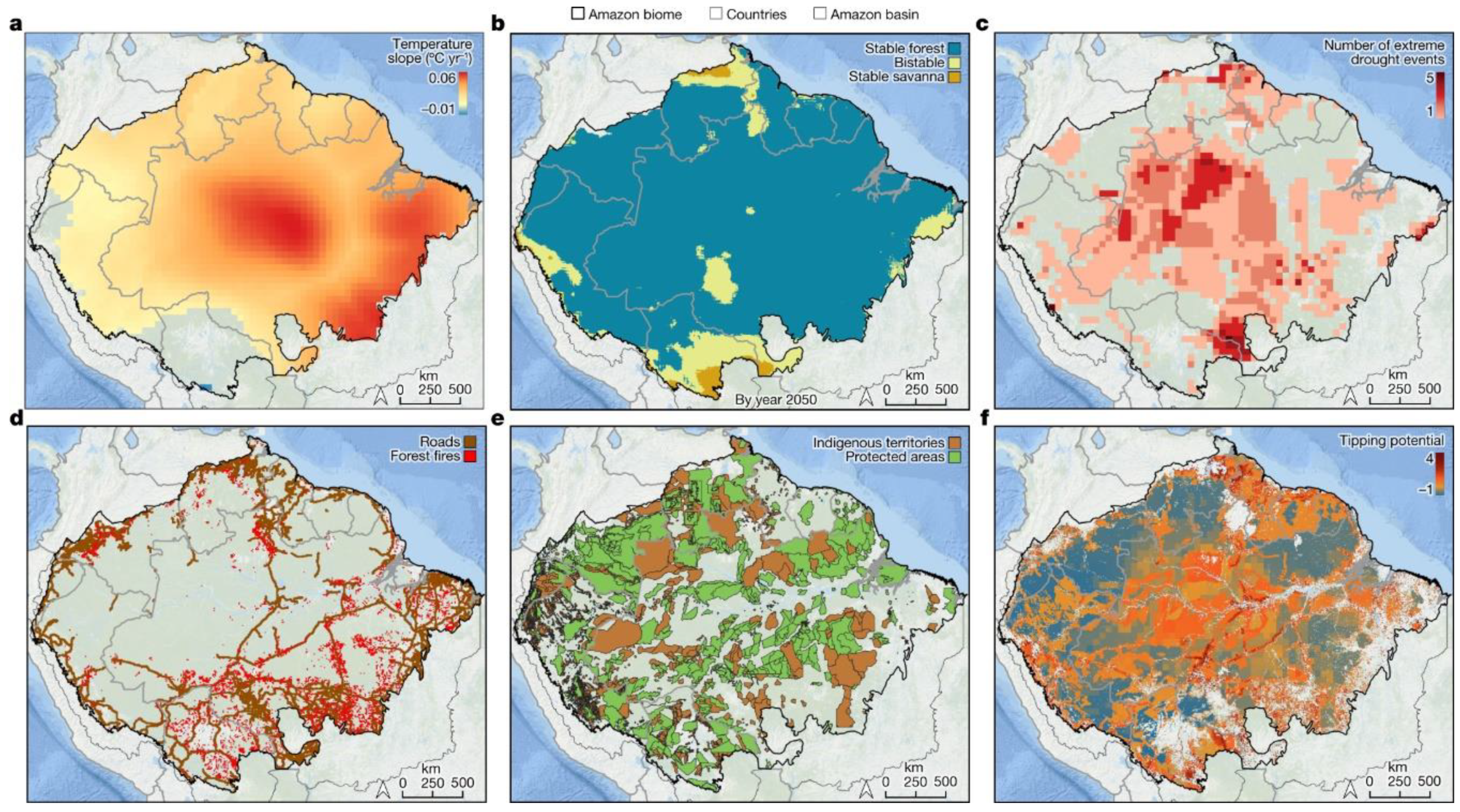
Figure 3.
Life cycle of Lagochilascaris minor.Parasite eggs are eliminated from the host organism through feces (1), undergo division (2), and develop into the infecting stage (3). The infecting egg may be either orally inoculated into the mouse (4) or contaminate the environment (6). In experimental infection, granulomatous nodules containing third stage larvae are observed in the muscles and subcutaneous tissue of a mouse infected with the helminth (4A). Experimental definitive hosts are infected through ingestion of intermediate hosts containing third stage-encysted larvae (5). Once in the environment (6), infecting eggs are ingested by wild rodents (7). Wild felines/canines ingest intermediate hosts containing third stage larvae and eliminate parasite eggs in the environment through feces (8). Human infection originates from the ingestion of uncooked or partially cooked meat of wild rodents containing encysted larvae (9) [31].
Figure 3.
Life cycle of Lagochilascaris minor.Parasite eggs are eliminated from the host organism through feces (1), undergo division (2), and develop into the infecting stage (3). The infecting egg may be either orally inoculated into the mouse (4) or contaminate the environment (6). In experimental infection, granulomatous nodules containing third stage larvae are observed in the muscles and subcutaneous tissue of a mouse infected with the helminth (4A). Experimental definitive hosts are infected through ingestion of intermediate hosts containing third stage-encysted larvae (5). Once in the environment (6), infecting eggs are ingested by wild rodents (7). Wild felines/canines ingest intermediate hosts containing third stage larvae and eliminate parasite eggs in the environment through feces (8). Human infection originates from the ingestion of uncooked or partially cooked meat of wild rodents containing encysted larvae (9) [31].
Disclaimer/Publisher’s Note: The statements, opinions and data contained in all publications are solely those of the individual author(s) and contributor(s) and not of MDPI and/or the editor(s). MDPI and/or the editor(s) disclaim responsibility for any injury to people or property resulting from any ideas, methods, instructions or products referred to in the content. |
© 2025 by the authors. Licensee MDPI, Basel, Switzerland. This article is an open access article distributed under the terms and conditions of the Creative Commons Attribution (CC BY) license (http://creativecommons.org/licenses/by/4.0/).
Copyright: This open access article is published under a Creative Commons CC BY 4.0 license, which permit the free download, distribution, and reuse, provided that the author and preprint are cited in any reuse.