

Submitted:
16 April 2025
Posted:
16 April 2025
You are already at the latest version
Abstract
Rock fatigue damage and instability during failure processes involve continuous initiation, propagation, and coalescence of internal cracks accompanied by energy exchange with surroundings. Energy-based analysis provides fundamental insights into damage accumulation and transformation mechanisms. This paper systematically review the research progress on energy evolution patterns under various influencing factors, microstructural transformation mechanisms during damage development, and associated macroscopic mechanical behaviors. It synthesizes achievements in energy-based strength criteria, fatigue damage evolution models, constitutive relationships, and engineering stability assessments. Current limitations are identified, and future directions are proposed: 1) Investigating energy evolution mechanisms under multi-field coupling conditions; 2) Developing comprehensive energy-driven damage evolution laws and constitutive models; 3) Establishing energy-based fatigue life prediction frameworks for rock engineering applications. These advancements aim to enhance theoretical understanding and practical reliability in rock mechanics analysis.
Keywords:
Rock
; Energy evolution
; Dissipated energy
; Fatigue damage
; Deformation conversion
1. Introduction
Rock fatigue damage has garnered significant attention from scholars as an essential part of the theoretical framework of rock mechanics. The cumulative effects of fatigue damage and the characteristics of damage transition are widely applicable in various fields, including mining, underground engineering, and slope stability [1,2,3]. As a discontinuous medium influenced by long-term geological structures, rocks contain numerous natural defects such as fractures, voids, and joints. These structural features result in nonlinear and anisotropic mechanical behavior [4,5]. Furthermore, the presence of various external loads often leads to the manifestation of cumulative fatigue damage in rock materials, a progressive accumulation of damage that occurs over extended time scales. During this process, the microstructure and mechanical properties of the rock may undergo transitions at specific intervals, indicating an acceleration of damage. Such phenomena directly impact the safety and stability of engineering structures [6,7,8,9,10,11].
In recent years, significant progress has been made by scholars both domestically and internationally in the study of rock fatigue damage, systematically exploring the cumulative effects and damage transition characteristics under various conditions. In experimental research, techniques such as acoustic emission and nuclear magnetic resonance have been employed to monitor rock fatigue damage under different loading conditions [12,13,14]. By tracking the elastic waves and temperature changes generated in rocks during loading, researchers have achieved real-time monitoring and quantitative analysis of internal microcrack propagation and damage accumulation, thereby further investigating fatigue life, cumulative effects, and transition characteristics [15,16,17,18]. On the theoretical front, various rock fatigue damage models based on different theoretical frameworks have been proposed. These models take into account the microstructure of rocks, their macroscopic mechanical behavior, and energy evolution laws, effectively describing the fatigue damage process and mechanical response of rocks under load [19,20,21]. For instance, models based on fracture mechanics theory analyze the stress intensity factors and energy release rates of internal cracks to study crack propagation patterns and fatigue life prediction methods under cyclic loading [22,23,24,25]. Constitutive models based on damage theory accurately depict the relationship between the damage state of rocks and their mechanical behavior by introducing damage variables [26]. Additionally, in terms of numerical simulation, finite element and discrete element methods have been utilized to simulate the damage accumulation and failure processes under cyclic loading, further revealing the mechanisms of accumulation and transition [27,28].
From previous research on rock fatigue damage, it is evident that significant achievements have been made both domestically and internationally; however, much of the focus has been on exploring rock fatigue damage through specific physical experiments, which presents certain limitations as it does not delve into the underlying essence of the phenomena. In recent years, there has been a growing interest in studying rock fatigue damage from an energy perspective. This approach integrates energy considerations with experimental research, circumventing the shortcomings associated with the inability to observe the microstructure of rocks, and thereby providing a clearer understanding of the cumulative effects and damage transition characteristics under fatigue. From this viewpoint, many scholars consider the process of rock fatigue damage as an energy transfer process within a thermodynamic framework [29,30]. This energy transfer process is typically divided into four stages: energy input, energy accumulation, energy dissipation, and energy release. These stages correspond to the initial compaction phase, elastic deformation phase, plastic deformation phase, and instability failure phase observed in the stress-strain curve of rocks. At the macroscopic level, this process manifests as follows: rocks start in a crack-free state, experience slow crack propagation, enter an accelerated crack growth phase, and ultimately lead to rapid crack expansion and failure [31,32,33,34]. Furthermore, some researchers have explored rock strength criteria, fatigue damage evolution processes, and constitutive models based on the energy perspective from both theoretical analysis and engineering application viewpoints [35,36,37]. Using these theoretical frameworks, they have analyzed crucial issues such as the warning mechanisms and stability of engineering rock masses. These studies not only enrich the theoretical foundation of rock mechanics but also provide important guidance and reference for practical engineering applications.
Therefore, this paper will explore the cumulative effects of damage in rocks during fatigue processes from an energy perspective, particularly focusing on the relationship between the changes in microstructure during rock damage and deformation transformation and their corresponding macroscopic mechanical behavior. Additionally, the article will systematically summarize various influencing factors related to the mechanisms of rock fatigue damage and conduct a comparative analysis of existing theories and constitutive models regarding the evolution of rock fatigue damage. Finally, this paper will discuss and propose directions that require further strengthening in future research, aiming to provide valuable insights for the understanding of rock fatigue damage and the improvement of related models.
2. The Evolution of Energy and the Accumulation and Transformation of Rock Fatigue Damage
2.1. The Evolution of Energy
To facilitate the study of the energy evolution of rocks, many researchers have proposed the following assumption: the rock mass units are considered to be within a closed system, where there is no heat exchange or energy loss due to phenomena such as acoustic emissions during the fatigue damage process. In this scenario, the total energy U input into the rock mass by external loads is solely converted into dissipated energy Ud and recoverable elastic potential energy Ue [38]. According to the first law of thermodynamics, we can deduce the following:

As shown in Figure 1, there is a relationship between elastic potential energy and dissipated energy. Here, E represents the unloading elastic modulus. During the loading process, the area enclosed by the stress-strain curve and the unloading curve corresponds to the dissipated energy Ud of the rock, which is used for the initiation and propagation of microcracks within the rock, resulting in internal damage. The area shaded in blue represents the elastic potential energy Ue, which is reversible and corresponds to the work done by external loads on the rock, converted into energy stored internally. From the stress-strain curve, it can be concluded that the value of the rock’s dissipated energy can be obtained by subtracting the recoverable elastic potential energy Ue from the total energy U input into the rock.
Therefore, in the principal stress space, the total energy input into the rock and the recoverable elastic potential energy can be expressed as follows:


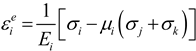
In the equation, σi, σj, σk represent the principal stresses (where i, j, k=1,2,3); εi and εie denote the strains and elastic strains in the direction of the principal stresses (where i=1,2,3); and μi and Ei represent the Poisson’s ratio and unloading elastic modulus, respectively.
However, to simplify the calculations, the recoverable elastic potential energy in Equation (2) is typically expressed as follows:

In the equation, E0 represents the initial elastic modulus, which is used to substitute for the unloading elastic modulus.
The aforementioned scenario pertains to true triaxial tests. In conventional triaxial compression tests, the second and third principal stresses are equal. In uniaxial compression tests, both the second and third principal stresses are zero. Therefore, the energy calculation formulas for the rock in each case can be further simplified as follows:
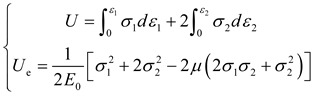
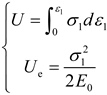
Equation (6) corresponds to the conventional triaxial compression test, while Equation (7) corresponds to the uniaxial compression test.
By using the stress-strain curve and the aforementioned formulas, we can calculate the total energy input and the magnitude of recoverable elastic potential energy for rocks under different loading conditions. The dissipated energy during the failure process of the rock can then be obtained by taking the difference between these two values. In reality, the fatigue damage to rock and soil masses is often not caused by a single load but rather by multi-level cyclic loads resulting from human engineering activities [39,40]. As shown in Figure 2, the axial stress-strain curve of the rock specimen under cyclic loading and unloading due to axial load is depicted.
Similar to the previous case, the energy input U and the recoverable elastic potential energy for the i-th loading can be expressed as follows:
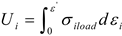
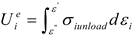
In the equation, ε’ represents the strain value corresponding to the stress σ’ at the end of the i-th cyclic loading; In the equation, ε” represents the strain value corresponding to the stress σ” at the end of the i-th cyclic unloading. In the equation, σiload and σiunload are the curve functions for the i-th cyclic loading and unloading, respectively.
In triaxial cyclic loading and unloading, the presence of confining pressure results in external work being done in the σ3 direction as well (Figure 2).
During a cyclic loading and unloading process, when the axial load varies, both the maximum and minimum stresses correspond to specific axial strains and circumferential strains. The internal energy of the rock at this time can be expressed as follows:


In the equation, Uie1 and Uie3 represent the recoverable elastic potential energy in the axial and circumferential directions during the i-th cycle, respectively. Additionally, since the circumferential expansion does work against the confining pressure, Ui3 and Uie3 are taken as negative value during the calculation.
During the cyclic loading and unloading process, the initiation and propagation of micro-cracks in the rock lead to inelastic deformation and hysteresis. At this point, the rock dissipates energy through the damping forces it generates to resist external loads. The damping ratio reflects the energy loss of the rock and soil mass due to internal resistance under loading, and it can be expressed as:

In the equation, A represents the area of the hysteresis loop shown in Figure 3b, which indicates the energy loss during a single cycle. As represents the area under the curve (AOE) corresponding to the recoverable elastic potential energy at the peak stress.
Consequently, many scholars have also investigated the energy changes during the rock failure process from the perspective of damping. Damping energy is considered a subset of dissipated energy and is crucial for understanding the development of internal fractures within rocks [41].
2.2. Factors Affecting Rock Fatigue Damage from an Energy Perspective
Due to the fatigue damage characteristics and failure features of rocks being influenced by various factors, researchers have conducted extensive experiments from an energy perspective for different research purposes. It has been found that rock fatigue damage is primarily affected by three factors: intrinsic properties of the rock, external environmental conditions, and loading application factors. This paper summarizes and synthesizes the effects of these three factors on rock fatigue damage.
2.2.1. Intrinsic Factors of Rocks
As shown in Figure 4, due to the differing genesis of rocks in nature and their varying geological environments, there are numerous intrinsic differences among rocks, including variations in lithology, microstructure, and defects such as fractures and joints. These differences alter the deformation characteristics and failure mechanisms of rock fatigue damage.
From the perspective of strength in the physical properties of lithology, this paper categorizes rocks into two main types: soft rocks and hard rocks. Some researchers have found through experiments that, compared to soft rocks, hard rocks dissipate a higher proportion of energy after reaching peak load, while much of the energy input from the external environment to soft rocks is dissipated before the peak load is reached, resulting in different failure modes for the two types [42,43,44,45,46]. Hard rocks, which are in a high-stress state at greater depths, are more prone to rockburst behavior, storing a significant amount of energy before failure and releasing it during the failure process [47,48,49,50]. In contrast, soft rocks dissipate some energy before reaching the peak, primarily due to the development and extension of their own fractures [51].To gain a deeper understanding of how various types of rocks exhibit differences in fatigue damage, the study primarily focuses on four commonly encountered engineering rocks: sandstone, granite, shale, and limestone [52,53,54,55]. To this end, Meng, Q. et al. [53] proposed a nonlinear evolution model that reveals the relationship between energy density growth and variations in lithology, stress levels, and loading rates. Additionally, some researchers have explored the influence of rock size on the distribution and evolution of energy during the fatigue failure process of rocks [56].
From the perspective of the microstructure of rocks, the differences in the internal mineral structure have a significant impact on their fatigue behavior [57]. Larger crystal structures and irregular geometries are more likely to initiate cracks in regions of stress concentration, accelerating the damage and failure process and reducing the fatigue life of the rock. In contrast, smaller crystal structures and more regular shapes help to dissipate stress, thereby enhancing the overall toughness of the rock [58,59,60].
Considering that most rocks in nature are not completely intact, various factors can lead to the presence of defects such as joints, voids, and fractures within them [61,62]. Figure 5 illustrates the pre-existing defects in rocks before experimentation, including voids, single fractures, and parallel/crossed double fractures, as well as the formation of rock bridges. Compared to intact rocks, those containing these defects exhibit shorter fatigue lives under stress, with deformation and failure occurring near the defects or developing from them [63,64,65]. Additionally, the orientation, inclination, and length of fractures and joints can also influence their fatigue characteristics [66,67]. However, due to space limitations, these aspects will not be elaborated upon here.
2.2.2. Extrinsic Environmental Factors
The different external environments can also significantly affect the fatigue damage process of rocks. As shown in Figure 6, rocks located in southern China are influenced by a subtropical monsoon climate, where high temperatures and heavy rainfall in summer lead to considerable damage from dry-wet cycles. Similarly, rocks in the northwest cold regions and high-altitude areas of China are frequently subjected to freeze-thaw cycles. The presence of hilly terrain in eastern China means that rocks in this region also experience repeated cold-heat effects. Additionally, changes in the external hydration environment are also important influencing factors.
Researchers conducting dry-wet cycle tests have found that, following water-rock interactions, the increase in the energy dissipated by rocks gradually decreases, and the energy dissipation density also shows a declining trend [74,75,76]. This is attributed to the fact that dry-wet cycling reduces the load-bearing capacity of the rocks, leading to failure even under lower energy absorption. Moreover, freeze-thaw cycle tests primarily aim to investigate the fatigue characteristics of water-saturated rocks in cold regions, which are more susceptible to the expansive forces generated by the freezing of internal free water [77,78,79]. Unlike the effects of dry-wet cycling, although the total energy absorbed generally decreases with increasing freeze-thaw cycles, the rate of energy dissipation tends to increase [80,81]. However, some researchers have observed that prolonged exposure to low temperatures, such as -10°C, significantly reduces the energy consumption associated with rock failure [82].
Additionally, rocks that have undergone high-temperature treatment exhibit reduced energy absorption from external sources, leading to a decrease in stored elastic energy. The proportion of dissipated energy in the total absorbed energy increases with rising temperatures, meaning that higher temperatures result in shorter times required for rock failure under external forces [83,84,85]. In the central mountainous regions of China, extreme weather conditions such as extreme heat and cold are rarely encountered, and the alternating temperatures can also influence the fatigue process of rocks. Finally, rocks like those found in coastal areas, such as reef stones affected by hydration environments, experience significantly shortened fatigue lives. Generally, the total energy, elastic energy, and dissipated energy of rocks in areas with strong acidity or alkalinity are positively correlated with the intensity of the acid-base conditions [86,87,88]. The energy evolution during the damage process of water-rich rocks differs from that of drier rocks, primarily reflected in the variations during the elastic energy increment phase [89,90].
2.2.3. Experimental Loading Factors
In exploring the impact of these loads on the fatigue damage mechanisms of rocks, most researchers opt to simulate real-world loading conditions by varying factors such as the loading method, loading rate, cyclic waveform, cyclic stress amplitude, and maximum cyclic stress [91,92,93,94,95,96,97].
As shown in Figure 7, human activities (such as tunnel excavation, mining explosions, and vehicle traffic) and natural geological processes (such as earthquakes and volcanic eruptions) can impose cyclic loads on rocks, with varying vibration frequencies.
Figure 8 illustrates several types of cyclic waveforms commonly used by researchers, including sinusoidal stress waves [98], triangular stress waves [99], and random stress waves [100]. Additionally, real-world loading factors can be simulated by varying the loading frequency, cyclic stress amplitude, and setting the maximum cyclic stress. This can be achieved through techniques such as single-stage constant amplitude loading and unloading [101], single-stage increasing amplitude loading and unloading [102,103], multi-stage increasing amplitude loading and unloading [104,105], and multi-stage constant amplitude loading and unloading [106] to fulfill experimental objectives.
Deng, J. and Bian, L. [107] analyzed the energy dissipation of rocks under random stress wave action and found that harder rocks absorb less energy. When the stress amplitude is doubled, the elastic energy consumption ratio (the ratio of elastic energy to total energy) decreases. Hong, L. et al. [108] studied the energy consumption patterns of rocks subjected to dynamic impact loads by applying half-sine waves, concluding that the energy consumption density of rocks is linearly related to the externally input energy.
Additionally, based on different loading methods for rock testing, the primary types include uniaxial compression tests, triaxial compression tests, Brazilian disc tests, and shear tests, with cyclic conditions added to these tests [109,110,111,112,113,114,115], as shown in Figure 9. For underground engineering such as mining and tunnel excavation, the cyclic triaxial compression test more accurately reflects the actual stress conditions encountered by rocks.
In the simulation of triaxial loading tests on underground rock masses, the presence of confining pressure is inevitable. This confining pressure can, to some extent, suppress energy release and enhance the energy storage capacity of the rock, which is manifested as an increase in elastic strain energy [116,117,118,119].
2.3. Changes in Microstructural Characteristics and Macroscopic Mechanical Behavior During the Damage Process
Figure 10 presents the three methods used by researchers in recent years to study the relationship between microstructural deformation, mechanical properties, and energy during the rock damage process, namely acoustic emission technology [120,121], infrared radiation technology [122,123,124,125], and numerical simulation techniques [126,127,128].
During the loading and deformation process of rocks, a portion of the input energy is converted into elastic potential energy for storage, while another portion is transformed into dissipated energy. This lost dissipated energy manifests itself in the form of acoustic emission, frictional heat, relative kinetic energy of displacement, plastic deformation, and crack propagation. When stress concentration occurs within the rock, leading to the initiation and propagation of cracks, acoustic emission technology can effectively capture the signals emitted by this portion of energy, revealing the development of a microcrack network prior to macroscopic failure [130]. On the other hand, infrared radiation technology primarily illustrates the spatial heterogeneity of energy dissipation by deriving information about crack-dense regions or stress concentration areas from thermal radiation energy fields. However, both of these techniques have certain limitations. As a result, researchers today are increasingly inclined to combine numerical simulations (such as PFC/DEM) with multi-scale experiments to investigate the relationship between microstructural changes, mechanical properties, and energy during the rock damage process.
Analyzing the microstructural changes of rocks from an energy perspective allows for a precise understanding of when cracks initiate, accelerate in propagation, and ultimately develop into macroscopic failure. Figure 11 illustrates the variations in energy and the number of cracks in rocks during the shearing process. As shown in the figure, after entering the post-peak phase, there is a noticeable increase in dissipated energy, while elastic strain energy decreases. At this point, the corresponding number of cracks also increases. This is attributed to the accumulation of significant energy at the shear interface before reaching the peak shear stress, which leads to the development of more cracks to dissipate this excess energy.
Jiao, Y. et al. [132] investigated the energy evolution trends of fractured rock samples and the relationship between crack length and dissipated energy through laboratory uniaxial compression tests and PFC2D numerical simulations. As shown in Figure 12, when the rock is subjected to axial stress before reaching peak strength, elastic strain energy dominates the total internal energy, while a smaller portion of dissipated energy facilitates the propagation of internal cracks. Furthermore, a certain linear relationship exists between crack length and dissipated energy, indicating that dissipated energy drives the growth of cracks.
In the study of rock damage evolution, the energy transformation mechanisms provide an important perspective for revealing the nature of rock failure. Compared to the more intuitive microstructural changes during the damage process, the mechanical properties of rocks are analyzed from a mathematically quantitative perspective. By employing mathematical parameters such as strength degradation, elastic modulus reduction, and energy dissipation rate, the entire process of energy input, transformation, and release can be quantitatively analyzed. Additionally, the area of the hysteresis loop in the stress-strain curve can be used for mathematical representation.
Some scholars have determined the characteristic stress at various stages by combining the energy growth rate curve with the stress-strain curve, as shown in Figure 13. After entering the fourth stage, the growth rate of elastic energy begins to decline. At this point, rock damage accelerates, and the growth rate of dissipated energy shifts from a steady increase to a rapid surge. As the peak stress approaches, the growth rate of dissipated energy exhibits sharp fluctuations, which are caused by the transition of small cracks into larger ones.
3. Energy-Based Strength Criteria and Constitutive Relations for Rocks
3.1. Rock Strength Criterion
The essence of rock fatigue damage and failure lies in the gradual dissipation and release of energy. Rocks transfer the externally applied energy to their inherent defects or weakest points, leading to a continuous weakening of their strength. Once the energy storage limit is reached, the stored elastic energy is released, resulting in failure. Some researchers argue that while rock damage will inevitably affect its strength, it does not necessarily lead to overall failure [134,135]. Table 1 presents some energy-based rock strength criteria proposed in recent years.
3.2. Damage Variable Evolution and Constitutive Relations Based on Energy Dissipation
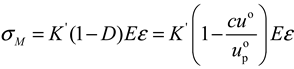
Most damage variables related to rock are based on methods such as the effective elastic modulus method, wave velocity method, and acoustic emission count method. However, analyzing rock failure from an energy perspective is more aligned with the fundamental nature of rock failure. The energy evolution of rocks can also effectively define damage variables and provide a more accurate understanding of the damage mechanisms involved [143,144]. The internal damage evolution of rocks is primarily driven by external energy input. To dissipate this energy, internal defects and fractures within the rock continuously extend and develop. In this process, dissipated energy is directly related to the strength degradation of the rock and is associated with the damage variable. As a result, some researchers have defined the damage variable of rock by introducing the ratio of dissipated energy to elastic energy, as well as the energy consumption ratio [145]. Furthermore, other scholars have compared the damping energy in dissipated energy to the total input energy [146], exploring the influence of energy evolution on internal rock damage under cyclic loading. The damage variable D determines the damage constitutive relationship, allowing for the establishment of corresponding damage constitutive models. Table 2 presents various rock damage constitutive relations based on energy dissipation that have emerged in recent years.
The constitutive models in the table have evolved from earlier linear models to nonlinear models that better reflect the characteristics of rock. These models take into account multiple factors and include corresponding constitutive models, such as thermal damage constitutive models. Unlike constitutive models based on strength criteria, those based on energy theory are more adept at capturing the phenomenon of post-peak stress decline. They provide a more accurate description of the entire process of rock failure and are therefore more reasonable.
3.3. Energy-Based Analysis of Rock Stability
In practical engineering, the stability analysis of rocks is central to both engineering design and safety assessment. Analyzing from an energy perspective provides a more quantitative evaluation method. Prior to failure, rocks undergo an accelerated phase of energy release, so when the rate of release sharply increases, the rock is nearing a critical state of instability and failure. At this point, dissipated energy becomes a larger proportion of the total energy, making this analysis method particularly important for predicting dynamic instability in rocks [149,150,151,152].W. Gao et al. [153], using a method based on the minimum energy dissipation rate, considered the processes of crack propagation and coalescence in rock slopes to analyze the stability of fractured rock slopes. Energy density is also a crucial indicator for assessing rock mass stability; within rocks of equal volume, a high energy density typically indicates a higher risk of instability [154,155,156,157]. As shown in Figure 12, by combining numerical simulations with energy field distribution maps, it is possible to identify potential instability areas through changes in energy density and energy gradient, providing an important theoretical basis for geotechnical engineering design and disaster warning. Additionally, some researchers have approached the issue of energy dissipation during the fatigue damage process of rocks, proposing a new fatigue life prediction model based on their analysis. The effectiveness of this model has been validated [158,159].
Through the analysis presented above, it can be concluded that the stability analysis of rocks from an energy perspective primarily focuses on three aspects: energy release rate, energy density, and fatigue life. In the future, numerical simulation methods can be employed to further incorporate multiphysical coupling effects, such as thermo-mechanical-hydraulic coupling. This approach will facilitate the exploration of the relationship between energy distribution and rock stability under complex conditions.
4. Discussions and Prospects
In summary, domestic and international scholars have made significant progress in the study of rock energy evolution and its applications. From the perspective of energy transformation, it has been concluded that the fatigue damage of rocks results from the combined effects of energy input, storage, dissipation, and release, which closely reflects the essence of rock failure. The energy evolution of rocks is influenced by various factors, including the intrinsic properties of the rock, the conditions of load application, and external environmental factors, which are the primary focus of current research. Additionally, studies on the strength criteria of rocks under energy theory, the evolution of rock fatigue damage under energy dissipation theory, and the stability analysis of engineering rock masses under energy dissipation have important theoretical significance and application value in practical engineering. However, research on the complex mechanisms of rock fatigue damage from the perspective of rock energy evolution is still not comprehensive. The challenges and shortcomings in this area of research can be summarized as follows:
1. Insufficient Multi-Factor Coupling Research: In real environments, rocks are often subjected to the combined effects of freeze-thaw cycles, wet-dry cycles, and cyclic loading. Most existing studies focus on the energy evolution of rocks under single-factor conditions, with relatively few investigations into the energy evolution of rocks under multi-factor coupling. Research based on single factors is inadequate for accurately reflecting the complex conditions faced in practical rock engineering. Therefore, it is necessary to conduct multi-energy field coupling studies within a thermodynamic framework.
2. Link Between Microstructural and Macroscopic Mechanical Changes: During the fatigue damage process of rocks, there are subtle changes in microstructure that correlate with macroscopic mechanical changes. Although some researchers have begun to analyze the energy dissipation mechanisms associated with the development of internal fractures from an energy perspective, there is still a need for further exploration. Specifically, the mechanisms of energy dissipation related to inter-particle friction, crack propagation, and rock interface bonding require more in-depth investigation.
3. Need for a Comprehensive Energy Evolution Constitutive Theory: The theoretical framework for energy evolution and constitutive theories needs to be enriched and improved. A systematic analysis from the energy perspective is necessary to construct a complete theoretical framework that addresses the evolution of rock fatigue damage, strength criteria, and constitutive models for multi-field coupling problems.
4. Impact of Extreme Weather on Rock Engineering: Rock engineering is increasingly susceptible to the impacts of extreme weather, and the resulting engineering disasters are often difficult to predict directly. Thus, a new challenge arises in integrating the study of rock engineering stability based on energy consumption principles with engineering monitoring methods. Employing appropriate monitoring technologies to conduct instability monitoring of rock engineering based on energy consumption principles can provide practical application value in underground protective engineering, mineral resource extraction, tunnel support, and other practical engineering projects.
5. Conclusions
This paper reviews the literature published in the past decade regarding the accumulation and transformation characteristics of rock fatigue from an energy perspective. It provides a detailed classification of the current rock strength criteria, the evolution of damage variables under energy considerations, and constitutive relations, discussing existing shortcomings and potential future research directions. The following conclusions are drawn:
1. From the perspective of energy evolution, it can be observed that the intrinsic strength and defects of rocks have the most significant impact on their fatigue accumulation process and transformation characteristics. Rocks with higher strength tend to have longer fatigue life, allowing them to accumulate more energy during the fatigue process, but they can become more destructive when instability occurs. Conversely, rocks with lower strength experience a shorter fatigue damage process, making their critical state difficult to predict. The presence of confining pressure suppresses energy release during rock damage, thereby increasing stored energy.
2. The energy evolution patterns during the fatigue damage process of rocks exhibit a high degree of similarity with the development of internal cracks and the degradation of their mechanical properties. By investigating the energy evolution pathway, one can gain insights into the extent of crack development within the rock. In practical engineering, this can be used to predict the stability of rock masses, and energy monitoring can be implemented to prevent disasters.
3. Currently, the rock strength criteria and constitutive models studied from an energy perspective are primarily based on the Mohr-Coulomb theory and Lemaitre’s equivalent strain hypothesis. These models demonstrate strong applicability under cyclic loading and dynamic failure conditions, accurately reflecting post-peak behavior of rocks. They not only describe the state changes and failure behavior in rock fatigue failure but also provide new insights for the quantitative description of rock mechanical behavior.
Author Contributions
Conceptualization, investigation, writing, review and editing, all authors; funding acquisition, X.L. All authors have read and agreed to the published version of the manuscript.
Funding
the Science and technology projects of Yunnan Province(Grant No. 202407AC110019);The key research and development plan subject of the 14th Five-Year Plan(Grant No. 2023YFC2907305);The research work was funded by the Research Fund of National Natural Science Foundation of China (NSFC) (Grant No. 42477142,42277154)the project of Slope safety control and disaster prevention technology innovation team of “Youth Innovation Talent Introduction and Education Plan” of Shandong Colleges and universities(Grant No. Lu Jiao Ke Han [2021] No. 51); Guizhou Province Science and Technology Planning Project(Grant No. Guizhou science and technology cooperation support [2022] common 229), the National Natural Science Foundation of Shandong Province of China (NSFC) (Grant No. ZR2022ME188), Jinan City “new university 20” research leader studio project (Grant No. 20228108).
Data Availability Statement
No new data were created or analyzed in this study.
Acknowledgments
In this section, you can acknowledge any support given which is not covered by the author contribution or funding sections. This may include administrative and technical support, or donations in kind (e.g., materials used for experiments).
Conflicts of Interest
The authors declare no conflict of interest.
References
- Erarslan, N. Experimental and numerical investigation of plastic fatigue strain localization in brittle materials: An application of cyclic loading and fatigue on mechanical tunnel boring technologies. International Journal of Fatigue, 2021, 152: 106442. [CrossRef]
- Li, Q.; Song, D.; Yuan, C.; Nie, W. An image recognition method for the deformation area of open-pit rock slopes under variable rainfall. Measurement, 2022, 188: 110544. [CrossRef]
- Li, Q.; Liu, W.; Jiang, L.; Qin, J.; Wang, Y.; Wan, J.; Zhu, X. Comprehensive safety assessment of two-well-horizontal caverns with sediment space for compressed air energy storage in low-grade salt rocks. Journal of Energy Storage, 2024, 102: 114037. [CrossRef]
- Jelagin, D.; Saadati, M.; Jerjen, I.; Larsson, P.L. Mechanical Characterization of Granite Rock Materials: On the Influence from Pre-Existing Defects. Journal of Testing and Evaluation, 2018, 46(2): 540-548. [CrossRef]
- Dubey, V.; Abedi, S.; Noshadravan, A. A multiscale modeling of damage accumulation and permeability variation in shale rocks under mechanical loading. Journal of Petroleum Science and Engineering, 2021, 198: 108123. [CrossRef]
- Li, T.; Pei, X.; Wang, D.; Huang, R.; Tang, H. Nonlinear behavior and damage model for fractured rock under cyclic loading based on energy dissipation principle. Engineering Fracture Mechanics, 2019, 206: 330-341. [CrossRef]
- Luo, Y.; Gong, H.; Huang, J.; Wang, G.; Li, X.; Wan, S. Dynamic cumulative damage characteristics of deep-buried granite from Shuangjiangkou hydropower station under true triaxial constraint. International Journal of Impact Engineering, 2022, 165: 104215. [CrossRef]
- Yan, B.; Kang, H.; Zuo, J.; Wang, P.; Li, X.; Cai, M.; Liu, J. Study on damage anisotropy and energy evolution mechanism of jointed rock mass based on energy dissipation theory. Bulletin of Engineering Geology and the Environment, 2023, 82(8): 294. [CrossRef]
- Amitrano, D.; Helmstetter, A. Brittle creep, damage, and time to failure in rocks. Journal of Geophysical Research-Solid Earth, 2006, 111(B11).
- Preisig, G.; Eberhardt, E.; Smithyman, M.; Preh, A.; Bonzanigo, L. Hydromechanical Rock Mass Fatigue in Deep-Seated Landslides Accompanying Seasonal Variations in Pore Pressures. Rock Mechanics and Rock Engineering, 2016, 49(6): 2333-2351. [CrossRef]
- Gramiger, L.M.; Moore, J.R.; Gischig, V.S.; Ivy-Ochs, S.; Loew, S. Beyond debuttressing: Mechanics of paraglacial rock slope damage during repeat glacial cycles. Journal of Geophysical Research-Earth Surface, 2017, 122(4): 1004-1036. [CrossRef]
- Voznesenskii, A.S.; Kutkin, Y.O.; Krasilov, M.N.; Komissarov, A.A. Predicting fatigue strength of rocks by its interrelation with the acoustic quality factor. International Journal of Fatigue, 2015, 77: 194-198. [CrossRef]
- Geranmayeh Vaneghi, R.; Thoeni, K.; Dyskin, A.V.; Sharifzadeh, M.; Sarmadivaleh, M. Strength and Damage Response of Sandstone and Granodiorite under Different Loading Conditions of Multistage Uniaxial Cyclic Compression. International Journal of Geomechanics, 2020, 20(9): 04020159. [CrossRef]
- Lajtai, E.Z. Microscopic fracture processes in a granite. Rock Mechanics and Rock Engineering, 1998, 31(4): 237-250. [CrossRef]
- Lavrov, A.; Vervoort, A.; Wevers, M. Anisotropic damage formation in brittle rock: Experimental study by means of acoustic emission and Kaiser effect. J. Phys. IV, 2003, 105: 321-328. [CrossRef]
- Amitrano, D.; Gruber, S.; Girard, L. Evidence of frost-cracking inferred from acoustic emissions in a high-alpine rock-wall. Earth Planet. Sci. Lett., 2012, 341: 86-93.
- Momeni, A.; Karakus, M.; Khanlari, G.R.; Heidari, M. Effects of cyclic loading on the mechanical properties of a granite. International Journal of Rock Mechanics and Mining Sciences, 2015, 77: 89-96. [CrossRef]
- Dinc Gogus, O. 3D discrete analysis of damage evolution of hard rock under tension. Arabian Journal of Geosciences, 2020, 13(14): 661. [CrossRef]
- Li, Q.; Wang, Y.; Li, X.; Tang, S.; Gong, B.; Jiang, S. Evolutionary characteristics of the fracture network in rock slopes under the combined influence of rainfall and excavation. Bulletin of Engineering Geology and the Environment, 2025, 84(1): 47. [CrossRef]
- Wang, C.; He, B.; Hou, X.; Li, J.; Liu, L. Stress-Energy Mechanism for Rock Failure Evolution Based on Damage Mechanics in Hard Rock. Rock Mechanics and Rock Engineering, 2020, 53(3): 1021-1037. [CrossRef]
- Hao, Y.; Wu, Y.; Cui, R.; Cao, K.; Niu, D.; Liu, C. Strain Energy Dissipation Characteristics and Neural Network Model during Uniaxial Cyclic Loading and Unloading of Dry and Saturated Sandstone. Minerals, 2023, 13(2): 131. [CrossRef]
- Guy, N.; Seyedi, D.M.; Hild, F. Characterizing Fracturing of Clay-Rich Lower Watrous Rock: From Laboratory Experiments to Nonlocal Damage-Based Simulations. Rock Mechanics and Rock Engineering, 2018, 51(6): 1777-1787. [CrossRef]
- Haghgouei, H.; Baghbanan, A.; Hashemolhosseini, H. Fatigue life prediction of rocks based on a new Bi-linear damage model. International Journal of Rock Mechanics and Mining Sciences, 2018, 106: 20-29. [CrossRef]
- Haghgouei, H.; Hashemolhosseini, H.; Baghbanan, A.; Jamali, S. The Effect of Loading Frequency on Fatigue Life of Green onyx under Fully Reversed Loading. Experimental Techniques, 2018, 42(1): 105-113. [CrossRef]
- Vaneghi, R.G.; Ferdosi, B.; Okoth, A.D.; Kuek, B. Strength degradation of sandstone and granodiorite under uniaxial cyclic loading. Journal of Rock Mechanics and Geotechnical Engineering, 2018, 10(1): 117-126. [CrossRef]
- Zhou, T.; Qin, Y.; Ma, Q.; Liu, J. A constitutive model for rock based on energy dissipation and transformation principles. Arabian Journal of Geosciences, 2019, 12(15): 1-14. [CrossRef]
- Saksala, T.; Jabareen, M. Numerical modeling of rock failure under dynamic loading with polygonal elements. International Journal for Numerical and Analytical Methods in Geomechanics, 2019, 43(12): 2056-2074. [CrossRef]
- Li, X.; Li, Q.; Wang, Y.; Liu, W.; Hou, D.; Zhu, C. Effect of slope angle on fractured rock masses under combined influence of variable rainfall infiltration and excavation unloading. Journal of Rock Mechanics and Geotechnical Engineering, 2024, 16(10): 4154-4176. [CrossRef]
- Reches, Z.E.; Wetzler, N. Energy dissipation and fault dilation during intact-rock faulting. Journal of Structural Geology, 2025, 191: 105325. [CrossRef]
- Watson, J.; Canbulat, I.; Zhang, C.; Wei, C. Energies Within Rock Mass and the Associated Dynamic Rock Failures. Rock Mechanics and Rock Engineering, 2025: 1-24. [CrossRef]
- Wang, S.R.; Hagan, P.; Xu, D.F.; Hu, B.W.; Li, Z.C.; Gamage, K. (2014). Fracture process and energy dissipation analysis of sandstone plates under the concentrated load. Technical Gazette, 21(6), 1345-1351.
- Zhao, Z.; Ma, W.; Fu, X.; Yuan, J. Energy theory and application of rocks. Arabian Journal of Geosciences, 2019, 12(15): 1-26. [CrossRef]
- Li, T.; Pei, X.; Guo, J.; Meng, M.; Huang, R. An Energy-Based Fatigue Damage Model for Sandstone Subjected to Cyclic Loading. Rock Mechanics and Rock Engineering, 2020, 53(11): 5069-5079. [CrossRef]
- Zhou, T.; Qin, Y.; Cheng, J.; Zhang, X.; Ma, Q. Study on Damage Evolution Model of Sandstone under Triaxial Loading and Postpeak Unloading Considering Nonlinear Behaviors. Geofluids, 2021, 2021(1): 2395789. [CrossRef]
- Li, X.; Li, Q.; Wang, Y.; Liu, W.; Hou, D.; Zheng, W.; Zhang, X. Experimental study on instability mechanism and critical intensity of rainfall of high-steep rock slopes under unsaturated conditions. International Journal of Mining Science and Technology, 2023, 33(10): 1243-1260. [CrossRef]
- Lee, S.-E.; Jeong, G.-C. Numerical analysis on micro-damage in bisphere model of granitic rock. Geosciences Journal, 2015, 19(1): 135-144. [CrossRef]
- Reches, Z.e.; Wetzler, N. An energy-based theory of rock faulting. Earth Planet. Sci. Lett., 2022, 597: 117818. [CrossRef]
- Dehkordi, M.S.; Shahriar, K.; Moarefvand, P.; Gharouninik, M. Application of the strain energy to estimate the rock load in squeezing ground condition of Eamzade Hashem tunnel in Iran. Arabian Journal of Geosciences, 2013, 6(4): 1241-1248. [CrossRef]
- Zhao, Y.; Dang, S.; Bi, J.; Wang, C.; Gan, F.; Li, J. Energy Evolution Characteristics of Sandstones During Confining Pressure Cyclic Unloading Conditions. Rock Mechanics and Rock Engineering, 2023, 56(2): 953-972. [CrossRef]
- Cao, X.; Tang, X.; Chen, L.; Wang, D.; Jiang, Y. Study on Characteristics of Failure and Energy Evolution of Different Moisture-Containing Soft Rocks under Cyclic Disturbance Loading. Materials, 2024, 17(8): 1770. [CrossRef]
- Pan, C.; Liu, C.; Zhao, G.; Yuan, W.; Wang, X.; Meng, X. Fractal Characteristics and Energy Evolution Analysis of Rocks under True Triaxial Unloading Conditions. Fractal and Fractional, 2024, 8(7): 387. [CrossRef]
- Xie, H.; Li, L.; Ju, Y.; Peng, R.; Yang, Y. Energy analysis for damage and catastrophic failure of rocks. Science China-Technological Sciences, 2011, 54: 199-209. [CrossRef]
- Yang, B.; Xue, L.; Duan, Y. Investigation into energy conversion and distribution during brittle failure of hard rock. Bulletin of Engineering Geology and the Environment, 2022, 81(3): 114. [CrossRef]
- Cui, J.; Xie, L.; Qin, Y.; Liu, X.; Qian, J. Study on Blasting Characteristics of Shallow and Deep Soft-hard Rock Strata Based on Energy Field. Ksce Journal of Civil Engineering, 2023, 27(5): 1942-1954. [CrossRef]
- Qu, Y.-l.; Yang, G.-s.; Xi, J.-m.; Ni, W.-k.; Ding, X.; Wu, B.-q. Mechanical properties and energy-dissipation mechanism of frozen coarse-grained and medium-grained sandstones. Journal of Central South University, 2023, 30(6): 2018-2034. [CrossRef]
- Zheng, K.; Shi, C.; Lou, Y.; Jia, C.; Lei, M.; Yang, Y. A computational method for tunnel energy evolution in strain-softening rock mass during excavation unloading based on triaxial stress paths. Computers and Geotechnics, 2024, 169: 106212. [CrossRef]
- Qin, Z.; Li, T.; Li, Q.; Chen, G.; Cao, B. MECHANISM OF ROCK BURST BASED ON ENERGY DISSIPATION THEORY AND ITS APPLICATIONS IN EROSION ZONE. Acta Geodynamica Et Geomaterialia, 2019, 16(2): 119-130.
- Zhang, Y.; Feng, X.-T.; Zhang, X.; Wang, Z.; Sharifzadeh, M.; Yang, C. A Novel Application of Strain Energy for Fracturing Process Analysis of Hard Rock Under True Triaxial Compression. Rock Mechanics and Rock Engineering, 2019, 52(11): 4257-4272. [CrossRef]
- Gao, L.; Gao, F.; Xing, Y.; Zhang, Z. An Energy Preservation Index for Evaluating the Rockburst Potential Based on Energy Evolution. Energies, 2020, 13(14): 3636. [CrossRef]
- Sun, F.; Fan, J.; Guo, J.; Liu, X. Experimental and Numerical Investigation of Energy Evolution Characteristic of Granite considering the Loading Rate Effect. Advances in Materials Science and Engineering, 2022, 2022(1): 8260107. [CrossRef]
- Zhu, X.; Liu, W. The rock fragmentation mechanism and plastic energy dissipation analysis of rock indentation. Geomechanics and Engineering, 2018, 16(2): 195-204.
- Gong, F.; Yan, J.; Luo, S.; Li, X. Investigation on the Linear Energy Storage and Dissipation Laws of Rock Materials Under Uniaxial Compression. Rock Mechanics and Rock Engineering, 2019, 52(11): 4237-4255. [CrossRef]
- Meng, Q.; Zhang, M.; Zhang, Z.; Han, L.; Pu, H. Research on non-linear characteristics of rock energy evolution under uniaxial cyclic loading and unloading conditions. Environmental Earth Sciences, 2019, 78(23): 1-20. [CrossRef]
- Gong, F.; Yan, J.; Wang, Y.; Luo, S. Experimental Study on Energy Evolution and Storage Performances of Rock Material under Uniaxial Cyclic Compression. Shock and Vibration, 2020, 2020(1): 8842863. [CrossRef]
- Yang, R.; Li, W.; Yue, Z. Comparative Study on Dynamic Mechanical Properties and Energy Dissipation of Rocks under Impact Loads. Shock and Vibration, 2020, 2020(1): 8865099. [CrossRef]
- Gong, F.; Ni, Y.; Jia, H. Effects of specimen size on linear energy storage and dissipation laws of red sandstone under uniaxial compression. Bulletin of Engineering Geology and the Environment, 2022, 81(9): 386. [CrossRef]
- Ghasemi, S.; Khamehchiyan, M.; Taheri, A.; Nikudel, M.R.; Zalooli, A. Crack Evolution in Damage Stress Thresholds in Different Minerals of Granite Rock. Rock Mechanics and Rock Engineering, 2020, 53(3): 1163-1178. [CrossRef]
- Xing, Y.; Gao, F.; Zhang, Z.; Zheng, W. Energy Storage and Release of Class I and Class II Rocks. Energies, 2023, 16(14): 5516. [CrossRef]
- Gomez-Heras, M.; Smith, B.J.; Fort, R. Surface temperature differences between minerals in crystalline rocks: Implications for granular disaggregation of granites through thermal fatigue. Geomorphology, 2006, 78(3-4): 236-249. [CrossRef]
- Pouya, A.; Zhu, C.; Arson, C. Micro-macro approach of salt viscous fatigue under cyclic loading. Mechanics of Materials, 2016, 93: 13-31. [CrossRef]
- Shirole, D.; Hedayat, A.; Walton, G. Damage monitoring in rock specimens with pre-existing flaws by non-linear ultrasonic waves and digital image correlation. International Journal of Rock Mechanics and Mining Sciences, 2021, 142: 104758. [CrossRef]
- Taheri, A.; Faradonbeh, R.S.; Munoz, H. Experimental Study on Progressive Damage Evolution in Rocks Subjected to Post-peak Cyclic Loading History. Geotechnical Testing Journal, 2022, 45(3): 606-626. [CrossRef]
- Feng, X.; Zhang, Q.; Liu, X.; Ali, M. Numerical simulation of the morphological effect of rock joints in the processes of concentrating elastic strain energy: a direct shear study. Arabian Journal of Geosciences, 2020, 13(7): 1-11. [CrossRef]
- Xiao, F.; Li, R.; Xing, L. Research on the Impact of Different Force Directions on the Mechanical Properties and Damage Evolution Law of Sandstone with Different Hole Diameters. Advances in Civil Engineering, 2021, 2021(1): 4247027. [CrossRef]
- Zhao, G.; Zhang, L.; Dai, B.; Liu, Y.; Zhang, Z.; Luo, X. Experimental Investigation of Pre-Flawed Rocks under Dynamic Loading: Insights from Fracturing Characteristics and Energy Evolution. Materials, 2022, 15(24): 8920. [CrossRef]
- Wang, Z.; Guo, J.; Chen, F. Effect of Bedding Angle on Energy and Failure Characteristics of Soft-Hard Interbedded Rock-like Specimen under Uniaxial Compression. Applied Sciences-Basel, 2024, 14(15): 6826. [CrossRef]
- Peng, Y.; Zhou, C.; Fu, C.; Zhong, Z.; Wang, J. Study on energy damage evolution of multi-flaw sandstone with different flaw lengths. Theoretical and Applied Fracture Mechanics, 2024, 132: 104469. [CrossRef]
- Wen, T.; Tang, H.; Ma, J.; Liu, Y. Energy Analysis of the Deformation and Failure Process of Sandstone and Damage Constitutive Model. Ksce Journal of Civil Engineering, 2019, 23(2): 513-524. [CrossRef]
- Feng, P.; Dai, F.; Liu, Y.; Xu, N.; Zhao, T. Influence of two unparallel fissures on the mechanical behaviours of rock-like specimens subjected to uniaxial compression. European Journal of Environmental and Civil Engineering, 2020, 24(10): 1643-1663. [CrossRef]
- Feng, P.; Xu, Y.; Dai, F. Effects of dynamic strain rate on the energy dissipation and fragment characteristics of cross-fissured rocks. International Journal of Rock Mechanics and Mining Sciences, 2021, 138: 104600. [CrossRef]
- He, Z.; Gong, F.; Wu, W.; Wang, W. Experimental investigation of the mechanical behaviors and energy evolution characteristics of red sandstone specimens with holes under uniaxial compression. Bulletin of Engineering Geology and the Environment, 2021, 80(7): 5845-5865. [CrossRef]
- Li, P.; Cai, M.F.; Wang, P.T.; Guo, Q.F.; Miao, S.J.; Ren, F.H. Mechanical properties and energy evolution of jointed rock specimens containing an opening under uniaxial loading. International Journal of Minerals Metallurgy and Materials, 2021, 28(12): 1875-1886. [CrossRef]
- Wang, Y.; Chen, L.; Wu, Y.; Yi, X. Cyclic fatigue responses of double fissure-contained marble: Insights from mechanical responses, energy conversion and hysteresis characteristics. Theoretical and Applied Fracture Mechanics, 2024, 134: 104750. [CrossRef]
- Chen, G.; Li, T.; Wang, W.; Zhu, Z.; Chen, Z.; Tang, O. Weakening effects of the presence of water on the brittleness of hard sandstone. Bulletin of Engineering Geology and the Environment, 2019, 78(3): 1471-1483. [CrossRef]
- Li, F.; You, S.; Ji, H.-g.; Elmo, D.; Wang, H.-t. Strength and energy exchange of deep sandstone under high hydraulic conditions. Journal of Central South University, 2020, 27(10): 3053-3062. [CrossRef]
- Liu, X.; Li, Y.; Wang, W. Study on mechanical properties and energy characteristics of carbonaceous shale with different fissure angles under dry-wet cycles. Bulletin of Engineering Geology and the Environment, 2022, 81(8): 319. [CrossRef]
- Gao, F.; Cao, S.; Zhou, K.; Lin, Y.; Zhu, L. Damage characteristics and energy-dissipation mechanism of frozen-thawed sandstone subjected to loading. Cold Regions Science and Technology, 2020, 169: 102920. [CrossRef]
- Li, X.; Wang, Y.; Xu, S.; Yang, H.; Li, B. Research on Fracture and Energy Evolution of Rock Containing Natural Fractures under Cyclic Loading Condition. Geofluids, 2021, 2021(1): 9980378. [CrossRef]
- Wang, Y.; Han, J.; Xia, Y.; Zhang, B. Energy-driven damage evolution and instability in fissure-cavity-contained granite induced by freeze-thaw and multistage increasing-amplitude cyclic (F-T-MSIAC) loads. International Journal of Damage Mechanics, 2023, 32(3): 362-386. [CrossRef]
- Wang, Y.; Gao, S.H.; Li, C.H.; Han, J.Q. Energy dissipation and damage evolution for dynamic fracture of marble subjected to freeze-thaw and multiple level compressive fatigue loading. International Journal of Fatigue, 2021, 142: 105927. [CrossRef]
- Tan, T.; Zhang, C.; Li, W.; Zhao, E. Evolution of Freeze-Thaw Damage Characteristics and Corresponding Models of Intact and Fractured Rocks Under Uniaxial Compression. Rock Mechanics and Rock Engineering, 2024, 57(10): 8013-8033. [CrossRef]
- Zakharov, E.V.; Kurilko, A.S. Local minimum of energy consumption in hard rock failure in negative temperature range. Journal of Mining Science, 2014, 50(2): 284-287. [CrossRef]
- Erarslan, N.; Williams, D.J. The damage mechanism of rock fatigue and its relationship to the fracture toughness of rocks. International Journal of Rock Mechanics and Mining Sciences, 2012, 56: 15-26. [CrossRef]
- Qiao, L.; Hao, J.; Liu, Z.; Li, Q.; Deng, N. Influence of temperature on the transformation and self-control of energy during sandstone damage: Experimental and theoretical research. International Journal of Mining Science and Technology, 2022, 32(4): 761-777. [CrossRef]
- Meng, Q.B.; Liu, J.F.; Huang, B.X.; Pu, H.; Wu, J.Y.; Zhang, Z.Z. Effects of Confining Pressure and Temperature on the Energy Evolution of Rocks Under Triaxial Cyclic Loading and Unloading Conditions. Rock Mechanics and Rock Engineering, 2022, 55(2): 773-798. [CrossRef]
- Dong, X.; Wu, Y.; Cao, K.; Khan, N.M.; Hussain, S.; Lee, S.; Ma, C. Analysis of Mudstone Fracture and Precursory Characteristics after Corrosion of Acidic Solution Based on Dissipative Strain Energy. Sustainability, 2021, 13(8): 4478. [CrossRef]
- Xu, Q.; Tian, A.; Luo, X.; Liao, X.; Tang, Q. Chemical Damage Constitutive Model Establishment and the Energy Analysis of Rocks under Water-Rock Interaction. Energies, 2022, 15(24): 9386. [CrossRef]
- Zhang, J.; Zhang, B.; Shen, Y.; Yang, T. Eect of acid corrosion on physico-mechanical parameters and energy dissipation of granite. Frontiers in Earth Science, 2024, 12: 1497900. [CrossRef]
- Liu, Y.; Zhao, F.; Wu, Q.; Fan, B.; Tang, Z. Experimental Research on Energy Evolution of Sandstone with Different Moisture Content under Uniaxial Compression. Sustainability, 2024, 16(11): 4636. [CrossRef]
- Luo, P.; Li, D.; Ma, J.; Zhao, J.; Jabbar, A. Experimental study on energy and damage evolution of dry and water-saturated dolomite from a deep mine. International Journal of Damage Mechanics, 2025, 334(2): 303-325. [CrossRef]
- Bagde, M.N.; Petros, V. Fatigue properties of intact sandstone samples subjected to dynamic uniaxial cyclical loading. International Journal of Rock Mechanics and Mining Sciences, 2005, 42(2): 237-250. [CrossRef]
- Gischig, V.; Preisig, G.; Eberhardt, E. Numerical Investigation of Seismically Induced Rock Mass Fatigue as a Mechanism Contributing to the Progressive Failure of Deep-Seated Landslides. Rock Mechanics and Rock Engineering, 2016, 49(6): 2457-2478. [CrossRef]
- Cerfontaine, B.; Collin, F. Cyclic and Fatigue Behaviour of Rock Materials: Review, Interpretation and Research Perspectives. Rock Mechanics and Rock Engineering, 2018, 51(2): 391-414. [CrossRef]
- Sang, G.; Liu, S.; Elsworth, D. Quantifying fatigue-damage and failure-precursors using ultrasonic coda wave interferometry. International Journal of Rock Mechanics and Mining Sciences, 2020, 131: 104366. [CrossRef]
- Vaneghi, R.G.; Thoeni, K.; Dyskin, A.V.; Sharifzadeh, M.; Sarmadivaleh, M. Fatigue damage response of typical crystalline and granular rocks to uniaxial cyclic compression. International Journal of Fatigue, 2020, 138: 105667. [CrossRef]
- Young, J.G.; Sic, J.H.; An, J.B. Damage Characteristics of Rocks by Uniaxial Compression and Cyclic Loading-Unloading Test. The journal of Engineering Geology, 2021, 31(2): 149-163.
- Moghaddam, R.H.; Golshani, A. Fatigue behavior investigation of artificial rock under cyclic loading by using discrete element method. Engineering Failure Analysis, 2024, 160: 108105. [CrossRef]
- Yang, D.; Hu, J.; Ding, X. Analysis of energy dissipation characteristics in granite under high confining pressure cyclic load. Alexandria Engineering Journal, 2020, 59(5): 3587-3597. [CrossRef]
- Gong, F.; Zhang, P.; Du, K. A Novel Staged Cyclic Damage Constitutive Model for Brittle Rock Based on Linear Energy Dissipation Law: Modelling and Validation. Rock Mechanics and Rock Engineering, 2022, 55(10): 6249-6262. [CrossRef]
- Bagde, M.N.; Petros, V. Waveform effect on fatigue properties of intact sandstone in uniaxial cyclical loading. Rock Mechanics and Rock Engineering, 2005, 38(3): 169-196.
- Wu, Y.; Liu, X. Experimental Investigation of Failure Mode and Energy Evolution under Uniaxial Recompression of Granite Predamaged. Advances in Civil Engineering, 2024, 2024(1): 4400608. [CrossRef]
- Chen, Z.Q.; He, C.; Hu, X.Y.; Ma, C.C. Effect of stress paths on failure mechanism and progressive damage of hard-brittle rock. Journal of Mountain Science, 2021, 18(9): 2486-2502. [CrossRef]
- Zhang, Y.; Zhao, Y.; Liu, Q.; Li, Y.; Lin, H.; Ma, J. Energy Evolution Law of Sandstone Material during Post-Peak Cyclic Loading and Unloading under Hydraulic Coupling. Sustainability, 2024, 16(1): 24. [CrossRef]
- Wang, Y.; Han, J.; Xia, Y.; Long, D. New insights into the fracture evolution and instability warning predication for fissure-contained hollow-cylinder granite with different hole diameter under multi-stage cyclic loads. Theoretical and Applied Fracture Mechanics, 2022, 119: 103363. [CrossRef]
- Miao, S.; Shang, X.; Wang, H.; Liang, M.; Yang, P.; Liu, C. Deformation Characteristics and Energy Evolution Rules of Siltstone under Stepwise Cyclic Loading and Unloading. Buildings, 2024, 14(6): 1500. [CrossRef]
- Wang, Y.; Yi, Y.F.; Li, C.H.; Han, J.Q. Anisotropic fracture and energy characteristics of a Tibet marble exposed to multi-level constant-amplitude (MLCA) cyclic loads: A lab-scale testing. Engineering Fracture Mechanics, 2021, 244: 107550. [CrossRef]
- Deng, J.; Bian, L. Response and energy dissipation of rock under stochastic stress waves. Journal of Central South University of Technology, 2007, 14(1): 111-114. [CrossRef]
- Hong, L.; Zhou, Z.L.; Yin, T.B.; Liao, G.Y.; Ye, Z.Y. Energy consumption in rock fragmentation at intermediate strain rate. Journal of Central South University of Technology, 2009, 16(4): 677-682. [CrossRef]
- Deng, Y.; Chen, M.; Jin, Y.; Zou, D. Theoretical analysis and experimental research on the energy dissipation of rock crushing based on fractal theory. Journal of Natural Gas Science and Engineering, 2016, 33: 231-239. [CrossRef]
- Meng, Q.; Zhang, M.; Han, L.; Pu, H.; Nie, T. Effects of Acoustic Emission and Energy Evolution of Rock Specimens Under the Uniaxial Cyclic Loading and Unloading Compression. Rock Mechanics and Rock Engineering, 2016, 49(10): 3873-3886. [CrossRef]
- Luo, S.; Gong, F. Linear Energy Storage and Dissipation Laws of Rocks Under Preset Angle Shear Conditions. Rock Mechanics and Rock Engineering, 2020, 53(7): 3303-3323. [CrossRef]
- Wang, Y.; Xia, Y. Dynamic Shear Failure of Freeze-Thawed Tibet Hornfels Subjected to Multilevel Cyclic Shear (MLCS) Loads: Insights into Structural Dependent Failure Characteristics. Lithosphere, 2022, 2021(Special 7): 9551299. [CrossRef]
- Wu, W.; Gong, F. Investigation on Energy Evolution and Storage Characteristic of CSTBD Red Sandstone during Mixed-Mode Fracture. Geofluids, 2022, 2022(1): 9822469. [CrossRef]
- Tan, G.; Ma, C.; Zhang, J.; Yang, W.; Zhang, G.; Kang, Z. Mechanical behavior of rock under uniaxial tension: Insights from energy storage and dissipation. Journal of Rock Mechanics and Geotechnical Engineering, 2024, 16(7): 2466-2481. [CrossRef]
- Becks, H.; Classen, M. Mode II Behavior of High-Strength Concrete under Monotonic, Cyclic and Fatigue Loading. Materials, 2021, 14(24): 7675. [CrossRef]
- Wang, S.; Zhao, Y.; Zou, Z.; Jia, H. Experimental research on energy release characteristics of water-bearing sandstone alongshore wharf. Polish Maritime Research, 2017, 24: 147-153. [CrossRef]
- Zhang, M.; Meng, Q.; Liu, S. Energy Evolution Characteristics and Distribution Laws of Rock Materials under Triaxial Cyclic Loading and Unloading Compression. Advances in Materials Science and Engineering, 2017, 2017(1): 5471571. [CrossRef]
- Yu, Y.; Liu, J.; Yang, Y.; Wang, P.; Wang, Z.; Song, Z.; Liu, J.; Zhao, S. Failure energy evolution of coal-rock combination with different inclinations. Scientific Reports, 2022, 12(1): 19455. [CrossRef]
- Luo, S.; Gong, F.Q.; Li, L.L.; Peng, K. Linear energy storage and dissipation laws and damage evolution characteristics of rock under triaxial cyclic compression with different confining pressures. Transactions of Nonferrous Metals Society of China, 2023, 33(7): 2168-2182. [CrossRef]
- Nejati, H.R.; Ghazvinian, A. Brittleness Effect on Rock Fatigue Damage Evolution. Rock Mechanics and Rock Engineering, 2014, 47(5): 1839-1848. [CrossRef]
- Jung, S.; Diaz, M.B.; Kim, K.Y.; Hofmann, H.; Zimmermann, G. Fatigue Behavior of Granite Subjected to Cyclic Hydraulic Fracturing and Observations on Pressure for Fracture Growth. Rock Mechanics and Rock Engineering, 2021, 54(10): 5207-5220. [CrossRef]
- Cao, K.; Ma, L.; Wu, Y.; Khan, N.M.; Yang, J. Using the characteristics of infrared radiation during the process of strain energy evolution in saturated rock as a precursor for violent failure. Infrared Physics & Technology, 2020, 109: 103406. [CrossRef]
- Wu, L.; Zhou, K.; Gao, F.; Gu, Z.; Yang, C. Research on the Mechanical Characteristics of Cyclic Loading and Unloading of Rock Based on Infrared Thermal Image Analysis. Mathematical Problems in Engineering, 2021, 2021(1): 5578629. [CrossRef]
- Sun, H.; Zhu, H. Y.; Han, J.; Fu, C.; Chen, M.M.; Wang, K. Energy and Infrared Radiation Characteristics of the Sandstone Damage Evolution Process. Materials, 2023, 16(12): 4342. [CrossRef]
- Zhang, D.; Zhu, S.; Zhou, M.; Huang, H.; Tong, Y. Damage quantification and failure prediction of rock: A novel approach based on energy evolution obtained from infrared radiation and acoustic emission. International Journal of Rock Mechanics and Mining Sciences, 2024, 183: 105920. [CrossRef]
- Ma, Q.; Tan, Y.L.; Liu, X.S.; Zhao, Z.H.; Fan, D.Y. Mechanical and energy characteristics of coal-rock composite sample with different height ratios: a numerical study based on particle flow code. Environmental Earth Sciences, 2021, 80(8): 309. [CrossRef]
- Zhang, X.; Mei, G.; Xi, N.; Liu, Z.; Lin, R. An Energy-Based Discrete Element Modeling Method Coupled with Time-Series Analysis for Investigating Deformations and Failures of Jointed Rock Slopes. Applied Sciences-Basel, 2021, 11(12): 5447. [CrossRef]
- Wang, Y.; Liu, Q. PFC Simulation Study on Time-dependent Deformation Failure Properties and Energy Conversion Law of Sandstone under Different Axial Stress. Periodica Polytechnica-Civil Engineering, 2022, 66(4): 1169-1182. [CrossRef]
- He, Z.; Wang, F.; Deng, J.; Chen, F.; Li, H.; Li, B. Fracture and energy evolution of rock specimens with a circular hole under multilevel cyclic loading. Theoretical and Applied Fracture Mechanics, 2023, 127: 103996. [CrossRef]
- Chajed, S.; Singh, A. Acoustic Emission (AE) Based Damage Quantification and Its Relation with AE-Based Micromechanical Coupled Damage Plasticity Model for Intact Rocks. Rock Mechanics and Rock Engineering, 2024, 57(4): 2581-2604. [CrossRef]
- Jiang, Y.; Zhang, S.; Luan, H.; Shan, Q.; Li, B.; Wang, D.; Jia, C. Study on the Effect of Rock Strength on the Macro-Meso Shear Behaviors of Artificial Rock Joints. Geofluids, 2022, 2022(1): 1968938. [CrossRef]
- Jiao, Y.; Zuo, Y.; Wen, Z.; Chen, Q.; Zheng, L.; Lin, J.; Chen, B.; Rong, P.; Jin, K.; Du, S. Crack-tip propagation laws and energy evolution of fractured sandstone. Engineering Failure Analysis, 2024, 166: 108832. [CrossRef]
- Liu, X.; Gui, X.; Qiu, X.; Wang, Y.; Xue, Y.; Zheng, Y. Determination method of rock characteristic stresses based on the energy growth rate. Frontiers in Earth Science, 2023, 11: 1187864. [CrossRef]
- Wang, D.; Luo, Z.; Xia, H.; Gao, S.; Li, P.; Li, J.; Wang, Y. Fatigue failure and energy evolution of double-stepped fissures contained marble subjected to multilevel cyclic loads: a lab-scale testing. Frontiers in Materials, 2023, 10: 1204264. [CrossRef]
- Yan, L.; Chang, J.; Manda, E.; Li, H.; Wang, Q.; Jing, Y. Rock crack initiation triggered by energy digestion. Scientific Reports, 2024, 14(1): 15222. [CrossRef]
- Tiraviriyaporn, P.; Aimmanee, S. Energy-based universal failure criterion and strength-Poisson’s ratio relationship for isotropic materials. International Journal of Mechanical Sciences, 2022, 230: 107534. [CrossRef]
- Xie, H.; Li, L.; Peng, R.; Ju, Y. Energy analysis and criteria for structural failure of rocks. Journal of Rock Mechanics and Geotechnical Engineering, 2009, 1(1): 11-20. [CrossRef]
- Hu, L.; Li, Y.; Liang, X.; Tang, C.a.; Yan, L. Rock Damage and Energy Balance of Strainbursts Induced by Low Frequency Seismic Disturbance at High Static Stress. Rock Mechanics and Rock Engineering, 2020, 53(11): 4857-4872. [CrossRef]
- Cheng, Y.; Zhang, L. Study on Rock Failure Criterion Based on Elastic Strain Energy Density. Applied Sciences, 2023, 13(14): 8435. [CrossRef]
- Hao, T.S.; Liang, W.G. A New Improved Failure Criterion for Salt Rock Based on Energy Method. Rock Mechanics and Rock Engineering, 2016, 49(5): 1721-1731. [CrossRef]
- Wang, Y.; Cui, F. Energy evolution mechanism in process of Sandstone failure and energy strength criterion. Journal of Applied Geophysics, 2018, 154: 21-28. [CrossRef]
- Gao, M.; Liang, Z.; Jia, S.; Zhang, Q.; Zou, J. Energy evolution analysis and related failure criterion for layered rocks. Bulletin of Engineering Geology and the Environment, 2023, 82(12): 439. [CrossRef]
- Gong, F.; Zhang, P.; Luo, S.; Li, J.; Huang, D. Theoretical damage characterisation and damage evolution process of intact rocks based on linear energy dissipation law under uniaxial compression. International Journal of Rock Mechanics and Mining Sciences, 2021, 146: 104858. [CrossRef]
- Luo, S.; Gong, F.; Peng, K. Theoretical shear damage characterization of intact rock under compressive-shear stress considering energy dissipation. International Journal of Damage Mechanics, 2023, 32(7): 962-983. [CrossRef]
- Zhang, J.; Luo, Y.; Gong, H.; Zhang, X.; Zhao, S. Characteristics of Energy Evolution and Failure Mechanisms in Sandstone Subject to Triaxial Cyclic Loading and Unloading Conditions. Applied Sciences-Basel, 2024, 14(19): 8693. [CrossRef]
- Zhang, J.; Che, H.; Yuan, C.; Qin, X.; Chen, S.; Zhang, H. Study on multi-scale damage and failure mechanism of rock fracture penetration: experimental and numerical analysis. European Journal of Environmental and Civil Engineering, 2024, 28(10): 2385-2401. [CrossRef]
- Gong, F.; Zhang, P.; Xu, L. Damage constitutive model of brittle rock under uniaxial compression based on linear energy dissipation law. International Journal of Rock Mechanics and Mining Sciences, 2022, 160: 105273. [CrossRef]
- Zhang, C.Y.; Tan, T.; Zhao, E.C. Energy evolution model and energy response characteristics of freeze-thaw damaged sandstone under uniaxial compression. Journal of Central South University, 2024:1-21. [CrossRef]
- Liu, W.; Zhang, S.; Sun, B. Energy Evolution of Rock under Different Stress Paths and Establishment of a Statistical Damage Model. Ksce Journal of Civil Engineering, 2019, 23(10): 4274-4287. [CrossRef]
- Wen, T.; Tang, H.; Wang, Y.; Ma, J.; Fan, Z. Mechanical Characteristics and Energy Evolution Laws for Red Bed Rock of Badong Formation under Different Stress Paths. Advances in Civil Engineering, 2019, 2019(1): 8529329. [CrossRef]
- Gao, L.; Gao, F.; Zhang, Z.; Xing, Y. Research on the energy evolution characteristics and the failure intensity of rocks. International Journal of Mining Science and Technology, 2020, 30(5): 705-713. [CrossRef]
- He, Y.; Zhao, P.; Li, S.; Ho, C.-H.; Zhu, S.; Kong, X.; Barbieri, D.M. Mechanical Properties and Energy Dissipation Characteristics of Coal-Rock-Like Composite Materials Subjected to Different Rock-Coal Strength Ratios. Natural Resources Research, 2021, 30(3): 2179-2193. [CrossRef]
- Gao, W.; Wang, X.; Dai, S.; Chen, D. Numerical Study on Stability of Rock Slope Based on Energy Method. Advances in Materials Science and Engineering, 2016, 2016(1): 2030238. [CrossRef]
- Fu, H.; Wang, S.; Pei, X.; Chen, W. Indices to Determine the Reliability of Rocks under Fatigue Load Based on Strain Energy Method. Applied Sciences-Basel, 2019, 9(3): 360. [CrossRef]
- Zhao, Y.; Dang, S.; Bi, J.; Wang, C.-L.; Gan, F. Influence of Complex Stress Path on Energy Characteristics of Sandstones under Triaxial Cyclic Unloading Conditions. International Journal of Geomechanics, 2022, 22(6): 0422076. [CrossRef]
- Zhou, Z.; Wang, P.; Cai, X.; Cao, W. Influence of Water Content on Energy Partition and Release in Rock Failure: Implications for Water-Weakening on Rock-burst Proneness. Rock Mechanics and Rock Engineering, 2023, 56(9): 6189-6205. [CrossRef]
- Sun, Q.; Yuan, C.; Zhao, S. Numerical modeling of progressive damage and failure of tunnels deeply-buried in rock considering the strain-energy-density theory. Revista Internacional De Metodos Numericos Para Calculo Y Diseno En Ingenieria, 2024, 40(2): 1-12. [CrossRef]
- He, M.; Huang, B.; Zhu, C.; Chen, Y.; Li, N. Energy Dissipation-Based Method for Fatigue Life Prediction of Rock Salt. Rock Mechanics and Rock Engineering, 2018, 51(5): 1447-1455. [CrossRef]
- He, M.M.; Li, N.; Huang, B.Q.; Zhu, C.H.; Chen, Y.S. Plastic Strain Energy Model for Rock Salt Under Fatigue Loading. Acta Mechanica Solida Sinica, 2018, 31(3): 322-331. [CrossRef]
- Zhou, Y.; Lv, W.; Zhou, Z.; Tang, Q.; Han, G.; Hao, J.; Chen, W.; Wu, F. New failure criterion for rock slopes with intermittent joints based on energy mutation. Natural Hazards, 2023, 118(1): 407-425. [CrossRef]
Figure 1.
Relationship between elastic potential energy and dissipated energy.
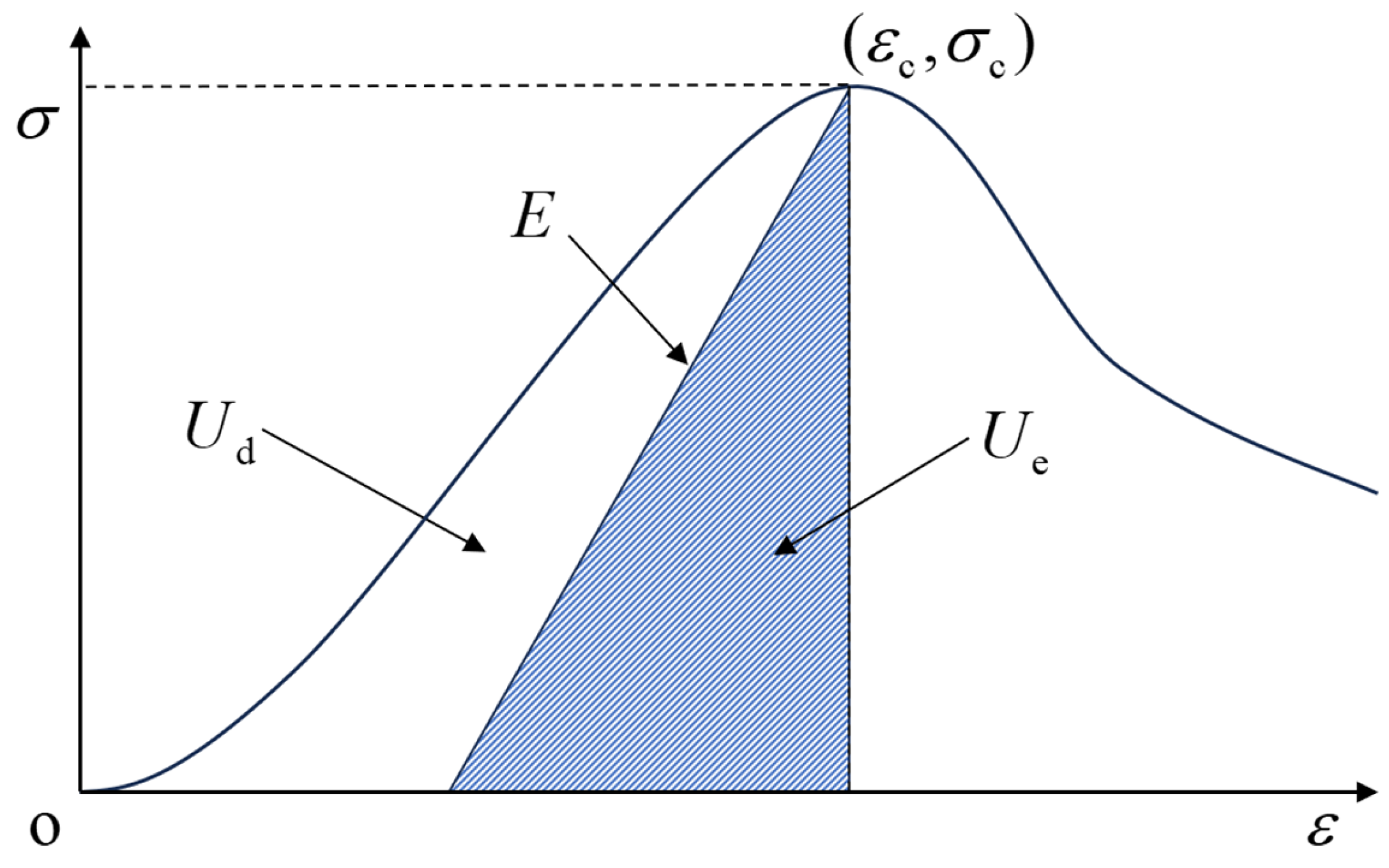
Figure 2.
Schematic Diagram of Energy Calculation in Cyclic Loading and Unloading Tests.
Figure 3.
a) Relationship between elastic potential energy and dissipated energy during cyclic loading and unloading; (b) Schematic diagram of stress‐strain hysteresis loop.
Figure 3.
a) Relationship between elastic potential energy and dissipated energy during cyclic loading and unloading; (b) Schematic diagram of stress‐strain hysteresis loop.
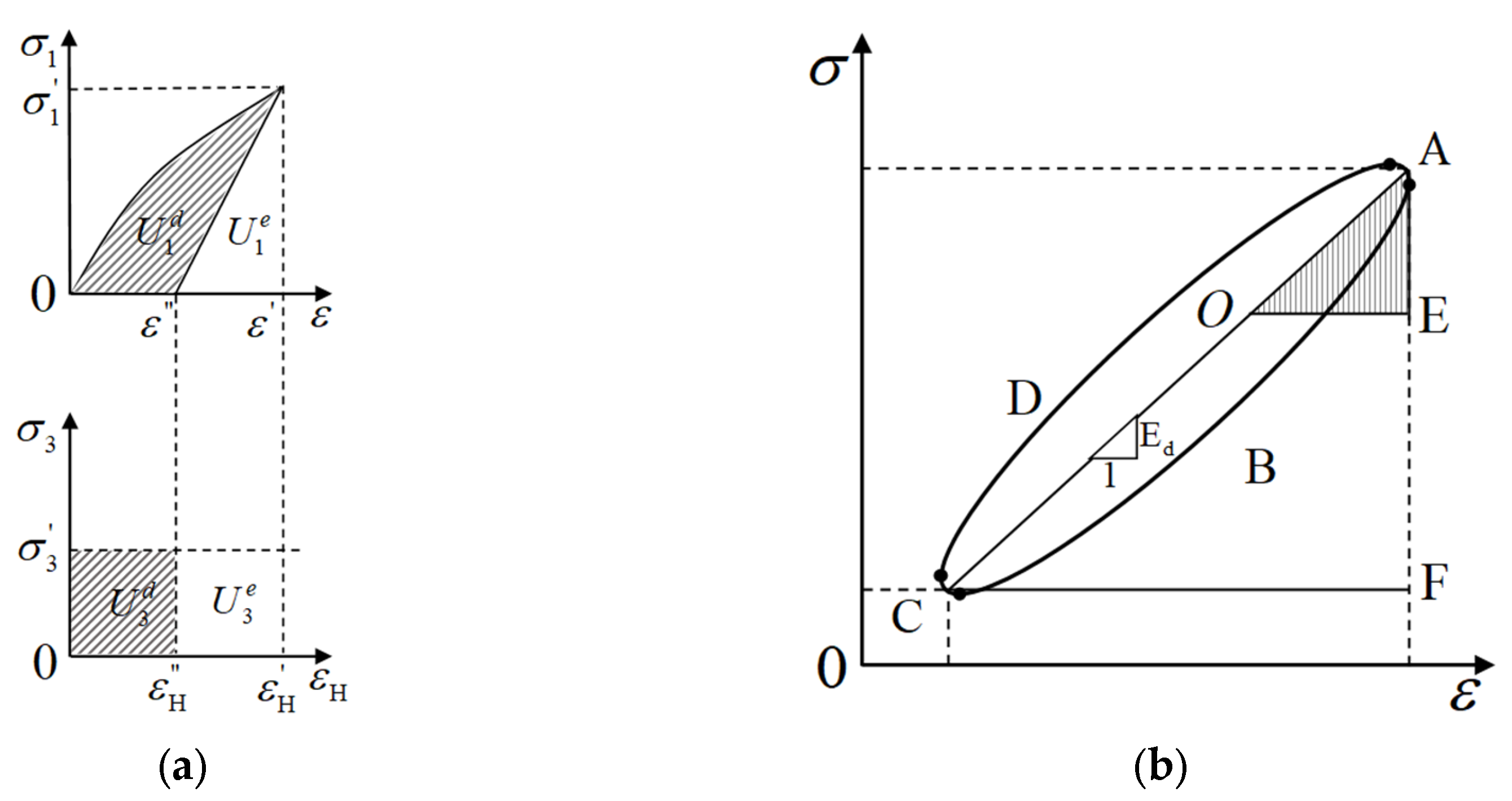
Figure 4.
Influence of intrinsic factors of rocks on their fatigue damage.
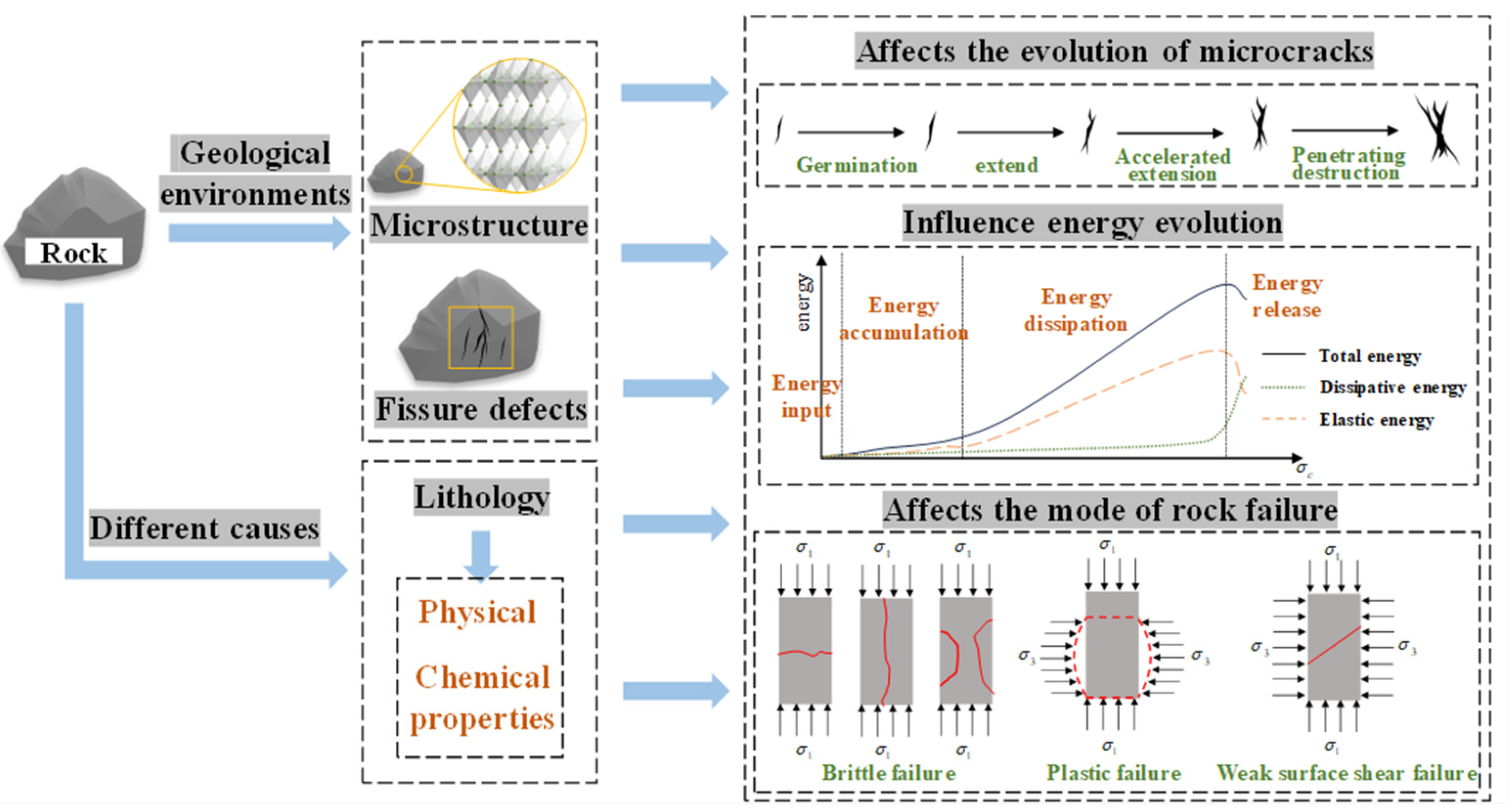
Figure 5.
Various types of pre‐existing defects in rocks [68–73].
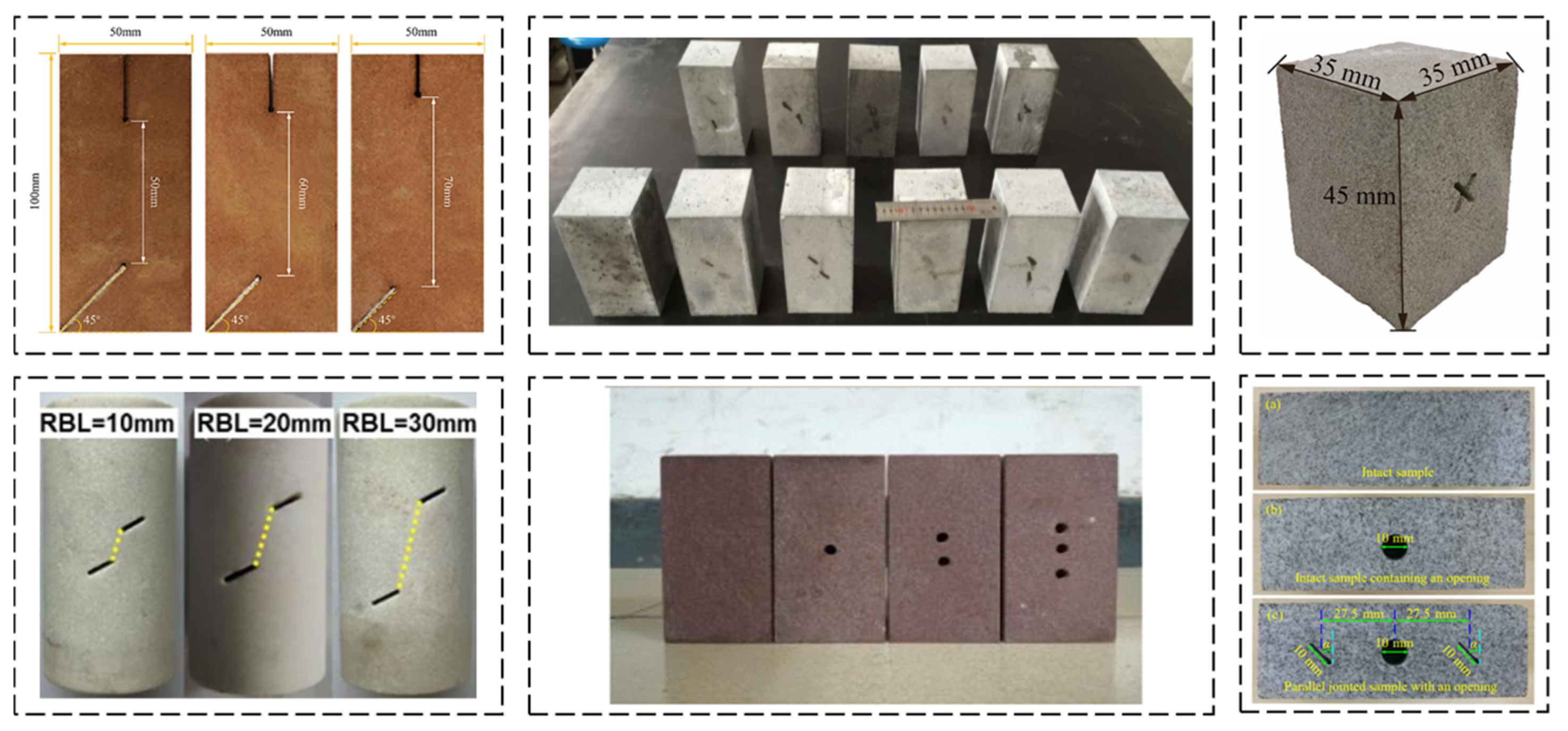
Figure 6.
Mountainous rock masses in China affected by external environmental factors.
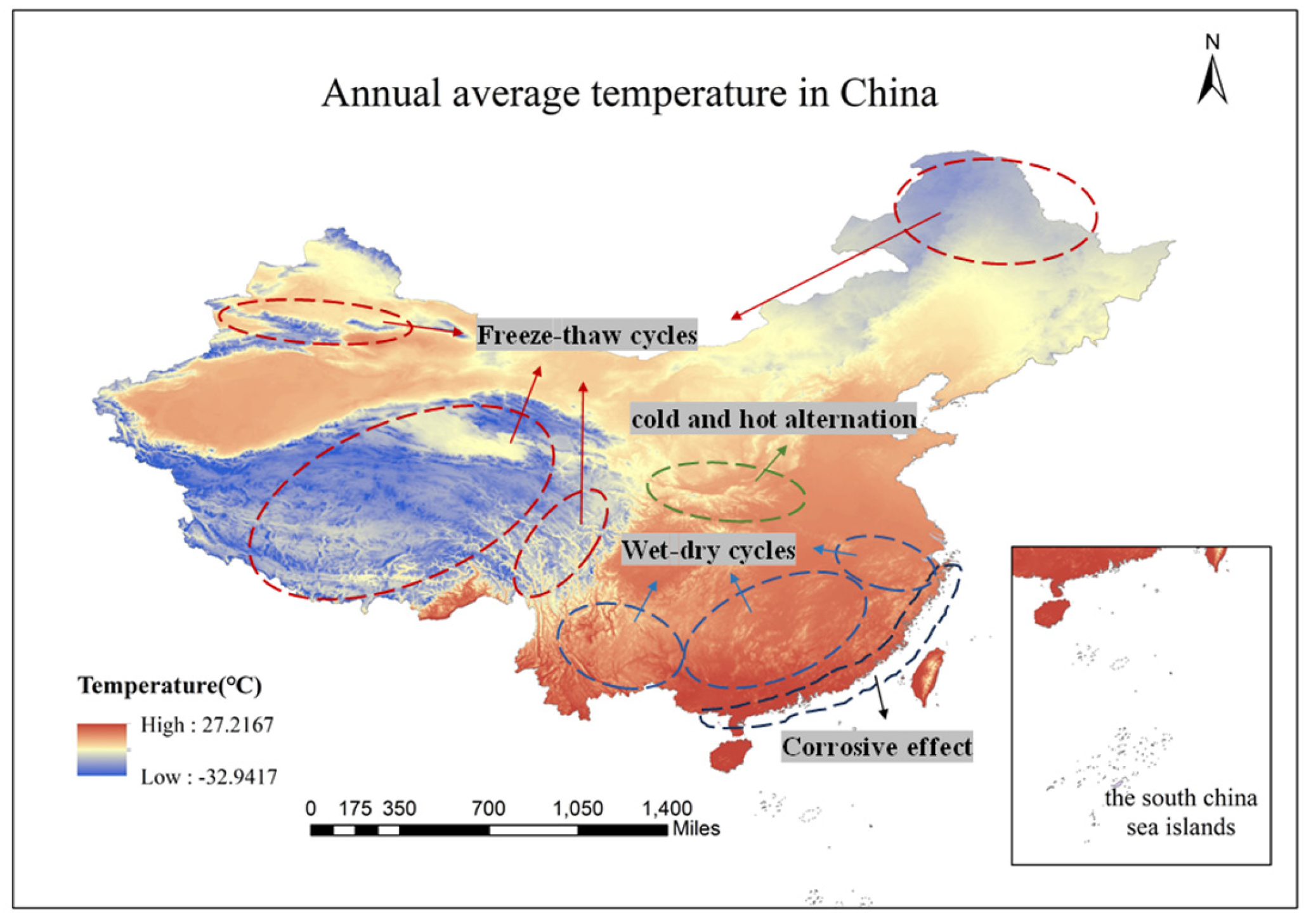
Figure 7.
The Effects of Human Activities and Natural Environments on Rock Loading.
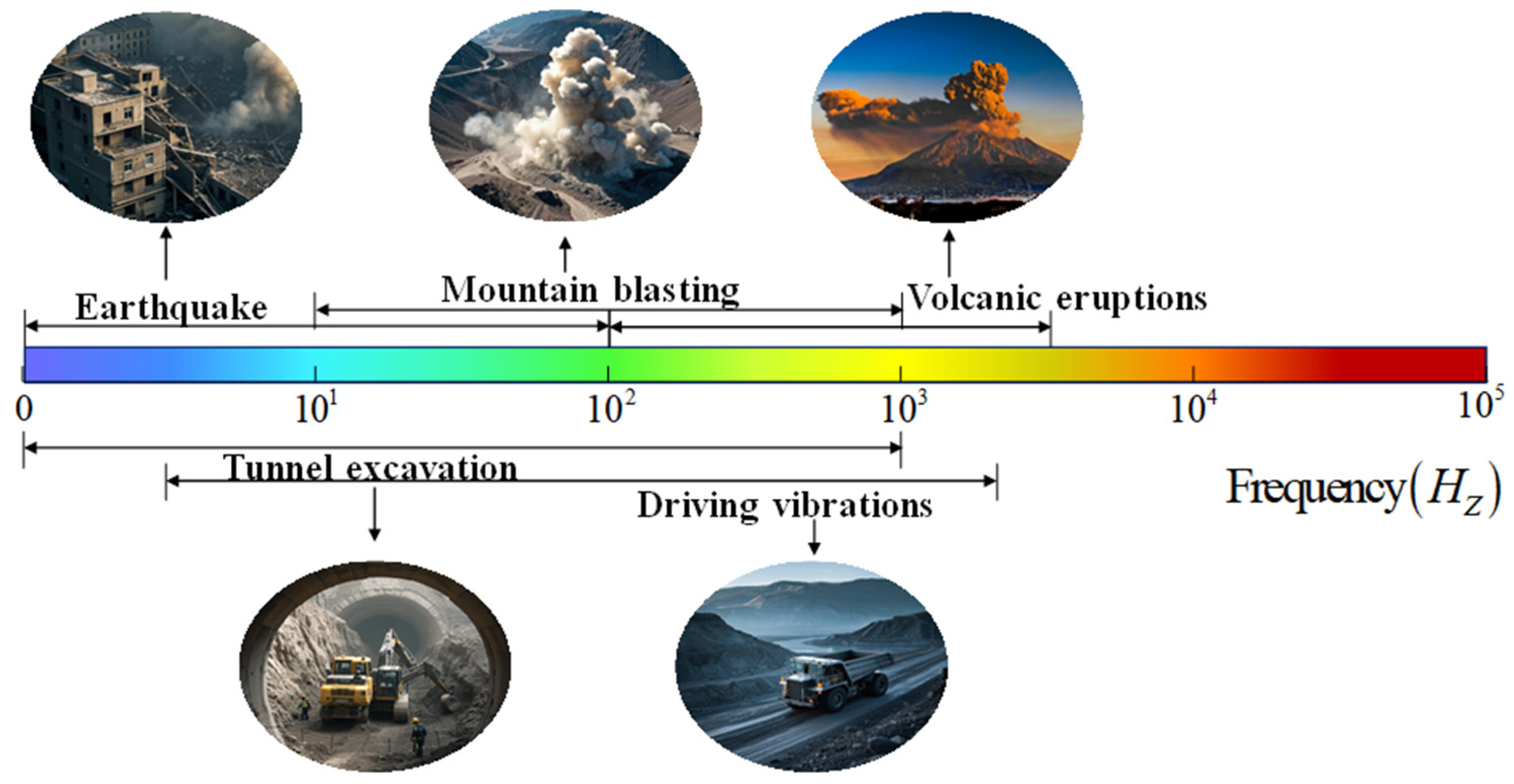
Figure 8.
Common cyclic waveforms.
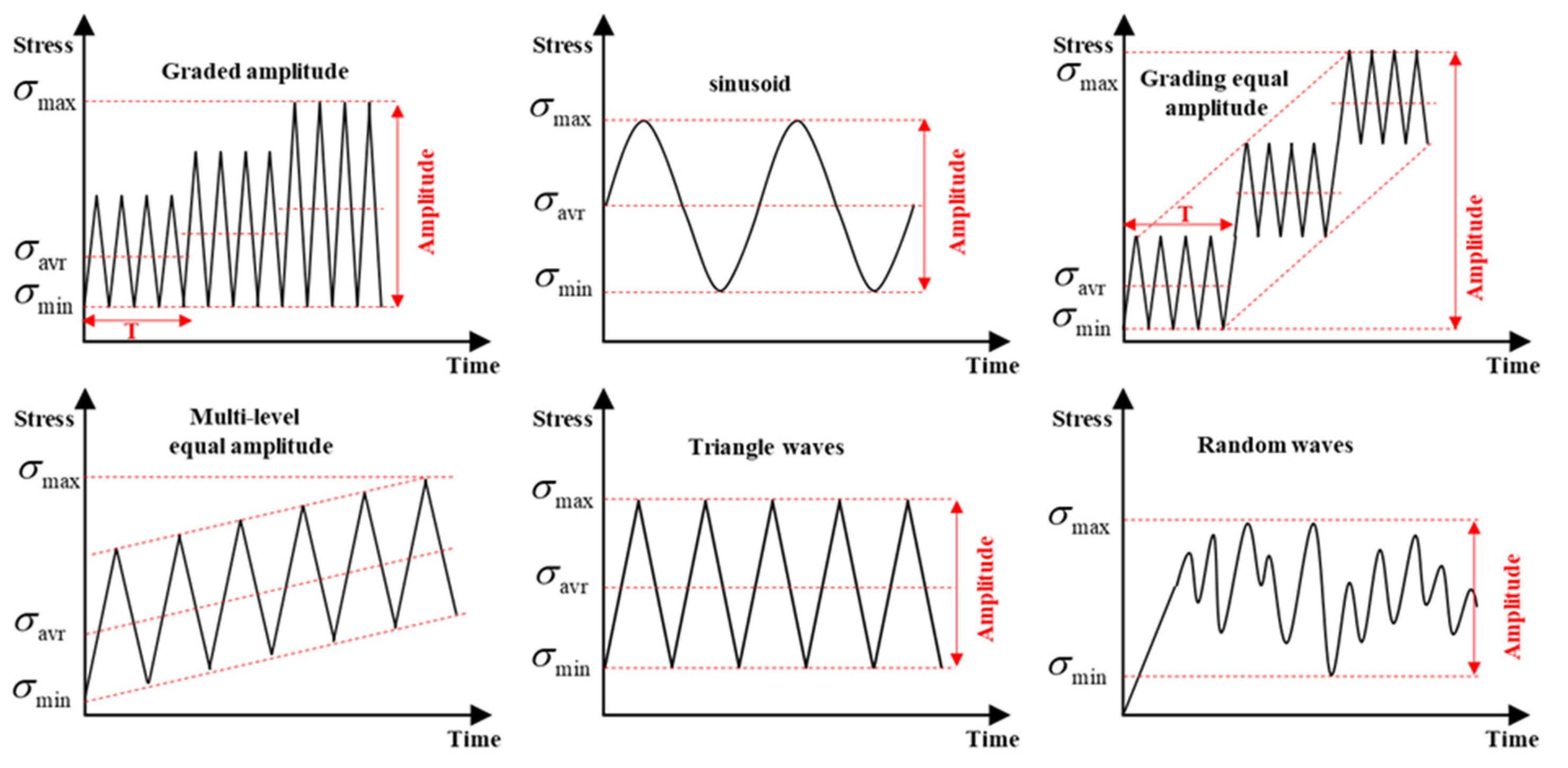
Figure 9.
Different cyclic loading methods. (a). Uniaxial compression. (b). Brazilian splitting. (c). triaxial compression. (d). shear test.
Figure 9.
Different cyclic loading methods. (a). Uniaxial compression. (b). Brazilian splitting. (c). triaxial compression. (d). shear test.
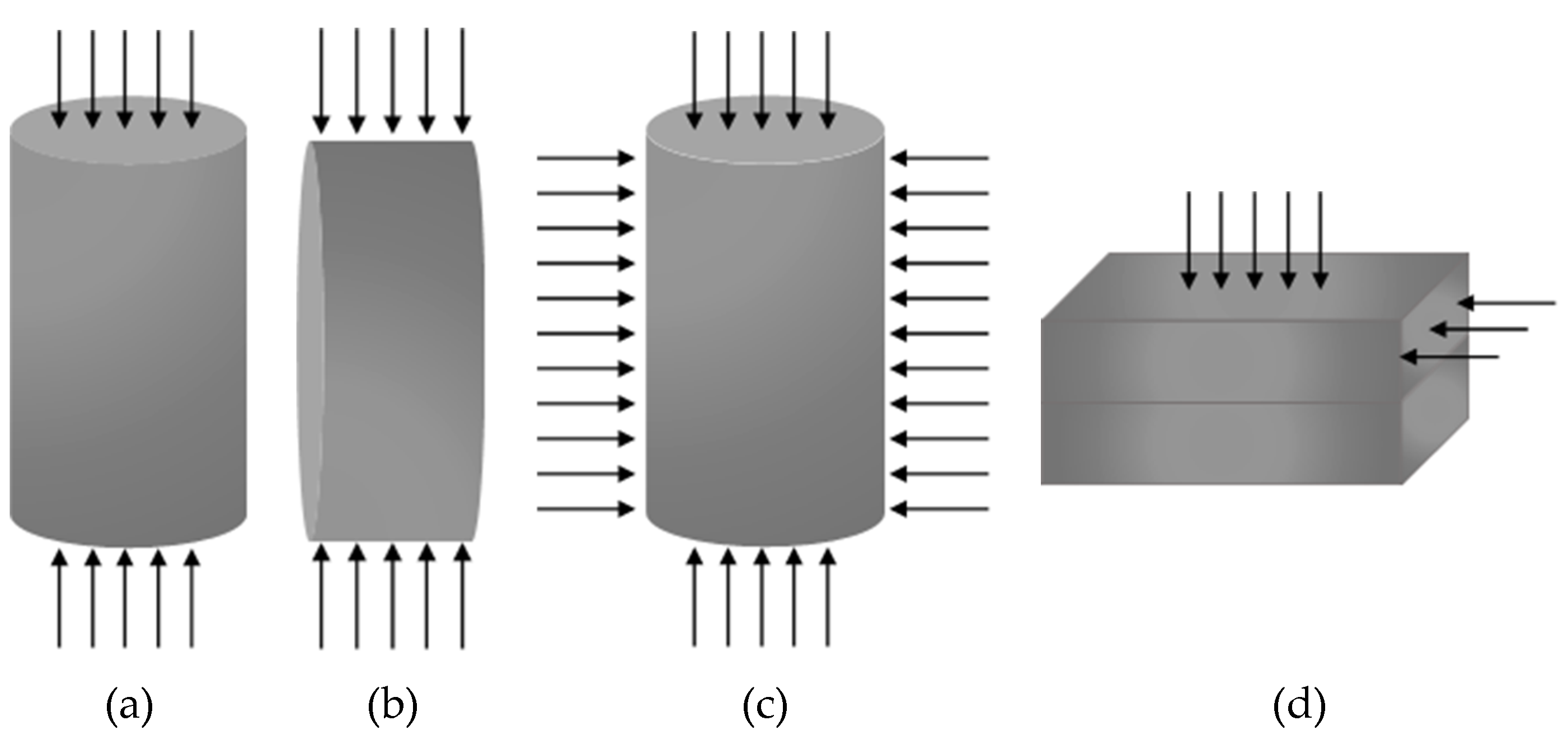
Figure 10.
Conventional Research Methods for Microstructural Changes and Mechanical Properties (a). Acoustic Emission Technique [123]. (b). Infrared Radiation Technique [128]. (c). Numerical Simulation Technique [129].
Figure 10.
Conventional Research Methods for Microstructural Changes and Mechanical Properties (a). Acoustic Emission Technique [123]. (b). Infrared Radiation Technique [128]. (c). Numerical Simulation Technique [129].
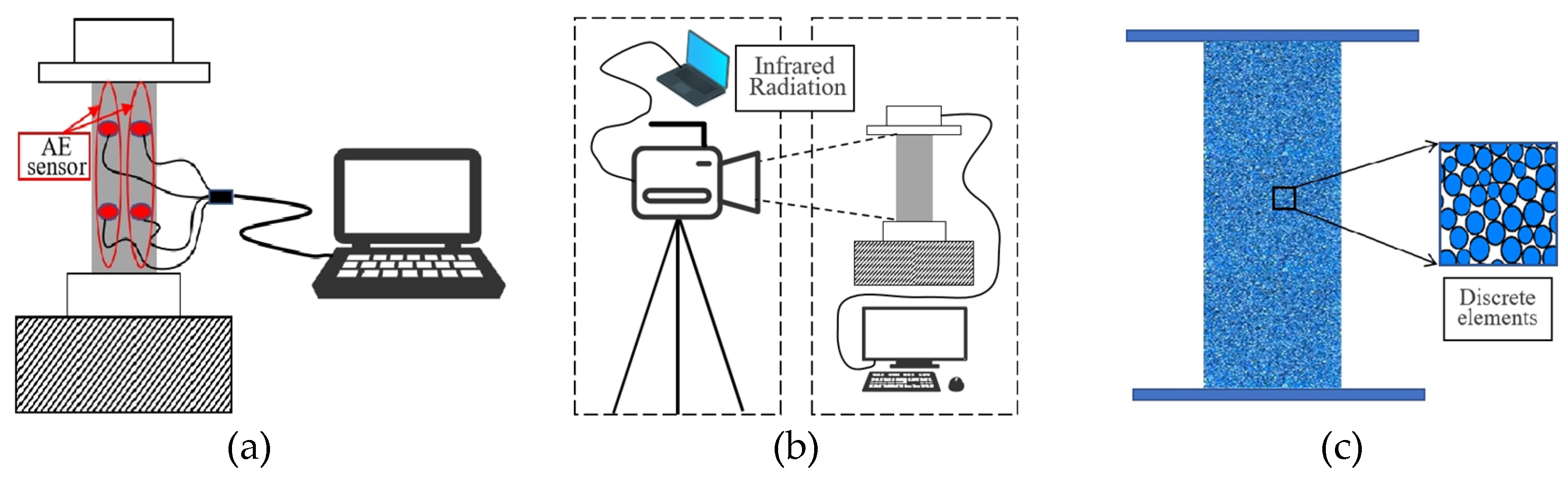
Figure 11.
Energy Evolution and Changes in Crack Quantity During Shearing Process [131].
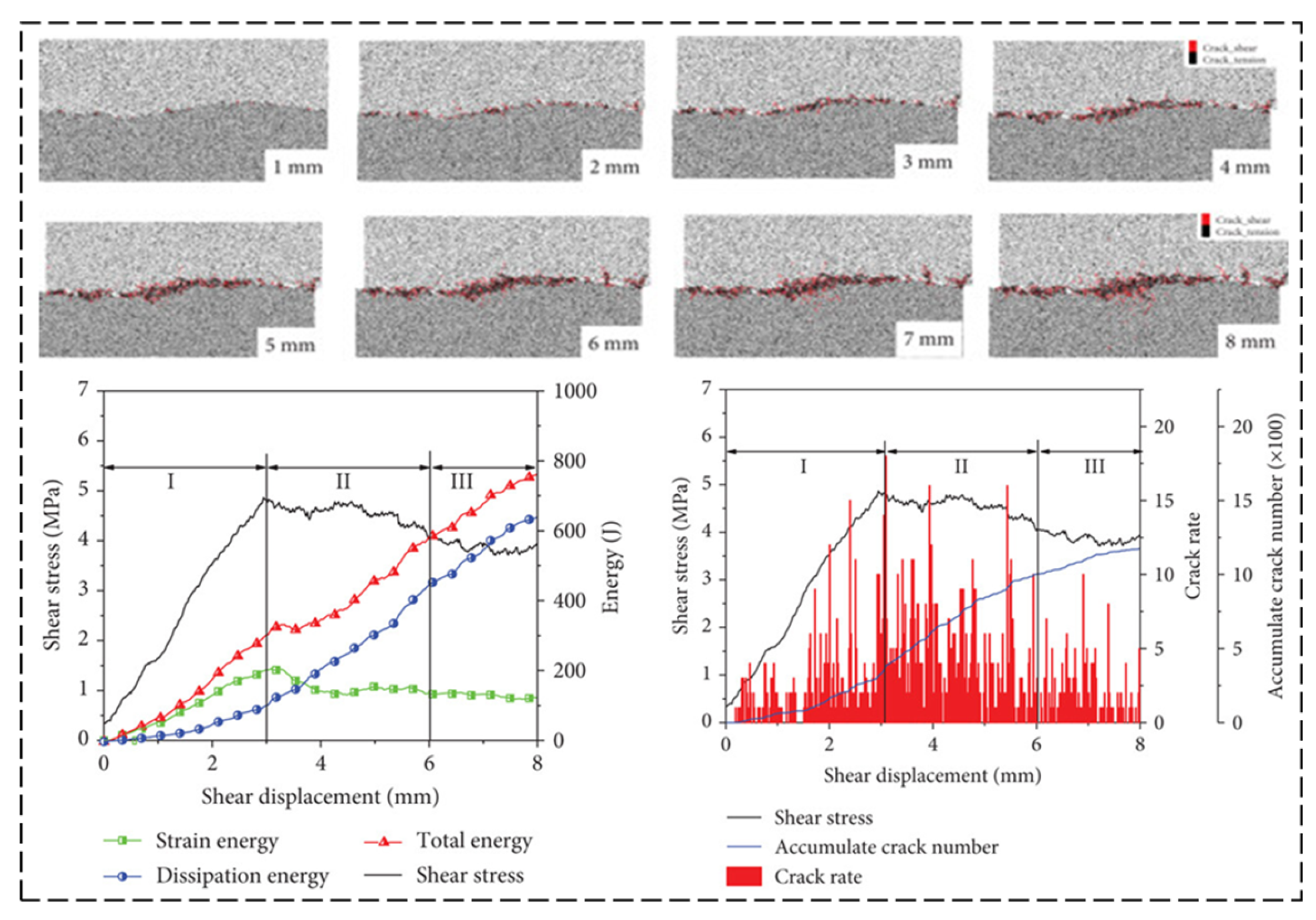
Figure 12.
a) Energy Evolution of Fractures (b) Crack Propagation Diagram (c) Relationship Between Crack Length and Dissipated Energy [132].
Figure 12.
a) Energy Evolution of Fractures (b) Crack Propagation Diagram (c) Relationship Between Crack Length and Dissipated Energy [132].
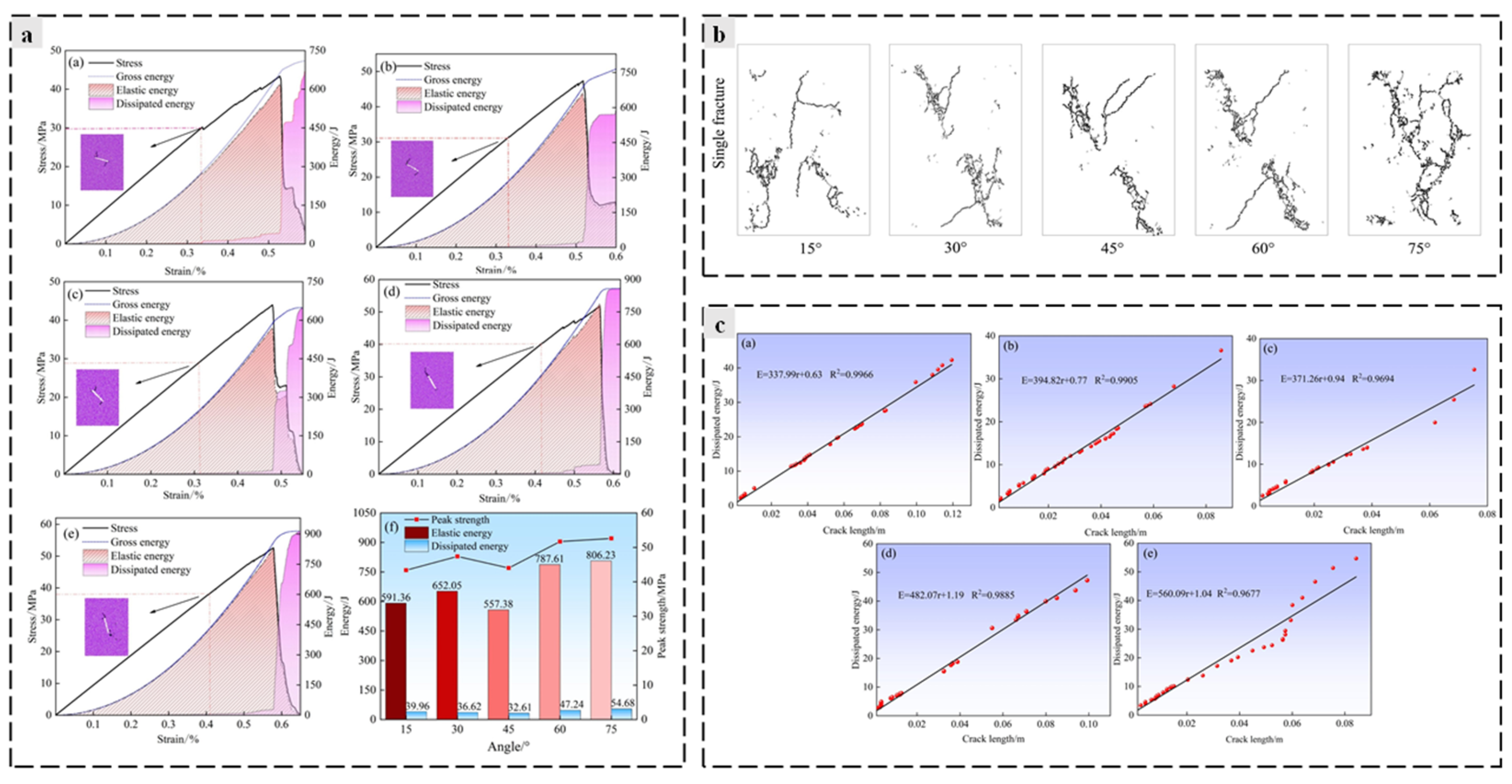
Figure 13.
(A) Curve of Elastic Energy Storage Capacity Index (Ab) and Elastic Energy Growth Rate (ke); (B) Curve of Dissipated Energy Growth Rate (ke); (C) Axial Stress‐Strain Curve [133].
Figure 13.
(A) Curve of Elastic Energy Storage Capacity Index (Ab) and Elastic Energy Growth Rate (ke); (B) Curve of Dissipated Energy Growth Rate (ke); (C) Axial Stress‐Strain Curve [133].
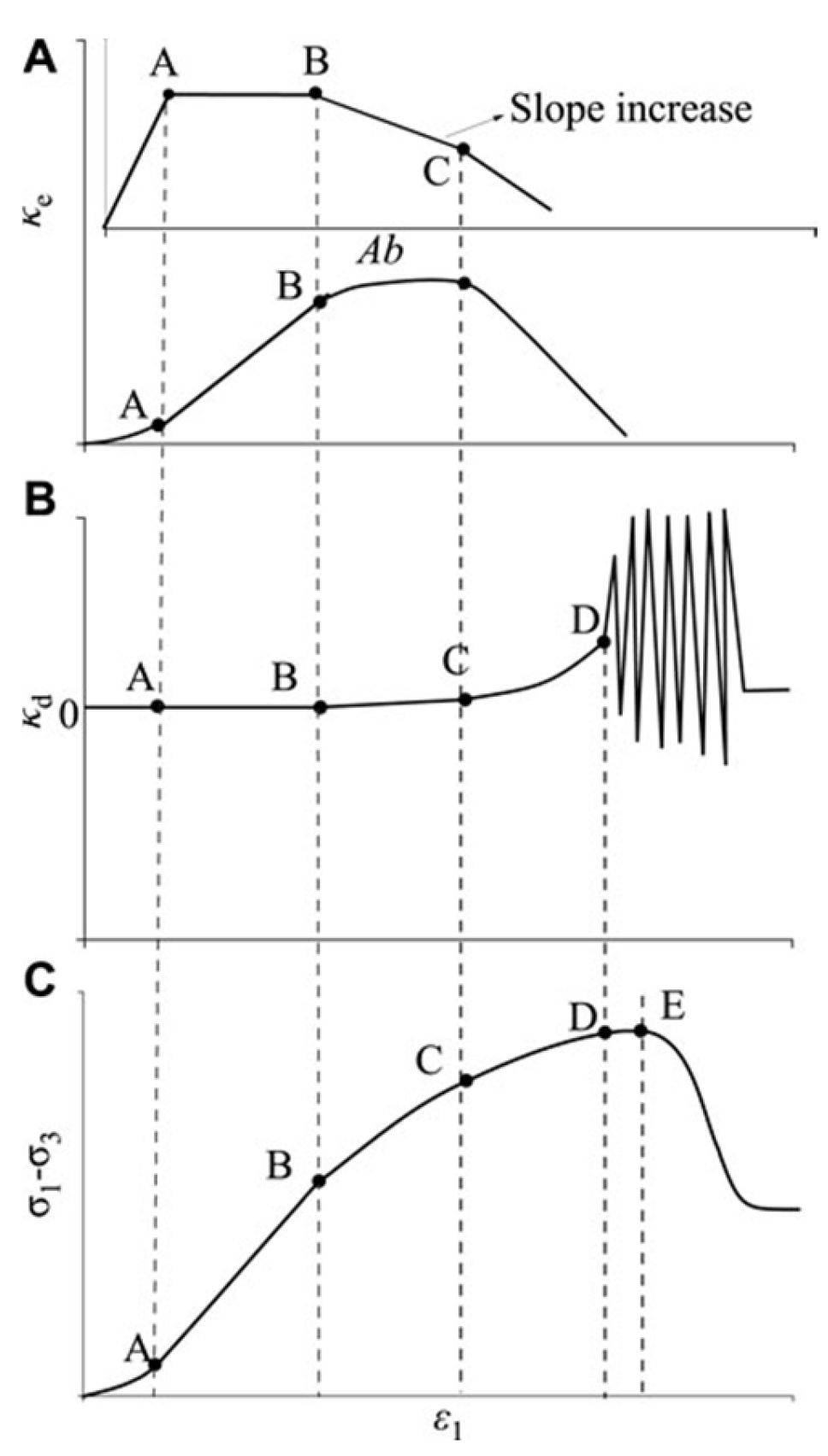
Figure 14.
Numerical simulation and energy field distribution map [160].
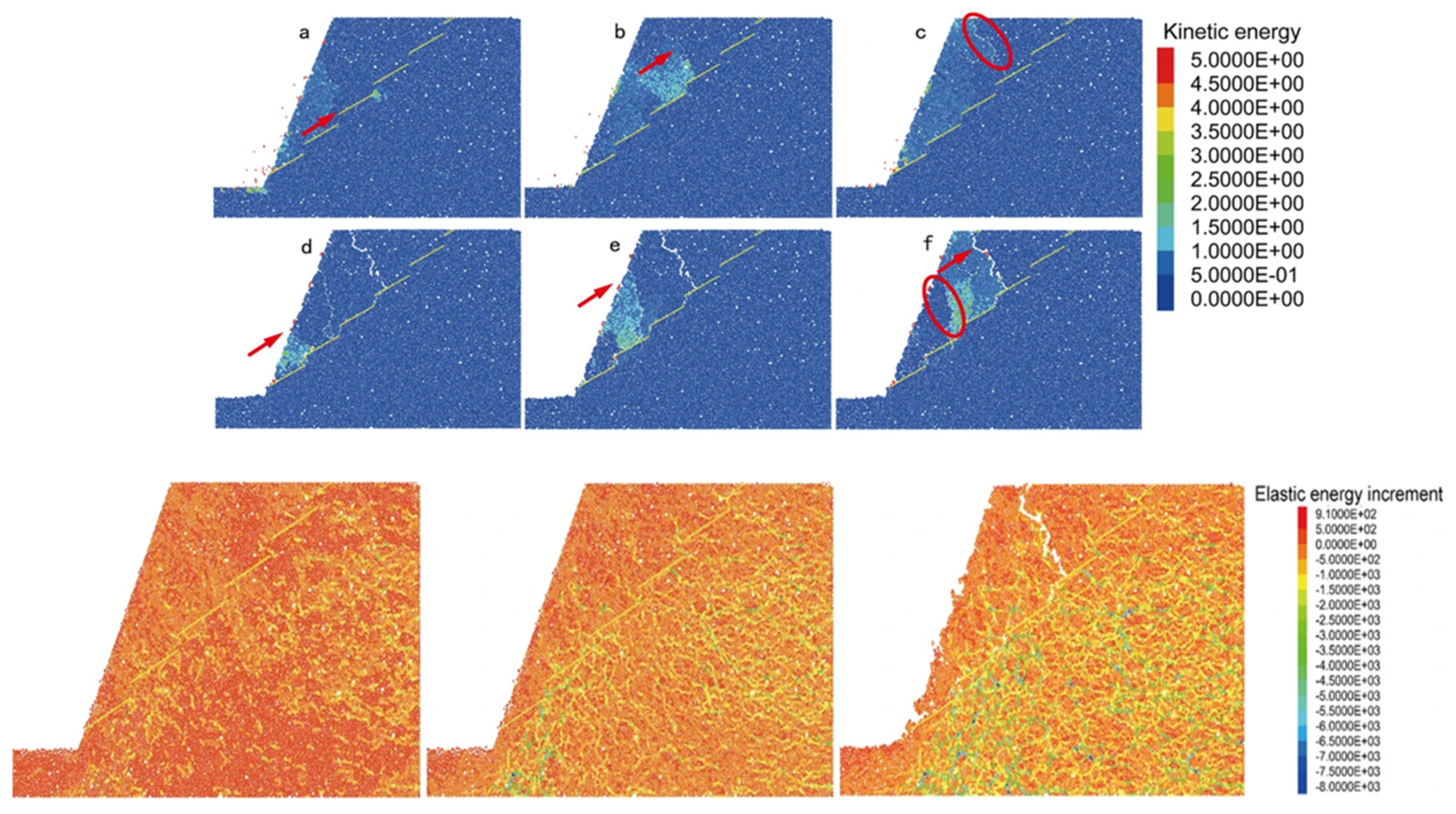

Table 1.
Energy-Based Rock Strength Criteria.
| Reference | Calculation formula | Content |
|---|---|---|
| Tiraviriyaporn, P. et al. [136] |  |
Derive the energy-based strength failure criterion for rock materials based on volumetric strain energy density and deviatoric strain energy density. |
| Xie, H. et al. [137] | 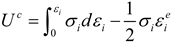 |
Energy dissipation-based strength deterioration criterion for rock units |
| Hu, L. et al. [138] | 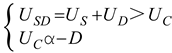 |
Energy criterion for rock strength failure induced by strain burst under cyclic disturbance |
| Cheng, Y. et al. [139] |  |
Rock failure criterion based on elastic strain energy density |
| Hao, T.S. et al. [140] | 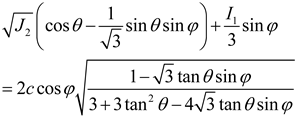 |
Energy-based triple shear energy yield criterion for salt rock |
| Wang, Y. et al. [141] |  |
Energy-derived rock failure criterion |
| Gao, M. et al. [142] |  |
Energy mutation-derived rock failure criterion |




Disclaimer/Publisher’s Note: The statements, opinions and data contained in all publications are solely those of the individual author(s) and contributor(s) and not of MDPI and/or the editor(s). MDPI and/or the editor(s) disclaim responsibility for any injury to people or property resulting from any ideas, methods, instructions or products referred to in the content. |
© 2025 by the authors. Licensee MDPI, Basel, Switzerland. This article is an open access article distributed under the terms and conditions of the Creative Commons Attribution (CC BY) license (http://creativecommons.org/licenses/by/4.0/).
Copyright: This open access article is published under a Creative Commons CC BY 4.0 license, which permit the free download, distribution, and reuse, provided that the author and preprint are cited in any reuse.


