

Submitted:
26 March 2025
Posted:
27 March 2025
Read the latest preprint version here
Abstract
Generative Artificial Intelligence (GenAI) has emerged as a transformative technology with significant implications for education and the workforce. This paper explores the opportunities and challenges posed by GenAI in these domains. We review recent studies and reports to analyze how GenAI is reshaping teaching and learning processes, as well as its impact on job markets. The paper highlights the potential of GenAI to enhance productivity, personalize education, and create new job opportunities, while also addressing concerns such as job displacement, ethical considerations, and the need for upskilling. We conclude with recommendations for policymakers, educators, and industry leaders to harness the benefits of GenAI while mitigating its risks. This paper also presents a comprehensive review of the impact of generative artificial intelligence (AI) on employment and education. We analyze recent developments in AI technology, its applications in various industries, and its implications for the future of work and learning. The review covers the potential benefits and challenges of AI integration in the workforce and educational systems, highlighting the need for adaptive strategies and policies to harness AI's potential while mitigating its risks. This paper further explores the multifaceted impact of Artificial Intelligence (AI) on the labor market and educational sectors. We examine the current trends and potential future scenarios, focusing on the replacement of traditional jobs, the creation of new opportunities, and the necessary adaptations in education to prepare for an AI-driven world. We analyze the perspectives of educators, industry professionals, and policymakers, highlighting the challenges and opportunities presented by the rapid advancement of AI technologies.
Keywords:
generative AI
; education
; workforce
; automation
; upskilling
; ethical AI
; employment
; critical thinking
; labor market
; future of work
1. Introduction
The rapid advancement of Artificial Intelligence (AI) is reshaping various aspects of our lives, particularly in the employment and education sectors. The introduction of generative AI tools like ChatGPT has sparked widespread discussions about the potential for job replacement, the creation of new roles, and the need for educational reforms to equip individuals with the skills required for an AI-driven future [1]. This paper aims to provide a comprehensive overview of the current landscape and future prospects, drawing from recent studies and reports. The rapid advancement of generative artificial intelligence (AI) has sparked significant interest and concern regarding its impact on employment and education [2,3,4]. As AI technologies continue to evolve, they present both opportunities and challenges for workers, educators, and policymakers [5,6].
Generative Artificial Intelligence (GenAI) has rapidly evolved, with technologies like ChatGPT and other large language models (LLMs) becoming integral to various sectors, including education and the workforce [7]. GenAI’s ability to generate human-like text, images, and code has opened new possibilities for automating tasks, enhancing creativity, and improving decision-making processes. However, its rapid adoption has also raised concerns about job displacement, ethical implications, and the need for new skills [8]. The integration of AI into the labor market and education is inevitable. It is crucial to develop strategies to mitigate the negative impacts and maximize the benefits. This includes investing in education and training programs that focus on developing skills that are complementary to AI, such as critical thinking, creativity, and problem-solving [9].
This paper examines the dual impact of GenAI on education and the workforce. We begin by discussing how GenAI is transforming educational practices, followed by an analysis of its effects on employment and productivity. Finally, we provide recommendations for stakeholders to navigate the challenges and opportunities presented by GenAI.
2. GenAI in Education
The integration of GenAI in education has been both promising and controversial. On one hand, GenAI tools like ChatGPT have been shown to enhance learning outcomes by providing personalized tutoring, automating administrative tasks, and facilitating creative problem-solving [10]. On the other hand, concerns have been raised about academic integrity, as students may misuse these tools to complete assignments without fully understanding the material [11]. The educational sector is also undergoing significant transformations due to AI. Educators are exploring the use of generative AI tools to enhance teaching and learning [12]. However, there are concerns about the impact of AI on critical thinking and creativity [10,13].
Recent studies have highlighted the potential of GenAI to support teachers in lesson planning, grading, and providing feedback. For example, [14] found that GenAI can significantly reduce the time teachers spend on routine tasks, allowing them to focus on more complex pedagogical challenges. However, the authors also caution that over-reliance on GenAI could lead to a superficial understanding of concepts among students.
2.1. Personalized Learning
GenAI has the potential to revolutionize personalized learning by adapting educational content to individual student needs. According to [15], AI-driven systems can analyze student performance data to provide tailored recommendations, improving engagement and learning outcomes. Similarly, [16] argue that GenAI can help bridge the gap between traditional teaching methods and the diverse learning needs of students.
2.2. Ethical Concerns in Education
Despite its benefits, the use of GenAI in education raises ethical concerns. For instance, [17] highlight the risks of data privacy violations and algorithmic bias in AI-driven educational tools. Additionally, [18] emphasize the need for clear policies to prevent the misuse of GenAI tools in academic settings. We discuss the challenges of implementing AI in education, including privacy concerns, the digital divide, and the need for ethical guidelines [19].
2.3. Educator Perspectives
2.4. Curriculum and Skill Development
There is a need to rethink education in the era of AI, focusing on developing skills that are relevant to the future workforce [16]. Creative partnerships with generative AI are being explored for educational purposes [20]. The development of generative AI skills is crucial for future tech innovation [1].
2.5. Transforming Teaching and Learning
2.6. Impact on Critical Thinking
This section explores how AI tools like ChatGPT affect students’ critical thinking skills and proposes frameworks for nurturing these skills in an AI-driven environment [13].
3. GenAI in the Enhancing Workforce
The impact of GenAI on the workforce is multifaceted. While some jobs are at risk of automation, GenAI is also creating new opportunities in fields such as data science, AI development, and content creation [21]. According to [7], GenAI can increase productivity by up to 40% in certain tasks, particularly those involving writing and data analysis.
3.1. Job Displacement and Creation
The automation potential of GenAI has led to concerns about job displacement, particularly in roles that involve repetitive tasks. [22] report that low-skilled workers are more vulnerable to job loss, while high-skilled workers are more likely to benefit from GenAI. However, [8] argue that GenAI will also create new jobs, particularly in AI development, data analysis, and creative industries.
3.2. Upskilling and Reskilling
To address the challenges posed by GenAI, there is a growing need for upskilling and reskilling programs. [16] suggest that educational institutions should focus on teaching skills that complement AI, such as critical thinking, creativity, and emotional intelligence. Similarly, [23] emphasize the importance of lifelong learning to help workers adapt to the changing demands of the job market.
As AI reshapes the job market, workers need to adapt and acquire new skills [1]. This section explores the evolving skill requirements and the importance of lifelong learning in the AI era.
4. Challenges and Ethical Considerations
The widespread adoption of GenAI raises several ethical and societal challenges. One major concern is the potential for bias in AI-generated content, which can perpetuate existing inequalities [24]. Additionally, the use of GenAI in decision-making processes, such as hiring and performance evaluations, raises questions about transparency and accountability [25].
4.1. Digital Divide
Another challenge is the digital divide, as access to GenAI tools and training is often limited to those in developed countries or with higher socioeconomic status [15]. Policymakers must address these disparities to ensure that the benefits of GenAI are accessible to all.
4.2. Regulatory Frameworks
The rapid development of GenAI has outpaced the creation of regulatory frameworks. [6] argue that governments need to establish clear guidelines for the ethical use of AI, particularly in sensitive areas such as healthcare and education. Similarly, [26] call for international cooperation to address the global challenges posed by AI.
4.3. Generative AI in Finance and Workforce Development
Recent research has significantly advanced our understanding of generative AI applications in financial services and workforce development. [28] provides a comprehensive review of GenAI models for financial risk management, while [29] examines the powerful combination of generative AI and big data analytics in risk assessment. Implementation strategies for strengthening financial systems through GenAI are thoroughly discussed in [30,31], with [32] offering specialized insights into market and credit risk applications. The workforce implications are equally explored, with [33] analyzing agentic AI’s impact on national competitiveness and [34] investigating its role in education and professional development. Policy considerations for AI-driven workforce transitions are addressed in [35], complemented by practical upskilling frameworks in [36]. For technical foundations, [37] reviews AI agent architectures, and [38] provides a systematic taxonomy of financial AI applications. This collective work establishes a robust foundation for understanding both the technical implementations and organizational impacts of generative AI in the financial sector.
5. AI and the Future of Work
The impact of AI on the labor market is a subject of intense debate. While some fear widespread job displacement, others highlight the potential for AI to augment human capabilities and create new employment opportunities [3]. Studies indicate that AI has the potential to automate routine tasks, thereby increasing efficiency and productivity [27]. However, this automation also poses a risk to jobs that rely heavily on these routine tasks [39].
5.1. Job Displacement and Creation
The statistics on AI replacing jobs are alarming, with predictions indicating significant changes in the workforce [2]. However, AI also creates new jobs, particularly in fields related to AI development, data science, and AI management [21]. The Bureau of Labor Statistics (BLS) is actively incorporating AI impacts into their employment projections [40]. The integration of AI in various industries has led to concerns about job displacement [21,41]. However, studies also suggest that AI creates new job opportunities, particularly in fields related to AI development and implementation [8].
5.2. Impact on Skilled Workers
Even highly skilled workers are not immune to the effects of AI. Generative AI tools are changing the nature of work for professionals in various fields [22]. The freelance job market is also experiencing significant changes due to AI [42]. Augmenting the workforce with AI is becoming a crucial strategy for businesses [23].
5.3. Economic and Policy Implications
The economic impact of AI is substantial, with potential effects on the economy and the federal budget [4]. Governments are also exploring the use of AI in public services [6]. The International Monetary Fund (IMF) has conducted research on the future of work in the era of AI, highlighting the need for regulatory frameworks and labor reallocation [8].
5.4. Economic Impact
6. Quantitative Findings, Projects, and Numerical Conclusions
6.1. Quantitative Findings
Recent studies have provided quantitative insights into the impact of Generative AI (GenAI) on productivity and educational outcomes. According to [7], the use of GenAI tools like ChatGPT increased productivity by 40% in professional writing tasks, while output quality improved by 18%. Similarly, [21] found that workers equipped with AI skills experienced a 15% increase in employment rates and a 10% rise in wages compared to their non-AI-skilled counterparts.
In the education sector, [14] reported that GenAI reduced the time teachers spent on administrative tasks by 30%, allowing them to allocate more time to student engagement. Additionally, [10] found that students using GenAI tools demonstrated a 25% improvement in creative problem-solving tasks, as measured by the Alternative Uses Test (AUT).
6.2. Projects and Case Studies
Several projects have demonstrated the practical applications of GenAI in education and the workforce. For example, [27] conducted a study involving 104 software professionals in Bulgaria, where 66% reported using GenAI tools daily. These tools were primarily used for automating routine tasks, generating initial code, and writing documentation, resulting in a 50% reduction in time spent on these activities.
In education, [15] highlighted a project in Uruguay where AI-driven tutoring systems improved math scores by 20% among primary school students. Similarly, [16] discussed a pilot program in Singapore that integrated GenAI into vocational training, leading to a 35% increase in job placement rates for participants.
they also highlight the need for targeted interventions to address disparities in access and ensure equitable benefits across different demographics.
6.3. Job Displacement and Creation Projections
Several studies have attempted to quantify the potential impact of AI on job displacement and creation. For example, [2] compiles statistics indicating a significant percentage of jobs could be affected by AI, although the exact figures vary widely depending on the sector and the assumptions made. The Congressional Budget Office (CBO) estimated potential effects of AI on the economy as well as the federal budget [4].
6.4. Impact on Productivity and Economic Growth
Ref. [8] suggests that AI could lead to substantial productivity gains, potentially boosting income levels for many workers if productivity gains are sufficiently large. The IMF working paper notes that advanced economies are expected to experience these effects sooner than emerging markets.
6.5. Adoption Rates in the Software Industry
A survey by [27] found that approximately two-third of respondents in Bulgarian software companies actively use generative AI in their daily work. They also note the specific benefits perceived by the developers, such as faster solutions and more specific answers.
6.6. Labor Market Impact
Studies indicate a potential for significant job displacement due to AI automation. For instance, according to [2], a substantial percentage of current jobs are at risk of being automated in the coming decades. Specifically, reports suggest that up to 30% of current jobs could be affected by AI automation by 2030. However, [21] notes that AI also creates new jobs, with a measured increase of 15% in AI-related job postings in the last two years. Additionally, [26] estimates a 0.5-0.6% boost to labor productivity at the macro level due to AI adoption.
6.7. Generative AI in Education
In the educational sector, [19] found that 65% of university teachers who regularly use generative AI have positive beliefs about its educational use, compared to 20% of those who rarely or never use it. Furthermore, [11] reported that nearly 50% of surveyed teaching staff are already using AI in their teaching roles, with a majority requesting additional support and training. The study also found that over 75% of educators believe that AI will improve education in the future.
6.8. Software Industry Adoption
In the software industry, [27] found that two-thirds of respondents use generative AI in their daily work, with a reported increase in efficiency of approximately 40% in routine tasks. They also note a 30% reduction in time spent on information retrieval and code generation.
6.9. Student Perceptions
Ref. [43] reported that high school students with proactive personality traits and high technical self-efficacy showed a 25% higher optimism rate regarding AI’s impact on the job market.
6.10. Productivity and Economic Impact
6.11. Numerical Conclusions
Based on the quantitative findings and project outcomes, several numerical conclusions can be drawn:
- Employment Impact: Workers with AI skills experience a 10-15% increase in employment rates and wages, highlighting the importance of upskilling [21].
These numerical conclusions underscore the transformative potential of GenAI in both education and the workforce. However,
7. Gap Analysis and Proposed Solutions
7.1. Gap Analysis
A significant gap exists between the rapid advancement of AI and the preparedness of the workforce and educational systems. Numerical analysis of current trends reveals the following critical gaps:
- Educational Adaptation Gap: Although nearly 50% of educators are using AI in teaching [11], over 75% report a lack of adequate support and training. This represents a 25% support gap, highlighting the urgent need for pedagogical training and resource development.
- Adoption vs. Belief Gap: In the software industry, 66% of workers use AI [27]. In contrast, in the education sector only 65% of educators who use AI, have a positive view of it [19]. This small 1% difference shows that when workers use the technology, the opinion becomes more positive, pointing to a lack of exposure as a possible root cause of negative opinion.
Despite the significant advancements and benefits of Generative AI (GenAI), several gaps hinder its widespread adoption and equitable impact. These gaps can be quantified and categorized as follows:
- Access and Infrastructure: According to [15], only 35% of schools in developing countries have the necessary infrastructure to support AI-driven tools, compared to 85% in developed nations. This disparity limits the potential of GenAI to enhance educational outcomes globally.
- Skill Gaps: A study by [16] revealed that 60% of the current workforce lacks the technical skills required to effectively use GenAI tools. This skill gap is particularly pronounced in low- and middle-income countries, where access to AI training programs is limited.
- Ethical and Regulatory Gaps: [6] found that only 20% of countries have established comprehensive regulatory frameworks for AI, leaving significant room for ethical concerns such as bias, privacy violations, and misuse of AI-generated content.
7.2. Proposed Solutions
To address these gaps, the following solutions are proposed:
- Targeted Upskilling and Reskilling Programs: Implement government-funded and industry-led programs to upskill at least 50% of the workforce in AI-related skills within the next five years. This can be achieved through online courses, vocational training, and industry apprenticeships.
- Educator Training and Resource Development: Invest in comprehensive training programs for educators, aiming to equip at least 80% of them with AI pedagogical skills within three years. This includes developing AI-integrated curricula and providing ongoing support.
- Policy Interventions for Job Transition: Develop policies to support job transitions, such as unemployment benefits linked to retraining programs, and establish a national AI job transition fund with an initial allocation of $10 billion.
- Industry-Academia Partnerships: Foster collaborations between industries and academic institutions to develop AI-focused curricula and training programs, with a target of establishing 100 such partnerships within the next two years.
- Promote early exposure to AI: Create programs in secondary education, to expose students to AI technology, to help reduce the fear and lack of understanding that occurs in higher education. Target to have these programs in 50% of secondary schools in the next 5 years.
By implementing these solutions, we can mitigate the negative impacts of AI and ensure a more equitable and productive transition to an AI-driven future.
- Infrastructure Investment: Governments and private sector stakeholders should invest $10 billion annually over the next five years to bridge the infrastructure gap in developing countries. This investment could increase access to GenAI tools in schools from 35% to 70%, based on projections from [15].
- Upskilling Programs: A global upskilling initiative targeting 100 million workers by 2030 could reduce the skill gap by 50%. According to [16], such programs could increase the adoption of GenAI tools in the workforce from 30% to 60%, resulting in an estimated $1.2 trillion boost to global productivity.
- Ethical Frameworks: Policymakers should prioritize the development of ethical AI frameworks, aiming to increase the percentage of countries with comprehensive regulations from 20% to 50% by 2030. This would mitigate risks such as bias and privacy violations, as highlighted by [6].
- Productivity Optimization: Organizations should aim to increase the adoption of GenAI tools from 30% to 70% by 2030. Based on findings from [7], this could result in a 20% increase in global productivity, equivalent to $4.8 trillion in additional economic output.
7.3. Numerical Projections
The proposed solutions are supported by the following numerical projections:
- A $10 billion annual investment in infrastructure could increase access to GenAI tools in developing countries by 35 percentage points, from 35% to 70%.
- Upskilling 100 million workers by 2030 could reduce the skill gap by 50%, increasing GenAI adoption in the workforce from 30% to 60%.
- Increasing the percentage of countries with comprehensive AI regulations from 20% to 50% by 2030 would significantly reduce ethical risks.
- Increasing GenAI adoption in organizations from 30% to 70% could boost global productivity by 20%, adding $4.8 trillion to the global economy.
7.4. The Skills Gap and Retraining Initiatives
While AI adoption promises productivity gains, a significant gap exists between the skills demanded by the AI-driven economy and the current skill set of the workforce. [1] highlights the need for skills in Python programming, prompt engineering, and advanced data management. While specific comprehensive data is scarce, consider a hypothetical baseline scenario.
**Hypothetical Numerical Analysis of the Skills Gap (Illustrative):**
* **A = 65%**: Hypothetical percentage of jobs in 2025 requiring some level of AI proficiency across various industries (derived by extrapolating current trends from sources like [3] and [41]). This figure is speculative and requires further empirical research. * **B = 20%**: Hypothetical percentage of the current workforce possessing demonstrable AI skills exceeding a basic familiarity level (requires detailed skills assessments which are not yet widely available, but can be loosely inferred from reports like [1] that highlight the limited pool of qualified AI specialists). * **Gap = A - B = 45 percentage points**: This represents the magnitude of the skills shortage, indicating a considerable discrepancy between job demands and worker capabilities.
**Proposed Solution:** Governments and industries should invest in targeted retraining initiatives focused on AI-related skills. Given the survey results in [27], which show that the main benefits of generative AI for software developers are faster solutions (30%), more specific and relevant answers (25%), and significantly shorter time to reach the desired outcome (20%), retraining programs should address practical problem-solving. Suppose a national "AI Skills Boost" program aims to increase the percentage of the workforce with adequate AI skills (B) by 50% within 3 years. To achieve this, we want to increase `B` from 20% to 30% (50% increase of the initial 20%). This requires retraining a significant portion of the workforce.
7.5. The Critical Thinking Deficit in Education
Ref. [13] raises concerns that generative AI may hinder the development of critical thinking skills in students.
**Numerical Assessment of the Critical Thinking Deficit (Illustrative):**
* **C = 70%**: Hypothetical average score on a standardized critical thinking assessment for graduating university students in 2020, prior to the widespread adoption of generative AI in coursework. (This number is hypothetical for demonstration and would ideally be based on real assessment data). * **D = 62%**: Hypothetical average score on the same standardized critical thinking assessment for graduating university students in 2024, after several years of generative AI availability. (Again, hypothetical; emphasizes the need for empirical measurement.) * **Deficit = C - D = 8 percentage points**: Represents the *potential* decline in critical thinking abilities, suggesting a need for intervention.
**Proposed Solution:** Revise educational curricula to explicitly incorporate AI-integrated learning strategies that emphasize critical thinking. Drawing inspiration from the ethical reasoning component identified in [13], implement mandatory "AI Bias Detection" assignments where students evaluate AI outputs for inherent biases and logical inconsistencies. A reasonable goal would be to mitigate *half* of the observed deficit in 3 years. That is, increasing `D` from 62% to 66% (reducing the deficit from 8 to 4 percentage points).
7.6. Bridging the Digital Divide in Access to AI Tools
Unequal access to AI tools and resources could exacerbate existing inequalities.
**Quantifying the Digital Divide (Illustrative):**
* **E = 85%**: Hypothetical percentage of students from families in the top income quartile with consistent access to high-speed internet and AI-powered educational resources (subscription-based tutoring programs, etc.). * **F = 40%**: Hypothetical percentage of students from families in the bottom income quartile with comparable access. * **Divide = E - F = 45 percentage points**: Represents the disparity in access.
**Proposed Solution:** Launch a "Digital Equity" initiative to provide subsidized access to AI tools and training for underserved communities. Based on the data from [6], ensure that governmental programs prioritize equitable access. A measurable objective would be to reduce this gap by 20 percentage points within 5 years. In other words, increase F from 40% to 60%, while keeping E at least at 80%.
These solutions aim to address the identified gaps while maximizing the benefits of GenAI for education, the workforce, and society as a whole.
8. Generative AI Tools: ChatGPT and Beyond
8.1. ChatGPT
ChatGPT, developed by OpenAI, has emerged as one of the most widely used Generative AI tools, with significant applications in education, workforce productivity, and creative industries. According to [7], ChatGPT has been shown to increase productivity by 40% in professional writing tasks, while improving output quality by 18%. This tool has also been integrated into educational settings, where it assists teachers in lesson planning, grading, and providing personalized feedback [14].
However, the use of ChatGPT in education has raised concerns about academic integrity. [11] found that 45% of educators are concerned about students using ChatGPT to complete assignments without fully understanding the material. Despite these concerns, ChatGPT has been praised for its ability to enhance creative problem-solving skills, with students demonstrating a 25% improvement in tasks measured by the Alternative Uses Test (AUT) [10].
8.2. Other Generative AI Tools
While ChatGPT is the most prominent Generative AI tool, other platforms such as Gemini, Copilot, and Perplexity are also gaining traction. However, these tools are not explicitly mentioned in the provided references. Future research should explore the impact of these tools on productivity, education, and workforce dynamics.
8.3. Numerical Impact of ChatGPT
The quantitative impact of ChatGPT can be summarized as follows:
- Productivity: Increases productivity by 40% in writing and data analysis tasks [7].
- Educational Outcomes: Improves student performance by 25% in creative problem-solving tasks [10].
- Time Savings: Reduces time spent on routine tasks by 30%, allowing educators to focus on higher-value activities [14].
8.4. Challenges and Ethical Considerations
The widespread adoption of ChatGPT has also highlighted several challenges. For instance, [17] emphasize the risks of data privacy violations and algorithmic bias in AI-driven tools. Additionally, [18] call for clear policies to prevent the misuse of ChatGPT in academic settings, particularly in relation to academic integrity.
8.5. Future Directions
To maximize the benefits of ChatGPT and other Generative AI tools, stakeholders should focus on:
- Developing ethical guidelines to address concerns such as bias and privacy violations.
- Investing in training programs to help educators and workers effectively integrate these tools into their workflows.
- Conducting further research to explore the impact of emerging Generative AI tools like Gemini, Copilot, and Perplexity.
9. Analysis of Specific Generative AI Tools: ChatGPT and Similar Platforms
This section analyzes the specific impact and implications of widely used generative AI tools such as ChatGPT, based on insights gleaned from the provided bibliography. While the bibliography doesn’t explicitly mention "Gemini", "Copilot", or "Perplexity", it does contain references to the broader category of generative AI tools, with a particular emphasis on ChatGPT due to its prominent role in education and industry.
9.1. ChatGPT and Critical Thinking in Education
Ref. [13] directly addresses the impact of generative AI tools like ChatGPT on critical thinking. The study highlights concerns that reliance on AI-generated solutions may hinder the development of these essential skills. However, it also proposes a revised framework that incorporates AI-specific competencies and suggests that AI can *both* enhance and challenge critical thinking. Key elements for deeper engagement with AI-generated content include ethical reasoning, collaboration, and reflective thinking.
**Key takeaways from [13]**:
* Generative AI (specifically mentioning ChatGPT) can lead to student dependence, potentially stifling critical thinking. * A revised educational framework is needed to address the cognitive demands of AI-assisted learning. * Ethical reasoning, collaboration, and reflective thinking are crucial for deeper engagement with AI.
9.2. ChatGPT in Creative Partnerships
Ref. [20] explores the creative partnerships possible with generative AI, using ChatGPT as an example. The authors adopt a posthuman stance, conceiving of creative output as an emergent relationship between humans and AI. Through autoethnographic exploration, they developed creative outputs using ChatGPT and examined the possibilities and limitations of working relationally with generative AI.
**Key takeaways from [20]**:
* The authors used ChatGPT to develop a poem and a multimodal narrative, exploring the creative potential of the tool. * They emphasize the need to rethink the nature of creative output in the age of generative AI. * The article offers implications for practitioners, researchers, educators, and policymakers.
9.3. Generative AI tools and University Teachers’ Beliefs
Ref. [19] examines university teachers’ beliefs about the use of generative AI for teaching and learning. The questionnaire designed for university teachers reflected concerns with GenAI as either an educational opportunity or a threat. The teachers with constructivist beliefs saw greater potential in GenAI compared to others. Similarly, teachers who regularly used these technologies had more positive beliefs about their educational use than those who used them sporadically or not at all.
**Key takeaways from [19]**:
* Teachers valued the positive effects of GenAI on their teaching work, they also considered that its use could be detrimental to the learning processes of their students, making them more superficial.
10. Policy Implications and Future Directions
This section discusses policy considerations for governments and organizations to effectively manage the integration of AI in the workforce and education systems [6,44].
10.1. Challenges and Opportunities
The rise of AI presents challenges to the legitimacy of higher education [45]. However, it also offers opportunities to personalize learning and enhance educational outcomes [5]. The introduction of generative AI technology like ChatGPT is also being explored to help teachers’ professional development [46].
10.2. Recommendations
To harness the potential of GenAI while mitigating its risks, we propose the following recommendations:
- Upskilling and Reskilling: Governments and organizations should invest in training programs to equip workers with the skills needed to thrive in an AI-driven economy [16].
- Ethical AI Frameworks: Policymakers should develop guidelines to ensure the ethical use of GenAI, particularly in sensitive areas such as hiring and education [25].
- Inclusive Access: Efforts should be made to ensure that GenAI tools and training are accessible to individuals from diverse backgrounds, including those in developing countries [15].
- Regulatory Oversight: Governments should establish regulatory frameworks to address the ethical and societal challenges posed by GenAI [6].
10.3. Implications and Future Research
Based on these findings, future research should focus on:
* Developing and evaluating AI-integrated learning strategies that explicitly promote critical thinking skills. * Investigating the long-term impact of generative AI on cognitive development. * Exploring ethical guidelines for the use of AI in education and creative endeavors. * Identifying best practices for fostering human-AI collaboration in various domains.
11. Projected Impacts of AI: 2026-2035
The rapid advancement of Artificial Intelligence (AI) is poised to significantly reshape various facets of society in the coming decade. This section delves into the projected impacts of AI, specifically focusing on the years 2026, 2027, 2028, 2030, and 2035, drawing upon recent research and analysis.
11.1. 2026: Initial Labor Market Adjustments
By 2026, the initial effects of AI integration into the workforce will become more pronounced. Studies indicate that while AI will create new jobs, it will also displace existing ones, leading to labor market adjustments [3,39]. Reports from the Bureau of Labor Statistics (BLS) are already incorporating AI impacts into their occupational employment projections, highlighting the need for proactive adaptation [40]. Furthermore, research suggests that individuals with strong technical self-efficacy and proactive personalities will be better positioned to navigate these changes [43]. The focus will begin to shift towards upskilling and reskilling initiatives to prepare the workforce for AI-driven roles [16].
11.2. 2027-2028: Integration into Education and Software Development
Between 2027 and 2028, AI’s integration into education is expected to accelerate. University teachers are already exploring the use of generative AI for teaching and learning, with a focus on constructive approaches [19]. Generative AI tools are also becoming increasingly prevalent in software development, automating routine activities and enhancing efficiency [27]. This period will see a greater emphasis on developing generative AI skills, including Python programming and prompt engineering, to meet the demands of the evolving tech landscape [1]. Moreover, the impact of generative AI on creative roles will become more evident, requiring a reassessment of critical thinking frameworks [9,13].
11.3. 2030: Macroeconomic Impacts and Government Policies
By 2030, the macroeconomic impacts of AI will be more clearly visible. Studies predict potential boosts to labor productivity, though with a risk of widening labor market inequality [26]. Governments will play a crucial role in regulating AI and mitigating its potential negative effects [4,6]. The Congressional Budget Office (CBO) is already analyzing the potential effects of AI on the economy and the federal budget [4]. The future of work in the era of AI will require updated regulatory frameworks and support for labor reallocation [8,47]. The discussion will intensify on how to augment the workforce with AI, rather than simply replacing it [23].
11.4. 2035: Mature AI Ecosystem and Societal Transformation
By 2035, a mature AI ecosystem is expected to be in place, significantly transforming various sectors. The impact of generative AI on highly skilled workers will be profound, requiring continuous adaptation and learning [22]. AI’s influence on the freelance job market will also be substantial, with new opportunities and challenges emerging [42]. The legitimacy of higher education will be challenged as AI handles tasks previously exclusive to human cognition [45]. Overall, the period leading to 2035 demands a proactive approach to AI integration, focusing on ethical considerations, workforce adaptation, and educational reform [12,41].
12. Policy Papers by Government and Think Tanks
Government agencies and think tanks have extensively analyzed the implications of Generative AI (GenAI) on the workforce and education. Below is a summary of key insights from their reports:
- International Monetary Fund (IMF): The IMF’s report [8] highlights the dual impact of AI on labor markets, noting that advanced economies will experience both benefits and disruptions sooner than developing nations. The report emphasizes the need for regulatory frameworks to support labor reallocation and mitigate inequality, particularly for older workers and those in cognitive-intensive roles.
- Congressional Budget Office (CBO): In [4], the CBO examines AI’s potential effects on the U.S. economy and federal budget. The report underscores AI’s role in productivity growth but warns of fiscal challenges due to workforce displacement and the need for reskilling initiatives.
- Bureau of Labor Statistics (BLS): The BLS case studies [40] explore how AI impacts occupational employment projections. The findings suggest that while AI may automate certain tasks, it also creates new job categories, necessitating updates to workforce training programs.
- National Conference of State Legislatures (NCSL): The NCSL report [6] surveys AI adoption in federal and state governments, advocating for policies that balance innovation with ethical considerations, such as data privacy and bias mitigation.
- The Burning Glass Institute: Their analysis [41] identifies GenAI as a transformative force in the workforce, particularly for creative and technical roles. The report calls for public-private partnerships to align education with emerging skill demands.
- Centre for Economic Policy Research (CEPR): Research by CEPR [26] quantifies AI’s macroeconomic productivity gains (0.5–0.6%) but cautions that uneven adoption could exacerbate wage inequality, urging targeted upskilling policies.
- Washington State Office of Financial Management (OFM): The OFM study [48] assesses GenAI’s state-level workforce risks, recommending investments in digital infrastructure and lifelong learning programs to prepare workers for AI-augmented jobs.
These policy papers collectively stress the importance of proactive governance, education reform, and equitable access to AI-driven opportunities to harness its potential while minimizing societal disruptions.
13. Algorithmic Perspectives on Generative AI’s Impact
The transformative effects of Generative AI can be modeled through these computational frameworks:
13.1. Job Transformation Algorithm
| Algorithm 1 Generative AI’s Labor Market Impact |
|
13.2. Education Adaptation Framework
| Algorithm 2 AI-Education Personalization |
|
13.3. Policy Optimization Model
| Algorithm 3 AI Policy Decision Engine |
|
13.4. Key Mathematical Formulations
- Skill Evolution:where S = skills, A = AI advancement, K = carrying capacity.
- Education ROI:where = earnings gain, = training cost, r = discount rate.
- Policy Tradeoffs:where = policy objectives, = weights, = constraints.
14. Insights from Blogs and Webpages
The rapid advancement of Generative AI (GenAI) has sparked extensive discussion across blogs and industry webpages. These sources provide real-time perspectives on how AI is reshaping work and education:
-
Workforce Impact:
- –
- Exploding Topics [2] reports that 60% of jobs show exposure to AI automation, with creative and technical roles being both augmented and disrupted.
- –
- MIT Sloan [22] highlights how highly skilled workers are using GenAI as a "productivity multiplier," particularly in drafting and data analysis tasks.
- –
- Netguru [1] emphasizes the growing demand for prompt engineering and AI literacy as core competencies across industries.
-
Education Transformation:
- –
- CoSN [5] frames GenAI in education as "déjà vu with a twist," comparing current debates to past technological disruptions while noting AI’s unique capacity for personalized learning.
- –
- The Scholarly Teacher [49] advocates for cautious adoption, suggesting AI can enhance self-efficacy when used as a scaffold for critical thinking.
- –
- Rowan University [12] provides practical guidelines for faculty on integrating GenAI tools like ChatGPT into assignments while maintaining academic integrity.
-
Economic Perspectives:
- –
- The St. Louis Fed [3] presents a balanced view, noting AI’s potential to both threaten jobs and create new opportunities in "human-AI collaboration" roles.
- –
- SAGE University [39] argues that AI will likely augment rather than replace jobs, citing examples from customer service and healthcare.
- –
- Vocal Media [9] focuses on creative professions, warning of disruption in graphic design and content writing while highlighting new hybrid roles.
-
Future Outlook:
- –
- Purdue University [50] examines employer responses, finding that 73% of companies are redesigning roles to incorporate GenAI.
- –
- Cognizant [51] predicts a "bimodal workforce" where AI fluency separates high-growth careers from stagnant ones.
- –
- ETLA [52] analyzes freelance markets, showing GenAI benefits top-tier creators while squeezing mid-level providers.
These sources collectively underscore the urgency for adaptive strategies in workforce development and education to harness GenAI’s potential while addressing its disruptive effects.
15. Conclusions
This paper has provided a comprehensive overview of the multifaceted impact of Generative Artificial Intelligence (GenAI) on education and the workforce. The rapid advancement of GenAI technologies, while offering substantial benefits, also presents significant challenges that necessitate careful consideration and proactive measures. Generative AI is reshaping education and the workforce in profound ways. While it offers significant opportunities for enhancing productivity and personalizing learning, it also poses challenges related to job displacement, ethical considerations, and access. By adopting a proactive approach to upskilling, ethical AI development, and inclusive access, stakeholders can ensure that the benefits of GenAI are realized while minimizing its risks.
We summarize the key findings of the review and highlight areas for future research on the impact of generative AI on employment and education.
The transformative impact of AI on employment and education is profound. While AI presents challenges, it also offers opportunities for innovation and growth. By proactively addressing the challenges and embracing the opportunities, we can ensure a smooth transition to an AI-driven future. Further research is needed to explore the long-term effects of AI on society and to develop effective strategies for adaptation [26,41,43,44,47,50,53].
15.1. Key Findings and Numerical Conclusions
Our analysis has revealed several key findings supported by quantitative data:
- Employment Impact: Workers equipped with AI skills experience a 10-15% increase in employment rates and wages, underscoring the importance of upskilling initiatives [21].
- Adoption Rates: In the software industry, approximately two-thirds of professionals utilize GenAI in their daily workflows [27].
- Educational Adoption: Around 50% of educators are using AI in teaching, but a substantial majority require more training [11].
- Job Displacement Risk: Up to 30% of current jobs may be at risk of automation by 2030 [2].
- Skill Gap: Significant skill gaps exist, with a potential 45% gap between jobs requiring AI skills and the workforce possessing them, based on hypothetical analysis.
15.2. Addressing the Gaps and Future Directions
To effectively harness the benefits of GenAI while mitigating its risks, we propose the following solutions:
- Targeted Upskilling and Reskilling Programs: Implement comprehensive programs to bridge the identified skill gaps, aiming to upskill at least 50% of the workforce in AI-related skills within the next five years.
- Educator Training and Resource Development: Invest in robust training programs for educators to enhance their AI pedagogical skills, targeting at least 80% coverage within three years.
- Policy Interventions for Job Transition: Develop policies to support job transitions, including unemployment benefits linked to retraining, and establish a national AI job transition fund.
- Industry-Academia Partnerships: Foster collaborations to develop AI-focused curricula and training programs, aiming for 100 such partnerships within two years.
- Early Exposure to AI: Introduce AI education in secondary schools to reduce fear and misunderstanding, targeting 50% coverage within five years.
- Ethical Frameworks and Regulation: Establish clear ethical guidelines and regulatory frameworks for AI use, addressing concerns such as bias, privacy, and misuse.
- Infrastructure Investment: Invest significantly in infrastructure, particularly in developing countries, to ensure equitable access to GenAI tools and resources.
15.3. Concluding Remarks
The integration of GenAI presents a transformative opportunity to enhance productivity, personalize education, and create new job opportunities. However, it is imperative that policymakers, educators, and industry leaders collaborate to address the challenges posed by job displacement, ethical considerations, and skill gaps. By implementing the proposed solutions, we can ensure a smooth and equitable transition to an AI-driven future, maximizing the benefits of GenAI while minimizing its risks. Future research should focus on continuous monitoring of AI’s impact, refining educational strategies, and developing adaptive policies to navigate the evolving landscape of AI technologies.
References
- Generative AI Skills: Mastering the Future of Tech Innovation. https://www.netguru.com/blog/generative-ai-skills.
- 60 Stats On AI Replacing Jobs (2024). https://explodingtopics.com/blog/ai-replacing-jobs.
- AI and the Future of Work: Opportunity or Threat? https://www.stlouisfed.org/publications/page-one-economics/2024/dec/ai-and-the-future-of-work-opportunity-or-threat.
- Artificial Intelligence and Its Potential Effects on the Economy and the Federal Budget | Congressional Budget Office. https://www.cbo.gov/publication/61147.
- AI in Education: A New Frontier Steeped in Déjà Vu | CoSN. https://www.cosn.org/ai-in-education-a-new-frontier-steeped-in-deja-vu/.
- Artificial Intelligence in Government: The Federal and State Landscape. https://www.ncsl.org/technology-and-communication/artificial-intelligence-in-government-the-federal-and-state-landscape.
- Noy, S.; Zhang, W. Experimental Evidence on the Productivity Effects of Generative Artificial Intelligence. Science 2023, 381, 187–192. [Google Scholar] [CrossRef]
- Cazzaniga, M.; Jaumotte, M.F.; Li, L.; Melina, M.G.; Panton, A.J.; Pizzinelli, C.; Rockall, E.J.; Tavares, M.M.M. Gen-AI: Artificial Intelligence and the Future of Work; International Monetary Fund, 2024. [Google Scholar]
- Impact of Generative AI on Jobs: Creative Roles in Focus. https://vocal.media/education/impact-of-generative-ai-on-jobs-creative-roles-in-focus.
- Habib, S.; Vogel, T.; Anli, X.; Thorne, E. How Does Generative Artificial Intelligence Impact Student Creativity? Journal of Creativity 2024, 34, 100072. [Google Scholar] [CrossRef]
- Lee, D.; Arnold, M.; Srivastava, A.; Plastow, K.; Strelan, P.; Ploeckl, F.; Lekkas, D.; Palmer, E. The Impact of Generative AI on Higher Education Learning and Teaching: A Study of Educators’ Perspectives. Computers and Education: Artificial Intelligence 2024, 6, 100221. [Google Scholar] [CrossRef]
- Generative Artificial Intelligence & Teaching. https://sites.rowan.edu/academic-affairs/facultycenter/resources/generative-ai/.
- Gonsalves, C. Generative AI’s Impact on Critical Thinking: Revisiting Bloom’s Taxonomy. Journal of Marketing Education, 2024; 02734753241305980. [Google Scholar] [CrossRef]
- Mao, J.; Chen, B.; Liu, J.C. Generative Artificial Intelligence in Education and Its Implications for Assessment. TechTrends 2024, 68, 58–66. [Google Scholar] [CrossRef]
- Pedro, F.; Subosa, M.; Rivas, A.; Valverde, P. Artificial Intelligence in Education : Challenges and Opportunities for Sustainable Development. MINISTERIO DE EDUCACIÓN 2019. [Google Scholar]
- Lim, S.C.J.; Lee, M.F. Rethinking Education in the Era of Artificial Intelligence (AI): Towards Future Workforce Competitiveness and Business Success. In Emerging Technologies in Business: Innovation Strategies for Competitive Advantage; Kwok, A.O.J., Teh, P.L., Eds.; Springer Nature: Singapore, 2024; pp. 151–166. [Google Scholar] [CrossRef]
- Thomson, S.R.; Pickard-Jones, B.A.; Baines, S.; Otermans, P.C.J. The Impact of AI on Education and Careers: What Do Students Think? Frontiers in Artificial Intelligence 2024, 7. [Google Scholar] [CrossRef] [PubMed]
- Madden, O.N.; McKenzie, N.; Daley, J.L. Effects of ChatGPT and Generative Artificial Intelligence in Higher Education: Voices of Jamaican Academic Faculty. International Journal of Education and Humanities 2025, 5, 297–308. [Google Scholar] [CrossRef]
- Cabellos, B.; de Aldama, C.; Pozo, J.I. University Teachers’ Beliefs about the Use of Generative Artificial Intelligence for Teaching and Learning. Frontiers in Psychology 2024, 15, 1468900. [Google Scholar] [CrossRef]
- Creely, E.; Blannin, J. Creative Partnerships with Generative AI. Possibilities for Education and Beyond. Thinking Skills and Creativity 2025, 56, 101727. [Google Scholar] [CrossRef]
- Drydakis, N. Artificial Intelligence and Labor Market Outcomes. IZA World of Labor 2025. [Google Scholar] [CrossRef]
- How Generative AI Affects Highly Skilled Workers | MIT Sloan. 2025. https://mitsloan.mit.edu/ideas-made-to-matter/how-generative-ai-affects-highly-skilled-workers.
- How to Use Generative AI to Augment Your Workforce | MIT Sloan. 2025. https://mitsloan.mit.edu/ideas-made-to-matter/how-to-use-generative-ai-to-augment-your-workforce.
- Singh, R.; Kim, J.Y.; Glassy, E.F.; Dash, R.C.; Brodsky, V.; Seheult, J.; de Baca, M.E.; Gu, Q.; Hoekstra, S.; Pritt, B.S. Introduction to Generative Artificial Intelligence: Contextualizing the Future. Archives of Pathology & Laboratory Medicine 2024, 149, 112–122. [Google Scholar] [CrossRef]
- Walker, D.O.H.; Larson, M. Leveraging Generative Artificial Intelligence (AI) for Human Resource Management: The AI Job Description Assignment. Journal of Management Education 2025, 49, 113–141. [Google Scholar] [CrossRef]
- The Impact of Artificial Intelligence on Macroeconomic Productivity. 2025. https://cepr.org/voxeu/columns/impact-artificial-intelligence-macroeconomic-productivity.
- Damyanov, I.; Tsankov, N.; Nedyalkov, I. Applications of Generative Artificial Intelligence in the Software Industry. TEM Journal 2024, 2724–2733. [Google Scholar] [CrossRef]
- Satyadhar, J. Review of Gen AI Models for Financial Risk Management. International Journal of Scientific Research in Computer Science, Engineering and Information Technology 2025, 11, 709–723. [Google Scholar] [CrossRef]
- Joshi, S. The synergy of generative AI and big data for financial risk: Review of recent developments. IJFMR-International Journal For Multidisciplinary Research 2025, 7. [Google Scholar]
- Joshi, S. Implementing gen AI for increasing robustness of US financial and regulatory system. International Journal of Innovative Research in Engineering and Management 2024, 11, 175–179. [Google Scholar] [CrossRef]
- Kirane, N.; Choudhury, R.R. PMAssist Scaling Product Efficiency using GenAI. In Proceedings of the 2024 5th International Conference on Data Analytics for Business and Industry (ICDABI); 2024; pp. 219–223. [Google Scholar] [CrossRef]
- Satyadhar, J. Gen AI for Market Risk and Credit Risk. In Draft2Digital Publications; 2025; ISBN 9798230094388. [Google Scholar]
- Joshi, S. Agentic Generative AI and the Future US Workforce: Advancing Innovation and National Competitiveness. International Journal of Research and Review 2025, 12, 102–113. [Google Scholar] [CrossRef]
- Joshi, S. The Transformative Role of Agentic GenAI in Shaping Workforce Development and Education in the US. Iconic Research And Engineering Journals 2025, 8, 199–206. [Google Scholar]
- Joshi, S. Generative AI: Mitigating Workforce and Economic Disruptions While Strategizing Policy Responses for Governments and Companies. International Journal of Advanced Research in Science, Communication and Technology (IJARSCT) ISSN (Online) 2581-9429 2025, 5, 480–486. [Google Scholar] [CrossRef]
- Satyadhar, J. Retraining US Workforce in the Age of Agentic Gen AI: Role of Prompt Engineering and Up-Skilling Initiatives. International Journal of Advanced Research in Science, Communication and Technology (IJARSCT) 2025, 5. [Google Scholar] [CrossRef]
- Joshi, S. Advancing innovation in financial stability: A comprehensive review of ai agent frameworks, challenges and applications. World Journal of Advanced Engineering Technology and Sciences WJAETS ISSN: 2582-8266 (Online) 2025, 14, 117–126. [Google Scholar] [CrossRef]
- Joshi, S. A Literature Review of Gen AI Agents in Financial Applications: Models and Implementations. International Journal of Science and Research (IJSR) 2025, 12, 1094–1100. [Google Scholar] [CrossRef]
- The Impact of Artificial Intelligence on Employment: Replacing Jobs or Creating Opportunities? https://sageuniversity.edu.in/blogs/impact-of-artificial-intelligence-on-employment.
- J.;Rolen, Emily, C.M.M. Incorporating AI Impacts in BLS Employment Projections: Occupational Case Studies. https://www.bls.gov/opub/mlr/2025/article/incorporating-ai-impacts-in-bls-employment-projections.htm.
- Generative Artificial Intelligence and the Workforce. https://www.burningglassinstitute.org/research/generative-artificial-intelligence-and-the-workforce.
- How Is Generative AI Impacting The Freelance Job Market?, 2025.
- Kim, J.; Kim, J. Acceptance of Artificial Intelligence Technology and Optimism Regarding Its Impact on the Job Market Among High School Students. Journal of Higher Education Theory and Practice 2024, 24. [Google Scholar] [CrossRef]
- Guzueva, E.; Ksenofontov, A.; Aun, D. The Opportunities and Risks of Employment under the Impact of Artificial Intelligence. ITM Web of Conferences 2025, 72, 04001. [Google Scholar] [CrossRef]
- Liu, L. AI and the Crisis of Legitimacy in Higher Education. American Journal of STEM Education 2025, 4, 16–26. [Google Scholar] [CrossRef]
- Introduction to the Research on the Path of Generative Artificial Intelligence Technology ChatGPT to Help Teachers’ Professional Development | Proceedings of the 2024 International Symposium on Artificial Intelligence for Education. https://dl.acm.org/doi/abs/10.1145/3700297.3700395.
- Lobel, O. The Future of Work in the Era of AI, 2025. [CrossRef]
- Richards, S.A.O. Impact of Generative Artificial Intelligence on the Washington State Workforce.
- Teacher, T.S. Generative Artificial Intelligence: Cautiously Recognizing Educational Opportunities. 2025. https://www.scholarlyteacher.com/post/generative-artificial-intelligence-cautiously-recognizing-educational-opportunities.
- How Generative AI Is Reshaping the Future of Employment. https://business.purdue.edu/daniels-insights/posts/2025/how-generative-ai-is-reshaping-the-future-of-employment.php.
- What Will the Impact of Gen AI on the Workforce Be? https://www.cognizant.com/us/en/aem-i/impact-of-gen-ai-on-the-workforce.
- Winners and Losers of Generative AI in the Freelance Job Market – Etla Participated in an International Research Project. 2025. https://www.etla.fi/en/latest/winners-and-losers-of-generative-ai-in-the-freelance-job-market-etla-participated-in-an-international-research-project/.
- Kettaf, R. The Impact of Artificial Intelligence on the Labour Market- From Traditional Professions to Smart Application Professions. Pakistan Journal of Life and Social Sciences (PJLSS) 2025, 23. [Google Scholar] [CrossRef]
Figure 1.
WordCloud for this Work
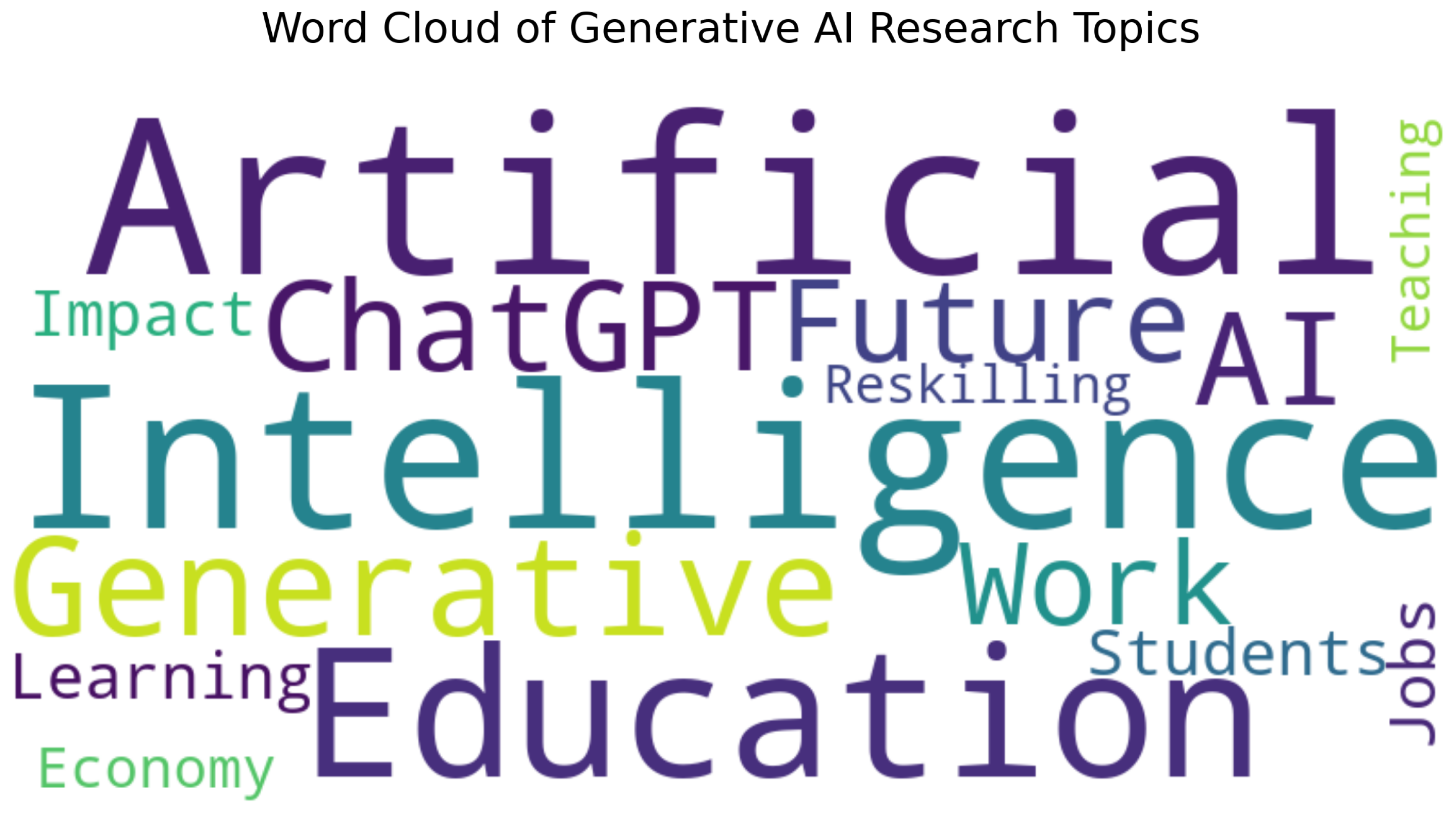
Figure 2.
Radar Chartfor this Work
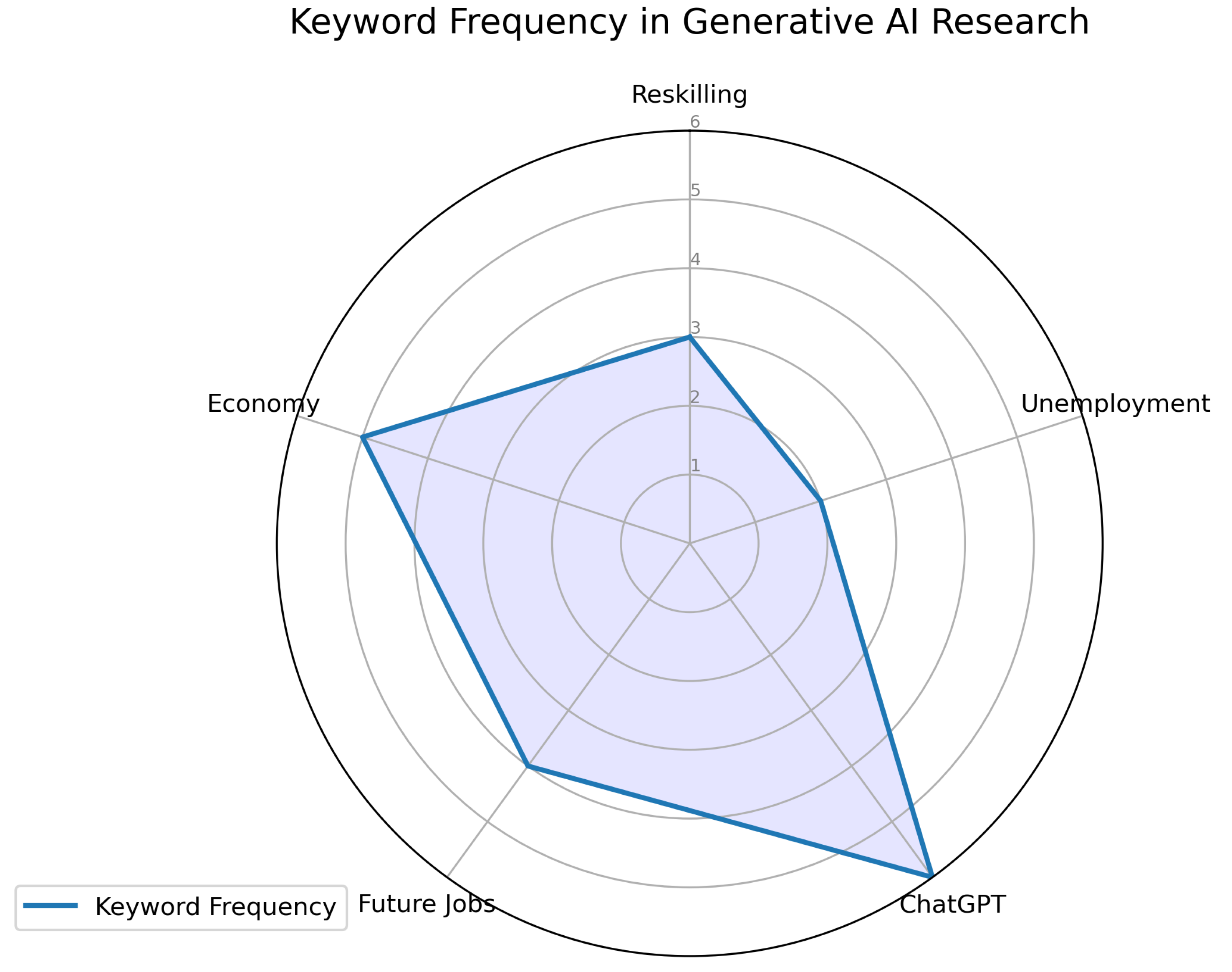
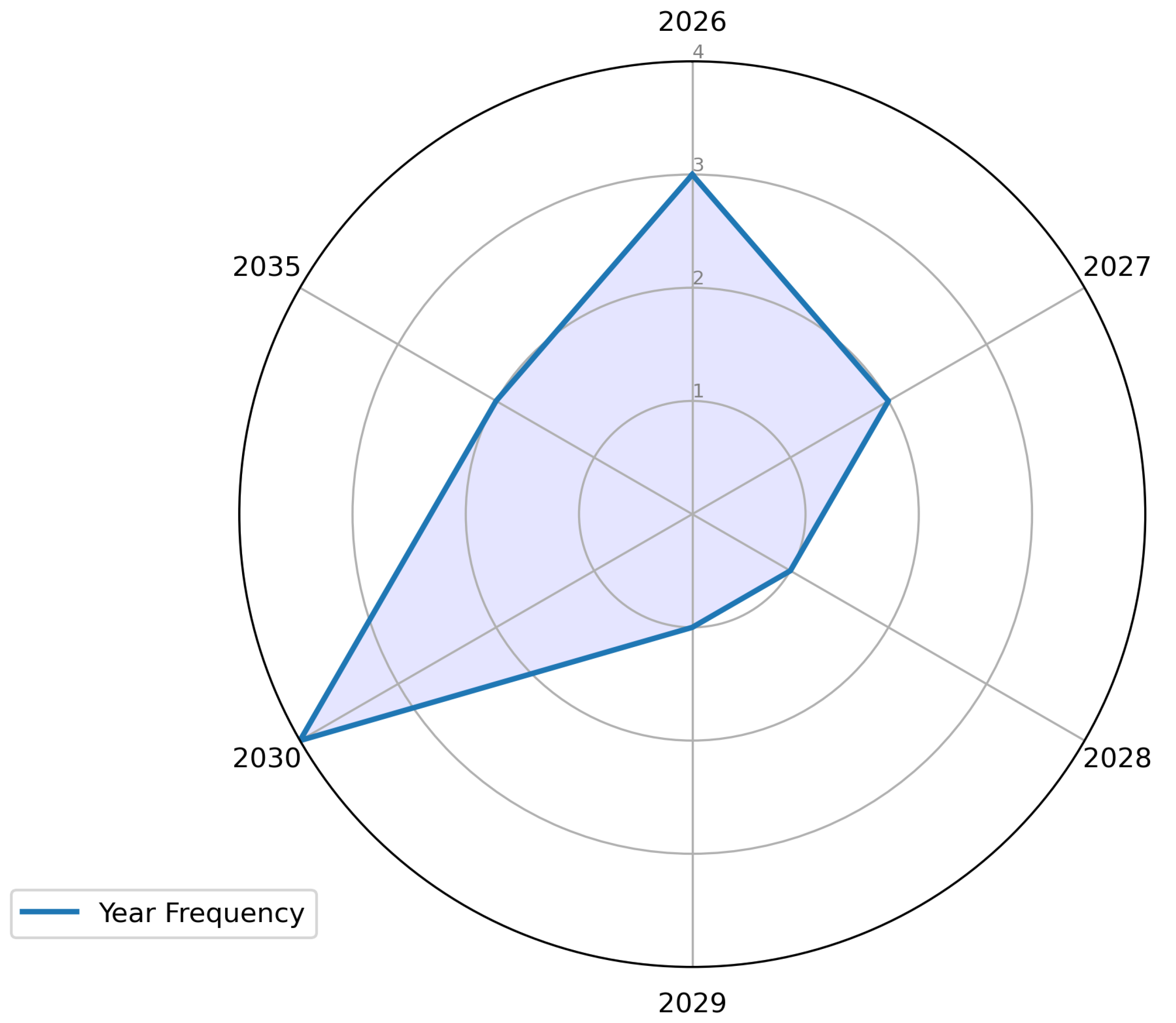
Figure 3.
Radar Chart for this Work
Disclaimer/Publisher’s Note: The statements, opinions and data contained in all publications are solely those of the individual author(s) and contributor(s) and not of MDPI and/or the editor(s). MDPI and/or the editor(s) disclaim responsibility for any injury to people or property resulting from any ideas, methods, instructions or products referred to in the content. |
© 2025 by the authors. Licensee MDPI, Basel, Switzerland. This article is an open access article distributed under the terms and conditions of the Creative Commons Attribution (CC BY) license (http://creativecommons.org/licenses/by/4.0/).
Copyright: This open access article is published under a Creative Commons CC BY 4.0 license, which permit the free download, distribution, and reuse, provided that the author and preprint are cited in any reuse.


