

Submitted:
25 March 2025
Posted:
26 March 2025
You are already at the latest version
Abstract
Understanding Earth as a complex, dynamic, and interconnected system is crucial to addressing contemporary environmental challenges intensified in the Anthropocene. This article reviews foundational Earth System Science (ESS) developments, emphasizing its transdisciplinary nature and highlighting how it has evolved to address critical issues like climate change, biodiversity loss, and sustainability. Concurrently, Earth System Education (ESE) has emerged as an educational approach to foster holistic understanding, environmental insight, and geoethical values among citizens. Integrating geoethics into ESE equips citizens with scientific knowledge and the ethical reasoning necessary for responsible decision-making and proactive engagement in sustainability efforts. This article identifies systems thinking and environmental insight as key competencies that enable individuals to appreciate the interconnectedness of Earth’s subsystems and humanity’s role within this complex framework. The study advocates embedding a holistic and geoethical view of the Earth system into formal and non-formal education, promoting inclusive, participatory, and action-oriented learning experiences. This educational shift is essential for empowering citizens to effectively address environmental, social, and economic dimensions of sustainability, thereby fostering resilient, informed, and ethically responsible global citizenship in the Anthropocene.
Keywords:
Anthropocene
; Earth System Education
; Earth System Science
; Geoethics
We live on a unique and extraordinary planet. Home to millions of life forms, Earth maintains a delicate and dynamic balance shaped by countless natural processes across vast spatial and temporal scales. Over its 4.56-billion-year evolution, Earth has developed conditions that support life. However, this dynamic homeostasis is increasingly threatened by human-induced impacts.
Due to Earth’s systemic and adaptive nature, actions affecting one subsystem can trigger feedback across others. Human activities – both individual and collective – can disrupt planetary dynamics in ways that are often far-reaching and difficult to predict. Climate change is one of the most visible consequences, mainly driven by greenhouse gas emissions from fossil fuel use, deforestation, and industrial agriculture. These emissions contribute to rising global temperatures, intensifying extreme weather events, sea-level rise, coastal erosion, ocean acidification, and biodiversity loss – ultimately threatening food security and human well-being. Exponential population growth and unsustainable consumption patterns further amplify pressure on natural resources, leading to ecosystem degradation and increased carbon emissions, reinforcing the cycle of environmental decline.
Addressing these complex and interconnected challenges requires a holistic and geoethical perspective that recognizes Earth as a dynamic system and humanity as an integral part of it. Developing such a worldview involves system thinking, pro-environmental behaviours, and geoethical values, which are essential for informed decision-making and the pursuit of sustainable solutions across environmental, social, and economic dimensions.
1. Earth System Science (ESS): An Integrated Understanding of the Planet
“In the world today, there is a feeling like that before a coming war, or of the ominous calm that precedes a tropical hurricane. With a hurricane we know what to do before it comes, what precautions to take, where to go to escape disaster. For the changes that threaten the world now, we have no detailed guide, we can only guess what they will be. Change may come gradually, but more often in a stressed system it arrives in a sequence of abrupt events, stepping from one level to another. We are in for surprises, events that could not have been predicted.” ([1], p.16).James Lovelock (1919–2022)
As referenced in scientific literature, Earth System Science (ESS) represents a field of study dedicated to understanding the Earth as a holistic, complex, and adaptive system [2]. This transdisciplinary domain bridges multiple scientific areas – such as geosciences, biology, chemistry, physics, and mathematics – to describe, understand, simulate, and predict complex phenomena and processes within the Earth system [3,4]. Research within the scope of ESS contributes significantly to our understanding of the urgency of the climate crisis, as it fosters critical reflection on the anthropogenic impacts on the dynamics of the Earth system [5].
ESS conceptualizes the Earth system as comprising five open subsystems: the atmosphere, biosphere, cryosphere, geosphere, and hydrosphere [2,3]. The atmosphere refers to the gaseous layer surrounding the planet. The biosphere encompasses all forms of life. The cryosphere includes all solid-state water stored in polar ice caps and glaciers, while the hydrosphere involves liquid water reservoirs such as oceans, rivers, lakes, and aquifers. The geosphere consists of all solid or molten rock materials from the Earth’s interior to its surface [6]. These subsystems are intricately interconnected, exchanging matter via geochemical and biogeochemical cycles and energy through various fluxes [2,7,8,9].
Multiple authors advocate for a holistic perspective of the planet, positing that Earth behaves as a unique, complex, and adaptive system [2,10,11]. From this viewpoint, a change in one subsystem may trigger one or more cascading effects across others to restore dynamic balance [5,8]. These responses often involve non-linear feedback mechanisms – both positive and negative [3,7,10,12,13]. The holistic perspective of the Earth system is thus the result of several decades of research and interdisciplinary contributions, which are synthesized in the following sections.
1.1. Early Ideas Leading to Earth System Science (ESS)
This section discusses the early ideas and lines of thought that gave rise to Earth System Science (ESS) (Figure 1). These concepts are closely connected to the pioneering work of the Russian mineralogist and geochemist Vladimir Vernadsky (1863–1945), frequently cited as one of the founders of geochemistry and biogeochemistry and credited with developing the theory of the biosphere.
Vernadsky argued that living organisms represented a significant geological force capable of physically and chemically altering environmental characteristics, particularly those of the atmosphere [3,14,15]. Although his seminal work entitled Biosphera was initially published in 1926 [15], his ideas were slow to reach the Western world, primarily due to language barriers. The first translation appeared in French in 1929 and later in English, initially published partially in 1986 and entirely only in 1998, over seven decades after the original publication [16].
The emergence of ESS was strongly influenced by the historical and sociopolitical context of the Cold War period (1947–1991). This era was marked by enhanced financial investment in Earth sciences, especially geophysics, due to the strategic relevance of environmental monitoring [2,17,18,19]. The late 1950s was marked by the International Geophysical Year (IGY, 1957–58), a collaborative scientific effort involving sixty-seven countries focusing on disciplines such as meteorology, oceanography, and glaciology, to deepen the collective understanding of Earth [2,20]. The IGY significantly influenced research methodologies, promoting a shift towards the integration of advanced field instrumentation, computational modelling, and systematic, continuous monitoring of various quantitative environmental parameters. This contrasted with previous qualitative and interpretive methodologies based predominantly on direct field observations. Such changes were critical to advancing the fields of plate tectonics, ecology, and contemporary climatology [2,21,22,23].
Environmental movements that arose from the 1960s onward also played a significant role in fostering the development of ESS, amplifying awareness among the public and scientific community. Several influential events, often considered catalysts of the environmental movement, include the publication of the influential book Silent Spring by American biologist Rachel Carson (1907–1964) in 1962 [24], the Club of Rome’s impactful report Limits to Growth in 1972 [25], and the United Nations’ landmark speech Only one Earth delivered at the Conference on the Human Environment in that same year [2,3].
This historical background, combined with Vernadsky’s pioneering contributions and the conceptual insights of Scottish naturalist and geologist James Hutton (1726–1797) – who viewed Earth as a superorganism interpretable through “geophysiology” [26] – provided foundational elements for the Gaia hypothesis, formulated by James Lovelock (1919–2022) and Lynn Margulis (1938–2011) in 1972 [27,28].
Lovelock and Margulis proposed that interactions between biotic and abiotic components formed a self-regulating Earth system capable of maintaining stable atmospheric conditions, climate, and habitability – an idea recognized as the conceptual foundation of ESS in scientific literature [2,3,14,27,28,29,30]. Although initially received with criticism and scepticism [31], the Gaia hypothesis introduced a new conceptual framework for understanding interactions between living organisms and their abiotic environment [2].
1.2. Establishment and Evolution of Earth System Science (ESS)
During the 1980s, growing awareness of climate change, repeated warnings regarding ozone layer depletion, and a series of influential reports and conferences highlighting the urgency of the climate crisis made clear the need for a new branch of Earth science. This emerging discipline aimed to study the planet as a single, interconnected entity – the Earth System [2,32].
In 1983, the term ESS emerged with the establishment of a resolute committee by the National Aeronautics and Space Administration (NASA) – the NASA Earth System Science Committee – chaired by mathematician and meteorologist Francis Bretherton (1935–2021) [2,33] (Figure 2). This committee aimed to foster ESS research by using the Earth Observing System satellite network, focusing on data collection through observational methods and modelling of Earth’s processes [2].
As a result of this work, the first schematic representation of the Earth system appeared, known as the NASA Bretherton Committee Diagram, featured in the publication Earth System Science: Overview: A Program for Global Change [2,4,33]. The Bretherton Diagram, developed by the NASA Bretherton Committee, illustrated the dynamic interactions within the Earth system, emphasizing how the physical climate system interacts with biogeochemical cycles and incorporates anthropogenic activities interconnected by feedback mechanisms. In this representation, humanity is portrayed as an active agent capable of influencing Earth’s system, for example, through carbon dioxide and pollutant emissions or changes in land use [2,3,4,33,34]. The diagram reinforced an understanding of Earth’s interconnectedness by integrating physical, chemical, and biological processes, highlighting the necessity of mobilizing knowledge across different scientific disciplines [2] (Figure 3).
The 1980s brought a significant shift in ESS by promoting a systemic, integrated, and transdisciplinary view of the planet, contrasting sharply with traditional reductionist approaches, in which Earth’s processes and phenomena were studied separately and in isolation. ESS thus distanced itself from fragmented and reductionist scientific perspectives [2,9,30]. Additionally, given the global scope of ESS, the phenomena studied inherently transcended disciplinary boundaries and geographical and political divisions [2]. To address these challenges, the International Geosphere-Biosphere Programme (IGBP) was established in 1986 by the International Council for Science (ICSU), focusing on biogeochemical aspects such as hydrological and carbon cycles. The IGBP complemented the earlier World Climate Research Programme (WCRP), initiated in 1980, focusing on Earth’s climate system [2,33,35]. Collaboration among disciplines created favourable conditions for ESS development, promoting the transition from interdisciplinary to transdisciplinary approaches to address complex planetary-scale problems [2,36]. With growing political ambition to tackle climate change and rising interest in sustainable development, this paradigm shift culminated in the publication of the influential Brundtland report Our Common Future in 1987 [2,37]. This landmark event significantly influenced environmental policymaking, highlighting the relevance of transdisciplinary approaches such as ESS for effective Earth system governance [2].
The early 1990s spotted increased ecological research addressing climate change, biodiversity loss, and sustainability. In 1991, the DIVERSITAS Research Program emerged, intending to investigate global biodiversity loss and complement the work of IGBP related to terrestrial and marine ecosystems [2,38]. By the mid-1990s, social sciences were integrated into ESS research to examine human factors affecting the Earth system, their consequences for societal well-being, and mitigation strategies. This integration established the International Human Dimensions Programme (IHDP) on Global Environmental Change in 1996 [2,39]. At the end of the decade, German physicist Hans Schellnhuber (1950–) introduced two concepts critical to ESS: firstly, the concept of a dynamic and co-evolutionary relationship between humanity and Earth, embedding human dynamics within the Earth system; secondly, he drew attention to the risks of catastrophic global changes induced by human activity, potentially leading to rapid and irreversible shifts affecting planetary stability and human well-being [2,29,40]. The turn of the millennium popularized concepts such as “sustainability” and “sustainability science”, reflecting the evolution of ESS definitions [2]. The human impact on the Earth also introduced terms such as Anthropocene and Anthroposphere [9].
In 2001, the Challenges of a Changing Earth Conference was held in Amsterdam, attracting around 1400 participants from diverse professional backgrounds across 105 countries. The conference was jointly supported by the previously mentioned international programs – IGBP, IHDP, WCRP, and DIVERSITAS – and resulted in the Amsterdam Declaration, which established the Earth System Science Partnership (ESSP). The ESSP aimed to link ESS research directly to issues critical for human well-being, including food, health, and energy [2,41]. This conference was an essential milestone in producing the Amsterdam Declaration. This document explicitly stated that research conducted over previous decades within ESS confirms the significant yet still incompletely quantified impact of human activities on the Earth system. Due to their complexity and spatiotemporal scale, these impacts cannot be disregarded, highlighting the necessity of establishing an ethical framework for responsible Earth system governance [42].
The first decade of the 21st century facilitated the consolidation of ESS as a distinct scientific field, driven by the efforts of the previously mentioned programs and enhanced integration among them. In 2015, these programs merged into a new initiative known as the Future Earth Program [2,43]. This program consisted of a global network of researchers focused on deepening understanding of Earth’s complex system dynamics, aiming to inform and support policies and strategies aligned with sustainable development through systemic approaches characteristic of ESS [43].
In 2000, the proposal of a new geological epoch – the Anthropocene [44] – became a unifying concept encompassing various environmental issues, including climate change, biodiversity loss, and pollution, as well as social challenges such as excessive consumption, growing inequalities, and urbanization [2,45,46]. The concept of the Anthropocene, introduced by the Dutch chemist Paul Crutzen (1933–2021), who served as vice-president of the IGBP [47,48], created a favourable context for more profound integration among natural, social, and human sciences, offering significant contributions toward sustainable development [2,46].
1.3. The Anthropocene: Challenges of a New Geological Epoch in Earth System Science (ESS)
The Anthropocene was proposed by Crutzen as a new geological epoch during an International Geosphere-Biosphere Programme (IGBP) meeting held in Mexico in 2000 [49,50,51]. Crutzen argued that the intensified impact of human activities was causing significant geological and morphological changes in the Earth system, thus justifying the definition of this new geological epoch [47,52,53]. Multiple lines of evidence support the proposal for this epoch, with the primary one being the increased concentrations of gases such as carbon dioxide and methane trapped in polar ice. When dated, this increase coincides with the second half of the 18th century, associated with the invention of the steam engine by the engineer and mathematician James Watt (1736–1819) in 1784, at the onset of the Industrial Revolution [54].
Nevertheless, there is no consensus within the scientific community yet regarding formally accepting this geological epoch [49]. The term “Anthropocene” itself is derived from an earlier term, “Anthropozoic”, introduced by the Italian geologist and science communicator Antonio Stoppani (1824–1891) in 1873, referring in his case to a new geological era [50,51,52,55,56].
The human impact on the Earth system has intensified significantly and become increasingly evident in the past century [47,52,57]. Moreover, human impacts have yet to be fully incorporated into current Earth system models, leaving the exact feedback mechanisms associated with the Anthropocene inadequately addressed. This gap includes often neglected social dimensions, such as societal norms and individual values [58]. Additionally, the literature indicates that changes imposed on the Earth system trigger feedback mechanisms affecting human behaviours, values, and norms, establishing a complex co-evolutionary network. Addressing this network today demands research frameworks in ESS that integrate social sciences with natural sciences, enabling a deeper understanding of these interactions [58,59,60]. Within this context, the term “Anthroposphere” also emerged, referring not only to human populations but also encompassing the constructed and modified environments, including all components of the Earth system altered or influenced by human activities [9].
Therefore, the scope of ESS research in the 21st century is vast. In addition to understanding the Earth system’s past, interpreting its present, and predicting its future, ESS seeks to incorporate and address complex environmental, social, and economic issues. This approach is crucial for defining a sustainable future for humanity within the Earth system. Consequently, ESS integrates relevant issues such as food security, water supply, human health, biodiversity, and energy security [3,60], highlighted by international documents like the United Nations’ 2030 Agenda for Sustainable Development [61]. In this perspective, understanding the Earth system must involve articulating complex feedback processes across environmental, social, and economic dimensions. Integrating these factors and their interactions is necessary for developing more accurate and realistic models of Earth’s functioning, thus enabling the holistic analysis, prediction, and simulation of various spatiotemporal phenomena and processes [62]. However, this understanding requires developing a systemic and holistic vision of Earth’s functioning. Current circumstances demand broader awareness from society – from ordinary citizens to policymakers – to address and solve the social, environmental, and economic challenges facing humanity more effectively. Sustainability within the Earth system cannot be effectively tackled without recognizing its global dynamics and interconnectedness, emphasizing the importance of ongoing research in ESS [60].
Planetary and human sustainability depends on citizens’ understanding of Earth’s systemic, holistic, complex, and adaptive functioning. Despite significant advances in ESS research, this holistic Earth system perspective remains relatively new, making it unfamiliar to most citizens. This perspective is still insufficiently incorporated into formal education across many countries [53]. It thus becomes essential to critically reconsider current teaching and learning processes in science, particularly in geosciences, abandoning fragmented and disconnected multidisciplinary approaches and embracing inter- or transdisciplinary ones – an emerging trend already observed internationally [10,63].
2. Earth System Education (ESE): A Systemic Educational Approach to Teach Science
Learning to live harmoniously with the Earth system’s dynamic, complex, and fragile balance represents a significant challenge and an essential condition for achieving sustainability and conserving the planet’s biodiversity and geodiversity in continuous global change. However, understanding the holistic functioning of Earth requires developing various competencies, particularly system and critical thinking. Current problems related to Earth system governance and sustainability are exceptionally complex, spanning environmental, social, and economic dimensions. These challenges reflect the Earth system’s intrinsic complexity and dynamic equilibrium susceptibility to human-induced changes.
Seeking solutions to mitigate the effects of human actions on Earth requires interdisciplinary approaches and specific competencies – knowledge, attitudes, and skills – as well as active participation by all citizens, collectively adopting behaviours aligned with planetary dynamics. Raising awareness among citizens about this importance and their ethical responsibilities (individually and collectively) implies fostering knowledge, attitudes, pro-environmental behaviours, and (geo)ethical values. This enables citizens to understand their actions’ impacts and make informed and responsible decisions. Education in geosciences, within a systemic and geoethical vision, is crucial for shaping citizens’ understanding of Earth’s dynamics and their responsibilities toward its conservation [13,64,65].
Geosciences represent an interdisciplinary field aiming to study diverse aspects of the planet [64], including scientific domains such as geology, climatology, oceanography, and seismology, among others. Due to Earth’s holistic nature, comprehending its functioning demands developing competencies such as system thinking, three-dimensional thinking, and cyclic thinking. These competencies enable the interpretation, prediction, and retrodiction of geological processes and phenomena at various spatial and temporal scales [7,10,13,66,67]. Such competencies are necessary for informed decision-making regarding the Earth system and solving contemporary challenges. Consequently, geoscience education can play an essential role due to the inherent historical, interpretative, and systemic nature of Earth sciences thinking [13,64,66].
2.1. The Emergence of Earth System Education (ESE) in the Science Education Landscape
The establishment of Earth System Education (ESE) is connected to the increasing recognition of science following the end of the Cold War (1947–1991) and citizens’ low scientific literacy regarding the Earth system. By the late 20th century, these two factors created favourable conditions for developing the first curricula based on a systemic approach to understanding the planet [11,68,69]. This educational movement began in the United States of America (USA) within secondary education curricula, arising from reflections on the importance of science and science education in the post-war era [11]. It emphasized science’s critical role in managing both the planet and society. This new, restructured science curriculum addressed social and environmental problems resulting from the Cold War, such as global warming, ozone depletion, and natural resource degradation. The redesigned curriculum aimed to dismantle rigid boundaries separating physics, chemistry, biology, mathematics, and technology, fostering synergies among these fields and relating them to the Earth system, thereby promoting interdisciplinary curricular approaches [11,68,69]. Thus, a pressing need emerged to shift the theoretical framework of geoscience education by incorporating an Earth system approach based on a holistic and systemic perspective in science curricula [8,68]. This approach aligned closely with the Gaia hypothesis. Lovelock and Margulis advocated abandoning reductionist approaches in environmental research, arguing instead for interdisciplinary and multidimensional perspectives that would provide a global and integrated view of the Earth system [8].
In 1988, a five-day conference took place in Washington, D.C. (USA), complementing Project 2061 of the American Association for the Advancement of Science (AAAS), bringing together geoscientists, educators, and contributors from the Bretherton Report. This conference laid the groundwork for the initial theoretical framework of ESE [11,69]. The event initiated a nationwide discussion within the USA, leading to the establishment of ESE and its subsequent consolidation at Ohio State University [11,68]. Thus, ESE emerged to develop a deeper understanding of Earth’s processes and phenomena, incorporating social dimensions for comprehensive problem-solving [69].
The Program for Leadership in Earth Systems Education (PLESE), led by American geoscience educator and geologist Victor Mayer (1933–2011) and funded by the Teacher Enhancement Division of the National Science Foundation, became a significant historical milestone, consolidating ESE as a theoretical reference for Earth science education. This program involved a series of three-week workshops attended by around two hundred teachers, jointly promoted by Ohio State University and the University of Northern Colorado between 1990 and 1994 [68,69].
All these previous developments led to the emergence and establishment of ESE as an integrated approach within science education [8,68]. The PLESE project, founded by Victor Mayer (1933–2011), represented the starting point for ESE. However, Mayer initially proposed a theoretical framework, requiring further research and educational practice to develop a more robust structure informed by empirical research and practical application. Currently, ESE’s theoretical framework aligns closely with ESS research advancements. Thus, Earth is viewed as a single, complex, and adaptive system comprising five interconnected subsystems. These subsystems exchange energy and matter through geochemical and biogeochemical cycles, including the rock cycle, hydrological cycle, food chains, and carbon cycle, all of which integrate human activities [2,10,53,59,70].
2.2. From System Thinking to the Development of Environmental Insight
In science education, particularly within an inquiry-based teaching framework, it becomes essential to cultivate investigative competencies specific to scientific practice. An educational approach grounded in ESE requires developing competencies such as advanced-level system thinking, the ability to analyse and predict geological processes and phenomena retrospectively, and the capacity to understand these phenomena across diverse spatial and temporal scales [7,10,71].
System thinking is crucial in the context of ESE, as the educational effectiveness of this approach strongly depends on developing this particular competency [7,65,71]. System thinking involves recognising that systems and their subsystems are inherently interconnected, responding collectively and producing outcomes more significant than the sum of their parts [71,72]. The development of system thinking depends on hierarchical characteristics, organised within what these authors name the System Thinking Hierarchical Model (STHM) [73].
The STHM includes eight characteristics essential for developing systems thinking, illustrated here using the hydrological cycle as an example [73]. Initially, learners must identify system components (such as oceans, rivers, lakes, and glaciers) and processes (e.g., evaporation and precipitation). Next, they recognise relationships between these components, such as the interaction between water’s mineral composition and the rocks it traverses. Subsequently, learners explore dynamic interactions within the system, including anthropogenic impacts like groundwater pollution from fertilisers or pesticides. They then organise these components and processes into a structured network of simultaneous interactions, exemplified by the hydrological cycle’s interconnected terrestrial and oceanic processes. Understanding the cyclic nature of systems is crucial, recognising that the hydrological cycle consists of interconnected subcycles, such as evaporation-precipitation and plant transpiration-water absorption. Learners establish generalisations, understanding that the hydrological cycle exemplifies a dynamic cyclic system whose principles broadly address environmental threats within the hydrosphere. Moreover, learners grasp hidden dimensions of the system by identifying deeper patterns, such as groundwater interactions. Lastly, temporal thinking – both retrospective and predictive – is developed, allowing learners to understand current drinking water quality as a product of historical geological and human events and anticipate potential impacts from industrial activities on future water quality.
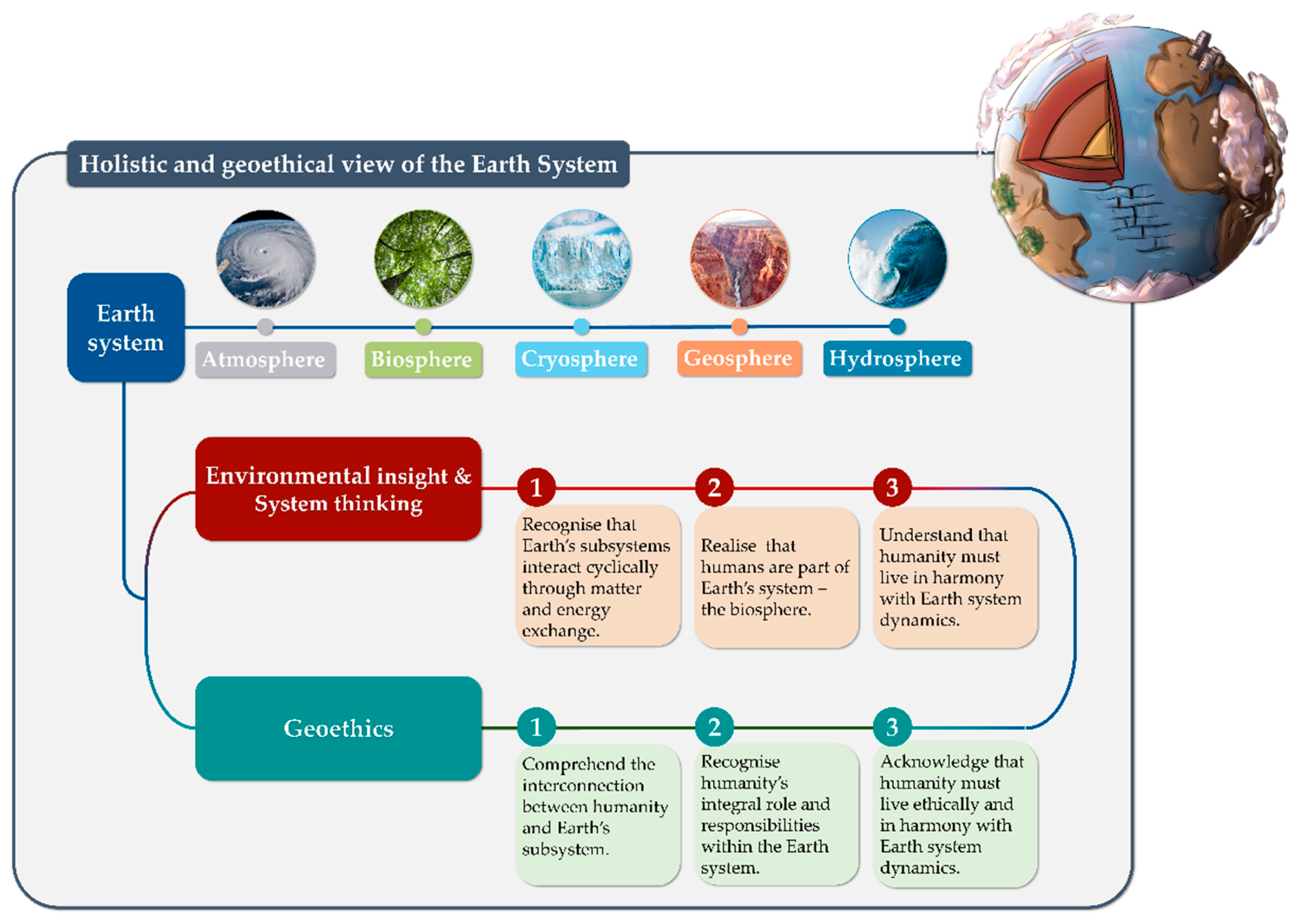
System thinking competency is essential to achieving the main objective of ESE: developing environmental insight [59]. Environmental insight is defined as the competency to overcome cognitive conflicts arising from system thinking and the integration of diverse concepts required to understand abstract phenomena across different spatial and temporal scales [10]. Literature emphasises three factors necessary for developing environmental insight: (i) recognising Earth as a cyclic system composed of interacting subsystems exchanging matter and energy; (ii) understanding humanity as an integral component of the Earth system, both influencing and being influenced by planetary dynamics; and (iii) acknowledging the need for humans to coexist harmoniously within Earth’s dynamics [10,13,59,65,74].
The prosperity of humanity depends on the development of environmental insight. System thinking provides the reasoning necessary to understand social, technological, and scientific domains alongside environmental insight, which is essential for reflecting upon sustainability [7,13,71]. In this sense, ESE provides a practical and theoretical framework in science education to foster sustainable coexistence with Earth by educating citizens about its holistic functioning [13,64].
Research indicates that understanding Earth as a dynamic, complex, and adaptive system represents the highest level of comprehension. However, studies show significant difficulties among students and adults [8,72,75]. The main challenges identified in ESE include (i) grasping Earth as a dynamic system, (ii) comprehending Earth as holistic rather than fragmented, (iii) having inadequate mental models of Earth’s subsystems, and (iv) lacking conceptual knowledge regarding counterintuitive causal mechanisms [30,70,76,77]. The broad spatial-temporal scales of Earth system processes further intensify these difficulties. To overcome these challenges, a practical ESE approach must (i) be contextualised and relevant to everyday life, (ii) promote environmental insight, and (iii) follow a social constructivist approach [8,64]. Additionally, an important feature of ESE is the integration of indoor (classroom or laboratory) and outdoor (fieldwork) learning environments [10,64,78]. Field experiences, when methodologically structured and equipped with appropriate strategies and resources, foster systems, cyclic, logical, three-dimensional, and spatial-temporal thinking by connecting classroom concepts with real-world phenomena and materials, providing authentic sensorimotor experiences [10,74,79,80].
A holistic approach to science education, such as ESE, is valuable for empowering citizens with competencies to make informed decisions concerning their responsibility towards the planet, ultimately achieving environmental insight and harmony with Earth’s dynamics [10,13]. Science education, particularly geoscience education, is well-suited to employing diverse methodologies and teaching strategies both inside and outside the classroom, significantly contributing to sustainability across its three dimensions – environmental, social, and economic – through sustainability education and environmental education [78,81,82].
More than ever, society must strive toward sustainability, necessitating profound changes in individual and collective knowledge, values, attitudes, and behaviours [81]. Citizens must critically reflect on how they interact, behave, and think regarding Earth’s biotic and abiotic components [10,81]. System thinking combined with environmental insight is crucial for understanding the complexity of human impacts on Earth. These impacts extend beyond environmental issues, requiring interdisciplinary approaches and coordinated participation from global society.
2.3. Developing Pro-Environmental Knowledge, Attitudes, and Behaviors within Earth System Education (ESE)
Humanity faces various sustainability challenges stemming from complex, often nonlinear interactions within the Earth system, resulting in incomplete or insufficient understanding of these issues [81]. Individual and collective decisions can intensify environmental, economic, and social problems, effectively necessitating interdisciplinary knowledge to address them [81,83]. Educating citizens about these issues is central to environmental education, education for sustainability, and ESE, which aim to foster pro-environmental knowledge, attitudes, and behaviours supportive of sustainability [64,83,84,85,86].
Pro-environmental attitudes – consisting of individual beliefs, values, and intentions – can, but do not necessarily, translate into pro-environmental behaviours, which are concrete actions beneficial to the environment [87,88,89]. Understanding the factors influencing pro-environmental behaviour is crucial in environmental education, sustainability education, and environmental psychology [88]. Research has extensively explored the relationship among knowledge, attitudes, and behaviours, identifying multiple internal and external factors affecting their adoption [84,85,86,87,90]. While early research emphasized knowledge as a key predictor [88,91,92,93], subsequent studies have shown values and beliefs exert a more substantial, more stable influence on pro-environmental behaviour, similar to the role of attitudes [88,92,94,95].
By promoting environmental insight, ESE fosters a more profound understanding and increased awareness of human-induced environmental issues [10,13]. Enhanced comprehension, environmental sensitivity, and personal responsibility potentially contribute to developing pro-environmental knowledge, attitudes, and behaviours. This, in turn, can encourage proactive engagement in sustainability and conservation of the Earth system.
Amidst an unprecedented environmental crisis [96], the active involvement and participation of all citizens become imperative, as human behaviours are recognized as the root cause of most sustainability challenges, though not necessarily intentionally harmful [81,97]. Raising awareness among citizens about environmental issues aims to develop their skills, attitudes, knowledge, and values, empowering them to act as change agents towards sustainability. Science education is critical in promoting active and responsible citizenship by engaging individuals with socioscientific issues [96]. Geoethics education significantly contributes to raising awareness about environmental, social, and economic impacts resulting from human behaviours [98].
3. Geoethics and Earth System Education (ESE): From Reflection to Action
Protecting the Earth system is a fundamental responsibility of humanity, and awareness of this responsibility must be instilled in citizens from an early age. This awareness promotes preventive behaviours against negative impacts on the planet and encourages sustainable practices. Geoscience education thus plays a crucial role by fostering an understanding of Earth’s systemic functioning and developing essential competencies and core principles and values relevant to daily life. To fully grasp Earth’s holistic functioning and act according to planetary dynamics, science education must adopt approaches that comprehensively address the complexity of issues involving social, environmental, economic, political, and ethical factors resulting from human integration into the Earth system. These interconnected dimensions often present challenges, requiring thoughtful reflection to accommodate each situation’s diverse and specific needs effectively. Geoethics is a field that explores and reflects upon the core values guiding human behaviours and practices when interacting with the Earth system [99,100]. Geoethics thus promotes a balanced and harmonious relationship between humans and the Earth system.
Geoethics recognizes humans as agents of change, making it essential to establish a clear set of values guiding human actions [99,100]. Three main categories of values emerge – ethical, social, and cultural – offering multiple perspectives on complex issues and promoting geoethical practices when followed. It is crucial to acknowledge that these value groups are not independent but deeply interconnected [55,99,100]. To respect specific values, it is necessary to uphold others as well. For example, the social value of prevention depends upon transparency and honesty (ethical values) when communicating with decision-makers and the public. This need for an ethical framework to manage the Earth system was also highlighted in the Amsterdam Declaration from the Challenges of a Changing Earth Conference.
3.1. Geoethics in Earth System Education (ESE): Insights into How to Live in the Anthropocene
Geosciences focus on understanding the processes and dynamics of the Earth system, providing knowledge essential to maintaining planetary habitability [13,66,101,102]. However, beyond scientific knowledge, education should foster critical reflection on the multiple dimensions – ethical, social, economic, and environmental – of human interactions with Earth [100,103,104]. Geoethics addresses these dimensions by promoting ethical thinking and responsible actions that reflect Earth’s holistic nature [13,101,105]. Contemporary issues, such as ocean stratification and deoxygenation, non-renewable resource exploitation, climate change, and geological risks, require society’s comprehensive understanding, integrating scientific knowledge with ethical and socio-economic considerations [101,105]. Effective science education should enable individuals to recognize the consequences of human activities, encouraging holistic Earth system understanding and promoting geoethical thinking and behaviours [10,13,55,101].
Geoethics is central to ESE, bridging geosciences with social sciences to respond effectively to socio-cultural challenges [10,101,106]. Therefore, integrating geoethics into curricula and societal outreach is essential [10,101,107,108,109]. Both formal and non-formal educational approaches should be inclusive, participatory, and proactive, fostering personal responsibility and active engagement in sustainability issues [13,100,103]. Non-formal education, in particular, can make geoethics more accessible and relevant, potentially encouraging its inclusion in formal curricula [108].
Applying geoethics through high ethical standards in professional geosciences practice, education, and communication enhances societal understanding, increasing trust in science and scientists [10,13,101]. Geosciences thus significantly contribute to ecosystem protection, equitable resource distribution, and the scientific, educational, and cultural appreciation of bio- and geodiversity [106,110]. Teaching geoethics fosters critical thinking, reflection, argumentation, and interdisciplinary problem-solving skills, emphasizing the holistic nature of the Earth system [13,111]. Geoethics enhances environmental insight and holistic Earth system understanding by enabling citizens to (i) comprehend the interconnectedness between humanity and the Earth subsystems, (ii) recognize humanity’s integral role and responsibilities within the Earth system, and (iii) appreciate the necessity of living sustainably and respectfully in alignment with planetary dynamics.
Geoethics education should be student-centred, actively engaging learners by translating abstract concepts into practical responses to specific cases, thereby cultivating geoethical thinking, actions, and environmental insight [10,13,64,101,102,108]. It is crucial to increase citizens’ awareness regarding the issues they currently face and those they will encounter in the future. This presents an opportunity to embed geoethical values into educational practices framed within an ESE approach.
In the end, embedding geoethics into ESE can provide citizens not only with scientific understanding but also with the ethical awareness and social responsibility necessary to navigate the complex challenges of the Anthropocene (Figure 4). By fostering critical and systemic thinking, environmental insight, and a deep appreciation of humanity’s role within the Earth system, geoethics empowers citizens to act consciously and collaboratively toward a more just, sustainable, and resilient future.
Final Remarks
Understanding Earth as a complex, interconnected, and dynamic system is essential to addressing the multifaceted challenges of the Anthropocene. ESS offers a transdisciplinary framework to interpret the planet’s functioning across diverse temporal and spatial scales, revealing anthropogenic actions’ intricate feedback and consequences. Complementarily, ESE emerges as a powerful pedagogical approach to equip citizens with the knowledge, attitudes, skills, values, and ethical responsibility necessary to engage with sustainability issues critically and constructively.
Integrating geoethics within ESE adds an essential dimension, enabling individuals to understand scientific phenomena and reflect ethically on human-Earth interactions. In this context, developing systems thinking and environmental insight becomes crucial to empower citizens to act as agents of change, making informed decisions that consider environmental, social, and economic sustainability. Ultimately, preparing citizens to live responsibly in the Anthropocene requires a change in thinking in science education – one that promotes holistic understanding, geoethical engagement, and active participation in the governance and preservation of the Earth system. ESS and ESE together offer a foundation upon which more sustainable and equitable futures can be envisioned and built.
Author Contributions
Conceptualization, T.R. and C.V.; writing – original draft preparation, T.R.; writing – review and editing, C.V.; supervision, C.V. All authors have read and agreed to the published version of the manuscript.
Funding
This research was supported by: i) the Strategic Funding (refs. UIDB/04423/2020 and UIDP/04423/2020) through national funds provided by the Portuguese National Funding Agency for Science, Research, and Technology (Fundação para a Ciência e a Tecnologia [FCT]); ii) the FCT through the PhD scholarship – “An approach to the Earth system from a Geoethics perspective: from Citizen Science to Science Education” – ref. SFRH/BD/143306/2019.
Conflicts of Interest
The authors declare no conflicts of interest.
References
- Lovelock, J. Healing Gaia: Practical medicine for the planet; Oxford University Press: Oxford, United Kingdom, 1991. [Google Scholar]
- Steffen, W.; Richardson, K.; Rockström, J.; Schellnhuber, H.J.; Dube, O.P.; Dutreuil, S.; Lenton, T.M.; Lubchenco, J. The emergence and evolution of Earth System Science. Nat. Rev. Earth Environ. 2020, 1, 54–63. [Google Scholar] [CrossRef]
- Lenton, T. Earth system science: A very short introduction; Oxford University Press: Oxford, United Kingdom, 2016. [Google Scholar]
- National Research Council. Earth System Science: Overview: A Program for Global Change; The National Academies Press: Washington, D.C., USA, 1986. [Google Scholar] [CrossRef]
- Edwards, M.G.; Alcaraz, J.M.; Cornell, S.E. Management Education and Earth System Science: Transformation as if Planetary Boundaries Mattered. Bus. Soc. 2021, 60, 26–56. [Google Scholar] [CrossRef]
- Grotzinger, J.; Jordan, T.H. Understanding Earth, 8th ed.; Macmillan: New York, USA, 2020. [Google Scholar]
- Ben-Zvi-Assaraf, O.; Orion, N. Development of system thinking skills in the context of Earth system education. J. Res. Sci. Teach. 2005, 42, 518–560. [Google Scholar] [CrossRef]
- Orion, N. An Earth Systems Curriculum Development Model. In Global Science Literacy; Mayer, V.J.M., Ed.; Springer: Dordrecht, Netherlands, 2002; pp. 159–168. [Google Scholar] [CrossRef]
- Skinner, B.J.; Murck, B.W. The Blue Planet: An Introduction to Earth System Science; John Wiley & Sons: New Jersey, USA, 2011. [Google Scholar]
- Orion, N. The future challenge of Earth science education research. Discip. Interdscip. Sci. Educ. Res. 2019, 1, 1–8. [Google Scholar] [CrossRef]
- Mayer, V.J. Using the Earth system for integrating the science curriculum. Sci. Educ. 1995, 79, 375–391. [Google Scholar] [CrossRef]
- Steffen, W.; Rockström, J.; Richardson, K.; Lenton, T.M.; Folke, C.; Liverman, D.; Summerhayes, C.P.; Barnosky, A.D.; Cornell, S.E.; Crucifix, M.; Donges, J.F.; Fetzer, I.; Lade, S.J.; Scheffer, M.; Winkelmann, R.; Schellnhuber, H.J. Trajectories of the Earth System in the Anthropocene. Proc. Natl. Acad. Sci. USA 2018, 115, 8252–8259. [Google Scholar] [CrossRef]
- Vasconcelos, C.; Orion, N. Earth Science Education as a Key Component of Education for Sustainability. Sustainability 2021, 13, 1316. [Google Scholar] [CrossRef]
- Levit, G.S.; Krumbein, W.E. The biosphere theory of V. I. Vernadsky and the Gaia theory of James Lovelock: A comparative analysis of the two theories and traditions. Zh. Obs. Biol. 2000, 61, 133–144. [Google Scholar]
- Vernadsky, V.I. Biosfera (The Biosphere); Leningrad: Saint Petersburd, Petersburg, Russia, 1926. [Google Scholar]
- Edmunds, W.M.; Bogush, A.A. Geochemistry of natural waters – The legacy of V.I. Vernadsky and his students. Appl. Geochem. 2012, 27, 1871–1886. [Google Scholar] [CrossRef]
- Doel, R.E. Constituting the postwar earth sciences; the military’s influence on the environmental sciences in the USA after 1945. Soc. Stud. Sci. 2003, 33, 635–666. [Google Scholar] [CrossRef]
- Lovelock, J. Gaia: A New Look at Life on Earth; Oxford University Press: Oxford, United Kingdom, 1979. [Google Scholar]
- Oreskes, N.; Krige, J. Science and Technology in the Global Cold War; The MIT Press: Cambridge, United Kingdom, 2014. [Google Scholar]
- Beynon, W.J.G. Annals of the International Geophysical Year, 1st ed.; Pergamon Press: Oxford, United Kingdom, 1970. [Google Scholar]
- Edwards, P.N. A Vast Machine: Computer Models, Climate Data, and the Politics of Global Warming; The MIT Press: Cambridge, United Kingdom, 2010. [Google Scholar]
- Oreskes, N. The Rejection of Continental Drift: Theory and Method in American Earth Science; Oxford University Press: Oxford, United Kingdom, 1999. [Google Scholar] [CrossRef]
- Oreskes, N.; Doel, R. The Physics and Chemistry of the Earth. In The Cambridge History of Science: Volume 5: The Modern Physical and Mathematical Sciences; Nye, M.J., Ed.; Cambridge University Press: Cambridge, United Kingdom, 2018; pp. 538–558. [Google Scholar] [CrossRef]
- Carson, R. Silent spring; Houghton Mifflin Harcourt: Massachusetts, USA, 1962. [Google Scholar]
- Meadows, D.H.; Meadows, D.L.; Randers, J.; Behrens, W.W., III. Limits to Growth; Universe Books, 1972. [Google Scholar]
- Boston, P.J. Gaia Hypothesis. In Encyclopedia of Ecology; Fath, B., Ed.; Elsevier: Amsterdam, Netherlands, 2008; pp. 86–90. [Google Scholar] [CrossRef]
- Lovelock, J. Letter to the Editors: Gaia as seen through the Atmosphere. Atmos. Environ. 1972, 6, 579–580. [Google Scholar] [CrossRef]
- Lovelock, J.; Margulis, L. Atmospheric homeostasis by and for the biosphere: The Gaia hypothesis. Tellus 1974, 26, 2–10. [Google Scholar] [CrossRef]
- Schellnhuber, H.J. ‘Earth system’ analysis and the second Copernican revolution. Nature 1999, 402, C19–C23. [Google Scholar] [CrossRef]
- Scherer, H.H.; Holder, L.; Herbert, B. Student Learning of Complex Earth Systems: Conceptual Frameworks of Earth Systems and Instructional Design. J. Geosci. Educ. 2017, 65, 473–489. [Google Scholar] [CrossRef]
- Kirchner, J.W. The Gaia hypothesis: Can it be tested? Rev. Geophys., 1989, 27, 223–235. [Google Scholar] [CrossRef]
- Waldrop, M.M. Washington Embraces Global Earth Sciences: For reasons of science and for reasons of strategy, the funding agencies want to study the earth as an integrated whole. Science 1986, 233, 1040–1042. [Google Scholar] [CrossRef]
- Seitzinger, S.P.; Gaffney, O.; Brasseur, G.; Broadgate, W.; Ciais, P.; Claussen, M.; Erisman, J.W.; Kiefer, T.; Lancelot, C.; Monks, P.S.; Smyth, K.; Syvitski, J.; Uematsu, M. International Geosphere–Biosphere Programme and Earth system science: Three decades of co-evolution. Anthropocene 2015, 12, 3–16. [Google Scholar] [CrossRef]
- Bretherton, F.P. Earth system science and remote sensing. Proc. IEEE 1985, 73, 1118–1127. [Google Scholar] [CrossRef]
- Kwa, C. Local Ecologies and Global Science: Discourses and Strategies of the International Geosphere-Biosphere Programme. Soc. Stud. Sci. 2005, 35, 923–950. [Google Scholar] [CrossRef]
- Richardson, K.; Steffen, W. Network of Cooperation Between Science Organizations. In Handbook of Science and Technology Convergence; Bainbridge, W.S., Roco, M.C., Eds.; Springer: Berlin, Germany, 2016; pp. 607–620. [Google Scholar] [CrossRef]
- Brundtland Commission. Our Common Future: Report of the World Commission on Environment and Development; Oxford University Press: Oxford, United Kingdom, 1987. [Google Scholar]
- Larigauderie, A.; Prieur-Richard, A.-H.; Mace, G.M.; Lonsdale, M.; Mooney, H.A.; Brussaard, L.; Cooper, D.; Cramer, W.; Daszak, P.; Díaz, S.; Duraiappah, A.; Elmqvist, T.; Faith, D.P.; Jackson, L.E.; Krug, C.; Leadley, P.W.; Le Prestre, P.; Matsuda, H.; Palmer, M.; Yahara, T. Biodiversity and ecosystem services science for a sustainable planet: The DIVERSITAS vision for 2012–2020. Current Opinion in Environmental. Sustainability 2012, 4, 101–105. [Google Scholar] [CrossRef]
- Falkenhayn, L.; Rechkemmer, A.; Young, O.R. The International Human Dimensions Programme on Global Environmental Change – Taking Stock and Moving Forward. In Coping with Global Environmental Change, Disasters and Security: Threats, Challenges, Vulnerabilities and Risks; Brauch, H.G., Oswald Spring, Ú., Mesjasz, C., Grin, J., Kameri-Mbote, P., Chourou, B., Dunay, P., Birkmann, J., Eds.; Springer: Berlin, Germany, 2011; pp. 1221–1233. [Google Scholar] [CrossRef]
- Schellnhuber, H.J.; Wenzel, V. Earth System Analysis: Integrating Science for Sustainability; Springer: Berlin, Germany, 1998. [Google Scholar] [CrossRef]
- Leemans, R.; Asrar, G.; Busalacchi, A.; Canadell, J.; Ingram, J.; Larigauderie, A.; Mooney, H.; Nobre, C.; Patwardhan, A.; Rice, M.; Schmidt, F.; Seitzinger, S.; Virji, H.; Vörösmarty, C.; Young, O. Developing a common strategy for integrative global environmental change research and outreach: The Earth System Science Partnership (ESSP). Current Opinion in Environmental. Sustainability 2009, 1, 4–13. [Google Scholar] [CrossRef]
- Steffen, W.; Sanderson, A.; Tyson, P.; Jäger, J.; Matson, P.; Moore, B.; Oldfield, F.; Richardson, K.; Schellnhuber, H.J.; Turner, B.L.; Wasson, R.J. Global Change and the Earth System: A Planet Under Pressure; Springer: Berlin, Germany, 2005. [Google Scholar] [CrossRef]
- Future Earth: Our Work. Available online: https://futureearth.org/about/our-work/ (accessed on 20 March 2025).
- Crutzen, P.J.; Stoermer, E.F. The ‘Anthropocene’ (2000). In Paul J. Crutzen and the Anthropocene: A New Epoch in Earth’s History; Benner, S., Lax, G., Crutzen, P.J., Pöschl, U., Lelieveld, J., Brauch, H.G., Eds.; Springer: Berlin, Germany, 2000; pp. 19–21. [Google Scholar] [CrossRef]
- Malm, A. , Hornborg, A.. The geology of mankind? A critique of the Anthropocene narrative. Anthr. Rev. 2014, 1, 62–69. [Google Scholar] [CrossRef]
- Steffen, W.; Broadgate, W.; Deutsch, L.; Gaffney, O.; Ludwig, C. The trajectory of the Anthropocene: The Great Acceleration. Anthr. Rev. 2015, 2, 81–98. [Google Scholar] [CrossRef]
- Crutzen, P.J. Geology of mankind. Nature 2002, 415, 23–23. [Google Scholar] [CrossRef]
- Crutzen, P.J.; Stoermer, E.F. The Anthropocene. IGBP Glob. Chang. Newsl. 2000, 41, 17–18. [Google Scholar]
- Carruthers, J. The Anthropocene. S. Afr. J. Sci. 2019, 115, 1. [Google Scholar] [CrossRef]
- Steffen, W. Introducing the Anthropocene: The human epoch. Ambio 2021, 50, 1784–1787. [Google Scholar] [CrossRef]
- Turpin, E.; Federighi, V. A new element, a new force, a new input: Antonio Stoppani’s Anthropozoic. In Making the Geologic Now; Ellsworth, E., Kruse, J., Eds.; Punctum Books: Brooklyn, USA, 2012; pp. 34–41. [Google Scholar]
- Crutzen, P.J. The “Anthropocene”. J. Phys. IV 2002, 12, 1–5. [Google Scholar] [CrossRef]
- Vasconcelos, C.; Ferreira, F.; Rolo, A.; Moreira, B.; Melo, M. Improved Concept Map-Based Teaching to Promote a Holistic Earth System View. Geosciences 2020, 10, 8. [Google Scholar] [CrossRef]
- Steffen, W.; Crutzen, P.; McNeill, J. The Anthropocene: Are Humans Now Overwhelming the Great Forces of Nature. In Environment and Society: A Reader; C. Schlottmann, D. Jamieson, C. Jerolmack, Ed.; New York University Press: New York, USA, 2017; pp. 12–31. [Google Scholar]
- Bobrowsky, P.; Cronin, V.; Di Capua, G.; Kieffer, S.W.; Peppoloni, S. The Emerging Field of Geoethics. In Scientific Integrity and Ethics: With Applications to the Geosciences; Gundersen, L.C., Ed.; Wiley: New York, USA, 2018. [Google Scholar] [CrossRef]
- Lucchesi, S. Geosciences at the service of society: The path traced by Antonio Stoppani. Ann. Geophys. 2017, 60. [Google Scholar] [CrossRef]
- Mauser, W. Global Change Research in the Anthropocene: Introductory Remarks. In Earth System Science in the Anthropocene; Ehlers, E., Krafft, T., Eds.; Springer: Dordrecht, Netherlands, 2006; pp. 3–4. [Google Scholar] [CrossRef]
- Donges, J.F.; Winkelmann, R.; Lucht, W.; Cornell, S.E.; Dyke, J.G.; Rockström, J.; Heitzig, J.; Schellnhuber, H.J. Closing the loop: Reconnecting human dynamics to Earth System science. Anthr. Rev. 2017, 4, 151–157. [Google Scholar] [CrossRef]
- Orion, N. Earth Systems Education and the Development of Environmental Insight. In Geoscience Education: Indoor and Outdoor; Vasconcelos, C., Ed.; Springer: Dordrecht, Netherlands, 2016; pp. 59–72. [Google Scholar] [CrossRef]
- Reid, W.V.; Chen, D.; Goldfarb, L.; Hackmann, H.; Lee, Y.T.; Mokhele, K.; Ostrom, E.; Raivio, K.; Rockström, J.; Schellnhuber, H.J.; Whyte, A. Earth System Science for Global Sustainability: Grand Challenges. Science 2010, 330, 916–917. [Google Scholar] [CrossRef] [PubMed]
- Transforming our World: The 2030 Agenda for Sustainable Development (A/RES/70/1). Available online: https://undocs.org/en/A/RES/70/1 (accessed on 20 March 2025).
- Hoffman, M.; Barstow, D. Revolutionizing Earth System Science Education for the 21st Century: Report and Recommendations from a 50-State Analysis of Earth Science Education Standards; TERC: Cambridge, United Kingdom, 2007. [Google Scholar]
- Klaassen, R.G. Interdisciplinary education: A case study. Eur. J. Eng. Educ. 2018, 43, 842–859. [Google Scholar] [CrossRef]
- Ribeiro, T.; Orion, N. Educating for a Holistic View of the Earth System: A Review. Geosciences 2021, 11, 485. [Google Scholar] [CrossRef]
- Ribeiro, T.; Vasconcelos, C. Non-formal secondary students’ education to develop environmental insight. Episodes 2024, 47, 753–765. [Google Scholar] [CrossRef]
- King, C. Geoscience education: An overview. Stud. Sci. Educ. 2008, 44, 187–222. [Google Scholar] [CrossRef]
- McNaught, C.; McNeal, K.S.; Libarkin, J.C.; Ledley, T.S.; Bardar, E.; Haddad, N.; Ellins, K.; Dutta, S. The Role of Research in Online Curriculum Development: The Case of EarthLabs Climate Change and Earth System Modules. J. Geosci. Educ. 2014, 62, 560–577. [Google Scholar] [CrossRef]
- Mayer, V.J. Guest editorial: Global science literacy: An Earth system view. J. Res. Sci. Teach. 1997, 34, 101–105. [Google Scholar] [CrossRef]
- Mayer, V.J.; Fortner, R.W. (Eds.) Science is a Study of Earth: A Resource Guide for Science Curriculum Restructure; The Ohio State University Research Foundation: Ohio, USA, 1995. [Google Scholar]
- Orion, N. Ault Learning Earth Sciences In Handbook of research on science teaching learning; Abell, S., Lederman, N., Eds.; Lawrence Erlbaum Associates: New Jersey, USA, 2007; pp. 653–688. [Google Scholar]
- Soltis, N.A.; McNeal, K.S. Development and Validation of a Concept Inventory for Earth System Thinking Skills. J. Stem. Educ. Res. 2022, 5, 28–52. [Google Scholar] [CrossRef]
- Soltis, N.A.; McNeal, K.S.; Schnittka, C.G. Understanding undergraduate student conceptions about biogeochemical cycles and the earth system. J. Geosci. Educ. 2021, 69, 265–280. [Google Scholar] [CrossRef]
- Ben-Zvi-Assaraf, O.; Orion, N. Four case studies, six years later: Developing system thinking skills in junior high school and sustaining them over time. J. Res. Sci. Teach. 2010, 47, 1253–1280. [Google Scholar] [CrossRef]
- Orion, N. The relevance of earth science for informed citizenship: Its potential and fulfillment. In Contextualizing Teaching to Improving Learning: The Case of Science and Geography; Leite, L., Dourado, L., Afonso, A., Morgado, S., Eds.; Nova Science Publishers: New York, USA, 2007; pp. 41–56. [Google Scholar]
- Ribeiro, T.; Vasconcelos, C. What do they know about the Earth system and geoethics? Portuguese 11th-grade students and senior citizens’ conceptions. In ICERI2022 Proceedings; L.G. Chova, A.L. Martínez, J. Lees, Ed.; IATED Academy: Seville, Spain, 2022; pp. 5050–5058. [Google Scholar] [CrossRef]
- Herbert, B.E. Student Understanding of Complex Earth Systems. In Earth & Mind: How Geoscientists Think and Learn about the Earth; C. Manduca, D. Mogk, Ed.; Geological Society of America: New York, USA, 2006; pp. 95–104. [Google Scholar]
- Orion, N.; Libarkin, J. Earth system science education. In Handbook of Research on Science Education; N.G. Lederman, S.K. Abell, Ed.; Routledge: London, United Kingdom, 2014; pp. 481–496. [Google Scholar]
- Vasconcelos, C. (Ed.) Geoscience Education: Indoor and Outdoor; Springer: Berlin, Germany, 2016. [Google Scholar] [CrossRef]
- Orion, N. A Model for the Development and Implementation of Field Trips as an Integral Part of the Science Curriculum. Sch. Sci. Math. 1993, 93, 325–331. [Google Scholar] [CrossRef]
- Orion, N.; Ben-Shalom, R.; Ribeiro, T.; Vasconcelos, C. Geoethics in field-trips: A global geoethics perspective. In Teaching Geoethics: Resources for Higher Education; C. Vasconcelos, S. Schneider-Voß, S. Peppoloni, Ed.; U.Porto Edições: Porto, Portugal, 2020; pp. 19–29. [Google Scholar] [CrossRef]
- Kioupi, V.; Voulvoulis, N. Education for Sustainable Development: A Systemic Framework for Connecting the SDGs to Educational Outcomes. Sustainability 2019, 11, 6104. [Google Scholar] [CrossRef]
- Vasconcelos, C.; Calheiros, C. (Eds.) . Enhancing Environmental Education Through Nature-Based Solutions; Springer: Berlin, Germany, 2022. [Google Scholar] [CrossRef]
- Al-Naqbi, A.K.; Alshannag, Q. The status of education for sustainable development and sustainability knowledge, attitudes, and behaviors of UAE University students. Int. J. Sustain. High. Educ. 2018, 19, 566–588. [Google Scholar] [CrossRef]
- Borges, F. Knowledge, Attitudes and Behaviours Concerning Sustainable Development: A Study among Prospective Elementary Teachers. Stud. High. Educ. 2019, 9, 22–33. [Google Scholar] [CrossRef]
- Taskin-Ekici, F.; Ekici, E.; Cokadar, H. Exploring Pre-Service Elementary Teachers’ Mental Models of the Environment. Int. Electron. J. Environ. Educ. 2015, 5, 21–39. [Google Scholar] [CrossRef]
- Vasconcelos, C.; Cruz, T.; Ribeiro, T. A Natural Park Visitors’ Knowledge, Attitudes and Behaviours About Sustainable Development. In Enhancing Environmental Education Through Nature-Based Solutions; C. Vasconcelos, C. Calheiros, Ed.; Springer: Berlin, Germany, 2022; pp. 221–230. [Google Scholar] [CrossRef]
- DeVille, N.V.; Tomasso, L.P.; Stoddard, O.P.; Wilt, G.E.; Horton, T.H.; Wolf, K.L.; Brymer, E.; Kahn, P.H.; James, P. Time Spent in Nature Is Associated with Increased Pro-Environmental Attitudes and Behaviors. Int. J. Environ. Res. Public Health 2021, 18, 7498. [Google Scholar] [CrossRef]
- Tamar, M.; Wirawan, H.; Arfah, T.; Putri, R.P.S. Predicting pro-environmental behaviours: The role of environmental values, attitudes and knowledge. Manag. Environ. Qual. 2021, 32, 328–343. [Google Scholar] [CrossRef]
- VandenBos, G.R. (Ed.) . APA Dictionary of Psychology; American Psychological Association: Washington, D.C., USA, 2007. [Google Scholar]
- Kollmuss, A.; Agyeman, J. Mind the Gap: Why do people act environmentally and what are the barriers to pro-environmental behavior? Environ. Educ. Res. 2002, 8, 239–260. [Google Scholar] [CrossRef]
- Carmi, N.; Arnon, S.; Orion, N. Transforming Environmental Knowledge Into Behavior: The Mediating Role of Environmental Emotions. J. Environ. Educ. 2015, 46, 183–201. [Google Scholar] [CrossRef]
- Jakučionytė-Skodienė; M; Dagiliūtė; R; Liobikienė; G Do general pro-environmental behaviour, attitude, and knowledge contribute to energy savings and climate change mitigation in the residential sector? Energy 2020, 193, 116784. [CrossRef]
- Zsóka, Á.; Szerényi, Z.; Széchy, A.; Kocsis, T. Greening due to environmental education? Environmental knowledge, attitudes, consumer behavior and everyday pro-environmental activities of Hungarian high school and university students. J. Clean. Prod. 2013, 48, 126–138. [Google Scholar] [CrossRef]
- Bouman, T.; Steg, L.; Kiers, H.A.L. Measuring Values in Environmental Research: A Test of an Environmental Portrait Value Questionnaire. Front. Psychol. 2018, 9, 00564. [Google Scholar] [CrossRef] [PubMed]
- Paswan, A.; Guzmán, F.; Lewin, J. Attitudinal determinants of environmentally sustainable behavior. J. Consum. Mark. 2017, 34, 414–426. [Google Scholar] [CrossRef]
- Hadjichambis, A.C.; Reis, P. Introduction to the Conceptualisation of Environmental Citizenship for Twenty-First-Century Education. In Conceptualizing Environmental Citizenship for 21st Century Education; Hadjichambis, A.C., Reis, P., Paraskeva-Hadjichambi, D., Činčera, J., Pauw, J.B.-D., Gericke, N., Knippels, M.-C., Eds.; Springer Nature: Berlin, Germany, 2020; pp. 1–14. [Google Scholar] [CrossRef]
- Liu, P.; Teng, M.; Han, C. How does environmental knowledge translate into pro-environmental behaviors? The mediating role of environmental attitudes and behavioral intentions. Sci. Total Environ. 2020, 728, 138126. [Google Scholar] [CrossRef]
- Vasconcelos, C.; Schneider-Voß, S.; Peppoloni, S. (Eds.) Teaching Geoethics: Resources for Higher Education; U.Porto Edições: Porto, Portugal, 2020. [Google Scholar] [CrossRef]
- Peppoloni, S.; Di Capua, G. Geoethics to start up a pedagogical and political path towards future sustainable societies. Sustainability 2021, 13, 10024. [Google Scholar] [CrossRef]
- Peppoloni, S.; Bilham, N.; Di Capua, G. Contemporary Geoethics Within the Geosciences. In Exploring Geoethics: Ethical Implications, Societal Contexts, and Professional Obligations of the Geosciences; Bohle, M., Ed.; Palgrave Pivot: London, United Kingdom, 2019; pp. 25–70. [Google Scholar] [CrossRef]
- Mogk, D.W. Geoethics and Professionalism: The Responsible Conduct of Scientists. Ann. Geophys. 2017, 60, 1–12. [Google Scholar] [CrossRef]
- Vasconcelos, C.; Cardoso, A.; Ribeiro, T. A Geoethics Syllabus for Higher Education: Evaluation of an Intervention Programme. Geosciences 2023, 13, 302. [Google Scholar] [CrossRef]
- . Exploring Geoethics: Ethical Implications, Societal Contexts, and Professional Obligations of the Geosciences; Bohle, M., Ed.; Palgrave Pivot: London, United Kingdom, 2019. [Google Scholar] [CrossRef]
- Di Capua, G.; Peppoloni, S.; Bobrowsky, P.T. The Cape Town statement on geoethics. Ann. Geophys. 2017, 60, 1–6. [Google Scholar] [CrossRef]
- Peppoloni, S.; Di Capua, G. Geoethics as global ethics to face grand challenges for humanity. In Geoethics: Status and Future Perspectives; Di Capua, G., Bobrowsky, P.T., Kieffer, S.W., Palinkas, C., Eds.; The Geological Society of London: London, United Kingdom, 2020; pp. 1–17. [Google Scholar] [CrossRef]
- Peppoloni, S.; Di Capua, G. Geoethics: Manifesto for an ethics of responsibility towards the Earth; Springer Nature: Berlin, Germany, 2022. [Google Scholar]
- Crookall, D.; Promduangsri, P. On the necessity of making geoethics a central concern in eduethics world-wide. In EGU General Assembly Conference Abstracts; EGU General Assembly: Vienna, Austria, 2017, p.4092. [Google Scholar]
- Keane, C.M.; Asher, P. Addressing the geoethics skills gap through co-curricular approaches. Geol. Soc. Spec. Publ. 2021, 508, 47–54. [Google Scholar] [CrossRef]
- Peppoloni, S.; Di Capua, G. Current Definition and Vision of Geoethics. In Geo-societal Narratives; Bohle, M., Marone, E., Eds.; Springer Nature: Berlin, Germany, 2021; pp. 17–27. [Google Scholar] [CrossRef]
- Procesi, M.; Di Capua, G.; Peppoloni, S.; Corirossi, M.; Valentinelli, A. Science and Citizen Collaboration as Good Example of Geoethics for Recovering a Natural Site in the Urban Area of Rome (Italy). Sustainability 2022, 14, 4429. [Google Scholar] [CrossRef]
- Mogk, D.W. Geoethics and Professionalism: The Responsible Conduct of Scientists. Ann. Geophys. 2017, 60, 1–12. [Google Scholar] [CrossRef]
Disclaimer/Publisher’s Note: The statements, opinions and data contained in all publications are solely those of the individual authorS and not of MDPI and/or the editors. MDPI and/or the editors disclaim responsibility for any injury to people or property resulting from any ideas, methods, instructions or products referred to in the content. |
Figure 1.
Main precursor events of Earth System Science (ESS).
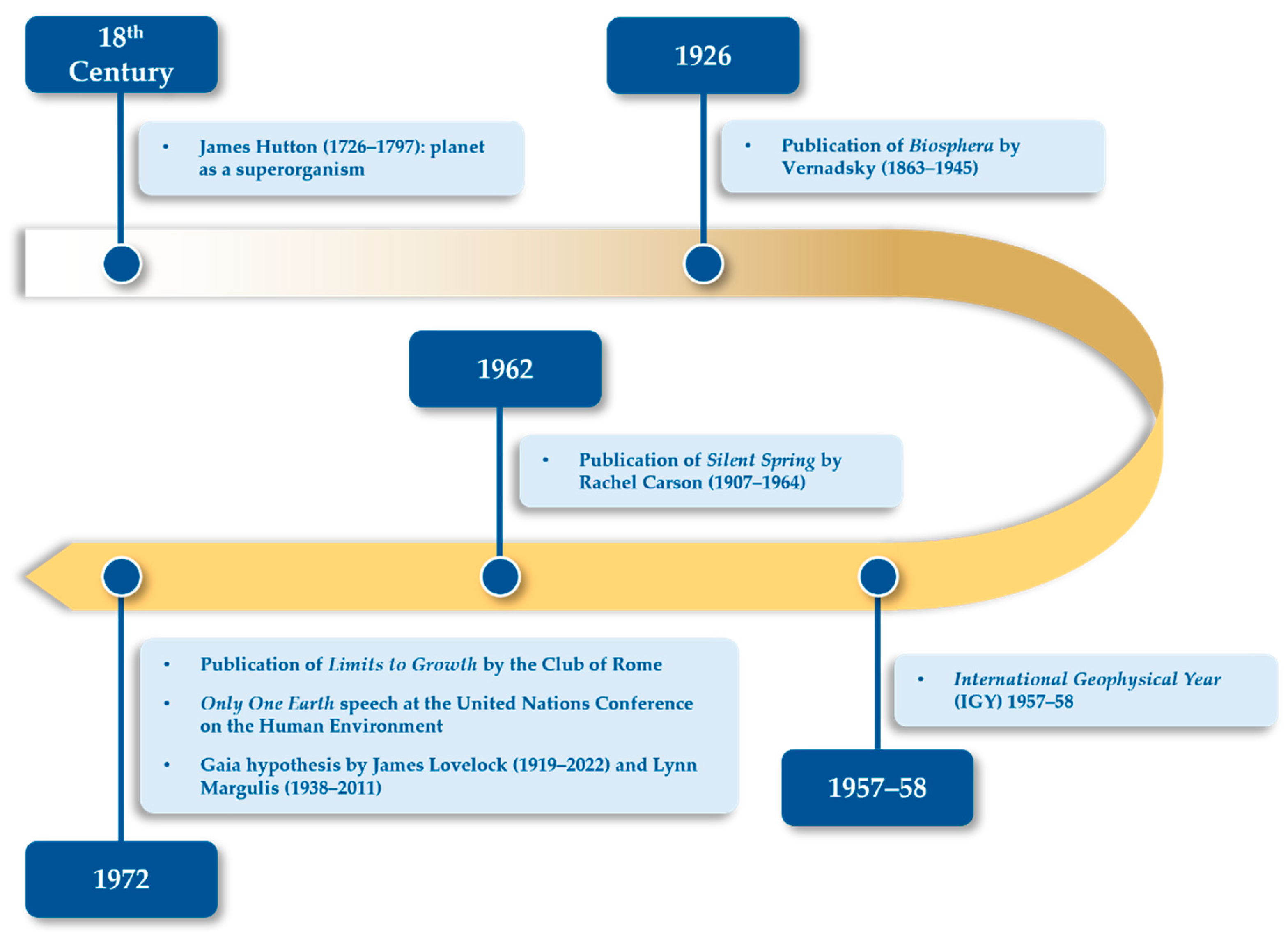
Figure 2.
Establishment and development of Earth System Science (ESS).
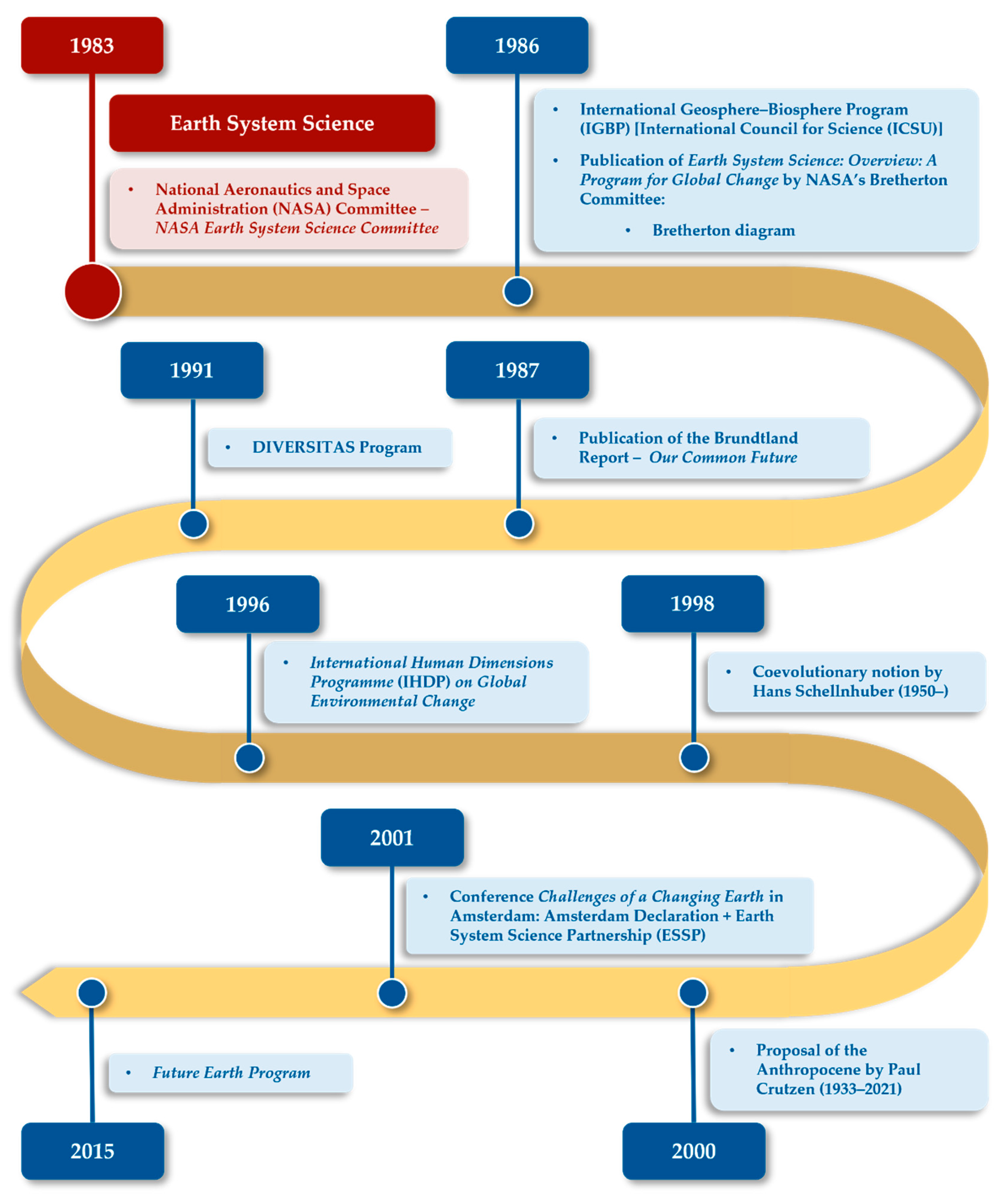
Figure 3.
Diagram of the NASA Bretherton Committee (adapted from [4], p.19).
Figure 3.
Diagram of the NASA Bretherton Committee (adapted from [4], p.19).
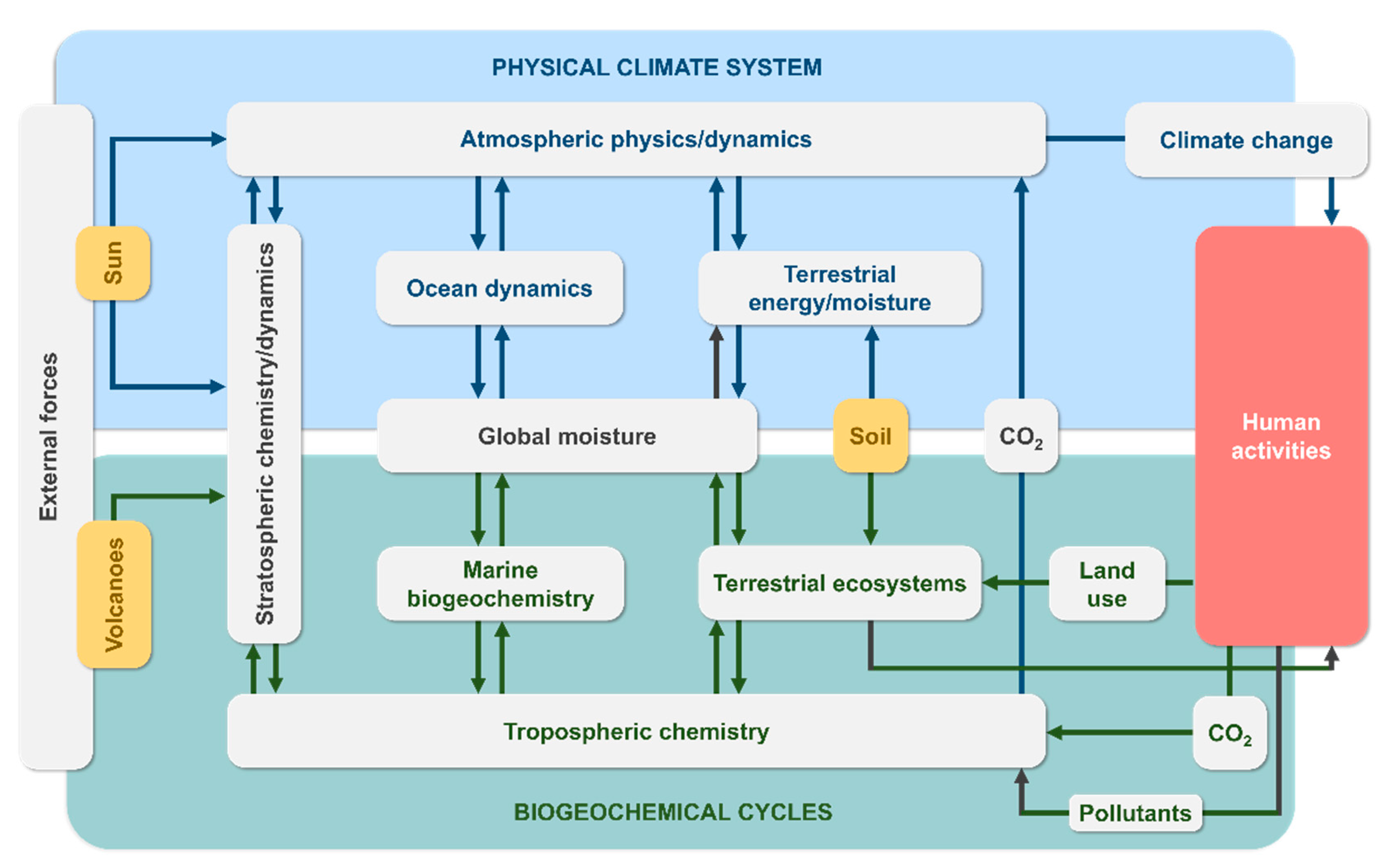
Figure 4.
Integration of a holistic and geoethical perspective of the Earth system.
Disclaimer/Publisher’s Note: The statements, opinions and data contained in all publications are solely those of the individual author(s) and contributor(s) and not of MDPI and/or the editor(s). MDPI and/or the editor(s) disclaim responsibility for any injury to people or property resulting from any ideas, methods, instructions or products referred to in the content. |
© 2025 by the authors. Licensee MDPI, Basel, Switzerland. This article is an open access article distributed under the terms and conditions of the Creative Commons Attribution (CC BY) license (http://creativecommons.org/licenses/by/4.0/).
Copyright: This open access article is published under a Creative Commons CC BY 4.0 license, which permit the free download, distribution, and reuse, provided that the author and preprint are cited in any reuse.


