

Submitted:
21 March 2025
Posted:
24 March 2025
You are already at the latest version
Abstract
The aim of this study is to study the cognitive properties and decision-making in judokas of different genders. The study involved 57 elite judokas: 33 male (age 26.62; SD=3.62) and 24 female (age 24.73; SD=3.57). Testing relevant cognitive functions we applied a multidimensional strategy by testing, perception speed, number comparison, memory for words, pattern making, decision making time. All the tests are part of the computer psychodiagnostic complex. Nonparametric methods (median, quartile range), correlation (Spearman) and multiple regression analysis were also used. The obtained results showed gender-specific effects in cognitive functions in elite judokas. Female judokas have better indicators of visual perception productivity. Male judokas have predominantly faster of information processing, non-verbal intelligence and better processing of verbal information. The study of the decision-making variable showed significantly higher values of quick decision in male judokas compared to female. It was found that decision-making in elite judokas is determined by the speed and quality of processing verbal and non-verbal information. Gender features of cognitive activity are characterized by the predominance of a quick response to a non-verbal stimulus in male judokas against the background of the predominance of qualitative properties of visual perception and processing of non-verbal information in female judokas.
Keywords:
gender effects
; cognitive functions
; elite judokas
; visual perception
; decision-making
1. Introduction
The trend of modern Olympic sports is characterized by increasing the attractiveness for spectators [1]. This concept is realized by Olympic Committee and the position of international sports federations on the popularity of sports and the Olympic movement [2]. Smaller sports such as wrestling or judoka may need to show professional activities in such environments.
In addition, elite athletes need to be selected in squads based on factors known to be related to performance and to win [3,4]. In the following we focus on elite kind sports in which selection for squads may relay on small differences and test whether cognitive functions can explain partly performance differences. In addition, we question whether the same thresholds or criteria should be used for male and female athletes. If we find gender-specific differences in cognitive function that would have consequences for elite selection and training and provide one avenue to increase gender equality and reduce gender data gaps [5,6].
We chose martial arts and specifically judo as a test bed for our research question because these sports are characterized by a dynamic situation between two people fighting and cognitive functions such as quality of a decision and speed of responding in our utmost importance. In elite judo as an Olympic sport the need for cognitive functions is a prerequisite for excellent execution of throws, athletes' decision-making conceptualized in technical and tactical skill.
Elite judoka performance is best explained multidimensional given that the effectiveness of an athlete in judo is determined by a number of factors that are associated with individual properties [7,8]. Here we focus on cognitive functions we assess with a multidimensional test battery. Most of the judokas behaviors have been previously related to cognitive functions such as an athlete’s ability to quickly visually perceive and make optimal decisions [9]. In addition most, technical skills in martial arts require cognitive functions such as motor qualities and conditional abilities such as, strength, endurance, and speed [10,11]. Coordination abilities and the ability to perform complex movements [12] and quickly perform special technical actions while anticipating the opponent’s actions requires cognitive functions as well [13,14]. Importantly for our rationale is that cognitive function to relate to performance and success.
For instance, empirical evidence suggests that successful martial arts athletes, especially in judo, that predict their opponent's actions well have a higher chance of winning [15,16]. Predicting the opponent's actions indicates the property of anticipation and decision making [17]. Athletes with a high level of anticipation can predict the opponent's latest actions, their movements, and quickly respond to them. In fact, anticipation is the basis of the counterattacking fighting style in martial arts [18]. At the same time, the greatest factor influencing the effectiveness of athletes' active movements is the ability to make optimal and fast decisions under limited time [19]. Competitive activity in judo is characterized by rapid changes in the situation and motivation from the referee to the active actions of athletes on the tatami [20]. The speed of decision-making in martial arts is due to the properties of the nervous system of athletes to quickly switch from excitation processes to inhibition processes [14]. This property is partly genetically determined and is associated with the functional state of the athlete's body [21]. Thus, the ability to make adequate decisions is the outcome of cognitive functions we test [22]. The nature of perception, analysis of information and decision-making by athletes in a competitive fight depends on the optimal level of verbal and non-verbal intelligence [23]. In summary, even some empirical evidence exists for some cognitive functions and as argued above, learning and improving technical skills requires cognitive functions [24] a full understanding of the multidimensional assessment of cognitive functions in elite judoka is missing and needed to guide talent selection and talent development in the future.
Talent selection and talent development often require age, experience and gender-specific recommendations. As argued above gender-data-gaps not always allow us to transfer knowledge from males to females and thus its important to provide gender-specific recommendations with a balanced assessment. In elite judoka, for instance, female's participation in international judo competitions began in the 20th century. The first demonstration of female in judo was at the XXIV Summer Olympic Games in 1988 in Seoul. At the last Olympic Games in Barcelona, female's judo was included in the main program. Despite some history of participation in international judo competitions the gender-data-gap is prominent in judoka [25].
Given the state of the art presented above the aim of the study is to describe specific effects of cognitive functions in elite judokas. We extend the study of univariate attempts to a large battery of tests [26,27,28]. In addition, we explore without specific hypotheses of the gender-specific effects how cognitive functions differ in male and female elite judokas.
2. Materials and Methods
Participants
The study involved 57 elite judokas: 33 male (age 26.62; SD=3.62) and 24 female (age 24.73; SD=3.57). All participants were informed about the purpose and procedures of the study. During the study, the participant’s health status was examined. In addition, the procedure and course of the study complied with the ethical standards of the Helsinki Declaration. The study program was submitted to the local Biomedical Ethics Committee (dated 15.01.2025, protocol no. 1).
Study Design
The entire study was conducted one day. After the briefing, the participants were familiarized with the procedure of the study. Between cognitive functions’ tests, a rest period of 3-5 minutes was given.
Research Methods
The first test in our study used visual perception according to the "Perception Speed" test. Visual perception is a very important property in the link of the psychophysiological system of ensuring the athlete's movement [29]. Optimal perception and processing of information for decision-making improves the indicators of special abilities in judokas [19]. This test evaluates the features of visual perception, attention and thinking through assessments of the speed and accuracy of the relationship and identification of geometric figures. There were four geometric figures on the monitor. The subject's task was to recognize a fragment as a whole figure. The following variables were assessed for the test results: productivity, speed, accuracy and efficiency.
The second test assessed non-verbal intelligence using the "Number Comparison" test. Non-verbal intelligence is related to the ability of athletes to adequately perceive information from the environment and analyze it to form tactical strategies [9]. The procedures of this test include comparing the last and next numbers and evaluating the highest values. (from 2 to 9). The following variables were assessed based on the test results: efficiency, latent response, accuracy and stability.
The third test concerned the study of "Memory for words". This test examines the volume and stability of short-term memory for a verbal stimulus. The task of this test is to reproduce a sequence of words (out of 30) after memorizing them for 1 minute. The results of this test assessed productivity, speed, accuracy and efficiency.
The fourth test, “Pattern Making”, was used to examine verbal intelligence, thinking, and working memory. Verbal information helps the judoka make decisions in accordance with the instructions of the coach's second [30]. The procedure of this test is characterized by choosing one correct word out of 5 words. The task of the test is a quick and accurate solution. Based on the results of the test, the following were assessed: productivity, speed, accuracy and efficiency.
Five tests are related to the assessment of decision making time. The principle of this test is related to the choice of response to three color stimuli: red, green and yellow. The person's task was to quickly press the appropriate button (right or left) in accordance with the appearance of red or green color. The decision making time is estimated as the interval from the moment the signal appeared to the person's reaction.
All the previously described tests are part of the computer psychodiagnostic complex "Multipsychometer-05".
Statistical Analysis
The Wilcoxon rank sum test was used to assess differences between variables. Nonparametric methods (median, quartile range), correlation (Spearman) and multiple regression analysis were also used using the.
3. Results
The first link in the cognitive process of a judoka is perception and decision-making in a competitive fight. Control and quick reaction to the opponent's actions is a factor in success in judo.
Table 1 presents the results of the "Perception speed" test among elite judokas of different genders.
The obtained analysis showed significant differences between both groups of athletes in the variables of productivity and efficiency of visual perception. According to the result, the quality of visual perception is higher in men than in women. Table 2 presents the results of the "Number Comparison" test in male and female judokas. The result revealed significant values of the latent response in male judokas, which indicates an increase in the speed of processing non-verbal information. In addition, higher performance indicators in female judokas indicate a better quality of processing non-verbal information.
Thus, the obtained results showed that male judokas differ from female judokas in faster information processing. At the same time, female judokas have a higher quality of non-verbal information processing. This result is consistent with the data of some authors who have shown that gender differences in motor skills in martial arts representatives are manifested in the predominance of fast characteristics in men and qualitative characteristics in women [31,32]. Analysis of the "Memory for words" test showed that the speed and efficiency of verbal information processing in female judokas is significantly higher than in men. This fact indicates that the manifestation of cognitive functions of verbal memory in females is better than in men (Table 3).
The study of verbal intelligence using the “Pattern Making” test established reliably high efficiency rates in female judokas (Table 4). The obtained result correlates with the early results of the “Comparison of numbers” test. It can be summarized that male judokas have more significant characteristics of the efficiency of processing verbal and non-verbal information.
Thus, the conducted analysis among elite judokas of different genders established the presence of manifestations of gender features in cognitive characteristics. The productivity of visual perception in female judokas has better values than in male. In addition, it was found that the processing of non-verbal and numerical information in males is manifested at a higher speed than in females. At the same time, male judokas showed a higher efficiency of processing verbal information compared to male judokas.
The most characteristic feature that support a quick reaction to the opponent's active actions and the effectiveness of technical combat movement in martial arts are decision making [33,34]. Decision making time is a criterion for an athlete's ability to act quickly under time constraints. Our study found that female judokas have a significantly higher decision time than male judokas (Figure 1, p < .05). This fact indicates faster decision making in male judokas.
In our opinion, decision making is a property that depends on various components of cognitive functions in elite judokas. We conducted a multiple regression analysis between the dependent variable – decision making time and independent variables of cognitive functions. The result of multiple regressions gave two models of decision making for judokas: for female (Table 5) and for male (Table 6).
According to the obtained model, the multiple regression coefficient has a high level (R= 0.83, F=12.9), as does the determination coefficient (R2= 0.70, Adjusted R2 = 0.30). This fact indicates a significant contribution of independent variables to the dependent variable (decision-making time). Thus, the decision-making time of female judokas depends on the speed and quality of perception of verbal and non-verbal information.
The multiple regression model of decision-making time in male judokas is characterized by almost the same independent variables as in female. The difference is that the variables of memorization speed and visual perception accuracy are not included in the model of male judokas. The multiple regression coefficient is R = 0.72 (F = 10.11), the determination coefficient is R2 = 0.51 (adjusted R2 = 0.68). The obtained fact showed a significant influence of independent variables on dependent variables (decision-making time). Thus, in male judokas, decision-making time is determined by the speed and quality of verbal and non-verbal information processing.
It can be argued that decision-making in judo is an integral criterion for an athlete's ability to adequately respond to the opponent's active actions in a limited time. In fact, the training process continues to form a functional system that is responsible for the effectiveness of an athlete's perception and processing of information. Traditionally, correlation analysis between variables characterizing the main elements of this system is used to assess the functional system [35]. Correlation analysis (Spearman) found 12 significant coefficients (rs = 0.39-0.72, p <0.05) in male judokas between visual perception ability (“Perception speed”) and verbal intelligence (Image “Pattern Making”).
Between the variables of the "Pattern Making" test (productivity, accuracy, and efficiency) and the variables of the "Number Comparison" test (accuracy), 3 significant correlation coefficients (rs=0.47-0.54, p<0.05) were obtained in men. This fact indicates a relationship between the qualitative characteristics of verbal information processing and the accuracy of non-verbal stimulus manifestation. We established 5 significant correlation coefficients (rs=0.35-0.42, p<0.05) between the variables of the “Memory for words” test (productivity, speed, accuracy, and efficiency) and the variables of the “Perception speed” test (productivity, speed, and accuracy). This result revealed the presence of relationships between the speed of visual representation and memory in male judokas.
Among the variables of "Memory for words" (productivity, speed, accuracy and efficiency) and the variables of the test "Number Comparison" (productivity, speed and accuracy), 4 significant correlation coefficients (rs=0.35-0.40, p<0.05) were found. This indicates a relationship between non-verbal intelligence and memory in male. Correlation analysis obtained 3 significant correlation coefficients (rs=0.46-0.48, p<0.05) between the variables of the test "Perception speed" (productivity, accuracy and efficiency) and the variables of the test "Number Comparison" (accuracy). This result indicates a relationship between the quality of visual perception and the accuracy of non-verbal information in male judokas.
Thus, the correlation analysis revealed the relationships between the variables of cognitive functions in male judokas (Figure 2). It was noted that the speed of perception and verbal intelligence showed a greater number of significant correlation coefficients. Verbal intelligence also has a relationship with non-verbal intelligence. Moreover, non-verbal intelligence has significant correlations with the speed of perception and memory.
In female judokas, 3 significant correlation coefficients (rs=0.35-0.62, p<0.05) were found between the variables of the “Pattern Making” test (productivity and speed) and the variables of the "Memory for Words" test (productivity and speed). This fact indicates a connection between verbal intelligence and memory in female judokas.
Between the variables of the "Pattern Making" test (productivity, speed, accuracy and efficiency) and the variables of the "Perception speed" test (speed, accuracy and efficiency), 6 significant correlation coefficients (rs=0.35-0.67, p<0.05) were obtained in women. This result indicates to relationship between the speed of visual perception and verbal intelligence.
Four significant correlation coefficients (rs=0.38-0.42, p<0.05) were found between the variables of the "Perception speed" test (productivity and speed) and the variables of the “Memory for words” test (productivity and speed). This result showed the relationship between visual perception and memory in female judokas.
Four significant correlation coefficients (rs=0.44-0.47, p<0.05) were found between the variables of the "Perception speed" test (productivity and speed) and the variables of the "Number Comparison" test (efficiency and latency). This fact indicates the relationship between the speed of visual perception and non-verbal intelligence.
Thus, the conducted correlation analysis revealed the relationships between the variables of cognitive functions in female judokas (Figure 3).
Relationships were found between verbal intelligence, perceptual speed, and memory in female judokas. Relationships were also found between perceptual speed, memory, and nonverbal intelligence.
4. Discussion
The study aims to describe relationship between cognitive functions, including decision-making in elite judokas of different genders. We added to the knowledge gained about cognitive functions and decision making in judokas [9,27]. Moreover, we explored that the gender-specific effects have potential implications for talent selection and talent development in, for example, elite athletes [36].
In our study were examined 57 elite judokas (33 male and 24 female). The cognitive functions were studied multidimensional by a tests battery with asses of features of visual perception, information processing of verbal and von-verbal information, decision making and time response on differential stimulus.
The obtained results are consistent with some assumptions about faster reaction in male athletes and slower sensory reactivity speed in female athletes [32]. At the same time, women have high quality of non-verbal information processing and verbal memory. In contrast, male judokas have lower quality and higher speed of information processing.
Also we established that in male judokas verbal test characterized high level of efficacy of information processing. This result is consistent with data that showed that verbal abilities are higher in females when learning writing and phonetics. Semantic skills are higher in males [37,38].
We can observe gender differences in cognitive functions in elite judokas. Female judokas have better indicators of the productivity of visual perception. In male judokas, the speed of information processing, non-verbal intelligence and high-quality processing of verbal information prevail.
The study of the decision making variable showed significantly higher decision times in male judokas compared to females. We argue that such decision making differences drive the ability to quickly and effectively perceive and respond to opponent's movements [39].
Further we showed in a multiple regression analysis between decision time and variables of cognitive functions. Based on the results of this analysis, we obtained two multiple regression models: for females and males. We found that decision making in elite judokas is determined by the speed and quality of processing verbal and non-verbal information. Gender differences are characterized by the fact that visual perception speed and memory accuracy do not have a reliable value for male judokas. Perhaps this reflects significantly higher absolute variables of perception speed in males.
To assess the characteristics of the functional system that provides the judoka's ability to perception, process information and make decisions, a correlation analysis (Spearman) was used. The obtained analysis actually demonstrated the structure of the functional system that provides judokas decision making ability.
The obtained structure of the relationship of cognitive functions in male judokas is characterized by the presence of a large number of correlations between the speed of perception and verbal intelligence. These results confirm the previous data on the best speed of perception and verbal intelligence in male judokas. In addition, relationships were established between the speed of perception, memory and non-verbal intelligence in female judokas, as well as relationships between non-verbal intelligence, speed of perception, memory and non-verbal intelligence in male judokas. Gender differences were revealed in the absence of correlations between verbal intelligence and memory in male judokas, as well as non-verbal intelligence and memory in female judokas. Thus, our results expand the observations on the gender features of cognitive activity in elite judokas.
5. Conclusions
Gender features of cognitive activity are characterized by the predominance of a quick response to a non-verbal stimulus in male judokas against the background of the predominance of qualitative properties of visual perception and processing of non-verbal information in female judokas. Also, higher variables of fast and qualitative processing of verbal information were found in male judokas.
Author Contributions
For research articles with several authors, a short paragraph specifying their individual contributions must be provided. The following statements should be used “Con-ceptualization, G.K., M.R. and O.P.; methodology, L.K. and V.R.; software, I.B.; validation, M.B., R.B. and O.G.; formal analysis, A.C.; investigation, L.K. and H.X.; resources, G.K.; data curation, M.R. and O.P.; writing—original draft preparation, G.K.; writing—review and editing, M.R.; visualization, I.B.; supervision, G.K.; project administration, M.B. All authors have read and agreed to the published version of the manuscript.
Funding
This research received no external funding.
Institutional Review Board Statement
The procedure and course of the study complied with the ethical standards of the Helsinki Declaration. The study program was submitted to the Biomedical Ethics Committee of the National University of Ukraine on Physical Education and Sport (dated 15.01.2025, protocol no. 1).
Informed Consent Statement
Informed consent was obtained from all subjects involved in the study. Also, written informed consent has been obtained from the patients to publish this paper.
Data Availability Statement
The original materials presented in this study are included in the article. Further inquiries can be directed to the corresponding author.
Acknowledgments
The authors would like to thank all the athletes who participated in this study. Also, thanks to the coaches for their assistance in carrying out this work.
Conflicts of Interest
The authors declare no conflicts of interest.
References
- Robertson, C. Opportunities and Challenges for Critical Reporting at the Olympics: Journalists’ Perspectives From Tokyo 2020. Communication & Sport. 2024,12(1),81-98. [CrossRef]
- Richelieu A, Webb A. Strategic sport marketing in the society of the spectacle. Journal of Strategic Marketing. 2024;32(6),744-61. [CrossRef]
- James, L.P., Haff, G.G., Kelly, V.G., Beckman, E.M. Towards a determination of the physiological characteristics distinguishing successful mixed martial arts athletes: a systematic review of combat sport literature. Sports Medicine. 2016,46,1525-51. [CrossRef]
- Barley, O.R., Harms, C.A. Different methods of winning, losing, and training in combat sports and their relationship with overall competitive winningness. Translational sports medicine. 2024,2024(1),5531981. [CrossRef]
- Mathisen, T.F., Kumar, R.S., Svantorp-Tveiten, K.M., Sundgot-Borgen, J. Empowered, yet vulnerable: motives for sport participation, health correlates, and experience of sexual harassment in female combat-sport athletes. Sports. 2022,10(5), . [CrossRef]
- Lindsay, R., Horne, J., Shaw, J., Kentzer, N., Bacon, W. The influence of gender dynamics on women’s experiences in martial arts: A scoping review. International Journal of the Sociology of Leisure. 2023,6(3),297-325. [CrossRef]
- Korobeynikov, G.V., Korobeynikova, L.G, Romanyuk, L.V., Dakal, N.A., Danko, G.V. Relationship of psychophysiological characteristics with different levels of motivation in judo athletes of high qualification. Pedagogics, psychology, medical-biological problems of physical training and sports. 2017,6,:272-278. [CrossRef]
- Stanković, N., Todorović, D., Milošević, N., Mitrović, M., Stojiljković, N. Aggressiveness in judokas and team athletes: Predictive value of personality traits, emotional intelligence and self-efficacy. Frontiers in psychology. 2022,12,824123. [CrossRef]
- Biedrzycki, J., Laskowski, R. The impact of judo training on the development of cognitive functions-A systematic review. Baltic Journal of Health and Physical Activity. 2024,16(4),2-14. [CrossRef]
- Santos-Junior, R., Franchini, E. Developing strength-endurance for combat sports athletes. Revista de Artes Marciales Asiáticas. 2021,16(1s),174-191. [CrossRef]
- Pryimakov, O., Eider, J., Mazurok, N., Omelchuk, O., Masenko, L., Skrypko, A. Relationships between the parameters of physical development, speed and strength fitness, and special work capacity of highly skilled combat athletes. Journal of Physical Education and Sport. 2022,22(2),346-54. [CrossRef]
- Cynarski, W.J., Słopecki, J., Dziadek, B., Böschen, P., Piepiora, P. Indicators of targeted physical fitness in judo and jujutsu—Preliminary results of research. International Journal of Environmental Research and Public Health. 2021,18(8),4347. [CrossRef]
- Gumienna, R., Machowska-Krupa, W., Kosendiak, J. Speed of performing complex movement tasks under decision-making conditions as a determinant of the tactical preparation level in kickboxers. Scientific Reports. 2024,14(1),3002. [CrossRef]
- Romanenko, V., Рiatysotska, S., Lytvynenko, A., Baibikov, M., Boychenko, N., Ponomarov, V. Methodology for assessing the reaction of combat athletes to a moving object. Slobozhanskyi Herald of Science and Sport. 2024,28(2),69-77. [CrossRef]
- Dopico-Calvo, X., Iglesias-Soler, E., Santos, L., Carballeira, E., Mayo, X. Analysis of successful behaviors leading to groundwork scoring skills in elite judo athletes. International Journal of Environmental Research and Public Health. 2022,19(6),3165. [CrossRef]
- Franchini, E., Takito, M.Y., Julio, U.F. Physiological, perceptual and performance variables partially predict pacing in judo. International Journal of Performance Analysis in Sport. 2023,23(5),371-385. [CrossRef]
- Zhang, Z., Piras, A., Chen, C., Kong, B., Wang, D. A comparison of perceptual anticipation in combat sports between experts and non-experts: A systematic review and meta-analysis. Frontiers in psychology. 2022,13,961960. [CrossRef]
- Brandão, K.D., Courel-Ibáñez, J., Brandão Kashiwagura, F., Agostinho, M.F., Franchini, E. Judo technical-tactical dynamics: analysis of attack system effectiveness in high-level athletes. International Journal of Performance Analysis in Sport. 2021,21(6),922-933. [CrossRef]
- Korobeynikov, G., Korobeinikova, L., Raab, M., Korobeinikova, I., Danko, T., Kokhanevich, A., Cynarski, W.J., Mytskan, T. Psychophysiological state and decision making in wrestlers. Ido Movement for Culture. Journal of Martial Arts Anthropology. 2022,22(5),1-9. [CrossRef]
- Kostrzewa, M., Supiński, J., Kownacki, S., Ewelina, L., Markowski, J., Pilch, J., Zak, M., Marzec, A., Maszczyk, A. Differences in judging judo matches between judges with different qualifications, coaches and players. Physical Activity Review. 2024,12(2),86-94. [CrossRef]
- Kitazawa, H., Hasegawa, K., Aruga, D., Tanaka, M. Potential genetic contributions of the central nervous system to a predisposition to elite athletic traits: state-of-the-art and future perspectives. Genes. 2021,12(3),371. [CrossRef]
- Eadie, R. An overview of contemporary scientific research into the physiological and cognitive benefits of judo practice. Martial Arts Studies. 2023,14,78-82. [CrossRef]
- Dong, L., Pageaux, B., Romeas, T., Berryman, N. The effects of fatigue on perceptual-cognitive performance among open-skill sport athletes: a scoping review. International Review of Sport and Exercise Psychology. 2024,17(2),1170-1221. [CrossRef]
- Korobeynikov, G., Korobeinikova, L., Raab, M., Baić, M., Borysova, O., Korobeinikova, I., Shengpeng, G., Khmelnitska, I. Cognitive functions and special working capacity in elite boxers. Pedagogy of physical culture and sports. 2023,27(1),84-90. [CrossRef]
- Perondi, D., Galatti, L.R., Culver, D.M., Seguin, C.M., Franchini, E., Albuquerque, M.R. From Prohibition to Excellence: A Retrospective Study About Learning Situations of Expert Brazilian Women Judo Coaches. Ido Movement for Culture. Journal of Martial Arts Anthropology. 2022,22(2),1-3. [CrossRef]
- Kalén, A., Bisagno, E., Musculus, L., Raab, M., Pérez-Ferreirós, A., Williams, A.M., Araújo, D., Lindwall, M., Ivarsson, A. The role of domain-specific and domain-general cognitive functions and skills in sports performance: A meta-analysis. Psychological bulletin. 2021,147(12),1290-1308. [CrossRef]
- Rossi, C., Roklicer, R., Tubic, T., Bianco, A., Gentile, A., Manojlovic, M., Maksimovic, N., Trivic, T., Drid, P. The role of psychological factors in judo: a systematic review. International journal of environmental research and public health. 2022,19(4),2093. [CrossRef]
- Romanenko, V., Piatysotska, S., Podrigalo, L., Baibikov, M., Boychenko, N., Volodchenko, O. Methodology for evaluating the" Go/No-Go" reaction in martial arts. Journal of Physical Education and Sport. 2024,24(12),2139-2146.
- Weakley, J., Black, G., McLaren, S., Scantlebury, S., Suchomel, T.J., McMahon, E., Watts, D., Read, D.B. Testing and profiling athletes: recommendations for test selection, implementation, and maximizing information. Strength & Conditioning Journal. 2024,46(2),159-79. [CrossRef]
- Nam, K., Kim, C., Yoon, S. Relationship between judo coaches’ authentic leadership and judo athletes’ perceived performance: Mediating effect of self-management. International Journal of Sports Science & Coaching. 2024,19(1),19-32. [CrossRef]
- Korobeynikov, G., Korobeinikova, L., Chernozubz, A. Psychophysiological peculiarities of sexual dimorphism in athletes. Psychology Research. 2012,2(6),336-342.
- Ferreira, TV., Noce, F., da Costa, I.T., Vieira, M.M., da Costa, V.T. Is there a difference by sex in simple reaction time and impulsivity in Junior Brazilian Judo Team athletes?. Environment. 2017,10,111-118.
- Miarka, B., Brito, C.J., Amtmann, J., Córdova, C., Dal Bello, F., Camey, S. Suggestions for judo training with pacing strategy and decision making by judo championship phases. Journal of Human Kinetics. 2018,64,219-232. [CrossRef]
- Soto, D.A., Aedo-Muñoz, E., Brito, C.J., Camey, S., Miarka, B. Making decisions and motor actions with technical biomechanical classifications in male judo weight categories. Journal of Human Kinetics. 2020,72,241. [CrossRef]
- Raut, R.V., Snyder, A.Z., Mitra, A., Yellin, D., Fujii, N., Malach, R., Raichle, M.E. Global waves synchronize the brain’s functional systems with fluctuating arousal. Science advances. 2021,7(30),eabf2709 . [CrossRef]
- Ahmedov, F., Gardasevic, N., Setiawan, E., Olimov, A., Muqimov, O., Jamoliddin, K., Khuriyat, K., Yusupov, R. Comparison of technical and tactical parameters for elite judo athletes based on weight and gender categories. Revista Iberoamericana de Psicología del Ejercicio y el Deporte. 2024,19(5),502-506.
- Mathuranath, P.S., George, A., Cherian, P.J., Alexander, A.L., Sarma, S.G., Sarma, P.S. Effects of age, education and gender on verbal fluency. Journal of clinical and experimental neuropsychology. 2003,25(8),1057-64. [CrossRef]
- Hirnstein, M., Stuebs, J., Moè, A., Hausmann, M. Sex/gender differences in verbal fluency and verbal-episodic memory: a meta-analysis. Perspectives on Psychological Science. 2023,18(1),67-90. [CrossRef]
- Piatysotska, S., Podrіgalo, L., Romanenko, V., Zhernovnikova, Y., Dolgopolova, N., Yefremenko, A. Comparative analysis of motor functional asymmetry indicators in athletes of cyclic sports, martial arts, and esports. Physical Education of Students. 2023,27(4),212-220. [CrossRef]
Figure 1.
Decision making time (ms) in elite judokas gender.
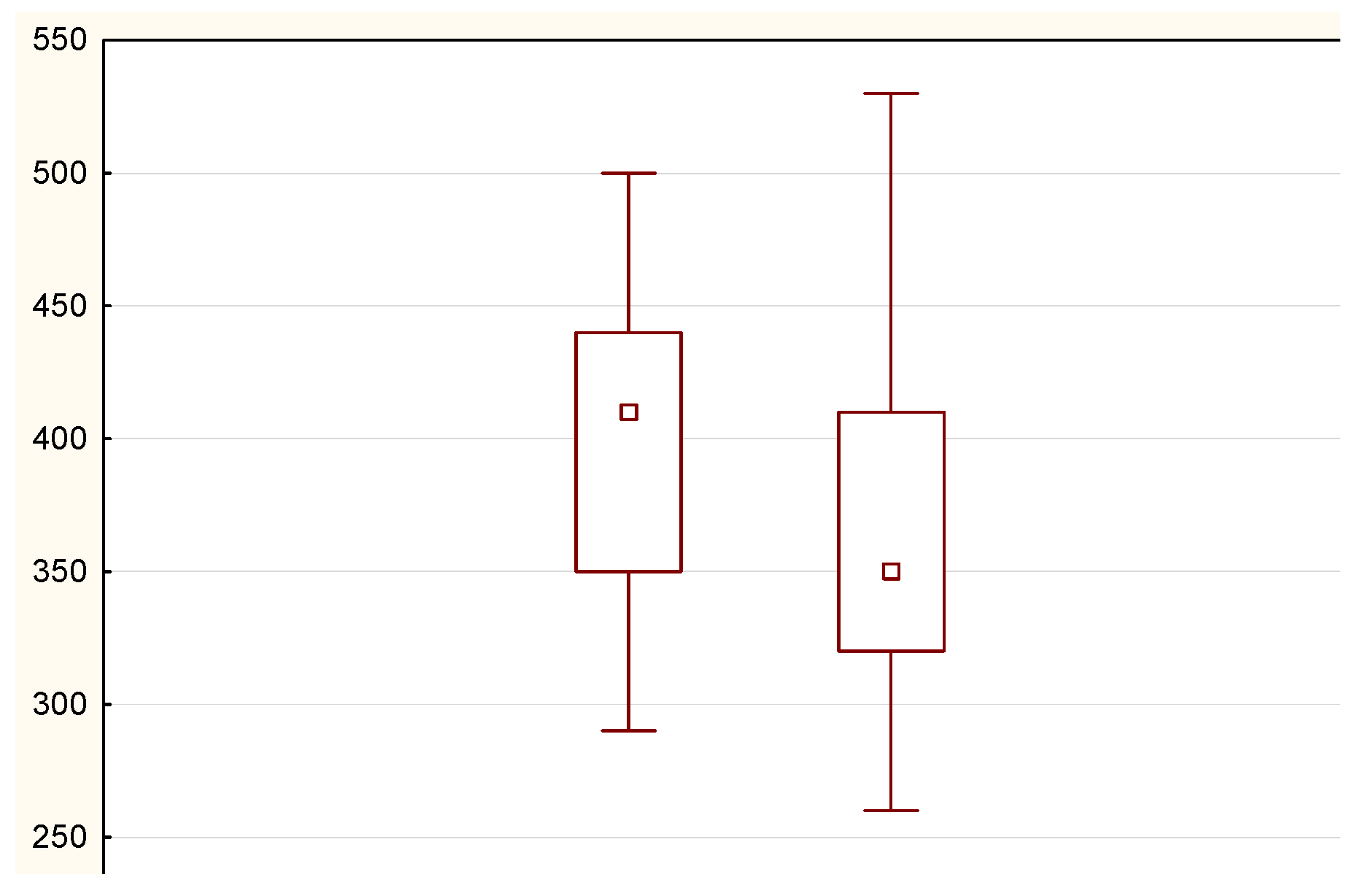
Figure 2.
Correlation relationships between cognitive properties in elite male judokas (by Spearman).
Figure 2.
Correlation relationships between cognitive properties in elite male judokas (by Spearman).
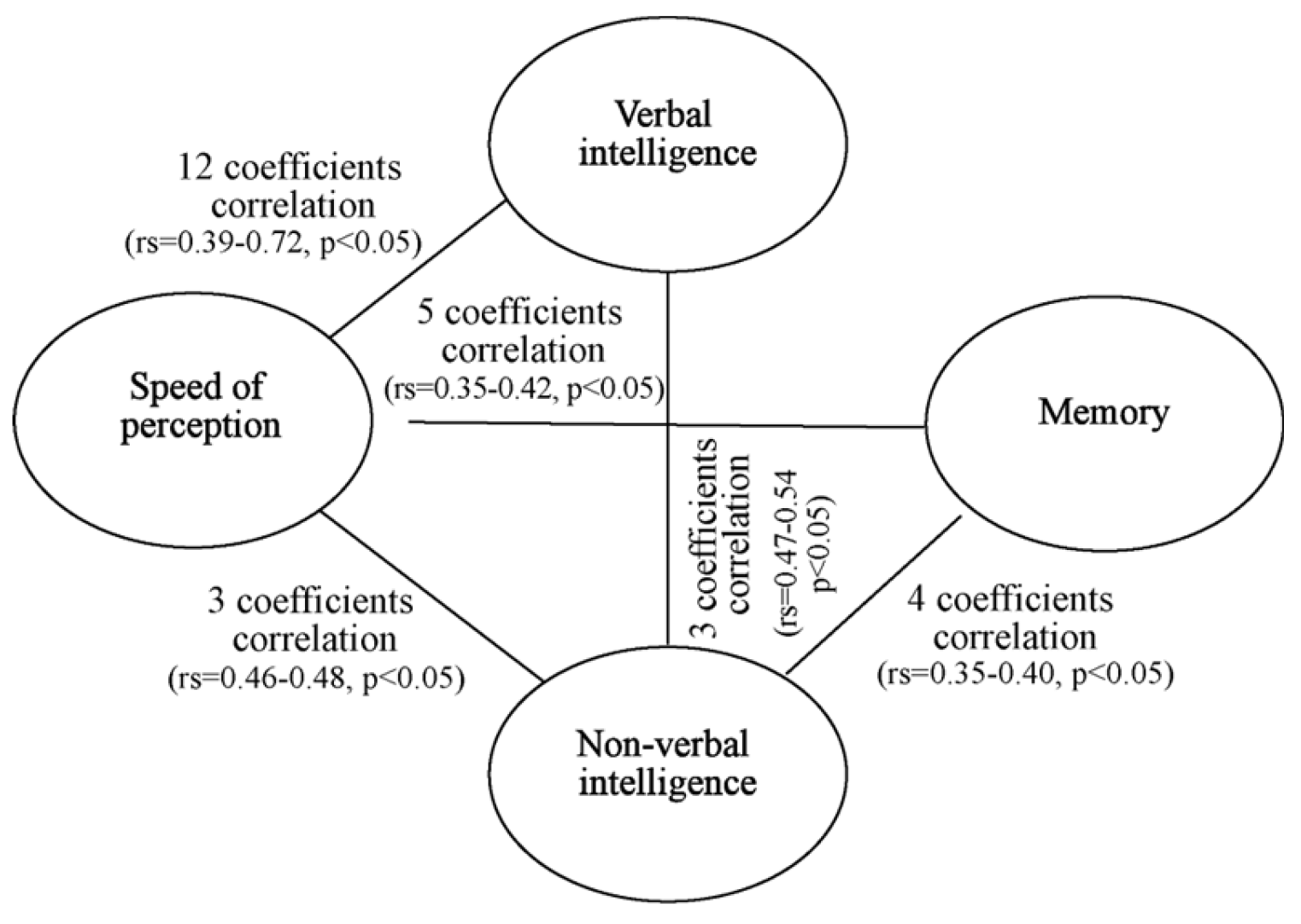
Figure 3.
Correlation relationships between cognitive properties in elite female judokas (by Spearman).
Figure 3.
Correlation relationships between cognitive properties in elite female judokas (by Spearman).
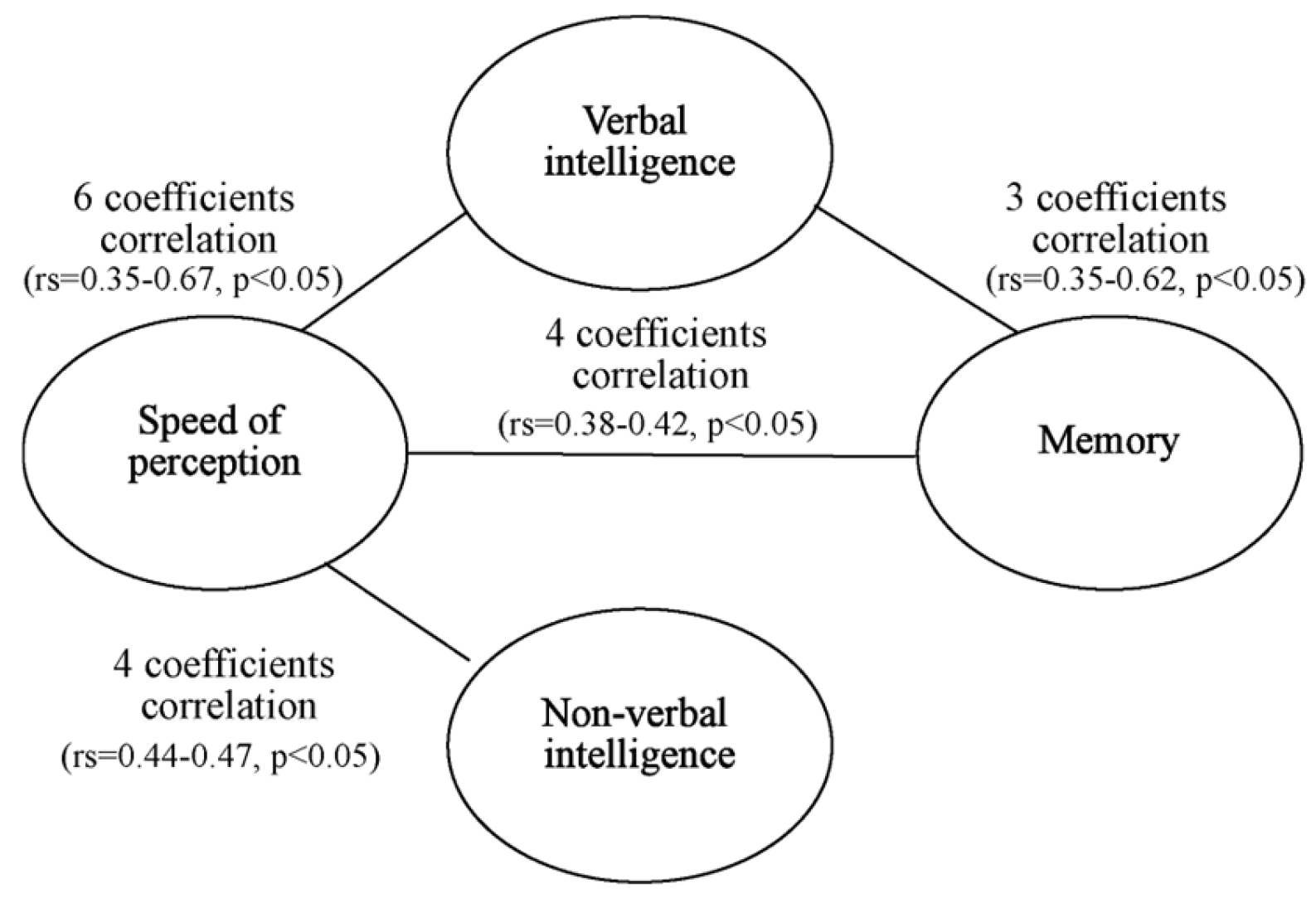

Table 1.
Variables of the "Perception speed" test in elite judokas of different gender (median, median, quartile range).
Table 1.
Variables of the "Perception speed" test in elite judokas of different gender (median, median, quartile range).
| Variables | Females (n=24) | Males (n=33) |
|---|---|---|
| Productivity, conditional unit | 59.50 (19.00) | 62.00 (22.00)* |
| Speed, conditional unit | 17.37 (4.37) | 16.50 (4.51) |
| Accuracy, number of mistakes | 0.96 (0.13) | 0.95 (0.09) |
| Efficiency, conditional unit | 42.52 (22.82) | 45.16 (24.31)* |
Legend: * p =.05, indicates significant differences of cognitive functions by gender.
Table 2.
The variables of test "Number Comparison" in elite judokas of different gender (median, median, quartile range).
Table 2.
The variables of test "Number Comparison" in elite judokas of different gender (median, median, quartile range).
| Variables | Females (n=24) | Males (n=33) |
|---|---|---|
| Efficiency, conditional unit | 1025.15 (228.99) | 930.52 (283.03)* |
| Latency of solving, ms | 985.16 (237.67) | 888.47 (259.62)* |
| Accuracy, number of mistakes | 0.97 (0.03) | 0.96 (0.04) |
| Stability, % | 25.31 (11.66) | 24.70 (8.85) |
Legend: * p =.05, indicates significant differences of cognitive functions by gender.
Table 3.
The variables of test "Number Comparison" in elite judokas of different gender (median, median, quartile range).
Table 3.
The variables of test "Number Comparison" in elite judokas of different gender (median, median, quartile range).
| Variables | Females (n=24) | Males (n=33) |
|---|---|---|
| Productivity, conditional unit | 20.00 (6.00) | 19.00 (6.00) |
| Speed, conditional unit | 12.90 (5.45) | 11.08 (4.56)* |
| Accuracy, number of mistakes | 0.67 (0.18) | 0.65 (0.17) |
| Efficiency, conditional unit | 38.89 (26.95) | 34.31 (24.30)* |
Legend: * p =.05, indicates significant differences of cognitive functions by gender.
Table 4.
The variables of test “Pattern Making in elite judokas of different gender (median, median, quartile range).
Table 4.
The variables of test “Pattern Making in elite judokas of different gender (median, median, quartile range).
| Variables | Females (n=24) | Males (n=33) |
|---|---|---|
| Productivity, conditional unit | 19.00 (5.00) | 19.00 (5.00) |
| Speed, conditional unit | 4.82 (1.81) | 4.00 (1.44) |
| Accuracy, number of mistakes | 0.800 (0.18) | 0.90 (0.18) |
| Efficiency, conditional unit | 59.74 (29.85) | 67.26 (34.10)* |
Legend: * p =.05, indicates significant differences of cognitive functions by gender.
Table 5.
Multiply regression model in elite female judokas.
| Model | Unstandardized Coefficien | Standardized Coefficient | T | p-value | |
|---|---|---|---|---|---|
| B | Std. Error | Beta | |||
| Constant | -6095.01 | 1870.45 | -3.25 | 0.009 | |
| Productivity of verbal intelligence | 48.59 | 25.70 | 3.60 | 1.89 | 0.09 |
| Speed of verbal intelligence | -33.81 | 14.83 | -0.80 | -2.27 | 0.04 |
| Efficiency of verbal intelligence | -11.86 | 4.78 | -3.18 | -2.47 | 0.03 |
| Productivity of memory | 38.70 | 26.19 | 3.49 | -1.47 | 0.17 |
| Accuracy of memory | 1075.05 | 763.45 | 2.54 | 1.40 | 0,19 |
| Speed of memory | 30.97 | 13.04 | 1.62 | 2.37 | 0.04 |
| Accuracy of visual perception | 1137.88 | 643.11 | 1.50 | 1.76 | 0.11 |
| Efficiency of visual perception | -4.47 | 3.57 | -0.95 | -1.25 | 0.24 |
| Efficiency of non-verbal intelligence | 4.13 | 1.18 | 15.37 | 3.49 | 0.01 |
| Latency of non-verbal decisions | -4.08 | 1.25 | -13.47 | -3.25 | 0.019 |
| Accuracy of non-verbal intelligence | 5360.48 | 1491.80 | 5.36 | 3.59 | 0.005 |
| Stability non-verbal intelligence | -10.08 | 3.22 | -1.39 | -3.12 | 0.01 |
Table 6.
Multiply regression model in elite male judokas.
| Model | Unstandardized Coefficien | Standardized Coefficient | T | p-value | |
|---|---|---|---|---|---|
| B | Std. Error | Beta | |||
| Constant | -3316.80 | 1443.20 | -2.29 | 0.04 | |
| Productivity of verbal intelligence | 41.06 | 24.91 | 3.04 | 1.64 | 0.12 |
| Speed of verbal intelligence | -20.84 | 14.45 | -0.49 | -1.44 | 0.17 |
| Efficiency of verbal intelligence | -8.59 | 4.45 | -2.30 | -1.92 | 0.08 |
| Productivity of memory | -38.03 | 24.29 | -3.43 | -1.56 | 0.14 |
| Accuracy of memory | 1114.55 | 696.81 | 2.63 | 1.59 | 0.13 |
| Efficiency of visual perception | 1.33 | 1.53 | 0.28 | 0.86 | 0.40 |
| Efficiency of non-verbal intelligence | 2.79 | 1.17 | 10.38 | 2.38 | 0.03 |
| Latency of non-verbal decisions | -2.70 | 1.25 | -8.91 | -2.14 | 0.05 |
| Accuracy of non-verbal intelligence | 3634.04 | 1460.03 | 3.63 | 2.48 | 0.03 |
| Stability non-verbal intelligence | -8,36 | 3.40 | -1.15 | -2.45 | 0.03 |
Disclaimer/Publisher’s Note: The statements, opinions and data contained in all publications are solely those of the individual author(s) and contributor(s) and not of MDPI and/or the editor(s). MDPI and/or the editor(s) disclaim responsibility for any injury to people or property resulting from any ideas, methods, instructions or products referred to in the content. |
© 2025 by the authors. Licensee MDPI, Basel, Switzerland. This article is an open access article distributed under the terms and conditions of the Creative Commons Attribution (CC BY) license (http://creativecommons.org/licenses/by/4.0/).
Copyright: This open access article is published under a Creative Commons CC BY 4.0 license, which permit the free download, distribution, and reuse, provided that the author and preprint are cited in any reuse.


