

Submitted:
14 March 2025
Posted:
17 March 2025
You are already at the latest version
Abstract
Background: Use of kinesiology taping has increased in veterinary medicine, yet there are few studies of its effects. The purpose of this study was to evaluate the effect of kinesiology taping of the tarsus on kinetic and kinematic gait characteristics while performing selected exercises in dogs using 3D motion capture and force platform analysis of gait. Methods: Ten clinically normal, healthy, adult mixed-breed dogs were recruited for this study. Reflective markers were applied to the skin of the left and right pelvic limbs if each dog. Eight infrared cameras were positioned around a 13 m platform containing a force platform. Dogs were walked, trotted and led over cavaletti rails with and without kinesiology tape extending from the distal tibia, crossing the cranial surface of the tarsus, and extending to the dorsal surface of the metatarsals. The trial was repeated 2 hours later. Maximum flexion and extension in the sagittal plane, and maximum angular acceleration and velocity were measured at the tarsus and stifle for each dog. Peak vertical (ZPeak), braking (YA) and propulsion (YB) forces were determined as a percent of body weight while walking and trotting. Results: Ground reaction forces were greater at the trot compared to the walk, and stifle and tarsal flexion were greater with stepping over cavaletti rails as compared to walking and trotting. There were no differences in kinematic or kinetic measurements related to the kinesiology tape application, time or exercise being performed. Conclusions: Kinesiology tape had no effect on tarsal joint gait characteristics while walking, trotting, or stepping over cavaletti rails when applied to the dorsal tarsus of normal dogs.
Keywords:
1
; gait analysis
; kinematic gait evaluation
; kinesiology tape
; kinetic gait evaluation
1. Introduction
Kinesiology taping has increased in popularity both in human and veterinary applications since its inception in the 1970s. Today it is commonly seen on athletes of numerous species in various activities. Application of kinesiology tape to the skin reportedly targets sensory receptors of the cutaneous skin, lifts tissues to provide lymphatic drainage, and improves circulation with simultaneous analgesia via nociceptive transmission inhibition.[1] There may be benefit in using kinesiology tape for pain management,[2,3,4,5], although the effects seem to be mild in musculoskeletal conditions, including osteoarthritis pain.[6,7,8] Additionally, kinesiology tape is postulated to stimulate pathways related to the mechanoreceptive and proprioceptive pathways, thereby modifying joint kinematics.[9] In humans it is also used to improve athletic performance despite a lack of literary support.[10] However, most studies indicate negligible benefit for muscle strengthening in healthy adult humans,[11,12] and there may be few benefits regarding athletic performance in healthy individuals.[10] Some studies have suggested an improvement in muscle fatigue,[13,14,15] while others have shown no improvement in muscle strength or athletic performance.[3,10,16,17] Further, the ability to reduce swelling after acute ankle sprain has also been questioned.[18,19]
In veterinary medicine, kinesiology tape is used in horses to treat muscular conditions, fascial restrictions and postural imbalance, although there is little evidence of beneficial effects.[9,20,21,22] Ramon et al. demonstrated decreased peak vertical force and limited flexion of the fetlock in horses during the swing phase of gait with kinesiology tape applied.[22] A study of the effects of kinesiology tape applied to the forelimbs of horses showed no effect on forelimb kinematics or muscle EMG activity.[23] However, application to the abdominal muscles increased craniocaudal activity of the body.[24]
There is very little evidence regarding kinesiology tape application techniques or how it affects joint motion and weight bearing during simple exercises in normal dogs. The authors have used kinesiology tape on several dogs with various pathologies and perceived efficacy in terms of increased joint motion. However, the magnitude of effect and the duration of action has not been evaluated under test requirements in normal dogs. With the advent of veterinary specific kinesiology tape, manufacturers claim the tape can last for 5 days and can be used to treat conditions ranging from muscle injury, inflammation, tendonitis, desmitis, and increase joint range of motion (RockTape, https://rocktape.com.au/canine/).
The purpose of this study was to investigate gait changes following the application of kinesiology tape on the dorsal canine tarsus. Additionally, tape longevity and application protocol was evaluated. We hypothesized that there would be increased range of motion and decreased peak vertical force between the taped limbs of each dog at the walk, trot and while walking over cavaletti rails.
2. Materials and Methods
Participants: The study protocol was approved by the Institutional Animal Care and Use Committee at the University of Tennessee and written informed consent was obtained from owners. Ten client-owned dogs were included in the study reported here. Weight, age and breed were recorded. An initial baseline evaluation was performed, including orthopedic, neurologic and general physical examinations. Individuals were excluded for any history of significant mobility disorder, obvious visual lameness, greater than 10% difference in peak vertical force between forelimbs or between hind limbs at a walk and a trot, if gross joint instability was present, or if there were any other clinically abnormal findings on physical examination. Dogs were between 2 and 10 years of age and weighed between 15 to 50 kg.
Kinematic Data Collection: A 3-dimensional testing space measuring 3x1m was established on a 13-meter walkway centered over the force platform. A right-handed orthogonal global coordinate system was established within the 3D testing space with 0,0,0 (X, Y, Z) located on the force platform. On each data collection day, 8 high-speed data capture cameras (250Hz Vero cameras, Vicon Motion Systems Inc, Centennila, CO) were calibrated to the testing space using an active calibration wand (Vicon Motion System). Markers were tracked and motion capture data were recorded using commercial software (Vicon Nexus version 2.11, Vicon Motion Systems, Inc).
Motion capture began with a static calibration with 10-15 frames of data captured, with 23 reflective, spherical markers on each pelvic limb (46 total markers) placed on anatomic landmarks or as rigid femur cluster markers on femurs and tibias as described by Fu et al (Figure 1)[25]. We used multiple rigid cluster design methods based on experience from animal and human biomechanic studies. A 2x2 cm and a 3x3 cm 3D printed arched boards using a 20% infill were constructed for application of cluster markers (Figure 2). The boards were covered with Velcro and the markers affixed. The arched boards and reflective markers were then affixed to animals using double-sided medical tape and GLUture (Zoetis Inc., Kalamazoo, MI 49007), if necessary. Hair in the area was clipped if more than 0.5 cm in length.
Following the calibration trial, 7 markers over anatomic landmarks were removed for the remaining motion trials (Table 1). These markers were virtually reconstructed from the initial static trial using Vicon Procalc software (Vicon, Colorado).[25,26] Each dog was walked, trotted and walked over cavaletti rails four times with the cluster markers in place. The order of data collection was randomized among the three exercises. Data were acquired from the right and left sides separately.
After these trials were captured, kinesiology tape was applied to the dorsal surface of a randomly selected tarsus from the distal tibial tuberosity to the distal metatarsus. The tape was applied by stretching the tape to 25% of the un-stretched tape length (to apply under tension) and placed from proximal to distal (Figure 3). We found it necessary in initial attempts to apply a 3 cm wide anchoring piece (not stretched) at the proximal and distal ends to help hold the tape in place, according to the manufacturer's instructions (RockTape, Morley, WA, USA). After application, the tape was rubbed for 3 minutes to activate the adhesive prior to the acclimation period. Dogs were allowed to acclimate to the tape during 5 minutes of free exercise. Dogs were then walked, trotted and walked over cavaletti rails to collect kinetic and kinematic data as described, and data were collected 5 minutes, and 2 hours after tape application. Cavaletti height was based on the size of the dog, with the cavaletti rail height placed at the junction of the lower and middle third of the antebrachium.
Joint coordinate system: The local coordinate systems (LCS) specific to each segment were designed similarly to Fu et al [25] with exception to the foot. The LCS of our foot originated at the caudal aspect of the calcaneus (CALC), with the unit vector of the z-axis defined by the vector between the 2nd and 5th distal metatarsals, the x-axis unit vector was defined by the vector from the caudal calcaneus travelling distally to bisect the z-axis vector. The y-axis unit vector was defined as a cross product of the X and Z vectors. All joint angles were converted to complimentary angles as in the modeled papers.[26,27,28,29] Kinematic data were gap filled, filtered and smoothed using Butterworth filtering. Data collected included tarsus joint angles in the X, Y and Z planes, including peak tarsus and stifle joint flexion and extension, angular velocity and angular acceleration.
Kinetic Data Collection:
Ground reaction forces were determined using a force platform (AMTI OR6-6, Watertown, MA) and quadruped software (Acquire version 7.33, Vicon, Centennial, CO). Dogs were walked and trotted over the platform between 0.7 and 1.2 m/s and 1.7 and 2.1 m/s, respectively with acceleration ±0.5 m/s2. Speed and acceleration were measured using five photoelectric cells mounted 50 cm apart at a height of 58 cm within the testing space. Trials were included for analysis if ipsilateral forelimb and hindlimb strikes occurred, velocity and acceleration were within described parameters, and there were no sudden changes in limb, body or head motion. Four valid right and left ipsilateral limb strikes were obtained and the means of the four trials were calculated for each parameter for each side. Peak vertical (ZPeak), braking (YA) and propulsion (YB) forces were determined as a percent body weight. Visual examination of graphical representation confirmed validity of trials. Kinetic data were collected before tape application, and 5 minutes, and 2 hours after application.
Kinetic and Kinematic Data Analysis:
A 3-way repeated measures ANOVA (SAS, Cary, NC) was performed on ground reaction forces, angular acceleration, angular velocity, and maximum and minimum joint angles of the tarsus and stifle. Comparisons between the taped and un-taped limbs, as well as comparisons between exercises (walking, trotting, cavaletti poles), and exercise x time interaction were performed.
3. Results
3.1. Participants
A total of 10 dogs participated in the study. Breeds included German Shepherd, Standard Poodle, Golden Retriever Mix, Boxer mix, Great Dane, Weimaraner mix, English retriever spaniel, and mixed breed dogs. Average age of participants was 6.2 years (range 2 to 10), and average weight was 25.8 kg (range 17.4-40.4). Four dogs had the tape applied to the left tarsus and 6 dogs had the tape applied to the right tarsus.
All dogs had short to medium length hair; dogs with medium length hair were clipped for marker application. One dog (German Shepherd) experienced minor dermatitis from clipping. It was treated with topical dilute chlorohexidine and resolved in 5 days without complication. No other complications occurred.
3.2. Kinesiology Tape Longevity:
The kinesiology tape either fell off or required additional support pieces applied within 2 hours (Figure 4). In most dogs, the tape loosened within 15 minutes. Additional support pieces were placed perpendicularly on the limb depending on the site of tape failure (Figure 5). Failure occurred most commonly at the tarsocrural joint, likely due to the high motion and angularity in this area. Other sites of failure included the proximal and distal ends of the tape.
3.3. Kinematic Gait Evaluation
There were no significant differences among any of the comparisons, except for significant changes in angular acceleration and angular velocity of joint motion and tarsal and stifle flexion among exercises (Table 2 and Table 3, Figure 6 and Figure 7). Flexion was greatest with cavaletti rail walking, followed by trotting and walking. The presence of kinesiology tape application had no effect on altering the measured variables during a particular exercise, however.
3.4. Kinetic Gait Evaluation
3-way repeated measures of ANOVA showed no statistical difference between the taped and untaped limbs between limbs, exercise x time, or other comparisons listed in Table 4. There were differences in mean ground reaction forces regarding exercises, with ZPeak and YAPeak being greater with trotting (Figure 8).
4. Discussion
Based on the results reported here, the application of kinesiology tape to the canine tarsus had no significant effect on tarsal or stifle joints regarding gait or performance of selected exercises. The tape had no effect on kinematic joint variables in the tarsus or stifle, similar to the effect of kinesiology taping of the forelimb in horses[23], nor any effect on measured ground reaction forces at the walk or trot, unlike a study of tape application to equine fetlocks.[22] Therefore, our original hypotheses postulating increased range of motion and decreased peak vertical force were rejected.
Studies in people have also found little effect of kinesiology tape on joint motion.[30] However, improvement in muscle strength has been reported in people undergoing kinesiology taping for knee osteoarthritis, muscle fatigue and shoulder function for performance[14,31,32], while other studies have shown no effect.[33,34,35] Although improvement of joint proprioception has been a suggested benefit of kinesiology taping[36,37], and may be beneficial in those with poor proprioception[38], this may not occur in normal patients.[39,40,41]
A secondary aim of this study was to evaluate kinesiology tape longevity based on manufacturer claims that it can be worn for 5 days. The tape was applied per manufacturer’s instructions. In this study the kinesiology tape did not adhere to the limb as long as expected. All dogs required tape modification within 2 hours of application. However, this may be due to the high mobility of the canine tarsus and may not reflect inherent properties of the tape itself or the tape application protocol. It is possible the tape may perform better on other joints or on dogs that are not performing exercises with great joint motion after tape application. It is also unknown if the additional pieces added to maintain tape position (added perpendicularly to the original piece) altered joint motion. Further studies using tape on other joints may produce different results and provide more longevity of the tape.
Based on the results of the study presented here, kinesiology tape does not alter gait or performance of the tested exercises in clinically normal dogs. The tape did not affect any of the measured parameters when compared to the un-taped contralateral limb. This is similar to the effect of kinesiology taping of the forelimb in horses and in back flexion and extension, which found no effect on forelimb joint or back kinematics.[9,23] However, the lack of effect of kinesiology taping on ground reaction forces in dogs differs from a study of tape application to equine fetlocks, which found decreased ground reaction forces.[22] Although we found no effects in our study of normal dogs, studies of kinesiology taping effects in dogs with pathology, such as osteoarthritis, should be considered.[42]
Studies evaluating tape application methods may also be warranted. Although some studies have suggested that tape tension and the direction of tape application may make a difference[43,44,45], others have shown the direction of the tape may not make a difference regarding athletic performance.[46,47,48] Changes in application, such as clipping the hair over the intended area of all study dogs may help increase contact between the adhesive and skin. Also, tapes from different manufacturers exhibit different characteristics regarding adherence.[49,50,51]
Limitations in this study include a small sample size and difficulties in application of the kinesiology tape and tape longevity. Skin movement about markers is also a limitation of kinematic evaluation of gait. However, the techniques used in this study allowed noninvasive collection of data and used no radiation equipment that has been used in other studies, such as fluoroscopy, to limit radiation exposure. In addition, the use of the virtual markers used in the study reported here have been shown to reduce the effects of marker motion artifact. Each dog served as its own un-taped control, making any differences in joint motion a result of kinesiology tape application consistent.
In our original hypothesis we believed that dogs would have altered tarsal joint movement, and we also believed that this effect would be less as the dogs became accustomed to wearing the tape. That was the logic behind repeated evaluation over 2 hours or longer. However, because there were no immediate differences in joint motion right after tape application, along with difficulties in maintaining tape in position, we were unable to evaluate the dogs longer than 2 hours after tape application.
To our knowledge, this is the first study to evaluate the effect of kinesiology tape on gait characteristics in normal dogs. Our study of the effects of kinesiology tape on dogs is important to further understand any impacts on clinical patients. Kinesiology tape is increasingly used in veterinary practice, likely because of its impact in human sports medicine. Systematic scientific studies are warranted to understand the true effectiveness of the tape. Future research to evaluate the use of kinesiology tape on other joints such as the stifle, coxofemoral and cubital joints, as well as the spinal column, is warranted in clinically normal dogs and dogs with various orthopedic or neurologic conditions.
5. Conclusions
In conclusion, kinesiology tape applied to the dorsal canine tarsus had no significant effect on gait or the completion of selected exercises. The tape had no effect on measured kinematic or kinetic variables. Tape application applied according to the manufacturer’s instructions did not last beyond 2 hours. The tape application protocol should be revisited if subjects will be asked to perform rehabilitation exercises over a period of time. Additional studies evaluating tape application, tape longevity and tape effects on other joints during motion are also warranted.
Author Contributions
Conceptualization, DM; methodology, RN, DM; formal analysis, RN; investigation, RN, LS, NM, KJ, DM; data curation, RN; writing—original draft preparation, RN; writing—review and editing, RN, LS, NM, KJ, DM; supervision, DM; funding acquisition, DM. All authors have read and agreed to the published version of the manuscript.”
Funding
Funding for this study was provided by the Veterinary Orthopedic Laboratory at the University of Tennessee College of Veterinary Medicine. All funding was internally sourced. Authors do not have any financial or personal relationships with Vicon or RockTape that influenced or provide bias to the background of the research.
Institutional Review Board Statement
The study was conducted according to the guidelines of the and approved by the Institutional Review Board of The University of Tennessee (protocol code 2766-0420).
Data Availability Statement
Data available on request.
Acknowledgments
Authors would like to thank all owners and their dogs involved in the study. Mike O'Neil of the University of Tennessee statistics department, Ann Viera and the library team at the University of Tennessee College of Veterinary Medicine for their aid in the literature search.This article is a revised and expanded version of a paper entitled Effect of kinesiology taping on gait and selected exercises in dogs, which was presented at the International Association of Veterinary Rehabilitation and Physical Therapy. Cambridge, England, August 2022.
Conflicts of Interest
The authors declare no conflicts of interest.
References
- Banerjee, G.; Briggs, M.; Johnson, M.I. The Immediate Effects of Kinesiology Taping on Cutaneous Blood Flow in Healthy Humans under Resting Conditions: A Randomised Controlled Repeated-Measures Laboratory Study. PLoS One 2020, 15, 1–17. [Google Scholar] [CrossRef]
- Ci-En Chan, M.; Wen-Jie Wee, J.; Lim, M.-H. Does Kinesiology Taping Improve the Early Postoperative Outcomes in Anterior Cruciate Ligament Reconstruction? A Randomized Controlled Study; 2017; Vol. 27;
- Kaltron, A.; Bar-Sela, S. A Systematic Review of the Effectiveness of Kinesio Taping® - Fact or Fashion? Eur J Phys Rehabil Med 2013, 49, 699–709. [Google Scholar]
- Lee, K.; Yi, C.; Lee, S. The Effects of Kinesiology Taping Therapy on Degenerative Knee Arthritis Patients’ Pain, Function, and Joint Range of Motion. J Phys Ther Sci 2016, 28, 63–66. [Google Scholar] [PubMed]
- Mao, H.Y.; Hu, M.T.; Yen, Y.Y.; Lan, S.J.; Lee, S. Da Kinesio Taping Relieves Pain and Improves Isokinetic Not Isometric Muscle Strength in Patients with Knee Osteoarthritis—a Systematic Review and Meta-Analysis. Int J Environ Res Public Health 2021, 18. [Google Scholar]
- Lim, E.C.W.; Tay, M.G.X. Kinesio Taping in Musculoskeletal Pain and Disability That Lasts for More than 4 Weeks: Is It Time to Peel off the Tape and Throw It out with the Sweat? A Systematic Review with Meta-Analysis Focused on Pain and Also Methods of Tape Application. Br J Sports Med 2015, 49, 1558–1566. [Google Scholar] [CrossRef]
- Montalvo, A.M.; Cara, E. Le; Myer, G.D. Effect of Kinesiology Taping on Pain in Individuals with Musculoskeletal Injuries: Systematic Review and Meta-Analysis. Physician and Sportsmedicine 2014, 42, 48–57. [Google Scholar] [CrossRef]
- Parreira, P. do C.S.; Costa, L. da C.M.; Hespanhol Junior, L.C.; Lopes, A.D.; Costa, L.O.P. Current Evidence Does Not Support the Use of Kinesio Taping in Clinical Practice: A Systematic Review. J Physiother 2014, 60, 31–39. [Google Scholar] [CrossRef]
- Ericson, C.; Stenfeldt, P.; Hardeman, A.; Jacobson, I. The Effect of Kinesiotape on Flexion-extension of the Thoracolumbar Back in Horses at Trot. Animals 2020, 10, 1–15. [Google Scholar] [CrossRef]
- Drouin, J.L.; Mcalpine, C.T.; Primak, K.A.; Kin, B.A.; Kissel, J.; Drouin, J. The Effects of Kinesiotape on Athletic-Based Performance Outcomes in Healthy, Active Individuals: A Literature Synthesis Private Practice. J Can Chiropr Assoc 2013, 57. [Google Scholar]
- Csapo, R.; Alegre, L.M. Effects of Kinesio® Taping on Skeletal Muscle Strength-A Meta-Analysis of Current Evidence. J Sci Med Sport 2015, 18, 450–456. [Google Scholar] [CrossRef]
- de Freitas, F.S.; Brown, L.E.; Gomes, W.A.; Behm, D.G.; Marchetti, P.H. No Effect of Kinesiology Tape on Passive Tension, Strength or Quadriceps Muscle Activation or during Maximal Voluntary Isometric Contraction in Resistance Trained Men. Int J Sports Phys Ther 2018, 13, 661–667. [Google Scholar] [CrossRef] [PubMed]
- Farquharson, C.; Greig, M. Kinesiology Tape Mediates Soccer-Simulated and Local Peroneal Fatigue in Soccer Players. Research in Sports Medicine 2017, 25, 313–321. [Google Scholar] [CrossRef] [PubMed]
- Konishi, Y. Tactile Stimulation with Kinesiology Tape Alleviates Muscle Weakness Attributable to Attenuation of Ia Afferents. J Sci Med Sport 2013, 16, 45–48. [Google Scholar] [CrossRef]
- Lau, K.K.L.; Cheng, K.C.C. Effectiveness of Taping on Functional Performance in Elite Athletes: A Systematic Review. J Biomech 2019, 90, 16–23. [Google Scholar] [CrossRef] [PubMed]
- Fong, S.S.M.; Tam, Y.T.; Macfarlane, D.J.; Ng, S.S.M.; Bae, Y.H.; Chan, E.W.Y.; Guo, X. Core Muscle Activity during TRX Suspension Exercises with and without Kinesiology Taping in Adults with Chronic Low Back Pain: Implications for Rehabilitation. Evidence-based Complementary and Alternative Medicine 2015, 2015. [Google Scholar] [CrossRef]
- Poon, K.Y.; Li, S.M.; Roper, M.G.; Wong, M.K.M.; Wong, O.; Cheung, R.T.H. Kinesiology Tape Does Not Facilitate Muscle Performance: A Deceptive Controlled Trial. Man Ther 2015, 20, 130–133. [Google Scholar] [CrossRef]
- Nunes, G.S.; Vargas, V.Z.; Wageck, B.; Hauphental, D.P. dos S.; Luz, C.M. da; de Noronha, M. Kinesio Taping Does Not Decrease Swelling in Acute, Lateral Ankle Sprain of Athletes: A Randomised Trial. J Physiother 2015, 61, 28–33. [Google Scholar] [CrossRef]
- Gabriel, E.H.; Sibert, N.C.; Powden, C.J. Kinesiology Therapeutic Taping Does Not Reduce Swelling Caused by an Acute Ankle Sprain: A Critically Appraised Topic. J Sport Rehabil 2022, 31, 630–634. [Google Scholar] [CrossRef]
- Alexander, J.; Hobbs, S.J.; May, K.; Northrop, A.; Brigden, C.; Selfe, J. Postural Characteristics of Female Dressage Riders Using 3D Motion Analysis and the Effects of an Athletic Taping Technique: A Randomised Control Trial. Physical Therapy in Sport 2015, 16, 154–161. [Google Scholar] [CrossRef]
- Molle, S. Kinesio Taping Fundalmentals for the Equine Athlete. Vet Clin Equine 2016, 32, 103–113. [Google Scholar]
- Ramón, T.; Prades, M.; Armengou, L.; Lanovaz, J.L.; Mullineaux, D.R.; Clayton, H.M. Effects of Athletic Taping of the Fetlock on Distal Limb Mechanics. Equine Vet J 2004, 36, 764–768. [Google Scholar] [CrossRef] [PubMed]
- Zellner, A.; Bockstahler, B.; Peham, C. The Effects of Kinesio Taping on the Trajectory of the Forelimb and the Muscle Activity of the Musculus Brachiocephalicus and the Musculus Extensor Carpi Radialis in Horses. PLoS One 2017, 12, 1–13. [Google Scholar] [CrossRef] [PubMed]
- Biau, S.; Burgaud, I. Application of Kinesiology Taping to Equine Abdominal Musculature in a Tension Frame for Muscle Facilitation Increases Longitudinal Activity at the Trot. Equine Vet J 2022, 54, 973–978. [Google Scholar] [CrossRef]
- Fu, Y.C.; Torres, B.T.; Budsberg, S.C. Evaluation of a Three-Dimensional Kinematic Model for Canine Gait Analysis. Am J Vet Res 2010. [CrossRef]
- Torres, B.T.; Fu, Y.C.; Sandberg, G.S.; Budsberg, S.C. Pelvic Limb Kinematics in the Dog with and without a Stifle Orthosis. Veterinary Surgery 2017. [CrossRef]
- Sandberg, G.S.; Torres, B.T.; Budsberg, S.C. Review of Kinematic Analysis in Dogs. Veterinary Surgery 2020, 49, 1088–1098. [Google Scholar] [CrossRef]
- Torres, B.T.; Gilbert, P.J.; Reynolds, L.R.; Fu, Y.C.; Navik, J.A.; Sornborger, A.; Budsberg, S.C. The Effect of Examiner Variability on Multiple Canine Stifle Kinematic Gait Collections in a 3-Dimensional Model. Veterinary Surgery 2015. [CrossRef]
- Torres, B.T.; Punke, J.P.; Fu, Y.C.; Navik, J.A.; Speas, A.L.; Sornborger, A.; Budsberg, S.C. Comparison of Canine Stifle Kinematic Data Collected with Three Different Targeting Models. Veterinary Surgery 2010. [CrossRef]
- Alam, S.; Malhotra, D.; Munjal, J.; Chachra, A. Immediate Effect of Kinesio Taping on Shoulder Muscle Strength and Range of Motion in Healthy Individuals: A Randomised Trial. Hong Kong Physiotherapy Journal 2015, 33, 80–88. [Google Scholar] [CrossRef]
- Angelopoulos, P.; Mylonas, K.; Tsepis, E.; Billis, E.; Vaitsis, N.; Fousekis, K. The Effects of Instrument-Assisted Soft Tissue Mobilization, Tissue Flossing, and Kinesiology Taping on Shoulder Functional Capacities in Amateur Athletes. J Sport Rehabil 2021, 30, 1028–1037. [Google Scholar] [CrossRef]
- Altaş, E.U.; Günay Uçurum, S.; Ozer Kaya, D. Acute Effect of Kinesiology Taping on Muscle Strength, Tissue Temperature, Balance, and Mobility in Female Patients with Osteoarthritis of the Knee. Somatosens Mot Res 2021, 38, 48–53. [Google Scholar] [CrossRef] [PubMed]
- Cavaleri, R.; Thapa, T.; Beckenkamp, P.R.; Chipchase, L.S. The Influence of Kinesiology Tape Colour on Performance and Corticomotor Activity in Healthy Adults: A Randomised Crossover Controlled Trial. BMC Sports Sci Med Rehabil 2018, 10, 17. [Google Scholar] [CrossRef]
- Cai, C.; Au, I.P.H.; An, W.; Cheung, R.T.H. Facilitatory and Inhibitory Effects of Kinesio Tape: Fact or Fad? J Sci Med Sport 2016, 19, 109–112. [Google Scholar] [CrossRef]
- Halski, T.; Dymarek, R.; Ptaszkowski, K.; Słupska, L.; Rajfur, K.; Rajfur, J.; Pasternok, M.; Smykla, A.; Taradaj, J. Kinesiology Taping Does Not Modify Electromyographic Activity or Muscle Flexibility of Quadriceps Femoris Muscle: A Randomized, Placebo-Controlled Pilot Study in Healthy Volleyball Players. Medical Science Monitor 2015, 21, 2232–2239. [Google Scholar] [CrossRef]
- Hosp, S.; Folie, R.; Csapo, R.; Hasler, M.; Nachbauer, W. Eccentric Exercise, Kinesiology Tape, and Balance in Healthy Men. J Athl Train 2017, 52, 636–642. [Google Scholar] [CrossRef]
- Hosp, S.; Csapo, R.; Heinrich, D.; Hasler, M.; Nachbauer, W. Does Kinesiology Tape Counter Exercise-Related Impairments of Balance in the Elderly? Gait Posture 2018, 62, 167–172. [Google Scholar] [CrossRef]
- Hosp, S.; Bottoni, G.; Heinrich, D.; Kofler, P.; Hasler, M.; Nachbauer, W. A Pilot Study of the Effect of Kinesiology Tape on Knee Proprioception after Physical Activity in Healthy Women. J Sci Med Sport 2015, 18, 709–713. [Google Scholar] [CrossRef]
- Blein-Ibáñez, Á.; Molina-Rueda, F.; Bebea-Zamorano, F.N.; López-Román, A.; Navarro-López, V.; Alguacil-Diego, I.M. Kinesiology Tape versus Non-Standardized Tape in the Treatment of Balance in Non-Operated Anterior Cruciate Ligament Rupture Patients: A Randomized Controlled Trial. Somatosens Mot Res 2023, 1–8. [Google Scholar] [CrossRef]
- Rogers, M.E.; Jimoh, J.M.; Zhang, Q.; Patterson, J.A.; Bomgardner, R. 2016.
- Bailey, D.; Firth, P. Does Kinesiology Taping of the Ankles Affect Proprioceptive Control in Professional Football (Soccer) Players? Physical Therapy in Sport 2017, 25, 94–98. [Google Scholar] [CrossRef]
- Park, J.S.; Yoon, T.; Lee, S.H.; Hwang, N.K.; Lee, J.H.; Jung, Y.J.; Lee, G. Immediate Effects of Kinesiology Tape on the Pain and Gait Function in Older Adults with Knee Osteoarthritis. Medicine 2019, 98, e17880. [Google Scholar] [CrossRef]
- Lopes, M.; Torres, R.; Romão, D.; Dias, M.; Valério, S.; Espejo-Antúnez, L.; Costa, R.; Ribeiro, F. Kinesiology Tape Increases Muscle Tone, Stiffness, and Elasticity: Effects of the Direction of Tape Application. J Bodyw Mov Ther 2022, 30, 176–180. [Google Scholar] [CrossRef] [PubMed]
- Magalhães, I.; Bottaro, M.; Mezzarane, R.A.; Neto, F.R.; Rodrigues, B.A.; Ferreira-Júnior, J.B.; Carregaro, R.L. Kinesiotaping Enhances the Rate of Force Development but Not the Neuromuscular Efficiency of Physically Active Young Men. Journal of Electromyography and Kinesiology 2016, 28, 123–129. [Google Scholar] [CrossRef]
- Naugle, K.E.; Hackett, J.; Aqeel, D.; Naugle, K.M. Effect of Different Kinesio Tape Tensions on Experimentally-Induced Thermal and Muscle Pain in Healthy Adults. PLoS One 2021, 16, 1–14. [Google Scholar] [CrossRef] [PubMed]
- Choi, I.R.; Lee, J.H. Effect of Kinesiology Tape Application Direction on Quadriceps Strength. Medicine (United States) 2018, 97. [Google Scholar] [CrossRef]
- Choi, I.R.; Lee, J.H. Effects of the Direction of Kinesiology Tape Application on the Delayed Onset of Quadriceps Muscle Fatigue in Athletes. Isokinet Exerc Sci 2019, 27, 235–240. [Google Scholar] [CrossRef]
- Dolphin, M.; Brooks, G.; Calancie, B.; Rufa, A. Does the Direction of Kinesiology Tape Application Influence Muscle Activation in Asymptomatic Individuals? Int J Sports Phys Ther 2021, 16, 135–144. [Google Scholar] [CrossRef]
- Matheus, J.P.C.; Zille, R.R.; Gomide Matheus, L.B.; Lemos, T.V.; Carregaro, R.L.; Shimano, A.C. Comparison of the Mechanical Properties of Therapeutic Elastic Tapes Used in Sports and Clinical Practice. Physical Therapy in Sport 2017, 24, 74–78. [Google Scholar] [CrossRef]
- Selva, F.; Pardo, A.; Aguado, X.; Montava, I.; Gil-Santos, L.; Barrios, C. A Study of Reproducibility of Kinesiology Tape Applications: Review, Reliability and Validity. BMC Musculoskelet Disord 2019, 20. [Google Scholar] [CrossRef]
- Tunakova, V.; Tunak, M.; Mullerova, J.; Kolinova, M.; Bittner, V. Material, Structure, Chosen Mechanical and Comfort Properties of Kinesiology Tape. Journal of the Textile Institute 2017, 108, 2132–2146. [Google Scholar] [CrossRef]
Figure 1.
Anatomic (Calibration) Marker set (left) and tracking marker set (right).
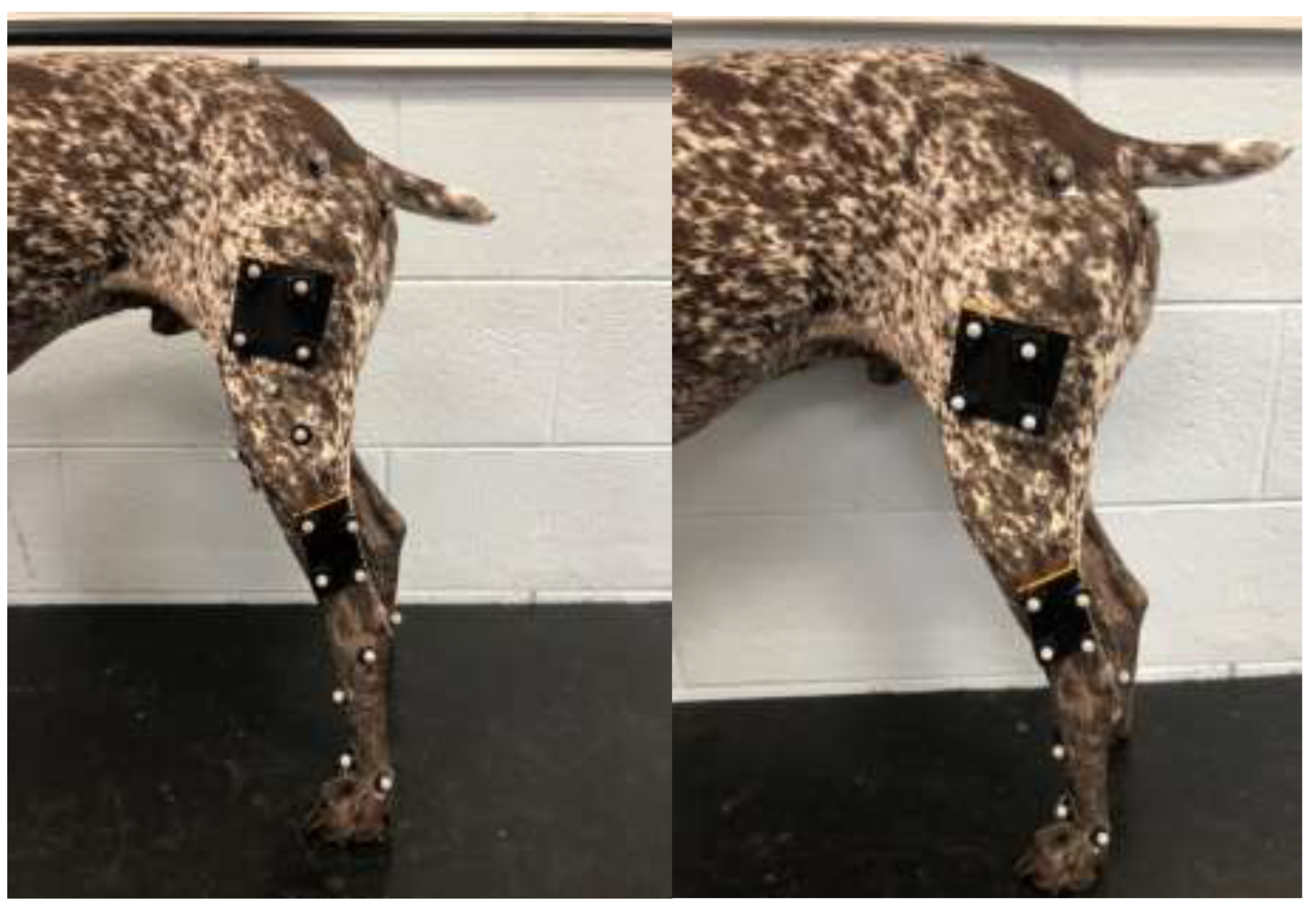
Figure 2.
Rigid cluster design using a 3D printed curved board. Each cluster was arranged in a rhomboid shape with an approximate distance of 2.5cm separating each marker from the center of the sphere. Markers were arranged in a non-colinear fashion.
Figure 2.
Rigid cluster design using a 3D printed curved board. Each cluster was arranged in a rhomboid shape with an approximate distance of 2.5cm separating each marker from the center of the sphere. Markers were arranged in a non-colinear fashion.
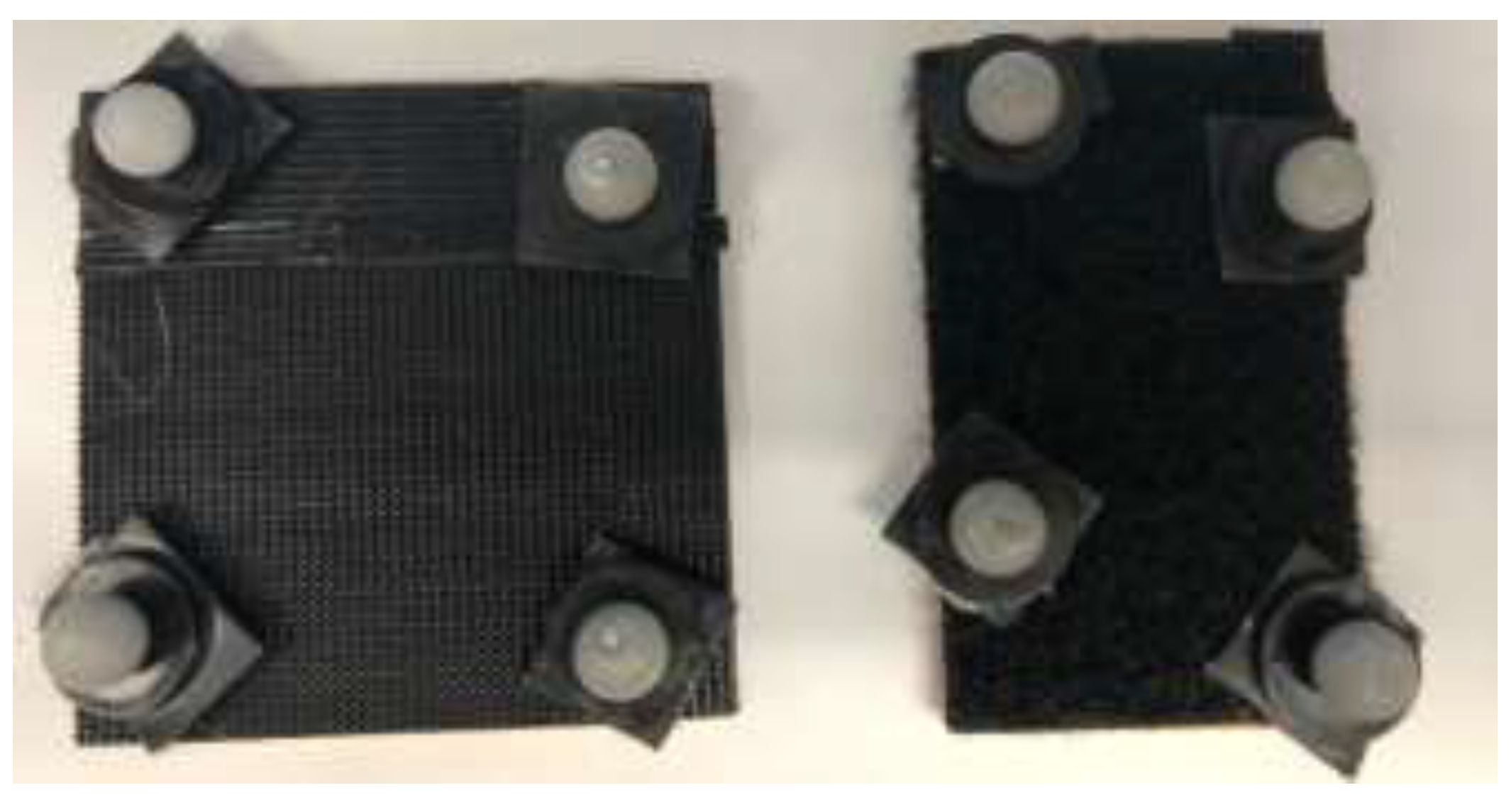
Figure 3.
Instrumented dog with kinesiology tape applied.
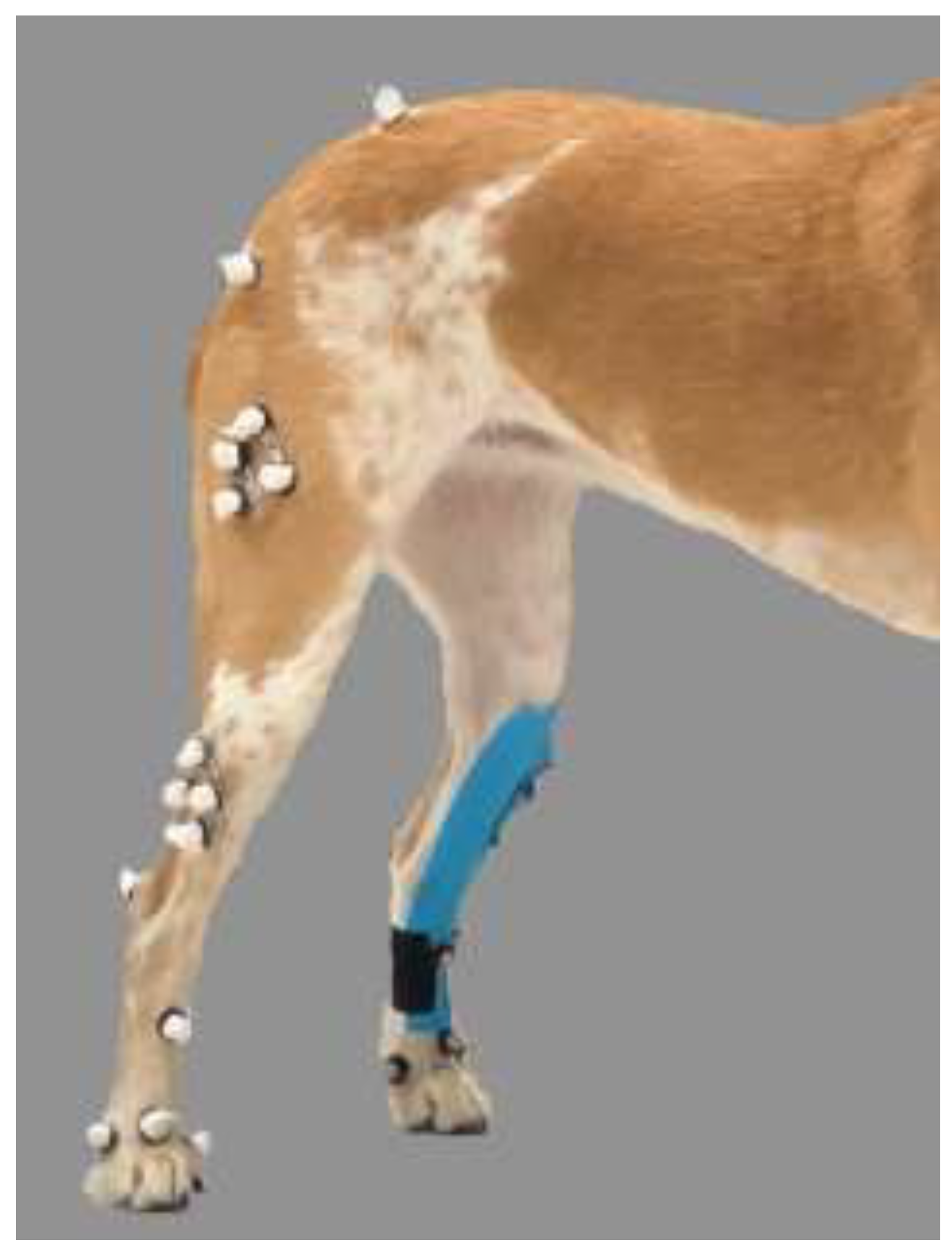
Figure 4.
Kinesiology tape failure over the tarsocrural joints.
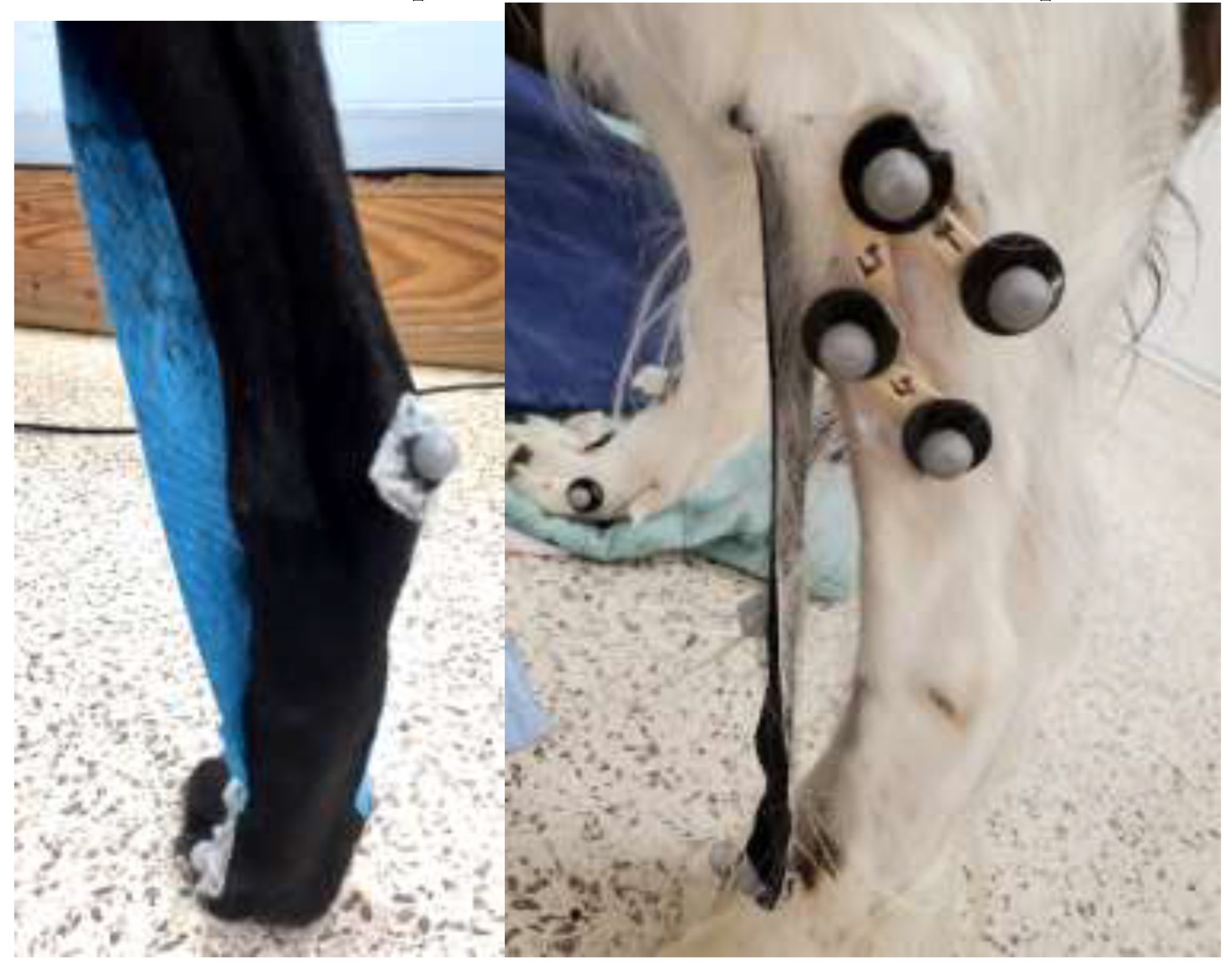
Figure 5.
Additional tape added perpendicular to the original tape to hold it in place. Each subject required this modification by the 2-hour test mark or earlier.
Figure 5.
Additional tape added perpendicular to the original tape to hold it in place. Each subject required this modification by the 2-hour test mark or earlier.
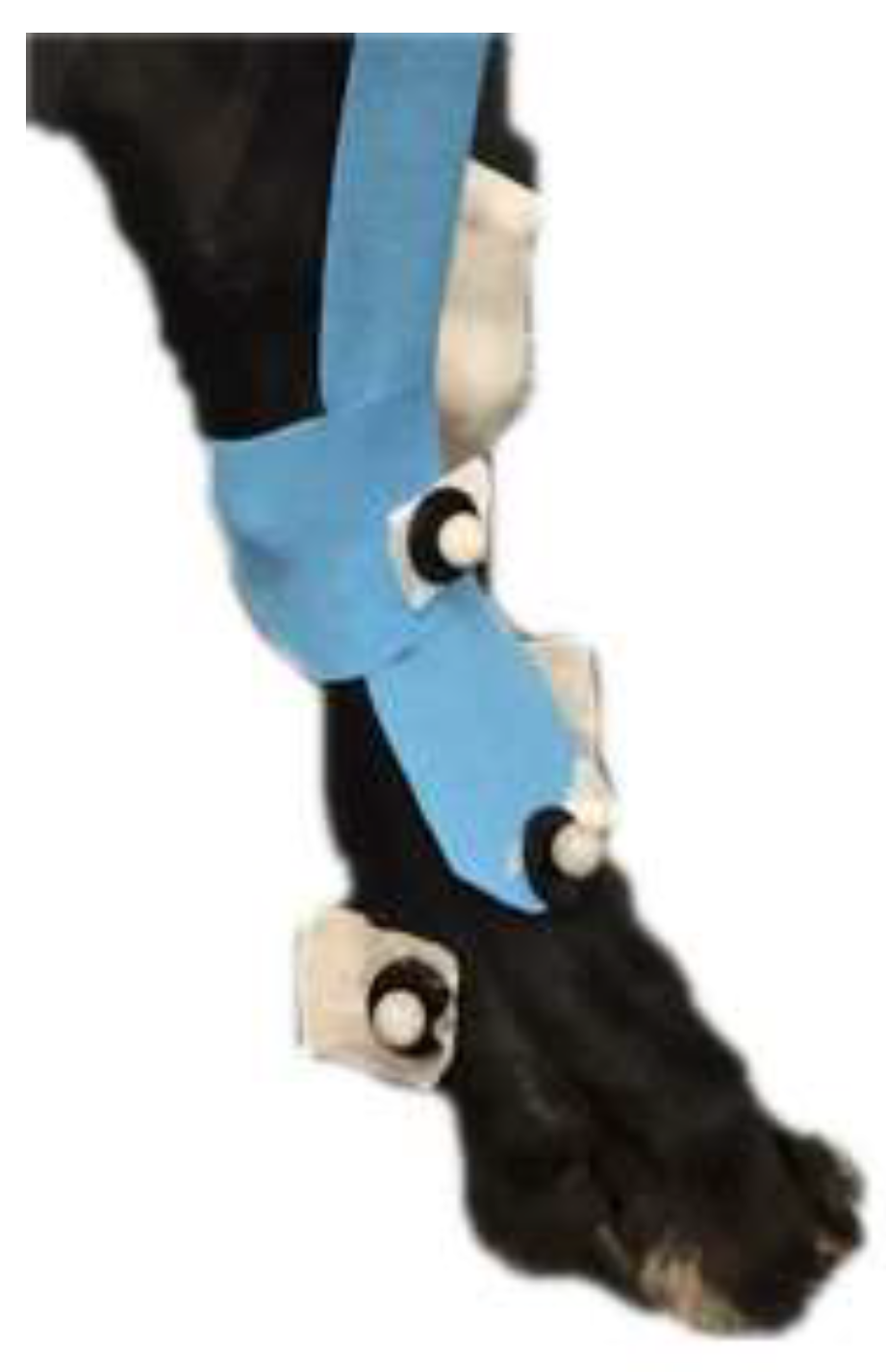
Figure 6.
Stifle flexion at a walk, trot and stepping over cavaletti rails before and after kinesiology tape application. Flexion was significantly greater with stepping over cavaletti compared with walking and trotting, but there were no differences with kinesiology tape application (* indicates significance between walking vs cavaletti and trotting vs cavaletti).
Figure 6.
Stifle flexion at a walk, trot and stepping over cavaletti rails before and after kinesiology tape application. Flexion was significantly greater with stepping over cavaletti compared with walking and trotting, but there were no differences with kinesiology tape application (* indicates significance between walking vs cavaletti and trotting vs cavaletti).
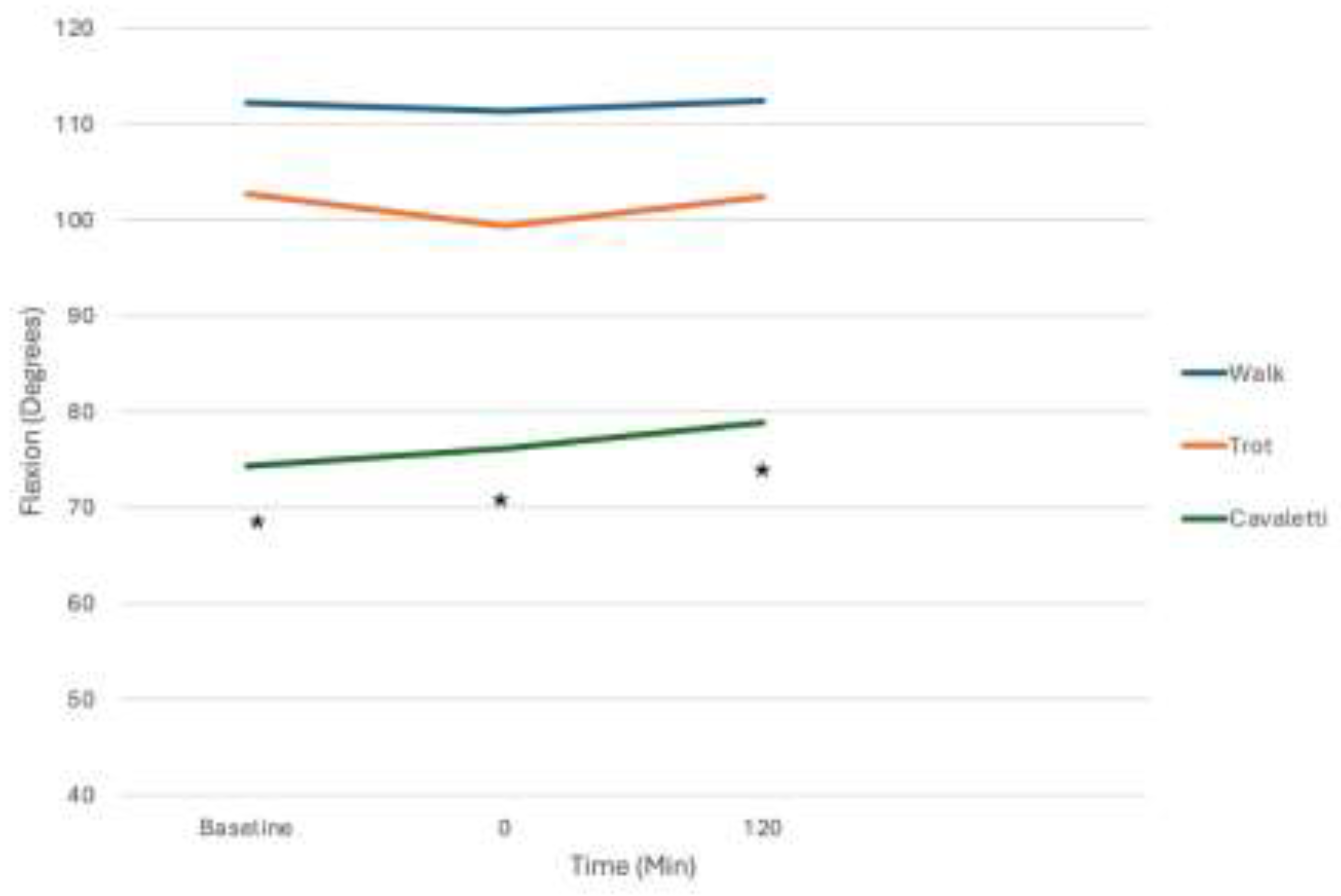
Figure 7.
Tarsal flexion at a walk, trot and stepping over cavaletti rails before and after kinesiology tape application. Flexion was significantly greater for stepping over cavaletti rails compared with walking and trotting, but there were no differences with kinesiology tape application (* indicates significance between walking vs cavaletti and trotting vs cavaletti).
Figure 7.
Tarsal flexion at a walk, trot and stepping over cavaletti rails before and after kinesiology tape application. Flexion was significantly greater for stepping over cavaletti rails compared with walking and trotting, but there were no differences with kinesiology tape application (* indicates significance between walking vs cavaletti and trotting vs cavaletti).
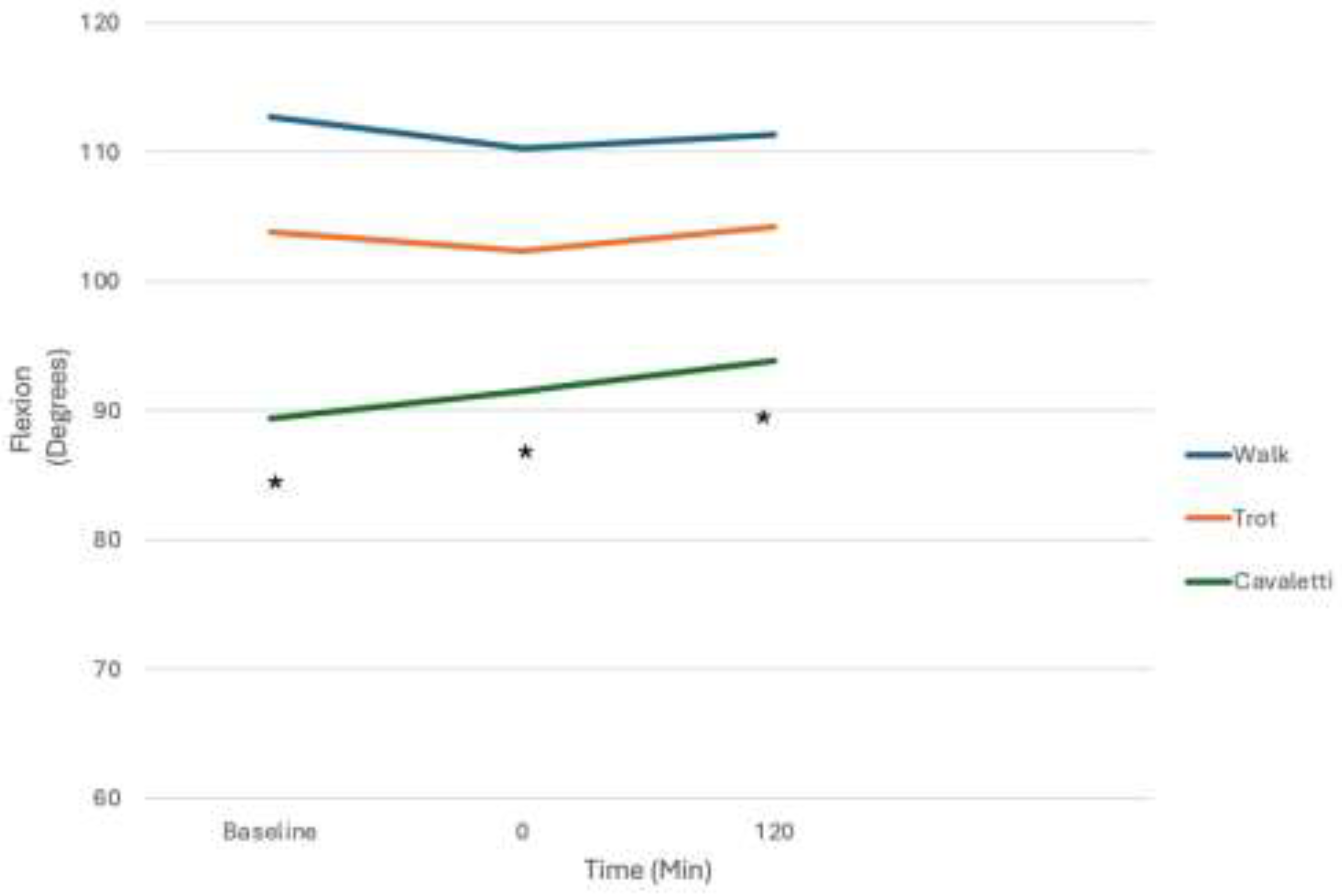
Figure 8.
Peak vertical force of dogs walking and trotting before and after kinesiology tape application. Peak vertical force was significantly greater with trotting vs walking, but there were no differences with kinesiology tape application.
Figure 8.
Peak vertical force of dogs walking and trotting before and after kinesiology tape application. Peak vertical force was significantly greater with trotting vs walking, but there were no differences with kinesiology tape application.
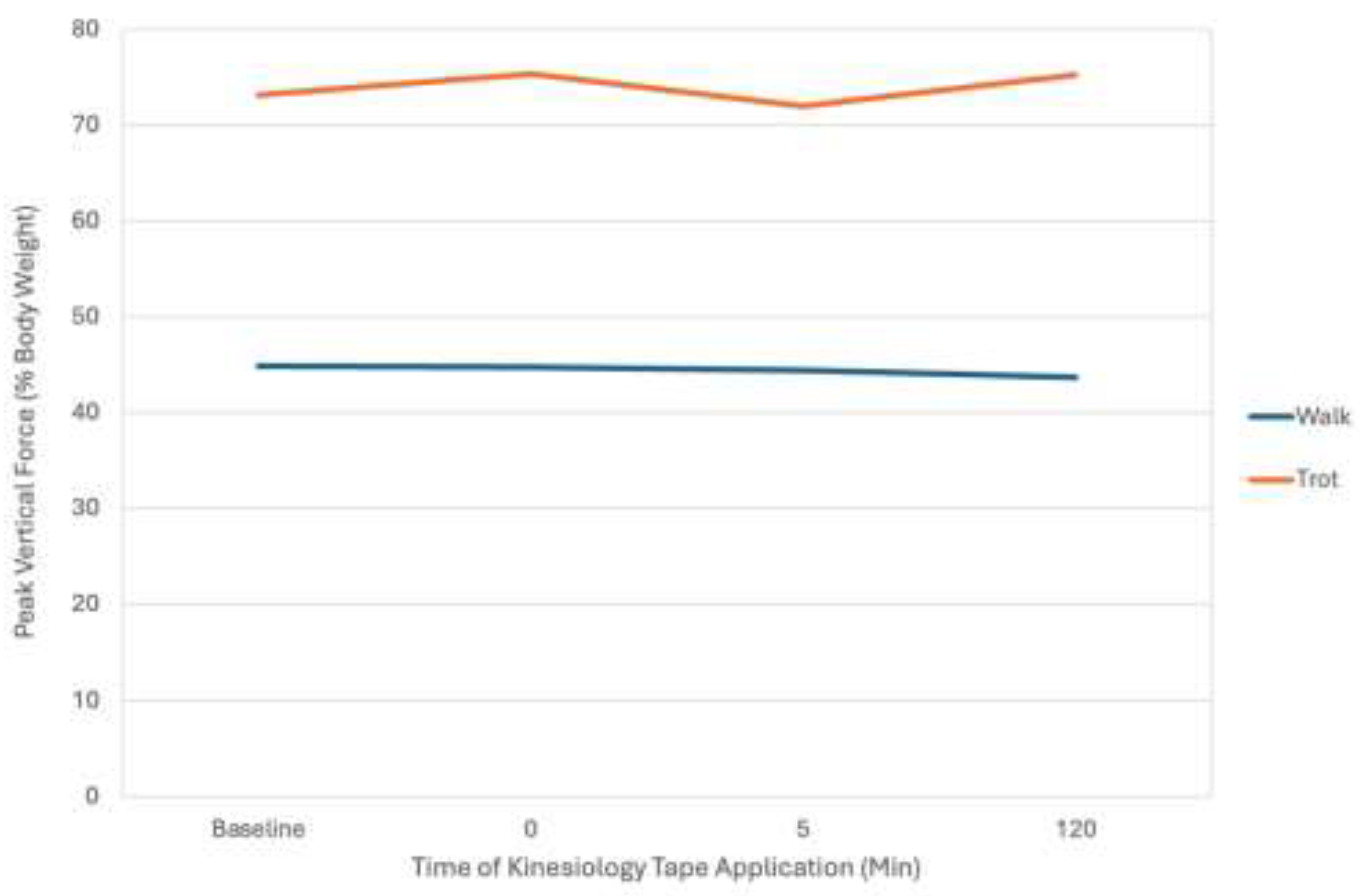

Table 1.
List of anatomic markers, ** indicates markers that were removed after kinematic calibration. The greater trochanter was shared between the Pelvis and Femur segments for calibration but was only used for the pelvis during data acquisition (tracking).
Table 1.
List of anatomic markers, ** indicates markers that were removed after kinematic calibration. The greater trochanter was shared between the Pelvis and Femur segments for calibration but was only used for the pelvis during data acquisition (tracking).
| Pelvic Limb segments |
Marker Location (right and left limb) |
| Pelvis | Iliac wing |
| Ischium | |
| Femur | Greater trochanter |
| Lateral epicondyle** | |
| Medial epicondyle** | |
| Tibia | Fibular head** |
| Proximal tibial crest** | |
| Distal tibial crest** | |
| Lateral malleolus** | |
| Medial malleolus** | |
| Foot | Point of calcaneus |
| Metatarsophalangeal joint 2 | |
| Metatarsophalangeal joint 5 | |
| Proximal tarsometatarsal joint | |
| Distal tarsometatarsal joint | |
| Cluster Markers (4 each) | Femoral cluster |
| Tibial cluster |
Table 2.
Summary of 3 way repeated measures ANOVA of tarsal kinematic measurements.
| Tarsus Kinematic Variables (P values) | ||||
| Comparison | Angular Acceleration | Angular Velocity | Maximum Flexion | Minimum Flexion |
| Affected vs. Unaffected Leg | 0.5042 | 0.5418 | 0.6946 | 0.7511 |
| Exercises | 0.0004 | 0.0001 | 0.1554 | <0.0001 |
| Leg vs. Exercises | 0.7955 | 0.4757 | 0.3118 | 0.4251 |
| Time | 0.7509 | 0.9452 | 0.9960 | 0.3644 |
| Leg vs. Time | 0.9848 | 0.9041 | 0.5699 | 0.8166 |
| Exercises vs. Time | 0.0861 | 0.3684 | 0.3258 | 0.0596 |
| Leg vs. Exercises vs. Time | 0.2671 | 0.5127 | 0.8765 | 0.9506 |
Table 3.
Summary of 3-way repeated measures ANOVA of stifle kinematic measurements.
| Stifle Kinematic Variables (P values) | ||||
| Comparison | Angular Acceleration | Angular Velocity | Maximum Flexion | Minimum Flexion |
| Affected vs. Unaffected Leg | 0.2613 | 0.1333 | 0.6581 | 0.9445 |
| Exercises | <0.0001 | <0.0001 | 0.0885 | <0.0001 |
| Leg vs. Exercises | 0.3807 | 0.1368 | 0.7262 | 0.9023 |
| Time | 0.3194 | 0.2521 | 0.9675 | 0.3826 |
| Leg vs. Time | 0.6637 | 0.0665 | 0.0747 | 0.8477 |
| Exercises vs. Time | 0.027 | 0.5549 | 0.2693 | 0.3152 |
| Leg vs. Exercises vs. Time | 0.2032 | 0.534 | 0.1465 | 0.2343 |
Table 4.
Summary of 3-way repeated measures ANOVA of ground reaction force variables.
| Kinetic Variables (P values) | |||
|---|---|---|---|
| Comparison | Peak Vertical Force (ZPeak) | Propulsion (YAPeak) | Braking (YBPeak) |
| Affected vs. Unaffected Leg | 0.7838 | 0.5418 | 0.4610 |
| Exercises | <0.0001 | 0.0002 | 0.2631 |
| Leg x Exercises | 0.8394 | 0.9706 | 0.9144 |
| Time | 0.7132 | 0.2127 | 0.3422 |
| Leg vs. Time | 0.4063 | 0.3110 | 0.8742 |
| Exercises x Time | 0.0514 | 0.5281 | 0.9687 |
| Leg x Exercises x Time | 0.9915 | 0.7742 | 0.2417 |
Disclaimer/Publisher’s Note: The statements, opinions and data contained in all publications are solely those of the individual author(s) and contributor(s) and not of MDPI and/or the editor(s). MDPI and/or the editor(s) disclaim responsibility for any injury to people or property resulting from any ideas, methods, instructions or products referred to in the content. |
© 2025 by the authors. Licensee MDPI, Basel, Switzerland. This article is an open access article distributed under the terms and conditions of the Creative Commons Attribution (CC BY) license (http://creativecommons.org/licenses/by/4.0/).
Copyright: This open access article is published under a Creative Commons CC BY 4.0 license, which permit the free download, distribution, and reuse, provided that the author and preprint are cited in any reuse.


