

Submitted:
15 April 2025
Posted:
16 April 2025
You are already at the latest version
Abstract
Drones are becoming increasingly valuable tools in wildlife studies due to their ability to 1 access remote areas and offer high-resolution information with minimal human interference. Their 2 application is, however, causing concern regarding wildlife disturbance. This review synthesizes the 3 existing literature on how animals within terrestrial, aerial, and aquatic environments are impacted by 4 drone disturbance in relation to operational variables, sensory stimulation, species-specific sensitivity, 5 and physiological and behavioral responses. We found that drone altitude, speed, approach distance, 6 and noise levels significantly influence wildlife responses, with some species exhibiting increased 7 vigilance, flight responses, or physiological stress. Environmental context and visual cues are also 8 involved in species detection of drones and disturbance thresholds. Although the short-term response 9 to behaviour change has been well documented, long-term consequences of repeated drone exposure 10 remain poorly known. This paper identifies the necessity for continued research into drone-wildlife 11 interactions, with an emphasis on the requirement to minimize disturbance by means of improved 12 flight parameters and technology.
Keywords:
Drones
; Wildlife disturbance
; Animal behavior
; Conservation
; Ethical drone use
1. Introduction
Unmanned aerial vehicles (UAVs, drones) are becoming increasingly popular for wildlife research purposes, offering a new set of opportunities for observation and data collection. Recent drone applications include an extensive range of activities, from collecting biological samples [1], tracking morphometric characteristics [2], and collecting behavioral data [3,4] to conducting census surveys [5], anti-poaching surveillance [6], and mapping the habitat use of species [7]. The technology has allowed scientists to access remote sites [8], investigate fine-scale wildlife movement patterns, and use automated image analysis methods for cost-effective species detection [9].
Despite these promising advancements and diverse applications, the growing integration of drones in wildlife studies has drawn concerns regarding their potential misuse and escalating anthropogenic pressure. While drones have, in certain cases, been less obtrusive than previous methods of data collection [10], studies have demonstrated that drones have the ability to alter animal behavior, trigger physiological stress, and, in certain cases, lead to habitat displacement. Media has brought to light instances of wildlife harassment that have been captured in social media videos, which have increased public alarm [11]. The portrayal of drones as sources of disturbance in natural habitats has led to discussions about the need for a comprehensive evaluation of these concerns [11]. In light of these issues, some countries have banned the use of drones in protected regions, while stressing the need to respond to these emerging anthropogenic pressures [12].
Literature suggests that noise from drones is a critical factor influencing terrestrial, bird, and aquatic animal behavior during drone encounters [13,14,15,16]. Visual information, i.e., the visibility and proximity of the drone, may also contribute to behavior change, particularly for birds, since they can perceive drones as a potential threat or predator [17,18,19,20]. The auditory system in mammals, which is often very sensitive, triggers rapid neural responses, leading to swift fight-or-flight behavior [21]. The degree of disturbance depends on the strength and context of the stimulus, including flight altitude, speed, proximity of approach, and environmental conditions such as habitat type and time of day. Different species exhibit varying sensitivities, with some showing habituation to stimuli over time while others display heightened avoidance behaviors or sensitization. Although studies have explored specific drone stimuli such as sound [22] and visual cues [23], the individual impacts of these signals on animal behavior remain poorly understood. To overcome this gap and raise awareness about the impact of drone disruptions on wildlife, the article offers an in-depth review of existing research on wildlife ending in recommendations for drone operators, engineers and policy makers.
This paper emphasizes the dual perspective of animal welfare and the potential behavioral alteration caused by drone disturbances and advocates a comprehensive consideration of drone disturbance effect and ethical issues in wildlife research. This paper also raises a fundamental question to the engineering community: Can we design drones that minimize disturbance to animals while still complying with legislation requiring transparent drone operations?
Our review builds on earlier work that offered a preliminary analysis of drone-induced wildlife disturbances through focused case studies [24], expanding it to address species-specific responses, drone flight paths, and environmental factors. This provides a framework for guidelines and recommendations on the technological development of ethical use of drones in wildlife research that minimizes harm to the animals under study. An understanding of such interactions is crucial in balancing wildlife protection goals with the effective application of drones and ensuring that technological advancements align with wildlife protection principles. This paper contributes to the ongoing discourse on responsible drone applications, focusing on the importance of continuous innovation in drone design and use for protecting ecological integrity.
2. Material and Methods
Literature on the use of UAVs for wildlife monitoring and research, their interactions, and associated impacts were comprehensively reviewed up to December 31, 2023. Supplementing this review, we conducted a targeted search for scientific literature that explicitly addresses drone noise and its impact on land animals. Using the keywords ’drone,’ ’unmanned aerial vehicle,’ ’unmanned aerial system,’ ’remotely-piloted aircraft system,’ ’unmanned aircraft,’ ’UAV,’ ’UAS,’ and ’RPAS’ together with the terms ’wildlife,’ ’disturbance,’ ’animals,’ ’birds,’ ’marine,’ ’aquatic,’ ’reptiles,’ ’terrestrial,’ and ’megafauna,’ we identified relevant publications using Google Scholar search and Web of Science. An initial search returned the absence of published work considering the impact of drone noise in terrestrial ecosystems specifically. Accordingly, we expanded our literature search to include drone impact studies on both aerial and aquatic habitats. To ensure a comprehensive review, publications were selected from peer-reviewed journal articles, university theses (Master’s thesis included), conference papers, and project reports. We also traced relevant publications referred to in other studies. This yielded a total of 92 studies.
This search was further complemented by the drone working group at The Wildlife Society, which identified 1,572 peer-reviewed articles on wildlife and drones as of December 15, 2024. We reviewed the references within this collection to extract research specifically addressing drone disturbances on wildlife, focusing on drone operational factors, sensory stimuli, species and habitat-specific sensitivities, and physiological and behavioral responses. Our integrated approach provides a comprehensive understanding of drone utilization in wildlife studies, and specific insights into the effect of drone noise on animals (see Figure 1 for the summary).
This review first consider drone-wildlife interaction, where the principal factors are flight altitude, speed, proximity, and noise. It then examines species-specific behavior responses to these parameters, across terrestrial, aerial, and aquatic environments. Following this, a framework for recommended drone operation parameters is developed, providing guidelines to minimize wildlife disturbance against the complexity of environmental stimuli and the long-term impact of repeated exposure to drones. Ethical considerations are integrated throughout our analysis, emphasizing the need for responsible drone use in wildlife research. The paper concludes by proposing future directions for technological advancements and development of species-specific mitigation strategies. Finally, the necessity for international collaboration in setting standards for ethical utilization of drones is underscored to facilitate responsible integration of UAVs in ecological research.
3. Drones and Wildlife
The earliest observations of aerial vehicle-induced disturbance behaviors were noted in studies that primarily focused on using aircraft to estimate population numbers [25]. Once researchers discovered how the accuracy of the census could be affected by the aversive reaction of the animals, the issue gained more direct and focused attention [26,27]. Various factors influence the effect of drones on wildlife, from operational characteristics, environmental and habitat conditions to animal’s biological state.
3.1. Operational Factors Influencing Wildlife Responses
The flight characteristics of drones dictate the strength and modality of the experienced sensory stimulus. Specifically, research suggests approach distance and altitude to be a primary influencing factor in inciting wildlife disturbance. For example, stationary birds generally exhibited minimal reaction to drones that maintained a distance of more than 40 m during takeoff [17]. In another study on gentoo (Pygoscelis papua) and Adélie (Pygoscelis adeliae) penguins, researchers found that penguins on Ardley Island exhibited greater behavioral changes, to drones flown at lower altitudes. Adélie penguins responded at 50 m, while gentoo penguins reacted at 30 m. Increased vigilance reactions were most pronounced at altitudes of 10–20 m [20]. A study on 11 seabird species on the Crozet Island, found that reactions varied by species and altitude: at 50 m, only one species showed a response, while at 10 m, most species exhibited significant stress behaviors [28]. Both terrestrial and marine mammalian species from a range of taxonomic groups have demonstrated similar disturbance responses to drones, suggesting some universality of effect. A study on grey kangaroos (Macropus giganteus) in urban environments found that while drones often trigger vigilance, kangaroos rarely flee unless the drone flies at an altitude of 30 m or lower [29]. Similarly, in African reserves, elephants and giraffes have been documented to show increased vigilance when drones approach at distances of 50 m and 80 m AGL, respectively [30]. In a study on bottlenose dolphins (Tursiops ssp.), researchers indicated that dolphin behavior was significantly influenced by drone altitude [14]. In a study involving waterfowl, researchers found that waterfowl on land are more vigilant when approached by drones, with greater disturbance observed at lower altitudes and closer take-off distances [19]. However, the species or taxon specific strength of response is often difficult to disentangle from the types of drones exposed to given high variability across studies in both drone protocol and environment.
Approach angles and speeds also influence the wildlife behavior. We also found that a direct approach from above can result in higher behavioral responses due to the fact that animal cannot look directly about them and hearing the drone noise approaching them induce more stress on the wildlife. One study reported that drones can approach waterfowl within close proximity (e.g., 4 m) without causing significant disturbance, provided they avoid direct approaches from above [18]. Also, maintaining specific airspeeds (e.g., 20–25 km/h) has been noted to minimize disturbance, allowing drones to pass by wildlife before they become fully aware of their presence [31]. It can be hypothesized that high drone speed can leave the animal with no time to identify if the drone is a threat or not which leads to sudden responses from the wildlife.
A few more studies reported in Table 1 also supports our findings that flight characteristics significantly affects animals response. Thus, the interaction of altitude, approach distance, takeoff distance, airspeed, proximity, and approach angle can contribute towards the disturbance wildlife across various habitats. The frequency with which these are highlighted underscores their importance in assessing the impact of drone operations on animals. Despite the observed species-specific variability, based on these studies, we recommend maintaining a higher altitude to reduce stress in wildlife, with slower speeds and oblique angles.
3.2. Sensory Stimuli: Noise and Visual Impact
As noted above, research has shown varying responses to drones among species, with differences in whether species are primarily responding to visual or acoustic stimuli (Table 2). For example, bottlenose dolphins (Tursiops truncatus), known for their clear visual acuity in both water and air [39], may rely on visual cues, while manatees (Trichechus manatus latirostris), with poorer visual acuity [40], might respond more to the noise produced by drones. Observations of manatees (Trichechus manatus manatus) exhibiting sudden escape behaviors when approached by drones suggest that noise could plays a significant role in their detection [41]. Similarly, elephants have been widely observed to move away from drones due to their bee-swarm-like sounds [15]. Asian elephants (Elephas maximus) were shown to become disturbed at an average altitude of 109 m AGL. The study found that this heightened sensitivity is due to their ability to detect and respond to low-frequency sounds, which drones can produce [13]. These findings corroborate the observations reported by Moss et al., 2011 [42], which emphasize the reliance of African elephants on their auditory abilities for environmental interaction and communication with conspecifics. Similarly, a study that assessed the behavioral responses of southern white rhinos (Ceratotherium simum) to drone flights found that animals could perceive the drone up to 100 m AGL and that acoustic output alone was enough to initiate a reaction [43]. One of the most comprehensive study to date [44] contrasted sound profiles of seven drone systems at various altitudes with the audiograms from 20 mammal species.This method provides valuable guidelines for drone use in wildlife research and conservation, with potential applications for other species and drone systems. Among species without audiograms, the giant anteater (Myrmecophaga tridactyla)—an endangered species and the largest in the Pilosa order—was exposed to drone studies for the first time in [45]. Due to its limited auditory and visual capabilities, the giant anteater showed a high tolerance for sound pressure before exhibiting any behavioral changes, as predicted [45]. Prior knowledge of species hearing thresholds may occlude the need to exhaustively test drones across different species types also because there are similar experiences shared across species with certain habits. More research is needed to learn about the effects of drone size and noise traits on wildlife, since responses might also be determined by species-specific hearing sensitivity differences.
Research also suggests that drones can disturb animals, particularly through visual cues when noise is masked by environmental sounds. One hypothesis is that the visual impact of drones may mimic the shape or movement of predatory birds, triggering instinctive defensive or escape behaviors, particularly among species sensitive to aerial predators [46,47,48]. This is supported by studies that have shown shape and wing profile of certain drones have influenced the reactions of waterfowl, with profiles resembling raptors causing the most disturbance to wildlife [49] and that disturbance tends to occur more frequently during drone banking maneuvers, takeoff, or landing, especially when these actions happen over or near a flock, suggesting that birds may interpret these movements as the swooping of a predatory bird [49,50]. For example, lekking prairie chickens (Tympanuchus cupido) display heightened sensitivity to drone overflight, which may be attributed to the vulnerability of displaying birds to potential attacks by hawks [51,52]. Beyond evasive behaviors, some bird species were documented engaging in harassment, mobbing, or direct attacks on drones mid-flight [53]. A visual representation in Figure 2 depicts a raven attacking a delivery drone. Further research into how the drone type and its visual characteristics affect not only birds but other taxa is warranted, particularly where species may be at risk of aerial predation (for example, primates, rodents, and even fish) which remains an under researched area.
Figure 2.
Raven attacks drone delivering coffee in Australia [54].
Figure 2.
Raven attacks drone delivering coffee in Australia [54].
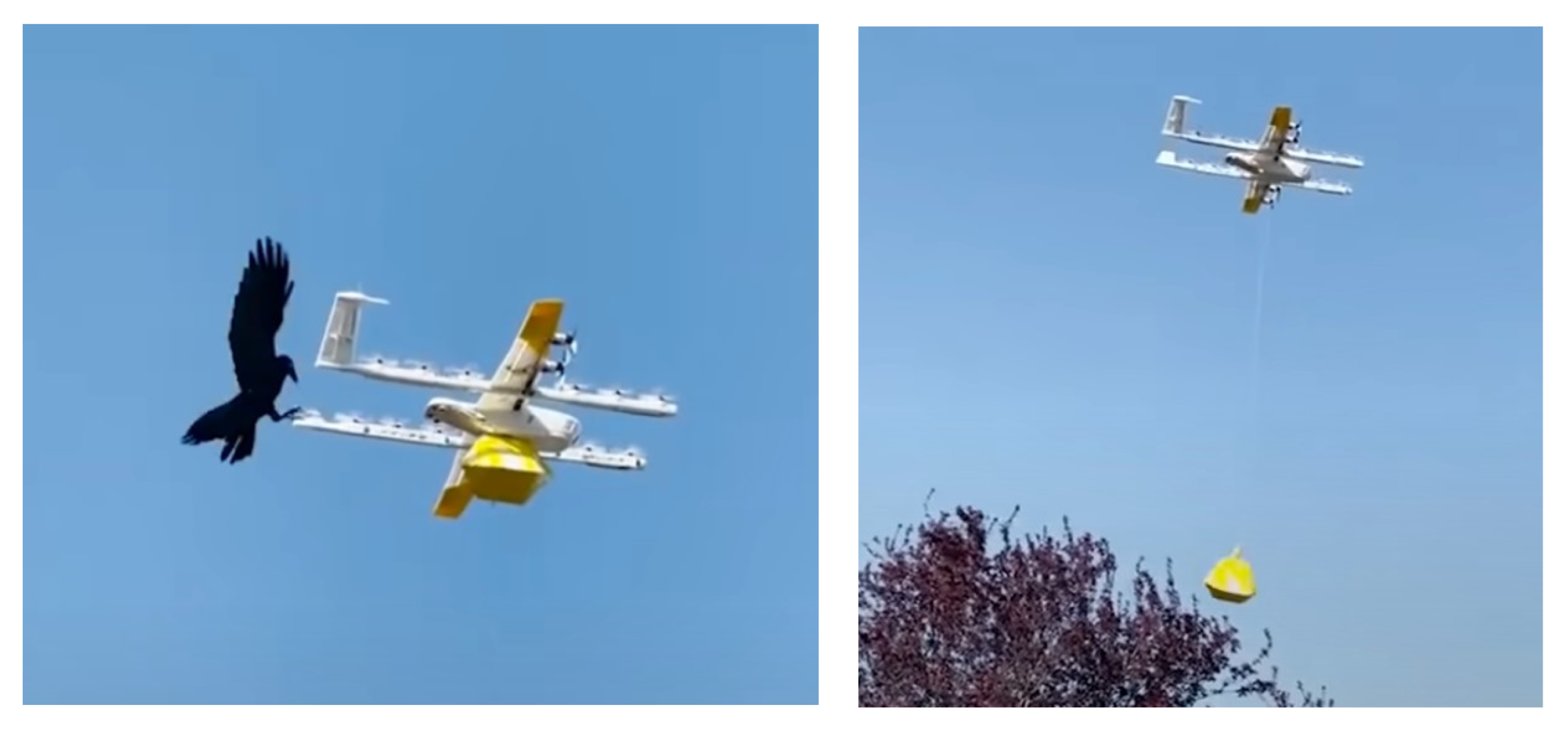

Table 2.
Wildlife responses to drone noise and visual stimuli across species, UAV types, and flight conditions.
Table 2.
Wildlife responses to drone noise and visual stimuli across species, UAV types, and flight conditions.
| Study | Species studied | Drone used | Study context | UAV flight altitude | Observed impact | Recomm-endations |
|---|---|---|---|---|---|---|
| Fleeing by Whimbrel in Response to a Recreational Drone (2016) [55] | Whimbrel (Numenius phaeopus) | Recreational drone (Phantom type) | Observing the response of Whimbrel to a recreational drone. | Hovered at 5 m and 20 m altitudes | Whimbrels exhibited strong "fleeing" responses | Avoiding low-altitude flights near sensitive bird species. |
| Using Two Drones to Monitor Visual and Acoustic Behaviour of Gray Whales (Eschrichtius robustus) in Baja California, Mexico (2020) [56] | Gray whales (Eschrichtius robustus) | SwellPro SplashDrone 3+ (acoustic) and DJI Phantom 4 (visual) | Testing dual-drone system for simultaneous visual and acoustic monitoring of gray whale behavior | 30 m for visual drone; acoustic drone within 50 m | Minimal disturbance observed. | More research is needed on dual-drone monitoring with varying altitudes |
| Measuring Disturbance at Swift Breeding Colonies Due to the Visual Aspects of a Drone (2021) [23] | Great dusky swift (Cypseloides senex), White-collared swift (Streptoprocne zonaris) | DJI Mavic Pro | Assessing visual drone disturbance on great dusky swift | 25 m to 64 m | At <40 m, disturbance increased to >60%, leading to temporary colony abandonment. | Recommended flight altitude: >50 m to minimize disturbance. |
| Determination of Optimal Flight Altitude to Minimise Acoustic Drone Disturbance to Wildlife Using Species Audiograms (2021) [57] | Various mammals (20 species) | DJI Inspire 2, Phantom 4, Mavic 2, Mavic Pro, Mavic Pro Platinum, Mavic Mini, Spark | Determining the minimum flight altitude to minimizes UAV noise disturbance | 5 m to 120 m | The optimal altitude varies by species and drone model | Recommended altitudes of 35 m to 120 m depending on species. |
| Behavioral Responses of a Nocturnal Burrowing Marsupial (Lasiorhinus latifrons) to Drone Flight (2021) [58] | Southern Hairy-Nosed Wombat (Lasiorhinus latifrons) | DJI Phantom 4 Pro | Assessing the behavioral responses of southern hairy-nosed wombats during day and night. | 100 m, 60 m, 30 m | Night flights triggered stronger retreat responses | Conduct flights outside sensitive hours to reduce disturbance |
| Drone noise differs by flight maneuver and model: implications for animal surveys (2024) [59] | Not species-specific | DJI Matrice 300, Matrice 200, Phantom 3, Autel Evo II | Evaluating noise emission differences by drone model, flight maneuver, and altitude | 15 m to 120 m | Flyover and turning maneuvers at higher altitudes generated minimal noise | Avoid repetitive sessions and minimize prolonged hovering |
3.3. Species and Habitat-Specific Sensitivities
Animal behavior depends on species-specific traits and environmental conditions. Accordingly, much of literature on the non-intrusive monitoring of animals focuses on tailoring drone use guidelines to species specific responses, often suggesting minimum altitudes of flight for observational research [30,41]. One of these studies on seven African herbivore species reported negative responses to drones, which were flown at different altitudes, as shown in Figure 3. The vigilance threshold differed between species, with some animals avoiding drones at around 50–60 m, while others reacted at 15-30 m AGL [30]. Interestingly, with plains zebras, no avoidance response was observed at about 80 m AGL, but there was alertness at 100 m [30]. Such counterintuitive behavior may be caused by factors such as the path of flight of the drone, atmospheric conditions such as wind amplifying noise at higher altitudes, or line-of-sight perception by the zebras. These results highlight the complexity of species-specific sensitivities and the need for further research to more fully understand the relationship between drone flight parameter and wildlife responses before a more general rule can be applied.
Responses to drones are affected by both abiotic and biotic, which can vary not only annually and seasonally but also throughout the day, influenced by specific habitat and anthropogenic effects. For example, environmental changes such as temperature gradients and varying sound propagation speeds—both affected by sunlight—can significantly alter the response to drones. Drone generated noise can also be amplified or diminished based on the weather conditions such as wind speed, wind direction, and humidity. Humid air, which transmit sound waves more efficiently [60], can enhance the extent to which drone noise affects wildlife. Furthermore, in varying wind conditions, animals react differently to drone noise, thus influencing their respective behavioral responses. These dynamic atmospheric conditions and cyclical changes in light-level across a day are such factors that can strongly affect the transmission and hence detectability of both visual and auditory stimuli generated by drone flights. This coupled with circadian rhythmicity in animal behavior and physiology, differing environmental conditions throughout the day, and advancements in drone technology call for a deeper investigation into how drone impacts on wildlife vary over a 24-hour cycle and whether they remain consistent across species [61].
Exposure levels to human activity can also be a predictor of wildlife reactions. Animals in remote, undisturbed habitats often have more intense reactions to drones compared to those in human-altered environments, where habituation to human presence may exist [13]. Habituation is the process where animals gradually reduce their responses to repeated or benign stimuli, while sensitization might occur if the stimulus is perceived as harmful or intrusive. For example, wildlife in heavily visited safari parks may be less alert than those in remote reserves, where drone noise could be identified as a novel disturbance. It is important to note that its not just exposure history to drones that can influence reactions but that other industrial, urban, or vehicle related noise, may also lead to lower behavioral responses to drones, even if they have not been exposed to them.
Beyond environmental factors, ecological and behavioral contexts also shape how animals perceive drones. Behavioral patterns can help to minimize competition and risk of predation [62]. For instance, prey species often occupy alternative habitats or are active at different hours of the day than their predators according to their vulnerability to predators within an environment; hiding or taking evasive action to reduce their risk [63]. In areas with high predator densities, prey species are more vigilant, and this increases their sensitivity to novel disturbances like drones [64]. Heightened vigilance causes prey species to react to drones as potential predators, which elicits a flight or stress response. Even without any immediate response, the energy and time spent on vigilance can indirectly reduce fitness because it takes away from the energy available for typical activities like foraging and parental care. For instance, herbivores groups were observed changing their activity from foraging to vigilance and locomotion when they sensed drone scanning flights [65]. Responses to drone disturbance may also depend on the nature of the landscape, for instance, visual openness (Table 3).
For instance, in a review of existing studies coupled with public YouTube recordings of animal behavior (Figure 4), [11] documented how species inhabiting aquatic habitats had a lower likelihood of exhibiting behavioral change than those found in terrestrial and aerial habitats. This reduced sensitivity likely relates to a reduction in signal strength beneath the water [66,67,68] and that most of the assessed species were not at risk of predation or other threats from above and have therefore not developed awareness and defensive behaviors to such stimuli even when they are novel. Upon comparing recorded drone noise levels with the established hearing thresholds of dolphins and whales, it became evident that, for the majority of these marine mammals, drones operate beneath their auditory thresholds [69]. An investigation centered on southern right whale (Eubalaena australis) mother-calf pairs in Australia utilized drone tracking and acoustic tag data and found no observable behavioral reactions to close drone approaches [70]. Other studies, while anecdotal, has reported similar findings for various baleen whale species, such as gray whales (Eschrichtius robustus) [71], humpback whales (Megaptera novaeangliae) [72], bowhead whales (Balaena mysticetus) [73], and blue whales (Balaenoptera musculus) [74]. In the case of toothed whales (Tursiops truncatu), a study [75] disrupts this assumption, showing heightened signs of disturbance, including increased reorientation and tail slapping in bottlenose dolphins when a drone operated at an altitude of 10 m. Surprisingly, such effects dissipate at higher altitudes of 25 m to 40 m, challenging a reevaluation of the presumed harmlessness of drones near cetaceans. Another study [41] also showcased the behavioral responses of bottlenose dolphins to drones, as shown in Figure 5. In the case of terrestrial mammals, drone exposure triggers flush responses, hypothesized to be an avoidance reaction to avoid encounters with unfamiliar objects. However, a limitation with this and other studies, is that many drone-based observations are limited to mammalian megafauna [76] and their use in recreational filming, with limited study of the reactions of other taxonomic groups.
Table 3.
Wildlife responses to drone flights in different habitats, highlighting species-specific and environmental sensitivities.
Table 3.
Wildlife responses to drone flights in different habitats, highlighting species-specific and environmental sensitivities.
| Study | Species studied | Drone used | Study context | UAV flight altitude | Observed impact | Recomm-endations |
|---|---|---|---|---|---|---|
| Terrestrial Mammalian Wildlife Responses to Unmanned Aerial Systems Approaches (2019) [77] | Elephants, Giraffes, Wildebeest, Zebras, Impala, Lechwe, Tsessebe | DJI Phantom 3, DJI Inspire 1 | Assessing vertical and horizontal UAS approaches | 10 m to 100 m | Horizontal approaches triggered fewer reactions than vertical ones. | Recommended minimum altitude of 60 m and horizontal distance of 100 m |
| Responses of Bottlenose Dolphins (Tursiops spp.) to Small Drones (2020) [78] | Bottlenose dolphins (Tursiops spp.) | DJI Phantom 4 | Examining drone altitudes and observation durations influence | 5 m to 60 m | Groups exhibited more reactions at <30 m altitude. Longer hovering times increased the probability of behavioral responses | Recommended flight altitude: ≥30 m to minimize disturbance. |
| Ungulate responses and habituation to unmanned aerial vehicles in Africa’s savanna (2023) [79] | Oryx, Kudu, Springbok, Giraffe, Eland, Hartebeest, Plains Zebra, Impala | DJI Phantom 3, DJI Mavic Pro, Custom X8 (Octocopter), Sky Eye | Assessing the behavioral responses of ungulates to UAV flights | 15 m to 55 m | Species-specific responses varied by altitude and UAV type | Opting for species-specific flight altitudes to reduce disturbance impact. |
| Estuary Stingray (Dasyatis fluviorum) Behaviour Does Not Change in Response to Drone Altitude (2023) [80] | Estuary stingray (Dasyatis fluviorum) | DJI Mavic Platinum Pro | Assessing if drone altitude influences the behavior of estuary stingrays. | 5 m to 30 m, reducing by 5 m intervals | No significant changes in swimming, foraging, or resting behavior | Further research into physiological and long-term impact of drone disturbances |
| Assessing the Behavioural Responses of Small Cetaceans to Unmanned Aerial Vehicles (2021) [81] | Common dolphins (Delphinus delphis), Bottlenose dolphins (Tursiops truncatus) | DJI Phantom 2 | Evaluating the behavioral responses to drones at different altitudes | 5 m to 70 m (descending in 5 m intervals) | No significant responses in diving or swimming speed for either species | Observing animals’ reaction and adjusting flight according is essential for minimizing disturbance. |
| Sociability Strongly Affects the Behavioural Responses of Wild Guanacos to Drones (2021) [82] | Guanacos (Lama guanicoe) | DJI Phantom 4 Advanced | Examining group size, social composition, and flight characteristics on guanaco | 60 m and 180 m with low (2-4 m/s) and high (8-10 m/s) speed | Groups exhibited greater reaction probabilities. Low altitudes (<60 m) increased reactions. | To consider collective responses versus those of lone individuals when utilizing drones in ecological studies. |
Purely observational studies often lack consideration of physiological and metabolic reactions in animals which can show cryptic or counter-intuitive affects to the behaviors witnessed. For example, hibernating black bears (Ursus americanus) show (Figure 6) elevated heart rates to overhead drone [83]. While female American black bear with at least two cubs exhibited fastest movement relocating 576.3 m away within 40 minutes of drone exposure. Southern white rhino mothers with calves showed a heightened response to drone flights compared to solitary males or groups of sub-adult individuals, suggesting they may perceive risk differently to other social groupings due to their calf’s increased susceptibility to predation [43].
The biological state of an animal refers to its physiological condition and the activities it is engaged in at a particular time, such as breeding, nesting, molting, or foraging. These states can influence how an animal perceives and reacts to external stimuli, including the presence of drones. For example, animals in vulnerable life stages like breeding or parental nests defense will most likely exhibit heightened sensitivity to disturbances. Harbor seals (Phoca vitulina) respond to drones flown at an 80 m threshold distance for the pre-breeding season but show heightened agitation at 150 m for the molting season [84]. Studies also show that nesting birds, such as Adélie and gentoo penguins, respond differently to drones [20], and thus the incorporation of biological state in the design of drone missions is critical [73,85,86]. Disturbances during sensitive periods, such as breeding seasons, can lead to severe behavioral changes, including nest abandonment or increased energy expenditure [87], potentially affecting reproductive success [68]. We recommend to maintain greater distances from animals during these critical life stages to minimize behavioral disruptions.
Similarly, nesting birds may engage in nest-guarding behaviors to prevent the intrusion of objects into their territory, and drones may violate these boundaries, causing defensive or flight responses. Moreover, for these birds, the combined visual and auditory disturbances from drones can lead to increased vigilance, agonistic behavior, standing or walking away from nests, and escape behaviors [88,89]. Supporting this hypothesis, a study on great dusky (Cypseloides senex) and white-collared (Streptoprocne zonaris) swifts found that drones flying within 40 m caused significant disturbances, leading over 60% of birds to temporarily abandon their breeding sites [23]. Despite the likelihood of species specific differences, given the risk of extreme negative reactions, it is recommended that drones maintain a general distance of over 50 m above birds during breeding season, and recreational flights kept at least 100 m away from nesting areas.
Variation in biological state can have a significant impact on responses, particularly when there is an energy deficit. Starving or energy-starved animals can exhibit riskier behavior or tolerate more disturbance since they prioritize food acquisition over threat avoidance [90,91]. This threat-sensitive foraging can explain variation in wildlife responses to drones across seasons and environmental conditions [92].
Size demographic of social groupings, can also affect tolerance of risk and hence be a further factor in explaining context-specific behavior differences to drones [14]. Group size has been reported to modify animals’ responses toward drones, with larger groups exhibiting increased avoidance. For instance, beluga whales (Delphinapterus leucas) in larger groups were observed to exhibit stronger avoidance responses and tend to execute sudden dives in low-altitude flights, particularly at altitudes below 23 m [36]. Groups with more individuals have a higher chance of sudden dives (shown in Figure 7), particularly when a drone initially approaches the group showing a need to maintain a reduced drone distance in these contexts.
In summary, it is crucial that further research is conducted to investigate the complex interplay that exists between specific sensitivities and the different biological states of an animal, in order to accurately interpret drone-induced effects on wildlife behavior. This is most true of drone exposure during critical periods such as breeding or seasonal energy deficits, which has the greatest potential to effect individual fitness or even introduce population-level affects when drones are flown above breeding colonies or vulnerable juvenile animals [94]. More research is needed to understand how environmental factors can amplify disturbances to the acoustic or visual cues needed for communication, navigation, or predator detection.
Table 4.
Physiological and behavioral responses of wildlife to drone flights across different species.
Table 4.
Physiological and behavioral responses of wildlife to drone flights across different species.
| Study | Species studied | Drone used | Study context | UAV flight altitude | Observed impact | Recomm-endations |
|---|---|---|---|---|---|---|
| Bears Show a Physiological but Limited Behavioral Response to Unmanned Aerial Vehicles (2015) [83] | American black bear (Ursus americanus) | 3D Robotics Quadcopter | Assessing physiological and behavioral responses to drone flights | 20 m to 43 m | No behavioral responses (movement or avoidance) but increased stress (heart rate of 123 bpm) | Developing frameworks that consider species’ vulnerability and additional stress |
| Fright or Flight? Behavioural Responses of Kangaroos to Drone-Based Monitoring (2019) [29] | Eastern grey kangaroo (Macropus giganteus) | DJI Phantom 3 Advanced | Assessing vigilance behavior to drone altitude and flight characteristics | 30 m to 120 m | Flight responses most frequent at 30 m altitude | Minimum flight altitude of 60 m is recommended to minimize disturbance |
| Koalas Showed Limited Behavioural Response and No Physiological Response to Drones (2023) [95] | Koalas (Phascolarctos cinereus) | DJI Mavic 2 Pro | Assessing behavioural and physiological to drones | 15 m above the enclosure | Short-term increase in vigilance but no significant change in heart rate or breathing rate | Further research required on the behavioral and physiological responses |
| Evaluating Behavioral Responses of Nesting Lesser Snow Geese to Unmanned Aircraft Surveys (2018) [96] | Lesser snow geese (Anser caerulescens caerulescens) | Fixed-wing Trimble UX5 | Measuring behavioral responses of nesting snow geese | 75 m, 100 m, and 120 m above ground | Increased vigilance (head-cocking and scanning) during flights | Closer proximity may be acceptable only if it ensures minimal stress to the species. |
| Will Drones Reduce Investigator Disturbance to Surface-Nesting Birds? (2017) [97] | Various surface-nesting seabirds (e.g., gulls, penguins) | DJI Phantom, Trimble UX5, other off-the-shelf drones | Assessing drone-based monitoring disturbance in surface-nesting seabirds | 50 m to 120 m depending on species | Species-specific responses varied. Visual predator-like flight patterns (e.g., vertical approaches) increased reactions. | Avoiding direct overhead flight patterns |
| Behavioral Responses of Geoffroy’s Spider Monkeys to Drone Flights (2024) [98] | Geoffroy’s spider monkeys (Ateles geoffroyi) | Mavic 2 Enterprise Advanced | Assessing drone flight influence on spider monkey | 35 m, 50 m flight heights | Minimal changes observed in behaviors | More research is required to explore long term behavioral impact and habituation to drones |
4. Best Practices and Recommendations
Based on the comprehensive review of the impacts of drone disturbances on wildlife in Section 3, we recommend the following best practices to inform drone-based wildlife research with minimal effect on animal behavior and habitat. The best practices are designed to reduce effects on animal behavior and habitats through standardizing key parameters, such as flight altitude, approach methods, environmental factors, and ethical considerations, establishing a comprehensive framework for responsible drone use.
4.1. Flight Parameters
Altitude is a primary factor that affects wildlife disturbance. There is evidence to suggest maintaining altitudes between 40–80 m reduces stress, particularly in large terrestrial mammals and bird species, as supported by findings in Section 3.1. In terrestrial wildlife, flying drones more than 35–80 m reduces response in terms of vigilance or avoidance responses [29,30]. Breeding birds, especially during breeding periods, are very sensitive, and flights need to be at or higher than 80 m to avoid reproductive disturbance [19]. Marine mammals are less affected at higher altitudes, but flights below 30 m can cause avoidance behavior and should be restricted to essential tasks [14].
Proximity to the animals also affects their responses significantly (see Table 1). For large mammals, an approach distance of 30–50 m minimizes avoidance behaviors, while birds benefit from a horizontal distance of 50–80 m, especially during nesting or breeding periods. Marine animals too require the same lateral distances of 40–60 m or more to minimize disturbance. Proximity at smaller distances can be accepted in case the animals exhibit neutral behaviors; however, starting observations at a distance and approaching in phases minimizes stress.
Drone speed and flight path also influence animal behavior. Speeds below 5 m/s are recommended, particularly in the vicinity of groups or juveniles, as low speeds minimize the potential for stress reactions [33]. Lateral or oblique movements by drones are preferable, as direct overhead paths may be imitated as predator movement, particularly in birds and small land animals, and hence best avoided [17,18].
4.2. Species-Specific and Contextual Sensitivity
Species-specific sensitivity to drones is influenced by species’ auditory and visual thresholds as well as its biological states. For example, drone activity should be minimized near nesting, breeding, and post-breeding habitats during peak seasons, with altitude and distance varied to reduce disturbance, especially when parental care with juveniles can enhance sensitivity to disturbances in these vulnerable settings [68,73,85,86,87,88]. No-fly zones can be required in order to prevent interference with natural behaviors, which is a direct application of the findings in Section 3.3.
The ethical aspects of drone deployment are frequency and duration of use, and evidence indicates that repeated exposure to drones causes cumulative stress. Limiting drone activity to observational time necessary and the avoidance of repetitive or prolonged sessions is advised, particularly in high-sensitivity areas or situations involving vulnerable or threatened species [18]. Flight sessions of not more than 10–15 minutes are most typically recommended, as brief observation periods allow animals to return to their normal behavior sooner, which is critical to avoid prolonged effects of stress and to avoid disruption of foraging or breeding cycles [99].
Responsible drone use also has to abide by rules that optimize wildlife welfare. Disturbance to some extent and any physical harm caused to animals are totally unacceptable regardless of the perceived conservation value or data collection collection aim of study. Ethical considerations must inform decision-making through the weighing of data collection need against that of minimizing disturbance. These protocols should consider species vulnerability, the nature of ecological environment, and long-term study benefits [100,101]. For example, while drone usage in vulnerable habitats may pose immediate risks, it may also offer critical insights to inform habitat protection and restoration. Such decisions, nevertheless, need to place wildlife welfare as a primary consideration.
Species- and ecosystem-specific adaptation methods are needed for drone impacts mitigation (see Section 3.3). These include flying at the optimal altitudes and ranges based on behavioral thresholds,using quieter drones with noise-reducing technology, and using biomimetic designs which replicate natural forms such as birds or insects in order to minimize perceived threat. In forested habitats, for instance, dense vegetation can naturally dampen drone noise, whereas in open landscapes, operators need to employ flight parameters that do not alarm animals. Temporal adjustments, such as flying at times other than biological periods, and implementing adaptive management protocols that adjust drone flights based on real-time animal activity monitoring are also key aspects of responsible drone use.
In addition, researchers can refer to existing ethical frameworks such as the ’Three Rs’ principle (Replacement, Reduction, and Refinement), commonly applied in animal studies, to minimize harm [102,103]. It assists in encouraging non-invasive techniques such as remote sensing and pre-recorded audio cues, and emphasizing minimizing stress while maximizing value from information collected for conservation.
4.3. Environmental and Temporal Considerations
Environmental conditions and the timing of drone operations significantly influence wildlife responses. Flights should be conducted outside peak activity periods, such as dawn and dusk, with consideration of animals’ natural rhythms and avoiding disturbance at sensitive periods, a recommendation that is in line with research in Section 3.3 on environmental influences on wildlife reactions.
Weather also impacts drone noise propagation and animal responses. During windy or humid weather, sound travels further, amplifying disturbances for sound-sensitive species [60]. Drone flights would ideally be delayed during such conditions, especially where animals rely on acoustic cues for communication or predator evasion [63,64]. For studies conducted in open areas where there are no sound-dampening barriers, flight during still, clear weather also minimizes the likelihood of unintended noise amplification [58].
4.4. Behavioral Monitoring and Adaptive Drone Management
Real-time behavioral monitoring is a critical component of adaptive drone management for wildlife studies. Real-time video monitoring systems and telemetry data allow researchers to continuously assess wildlife reactions, with the ability to make adjustments in flights according to observed behavior [104]. For instance, increased vigilance or movement away from the drone, should immediately result in an increase in altitude or a temporary suspension of flights. Such sensitivity helps to ensure that drone flights are maintained as minimally invasive as possible and helps preserve natural animal behavior.
A tiered descent protocol is also advised to prevent startling animals. IStarting observation at a higher altitude (e.g., 80 m) and descending only as tolerated by animals is an effective approach. This approach is applicable whether animals show visible signs of stress or not [38]. In situations where no immediate stress responses are visible, continue to closely watch over the animals, maintaining conservative drone operation standards to prevent potential stress. Observing animals’ reactions at each altitude and adjusting accordingly is the best way to minimize disturbances.
4.5. Data Collection and Standardized Reporting
Standardized logging of data is essential in promoting consistent practice across drone-based wildlife studies and facilitating possible comparisons among studies in the future [105]. Researchers are encouraged to develop detailed logs recording the flight parameters, environmental conditions, species observed, and specific behavioral responses at each phase of the drone operation. Time-stamped observations should also classify responses within existing behavior categories, e.g., vigilance or avoidance, to allow for accurate interpretations and facilitate cross-study analyses.
Supplementary telemetry and acoustic information support this standardization approach by providing objective measurement of drone noise levels at varying distances and altitudes. Telemetry information like altitude, speed, and distance to animals allows researchers to correlate flight parameters with observed responses and modify protocols for target species [106]. For noise-sensitive habitats, the incorporation of acoustic measurement and drone audiograms gives the foundation for understanding the relationship between noise and species audiograms to ensure that drone noise is kept in moderation [59].
Finally, establishing a comprehensive shared repository for wildlife drone data would enable the sharing of data in a collaborative format, promoting consistency and efficacy of drone protocols in studies. The database would be a core platform for scientists, facilitating ease of cross-study comparisons and the development of universally effective ethical guidelines for drone applications in wildlife studies [107,108]. To avoid any potential data privacy and ethics issues, in particular relating to sensitive information for vulnerable species, the repository must ensure that proper access controls are applied such that validated researchers have access to the data only. If necessary, anonymization of data can be utilized for covering specific locations or identifiable animals to prevent them from possible harm. Besides this, all data storage and exchange must comply with the legal systems of the country where the data originated and be handled under the authority of an ethics committee to ensure conservation and privacy standards on an international scale.
4.6. Regulatory Compliance
Ensuring regulatory compliance is a key component of conducting drone operations for wildlife conservation. National frameworks, systems, and procedures vary considerably; however, two primary categories of approval are generally required: (i) a drone operational permit issued by the national aviation authority, and (ii) conservation-specific approvals granted by the agencies or management bodies responsible for protected areas.
International guidelines are provided by bodies such as the International Civil Aviation Organization (ICAO), which offers recommendations at the international level but does not grant operational permits. Within the European Union, regulatory guidance is set by the European Union Aviation Safety Agency (EASA), which is implemented by member states through their respective aviation authorities. For instance, in France, drone operations are regulated by the Directorate General for Civil Aviation (DGAC); in Denmark, the Danish Transport Authority (Trafikstyrelsen) governs these activities, while in Germany, the Luftfahrt-Bundesamt (LBA)takes on this role.
Outside Europe, in the United States the Federal Aviation Administration (FAA) is the point of contact, in the United Kingdom the Civil Aviation Authority (UK CAA) oversees operations, and in Australia the Civil Aviation Safety Authority (CASA)governs drone activities. In Africa, each country maintains its own civil aviation authority: for instance, in Kenya the Kenyan Civil Aviation Authority (KCAA), and in South Africa the South African Civil Aviation Authority (SACAA) regulate drone operations.
In addition to obtaining aviation approvals, drone operations over sensitive wildlife areas requires obtaining conservation-specific approvals. These approvals ensure that the drone operations are conducted with minimal disturbance to wildlife and are managed by governmental agencies or local conservation bodies responsible for protected areas. For example, flights in the Ol Pejeta Conservancy in Kenya require not only operational permits from the KCAA [109] but also other wildlife conservation and research-related approvals. These included permits from the National Commission for Science, Technology and Innovation (NACOSTI), approvals from the Wildlife Research Training Institute (WRTI), and letters of no objection from both Kenya Wildlife Services (KWS) and the conservancy management. Comparable multi-tiered approval processes are found in other regions, underscoring the need for researchers to consult with local authorities and conservation agencies prior to initiating drone operations.
This dual-permission framework illustrates the necessity for a comprehensive understanding of both aviation and conservation regulations. Researchers are advised to engage proactively with the relevant authorities in the specific country of operation to ensure that all applicable permits and approvals are obtained before commencing fieldwork.
5. Key Challenges in Wildlife Responses to Drones
The increased use of drones in scientific research, conservation, and commercial practice presents several challenges to wildlife responses and mitigation of drone-induced disturbance. Clarifying the challenges is crucial to informing guidelines that balance technological innovation and ethical wildlife conservation. The following are significant challenges to understanding and managing drone impacts on wildlife, providing a foundation for targeted future directions.
5.1. Species Responses and Long-Term Impacts of Drones
One of the primary concerns with wildlife surveying with drones is the inconsistency in species-specific responses and our incomplete understanding of long-term impacts. Species—and sometimes even individuals within the same species—differ greatly in response to drones, from immediate alertness and flight response to prolonged habituation. Sensitivity to both sound and visual stimuli, habitat, social context, and stage of life significantly influence these responses.
While short-term experiments can assess immediate behavioral reactions, little is known about long-term consequences of repeated or chronic exposure to drones. Repeated disturbances can possibly result in physiological stress build-up, displacement from critical habitats, or energy-allocation shifts that may reduce fitness and influence processes at the population level in the long term. For instance, prolonged exposure to drones at critical periods such as breeding, molting, or parental care may disrupt reproductive success, cause nest abandonment, or alter group behaviors. Alternatively, some species might get used to the presence of drones over time, potentially modifying their natural anti-predator behaviors and making them vulnerable to other threats.
Future Research Need: It is necessary to develop a comprehensive and standardized framework for monitoring the effects of drones on various species across extended periods. This framework should collect species-specific information across diverse environmental contexts, investigate habituation response and behavioral adaptability, and track cumulative effects such as stress markers, reproductive rates, and changes in movement or behavior over time. An understanding of long-term repeated exposure effects will allow scientists to balance the benefits of drone use with wildlife welfare protection.
Proposed Approach: Meta-analyses and long-term research are needed to integrate knowledge about drone responses so that generalizable recommendations can be made that would be adaptable to specific species and contexts. Response in wildlife must be tracked through the use of technology such as GPS collars, remote cameras, and biometrics sensors to document responses before, during, and after repeated exposure to drones. These efforts will provide a robust understanding of both species-specific variability and the cumulative long-term effects of drone use. Furthermore, incorporating stress-related physiological data, such as cortisol levels, together with behavioral data will provide us with an insight into how drone exposure affects wildlife health and fitness. Such research is required to inform sustainable activity, ethical guidelines, and policy-making for the effective use of drones in wildlife monitoring.
5.2. Limitations in Multi-Species Risk Assessment
Current research is predominantly focused on one species or on certain taxonomic groups, and little is done on the general ecological impact of drones on multi-species populations or ecosystems in general. As a result, risk assessments do not rely on full evidence on how drone activity affects various populations of wildlife and interspecies relations in shared habitats.
Future Research Need: Establish multi-species test protocols using diverse taxa and ecological interactions. Knowledge of the impact of drones on a variety of cohabiting species can improve conservation strategies.
Proposed Approach: Encourage cross-disciplinary collaborations comparing drone impact on various species and ecosystems and work toward formulating community-level or ecosystem-based recommendations.
5.3. Ethical and Conservation Considerations
The ethical concerns of using drones over wildlife areas necessitate careful evaluation. Chronic stress reactions in wildlife can have the potential to impact health, reproduction success, and habitat use with prolonged exposure to drone, particularly in high-density tourist areas. This is especially relevant in protected or sensitive areas where conservation goals emphasize minimal human intrusion.
Future Research Need: Ethical guidelines measures to mitigate disturbances must be set through stakeholder involvement of conservation stakeholders. This includes specifying drone-free zones and limitations on the use of drones in sensitive ecological regions.
Proposed Approach: Establish ethical guidelines for the deployment of drones based on non-intrusive approaches, for instance, quiet or biomimetic drones, and provide regulatory guidelines for safeguarding crucial habitats from drone disturbances.
5.4. Technological Constraints and Flight Precision
Current drone technology is limited in minimizing auditory and visual intrusions, particularly with multi-copter drone noise and flight precision needed for close-in surveillance. Noise pollution is an ongoing challenge, with varying impacts on species depending on their hearing range, habitat, and exposure to other anthropogenic sounds.
Future Research Need: Support research on quieter propulsion and adaptive flight algorithms reducing noise and increasing precision.
Proposed Approach: Design less noisy, eco-friendly drones for wildlife monitoring with emphasis on noise-suppressing technology and improved in-flight control to reduce sudden, animal-alarming movements.
5.5. Regulatory Limitations
When planning drone operations for wildlife conservation, it is important to recognize that regulatory constraints and application procedures significantly influence what may be achieved in practice. As outlined in Section 4.6, each country implements its own regulatory framework through its national aviation authority, resulting in differences in requirements and procedures. Nonetheless, the guidance provided by international organizations such as ICAO, EASA, and the Joint Authorities for Rulemaking on Unmanned Systems (JARUS) [110] has contributed to a certain degree of harmonization, particularly with respect to operational limitations.
Future Research Need: A notable challenge lies in the complexity and diversity of the application processes, which can vary markedly between countries. This is especially evident in developing nations where resources for modernizing and maintaining regulatory systems may be limited. Comprehensive studies are needed on how these various regulatory regimes influence the efficiency and feasibility of conservation projects. Such studies should also examine the development of more adaptable and simplified regulatory processes that can be adjusted to fit the unique needs of wildlife conservation projects.
Proposed Approach: EASA regulations provide a widely adopted framework for drone operations and serve as a reference for many countries, particularly within Europe and in several African nations that are aligning their regulatory developments with international best practices. Simplification of the complexity of application in various regulatory environments would assist conservation groups in managing such issues more efficiently. This can be achieved by developing an international consensus of minimum standards of drone application for conservation. Encouraging nations to adopt such standards to have a more standardized application process. Additionally, cooperating with global organizations will ensure the scope and applicability of guidelines, such as those of EASA are extended.
For example, under EASA, drone operations are categorized into three main groups, each with defined criteria and associated operational restrictions that could be adapted to streamline conservation-related drone uses:
Open Category: This category is designed for low-risk operations and is subject to predefined limitations. To qualify, operations must be conducted within visual line of sight (VLOS), maintain a maximum altitude of 120 m AGL, and involve an unmanned aircraft with a maximum take-off mass (MTOM) of less than 25 kg. Operators are required to hold a corresponding competency certificate depending on the subcategory in which they intend to operate.
Specific Category Operations that do not meet the criteria for the open category must be authorized under the specific category. The preferred approach is to submit a pre-defined risk assessment (PDRA), which streamlines the approval process by using predefined safety requirements for common operational scenarios. However, due to its limited scope, many conservation operations require a more detailed custom risk assessment. The Specific Operations Risk Assessment (SORA) framework [111] , developed by JARUS, provides a structured 10-step process for identifying and mitigating both ground and air risks, thereby assisting in the formulation of safety objectives and containment measures. Alternatively, operators may follow a Standard Scenario (STS) if their operation aligns with an established predefined scenario, allowing for a simplified authorization process. Additionally, organizations with a Light drone Operator Certificate (LUC) may self-authorize certain operations without requiring individual approvals, reducing administrative burdens.
Certified Category Although this category applies to very high-risk operations, its complexity renders it largely unsuitable for typical conservation applications and is therefore beyond the scope of this discussion.
In summary, aviation regulations and the associated risk assessment procedures impose significant limitations on the deployment of drone in wildlife conservation. The diversity in regulatory frameworks and application processes requires that research teams allocate considerable time and resources to secure both aviation and conservation permits. This complexity necessitates a thorough pre-operational review of local and international regulations to ensure that drone operations are conducted safely and in full compliance with all relevant standards.
6. Future Research Directions
There are several other aspects that warrant consideration in the future to enhance the ethical development of drone-assisted wildlife conservation. The following recommendations offer ways forward to enhance the effectiveness and ethical considerations of drone use in this domain.
6.1. Innovations in Drone Technology
As we progress in ethical drone usage towards wildlife conservation, there is more emphasis on continuous innovation. Future advances in drone technology must be directed at developing quieter propulsion systems, adaptive flight algorithms that minimize disturbance, and custom sensors that optimize data collection while reducing the effect on wildlife.
Cross-disciplinary collaboration between engineers, biologists, and conservationists will be needed to push the boundaries of drone design innovation and future models to minimize ecological footprints. Additionally, drone swarms have tremendous potential in wildlife monitoring through the delivery of high-quality and multi-perspective data across large areas. However, the real-world deployment of such systems remains limited due to a lack of automated solutions capable of ensuring synchronization and coordination in diverse environments.
Swarm or multi-drone technology innovation also emphasizes coordinated intelligence as the answer to limitations of individual-drone capability [112]. Autonomous multi-drone missions deployed could revolutionize wildlife research by increasing efficiency and reducing human intervention in fragile ecosystems. This is achievable if development of autonomous control systems that enhance cooperation between drones continues. This will enable data to be gathered and tracked in real time for social animals, particularly where human presence can disrupt animal behavior [113,114].
6.2. Tailoring Guidelines for Diverse Ecosystems
Considering the diversity of ecosystems, all subsequent work in the conservation of wildlife through drones needs to be geared toward establishing guidelines tailored to the specific needs of aerial, terrestrial, and aquatic environments. While it is impossible to test every habitat or species, a practical approach would be to focus on representative species, communities, or habitat types that capture a broad range of behavioral responses. Modeling based on such representative populations can aid in creating adaptable frameworks with generalized rules that are optimized for specific cases. Recommendations must account for unique sensitivities within each habitat, suggesting altitude and noise thresholds that respect wildlife behavioral intricacies and acoustic requirements. A nuanced approach to guidelines ensures adaptability across diverse ecosystems.
6.3. Global Collaboration and Standardization
The way forward here is proposed as the advancement of international collaboration and standardization of ethical drone use in wildlife conservation. Collaboration across disciplines and between researchers, conservationists, and policymakers is necessary to share best practices, standardize ethical standards, and create an international code of practice for responsible drone-assisted wildlife monitoring. Standardization makes ethical concerns given equal consideration irrespective of geographical area or type of ecosystem.
6.4. Development of Testing Standards for Drones
Shaping the future of ethical wildlife monitoring requires establishing testing standards for drones. Proper testing of noise emissions, flight heights, and behavioral impacts on wildlife should be an integral part of a standardized test regime, ensuring adherence to approved ethical standards and encouraging accountability in wildlife conservation techniques. The recent advancement of drone technology [115] holds promise for biologists, as it offers the means to accurately quantify the immediate impacts of drones on animals. One example of software that can do this is the newly created WildBridge [116], which records real-time camera footage and telemetry data on any external interface, and tracks proximity of drones to targets, thereby enabling a better and quicker estimation of animal reaction to the drone. Biomimicry concepts can also be investigated in testing procedures to evaluate the drone’s ability to minimize disturbance by drawing inspiration from natural behaviors that animals display.
7. Conclusions
The increasing use of drones in wildlife research has provided significant advances in data collection, remote monitoring, and conservation efforts. However, this review recognizes the serious issues caused by drone disturbance to wildlife and urges evidence-based standards for operations to mitigate potential adverse effects. The impact of drones is extremely variable across species and ecosystems, which is guided by parameters such as flight altitude, velocity, distance, noise, and species-specific sensitivities. Though there has been many documentation of short-term behavioral and physiological responses to disturbance caused by drones, the long-term ecological effects remain to be exhaustively explored.
A synthesis of the literature highlights the critical importance of implementing standardized operating practices for ensuring ethical and responsible use of drones in wildlife research. Flight parameters such as altitude, trajectory, and approach methods must be carefully optimized to reduce stress-induced responses while maintaining the integrity of ecological studies. Moreover, future research must employ longitudinal assessments to determine the cumulative effects of drone exposure on wildlife habitat use, reproductive success, and behavior. Additional advances in drone technology, including the creation of noise reduction technologies and biologically inspired design, may enhance the potential for unobtrusive aerial data collection.
Given the interdisciplinary nature of this field, collaboration among ecologists, engineers, conservationists, and regulating agencies is necessary to develop species-specific guidelines that balance research goals and animal welfare. Ethical considerations must remain central, ensuring that technological progress does not compromise ecological integrity. Addressing these challenges necessitates a concerted effort to evolve drone applications in wildlife research that enables impactful conservation with minimal anthropogenic disturbance. Standard risk assessments and robust regulatory frameworks must be the focus of future efforts to enable the sustainable implementation of drones in biodiversity monitoring and management.
Acknowledgments
This work is supported by the WildDrone MSCA Doctoral Network funded by EU Horizon Europe under grant agreement no. 101071224, and the U.S. National Science Foundation under the Imageomics Institute (OAC-2118240), and the ICICLE Institute (OAC-2112606).
References
- Geoghegan, J.L.; Pirotta, V.; Harvey, E.; Smith, A.; Buchmann, J.P.; Ostrowski, M.; Eden, J.S.; Harcourt, R.; Holmes, E.C. Virological Sampling of Inaccessible Wildlife with Drones. Viruses 2018, 10. [CrossRef]
- Burnett, J.D.; Lemos, L.; Barlow, D.; Wing, M.G.; Chandler, T.; Torres, L.G. Estimating morphometric attributes of baleen whales with photogrammetry from small UASs: A case study with blue and gray whales. Marine Mammal Science 2019, 35, 108–139. [CrossRef]
- Graving, J.M.; Chae, D.; Naik, H.; Li, L.; Koger, B.; Costelloe, B.R.; Couzin, I.D. DeepPoseKit, a software toolkit for fast and robust animal pose estimation using deep learning. eLife 2019, 8, e47994. [CrossRef]
- He, G.; Yang, H.; Pan, R.; Sun, Y.; Zheng, P.; Wang, J.; Jin, X.; Zhang, J.; Li, B.; Guo, S. Using unmanned aerial vehicles with thermal-image acquisition cameras for animal surveys: a case study on the Sichuan snub-nosed monkey in the Qinling Mountains. Integrative Zoology 2020, 15, 79–86. [CrossRef]
- Linchant, J.; Lhoest, S.; Quevauvillers, S.; Lejeune, P.; Vermeulen, C.; Semeki Ngabinzeke, J.; Luse Belanganayi, B.; Delvingt, W.; Bouché, P. UAS imagery reveals new survey opportunities for counting hippos. PLOS ONE 2018, 13, 1–17. [CrossRef]
- Mulero-Pázmány, M.; Stolper, R.; Van Essen, L.; Negro, J.J.; Sassen, T. Remotely Piloted Aircraft Systems as a Rhinoceros Anti-Poaching Tool in Africa. PLOS ONE 2014, 9, 1–10. [CrossRef]
- Szantoi, Z.; Smith, S.E.; Strona, G.; Koh, L.P.; Wich, S.A. Mapping orangutan habitat and agricultural areas using Landsat OLI imagery augmented with unmanned aircraft system aerial photography. International Journal of Remote Sensing 2017, 38, 2231–2245. [CrossRef]
- Fiori, L.; Martinez, E.; Bader, M.K.F.; Orams, M.B.; Bollard, B. Insights into the use of an unmanned aerial vehicle (UAV) to investigate the behavior of humpback whales (Megaptera novaeangliae) in Vava’u, Kingdom of Tonga. Marine Mammal Science 2020, 36, 209–223. [CrossRef]
- Gray, P.C.; Fleishman, A.B.; Klein, D.J.; McKown, M.W.; Bézy, V.S.; Lohmann, K.J.; Johnston, D.W. A convolutional neural network for detecting sea turtles in drone imagery. Methods in Ecology and Evolution 2019, 10, 345–355. [CrossRef]
- Colefax, A.P.; Butcher, P.A.; Pagendam, D.E.; Kelaher, B.P. Reliability of marine faunal detections in drone-based monitoring. Ocean & Coastal Management 2019, 174, 108–115. [CrossRef]
- Rebolo-Ifrán, N.; Grilli, M.G.; Lambertucci, S.A. Drones as a Threat to Wildlife: YouTube Complements Science in Providing Evidence about Their Effect. Environmental Conservation 2019, 46, 205–210. [CrossRef]
- Aly Baltrus. Drone harasses bighorn sheep at Zion National Park. https://www.nps.gov/zion/-learn/news/droneharassesbhs.htm. accessed Dec., 2014.
- Mesquita, G.P.; Mulero-Pázmány, M.; Wich, S.A.; Rodríguez-Teijeiro, J.D. Terrestrial Megafauna Response to Drone Noise Levels in Ex Situ Areas. Drones 2022, 6. [CrossRef]
- Giles, A.B.; Butcher, P.A.; Colefax, A.P.; Pagendam, D.E.; Mayjor, M.; Kelaher, B.P. Responses of bottlenose dolphins (Tursiops spp.) to small drones. Aquatic Conservation: Marine and Freshwater Ecosystems 2021, 31, 677–684. [CrossRef]
- Schiffman, R. Drones Flying High as New Tool for Field Biologists. Science 2014, 344, 459–459. [CrossRef]
- Smith, C.E.; Sykora-Bodie, S.T.; Bloodworth, B.; Pack, S.M.; Spradlin, T.R.; LeBoeuf, N.R. Assessment of known impacts of unmanned aerial systems (UAS) on marine mammals: data gaps and recommendations for researchers in the United States. Journal of Unmanned Vehicle Systems 2016, 4, 31–44. [CrossRef]
- Weston, M.A.; O’Brien, C.; Kostoglou, K.N.; Symonds, M.R.E. Escape responses of terrestrial and aquatic birds to drones: Towards a code of practice to minimize disturbance. Journal of Applied Ecology 2020, 57, 777–785. [CrossRef]
- Vas, E.; Lescroël, A.; Duriez, O.; Boguszewski, G.; Grémillet, D. Approaching birds with drones: first experiments and ethical guidelines. Biology Letters 2015, 11, 20140754. [CrossRef]
- Bech-Hansen, M.; Kallehauge, R.; Lauritzen, J.; Sørensen, M.; Laubek, B.; Jensen, L.; Pertoldi, C.; Bruhn, D. Evaluation of disturbance effect on geese caused by an approaching unmanned aerial vehicle. Bird Conservation International 2020, 30, 169–175. [CrossRef]
- Rümmler, M.C.; Mustafa, O.; Maercker, J.; Peter, H.U.; Esefeld, J. Sensitivity of Adélie and Gentoo penguins to various flight activities of a micro UAV. Polar Biology 2018, 41, 2481–2493. [CrossRef]
- Erbe, C.; Dent, M.L.; Gannon, W.L.; McCauley, R.D.; Römer, H.; Southall, B.L.; Stansbury, A.L.; Stoeger, A.S.; Thomas, J.A., The Effects of Noise on Animals. In Exploring Animal Behavior Through Sound: Volume 1: Methods; Erbe, C.; Thomas, J.A., Eds.; Springer International Publishing: Cham, 2022; pp. 459–506. [CrossRef]
- Scobie, C.A.; Hugenholtz, C.H. Wildlife monitoring with unmanned aerial vehicles: Quantifying distance to auditory detection. Wildlife Society Bulletin 2016, 40, 781–785. [CrossRef]
- Mesquita, G.P.; Rodríguez-Teijeiro, J.D.; Wich, S.A.; Mulero-Pázmány, M. Measuring disturbance at swift breeding colonies due to the visual aspects of a drone: a quasi-experiment study. Current Zoology 2020, 67, 157–163. [CrossRef]
- Afridi, S.; Hlebowicz, K.; Cawthorne, D.; Lundquist, U.P.S. Unveiling the Impact of Drone Noise on Wildlife: A Crucial Research Imperative. In Proceedings of the 2024 International Conference on Unmanned Aircraft Systems (ICUAS), 2024, pp. 1409–1416. [CrossRef]
- Caughley, G. Bias in Aerial Survey. The Journal of Wildlife Management 1974, 38, 921–933. [CrossRef]
- Andersen, D.E.; Rongstad, O.J.; Mytton, W.R. Response of Nesting Red-Tailed Hawks to Helicopter Overflights. The Condor 1989, 91, 296–299. [CrossRef]
- Patenaude, N.J.; Richardson, W.J.; Smultea, M.A.; Koski, W.R.; Miller, G.W.; Würsig, B.; GReene JR., C.R. Aircraft sound and sisturbance to bowhead and beluga whalees during spring migration in the Alaskan Beaufort sea. Marine Mammal Science 2002, 18, 309–335. [CrossRef]
- Weimerskirch, H.; Prudor, A.; Schull, Q. Flights of drones over sub-Antarctic seabirds show species-and status-specific behavioural and physiological responses. Polar Biology 2018, 41, 259–266. [CrossRef]
- Brunton, E.; Bolin, J.; Leon, J.; Burnett, S. Fright or Flight? Behavioural Responses of Kangaroos to Drone-Based Monitoring. Drones 2019, 3. [CrossRef]
- Bennitt, E.; Bartlam-Brooks, H.L.; Hubel, T.Y.; Wilson, A.M. Terrestrial mammalian wildlife responses to Unmanned Aerial Systems approaches. Scientific reports 2019, 9, 2142. [CrossRef]
- Dundas, S.J.; Vardanega, M.; O’Brien, P.; McLeod, S.R. Quantifying Waterfowl Numbers: Comparison of Drone and Ground-Based Survey Methods for Surveying Waterfowl on Artificial Waterbodies. Drones 2021, 5. [CrossRef]
- Arona, L.; Dale, J.; Heaslip, S.G.; Hammill, M.O.; Johnston, D.W. Assessing the disturbance potential of small unoccupied aircraft systems (UAS) on gray seals (Halichoerus grypus) at breeding colonies in Nova Scotia, Canada. PeerJ 2018, 6, e4467. [CrossRef]
- Hartmann, W.L.; Fishlock, V.; Leslie, A. First guidelines and suggested best protocol for surveying African elephants (Loxodonta africana) using a drone. koedoe 2021, 63, 1–9. [CrossRef]
- Lu, V.; Xu, F.; Turghan, M.A. Przewalski’s Horses (Equus ferus przewalskii) Responses to Unmanned Aerial Vehicles Flights under Semireserve Conditions: Conservation Implication. International Journal of Zoology 2021, 2021, 6687505. [CrossRef]
- Damiano, S. Dolphin Behavioral Responses to Uncrewed Aerial Systems as a Function of Exposure, Height, and Type. Master’s thesis, Stephen F Austin State University, 2023.
- Aubin, J.A.; Mikus, M.A.; Michaud, R.; Mennill, D.; Vergara, V. Fly with care: belugas show evasive responses to low altitude drone flights. Marine Mammal Science 2023, 39, 718–739. [CrossRef]
- Orange, J.P.; Bielefeld, R.R.; Cox, W.A.; Sylvia, A.L. Impacts of Drone Flight Altitude on Behaviors and Species Identification of Marsh Birds in Florida. Drones 2023, 7. [CrossRef]
- Stepien, E.N.; Khan, J.; Galatius, A.; Teilmann, J. How low can you go? Exploring impact of drones on haul out behaviour of harbour-and grey seals. Frontiers in Marine Science 2024, 11, 1411292. [CrossRef]
- Herman, L.M.; Peacock, M.F.; Yunker, M.P.; Madsen, C.J. Bottle-Nosed Dolphin: Double-Slit Pupil Yields Equivalent Aerial and Underwater Diurnal Acuity. Science 1975, 189, 650–652. [CrossRef]
- Bauer, G.B.; Colbert, D.E.; Gaspard, J.C.; Littlefield, B.L.; Fellner, W. Underwater Visual Acuity of Florida Manatees (Trichechus manatus latirostris). International Journal of Comparative Psychology 2003, p. 130–142. [CrossRef]
- Ramos, E.A.; Maloney, B.; Magnasco, M.O.; Reiss, D. Bottlenose Dolphins and Antillean Manatees Respond to Small Multi-Rotor Unmanned Aerial Systems. Frontiers in Marine Science 2018, 5. [CrossRef]
- Moss, C.J.; Croze, H.; Lee, P.C. The Amboseli elephants: a long-term perspective on a long-lived mammal; University of Chicago Press, 2011.
- Penny, S.G.; White, R.L.; Scott, D.M.; MacTavish, L.; Pernetta, A.P. Using drones and sirens to elicit avoidance behaviour in white rhinoceros as an anti-poaching tactic. Proceedings of the Royal Society B: Biological Sciences 2019, 286, 20191135. [CrossRef]
- Duporge, I.; Spiegel, M.P.; Thomson, E.R.; Chapman, T.; Lamberth, C.; Pond, C.; Macdonald, D.W.; Wang, T.; Klinck, H. Determination of optimal flight altitude to minimise acoustic drone disturbance to wildlife using species audiograms. Methods in Ecology and Evolution 2021, 12, 2196–2207. [CrossRef]
- Nowak, R.M. Walker’s Mammals of the World; Vol. 1, The Johns Hopkins University Press, 1999.
- Egan, C.C.; Blackwell, B.F.; Fernández-Juricic, E.; Klug, P.E. Testing a key assumption of using drones as frightening devices: Do birds perceive drones as risky? The Condor 2020, 122, duaa014. [CrossRef]
- Wang, Z.; Griffin, A.S.; Lucas, A.; Wong, K. Psychological warfare in vineyard: Using drones and bird psychology to control bird damage to wine grapes. Crop Protection 2019, 120, 163–170. [CrossRef]
- Storms, R.F.; Carere, C.; Musters, R.; van Gasteren, H.; Verhulst, S.; Hemelrijk, C.K. Deterrence of birds with an artificial predator, the RobotFalcon. Journal of The Royal Society Interface 2022, 19, 20220497. [CrossRef]
- McEvoy, J.F.; Hall, G.P.; McDonald, P.G. Evaluation of unmanned aerial vehicle shape, flight path and camera type for waterfowl surveys: disturbance effects and species recognition. PeerJ 2016, 4, e1831. [CrossRef]
- Papadopoulou, M.; Hildenbrandt, H.; Sankey, D.W.E.; Portugal, S.J.; Hemelrijk, C.K. Self-organization of collective escape in pigeon flocks. PLOS Computational Biology 2022, 18, 1–25. [CrossRef]
- Augustine, J.K.; Burchfield, D. Evaluation of unmanned aerial vehicles for surveys of lek-mating grouse. Wildlife Society Bulletin 2022, 46, e1333. [CrossRef]
- Wolfe, D.H.; Patten, M.A.; Shochat, E.; Pruett, C.L.; Sherrod, S.K. Causes and Patterns of Mortality in Lesser Prairie-chickens Tympanuchus pallidicinctus and Implications for Management. Wildlife Biology 2007, 13, 95–104. [CrossRef]
- Brisson-Curadeau, É.; Bird, D.; Burke, C.; Fifield, D.A.; Pace, P.; Sherley, R.B.; Elliott, K.H. Seabird species vary in behavioural response to drone census. Scientific reports 2017, 7, 17884. [CrossRef]
- ABC News. Video: Raven attacks drone delivering coffee. https://abcnews.go.com/International/ video/raven-attacks-drone-delivering-coffee-80189172.
- Allport, G. Fleeing by Whimbrel (Numenius phaeopus<) in response to a recreational drone in Maputo Bay, Mozambique. Biodiversity Observations 2016, 7, 1–5.
- Frouin-Mouy, H.; Tenorio-Hallé, L.; Thode, A.; Swartz, S.; Urbán, J. Using two drones to simultaneously monitor visual and acoustic behaviour of gray whales (Eschrichtius robustus) in Baja California, Mexico. Journal of Experimental Marine Biology and Ecology 2020, 525, 151321. [CrossRef]
- Duporge, I.; Spiegel, M.P.; Thomson, E.R.; Chapman, T.; Lamberth, C.; Pond, C.; Macdonald, D.W.; Wang, T.; Klinck, H. Determination of optimal flight altitude to minimise acoustic drone disturbance to wildlife using species audiograms. Methods in Ecology and Evolution 2021, 12, 2196–2207. [CrossRef]
- Headland, T.; Ostendorf, B.; Taggart, D. The behavioral responses of a nocturnal burrowing marsupial (Lasiorhinus latifrons) to drone flight. Ecology and Evolution 2021, 11, 12173–12181. [CrossRef]
- Macke, E.N.; Jones, L.R.; Iglay, R.B.; Elmore, J.A. Drone noise differs by flight maneuver and model: implications for animal surveys. Drone Systems and Applications 2024, 12, 1–5. [CrossRef]
- Harris, C.M. Absorption of sound in air versus humidity and temperature. The Journal of the Acoustical Society of America 1966, 40, 148–159. [CrossRef]
- Headland, T.; Ostendorf, B.; Taggart, D. The behavioral responses of a nocturnal burrowing marsupial (Lasiorhinus latifrons) to drone flight. Ecology and Evolution 2021, 11, 12173–12181. [CrossRef]
- Franchini, M.; Atzeni, L.; Lovari, S.; Nasanbat, B.; Ravchig, S.; Herrador, F.C.; Bombieri, G.; Augugliaro, C. Spatiotemporal behavior of predators and prey in an arid environment of Central Asia. Current Zoology 2023, 69, 670–681. [CrossRef]
- Preisser, E.L.; Bolnick, D.I.; Benard, M.F. Scared to death? The effects of intimidation and consumption in predator–prey interactions. Ecology 2005, 86, 501–509. [CrossRef]
- Brown, J.S.; Laundré, J.W.; Gurung, M. The ecology of fear: optimal foraging, game theory, and trophic interactions. Journal of mammalogy 1999, 80, 385–399. [CrossRef]
- Schroeder, N.M.; Panebianco, A.; Gonzalez Musso, R.; Carmanchahi, P. An experimental approach to evaluate the potential of drones in terrestrial mammal research: a gregarious ungulate as a study model. Royal Society Open Science 2020, 7, 191482. [CrossRef]
- Moreland, E.E.; Cameron, M.F.; Angliss, R.P.; Boveng, P.L. Evaluation of a ship-based unoccupied aircraft system (UAS) for surveys of spotted and ribbon seals in the Bering Sea pack ice. Journal of Unmanned Vehicle Systems 2015, 3, 114–122. [CrossRef]
- Christiansen, F.; Rojano-Doñate, L.; Madsen, P.T.; Bejder, L. Noise Levels of Multi-Rotor Unmanned Aerial Vehicles with Implications for Potential Underwater Impacts on Marine Mammals. Frontiers in Marine Science 2016, 3. [CrossRef]
- Erbe, C.; Parsons, M.; Duncan, A.; Osterrieder, S.K.; Allen, K. Aerial and underwater sound of unmanned aerial vehicles (UAV). Journal of Unmanned Vehicle Systems 2017, 5, 92–101. [CrossRef]
- Frontiers. Are drones disturbing marine mammals? https://www.frontiersin.org/news/-2017/02/15/are-drones-disturbing-marine-mammals. accessed Dec. , 2024.
- Christiansen, F.; Nielsen, M.L.K.; Charlton, C.; Bejder, L.; Madsen, P.T. Southern right whales show no behavioral response to low noise levels from a nearby unmanned aerial vehicle. Marine Mammal Science 2020, 36, 953–963. [CrossRef]
- Torres, L.G.; Nieukirk, S.L.; Lemos, L.; Chandler, T.E. Drone Up! Quantifying Whale Behavior From a New Perspective Improves Observational Capacity. Frontiers in Marine Science 2018, 5. [CrossRef]
- Pirotta, V.; Smith, A.; Ostrowski, M.; Russell, D.; Jonsen, I.D.; Grech, A.; Harcourt, R. An Economical Custom-Built Drone for Assessing Whale Health. Frontiers in Marine Science 2017, 4. [CrossRef]
- Koski, W.R.; Gamage, G.; Davis, A.R.; Mathews, T.; LeBlanc, B.; Ferguson, S.H. Evaluation of UAS for photographic re-identification of bowhead whales, Balaena mysticetus. Journal of Unmanned Vehicle Systems 2015, 3, 22–29. [CrossRef]
- Domínguez-Sánchez, C.A.; Acevedo-Whitehouse, K.A.; Gendron, D. Effect of drone-based blow sampling on blue whale (Balaenoptera musculus) behavior. Marine Mammal Science 2018, 34, 841–850. [CrossRef]
- Fettermann, T.; Fiori, L.; Bader, M.; Doshi, A.; Breen, D.; Stockin, K.A.; Bollard, B. Behaviour reactions of bottlenose dolphins (Tursiops truncatus) to multirotor Unmanned Aerial Vehicles (UAVs). Scientific Reports 2019, 9, 8558. [CrossRef]
- Moleón, M.; Sánchez-Zapata, J.A.; Donázar, J.A.; Revilla, E.; Martín-López, B.; Gutiérrez-Cánovas, C.; Getz, W.M.; Morales-Reyes, Z.; Campos-Arceiz, A.; Crowder, L.B.; et al. Rethinking megafauna. Proceedings of the Royal Society B: Biological Sciences 2020, 287, 20192643. [CrossRef]
- Bennitt, E.; Bartlam-Brooks, H.L.; Hubel, T.Y.; Wilson, A.M. Terrestrial mammalian wildlife responses to Unmanned Aerial Systems approaches. Scientific reports 2019, 9, 2142. [CrossRef]
- Giles, A.B.; Butcher, P.A.; Colefax, A.P.; Pagendam, D.E.; Mayjor, M.; Kelaher, B.P. Responses of bottlenose dolphins ( spp.) to small drones. Aquatic Conservation: Marine and Freshwater Ecosystems 2021, 31, 677–684. [CrossRef]
- vanVuuren, M.; vanVuuren, R.; Silverberg, L.M.; Manning, J.; Pacifici, K.; Dorgeloh, W.; Campbell, J. Ungulate responses and habituation to unmanned aerial vehicles in Africa’s savanna. PLOS ONE 2023, 18, 1–19. [CrossRef]
- Bourke, E.; Raoult, V.; Williamson, J.E.; Gaston, T.F. Estuary Stingray (Dasyatis fluviorum) Behaviour Does Not Change in Response to Drone Altitude. Drones 2023, 7. [CrossRef]
- Castro, J.; Borges, F.O.; Cid, A.; Laborde, M.I.; Rosa, R.; Pearson, H.C. Assessing the Behavioural Responses of Small Cetaceans to Unmanned Aerial Vehicles. Remote Sensing 2021, 13. [CrossRef]
- Schroeder, N.M.; Panebianco, A. Sociability strongly affects the behavioural responses of wild guanacos to drones. Scientific Reports 2021, 11, 20901. [CrossRef]
- Ditmer, M.A.; Vincent, J.B.; Werden, L.K.; Tanner, J.C.; Laske, T.G.; Iaizzo, P.A.; Garshelis, D.L.; Fieberg, J.R. Bears Show a Physiological but Limited Behavioral Response to Unmanned Aerial Vehicles. Current biology : CB 2015, 25, 2278—2283. [CrossRef]
- Palomino-González, A.; Kovacs, K.M.; Lydersen, C.; Ims, R.A.; Lowther, A.D. Drones and marine mammals in Svalbard, Norway. Marine Mammal Science 2021, 37, 1212–1229. [CrossRef]
- Bevan, E.; Whiting, S.; Tucker, T.; Guinea, M.; Raith, A.; Douglas, R. Measuring behavioral responses of sea turtles, saltwater crocodiles, and crested terns to drone disturbance to define ethical operating thresholds. PLOS ONE 2018, 13, 1–17. [CrossRef]
- Weston, M.A.; O’Brien, C.; Kostoglou, K.N.; Symonds, M.R.E. Escape responses of terrestrial and aquatic birds to drones: Towards a code of practice to minimize disturbance. Journal of Applied Ecology 2020, 57, 777–785. [CrossRef]
- Junda, J.; Greene, E.; Bird, D.M. Proper flight technique for using a small rotary-winged drone aircraft to safely, quickly, and accurately survey raptor nests. Journal of Unmanned Vehicle Systems 2015, 3, 222–236. [CrossRef]
- Barr, J.R.; Green, M.C.; DeMaso, S.J.; Hardy, T.B. Drone surveys do not increase colony-wide flight behaviour at waterbird nesting sites, but sensitivity varies among species. Scientific reports 2020, 10, 3781. [CrossRef]
- Culik, B.; Adelung, D.; Woakes, A.J. The Effect of Disturbance on the Heart Rate and Behaviour of Adélie Penguins (Pygoscelis adeliae) During the Breeding Season. In Proceedings of the Antarctic Ecosystems; Kerry, K.R.; Hempel, G., Eds., Berlin, Heidelberg, 1990; pp. 177–182. [CrossRef]
- Bonter, D.N.; Zuckerberg, B.; Sedgwick, C.W.; Hochachka, W.M. Daily foraging patterns in free-living birds: exploring the predation–starvation trade-off. Proceedings of the Royal Society B: Biological Sciences 2013, 280, 20123087. [CrossRef]
- Junda, J.H.; Greene, E.; Zazelenchuk, D.; Bird, D.M. Nest defense behaviour of four raptor species (osprey, bald eagle, ferruginous hawk, and red-tailed hawk) to a novel aerial intruder – a small rotary-winged drone. Journal of Unmanned Vehicle Systems 2016, 4, 217–227. [CrossRef]
- Turney, S.; Godin, J.G.J. To forage or hide? Threat-sensitive foraging behaviour in wild, non-reproductive passerine birds. Current Zoology 2014, 60, 719–728. [CrossRef]
- Gremm. Belugas and drones: A call for caution. https://baleinesendirect.org/en/les-belugas-et-les-drones-un-appel-a-la-prudence/. accessed Dec. , 2024.
- Pomeroy, P.; O’Connor, L.; Davies, P. Assessing use of and reaction to unmanned aerial systems in gray and harbor seals during breeding and molt in the UK. Journal of Unmanned Vehicle Systems 2015, 3, 102–113. [CrossRef]
- Colombelli-Négrel, D.; Sach, I.Z.; Hough, I.; Hodgson, J.C.; Daniels, C.B.; Kleindorfer, S. Koalas showed limited behavioural response and no physiological response to drones. Applied Animal Behaviour Science 2023, 264, 105963. [CrossRef]
- Barnas, A.; Newman, R.; Felege, C.J.; Corcoran, M.P.; Hervey, S.D.; Stechmann, T.J.; Rockwell, R.F.; Ellis-Felege, S.N. Evaluating behavioral responses of nesting lesser snow geese to unmanned aircraft surveys. Ecology and Evolution 2018, 8, 1328–1338. [CrossRef]
- Borrelle, S.B.; Fletcher, A.T. Will drones reduce investigator disturbance to surface-nesting seabirds? Marine Ornithology 2017, 45, 89–94. [CrossRef]
- Pinel-Ramos, E.J.; Aureli, F.; Wich, S.; Petersen, M.F.; Dias, P.A.D.; Spaan, D. The Behavioral Responses of Geoffroy’s Spider Monkeys to Drone Flights. Drones 2024, 8. [CrossRef]
- Mo, M.; Bonatakis, K. Approaching wildlife with drones: using scientific literature to identify factors to consider for minimising disturbance. Australian Zoologist 2021, 42, 1–29. [CrossRef]
- Smith, C.A.; Tantillo, J.A.; Hale, B.; Decker, D.J.; Forstchen, A.B.; Pomeranz, E.F.; Lauber, T.B.; Schiavone, M.V.; Frohlich, K.; Lederle, P.E.; et al. A practical framework for ethics assessment in wildlife management decision-making. The Journal of Wildlife Management 2024, 88, e22502. [CrossRef]
- Hodgson, J.C.; Koh, L.P. Best practice for minimising unmanned aerial vehicle disturbance to wildlife in biological field research. Current Biology 2016, 26, R404–R405. [CrossRef]
- Fenwick N, Griffin G, G.C. The welfare of animals used in science: how the "Three Rs" ethic guides improvements. The Canadian veterinary journal = La revue veterinaire canadienne 2009, 50, 523–60. [PubMed Central]
- Fernandes, M. R., .P.A.R. Animal experimentation: A look into ethics, welfare and alternative methods. Revista da Associacao Medica Brasileira (1992) 2017, 63, 923–928. [CrossRef]
- Bartlett, B.; Santos, M.; Dorian, T.; Moreno, M.; Trslic, P.; Dooly, G. Real-Time UAV Surveys with the Modular Detection and Targeting System: Balancing Wide-Area Coverage and High-Resolution Precision in Wildlife Monitoring. Remote Sensing 2025, 17. [CrossRef]
- Barnas, A.F.; Chabot, D.; Hodgson, A.J.; Johnston, D.W.; Bird, D.M.; Ellis-Felege, S.N. A standardized protocol for reporting methods when using drones for wildlife research. Journal of Unmanned Vehicle Systems 2020, 8, 89–98. [CrossRef]
- Hvala, A.; Rogers, R.M.; Alazab, M.; Campbell, H.A. Supplementing aerial drone surveys with biotelemetry data validates wildlife detection probabilities. Frontiers in Conservation Science 2023, 4. [CrossRef]
- Best practice for biodiversity data management and publication. Biological Conservation 2014, 173, 68–73. [CrossRef]
- Binley, A.D.; Vincent, J.G.; Rytwinski, T.; Soroye, P.; Bennett, J.R. Making the most of existing data in conservation research. Perspectives in Ecology and Conservation 2024, 22, 122–128. [CrossRef]
- Maalouf, G.; Meier, K.; Richardson, T.; Guerin, D.; Watson, M.; Schultz Lundquist, U.P.; Afridi, S.; Rolland, E.G.; Hundevadt Jepsen, J.; Njoroge, W.; et al. Insights into Safe and Scalable BVLOS UAS Operations from Kenya’s Ol Pejeta Conservancy. In Proceedings of the 2025 International Conference on Unmanned Aircraft Systems (ICUAS), Charlotte, North Carolina, USA, 2025.
- JARUS – Joint Authorities for Rulemaking on Unmanned Systems. http://jarus-rpas.org/.
- SORA Workshop: from version 2.0 to 2.5 - Hybrid | EASA. https://www.easa.europa.eu/en/ newsroom and events/events/sora-workshop-version-20-25.
- Bakirci, M. Enhancing vehicle detection in intelligent transportation systems via autonomous UAV platform and YOLOv8 integration. Applied Soft Computing 2024, 164, 112015. [CrossRef]
- Rolland, E.; Grøntved, K.; Laporte-Devylder, L.; Kline, J.; Lundquist, U.; Christensen, A. Drone Swarms for Animal Monitoring: A Method for Collecting High-Quality Multi-Perspective Data. In Proceedings of the 15th annual International Micro Air Vehicle Conference and Competition; Richardson, T., Ed., Bristol, United Kingdom, Sep 2024; pp. 316–323. Paper no. IMAV2024-38.
- Rolland, E.; Laporte-Devylder, L.; Christensen, A. Advancing Wildlife Monitoring in Gregarious Species with Drone Swarms. In Proceedings of the Distributed Computing and Artificial Intelligence, 21st International Conference. Springer, 2024. In press.
- Bakirci, M. A novel swarm unmanned aerial vehicle system: Incorporating autonomous flight, real-time object detection, and coordinated intelligence for enhanced performance. Traitement du Signal 2023, 40, 2063–2078. [CrossRef]
- Meier, K.; Richards, A.; Watson, M.; Johnson, C.; Hine, D.; Richardson, T.; Maalouf, G. WildBridge: Conservation Software for Animal Localisation using Commercial Drones. In Proceedings of the 15th annual International Micro Air Vehicle Conference and Competition; Richardson, T., Ed., Bristol, United Kingdom, Sep 2024; pp. 324–333. Paper no. IMAV2024-39.
Figure 1.
PRISMA-based flow diagram showing inclusion and exclusion steps for studies on drone disturbance in wildlife.
Figure 1.
PRISMA-based flow diagram showing inclusion and exclusion steps for studies on drone disturbance in wildlife.
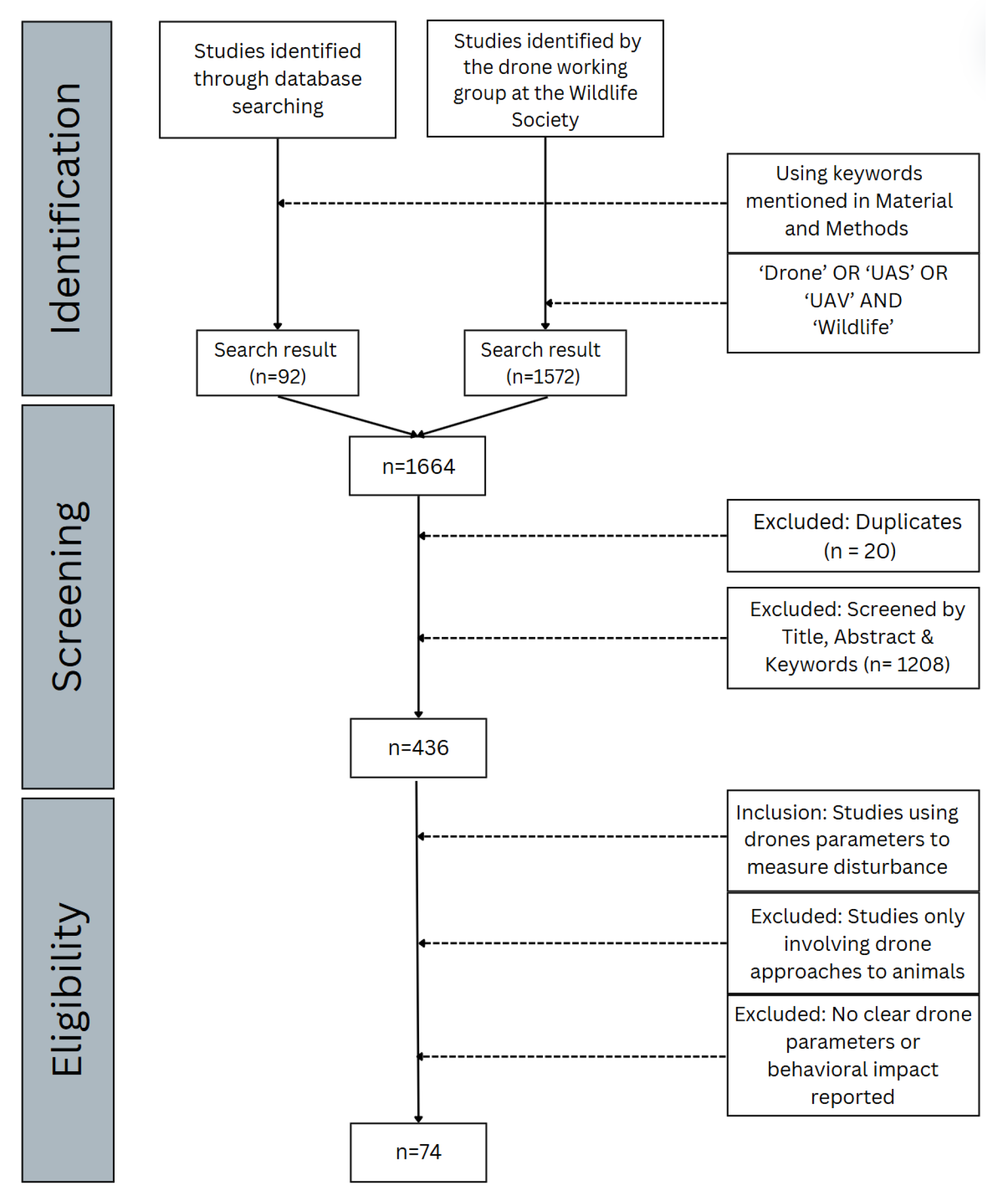
Figure 3.
Behavioral responses of seven African herbivore species to drone approaches at varying altitudes [30]. Drone altitude is presented on the x-axis in m (m), and the percent (%) of animals exhibiting a behavioral response (e.g., alertness, flight, or no response) is presented on the y-axis. Responses are categorized by species and plotted to determine differences in sensitivity among altitude levels.
Figure 3.
Behavioral responses of seven African herbivore species to drone approaches at varying altitudes [30]. Drone altitude is presented on the x-axis in m (m), and the percent (%) of animals exhibiting a behavioral response (e.g., alertness, flight, or no response) is presented on the y-axis. Responses are categorized by species and plotted to determine differences in sensitivity among altitude levels.
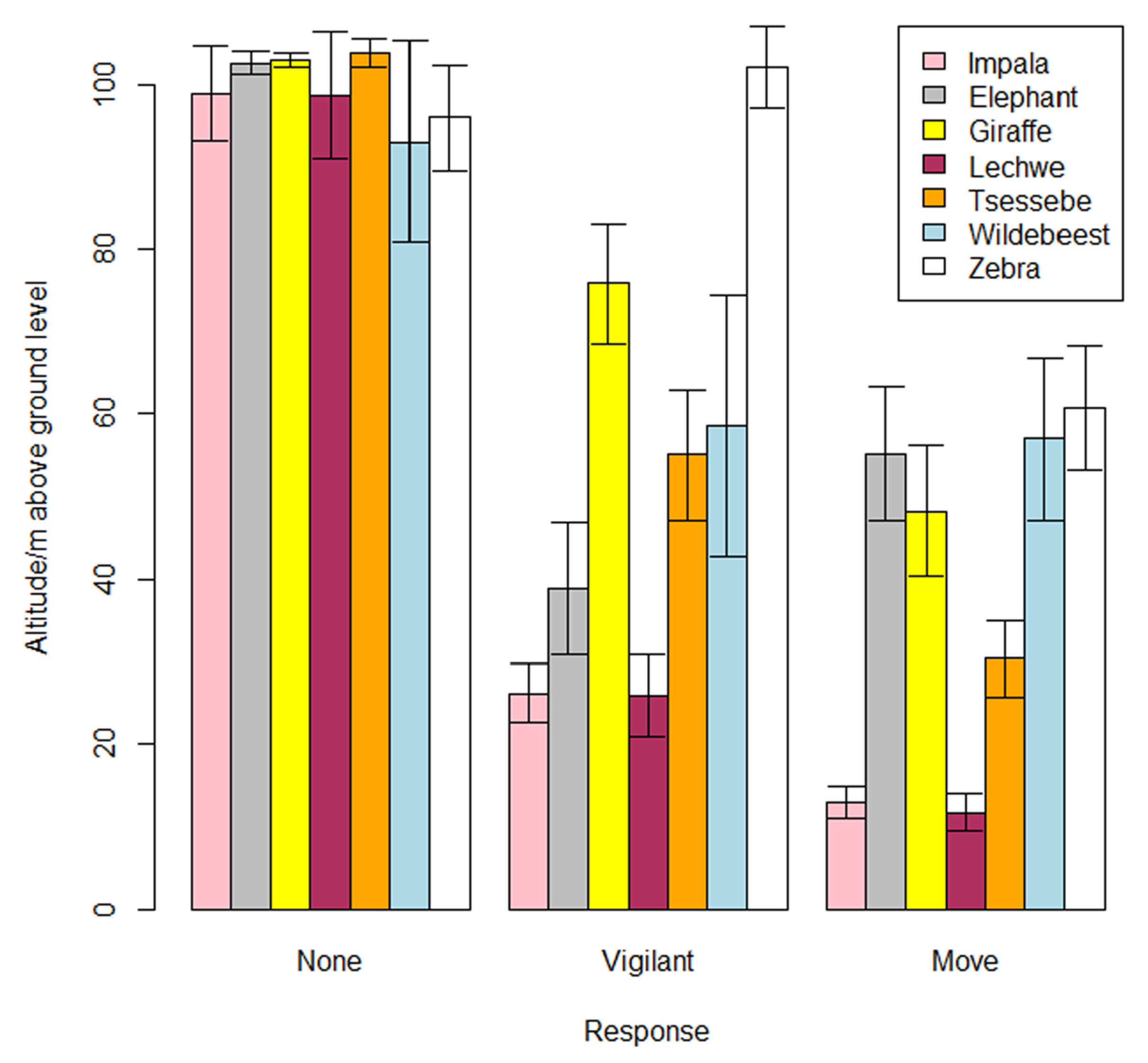
Figure 4.
Variation in wildlife behavioral responses to aerial vehicles according to their primary habitat [11]. X-axis is habitat categories (e.g., aquatic, aerial, and terrestrial), and the y-axis is percentage of studied species showing drone-induced behavioral responses.
Figure 4.
Variation in wildlife behavioral responses to aerial vehicles according to their primary habitat [11]. X-axis is habitat categories (e.g., aquatic, aerial, and terrestrial), and the y-axis is percentage of studied species showing drone-induced behavioral responses.
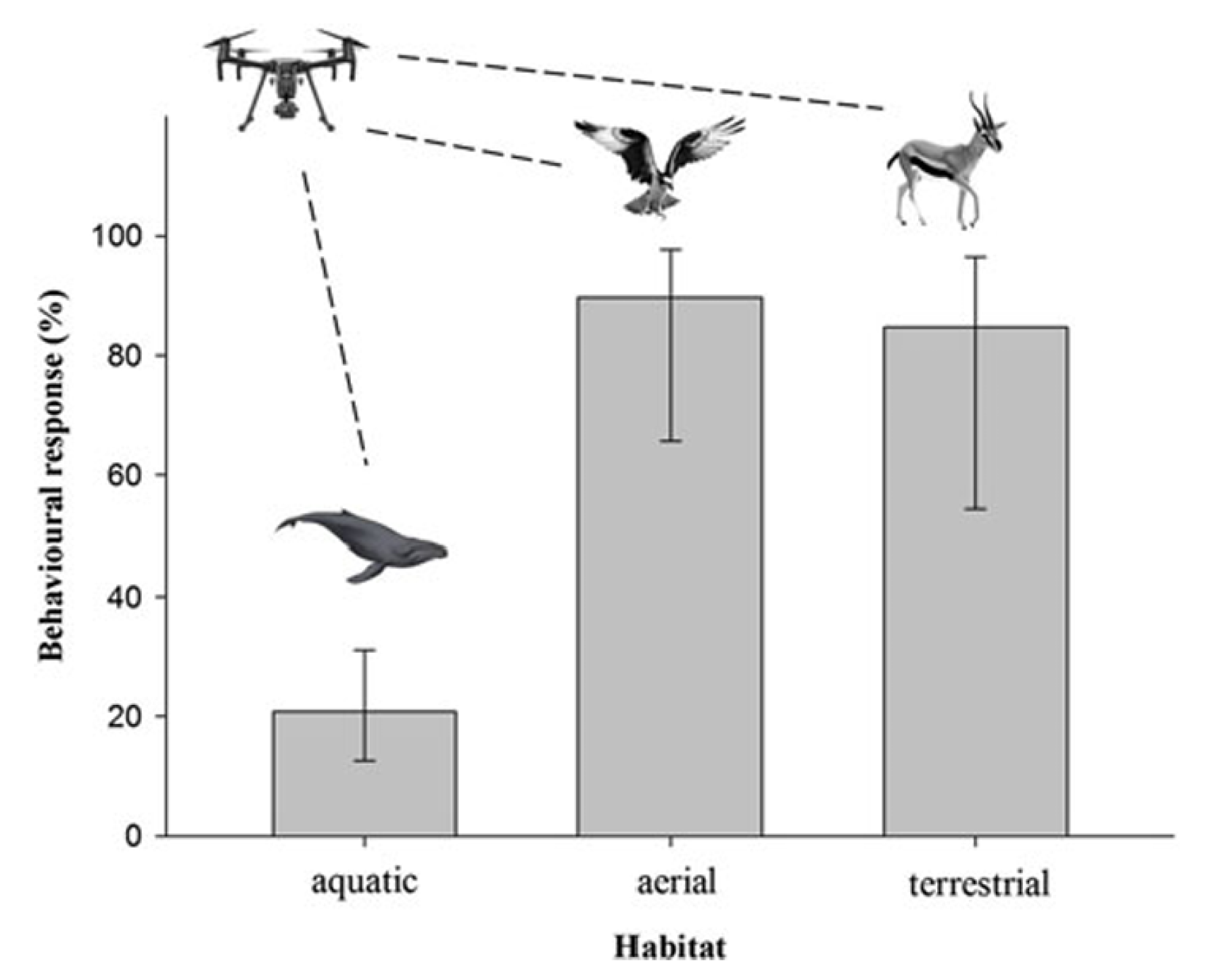
Figure 5.
Instances of bottlenose dolphin reaction to the presence of drone comprised (A) side-roll, (B) belly-up, (C) circular swim (left), (D) spin-and-orient, (E) side-roll (open-mouth), and (F) breach (inverted) [41].
Figure 5.
Instances of bottlenose dolphin reaction to the presence of drone comprised (A) side-roll, (B) belly-up, (C) circular swim (left), (D) spin-and-orient, (E) side-roll (open-mouth), and (F) breach (inverted) [41].
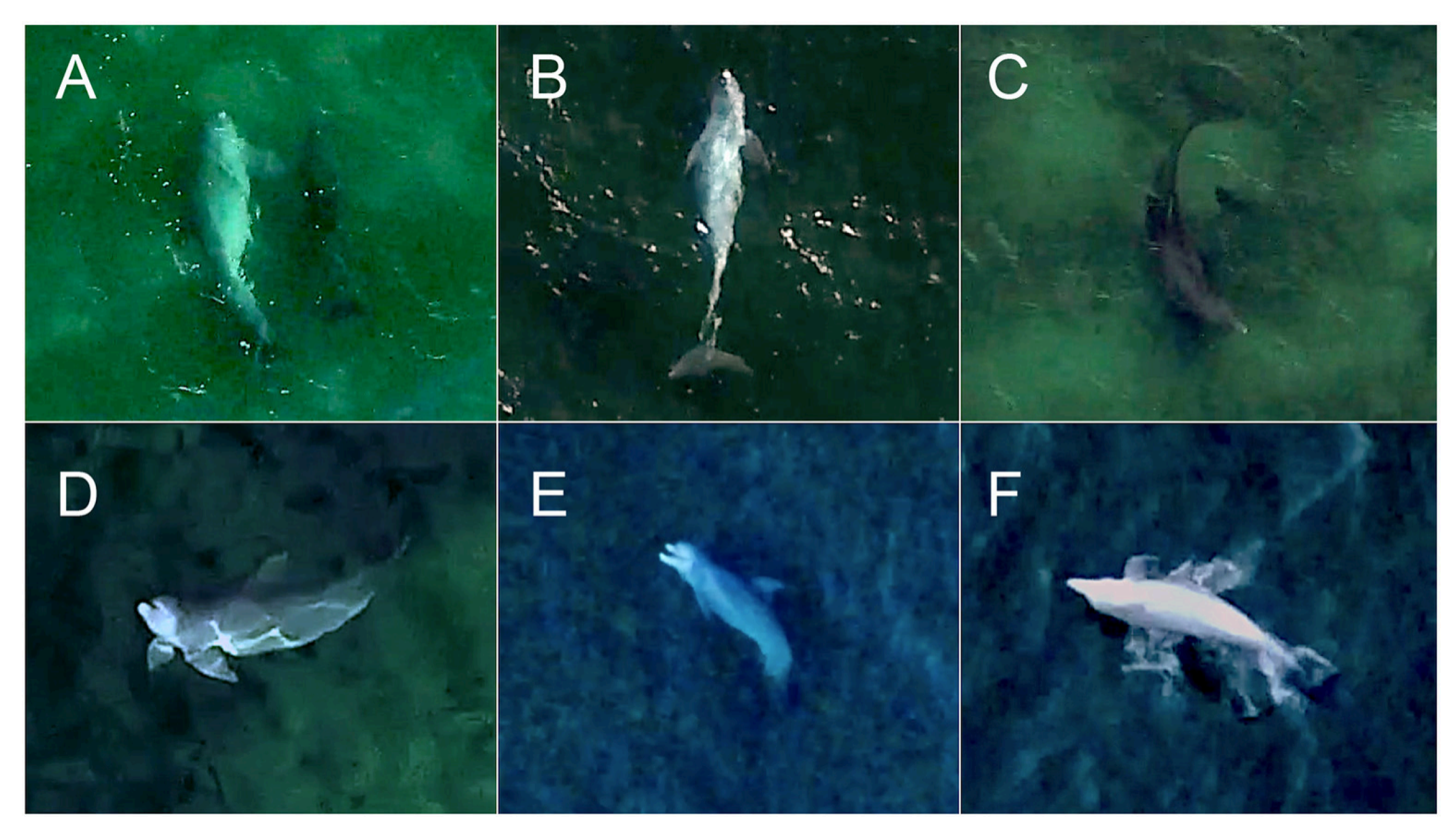
Figure 6.
Bears showed elevated heart rates in response to drone flights, with minimal behavioral reactions [83].
Figure 6.
Bears showed elevated heart rates in response to drone flights, with minimal behavioral reactions [83].
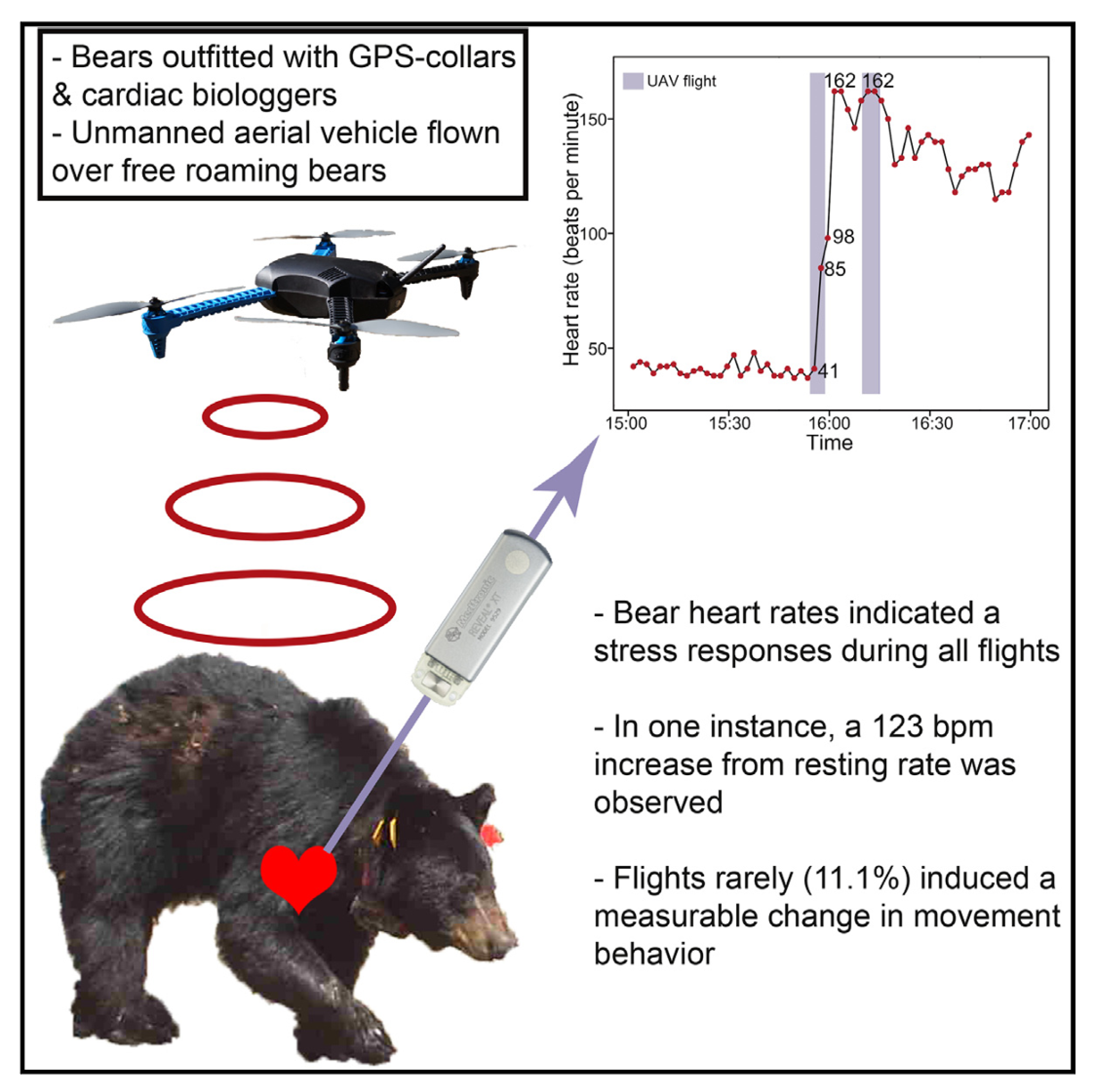
Figure 7.
Beluga exhibits avoidance reactions to drones when in large groups [93].
Figure 7.
Beluga exhibits avoidance reactions to drones when in large groups [93].
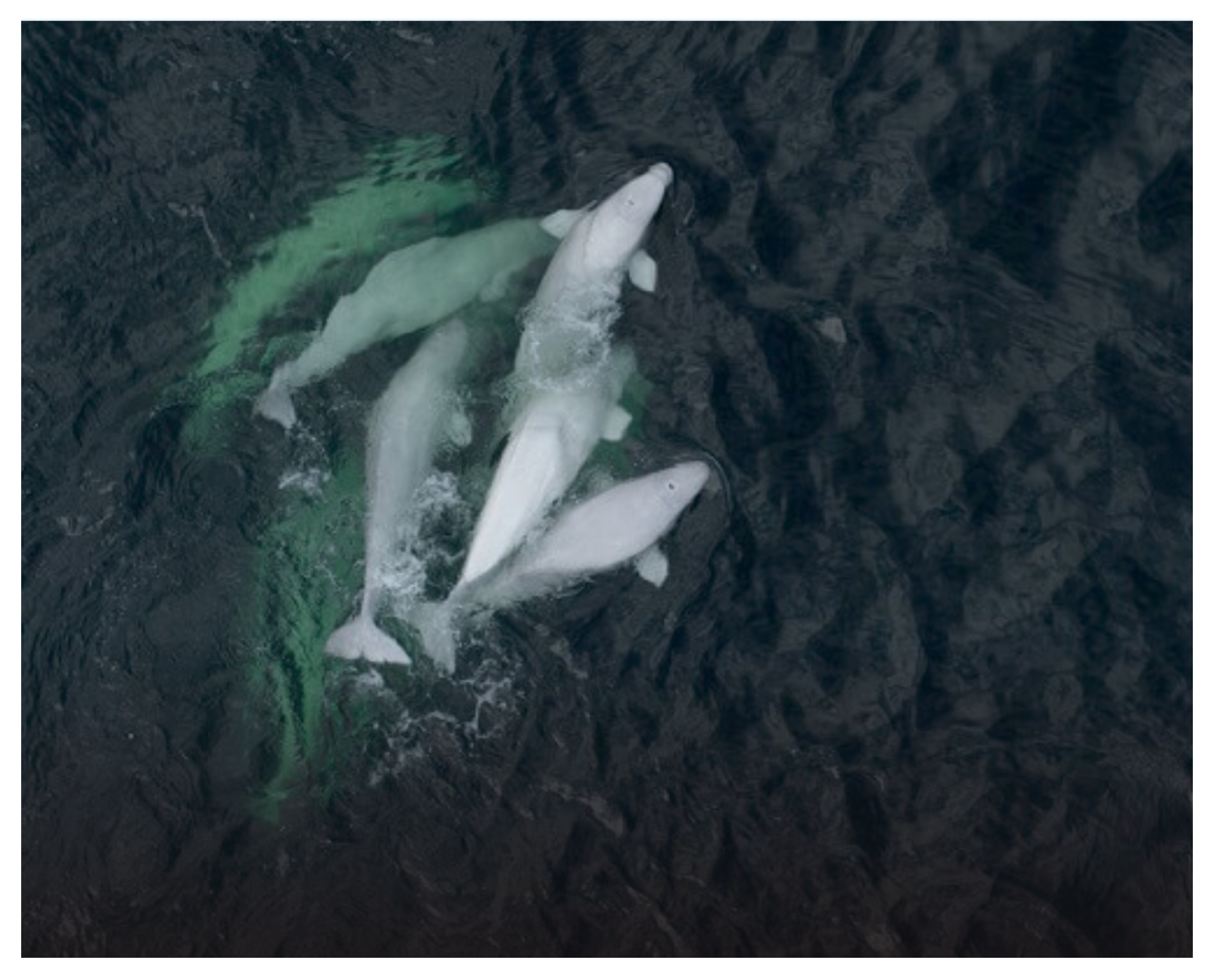
Table 1.
Wildlife responses to drone flights across various species, highlighting the impact of UAV type, flight distance, and study context on behavioral reactions.
Table 1.
Wildlife responses to drone flights across various species, highlighting the impact of UAV type, flight distance, and study context on behavioral reactions.
| Study | Species studied | Drone used | Study context | UAV flight altitude | Observed impact | Recomm-endations |
|---|---|---|---|---|---|---|
| Assessing the Disturbance Potential of Small Unoccupied Aircraft Systems (UAS) on Gray Seals at breeding colonies in Nova Scotia,Canada (2018) [32] | Gray seals (Halichoerus grypus) | Fixed-wing UAS (eBee) | To assess the disturbance of UAS during population surveys | 75–85 m | No significant changes in seal behavior (counts, posture, or movements) | Lower acoustics at higher altitudes found suitable for minimal invasive surveys. |
| First Guidelines and Suggested Best Protocol for Surveying African Elephants using a drone (2021) [33] | African elephants (Loxodonta africana) | DJI Mavic Pro Platinum | Investigating behavioral responses to drone speed, angle of approach, and initial altitude | Combination of flights: 35m, 50m, and 100m with 2m/s, 4m/s, and 6m/s, and approach angle of 45° and 90°. | 90° approach angle and higher speed reported to influence elephant behavior | Higher speed and high approach angles should be avoided to induce less stress on animals. |
| Przewalski’s Horses Responses to Unmanned Aerial Vehicles Flights under Semireserve Conditions: Conservation Implication(2021) [34] | Przewalski’s horses (Equus ferus przewalskii) | DJI Mavic 2 Zoom | Behavioral responses of Przewalski’s horses to different UAV flight altitudes | 1 m to 52 m | Alert and run-away responses varied by age and gender | Optimizing flights according to the biological state of the animal to minimize disturbance . |
| Dolphin Behavioral Responses to Uncrewed Aerial Systems as a Function of Exposure, Height, and Type (2023) [35] | Bottlenose dolphins (Tursiops truncatus) | DJI Mini 2, DJI Mavic 2 Enterprise, DJI Inspire 2, DJI Mini 3 Pro, DJI Avata, SplashDrone 4, PHASM fixed-wing UAS | Behavioral responses of bottlenose dolphins to different UAS types and heights | Hovering at 300ft and descending to 20 ft (varied by UAS) | Larger, noisier UAS induced higher responses | Avoiding lower drone flight altitudes |
| Fly with Care: Belugas Show Evasive Responses to Low Altitude Drone Flights (2023) [36] | Belugas (Delphinapterus leucas) | DJI Phantom 4, Phantom 4 Pro | Impact of drones on endangered St. Lawrence belugas | 16.9 m to 124.9 m | Evasive reactions occurred at low-altitude flights. Larger groups were more likely to show avoidance responses. | Recommended flight altitude: >30 m. Group size also influences the increased alertness at lower altitudes. |
| Impacts of Drone Flight Altitude on Marsh Bird Behaviors and Species Identification of Marsh Birds in Florida (2023) [37] | Marsh birds, including passerines, wading birds, and waterfowl | DJI Mavic 2 Zoom | Evaluate the effects of drone altitude on marsh bird behavior | 12 m, 30 m, 61 m, and 91 m | Minimal behavioral reactions at 12 m and 30 m | Lower altitudes can be opted only if animals shows no disturbance. |
| How low can you go? Exploring impact of drones on haul out behaviour of harbour - and grey seals (2024) [38] | Harbor seals (Phoca vitulina), Grey seals (Halichoerus grypus) | DJI Phantom 4 Pro, Autel EVO II RTK | Impact of varying drone flight altitudes and approaches on harbor and grey seal behavior | 70 m to 10 m, descending by 5-10 m intervals | Increased vigilance and displacement at altitudes <30 m | Direct overheads path should be avoided with lower speeds to minimize disturbance. |
Disclaimer/Publisher’s Note: The statements, opinions and data contained in all publications are solely those of the individual author(s) and contributor(s) and not of MDPI and/or the editor(s). MDPI and/or the editor(s) disclaim responsibility for any injury to people or property resulting from any ideas, methods, instructions or products referred to in the content. |
© 2025 by the authors. Licensee MDPI, Basel, Switzerland. This article is an open access article distributed under the terms and conditions of the Creative Commons Attribution (CC BY) license (http://creativecommons.org/licenses/by/4.0/).
Copyright: This open access article is published under a Creative Commons CC BY 4.0 license, which permit the free download, distribution, and reuse, provided that the author and preprint are cited in any reuse.


