

Submitted:
07 March 2025
Posted:
10 March 2025
You are already at the latest version
Abstract
Remote Patient Monitoring is a term that indicates the use of Information Communication Technologies (ICT) to deliverhealth care services by increasing the access to care and medical information. According to the World Health Organization(WHO), RPM is a process of exchanging valid information for diagnosis, treatment and prevention, research and evaluationpurposes where it has interested in advancing the health of individuals and their communities. RPM holds a great potentialin revolutionizing the delivery of healthcare services and clinical management. But along with all the benefits, there areseveral challenges and barriers blocking the diffusion of RPM. High computational power, complexity, data security, costand accuracy are some of the main issues related to the incorporation of RPM in the healthcare sector. RPM systems aredesigned to obtain several physiological data from patients. This research project presents a novel system architecture fora remote patient monitoring (RPM) system which addresses all the issues with the existing RPM systems and aims to easethe medical decision making. The proposed RPM system is designed using various emerging technologies like deeplearning, Blockchain, cloud computing and Medical Internet of Things (MIoT). The high-level architecture of the proposedsystem has 3 layers which combine to form the system capable of tracking the medical and health parameters of a patientthrough a MIoT device consisting of various types of sensors. All the data recorded by the sensors are then transmitted tothe cloud server through a safe blockchain network ensuring the safety of sensitive medical data of the patient. At the cloudserver, the physiological data is analysed and then shared with the doctors and other health professionals to help them makethe medical decisions for the patient and monitor their health in real time.
Keywords:
RPM
; deep learning
; blockchain
; MIoT
; cloud computing
1. Introduction
With the advancement of technology in the health sector, the life expectancy of the elderly population has increased gradually (Dana P. Goldman, 2017). Along with the increase in the elderly population, various severe and chronic disease have emerged among these elderly population. To adapt to this situation, the healthcare industry has changed dramatically due to the need for the point of care(POC) diagnosis and real time monitoring of long-term health conditions (Guk et al.., 2019). The traditional healthcare systems are mainly based on the decisions made by the doctors and healthcare professionals. Generally, medical professionals refer to medical imaging technologies to evaluate patients’ health condition. However, these technologies usually rely on specialized equipment, which is costly, overloaded and sometimes inaccessible. Thus, this research project uses advanced technologies such as machine learning and deep learning algorithms are used to propose a system which can replace the traditional healthcare system by simplify many data acquisition requirements through wearable devices and MIoT biosensors. The motivation of adding the blockchain technology in the proposed system is that a blockchain based record system would empower the patients to retain full control over their medical data by choosing when and to whom the data can be accessible to. Due to the enormous success of deep learning models in processing high-dimensional data, the use of ML and DL algorithms can enhance the accuracy and effectiveness of the medical/clinical decisions (Jones et al., 2018). So, this project is created with the belief that the outcome of this research work will make an improvement in the field of RPM. In addition to this, the proposed system will create a hassle-free environment for the medical professionals to make the clinical decisions for their patients.
2. Aim and Objectives
This research project aims to design and evaluate a system enhancing the process of Remote Patient Monitoring (RPM) by developing an IoT device which is wearable and performs data transmission through blockchain and cloud services. The proposed system is developed with an aim to provide an optimized RPM for both patients and the medical professionals and is more accurate, secured and cost effective with minimum human involvement. The proposed system will be using reinforcement learning and thus will be able to analyse high dimensional medical data in many new ways. The research aims to produce a system which reduces the computational complexity by applying an agent-based approach and can determine the correct location and the boundaries of image using neural networks.
The objectives of this research can be listed in 5 points as below:
- Literature Survey
- Requirement Analysis
- Design
The survey aims to identify the issues that affect patients and medical professional. This research also presents a critical review of existing RPM systems in the industry and studies about different technologies like Blockchain, MIoT (Medical Internet of Things) and Cloud Computing and how they can support innovations in the RPM application. Another objective if this work is to carry out a survey using different techniques like interviews, observation, or questionnaires to understand and consult medical professional and their views about the wearable RPM devices. This work strives to propose a design for wearable RPM device with also uses the technologies like blockchain, cloud computing and IoT or specifically, the MIoT.
3. Scope
I. In – Scope
The scope of this research includes implementing a wearable IoT device which monitors the medical data of a patient and processes it using the ML models. Along with this, building a blockchain based network for transmitting the sensitive patient data and developing a clod server containing the data collected using the advanced ML models is also the scope of this research project. The development and evaluation of the system and the web-application to run the system and checking the accuracy of the proposed against the currently present system also comes under the scope of this project.
II. Out – Scope
The prototype of the proposed system will only be capable of detecting the busy temperature, blood pressure and patients’ movements. The detection of any type of disease using the system is out of scope of this project. The proposed system requires a stable network connection and a stable and strong power supply to run the application properly. These are the pre-requisites for the functioning of the proposed system. Enabling the system to be fault tolerant is out of scope of this research project.
4. Related Work
This section talks about the currently available architectures and technologies in the domain of healthcare, more specifically in remote patient monitoring. This section presents the literature review of the technologies used in the current devices available in the market that belong to the domain of remote patient monitoring and related areas. The application of novel technologies like blockchain, Deep Learning, Machine Learning and IoT are also discussed in different sub-sections of this section.
I. Conventional and Modern Patient Monitoring Methods
In healthcare, it is a common practice to note or record different parameters related to the health of the patients such as heart rate, systolic blood pressure, respiratory rate, body temperature and many more at regular intervals of times during the period of illness. Patient monitoring can be an uphill task for the nurses for example if we are monitoring the physiological data, this is a tricky task for the nurses. The frequency of contact by the nurses is always based on the number of subjective factors like patients’ need or their condition. The conventional way of patient monitoring was done by storing these data in hospital data stores and obtaining these stored data is a complicated process, and these are also at the risk of destruction unless backups are kept. The staff -to-patient ratio is also paramount in ensuring the quality of the patient monitoring is busier or smaller hospitals with inadequate staff and efficient patient monitoring systems. Several patient monitoring systems used nowadays improve the efficacy of conventional patient monitoring systems. (Sahandi et al., 2009).
The modern patient monitoring systems can be observed to follow the trend of remote monitoring. Achieving the remote monitoring conditions has been successful in many ways as:
- Complete Remote Monitoring – Medical data of the patients are collected by wearable devices with sensors beyond the hospital conditions and monitor the patient remotely. Current complete remote monitoring processes are limited to only specific disease types and not all the diseases or medical issues.
- Monitoring in the Hospital – Healthcare staff collects the physiological data and the medical history of the patient. Information of the patient is accessed by authorized medical staff from a remote location either within or away from the hospital through a secure access.
Modern day patient monitoring systems are introduced under the types of patients (Lakmini et al., 2016). Data acquisition and data transferring, or monitoring are different when comparing different diseases.
- i)
- Heart and blood related disease monitoring system. (Lakmini et al., 2016)
- ii)
- Fall detection and mobility related disease monitoring system. (Lakmini et al., 2016)
- iii)
- Monitoring system for the brain, mental health, and neurological system related diseases. (Lakmini et al., 2016)
- iv)
- Diabetes monitoring system. (Lakmini et al., 2016)
Sharing the developments in the real-world health monitoring systems can be observed based on the patient monitoring concept (N.L.N. Vishnu et al., 2021, Al-khafajiy et al., 2019, Business insider, 2019, Yujun Ma et al., 2016) shares the disease types of monitoring systems which are used as subsystems in real-world applications of health monitoring systems in the form of following examples,
- i)
- Real-time alerts and monitoring
- ii)
- Elderly health care with remote monitoring
- iii)
- Detection and prevention of chronic illness
- iv)
- Sustainable health care applications
- v)
- Remote health detection primary diagnostic services
II. Existing Wearable Systems in Healthcare
Wearable devices have become an important physiological data acquisition method in the perception of healthcare IoT in the healthcare sector because the conventional disease diagnostic tests commonly used in hospitals and laboratories are time consuming and expensive and require highly trained staff (Guk et al., 2019). Due to the increased elderly population around the globe, the healthcare industry has transformed drastically, and the focus of this transformation is centred around the growth of biosensor technology which enables the real-time patient monitoring, including prevention methods for a variety of chronic and acute disease. Referring to the global market for wearable devices, the sensors were seemed to have an average CAGR of approximately 38% from 2017 to 2025. The development of the smartwatch market is expected to grow exceptionally (Grand View Research, 2018). Wearable sensors aim to acquire patients physical signals such as blook pressure, heart rate, and body movements to make clinical decisions (Khan et al., 2016). The portable devices have been equipped with the sensors to provide personalized health services and advances levels of tailored devices in the early 21st century. These devices can be classified into different groups as (Guk et al., 2019):
- i)
- Wrists: Watches, bracelets, and gloves
- ii)
- Heads: Glasses and helmets
- iii)
- Body clothes: Blazer, underwear, and pants
- iv)
- Body sensory control devices: Somatosensory modulators
The table below shares the device types and the monitoring features they provide.

Table 1.
Summary of Portable Monitoring Devices (Guk et al., 2019).
| Device Type | Monitoring | Physiological and Physical Parameters |
|---|---|---|
| Wrist-mounted devices | Cardiovascular signals and sweat contents | Heart rate, blood pressure, glucose, and sodium level. (wrist band or smart watch) |
| Head-mounted devices | Salivary and sweat contents and cardiovascular signal | Uric acid, lactate, and glucose (mouth guard), lactate and potassium (eyeglasses) and heart-rate (eyeglasses) |
| E-textiles | Sweat contents, cardiovascular signals, and physical activity | Glucose and lactate etc. (textiles with the electrode), heart rate and temperature (leg calf) and foot motion (footwear) |
| Others | Physical activity and Physiological signal | Sleep, daily activity (ring, necklace etc), Step count (belt on waist), ECG and direct current (belt on waist) |
Wrist mount devices have been developed commercially for healthcare monitoring with improved characteristics in battery backup and minimum use of hardware to convert the raw signals to interpretable data in real time. With the advancements in technology, wrist mount devices such as fitness bands are moving from basic models to smart pedometers by including biometric sensors. Typical wearable devices are more concerned and focused on two functions: communicating with other electronic devices (IoT) and monitoring human physiological signals and human activity signals (Kamiŝalić et al., 2018). Wearable devices are developed for wearing on the human body or clothing (Xie et al., 2020). The wearable sensing devices contains a target receptor and a transducer, where the target receptor identifies the target parameter while the transducer converts the response of the receptor to a sound signal (Kozitsina et al.,2018).
The skin is the largest organ in the human body, and it is better to have a non-invasive healthcare wearable device. Electrocardiogram (ECG) acquisition is made using wearable to avoid the individuals’ discomfort such as avoiding the use of gel-based electrodes (Iqbal et al., 2021). Similarly, the Electrocardiogram (ECG) acquisition is made using a textile electrode (Gao et al., 2020). The disadvantage of textile-based wearables is the distortions due to the loss of contact between the receptor and the skin, but the textile-based sensors provide the continuous monitoring of the biological parameters. To reduce the contact issues in textile-based sensors, tattoo-based sensors and/or wearables were introduced, an example of which is the Graphene Electronic Tattoo. It is created using wet transfer dry patterning method and can be used to measure different biopotentials like ECG, EMG and EEG (Iqbal et al., 2021). Self-powered piezoelectric sensors are used for the continuous real-time measuring of the arterial pulse. Piezoelectric sensors convert the pressure due to arterial pulses into electric pulses. The abnormality in the electric pulses shows the abnormalities of the arterial pulses, which can indicate severe cardiac diseases (Park et al., 2017). The wrist bands are also part of a skin-based biosensors. A chest-based wearable monitor was created by Schreiner et al. to monitor the respiratory rate with pulse oximetry (Schreiner et al.,2010). Thoracic impedance is used to predict heart failure symptoms (Dovancescu et al.,2015). A mouthguard was created by Kim et al. to monitor the saliva uric acid (Kim et al.,2015). In addition to that, Manor et al. have created another oral cavity wearable device to detect the microbial activities in the tooth enamel (Mannoor,2012). Smart Wearable Sweat Patch is another notable development of paper-based devices. The intensity of the fluorescence from each component can be measured using a smartphone (Ardalan et al.,2020).
III. Existing Remote Patient Monitoring Systems
A significant amount of research and development has been conducted around remote patient monitoring over the past few years. Many researchers and scientists have explored novel patient monitoring methods and both virtual and physical objects to be connected and communicate with each other were produced as new digitized health services improving the quality of life (Atlam et al., 2020). As the ageing population is rapidly increasing, the associated challenges in healthcare are also increasing and thus, Ambient Assistive Living (AAL), the concept of generating new living spaces combining the social environments with technology to enhance the quality of life has become the main focal point in the modern society. (Al-khadajiy et al., 2019). The underneath concept of the AAL technology is the IoT paradigm. A large portion of IoT wearable sensors change the way of collecting and analysing data. The brain sensing headband monitors brain activity and transmits the information to a computer or smartphone via Bluetooth (Al-khadajiy et al., 2019).
Figure 1.
Classification of wearable devices (Seneviratne et al., 2017).
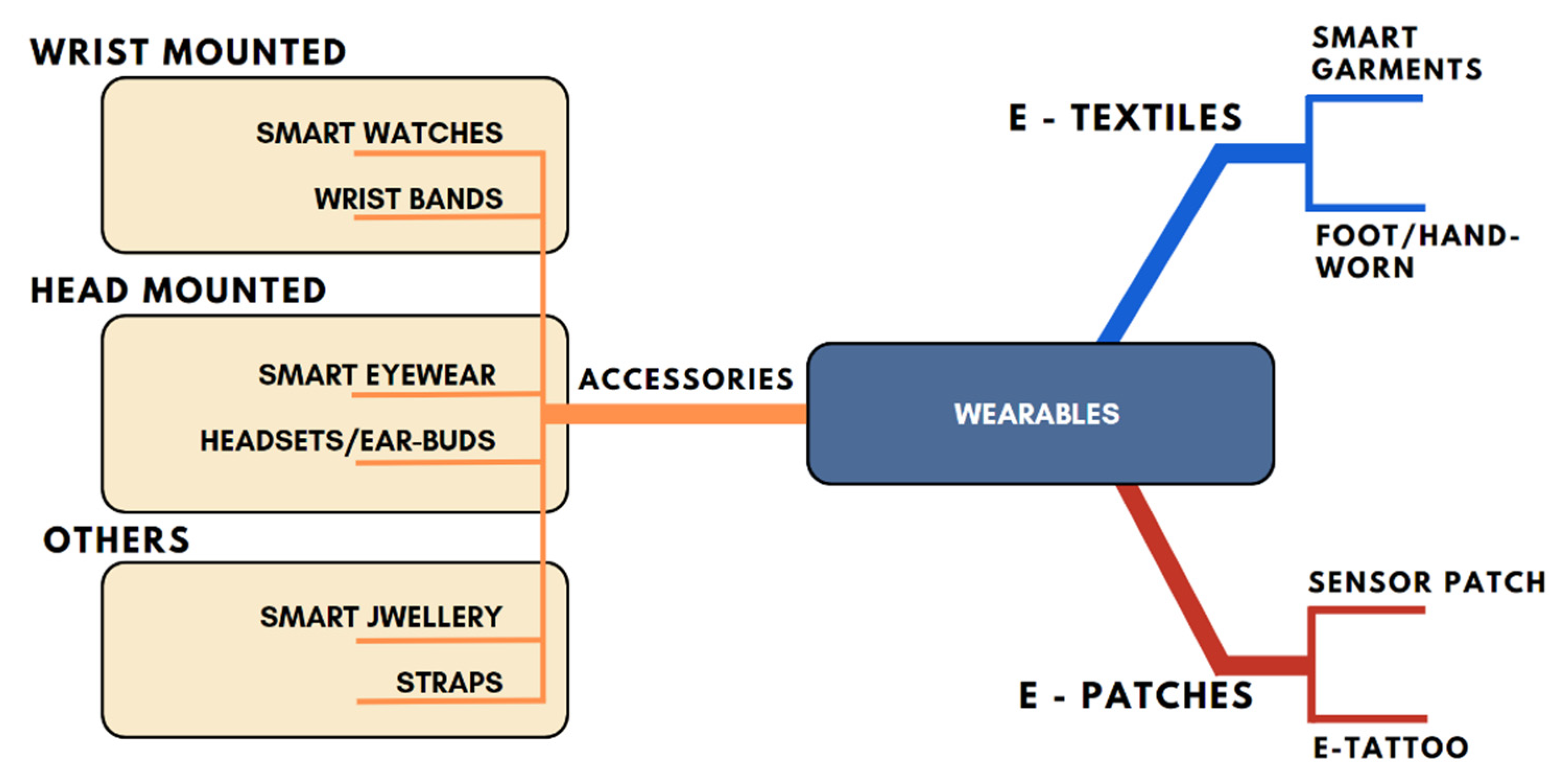
The value of proposition of wearables in health monitoring has risen drastically in the modern era. The growth of WBAN has widened as it seeks the network with many sensors at the same time, including the medically implanted devices. This is to provide a very comprehensive and accurate monitoring of human health (Seneviratne et al., 2017). Smartwatches are one of the most widespread and popular wearable device type in the market offering the features such as communication and notification like calling messaging and weather updates. Along with these, the second most lovable feature of a smartwatch is monitoring some of the human physiological signals. Due to this feature, the smartwatches can be used as a fitness tracker which can record users daily activities such as workout timings, heart rate, step counts and more. The collected data is transferred to the smartphone or cloud-based server for creating and displaying the analytics through a dashboard.
Figure 2.
Evolution of wearable medical devices (Guk et al., 2019).
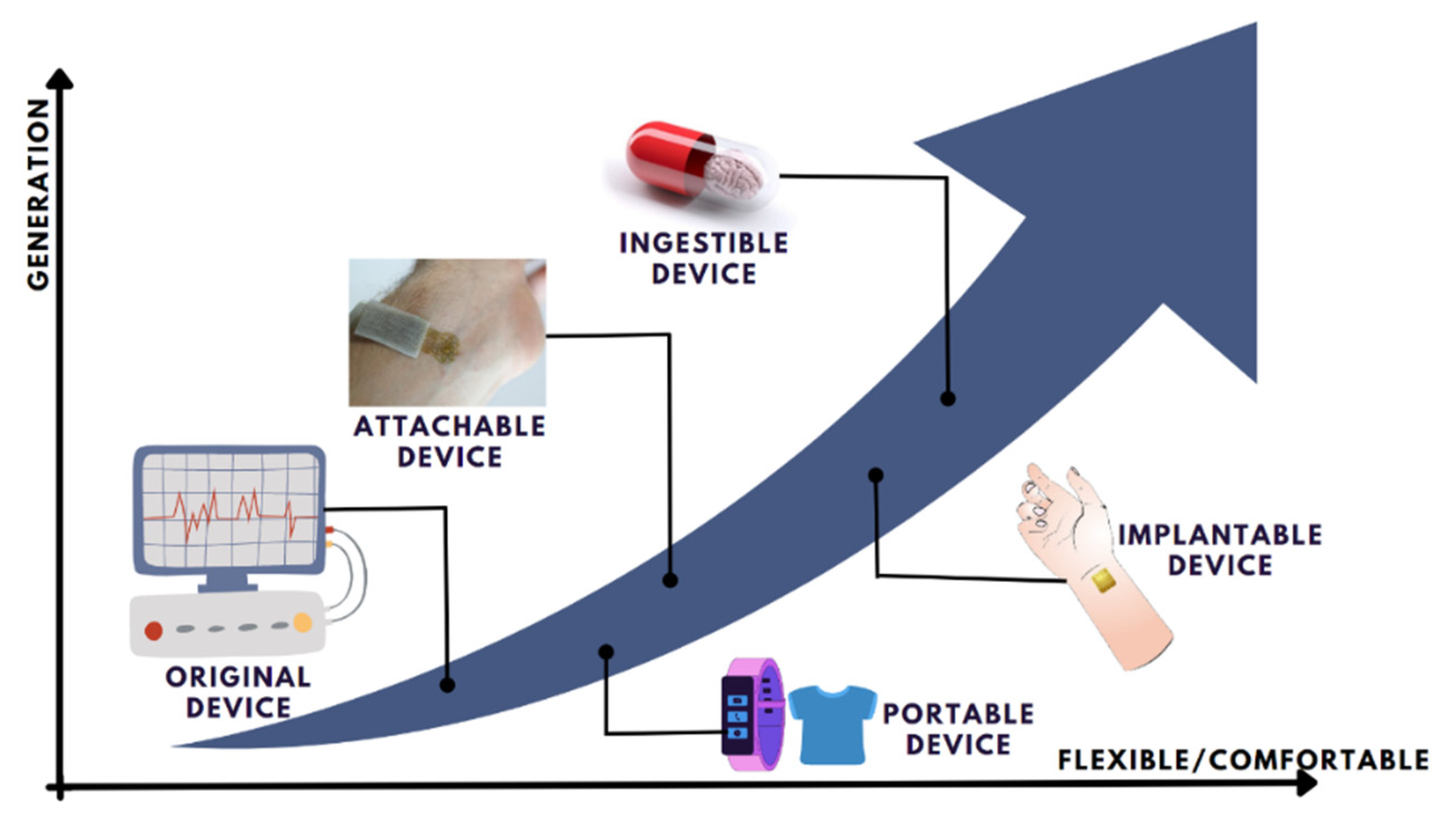
Wristbands are other popular category of wrist-worn wearable devices. Though these are similar to smartwatches, yet wristbands are designed specifically to track a specific set of health and fitness activities. Tracking the fitness activities is the limited goal for the wristbands and this is the reason why they do not have big screens like smartwatches. Nevertheless, there are different types of wrist-mount devices with valuable features, a number of drawbacks can also be identified. The design challenge of creating a compact and lightweight product than can be worn conveniently while providing all the smart features are remaining a weakness (Seneviratne et al., 2017).
IV. Studies on IoT with Blockchain
Several studies are available presenting the blockchain as the ultimate solution to tackle the security and privacy challenges in the IoT systems (Atlam et al., 2020). The main aim of the wearable is to transmit the data from sensor either to a smartphone or directly to the cloud server for further analysis and visualization. Most of the sensor data from these devices is highly personal and represents a user uniquely and thus secure transmission of this data is important (Seneviratne et al., 2017). Badr et al.(Badr, Gomaa and Abd-Elrahman, 2018) (S. Mishra and A. K. Tyagi, 2019) utilized the blockchain to enhance the privacy of patient data. They proposed a protocol based on pseudonym-based encryption with multiple authorities for ensuring the privacy of electronic health records (EHRs) (PBE-DA). They also used blockchain as a connection point between IoT medical equipment and the healthcare system. Mishra and Tyagi (S. Mishra and A. K. Tyagi, 2019) also presented a blockchain-based intrusion detection system for the IoT to identify illegal access and filter network traffic. They used their suggestion to protect patient information in the healthcare industry.
5. Requirements
The requirements for this research project can be listed in two categories as Functional and Non-Functional Requirements. Functional requirements are the list of requirements necessary for creating the functionality of the proposed system. Non-functional requirements are the list of requirements related to the non-functional aspects performance and accuracy of the proposed system.
I. Functional Requirements
The functional requirements of the project can be listed as below:
- Should be able to develop a secured ML model. The new ML model developed using new agent-based techniques can analyse the data with a less computational complexity.
- Should find the most accurate data. The accuracy of the final result should be calculated using the test data.
- Should present the best model with metrices. The best fitting model should be presented to the user with the metrices for its performance
II. Non-Functional Requirements
The non-functional data for the project can be listed as below:
- The accuracy of the recommended algorithms and other settings should be high.
- Generating results and data visualizations took by the system should be done within 5 seconds.
- The system should be able to incorporate new features without affecting the existing system.
- The system should only be accessible to authorized users with valid credentials and should not disclose any personal information to the general public
6. System Design and Architecture
I. Emerging Technologies Used in the Architecture
This section describes the number of emerging technologies that are used in association with the RPM system proposed in this research project. These technologies cater to a wide range of aspects like data storage, communication, processing, and security.
- 1)
- Blockchain Technology
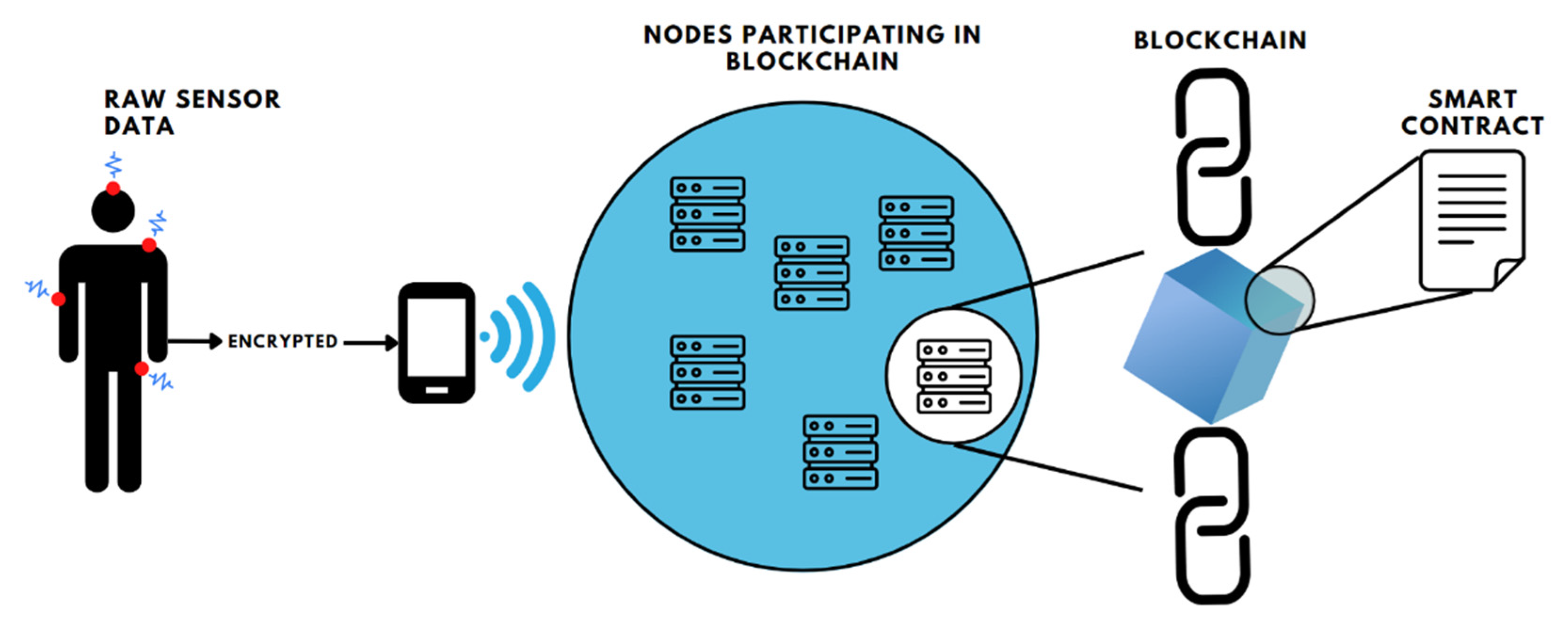
Blockchain Technology is expected to have a significant impact on healthcare. Blockchain can be used as an append only ledger where a record once created cannot be changes and always a new record is to be added for every new action. This property of a blockchain ledger where added records cannot be altered or deleted is called immutability. All the transaction will be time stamped, and data security is ensured. Hyperledger is a permissioned blockchain that applies chain code-based smart contracts and access control. A Hyperledger based implementation of data collection and sharing among stakeholders is utilized successfully in a mobile environment. A patient-centric agent is created to achieve end-to-end data security and privacy during continuous monitoring. Referring to the proposed system in this project, we will be using smart contracts to automate the analysis of health data acquired by Wireless Body Area Networks (WBAN) devices, prompting the warnings for abnormal behaviour based on defined threshold values for each patient. Further, a WBAN node can track the metadata about measurements taken and treatment commands issued. The proposed system used the Hyperledger properties of blockchain for inspection and block verification.
Figure 3.
Blockchain Network for the proposed Remote Patient Monitoring System.
- 2)
- Medical Internet of Things (MIoT)
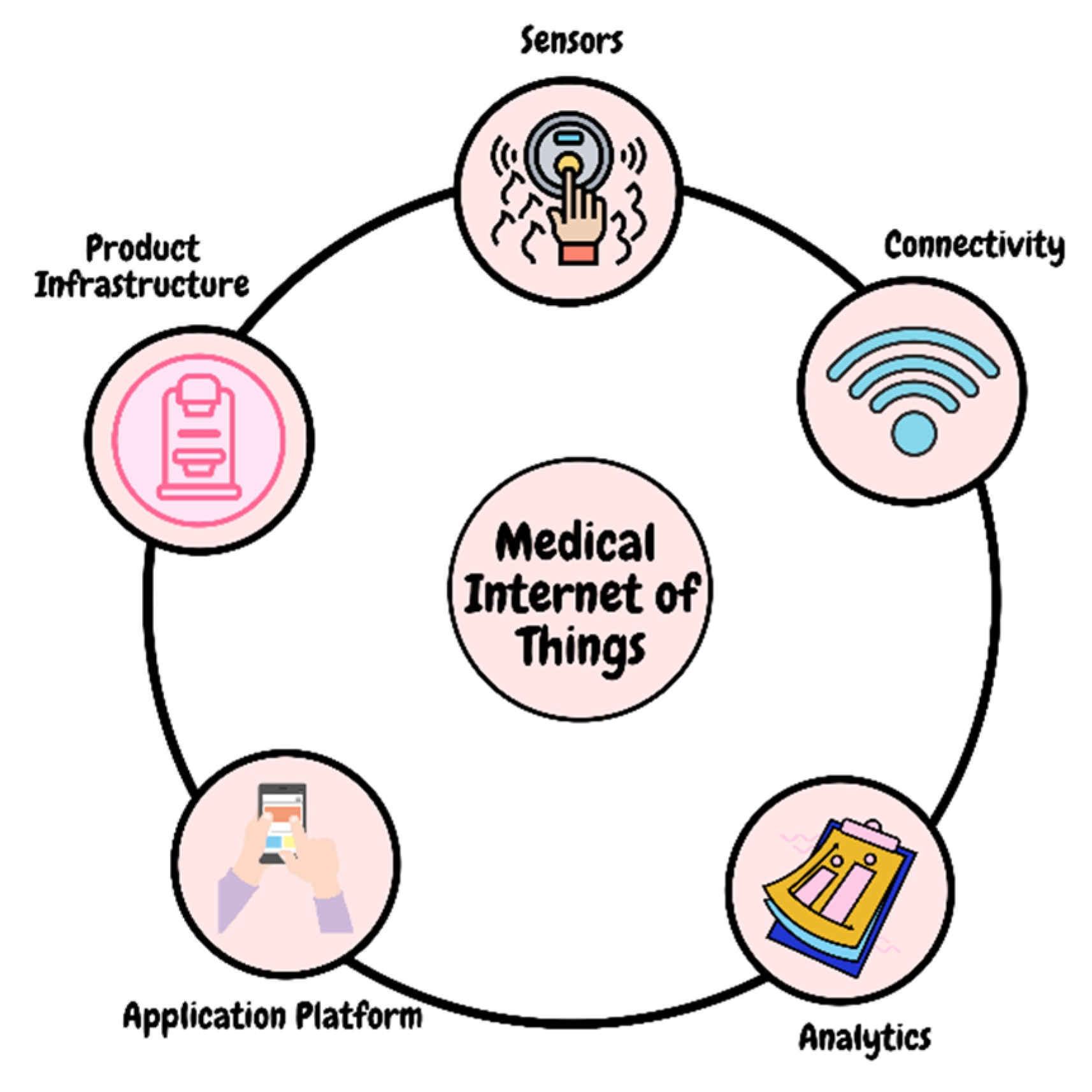
The rapid growth of IoT devices and wearable tehnology has opened up many new opportunities in medical sector specifically in medical sensors and ROM systems.WBANs are one of the subclass of this medical IoT or MIoT trend. In MIoT, patients are equipped with various wearable or implanted maedical devices that take real time measurements of vital indicators such as heart rate and glucose levels. Many devices can serve as actuators, delivering automated therapies based on the data collected by these sensors. MIoT or Medical Internet of Things is used in the proposed RPM mainly to communicate with the cloud to provide a powerful platform to perform computationally intensive tasks. RPM systems manage the hospital resources through patient monitoring at home. It collects and transmits the data to remote databases. An MIoT based health monitoring system is created for collecting data using sensors. A sensor worn on the head collects the data and sends it to monitoring server.
Figure 4.
Medical Internet of Things.
- 3)
- Deep Learning
Deep learning models are capable of processing the input data in many different forms such as images, signals, and sequences. These data are massive in amount and complex in nature. Mining such enormous data for pattern recognition requires sophisticated data-intensive deep learning and machine learning techniques. Below is the list of deep learning architectures which can be used in the proposed RPM architecture.
- Deep Neural Networks (DNN) – Consists of more than two layers, which allow coping with a complex non-linear relationship.
- Convolutional Neural Networks (CNN) – Formed with a stack of distinct layers which will transform the input volume to an output volume through a differentiable function.
- Recurrent Neural Network (RNN) – Consists of a special kind of looped architecture that is employed in many areas regarding data with sequence.
Among these three types, for this project we chose the RNN as the best fitting NN type for its proposed solution. The reason for this selection is the powerful and robust neural network with the most promising algorithms as it is the only one with internal memory. Also, RNN can form a much deeper understanding of a sequence and its context compared to other algorithms present. The main reason for using the LSTM model is that this deals well with the vanishing gradient problem and is well suited to classifying and processing the predictions based on the time-series data.
II. Types of Sensors Used in the System
Sensors enable the IoT or in our case MIoT by collecting the data for smarter decisions. Wearable devices use sensors to collect raw data from measurements. The collected measurements are stored and used to monitor health through exercise activity, evaluate performance and others. According to the focus of sensors, sensor technology can be divided into two categories.
- 1)
- Physiological Sensing
Physiological sensors are used to monitor the physiological parameters. The wrist can be used to obtain a vast number of physiological signals such as heart rate, body temperature, or bioelectronics. Some of the examples of Physiological sensors can be listed as below:
- Heart Rate (HR)
- Blood Pressure (BP)
- Blood Sugar
- 2)
- Activity Sensing
Activity sensing is used to monitor activity parameters. For example, the wrist can be used to obtain many different activity signals such as motion, gestures, rotation and acceleration. Some of the activity sensing features added in the proposed RPM system are:
- Motion
- Gestures
III. High-Level System Architecture (Tiered Architecture)
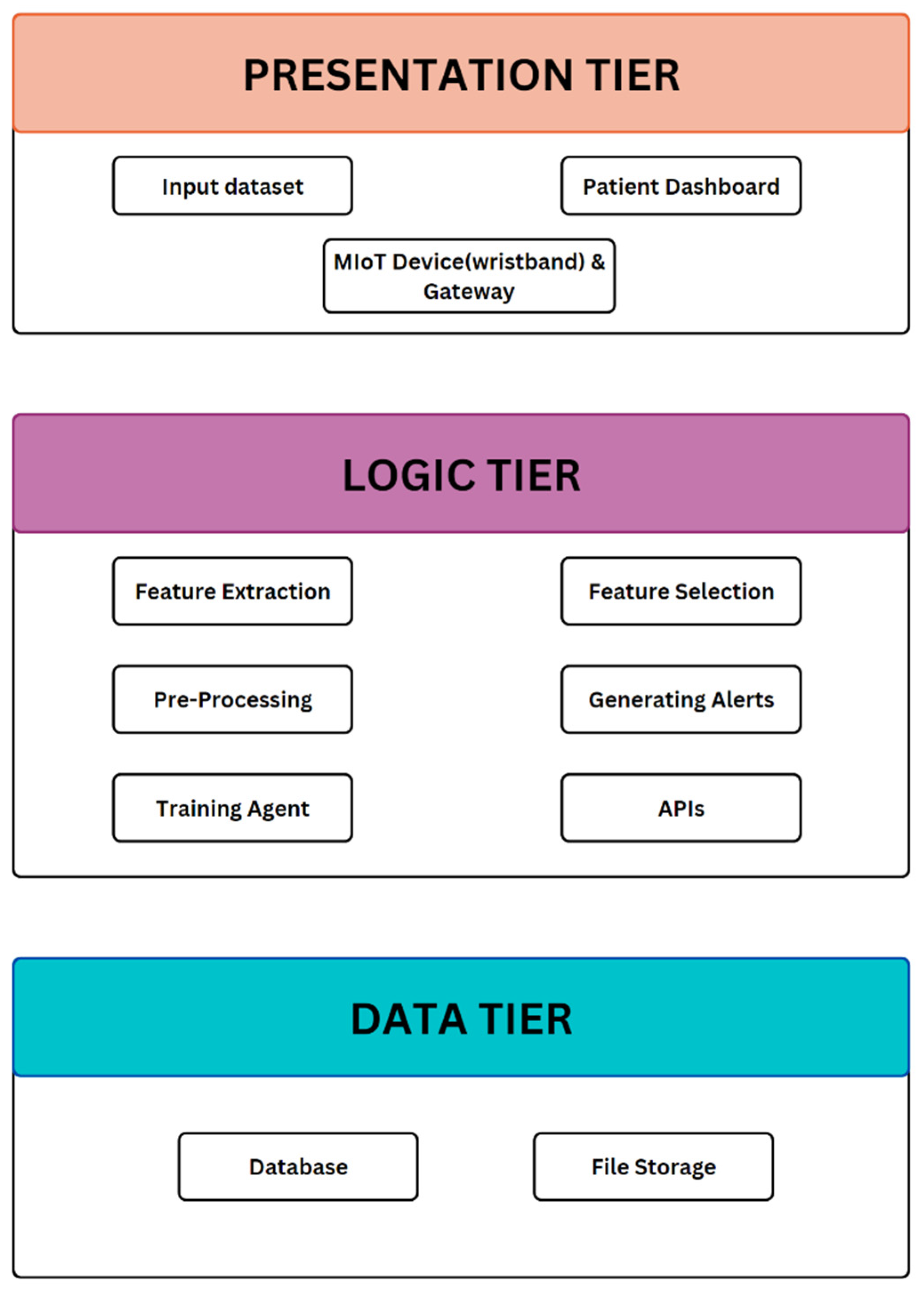
The high-level design of the proposed system is based on the three-tier architecture style which consists of data, logic, and presentation layers. The majority of the research work of this project lies around the logic tier whereas the presentation layer and the data layers are mostly application drive. Figure 5. Shoes the high-level architecture of the proposed system. The architecture follows a modularity approach as much as possible so that several software engineering principles such as coupling, cohesiveness, adaptability and scalability can be used.
The tiers are built in such a way that it reflects a trusted RPM system. The system starts with the data tier which contains the file storage containing the items including the model, the data used to train the model and the data used to test the model. Furthermore, the file storage keeps a record of the current patient’s medical data file which is required through the sensors installed on the patient’s body.
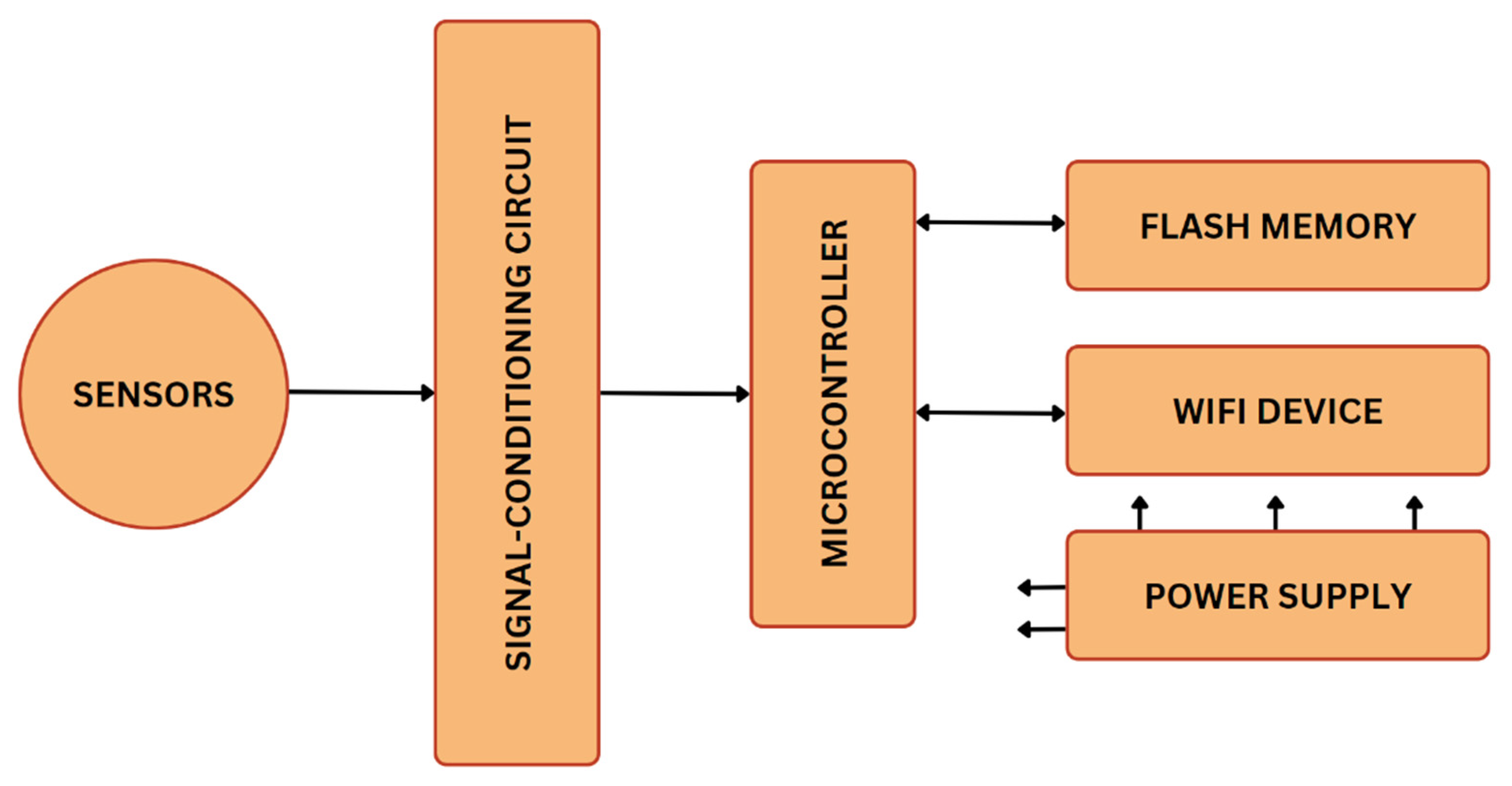
The logic tier performs the business logic of the system. It comprises of a set of rules which pre-processes the patients’ data acquired by the MIoT devices. The sensors acquire the necessary data from the patients’ body, which is then processes by the microcontroller. At the end of this layer, the health data file must be validated before providing the results and this is done by conditioning the data using a signal conditioning circuit to filter any noise signal is present. After validating the data, it is sent to the cloud server using the transmission devise.
The presentation tier contains the basic GUI of the system. After uploading the patients’ data file on the cloud server, the system will show the results of the data analysis and discovered patterns for the medical professionals to make their clinical decisions using the information and graphs provided by the RPM system.
Figure 5.
High Level Architecture of Proposed RPM System.
IV. System Design
This section explain the proposed design of the remote patient monitoring systems presented in this research work. The system starts with the situation where a patient wears a wristband which have the sensors to record different health parameters of the patients and can share the data collected to other electronic devices and can upload it on cloud using the MIoT concept. The wristband connects with the cloud server securely which is also interconnected with the medical professionals. The underlying deep learning algorithm at the cloud server can process the patients’ data as shared by the wristband and can visualize a number of patterns in the data. This process will ultimately make the decision-making process easier for the medical professional.
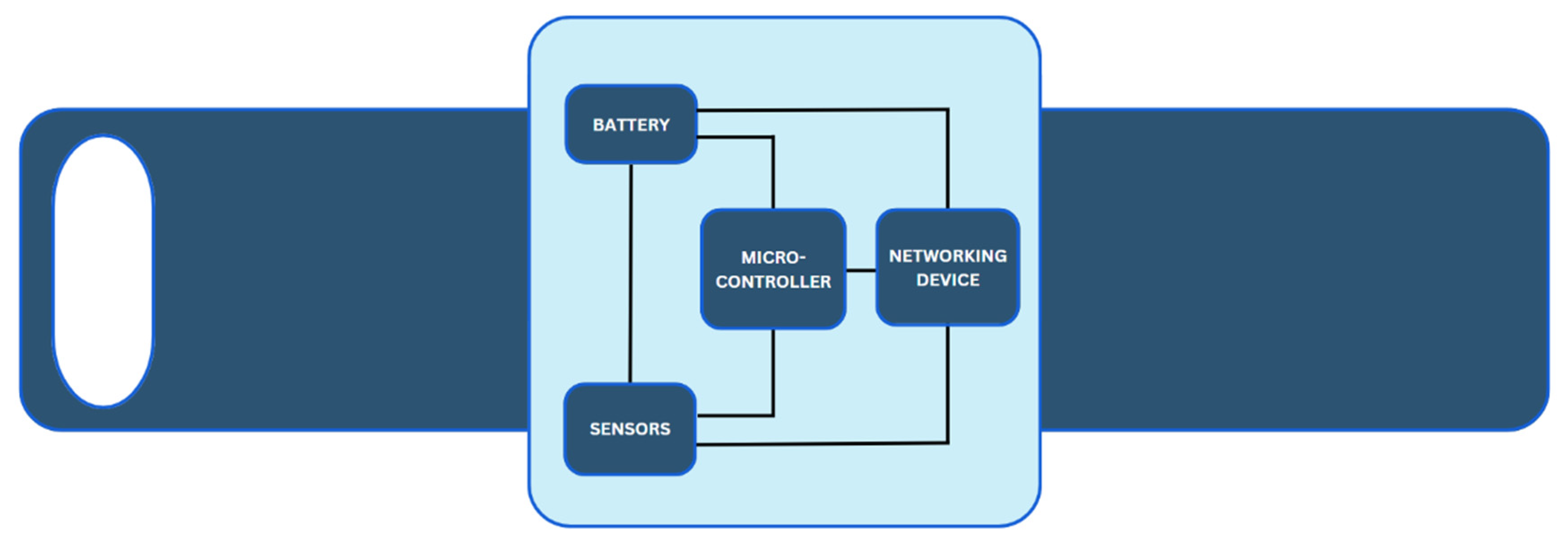
The Figure 7 shows the design of the wristband we are using. It consists of a battery, sensors, a microcontroller and a networking device. The sensors are able to acquire the necessary data from the patients’ body which is then processed by the microcontroller. Subsequently, the data is transmitted to the cloud server through the networking device present in the wristband. The sensors inside the wristband can detect the body temperatures, blood pressure, motion of the patients and gestures of the patients through the wrist motion of the patient wearing the wristband. All the components of the monitoring are chosen with the consideration of a real-time monitoring system.
Figure 6.
Medical Internet of Things.
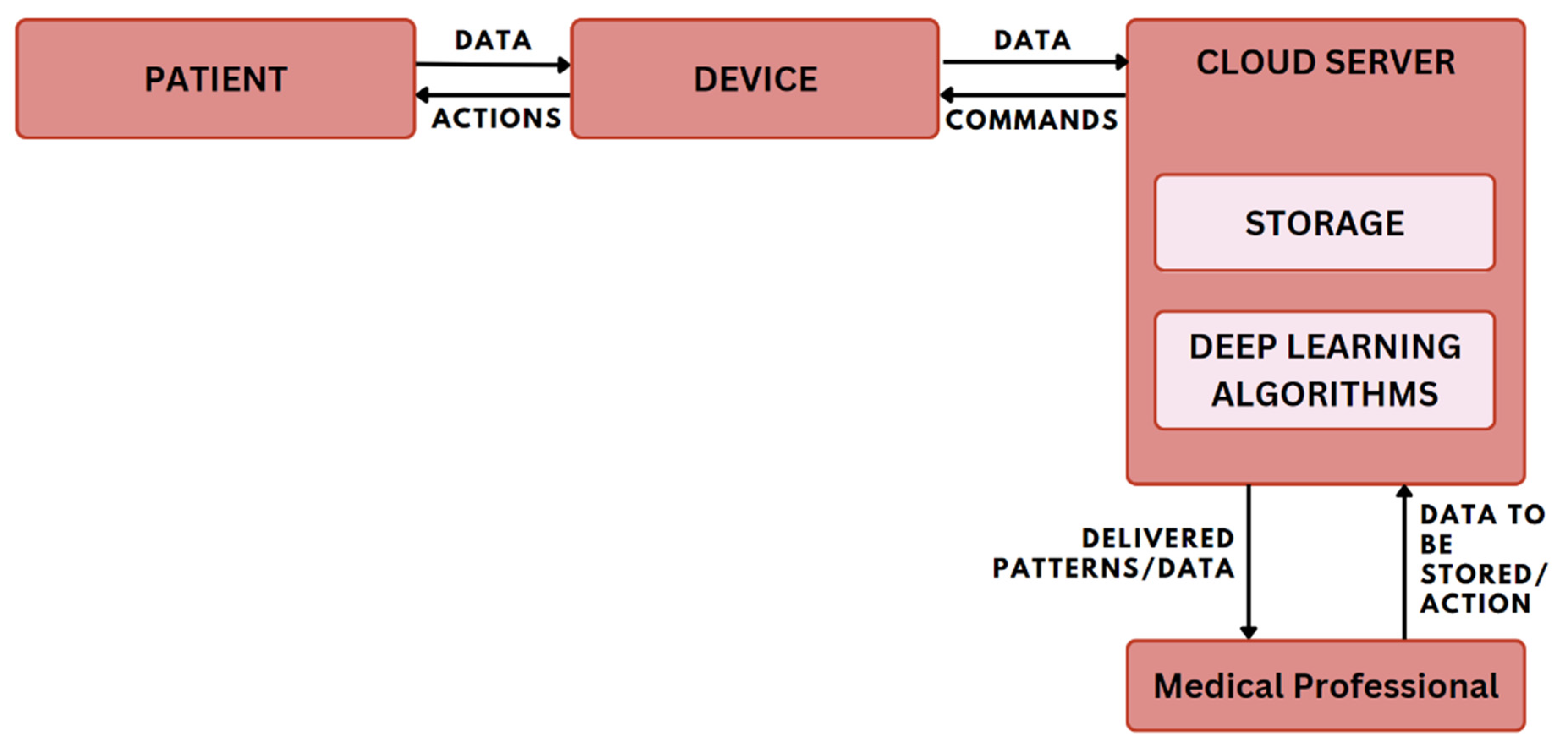
Figure 7.
Design of the Wristband.
Overall system architecture can be observed in Figure 8. It can be seen that sensors acquire the data from patients’ body and then this data is conditioned by using a signal conditioning circuit to filter any noise signals present in the recorded data. Then, the data is sent to the cloud server using the transmission device for further processing, analysis and visualization using the deep learning algorithms and models.
Figure 7.
Design of the Wristband.
7. Discussion
The research project presenting the system architecture of a blockchain, MIoT and Cloud based RPM system have solved many problems present in the existing RPM systems but at the same time have several problems and challenges. Most of the issues solved were addressed easily while some took effort. Some of the main issues and limitations encountered during the research project are listed below.
- The project is directly related to the health sector, the required knowledge was vast as the domain on its own comprises numerous sub-domains and areas. So, due to complexity, identifying the right scope was quiet challenging at the initial stage of the project.
- The scope that was defined initially for this research project is vast as the RPM system contains three main components including the MIoT devices, cloud server and the sensing device (wristband) along with the huge research component on the blockchain network for secure data transferring. Incorporating all these components in this project as a one-stop solution is a difficult task to tackle.
- The knowledge required to develop the actual system was a sheer vast. Understanding the concepts and theories underlying the advanced technologies like Deep Learning and blockchain is utterly challenging in a research project like this one.
Some of the limitations of this project are listed below:
- IoT devices may minimize the cost of patient diagnosis and treatment, however the expense of installing and maintaining these devices is rather substantial.
- Due to the handling of such voluminous data in real-time, there may be accuracy difficulties.
- IoT devices are entirely dependent on power. Without batteries and electricity, these gadgets are merely organ less bodies.
8. Future Work
This research project was defined to achieve a high satisfactory level in designing and presenting a novel system architecture for a Remote Patient Monitoring system based on multiple emerging technologies like Deep Learning, Blockchain, MIoT and Cloud Computing, some of the components of this research project need to be addressed and considered under future enhancement.
- We need to improve the size of the MIoT device by adding more sensors.
- The proposed system needs to support with a web application with multiple options where patients and medical professionals can have more access to patients’ data and can process it in a better way.
9. Conclusion
This research project presents a novel approach to improve the Remote Patient Monitoring. In this project we present a novel system architecture of the RPM device. This system works on various emerging technologies including Deep learning, Blockchain technology, Medical Internet of Things (MIoT), and Cloud computing to collect the patient data using sensors installed in the MIoT devices and transmitting it to the cloud server through a safer blockchain network. The blockchain network is used in the system to ensure the safety of the patient data as it is very sensitive and depicts the patients’ personality and life in a way. The cloud is equipped with the deep learning models which are used to process the transmitted data to generate the visualizations and reports regarding various health parameters of the patients and is sent to the web application dashboard of the patient. This dashboard is accessible to the health professionals which can check the report and graphs through the web application and can take the informed decisions for the good of patients’ health. The proposed system will create a hassle-free environment for medical professionals as well as the patients to diagnose the health issues and diseases faster and better through real time monitoring.
References
- Al-khafajiy, M. et al. (2019) ‘Remote health monitoring of elderly through wearable sensors’, Multimedia Tools and Applications, 78(17), pp. 24681–24706. [CrossRef]
- Arora, S., 2020. Aitude. [Online] Available at: https://www.aitude.com/supervised-vs-unsupervised-vsreinforcement/ [Accessed 30 January 2022].
- Apple Watch, 2022. Apple Watch. [Online] Available at: https://www.apple.com/apple-watch-series-7/.
- Atlam, H. F. et al. (2020) ‘A review of blockchain in internet of things and Ai’, Big Data and Cognitive Computing, 4(4), pp. 1–27. [CrossRef]
- Badr, S., Gomaa, I. and Abd-Elrahman, E. (2018) ‘Multi-tier blockchain framework for IoT-EHRs systems’, Procedia Computer Science, 141, pp. 159– 166. Chatterjee, C. C., 2019. Implementation of RNN, LSTM, and GRU. [Online] Available at: https://towardsdatascience.com/implementation-of-rnn-lstm-and-grua4250bf6c090 [Accessed 12 February 2022]. [CrossRef]
- BCS (2021) ‘Correspondence in connection with this Code of Conduct should be directed to : Customer Service team BCS, The Chartered Institute for IT, 3 Newbridge Square Swindon Email : custsupport@bcs.uk’, (June), pp. 5–9.
- Centers for Medicare & Medicaid Services, 2009. CMS.gov. [Online] Available at: https://www.cms.gov/Medicare/Compliance-and-Audits/Part-A-CostReport-Audit-and-Reimbursement/HITECH-Audits [Accessed 24 November 2021].
- Dana P. Goldman, Baoping Shang, Jayanta Bhattacharya, Alan M.Garber, Michael Hurd, Geoffrey F. Joyce, Darius N. Lakdawalla,Constantijn Panis, and P. G. S. (2017) 'Consequences of Health Trends and Medical Innovation for the Future Elderly', Physiology & behaviour, 176(12), pp. 139–148.
- Department of Census and Statistics, 2020. Department of Census and Statistics. [Online] Available at: http://www.statistics.gov.lk/PressReleases/ComputerLiteracystatistics-2020 Firstsixmonths [Accessed 24 November 2021].
- fitbit, 2022. Fitbit Surge. [Online] Available at: https://www.fitbit.com/pl/shop/surge.
- Gandhi, N. and Mishra, S. (2021) ‘Applications of reinforcement learning for medical decision making’, CEUR Workshop Proceedings, 2872, pp. 164–168.
- Griggs, K. N. et al. (2018) ‘Healthcare Blockchain System Using Smart Contracts for Secure Automated Remote Patient Monitoring’, Journal of Medical Systems, 42(7), pp. 1–7. [CrossRef]
- Grand View Research, 2018. Wearable Sensors Market Worth $2.86 Billion By 2025 CAGR: 38.8%. [Online] Available at: https://www.grandviewresearch.com/press-release/wearable-sensorsmarket# [Accessed 24 January 2022].
- Guk, K. et al. (2019) 'Evolution of wearable devices with real-time disease monitoring for personalized healthcare', Nanomaterials, 9(6), pp. 1–22. [CrossRef]
- Jawbone, 2022. Jawbone. [Online] Available at: https://www.jawbone.com/.
- Jones, L. D. et al. (2018) 'Artificial intelligence, machine learning and the evolution of healthcare: A bright future or cause for concern?', Bone and Joint Research, 7(3), pp. 223–225. [CrossRef]
- Kamiŝalić, A. et al. (2018) ‘Sensors and functionalities of non-invasive wristwearable devices: A review’, Sensors (Switzerland), 18(6). [CrossRef]
- Khan, S. et al. (2020) 'Biometric Systems Utilizing Health Data fromWearable Devices: Applications and Future Challenges in Computer Security', ACM Computing Surveys, 53(4). [CrossRef]
- Malasinghe, L. P., Ramzan, N. and Dahal, K. (2019) 'Remote patient monitoring: a comprehensive study', Journal of Ambient Intelligence and Humanized Computing, 10(1), pp. 57–76. [CrossRef]
- Lakmini P. Malasinghe & Naeem Ramzan & Keshav Dahal. (2017). Remote patient monitoring: a comprehensive study. J Ambient Intell Human Comput. 10. 58-76. 0.1007/s12652-017-0598-x.
- Mahmud, M. et al. (2021) Deep Learning in Mining Biological Data, Cognitive Computation. Springer US. [CrossRef]
- Mark NK Saunders P Lewis A.Thornhill, 2009. Understanding research philosophies and approaches.
- Ministry of Health Sri Lanka (2016) ‘National eHealth Guidelines and Standards - NeGS’, (March), p. 35.
- Moto 360, 2022. Moto 360. [Online] Available at: https://moto360.com/.
- Nix, 2022. Hyperledger Project — Blockchain Technologies Transforming the Business World. [Online] Available at: https://nix-united.com/blog/hyperledger-project-blockchaintechnologies-transforming-the-business-world/ [Accessed 15 January 2022].
- PARLIAMENT OF THE DEMOCRATIC, 2003. CONSUMER AFFAIRS AUTHORITY ACT, No. 9 OF 2003, Sri Lanka: DEPARTMENT OF GOVERNMENT PRINTING, SRI LANKA.
- Pebble Time, 2022. [Online] Available at: https://www.kickstarter.com/projects/getpebble/pebble-timeawesome-smartwatch-nocompromiseshttps://www.kickstarter.com/projects/getpebble/pebble-timeawesome-smartwatch-no-compromises.
- S. Mishra and A. K. Tyagi, 2019. "Intrusion Detection in Internet of Things (IoTs) Based Applications using Blockchain Technolgy,". Third International conference on I-SMAC (IoT in Social, Mobile, Analytics and Cloud) (I-SMAC),, pp. 123-128.
- samsung, 2022. [Online] Available at: https://www.samsung.com/au/.
- Seneviratne, S. et al. (2017) ‘A Survey of Wearable Devices and Challenges’, IEEE Communications Surveys and Tutorials, 19(4), pp. 2573–2620. [CrossRef]
- Srivastava, B., 2021. [Online] Available at: https://www.simplilearn.com/prince2-processes-article [Accessed 27 December 2021].
- techopedia, n.d. techopedia. [Online] Available at: https://www.techopedia.com/definition/21104/object-orientedanalysis-and-design-ooad [Accessed 3 January 2022].
- The Centers for Medicare & Medicaid Services, 1996. CMS.gov. [Online] Available at: https://www.cms.gov/Research-Statistics-Data-andSystems/Computer-Data-and- xxvi Systems/Privacy/Health%20_Insurance_Portability_and_Accountability_Act_of_1 996 [Accessed 24 November 2021].
- tutorialspoint, n.d. tutorialspoint. [Online] Available at: https://www.tutorialspoint.com/object_oriented_analysis_design/ooad_object_orie nted_paradigm.htm [Accessed 3 January 2022].
- Ryu, S. (2012) 'Telemedicine: Opportunities and Developments in Member States: Report on the Second Global Survey on eHealth 2009 (Global Observatory for eHealth Series, Volume 2)', Healthcare Informatics Research, 18(2), p. 153. [CrossRef]
- Yan, S., 2016. Understanding LSTM and its diagrams. [Online] Available at: https://blog.mlreview.com/understanding-lstm-and-its-diagrams37e2f46f1714 [Accessed 13 February 2022].
- Zhu, X. et al. (2017) ‘Intelligent tattoos, patches, and other wearable biosensors’, Medical Biosensors for Point of Care (POC) Applications, pp. 133–150. [CrossRef]
Disclaimer/Publisher’s Note: The statements, opinions and data contained in all publications are solely those of the individual author(s) and contributor(s) and not of MDPI and/or the editor(s). MDPI and/or the editor(s) disclaim responsibility for any injury to people or property resulting from any ideas, methods, instructions or products referred to in the content. |
© 2025 by the authors. Licensee MDPI, Basel, Switzerland. This article is an open access article distributed under the terms and conditions of the Creative Commons Attribution (CC BY) license (http://creativecommons.org/licenses/by/4.0/).
Copyright: This open access article is published under a Creative Commons CC BY 4.0 license, which permit the free download, distribution, and reuse, provided that the author and preprint are cited in any reuse.


