
Submitted:
26 February 2025
Posted:
27 February 2025
You are already at the latest version
Preprints on COVID-19 and SARS-CoV-2
Abstract
The sound level of knowledge, positive attitudes, and good practices of learners towards COVID-19 guidelines play a pivotal role in minimising the spread of COVID-19 and ensuring safe, healthy learning environments. The present study aimed to investigate learners' knowledge, attitudes, and practices towards COVID-19 guidelines at Bushbuckridge Local Municipality, Mpumalanga Province. This study employed a quantitative cross-sectional descriptive design. Two-stage cluster sampling and systematic sampling were used to select respondents in each sampled school cluster. Data was gathered using a questionnaire that was administered to sampled respondents. It was discovered that the majority of secondary school learners have a good level of knowledge towards COVID-19 guidelines. The study also found that the majority of secondary school learners, 77,60% have positive attitudes towards COVID-19 guidelines. The study also discovered that most secondary school learners, 72,26%, have proactive practices towards COVID-19 guidelines. The Department of Basic Education should emphasise integrating health education in schools to enhance the knowledge base of learners on COVID-19 guidelines and COVID-19 in general. Learners need to be continuously educated about hygiene practices and COVID-19 guidelines for readiness and be able to comply during future pandemics.
Keywords:
attitude
; COVID-19
; guidelines
; knowledge
; learners
; practice
1. Introduction
The coronavirus disease (COVID-19), caused by the SARS-CoV-2 virus, emerged in December 2019 in Wuhan, China, and rapidly spread globally, becoming a significant public health crisis [1]. COVID-19 is highly contagious and can lead to severe respiratory illness, particularly in vulnerable individuals, such as the elderly and those with underlying health conditions, including cardiovascular diseases, diabetes, and respiratory disorders [2,3]. Symptoms of COVID-19 can range from mild respiratory discomfort to severe illness, including pneumonia, fever, cough, and loss of smell or taste [3]. In many cases, individuals may recover with or without medical attention, but some experience life-threatening complications, necessitating hospitalisation [4].
In South Africa, the pandemic has had a profound impact, with the country ranking first among the most affected in Africa [5]. As part of efforts to curb the spread of the virus, the South African government imposed a national lockdown on March 26, 2020, resulting in the closure of schools and affecting over 14 million learners [6]. This disruption to education has been particularly challenging for learners in rural areas, such as Bushbuckridge in Mpumalanga Province, where access to resources like information, technology, and healthcare is often limited [7]. Learners in this region have faced not only the direct health risks of COVID-19 but also emotional challenges such as social isolation, fear, and uncertainty, which have impacted their adherence to public health guidelines [7].
Adherence to COVID-19 preventive measures—such as wearing masks, practising physical distancing, and following hygiene protocols—largely depends on an individual’s knowledge, attitudes, and practices (KAP). Studies in other regions have shown that the level of awareness, the positive attitude toward the guidelines, and the proactive engagement of the public play a critical role in reducing the transmission of the virus [8,9]. Among learners, the adoption of these behaviours can significantly influence the spread of COVID-19 in schools and communities [10]. Therefore, exploring how learners in rural areas like Bushbuckridge understand, feel about, and act upon the COVID-19 guidelines is crucial.
Although the pandemic’s impact on education has been widely studied [6,7,10], limited research has been conducted on the KAP towards COVID-19 guidelines among learners in rural South African communities. This study seeks to fill this gap by assessing learners' knowledge, attitudes, and practices in the Bushbuckridge local municipality, Mpumalanga Province, towards COVID-19 guidelines. By understanding how learners in this region engage with public health measures, this research will provide valuable insights into the effectiveness of existing interventions and help inform future strategies for reducing the spread of the virus in schools and communities.
2. Materials and Methods
2.1. Study Setting, Design and Sampling
This descriptive cross-sectional study assessed learners' knowledge, attitudes, and practices regarding COVID-19 guidelines in public secondary schools within the Mkhuhlu Circuit.
Mkhuhlu Circuit is situated within the Bushbuckridge local municipality in Mpumalanga province, South Africa, a predominantly rural area known for its rich cultural heritage and natural beauty [11]. Geographically, it lies in the eastern part of Mpumalanga, nestled between the Lowveld and the scenic Drakensberg mountains [12]. This circuit is home to several public secondary schools catering to a diverse student population, predominantly black South Africans. The area faces socio-economic challenges such as high unemployment rates, limited access to resources, and a reliance on agriculture as the primary source of income for many households [13].
The educational landscape in Mkhuhlu Circuit is marked by efforts to improve literacy and academic performance, despite challenges such as overcrowded classrooms, insufficient teaching materials, and limited access to digital resources [14]. Public secondary schools in the area have become essential community institutions, striving to provide quality education despite these barriers. The learners, often coming from disadvantaged backgrounds, face unique health and social challenges, which the COVID-19 pandemic has exacerbated [15].
A two-stage cluster sampling method was employed due to the geographical spread of the schools, which made it logistically challenging to use a simple random sample. First, six out of ten secondary school clusters in the Mkhuhlu Circuit were randomly selected. Second, within each selected cluster, systematic random sampling was used to select every 23rd learner from the cluster’s pre-existing list of students, which was randomly ordered. This ensured a proportional representation of the learner population from each cluster.
A total of 364 learners (aged 15 to 20) were initially sampled based on this sampling method. The sample size was determined using a Raosoft sample size calculator, with a population size of 6648, a margin of error of 5%, and a 95% confidence level. 364 learners was the optimal number calculated to ensure sufficient statistical power for the study. Of the 364 learners, 357 provided written informed assent or consent to participate, while 7 learners were excluded for not returning their assent or consent forms. Data were collected using a structured questionnaire between July and August 2023.
2.2. Ethical Considerations
Ethical approval for the study was granted by the Human and Clinical Trials Research Ethics Committee (HCTREC) at the University of Venda under the ethical clearance number FHS/23/PH/07/0707. To ensure the integrity of our research, we obtained formal permission from the Mpumalanga Department of Basic Education, along with authorisation from the principals of each participating school.
To protect the rights of all participants, we provided detailed information sheets that clearly outlined the study's purpose, processes, and potential implications. We obtained assent or consent from each participating learner. For participants under 18, we diligently secured consent from their parents or guardians to ensure their involvement was ethical and appropriate.
Throughout the research process, we maintained the highest standards of confidentiality and anonymity. All responses collected were anonymised, and the data were stored securely to protect participants' identities. Our data handling and storage strictly adhered to established ethical guidelines, reflecting our commitment to responsible research practices.
2.3. Data Collection
Materials and Measurements
The research instrument was developed following an extensive literature review, ensuring it captured the essential data on learners’ demographic details and their knowledge, attitudes, and practices regarding COVID-19 guidelines. The questionnaire consisted of several sections explained below:
2.3.1. Demographic Data
The demographic section of the questionnaire collected basic data about the participants, including age, gender and school name.
2.3.2. Knowledge of Learners Towards COVID-19 Guidelines
The respondents’ knowledge of COVID-19 guidelines was assessed using 20 variables. These variables tested their understanding of various aspects of COVID-19, including symptoms, transmission, prevention, and the virus’s general characteristics.
Sample Knowledge Items:
- Have you heard of COVID-19? (Yes=1; No=2)
- From where did you hear about COVID-19? (Radio=1; Internet=2; Newspaper=3; Friends/Family=4; Television=5; Government Enlightenment Campaign=6)
- What causes COVID-19? (Bacteria=1; Fungi=2; Virus=3; I don’t know=4)
- Does eating or contacting wild animals result in COVID-19 infection? (Yes=1; No=2; I don’t know=3)
- Which of the following diseases is similar to COVID-19? (Typhoid=1; Malaria=2; Ebola=3; HIV/AIDS=4; SARS=5; All of the above=6; None of the above=7)
Participants were asked these questions to evaluate their understanding of COVID-19, with possible answers on a binary or multiple-choice scale.
2.3.3. Attitudes Towards COVID-19 Guidelines
The study’s second objective was to determine the learners' attitudes toward implementing COVID-19 guidelines. This section contained six statements, and respondents rated their level of agreement using a three-point Likert scale.
Sample Attitude Items:
- It is important to report suspected COVID-19 cases to health authorities. (Agree=1; Disagree=2; Undecided=3)
- It is important to use a face mask while indoors and in crowded spaces. (Agree=1; Disagree=2; Undecided=3)
- COVID-19 can be treated at home. (Agree=1; Disagree=2; Undecided=3)
The scale was designed to measure whether respondents held positive, negative, or neutral attitudes toward specific COVID-19 guidelines and preventive measures.
2.3.4. Practices Towards COVID-19 Guidelines
This section assessed the practices of learners regarding COVID-19 preventive measures. A 7-item scale was used to evaluate hand hygiene, face mask usage, and social distancing behaviours.
Sample Practice Items:
- Do you use a handkerchief during coughing or sneezing? (Yes=1; No=2; Sometimes=3)
- Do you wash your hands with water and soap regularly? (Yes=1; No=2; Sometimes=3)
- Do you maintain social distancing? (Yes=1; No=2; Sometimes=3)
The Likert scale in this section categorised responses as proactive practices (Yes=1), bad practices (No=2), or inconsistent practices (Sometimes=3).
2.3.5. Data Collection Procedure
Data collection took place during break times and after-school hours at participating schools. This approach ensured minimal disruption to the student’s academic schedules. The researcher distributed the questionnaires to the learners, who were instructed to complete them independently. Assistance was available from the researcher if respondents required clarification on any items.
Before administering the questionnaire, the researcher obtained informed consent and assent from the learners and their guardians. All participants were informed of the study's objectives, and their participation was voluntary.
The completed questionnaires were collected, digitally entered into a database, and coded for further analysis.
3. Results
3.1. Demographic Data
The study included 357 respondents, primarily young individuals aged 15 to 20 years, who comprised 65% of the respondents, and the remaining percentage of respondents were aged 20 years or older, rounding out the age distribution. Gender representation within the study was relatively balanced, with 53% of respondents identifying as female and 47% as male. This parity is essential, as it allowed for a comprehensive exploration of varying perspectives and insights on health issues from both genders, enriching the study's overall findings.
Knowledge of COVID-19:
Overall, learners demonstrated a high level of awareness (87%) regarding the symptoms, transmission, and preventive measures of COVID-19 (Figure 1). However, there were gaps in their knowledge in certain areas, indicating that further education may be necessary. Notably, 17% of respondents were uncertain about the causes of COVID-19, highlighting a knowledge gap that could be addressed through educational initiatives. Additionally, 62% of respondents compared COVID-19 to the flu, suggesting a tendency to view the virus as similar to other familiar respiratory illnesses. Interestingly, only 2% of respondents disagreed with the idea that handwashing is an effective preventive measure, demonstrating a general acknowledgement of hygiene practices in combatting the spread of illness.
Television (TV) emerged as the most frequently accessed source for COVID-19 information, with 73% of individuals reporting it as a reliable medium. In contrast, radio was the least accessed, with only 1% of people turning to it for information, while newspapers garnered even less attention, accounting for just 0%. Both radio and newspapers were generally considered unreliable sources during the pandemic (see Figure 2).
Symptoms: Most learners demonstrated a solid understanding of COVID-19 by correctly identifying some of its most commonly recognised symptoms, such as fever, reported by 70%, and shortness of breath, noted by 61%. However, it is concerning that more than half of the respondents (>50%) failed to identify other prevalent symptoms like coughing, runny nose, and fatigue. Additionally, they were unaware of less common manifestations, such as the loss of taste or smell (refer to Table 1). This knowledge gap suggests that while specific core symptoms have gained wide acknowledgement, a significant misunderstanding or lack of awareness about the full spectrum of COVID-19 symptoms exists, particularly among younger individuals. This highlights the need for improved education and awareness campaigns to ensure everyone is well-informed about the various signs of the virus.
Transmission: Most learners (64%) correctly understood that COVID-19 spreads through respiratory droplets. Nearly 10% of the participants were unaware of how COVID-19 is transmitted, while 13% incorrectly believed it could be spread through insects (see Table 2). This reveals a misunderstanding about non-respiratory transmission routes, indicating a need for clearer public health messaging regarding modes of disease transmission.
Preventive Measures Adherence: A significant majority of participants (89%) demonstrated awareness of and adherence to the government's COVID-19 preventive measures. Among these, the most widely followed measures included regular handwashing with soap and water (87%), maintaining social distancing (73%), and wearing face masks in public settings (71%), as illustrated in Figure 3). Over 80% of participants also identified avoiding crowded places and self-isolation as key strategies for preventing the spread of the virus.
However, a notable concern emerged regarding age-based misconceptions. Nearly 35% of participants believed that children and young adults did not need to adhere to preventive measures, which suggests a misunderstanding of the virus's impact across different age groups (see Table 3).
Equally concerning was the finding that none of the participants recognised the importance of proper ventilation in minimising transmission risks. This lack of awareness represents a critical knowledge gap that could be addressed through targeted educational campaigns to improve public understanding of all aspects of COVID-19 prevention.
3.3. Attitudes Towards COVID-19 Guidelines
Learners generally displayed positive attitudes toward COVID-19 prevention measures, although there was some variability based on personal experiences with the virus. Those who had experienced COVID-19 directly, whether through their own illness or by witnessing its effects on a family member or close friend, tended to have a more favourable view of these preventive measures. Their firsthand observations of the virus's impact influenced their perspective on the importance of protecting against it.
Support for Guidelines: A majority of learners (>70%) expressed strong support for key preventive measures such as wearing masks (89%) and practising social distancing (68%%). These results suggest that the learners’ attitudes align with public health recommendations, a positive indicator of their potential adherence to guidelines.
Perceived Efficacy: Despite supporting the guidelines, there was some uncertainty regarding their effectiveness. Approximately 22% of learners believed wearing a mask was less effective than staying at home and avoiding crowded places (5%), showing a lack of confidence in the protective benefits of masks. This could reflect misinformation or a lack of trust in health authorities, which could be addressed through more engaging and clear public health campaigns.
Social Responsibility: Learners’ attitudes toward their social responsibility were mixed. While a majority agreed on the importance of following COVID-19 guidelines to protect others—such as reporting suspected cases (74%)—a significant number of students (59%) believed COVID-19 could be treated at home. Some participants felt that children and young adults were not at risk (35%) and considered restrictions like lockdowns and social distancing overly burdensome, particularly among older adolescents. This divergence suggests that while most learners recognise the importance of the guidelines, some may feel fatigued by the prolonged nature of the pandemic and its restrictions.
Practices in Adhering to COVID-19 Guidelines
In terms of actual behaviour, learners reported good adherence to some preventive measures (>68%). However, there were notable areas where practices were less consistent, such as wearing a mask (22%) and maintaining a 2 feet distance (20%).
Mask-Wearing and Social Distancing: Most learners (77%) reported wearing masks in public places, and a similar proportion (68%) practised social distancing. These results suggest that learners are mainly adhering to these basic protective measures. However, adherence was lower in social settings (21%), where some learners felt masks were unnecessary, indicating that contextual factors influence compliance.
Hand Hygiene: A significant 98% of learners acknowledged the vital role of handwashing in preventing the spread of the virus, underscoring its importance as a health measure. Despite this awareness, only 87% reported consistently practising hand hygiene, primarily through handwashing alone. Alarmingly, 24% admitted to neglecting to sanitise their hands after touching public surfaces, such as doorknobs, elevator buttons, and shopping carts. This reveals a critical gap between knowledge and practice; understanding the importance of these preventative measures does not ensure consistent adherence. To address this issue, implementing regular reminders and ongoing educational initiatives could significantly improve compliance and foster safer hygiene habits among learners.
Avoiding Crowded Spaces: Among learners, there was a noticeable inconsistency in their efforts to steer clear of crowded areas. Approximately 5% admitted that they occasionally found themselves in these bustling environments. In comparison, a concerning 10% expressed a sense of indifference, even though they recognised that their actions heightened their risk of exposure to various health threats (Figure 5). This observation highlights that, while learners may possess strong knowledge and awareness of the dangers, their ability to change behaviours is often compromised by external influences, such as societal pressures to engage in social activities or a lack of enforcement of safety measures.
4. Discussion
This study assessed the knowledge, attitudes, and practices (KAP) of secondary school learners in the Bushbuckridge Local Municipality, Mpumalanga Province, regarding COVID-19 guidelines. Overall, learners demonstrated a strong awareness of COVID-19 and generally positive attitudes toward preventive measures. However, notable gaps were identified in their knowledge of specific symptoms and certain transmission aspects, highlighting areas for targeted educational interventions.
Learners exhibited a high level of general COVID-19 awareness (87.11%), consistent with findings from other studies conducted during the pandemic [16,17]. Television emerged as the primary information source (73.11%), mirroring trends observed in India, where media outlets played a significant role in disseminating information [17]. This reliance on television underscores its potential as a key channel for future health communication efforts.
While learners understood the primary modes of transmission, such as close contact (66.11%) and respiratory droplets (63.59%), significant knowledge gaps existed regarding specific symptoms. Over half of the respondents were unaware that symptoms like dry cough, runny nose, muscle pain, and fatigue are associated with COVID-19 [18]. This contrasts with other studies that have emphasised these symptoms [16,19]. This lack of awareness could hinder early detection and isolation efforts, potentially contributing to the virus's spread. It's possible that the emphasis on fever and shortness of breath in initial public health campaigns overshadowed the importance of recognising these milder yet common symptoms.
The study revealed positive attitudes toward COVID-19 prevention measures, with a majority (91.32%) supporting mask-wearing in indoor and crowded spaces. This aligns with findings from Ferdous et al. [16], indicating a general acceptance of and willingness to comply with public health recommendations. Furthermore, most learners recognised the crucial role of health education (79.27%) and hand hygiene (88.52%) in preventing the spread of the virus, reinforcing the need for continued educational initiatives.
In terms of practices, learners reported actively following several COVID-19 guidelines. A significant proportion used handkerchiefs when coughing or sneezing (62.46%) and practised regular handwashing (87.11%), consistent with findings from studies in Bangladesh [16]. Mask-wearing at school was also prevalent (71.43%). However, a concerning number of learners (64.87%) were inconsistent in avoiding touching their faces, a key behaviour for reducing viral transmission [20]. This highlights the challenge of translating knowledge and positive attitudes into consistent practice, suggesting that interventions should focus on behaviour reinforcement techniques.
Several specific knowledge gaps warrant attention. Only 46% of learners were aware that asymptomatic individuals could transmit COVID-19, contradicting findings that highlight asymptomatic transmission as a major factor in the pandemic [20]. Additionally, only 52% correctly understood that contact with animals does not lead to COVID-19 infection, despite clear guidance from organisations like the WHO [21]. These misconceptions could be due to evolving scientific understanding during the pandemic or to the spread of misinformation. Targeted educational campaigns are crucial to address these gaps and ensure learners have accurate information.
This study has some limitations. The cross-sectional design limits our ability to infer causality. Additionally, the data is self-reported, which may be subject to social desirability bias. Future research could employ longitudinal designs and incorporate observational data to provide a more comprehensive understanding of learners' KAP over time.
In conclusion, this study underscores the importance of strengthening health education efforts to enhance COVID-19 prevention among secondary school learners in Bushbuckridge Local Municipality. While learners demonstrated good knowledge of preventive measures and positive attitudes towards health guidelines, notable gaps remain in their understanding of COVID-19 symptoms and the risks of asymptomatic transmission. Public health campaigns have made significant strides, particularly through media platforms like television, but targeted interventions are still needed to address these gaps. Educational efforts should focus on reinforcing accurate knowledge of symptoms, correcting misconceptions about transmission, and promoting consistent preventive practices, particularly in social settings. By addressing these knowledge gaps and leveraging media outlets for wider reach, we can better protect learners and the broader community from future outbreaks.
Author Contributions
For research articles with several authors, a short paragraph specifying their individual contributions must be provided. The following statements should be used “Conceptualization, Sibuyi Ribbon and Manganye Bumani S; methodology, Sibuyi Ribbon, Manganye Bumani S and Mukoma Goodman G; software, Sibuyi R.; validation, Sibuyi Ribbon, Manganye Bumani S and Mukoma Goodman G; formal analysis, Sibuyi R.; investigation, Sibuyi R.; resources, Sibuyi Ribbon, Manganye Bumani S and Mukoma Goodman G; data curation, Sibuyi R; writing—original draft preparation, Sibuyi R; writing—review and editing, Sibuyi Ribbon, Manganye Bumani S and Mukoma Goodman G.; visualization, Sibuyi Ribbon, Manganye Bumani S and Mukoma Goodman G; supervision, Manganye Bumani S; project administration, Sibuyi R; funding acquisition, N/A. All authors have read and agreed to the published version of the manuscript.” Please turn to the CRediT taxonomy for the term explanation. Authorship must be limited to those who have contributed substantially to the work reported.
Funding
This research received no external funding.
Institutional Review Board Statement
The study was conducted in accordance with the Declaration of Helsinki and approved by the Research Ethics Social Sciences Committee (RESSC) of the UNIVERSITY OF VENDA (protocol code FHS/23/PH/07/0707 approval date of 2023 July 07).
Informed Consent Statement
Informed consent was obtained from all subjects involved in the study.
Data Availability Statement
The data presented in this study are available on request from the author.
Conflicts of Interest
The authors declare no conflicts of interest.
References
- World Health Organisation., Coronavirus disease 2019 (COVID-19): situation report, 73. 2020.
- Cabrera Martimbianco, A.L., et al., Frequency, signs and symptoms, and criteria adopted for long COVID-19: A systematic review. International journal of clinical practice, 2021. 75(10): p. e14357. [CrossRef]
- da Rosa Mesquita, R., et al., Clinical manifestations of COVID-19 in the general population: systematic review. Wiener klinische Wochenschrift, 2021. 133(7): p. 377-382. [CrossRef]
- Tofiq, A., et al., Physical functioning post-COVID-19 and the recovery process: a mixed methods study. Disability and Rehabilitation, 2024. 46(8): p. 1570-1579. [CrossRef]
- Lone, S.A. and A. Ahmad, COVID-19 pandemic–an African perspective. Emerging microbes & infections, 2020. 9(1): p. 1300-1308.
- Van der Berg, S. and N. Spaull, COVID-19 school closures in South Africa and its impact on children. South African journal of childhood education, 2020. 10(1): p. 1-13.
- Landa, N., S. Zhou, and N. Marongwe, Education in emergencies: Lessons from COVID-19 in South Africa. International Review of Education, 2021. 67(1): p. 167-183. [CrossRef]
- Masoud, A.T., et al., KAP-COVIDGLOBAL: a multinational survey of the levels and determinants of public knowledge, attitudes and practices towards COVID-19. BMJ open, 2021. 11(2): p. e043971. [CrossRef]
- Kumar, B., S.D. Pinky, and A.M. Nurudden, Knowledge, attitudes and practices towards COVID-19 guidelines among students in Bangladesh. Social sciences & humanities open, 2021. 4(1): p. 100194. [CrossRef]
- Mukoma, G., et al., ‘We were not allowed to gather even for Christmas.’Impact of COVID-19 on South African young people: Exploring messaging and support. Global Public Health, 2023. 18(1): p. 2264968. [CrossRef]
- Mokgosi, M. and S. Sibiya, The rural-urban divide and education in South Africa: A study on rural education in Mpumalanga province. Journal of Rural Education, 2019. 25(2 ): p. 123-136.
- Mkhuhlu Local Municipality., Bushbuckridge Local Municipality Integrated Development Plan 2021/2022. 2021: Retrieved from https://www.bushbuckridge.gov.za/documents/category/idp-reports.html.
- StatsSA., Poverty and unemployment statistics in South Africa: A look at rural areas. 2021: Pretoria: Statistics South Africa.
- Department of Basic Education., Annual Report on the state of education in South Africa. 2020: Pretoria: Department of Basic Education.
- Mkhuhlu District Health Report., Community health and COVID-19 prevention in Mkhuhlu District, Department of Health., Editor. 2021: Mpumalanga Province.
- Ferdous, M.Z., et al., Knowledge, attitude, and practice regarding COVID-19 outbreak in Bangladesh: A cross-sectional study. Journal of Global Health, 2020. 10(2): p. 203-57.
- Prasad Singh, D., P. Ranjan, and R. Kumar, Knowledge, attitudes, and practices of university students regarding COVID-19 in India. Journal of Education and Practice, 2020. 11(30): p. 35-42.
- Kumar, M.S., T. Pinky, and F. Nurudden, Students' responses to statements regarding knowledge of COVID-19 guidelines: A study in Bangladesh. . BMC Public Health, 2021. 21(1): p. 230.
- Ahmed, M., et al., Knowledge, attitude, and practice of university students towards COVID-19 in Sudan. Journal of Public Health, 2022. 40(2): p. 342-348.
- Doan, D.H., et al., A cross-sectional study on the knowledge, attitudes, and practices of Vietnamese university students during the COVID-19 pandemic. International Journal of Public Health, 2022. 67(1): p. 61-68.
- World Health Organisation (WHO). Coronavirus disease (COVID-19) advice for the public: Mythbusters. 2020: Retrieved from https://www.who.int.
Figure 1.
Learners' Awareness of COVID-19.
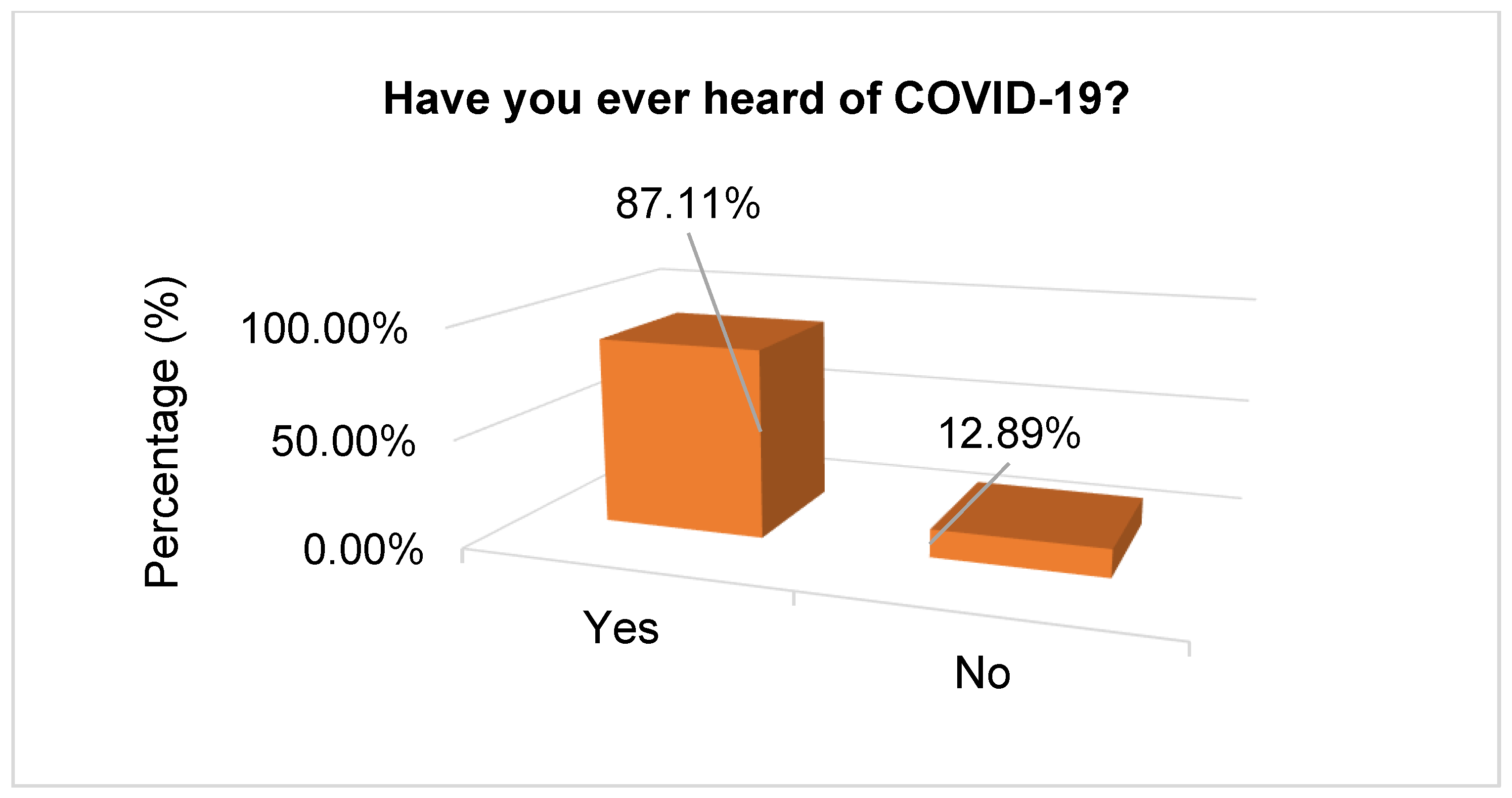
Figure 2.
Most Common Sources Learners Used for COVID-19 Information.
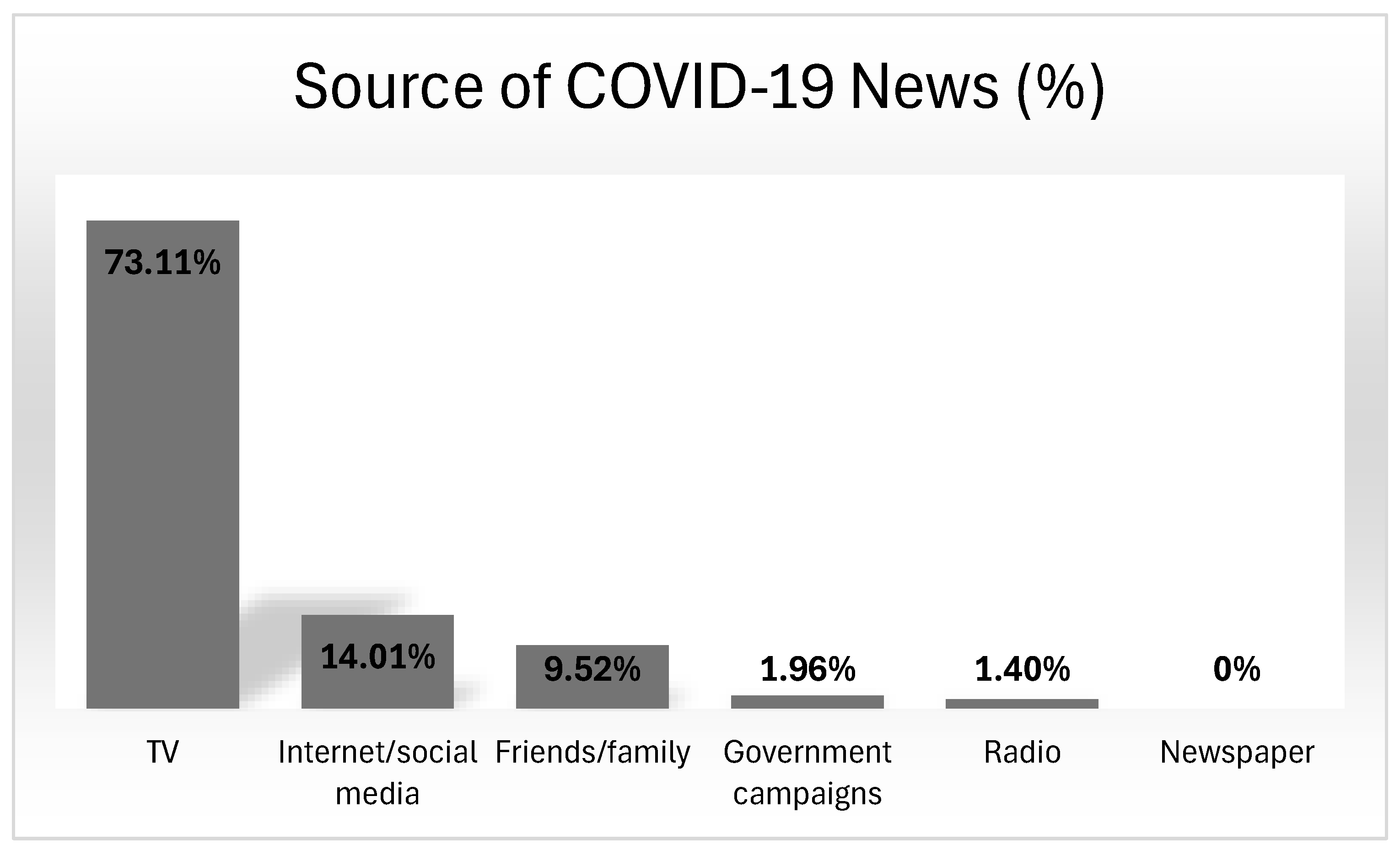
Figure 3.
Learners Adherence to COVID-19 prevention measures.
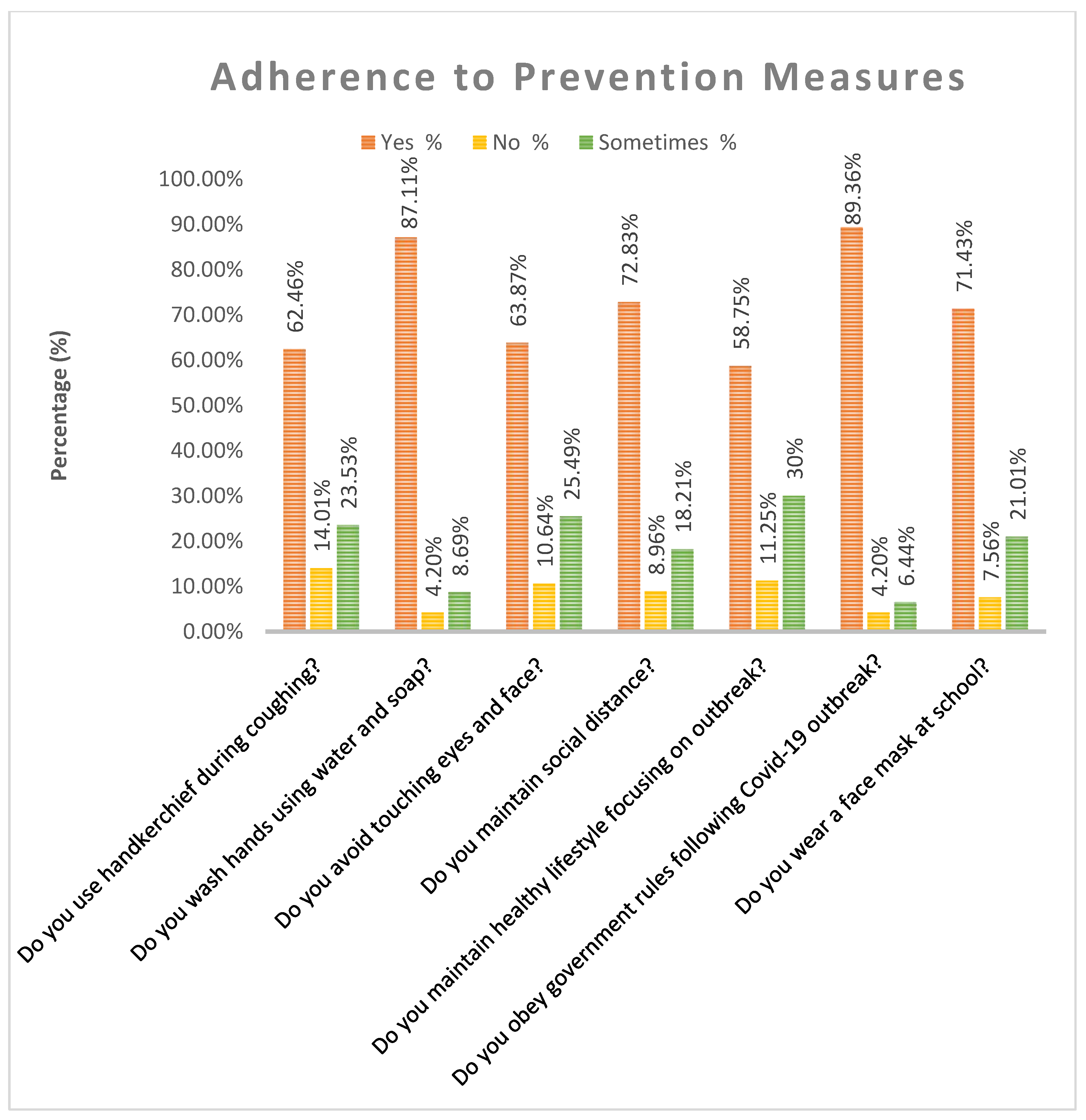
Figure 5.
Learners Attitudes Towards COVID-19 Guidelines.
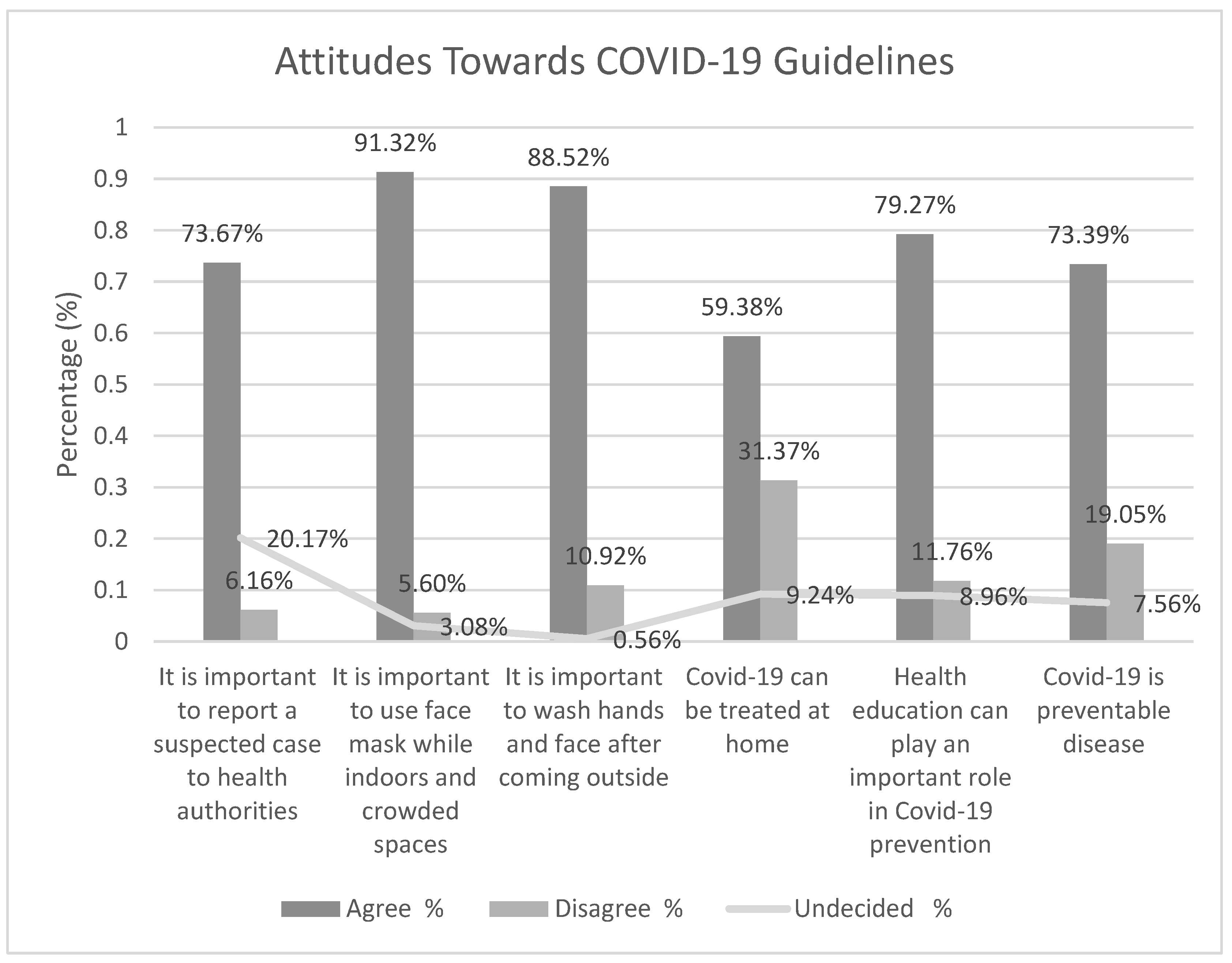

Table 1.
Knowledge of COVID-19 Symptoms.
| COVID-19 Symptoms | Selected | Not selected | ||
|---|---|---|---|---|
| Frequency (n) | Percentage (%) | Frequency (n) | Percentage (%) | |
| High Fever | 250 | 70,03% | 107 | 29,97% |
| Shortness of Breath | 219 | 61,34% | 138 | 38,66% |
| Coughing | 175 | 49,02% | 182 | 50,98% |
| Runny Nose | 111 | 31,09% | 246 | 68,91% |
| Muscle Pain | 63 | 17,65% | 294 | 82,35% |
| Fatigue | 58 | 16,25% | 299 | 83,75% |
| Bleeding | 28 | 7,84% | 329 | 92,16% |
Table 2.
Learners' knowledge of modes for spreading COVID-19.
| How COVID-19 Spreads | Selected | Not Selected | ||
|---|---|---|---|---|
| Frequency (n) | Percentage (%) | Frequency (n) | Percentage (%) | |
| Contact with an infected person | 236 | 66,11% | 121 | 33,89% |
| Air droplets | 227 | 63,59% | 130 | 36,41% |
| Contact with contaminated surfaces | 94 | 26,33% | 263 | 73,67% |
| Mosquitoes/flies | 48 | 13,45% | 309 | 86,55% |
| I do not know | 35 | 9,80% | 322 | 90,20% |
Table 3.
Steps to Take to Prevent COVID-19 Infection or Transmission.
| Agree | Disagree | Not concerned | ||||
|---|---|---|---|---|---|---|
| Actions | Frequency (n) | Percentage (%) | Frequency (n) | Percentage (%) | Frequency (n) | Percentage (%) |
| Adults with chronic diseases must take precautions | 254 | 71,15% | 26 | 7,28% | 77 | 21,57% |
| Avoiding crowded places | 303 | 84,87% | 19 | 5,32% | 35 | 9,80% |
| Self-isolation when infected | 288 | 80,67% | 30 | 8,40% | 39 | 10,92% |
| Children and young adults do not need to be compliant. | 124 | 34,73% | 209 | 58,54% | 24 | 6,72% |
| Wearing surgical mask | 276 | 77,31% | 77 | 21,57% | 4 | 1,12% |
| Maintaining 2 feet distance | 243 | 68,07% | 72 | 20,17% | 42 | 11,76% |
Disclaimer/Publisher’s Note: The statements, opinions and data contained in all publications are solely those of the individual author(s) and contributor(s) and not of MDPI and/or the editor(s). MDPI and/or the editor(s) disclaim responsibility for any injury to people or property resulting from any ideas, methods, instructions or products referred to in the content. |
© 2025 by the authors. Licensee MDPI, Basel, Switzerland. This article is an open access article distributed under the terms and conditions of the Creative Commons Attribution (CC BY) license (http://creativecommons.org/licenses/by/4.0/).
Copyright: This open access article is published under a Creative Commons CC BY 4.0 license, which permit the free download, distribution, and reuse, provided that the author and preprint are cited in any reuse.


