

Submitted:
25 February 2025
Posted:
26 February 2025
You are already at the latest version
Abstract
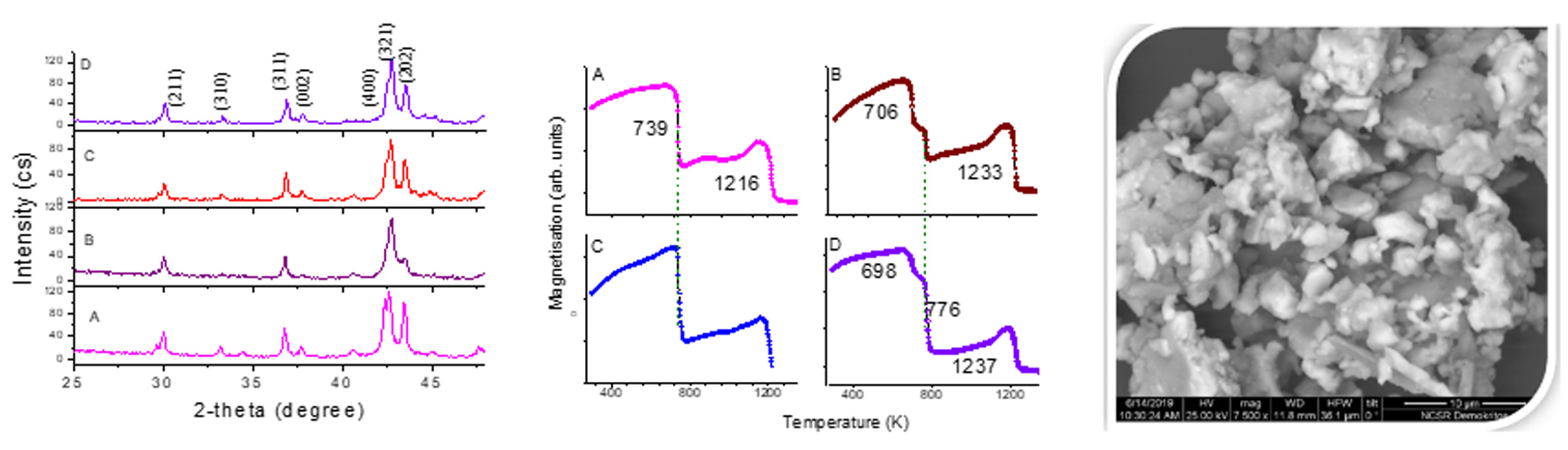
The tetragonal R1-xZrx (FeCo)11Ti alloys, where R is a rare earth and T is a transition metal, are promising candidates for permanent magnets. Sm1-xZrx(Fe0.8Co0.2)12-yTiy (x=0 and 0.25; y=1 and 0.7) master alloys were prepared by arc-melting under argon atmosphere. The two samples with an atomic amount of Ti equal to 1 are almost single-phase 1:12 compounds with a small amount of a-Fe(Co), while after the replacement of Sm with Zr a third phase of the TbCu7 type appeared in the other two samples. The as-cast ingots were milled using high-energy ball milling (HEBM) for different times in an argon atmosphere then annealed at 973K-1173K at different interval times (15-90 min. After annealing, the sample milled for 4 h contains a large variation of grain size from 2-4 μ to 20 μ or larger. While the others sample milled for 8 h, after annealing exhibits grains size in the range of 2-6 μ, therefore their coercivity is higher, reaching a maximum value of 5.5 kOe for SmFe9Co2Ti annealed at 1123K for 60 min. Coercivity was strongly affected by the annealing temperature and time. The microstructure evolution with emphasis on the particles size during annealing and their correlation with coercivity will be discussed.
Keywords:
Rare earth permanent magnets
; high energy ball-milling
; magnetic properties
; crystal structure
1. Introduction
The challenging, world-wide environmental problems are the main driving factor of a series of important technological advances. Sustainable transportation and effective electricity production like offshore wind generators have skyrocketed the demand for materials suitable for permanent magnets (PM). Extensive demand induces challenges in production and supply channels making necessary the development of new materials, especially with low content in critical raw metals like the rare earths (RE) or other important ones like Co [1,2,3,4,5].
The tetragonal ThMn12-type alloys with nominal composition R(Fe,T)12, where R is a rare-earth atom and T is a transition metal atom, are excellent candidates for permanent magnets due to their high Curie temperature, large magnetization, and strong uniaxial magneto-crystalline anisotropy, as well as of low RE content compared to other magnetic alloys. Magnetization and intrinsic anisotropy outperform well established magnetic materials and Curie temperatures are high enough even close to 600 K, establishing a working temperature higher than that of Nd2Fe14B without the need of doping with heavy RE atoms [6,7,8]. Coercivity values above 10 kOe (μ0H 1 T) have been observed [9] and the fact that all these properties are combined with the largest T/RE ratio in the relevant families of compounds explains why these alloys are on the focus of scientific research in recent years [10,11].
SmFe12 binary alloy is thermodynamically unstable but the addition of a transition element T (T = Ti, Mo, V, Al, Si, Ga) may assist in stabilizing the tetragonal structure for the RFe12-xTx series, with Ti being the most favored element. However, these additions result in a decline of the magnetic properties [12,13,14,15,16,17,18,19]. This has led to investigations for achieving minimal use of Ti in SmFe12 based compounds as those reported in [16,20]. Another prominent path is by replacing Fe with Co, it is well known that this specific substitution affects both stability and the magnetic properties of the RE-T intermetallics so it has the potential to stabilize the tetragonal 1:12 phase. The 3d magnetocrystalline anisotropy constant remains uniaxial for relatively small Co replacement for Fe and room temperature K1 reaches about 0.9 ΜJm-3 [19]; with up to 20% Co replacement for Fe anisotropy does not affect anisotropy field significantly while at the same time the magnetization is improved. The maximum magnetization of the -non-existing in bulk- theoretical compound SmFe12 could be as high as 160 Am2/kg [20]. In an early survey of SmTiFe11-xCox alloys reported by S. F. Cheng et al. [21] it was found that the tetragonal phase could be stabilized for x ≤ 2 while maintaining the easy magnetization direction along the c-axes. This is important since it is very often in these systems that Co favors a different type of magnetocrystalline anisotropy. For replacement beyond x = 2, other phases such as 2:17 usually appear while the magnetic moments are canted in a conical arrangement [21]. Hirayama et al. have reported that ThMn12 type structure can also be stabilized by Co addition in epitaxially grown thin films with nominal composition Sm(Fe0.8Co0.2)12 [22]. Furthermore, they found that the intrinsic hard magnetic properties were superior even to those of Nd2Fe14B with a Curie temperature of (859 K), an anisotropy field of 1.2 T, and a spontaneous magnetization of 1.78 T. There are also many reports on Sm(FeT)12 (T= Ti, Mo, V, Al, Si, Ga) alloys and their ribbons produced by melt-spinning or strip flakes, as well as the their isotropic powders that were produced by rapid solidification or mechanical alloying [9,11,13,14,15,23,24,25,26]. Because of their low remanent magnetization, these isotropic powders need more improvements in processing in order to be used as a basis for PM applications. There are also reports on nanocomposite powders for Sm(FeCoT)12 alloys. Additionally the effect of particle size on the thermal decomposition of powders with nominal composition Sm(Fe0.8Co0.2)11Ti, Sm(Fe0.8Co0.2)10VTi, Sm(Fe0.8Co0.2)10.5Ga0.5Ti and Sm(Fe0.8Co0.2)10.5Cu0.5Ti, which were prepared by jet-mill and then were annealed is reported as well as the case of annealed Sm8Fe73.5Ti8V8Ga0.5Al2 alloy. The latter was pulverized using the nitrogen jet-milling process, obtaining particles with an average size of 2-5 µm, and then the sintering process was followed. The importance of the type and the concentration of the additional stabilizing T elements is also outlined [26,27].
It was observed a very interesting result after substitution of Sm by Zr, which can improve the magnetic properties under certain conditions. Zr is known for its ability to substitute for both RE or T atoms in similar compounds, in these ThMn12-based tetragonal alloys the partial substitution of Sm for Zr stabilizes the structure of Sm(FeCo)12 alloys [20]; surprisingly the saturation magnetization increases further for the case of Sm0.74Zr0.26(Fe0.8Co0.2)12 compound reaching a value of μ0Ms = 1.9 T [20,28,29], which is the largest saturation magnetization ever achieved in such intermetallic alloys. Yao et al. measured lower magnetization close to μ0Ms = 1.4 T but with very high anisotropy constants (K1 = 3.04 MJm-3, K2 = 0.57 MJm-3) and increased Curie temperature close to 675 K in ribbons of nominal composition Sm0.74Zr0.26(Fe0.8Co0.2)12 [31].
This path was further exploited in literature, rapidly quenched materials produced by either by the melt spinning technique with nominal stoichiometry (SmR)(FeCo)12-xTix (R=Y, Zr) or the strip-casting method of (R,Zr)(Fe,Co)12-xTix (R = Nd and Sm) alloys [30,31,32,33] were also used to produce materials with interesting magnetic properties. The advancement of computational tools has also led to relevant contributions where Zr was also found to positively affect magnetization as in other, previously reported cases [28,34,35,36]. Additionally, the thermodynamic stability of the Fe rich compounds can be improved using the multi-element alloying approach, which can also minimize the degradation of magnetic properties [20,33,37,38].
Following the specific improvement path, a few years ago we had presented preliminary results of high-energy ball milled (HEBM) of Sm1-xZrx(Fe0.8Co0.2)12-yTiy (x=0 and 0.25; y=1 and 0.7) materials [39]. Partial substitution of Sm with Zr significantly improves the properties of these compounds and their potential for applications as PM [11]. While Ti is very effective element to thermodynamically stabilize the tetragonal structure, it has the drawback that it degrades the magnetic properties [12]. Introduction of Zr may assist in stabilizing the structure while reducing Ti content [31]. Kobayashi et al. explained this stabilizing effect by examining the average Fe-Fe interatomic distances at Fe(8i), Fe(8j), and Fe(8f) sites. They have observed that the iron atoms in 8i positions are arranged in a distance very large than their atomic radii; larger Ti atoms may provide a way to accommodate the parge interatomic distance and make the metallic hybridization possible. Incorporation of Zr, which is smaller than Sm, may assist in that direction [33].
It is evident that the specific system has large potential. In the present study we extend the previous work by providing a wider view of HEBM powders of Sm(Fe, Co, Ti)12 alloys doped with Zr, focusing on the effect of annealing conditions of powders on microstructure and magnetic properties.
2. Materials and Methods
Sm1-xZrx(FeCo)12-yTiy (, x=0 and 0.25; y=1 and 0.7) alloys were prepared by arc-melting in a high purity argon atmosphere and with excess Sm content to compensate for evaporation during melting. The nominal composition of the first two series of alloys were SmFe9Co2Ti (A-series) and SmFe9.04Co2.26Ti0.7 (B-series) respectively. For the other two alloys we have partially substituted Zr for Sm and the nominal composition was Sm0.75Zr0.25Fe9Co2Ti (C-series) and Sm0.75Zr0.25Fe9.04Co2.26Ti0.7 (D-series). Parts from all sample series were mechanically treated in a high energy ball milling device (HEBM) for different milling times (4 and 8 hours) in argon atmosphere in order to produce an amorphous or partially disordered phase. The weight ratio of balls to powder was 10:1. A combination of balls with diameter 12, 8, 5.5 and 4 mm was used. All samples were subsequently annealed at different times (15-90 min) and temperatures (973K-1173K) in order to recrystallize the 1:12 phase and achieve improved coercivity.
X-ray diffraction (XRD) data of powder samples were obtained using a SIEMENS D500 diffractometer with Cu–Kα radiation in the range 2θ =20-90 degrees 2θ and step 0.03o/5 s. The magnetic properties of the alloys were determined by thermomagnetic analysis (TMA) and a Vibrating Sample Magnetometer (VSM). Thermomagnetic analysis data was obtained under an external field of about 0.015 T (μ0H) using small pieces. Magnetization measurements were also performed at room temperature on magnetically oriented powders fixed in epoxy resin under an applied field up to 3 T (μ0H). XRD measurements on magnetically aligned powders were also carried out to study the magnetocrystalline anisotropy of the materials. Particle sizes and their distribution was estimated using Scanning Electron Microscopy (SEM).
3. Results and Discutions
3.1. Structure of Arc-Melting Alloys
According to the Rietveld analysis, two of the as-cast samples with atomic content of Ti equal to 1 (samples A and C) were almost single-phase with the with tetragonal 1:12 ThMn12-type structure (No 139, Space Group I4/mmm) where Ti and Co atoms were assumed to be arranged at 8i and 8f-sites, respectively. In Figure 1 the corresponding X-ray diffraction plot is presented for the sample A. The unit cell parameters a and c for 1:12 phases are 0.8557 and 0.4784 nm respectively. Impurity α-(Fe,Co) phase appeared with minor content, maximum 1.24 wt.% and a unit cell parameter a = 0.2885 nm, slightly larger than the corresponding value of α-Fe.
In Figure 2 the thermomagnetic curves of all as casted alloys are presented. The curves of the samples A and C exhibit two magnetic transitions at 739(5) and 1216(5) K, for the 1:12 and α-(FeCo) phases respectively. The apparent high magnetic transition of α-(FeCo) is affected from the 1:12 phase. The curie transitions of α-(FeCo), depending on the amount of both Fe and Co, are usually in the range 1193-1258K [32].
When Sm was partially substituted by Zr, a third phase Sm(FeCo)2 of ZnMg2 Laves-type appears (samples C and D) for both cases independently of Ti content, either Ti content equals 1 or 0.7. The Curie temperatures of these additional phases are 706(5) and 698 (5) K for the samples C and D respectively. It’s worth mentioning that the Curie temperature for SmFe2 compound is 700 K [41]. The Curie temperature for the 1:12 phase is 776 K for both samples B and D, close to that reported before in the literature [20,21,33,36]. Zr has a negative effect on the Curie temperature, but the increase of Co amount compensates, and the compound retains a relatively large temperature endurance, for the case of sample D. The magnetic transitions of the minor α-(FeCo) phase were detected at 1233(5) and 1237(5) K for the samples C and D respectively (Figure 2), probably related to minor deviations of the Co content in α-(FeCo) minority phase.
Structure and Magnetic Properties of High-Energy Ball Milling (HEBM)
The as-cast ingots were milled using high-energy ball milling (HEBM) for different milling times; 4 and 8 hours in Ar atmosphere, maintaining a mass ratio of balls to powder 10:1. All samples after milling exhibit an amorphous/disordered phase, as it was shown in the Figure 3a for SmFe9Co2Ti. Only a broad reflection appears at the area of 44 degrees 2θ, which belongs to the α-(FeCo) partially crystallized into larger grains.
After thermal treatment at temperatures ranging from 973 to 1173K for different periods of time (15-90 min), the amorphous powders recrystallized in a 1:12 majority phase, however with slightly larger α-(FeCo) content. A small amount of Sm2 O3 oxided is formed, thethe respective Milers index are shown in the Figure 3b. The possibility of the appearance of other phases like Sm(FeCo)2 with MgZn2 structure and 2:17 could not be excluded due to the similarity in the relevant XRD patterns, however they respective reflections are barely seen . Typical X-ray diffraction pattern for sample A milled for 4 h and annealed at the range 15-60 min are presented in Figure 3b.
SEM images show that the grain sizes of the samples depend strongly on the annealing time and as a profound consequence the coercivity also depends on the annealing time. The powder of sample A milled for 4 h after annealing contains a large variation of grain size from 2-4 μ to 20 μ or larger, and such wide range of grain sizes is not optimal for increasing the coercivity, as was evident from SEM images. Sample A milled for 8 h exhibits grain sizes mainly in the range of 2-6 μ after annealing; this is a rather optimum annealing time in this case (Figure 4).
In Figure 5 the demagnetization curves of sample A milled for 4 h and annealed at different intervals of time (15-90 minutes) and temperature range 973 K-1173 K are presented. The coercivity reaches the maximum value of 4.6 kOe (0.46 T μ0HC) for the sample annealed at 1073 K for 60 minutes, while the magnetization decreases from 123 Am2/kg for the sample annealed during 15 minutes to 118 Am2/kg for annealing for 60 minutes. The SmFe9Co2Ti samples annealed at 1173 K exhibit a higher amount of a-(Fe,Co) than when annealed at 1073 K, and this can explain their moderate coercivity values, which reaches a maximum of 4.04 kOe (0.40 T μ0HC) after annealing for 30 min.
Figure 6a presents the demagnetization curves of sample A annealed at 1123 K, measured up to a maximum field of μ0H = 3 T. The specific mass magnetization at the maximum external field decreases slightly from 115 Am2/kg (annealing 15 minutes) to 105 Am2/kg (annealing time 60 minutes). The trend of magnetization for the sample A at 973 K, 1073 K and 1173 K (milling time 4 h) and at 1123 K (milling time 8 h) is depicted in Figure 6b. The magnetization acquires values in the range between 105-123 Am2/kg.
The coercivity of Sample A reaches the highest maximum value of 5.5 kOe (0.55 T μ0HC) after annealing for 60 min, Figure 7a. However, this value was lower than it would be expected due to the precipitation of the soft α-(FeCo) phases, as it is evident in the X-ray diffraction plots (Figure 3b). Figure 7b shows the coercivity values of sample A milled for 4 and 8 hours and annealed at 1073 K and 1123 K, respectively, which suggests that the optimal annealing conditions to achieve the highest coercivity in our case is a temperature of 1123 K for 8 hours.
The demagnetization curves for the samples B, C and D annealed at 1098 K and 1123 K are shown in the Figure 8. The coercivity is below 4 kOe (0.40 T μ0HC) for samples C and D where Sm was partially substituted by Zr, however it improves to 4.3 kOe ((0.46 T μ0HC) after annealing at 1123 K for 60 minutes. The expected decreases of magnetization after Zr substitution at samples D is compensated by the decrease of Ti content. In the Table 1 are show the respective value of coercivity and magnetization, the value of magnetization are measured at 3 T, which is almost close to the saturation magnetization.
4. Conclusions
SmFe12-based alloys, stabilized by Ti and Zr were prepared by arc-melting under argon atmosphere, aiming to investigate the magnetic properties of their annealed HEBM powders. The arc-melting samples without Zr were almost single-phase 1:12 compounds with a small amount of a-Fe(Co), while after substitution of Sm with Zr, a small quantity of Sm(FeCo)2 Laves phase appeared. After milling, the samples exhibit an amorphous/disordered phase which was successfully recrystallized into a majority 1:12 phase after annealing. The milling time as well as the annealing process affects heavily the coercivity. The grain sizes of the samples milled for 8 h had a narrow distribution of 2 - 6 µm after annealing, while the grain sizes of the samples milled for 4 h had a wider distribution from 2 - 6 to 20 µm. As a result, the coercivity, as an external property related to the grain sizes, was higher for the annealed samples preliminarily milled for 8 h. A coercivity of μ0Hc = 0.55 T was obtained for the sample A milled 8 h and annealed at 1123 K. However, there are still large grains smaller than 2 μm and larger than >6 μm for the applied experimental conditions, which would explain the moderate coercivity of the annealed samples. The coercivity decreased after substitution of Sm for Zr due to precipitation a third Laves phases and possible traces of other phases. The small amount of Sm-oxide affect negatively the coercivity.
Author Contributions
Conceptualization, methodology, validation, all authors; resources, D. N. and G. H.; data curation, M. G., C. S.; writing—original draft preparation, M. G.; writing—review and editing, M. G., C. S.; visualization, funding, supervision, M. G., D. N. and G. H. All authors have read and agreed to the published version of the manuscript.
Funding
This research was partially supported by Н2020-NMP23-2015 NOVAMAG: Novel Materials by Design for substituting Critical Raw Materials.
Institutional Review Board Statement
Not applicable.
Informed Consent Statement
Not applicable.
Data Availability Statement
Available on request.
Conflicts of Interest
The authors declare no conflict of interest.
References
- Popa D. C., Szabó L. Securing Rare Earth Permanent Magnet Needs for Sustainable Energy Initiatives, Materials 2024, 17, 5442. [CrossRef]
- A European Green Deal. Available online: https://ec.europa.eu/info/strategy/priorities-2019-2024/european-green-deal_en (accessed on February 22nd, 2024).
- Podmiljšak B., Saje B., Jenuš P., Tomše T., Kobe S., Žužek K., Šturm S., The Future of Permanent-Magnet-Based Electric Motors: How Will Rare Earths Affect Electrification? Materials 2024, 17, 848. [CrossRef]
- Filippas A., Sempros G., Sarafidis C., Critical rare earths: The future of Nd & Dy and prospects of end-of-life product recycling, Materials Today: Proceedings 2021, 37, 4058–4063. [CrossRef]
- Wang X., Yao M., Li J., Zhang K., Zhu H. Zheng M., China’s Rare Earths Production Forecasting and Sustainable Development Policy Implications, Sustainability 2017, 9, 1003. [CrossRef]
- Mooij, D.B. De, and K.H.J. Buschow. Some Novel Ternary ThMn12-Type Compounds. Journal of the Less Common Metals 1988, 136(2), 207–215.
- Hong-Shuo Li, and Coey J.M.D. Chapter 1 Magnetic Properties of Ternary Rare-Earth Transition-Metal Compounds. In Handbook of Magnetic Materials, Editor Buschow K.H.J. Publisher North Holland; 1991, Volume 6, pp 1-83.
- Ohashi, K., Y. Tawara, R. Osugi, and M. Shimao. Magnetic Properties of Fe-rich Rare-earth Intermetallic Compounds with a ThMn12 Structure. J. Appl. Phys. 1988. 64 (10), 5714–16. [CrossRef]
- Wang, Y.Z., and G.C. Hadjipanayis. Magnetic Properties of Sm-Fe-Ti-V Alloys. J. Magn. Magn. Mater. 1990, 87 (3), 375–78. [CrossRef]
- Wei J., Xu S., Xu C., Liu X., Pan Y., Wang W., Wu Y., Chen P., Liu J, Zhao L, Zhang X. Tuning Fe2Ti Distribution to Enhance Extrinsic Magnetic Properties of SmFe12-Based Magnets, Crystals 2024, 14, 572. [CrossRef]
- Gabay, A.M., and G.C. Hadjipanayis. Mechanochemical Synthesis of Magnetically Hard Anisotropic RFe10Si2 Powders with Representing Combinations of Sm, Ce and Zr. J. Magn. Magn. Mater.2017, 422, 43–48. [CrossRef]
- Saengdeejing, A., Chen, Y. Improving Thermodynamic Stability of SmFe12-Type Permanent Magnets from High Entropy Effect. J. Phase Equilib. Diffus. 2021, 42, 592–605. [CrossRef]
- Okada, M., K. Yamagishi, and M. Homma. High Coercivity in Melt-Spun SmFe10(TiV)2 Ribbons. Materials Transactions, JIM 1989, 30 (5), 374–77. [CrossRef]
- Okada, M., A. Kojima, K. Yamagishi, and M. Homma. High Coercivity in Melt-Spun SmFe10(Ti,M)2 Ribbons (M=V/Cr/Mn/Mo). IEEE Trans. Magn. 1990, 26 (5), 1376–78. [CrossRef]
- Wang, Y., Hadjipanayis G. C., Kim A., Liu N. C., and Sellmyer D. J. Magnetic and Structural Studies in Sm-Fe-Ti Magnets.” J. Appl. Phys. 1990, 67 (9), 4954–56. [CrossRef]
- Tozman, P., H. Sepehri-Amin, T. Ohkubo, and K. Hono. Intrinsic Magnetic Properties of (Sm,Gd)Fe12-Based Compounds with Minimized Addition of Ti. J. Alloy Compd. 2021, 855, 157491. [CrossRef]
- Hu, Bo-Ping, Hong-Shuo Li, J P Gavigan, and J M D Coey. Intrinsic Magnetic Properties of the Iron-Rich ThMn12-Structure Alloys R(Fe11Ti); R=Y, Nd, Sm, Gd, Tb, Dy, Ho, Er, Tm and Lu. J. Phys. Condens. Matter 1989, 1(4), 755–70. [CrossRef]
- R. Coehoorn. Electronic structure and magnetism of transition-metal-stabilized YFe12-xMx intermetallic compound. Phys. Rev. B, 1990, 41, 11790–11797. [CrossRef]
- Buschow, K.H.J. Permanent Magnet Materials Based on Tetragonal Rare Earth Compounds of the Type RFe12−xMx. J. Magn. Magn. Mater. 1991, 100 (1–3), 79–89. [CrossRef]
- Tozman, P., H. Sepehri-Amin, Y.K. Takahashi, S. Hirosawa, and K. Hono. Intrinsic Magnetic Properties of Sm(FeCo )11Ti and Zr-Substituted Sm1-yZr (Fe0.8Co0.2)11.5Ti0.5 Compounds with ThMn12 Structure toward the Development of Permanent Magnets.” Acta Materialia 2018, 153, 354–63. [CrossRef]
- Cheng, S.F., V.K. Sinha, Y. Xu, J.M. Elbicki, E.B. Boltich, W.E. Wallace, S.G. Sankar, and D.E. Laughlin. Magnetic and Structural Properties of SmTiFe11-xCox Alloys. J. Magn. Magn. Mater. 1988, 75 (3), 330–38. [CrossRef]
- Hirayama, Y., Y.K. Takahashi, S. Hirosawa, and K. Hono. Intrinsic Hard Magnetic Properties of Sm(Fe1−xCox)12 Compound with the ThMn12 Structure. Scr. Mater. 2017, 138, 62–65. [CrossRef]
- L. Schultz, K. Schnitzke, J. Wecker. High coercivity in mechanically alloyed Sm-Fe-V magnets with a ThMn12 crystal structure, Appl. Phys. Lett. 1990, 56, 868–870. [CrossRef]
- Zhang, J. S., Tang, X., Sepehri-Amin, H., Srinithi, A. K., Ohkubo, T., & Hono, K. Origin of coercivity in an anisotropic Sm(Fe,Ti,V)12-based sintered magnet. Acta Materialia, 2021, 217, 117161. [CrossRef]
- Zhou T.H., Zhang B., Zheng X., Song Y., Si P., Choi C.J., Cho Y.R., Park J., Anisotropic SmFe10V2 Bulk Magnets with Enhanced Coercivity via Ball Milling Process, Nanomaterials 2024, 14, 1329. [CrossRef]
- Xu C., Wen L., Pan A., Zhao L., Liu Y., Liao X., Pan Y., Zhang X., First-Principles Study of Ti-Doping Effects on Hard Magnetic Properties of RFe11Ti Magnets, Crystals 2024, 14, 507. [CrossRef]
- Dirba, I., H. Sepehri-Amin, Ik-Jin Choi, Jin-Hyeok Choi, Hyoun-Soo Uh, Tae-Hoon Kim, Soon-Jae Kwon, T. Ohkubo, and K. Hono. SmFe12-Based Hard Magnetic Alloys Prepared by Reduction-Diffusion Process. J. Alloy Compd. 2021, 861, 157993. [CrossRef]
- Tozman, P., Y.K. Takahashi, H. Sepehri-Amin, D. Ogawa, S. Hirosawa, and K. Hono. The Effect of Zr Substitution on Saturation Magnetization in (Sm1-XZrx)(Fe0.8Co0.2)12 Compound with the ThMn12 Structure.” Acta Materialia 2019, 178, 114–21. [CrossRef]
- Tozman, P., H. Sepehri-Amin, and K. Hono. Prospects for the Development of SmFe12-Based Permanent Magnets with a ThMn12-Type Phase. Scr. Mater. 2021, 194, 113686. [CrossRef]
- Lim, Jung Tae, Hui-Dong Qian, Jihoon Park, Chul-Jin Choi, and Chul Sung Kim. Crystal Structure and Magnetic Properties of Fe-Rich Sm(Fe0.8Co0.2)11Ti Permanent Magnetic Materials. Journal of the Korean Physical Society 2019, 74 (12): 1146–50. [CrossRef]
- Yao, Y.F., Hou Y.H., Li H.F., Chai W.X., Wu Z.J., Feng Q., Li W., Pang Z.S., Ma L., Yu H.B., Huang Y.L., Microstructure and Magnetic Properties of Exchange-Coupled Nanocomposite Sm0.75Zr0.25(Fe0.8Co0.2)11Ti Alloy. J. Magn. Magn. Mater. 2023, 571, 170578. [CrossRef]
- Hagiwara M., Sanada N., and Shinya Sakurada. Structural and Magnetic Properties of Rapidly Quenched (Sm,R)(Fe,Co)11.4Ti0.6 (R = Y, Zr) with ThMn12 Structure.” AIP Adv. 2019, 9, 035036. [CrossRef]
- Kobayashi, K., Suzuki S., Kuno T., Urushibata K., Sakuma N., Yano M., Shouji T., Kato A., Manabe A.. The Stability of Newly Developed (R,Zr)(Fe,Co)12−xTix Alloys for Permanent Magnets. J. Alloy Compd. 2017, 694, 914–20. [CrossRef]
- Liu, F., Feng H., Zhao H., Xu S., Magnetic Properties and Microstructure of Ce and Zr Synergetic Stabilizing Ti-Lean SmFe12-Based Strip-Casting Flakes. J. Magn. Magn. Mater. 2024, 599, 172100. [CrossRef]
- Matsumoto, M., Hawai T., Ono K, (Sm,Zr)xFe12−xMx (M=Zr,Ti,Co) for Permanent-Magnet Applications: Ab Initio Material Design Integrated with Experimental Characterization. Phys. Rev. App. 2020, 13 (6), 064028. [CrossRef]
- Landa A., Söderlind P., Moore E., Perron A., Thermodynamics and Magnetism of SmFe12 Compound Doped with Zr, Ce, Co and Ni: An Ab Initio Study, Metals 2024, 14, 59. [CrossRef]
- Martin-Cid, A., Salazar, D., Schönhöbel, A. M., Garitaonandia, J. S., Barandiaran, J. M., & Hadjipanayis, G. C. Magnetic properties and phase stability of tetragonal Ce1-xSmxFe9Co2Ti 1:12 phase for permanent magnets. Journal of Alloys and Compounds, 2018, 749, 640–644. [CrossRef]
- Li Y., Yu N., Wu Q., Pan M., Zhang S., Ge H., Role and optimization of thermal annealing in Sm0.74Zr0.26(Fe0.8Co0.2)11Ti alloys with ThMn12 structure. J. Magn. Magn. Mater., 2022, 549, 169065. [CrossRef]
- Gjoka M., Sarafidis C., Niarchos D. and Hadjipanayis G.C. Evolution of microstructure and magnetic properties in annealed high energy ball milled Sm(Fe, Co, Ti)12 compounds doped, with Zr. In Proceedings of the 64th of Annual Conference on Magnetism and Magnetic Materials, 4-8 November Las Vegas 2019, Abstract Book p. 603.
- R. S. Sundar& S. C. Deevi. Soft magnetic FeCo alloys: alloy development, processing, and properties, International Materials Reviews 2005, 50(3), 157-192. [CrossRef]
- Christodoulou C. N., Takeshita T. Hydrogenation and nitrogenation of SmFe2, Journal of Alloys and Compounds, 1993, 194(1), 31-40. [CrossRef]
Figure 1.
XRD spectrum of arc melted SmFe9Co2Ti alloy refined by Rietveld method. : (▪ ) are experimental points. The continuous line corresponds to the calculated spectrum. Vertical bars (I) and (II) at the bottom indicate the position of the Bragg peaks for 1:12 phase and α-(FeCo) respectively. The continuous line at the bottom is the difference between the experimental intensity values and the calculated one.
Figure 1.
XRD spectrum of arc melted SmFe9Co2Ti alloy refined by Rietveld method. : (▪ ) are experimental points. The continuous line corresponds to the calculated spectrum. Vertical bars (I) and (II) at the bottom indicate the position of the Bragg peaks for 1:12 phase and α-(FeCo) respectively. The continuous line at the bottom is the difference between the experimental intensity values and the calculated one.
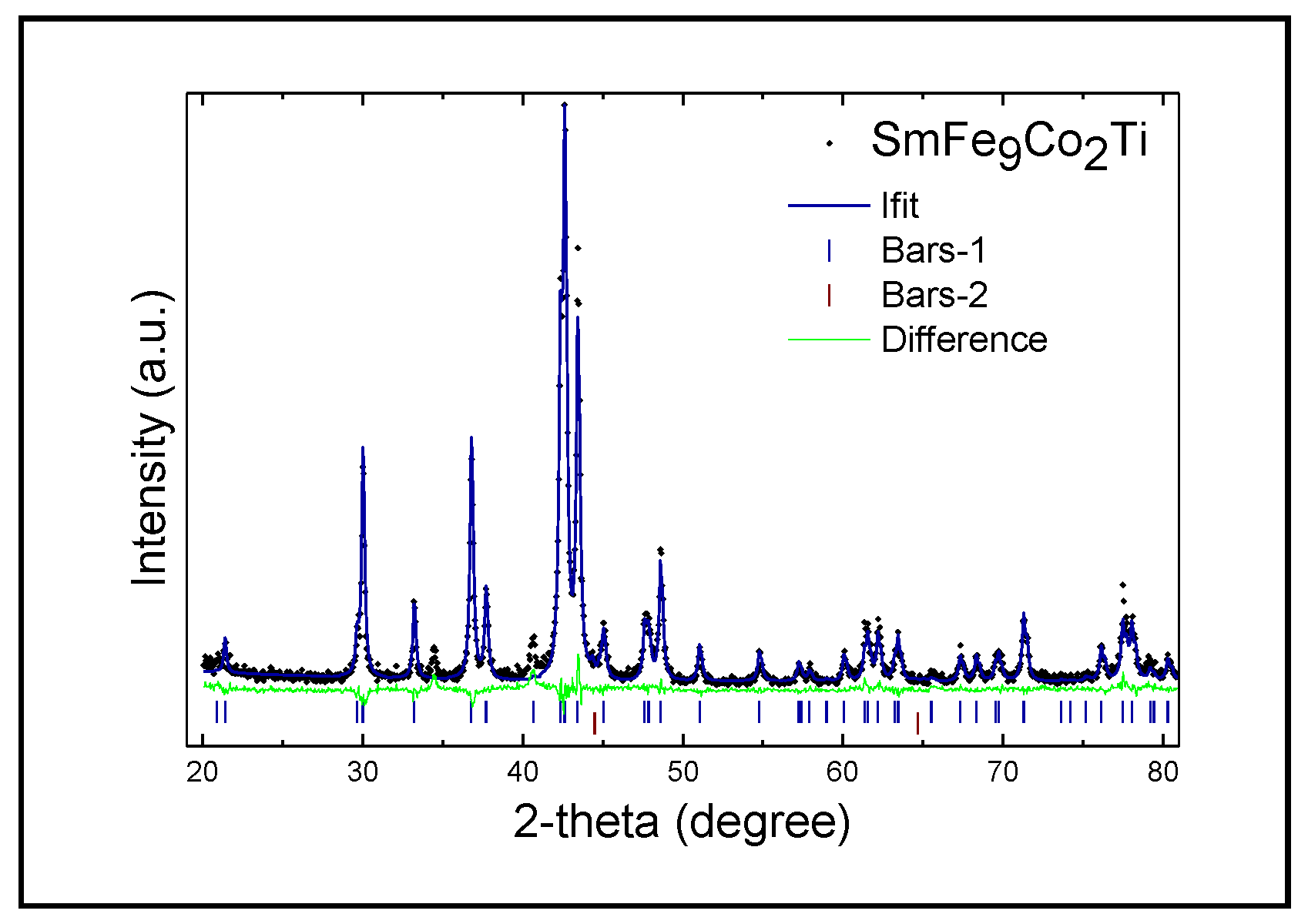
Figure 2.
Thermomagnetic curves of as-cast alloys, SmFe9Co2Ti (A), Sm Fe9.04Co2.26Ti0.7 (C), Sm0.75Zr0.25Fe9Co2Ti (C) and Sm0.75Zr0.25Fe9.04Co2.26Ti0.7 (D).
Figure 2.
Thermomagnetic curves of as-cast alloys, SmFe9Co2Ti (A), Sm Fe9.04Co2.26Ti0.7 (C), Sm0.75Zr0.25Fe9Co2Ti (C) and Sm0.75Zr0.25Fe9.04Co2.26Ti0.7 (D).
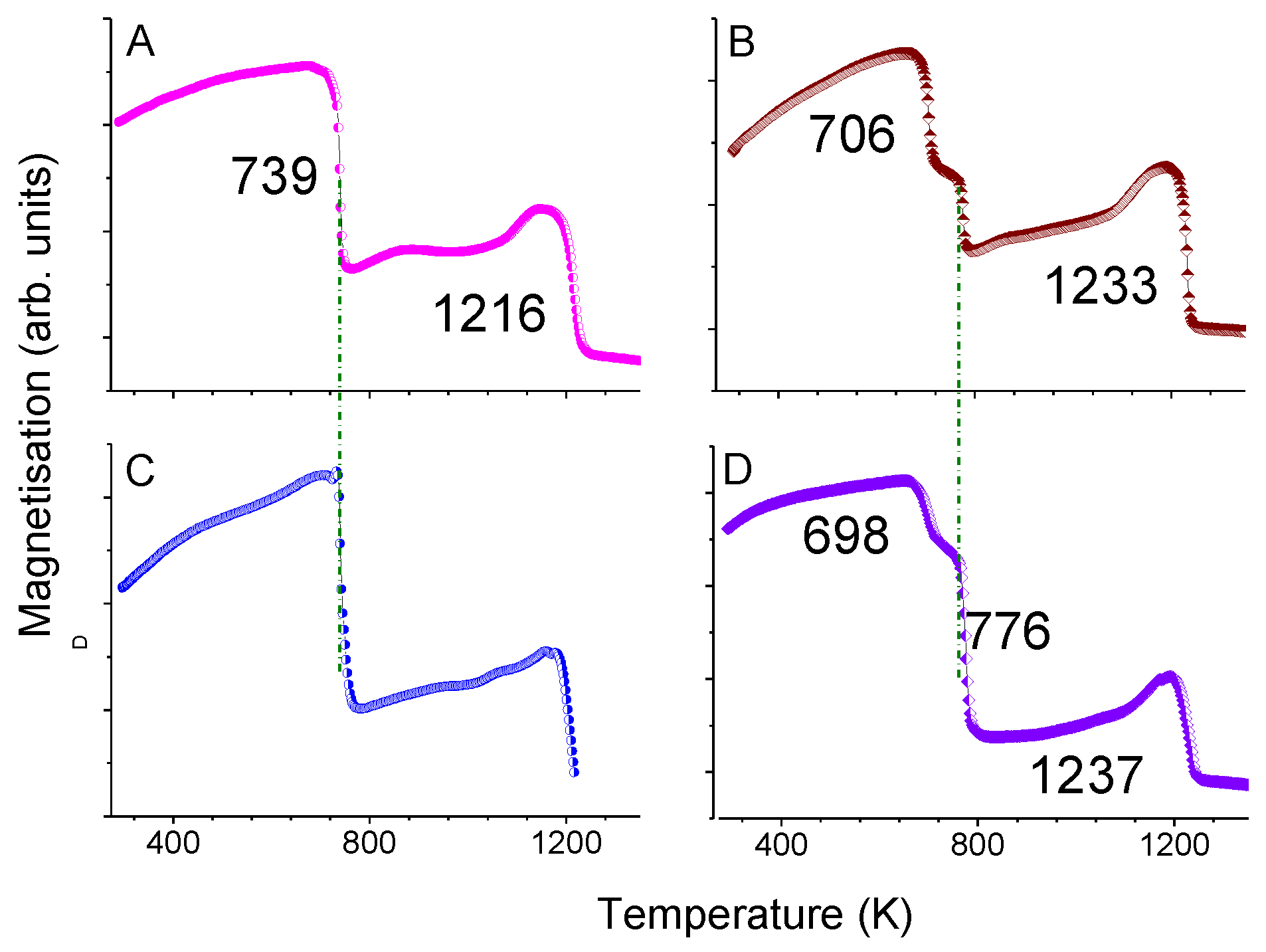
Figure 3.
a) XRD of SmFe9Co2Ti powders milled for 4 h and 8h respectively; b) XRD diagrams of annealed powder of SmFe9Co2Ti milled for 4 h at 1073K 15, 30 and 60 minutes and the respective Miler’s indexes of 1:12 and Sm2 O3 c) XRD diagrams of annealed powder of SmFe9Co2Ti milled for 4 h at 1123K 15, 30 and 60 minutes.
Figure 3.
a) XRD of SmFe9Co2Ti powders milled for 4 h and 8h respectively; b) XRD diagrams of annealed powder of SmFe9Co2Ti milled for 4 h at 1073K 15, 30 and 60 minutes and the respective Miler’s indexes of 1:12 and Sm2 O3 c) XRD diagrams of annealed powder of SmFe9Co2Ti milled for 4 h at 1123K 15, 30 and 60 minutes.
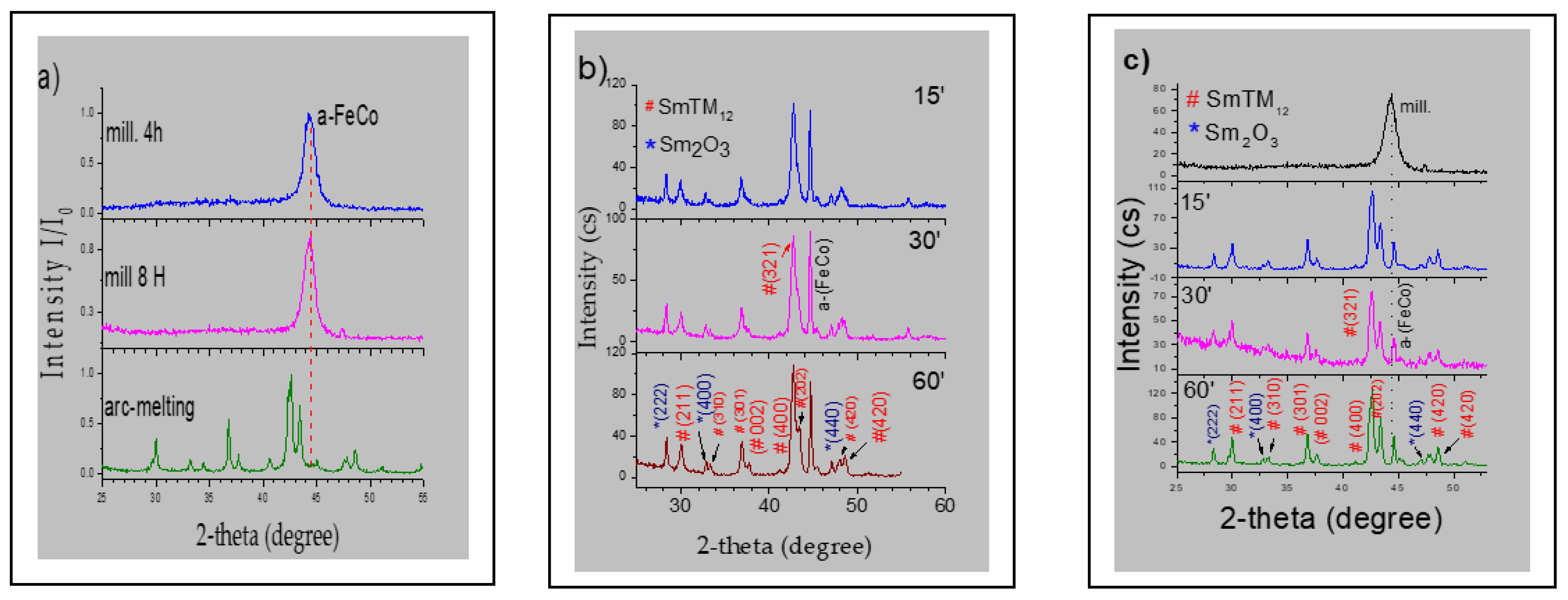
Figure 4.
SEM images of anneled powder of SmFe9Co2Ti at 1123 K milled for 4h (on the left) and 8 h(on the right).
Figure 4.
SEM images of anneled powder of SmFe9Co2Ti at 1123 K milled for 4h (on the left) and 8 h(on the right).
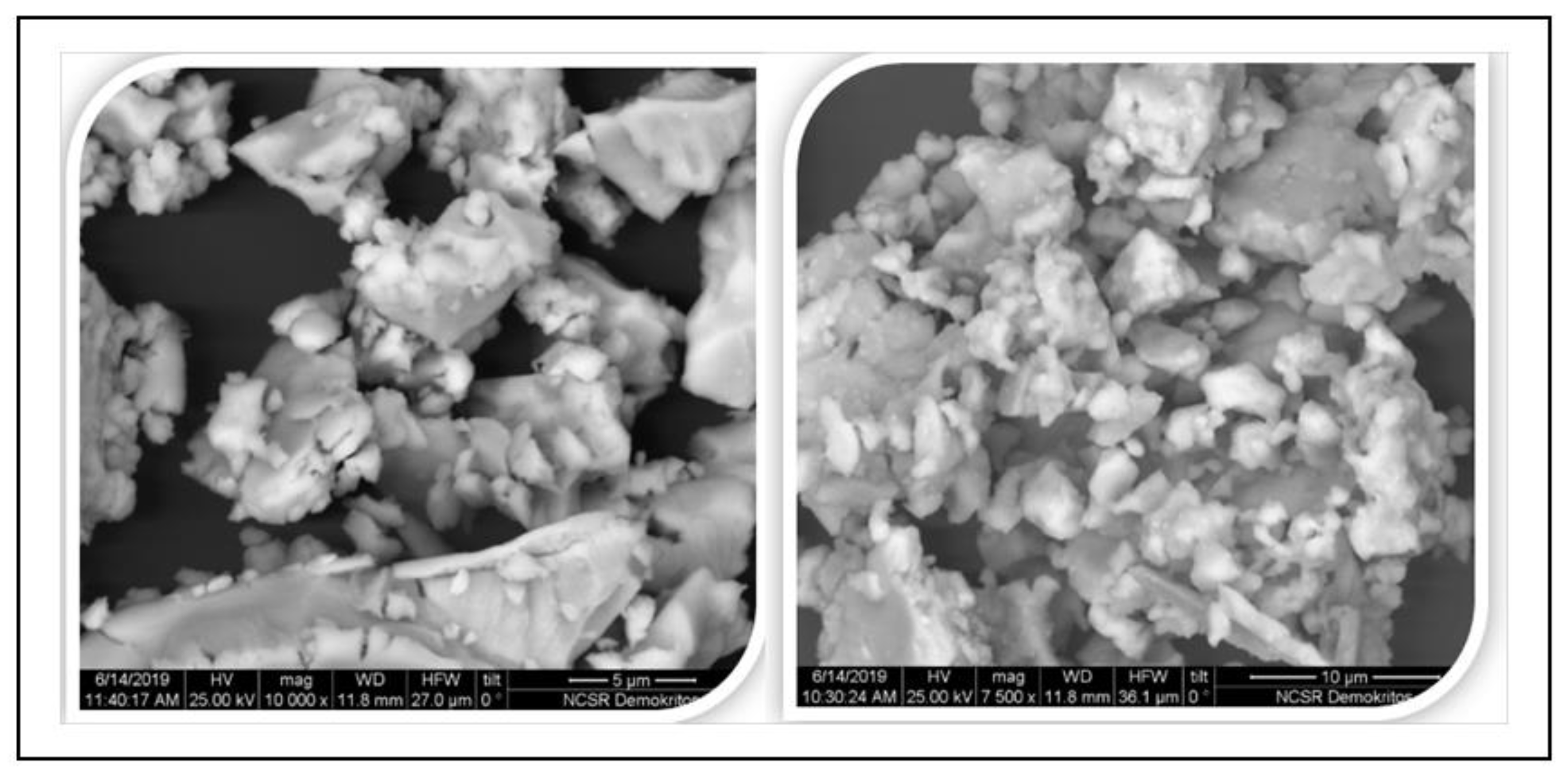
Figure 5.
Demagnetization curves of annealed SmFe9Co2Ti powders at 973 K (a), 1073 K (b) and 1173 K (c), all samples were milled during 4 h.
Figure 5.
Demagnetization curves of annealed SmFe9Co2Ti powders at 973 K (a), 1073 K (b) and 1173 K (c), all samples were milled during 4 h.

Figure 6.
a) Demagnetization curves of annealed SmFe9Co2Ti powders at 1123; b) the respective magnetization values at 3T of sample annealed at 973 K, 1073 K and 1173K (milled 4 h), and at 1123 K (milled 8 h).
Figure 6.
a) Demagnetization curves of annealed SmFe9Co2Ti powders at 1123; b) the respective magnetization values at 3T of sample annealed at 973 K, 1073 K and 1173K (milled 4 h), and at 1123 K (milled 8 h).
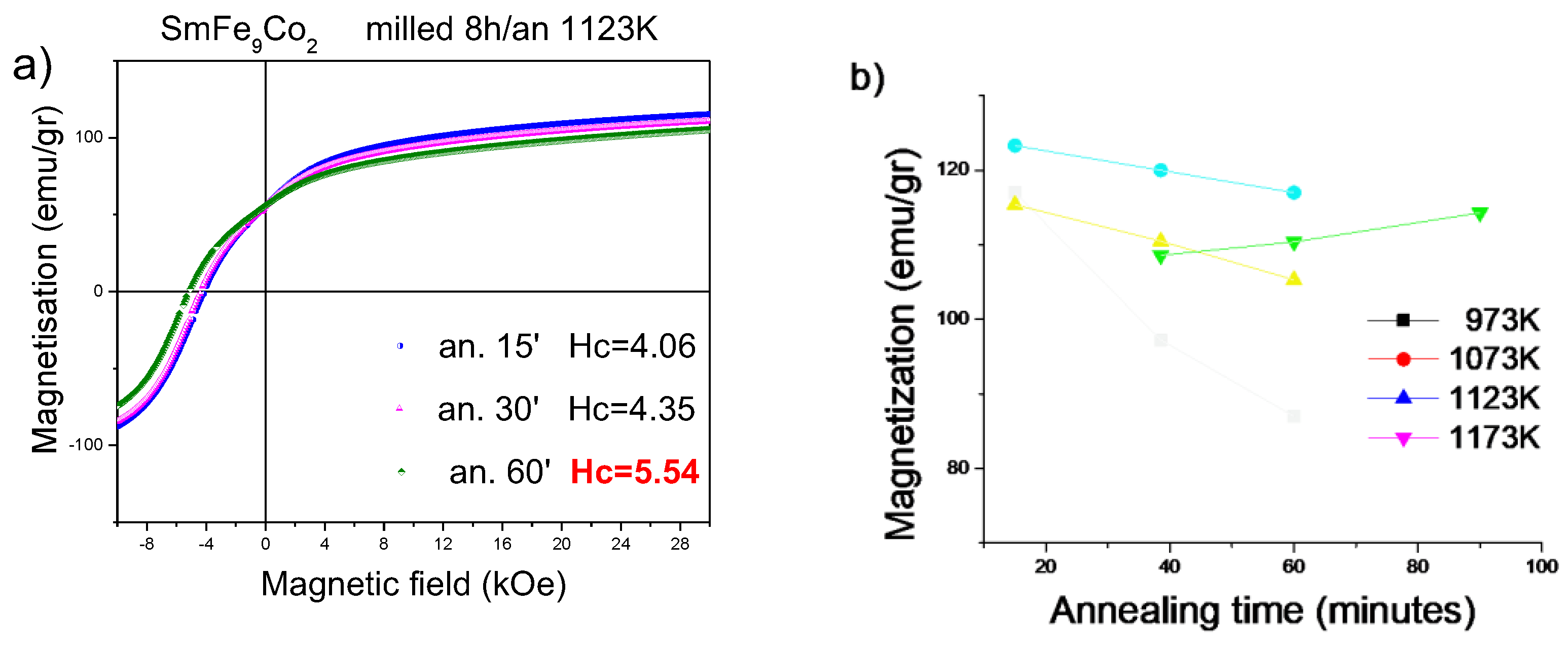
Figure 7.
a) Coercivity values of SmFe9Co2Ti powders annealed at 1123 K versus annealing time; b) optimal condition for maximum coercivity of sample A.
Figure 7.
a) Coercivity values of SmFe9Co2Ti powders annealed at 1123 K versus annealing time; b) optimal condition for maximum coercivity of sample A.
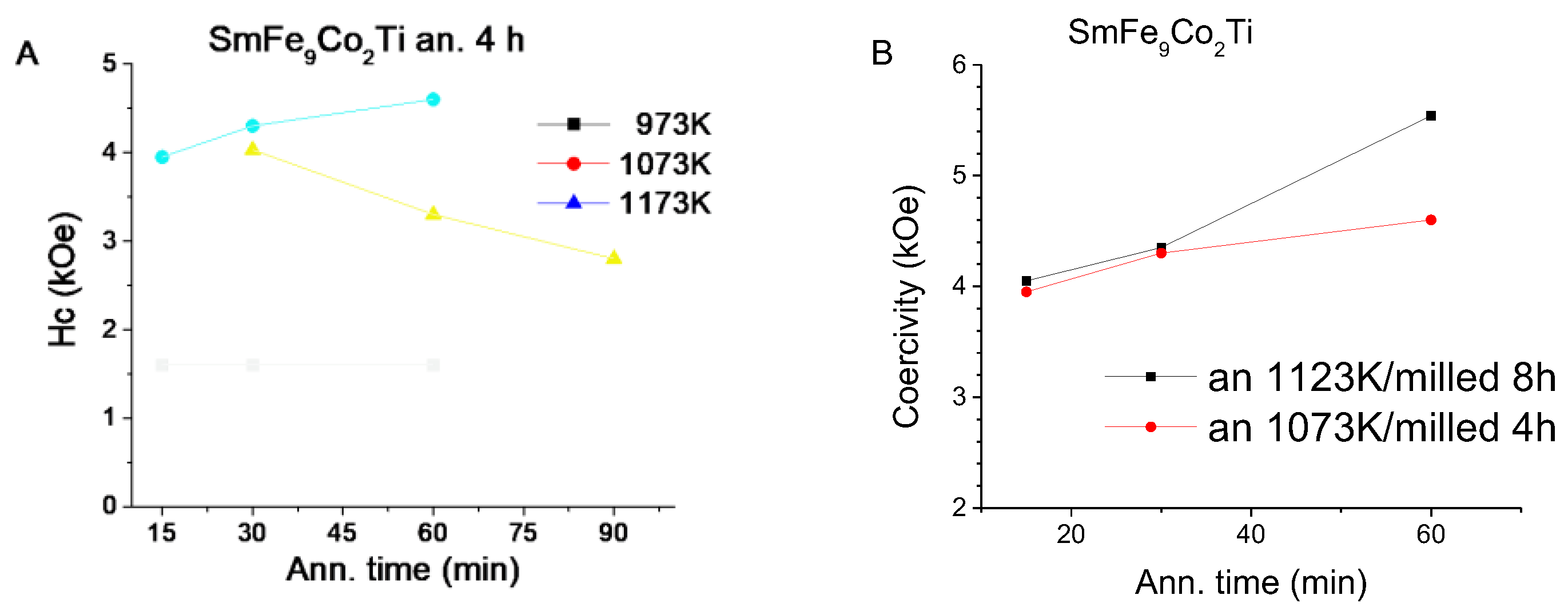
Figure 8.
a) Demagnetization curves of sample B- SmFe9.04Co2.26Ti0.7 annealed at 1123 K, b) Demagnetization curves of sample C-Sm0.75Zr0.25Fe9Co2Ti annealed at 1098 K and c) sample D-Sm0.75Zr0.25Fe9.04Co2.26Ti0.7 annealed at 1123 K.
Figure 8.
a) Demagnetization curves of sample B- SmFe9.04Co2.26Ti0.7 annealed at 1123 K, b) Demagnetization curves of sample C-Sm0.75Zr0.25Fe9Co2Ti annealed at 1098 K and c) sample D-Sm0.75Zr0.25Fe9.04Co2.26Ti0.7 annealed at 1123 K.
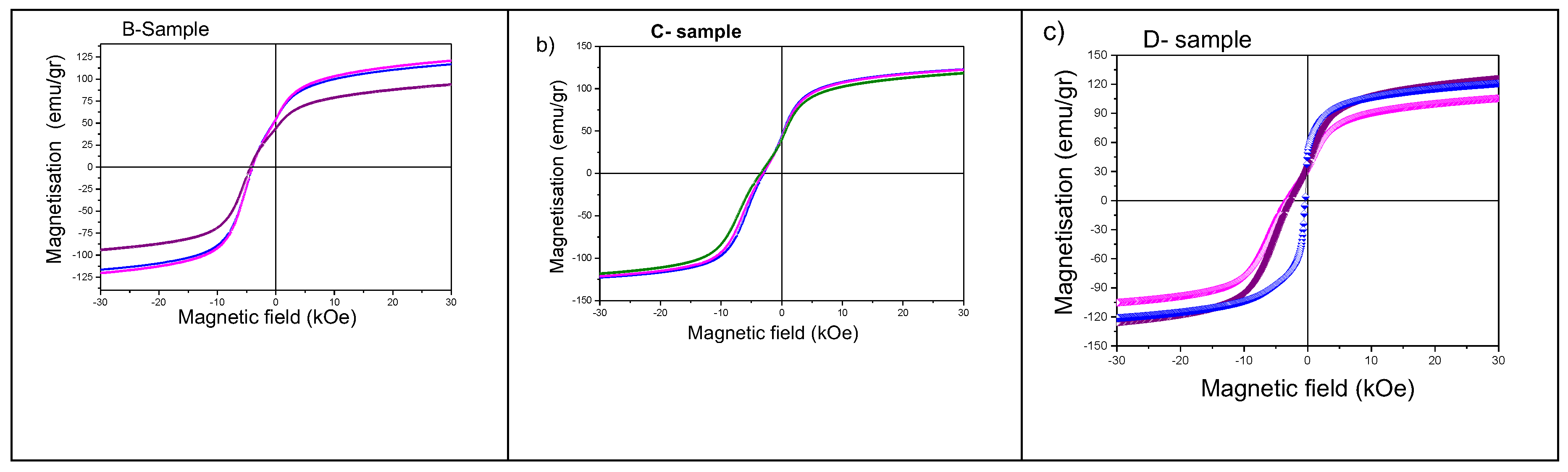

Table 1.
Coercivity and magnetization value of of sample B, C and D.
| Sample B ann. at 1123 K | Sample C ann. at 1098 K | Sample D ann. at 1123 K | ||||
|---|---|---|---|---|---|---|
| Ann. time | Hc (kOe) | M3T (emu/gr) | Hc (kOe) | M3T (emu/gr) | Hc | M3T (emu/gr) |
| 15 m | 4.01 | 120.9 | 3.0 | 122.8 | 4.05 | 120.8 |
| 30 min | 4.05 | 120.7 | 3.1 | 122.1 | 3.29 | 105.5 |
| 60 min | 4.37 | 93.6 | 3.5 | 118.4 | 2.76 | 125.6 |
Disclaimer/Publisher’s Note: The statements, opinions and data contained in all publications are solely those of the individual author(s) and contributor(s) and not of MDPI and/or the editor(s). MDPI and/or the editor(s) disclaim responsibility for any injury to people or property resulting from any ideas, methods, instructions or products referred to in the content. |
© 2025 by the authors. Licensee MDPI, Basel, Switzerland. This article is an open access article distributed under the terms and conditions of the Creative Commons Attribution (CC BY) license (http://creativecommons.org/licenses/by/4.0/).
Copyright: This open access article is published under a Creative Commons CC BY 4.0 license, which permit the free download, distribution, and reuse, provided that the author and preprint are cited in any reuse.