

Submitted:
24 February 2025
Posted:
25 February 2025
You are already at the latest version
Abstract
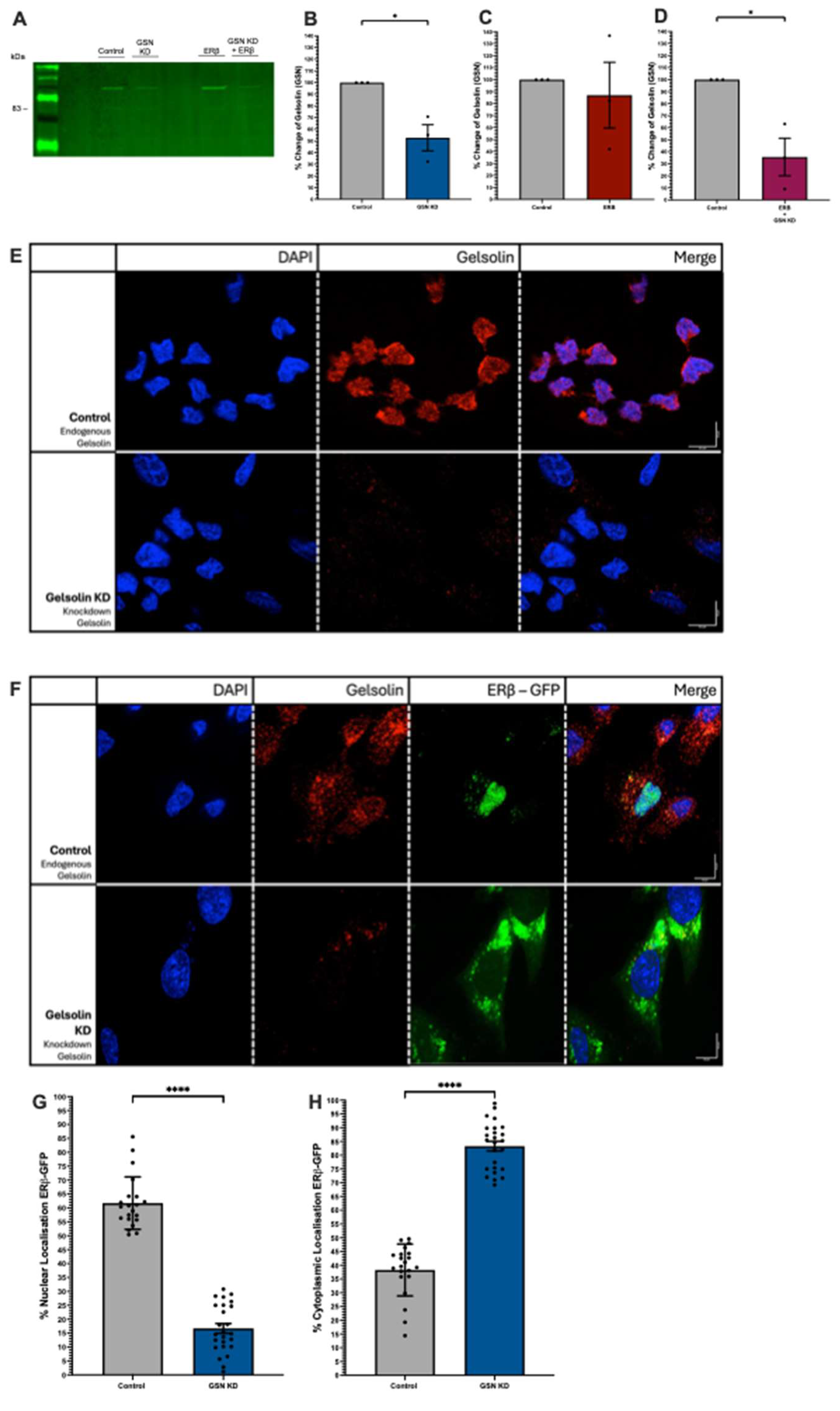
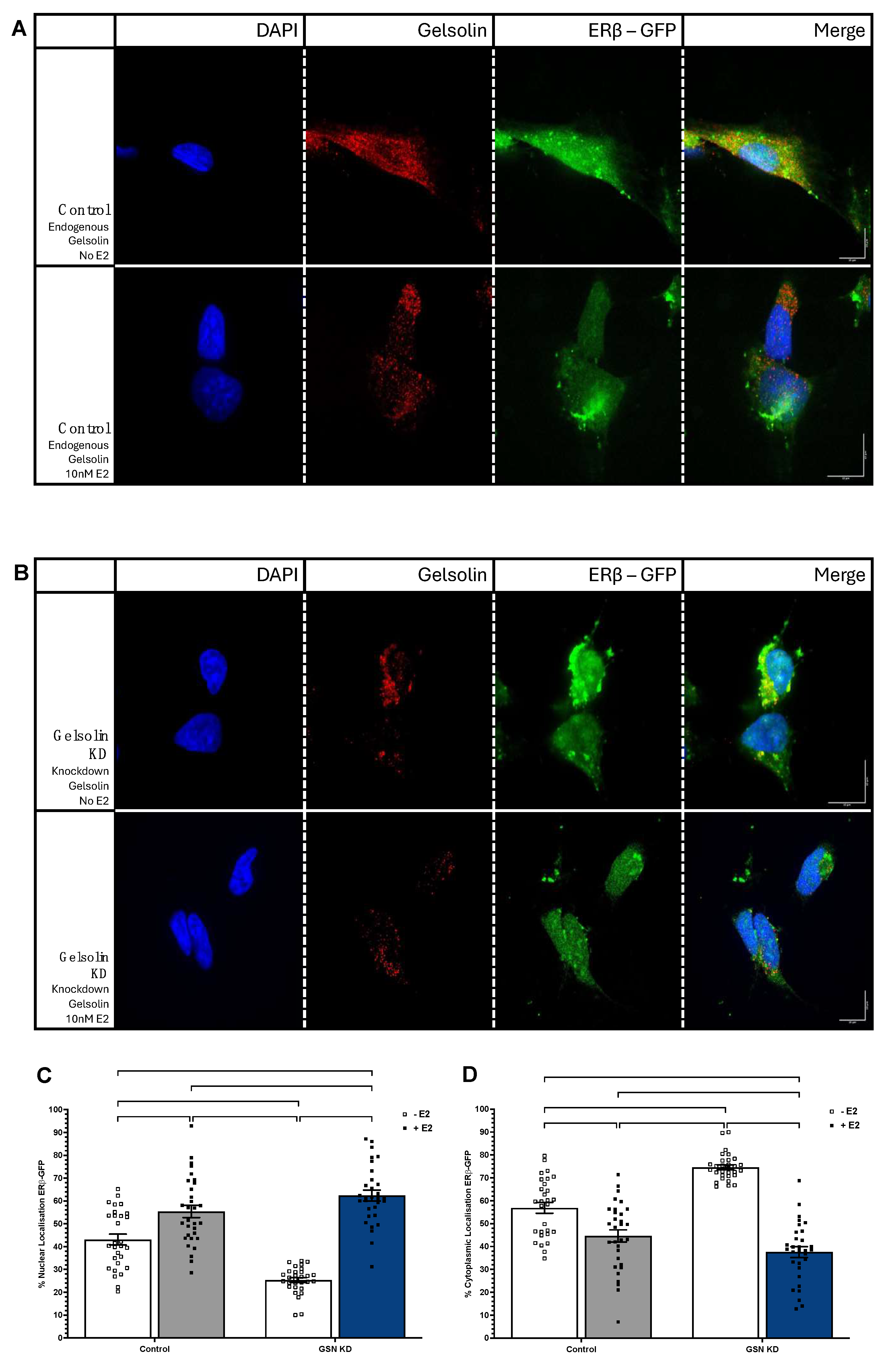
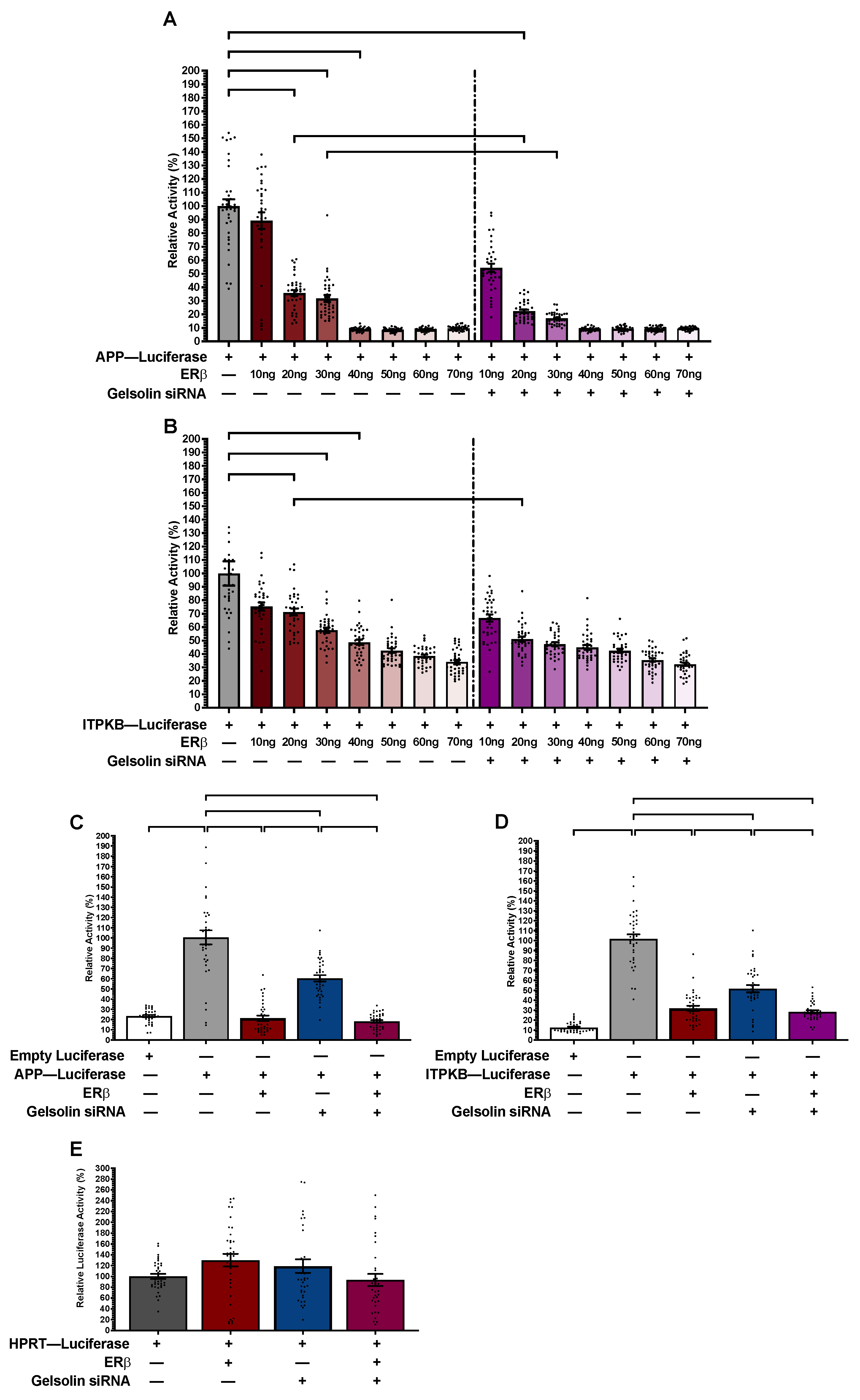
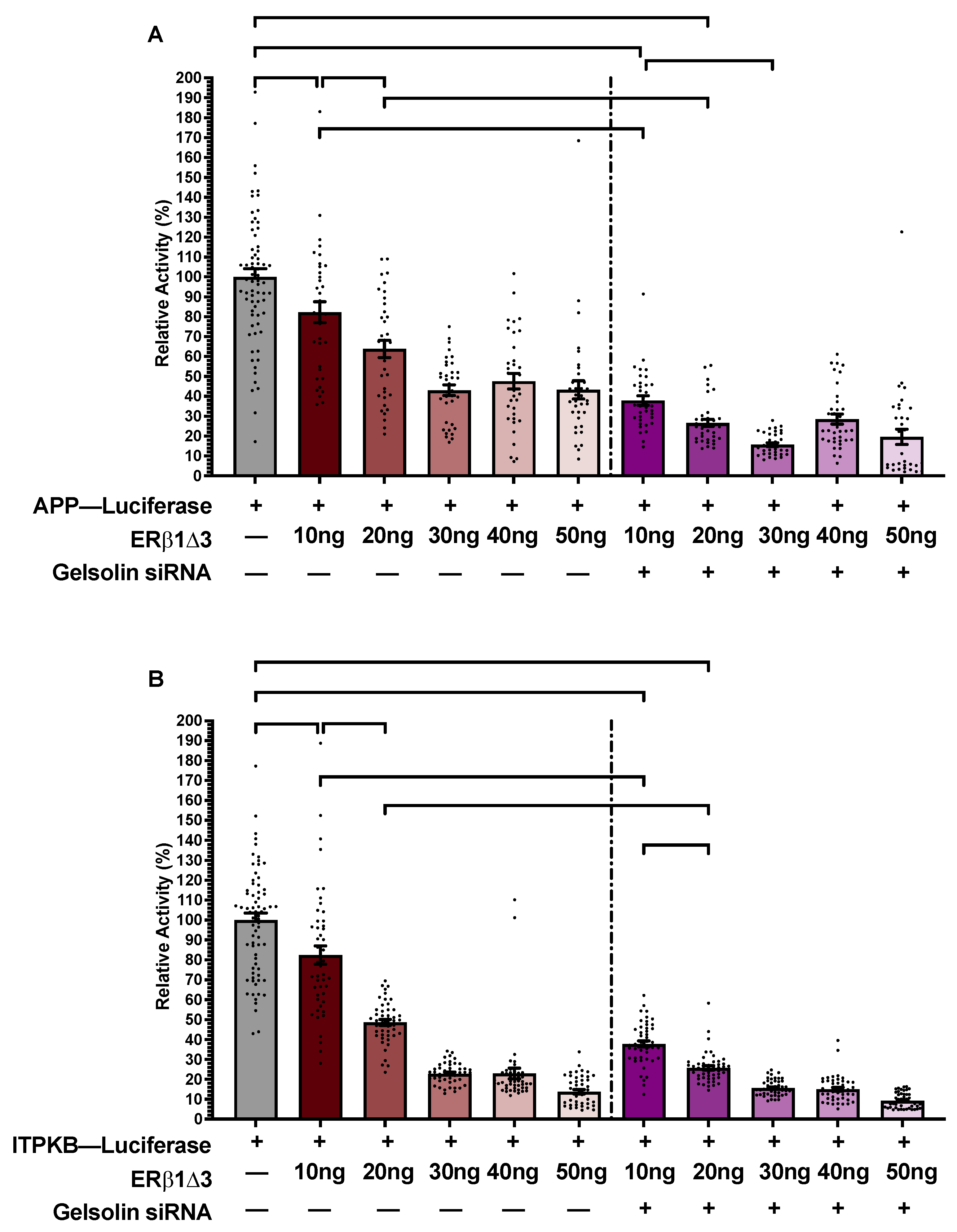
Background/Objectives: Gelsolin (GSN) is an actin-binding protein that helps maintain neuronal structure and shape, regulates neuronal growth, and apoptosis. Our previous work demonstrated that GSN associated with estrogen receptor beta (ERb1) in the brains of female rats, but this association was lost in advanced age. GSN was also required for ERb1-mediated transcriptional repression at activator protein-1 (AP-1) motifs upstream of a minimal gene promoter. However, the consequences of the loss of GSN:ERb1 protein interaction on ERb1 nuclear translocation and transcriptional repression at AP-1 sites located within complex endogenous gene promoters remained unclear. Methods: We used immunofluorescent super resolution microscopy and luciferase reporter assays to test the hypothesis that GSN facilitates ERb1 nuclear translocation and transcriptional repression of two genes relevant for Alzheimer Disease: APP (amyloid-beta precursor protein) and ITPKB (inositol-1,4,5-trisphosphate 3-kinase B). Results: Our results revealed the novel finding that GSN is required for ERb1 ligand–independent nuclear translocation in neuronal cells. Moreover, we show that GSN increased APP and ITPKB promoter activity, which was repressed by ERb1. Conclusions: Together, these data revealed the importance of the cytoskeletal protein, GSN, in regulating intracellular trafficking of nuclear receptors and demonstrate the first evidence of ERb1 directly regulating two genes that are implicated in the progression of AD.
Keywords:
Introduction
2. Materials and Methods
Cell Culture
Cell Treatments
Plasmid Constructs
Transient Transfections
Luciferase Assays
Western Blot
Immunofluorescence
Imaging
Statistics
3. Results
3.1. Gelsolin Is Required for Nuclear Translocation of ERβ1
3.2. 17(β-Estradiol Induces ERβ1 Nuclear Translocation in the Absence of GSN
3.3. ERβ1 Represses APP and ITPKB Promoter Activity
3.4. GSN Enhances APP and ITPKB Promoter Activity
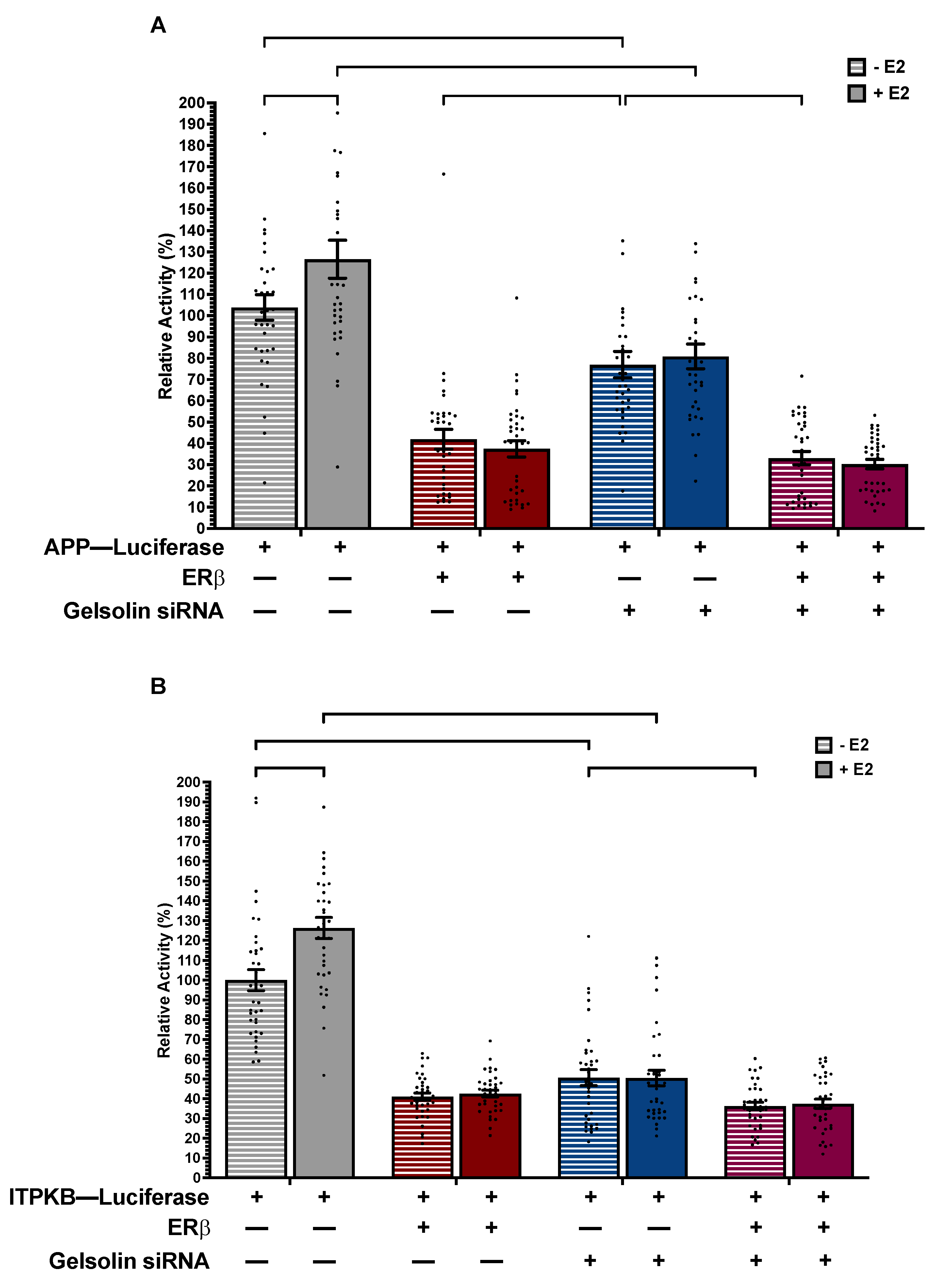
3.5. ERβ1 and GSN Regulation of APP and ITPKB Promoters Is Independent of E2
3.6. ERβ1-Induced Repression of APP and ITPKB Promoters Likely Occurs Through Indirect DNA Binding
4. Discussion
5. Conclusions
Supplementary Materials
Author Contributions
Funding
Institutional Review Board Statement
Data Availability Statement
Conflicts of Interest
Abbreviations
| AD | Alzheimer disease |
| AP-1 | Activator protein 1 |
| APP | Amyloid beta Precursor Protein |
| E2 | 17β-estradiol |
| ER, α, β1, β1Δ3 | Estrogen receptor, alpha, beta1, beta1delta3 |
| ERE | Estrogen response element |
| GSN | Gelsolin |
| HPRT | Hypoxanthine phosphoribosyltransferase 1 |
| ITPKB | Inositol–trisphosphate 3–kinase B |
| siRNA | Short interfering ribonucleic acid |
| SK-N-SH | Human neuroblastoma cell line |
References
- Kuiper, G.G.; Gustafsson, J.A. The novel estrogen receptor-beta subtype: potential role in the cell- and promoter-specific actions of estrogens and anti-estrogens. FEBS Lett 1997, 410, 87–90. [Google Scholar] [CrossRef]
- Paech, K.; Webb, P.; Kuiper, G.G.; Nilsson, S.; Gustafsson, J.; Kushner, P.J.; Scanlan, T.S. Differential ligand activation of estrogen receptors ERalpha and ERbeta at AP1 sites. Science 1997, 277, 1508–1510. [Google Scholar] [CrossRef] [PubMed]
- Umayahara, Y.; Kawamori, R.; Watada, H.; Imano, E.; Iwama, N.; Morishima, T.; Yamasaki, Y.; Kajimoto, Y.; Kamada, T. Estrogen regulation of the insulin-like growth factor I gene transcription involves an AP-1 enhancer. J Biol Chem 1994, 269, 16433–16442. [Google Scholar] [CrossRef]
- Zhao, C.; Gao, H.; Liu, Y.; Papoutsi, Z.; Jaffrey, S.; Gustafsson, J.A.; Dahlman-Wright, K. Genome-wide mapping of estrogen receptor-beta-binding regions reveals extensive cross-talk with transcription factor activator protein-1. Cancer Res 2010, 70, 5174–5183. [Google Scholar] [CrossRef] [PubMed]
- Lin, J.; Steenbergen, C.; Murphy, E.; Sun, J. Estrogen receptor-beta activation results in S-nitrosylation of proteins involved in cardioprotection. Circulation 2009, 120, 245–254. [Google Scholar] [CrossRef] [PubMed]
- Luczak, E.D.; Leinwand, L.A. Sex-based cardiac physiology. Annu Rev Physiol 2009, 71, 1–18. [Google Scholar] [CrossRef]
- Lund, T.D.; Rovis, T.; Chung, W.C.; Handa, R.J. Novel actions of estrogen receptor-beta on anxiety-related behaviors. Endocrinology 2005, 146, 797–807. [Google Scholar] [CrossRef] [PubMed]
- Nerattini, M.; Jett, S.; Andy, C.; Carlton, C.; Zarate, C.; Boneu, C.; Battista, M.; Pahlajani, S.; Loeb-Zeitlin, S.; Havryulik, Y.; et al. Systematic review and meta-analysis of the effects of menopause hormone therapy on risk of Alzheimer’s disease and dementia. Front Aging Neurosci 2023, 15, 1260427. [Google Scholar] [CrossRef]
- Simpkins, J.W.; Singh, M.; Brock, C.; Etgen, A.M. Neuroprotection and estrogen receptors. Neuroendocrinology 2012, 96, 119–130. [Google Scholar] [CrossRef]
- Xu, Y.; Arenas, I.A.; Armstrong, S.J.; Plahta, W.C.; Xu, H.; Davidge, S.T. Estrogen improves cardiac recovery after ischemia/reperfusion by decreasing tumor necrosis factor-alpha. Cardiovasc Res 2006, 69, 836–844. [Google Scholar] [CrossRef]
- Mott, N.N.; Pinceti, E.; Rao, Y.S.; Przybycien-Szymanska, M.M.; Prins, S.A.; Shults, C.L.; Yang, X.; Glucksman, M.J.; Roberts, J.L.; Pak, T.R. Age-dependent Effects of 17beta-estradiol on the dynamics of estrogen receptor beta (ERbeta) protein-protein interactions in the ventral hippocampus. Mol Cell Proteomics 2014, 13, 760–779. [Google Scholar] [CrossRef] [PubMed]
- Nishimura, K.; Ting, H.J.; Harada, Y.; Tokizane, T.; Nonomura, N.; Kang, H.Y.; Chang, H.C.; Yeh, S.; Miyamoto, H.; Shin, M.; et al. Modulation of androgen receptor transactivation by gelsolin: a newly identified androgen receptor coregulator. Cancer Res 2003, 63, 4888–4894. [Google Scholar] [PubMed]
- Feldt, J.; Schicht, M.; Garreis, F.; Welss, J.; Schneider, U.W.; Paulsen, F. Structure, regulation and related diseases of the actin-binding protein gelsolin. Expert Rev Mol Med 2019, 20, e7. [Google Scholar] [CrossRef] [PubMed]
- Feng, B.; Hu, P.; Chen, J.; Liu, Q.; Li, X.; Du, Y. Analysis of Differentially Expressed Genes Associated With Alzheimer’s Disease Based on Bioinformatics Methods. Am J Alzheimers Dis Other Demen 2015, 30, 746–751. [Google Scholar] [CrossRef]
- Quitschke, W.W.; Goldgaber, D. The amyloid beta-protein precursor promoter. A region essential for transcriptional activity contains a nuclear factor binding domain. J Biol Chem 1992, 267, 17362–17368. [Google Scholar] [CrossRef]
- Stygelbout, V.; Leroy, K.; Pouillon, V.; Ando, K.; D’Amico, E.; Jia, Y.; Luo, H.R.; Duyckaerts, C.; Erneux, C.; Schurmans, S.; et al. Inositol trisphosphate 3-kinase B is increased in human Alzheimer brain and exacerbates mouse Alzheimer pathology. Brain 2014, 137, 537–552. [Google Scholar] [CrossRef]
- Zhou, H.; Zarubin, T.; Ji, Z.; Min, Z.; Zhu, W.; Downey, J.S.; Lin, S.; Han, J. Frequency and distribution of AP-1 sites in the human genome. DNA Res 2005, 12, 139–150. [Google Scholar] [CrossRef]
- Leung, Y.K.; Mak, P.; Hassan, S.; Ho, S.M. Estrogen receptor (ER)-beta isoforms: a key to understanding ER-beta signaling. Proc Natl Acad Sci USA 2006, 103, 13162–13167. [Google Scholar] [CrossRef]
- Price, R.H., Jr.; Butler, C.A.; Webb, P.; Uht, R.; Kushner, P.; Handa, R.J. A splice variant of estrogen receptor beta missing exon 3 displays altered subnuclear localization and capacity for transcriptional activation. Endocrinology 2001, 142, 2039–2049. [Google Scholar] [CrossRef]
- Castillo, A.B.; Triplett, J.W.; Pavalko, F.M.; Turner, C.H. Estrogen receptor-beta regulates mechanical signaling in primary osteoblasts. Am J Physiol Endocrinol Metab 2014, 306, E937–E944. [Google Scholar] [CrossRef]
- Pak, T.R.; Chung, W.C.; Roberts, J.L.; Handa, R.J. Ligand-independent effects of estrogen receptor beta on mouse gonadotropin-releasing hormone promoter activity. Endocrinology 2006, 147, 1924–1931. [Google Scholar] [CrossRef]
- Pinceti, E.; Shults, C.L.; Rao, Y.S.; Mott, N.N.; Pak, T.R. Phosphorylation Alters Oestrogen Receptor beta-Mediated Transcription in Neurones. J Neuroendocrinol 2015, 27, 861–871. [Google Scholar] [CrossRef] [PubMed]
- Tremblay, A.; Tremblay, G.B.; Labrie, F.; Giguere, V. Ligand-independent recruitment of SRC-1 to estrogen receptor beta through phosphorylation of activation function AF-1. Mol Cell 1999, 3, 513–519. [Google Scholar] [CrossRef] [PubMed]
- Zhang, G.; Yanamala, N.; Lathrop, K.L.; Zhang, L.; Klein-Seetharaman, J.; Srinivas, H. Ligand-independent antiapoptotic function of estrogen receptor-beta in lung cancer cells. Mol Endocrinol 2010, 24, 1737–1747. [Google Scholar] [CrossRef]
- Pemberton, L.F.; Paschal, B.M. Mechanisms of receptor-mediated nuclear import and nuclear export. Traffic 2005, 6, 187–198. [Google Scholar] [CrossRef]
- Schlegel, A.; Wang, C.; Katzenellenbogen, B.S.; Pestell, R.G.; Lisanti, M.P. Caveolin-1 potentiates estrogen receptor alpha (ERalpha) signaling. caveolin-1 drives ligand-independent nuclear translocation and activation of ERalpha. J Biol Chem 1999, 274, 33551–33556. [Google Scholar] [CrossRef]
- Hager, G.L.; Lim, C.S.; Elbi, C.; Baumann, C.T. Trafficking of nuclear receptors in living cells. J Steroid Biochem Mol Biol 2000, 74, 249–254. [Google Scholar] [CrossRef]
- Ishunina, T.A.; Swaab, D.F. Increased expression of estrogen receptor alpha and beta in the nucleus basalis of Meynert in Alzheimer’s disease. Neurobiol Aging 2001, 22, 417–426. [Google Scholar] [CrossRef] [PubMed]
- Kocanova, S.; Mazaheri, M.; Caze-Subra, S.; Bystricky, K. Ligands specify estrogen receptor alpha nuclear localization and degradation. BMC Cell Biol 2010, 11, 98. [Google Scholar] [CrossRef]
- Matsuda, K.; Ochiai, I.; Nishi, M.; Kawata, M. Colocalization and ligand-dependent discrete distribution of the estrogen receptor (ER)alpha and ERbeta. Mol Endocrinol 2002, 16, 2215–2230. [Google Scholar] [CrossRef]
- Yang, S.H.; Liu, R.; Perez, E.J.; Wen, Y.; Stevens, S.M., Jr.; Valencia, T.; Brun-Zinkernagel, A.M.; Prokai, L.; Will, Y.; Dykens, J.; et al. Mitochondrial localization of estrogen receptor beta. Proc Natl Acad Sci USA 2004, 101, 4130–4135. [Google Scholar] [CrossRef] [PubMed]
- Haass, C.; Selkoe, D.J. Soluble protein oligomers in neurodegeneration: lessons from the Alzheimer’s amyloid beta-peptide. Nat Rev Mol Cell Biol 2007, 8, 101–112. [Google Scholar] [CrossRef] [PubMed]
- Jaffe, A.B.; Toran-Allerand, C.D.; Greengard, P.; Gandy, S.E. Estrogen regulates metabolism of Alzheimer amyloid beta precursor protein. J Biol Chem 1994, 269, 13065–13068. [Google Scholar] [CrossRef]
- Manthey, D.; Heck, S.; Engert, S.; Behl, C. Estrogen induces a rapid secretion of amyloid beta precursor protein via the mitogen-activated protein kinase pathway. Eur J Biochem 2001, 268, 4285–4291. [Google Scholar] [CrossRef] [PubMed]
- Cui, J.; Ait-Ghezala, G.; Sambamurti, K.; Gao, F.; Shen, Y.; Li, R. Sex-Specific Regulation of beta-Secretase: A Novel Estrogen Response Element (ERE)-Dependent Mechanism in Alzheimer’s Disease. J Neurosci 2022, 42, 1154–1165. [Google Scholar] [CrossRef]
- Erneux, C.; Ghosh, S.; Koenig, S. Inositol(1,4,5)P3 3-kinase isoenzymes: Catalytic properties and importance of targeting to F-actin to understand function. Adv Biol Regul 2016, 60, 135–143. [Google Scholar] [CrossRef]
- Johnson, H.W.; Schell, M.J. Neuronal IP3 3-kinase is an F-actin-bundling protein: role in dendritic targeting and regulation of spine morphology. Mol Biol Cell 2009, 20, 5166–5180. [Google Scholar] [CrossRef]
- Koenig, S.; Moreau, C.; Dupont, G.; Scoumanne, A.; Erneux, C. Regulation of NGF-driven neurite outgrowth by Ins(1,4,5)P3 kinase is specifically associated with the two isoenzymes Itpka and Itpkb in a model of PC12 cells. FEBS J 2015, 282, 2553–2569. [Google Scholar] [CrossRef]
- Rauscher, F.J., 3rd; Voulalas, P.J.; Franza, B.R., Jr.; Curran, T. Fos and Jun bind cooperatively to the AP-1 site: reconstitution in vitro. Genes Dev 1988, 2, 1687–1699. [Google Scholar] [CrossRef]
- Vivar, O.I.; Zhao, X.; Saunier, E.F.; Griffin, C.; Mayba, O.S.; Tagliaferri, M.; Cohen, I.; Speed, T.P.; Leitman, D.C. Estrogen receptor beta binds to and regulates three distinct classes of target genes. J Biol Chem 2010, 285, 22059–22066. [Google Scholar] [CrossRef]
Disclaimer/Publisher’s Note: The statements, opinions and data contained in all publications are solely those of the individual author(s) and contributor(s) and not of MDPI and/or the editor(s). MDPI and/or the editor(s) disclaim responsibility for any injury to people or property resulting from any ideas, methods, instructions or products referred to in the content. |
© 2025 by the authors. Licensee MDPI, Basel, Switzerland. This article is an open access article distributed under the terms and conditions of the Creative Commons Attribution (CC BY) license (http://creativecommons.org/licenses/by/4.0/).