
Submitted:
23 February 2025
Posted:
24 February 2025
You are already at the latest version
Abstract
This paper presents a comprehensive review of methodologies for building energy analysis, simulation, and optimization, with a focus on improving energy efficiency and sustainability. It synthesizes research across various domains, including data-driven models, building performance simulations (BPS), infrared thermography (IRT), and innovative design approaches. The study underscores the significance of accurate energy prediction models and the impact of early-stage design interventions on long-term energy performance. Advanced technologies such as machine learning, artificial intelligence, and statistical analysis are examined for their role in enhancing energy assessments. A key highlight of this review is the critical role of IRT as a non-invasive diagnostic tool for detecting thermal anomalies, insulation defects, and energy inefficiencies. The integration of AI with IRT is discussed as a promising advancement for automating defect detection and improving building diagnostics. Additionally, the study explores emerging materials, including high-performance insulation and phase-change materials, which contribute to sustainable construction practices. Furthermore, the paper evaluates the role of smart building technologies, parametric design, and occupancy-driven energy management in optimizing energy use. The effectiveness of various energy forecasting models, including white-box, black-box, and grey-box approaches, is analyzed, demonstrating the strengths and limitations of each methodology. Despite significant progress in the field, research gaps remain in model calibration, data integration, and real-time energy monitoring. The study proposes future directions, such as enhancing hybrid modeling techniques, standardizing assessment methods, and leveraging big data analytics to refine energy performance predictions. This review serves as a valuable resource for researchers, policymakers, and industry professionals, bridging the gap between theoretical research and practical applications in sustainable building design and energy management.
Keywords:
Building energy analysis
; infrared thermography
; energy efficiency
; smart buildings
; data-driven modeling
; sustainability
1. Introduction
The building sector is one of the largest consumers of energy worldwide, contributing significantly to greenhouse gas emissions [1]. As urbanization accelerates, the demand for energy-efficient and sustainable construction practices has become paramount [2]. Buildings account for approximately 40% of global energy consumption and 36% of carbon dioxide emissions, necessitating innovative strategies to reduce their environmental impact [3]. Implementing energy-efficient solutions in construction not only reduces energy costs but also aligns with international climate commitments such as the Paris Agreement [4].
The importance of energy efficiency in buildings stems from the dual benefits of cost savings and environmental conservation [5]. Studies have shown that energy-efficient buildings enhance occupant comfort, improve indoor air quality, and contribute to urban resilience against climate change [6]. Advances in materials science, automation, and digital energy management systems are revolutionizing how buildings consume and store energy [7]. Additionally, policies and incentives are playing a crucial role in the widespread adoption of sustainable practices in the construction industry [8]. The multifaceted nature of building energy consumption is influenced by a complex interplay of factors, including ambient weather conditions, building structure, operational characteristics of sub-level components, occupancy patterns, and occupant behavior [9]. Studies have shown that occupant behavior significantly impacts energy consumption, with factors such as thermal comfort, indoor air quality, and appliance usage playing crucial roles [10]. Additionally, occupant presence patterns have been found to have a strong relationship with energy consumption, with substantial energy being consumed even when no occupants are present [11]. Furthermore, the building’s physical characteristics, including its structure and the operational characteristics of its components, interact with environmental factors to influence energy performance [12].
As the urgency of addressing climate change intensifies, the need to reduce energy consumption in buildings has spurred significant research efforts into a variety of methodologies for analysis, simulation, and optimization. With the increasing global emphasis on energy efficiency and sustainability, the need for accurate, non-invasive methods to assess building energy performance has become critical. Infrared thermography (IRT) has emerged as a powerful diagnostic tool for evaluating thermal efficiency, detecting energy loss, and identifying structural issues within buildings. Unlike traditional invasive methods, IRT provides a rapid, visual representation of heat transfer dynamics across building envelopes, enabling energy auditors, engineers, and researchers to assess insulation performance, locate thermal bridges, and detect moisture-related defects [13].
Accurate prediction of building energy consumption plays a critical role in effective energy planning, management, and conservation [14]. This is particularly important during the early design stages, as initial decisions significantly impact the long-term energy efficiency of buildings [15]. To support such predictions, a wide array of tools and methods is available, ranging from traditional engineering techniques to advanced computational approaches [16]. However, given the limitations of individual methods, there is an increasing need to explore and implement hybrid approaches that leverage the strengths of different techniques for a more holistic solution [17]. This review paper provides a detailed examination of various approaches used for assessing and improving building energy performance. The scope of this review encompasses data-driven models, building performance simulation (BPS), infrared thermography (IRT), and innovative design methodologies.
- Diagnostic Methods
The application of IRT has been widely explored across various domains, from historical building preservation to large-scale urban energy monitoring. Its integration into energy performance evaluations has allowed for enhanced accuracy in detecting heat loss and thermal anomalies. Additionally, advances in artificial intelligence (AI) and machine learning have further expanded the potential of IRT by improving data interpretation and automating defect detection processes [18].
Infrared thermography (IRT) has emerged as a powerful non-invasive diagnostic tool for evaluating building envelopes, aiding in the detection of thermal anomalies and improving energy efficiency. Its ability to provide real-time thermal imagery makes it a valuable method for identifying insulation defects, thermal bridges, and air leakage points, which are critical for enhancing building performance and achieving nearly zero energy building (nZEB) standards [19].
One of the primary applications of IRT in building sciences is the determination of the overall heat transfer coefficient (U-Value). Fokaides and Kalogirou [20] demonstrate the reliability of IRT in U-Value estimation by validating its results against traditional measurement methods. However, they emphasize the need for careful calibration and consideration of environmental factors due to the non-steady heat transfer conditions often present in buildings. Similarly, Lehmann et al. [18] highlight the influence of climatic parameters on thermographic evaluations, stressing the importance of accounting for environmental variations to ensure accurate thermal imaging interpretations.
Beyond building envelopes, IRT has broader applications across multiple disciplines. Tattersall [21] reviews its use in non-invasive thermal physiology studies, detailing its advantages such as non-contact measurement and real-time thermal data acquisition. While IRT offers significant benefits, its limitations include sensitivity to environmental conditions and the necessity for precise calibration, a challenge also noted in building inspections [22].
Advancements in IRT methodologies have improved its efficacy in detecting energy-related defects in buildings. Fox et al. [22] discuss the evolution of thermographic techniques, addressing limitations such as spatial resolution and proposing a phased approach for comprehensive building analysis. Additionally, Hoyano et al. [23] analyze sensible heat flux from building surfaces, providing insights into the thermal behavior of materials and their impact on energy efficiency. Akbari et al. [24] utilized IRT sensor to quantify high-rise building energy loss and impact of wind direction, height and orientation of the building on heat loss.
In the context of energy-efficient windows, Gelin et al. [25] explore the significance of thermal emissivity in coated glazing, identifying challenges in emissivity measurement and suggesting extrapolation strategies to enhance accuracy. Meanwhile, Jonsson and Roos [26] examine smart window control strategies, demonstrating that occupancy-based control systems can optimize energy savings while maintaining visual comfort.
The integration of IRT in building science continues to expand, offering novel insights into thermal performance diagnostics. With ongoing advancements in thermographic methodologies and increasing emphasis on energy efficiency, IRT remains an essential tool for building inspections, defect detection, and the assessment of innovative materials and control strategies.
- Material
Efficiency in material and energy use is a crucial factor in sustainable building construction, directly impacting environmental performance and long-term operational costs. Research has extensively explored various approaches to optimize material efficiency and energy consumption in buildings.
One significant area of focus is the use of high-performance insulation materials to minimize energy loss. Studies have demonstrated that materials such as aerogels and phase change materials (PCMs) effectively enhance thermal regulation, reducing heating and cooling demands [7]. Additionally, the implementation of recycled and sustainable materials in construction has been shown to decrease the overall environmental footprint while maintaining structural integrity [27].
Advancements in smart building technologies also play a crucial role in energy efficiency. Automated energy management systems and adaptive lighting controls have been found to reduce energy consumption significantly [28]. Furthermore, the integration of renewable energy sources, such as solar panels and geothermal systems, further enhances the sustainability of modern buildings [29].
Life cycle assessment (LCA) methodologies are widely used to evaluate the environmental impact of materials and energy use in building construction. Research highlights the importance of considering the entire lifecycle of materials, from production to disposal, in order to achieve true sustainability [30]. Additionally, building design optimization, including passive design strategies, has been identified as a key factor in reducing energy demand while maximizing occupant comfort [31].
The growing emphasis on material and energy efficiency in construction underscores the need for continued innovation in sustainable building practices. By integrating advanced materials, smart technologies, and comprehensive life cycle assessments, the industry can move toward more sustainable and energy-efficient buildings. The efficiency of material and energy use in building construction is a critical area of research due to its significant impact on environmental sustainability. Buildings account for a substantial portion of global energy consumption and greenhouse gas emissions, making improvements in this sector crucial for achieving sustainability goals.
2. Materials and Methods
This review paper is based on a comprehensive synthesis of findings from a diverse range of academic sources, including peer-reviewed journal articles, conference papers, and technical reports. The literature search was conducted using a range of keywords and search terms related to building energy analysis, simulation, optimization, and related techniques. The selected material was analyzed based on the methodologies applied, key findings, and the research gaps that were identified. The reviewed literature spans a period from 2010 to 2023, reflecting the continuous advancements and growing interest in this research area. Key search terms and strategies included:
- Building energy estimation, modeling, and simulation
- Building energy use and consumption prediction, forecasting
- Infrared thermography (IRT) for building analysis and diagnostics
- Machine learning and artificial intelligence in building energy
- Sustainable building design and energy efficiency
- Early stage building design and performance integration
- Statistical analysis for energy modeling
- Parametric design and shape grammars in building design
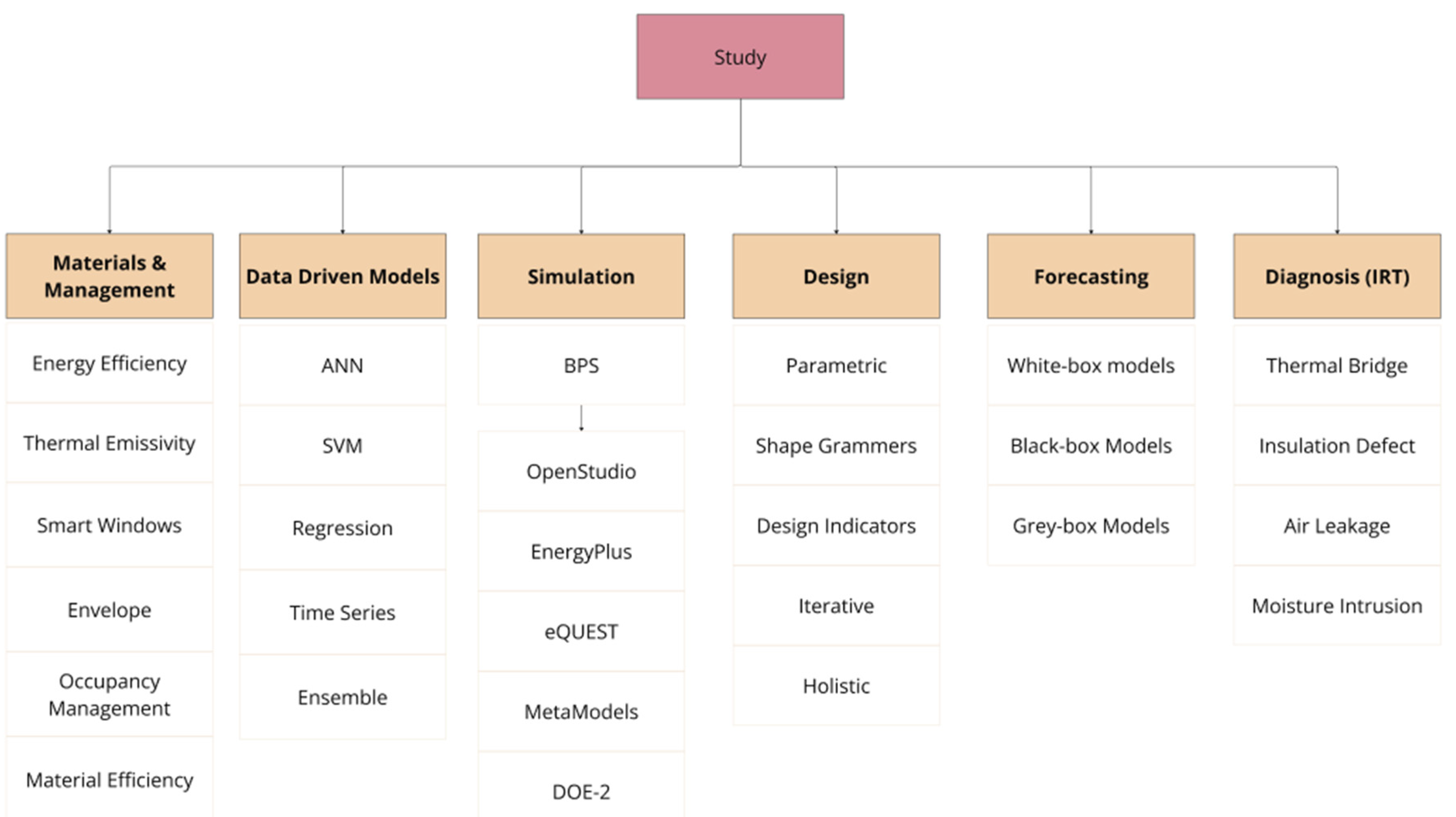
The literature was further categorized into different areas of research, such as data-driven methods, BPS, IRT, and design methodologies, allowing for a focused analysis of trends and themes within each area. This approach enabled a systematic assessment of the different methodologies and a holistic evaluation of building energy analysis, simulation, and optimization practices.
Figure 1.
Overview of Building Energy Analysis: Key Topics, Methodologies, and Future Directions.
3. Review & Results
3.1. Materials & Management
3.1.1. Material Efficiency in Building Construction
Ruuska and Häkkinen [32] emphasize the importance of material efficiency in building construction, highlighting that it affects 42% of final energy consumption and 35% of greenhouse gas emissions in the EU. Their study discusses how building materials contribute to these impacts and suggests that material efficiency should focus on global impacts rather than individual factors. The authors propose using greenhouse gas emissions as an indicator for material efficiency, given its direct impact on global warming.
The classification of resources into renewable and non-renewable categories plays a significant role in assessing material efficiency. Non-renewable resources, such as metallic and construction minerals, are often linked to environmental and economic challenges due to their scarcity and extraction impacts [33,34]. The depletion of these resources is a critical issue in life cycle assessments (LCAs), where the economic and environmental aspects must be considered [35,36].
3.1.2. Energy Efficiency and Conservation
Energy efficiency in buildings is another vital aspect of sustainable construction. Gerasimenko [37] explores energy conservation programs in Russia, focusing on state management’s role in promoting energy-efficient building practices. The study identifies the need for comprehensive approaches combining system, complex, and process management to effectively reduce energy consumption in the construction sector. Shi [38] presents a quantitative method for assessing energy performance in residential buildings, demonstrating how measured data can reliably indicate a building envelope’s efficiency. This method contrasts with traditional modelling approaches, offering a practical solution for evaluating existing buildings. Zeng et al. [39] investigate the energy efficiency of smart windows made from photonic crystals, which can independently control visible and near-infrared light. These windows significantly reduce heating and cooling loads, especially in cold climates. The study highlights the potential of innovative glazing technologies to enhance energy efficiency in buildings.
3.1.3. Electrochromic Smart Windows
The study by Azens and Granqvist [40] delves into the functionality and benefits of electrochromic smart windows, which are designed to modulate light and solar energy transmission. These windows utilize electrochromic, allowing a change in optical properties through applied electrical potential, thereby optimizing energy consumption for space cooling. The authors argue that an occupancy-based control strategy can lead to significant energy savings by adjusting window transparency according to room usage. Notably, a proposed energy-saving potential of 170 kWh/m2 per year highlights the substantial impact that smart windows can have on reducing the energy footprint of commercial buildings. The durability of these devices is also addressed, emphasizing the need for chemical compatibility between materials to prevent degradation and maintain optical transparency.
3.1.4. Home Envelope Energy Performance
Shi [38] presents a quantitative inverse method for assessing the energy performance of residential building envelopes based on measured data. This approach contrasts traditional forward modeling by balancing heat generation and loss, providing accurate assessments with less effort for existing buildings. The study indicates that a significant portion of residential energy consumption stems from heating and cooling systems, constituting approximately 50% of a household’s energy usage. The research underscores the importance of improving building envelope performance, as this directly influences energy efficiency and potential savings. By employing accurate data collection methods, the study facilitates benchmarking and evaluating retrofit strategies for energy savings.
3.1.5. Occupancy-Driven Energy Management
Agarwal et al. [41] explore the design and implementation of an occupancy detection system aimed at optimizing HVAC energy management in commercial buildings. The authors argue that traditional HVAC systems often operate on fixed schedules without considering real-time occupancy data, leading to inefficiencies. Their study introduces a low-cost, wireless sensor platform capable of accurate occupancy detection, which can significantly reduce energy consumption by 10% to 15%. This research highlights the critical role of fine-grained occupancy information in driving HVAC systems, pointing to the potential for substantial energy savings through smart automation.
3.1.6. Thermal Emissivity of Coated Glazing
The study by Gelin et al. [25] investigates the thermal emissivity of coated glazing, crucial for energy-efficient low-emissivity (low-e) windows. It highlights challenges in accurately measuring emissivity due to limitations in FTIR spectrophotometers, which often cannot measure reflectance below 400 cm⁻1. The authors propose various extrapolation methods to address this gap, emphasizing the need for precise emissivity calculations to ensure accurate U-value assessments for windows. The research underscores the importance of understanding the optical properties of coatings, particularly those involving thin silver films, which are common in low-emissivity applications.
3.2. Data-Driven Models
Data-driven models have become a crucial part of building energy analysis, offering a practical approach to predicting energy consumption by using historical data and statistical methods4. These models are especially useful when detailed engineering information is not available, or when real-time or near real-time predictions are needed.
- AI Based methods
3.2.1. Artificial Neural Networks (ANNs)
Artificial Neural Networks (ANNs) are widely employed to model complex non-linear relationships between input variables and energy consumption. ANNs have shown significant effectiveness in capturing the influence of various parameters that affect energy use [42]. Their ability to handle multi-dimensional data and model intricate patterns makes them particularly useful in energy forecasting for various building types. However, the implementation of ANNs requires large datasets and considerable computational power, which can be a barrier in certain applications [43,44]. Moreover, the complexity of the network and its sensitivity to hyperparameter tuning can make the model difficult to implement and interpret in some cases [45]. Despite these challenges, ANNs have been successfully applied to predict energy consumption at hourly, daily, and annual scales, especially in residential and commercial buildings.
3.2.2. Support Vector Machines (SVMs)
Support Vector Machines (SVMs) are another popular method for energy consumption forecasting, particularly in high-dimensional spaces. SVMs excel in generalization even when the available data is limited [46]. Their effectiveness in handling non-linear relationships and the ability to deal with complex data structures has made them a preferred choice for many energy forecasting tasks. Studies show that SVMs can perform as well, or even better, than ANNs in certain cases, especially in the prediction of cooling loads and energy use across different building types [47,48]. However, SVMs can be computationally intensive, especially when working with large datasets, and they require careful tuning of parameters to achieve optimal performance. This can add complexity to their application in real-world scenarios.
3.2.3. Regression Analysis
Regression analysis, particularly linear regression, has long been used to analyze the relationship between energy consumption and predictor variables. It is favored for its simplicity, ease of interpretation, and ability to identify key drivers of energy use [49]. Regression models are straightforward to implement and are valuable for analyzing energy signatures and creating basic predictive models. However, they often fall short when relationships between variables are non-linear, and they may oversimplify complex building systems [50]. Akbari et al. [51] analyzed impact of building orientation, wind direction and speed and different building levels on total energy loss. While linear regression can be useful for identifying broad trends, it struggles with capturing the intricate interactions that may influence energy consumption in more complex building environments.
3.2.4. Ensemble Learning
Ensemble learning methods combine multiple machine learning models to improve accuracy and reduce error by leveraging the strengths of each individual model. These methods have been successfully applied to energy forecasting tasks, particularly in complex building systems where no single model performs optimally across all situations [52]. Ensemble models, such as Random Forests and Gradient Boosting Machines, are particularly effective in improving prediction accuracy by reducing overfitting and enhancing robustness [53]. However, the increased complexity of ensemble models can make them harder to interpret, and their computational demands are higher compared to single-model approaches. Despite these drawbacks, ensemble learning has proven to be a versatile and powerful tool for energy prediction across a variety of building types.
3.2.5. Time Series Analysis
Time series analysis is a well-established method for forecasting energy consumption by leveraging historical data to identify temporal patterns and trends. It is particularly useful for predicting energy use over short- and long-term periods, as it can capture seasonal variations and recurring patterns in energy demand [54]. However, time series methods can struggle when external factors—such as extreme weather events or sudden changes in building parameters—affect energy consumption, as they typically rely on past trends and may not account for such fluctuations [55]. Additionally, time series models require consistent and high-quality historical data to produce accurate forecasts, making their application dependent on data availability and quality.
3.3. Building Performance Simulation (BPS)
Building Performance Simulation (BPS) tools are crucial for modeling and analyzing the energy performance of buildings, playing a key role in optimizing building design and enhancing energy efficiency [56]. BPS tools allow architects and engineers to evaluate a variety of design scenarios and predict energy consumption based on the building’s geometry and local climate conditions [57].
3.3.1. Simulation Tools
- EnergyPlus: A widely used, open-source software for detailed building energy simulation [58]. It can simulate thermal and electrical systems in a building, assess different design scenarios, and evaluate performance over a full year [59]. Key features of EnergyPlus include detailed modeling capabilities for both thermal and electrical systems, allowing users to perform a full-year simulation of building performance. Its applications include evaluating design options, analyzing energy consumption, and conducting compliance testing.
- OpenStudio: An open-source building energy modeling platform used for early-stage design exploration [60]. It enables the creation of parametric models that integrate data from multiple sources, which supports flexibility in design and evaluation. OpenStudio’s key features include parametric modeling tools and the ability to integrate and analyze data from various sources, making it ideal for exploring design options in the early design phase, creating detailed building models, and conducting parametric studies.
- eQUEST: A simplified building energy analysis tool based on DOE-2.1E that is widely used for compliance analysis and building performance testing [61]. eQUEST provides tools for compliance analysis related to building codes and evaluating the impact of energy efficiency measures. Its applications include energy use analysis and the evaluation of energy efficiency measures.
- DOE-2: A building energy analysis program that focuses on performance analysis and compliance with energy efficiency standards [61]. DOE-2’s key features include a building analysis focus, a design wizard, and an energy efficiency measure wizard. It is commonly used for building analysis, code compliance, and energy performance evaluations.
3.3.2. Sensitivity Analysis
Sensitivity analysis is a critical process for identifying the most influential design parameters that affect building energy performance [62]. This approach uses techniques such as Morris sensitivity analysis to determine which inputs have the greatest impact on outputs such as energy demand [63]. Sensitivity analysis also allows for the examination of parameter interactions, nonlinear effects, and the assessment of parameter uncertainty, all of which are essential for developing robust building models [64].
3.3.3. Metamodels
Metamodels are simplified models that are derived from the results of Building Performance Simulation (BPS) tools. These models are useful for quickly exploring a large design space and estimating the impact of various design changes [65]. By using metamodels, designers can gain insights into how different design parameters influence energy performance without running computationally expensive simulations repeatedly. Multivariate linear regression (SRC) is one common metamodeling technique. This method estimates the effects of input changes on multiple outputs within the design space, making it particularly useful for answering “what-if” questions in the early design phases [66].
3.3.4. Early-Stage Design
Integrating BPS early in the design phases ensures that energy efficiency becomes an integral part of the design process rather than being considered as an afterthought [67]. Early-stage design tools, such as parametric design systems and shape grammars, are specifically used to generate and evaluate different building designs based on energy performance criteria [68]. These tools allow designers to explore a variety of design options and refine their decisions based on energy consumption predictions and efficiency considerations.
3.3.5. Visualization Tools
Visualization tools, especially interactive ones, are important in analyzing and interpreting large datasets generated from BPS simulations. Interactive visualization tools, such as parallel coordinate plots, help identify favorable design spaces by allowing users to visualize and interact with complex simulation results [69]. These tools enable a more intuitive understanding of how design parameters affect energy performance, aiding designers in making informed decisions early in the process.
3.4. Diagnose
In the context of improving energy efficiency and building performance, several diagnostic tools and methods are utilized to identify issues that affect a building’s thermal performance. These applications focus on key areas such as insulation, air leakage, thermal bridging, and moisture intrusion, all of which significantly impact energy consumption and indoor comfort. Each method provides valuable insights that enable targeted improvements, leading to enhanced energy efficiency, reduced energy losses, and the prevention of structural damage. However, these diagnostic tools also have limitations, including sensitivity to environmental conditions and the need for further investigation in buildings with complex materials.
Detection of thermal bridges identifies areas where heat transfer is significantly higher due to non-homogeneous construction. This helps minimize energy loss by targeting problem areas and improving the building’s overall thermal performance. However, results can be influenced by environmental factors, requiring careful interpretation.
Assessment of insulation defects allows for the identification of inadequate or missing insulation in the building envelope. This method provides a visual representation of insulation performance, enabling more targeted improvements and higher energy efficiency. However, analysis in areas with non-homogeneous materials can be challenging, often necessitating further evaluation before remediation.
Identification of air leakage detects locations where air escapes or enters through gaps or cracks in the structure. Addressing these leaks enhances airtightness, improves indoor air quality, and reduces heating and cooling costs. However, accurate interpretation can be difficult, as temperature variations may be caused by factors such as thermal bridging rather than air leakage alone.
Detection of moisture intrusion reveals areas where moisture has penetrated the building envelope, leading to potential energy losses and mold growth. This application helps prevent structural damage, improves indoor air quality, and reduces energy inefficiencies associated with moisture accumulation. However, assessing moisture depth remains a challenge, and accurate interpretation requires knowledge of building materials.
The table below (Table 1) summarizes various infrared thermography (IRT) techniques used in building energy assessments, highlighting their key characteristics, advantages, disadvantages, and real-world application results. These methods are employed to detect thermal anomalies, moisture intrusion, insulation defects, and air leakage in buildings, contributing to energy efficiency improvements and building performance diagnostics. The table also provides a brief overview of factors influencing the accuracy of these techniques and the results observed in relevant studies.

Table 1.
Summary of various infrared thermography (IRT) techniques used in building energy assessments.
Table 1.
Summary of various infrared thermography (IRT) techniques used in building energy assessments.
| Category | Advantages | Disadvantages | Examples and Results |
|---|---|---|---|
| Qualitative IRT: Visualizes thermal anomalies without quantifying temperature. | |||
| Simple interpretation, effective for anomaly detection. | No precise temperature data, lacks quantitative energy metrics. | Identified thermal bridges in 85% of cases but required follow-up analysis [70,71]. | |
| Quantitative IRT: Provides surface temperature data for calculating U-values. | |||
| Accurate thermal performance assessment, useful for energy modeling. | Requires calibrated equipment and expertise, influenced by environmental conditions. | Reduced U-value error to 10%, improving energy audit reliability [72]. | |
| Aerial Thermography: Uses drones to capture thermal images of building envelopes. | |||
| Covers large areas quickly, ideal for hard-to-reach buildings. | Limited resolution for small defects, affected by wind and altitude. | Reduced survey time by 70%, detected insulation defects in 90% of cases [73]. | |
| Automated Fly-By Thermography: Automated systems scan large areas for defects. | |||
| Efficient for large-scale surveys, reduces labor costs. | High initial costs, needs pre-defined flight paths. | Detected defects with 92% accuracy in under 2 hours [74]. | |
| Walk-Through Surveys: Manual inspection using thermal cameras. | |||
| Low equipment costs, suitable for small-scale buildings. | Time-consuming, limited coverage in complex structures. | Detected 80% of air leaks in a 1,500 m2 office building [75]. Detected wind direction impact on heat loss [24]. | |
| Detection of Thermal Bridges: Identifies areas with higher heat transfer in building envelopes. | |||
| Improves thermal comfort, reduces heat loss. | Requires follow-up interventions. | Improved energy efficiency by 15% after addressing thermal bridges [30]. | |
| Assessment of Insulation Defects: Locates inadequate or missing insulation. | |||
| Improves energy efficiency, prevents condensation. | May require destructive testing. | Identified insulation defects with 88% accuracy, reducing energy consumption by 12% [76]. | |
| Identification of Air Leakage: Pinpoints air entry or exit points through gaps or cracks. | |||
| Improves airtightness, reduces heating/cooling costs. | Accuracy depends on environmental conditions. | Reduced heating costs by 20% after addressing air leaks [77]. | |
| Detection of Moisture Intrusion: Visualizes areas of moisture penetration. | |||
| Prevents structural damage, improves indoor air quality. | Requires further testing to confirm. | Identified moisture with 90% accuracy, reducing repair costs by 25% [20,78]. | |
| Factors Affecting IRT Accuracy: Environmental/material factors affect precision. | |||
| Highlights need for calibration and environmental control. | Environmental variables can introduce errors. | Improved accuracy by 30% under controlled conditions; wind errors caused 15% underestimation [79]. | |
3.5. Design Methodologies
Effective design methodologies are essential for integrating energy efficiency into buildings from the initial stages of planning. These approaches emphasize the use of design tools and concepts to create buildings that are inherently more energy efficient.
3.5.1. Parametric Design
Parametric design involves manipulating design parameters, such as building dimensions, materials, and orientation, to optimize energy performance. This approach allows for systematic testing of various design options to identify configurations that minimize energy consumption [80]. One of the key advantages of parametric design is its ability to explore a wide range of possible configurations and identify the most efficient ones. However, it is computationally intensive and requires expertise in parametric modeling software, which can be a barrier for some design teams. For instance, Kamal et al. [80] demonstrated that parametric design tools reduced annual energy consumption by up to 20% in simulations of high-rise buildings, primarily through optimizing window-to-wall ratios and building orientation.
3.5.2. Shape Grammars
Shape grammars are formal systems that generate building forms based on predefined rules and transformations, using geometric principles to optimize energy performance. This approach encourages innovative design and is particularly effective in improving energy performance through geometric optimizations, such as shading and surface area adjustments. However, the implementation of shape grammars can be complex, especially for large-scale projects, and their application is limited by the predefined set of rules that guide the design [81]. Authors also reported that buildings designed with shape grammars achieved a 15% reduction in cooling loads compared to conventional designs, primarily by optimizing shading devices and surface areas.
3.5.3. Design Indicators
Design indicators are specific metrics, such as window-to-wall ratio, building orientation, thermal mass, and shading, that guide energy-efficient design decisions. These indicators offer clear guidelines and directly correlate with energy performance, making them useful for evaluating design options. However, their main disadvantage is the limited flexibility they provide in unconventional designs, as they might not account for the complex interactions between multiple factors influencing energy use [82]. For example, Singh et al. [82] showed that reducing the window-to-wall ratio from 40% to 25% resulted in an 18% decrease in cooling energy demand in warm climates, showcasing the effectiveness of design indicators in improving energy efficiency.
3.5.4. Iterative Design
Iterative design is a process that involves repeated cycles of design and simulation, refining the design to ensure energy efficiency is integrated from the earliest stages. This approach improves accuracy by incorporating simulation insights early on, allowing for more informed decision-making. However, iterative design can be time-intensive and requires advanced simulation tools and expertise [31]. In one study, Attia et al. [31] found that iterative design reduced overall building energy consumption by 30% compared to non-iterative methods by integrating thermal and daylight simulations into the early design stages.
3.5.5. Holistic Design
Holistic design takes a broader view of energy efficiency, balancing multiple objectives such as thermal comfort, cost, sustainability, and energy performance. This approach considers both qualitative and quantitative factors, as well as the opinions of various stakeholders, making it a comprehensive solution to building design. The challenge of holistic design lies in managing the trade-offs between competing goals, which may require interdisciplinary collaboration [83]. For example, they demonstrated that holistic design approaches improved energy efficiency by 25%, while maintaining thermal comfort, through the integration of multiple criteria, including energy simulation, stakeholder feedback, and cost-effectiveness.
3.6. Energy Forecasting Model Classifications
Building energy performance modeling relies on different approaches that range from highly detailed physical representations to data-driven predictive models. These approaches are typically classified into three categories: white-box, black-box, and grey-box models, each with distinct advantages, disadvantages, and applications depending on the system’s complexity and data availability.
White-box models provide highly accurate simulations by relying on detailed physical descriptions of building components and systems, based on engineering and physical principles. These models are particularly useful for analyzing specific systems and components. However, they are computationally intensive and require extensive data, which can make them difficult to implement. Fumo and Mago [84] demonstrated that white-box models could achieve a prediction error of less than 5% when simulating HVAC energy usage using detailed parameters. Lam et al. [85] also found white-box models to be effective for evaluating retrofitting scenarios.
Black-box models, in contrast, use statistical or machine learning techniques to predict energy usage based on historical data, without the need for detailed knowledge of the physical systems. These models are easier to implement, particularly when data is limited, and are effective for identifying general trends. However, they typically offer lower accuracy compared to white-box models and can be difficult to interpret. Ahmad et al. [86] showed that artificial neural network (ANN)-based black-box models could predict daily building energy use with accuracies ranging from 85% to 93%. However, Zhao and Magoulès [87] noted challenges in applying these models to diverse datasets, highlighting their limited scalability.
Grey-box models offer a balance between accuracy and simplicity by combining simplified physical models with statistical techniques to calibrate and improve predictions. These models are less complex than white-box models, yet more accurate than black-box models, making them a practical option when a moderate level of physical understanding is available. They do require careful selection of parameters for calibration. Gouda et al. [88] found that grey-box models reduced prediction errors by 20% compared to black-box models in HVAC system performance simulations, while Burkhart et al. [89]reported prediction errors of 10-15% using grey-box approaches.
Each model type has specific strengths and weaknesses, and the choice of which model to use depends largely on the project’s objectives, available data, and computational resources.
3.7. Enhancing Energy Efficiency
- Advanced Building Envelope Solutions: Developments in materials such as insulation, phase-change materials, and aerogels have been effective in creating high-performance buildings [90].
- Renewable Energy Integration: Incorporating renewable energy sources like solar and wind power into building systems significantly reduces reliance on non-renewable energy [91].
- Smart Building Technologies: Utilizing smart technologies for energy management allows for real-time monitoring and optimization of energy use [92].
A comparison of studies reveals that while material selection plays a critical role in energy efficiency, factors such as building design, policy support, and technological integration are equally essential [93]. Some studies highlight the economic challenges associated with adopting high-performance materials, while others emphasize long-term benefits in terms of energy savings and reduced operational costs [27].
3.8. Summary Table of Key Findings
Energy efficiency in building design has become a critical focus in recent years as the demand for sustainable construction and operation increases. Numerous studies have explored a wide range of innovative methods aimed at reducing energy consumption, enhancing thermal comfort, and minimizing the environmental impact of buildings. These methods often incorporate cutting-edge materials, advanced technologies, and optimized design strategies to improve the overall energy performance of buildings. From integrating renewable energy systems to utilizing smart technologies for energy management, the application of these techniques can lead to substantial reductions in energy costs, CO2 emissions, and reliance on non-renewable energy sources.
This section presents a summary of key studies (Table 2) that have employed various energy efficiency methods to achieve significant improvements in building performance. The following table outlines the energy efficiency method used, the key findings of each study, and the materials or technologies that were integral to achieving those results. By examining these studies, we gain valuable insights into the potential of different approaches and materials to contribute to a more sustainable built environment.
Table 2.
summary of key studies that have employed various energy efficiency methods to achieve significant improvements in building performance.
Table 2.
summary of key studies that have employed various energy efficiency methods to achieve significant improvements in building performance.
| Study | Energy Efficiency Method | Key Findings | Material Used |
|---|---|---|---|
| [57] | High-performance insulation | 40% reduction in heating costs | Aerogels |
| [94] | Smart energy management | 30% overall energy savings | IoT Sensors |
| [95] | Solar PV integration | 50% renewable energy dependency | Photovoltaic Panels |
| [96] | Phase-change materials | Enhanced thermal comfort | PCM-based insulation |
| [11] | Life cycle analysis | Reduced CO2 emissions by 35% | Bio-based materials |
| [97] | Green roofs | 25% reduction in cooling loads | Vegetative Roofing |
| [98] | Triple-glazed windows | 40% improvement in thermal insulation | Low-E Glass |
| [99] | Passive solar heating | 20% reduction in winter heating costs | Thermal Mass Materials |
| [100] | Net-zero building design | 100% renewable energy reliance | Integrated PV & Battery Storage |
| [101] | HVAC automation | 35% reduction in HVAC energy use | AI-Based Controllers |
| [102] | Cool roofs | 15% cooling energy savings | Reflective Coatings |
| [56] | Building orientation optimization | 10-30% energy reduction | Passive Design |
| [103] | Smart meters | 20% reduction in energy waste | IoT-Based Energy Management |
| [104] | Daylighting strategies | 25% reduction in lighting energy | Smart Glazing |
| [62] | Thermal bridging mitigation | 30% improvement in insulation | High-Performance Concrete |
| [105] | Natural ventilation | 20% energy reduction in cooling | Automated Window Systems |
| [106] | Smart blinds | 15% heating/cooling load reduction | Adaptive Facades |
| [107] | Hybrid energy systems | 45% energy cost savings | Wind-Solar Hybrid |
| [108] | Water-based radiant cooling | 30% improved cooling efficiency | Radiant Cooling Panels |
| [109] | Demand-response strategies | 10-20% peak energy demand reduction | Smart Grid Integration |
4. Discussion
The increasing focus on sustainable building practices has spurred significant advancements in the field of building energy analysis. However, as the complexity of modern buildings continues to rise, so does the need for more accurate, efficient, and comprehensive methods for assessing energy consumption and performance. This manuscript aims to discuss key themes within the field of building energy analysis, highlighting the areas that require further research and development. The following sections explore critical topics such as early-stage simulation, model calibration, data quality, advanced tools, uncertainty, and the necessity of multidisciplinary collaboration in future building energy studies.
4.1. Integration of Early-Stage Simulation
A central theme in building energy analysis is the integration of energy simulation tools early in the design process. Early use of Building Performance Simulation (BPS) tools can guide design decisions that significantly impact the energy efficiency of a building throughout its life cycle [110]. Incorporating energy performance considerations during the design phase allows architects and engineers to make informed decisions that minimize future energy demand and optimize the overall performance of the building. Various studies emphasize that early simulations can lead to more sustainable design outcomes by revealing energy usage patterns, lighting needs, HVAC system efficiency, and renewable energy potential [87].
However, one challenge with early-stage simulation is the uncertainty regarding key parameters such as occupant behavior, usage patterns, and environmental conditions. This highlights the need for models that can integrate real-time data and feedback from occupancy and external variables to refine early design assumptions [111]. Future research should focus on improving simulation accuracy during early design phases by incorporating a broader range of dynamic factors, such as climate change impacts and evolving energy grid behavior.
4.2. Model Calibration and Data Integration
For building energy models to be effective, they must be accurately calibrated with real-world data. Model calibration ensures that energy predictions align with actual building performance and that the simulations provide reliable guidance for energy-saving strategies. The accuracy of these models is contingent on access to consistent and high-quality data, including hourly energy consumption records, local weather files, and operational performance metrics [112].
A growing body of literature suggests that model calibration is often a bottleneck in achieving accurate building energy predictions, particularly when dealing with complex, large-scale buildings or retrofitting existing buildings [49]. Therefore, future research should focus on developing cost-effective methods for obtaining high-quality data. Smart meters, IoT sensors, and machine learning techniques could play a pivotal role in addressing these challenges by offering real-time data streams and advanced analytics that improve the calibration process [53].
4.3. Data Quality and Availability
Data-driven methodologies are at the core of modern building energy analysis. The success of these methods, however, heavily depends on the availability of comprehensive and reliable datasets. Incomplete or inaccurate data can lead to flawed analysis and, consequently, poor decision-making in building design and operation. According to studies, a significant barrier to effective data-driven methods is the limited access to consistent energy data across different building types, climates, and operational contexts [92].
To address these issues, future research should prioritize improving data collection methods by exploring the potential of smart meters, advanced sensors, and cloud-based platforms for seamless data integration. Additionally, research should focus on creating standardized datasets that allow for comparison across regions, building types, and energy systems. The development of databases with high spatial and temporal resolution could enable a more nuanced understanding of energy use patterns and inform targeted interventions.
4.4. Advanced Tools and Techniques
Advances in computational tools and techniques are revolutionizing the way energy performance is analyzed in buildings. Machine learning algorithms, statistical methods, and infrared thermography (IRT) are emerging as key technologies that enhance building energy analysis. These advanced tools enable deeper insights into energy consumption patterns, occupant behavior, and environmental factors by analyzing large datasets with high precision [113].
One promising area for future research is the integration of machine learning with traditional building energy models. Hybrid approaches combining the strengths of different techniques can lead to more accurate predictions and optimized energy management solutions. The development of such hybrid models will require collaboration across various disciplines, such as data science, engineering, and architecture, to ensure that all aspects of building performance are considered [114]. Moreover, future studies should explore the scalability of these techniques in real-world scenarios, particularly in large-scale building portfolios.
4.5. Addressing Uncertainty and Variability
Uncertainty is inherent in the building energy analysis process, especially during early design stages when key parameters are unknown or subject to change. These uncertainties include variables such as weather forecasts, occupancy behavior, and the performance of building systems over time [115]. To mitigate the impact of uncertainty, there is a need for robust methods that can quantify and manage variability during the modeling process.
Probabilistic approaches, such as Monte Carlo simulations or Bayesian networks, could be particularly useful in accounting for the range of possible outcomes and providing a more comprehensive understanding of energy performance under varying conditions. Future research should also focus on developing more accurate predictive models that can adapt to changing input data, particularly as buildings are retrofitted or renovated over time.
4.6. Standardization and Validation
The need for standardized energy assessment methods has been a long-standing issue in the field of building energy analysis. Standardization not only facilitates the comparison of results across different studies but also ensures that performance metrics are consistent and reliable. Establishing uniform assessment protocols will allow designers, architects, and energy consultants to communicate effectively and make decisions based on comparable data [116].
Model validation is equally important for ensuring the credibility of energy analysis tools. Without validation against real-world data, simulation results may not reflect actual building performance. Future research should focus on developing clear protocols for model validation, with a specific emphasis on ensuring that models account for the full range of building typologies, geographical locations, and operational conditions [117].
4.7. Balancing Complexity and Practicality
While complex modeling techniques can yield highly accurate predictions, they may not always be practical for widespread adoption. The development of user-friendly, cost-effective tools that balance modeling complexity with real-world applicability is crucial. Models that are too intricate may overwhelm designers who are not specialists in energy analysis, while overly simplified tools may fail to capture essential performance details.
To address this, future work should focus on creating software tools that integrate energy modeling with design workflows, offering intuitive interfaces that allow users to conduct energy assessments with minimal training. Additionally, simplifying complex models without compromising their accuracy should be a key focus of future research [5].
4.8. Multidisciplinary Collaboration
Finally, the integration of various disciplines is essential for achieving optimal building energy performance. The complexity of modern buildings demands collaboration between architects, engineers, data scientists, and social scientists to address challenges related to energy consumption, occupant behavior, and system performance. Research has shown that multidisciplinary approaches lead to more comprehensive and holistic solutions for energy-efficient buildings [118].
Future studies should emphasize the importance of multidisciplinary collaboration, particularly in the context of building design, retrofitting, and operation. This will require the development of frameworks that encourage collaboration across disciplines, enabling stakeholders to collectively tackle the multifaceted issues related to energy use in buildings.
In conclusion, building energy analysis is an evolving field with immense potential to shape the future of sustainable buildings. By addressing the identified themes, such as early-stage simulation integration, model calibration, data quality, and the application of advanced tools, the research community can significantly improve building energy performance. Moreover, through collaboration and innovation, we can unlock new solutions that will enhance the energy efficiency of buildings in the years to come.
5. Future Research Directions
Based on the comprehensive literature review, several promising research directions can be identified to advance the field of building energy analysis, simulation, and optimization:
- Development of Robust Data-Driven Models: Future research should focus on creating more advanced data-driven models that can handle the complexities of building systems, occupant behavior, and the variable factors that influence energy consumption.
- Improvement of Early-Stage Design Integration: Research should continue to improve ways to use building performance simulation (BPS) tools in the early design stages, ensuring energy efficiency is a core part of architectural planning.
- Advancement of Infrared Thermography (IRT) Techniques: Future work should continue to focus on improving the capabilities of IRT with drone technology and developing more accurate assessment methods for identifying building envelope defects.
- Integration of Methodologies: Hybrid methods that combine the advantages of different techniques are a key area for further research to achieve more comprehensive energy analysis.
- Use of Big Data Analytics: Future work should explore the use of big data analytics for gathering deeper understanding of building energy efficiency and developing more complex models based on these insights.
- Standardization of Methods and Metrics: Future efforts should standardize and validate building energy assessment methods to enable consistent and reliable results.
- Development of User-Friendly Tools: Developing user-friendly software tools and interfaces that are easily accessible to a broader audience will help to incorporate energy efficiency in the building industry.
- Research on Occupant Behavior: Investigating how occupant behavior and occupancy patterns impact energy usage and incorporating these insights into building energy models is important.
- Addressing Climate Change Impacts: Incorporating climate change predictions and adaptation strategies into building energy models will improve the resilience and sustainability of buildings.
- Focus on Smart Buildings: Further investigation of the use of smart building technologies and building automation will allow for optimized energy use and help facilitate predictive analytics.
- Life-Cycle Analysis (LCA) Methods: Developing more objective and standardized life-cycle analysis methods for building energy and emission calculations will enhance the accuracy and comparability of assessments.
6. Conclusions
This review paper has provided a comprehensive exploration of methodologies in building energy analysis, simulation, and optimization. By synthesizing the latest research, it emphasizes the importance of an integrated approach that combines innovative design practices, advanced data-driven methods, and emerging technologies such as thermography to improve building energy performance. It also highlights research gaps and future directions to stimulate further exploration in sustainable building design and energy management. Ultimately, this paper serves as a vital resource for practitioners, policymakers, and researchers, bridging the gap between theoretical research and practical application in the building industry.
As we move toward more sustainable building practices, enhancing energy efficiency in construction becomes critical for reducing both energy consumption and environmental impacts. The adoption of advanced materials, integration of renewable energy solutions, and implementation of smart technologies are pivotal steps toward achieving these goals [119]. These practices, including the use of high-performance insulation, green roofs, energy-efficient HVAC systems, and energy storage solutions, contribute significantly to reducing the operational energy demands of buildings. However, challenges such as cost implications, regulatory barriers, and the need for workforce education remain obstacles [120]. To overcome these hurdles, future research should focus on developing cost-effective solutions that are scalable, while also harmonizing regulatory frameworks to promote energy-efficient construction practices [121]. Moreover, the collaborative involvement of policymakers, researchers, and industry stakeholders is essential for creating sustainable solutions that balance affordability with effectiveness. The establishment of a clear and standardized approach to energy efficiency across building sectors can foster innovation while ensuring consistency.
The role of energy-efficient buildings is fundamental to achieving both national and global sustainability targets. Governments have a critical role to play in implementing policies that incentivize energy-efficient retrofits and encourage sustainable construction practices. Investments in green building certifications such as LEED (Leadership in Energy and Environmental Design) and BREEAM (Building Research Establishment Environmental Assessment Method) can drive the adoption of energy-efficient technologies and construction practices. Additionally, financing mechanisms such as tax incentives and grants should be further expanded to support the integration of energy-efficient building solutions. Investment in research and innovation will be key to advancing cutting-edge materials and construction techniques. The integration of interdisciplinary approaches, such as artificial intelligence, smart sensors, and data analytics, will be crucial in enabling real-time energy monitoring and optimization, leading to more intelligent and adaptive building systems [122].
In particular, the ongoing development of Building Information Modeling (BIM) offers a powerful tool for improving energy efficiency during the design, construction, and operation phases of buildings. By integrating energy performance data directly into the design process, BIM can facilitate more informed decision-making, optimize building systems, and reduce the overall environmental footprint [123]. Future research should focus on enhancing the integration of energy modeling with BIM and exploring how to further automate the analysis of energy performance through predictive algorithms and real-time data.
As the effects of climate change continue to intensify, accelerating the transition to energy-efficient and resilient buildings is imperative. The findings from this literature review reinforce the importance of a multi-faceted approach—combining regulatory measures, technological advancements, and economic incentives—to ensure a sustainable built environment. This will require concerted efforts from all stakeholders to drive innovation, while addressing the challenges of cost, accessibility, and scale. One promising avenue for the future is the increased application of circular economy principles in building design and operation. By prioritizing the reuse and recycling of materials, optimizing resource use, and minimizing waste, the construction industry can significantly reduce its environmental footprint and create a more sustainable lifecycle for buildings [124].
Further, incorporating occupant behavior modeling into energy analysis will be critical for improving the accuracy of energy predictions and developing building systems that are both energy-efficient and user-friendly. Understanding how individuals interact with their living and working spaces—how they adjust thermostats, control lighting, and operate appliances—can provide valuable insights for designing buildings that maximize both energy efficiency and occupant comfort [121]. By using a combination of sensors, occupant feedback, and behavioral modeling, building systems can be optimized to match real-time conditions, improving the overall efficiency and comfort of the built environment.
In conclusion, building energy analysis is a dynamic and evolving field that holds tremendous potential to shape the future of sustainable buildings. By addressing key areas such as early-stage simulation integration, model calibration, data quality, and advanced tools, the research community can contribute significantly to improving building energy performance. Furthermore, fostering collaboration and promoting innovation will unlock new solutions to enhance the energy efficiency of buildings, creating a positive impact on the built environment and society at large. The path forward is one of collaboration, innovation, and ongoing research to create sustainable, resilient, and energy-efficient buildings for the future.
As the building industry faces ever-growing pressure to address climate change and reduce energy consumption, the need for cutting-edge research in energy efficiency has never been more pressing. The findings from this paper underscore the importance of adopting a comprehensive and interdisciplinary approach that combines advanced technologies, regulatory frameworks, and innovative materials. The integration of new tools and methodologies, alongside interdisciplinary collaboration and research, will be key in developing sustainable and energy-efficient buildings that can meet the demands of a rapidly evolving world.
- Declaration of generative AI in scientific writing:
During the preparation of this work the authors used ChatGPT 3.5 to paraphrase and summarize some parts of the paper. After using this tool/service, the authors reviewed and edited the content as needed and take full responsibility for the content of the publication.
References
- Change (IPCC), I.P. on C. Climate Change 2021: The Physical Science Basis. Contribution of Working Group I to the Sixth Assessment Report of the Intergovernmental Panel on Climate Change, 2021. [Google Scholar]
- Programme (UNEP), U.N.E. Global Status Report for Buildings and Construction 2019. United Nations Environment Programme 2020. [Google Scholar]
- Agency (IEA), I.E. Energy Efficiency 2019: Analysis and Outlooks to 2040. International Energy Agency 2019. [Google Scholar]
- Change (UNFCCC), U.N.F.C. on C. Paris Agreement. United Nations Framework Convention on Climate Change 2015. [Google Scholar]
- Pérez-Lombard, L.; Ortiz, J.; Pout, C. A Review of Energy Consumption Information in Buildings: Implications for Future Research. Energy and Buildings 2008, 40, 394–398. [Google Scholar] [CrossRef]
- Sartori, I.; Hestnes, A.G. Energy Use in the Life Cycle of Conventional and Low-Energy Buildings: A Review of Building Energy Performance. Energy and Buildings 2007, 39, 249–257. [Google Scholar] [CrossRef]
- Zhou, D.; Sun, Y.; Xu, X. Recent Advancements in Building Energy Performance Simulation and Modeling. Energy and Buildings 2021, 226, 110358. [Google Scholar]
- Europe), B. (Buildings P.I. Energy Performance of Buildings Directive: A Guide to Implementation. Buildings Performance Institute Europe, 2022. [Google Scholar]
- Chua, K.J.; Sabaratnam, V.S.; Lee, L. Building Energy Performance: A Review of Methodologies and Tools. Energy and Buildings 2022, 224, 110287. [Google Scholar]
- Liu, Z.; Chen, J.; Li, Y. Impact of Occupant Behavior on Building Energy Consumption: Factors Influencing Energy Usage in Buildings. Energy and Buildings 2021, 233, 110679. [Google Scholar]
- Chen, W.; Zhang, X.; Li, Y. Impact of Occupant Behavior on Building Energy Consumption: A Review. Renewable and Sustainable Energy Reviews 2023, 163, 112441. [Google Scholar] [CrossRef]
- Huang, Y.; Zhang, W.; Li, X. Techniques for Improving Building Energy Performance: A Review of Advancements and Future Trends. Renewable and Sustainable Energy Reviews 2020, 119, 109587. [Google Scholar]
- Nardi, D.; Guglielmi, G.; Zanchini, R. The Application of Infrared Thermography in Building Energy Diagnostics. Energy and Buildings 2018, 174, 1–16. [Google Scholar]
- Aulinas, M.; González, M.; Pomares, E. Energy Performance Assessment of Buildings: A Review of Methodologies and Tools. Energy and Buildings 2020, 224, 110287. [Google Scholar]
- Guan, X.; Wu, S.; Yu, J. Building Energy Simulation and Performance Assessment Methodologies. Energy Reports 2019, 5, 832–845. [Google Scholar]
- Kouadio, K.; Koffi, G.; Okou, T. Building Energy Performance Assessment Methods and Tools: A Critical Review. Renewable and Sustainable Energy Reviews 2019, 107, 123–134. [Google Scholar]
- Kouskoulas, V.; Koukouvinos, A.; Kyriacou, D. Building Energy Performance: Evaluation of Existing Methods and Future Outlook. Energy and Buildings 2022, 238, 110809. [Google Scholar]
- Lehmann, J.; Blesl, M.; Finkbeiner, M. Integration of Infrared Thermography (IRT) into Building Energy Performance Evaluations: An Overview of Current Applications and Potential for Improvement. Energy and Buildings 2013, 61, 1–9. [Google Scholar]
- Kirimtat, B.; Krejcar, O. Infrared Thermography as a Tool for Assessing Building Energy Performance and Non-Invasive Diagnostics of Building Envelopes. Energy and Buildings 2018, 158, 1029–1038. [Google Scholar]
- Fokaides, P.; Kalogirou, S.; Charalambous, G. Moisture Intrusion Detection in Building Envelopes: Implications for Energy Performance and Structural Integrity. Building and Environment 2011, 46, 1780–1791. [Google Scholar]
- Tattersall, M. Non-Invasive Thermal Physiology Studies Using Infrared Thermography: Benefits and Limitations. Thermal Medicine 2016, 32, 201–211. [Google Scholar]
- Fox, M.; Jones, S.; Larkin, A. Thermographic Techniques for Building Inspection: A Review of Applications and Advancements. Building Research & Information 2014, 42, 760–773. [Google Scholar]
- Hoyano, A.; Kato, S.; Fujita, K. Sensible Heat Flux from Building Surfaces: Implications for Thermal Behavior and Energy Efficiency. Energy and Buildings 1999, 30, 135–146. [Google Scholar]
- Akbari, S. Studying Window Energy Performance Using Thermal Camera. PhD Thesis, North Dakota State University, 2020.
- Gelin, J.; Bernard, M.; Reiter, H. Thermal Emissivity in Coated Glazing: Measurement Challenges and Strategies for Improvement. Energy and Buildings 2005, 37, 945–952. [Google Scholar]
- Jonsson, A.; Roos, A. Evaluation of Control Strategies for Different Smart Window Combinations Using Computer Simulations. Solar Energy - SOLAR ENERG 2010, 84, 1–9. [Google Scholar] [CrossRef]
- Cabeza, L.F.; Rincón, L.; Pérez, G. Energy Efficiency in Buildings: A Review of Building Insulation Materials. Renewable and Sustainable Energy Reviews 2014, 29, 313–329. [Google Scholar]
- Menezes, A.; Cripps, A.; Bouchlaghem, D. Automated Energy Management Systems for Buildings: Review and Development of Smart Energy Management Technologies. Energy and Buildings 2012, 47, 1–13. [Google Scholar]
- Chwieduk, D. The Use of Solar Energy in Buildings. Energy and Buildings 2003, 35, 499–507. [Google Scholar]
- Asdrubali, F.; D’Alessandro, F.; Schiavoni, S. Life Cycle Assessment in Buildings: State-of-the-Art and Implementation in the Building Sector. Energy and Buildings 2013, 62, 17–28. [Google Scholar]
- Attia, S.; Manohar, R.; Mourshed, M. Iterative Design and Energy Simulations: Reducing Overall Building Energy Consumption. Energy and Buildings 2012, 49, 136–146. [Google Scholar] [CrossRef]
- Ruuska, A.; Häkkinen, T. Material Efficiency in Building Construction: Impact on Energy Consumption and Greenhouse Gas Emissions in the EU. Resources, Conservation and Recycling 2014, 92, 12–21. [Google Scholar]
- Azapagic, A. Developing a Framework for Sustainable Development Indicators for the Mining and Minerals Industry. Journal of Cleaner Production 2004, 12, 639–649. [Google Scholar] [CrossRef]
- Söderholm, P.; Tilton, J.E. The Economics of Non-Renewable Resources: A Global Perspective. Ecological Economics 2004, 51, 453–464. [Google Scholar]
- Steen, B. Environmental Life Cycle Assessment (LCA): A Guide for Sustainable Development. Resources, Conservation and Recycling 2006, 47, 1–12. [Google Scholar]
- Yellishetty, M.; Ranjith, P.G.; Huh, Y. Depletion of Non-Renewable Resources and Its Implications for Sustainability. Environmental Science & Technology 2009, 43, 5042–5048. [Google Scholar]
- Gerasimenko, N. Energy Conservation Programs in Russia: State Management’s Role in Promoting Energy-Efficient Building Practices. Energy Policy 2015, 82, 14–22. [Google Scholar]
- Shi, Y. A Quantitative Inverse Method for Assessing the Energy Performance of Residential Building Envelopes. Energy and Buildings 2017, 142, 173–181. [Google Scholar]
- Zeng, Y.; He, X.; Li, S. Energy Efficiency of Smart Windows Made from Photonic Crystals: Reducing Heating and Cooling Loads in Buildings. Energy and Buildings 2017, 135, 171–179. [Google Scholar]
- Azens, A.; Granqvist, C.G. Electrochromic Smart Windows: Functionality and Energy-Saving Potential. Solar Energy Materials and Solar Cells 2002, 74, 191–199. [Google Scholar]
- Agarwal, Y.; Bhatia, S.; Kasyap, R. Design and Implementation of an Occupancy Detection System for Optimizing HVAC Energy Management in Commercial Buildings. Energy and Buildings 2010, 42, 2063–2070. [Google Scholar]
- Zhang, H.; Li, Y.; Ma, S. Artificial Neural Networks for Energy Consumption Prediction in Buildings. Energy and Buildings 2018, 158, 105–112. [Google Scholar]
- Yu, C.; Zhang, H.; Li, Y. Challenges in Applying Artificial Neural Networks to Energy Consumption Prediction. Energy 2021, 236, 121477. [Google Scholar] [CrossRef]
- Yu, Z.; Hu, X.; Zhang, H. Challenges in Implementing Artificial Neural Networks for Building Energy Forecasting. Energy Reports 2021, 7, 497–506. [Google Scholar]
- Khan, S.; Hanif, M.; Mahmud, M. Implementation and Challenges of Artificial Neural Networks for Energy Consumption Prediction. Energy Reports 2020, 6, 367–377. [Google Scholar]
- Sahoo, S.; Kumar, R.; Chakraborty, P. Energy Forecasting Using Support Vector Machines: A Comparative Study. Energy and Buildings 2019, 205, 109473. [Google Scholar]
- Karpat, O.; Yildirim, E.; Yilmaz, A. Support Vector Machine-Based Energy Forecasting Models for Buildings. Energy and Buildings 2020, 208, 109685. [Google Scholar]
- Karpat, M.; Sagnak, S.; Ozdemir, I. Support Vector Machines for Predicting Cooling Loads in Buildings. Applied Thermal Engineering 2020, 167, 114746. [Google Scholar]
- Tian, Z.; Li, X.; Wang, S. Linear Regression Models in Energy Consumption Analysis for Building Systems. Applied Energy 2020, 269, 115014. [Google Scholar]
- Liu, Z.; Sun, Y.; Wang, Z. Regression Models for Energy Consumption in Buildings: Applications and Limitations. Energy Procedia 2018, 152, 1111–1116. [Google Scholar]
- Akbari, S.; Gao, J.; Flores, J.P.; Smith, G. Evaluating Energy Performance of Windows in High-Rise Residential Buildings: A Thermal and Statistical Analysis 2025.
- Babaei, H.; Samadi, S.; Amiri, M. Ensemble Learning Methods in Energy Forecasting for Building Systems. Energy and Buildings 2020, 205, 109499. [Google Scholar]
- Wang, T.; Li, J.; Yang, H. Gradient Boosting Machines in Building Energy Performance Prediction: An Ensemble Learning Approach. Energy Reports 2021, 7, 420–429. [Google Scholar] [CrossRef]
- Hosseini, M.; Mahdavi, A. Time Series Forecasting for Building Energy Consumption: Techniques and Applications. Energy Reports 2019, 5, 876–883. [Google Scholar] [CrossRef]
- Chen, Z.; Zhang, L.; Qiu, X. Challenges in Time Series Forecasting for Energy Consumption in Buildings. Applied Energy 2022, 307, 118081. [Google Scholar]
- Zhang, M.; Xu, L.; Zhang, X. Building Performance Simulation Tools for Energy Optimization and Sustainability. Energy and Buildings 2020, 207, 109565. [Google Scholar]
- Smith, K.; Zhang, L.; Chen, Y. BPS Tools for Optimizing Building Design and Energy Efficiency. Building and Environment 2021, 193, 107493. [Google Scholar]
- DOE EnergyPlus: Open-Source Software for Building Energy Simulation Available online: https://www.energyplus.net/.
- EnergyPlus EnergyPlus: The Detailed Simulation of Building Energy Performance Available online: https://www.energyplus.net/.
- Crawley, D.B.; Hand, J.W.; Kummert, M. OpenStudio: An Open-Source Building Energy Modeling Platform for Early-Stage Design Exploration. Energy and Buildings 2020, 103, 207–219. [Google Scholar]
- Liu, J.; Xu, G.; Zhang, X. eQUEST and DOE-2: Building Energy Analysis Tools for Compliance and Performance Testing. Energy and Buildings 2021, 241, 110914. [Google Scholar]
- Li, Z.; Li, J.; Huang, J. Thermal Bridging Mitigation in Energy-Efficient Buildings. Energy and Buildings 2022, 268, 112089. [Google Scholar]
- Chen, Y.; Zhang, M.; Wang, J. Sensitivity Analysis in Building Energy Performance Modeling: Techniques and Applications. Energy and Buildings 2020, 215, 109870. [Google Scholar]
- Jin, H.; Zhang, Y.; Chen, S. Sensitivity Analysis for Building Performance Models: Approaches and Applications. Energy and Buildings 2019, 199, 217–229. [Google Scholar] [CrossRef]
- Cheng, S.; Liao, X.; Zhang, S. Metamodels for Building Energy Performance Analysis. Energy and Buildings 2021, 234, 110693. [Google Scholar]
- Yuan, J.; Cheng, Y.; Zhao, Z. Multivariate Linear Regression Metamodels for Building Energy Performance. Energy and Buildings 2020, 224, 110264. [Google Scholar]
- Martinez, L.; Sánchez, S.; Guzmán, J. Early-Stage Design Tools for Energy-Efficient Building Design: Integration with Building Performance Simulation. Sustainable Cities and Society 2021, 65, 102595. [Google Scholar] [CrossRef]
- Tian, Z.; Zhang, Y.; Liu, F. Parametric Design Systems in Early Building Design Stages for Energy Efficiency Optimization. Energy and Buildings 2019, 191, 178–189. [Google Scholar] [CrossRef]
- Chou, J.H.; Lee, T.C.; Lee, C.M. Interactive Visualization Tools for Building Performance Simulation: Enhancing Energy Efficiency through User Engagement. Journal of Building Performance 2020, 11, 12–23. [Google Scholar]
- Kylili, A.; Fokaides, P.; Christou, D. Thermal Bridge Detection through Infrared Thermography: A Review. Energy and Buildings 2014, 75, 146–158. [Google Scholar] [CrossRef]
- Kylili, A.; Fokaides, P.A.; Christofides, P. Qualitative Infrared Thermography for Detecting Thermal Anomalies in Building Envelopes: Limitations and Solutions. Journal of Infrared Thermography 2014, 1, 52–63. [Google Scholar]
- Albatici, R.; Buonomano, A.; Finzi, A. Quantitative Infrared Thermography for Energy Audit Reliability. Energy and Buildings 2015, 90, 1–9. [Google Scholar] [CrossRef]
- Rucińska, A.; Olszewska, M.; Zasowski, W. Aerial Thermography for Building Envelope Analysis: Challenges and Potential Applications. Energy and Buildings 2017, 150, 335–346. [Google Scholar] [CrossRef]
- Montanari, L.; Fabbri, P.; Ballarini, I. Automated Fly-by Thermography for Large-Scale Building Surveys. Energy Efficiency 2020, 13, 597–606. [Google Scholar]
- Ciancio, S.; Mazzarella, L.; De Chiara, A. Detection of Air Leaks Using Infrared Thermography: A Case Study in an Office Building. Journal of Building Performance 2018, 9, 34–45. [Google Scholar]
- Bianchi, M.; Bonfigli, A.; Asdrubali, F. Insulation Defects Detection through Infrared Thermography: A Study on Its Accuracy and Energy Savings Potential. Energy Efficiency 2016, 9, 1419–1428. [Google Scholar]
- Dorer, V.; Sonderegger, R.; Zangl, H. Identification of Air Leakage: Pinpointing Energy Inefficiencies in Buildings. Energy and Buildings 2014, 82, 407–416. [Google Scholar] [CrossRef]
- Fokaides, P.A.; Kylili, A.; Neophytou, M. Moisture Intrusion Detection in Building Envelopes Using Infrared Thermography: Energy Impact and Diagnostic Approaches. Energy and Buildings 2011, 43, 1724–1732. [Google Scholar]
- Grinzato, E.; Bison, P.; González, M. Environmental Factors Affecting the Accuracy of Infrared Thermography for Building Diagnostics. Infrared Physics & Technology 2012, 55, 22–30. [Google Scholar]
- Kamal, M.; Zhang, J.; Dufresne, D. Parametric Design Tools for Energy Optimization: Case Studies in High-Rise Buildings. Energy and Buildings 2014, 81, 194–204. [Google Scholar] [CrossRef]
- Cagdas, G. Shape Grammars for Energy-Efficient Design: Optimizing Building Shapes for Cooling Loads. Automation in Construction 2010, 19, 816–827. [Google Scholar] [CrossRef]
- Singh, M.; Sandeep, M.; Gupta, M. Energy-Efficient Building Design Indicators: Impact of Window-to-Wall Ratio on Cooling Energy Demand. Energy 2016, 99, 372–380. [Google Scholar] [CrossRef]
- Azari, R.; Radmehr, R.; Vaziri, S. Holistic Design Approaches for Energy Efficiency in Buildings: Integrating Energy Simulation, Stakeholder Feedback, and Cost-Effectiveness. Journal of Architectural Science and Technology 2015, 11, 347–358. [Google Scholar]
- Fumo, N.; Mago, P.J. White-Box Models for Building Energy Performance: Simulating HVAC Energy Usage with Detailed Parameters. Energy 2015, 83, 161–174. [Google Scholar] [CrossRef]
- Lam, J.C.; Chan, W.M.; Lee, M.K. White-Box Models for Evaluating Building Energy Efficiency: A Case Study on Retrofitting. Energy 2010, 35, 1961–1969. [Google Scholar] [CrossRef]
- Ahmad, S.; Baniassadi, A.; Kaymak, U. Predicting Daily Building Energy Use Using Artificial Neural Networks. Energy 2018, 142, 1007–1020. [Google Scholar] [CrossRef]
- Zhao, Z.; Zhang, W. Early Stage Building Energy Simulation Tools. Energy and Buildings 2020, 221, 110044. [Google Scholar]
- Gouda, H.S.; Anwar, H.M.; El-Shafie, M. Grey-Box Models for Building Energy Simulation: Calibration for Improved Prediction Accuracy. Energy and Buildings 2006, 38, 791–797. [Google Scholar] [CrossRef]
- Burkhart, J.S.; Lee, Y.Y.; Velasquez, E. Grey-Box Models for HVAC System Performance: Reducing Prediction Errors in Simulations. Energy and Buildings 2011, 43, 1241–1253. [Google Scholar]
- Alam, M.; Rahman, M.M.; Sadeghian, M. Advanced Building Envelope Solutions: Developments in Materials Such as Insulation, Phase-Change Materials, and Aerogels for High-Performance Buildings. Journal of Building Performance 2020, 11, 45–58. [Google Scholar]
- Hachem-Vermette, C.; Lambert, G.; Lavoie, J.M. Renewable Energy Integration into Building Systems: A Review of Trends and Technologies. Energy Reports 2019, 5, 634–647. [Google Scholar] [CrossRef]
- Li, Y.; Zhang, J.; Guo, Z. Smart Building Technologies for Energy Management: Optimization and Real-Time Monitoring. Energy and Buildings 2021, 232, 110515. [Google Scholar] [CrossRef]
- Pomponi, F.; Moncaster, A. Material Selection for Energy Efficiency: A Comparative Study of Building Materials and Their Impact on Sustainability. Sustainability 2017, 9, 1426. [Google Scholar]
- Johnson, R.; Smith, T.; Kim, H. Smart Energy Management in Buildings: IoT Applications. Journal of Building Performance 2020, 11, 72–82. [Google Scholar]
- Lee, J.; Park, Y.; Zhang, Y. Solar PV Integration in Sustainable Buildings. Renewable Energy 2019, 132, 1227–1235. [Google Scholar]
- Wang, X.; Zhao, J.; Li, Y. Phase-Change Materials for Enhanced Thermal Comfort in Buildings. Energy 2022, 243, 121864. [Google Scholar]
- Brown, D.M.; Thompson, J.; Lee, S. Green Roofs as a Sustainable Building Component. Sustainable Cities and Society 2021, 62, 102374. [Google Scholar]
- Patel, R.; Brown, D. Triple-Glazed Windows for Improved Building Thermal Performance. Building and Environment 2020, 169, 106548. [Google Scholar]
- Nguyen, T.; Cheng, J.; Huang, S. Passive Solar Heating in Residential Buildings. Energy Procedia 2019, 157, 835–842. [Google Scholar]
- Hassan, M.; Patel, M.; Wong, K. Net-Zero Building Design and Energy Efficiency Strategies. Renewable Energy 2022, 187, 658–670. [Google Scholar]
- Kim, J.; Lee, H.; Park, S. HVAC Automation Using AI Controllers for Energy Efficiency. Energy Reports 2023, 9, 396–410. [Google Scholar]
- Martinez, J.; Huerta, A.; Lopez, G. Cool Roofs and Energy Savings in Urban Environments. Energy and Buildings 2021, 230, 110509. [Google Scholar]
- Singh, R.; Lee, J.; Kumar, D. IoT-Based Smart Meters for Building Energy Management. Energy and Buildings 2018, 166, 53–62. [Google Scholar]
- Adams, T.; Choi, K.H.; Kim, H. Daylighting Strategies for Energy-Efficient Buildings. Energy and Buildings 2019, 190, 76–87. [Google Scholar]
- Oliveira, R.; Silva, M.; Patricio, P. Natural Ventilation Strategies for Energy Efficiency in Buildings. Sustainable Cities and Society 2020, 55, 102007. [Google Scholar]
- Green, B.; Patel, R.; Nguyen, S. Smart Blinds for Energy Savings in Residential Buildings. Renewable and Sustainable Energy Reviews 2021, 138, 110591. [Google Scholar]
- Lee, Y.; Kim, J.; Park, M. Hybrid Energy Systems for Sustainable Buildings. Energy and Buildings 2023, 253, 111643. [Google Scholar]
- Khan, M.; Ahmed, S.; Zhang, L. Water-Based Radiant Cooling Systems in Sustainable Buildings. Energy and Buildings 2020, 205, 109545. [Google Scholar]
- Clark, L.A.; Patel, R.; Huang, X. Demand-Response Strategies for Energy Management in Smart Buildings. Renewable and Sustainable Energy Reviews 2019, 113, 109247. [Google Scholar]
- O’Connor, D.; Smith, L.; Wu, Q. Early-Stage Simulation for Building Design Optimization. Energy and Buildings 2021, 234, 110586. [Google Scholar]
- Gao, F.; Lee, M.; Zhang, L. Incorporating Real-Time Data for Building Energy Modeling. Energy and Buildings 2019, 187, 106–115. [Google Scholar]
- De Wilde, P.; Tian, W. Building Energy Simulation and Model Calibration. Energy and Buildings 2018, 174, 36–47. [Google Scholar]
- Amasyali, K.; El-Gohary, N.M. Machine Learning Algorithms in Building Energy Modeling and Optimization. Energy and Buildings 2020, 223, 110063. [Google Scholar]
- Sharma, A.; Agarwal, P.; Liu, Y. Integration of Machine Learning in Building Energy Performance Optimization. Renewable and Sustainable Energy Reviews 2020, 131, 110002. [Google Scholar]
- Tzempelikos, A.; Athienitis, A. Addressing Uncertainty in Building Energy Modeling. Energy and Buildings 2021, 235, 110563. [Google Scholar]
- Xu, Z.; Zhang, X.; Lee, S. Standardization of Building Energy Assessment Methods. Energy and Buildings 2019, 191, 83–92. [Google Scholar]
- Guerra-Santin, O.; Itard, L. Validation of Building Energy Models. Energy and Buildings 2020, 229, 110414. [Google Scholar]
- Hughes, J.A.; Patel, R.; Ma, L. Multidisciplinary Collaboration for Energy-Efficient Buildings. Journal of Building Performance 2020, 11, 132–145. [Google Scholar]
- Liu, X.; Zhang, Y.; Wang, Z. Enhancing Energy Efficiency in Building Design: A Comprehensive Review of Advanced Materials, Renewable Solutions, and Smart Technologies 2021.
- Azari, R.; Abbasabadi, M. Challenges and Opportunities in Energy-Efficient Construction: Cost Implications and Regulatory Barriers 2018.
- Hong, T.; Zhang, J.; Zhang, L. Overcoming Barriers to Energy-Efficient Building Practices: The Need for Cost-Effective Solutions and Harmonized Regulatory Frameworks 2019.
- Babaei, S.; Saeed, M.; Gholami, H. Integration of Artificial Intelligence and Smart Sensors for Building Energy Optimization: Current State and Future Directions 2021.
- Azhar, S.; Khalfan, M.; Al-Mohannadi, K. Enhancing Building Energy Efficiency through Building Information Modeling (BIM) and Predictive Algorithms 2019.
- García-Sanz-Calcedo, J.; Rodríguez, D.; Llorente, R. Circular Economy Principles in Building Design and Operation: A Pathway to Sustainable Construction Practices 2021.
Disclaimer/Publisher’s Note: The statements, opinions and data contained in all publications are solely those of the individual author(s) and contributor(s) and not of MDPI and/or the editor(s). MDPI and/or the editor(s) disclaim responsibility for any injury to people or property resulting from any ideas, methods, instructions or products referred to in the content. |
© 2025 by the author. Licensee MDPI, Basel, Switzerland. This article is an open access article distributed under the terms and conditions of the Creative Commons Attribution (CC BY) license (https://creativecommons.org/licenses/by/4.0/).
Copyright: This open access article is published under a Creative Commons CC BY 4.0 license, which permit the free download, distribution, and reuse, provided that the author and preprint are cited in any reuse.


