

Submitted:
18 February 2025
Posted:
19 February 2025
You are already at the latest version
Abstract
Satureja montana (SM) is recognized as one of the most pharmacologically significant members of the extensive Lamiaceae family, native to the Bal-kan region. Historically, this plant has been utilized as a flavorful spice, particularly in traditional Bulgarian cuisine. Furthermore, it is well established that mental health is influenced by the type and quality of dietary intake. Results: Ethnopharmacological studies highlight the potential of SM to affect various chronic conditions, such as depression and anxiety. The plant is characterized by a diverse array of secondary metabolites that exhibit a wide range of biological activities, including antioxidant, anti-diabetic, anti-inflammatory, analgesic, antibacterial, antiviral, and an-tifungal properties. Notably, two of its active phenolic compounds, rosmarinic acid and carvacrol, demonstrate significant anxiolytic and anti-depressive effects. This review will examine the potential of SM to enhance mental health through its abundant phenolic constituents. Recent literature suggests their ability in addressing Alzheimer's type dementia. There is a strong correlation between depression, anxiety, and cognitive decline, including dementia. Given that Alzheimer’s disease (AD) is a complex disorder, it necessitates multi-targeted therapeutic approaches for both prevention and treatment. Conclusions: SM emerges as a promising candidate for the prevention and management of various mental health disorders, including dementia.
Keywords:
Satureja montana
; dementia
; cognitive impairment
; polyphenols
; Alzheimer’s disease
1. Introduction
Throughout history, medicinal and herbal plants have served as remedies for a variety of ailments and as means to alleviate disease symptoms. Despite advancements in pharmaceutical manufacturing, it is estimated that 80-90% of the global population continues to depend on traditional medicine for disease treatment. The World Health Organization reports that 80% of individuals worldwide utilize herbal remedies [1], with the market valued at approximately US$ 83 billion in 2019 and projected to reach US$ 550 billion by 2030 [2]. However, despite the growing interest from the pharmaceutical sector in naturally derived compounds [3], only a small fraction of the therapeutic properties and biological activities of medicinal plants have been thoroughly researched [4,5,6]. The investigation of a medicinal plant's potential as a therapeutic agent is inherently complex, requiring comprehensive studies that encompass its application, cultivation, extraction, and identification of active compounds, efficacy, safety, and clinical assessment [7,8,9]. While various parts of medicinal plants, such as roots, seeds, leaves, and fruits, have historically been recognized as sources of bioactive compounds and natural products (e.g., salicylates, digitalis, quinine), the journey from natural sources to drug development remains a challenging and labor-intensive process.
Polyphenol-rich plants are of considerable importance in the field of ethnopharmacology, attributed to their wide-ranging biological activities and associated health benefits. Numerous cultures incorporate polyphenol-rich plants into their traditional healing practices [10,11,12]. Polyphenols are particularly recognized for their potent antioxidant activities, which involve the neutralization of free radicals and the safeguarding of cells against oxidative damage. Such properties are vital in the prevention of chronic diseases, including cardiovascular pathologies cancer, and neurodegenerative conditions [13,14]. Furthermore, polyphenols demonstrate notable anti-inflammatory effects, which can be advantageous in the management of ailments such as arthritis and other inflammatory disorders. For example, extracts from Rhamnus prinoides have been reported to exhibit significant anti-inflammatory activity [15]. Additionally, polyphenols are endowed with antimicrobial properties, rendering them effective against various pathogens, including bacteria, fungi, and viruses. This characteristic is particularly valuable in traditional medicinal practices for the treatment of infections [16,17,18].
Lamiaceae consists of over 230 genera with more than 7000 species [19], including thyme, mint, lemon balm, oregano, basil, rosemary, sage, and Balkan savory [20,21,22,23,24,25]. Satureja montana (Figure 1), also known as Balkan savory, is one of the most pharmacologically active representatives of the large Lamiaceae family [26].
SM has widespread distribution on the Balkan Peninsula and is an endemic plant of Bulgaria [23,24,25]. Extracts of Satureja montana have been shown to contain high levels of total polyphenols and flavonoids, which contribute to its various biological activities [27]. Specific phenolic compounds identified in Satureja montana include rosmarinic acid, caffeic acid, and luteolin, which were found in significant quantities in various extracts [28,29,30]. The phenolic compounds in SM contribute to its broad spectrum of biological activities, including antimicrobial and antioxidant properties.
1.1. Ethnopharmacological Background
For centuries Satureja montana is widely used as a tasty spice, especially in Bulgarian traditional dishes. This is a versatile medicinal plant with significant ethnopharmacological relevance. The ethnobotanicity index (EI) measures the extent of traditional knowledge and use of plants within a community. Satureja montana has a high EI in regions where it is traditionally used for medicinal purposes [31,32]. Another index, Fidelity Level (FL), indicates the percentage of informants claiming the use of a particular plant for the same major purpose. Balkan savory shows high FL values for treating digestive and respiratory disorders.
In folk medicine, it is used to treat several diseases. SM possesses diverse composition of secondary metabolites with rich biological activities (antioxidant, antidiabetic, anti-inflammatory, analgetic, antibacterial, antiviral, antifungal, etc.) as shown on Figure 2.
Respiratory problems can be positively affected by SM [3,33,34]. Ethnobotanical surveys in various regions, including the Apennine and Alpine areas, have documented the use of Satureja montana for treating digestive system disorders and respiratory infections [31,32]. But the herb has been traditionally used for treating also gastrointestinal, urinary and excretory diseases [28,35,36].
Satureja montana exhibits a broad-spectrum antimicrobial activity against various bacteria and fungi, which can indirectly support the immune system by reducing the microbial load [31,37,38,39]. Satureja montana may exhibit potential antiviral properties, and it has been proposed that this herb could serve as a dietary supplement to enhance immune system function, especially in relation to viral infections such as COVID-19 [40]. Research indicate that there is evidence regard-ing the impact of SM on diabetes and metabolic disorders [22,41]. Folk medicine indicates that Satureja montana may be effective in treating allergies and possesses immune-modulating properties [42]. Nevertheless, there is a lack of direct evidence supporting its specific use as an allergy remedy. Some information does, however, point to its potential immune-modulating effects. Satureja montana has shown notable antioxidant capabilities, which may aid in alleviating oxida-tive stress and inflammation. These beneficial properties are largely due to its rich concentration of phenolic compounds, including rosmarinic acid, caffeic acid, and flavonoids [28,30,43]. The plant's extracts have shown hepatoprotective and anti-inflammatory effects in animal models, in-dicating its potential to modulate immune responses [43]. In a study involving burn wounds, Satureja montana extracts were found to enhance the immune response by increasing the number of Ki-67-positive cells (indicating cell proliferation) and reducing CD-45-positive cells (indicating reduced inflammation) [44].
The majority of the advantageous effects of Balkan savory on human health can be attributed to its notable antioxidant and anti-inflammatory properties. Research has confirmed the presence of free radical-scavenging activity through three distinct in vitro methods, leading the authors to classify the examined dry extract of SM as an effective antioxidant. Notably, SM exhibited superior antioxidant activity when compared to findings associated with other species within the Satureja sp. [45]. Both in vitro and in vivo studies demonstrated SM ability to neutralize free radicals and to influence the endogenous antioxidant system of the human body. Simultaneously, it was determined that SM possesses a local anti-inflammatory effect that is comparable to that of diclofenac. SM demonstrates a propensity to lower serum levels of IL-6, IL-1b, and TNF in both acute and chronic stress models. The authors proposed that the inhibition of cyclooxygenase is the most probable mechanism underlying the action of SM. In addition, akin to its antioxidant properties, the anti-inflammatory effect of the extract is notably more significant when compared to the effects of rosmarinic acid and carvacrol used independently [45].
In a comparative analysis of different species within the Lamiaceae family, Satureja montana emerged as one of the plants demonstrating significant acetylcholinesterase (AChE) inhibitory activity at a concentration of 1 mg/ml [46]. The anti-cholinesterase properties of SM has garnered attention for its possible therapeutic uses, especially concerning Alzheimer's disease. The supercritical nonvolatile fractions of Balkan savory, which are rich in bioactive compounds including (+)-catechin, chlorogenic acid, vanillic acid, and protocatechuic acid, exhibited particularly strong activity against BChE [47]. Essential oils extracted from Satureja montana also demonstrated inhibitory effects on AChE, suggesting their potential use in therapeutic applications [48,49].
The aim of present review is to examine the potential of SM, as medicinal herb and tradi-tional spice, to enhance mental health through its abundant phenolic compounds.
It is widely recognized that mental health is influenced by the type and quality of food consumed. Recent research is increasingly elucidating the relationship between dietary habits and mental well-being, with numerous studies indicating a significant association between the two [50]. The functionality, structure, and composition of the brain depend on the availability of essential amino acids, lipids, vitamins, and minerals, thereby rendering cognitive performance and mental health vulnerable to nutritional changes [50,51,52,53,54]. Evidence suggest that adherence to a nutritious diet, characterized by high intakes of spices, vegetables, fruits, fish, nuts, and whole grains—such as that found in the Mediterranean diet—can yield beneficial effects, safeguard mental health, and lower the risk of depression [55,56,57,58]. Moreover, investigations into the impact of poor dietary choices on mental health and cognitive abilities further underscore the necessity of maintaining a healthy diet [59,60,61,62,63]. Additionally, elements such as neurotransmitters, neuropep-tides, endogenous gut hormones, and gut microbiota are also subject to alterations resulting from changes in dietary composition [64,65,66,67,68].
2. Results
2.1. Composition and Phenolic Bioactive Compounds of Satureja montana
The primary constituents of the essential oil include carvacrol, p-cymene, γ-terpinene, and thy-mol. Carvacrol is the most abundant phenolic monoterpene, with concentrations ranging from 44.5% to 45.7% [69,70]. P-cymene accounts for approximately 12.6% to 16.9%, while γ-terpinene is present in amounts between 8.1% and 8.7% [69,70]. Thymol is also present in considerable quanti-ties, reaching up to 81.79% in certain studies [26].
In terms of phenolic compounds, rosmarinic acid is recognized as a significant phenolic component in the dry extract of Satureja montana [29]. Additional phenolic acids identified in SM include caffeic acid, chlorogenic acid, and ellagic acid [26,28,71].
The flavonoid constituents present in the extracts of Satureja montana comprise quercetin and its derivatives, such as quercetin-3-O-α-L-rhamnopyranoside and quercetin-7-O-glucopyranoside [72], as well as luteolin derivatives, including luteolin-7-rhamnoside-4’-O-β-glucopyranoside and luteolin-7-O-glucopyranoside [72], along with rutin [26,28]. A summary of the available data is presented in Table 1.
Satureja montana possesses a high concentration of phenolic compounds and essential oils, which exhibit notable antioxidant and antimicrobial characteristics. This makes the plant an important resource for both medicinal applications and preservation purposes.
Two of SM active phenolic compounds rosmarinic acid and carvacrol possess strong anxiolytic and anti-depressive effects [73,74]. Each of these two phenolic compounds exhibits also antiviral, antibacterial, antioxidant, antimutagenic, anti-inflammatory, and anxiolytic effects [75,76,77,78,79,80].
A comprehensive study on Satureja montana was recently conducted in Bulgaria by Vilmosh et al. (2022). The dry methanol-water extract of SM was standardized based on its rosmarinic acid and carvacrol content. The findings indicated that the total phenolic content of the dry extract of SM was greater than that reported in previous literature [81]. The results obtained from liquid chromatographic and spectrophotometric analyses of the dry extract provided insights into its pharmacological effects and toxicity profile. The effective dose of the standardized dry extract was assessed in Wistar rats following oral administration, revealing that the extract is non-toxic at doses significantly higher than the therapeutic range. No instances of acute or chronic oral toxicity were observed in the Wistar rats. Over a 90-day period of daily oral intake, there were no significant changes noted in complete blood counts, basic biochemical parameters, aspartate aminotransferase, alanine aminotransferase, or uric acid levels. Histological evaluations of parenchymal organs showed no microscopic alterations in their normal architecture [45,81]. Furthermore, new findings indicate that SM exhibits a notable analgesic effect, comparable to that of Metamizole. Notably, the analgesic effect of the dry stand-ardized SM extract is more pronounced than that of rosmarinic acid and carvacrol when administered individually.
2.2. Relation of Stress to the Pathogenesis of Certain Mental Disorders
Stress, as a variable significantly shaped by lifestyle choices, in addition to being a physio-logical defense response of the body, is considered a major risk factor associated with mental disorders, as shown on Figure 3.
Stress causes the activation of the sympathetic–adrenal–medullary (SAM) and hypothalamic–pituitary–adrenal (HPA) systems, with the hypothalamus triggering the "fight or flight" response leading to increased heart rate, blood pressure, and glucose levels and presenting a possible connection between stress and mental illnesses due to the dysfunction of the HPA axis leading to the production of cell alterations [82,83,84,85,86].
There are several mechanisms through which stress is thought to influence mental status (Figure 4).
Stress can lead to the activation of brain immune cells, resulting in the release of pro-inflammatory mediators. This process may enhance the expression of inflammatory genes and promote lipid peroxidation, ultimately jeopardizing both the structure and function of neurons [87]. Chronic stress may affect brain pathology through with crucial mechanism such as tau hyperphosphorylation and synapses missorting [88]. Another possible link is oxidative stress, in large due to the production of reactive oxygen species (ROS) causing inefficient mitochondrial function [89]. Furthermore, stress may cause impairment of neuronal functions and structures such as the signaling pathway Fyn kinase and the NR2B-containing N-methyl-D-aspartate (NMDA) receptors, causing reduction of GABA-ergic neurons and decrease in expression of Reelin protein expression [90,91].
A natural response of the body when presented with adverse, demanding or challenging conditions, stress causes strain on both physical and mental functions. While the body induces adaptive responses designed to combat this strain, prolonged or excessive stress can lead to depression, anxiety, cognitive dysfunction, and may even increase the risk of development of mental and physical disease [85,92,93].
Chronic stress is known to lead to cognitive impairment. This is most likely due to elevated levels of glucocorticoids and corticotropin-releasing hormone causing neurotransmitter alterations, atrophy in the hippocampus and cortex, and shortening of the dendritic branches [94,95,96,97,98,99,100,101,102].
Stress is frequently involved in development of anxiety and depression. Affecting approximately 300 million people worldwide, anxiety and depression are one of the most prevalent and debilitating mental disorders [103,104,105]. Signs of chronic systemic inflammation such as elevation in pro-inflammatory cytokines, dysregulation in myelopoiesis and lymphopoiesis and disruptions in the gut-epithelium barriers and blood-brain barrier may be observed in individuals with stress-induced illnesses [106,107,108,109,110].
Ethnopharmacology reports the potential of SM to affect some stress related chronic mental diseases, including anxiety, depression, mild cognitive impairments and dementia.
2.3. Anti-Stress and Anxiolytic Activity of Satureja montana
As reported by the World Health Organization, approximately 4% of the global population was affected by anxiety disorders as of 2019 [111]. Furthermore, it is noteworthy that many anxiety disorders often go undiagnosed [112]. Several challenges are associated with the treatment of depression and anxiety, including factors such as age, polypharmacy or polypragmasy, an increase in adverse drug reactions, comorbid conditions, diminished quality of life, and rising treatment costs. The COVID-19 pandemic and its accompanying restrictions have led to a more than 25% increase in the prevalence of these psychiatric disorders [113]. All pharmacological agents utilized in the treatment of depressive disorders and anxiety can lead to adverse side effects, including addiction, headaches, seizures, sexual dysfunction, and suicidal ideation, as well as dependence [114]. Due to the potential for adverse effects and delayed therapeutic efficacy, many patients demonstrate reluctance when it comes to the prescription of psychotropic medications, which may result in non-adherence to the recommended treatment [115,116]. The limitations surrounding the use of these medications underscore the necessity for research into new therapeutic alter-natives for these conditions [114,117].
In an animal model of acute stress, the dry extract of Satureja montana significantly increased locomotor activity and social interaction time, and reduced anxiety-related behaviors [81]. Acute cold stress markedly diminished the novel object recognition time in laboratory rats, and this suggests a notable anxiolytic effect of SM. The roles of neurotransmitters such as 5-hydroxytryptamine and gamma-aminobutyric acid (GABA) were considered [118]. The active compounds in Satureja montana, such as rosmarinic acid and carvacrol, also demonstrated moderate anxiolytic effects [81]. In a rat model of chronic stress, the dry extract of SM demonstrated anxiolytic effects. Chronic stress led to a notable decrease in the duration spent in the open arms of the elevated plus maze. The administration of SM dry extract in effective dose (250 mg/kg b.wt. orally) resulted in a statistically significant reduction in the time spent in the closed arms. Rosmarinic acid did not significantly influence the time spent in either the open or closed arms, whereas carvacrol notably increased the time spent in the open arms and decreased the time in the closed arms. Spontaneous locomotor activity of the experimental rats also was changed [119,120] in support of some of the behavioral tests for the determination of anxiolytic and antidepressant effect [118,121]. The precise mechanisms remain elucidated. Research has demonstrated that rosmarinic acid influences T-type calcium ion channels within the central nervous system, alongside modulating GABAergic and cholinergic pathways [76]. Drawing from existing literature, Vilmosh et al. (2022) hypothesize that the anxiolytic action may primarily involve the modulation of ion channels in the central nervous system and cholinergic mediation [81]. The lack of a significant increase in shock licks during the Vogel test also suggests that GABA is unlikely to play a role in the observed anxiolytic effect. Obviously multiple mechanisms contribute to the anxiolytic properties of the dry extract of SM. The research conducted by Melo et al. (2010) indicates that carvacrol interacts with various neurotransmitters, including GABA, noradrenaline, and serotonin [122]. These findings may elucidate the results related to changes in locomotor activity and social interaction after SM treatment, reported by Vilmosh et al. (2022).
Chronic low-grade inflammation and oxidative stress are implicated in the etiology of anxiety, which correlates with elevated plasma levels of corticosterone, a byproduct of stress responses [123,124,125]. Consequently, when evaluating the anxiolytic properties of rosmarinic acid and carvacrol, it is essential to consider their antioxidant and anti-inflammatory effects [77,126,127].
Apart from the investigations by Vilmosh et al. , our literature review did not reveal any studies addressing the impact of the dry extract of SM on anxiety, which indicate that the dry extract exhibits a more pronounced anxiolytic effect than the individual active compounds when administered separately. This observation provides a basis for hypothesizing a synergistic inter-action between rosmarinic acid and carvacrol [81].
2.4. Effects of Satureja montana on Depression
Epidemiological studies indicate that the prevalence of depression aligns closely with that of anxiety disorders. The presence of depressive disorder significantly diminishes an individual's quality of life [128]. This condition typically manifests in an episodic manner; however, it remains unpredictable regarding the frequency and duration of episodes, as well as the efficacy of various treatment options. The recovery process is often extended, accompanied by a considerable risk of relapse [128]. Similar to anxiety, depression serves as an independent risk factor for several health issues, including diabetes, cardiovascular diseases, chronic respiratory conditions, and arthritis, as well as cognitive impairments and neurodegenerative disorders such as Alzheimer’s disease.
The antidepressant properties of Satureja montana can be assessed through the acute cold stress model. The forced swim test is widely recognized as a primary method for evaluating depressive behaviors in experimental animals and for screening potential antidepressant effects of novel pharmacological agents; therefore, it was incorporated into the current study's design [121,129]. In the experiments of Vilmosh et al. (2022) the administration of the dry extract of SM at a dosage of 250 mg/kg body weight significantly prolonged the duration of active struggle com-pared to the positive control group. However, this effect was not observed at higher doses of the extract (500 mg/kg bw), nor in groups treated with rosmarinic acid or carvacrol. It is noteworthy that only the dry extract of Satureja montana at 250 mg/kg body weight demonstrated a significant increase in active struggle duration. According to two separate investigations from 2021, rosmarinic acid has been shown to produce a significant antidepressant effect by reducing the duration of immobility in the forced swim test [130,131]. Conversely, Vilmosh et al. (2022) reported that rosmarinic acid influenced depressive-like behavior solely within the context of a chronic stress model [81]. This discrepancy may be attributed to the extended treatment duration and the distinct physiological mechanisms activated in the two stress models employed. Chronic stress is linked to a reduction in the activity of dopaminergic neurons in the ventral tegmental area, while rosmarinic acid is known to elevate dopamine levels, thereby elucidating its observed antidepressant effects [132,133].
In opposition to the results concerning rosmarinic acid, the study by Vilmosh et al. (2022) demonstrated that carvacrol failed to show any antidepressant effects, thereby challenging the conclusions drawn in the current body of literature [134,135]. This discrepancy may be attributed to variations in the experimental doses and the models employed to induce depression. While carvacrol is known to influence dopamine and serotonin neurotransmission [134], it is plausible that these mechanisms are insufficient to counteract the stress-induced alterations within the central nervous system.
Additionally, there is a scarcity of literature that addresses the antidepressant properties of the dry extract of SM. Nevertheless, the research conducted by Vilmosh et al. (2022) revealed that the dry extract of SM notably reduced immobilization time in two stress models employed [81]. Research employing both acute and chronic stress models has revealed that the dry extract of SM produces markedly more potent anxiolytic and antidepressant effects than those observed with rosmarinic acid and carvacrol administered independently in both experimental stress scenarios. This increased effectiveness is presumably due to the synergistic interactions between the two active constituents found in the extract. According to authors, the primary mechanism underlying this action seems to involve the modulation of serotonin, dopamine, and noradrenaline neuro-transmitters in the central nervous system. Notably, a dosage of 250 mg/kg body weight SM proved to be the most effective in the experimental assessment of analgesic, anti-inflammatory, anxiolytic, and antidepressant properties [45].
2.5. Relation of Anxiety and Depression to Cognitive Disorders and Dementia
There exists a significant interrelationship among depression, anxiety, and cognitive impairments, as well as cognitive decline. Anxiety has been linked to an elevated risk of both the onset and progression of somatic diseases [136,137]. Furthermore, a correlation has been identified between this psychiatric condition and complications arising from cardiovascular diseases [137]. Individuals suffering from insulin resistance (IR) who also experience anxiety are at a heightened risk of developing type 2 diabetes, with the coexistence of these two conditions further increasing the probability of adverse outcomes [138,139]. Each of the aforementioned disorders is linked to a greater likelihood of developing additional mental health issues [136,140]. Specifically, anxiety is associated with a higher risk of developing coexisting anxiety disorders or depression [136]. Depression itself is further connected to neurotic, somatoform, and personality disorders, as well as substance abuse and behavioral syndromes. The prevalence of comorbidity tends to escalate with the severity of depressive symptoms [140,141,142,143,144]. Moreover, depression and anxiety are closely associated with cognitive impairments and dementia. While Alzheimer's disease primarily affects cognitive functions and memory, it is not uncommon for neuropsychiatric symptoms to manifest throughout the disease's progression. Anxiety prevalence ranges from 9.4% during the preclinical phase to as high as 39% in cases of mild to severe cognitive decline, whereas depression prevalence varies between 14.8% and 40% in mild to moderate stages of Alzheimer's disease [145,146,147,148,149,150,151].
Mild Cognitive Impairment (MCI) is a significant transitional stage between typical aging and the onset of dementia. The prevalence of MCI among the elderly population is estimated to range from 5.0% to 36.7%, with approximately 11% to 13% of individuals with MCI progressing to dementia within a two-year period [152,153,154,155]. Psychological symptoms frequently associated with MCI include depression and anxiety, both of which can adversely affect cognitive functioning and contribute to the progression toward dementia [156,157]. Notably, cognitive deficits are more pronounced in individuals experiencing both depression and anxiety [158,159]. Depression has been identified as a significant risk factor for the advancement of cognitive decline and the development of either dementia, while anxiety may influence this progression directly or indirectly [160,161,162,163].
Among individuals with MCI, the prevalence of depression is approximately 32%. The use of antidepressants does not appear to provide a protective effect against the onset of dementia, and those with MCI are at an increased risk for developing severe cognitive impairment [164,165,166]. The conversion rate from MCI to dementia is notably higher in those with depression, ranging from 25% to 28%, with a significant conversion rate of 31% to AD in depressed patients compared to 13.5% in those without depression [167]. Although anxiety has been less extensively studied than depression, its relationship with cognitive function is complex, with prevalence rates between 9.9% and 52% in individuals with MCI, particularly affecting executive functions [161,168,169,170,171]. Dementia and anxiety can serve as significant clinical indicators; specifically, anxiety may act as a predictor of cognitive deterioration, whereas depression can help identify individuals with MCI who are at an increased risk of progressing to Alzheimer's disease [167,171].
2.6. Effects of Satureja montana on Dementia and Alzheimer’s Disease
Natural products containing polyphenols are multi-target compounds. They possess rich variety of activities, including antioxidant, anti-inflammatory, anticholinergic, etc., and can attack several targets of AD as multi-factorial disease.
Oral administration of the dry extract of SM in effective dose notably enhanced the duration of social interaction in a rat model subjected to induced chronic stress, in comparison to the positive control group. This enhancement was similarly observed in rats treated with carvacrol; however, it was not evident in those receiving treatment with rosmarinic acid [81]. The oral administration of a dry extract of SM (250 mg/kg body weight) and rosmarinic acid significantly prolonged the duration of active struggle in comparison to the positive control group, as evidenced by the Forced Swim Test. However, the existing literature presents conflicting findings regarding the impact of rosmarinic acid on recognition memory [172,173]. The cognitive enhancements observed in animals treated with phenolic acids are likely attributable to their neuroprotective effects [172,173]. In a manner similar to rosmarinic acid, carvacrol has also been shown to enhance cognitive function in rodent models [174,175], which contrasts with the findings reported by Vilmosh et al. (2022) [81]. These discrepancies may be explained by the variations in memory impairment models employed and the differing durations of treatment with the phenolic compounds.
The dry extract of SM and rosmarinic acid demonstrated a statistically significant enhance-ment in novel object learning time and the discrimination index (DI), whereas carvacrol did not exhibit a significant impact on recognition memory. Notably, the dry extract of SM led to a marked increase in the exploration time of the novel object when compared to both rosmarinic acid and carvacrol [81]. However, there is a lack of literature addressing the influence of rosmarinic acid on social interaction. Both administered doses of the dry extract of SM (250 mg/kg b.w. and 500 mg/kg b.w.) resulted in a significant increase in the time allocated to exploring the new object. However, only the higher dose of 500 mg/kg b.w. demonstrated a statistically significant impact on the DI. While rosmarinic acid exhibited a statistically significant effect, carvacrol did not show any significant influence. The findings regarding rosmarinic acid align with existing literature that highlights the anxiolytic properties of this phenolic compound [172,173,176].
There is a notable absence of data concerning the cognitive effects of the dry extract of SM in the existing literature. While the dry extract of SM did increase the time spent exploring the novel object, it did not significantly alter the discrimination index. Nevertheless, it can be inferred that the impact of Balkan savory on recognition memory may surpass that of rosmarinic acid and carvacrol when administered individually, likely due to the synergistic enhancement of the cognitive effects attributed to the phenolic acid present in the extract [81]. The dry extract of savory, similar to other total extracts derived from medicinal plants, demonstrates superior protective effects in comparison to the two active compounds, carvacrol and rosmarinic acid.
Satureja montana has demonstrated various mechanisms of action, including antioxidant and an-ti-inflammatory activities. Additionally, it has shown the ability to inhibit acetylcholinesterase, an enzyme associated with Alzheimer's disease [47]. Satureja montana extracts have demonstrated considerable inhibitory effects on both AChE and BChE [47].
All above-mentioned mechanisms offer promising prospects for the use of Satureja montana in the management of neurodegenerative processes. The benefits of developing appropriate pharmacological products derived from Balkan savory primarily lie in their safety, tolerability, applicability, and cost-effectiveness, which could enhance the management of socially significant conditions such as anxiety, depression, and cognitive impairments.
3. Conclusions
Satureja montana may represent a valuable and promising alternative in the prevention and treatment of various mental health disorders, including dementia. The main mechanisms by which it affects pathological processes in the CNS are significant anxiolytic activity, anticholinergic activity, strong antioxidant and anti-inflammatory properties producing moderate cognitive benefits. However, despite existing literature regarding the composition and biological activity of Satureja montana, further research is essential to elucidate its established pharmacological effects and their potential complex mechanisms.
Author Contributions
Conceptualization, L.T.; literature overview and literature resources, L.T.; S.D., S.A.; and D.S..; methodology, V.B.G.; V.G.; D.S.; and S.T.; writing—original draft preparation, S.D., S.A.; D.S. and L.T; writing—review and editing, L.T.; S.D. and R.K.; project administration, R.K.; funding acquisition, R.K. All authors have read and agreed to the published version of the manuscript.
Funding
This research was funded by Grant KΠ-06-H73/5-05.12.2023 from the National Science Fund, Sofia, Bulgaria.
Data Availability Statement
No new data were created.
Conflicts of Interest
The authors declare no conflicts of interest.
Abbreviations
The following abbreviations are used in this manuscript:
| SM | Satureja montana |
| AD | Alzheimer’s disease |
| AChE | Acetylcholinesterase |
| BChE | Butyrylcholinesterase |
| ROS | Reactive oxygen species |
| NMDA | N-methyl-D-aspartate |
| MCI | Mild Cognitive Impairment |
| DI | Discrimination index |
| EI | Ethnobotanicity index |
| FL | Fidelity level |
References
- Tugume, P.; Nyakoojo, C. Ethno-pharmacological survey of herbal remedies used in the treatment of paediatric diseases in Buhunga parish, Rukungiri District, Uganda. BMC Complement. Altern. Med. 2019, 19, 353. [Google Scholar] [CrossRef] [PubMed]
- Herbal Medicine Market, 2021. Available online: https://www.insightslice.com/herbal-medicine-market. [accessed 23/12/2024].
- Jakovljević, M.; Vladić, J.; Vidović, S.; Pastor, K.; Jokić, S.; Molnar, M.; Jerković, I. Application of Deep Eutectic Solvents for the Extraction of Rutin and Rosmarinic Acid from Satureja montana L. and Evaluation of the Extracts Antiradical Activity. Plants (Basel) 2020, 9, 153. [Google Scholar] [CrossRef] [PubMed]
- Nasim, N.; Sandeep, I.S.; Mohanty, S. Plant-derived natural products for drug discovery: Current approaches and prospects. Nucleus 2022, 65, 399–411. [Google Scholar] [CrossRef]
- Sharma, P.; Manchanda, R.; Goswami, R.; Chawla, S. Biodiversity and Therapeutic Potential of Medicinal Plants. In Shukla, V.; Kumar, N. (Eds) Environmental Concerns and Sustainable Development, Ed.; Springer: Singapore, 2020. [Google Scholar] [CrossRef]
- Davis, C.C.; Choisy, P. Medicinal plants meet modern biodiversity science. Curr. Biol. 2024, 34, R158–R173. [Google Scholar] [CrossRef]
- Sun, W.; Shahrajabian, M.H. Therapeutic Potential of Phenolic Compounds in Medicinal Plants—Natural Health Products for Human Health. Molecules 2023, 28, 1845. [Google Scholar] [CrossRef]
- Rahman, M.H.; Bajgai, J.; Fadriquela, A.; Sharma, S.; Trinh, T.T.; Akter, R.; Jeong, Y.J.; Goh, S.H.; Kim, C.-S.; Lee, K.-J. Therapeutic Potential of Natural Products in Treating Neurodegenerative Disorders and Their Future Prospects and Challenges. Molecules 2021, 26, 5327. [Google Scholar] [CrossRef]
- Aware, C.B.; Patil, D.N.; Suryawanshi, S.S.; Mali, P.R.; Rane, M.R.; Gurav, R.G.; Jadhav, J.P. Natural bioactive products as promising therapeutics: A review of natural product-based drug development. S. Afr. J. Bot. 2022, 151, 512–528. [Google Scholar] [CrossRef]
- Wangensteen, H.; Diallo, D.; Paulsen, B.S. Medicinal plants from Mali: Chemistry and biology. J. Ethnopharmacol. 2017, 176, 429–437. [Google Scholar] [CrossRef]
- de Rus Jacquet, A.; Timmers, M.; Ma, S.Y.; Thieme, A.; McCabe, G.P.; Vest, J.H.C.; Lila, M.A.; Rochet, J.C. Lumbee traditional medicine: Neuroprotective activities of medicinal plants used to treat Parkinson's disease-related symptoms. J. Ethnopharmacol. 2017, 206, 408–425. [Google Scholar] [CrossRef]
- Veeren, B.; Ghaddar, B.; Bringart, M.; Khazaal, S.; Gonthier, M.P.; Meilhac, O.; Diotel, N.; Bascands, J.L. Phenolic Profile of Herbal Infusion and Polyphenol-Rich Extract from Leaves of the Medicinal Plant Antirhea borbonica: Toxicity Assay Determination in Zebrafish Embryos and Larvae. Molecules 2020, 25, 4482. [Google Scholar] [CrossRef]
- Ciupei, D.; Colişar, A.; Leopold, L.; Stănilă, A.; Diaconeasa, Z.M. Polyphenols: From Classification to Therapeutic Potential and Bioavailability. Foods 2024, 13, 4131. [Google Scholar] [CrossRef]
- Dini, I.; Grumetto, L. Recent Advances in Natural Polyphenol Research. Molecules 2022, 27, 8777. [Google Scholar] [CrossRef]
- Chen, G.-L.; Munyao Mutie, F.; Xu, Y.-B.; Saleri, F.D.; Hu, G.-W.; Guo, M.-Q. Antioxidant, Anti-inflammatory Activities and Polyphenol Profile of Rhamnus prinoides. Pharmaceuticals 2020, 13, 55. [Google Scholar] [CrossRef]
- Costa, A.; Bonner, M.Y.; Arbiser, J.L. Use of Polyphenolic Compounds in Dermatologic Oncology. Am. J. Clin. Dermatol. 2016, 17, 369–385. [Google Scholar] [CrossRef] [PubMed]
- Rubio-Moraga, A.; Argandoña, J.; Mota, B.; Pérez, J.; Verde, A.; Fajardo, J.; Gómez-Navarro, J.; Castillo-López, R.; Ahrazem, O.; Gómez-Gómez, L. Screening for polyphenols, antioxidant and antimicrobial activities of extracts from eleven Helianthemum taxa (Cistaceae) used in folk medicine in southeastern Spain. J. Ethnopharmacol. 2013, 148, 287–296. [Google Scholar] [CrossRef]
- Benslama, A.; Harrar, A.; Gül, F.; Demirtaş, I. Phenolic compounds, antioxidant and antibacterial activities of Zizyphus lotus L. leaves extracts. Nat. Prod. J. 2017, 7, 316–322. [Google Scholar] [CrossRef]
- Zarshenas, M.M.; Krenn, L. Phytochemical and pharmacological aspects of Salvia mirzayanii Rech. f. & Esfand. J. Evid.-Based Complementary Altern. Med. 2015, 20, 65–72. [Google Scholar] [CrossRef]
- Uritu, C.M.; Mihai, C.T.; Stanciu, G.D.; Dodi, G.; Alexa-Stratulat, T.; Luca, A.; Leon-Constantin, M. M.; Stefanescu, R.; Bild, V.; Melnic, S.; Tamba, B. I. Medicinal plants of the family Lamiaceae in pain therapy: A review. Pain Res. Manag. 2018, 2018, 7801543. [Google Scholar] [CrossRef] [PubMed]
- Zawiślak, G.; Nurzyńska-Wierdak, R. Variation in winter savory (Satureja montana L.) yield and essential oil production as affected by different plant density and number of harvests. Acta Sci. Pol. Hortorum Cultus 2017, 16, 159–168. [Google Scholar] [CrossRef]
- Jafari, F.; Ghavidel, F.; Zarshenas, M.M. A critical overview on the pharmacological and clinical aspects of popular Satureja species. J. Acupunct. Meridian Stud. 2016, 9, 118–127. [Google Scholar] [CrossRef]
- Beshkov, St. Contributions to the knowledge of the Geometridae fauna of the Balkan Peninsula with some new species for Bulgaria, Serbia, Albania, and Macedonia. Atalanta 2017, 48, 275–290. [Google Scholar]
- Šilić, Č. Monografija rodova Satureja L., Calamintha Miller, Micromeria Bentham, Acinos Miller i Clinopodium L. u Flori Jugoslavije; Zemaljski muzej BiH: Sarajevo, Bosnia and Herzegovina, 1979. [Google Scholar]
- World Checklist of Selected Plant Families. Available online: http://ww2.bgbm.org/EuroPlusMed. [accessed 11/11/2024].
- Hudz, N.; Makowicz, E.; Shanaida, M.; Białoń, M.; Jasicka-Misiak, I.; Yezerska, O.; Svydenko, L.; Wieczorek, P.P. Phytochemical evaluation of tinctures and essential oil obtained from Satureja montana herb. Molecules 2020, 25, 4763. [Google Scholar] [CrossRef] [PubMed]
- Čutović, N.; Batinić, P.; Marković, T.; Jovanović, A.A. Optimization of the extraction process from Satureja montana L.: Physicochemical characterization of the extracts. Hem. Ind. 2023, 77, 251–263. [Google Scholar] [CrossRef]
- Kremer, D.; Košir, I.J.; Končić, M.Z.; Čerenak, A.; Potočnik, T.; Srečec, S.; Randić, M.; Kosalec, I. Antimicrobial and antioxidant properties of Satureja montana L. and S. subspicata Vis. (Lamiaceae). Curr. Drug Targets 2015, 16, 1623–1633. [Google Scholar] [CrossRef] [PubMed]
- Vilmosh, N.; Georgieva-Kotetarova, M.; Dimitrova, S.; Zgureva, M.; Atanassova, P.K.; Hrischev, P.I.; Kostadinova, I. Composition and chronic toxicity of dry methanol-aqueous extract of wild-growing Satureja montana. Folia Med. (Plovdiv) 2023, 65, 482–489. [Google Scholar] [CrossRef]
- Hassanein, H.D.; Ahl Hah, S.-A.; Abdelmohsen, M.M. Antioxidant polyphenolic constituents of Satureja montana L. growing in Egypt. Int. J. Pharm. Pharm. Sci. 2014, 6, 578–581. [Google Scholar]
- Fortini, P.; Di Marzio, P.; Guarrera, P.M.; Iorizzi, M. Ethnobotanical study on the medicinal plants in the Mainarde Mountains (central-southern Apennine, Italy). J. Ethnopharmacol. 2016, 184, 208–218. [Google Scholar] [CrossRef]
- Vitalini, S.; Puricelli, C.; Mikerezi, I.; Iriti, M. Plants, people, and traditions: Ethnobotanical survey in the Lombard Stelvio National Park and neighboring areas (Central Alps, Italy). J. Ethnopharmacol. 2015, 173, 435–458. [Google Scholar] [CrossRef]
- Benelli, G.; Pavela, R.; Canale, A.; Cianfaglione, K.; Ciaschetti, G.; Conti, F.; Nicoletti, M.; Senthil-Nathan, S.; Mehlhorn, H.; Maggi, F. Acute larvicidal toxicity of five essential oils (Pinus nigra, Hyssopus officinalis, Satureja montana, Aloysia citrodora and Pelargonium graveolens) against the filariasis vector Culex quinquefasciatus: Synergistic and antagonistic effects. Parasitol. Int. 2017, 66, 166–171. [Google Scholar] [CrossRef]
- Elgndi, M.A.; Filip, S.; Pavlić, B.; Vladić, J.; Stanojković, T.; Žižak, Ž.; Zeković, Z. Antioxidative and cytotoxic activity of essential oils and extracts of Satureja montana L., Coriandrum sativum L., and Ocimum basilicum L. obtained by supercritical fluid extraction. J. Supercrit. Fluids 2017, 128, 128–137. [Google Scholar] [CrossRef]
- Šimunović, K.; Bucar, F.; Klančnik, A.; Pompei, F.; Paparella, A.; Smole Možina, S. In vitro effect of the common culinary herb winter savory (Satureja montana) against the infamous food pathogen Campylobacter jejuni. Foods 2020, 9, 537. [Google Scholar] [CrossRef]
- Altıntaş, D.; Bektur, Z.; Çalışkan, U.K. Satureja sp. Medicinal Plants of Turkey, 2023, 272–282; Çalışkan, U.K., Ed.; Gazi University, Faculty of Pharmacy, Department of Pharmacognosy and Phytotherapy: Ankara, Turkey. ISBN: 978-100092894-5.
- Gomes, F.; Dias, M.I.; Lima, Â.; Barros, L.; Rodrigues, M.E.; Ferreira, I.C.F.R.; Henriques, M. Satureja montana L. and Origanum majorana L. decoctions: Antimicrobial activity, mode of action, and phenolic characterization. Antibiotics (Basel) 2020, 9, 294. [Google Scholar] [CrossRef] [PubMed]
- Aćimović, M.; Šovljanski, O.; Pezo, L.; Travičić, V.; Tomić, A.; Zheljazkov, V.D.; Ćetković, G.; Švarc-Gajić, J.; Brezo-Borjan, T.; Sofrenić, I. Variability in biological activities of Satureja montana subsp. montana and subsp. variegata based on different extraction methods. Antibiotics (Basel) 2022, 11, 1235. [Google Scholar] [CrossRef]
- Vitanza, L.; Maccelli, A.; Marazzato, M.; Scazzocchio, F.; Comanducci, A.; Fornarini, S.; Crestoni, M.E.; Filippi, A.; Fraschetti, C.; Rinaldi, F.; Aleandri, M.; Goldoni, P.; Conte, M.P.; Ammendolia, M.G.; Longhi, C. Satureja montana L. essential oil and its antimicrobial activity alone or in combination with gentamicin. Microb. Pathog. 2019, 126, 323–331. [Google Scholar] [CrossRef]
- Ezaouine, A.; Nouadi, B.; Sbaoui, Y.; Bennis, F. Use of the genus Satureja as a food supplement: Possible modulation of the immune system via intestinal microbiota during SARS-CoV-2 infection. Anti-Infect. Agents 2022, 20, e221221199259. [Google Scholar] [CrossRef]
- Sefidkon, F.; Emami Bistgani, Z. Integrative review on ethnobotany, essential oil, phytochemical, agronomy, molecular, and pharmacological properties of Satureja species. J. Essent. Oil Res. 2021, 33, 114–132. [Google Scholar] [CrossRef]
- Vilmosh, N.; Georgieva-Kotetarova, M.; Kandilarov, I.; Zlatanova-Tenisheva, H.; Murdjeva, M.; Kirina, V.; Dimitrova, S.; Katsarova, M.; Denev, P.; Kostadinova, I. Anti-inflammatory and in vitro antioxidant activities of Satureja montana dry extract. Folia Med. (Plovdiv) 2024, 66, 114–122. [Google Scholar] [CrossRef]
- Milijašević, B.; Steinbach, M.; Mikov, M.; Rašković, A.; Čapo, I.; Živković, J.; Borišev, I.; Ćanji Panić, J.; Teofilović, B.; Vujčić, M.; Lalić-Popović, M. Impact of winter savory extract (Satureja montana L.) on biochemical parameters in serum and oxidative status of liver with application of principal component analysis in extraction solvent selection. Eur. Rev. Med. Pharmacol. Sci. 2022, 26, 4721–4734. [Google Scholar] [CrossRef]
- Demyashkin, G.; Sataieva, T.; Shevkoplyas, L.; Kuevda, T.; Ahrameeva, M.; Parshenkov, M.; Mimuni, A.; Pimkin, G.; Atiakshin, D.; Shchekin, V.; Shegay, P.; Kaprin, A. Burn wound healing activity of hydroxyethylcellulose gels with different water extracts obtained from various medicinal plants in Pseudomonas aeruginosa-infected rabbits. Int. J. Mol. Sci. 2024, 25, 8990. [Google Scholar] [CrossRef] [PubMed]
- Vilmosh, N. PhD Thesis, 2022. https://ras.nacid.bg/api/reg/FilesStorage?key=108d0d7c-d26f-44d4-a601-c58eaad770a9&mimeType=application/pdf&fileName=%D0%90%D0%B2%D1%82%D0%BE%D1%80%D0%B5%D1%84%D0%B5%D1%80%D0%B0%D1%82_%D0%B4%D1%80%20%D0%92%D0%B8%D0%BB%D0%BC%D0%BE%D1%88.pdf&dbId=1 [in Bulgarian].
- Vladimir-Knežević, S.; Blažeković, B.; Kindl, M.; Vladić, J.; Lower-Nedza, A.D.; Brantner, A.H. Acetylcholinesterase inhibitory, antioxidant, and phytochemical properties of selected medicinal plants of the Lamiaceae family. Molecules 2014, 19, 767–782. [Google Scholar] [CrossRef]
- Silva, F.V.; Martins, A.; Salta, J.; Neng, N.R.; Nogueira, J.M.; Mira, D.; Gaspar, N.; Justino, J.; Grosso, C.; Urieta, J.S.; Palavra, A.M.; Rauter, A.P. Phytochemical profile and anticholinesterase and antimicrobial activities of supercritical versus conventional extracts of Satureja montana. J. Agric. Food Chem. 2009, 57, 11557–11563. [Google Scholar] [CrossRef]
- Les, F.; Galiffa, V.; Cásedas, G.; Moliner, C.; Maggi, F.; López, V.; Gómez-Rincón, C. Essential oils of two subspecies of Satureja montana L. against gastrointestinal parasite Anisakis simplex and acetylcholinesterase inhibition. Molecules 2024, 29, 4640. [Google Scholar] [CrossRef] [PubMed]
- Rezende, D.A.S.; Cardoso, M.; Konig, I.F.M.; Lunguinho, A.S.; Ferreira, V.R.F.; Brandão, R.M.; Gonçalves, R.R.P.; Caetano, A.R.S.; Nelson, D.L.; Remedio, R.N. Repellent effect on Rhipicephalus sanguineus and inhibition of acetylcholinesterase by volatile oils. Rev. Bras. Farmacogn. 2021, 31, 470–476. [Google Scholar] [CrossRef]
- Dinan, T.G.; Stanton, C.; Long-Smith, C.; Kennedy, P.; Cryan, J. F.; Cowan, C. S. M.; Cenit, M. C.; van der Kamp, J. W.; Sanz, Y. Feeding melancholic microbes: MyNewGut recommendations on diet and mood. Clin. Nutr. 2019, 38, 1995–2001. [Google Scholar] [CrossRef]
- Castro, A.I.; Gomez-Arbelaez, D.; Crujeiras, A. B.; Granero, R.; Aguera, Z.; Jimenez-Murcia, S.; Sajoux, I.; Lopez-Jaramillo, P.; Fernandez-Aranda, F.; Casanueva, F. F. Effect of a very low-calorie ketogenic diet on food and alcohol cravings, physical and sexual activity, sleep disturbances, and quality of life in obese patients. Nutrients 2018, 10, 1348. [Google Scholar] [CrossRef] [PubMed]
- Delpech, J.-C.; Madrigal, J.L.M.; Masto, G.; Pazos, R.; Dexter, J.; McLaughlin, B.; Sheridan, J.F.; Godbout, J.P. Microglia in neuronal plasticity: influence of stress. Neuropharmacology 2015, 96, 19–28. [Google Scholar] [CrossRef]
- Lépinay, A.L.; Larrieu, T.; Joffre, C.; Acar, N.; Garate, I.; Castanon, N.; Layé, S. Perinatal high-fat diet increases hippocampal vulnerability to the adverse effects of subsequent high-fat feeding. Psychoneuroendocrinology 2015, 53, 82–93. [Google Scholar] [CrossRef] [PubMed]
- de la Torre, R.; de Sola, S.; Hernández, G.; Farré, M.; Pujol, J.; Rodríguez, J.; Espadaler, J.M.; Langohr, K.; Cuenca-Royo, A.; Principe, A.; Xicota, L.; Sanchez-Benavides, G.; Blehaut, H.; Catuara-Solarz, S.; Molto, J.; Valls, J.; Fitó, M.; Delabar, J.M.; Dierssen, M.; Pérez-Jurado, L.A. Safety and efficacy of cognitive training plus epigallocatechin-3-gallate in young adults with Down's syndrome (TESDAD): a double-blind, randomised, placebo-controlled, phase 2 trial. Lancet Neurol. 2016, 15, 801–810. [Google Scholar] [CrossRef]
- Lai, J.S.; Hiles, S.; Bisquera, A.; Hure, A.J.; McEvoy, M.; Attia, J. A systematic review and meta-analysis of dietary patterns and depression in community-dwelling adults. Am. J. Clin. Nutr. 2014, 99, 181–197. [Google Scholar] [CrossRef]
- Psaltopoulou, T.; Sergentanis, T.N.; Panagiotakos, D.B.; Sergentanis, I.N.; Kosti, R.; Scarmeas, N. Mediterranean diet, stroke, cognitive impairment, and depression: a meta-analysis. Ann. Neurol. 2013, 74, 580–591. [Google Scholar] [CrossRef]
- Lassale, C.; Batty, G.D.; Baghdadli, A.; Jacka, F.; Sánchez-Villegas, A.; Kivimäki, M.; Akbaraly, T. Healthy dietary indices and risk of depressive outcomes: a systematic review and meta-analysis of observational studies. Mol. Psychiatry 2019, 24, 965–986. [Google Scholar] [CrossRef] [PubMed]
- Firth, J.; Marx, W.; Dash, S.; Carney, R.; Teasdale, S.B.; Solmi, M.; Stubbs, B.; Schuch, F.B.; Carvalho, A.F.; Jacka, F.; Sarris, J. The effects of dietary improvement on symptoms of depression and anxiety: a meta-analysis of randomized controlled trials. Psychosom. Med. 2019, 81, 265–280. [Google Scholar] [CrossRef]
- Agrawal, R.; Gomez-Pinilla, F. 'Metabolic syndrome' in the brain: deficiency in omega-3 fatty acid exacerbates dysfunctions in insulin receptor signalling and cognition. J. Physiol. 2012, 590, 2485–2499. [Google Scholar] [CrossRef]
- Prenderville, J.A.; Kennedy, P.J.; Dinan, T.G.; Cryan, J.F. Adding fuel to the fire: the impact of stress on the ageing brain. Trends Neurosci. 2015, 38, 13–25. [Google Scholar] [CrossRef]
- Dallman, M.F. Stress-induced obesity and the emotional nervous system. Trends Endocrinol. Metab. 2010, 21, 159–165. [Google Scholar] [CrossRef]
- Gibson, E.L. Emotional influences on food choice: sensory, physiological and psychological pathways. Physiol. Behav. 2006, 89, 53–61. [Google Scholar] [CrossRef] [PubMed]
- Oliver, G.; Wardle, J. Perceived effects of stress on food choice. Physiol. Behav. 1999, 66, 511–515. [Google Scholar] [CrossRef] [PubMed]
- El Aidy, S.; Dinan, T.G.; Cryan, J.F. Gut microbiota: the conductor in the orchestra of immune–neuroendocrine communication. Clin. Ther. 2015, 37, 954–967. [Google Scholar] [CrossRef]
- Sandhu, K.V.; Sherwin, E.; Schellekens, H.; Stanton, C.; Dinan, T.G.; Cryan, J.F. Feeding the microbiota-gut-brain axis: diet, microbiome, and neuropsychiatry. Transl. Res. 2017, 179, 223–244. [Google Scholar] [CrossRef]
- Schellekens, H.; Finger, B.C.; Dinan, T.G.; Cryan, J.F. Ghrelin signalling and obesity: at the interface of stress, mood and food reward. Pharmacol. Ther. 2012, 135, 316–326. [Google Scholar] [CrossRef]
- Torres-Fuentes, C.; Schellekens, H.; Dinan, T.G.; Cryan, J.F. The microbiota–gut–brain axis in obesity. Lancet Gastroenterol. Hepatol. 2017, 2, 747–756. [Google Scholar] [CrossRef] [PubMed]
- Van de Wouw, M.; Schellekens, H.; Dinan, T.G.; Cryan, J.F. Microbiota-gut-brain axis: modulator of host metabolism and appetite. J. Nutr. 2017, 147, 727–745. [Google Scholar] [CrossRef]
- Marin, M.; Novaković, M.; Tešević, V.; Marin, P.D. Antioxidative, antibacterial and antifungal activity of the essential oil of wild-growing Satureja montana L. from Dalmatia, Croatia. Flavour Fragr. J. 2012, 27, 216–223. [Google Scholar] [CrossRef]
- Skocibusić, M.; Bezić, N. Phytochemical analysis and in vitro antimicrobial activity of two Satureja species essential oils. Phytother. Res. 2004, 18, 967–970. [Google Scholar] [CrossRef] [PubMed]
- Abdelshafeek, K.A.; Osman, A.F.; Mouneir, S.M.; Elhenawy, A.A.; Abdallah, W.E. Phytochemical profile, comparative evaluation of Satureja montana alcoholic extract for antioxidants, anti-inflammatory and molecular docking studies. BMC Complement. Med. Ther. 2023, 23, 108. [Google Scholar] [CrossRef]
- El-Hagrassi, A.M.; Abdallah, W.E.; Osman, A.F.; Abdelshafeek, K.A. Phytochemical study of bioactive constituents from Satureja montana L. growing in Egypt and their antimicrobial and antioxidant activities. Asian J. Pharm. Clin. Res. 2018, 11, 142–148. [Google Scholar] [CrossRef]
- Zekovic, Z.; Gavaric, A.; Pavlic, B.; Vidovic, S.; Vladic, J. Optimization: Microwave irradiation effect on polyphenolic compounds extraction from winter savory (Satureja montana L.). Sep. Sci. Technol. 2017, 52, 1377–1386. [Google Scholar] [CrossRef]
- Serrano, C.; Matos, O.; Teixeira, B.; Ramos, C.; Neng, N.; Nogueira, J.; Nunes, M. L.; Marques, A. Antioxidant and antimicrobial activity of Satureja montana L. extracts. J. Sci. Food Agric. 2011, 91, 1554–1560. [Google Scholar] [CrossRef]
- Elufioye, T.O.; Habtemariam, S. Hepatoprotective effects of rosmarinic acid: Insight into its mechanisms of action. Biomed. Pharmacother. 2019, 112, 108600. [Google Scholar] [CrossRef]
- Ghasemzadeh Rahbardar, M.; Hosseinzadeh, H. Effects of rosmarinic acid on nervous system disorders: an updated review. Naunyn Schmiedebergs Arch. Pharmacol. 2020, 393, 1779–1795. [Google Scholar] [CrossRef]
- Mohammedi, Z. Carvacrol: An update of biological activities and mechanism of action. Open Access J. Chem. 2017, 1, 53–62. [Google Scholar]
- Burt, S.A.; Adolfse, S.J.; Ahad, D.S.; Tersteeg-Zijderveld, M.H.; Jongerius-Gortemaker, B.G.; Post, J.A.; Brüggemann, H.; Santos, R. R. Cinnamaldehyde, carvacrol and organic acids affect gene expression of selected oxidative stress and inflammation markers in IPEC-J2 cells exposed to Salmonella typhimurium. Phytother. Res. 2016, 30, 1988–2000. [Google Scholar] [CrossRef]
- Lesjak, M.; Simin, N.; Orcic, D.; Franciskovic, M.; Knezevic, P.; Beara, I.; Aleksic, V.; Svircev, E.; Buzas, K.; Mimica-Dukic, N. Binary and tertiary mixtures of Satureja hortensis and Origanum vulgare essential oils as potent antimicrobial agents against Helicobacter pylori. Phytother. Res. 2016, 30, 476–484. [Google Scholar] [CrossRef] [PubMed]
- Rajput, J.D.; Bagul, S.D.; Pete, U.D.; Zade, C.M.; Padhye, S.B.; Bendre, R.S. Perspectives on medicinal properties of natural phenolic monoterpenoids and their hybrids. Mol. Divers. 2018, 22, 225–245. [Google Scholar] [CrossRef]
- Vilmosh, N.; Delev, D.; Kostadinov, I.; Zlatanova, H.; Kotetarova, M.; Kandilarov, I.; Kostadinova, I. Anxiolytic effect of Satureja montana dry extract and its active compounds rosmarinic acid and carvacrol in acute stress experimental model. J. Integr. Neurosci. 2022, 21, 124. [Google Scholar] [CrossRef]
- Rai, D.; Bhatia, G.; Sen, P.; Palit, G. Anti-stress effects of Ginkgo biloba and Panax ginseng: a comparative study. J. Pharmacol. Sci. 2003, 93, 458–464. [Google Scholar] [CrossRef]
- Sierra-Fonseca, J.A.; Gosselink, K.L. Tauopathy and neurodegeneration: a role for stress. Neurobiol. Stress 2018, 9, 105–112. [Google Scholar] [CrossRef] [PubMed]
- Debora, S.; Jasmin, V.; Baba, V.; Gomathi, S. Impact of stress on health. Narayana Nurs. J. 2018, 5, 11–14. [Google Scholar]
- Yaribeygi, H.; Panahi, Y.; Sahraei, H.; Johnston, T.P.; Sahebkar, A. The impact of stress on body function: A review. EXCLI J. 2017, 16, 1057. [Google Scholar] [CrossRef]
- Manganyi, M.C.; Gunya, B.; Mavundza, E.J.; Sibuyi, N.R.S.; Meyer, M.; Madiehe, A.M. A chewable cure “kanna”: biological and pharmaceutical properties of Sceletium tortuosum. Molecules 2021, 26, 2557. [Google Scholar] [CrossRef]
- Liu, Y.-Z.; Wang, Y.-X.; Jiang, C.-L. Inflammation: the common pathway of stress-related diseases. Front. Hum. Neurosci. 2017, 11, 273283. [Google Scholar] [CrossRef] [PubMed]
- Lopes, S.; Yu, L.; Zhang, L.; Rudenko, A.; Hahn, K.; McLeod, F.; Brotherton, D.; Maguire, J.; Bading, H.; Frenguelli, B.G.; Bateup, H.S. Tau protein is essential for stress-induced brain pathology. Proc. Natl. Acad. Sci. USA 2016, 113, E3755–E3763. [Google Scholar] [CrossRef] [PubMed]
- Federico, A.; Cardaioli, E.; Da Pozzo, P.; Formichi, P.; Gallus, G.N.; Radi, E. Mitochondria, oxidative stress and neurodegeneration. J. Neurol. Sci. 2012, 322, 254–262. [Google Scholar] [CrossRef] [PubMed]
- Bockmühl, Y.; Patchev, A.V.; Bauer, M.; Almeida, O.F. Methylation at the CpG island shore region upregulates Nr3c1 promoter activity after early-life stress. Epigenetics 2015, 10, 247–257. [Google Scholar] [CrossRef]
- Lin, L.-Y.; Sibille, E.; McEwen, B.S. Early-life stress leads to impaired spatial learning and memory in middle-aged ApoE4-TR mice. Mol. Neurodegener. 2016, 11, 1–16. [Google Scholar] [CrossRef]
- McEwen, B.S. Physiology and neurobiology of stress and adaptation: central role of the brain. Physiol. Rev. 2007, 87, 873–904; [Google Scholar] [CrossRef]
- McEwen, B.S. Allostasis and the epigenetics of brain and body health over the life course: the brain on stress. JAMA Psychiatry 2017, 74, 551–552. [Google Scholar] [CrossRef]
- De Alcubierre, D.; Díaz-Rodríguez, L.; Cano, M.; Ortiz, J.; González, M.; Torres, A.; García, L.; Pacheco, D.; Luna, E. Glucocorticoids and cognitive function: a walkthrough in endogenous and exogenous alterations. J. Endocrinol. Investig. 2023, 46, 1961–1982. [Google Scholar] [CrossRef]
- Henckens, M.J.A.G.; Deussing, J.M.; Chen, A. Region-specific roles of the corticotropin-releasing factor–urocortin system in stress. Nat. Rev. Neurosci. 2016, 17, 636–651. [Google Scholar] [CrossRef]
- Spannenburg, L.; Reed, H. Adverse cognitive effects of glucocorticoids: a systematic review of the literature. Steroids 2023, 2023, 109314. [Google Scholar] [CrossRef]
- Cerqueira, J.J.; Almeida, O.F.; Sousa, N. Corticosteroid status influences the volume of the rat cingulate cortex–a magnetic resonance imaging study. J. Psychiatr. Res. 2005, 39, 451–460. [Google Scholar] [CrossRef] [PubMed]
- Cerqueira, J.J.; Mailliet, F.; Almeida, O.F.; Jay, T.M.; Sousa, N. Morphological correlates of corticosteroid-induced changes in prefrontal cortex-dependent behaviors. J. Neurosci. 2005, 25, 7792–7800. [Google Scholar] [CrossRef] [PubMed]
- Liston, C.; Gan, W.-B. Glucocorticoids are critical regulators of dendritic spine development and plasticity in vivo. Proc. Natl. Acad. Sci. USA 2011, 108, 16074–16079. [Google Scholar] [CrossRef] [PubMed]
- Magariños, A.M.; McEwen, B.S.; Flugge, G.; Fuchs, E. Chronic psychosocial stress causes apical dendritic atrophy of hippocampal CA3 pyramidal neurons in subordinate tree shrews. J. Neurosci. 1996, 16, 3534–3540. [Google Scholar] [CrossRef]
- Radley, J.J.; Rocher, A.B.; Martinez, A.; Vasquez, S.; Williams, S.; Bloom, F.E.; Hof, P.R.; Morrison, J.H. Repeated stress induces dendritic spine loss in the rat medial prefrontal cortex. Cereb. Cortex 2006, 16, 313–320. [Google Scholar] [CrossRef]
- Wellman, C.L. Dendritic reorganization in pyramidal neurons in medial prefrontal cortex after chronic corticosterone administration. J. Neurobiol. 2001, 49, 245–253. [Google Scholar] [CrossRef]
- Ferrara, M.; Langiano, E.; Di Brango, T.; De Vito, E.; Di Cioccio, L.; Bauco, C. Prevalence of stress, anxiety and depression in Alzheimer caregivers. Health Qual. Life Outcomes 2008, 6, 93. [Google Scholar] [CrossRef]
- Quick, J.C.; Henderson, D.F. Occupational stress: preventing suffering, enhancing wellbeing. Int. J. Environ. Res. Public Health 2016, 13, 459. [Google Scholar] [CrossRef]
- Jope, R.S.; Cheng, Y.; Lowell, J.A.; Worthen, R.J.; Sitbon, Y.H.; Beurel, E. Stressed and inflamed, can GSK3 be blamed? Trends Biochem. Sci. 2017, 42, 180–192. [Google Scholar] [CrossRef]
- Dantzer, R.; O’Connor, J.C.; Freund, G.G.; Johnson, R.W.; Kelley, K.W. From inflammation to sickness and depression: when the immune system subjugates the brain. Nat. Rev. Neurosci. 2008, 9, 46–56. [Google Scholar] [CrossRef]
- Dantzer, R. Neuroimmune interactions: from the brain to the immune system and vice versa. Physiol. Rev. 2018, 98, 477–504. [Google Scholar] [CrossRef] [PubMed]
- Hodes, G.E.; Kana, V.; Menard, C.; Merad, M.; Russo, S.J. Neuroimmune mechanisms of depression. Nat. Neurosci. 2015, 18, 1386–1393. [Google Scholar] [CrossRef] [PubMed]
- Menard, C.; Pfau, M.L.; Hodes, G.E.; Kana, V.; Wang, V.X.; Bouchard, S.; Takahashi, A.; Flanigan, M.E.; Aleyasin, H.; LeClair, K.B.; Janssen, W.G. Social stress induces neurovascular pathology promoting depression. Nat. Neurosci. 2017, 20, 1752–1760. [Google Scholar] [CrossRef]
- Øines, E.; Murison, R.; Mrdalj, J.; Grønli, J.; Milde, A.M. Neonatal maternal separation in male rats increases intestinal permeability and affects behavior after chronic social stress. Physiol. Behav. 2012, 105, 1058–1066. [Google Scholar] [CrossRef]
- World Health Organization. The WHO Special Initiative for Mental Health (2019-2023): Universal Health Coverage for Mental Health. WHO; https://www.who.int/publications/i/item/special-initiative-for-mental-health-(2019-2023). [accessed 05/12/2024].
- Pitman, A.; Suleman, S.; Hyde, N.; Hodgkiss, A. Depression and anxiety in patients with cancer. BMJ 2018, 361, k1415. [Google Scholar] [CrossRef] [PubMed]
- Taquet, M.; Holmes, E.A.; Harrison, P.J. Depression and anxiety disorders during the COVID-19 pandemic: knowns and unknowns. Lancet 2021, 398, 1665–1666. [Google Scholar] [CrossRef]
- Fedotova, J.; Kubatka, P.; Büsselberg, D.; Shleikin, A.G.; Caprnda, M.; Dragasek, J.; Pohanka, M.; Kruzliak, P. Therapeutical strategies for anxiety and anxiety-like disorders using plant-derived natural compounds and plant extracts. Biomed. Pharmacother. 2017, 95, 437–446. [Google Scholar] [CrossRef]
- Kenda, M.; Seliškar, A.; Kreft, S.; Janeš, D.; Štrukelj, B.; Bogataj, B.; Ograjšek, A. Medicinal plants used for anxiety, depression, or stress treatment: an update. Molecules 2022, 27, 6021. [Google Scholar] [CrossRef]
- Bandelow, B.; Michaelis, S.; Wedekind, D. Treatment of anxiety disorders. Dialogues Clin. Neurosci. 2017, 19, 93–107. [Google Scholar] [CrossRef]
- Craske, M.G.; Stein, M.B.; Eley, T.C.; Milad, M.R.; Holmes, A.; Rapee, R.M.; Wittchen, H.-U. Anxiety disorders. Nat. Rev. Dis. Primers 2017, 3, 17024. [Google Scholar] [CrossRef]
- File, S.E.; Seth, P. A review of 25 years of the social interaction test. Eur. J. Pharmacol. 2003, 463, 35–53. [Google Scholar] [CrossRef] [PubMed]
- La-Vu, M.; Tobias, B.C.; Schuette, P.J.; Adhikari, A. To approach or avoid: an introductory overview of the study of anxiety using rodent assays. Front. Behav. Neurosci. 2020, 14, 145. [Google Scholar] [CrossRef]
- Tucker, L.B.; McCabe, J.T. Measuring anxiety-like behaviors in rodent models of traumatic brain injury. Front. Behav. Neurosci. 2021, 15, 682935. [Google Scholar] [CrossRef]
- Slattery, D.A.; Cryan, J.F. Using the rat forced swim test to assess antidepressant-like activity in rodents. Nat. Protoc. 2012, 7, 1009–1014. [Google Scholar] [CrossRef] [PubMed]
- Melo, F.H.; Venâncio, E.T.; de Sousa, D.P.; de França Fonteles, M.M.; de Vasconcelos, S.M.; Viana, G.S.; De Sousa, F. C. F. Anxiolytic-like effect of Carvacrol (5-isopropyl-2-methylphenol) in mice: involvement with GABAergic transmission. Fundam. Clin. Pharmacol. 2010, 24, 437–443. [Google Scholar] [CrossRef]
- Costello, H.; Gould, R.L.; Abrol, E.; Howard, R. Systematic review and meta-analysis of the association between peripheral inflammatory cytokines and generalized anxiety disorder. BMJ Open 2019, 9, e027925. [Google Scholar] [CrossRef]
- Salim, S. Oxidative stress and the central nervous system. J. Pharmacol. Exp. Ther. 2017, 360, 201–205. [Google Scholar] [CrossRef] [PubMed]
- Carnevali, L.; Montano, N.; Tobaldini, E.; Thayer, J.F.; Sgoifo, A. The contagion of social defeat stress: insights from rodent studies. Neurosci. Biobehav. Rev. 2020, 111, 12–18. [Google Scholar] [CrossRef]
- Nadeem, M.; Imran, M.; Aslam Gondal, T.; Imran, A.; Shahbaz, M.; Muhammad Amir, R.; Wasim Sajid, M.; Batool Qaisrani, T.; Atif, M.; Hussain, G.; Salehi, B.; Adrian Ostrander, E.; Martorell, M.; Sharifi-Rad, J.; C. Cho, W.; Martins, N. Therapeutic potential of Rosmarinic acid: a comprehensive review. Appl. Sci. 2019, 9, 3139. [CrossRef]
- Luo, C.; Zou, L.; Sun, H.; Peng, J.; Gao, C.; Bao, L.; Ji, R.; Jin, Y.; Sun, S. A review of the anti-inflammatory effects of rosmarinic acid on inflammatory diseases. Front. Pharmacol. 2020, 11, 153. [Google Scholar] [CrossRef]
- Malhi, G.S.; Man, J.J. Depression. Lancet 2018, 392, 2299–2312. [Google Scholar] [CrossRef] [PubMed]
- Slattery, D.A.; Cryan, J.F. The ups and downs of modelling mood disorders in rodents. ILAR J. 2014, 55, 297–309. [Google Scholar] [CrossRef]
- Lataliza, A.A.B.; de Assis, P.M.; da Rocha Laurindo, L.; Gonçalves, E.C.D.; Raposo, N.R.B.; Dutra, R.C. Antidepressant-like effect of rosmarinic acid during LPS-induced neuroinflammatory model: the potential role of cannabinoid receptors/PPAR-γ signaling pathway. Phytother. Res. 2021, 35, 6974–6989. [Google Scholar] [CrossRef] [PubMed]
- Wang, J.; Wang, S.; Guo, H.; Li, Y.; Jiang, Z.; Gu, T.; Su, B.; Hou, W.; Zhong, H.; Cheng, D.; Zhang, X.; Fang, Z. Rosmarinic acid protects rats against post-stroke depression after transient focal cerebral ischemic injury through enhancing antioxidant response. Brain Res. 2021, 1757, 147336. [Google Scholar] [CrossRef]
- Fox, M.E.; Lobo, M.K. The molecular and cellular mechanisms of depression: a focus on reward circuitry. Mol. Psychiatry 2019, 24, 1798–1815. [Google Scholar] [CrossRef]
- Kondo, S.; EL Omri, A.; Han, J.; Isoda, H. Antidepressant-like effects of rosmarinic acid through mitogen-activated protein kinase phosphatase-1 and brain-derived neurotrophic factor modulation. J. Funct. Foods 2015, 14, 758–766. [Google Scholar] [CrossRef]
- Polli, F.S.; Gomes, J.N.; Ferreira, H.S.; Santana, R.C.; Fregoneze, J.B. Inhibition of salt appetite in sodium-depleted rats by carvacrol: involvement of noradrenergic and serotonergic pathways. Eur. J. Pharmacol. 2019, 854, 119–127. [Google Scholar] [CrossRef]
- Noshy, P.A.; Elhady, M.A.; Khalaf, A.A.A.; Kamel, M.M.; Hassanen, E.I. Ameliorative effect of carvacrol against propiconazole-induced neurobehavioral toxicity in rats. Neurotoxicology 2018, 67, 141–149. [Google Scholar] [CrossRef]
- Ströhle, A.; Schüle, C.; Breuer, A.; Kluge, M.; Müller, M.B. The Diagnosis and Treatment of Anxiety Disorders. Dtsch. Arztebl. Int. 2018, 155, 611–620. [Google Scholar] [CrossRef]
- Connor, J.P.; Haber, P.S.; Hall, W.D. Alcohol use disorders. Lancet 2016, 387, 988–998. [Google Scholar] [CrossRef]
- Jiang, L.; Atasoy, S.; Johar, H.; Herder, C.; Peters, A.; Kruse, J.; Ladwig, K.-H. Anxiety boosts progression of prediabetes to type 2 diabetes: findings from the prospective Cooperative Health Research in the Region of Augsburg F4 and FF4 studies. Diabet. Med. 2020, 37, 1737–1741. [Google Scholar] [CrossRef]
- Naicker, K.; Johnson, J.A.; Skogen, J.C.; Manuel, D.; Øverland, S.; Sivertsen, B.; Colman, I. Type 2 Diabetes and comorbid symptoms of depression and anxiety: longitudinal associations with mortality risk. Diabetes Care 2017, 40, 352–358. [Google Scholar] [CrossRef]
- Steffen, A.; Nübel, J.; Jacobi, F.; Bätzing, J.; Holstiege, J. Mental and somatic comorbidity of depression: a comprehensive cross-sectional analysis of 202 diagnosis groups using German nationwide ambulatory claims data. BMC Psychiatry 2020, 20, 142. [Google Scholar] [CrossRef] [PubMed]
- Greenberg, P.E.; Fournier, A.A.; Sisitsky, T.; Pike, C.T.; Kessler, R.C. The economic burden of adults with major depressive disorder in the United States (2005 and 2010). J. Clin. Psychiatry 2015, 76, 155–162. [Google Scholar] [CrossRef] [PubMed]
- Josephson, C.B.; Jette, N. Psychiatric comorbidities in epilepsy. Int. Rev. Psychiatry 2017, 29, 409–424. [Google Scholar] [CrossRef]
- Sartorius, N. Depression and diabetes. Dialogues Clin. Neurosci. 2018, 20, 47–52. [Google Scholar] [CrossRef] [PubMed]
- Martini, L.; Hoffmann, F. Comorbidity of chronic back pain and depression in Germany: results from the GEDA study, 2009 and 2010. Z. Evid. Fortbild. Qual. Gesundhwes. 2018, 137-138, 62–68. [Google Scholar] [CrossRef]
- Dubois, B.; Feldman, H.H.; Jacova, C.; Hampel, H.; Molinuevo, J.L.; Blennow, K.; DeKosky, S. T.; Gauthier, S.; Selkoe, D.; Bateman, R.; Cappa, S.; Crutch, S.; Engelborghs, S.; Frisoni, G. B.; Fox, N. C.; Galasko, D.; Habert, M. O.; Jicha, G. A.; Nordberg, A.; Pasquier, F.; … Cummings, J. L. Advancing research diagnostic criteria for Alzheimer’s disease: the IWG-2 criteria. Lancet Neurol. 2014, 13, 614–629. [Google Scholar] [CrossRef]
- Suárez-González, A.; Crutch, S.J.; Franco-Macías, E.; Gil-Néciga, E. Neuropsychiatric symptoms in posterior cortical atrophy and Alzheimer disease. J. Geriatr. Psychiatry Neurol. 2016, 29, 65–71. [Google Scholar] [CrossRef]
- Connors, M.H.; Seeher, K.M.; Crawford, J.; Ames, D.; Woodward, M.; Brodaty, H. The stability of neuropsychiatric subsyndromes in Alzheimer’s disease. Alzheimers Dement. 2018, 14, 880–888. [Google Scholar] [CrossRef]
- Becker, E.; Orellana Rios Lahmann, C.; Rücker, G.; Bauer, J.; Boeker, M. Anxiety as a risk factor of Alzheimer’s disease and vascular dementia. Br. J. Psychiatry 2018, 1–7. [Google Scholar] [CrossRef] [PubMed]
- Zhao, Q.F.; Tan, L.; Wang, H.F.; Jiang, T.; Tan, M.S.; Tan, L.; Xu, W.; Li, J. Q.; Wang, J.; Lai, T. J.; Yu, J. T. The prevalence of neuropsychiatric symptoms in Alzheimer’s disease: systematic review and meta-analysis. J. Affect Disord. 2016, 190, 264–271. [Google Scholar] [CrossRef] [PubMed]
- Asmer, M.S.; Kirkham, J.; Newton, H.; Ismail, Z.; Elbayoumi, H.; Leung, R.H.; Seitz, D. P. Meta-analysis of the prevalence of major depressive disorder among older adults with dementia. J. Clin. Psychiatry 2018, 70, 5. [Google Scholar] [CrossRef] [PubMed]
- Chen, P.; Guarino, P.D.; Dysken, M.W.; Pallaki, M.; Asthana, S.; Llorente, M.D.; Sano, M. Neuropsychiatric symptoms and caregiver burden in individuals with Alzheimer’s disease: the TEAM-AD VA cooperative study. J. Geriatr. Psychiatry Neurol. 2018, 31, 177–185. [Google Scholar] [CrossRef]
- Sanford, A.M. Mild cognitive impairment. Clin. Geriatr. Med. 2017, 33, 325–337. [Google Scholar] [CrossRef]
- Sachdev, P.S.; Lipnicki, D. M.; Kochan, N. A.; Crawford, J. D.; Thalamuthu, A.; Andrews, G.; Brayne, C.; Matthews, F. E.; Stephan, B. C.; Lipton, R. B.; Katz, M. J.; Ritchie, K.; Carrière, I.; Ancelin, M. L.; Lam, L. C.; Wong, C. H.; Fung, A. W.; Guaita, A.; Vaccaro, R.; Davin, A.; …. The prevalence of mild cognitive impairment in diverse geographical and ethnocultural regions: the COSMIC collaboration. PLoS ONE 2015, 10, e0142388. [Google Scholar] [CrossRef]
- Luis, C.A.; Loewenstein, D. A.; Acevedo, A.; Barker, W. W.; Duara, R. Mild cognitive impairment: directions for future research. Neurology 2003, 61, 438–444. [Google Scholar] [CrossRef]
- Bruscoli, M.; Lovestone, S. Is MCI really just early dementia? A systematic review of conversion studies. Int. Psychogeriatr. 2004, 16, 129–140. [Google Scholar] [CrossRef]
- Palmer, K.; Di Iulio, F.; Varsi, A.E.; Gianni, W.; Sancesario, G.; Caltagirone, C.; Spalletta, G. Neuropsychiatric predictors of progression from amnestic-mild cognitive impairment to Alzheimer’s disease: the role of depression and apathy. J. Alzheimers Dis. 2010, 20, 175–183. [Google Scholar] [CrossRef]
- Delrieu, J.; Desmidt, T.; Camus, V.; Sourdet, S.; Boutoleau-Bretonnière, C.; Mullin, E.; Vellas, B.; Payoux, P.; Lebouvier, T.; Alzheimer's Disease Neuroimaging Initiative. Apathy as a feature of prodromal Alzheimer's disease: an FDG-PET ADNI study. Int. J. Geriatr. Psychiatry 2015, 30, 470–477. [Google Scholar] [CrossRef]
- Moon, B.; Kim, S.; Park, Y. H.; Lim, J. S.; Youn, Y. C.; Kim, S.; Jang, J. W.; Alzheimer’s Disease Neuroimaging Initiative. Depressive symptoms are associated with progression to dementia in patients with amyloid-positive mild cognitive impairment. J. Alzheimers Dis. 2017, 58, 1255–1264. [Google Scholar] [CrossRef]
- Sugarman, M.A.; Alosco, M. L.; Tripodis, Y.; Steinberg, E. G.; Stern, R. A. Neuropsychiatric symptoms and the diagnostic stability of mild cognitive impairment. J. Alzheimers Dis. 2018, 62, 1841–1855. [Google Scholar] [CrossRef] [PubMed]
- Basso, M.R.; Lowery, N.; Ghormley, C.; Combs, D.; Purdie, R.; Neel, J.; Davis, M.; Bornstein, R. Comorbid anxiety corresponds with neuropsychological dysfunction in unipolar depression. Cogn. Neuropsychiatry 2007, 12, 437–456. [Google Scholar] [CrossRef]
- Rosenberg, P.B.; Mielke, M. M.; Appleby, B.; Oh, E.; Leoutsakos, J. M.; Lyketsos, C. G. Neuropsychiatric symptoms in MCI subtypes: the importance of executive dysfunction. Int. J. Geriatr. Psychiatry 2011, 26, 364–372. [Google Scholar] [CrossRef] [PubMed]
- Palmer, K.; Berger, A. K.; Monastero, R.; Winblad, B.; Bäckman, L.; Fratiglioni, L. Predictors of progression from mild cognitive impairment to Alzheimer disease. Neurology 2007, 68, 1596–1602. [Google Scholar] [CrossRef]
- Potvin, O.; Forget, H.; Grenier, S.; Préville, M.; Hudon, C. Anxiety, depression, and 1-year incident cognitive impairment in community-dwelling older adults. J. Am. Geriatr. Soc. 2011, 59, 1421–1428. [Google Scholar] [CrossRef]
- Ismail, Z.; Elbayoumi, H.; Fischer, C. E.; Hogan, D. B.; Millikin, C. P.; Schweizer, T.; Mortby, M. E.; Smith, E. E.; Patten, S. B.; Fiest, K. M. Prevalence of depression in patients with mild cognitive impairment: a systematic review and meta-analysis. JAMA Psychiatry 2017, 74, 58–67. [Google Scholar] [CrossRef] [PubMed]
- Chan, J.Y.C.; Yiu, K. K. L.; Kwok, T. C. Y.; Wong, S. Y. S.; Tsoi, K. K. F. Depression and antidepressants as potential risk factors in dementia: a systematic review and meta-analysis of 18 longitudinal studies. J. Am. Med. Dir. Assoc. 2019, 20, 279–286. [Google Scholar] [CrossRef]
- Mitchell, A.J.; Shiri-Feshki, M. Rate of progression of mild cognitive impairment to dementia–meta-analysis of 41 robust inception cohort studies. Acta Psychiatr. Scand. 2009, 119, 252–265. [Google Scholar] [CrossRef]
- Lee, G.J.; Lu, P. H.; Hua, X.; Lee, S.; Wu, S.; Nguyen, K.; Teng, E.; Leow, A. D.; Jack, C. R., Jr; Toga, A. W.; Weiner, M. W.; Bartzokis, G.; Thompson, P. M.; Alzheimer's Disease Neuroimaging Initiative. Depressive symptoms in mild cognitive impairment predict greater atrophy in Alzheimer's disease-related regions. Biol. Psychiatry 2012, 71, 814–821. [Google Scholar] [CrossRef]
- Lyketsos, C.G.; Lopez, O.; Jones, B.; Fitzpatrick, A. L.; Breitner, J.; DeKosky, S. Prevalence of neuropsychiatric symptoms in dementia and mild cognitive impairment: results from the cardiovascular health study. JAMA 2002, 288, 1475–1483. [Google Scholar] [CrossRef]
- Chan, W.C.; Lam, L. C.; Tam, C. W.; Lui, V. W.; Leung, G. T.; Lee, A. T.; Chan, S. S.; Fung, A. W.; Chiu, H. F.; Chan, W. M. Neuropsychiatric symptoms are associated with increased risks of progression to dementia: a 2-year prospective study of 321 Chinese older persons with mild cognitive impairment. Age Aging 2011, 40, 30–35. [Google Scholar] [CrossRef] [PubMed]
- Gallagher, D.; Coen, R.; Kilroy, D.; Belinski, K.; Bruce, I.; Coakley, D.; Walsh, B.; Cunningham, C.; Lawlor, B. A. Anxiety and behavioural disturbance as markers of prodromal Alzheimer's disease in patients with mild cognitive impairment. Int. J. Geriatr. Psychiatry 2011, 26, 166–172. [Google Scholar] [CrossRef]
- Rozzini, L.; Chilovi, B. V.; Peli, M.; Conti, M.; Rozzini, R.; Trabucchi, M.; Padovani, A. Anxiety symptoms in mild cognitive impairment. Int. J. Geriatr. Psychiatry 2009, 24, 300–305. [Google Scholar] [CrossRef]
- Mirza, F.J.; Amber, S.; Sumera, H.; Hassan, D.; Ahmed, T.; Zahid, S. Rosmarinic acid and ursolic acid alleviate deficits in cognition, synaptic regulation, and adult hippocampal neurogenesis in an Aβ1-42-induced mouse model of Alzheimer's disease. Phytomedicine 2021, 83, 153490. [Google Scholar] [CrossRef]
- Fonteles, A.A.; de Souza, C.M.; de Sousa Neves, J.C.; Menezes, A.P.; Santos do Carmo, M.R.; Fernandes, F.D.; de Araújo, P. R.; de Andrade, G. M. Rosmarinic acid prevents against memory deficits in ischemic mice. Behav. Brain Res. 2016, 297, 91–103. [Google Scholar] [CrossRef] [PubMed]
- Elhady, M.A.; Khalaf, A.A.A.; Kamel, M.M.; Noshy, P.A. Carvacrol ameliorates behavioral disturbances and DNA damage in the brain of rats exposed to propiconazole. Neurotoxicology 2019, 70, 19–25. [Google Scholar] [CrossRef] [PubMed]
- Lee, B.; Yeom, M.; Shim, I.; Lee, H.; Hahm, D.H. Inhibitory effect of carvacrol on lipopolysaccharide-induced memory impairment in rats. Korean J. Physiol. Pharmacol. 2020, 24, 27–37. [Google Scholar] [CrossRef]
- Nie, H.; Peng, Z.; Lao, N.; Wang, H.; Chen, Y.; Fang, Z.; Hou, W.; Gao, F.; Li, X.; Xiong, L.; Tan, Q. Rosmarinic acid ameliorates PTSD-like symptoms in a rat model and promotes cell proliferation in the hippocampus. Prog. Neuropsychopharmacol. Biol. Psychiatry 2014, 51, 16–22. [Google Scholar] [CrossRef]
Figure 1.
Satureja montana (Balkan savory) (photo by Kurt Stüber - caliban.mpiz-koeln.mpg.de/mavica/index.html part of www.biolib.de, CC BY-SA 3.0, https://commons.wikimedia.org/w/index.php?curid=3405).
Figure 1.
Satureja montana (Balkan savory) (photo by Kurt Stüber - caliban.mpiz-koeln.mpg.de/mavica/index.html part of www.biolib.de, CC BY-SA 3.0, https://commons.wikimedia.org/w/index.php?curid=3405).
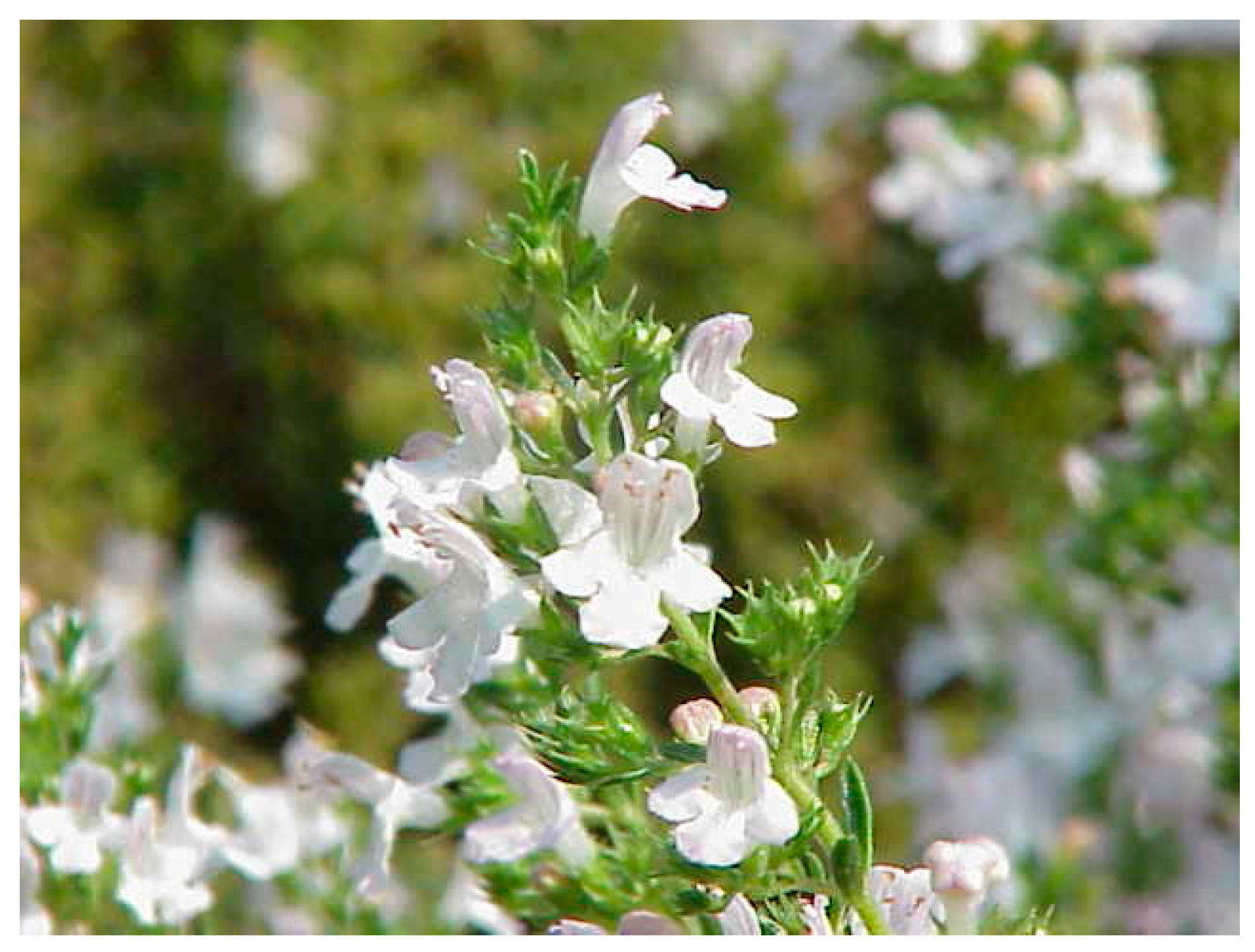
Figure 2.
Biological activities of Satureja montana.

Figure 3.
The dual role of stress.
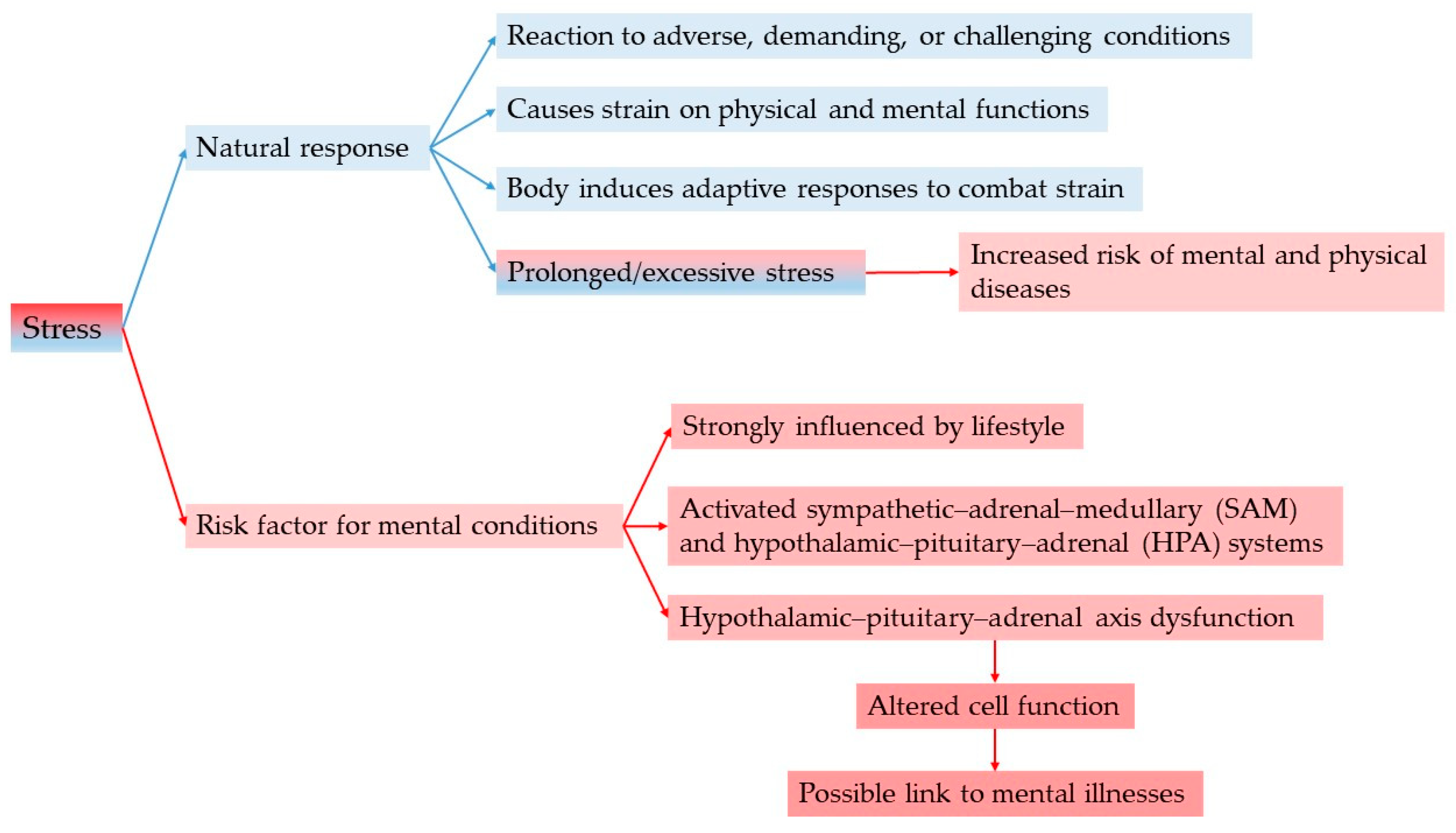
Figure 4.
Molecular mechanisms linking stress to mental diseases.
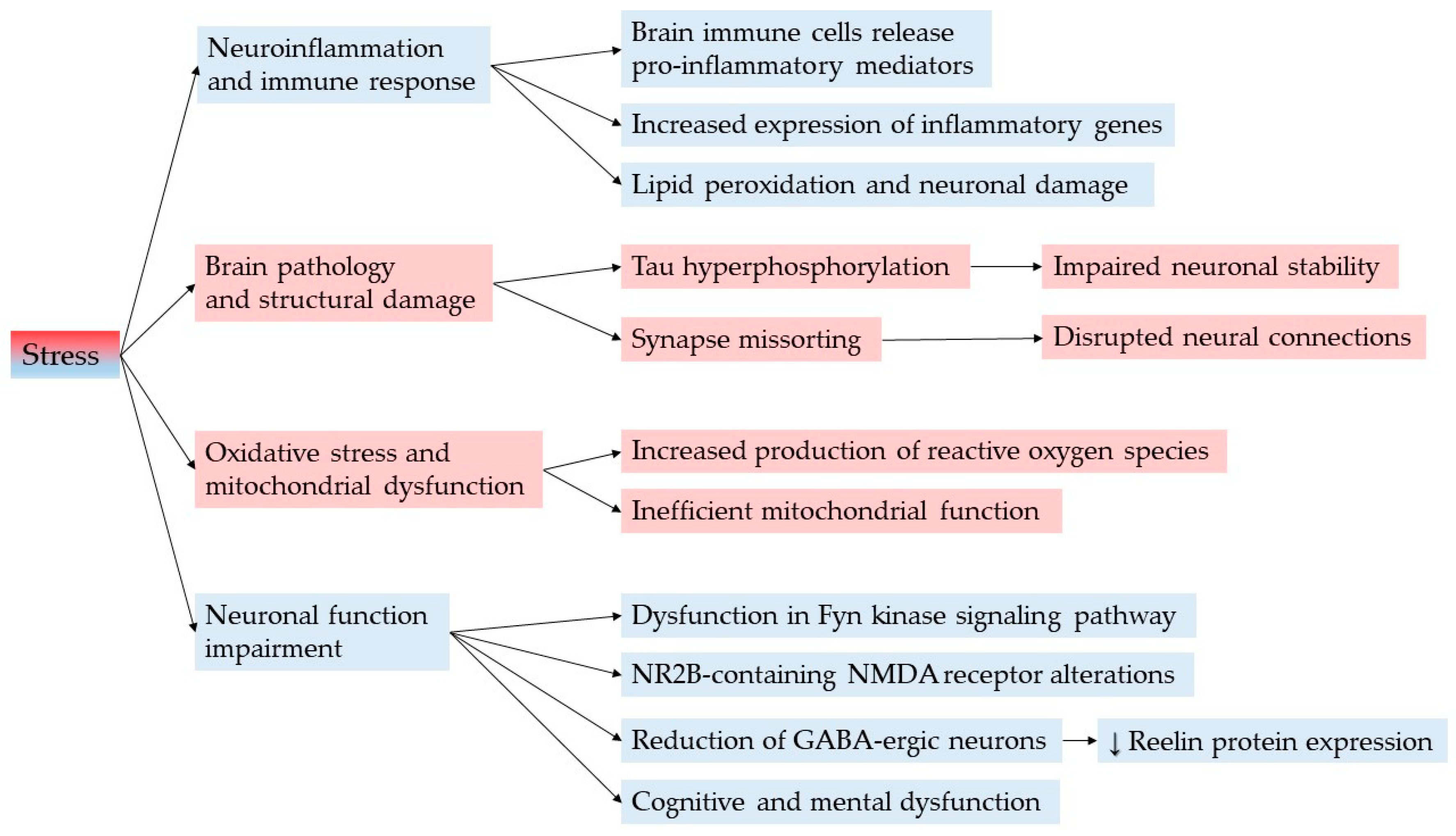

Table 1.
Major components of Satureja montana extracts.
| Component | Percentage/Presence | Activity |
| Carvacrol | 44.5% - 45.7% | Antimicrobial, Antioxidant |
| p-Cymene | 12.6% - 16.9% | Antimicrobial |
| γ-Terpinene | 8.1% - 8.7% | Antioxidant |
| Thymol | Up to 81.79% | Antimicrobial, Antioxidant |
| Rosmarinic Acid | Major phenolic compound | Antioxidant, Anti-inflammatory |
| Caffeic Acid | Present | Antioxidant |
| Chlorogenic Acid | Present | Antioxidant |
| Ellagic Acid | Present | Antioxidant, Anti-inflammatory |
| Quercetin | Present in various derivatives | Antioxidant, Antimicrobial |
| Luteolin | Present in various derivatives | Antioxidant, Anti-inflammatory |
| Rutin | Present | Antioxidant |
Table 2.
Comparative effects of Satureja montana extract and its active compounds.
| Experimental test | SM (250mg/kg) | SM (500mg/kg) | Rosmarinic acid | Carvacrol | Control |
| Elevated plus maze | ↑ time in closed arms | ↓ closed arm entries | Minimal effect | ↑ time in open arms | ↑ time in closed arms |
| Social interaction | ↑ interaction time | ↑ interaction time | Minimal effect | ↑ interaction time | ↓ interaction time |
| Novel object recognition | ↑ exploration time | ↑ exploration time | ↑ novel object learning time | No significant effect | ↓ exploration time |
| ↑ discrimination index | ↑ discrimination index | ↑ discrimination index | |||
| Forced swim | ↑ active struggle time | Minimal effect | Effect on chronic stress only | No effect | ↑ mobility time |
| Locomotor activity with stress model | ↑ vertical movement | Minimal effect | No significant effect | ↑ activity | ↓ movement |
| Cortisol levels with chronic stress model | ↓ cortisol levels | ↓ cortisol levels | Moderate reduction | Moderate reduction | ↑ cortisol levels |
Disclaimer/Publisher’s Note: The statements, opinions and data contained in all publications are solely those of the individual author(s) and contributor(s) and not of MDPI and/or the editor(s). MDPI and/or the editor(s) disclaim responsibility for any injury to people or property resulting from any ideas, methods, instructions or products referred to in the content. |
© 2025 by the authors. Licensee MDPI, Basel, Switzerland. This article is an open access article distributed under the terms and conditions of the Creative Commons Attribution (CC BY) license (https://creativecommons.org/licenses/by/4.0/).
Copyright: This open access article is published under a Creative Commons CC BY 4.0 license, which permit the free download, distribution, and reuse, provided that the author and preprint are cited in any reuse.