

Submitted:
12 February 2025
Posted:
13 February 2025
You are already at the latest version
Abstract
The increasing use of mobile phones worldwide has raised concerns about potential health risks associated with exposure to high-frequency radiation emitted by these devices. This study explores the short-term and potential long-term health effects of mobile phone usage, particularly focusing on risks such as cancer, nervous system disorders, and electromagnetic hypersensitivity. Key research conducted by organizations such as the World Health Organization (WHO) and the Mobile Telecommunications and Health Research (MTHR) program is reviewed, highlighting inconclusive evidence linking mobile phone radiation to health problems. Children and young users are identified as particularly vulnerable to potential risks, given their developing physiology and higher susceptibility to radiation absorption. Experimental studies investigating biological mechanisms, cognitive function, and hypersensitivity have largely found no conclusive evidence of harm, though long-term effects remain under-researched due to the relatively recent widespread adoption of mobile phones. The research article emphasizes the need for adherence to rigorous research methodologies, including randomized, double-blind experiments, and standardized statistical analyses to ensure reliable conclusions. Recommendations for reducing exposure, such as limiting mobile phone usage and adopting hands-free solutions, are provided as precautionary measures. While no definitive causal link has been established between mobile phone use and adverse health outcomes, ongoing research and cautious usage remain essential to safeguarding public health.
Keywords:
Mobile phones
; electromagnetic radiation
; health risks
; brain cancer
; nervous system disorders
; electromagnetic hypersensitivity
; cognitive function
; radiation exposure
; long-term effects
; children’s health
; MTHR program
; WHO
; RF signals
; public health
; radiation safety
; biological mechanisms
; precautionary measures
1. Introduction
Mobile phones are used extensively throughout the world by people of all ages. These devices transmit high-frequency radiation that can affect the health of people in close contact with the device. Some health risks that have been identified to date include cancer, tumors, nervous system, cell damage, headaches, and may even extend to the development of diseases such as Parkinson`s disease, Alzheimer’s disease.
Governments around the world have recognized the risks of mobile phone use to human health and have established organizations and committees to carry out research in this area. Two large organizations, the World Health Organization (WHO) and the Mobile Telecommunications and Health Research Committee [1] have conducted research on how new wireless/mobile handsets affect the health of the public. Other organizations/programs have also been involved, such as the Mobile Operators Association (MOA), the Independent Expert Group on Mobile Phones [2], and Mast Action UK.
Several studies have already been completed and so far have not conclusively shown a link between mobile phone use and MTHR health problems. Since mobile phones have only been widely used in the last 10-15 years, then all these conclusions are based on short term mobile phone use and are not necessarily true for use of mobile phones in the long term.
One particular concern is the health problems associated with the use of mobile phones by children [3]. The use of mobile phones by children can have negative aspects on their health and possibly have serious side effects.
Some of these organizations have conducted research on how to reduce health problems associated with mobile phone use particularly by young children. Teens and children are fascinated with new technology such as mobile phones and find them irresistible. Parents often have the need to communicate with their children. To reduce the long-term health risks of mobile phones, the World Health Organization has made some recommendations to avoid heavy mobile phone use, particularly in children under 8 years of age.
Unfortunately, to date, there is no concrete evidence that harmful effects can occur with a mobile phone. The public is therefore unlikely to follow the present guidelines at least until some conclusive evidence becomes available.
2. Background Information
Mobile phones are low-powered devices that convert voice (speech) and data (SMS, MMS, videos, pictures, etc.) into electrical signals. These signals are transmitted from the mobile antenna to a base station. The base station then sends these signals to a recipient mobile phone user. Electrical signals are called radio waves or electromagnetic waves [4]. Electromagnetic waves have a thermal effect which can generate heat to the human surface of contact, usually the human head, when talking, sending, and/or receiving short messages (SMS), or even when the mobile phone is switched on but not in use during the day or night.
Electromagnetic fields have been generated over a long period of time from mains power supplies which are supplied to homes and which occur at low frequencies (). There has been some debate on whether electromagnetic fields can cause cancer among children since leukemia cases have increased over a number of years [5]. Brain cancer and acoustic nerve problems are also health issues that should be considered. Some of these studies have been reported in the Steward Committee report [1,2].
The Steward Report was published in October 2007, and its main aims of this project were to [3]:
- Investigate the theoretical basis supporting possible health hazards
- Carry out a primary research into usage by children
- Carry out a primary research into health advice given by retailers
The Stewart Committee strongly recommended that some focus should be devoted to brain cancers and the acoustic nerve (acoustic neuroma), since these structures are very easily exposed to RF signals from mobile phones [1].
Because mobile phone ownership has rapidly increased, the Steward report was decided to focus on children and young adolescents in the UK in the hope of developing shorter- and longer-term health effects.
A mobile phone is a communication device that operates at radio frequencies in the microwave band from to [3]. The mobile phone is also a low power device which transmits at a peak power of to minimize radiation and thermal exposure to the human body. To get a better idea of the power involved in comparison with a microwave oven, a microwave oven operates at a frequency of around 2.4GHz with a power output of [3]. Devices that generate radiation have been around for many years. People have been exposed to radiation from a number of sources such as televisions, radios, medical systems, heating lamps, etc. Figure 1 shows some of these sources together with the frequency at which they operate.
When a mast transmits an electromagnetic signal, radiation is generated for hundreds of meters or even kilometers from the source right up to the user who receives the signal. Figure 2 below [3] shows a user receiving a signal from a mobile phone handset that is in close contact with a person’s head and therefore only centimeters from the human brain.
A mobile phone emits microwave energy when receiving or transmitting a signal. Since the human body contains of water, this energy has a heating effect on the human body particularly near the point of contact. Figure 3 below shows the radiation heating pattern on the head of a human body [3]. Children’s bodies absorb more energy into the brain and are therefore more vulnerable to health risks than adults. This can lead to brain cancer in children. The Steward report has focused on this issue in relation to the effect of radiation exposure on children’s health.
The Steward Committee has investigated several research areas that are devoted to possible health risks associated with mobile phone use [2]. Brain cancer is one area that needs to be investigated [8,9].
Brain cancer can take years or even decades to develop. Therefore, any connection between brain cancer and mobile phone use should be studied in the long term. Part of this study should include a number of factors, including which side of the head the person holds the phone. Figure 4 below shows the potential risk from a mobile phone and its effects on blood pressure.
3. Analysis
There are many different models and types of mobile phones on the market today that generate different levels of exposure.
To ensure that studies on human health through mobile phones are representative of real situations, the MTHR Program Management Committee [1] has developed strict rules for the selection and monitoring of projects involving studies on human health through mobile phones.
Some of these rules are listed below:
- Mobile phones should have a standard exposure system and should be held in a fixed position against the head.
- Participants in a sample population should have three different exposure conditions: (a) receive a constant RF signal, (b) a modulated RF signal, and (c) a sham signal which is a signal close to a zero RF signal.
- All studies are randomized and double blind, in that both the participant and the researcher are unaware of the type of exposure received.
- Standard statistical analysis must be performed on a sufficiently large sample in order for the evidence to be conclusive.
Based on the above requirements, the MTHR Program Management Committee has sanctioned a number of projects to conduct research on the effect of mobile phone use on short-term health problems.
The projects selected involved the effect of mobile phones on the following health issues:-
- Cancers of the brain and nervous system, including malignant and benign brain tumors.
- Response times to brain function on simple cognitive tests.
- Electrical hypersensitivity such as headaches, dizziness, and tingling.
- Biological mechanisms in epidemiological studies using MRI and EEG.
4. Critical Review
Several case-controlled studies have already been completed and certain conclusions have been drawn. Some involve cohort studies and others involve case-controlled studies. These studies are grouped into the different health problems which are discussed in the following section below.
4.1. Cancers of the Brain and Nervous System
An early study was conducted in the USA that investigated the number of tumor cases in a large sample of 250,000 phone users. The research article concludes that no significant excess in deaths was attributed to phone use. A similar study was carried out in Sweden that drew a similar conclusion. Several studies have also been carried out on the risk of brain cancers and acoustic neuromas, since the announcement of the MTHR program. None of these studies found any significant increase in brain cancer or meningioma during the 10-year period of phone use. However, many diseases occur over years or tens of years after exposure, such as asbestos-related illnesses and lung cancer due to smoking. Therefore, the long-term effects of mobile phone use on health problems cannot be ruled out [1,8,9].
4.2. Brain Function Response
Mobile phones can cause high levels of radio frequency exposure to the brain. An early study concluded that this exposure led to faster reaction times in cognitive tests. More up-to-date tests have failed to produce any link between mobile phone use and brain response times even in young children. However, this may not be the case for children under 10 years old, and the Stewart Committee recognizes that a more long-term study needs to be done for childhood response times.
4.3. Electrical Hypersensitivity
Some phone users report receiving headaches or dizziness as a result of phone use. This has been a common complaint for people living near phone masts or electrical power lines. Questionnaires have been sent out to various groups of people and a small percentage of people reported a connection with electromagnetic fields. These studies can be biased, and a double-blind laboratory controlled experiment is needed before any conclusions can be drawn. Dr James Rubin is [14,15] has carried out such a test and has proved no evidence of electrical hypersensitivity due to phone use. Other laboratory studies have drawn similar conclusions that include the alteration of inner ear function as a result of contact with the ear of a person.
4.4. Biological Mechanisms
One of the biological mechanisms of interest is the heating effects of the brain due to electromagnetic radiation arising from a mobile phone. This is particularly important in children, since the thinner skulls of children do not deflect heat to the same degree as adults. Newberry [3] has quoted a reference that clearly shows that a larger section of the brain is heated in children compared to adults. However, no conclusive evidence of short-term harmful effects has been drawn [2,16].
5. Conclusion-Discussion
This research article describes some of the investigations that have been carried out to date on the effects of mobile phone use on human health. Mobile phone use has increased rapidly in the 21st century and safeguards are required to ensure that there is no conclusive link between health problems and mobile phone use. Several studies have already been carried out that comply with the strict rules of the MTHR Program Management Committee report. These studies include the effect of mobile phone use on brain cancer, brain response times, neurological disorders, headaches, dizziness, etc. To date, no conclusive evidence has emerged showing a direct link of mobile phones with ill health. However, latency could be a problem in mobile phone use, and only long-term studies can suggest otherwise. Many short term and long term studies are still ongoing and it remains to be seen that current safeguards regarding mobile phone use are sufficient to ensure no ill health problems.
The only advice that is presently available to the public to ensure that no long-term health effects is to limit radiation exposure. People can consider using their phones for shorter periods of time when a landline telephone is not available. In addition, they can place their mobile phones away from their bodies by using hands-free mobile kits. When using a mobile phone in the car, it is possible to mount the mobile antenna outside the car. The antenna will not affect radiation exposure [17]. One useful tip is to place the mobile phone in another room when not in use.
Acknowledgments
The authors acknowledge contributions from institutions and funding bodies supporting the study of IPTV research.
Conflicts of Interest
The authors declare no competing interests.
References
- MTHR Programme Management Committee. Mobile telecommunications and health research programme (Chilton, 2007).
- Independent Expert Group on Mobile Phones. Mobile phones and health: Report of an independent expert group on mobile phones (Chilton, NRPB, 2000).
- Newberry, J. Health implications of the use of mobile phones by children (University of Plymouth, 2002).
- Mobile phone networks. http://www.mobilemastinfo.com/information/MAUK_Apr_06_2.pdf (2006).
- Electromagnetic fields (emf). http://www.who.int/peh-emf/en/ (2007). Accessed 08/10/2007.
- Cell phones, cancers and brain tumours: What is the real story? (2006). Image: cellphoneradiation.gif.
- BBC News. Verdict on mobile phone shields (2002). Published: 10/05/2002.
- Rothman, K. J., Loughlin, J. E., Funch, D. P. & Dreyer, N. A. Overall mortality of cellular telephone customers. Epidemiology 7, 303–305 (1996).
- Dreyer, N. A., Loughlin, J. E. & Rothman, K. J. Cause-specific mortality in cellular telephone users. J Am Med Assoc 282, 1814–1816 (1999).
- Christensen, B. M. Issue 58 - hoax-slayer newsletter (2006). Image: use-left-ear-mobile.jpg.
- Preece, A. W. et al. Effect of a 915mhz simulated mobile phone signal on cognitive function in man. Int J Radiat Biol 75, 447–456 (1999). [CrossRef]
- Koivisto, M., Krause, C. M., Revonsuo, A., Laine, M. & Hamalainen, H. The effects of electromagnetic field emitted by gsm phones on working memory. NeuroReport 11, 1641–1643 (2000). [CrossRef]
- Koivisto, M., Krause, C. M., Revonsuo, A., Laine, M. & Hamalainen, H. Effects of 902mhz electromagnetic field emitted by cellular telephones on response times in humans. NeuroReport 11, 413–415 (2000). [CrossRef]
- Rubin, G. J., Das-Mushi, J. & Wessely, S. Electromagnetic hypersensitivity: A systematic review of provocation studies. Psychosom Med 67, 224–232 (2005). [CrossRef]
- Eltiti, S. et al. Development and evaluation of the electromagnetic hypersensitivity questionnaire. Bioelectromagnetics 28, 137–151 (2007). [CrossRef]
- Dawe, A. S. et al. A small temperature rise may contribute towards the apparent induction by microwaves of heat-shock gene expression in the nematode caenorhabditis elegans. Bioelectromagnetics 27, 88–97 (2005). [CrossRef]
- Nordenberg, T. Cell phones & brain cancer: No clear connection. FDA Consumer 34 (2000).
Figure 1.
Radiation devices with radiation frequencies.
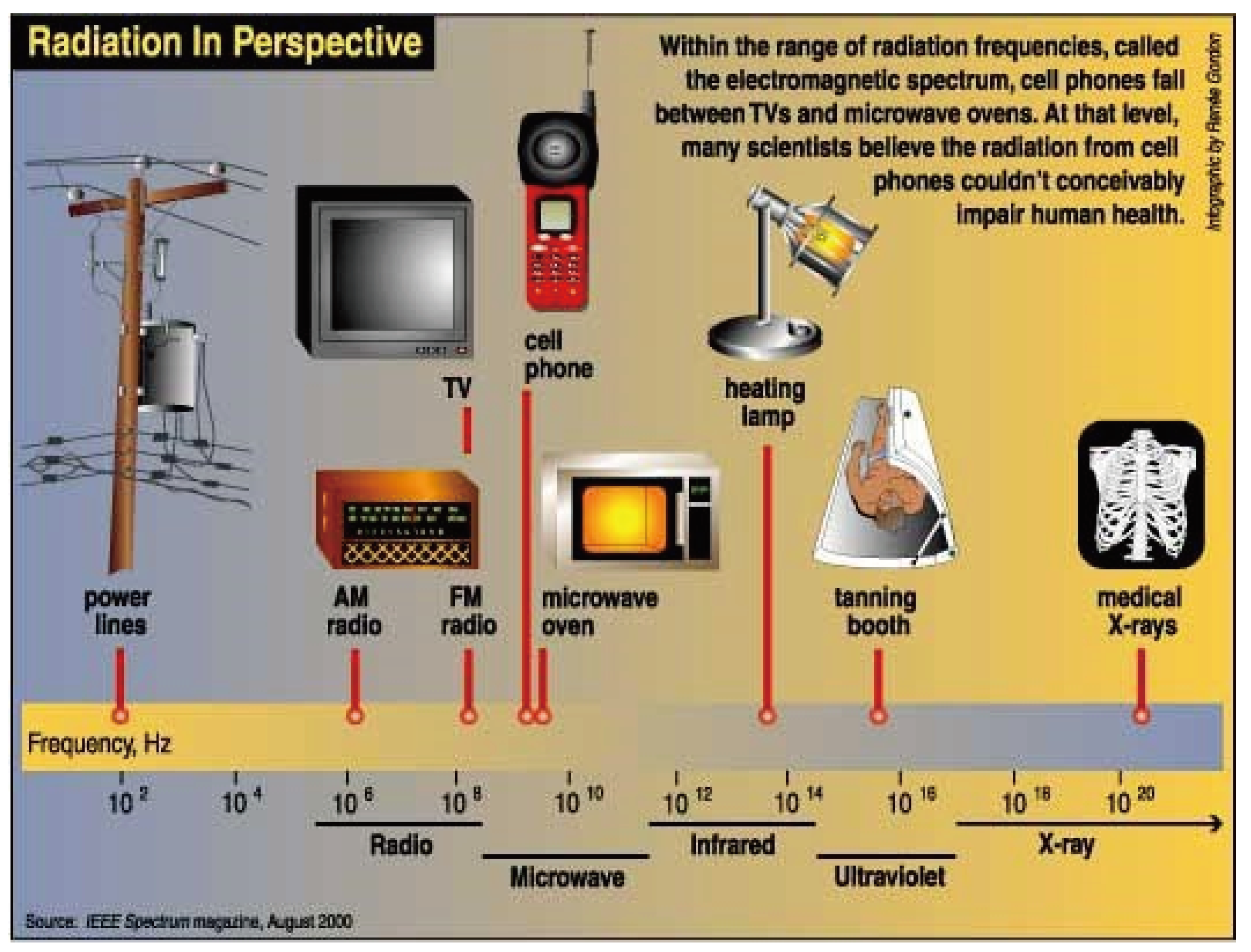
Figure 2.
Radiation from a mobile phone [6].
Figure 2.
Radiation from a mobile phone [6].
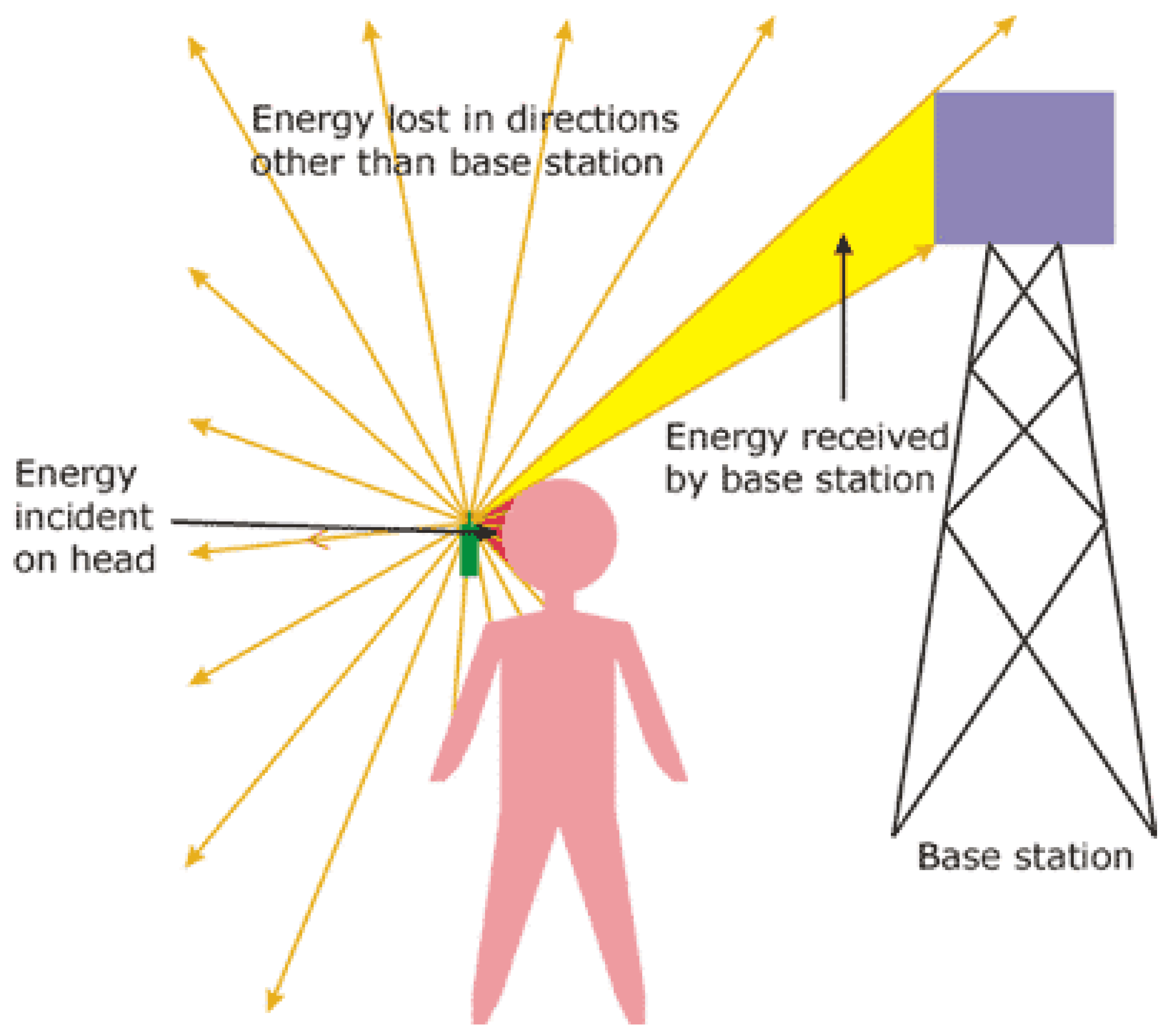
Figure 3.
Heating effect from a mobile phone [7].
Figure 3.
Heating effect from a mobile phone [7].
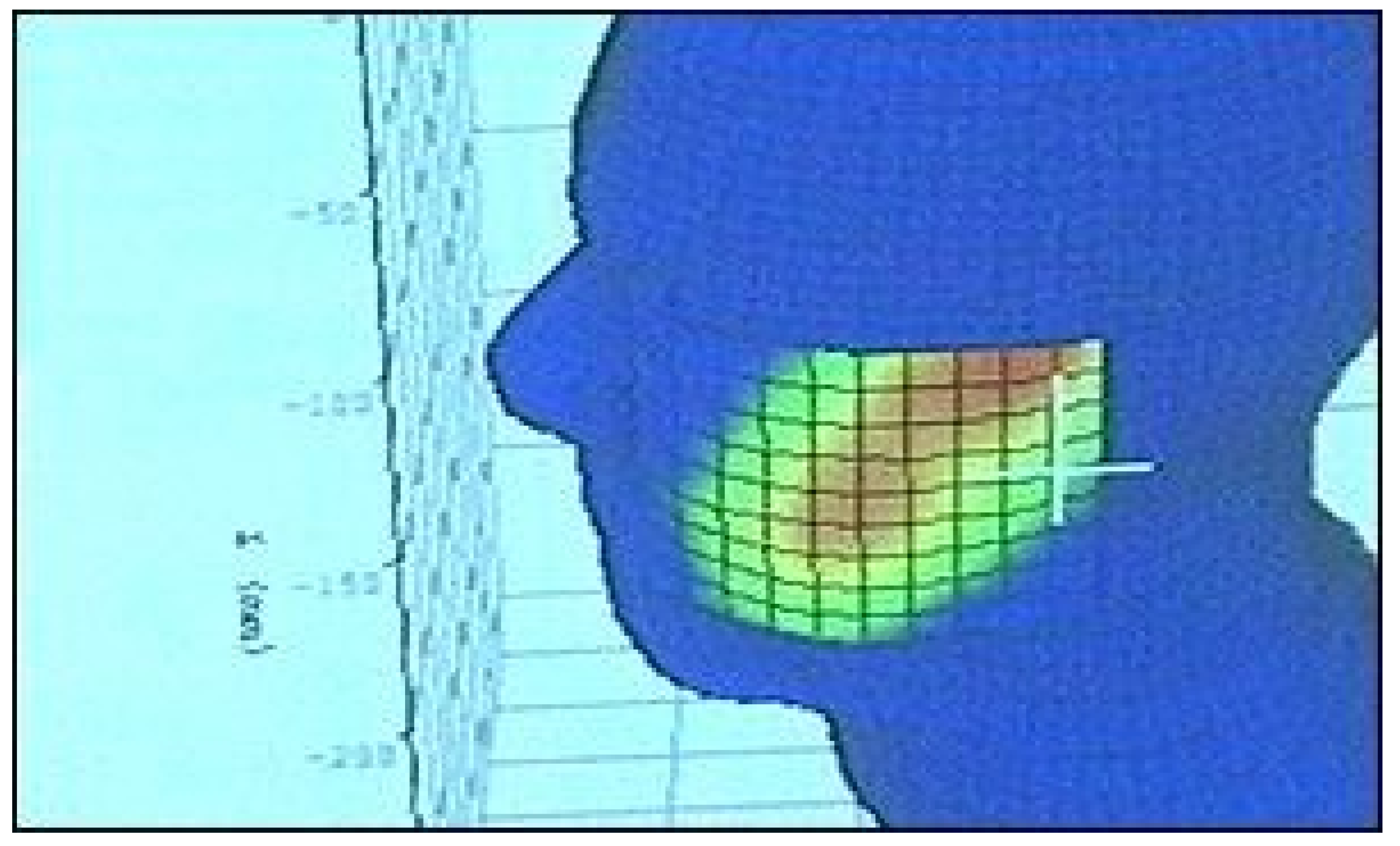
Figure 4.
Potential risk from a mobile phone [10].
Figure 4.
Potential risk from a mobile phone [10].

Disclaimer/Publisher’s Note: The statements, opinions and data contained in all publications are solely those of the individual author(s) and contributor(s) and not of MDPI and/or the editor(s). MDPI and/or the editor(s) disclaim responsibility for any injury to people or property resulting from any ideas, methods, instructions or products referred to in the content. |
© 2025 by the authors. Licensee MDPI, Basel, Switzerland. This article is an open access article distributed under the terms and conditions of the Creative Commons Attribution (CC BY) license (http://creativecommons.org/licenses/by/4.0/).
Copyright: This open access article is published under a Creative Commons CC BY 4.0 license, which permit the free download, distribution, and reuse, provided that the author and preprint are cited in any reuse.