

Submitted:
12 February 2025
Posted:
13 February 2025
You are already at the latest version
Abstract
The aim of this study was to determine the concentration of heavy metals Cd, Pb, and essential trace elements Zn, Fe in the button mushroom fruits depending to the growing substrate quality (substrate A and B) and time of picking (mushroom picking stages). Be-side that based on the results obtained, the accumulation coefficient of the studied ele-ments from the substrate into the mushroom fruiting bodies was determined. The meas-urement results for Fe, Zn, and Pb concentrations in mushrooms grown on substrate A indicated an increase in their levels toward the end of the production cycle, while Cd con-centrations remained unchanged. In mushrooms cultivated on substrate B, the concentra-tions of Fe, Zn, and Pb increased toward the end of the production cycle, while the con-centration of Cd decreased. The highest accumulation coefficient in mushrooms grown on substrate A was recorded for Zn, with a value of 0.66. The lowest accumulation coefficient in mushrooms from substrate A was recorded for Fe at 0.04, while the coefficients for Pb and Cd were 0.14 and 0.30, respectively. In mushrooms grown on substrate B, the accu-mulation coefficient was highest for Cd at 1.45, while the lowest was observed for Fe at 0.06. The coefficients for Pb and Zn were 0.08 and 0.78, respectively. It can be concluded that concentrations of heavy metals significantly depended on the substrate origin. Alt-hough the accumulation of Cd in button mushroom fruit from substrate B was almost five times higher than from the substrate A all determined values were below the RDA limits set by the European Commission Regulations EC No. 466/2001.
Keywords:
heavy metals
; essential elements
; button mushroom fruit
; substrate origin
; accumulations
1. Introduction
Food safety is a crucial strategic priority throughout Europe, as foodborne hazards pose a direct risk to human health. These hazards can originate from biological, chemical, or physical sources. Among the chemical contaminants, heavy metals are of particular concern due to their potential toxicity. Heavy metals are a group of mineral elements that can have harmful effects on health, and they are categorized as either essential or potentially toxic trace elements in the human diet. Essential trace elements include iron (Fe), zinc (Zn), manganese (Mn), and molybdenum (Mo), while potentially toxic trace elements include cadmium (Cd), lead (Pb), mercury (Hg), nickel (Ni), chromium (Cr), cobalt (Co), and copper (Cu). Heavy metal pollution is a major environmental concern that impacts ecosystems, including aquatic systems, microorganisms, and human health. These metals are non-biodegradable and tend to accumulate in biological systems, such as mushrooms, plants and aquatic organisms [1]. Many studies have examined the presence of heavy metals in edible mushrooms and assessed the associated risks [2,3,4,5,6]. Recently, a growing body of research has focused on the rising concentrations of toxic heavy metals in mushrooms, with particular attention given to the accumulation of these harmful substances [7,8,9,10,11,12,13]. Cadmium contamination in soil can arise from both natural and anthropogenic sources, such as industrial emissions, fertilizers, and sewage sludge. This contamination increases Cd uptake by crops, vegetables, and mushrooms intended for human consumption. [14]. Prolonged exposure to potentially toxic elements can lead to a range of adverse health effects, including an elevated risk of cancers (such as gastric, breast, lung, and renal cancers), reproductive disorders, skin conditions, and pain in the bones and muscles [15,16,17]. While some heavy metals like Zn and Fe are essential for living organisms, others, such as Cd and Pb, have no known biological function [18]. Dunkwal et al. [19] noted that mushrooms, due to their low caloric value and high content of proteins, vitamins, and minerals, can play a significant role in alleviating protein deficiencies, especially in developing countries like India. Cd and Pb are heavy metals of significant concern due to their toxicity to both humans and animals [20]. The primary route of exposure to these metals for most individuals is through the consumption of mushrooms or plant-based foods. Previous studies indicate that toxic elements can severely harm the human body; cadmium (Cd) is toxic to the kidneys and cardiovascular system, while lead (Pb) damages the central nervous system and reduces IQ in children [21]. Zn and Fe on the other hand, are among the most abundant essential trace elements in the human body, playing a vital role in cell function and human health [22]. Iron deficiency, often caused by inadequate dietary intake or impaired absorption, is a leading contributor to malnutrition. While mushrooms are an excellent source of iron, they are not yet widely recommended by nutritionists as part of an iron-rich diet [23]. Recent research has focused on the concentrations of various nutrients in mushroom fruits and their role in preventing several diseases [24]. Since edible mushrooms accumulate Pb, Cd, Hg, and As, and cause serious harm to humans, it is necessary to evaluate contamination and human exposure to them. The most widely cultivated mushroom globally is Agaricus bisporus (button mushroom), followed by Lentinus edodes, Pleurotus species, and Flammulina velutipes [25]. Button mushrooms play an important role as both a nutritional and functional food [26]. The substrate used in mushroom cultivation is typically made from calcite, horse and chicken manure, and straw, all of which must undergo fermentation and pasteurization before mushroom mycelium is added [27]. The wheat straw used in mushroom substrate preparation [28,29] can come from various sources. Mushroom production in controlled environments presents significant challenges and requires a thorough understanding of production technologies as well as high-quality substrates to achieve optimal results. The ratio and quality of the substrate ingredients, along with production methods, are critical factors in producing high-quality mushrooms. Wheat straw is often sourced from areas near compost factories, where soil chemical properties can influence the quality of the substrate. Additionally, the translocation of essential and trace elements from the substrate to the mushroom fruit is closely linked to their concentrations in the substrate [30]. Heavy metal accumulation in mushroom, plants and soils from both natural and artificial sources raises significant environmental pollution concerns. These metals accumulate in the biological environment through the food chain. Increased accumulation in living organisms can lead to morbidity and mortality [31,32,33]. Studies [34,35] indicate that potentially toxic elements pose a significant challenge in agroecosystems, especially in mushroom cultivation settings. Agaricus bisporus is known to bioaccumulate several heavy metals, including lead (Pb), cadmium (Cd), mercury (Hg), iron (Fe), copper (Cu), manganese (Mn), and zinc (Zn) [36]. Therefore, the aim of this study was to investigate the transport of heavy metals (Cd, Pb) and essential elements (Zn, Fe) into button mushroom fruiting bodies from different substrates. It sought to determine the concentrations of Pb, Cd, Zn, and Fe in mushrooms based on the substrate type (substrates A and B) and the harvesting time. Additionally, the study determined the accumulation coefficients of these elements during their transfer from the substrate to the mushrooms.
2. Materials and Methods
The study was conducted during the four cycles of button mushrooms vegetation on two types of substrates for the mushrooms production. Both substrates are produced in the European Union, one in Eastern Europe (substrate A) and the other in the North (substrate B) and they are commonly use in Croatian button mushroom production.
In each cycle of vegetation were three stages of mushroom picking: initial, middle, and end. The experiment was set up in four repetitions according to completely randomized block design with two factors. In each repetition two briquettes of inoculated substrate with the surface area of 38 cm x 58 cm, weighing 36 kg were used. Production was monitored through four cycles of button mushroom vegetation, so the entire study included 128 substrate briquettes. Mineral analyses for substrate and mushrooms were carried out in Laboratory for soil at Faculty of agrobiotechnical sciences Osijek, Department for Agroecology and environmental protection.
Substrate Sampling and Preparation
Briquettes of substrates were weighed at the beginning and at the end of each production cycle to determine the change in weight.
Samples were collected in an amount of about 5 kg, and divided into two sub-samples for analysis [37,38,39]. Part of the sample was oven dried at 75 ± 2°C for 48 hours or until constant weight according to the method Tmecca (Test Methods for the Examination of Composting and Compost, [40], homogenized, ground, sieved through a sieve of 1 mm [39] and stored in paper bags in desiccator. In dry samples the following analysis were made: ash content, organic carbon, and macro- and microelements content.
The rest of the samples stored in polyethylene bags and stored in a refrigerator at 5°C. The fresh samples were conducted for the following analysis: dry matter, pH, electric conductivity (EC), total nitrogen, mineral nitrogen and physical properties. Chemical analysis of the fresh samples were performed within 48 hours.
Determination of Zn , Fe, Cd and Pb in Substrate
The basic solution to determine the concentration of trace elements and heavy metals was prepared by sample digestion with aqua regia [40] and the concentration of the elements was determined by Perkin Elmer ICP-OES (Zn, Fe, Cd, Pb).
Button Mushroom Sampling
Mushrooms were collected in three picking stages (initial, middle, end) during each production cycle for a total of 32 samples per picking stage (total of 96 samples per production cycle). After picking, mushrooms were manually separated into two parts in order to determine the mineral composition: cap and rate and then weighed to determine the mushrooms yield. About 1500 g button mushrooms were sent to a laboratory where button mushrooms were dried, milled, and stored in paper bags. The prepared samples were analyzed for their content of essential trace elements (Zn and Fe) and heavy metals (Pb and Cd).
Determination of Zn , Fe, Cd and Pb in Button Mushrooms
The samples of mushrooms were prepared for measuring the concentration of heavy metals by sample digestion with aqua regia. Sample mass of 1 g sample was weighed into a teflon flask, topped with 9 ml of 65% HNO3 and 2 ml of 30% H2O2. After digestion in the microwave oven, the sample solution was filtered through a fluted filter paper twice in a 50 ml flask. The sample solution was filled up to measuring mark on the flask with distilled water. Concentrations of heavy metals (Cd, Pb) in the solutions were determined by direct measurement with Perkin Elmer ICP-OES according to absorption technique.
ICP-OES Analysis
Measurement on ICP-OES was obtained from three analytical replicates for each element. Technical data and working conditions of the ICP-OES were:
ICP producer: Perkin Elmer 2100DV, cyclonic spray chamber, Meinhard type A
RF power: 1500 W
Plasma gas flow rate (Ar): 15 L per min (axial)
Auxiliary gas flow rate (Ar): 0.2 L per min
Reading time: 5 sec
Nebulizer flow: 0.65 l per min
Data Analysis
The results were statistically analyzed using SAS 9.01 software for Windows (SAS Institute Inc., Cary, NC, USA). Significant differences were tested by ANOVA to assess the differences between elements and mushrooms parts. When statistically significant differences were determined (p‹ 0.01) the means were further separated using Fisher`s multiple range test. All results were presented as mean values.
3. Results and Discussion
3.1. Mineral Elements in Substrate
The major substrate properties (pH, EC, dry matter -DM) for substrate A as well as macro elements (N, C, P, K) content and C/N ratio are shown in Table 1.
The major substrate properties varied by vegetation cycle from 6.07 (cycle vegetation II) to 6.26 (cycle vegetation III) with average of 6.19 for pH, from 8.05 to 8.55 mS/cm with average of 8.23 mS/cm for EC and from 46.51 to 47.46 % with average of 46.83 % for DM content. Content of macro elements were very similar for each vegetation cycle and in average was: 2.38 % N, 25.41 % C, 1.93 % P, 1.09 % K, and C/N ratio was 10.73.
Trace elements and heavy metals concentrations in substrate A are shown in Table 2. The greater variability was found in concentrations of heavy metals by the vegetation cycle especially for Zn, Fe and Pb while the concentrations of Cd were almost the same in all four vegetations cycles. Concentrations of essential and toxic heavy metals in substrate A were: Zn from 150.26 to 163.99 mg/kg with average of 155.38 mg/kg, Fe from 1596.21 to 3361.49 mg/kg with average of 2695.99 mg/kg, Pb from 0.97 to 2.26 mg/kg with average of 1.67 mg/kg and Cd from 0.13 to 0.15 mg/kg with average of 0.14 mg/kg.
According [41] ideal pH of fresh substrate for the production of mushrooms is pH = 6, 6, C/N ratio from a minimum of 10:1 to a maximum of 15:1 ideally 13:1. Average N content in the substrate for the mushrooms production is an average of 1.12% (wet condition) and 2.65% (dry condition), C of a minimum 10.60% up to a maximum of 18.80%, 0.29% P (wet) and 0.69% (dry) and P from minimum 0.8% to a maximum of 1.3%. The average concentrations of Fe ranges from a minimum of 0.04% to a maximum of 0.57% and a minimum of Zn<0.01 up to a maximum of 0.15%. EC fresh compost is 13.30 dS m-¹. According to “The regulation of the agricultural land protection from pollution in Croatia”, maximum permissible Pb concentration in the substrate for mushroom production is 100 mg/kg and Cd 2 mg/kg [42].
The results indicate that Substrate A, based on its chemical properties, is a typical substrate for mushroom production, characterized by a slightly lower EC value and higher phosphorus content.
The major properties for substrate B as well as macro elements content are shown in Table 3 while trace elements and heavy metals concentrations in substrate B were shown in Table 4. Variations of chemical properties in vegetation cycles for substrate B were low and the results were: pHH2O from 5.96 to 6.21 with average 6.12, EC from 7.29 to 8.03 mS/cm with average 8.23 mS/cm and DM content from 41.97 to 43.27 % with average 42.64 %. Content of macro elements were: N from 2.30 % to 2.38 % with average 2.33 %, C from 25.64 % to 29.81 % with average 27.89 %; P from 1.73 % to 1.75 % with average 1.72 %, K from 1.01 % to 1.04 % with average 1.03 % and C/N ratio from 11.04 to 12.84 with average 11.96.
Similar to substrate A, substrate B also exhibited greater variability in heavy metal concentrations across vegetation cycles. Therefore, concentrations of essential and toxic heavy metals in the substrate B were: Zn from 105,61 mg/kg to 127.24 mg/kg with average of 119.41 mg/kg, Fe from 1216.62 mg/kg to 1702.53 mg/kg with average of 1514.81mg/kg, Pb from 2.66 mg/kg to 3.09 mg/kg with average of 2.90 mg/kg and Cd from 0.16 mg/kg to 0.23 mg/kg with average of 0.21 mg/kg.
No significant differences were identified in the basic chemical properties between Substrate A and Substrate B but there was significant difference in the concentrations of heavy metals. Substrate A had higher concentrations of essential heavy metals (Zn and Fe), whereas substrate B contained higher levels of toxic heavy metals (Pb and Cd). The assumption is that the straw used for producing substrate B was sourced from areas near roads or smelting industries, where significant lead-acid residues are generated and subsequently accumulate in the straw. In contrast, the producer of substrate A likely collected straw from rural areas, given its geographical orientation toward less industrialized regions of Europe. According to the Declaration of the mushroom substrate production, maximum permitted level of lead in the substrate for the mushrooms production is 100 mg/kg of dry matter and cadmium is 2 mg/kg, same as prescribed by „The regulation of the agricultural land protection from pollution“ so, it can be concluded that both substrates have Pb and Cd concentrations bellow the prescribed limits and they were suitable for the button mushrooms production.
3.2. Mineral Elements in Button Mushroom Fruits
During the research, concentrations of essential (Fe mg/kg, Zn mg/kg,) and toxic heavy metals (Cd mg/kg and Pb mg/kg) in produced button mushroom fruits were investigated. Uddin et al. [43] noted that mushrooms have been regarded as an important component of the human diet since ancient times, primarily because they are an excellent source of protein and contain on average: 3g / 100g carbohydrates, 1.98g / 100g fat, 0.34g / 100g fiber, vit. B₁ 7%, vit. B₂ 34%, vit. B₃ 24%, vit. B₆ 8%, vit. B₉ %, vit. B₁₂ 2%, vit. C 3% and vit. D 1%. Also, mushrooms contain an average of 0.5 mg Fe / 100 g (4%), Mg (3%), 86 mg P / 100g (12%), 318 mg K / 100 g (7%), Zn 0.52mg / kg (5%).
The average concentrations of heavy metals in button mushroom fruiting bodies grown on both substrates are presented in Table 5, Table 6, Table 7 and Table 8, categorized by vegetation cycles. All results are expressed on dry weight.
The Table 5 presents the results of the concentration of heavy metals (Fe, Zn, Pb, and Cd) in button mushrooms at various picking stages, analyzed using the SAS statistical program. The statistical results were reported as means, with different letters used to indicate significant differences in metal concentrations across stages and substrates. The concentrations of Fe in Substrate A showed a significant increase from the initial stage to the end stage, with values of 84.41 mg/kg at the initial stage, 101.98 mg/kg at the middle stage, and 116.14 mg/kg at the end stage. The Fe concentration at the end stage (116.14 mg/kg) was significantly higher than at both the initial stage (84.41 mg/kg) and the middle stage (101.98 mg/kg). In Substrate B, Fe concentrations began at 82.65 mg/kg at the initial stage, increased slightly to 90.46 mg/kg at the middle stage, and reached 90.77 mg/kg at the end stage.
Substrate A showed a clear trend of increasing Zn concentration, rising from 90.58 mg/kg at the initial stage to 114.40 mg/kg at the middle stage and 116.11 mg/kg at the end stage. The Zn concentrations at the middle and end stages were significantly higher than those at the initial stage.
In Substrate B, the Zn concentration was lowest at the initial stage (82.05 mg/kg), followed by 91.46 mg/kg at the middle stage and 103.65 mg/kg at the end stage. Statistically, the concentrations in Substrate B differed significantly across stages, with the end stage (103.65 mg/kg) showing a higher concentration than both the initial and middle stages..
For Pb in Substrate A, significant differences were observed, with concentrations increasing from 0.04 mg/kg at the initial stage to 0.33 mg/kg at the end stage. In Substrate B, Pb concentrations were 0.18 mg/kg (initial), 0.24 mg/kg (middle), and 0.29 mg/kg (end). The middle and end stages were not significantly different, but both were significantly higher than the initial stage.
For Cd, no significant differences were observed in Substrate A, with concentrations remaining at around 0.04 mg/kg (initial and end stages) and 0.03 mg/kg at the middle stage.
In Substrate B, the Cd concentration decreased significantly from the initial stage (0.48 mg/kg) to the middle (0.21 mg/kg) and end stages (0.11 mg/kg). The initial stage was significantly higher than the middle and end stages.
The statistical analysis revealed significant differences in metal concentrations across different picking stages and substrates, particularly for Fe, Zn, and Pb, while Cd shown less variation across stages in Substrate A but significant variation in Substrate B.
In the second month of production, the concentration of Fe in button mushroom fruits continued to follow the same trend as observed in the first month, with a significantly higher concentration of Fe (123.14 mg/kg) recorded at the end of the picking stage on substrate A. Zn and Pb concentrations remained consistent with those observed in the first month. Additionally, Cd levels in the button mushrooms grown on substrate B remained significantly higher across all picking stages, ranging from 0.15 mg/kg to 0.49 mg/kg (Table 6).
In the third month of production, no significant changes in the dynamics of heavy metal concentrations were observed compared to the first two months (Table 7).
In the fourth month, a notable shift occurred. Unlike previous months, no significant differences in Fe concentrations were observed across any picking stage. The concentrations of other elements remained consistent with earlier months, while Cd concentrations in button mushrooms from substrate B continued to display statistically higher values (Table 8).
Haldimann et al. [44] investigated heavy metal concentrations across all picking stages of cultivated mushrooms (Agaricus bisporus) and compared them to those in wild-grown counterparts. The study found that heavy metal concentrations were significantly higher in wild-grown mushrooms. This difference is attributed not only to the substrate but also to the age of the mycelium. In wild mushrooms, the mycelium can persist for years, whereas in cultivated mushrooms, it typically lasts only a few months.
As a result, Cd and Hg are present in significantly lower concentrations in cultivated mushrooms compared to wild mushroom species. Generally, microelements can accumulate in mushroom fruiting bodies either directly from the atmosphere or through the mycelium from the soil [45]. For elements as Cd, As and Ni basic accumulation way is through the mycelium [46,47]. Tuzen et al. [35] claim that the accumulation of lead is mostly from the air. Garcia et al. and Kalac et al. [48,49] were observed that environmental conditions significantly influence the accumulation of heavy metals in mushrooms. Key factors include organic matter content, pH, heavy metal concentrations in the soil and substrate, fungal species, fruit morphology, developmental stage, mycelium age, and its biochemical composition. According to the European Commission Regulation EC No 466/2001 maximum allowed amount of Pb in mushrooms is 0.3 mg / kg and 0.2 mg Cd / kg wet weight [42]. Given that mushrooms are consumed fresh, translating all results to wet weight reveals that Cd and Pb levels were below the maximum prescribed limits. The Cd and Pb concentrations in mushroom fruiting bodies from both substrates are within the permissible limits, as shown in Figure 1, Figure 2, Figure 3 and Figure 4.
3.3. The Accumulation Coefficients of Essential and Toxic Heavy Metals in Button Mushroom Fruits
The accumulation coefficients of essential and heavy metals from the substrate to the button mushroom fruits are obtained by the formula:
Ka = Cm / Cs
where Cm means concentration of heavy metals in the button mushroom fruits, and Cs means the concentration of heavy metals in the substrate
The accumulation coefficients of heavy metals in button mushroom fruiting bodies are presented in Table 9 for Substrate A and Table 10 for Substrate B.
Across all vegetation cycles, the highest accumulation coefficient of heavy metals in button mushroom fruits grown on Substrate A was recorded for Zn, with an average value of 0.66. The lowest accumulation coefficient, recorded for Fe, was 0.04 and remained consistent across all four vegetation cycles. The greatest variability in accumulation coefficients across the vegetation cycles was seen for Pb, with an average coefficient of 0.14. The accumulation coefficient for Cd was 0.30, showing minimal variability between the cycles. When comparing two heavy metals with similar modes of translocation—Zn (essential) and Cd (toxic)—the results indicated that the accumulation coefficient for Zn in button mushroom fruits was 2.2 times higher than that for Cd (Table 9).
The accumulation of heavy metals in button mushroom fruits from substrate B was higher for all elements, except Pb, compared to the accumulation coefficients observed for substrate A. The accumulation coefficients for substrate B were as follows: 0.06 for Fe, 0.78 for Zn, and 1.45 for Cd, while the coefficient for Pb accumulation was lower at 0.08. For Pb, there was also significantly less variation in accumulation coefficients across the vegetation cycles in mushrooms grown on substrate B, compared to those from substrate A. The accumulation ratio for Cd in substrate B was 4.8 times higher than that for mushrooms grown on substrate A. When comparing the two heavy metals with similar modes of translocation—Zn (essential) and Cd (toxic)—the accumulation coefficient for Cd in button mushroom fruits was, on average, 1.85 times higher than for Zn (Table 10). Manzi et al. and Bucurica et al. [50,51] wrote that different heavy metals like As, Cd, Ni, and Hg accumulate in mushrooms in a greater concentration and they are toxic to human health. In contrast, elements such as Fe, Zn, Mn, Cu, and Cr serve as activators of enzymes essential for normal human metabolism, but they are accumulated in lower concentrations in mushroom fruits. These essential elements become toxic in situations when their concentrations increase above permissible concentrations. Mushroom substrate producers and mushroom producers should be aware of all these facts throught the production process, because these are ultimately reflected in environmental pollution and human health.
4. Conclusions
All analyzed elements were influenced by the substrate’s origin, and a positive transfer of elements from the substrate to the button mushrooms was determined. The results were also used to calculate the accumulation coefficient for each element, which reflects the transfer from the substrate to the button mushrooms, providing an additional scientific contribution to this research. Among the elements studied, the highest accumulation coefficient was recorded for Zn (0.78) on substrate B, while the lowest was for Fe (0.04) on substrate A. The accumulation coefficient for Pb was 0.14 on substrate A and 0.08 on substrate B. Notably, the highest overall coefficient was 1.45, associated with Cd on substrate B, while the Cd accumulation coefficient on substrate A was 0.30. Although the Cd accumulation in button mushroom fruits grown on substrate B was nearly five times higher than on substrate A, all measured values remained well within the recommended dietary allowance (RDA) limits established by the European Commission Regulations (EC No. 466/2001).
This research provides a complementary perspective by deepening the understanding of how mushroom consumption impacts human health in two key ways: the positive effects of Fe and Zn accumulation, and the potential risks associated with Cd and Pb accumulation. Given that the substrate’s origin significantly influences the accumulation of heavy metals, the choice of substrate becomes a critical factor. Mushroom producers hold a pivotal role in controlling the levels of heavy metals that enter the food chain, highlighting their responsibility in ensuring food safety and quality.
The complementary aspect of this research lies in enhancing the understanding of how mushroom consumption affects human health from two perspectives: the beneficial impact of Fe and Zn accumulation, and the detrimental effects of Cd and Pb accumulation.
Since the substrate serves as the primary source of heavy metals in mushrooms, producers play a decisive role in selecting substrates, and thus influence on the content of heavy metals in button mushrooms. Since the substrate’s origin influences the accumulation of heavy metals, mushroom producers play a crucial role in determining the level of heavy metals entering the food chain through their choice of the substrate.
Author Contributions
Conceptualization, B.P. and N.R.F.; methodology, B.P., N.P. and N.R.F.; software, B.P.; investigation, B.P., N.R.F. and Z.L.; resources, M.B.; writing—original draft preparation, B.P. and N.R.F..; writing—review and editing, B.P. and N.R.F.; All authors have read and agreed to the published version of the manuscript.
Funding
This research received no external funding
Data Availability Statement
Data is contained within the article.
Conflicts of Interest
The authors declare no conflicts of interest.
References
- Martins, R. Pardo, R.A.R. Bonaventura. Cadmium(II) and zinc(II) adsorption by the aquatic moss Fontinalis antipyretica: effect of temperature, pH and water hardness. Water research. 2004, Vol. 38, No. 3, pp. 693–699. [CrossRef]
- Kalač, P.; Svoboda, A. A review of trace element concentrations in edible mushrooms. Food. Chem. 2000, 69, 273–281. [Google Scholar] [CrossRef]
- Alonso, J., Garcia, M.A, Perez-Lopez, M., Melgar, M.J. The concentrations and bioconcentration factors of cooper and zinc in edible mushrooms. Arch. Environ. Contam. Toxicol. 2003, 44, 180–188. [CrossRef] [PubMed]
- Soylak, M., Saracoglu, M., Tűzen, Mendil, D. Determination of trace metals in mushroom samples from Kayseri, Turkey, Food. Chem. 2005, 92, 649–652. [CrossRef]
- Svoboda, L. Havličkova, B. Kalač, P. Contents of cadmium, mercury and lead in edible mushrooms growing in a historical silver-mining area. Food Chem 2006, 96, 580–585. [CrossRef]
- Cocchi, L., Vescovi, L., Petrini, L.E., Petrini, O. Heavy metals in edible mushrooms in Italy, Food Chem. 2006, 98, 277–284.
- Array, S., Tomas, J., Hauptvogl, M., Kopernicka, M., Kovačik, A., Bajčan, D., Contamination of wild -grown edible mushrooms by heavy metals in a former mercury-mining area. J. Environ Sci Health B. 2014, 49, 815–827. [CrossRef]
- Cvetković, J. S., Mitić, V. D., Stankov-Jovanović, M. V., Dimitrijević, M. V., Nikolić-Mandić, S. D. Elemental compostition of wild edible mushroos from Serbia. Analytical letters. 2015, 48, 2107–2121. [CrossRef]
- Tel- Cayan, G., Ullh, Z., Ozurk, M. Yabanli, M., Aydin, F., Duru, M.E. Heavy metals, trace and major elements in 16 wild mushroom species determined by ICP-ms. Atomic Spectroscpy. 2018, 39, 29–37.
- Tűrkmen, M., Budur, D. Heavy metal contamination in edible wild mushroom species from Turkey’s Black Sea region. Food Chemistry. 2018, 254, 256–259. [CrossRef]
- Bahadori, M. B., Sarikurcku, C., Yalcin, O. U., Cengiz, M., Gungor, H. Metal concentration, phenolics profiling and antioxidant activity of two wild edible Melanoleuca mushrooms (M. cognata and M. stridula). Michrocemical Journal. 2019, 150.
- Yildiz, S., Gurgen, A., Cevik, U. Accumulation of metals in some wild and cultivated mushroom species. Sigma Journal of Engineering and Natural Sciences. 2019, 37, 1371–1380.
- Tsegay, M. B., Asgedom, A. G., Belay, M. H. Content of major, minor and toxic elements of different edible mushrooms grown in Mekelle, Tigray, Northern Ethiopia. Cogent Food and Agriculture. 2019, 5. [CrossRef]
- Jarup, L., Berglund, M., Elinder, C.G., Nordberg, G., Vahter, M. Health effects of cadmium exposure – a review of the literature and risk estimate. Scand J Work“, Environ Health. 1998, Vol. 24 (Suppl 1), pp. 1–51.
- Augustsson, A., Uddh-Söderberg, T., Filipsson, M., Helmfrid, I., Berglund, M., Karlsson, A., Alriksson, S. Challenges in assessing the health risks of consuming vegetables in metal-contaminated environments. Environment International. 2018, Vol. 113, 269-280. [CrossRef]
- Khonyongwa, O., Kumar, S., Jha, A.K., Jain, M.K. Air pollution impact on human health and its management. A review. Macromolecular symposia. 2023. [CrossRef]
- Garcia M.G., Alonso J., Melgar M.J. Lead in edible mushrooms; levels and bioaccumu-lation factors. J. Hazard. Mater. 2009;167:777–783. [CrossRef]
- Mrinal, Singh, S. Heavy metal impacts on biology and their pollutants. International Journal of health advancement and clinical research. 2023, 1(3); 12-20.
- Xu, H., Song, G., Yang, Z. Effects of heavy metal on production of thiol compounds and antioxidant enzymes in Agaricus bisporus“. Ecotoxicology and Environmental Safety. 2011, Vol. 74, No. 6, pp. 1685–1692.
- Dunkwal, V., Jad, S., Singh, S. Psyhico-chemical properties and sensory evaluation of Pleurotus sajor caju powder as influenced by pretreamenst and drying methods. British Food Journal, 2007, Vol. 109, pp. 749–759.
- Liu, S., Yao, F., Shi, M., Wang, H., Guo, J. Pollution level and risk assessment of lead, cadmium, mercury, and arsenic in edible mushroom from Jilin Province, China. Journal of food science. 2021, Vol. 86., Issue 8, 3374-3383. [CrossRef]
- Kirkham, M.B. Cadmium in plants on polluted soils: Effects of soil factors hyperaccumulation and amendments. Science Direct. 2006, Vol. 137, pp. 19–32.
- Pandey, M., Gowda, N.K.S., Satisha, G.C., Azeez, S., Chandrashekara, C. Zamil, M. Roy, T. Studies on bioavailability of iron from iron fortified commercial edible mushroom Hypsizygus ulmarius and standardization of delivery system for human nutrition. J. Horti. Sci. 2020, Vol. 15(2), 197-206:2020.
- Schroederm, H. A., Nason. A. P., Tipton I. H., Balassap, J. Essential trace metal sin man: Zinc Relation to environmental cadmium. Journal of Chronic Diseases. 1967, Vol. 20, pp. 179–210.
- Fawole, O.A. and Opara, U.L. Composition of trace and major minerals in different parts of pomegranate (Punica granatum) fruit cultivars. British Food Journal. 2012, Vol. 114 No. 11, pp. 1518–1532.
- Ergönül, P.G., Akata, I., Kayloncu, F., Ergönül, B. Fatty acid compositions of six wild edible mushroom species. The scientific World Journal, 2013, Vol. 2013, pp. 1–4.
- Guizani, N., Rahman, M. S., Klibi, M., Al-Rawahi, A., Bornaz, S. Thermal characteristic of Agaricus bisporus mushroom: freezing point, glass ransition, and maximal-freeze-concentration condition. International Food Research Journal, 2013, Vol. 20, pp. 1945–1952.
- Hoed-van den Hill, E.F., Von Asselt, E.D. Chemical hazards in the mushroom supply chain. Wageningen University and research. 2019. [CrossRef]
- Fermor, T. R., Wood, D. A. Degradation of Bacteria by Agaricus bisporus and Other Fungi. Journal of General Microbiology. 1981, Vol. 126, pp. 377–387.
- Sonnenberg, A.S.M., Baars, J.J.P., Straatsma, G., Hendrickx, P.M., Blok, C. Feeding growing button mushrooms. The role of substrate mycellium to feed the first two flushes. PLOS ONE. 2022, 17(7):e02270633. [CrossRef]
- Gabriel, J., Švec, K., Kalihova, D., Tlustoš, P., Szakova, J. Translocation of mercury from substrate to fruit bodies of Panellus stipticus, Psylocybe cubensis, Schizophyllum commune and Stropharia rugosoannulata on oat flakes. Exotoxicology and Environmental safety. 2016, Vol. 125, 184-189.
- Topbas, M.T., Brohi, R.A., Karaman, M.R. Environmental PollutioN. Environment Ministry Pub. Ankara-Turkey. 1998.
- Chen, L., Zhou, W., Luo, L., Li, Y. Chen, Z. et al. Short-term responses of soil nutrients, heavy metals and microbial community to partial substitution of chemical fertilizer with spent mushroom substrate (SMS). Science of The Total Environment. 2022, Vol. 844, 157064. [CrossRef]
- Liu, X., Yu, J., Lu, X., Yang, M., Liu, Y., Sun, H., Ying, N., Lin, G. Wu, C., Tang, J. Tracing potentially toxic elements in button mushroom cultivation and environmental implications: Insights via stable lead (Pb) isotope analysis. Journal of Cleaner production. 2024, Vol. 479, 144079.
- Tuzen, M., Ozdemir, M., Demirbas, A. Heavy metal bioaccumulation by cultivated Agaricus bisporus from artificially enriched substrates. Zeitschrift für Lebensmitteluntersuchung und Forshung A. 1998, Vol. 206, pp. 417–419.
- Li, X., Wong, M., Wen, B., Zhang, Q., Chen, J., Li, X., An, Y. Reed-mushroom-fertilizer ecological agriculture in wetlands. Harvesting reed to cultivate mushroom and returning waste substrates to restore soline-alkaline marshes. Science of the total Environment. 2023, Vol. 878, 162 987.
- Bernal, M.P., Paredes, C., Sanches_Monedero, M.A., Cegarra, J. Maturity and stability parameters of composts prepared with a wide range of organic wastes. Bioresource Technology. 1998, Vol.63, pp. 91–99. [CrossRef]
- Hsu, J.H., Lo, S.L. Chemical and spectroscopic analysis of organic matter transformations during composting pig manure. Environmental Pollution, 1999, Vol. 104, pp. 189–196. [CrossRef]
- Zhu, N. Effect of low initial C/N ratio an aerobic composting of swine manure with rice straw. Bioresource Technology, 2007, Vol. 98, pp. 9–13.
- Thompson, W.H. Test Methods for the Examination of Composting and Compost. 2001. available at: http: //tmecc.org/cap/.
- Fidanza M.A., Sanford D.L., Beyer D.M. Aurentz D. Analysis of FRESH Mushroom Compost. HortTechnology, 2010, Vol. 20. No. 2, pp. 449–453.
- Commission Regulation (EC) No 1881/2006 Setting maximum levels for certain contaminants in foodstuffs.
- Uddin, Y., Khan, M.N., Tania, M.A., Moonmoon, M., Ahmed, S. Production of Oyster mushrooms in different seasonal conditions of Bangladesh. Journal of scientific research. 2011, 3(1):161-167. [CrossRef]
- Haldimann, M., Bajo, C., Haller, T., Venner, T., Zimmerli, B. Contents of arsenic, lead, cadmium, mercury and selenium in cultivated mushrooms. Mitteil Gebiete Lebensmittelunters Hyg. 1995, Vol. 86, pp. 463–484.
- Angeles Garcia, M., Alonso, J. Melgar, M. J. Lead in edible mushrooms levels and bioaccumulation factors. Journal of hazardous materials. 2009, 167, 777–783. [CrossRef]
- Jennings, D.H., Lysek, G. Fungal biology: Understanding the fungal lifestyle. BIOS Scientific Publishers Ltd., Oxford, UK. 1996.
- Gast, C.H., Jansen, E., Bierling, J., Haanstra, L. Heavy metals in mushrooms and their relationship with soil characteristics. Chemosphere. 1998, Vol. 17, pp. 789–799. [CrossRef]
- Garcia, M.A., Alonso, J., Fernandez, M.I., Melgar, M.J. Lead content in edible wild mushrooms in Northwest Spain as indicator of environmental contamination. Archives Environmental Contamination and Toxicology. 1998, Vol. 34, pp. 330–335. [CrossRef]
- Kalac, P., Burda, J., Staškova, I. Concentrations of lead, cadmium, mercury and copper in mushrooms in the vicinity of a lead smelter. Sci Total Environ. 1991, Vol. 105, pp. 109–119.
- Manzi, P., Aguzzi, A., Pizzoferato, L. Nutritional value of mushrooms widely consumed in Italy. Food chemistry. 2001, Vol. 73, pp. 321–325.
- Bucurica, A., Dulama, J. D., Radulescu, C., Banica, A. L., Stanescu, S. G. Heavy metals and associated risks of wild edible mushrooms consumption: Transfer factor, carcinogenic risk, and health risk index. Journal Fungi. 2024, 10(12),844. [CrossRef]
Figure 1.
Cd and Pb concentration in the mushroom fruits from the substrate A compare with the permissible limits (wet weight).
Figure 1.
Cd and Pb concentration in the mushroom fruits from the substrate A compare with the permissible limits (wet weight).
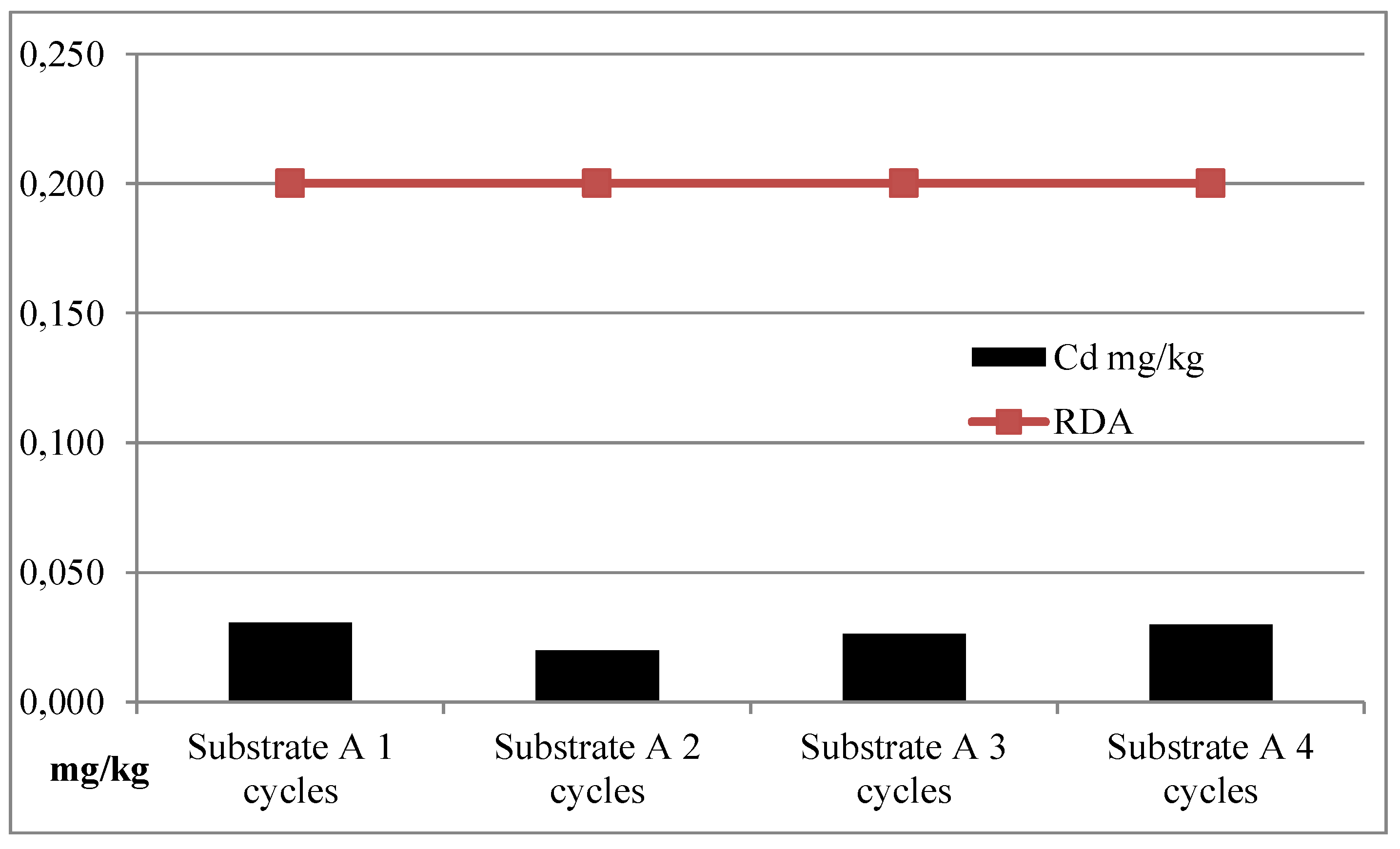
Figure 2.
Cd and Pb concentration in the mushroom fruits from the substrate A compare with the permissible limits (wet weight).
Figure 2.
Cd and Pb concentration in the mushroom fruits from the substrate A compare with the permissible limits (wet weight).
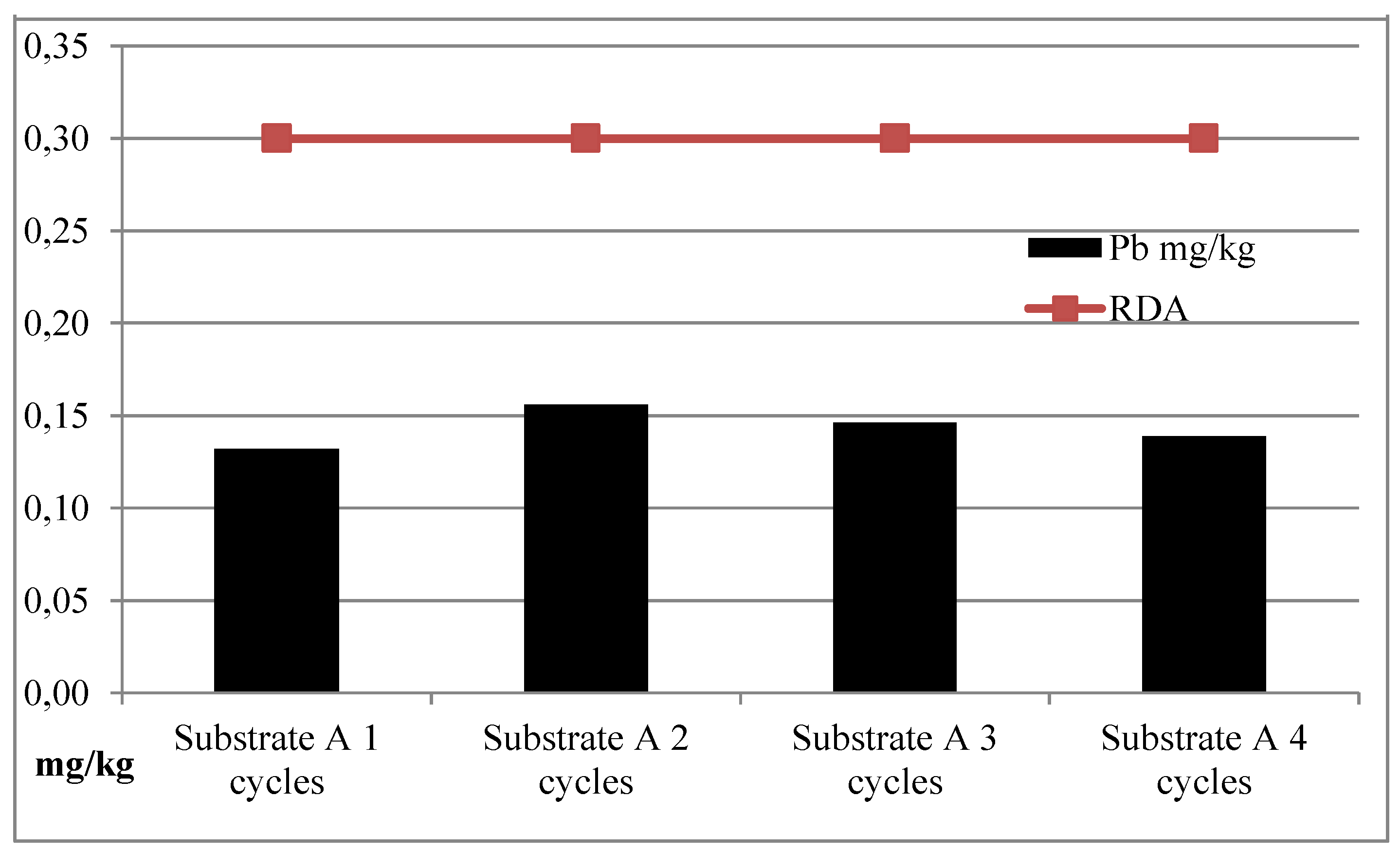
Figure 3.
Cd and Pb concentration in the mushroom fruits from substrate B compare with the permissible limits (wet weight).
Figure 3.
Cd and Pb concentration in the mushroom fruits from substrate B compare with the permissible limits (wet weight).
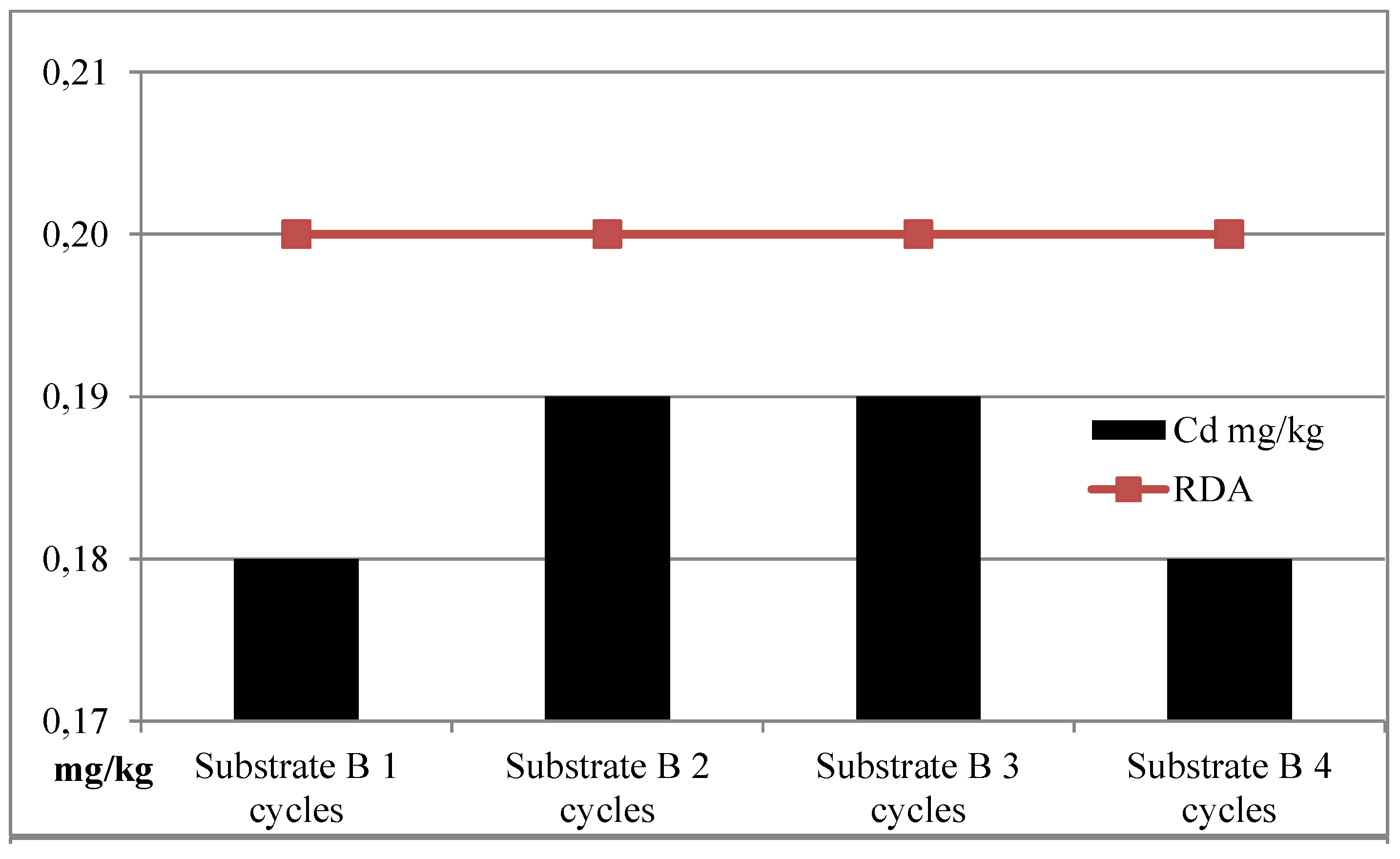
Figure 4.
Cd and Pb concentration in the mushroom fruits from substrate B compare with the permissible limits (wet weight).
Figure 4.
Cd and Pb concentration in the mushroom fruits from substrate B compare with the permissible limits (wet weight).
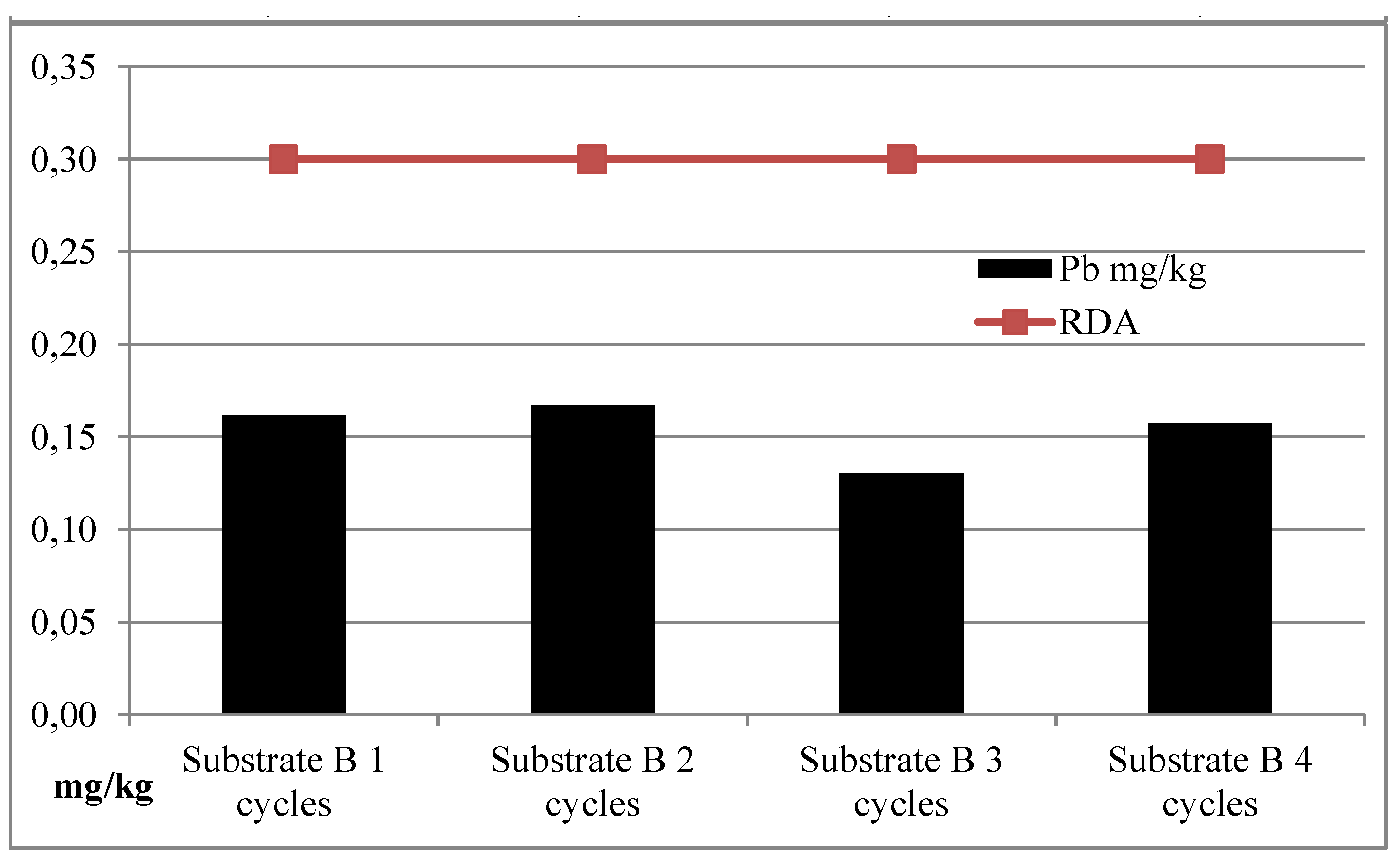

Table 1.
Chemical properties of substrate A.
| Cycle vegetation | Substrate | pH (H2O) 1:10 | EC mS/cm 1:5 | DM % |
N % |
C % |
C/N | P % |
K % |
|---|---|---|---|---|---|---|---|---|---|
| I | Substrate A | 6.16 | 8.27 | 46.83 | 2.49 | 25.97 | 10.47 | 1.91 | 1.09 |
| II | Substrate A | 6.07 | 8.55 | 47.46 | 2.27 | 25.46 | 11.24 | 1.93 | 1.09 |
| III | Substrate A | 6.26 | 8.05 | 46.51 | 2.49 | 25.97 | 10.47 | 1.94 | 1.09 |
| IV | Substrate A | 6.25 | 8.06 | 46.51 | 2.25 | 24.23 | 10.74 | 1.92 | 1.09 |
| Average | Substrate A | 6.19 | 8.23 | 46.83 | 2.38 | 25.41 | 10.73 | 1.93 | 1.09 |
Table 2.
Trace elements and heavy metals concentrations in substrate A (mg/kg).
| Cycle vegetation | Substrate | Zn | Fe | Pb | Cd |
|---|---|---|---|---|---|
| I | Substrate A | 163.99 | 1596.21 | 0.97 | 0.15 |
| II | Substrate A | 155.20 | 2464.11 | 1.19 | 0.13 |
| III | Substrate A | 151.47 | 3362.16 | 2.26 | 0.15 |
| IV | Substrate A | 150.86 | 3361.49 | 2.26 | 0.15 |
| Average | Substrate A | 155.38 | 2695.99 | 1.67 | 0.14 |
Table 3.
Chemical properties of substrate B.
| Cycle vegetation | Substrate | pH (H2O) 1:10 | EC mS/cm 1:5 | DM % |
N % |
C % |
C/N | P % |
K % |
|---|---|---|---|---|---|---|---|---|---|
| I | Substrate B | 5.96 | 8.03 | 42.07 | 2.32 | 29.81 | 12.84 | 1.69 | 1.01 |
| II | Substrate B | 6.09 | 9.18 | 41.97 | 2.30 | 25.61 | 11.11 | 1.73 | 1.03 |
| III | Substrate B | 6.21 | 7.29 | 43.27 | 2.32 | 29.81 | 12.84 | 1.75 | 1.04 |
| IV | Substrate B | 6.21 | 7.33 | 43.27 | 2.38 | 26.34 | 11.04 | 1.72 | 1.02 |
| Average | Substrate B | 6.12 | 7.96 | 42.64 | 2.33 | 27.89 | 11.96 | 1.72 | 1.03 |
Table 4.
Trace elements and heavy metals concentrations in substrate B (mg/kg).
| Cycle vegetation | Substrate | Zn | Fe | Pb | Cd |
|---|---|---|---|---|---|
| I | Substrate B | 127.24 | 1438.23 | 2.66 | 0.22 |
| II | Substrate B | 105.61 | 1216.62 | 2.78 | 0.16 |
| III | Substrate B | 121.89 | 1701.86 | 3.09 | 0.21 |
| IV | Substrate B | 122.89 | 1702.53 | 3.06 | 0.23 |
| Average | Substrate B | 119.41 | 1514.81 | 2.90 | 0.21 |
Table 5.
The average concentrations of heavy metals in button mushroom mushrooms fruit during a vegetation cycle (1st month).
Table 5.
The average concentrations of heavy metals in button mushroom mushrooms fruit during a vegetation cycle (1st month).
|
Champignon fruit (picking stage) |
Fe (mg/kg) |
Zn (mg/kg) |
Pb (mg/kg) |
Cd (mg/kg) |
|---|---|---|---|---|
| Substrate A initial | 84.41 c | 90.58 c | 0.04 d | 0.04 d |
| Substrate A middle | 101.98 b | 114.40 a | 0.16 c | 0.03 d |
| Substrate A end | 116.14 a | 116.11 a | 0.33 a | 0.04 d |
| Substrate B initial | 82.65 c | 82.05 d | 0.18 c | 0.48 a |
| Substrate B middle | 90.46 cb | 91.46 c | 0.24 bac | 0.21 b |
| Substrate B end | 90.77 cb | 103.65 b | 0.29 ba | 0.11 c |
| Average | 94.40 | 99.70 | 0.20 | 0.15 |
Means in each column followed by different letter(s) are significantly different (P<0,01) according to Fisher `s multiple range test.
Table 6.
The average concentrations of heavy metals in button mushroom fruits during a vegetation cycle (2nd month).
Table 6.
The average concentrations of heavy metals in button mushroom fruits during a vegetation cycle (2nd month).
| Champignon fruit (picking stage) |
Fe (mg/kg) |
Zn (mg/kg) |
Pb (mg/kg) |
Cd (mg/kg) |
|---|---|---|---|---|
| Substrate A initial | 84.10 cd | 88.58 c | 0.14 c | 0.04 c |
| Substrate A middle | 102.10 b | 115.51 a | 0.14 c | 0.03 c |
| Substrate A end | 123.14 a | 110.36 ba | 0.34 a | 0.03 c |
| Substrate B initial | 79.02 d | 79.42 c | 0.18 c | 0.49 a |
| Substrate B middle | 96.84 cb | 88.21 c | 0.23 bc | 0.21 b |
| Substrate B end | 90.95 cbd | 101.71 b | 0.33 ba | 0.15 b |
| Average | 96.02 | 97.30 | 0.45 | 0.16 |
Means in each column followed by different letter(s) are significantly different (P<0.01) according to Fisher `s multiple range test.
Table 7.
The average concentrations of heavy metals in button mushroom fruits during a vegetation cycle (3rd month).
Table 7.
The average concentrations of heavy metals in button mushroom fruits during a vegetation cycle (3rd month).
| Champignon fruit (picking stage) |
Fe (mg/kg) |
Zn (mg/kg) |
Pb (mg/kg) |
Cd (mg/kg) |
|---|---|---|---|---|
| Substrate A initial | 85.72 b | 88.45 c | 0.09 b | 0.04 c |
| Substrate A middle | 103.47 b | 112.94 a | 0.12 b | 0.03 c |
| Substrate A end | 140.53 a | 109.61 a | 0.37 a | 0.04 c |
| Substrate B initial | 81.96 b | 78.80 d | 0.15 b | 0.50 a |
| Substrate B middle | 95.28 b | 87.77 c | 0.19 ba | 0.20 b |
| Substrate B end | 94.89 b | 100.65 b | 0.24 ba | 0.15 b |
| Average | 100.30 | 96.37 | 0.19 | 0.16 |
Means in each column followed by different letter(s) are significantly different (P<0.01) according to Fisher `s multiple range test.
Table 8.
The average concentrations of heavy metals in button mushroom fruits during a vegetation cycle (4th month).
Table 8.
The average concentrations of heavy metals in button mushroom fruits during a vegetation cycle (4th month).
| Champignon fruit (picking stage) |
Fe (mg/kg) |
Zn (mg/kg) |
Pb (mg/kg) |
Cd (mg/kg) |
|---|---|---|---|---|
| Substrate A initial | 85.08 a | 91.57 c | 0.07 d | 0.04 dc |
| Substrate A middle | 103.56 a | 119.22 a | 0.15 dc | 0.03 d |
| Substrate A end | 149.16 a | 107.68 b | 0.32 a | 0.05 dc |
| Substrate B initial | 133.87 a | 78.17 d | 0.17 bc | 0.50 a |
| Substrate B middle | 94.34 a | 88.83 c | 0.26 ba | 0.22 b |
| Substrate B end | 91.29 a | 104.90 b | 0.26 ba | 0.09 c |
| Average | 109.55 | 98.39 | 0.20 | 0.15 |
Means in each column followed by different letter(s) are significantly different (P<0.01) according to Fisher `s multiple range test.
Table 9.
The accumulation coefficients of heavy metals accumulation in button mushroom fruits from the substrate A.
Table 9.
The accumulation coefficients of heavy metals accumulation in button mushroom fruits from the substrate A.
| Heavy metals | Vegetation cycle substrate A |
Average | |||
|---|---|---|---|---|---|
| I | II | III | IV | ||
| Accumulation coefficients | |||||
| Fe | 0.07 | 0.03 | 0.03 | 0.03 | 0.04 |
| Zn | 0.61 | 0.69 | 0.67 | 0.69 | 0.66 |
| Pb | 0.24 | 0.23 | 0.03 | 0.07 | 0.14 |
| Cd | 0.28 | 0.33 | 0.33 | 0.25 | 0.30 |
Table 10.
The accumulation coefficients of heavy metals accumulation in button mushroom fruits from the substrate B.
Table 10.
The accumulation coefficients of heavy metals accumulation in button mushroom fruits from the substrate B.
| Heavy metals |
Vegetation cycle substrate B |
Average | |||
| I | II | III | IV | ||
| Accumulation coefficients | |||||
| Fe | 0.07 | 0.07 | 0.05 | 0.07 | 0.06 |
| Zn | 0.70 | 0.86 | 0.74 | 0.83 | 0.78 |
| Pb | 0.10 | 0.08 | 0.05 | 0.09 | 0.08 |
| Cd | 1.35 | 1.75 | 1.47 | 1.23 | 1.45 |
Disclaimer/Publisher’s Note: The statements, opinions and data contained in all publications are solely those of the individual author(s) and contributor(s) and not of MDPI and/or the editor(s). MDPI and/or the editor(s) disclaim responsibility for any injury to people or property resulting from any ideas, methods, instructions or products referred to in the content. |
© 2025 by the authors. Licensee MDPI, Basel, Switzerland. This article is an open access article distributed under the terms and conditions of the Creative Commons Attribution (CC BY) license (http://creativecommons.org/licenses/by/4.0/).
Copyright: This open access article is published under a Creative Commons CC BY 4.0 license, which permit the free download, distribution, and reuse, provided that the author and preprint are cited in any reuse.


