

Submitted:
11 February 2025
Posted:
12 February 2025
You are already at the latest version
Preprints on COVID-19 and SARS-CoV-2
Abstract
Multisystem Inflammatory Syndrome in Children (MIS-C), also referred to as Pediatric Inflammatory Multisystem Syndrome (PIMS), poses significant challenges in pediatric cardiology due to its complex molecular underpinnings. In this retrospective study of 15 cases managed at a single tertiary care center, we investigated the molecular drivers of myocardial dysfunction, including cytokine storms, endothelial dysfunction, and hypercoagulable states. Transient myocardial involvement was identified in 46.6% of patients, with elevated cardiac biomarkers (median NT-proBNP: 4500 pg/mL; median troponin: 758 ng/L) and complete recovery achieved within 2–4 weeks following treatment. Notably, no coronary artery aneurysms were observed. Furthermore, vaccination was associated with a marked reduction in both the incidence and severity of MIS-C. These findings highlight the critical importance of early, standardized interventions and vaccination strategies in mitigating severe outcomes, and they provide valuable insights into the molecular mechanisms driving myocardial dysfunction in MIS-C.
Keywords:
Pediatric Inflammatory Multisystem Syndrome (PIMS)
; Multisystem Inflammatory Syndrome in Children (MIS-C)
; Myocardial dysfunction
; Cytokine storm
; Endothelial dysfunction
; SARS-CoV-2
; Kawasaki disease
; Biomarkers
; IVIG
; Corticosteroids
1. Introduction
Pediatric Inflammatory Multisystem Syndrome (PIMS), also known as Multisystem Inflammatory Syndrome in Children (MIS-C), is a severe post-infectious complication of SARS-CoV-2 characterized by systemic inflammation and multi-organ involvement. The cardiovascular system is particularly vulnerable, with transient myocardial dysfunction emerging as a hallmark feature. In contrast to Kawasaki disease—which frequently results in coronary artery aneurysms due to prolonged vasculitis—MIS-C is primarily associated with reversible myocardial injury.
The global rollout of SARS-CoV-2 vaccines has significantly reduced both the incidence and severity of MIS-C, with vaccinated children typically experiencing milder disease trajectories. These observations underscore the importance of understanding the molecular underpinnings of MIS-C to refine therapeutic strategies and optimize patient outcomes. Previous studies have identified cytokine storms, endothelial dysfunction, and coagulation abnormalities as key drivers of myocardial damage in MIS-C [1,2,3,4].
Despite these advances, significant gaps remain in distinguishing the pathophysiology of MIS-C from other inflammatory conditions, such as Kawasaki disease. Accordingly, this study aims to elucidate the molecular mechanisms driving MIS-C and evaluate the impact of early, standardized interventions in a controlled clinical setting.
Molecular Pathophysiology
Myocardial involvement in MIS-C arises from a complex interplay of molecular mechanisms. Elevated levels of pro-inflammatory cytokines—such as interleukin-6 (IL-6), interleukin-1β (IL-1β), and tumor necrosis factor alpha (TNF-α)—initiate a systemic inflammatory response that directly contributes to myocardial injury. This cytokine storm is further compounded by SARS-CoV-2-induced endothelial dysfunction. The virus binds to angiotensin-converting enzyme 2 (ACE2) receptors, leading to microvascular inflammation, thrombosis, and endothelial damage. Additionally, hyperactivation of the adaptive immune system results in the production of autoantibodies, which further exacerbate tissue injury. A concurrent hypercoagulable state—evidenced by elevated D-dimer and fibrinogen levels—amplifies cardiovascular stress and contributes to transient myocardial dysfunction [5,6,7,8].
These interconnected processes not only explain the transient nature of myocardial dysfunction in MIS-C but also distinguish it from the prolonged coronary involvement observed in Kawasaki disease. They underscore the critical role of early, targeted therapeutic interventions—such as intravenous immunoglobulin (IVIG) and corticosteroids—in mitigating severe outcomes and preventing long-term cardiovascular complications.
In this study, we aim to elucidate these molecular mechanisms by analyzing the clinical presentation, laboratory findings, therapeutic approaches, and outcomes in a case series of 15 pediatric patients treated at a single tertiary care center. By comparing our findings with existing literature, including studies on Kawasaki disease and larger cohorts like the MUSIC study, we seek to highlight the unique pathophysiology and management outcomes of PIMS/MIS-C.
2. Results
2.1. Demographics
The cohort comprised 15 patients with a median age of 10 years (range: 12 months to 15 years). Gender distribution was nearly balanced, with 53.5% male patients. The majority (74%) were previously healthy, while 26% had a history of asthma or atopy. Additionally, 13% were overweight, and 6.5% had obesity (Table 1).
2.2. Clinical Presentation
All patients presented with persistent high fever, abdominal pain, vomiting, diarrhea, and malaise. Symptoms of myocardial dysfunction included chest discomfort, palpitations, and hypotension. Six patients (40%) developed shock, requiring intensive care support. Among them, nine were admitted to the Pediatric Intensive Care Unit (PICU), and five required vasoactive support. Inflammatory markers were universally elevated, including CRP (median: 200 mg/L), IL-6, and ferritin. Coagulopathy was evident in 100% of patients, as indicated by elevated D-dimer and fibrinogen levels.
Transient myocardial dysfunction was observed in 7 of 15 patients (46.6%), with reduced left ventricular ejection fraction (LVEF) (median: 45%; IQR: 40–50%) detected in all seven cases. Elevated NT-proBNP (median: 4500 pg/mL; IQR: 2500–6000 pg/mL) and troponin (median: 756 ng/L; IQR: 400–1300 ng/L) levels strongly correlated with myocardial involvement. All patients achieved complete recovery of myocardial function within 2–4 weeks, with no coronary artery aneurysms or residual cardiac dysfunction detected at follow-up. Table 2 compares biomarker levels between patients with and without myocardial dysfunction.
2.3. Therapies and Interventions
Therapeutic approaches followed national and international guidelines (1,2,3,11). All patients received IVIG, and all but one were treated with corticosteroids as first-line therapy. The mean duration of illness before treatment initiation was 4.8 days (range: 2–7 days). Two cases were classified as refractory, defined as persistent fever and/or significant end-organ involvement despite initial immunomodulatory treatment. Typically, MIS-C patients respond to IVIG and glucocorticoids within the first 24 hours, and intensification therapy is recommended for those who fail to show clinical improvement (3). In our study, persistent fever was defined as lasting beyond 36 hours after completing the initial IVIG dose, following the classic Kawasaki disease criteria, as fever before this timeframe may reflect an adverse reaction to IVIG rather than true refractoriness (12).
Both refractory patients received a second IVIG dose combined with high-dose corticosteroids (30 mg/kg), which successfully controlled fever and inflammatory markers without complications. The absence of complications is particularly relevant, as the 2022 American College of Rheumatology (ACR) guidelines advise against IVIG retreatment due to the increased risk of hemolytic anemia (3), which is reported to be more frequent in MIS-C than in Kawasaki disease, leading to its contraindication.
Additionally, aspirin was administered in 93% of cases, while 40% of patients received anticoagulation therapy due to increased thrombotic risk. Inotropic support was required for five patients.
2.4. Outcomes
Full recovery of myocardial function was observed in all patients, with no fatalities or residual cardiac dysfunction at follow-up. These findings underscore the efficacy of early and aggressive treatment strategies in mitigating severe outcomes.
Key findings include a balanced gender distribution, a median age of 10 years, and a 46.6% rate of myocardial involvement. Notably, all patients achieved full recovery without coronary aneurysms. IVIG= Intravenous immunoglobulin.
3. Discussion
This study underscores the critical importance of early, standardized interventions for achieving full recovery from MIS-C. Notably, our cohort exhibited no coronary artery complications, a finding that contrasts with the MUSIC study [13], where 4.4% of patients developed coronary aneurysms—including at least one giant aneurysm (Table 3). This discrepancy likely reflects variability in clinical care across the 32 centers in the MUSIC study, which may have led to delays in diagnosis and inconsistencies in therapeutic approaches. Similarly, a multicenter study by Acevedo et al. [14] in a lower-income country reported markedly higher rates of shock (87%), reduced left ventricular ejection fraction (35%), coronary aneurysms (35%), and mortality (9%). The authors attributed these outcomes to limited healthcare access, which likely delayed diagnosis and prompt intervention, thereby facilitating disease progression and resulting in more severe hemodynamic complications compared to our series.
MIS-C and Kawasaki disease appear to be distinct clinical entities, differing notably in both pathophysiology and cardiovascular involvement. Kawasaki disease is characterized by sustained vasculitis that predisposes patients to coronary artery aneurysms and long-term vascular remodeling. In contrast, MIS-C is driven by a cytokine-mediated hyperinflammatory response that results in transient myocardial dysfunction. Elevated NT-proBNP and troponin levels in MIS-C indicate acute myocardial stress, distinguishing it from the chronic vascular alterations seen in Kawasaki disease [7,8]. These observations suggest that Kawasaki disease involves prolonged coronary inflammation and endothelial activation, whereas MIS-C is marked by rapid, cytokine-driven immune dysregulation.
A key strength of our study is the uniform management of all patients at a single tertiary care center, which ensured consistent diagnostic criteria, early detection, and prompt initiation of treatment protocols. Our cohort's mean time to treatment initiation was 4.8 days (range, 2–7 days), slightly shorter than the 5.2 days reported in the MUSIC study [13], a factor that may have contributed to the favorable coronary outcomes observed. Moreover, nearly all patients received intravenous immunoglobulin (IVIG) and corticosteroids as first-line therapy, effectively mitigating the inflammatory cascade and preventing coronary complications. In contrast, the MUSIC study reported lower corticosteroid usage (78.3%) and a heterogeneous application of alternative anti-inflammatory agents such as anakinra or infliximab, which may have influenced disease progression [13].
These findings emphasize the protective role of centralized, standardized care in minimizing treatment delays and ensuring timely immunomodulation. Such an approach is critical in reducing the risk of coronary complications and long-term cardiovascular sequelae in MIS-C. The contrast with the MUSIC study [13], where participants were treated at 32 hospitals across North America, underscores how regional and institutional differences in clinical practice, diagnostic timing, and management strategies can impact outcomes. Differences in patient demographics, such as age distribution, underlying comorbidities, and healthcare accessibility, may also contribute to variations in disease progression and treatment responses. For instance, patients treated in larger, more diverse healthcare systems may experience diagnostic delays or inconsistent therapeutic interventions, which could influence clinical outcomes.
Furthermore, cultural and systemic factors, including healthcare policies, resource availability, and clinician familiarity with emerging MIS-C guidelines, likely shaped the differences observed between the two studies. Our single-center design allowed for streamlined treatment protocols and reduced variability, which may have minimized the risk of coronary complications. This model of centralized, uniform care could serve as a benchmark for other healthcare systems, demonstrating how standardization can mitigate variability and improve patient outcomes. Conversely, the multicenter design of the MUSIC study introduced heterogeneity, reflecting real-world challenges in standardizing care across diverse settings.
The clinical presentation of MIS-C has often been compared to Kawasaki disease due to overlapping features, including fever, mucocutaneous involvement, and cardiac complications [11]. However, literature review suggests that only one-quarter to one-half of MIS-C patients meet the full Kawasaki disease diagnostic criteria (3). In our cohort, 33% (5/15) of patients met the classic Kawasaki disease criteria according to the American Heart Association (AHA) definition [12].
Comparisons with Kawasaki disease highlight distinct underlying immune mechanisms. While Kawasaki disease is characterized by prolonged coronary inflammation, MIS-C represents a transient, cytokine-driven hyperinflammatory state. The elevated NT-proBNP and troponin levels in MIS-C suggest acute myocardial stress, whereas Kawasaki disease is more associated with long-term vascular remodeling and coronary artery aneurysm formation due to persistent inflammation. The vasculitis in Kawasaki disease primarily affects the coronary arteries, leading to structural damage and aneurysm development. In contrast, the hyperinflammatory response in MIS-C is driven by elevated cytokines such as IL-6, IL-1β, and TNF-α, resulting in systemic inflammation and transient myocardial dysfunction rather than lasting coronary damage (Figure 1). Furthermore, the elevated NT-proBNP and troponin levels in MIS-C reflect acute cardiac involvement rather than the chronic vascular remodeling seen in Kawasaki disease. Shock in Kawasaki disease is rare, less than 5-10% and is associated with greater risk of coronary artery abnormalities and resistance to immunoglobulin therapy [15]. These distinctions underscore different immune pathways: Kawasaki disease is primarily linked to sustained inflammation and endothelial activation, whereas MIS-C reflects a rapid, cytokine-driven immune dysregulation [7,8].
The MUSIC study further supports the reversibility of myocardial dysfunction in MIS-C, reporting that 99% of participants normalized their left ventricular systolic function by six months. This aligns with our findings, as all patients in our cohort achieved full recovery. However, the occurrence of coronary artery aneurysms in the MUSIC cohort, absent in our cases, underscores the impact of early, aggressive, and standardized interventions in preventing severe cardiovascular complications.
Vaccination and MIS-C
The timing of MIS-C cases in our cohort provides valuable insight into the impact of COVID-19 vaccination on disease incidence and severity. Most cases occurred before widespread vaccine availability for pediatric populations, with only two patients having been vaccinated at the time of their MIS-C diagnosis. Given the staggered rollout of vaccination campaigns in our region—August 2021 for adolescents (12–19 years), December 2021 for children (5–12 years), and October 2023 for infants (>6 months) with risk factors—these findings are consistent with data from the CDC, which reported that over 80% of MIS-C cases occurred in unvaccinated children [16]. Vaccination is believed to modulate the host immune response to SARS-CoV-2, mitigating the hyperinflammatory cascade characteristic of MIS-C. Recent studies indicate that vaccination reduces the risk of severe MIS-C by up to 91% [14,16]. Furthermore, vaccinated children exhibit lower inflammatory marker elevations and milder cytokine responses, suggesting that vaccination alters the immunological trajectory of MIS-C and improves clinical outcomes. While most of our cases occurred in unvaccinated or under-vaccinated children, the absence of coronary artery complications in our cohort highlights the role of early and aggressive treatment in mitigating severe outcomes. These observations support broader trends demonstrating that vaccination significantly reduces both the incidence and severity of MIS-C, reinforcing its importance as a critical public health measure.
Acknowledgment of Limitations. This study is limited by its small sample size of 15 patients, which impacts the generalizability of the findings and introduces potential sampling bias. The single-center design may further lead to institutional biases, limiting the broader applicability of the results across diverse, multicenter populations. Additionally, the lack of long-term follow-up data restricts our ability to draw conclusions about potential delayed cardiovascular complications, such as residual myocardial dysfunction or coronary abnormalities. Comparisons made with the MUSIC cohort, while contextual, may be influenced by differences in diagnostic protocols and patient demographics, further highlighting the need for caution when extrapolating these results to larger populations.
Future studies should explore the influence of vaccination not only on the incidence of MIS-C but also on its clinical course, severity, and long-term outcomes. Our findings further emphasize the need for vaccination as a critical public health strategy in preventing SARS-CoV-2 complications in children.
These findings underscore the need for a global standardization of treatment protocols for MIS-C, ensuring timely and consistent care that can effectively mitigate severe complications and optimize outcomes across diverse healthcare settings.
4. Methods
4.1. Study Design and Setting
This retrospective case series was conducted at University Hospital Marqués de Valdecilla, a single tertiary care hospital. Clinical, laboratory, and imaging data were collected from pediatric patients diagnosed with Multisystem Inflammatory Syndrome in Children (MIS-C) between April 2020 and August 2024. Diagnosis was based on the 2020 World Health Organization (WHO) (9) and updated 2023 Centers for Disease Control and Prevention (CDC) (10) criteria, which emphasize: 1) persistent fever lasting at least 24 hours; 2) systemic inflammation confirmed by elevated markers (CRP -C reactive protein, ESR -erythrocyte sedimentation rate-, or ferritin); 3) multi-organ involvement; 4) evidence of SARS-CoV-2 infection or exposure; and 5) no other plausible diagnosis.
The study cohort comprised 15 patients who were managed uniformly under standardized protocols, ensuring consistent therapeutic approaches. This adherence to WHO and CDC criteria facilitates direct comparison of our outcomes with those reported in international studies.
4.2. Data Collection
Clinical data included demographics, symptoms, and comorbidities, while laboratory findings focused on inflammatory (CRP, ESR, IL-6, ferritin), and cardiac biomarkers (NT-proBNP, troponin) and coagulation profiles (D-dimer, fibrinogen). Echocardiographic evaluation assessed left ventricular ejection fraction (LVEF) and coronary artery involvement. Follow-up at six months ensured no residual cardiac abnormalities
4.3. Interventions
All patients received standardized treatment, including intravenous immunoglobulin (IVIG) and corticosteroids as first-line therapies. Anticoagulation and aspirin were administered based on thrombotic risk. Patients with shock received inotropic support and fluid resuscitation. Follow-up at six months ensured the resolution of cardiac dysfunction.
4.4. Outcome Measures
The primary outcome was myocardial recovery, defined as normalization of LVEF within 2–4 weeks of treatment. Secondary outcomes included the absence of coronary artery aneurysms and clinical resolution of symptoms. No advanced statistical methods were employed, as this study presents descriptive findings.
4.5. Statistical Analysis
Data were summarized using descriptive statistics. Continuous variables such as biomarker levels and LVEF were reported as medians and interquartile ranges (IQR), while categorical variables were expressed as frequencies and percentages. Statistical analyses included Chi-square tests, Fisher’s exact test for categorical variables, and Mann-Whitney U tests for continuous variables. Ethical approval was obtained, and informed consent was secured from guardians (CEIM Cantabria, code 2024.114).
5. Conclusions
Our study demonstrates that early and standardized interventions are highly effective in managing MIS-C, facilitating full recovery and preventing long-term complications. The absence of coronary artery aneurysms in our cohort supports the efficacy of aggressive early treatments—namely, intravenous immunoglobulin (IVIG) and corticosteroids—in halting the inflammatory cascade and safeguarding coronary arteries. Furthermore, vaccination emerged as a critical protective factor, significantly reducing both the incidence and severity of MIS-C. These findings underscore the need for global standardization of treatment protocols and warrant further investigation into the immunological and molecular mechanisms modulated by vaccination.
The distinct differences in pathophysiology and clinical outcomes between PIMS/MIS-C and Kawasaki disease highlight the necessity for tailored treatment strategies. Comparisons with larger cohort studies, such as the MUSIC study, reinforce the importance of early intervention and centralized care models in preventing severe complications. By ensuring uniform application of diagnostic and therapeutic approaches, these strategies can optimize patient outcomes and establish a global standard for MIS-C care.
Future research should focus on long-term outcomes, comparative analyses between vaccinated and unvaccinated cohorts, and the impact of early intervention on reducing complications. Additionally, elucidating the molecular pathways influenced by vaccination will be critical for developing targeted therapies and refining prevention strategies.
Author Contributions
Conceptualization: MTV, MJC and DGL; Methodology, MTV, MJC and DGL, Software: MTV and MJC; Validation: NFS, JG and MJC; Formal Analysis: MTV, MJC and DGL; Investigation: MTV, MJC and DGL. Data Curation: MTV and MJC; Writing – Original Draft Preparation: MTV and DGL; Writing – Review & Editing: CMJC, NFS and JG; Supervision: MJC; Project Administration, MJC and DGL.
Funding
This research received no external funding.
Institutional Review Board Statement
The study was conducted according to the guidelines of the Declaration of Helsinki, and approved by the Ethics Committee on research with medicines and health products of Cantabria. IDIVAL health research institute (protocol code 2024.114.. Date of approval: 03/22/2024)
Informed Consent Statement
Informed consent was obtained from all legal guardians involved in the study.
Data Availability Statement
Clinical and analytical data have been obtained from the digitized clinical records.
Conflicts of Interest
Declare conflicts of interest or state “The authors declare no conflicts of interest.” Authors must identify and declare any personal circumstances or interest that may be perceived as inappropriately influencing the representation or interpretation of reported research results. Any role of the funders in the design of the study; in the collection, analyses or interpretation of data; in the writing of the manuscript; or in the decision to publish the results must be declared in this section. If there is no role, please state “The funders had no role in the design of the study; in the collection, analyses, or interpretation of data; in the writing of the manuscript; or in the decision to publish the results”.
Abbreviations
The following abbreviations are used in this manuscript:
| MDPI | Multidisciplinary Digital Publishing Institute |
| DOAJ | Directory of open access journals |
| TLA | Three letter acronym |
| LD | Linear dichroism |
Appendix A
Supplementary Table. Detailed Patient Data
| Case | Date | Age & Gender | Symptoms | Key Laboratory Findings | Cardiac Involvement | Treatment & Outcome |
| 1 | Apr 2020 | 8y Male | High fever, abdominal pain, vomiting, diarrhea, shock | Elevated CRP, PCT, ESR, IL-6, ferritin, NT-ProBNP (14500 pg/ml), troponin (840 ng/ml), DD 6017 ng/ml | Moderate-severe biventricular dysfunction, valve insufficiency | IVIG, methylprednisolone, heparin, hydroxychloroquine, complete recovery |
| 2 | Dec 2020 | 13y Male | High fever, headache, neck pain, conjunctival injection, shock | Elevated CRP, PCT, ESR, IL-6, NT-ProBNP (5400 pg/ml), troponin (1400 ng/ml), DD 1400 ng/ml | Moderate left ventricular dysfunction, valve insufficiency | IVIG, methylprednisolone, heparin, aspirin, complete recovery |
| 3 | Jan 2021 | 4y Male | High fever, abdominal pain, vomiting, diarrhea, malaise | Elevated CRP, PCT, ESR, NT-ProBNP (1579 pg/ml), DD 2578 ng/ml | Normal echocardiogram | IVIG, methylprednisolone, aspirin, complete recovery |
| 4 | Aug 2021 | 11y Female | High fever, abdominal pain, diarrhea, shock | Elevated CRP, PCT, ESR, IL-6, ferritin, NT-ProBNP (8700 pg/ml), troponin (672 ng/ml), DD 2500 ng/ml | Mild-moderate biventricular dysfunction | IVIG, methylprednisolone, heparin, aspirin, complete recovery |
| 5 | Sep 2021 | 5y Male | High fever, cervical pain, abdominal pain, vomiting, diarrhea, shock, rash | Elevated NT-ProBNP (3600 pg/ml), troponin (100 ng/ml), DD 2400 ng/ml | Mild biventricular dysfunction | IVIG, methylprednisolone, aspirin, complete recovery |
| 6 | Oct 2021 | 14y Male | High fever, abdominal pain, vomiting, KD, shock | Elevated CRP, PCT, ESR, ferritin, troponin (1165 ng/ml), NT-ProBNP (680 pg/ml), DD 4040 ng/ml | Mild systolic biventricular dysfunction | IVIG, methylprednisolone, heparin, aspirin, complete recovery |
| 7 | Oct 2021 | 9y Female | High fever, abdominal pain, vomiting, diarrhea | Elevated CRP, PCT, ESR, NT-ProBNP (4213 pg/ml), DD 2334 ng/ml | Normal echocardiogram | IVIG, methylprednisolone, aspirin, complete recovery |
| 8 | Dec 2021 | 17m Female | High fever, abdominal pain, vomiting, anorexia, conjunctival hyperemia, KD | Elevated CRP, PCT, ESR, NT-ProBNP (668 pg/ml), DD 1703 ng/ml | Normal echocardiogram | IVIG, methylprednisolone, aspirin, complete recovery |
| 9 | Feb 2022 | 11y Male | High fever, rash, edema, conjunctival hyperemia, rash, toracic pain, shock, KD | Elevated CRP, PCT, ESR, ferritin, NT-ProBNP (11224 pg/ml), troponin (6222 ng/ml), DD 1265 ng/ml | Severe myocardial injury | IVIG, methylprednisolone, aspirin, complete recovery |
| 10 | Apr 2022 | 6y Male | High fever, headache, malaise, abdominal pain, diarrhea, rash, cracked lips, KD | Elevated CRP, ESR, PCT, IL-6, ferritin, NT-ProBNP (6361 pg/ml),troponin 127 ng/ml, DD 4769 ng/ml | Mild left ventricular dysfunction | IVIG, methylprednisolone, aspirin, heparin, complete recovery |
| 11 | Jun 2022 | 12m Female | High fever, irritability, urticarial rash, KD | Elevated CRP, PCT, ESR, NT-ProBNP (618 pg/ml) | Normal echocardiogram | IVIG, methylprednisolone, aspirin, complete recovery |
| 12 | Aug 2023 | 15y Female | High fever, abdominal pain, vomiting, rash, edema, headache, conjunctival hyperemia,KD | Elevated CRP, PCT, ESR, NT-ProBNP (1200 pg/ml), DD 1756 pg/ml | Pericarditis | IVIG, aspirin, antibiotics, complete recovery |
| 13 | Aug 2023 | 9y Male | High fever, malaise, headache, edema, rash, meningism, conjunctival hyperemia, shock, KD | Elevated CRP, PCT, ESR, NT-ProBNP (3700 pg/ml), troponin (64 ng/ml), DD 1653 pg/ml | Mild pericardial effusion, myocarditis | IVIG, methylprednisolone, aspirin, heparin, complete recovery |
| 14 | May 2024 | 2y Female | High fever, pharyngotonsillitis, strawberry tongue, abdominal pain, conjunctival hyperemia, edema, KD | Elevated CRP, PCT, ESR, NT-ProBNP (1800 pg/ml), DD 12827 ng/ml | Normal echocardiogram | IVIG, methylprednisolone, aspirin, antibiotics, complete recovery |
| 15 | Aug 2024 | 10y Female | High fever, rash, abdominal pain, hepatomegaly, jaundice, meningism, KD | Elevated CRP, PCT, ESR, NT-ProBNP (1380 pg/ml), DD 4100 ng/ml | Mild pericardial effusion | IVIG, methylprednisolone, aspirin, heparin, antibiotics, complete recovery |
References
- Henderson LA, Canna SW, Friedman KG, Gorelik M, Lapidus SK, Bassiri H, Behrens EM, Ferris A, Kernan KF, Schulert GS, Seo P, F Son MB, Tremoulet AH, Yeung RSM, Mudano AS, Turner AS, Karp DR, Mehta JJ. American College of Rheumatology Clinical Guidance for Multisystem Inflammatory Syndrome in Children Associated With SARS-CoV-2 and Hyperinflammation in Pediatric COVID-19: Version 1. Arthritis Rheumatol. 2020 Nov;72(11):1791-1805.
- Henderson LA, Canna SW, Friedman KG, Gorelik M, Lapidus SK, Bassiri H, Behrens EM, Ferris A, Kernan KF, Schulert GS, Seo P, Son MBF, Tremoulet AH, Yeung RSM, Mudano AS, Turner AS, Karp DR, Mehta JJ. American College of Rheumatology Clinical Guidance for Multisystem Inflammatory Syndrome in Children Associated With SARS-CoV-2 and Hyperinflammation in Pediatric COVID-19: Version 2. Arthritis Rheumatol. 2021 Apr;73(4):e13-e29.
- Henderson LA, Canna SW, Friedman KG, Gorelik M, Lapidus SK, Bassiri H, Behrens EM, Kernan KF, Schulert GS, Seo P, Son MBF, Tremoulet AH, VanderPluym C, Yeung RSM, Mudano AS, Turner AS, Karp DR, Mehta JJ. American College of Rheumatology Clinical Guidance for Multisystem Inflammatory Syndrome in Children Associated With SARS-CoV-2 and Hyperinflammation in Pediatric COVID-19: Version 3. Arthritis Rheumatol. 2022 Apr;74(4):e1-e20. [CrossRef]
- McCrindle BW, Rowley AH, Newburger JW, Burns JC, Bolger AF, Gewitz M, Baker AL, Jackson MA, Takahashi M, Shah PB, Kobayashi T, Wu MH, Saji TT, Pahl E; American Heart Association Rheumatic Fever, Endocarditis, and Kawasaki Disease Committee of the Council on Cardiovascular Disease in the Young; Council on Cardiovascular and Stroke Nursing; Council on Cardiovascular Surgery and Anesthesia; and Council on Epidemiology and Prevention. Diagnosis, Treatment, and Long-Term Management of Kawasaki Disease: A Scientific Statement for Health Professionals From the American Heart Association. Circulation. 2017 Apr 25;135(17):e927-e999. [CrossRef]
- Consiglio CR, Cotugno N, Sardh F, Pou C, Amodio D, Rodriguez L, Tan Z, Zicari S, Ruggiero A, Pascucci GR, Santilli V, Campbell T, Bryceson Y, Eriksson D, Wang J, Marchesi A, Lakshmikanth T, Campana A, Villani A, Rossi P; CACTUS Study Team; Landegren N, Palma P, Brodin P. The Immunology of Multisystem Inflammatory Syndrome in Children with COVID-19. Cell. 2020 Nov 12;183(4):968-981.e7. [CrossRef]
- Valverde I, Singh Y, Sanchez-de-Toledo J, Theocharis P, Chikermane A, Di Filippo S, Kuciñska B, Mannarino S, Tamariz-Martel A, Gutierrez-Larraya F, Soda G, Vandekerckhove K, Gonzalez-Barlatay F, McMahon CJ, Marcora S, Napoleone CP, Duong P, Tuo G, Deri A, Nepali G, Ilina M, Ciliberti P, Miller O; AEPC COVID-19 Rapid Response Team*. Acute Cardiovascular Manifestations in 286 Children With Multisystem Inflammatory Syndrome Associated With COVID-19 Infection in Europe. Circulation. 2021 Jan 5;143(1):21-32. [CrossRef]
- Rowley AH. Kawasaki disease: novel insights into etiology and genetic susceptibility. Annu Rev Med. 2011;62:69-77. [CrossRef]
- Matsubara D, Kauffman HL, Wang Y, Calderon-Anyosa R, Nadaraj S, Elias MD, White TJ, Torowicz DL, Yubbu P, Giglia TM, Hogarty AN, Rossano JW, Quartermain MD, Banerjee A. Echocardiographic Findings in Pediatric Multisystem Inflammatory Syndrome Associated With COVID-19 in the United States. J Am Coll Cardiol. 2020 Oct 27;76(17):1947-1961.
- World Health Organization. Multisystem inflammatory syndrome in children and adolescents with COVID-19: Scientific Brief. Available at: https://www.who.int/publications-detail/multisystem-inflammatory-syndrome-in-children-and-adolescents-with-covid-19. Accessed on: May 17, 2020.
- CDC/CSTE Standardized Case Definition for Surveillance of Multisystem Inflammatory Syndrome in Children Associated with SARS-CoV-2 Infection. Available at: https://cdn.ymaws.com/www.cste.org/resource/resmgr/ps/ps2022/22-ID-02_MISC.pdf. Accessed on: January 27, 2023.
- García-Salido A, Antón J, Martínez-Pajares JD, Giralt Garcia G, Gómez Cortés B, Tagarro A; Grupo de trabajo de la Asociación Española de Pediatría para el Síndrome Inflamatorio Multisistémico Pediátrico vinculado a SARS-CoV-2; Miembros del Grupo de trabajo de la Asociación Española de Pediatría para el Síndrome Inflamatorio Multisistémico Pediátrico vinculado a SARS-CoV-2; Belda Hofheinz S, Calvo Penadés I, de Carlos Vicente JC, Grasa Lozano CD, Hernández Bou S, Pino Ramírez RM, Núñez Cuadros E, Pérez-Lescure Picarzo J, Saavedra Lozano J, Salas-Mera D, Villalobos Pinto E. Documento español de consenso sobre diagnóstico, estabilización y tratamiento del síndrome inflamatorio multisistémico pediátrico vinculado a SARS-CoV-2 (SIM-PedS) [Spanish consensus document on diagnosis, stabilisation and treatment of pediatric multisystem inflammatory syndrome related to SARS-CoV-2 (SIM-PedS)]. An Pediatr (Engl Ed). 2021 Feb;94(2):116.e1-116.e11..
- Newburger JW, Takahashi M, Gerber MA, Gewitz MH, Tani LY, Burns JC, Shulman ST, Bolger AF, Ferrieri P, Baltimore RS, Wilson WR, Baddour LM, Levison ME, Pallasch TJ, Falace DA, Taubert KA; Committee on Rheumatic Fever, Endocarditis and Kawasaki Disease; Council on Cardiovascular Disease in the Young; American Heart Association; American Academy of Pediatrics. Diagnosis, treatment, and long-term management of Kawasaki disease: a statement for health professionals from the Committee on Rheumatic Fever, Endocarditis and Kawasaki Disease, Council on Cardiovascular Disease in the Young, American Heart Association. Circulation. 2004 Oct 26;110(17):2747-71.
- Truong DT, Trachtenberg FL, Hu C, Pearson GD, Friedman K, Sabati AA, Dionne A, Oster ME, Anderson BR, Block J, Bradford TT, Campbell MJ, D'Addese L, Dummer KB, Elias MD, Forsha D, Garuba OD, Hasbani K, Hayes K, Hebson C, Jone PN, Krishnan A, Lang S, McCrindle BW, McHugh KE, Mitchell EC, Morrison T, Muniz JC, Payne RM, Portman MA, Russell MW, Sanil Y, Shakti D, Sharma K, Shea JR, Sykes M, Shekerdemian LS, Szmuszkovicz J, Thacker D, Newburger JW; MUSIC Study Investigators. Six-Month Outcomes in the Long-Term Outcomes After the Multisystem Inflammatory Syndrome in Children Study. JAMA Pediatr. 2025 Jan 13. [CrossRef]
- Acevedo, L., Piñeres-Olave, B.E., Niño-Serna, L.F. et al. Mortality and clinical characteristics of multisystem inflammatory syndrome in children (MIS-C) associated with covid-19 in critically ill patients: an observational multicenter study (MISCO study). BMC Pediatr 2021; 21, 516. [CrossRef]
- Kanegaye JT, Wilder MS, Molkara D, Frazer JR, Pancheri J, Tremoulet AH, Watson VE, Best BM, Burns JC. Recognition of Kawasaki disease shock syndrome. Pediatrics. 2009 May;123(5):e783-9. [CrossRef]
- Yousaf AR, Lindsey KN, Wu MJ, et al. Notes from the Field: Surveillance for Multisystem Inflammatory Syndrome in Children — United States, 2023. MMWR Morb Mortal Wkly Rep 2024;73:225–228. http://dx.doi.org/10.15585/mmwr.mm7310a2.
Figure 1.
Molecular Pathway of Hyperinflammatory Response in MISC-C.
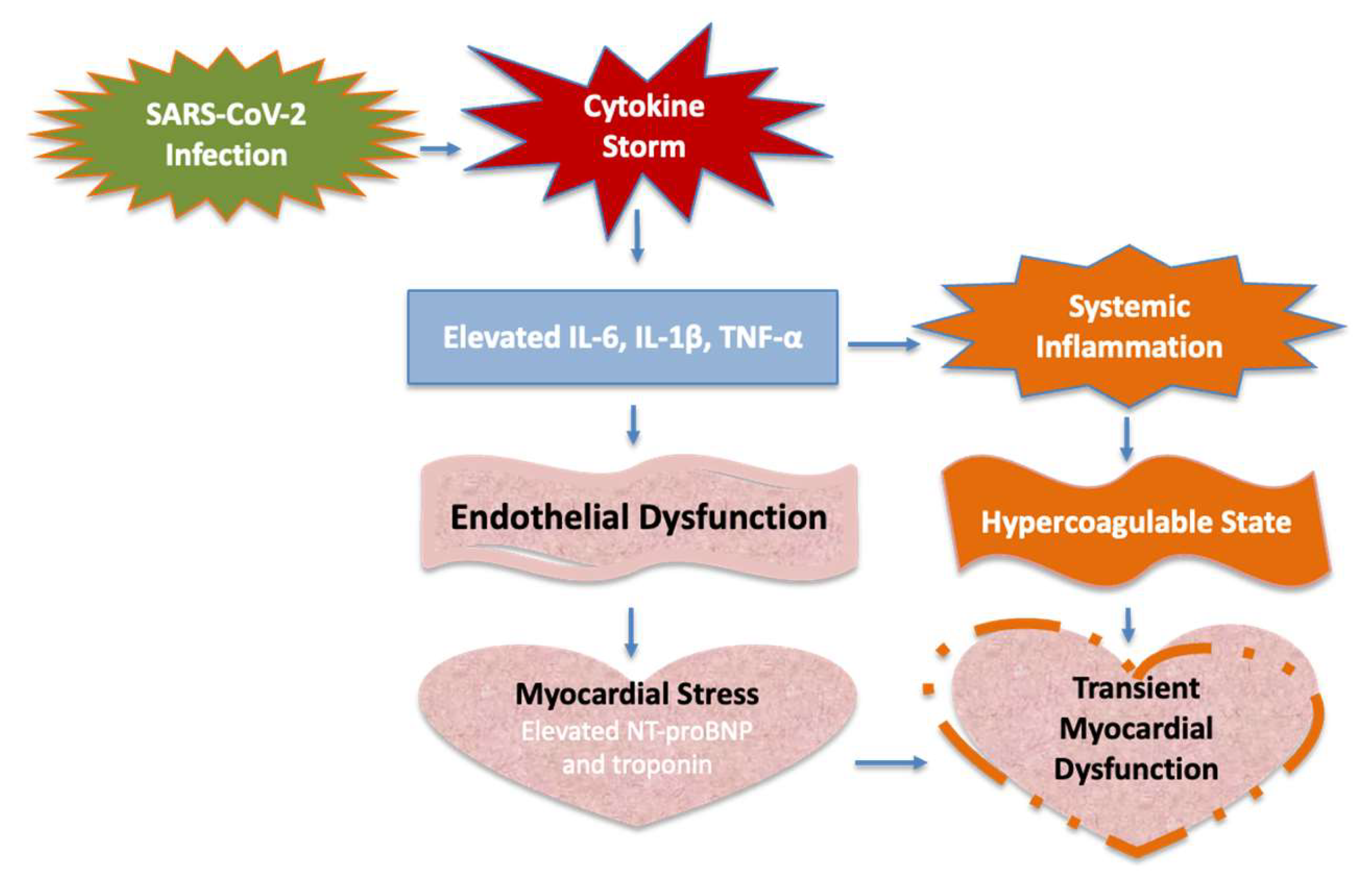

Table 1.
Cohort Characteristics and Outcomes.
| Feature | Observation |
|---|---|
| Total Patients | 15 |
| Gender Distribution | 8 males, 7 females |
| Median Age | 10 years (Range: 12 months–15 years) |
| Common Symptoms | Fever, abdominal pain, vomiting, diarrea |
| Myocardial Involvement | 46,6% (7/15 patients) |
| Biomarkers | Elevated CRP, IL-6, NT-proBNP, Troponin |
| Treatments | IVIG, corticosteroids, aspirin, anticoagulation |
| Outcomes | Full recovery; no coronary aneurysms |
Legend: This table summarizes the demographic and clinical features of the 15 patients in the cohort. CRP (C-reactive protein) and IL-6 (interleukin-6) are markers of inflammation; NT-proBNP (N-terminal pro-brain natriuretic peptide) indicates myocardial stress. Key findings include a balanced gender distribution, a median age of 10 years, and a 46.6% rate of myocardial involvement. Notably, all patients achieved full recovery without coronary aneurysms. IVIG= Intravenous immunoglobulin.
Table 2.
Biomarker levels comparison between patients with and without myocardial dysfunction.
| Biomarker | Patients with myocardial dysfunction | Patients without myocardial dysfunction | Significance |
|---|---|---|---|
| PCR (mg/dl) | 15.9 (6.2 – 21.4) | 14.7 (5.1 – 29.2) | p > 0.05 |
| ESR (mm/h) | 66.1 (15 – 120) | 68.6 (17 – 101) | p > 0.05 |
| Ferritin (mg/dl) | 355 (59 – 733) | 160 (79 – 362) | *p = 0.038 |
| NT-ProBNP (pg/ml) | 7223 (671 – 14800) | 1906 (618 – 4213) | *p = 0.001 |
| Troponin (ng/ml) | 1504 (101 – 6222) | 12 (2 – 64) | *p < 0.001 |
| D-dimer (ng/ml) | 3240 (1400 - 6017) | 3855 (1708 – 12827) | p > 0.05 |
Legend: This table compares biomarker levels (CRP -C-reactive protein-, ESR -erythrocyte sedimentation rate-, Ferritin, NT-ProBNP -N-terminal pro-brain natriuretic peptide-, Troponin, D-dimer) between our patients with and without ventricular dysfunction (men value and IQR). The p-values were calculated using the Mann-Whitney U test, with a p-value < 0.05 indicating statistical significance.
Table 3.
Comparison with MUSIC Study (JAMA 2025).
| Feature | Current Study | MUSIC Study (JAMA 2025) |
|---|---|---|
| Total Patients | 15 | 1204 |
| Coronary Artery Involvement | None | 15 cases (1 giant aneurysm) |
| Myocardial Dysfunction | 46.6% transient dysfunction | 42% transient dysfunction |
| Recovery of LV Function | 100% | 99% |
| Treatments | IVIG, corticosteroids, aspirin, heparin | IVIG, corticosteroids |
| Mortality | None | 0.3% |
| Biomarkers | Elevated CRP, IL-6, NT-proBNP, Troponin | Elevated CRP, IL-6, NT-proBNP, Troponin |
Legend: This table compares the findings of the current study with those from the MUSIC study, highlighting key differences in coronary artery involvement, recovery rates, and biomarkers such as CRP (C-reactive protein), IL-6 (interleukin-6), NT-proBNP (N-terminal pro-brain natriuretic peptide), and troponin. Our study's centralized approach ensured uniform management, contributing to the absence of coronary complications, whereas the MUSIC study, conducted across 32 North American hospitals, reflected variability in practices. IVIG= Intravenous immunoglobulin.
Disclaimer/Publisher’s Note: The statements, opinions and data contained in all publications are solely those of the individual author(s) and contributor(s) and not of MDPI and/or the editor(s). MDPI and/or the editor(s) disclaim responsibility for any injury to people or property resulting from any ideas, methods, instructions or products referred to in the content. |
© 2025 by the authors. Licensee MDPI, Basel, Switzerland. This article is an open access article distributed under the terms and conditions of the Creative Commons Attribution (CC BY) license (http://creativecommons.org/licenses/by/4.0/).
Copyright: This open access article is published under a Creative Commons CC BY 4.0 license, which permit the free download, distribution, and reuse, provided that the author and preprint are cited in any reuse.


