

Submitted:
11 February 2025
Posted:
12 February 2025
You are already at the latest version
Abstract
Buildings account for a significant share of global energy consumption and carbon emissions, making deep renovations essential for climate mitigation. Renovation Passports (RPs) provide structured, step-by-step renovation roadmaps that prevent lock-in effects and optimise energy performance over time. This study conducts a Systematic Literature Review (SLR) to identify key strategies for the successful development and large-scale implementation of RPs in the European Union (EU). A total of 217 research articles from Scopus and ScienceDirect, along with 99 EU policy documents and 16 Building Performance Institute Europe (BPIE) reports, were analysed to assess the technical, financial, behavioural, and policy dimensions of RP adoption. Findings highlight the role of digital tools like Building Information Modelling (BIM), Digital Building Logbooks (DBLs), and One-Stop Shops (OSS) in improving RP usability and accessibility. Financial barriers, such as high upfront costs and fragmented funding, require harmonised incentives, green loans, and energy performance contracting. Behavioural factors, including homeowner awareness, trust in renovation services, and decision-making complexity, influence RP adoption. This study underscores the need for stronger policy integration between RPs and Energy Performance Certificates (EPCs), improved financial mechanisms, and enhanced stakeholder engagement. Future research should explore standardised performance indicators, digitalisation strategies, and circular economy principles to maximise RP effectiveness within the EU Renovation Wave Strategy.
Keywords:
renovation passport
; deep renovation
; energy efficiency
; financial mechanisms
; behavioural barriers
; policy integration
; digital tools
; one-stop shops
1. Introduction
The accumulation of evidence regarding climate change and its implications has heightened society's consciousness. This increased awareness has prompted global governments to act, acknowledging the significant impacts on society, the economy, and the environment. The European Union (EU) has been one of the most active in environmental protection, with the formulation of policies aimed at preserving the health and well-being of citizens and protecting natural resources. Environmental policies aim to green the Member States' economies by addressing challenges like climate change, resource scarcity, pollution, and unsustainable consumption and production [1]. Energy-inefficient buildings are a major contributor to global carbon emissions. While policies vary across regions, countries worldwide face common challenges in financing, technical feasibility, and homeowner engagement in deep renovations. The strategies analysed in this study offer valuable insights that extend beyond Europe, providing a foundation for broader international application.
In 2022, globally, buildings were responsible for 34% of global energy demand and 37% of carbon emissions related to energy and processes [2]. Building operations consume nearly 30% of global energy and use about 55% of the world's electricity [3]. The imperative for transformative action across all sectors to fulfil climate objectives is vital within the building sector. Decarbonising the building sector is essential to global carbon reduction efforts and the transition to sustainability.
Since the early 1990s, the EU and its member states have been at the forefront of addressing climate change in international policies. The EU has been found to exert leadership from the 1992 UN Framework Convention on Climate Change (UNFCCC) over the 1997 Kyoto Protocol to the 2015 Paris Agreement [4]. After the Paris Agreement, the EU made considerable efforts to decarbonise its building stock.
This commitment perfectly aligns with the European Green Deal's vision of achieving zero net emissions by 2050, positioning Europe as the first climate-neutral continent. Central to this vision is the Renovation Wave Strategy, which aims to double renovation rates, enhance energy efficiency, and promote a fair and sustainable transition while fostering economic growth, job creation, and improved living standards across the EU (European Commission, 2019). The Green Deal aims to support a sustainable economy and ensure a just transition, promoting global sustainability efforts.
The EU's Renovation Wave Strategy focuses on affordable solutions that reduce energy consumption, alleviate energy poverty, create jobs, and foster SME development [5]. Addressing vulnerabilities in inefficient buildings ultimately improves citizens' quality of life and health [6].
In July 2021, the "Fit for 55 package" was introduced to help the EU achieve a 55% reduction in greenhouse gas emissions by 2030 [5]. This package includes five new initiatives spanning various sectors such as climate, energy, transport, buildings, and land use. It aims to ensure that EU policies align with climate objectives fairly and cost-effectively.
Energy efficiency is crucial in reducing energy consumption, central to the EU's climate ambitions, while enhancing energy security and affordability. The European Commission (EC) has proposed revising the Energy Efficiency Directive (EED) to achieve these goals, increasing the 2030 energy efficiency target from 32.5% to nearly 39%. It also includes the Renewable Energy Directive (EU) 2023/2413, which establishes a binding target of at least 42.5% to achieve a target of 45% for renewable energy sources in the EU's energy mix by 2030.
Despite the EU's well-developed climate policy framework, decarbonising the building stock and reducing carbon emissions is still far from achieving climate neutrality by 2050. According to the latest European Buildings Climate Tracker [7] developed by the Buildings Performance Institute Europe (BPIE), indicators from 2015 to 2022 suggest that the climate goals will not be met. Carbon emissions from building energy use have decreased by only 14.7% since 2015—well below the required 27.9% reduction for 2022. Similarly, final energy consumption in buildings has declined by a mere 2.8%, compared to the target of 6.5%. While there has been some progress in renewable energy adoption, the renewable energy share has increased by just 6.3%, falling far short of the target 18% rise by 2022 [7]. This shortfall highlights the urgent need for accelerated action and increased investments to close the gap and align with the EU's climate goals. According to current building standards, approximately 75% of the building stock in the EU is considered energy-inefficient [8]. Addressing the energy consumption of the building stock means drastically reducing its energy needs, for which it is necessary to increase the renovation rates while ensuring deep energy renovations [9].
Deep energy renovations have become a cornerstone for enhancing energy efficiency and occupants' comfort. Since the introduction of the nearly zero-energy building (nZEB) standards in 2010, there has been a strong focus on the deep renovation of existing buildings [10]. While cost savings and improved comfort remain the primary motivators for homeowners to renovate, environmental concerns and aesthetics also influence decision-making [11,12].
The benefits of energy renovations are extensive, as shown in Table 1, including lower carbon emissions, reduced pollution, and various household-level advantages such as decreased energy bills, increased disposable income, and reduced energy poverty [13]. Additionally, energy renovations improve indoor comfort, support better health outcomes, and deliver significant environmental benefits, making them a vital step toward sustainable living [14].
Although energy efficiency investments offer long-term financial benefits, a persistent gap exists between the optimal level of adoption and actual implementation by households. This discrepancy arises from financial, informational, and decision-making barriers and personal factors like age and contextual influences tied to daily life [11]. For owner-occupiers, key barriers include limited access to financing, insufficient awareness of energy consumption levels, and a lack of reliable information about renovation options. The cost of implementing energy-saving measures remains a significant impediment, compounded by challenges in obtaining financial support, navigating complex subsidy applications, and securing loans [17]. Furthermore, inconsistent information from stakeholders can undermine trust and hinder progress (Table 2).
From the perspective of financial institutions, several barriers hinder their involvement in energy renovations. These include high transaction costs, small project sizes, and risks related to credit and estimated energy savings. A critical challenge is the mismatch between financing durations and the long payback periods typical of energy upgrades. Additionally, progress is hampered by limited underwriting practices for energy efficiency (EE) and the lack of standardised methods for measuring and verifying energy savings [18].
The absence of clear long-term energy performance goals for deep renovations often discourages homeowners from undertaking comprehensive upgrades, prompting them to settle for incremental improvements. Balancing step-by-step renovations with limited financial resources is a significant challenge, potentially leading to missed energy savings and unachieved long-term performance goals[8]. Investment costs are crucial in renovation decisions [19].
In recent years, the concept of a building Renovation Passport (RP) has attracted attention in research studies as a tool to achieve higher and deeper renovation rates. According to Fabbri 2017 [20], RP is a digital or paper-based document that provides a long-term (15–20 years) step-by-step renovation plan for a specific building. It is developed through an on-site energy audit and adheres to established quality standards created in consultation with the building owners. The RP clearly explains expected benefits, such as lower heating bills, improved comfort, and reduced carbon emissions, presented in a user-friendly format. It can also integrate a building logbook containing information on energy use, maintenance history, and building plans.
The Renovation Wave strategy underscored the importance of the Energy Performance Certificates (EPC) and Building Renovation Passports as critical tools to drive and accelerate deep renovations. Building Renovation Passports, now just RPs, were first mentioned in 2018 under Article 2ª as an example of an optional scheme within the long-term renovation strategy. The aim was to encourage cost-effective deep renovation of buildings, including staged deep renovation, and to support targeted cost-effective measures and renovations. The 2024 EPBD recast [21] introduces stricter rules for EPCs and establishes a framework and a common definition for RPs (Table 3), offering an optional, structured guide for step-by-step renovations. These passports can help property owners and investors plan upgrades efficiently, mitigating obstacles to future renovations. The EPBD highlights the complementary use of EPCs and RPs, encouraging their combined implementation. EPCs are essential for evaluating and presenting buildings' energy performance, providing crucial insights into their condition, energy consumption, operating costs, and potential savings [22]. RPs can be integrated into national EPCs, turning the EPC into an instrument that provides clear renovation advice towards achieving deep energy renovations while ensuring building owners receive accurate, personalised information tailored to their needs. Leveraging established tools like EPCs and RPs allows stakeholders to develop more effective instruments to support renovations.
An RP should involve analysing the entire building and recommending specific measures to be installed in a particular order, ensuring that future measures can be added without any issues during the renovation process. This tailored approach aims to simplify homeowners' typically convoluted and lengthy renovation process by presenting a detailed plan for renovating a building and reducing energy consumption through deep renovation as defined by the European Commission [18].
The development of RPs is based on five key principles [20]. i) Provide a long-term perspective to enable consistent renovation planning, achieve high energy performance, and manage renovation costs effectively. ii) Include short and long-term measures clearly outlining the proper sequence of actions to avoid lock-in effects, build confidence, and encourage deep renovations. iii) Engage with occupants, as RPs consider occupants' needs, preferences, and financial circumstances, aligning renovations with personal situations like family changes or financial opportunities. iv) Design a visually appealing and user-friendly document, offering clear guidance to ensure building owners are not discouraged by the complexities of renovations. v) Optimise audits by leveraging automation tools that streamline data collection, enhance error detection, and facilitate result generation. This approach makes the audit process more efficient and provides personalised recommendations.
Several initiatives were developed in the EU to find a suitable RP. These initiatives offered valuable insights into creating an RP and addressed key issues for its development and implementation. In practice, the common goal of these passports and roadmaps is to provide a step-by-step plan for renovating a building (Table 4).
The three initiatives [20] — Woningpas in Flanders, Passeport Efficacité Énergétique (P2E) in France, and Individueller Sanierungsfahrplan (iSFP) in Germany — are the most advanced examples of RPs. They provide a comprehensive overview of RP features and highlight key issues for further development.
These initiatives share several guiding principles [20]. They are voluntary tools designed to complement EPCs, with development and implementation supported by public authorities. All three initiatives emphasise ambition by setting long-term targets for existing building stock and fostering stakeholder engagement. Each has identified barriers to deep renovation in its respective markets, mapped key stakeholders, and regularly involved them in designing renovation roadmaps.
A critical feature of these initiatives is the on-site energy audit conducted by qualified energy auditors, which forms the foundation for tailored renovation solutions. Building owners are central to the process, engaging directly with auditors in dialogue. In France and Germany, auditor training is an integral part of the process, covering technical and communication skills and incorporating a life-cycle approach to building elements.
In Flanders, the development of a comprehensive building logbook is included in the RP. Similarly, in France, P2E [23] contributes to the energy performance and renovation component of the government's digital building logbook. However, Germany's iSFP does not include a logbook component. A notable feature of all three approaches is incorporating comfort indicators, such as indoor air quality and comfort levels, into the renovation assessment [20].
Building on these principles, the iBRoad2EPC initiative expands the scope of RPs by integrating them more closely with EPCs [26]. iBRoad2EPC, funded by the EU's Horizon 2020 program, seeks to enhance RP formats by including features like indoor environment considerations and smart technologies. It aims to extend the tool's applicability to multi-family and public buildings while improving reliability, utility, and effectiveness. The iBRoad2EPC is a consultation tool that qualified professionals provide and is specifically designed for building owners. Its primary goal is to create an initial renovation plan to achieve long-term climate neutrality for a building. This plan can be implemented in one comprehensive renovation or through a phased approach that unfolds in several stages.
Each stage of the renovation is deliberately designed to build on the previous one [27]. As each phase is completed, the groundwork is laid for future improvements, facilitating early preparation for connections between different building components. It builds on the basic iBRoad2EPC module and extends it with additional functions (modules), e.g., information on energy consumption, Indoor Environmental Quality (IEQ), Smart Readiness Indicator (SRI), and investment costs. This proactive approach ensures that future renovation requirements are addressed well in advance.
The ALDREN project is an RP that provides non-residential building owners and investors with a detailed understanding of a building's current state and renovation potential [28]. It delivers comprehensive technical and economic analyses, mapping the steps required to achieve low energy consumption and improved indoor air quality (IAQ). A standardised framework facilitates comparisons across buildings and projects over time, promoting effective communication among stakeholders such as owners, investors, maintenance teams, and tenants. This structured approach ensures that clear targets and milestones are set and progress is monitored throughout a building's life cycle. As a modular system, this ALDREN RP addresses essential aspects like energy performance, comfort, and cost while integrating technical and non-technical data that can be updated regularly to remain relevant. Its protocols, built on a shared language, are tailored to meet the diverse needs of those involved in the renovation process, enhancing collaboration. This RP functions as a dynamic, lifelong repository that complements mandatory EPCs by offering a holistic view of a building's present condition and potential after renovation [28].
The Opengela project is a European initiative funded by the Horizon 2020 programme. Launched in May 2019, it aims to develop a new model of urban regeneration in the Basque Country. This model focuses on establishing neighbourhood offices, known as "opengelas,"("gela" is the Basque word for "office), which provide comprehensive support to residents throughout the building renovation process [24].
Over three and a half years, Opengela has successfully implemented this model in ten neighbourhoods and plans to expand it to fourteen more. The neighbourhood offices have assisted nearly 800 residents in refurbishing their buildings, leading to an average energy saving per dwelling of more than 60%. This translates to an investment in sustainable energy of €9.6 million, a reduction of carbon emissions by 758 tons per year, and the mobilisation of €3.2 million in private investment. The project's success motivated its expansion to other municipalities, and Opengela has also raised interest from European regions aiming to replicate this urban regeneration model. The project exemplified efficient public-private collaboration involving companies specialising in financing, communications and European affairs, contributing to the initiative's success [29].
Opengela's replicable urban regeneration model, which improves residents' quality of life through energy-efficient renovations and substantial energy savings, is a practical example of the objectives outlined in the 2024 recast EPBD.
The new EPBD introduced a common EU framework for RPs, detailing their key design features with mandatory and optional elements to support scalable and replicable initiatives across Europe [30]. Annex VIII outlines several mandatory elements for building renovation plans. After assessing the current state of the building, a graphical representation must be provided, illustrating the roadmap and each step in the renovation process. For each step, the roadmap should include detailed information such as estimated energy savings, reductions in carbon emissions, potential savings on energy bills, and an anticipated improvement in the building's energy performance class. It should also consider connecting to an efficient district heating system, the share of individual or collective renewable energy production, and options for self-consumption. The roadmap must also address circular products and life-cycle impacts while highlighting broader benefits related to comfort, health, indoor environmental quality (IEQ), and adaptability to climate change. Furthermore, it is essential to provide information on available financial mechanisms and guidance on accessing one-stop shops to effectively support building owners in implementing renovation measures.
The RP scheme [19] should be voluntary unless a Member State decides otherwise. Member States are encouraged to ensure its affordability and consider financial support for vulnerable households seeking to renovate. The RP can be issued alongside the EPC and must be provided in a digital format suitable for printing by a qualified expert following an on-site visit. Building owners are advised to consult the experts to understand the steps needed to transform their property into a zero-emission building by 2050. Member States are tasked with developing digital tools for creating and updating the passport and may offer complementary tools for simulation and tracking renovations. Additionally, the RP must be compatible with national energy performance databases and, where available, linked to the digital building logbook (Figure 1).
Policy recommendations (Table 5) are intended to help Member States adopt RPs while implementing the 2024 EPBD. These recommendations [31] outline the challenges and requirements associated with the Directive's main provisions, offering insights to inform the development of upcoming policy guidelines. A supportive enabling framework should prioritise capacity building to develop the necessary skills and competencies. Moreover, it must ensure adequate financing for the rollout of RPs and the execution of renovation measures while promoting integration with other building-related tools.
The RP aims to mitigate risks and increase investors' confidence by providing stakeholders, financial institutions, mortgage credit providers, investors and insurers access to critical building-related documentation and information. This supports investment decision-making, creates opportunities for innovation, and encourages the uptake of energy efficiency and sustainability measures. RPs play a valuable role in boosting the availability of information to a wide range of market participants. They improve the quality assurance system for buildings and enhance the overall market for the construction industry [20].
Implementing an appropriate regulatory framework, linking RPs to EPCs, and adopting standardised tools is crucial. Engaging stakeholders beyond the building sector, developing user-friendly tools for auditors and users, and providing technical and communication training are also essential. Additional priorities include balancing technical features with effective communication, reducing administrative hurdles, and considering comfort as a key driver for renovation.
In Europe, it is common for homeowners to renovate their homes gradually over a few years. However, this can lead to a phenomenon known as "lock-in," which means that current choices may limit future renovation options and hinder improving a building's energy efficiency and overall status. These challenges are made more complex by the distinctive features of each building, such as its construction history of alterations and present use, together with homeowners' diverse needs, preferences, and resources [18].
To effectively implement RPs, specific barriers must be overcome, such as adopting a long-term outlook, involving customers, and considering the individual circumstances of each renovation project. Additionally, automation and flexibility play crucial roles in the success of a RP. At the same time, personalised and reliable guidance is essential for encouraging customer participation and facilitating a shift towards clean energy [26]. Nevertheless, RPs' benefits, including decreased energy costs, enhanced comfort and well-being, and reduced carbon emissions, make them an appealing choice for those who promote sustainable lifestyles.
Despite the benefits of building renovation, many individuals find it overwhelming due to a lack of understanding regarding the appropriate measures to implement and their optimal sequencing. Furthermore, many perceive building renovation as a cumbersome process that requires extensive planning, is fraught with uncertainty regarding the efficacy of chosen measures, entails considerable dust, and can involve unreliable professionals. To overcome these challenges, it is crucial to possess a comprehensive understanding of the necessary measures and the order in which they should be implemented [32].
Although several initiatives have been successful, RP adoption and implementation continue to face significant barriers and challenges. As RP implementation is still in its early stages, there is limited knowledge of their broader impact, making large-scale adoption particularly challenging in regions with outdated building stock and scarce resources. Additionally, adherence to energy renovation strategies remains inconsistent, with RPs encountering the same obstacles that hinder widespread acceptance of energy efficiency measures.
A new mandatory framework for all EU member states is expected to be introduced under the National Building Rehabilitation Plan by May 2026. However, ensuring that this framework does not add unnecessary complexity to an already intricate renovation landscape is crucial. Including additional layers, such as material circularity and life cycle assessments, in the early stages of RP implementation could further complicate the process. If renovation passports become integrated into a broader regulatory framework, there is a risk that they may be perceived as yet another bureaucratic burden for building owners, potentially discouraging engagement.
However, no universally accepted standard or framework has been established. Different structure, scope, and requirements across regions hinder their effective implementation. Developing an RP requires thoroughly assessing a building's condition, involving comprehensive energy audits, data collection, and architectural surveys. These processes often incur substantial upfront costs, which can be prohibitive for building owners with limited financial means.
Another critical challenge is the complexity of the information provided within RPs. Highly technical language and intricate guidelines can make it difficult for building owners, particularly those without technical expertise, to interpret and act upon the recommendations effectively. Furthermore, concerns persist regarding the long-term effectiveness of RPs, as a building's energy performance may fluctuate over time due to various factors, necessitating ongoing updates and adjustments [22].
Existing research has explored the definition and key components of RPs, with several studies analysing EU model examples and their implementation [20,28]. These studies aim to address barriers to RP adoption by proposing standardised models that are flexible and adaptable to different contexts. A modular approach is frequently highlighted, wherein mandatory components are supplemented by optional modules tailored to specific needs and circumstances [32]. Additionally, recent research has focused on integrating RP elements into EPC schemes to create a more cohesive and user-friendly system [22].
Despite advancements in RPs to enhance energy efficiency across the EU, a significant research gap persists in developing a holistic, integrated framework encompassing multiple critical dimensions. Current efforts often focus on isolated aspects, such as technical solutions or financial incentives, without considering the intricate interplay between these elements and broader socio-economic factors. The lack of comprehensive frameworks that simultaneously address technical assistance, financial mechanisms, economic and behavioural barriers, and social impacts remains a major challenge. While existing studies typically provide fragmented insights into these dimensions, they fail to synthesise them into a cohesive and actionable RP framework adaptable to diverse EU contexts. This gap hinders the practical scalability and widespread adoption of energy-efficient renovation strategies.
This research aims to investigate and identify the most effective political, financial, economic, and social measures that can leverage public motivation to undertake building renovations using RP as a strategic tool. It aims to accelerate the renovation rate across the European Union by addressing barriers and enhancing enablers. Additionally, this study seeks to determine the key aspects that influence renovation rates, focusing on the interplay of policy design, financial accessibility, behavioural motivation, and social acceptance.
This review seeks to bridge the identified gap by conducting a comprehensive analysis of the interrelated technical, financial, economic, and social dimensions of RPs. The proposed framework will integrate these factors to provide practical solutions that can be effectively implemented across various EU member states. It will address the challenges and opportunities related to financial and technical support systems while incorporating behavioural and social considerations to ensure that policies resonate with end-users and stakeholders. By synthesising these elements, this research aspires to advance renovation policies as a transformative instrument for driving large-scale, energy-efficient renovations across the EU, contributing to the region's climate and sustainability goals.
Based on a Systematic Review (SR) methodology, this study will convey a plausible contribution to knowledge by presenting strategies proposed for successfully developing and implementing building RPs and achieving energy-efficient renovations according to these topics:
- Technical assistance strategies
- Behavioural barriers
- Financial schemes
- Economic and social barriers
Urgent discussions are needed on how tools such as RPs can accelerate energy renovations in the EU's existing buildings to decarbonise the building stock by 2050. These renovations are crucial for achieving climate goals and meeting energy efficiency and carbon reduction targets.
2. Methodology
This study employed a systematic review method to identify the most relevant strategies to develop an approach for successfully implementing RPs and ensuring their widespread adoption.
The term "systematic review," as defined by Page et al. (2021) [33], refers to a review that employs clear and systematic methods to gather and synthesise the findings of studies that address a well-formulated question. Systematic Reviews (SRs) are crucial for research, providing essential data for all stakeholders to make informed decisions. Using PRISMA (Preferred Reporting Items for Systematic Reviews and Meta-Analyses) enhances these reviews' transparency, trustworthiness, and reproducibility. A rigorous analysis of existing literature minimises bias and provides a holistic perspective on a specific research question [33]. This includes articulating the revive question, comprehensive search strategies, transparent selection criteria, and rigorous data extraction and analysis methods. The bibliographic databases Scopus, Science Direct and EU Publications were used to identify relevant literature since they cover many multidisciplinary references and conveniently enable metadata export.
To successfully complete a systematic review, it is essential to implement robust data management practices, effective project management techniques, and reliable quality assurance mechanisms. Adhering to established guidelines and checklists, which provide the standard format for reporting systematic reviews, is also important (Figure 2).
Initial research identified relevant search terms and keywords for the review, which were carefully selected based on a review of other energy renovation-related papers.
It became clear that focusing solely on "renovation passports" would not comprehensively understand the topic. Therefore, related concepts such as "building renovation passports," "building passports," "renovation roadmap," "step-by-step renovation," and "long-term renovation" were included in the search to enhance the sensitivity of the findings. Additionally, "deep renovation" was considered because it closely aligns with the goals of renovation passports, emphasising thorough, long-term improvements in energy efficiency and decarbonisation. This inclusion also offers insight into how step-by-step approaches can be applied. "One-Stop Shops" were included in the search because they provide streamlined services, guidance, and support to homeowners and stakeholders throughout the renovation process. One-Stop Shops (OSS) integrate technical assistance, financial mechanisms, and stakeholder collaboration, all essential for successful renovation planning and execution. The databases selected for this review were deemed appropriate and adequate due to their high indexing rates and extensive publication coverage, making them suitable for a systematic review of relevant research articles.
The search results included articles published from January 2016 to November 2024. Only articles written in English were included in this review. Specifically, there were 147 articles from Scopus, 80 from ScienceDirect, and 99 from EU Publications. The lists selected by the databases were exported to Microsoft Excel for data processing. In Excel, these lists were consolidated, and duplicate articles and those without free access to the full text were removed, resulting in 286 articles. After eliminating duplicates, the titles and abstracts of the remaining articles were reviewed to confirm their suitability for this study, which brought the total down to 165 articles. Then, several selection criteria were applied to determine the final sample size and ensure a sufficient publication quality level.
The inclusion criteria for selection were:
- Research addressing building renovation plans or strategies, particularly those focused on energy-efficient renovations;
- Studies exploring technical assistance, financial schemes, economic and behavioural barriers, or social impacts of long-term efficient renovations;
- Studies, reports, or policies relevant to the European Union with building renovation frameworks.
The exclusion criteria were:
- Studies unrelated to building renovations or energy efficiency measures;
- Articles focusing solely on technical details unrelated to strategic or policy frameworks.
After thoroughly reviewing the remaining articles to identify studies relevant to the research, BPIE reports were chosen for their extensive expertise and significant contributions to building efficiency and renovation. BPIE has consistently prioritised the implementation of the EPBD framework and its associated tools, particularly the Renovation Passport. Their research provides valuable insights into best practices, policy recommendations, and practical approaches to improving building energy performance. The review included 16 reports directly addressing the topics of this research.
After applying the inclusion and exclusion criteria (165 articles and 16 reports), the total number of articles reviewed in this study was 19. Thereafter, the bibliographic data of the relevant articles were exported from Scopus and Science Direct databases for analysis before further amalgamation of the data for this study.
A bibliometric analysis was conducted using VOSviewer version 1.6.20, a tool specifically selected for its robust capabilities in visualising and analysing bibliometric networks. This study implemented the bibliometric analysis for a keyword occurrence analysis.
Examining specific keywords is a common approach to identifying connections between key research areas in academic literature. VOSviewer facilitates this process by generating a bibliometric map based on proximity, where the distance between two keywords reflects the strength of their relationship, with shorter distances indicating stronger connections. Each label's size represents the keyword frequency in the relevant studies. In this analysis, 348 keywords were extracted using full counting, with a minimum occurrence threshold set at 2. As a result, 44 keywords met the criteria and are presented in Figure 3.
The top 15 keywords, ranked by frequency of occurrence, were selected and visualised in Figure 4. The results reveal that certain research areas or keywords receive significant attention while others remain underexplored. For instance, terms like "Energy efficiency," "Deep renovation," "One-stop-shops", and "Renovation" or "Building renovation" appear prominently, highlighting the growing focus on improving building energy efficiency. Conversely, terms such as "Building renovation passport" are noticeably less represented, indicating a gap in research attention to this concept.
This analysis highlights that research predominantly focuses on energy efficiency and the pressing need for deep renovation. However, a notable research gap exists in exploring tools such as one-stop shops and renovation passports. Other concepts like life-cycle assessment and energy renovation are still in their early stages of research development and application.
3. Results and Discussion
This section presents the study's findings, building on the identified research gaps and the evolving landscape of energy renovation tools. It focuses on the role of RPs in addressing the challenges associated with deep renovations.
Deep renovations involve substantial costs and require a combination of financial and non-financial incentives to drive adoption. Integrating RPs into incentive programs can enhance their effectiveness through targeted strategies, such as establishing clear guidelines for public administrations to prioritise specific renovation measures for funding, aligning incentive levels with tangible and measurable energy performance improvements, and providing building owners with clear, reliable, and actionable information to streamline and encourage the renovation process. RPs are increasingly considered a key European solution to avoid lock-ins and promote ambitious quality retrofitting in phases.
While RPs offer significant potential to accelerate energy-efficient renovations and align with EU climate goals, their practical implementation faces several challenges. Addressing barriers such as affordability, complexity, and standardisation will be essential to maximise their impact. Through enhanced integration, targeted financial support, and widespread awareness, RPs can become a cornerstone of sustainable building renovation strategies across the EU.
According to BPIE, the successful promotion of RPs should adhere to key principles: adopt a long-term perspective, clearly define the RP concept and components, establish targets (building types and users), and align ambitions and definitions. Implementing an appropriate regulatory framework, linking RPs to EPCs, and adopting standardised tools is crucial. Engaging stakeholders beyond the building sector, developing user-friendly tools for auditors and users, and providing technical and communication training are also essential. Additional priorities include balancing technical features with effective communication, reducing administrative hurdles, and considering comfort as a key driver for renovation.
The successful implementation of RPs depends on their ability to overcome existing market barriers by offering comprehensive technical assistance that informs building owners about their current energy performance, phased renovation plans, costs, and potential energy savings while also highlighting available incentives, regulatory requirements, and the environmental and comfort benefits of renovations.
3.1. Technical Assistance Strategies
This study examined key strategies identified in the literature to provide an overview of the complexity of the renovation process, which involves multiple stakeholders. It emphasised the importance of providing access to digital tools such as EPCs, digital building logbooks (DBL), and BIM, as well as guidance on trusted contractors and practical resources to streamline and support the renovation journey.
Building retrofitting is complex due to the many conflicting renovation measures involved. BIM provides a solution by creating a collaborative decision-making environment for stakeholders—architects, engineers, and building owners—facilitating cost-effective, efficient renovations [34]. Research stresses the importance of integrating BIM with renovation design, particularly for modelling envelope coefficients affecting energy consumption and carbon emissions. However, a research gap remains in linking BIM with EPCs and renovation processes within a unified framework [34].
E. Hirst and M. Brown's research [35] introduces the innovation of automating renovation scenario generation without energy audits or specialised software, linking BIM files directly with EPCs and renovation concepts for efficient retrofitting. BIM and digital twins are increasingly used beyond the design phase, enabling bidirectional information flow between physical and virtual entities, thus enhancing building life-cycle management [36].
Bertoli et al. [17] suggest that BIM models and digital twins should be considered crucial data sources connected to RPs. They argue BIM, DBLs, and RPs could enhance transparency regarding buildings and their features by providing stakeholders with the required information. This is relevant for various activities throughout a building's life cycle, including valuation, real estate transactions, and maintenance planning [17]. One of the primary challenges in future RP development will be ensuring technical interoperability so that users can easily find and access information.
The one-stop-shop (OSS) concept for building retrofits provides a streamlined approach that allows homeowners to navigate the entire renovation process through a single point of contact. This method minimises client obstacles by clearly outlining the typical renovation journey, including marketing, preliminary proposals, building inspections, energy analyses, quotations, financing plans, quality assurance, renovation work, commissioning, and follow-up [37]. Critically reviewed in [11], the OSS model is an emerging strategy that effectively addresses key market barriers to energy renovations in residential buildings. These shops play a crucial role in easing the financing process for renovations by assisting banks in evaluating the compliance of housing renovations with energy efficiency and sustainability criteria, thereby broadening financing options [22]. Furthermore, researchers suggest that OSS could expand financing opportunities, particularly for households in energy poverty, by facilitating the issuance of low-carbon, energy-efficient financial assets dedicated to renovations. These shops ensure that renovation projects meet quality and performance standards, helping to achieve energy efficiency goals while addressing economic and procedural barriers.
To effectively support energy-efficient renovations, OSS must align their services with homeowners' diverse objectives and needs, who often prioritise factors other than energy efficiency. Addressing these priorities can encourage homeowners to incorporate energy efficiency measures into their initial renovation plans [38].
OSS can overcome barriers in the building retrofit market by offering information on energy efficiency measures and clear guidance on why and how to take action. To effectively promote investment, OSS should present information easily and engage customers by highlighting program details, financing options, and the financial risks of inaction [39,38]. Tools like calculators, expert advice, quality technicians, and financing solutions can empower customers. Additionally, linking stepwise deep renovation plans with suitable financing mechanisms through OSS can attract homeowners with financial constraints [39].
Streamlining processes and reducing costs are crucial for making RPs affordable and effective. Using digital tools and automation through centralised platforms can lower administrative costs by simplifying tasks like data entry and reporting. Standardising data collection further reduces costs by eliminating the need for customised solutions across different building types. A modular RP design, with varying detail levels based on building complexity, allows owners to approach renovations gradually, effectively managing costs [35].
Improving data collection and sharing across stakeholders — such as building owners, occupants, the construction sector, financial institutions, and public authorities — is vital to advancing decarbonisation in the building sector. Enhanced data on energy performance can promote efficiency and enable informed decision-making. A central repository for building data (e.g., EPCs, RPs, and SRI - smart readiness indicators) would improve access, encourage collaboration, and support energy-efficient renovations. DBL provide valuable information for facilities managers and are essential for understanding, managing, and operating buildings efficiently, reducing costs, and lowering carbon emissions. These logbooks address key renovation barriers, creating favourable conditions for deep energy renovations and contributing to energy efficiency and climate goals [40].
Energy efficiency is often seen as unimportant, making it challenging to demonstrate its benefits to potential buyers or tenants. The large upfront investments necessary for renovations, combined with the associated risks, lead to decision paralysis. As a result, energy efficiency alone is not a sufficient motivation for making such investments. Paiho et al. suggest that energy efficiency should be presented alongside additional benefits to encourage investment [41].
3.2. Behavioural Barriers
Energy efficiency is crucial for energy transitions, but vulnerable and hard-to-reach groups risk being left behind. Collaborating with local middle actors can help address this gap, though it requires dedicated funding, resources, and time to empower these actors. Unlike one-size-fits-all approaches, local solutions can tailor interventions to community needs while engaging upstream decision-makers for broader systemic change. While energy support can improve efficiency and reduce energy poverty, its impact is limited by structural factors, making it just one component of a comprehensive energy transition strategy that helps prevent exacerbating energy injustices [42].
The TripleA-Reno (Attractive, Acceptable and Affordable Deep Renovation) [43] project underscores the vital role of people—their actions, beliefs, motivations, and relationships—in successful energy renovations. Understanding occupant profiles is key to designing effective technical solutions and overcoming resistance to behavioural and lifestyle changes. Key findings reveal the complexity of decision-making in multi-apartment buildings, where achieving consensus is difficult. Success depends on community building, trust, and clear communication, with cooperative managers facilitating coordination. Dividing projects into manageable phases and showcasing local successes can enhance engagement. The project also emphasises the socio-cultural and behavioural context, as renovations can trigger broader social changes. Focusing on affordability, attractiveness, and acceptability from the occupants' perspective is crucial, as people, not just buildings, drive energy use. Socio-cultural factors, community relationships, regulatory frameworks, and ethical considerations are essential in shaping energy behaviour [24].
Local one-stop shops have proven to be the most effective tool in addressing and overcoming behavioural barriers to home renovation. The Opengela project [24] is a successful example of a homeowner-targeted initiative that fosters collaboration among public institutions, private stakeholders, and local communities to facilitate building renovations. By offering personalised guidance and support through neighbourhood offices, Opengela has effectively tackled regional and local challenges that often hinder renovation efforts, such as financial constraints, administrative complexity, and homeowners' lack of technical knowledge [24]. A key element of the initiative is its innovative financial solutions, which have played a crucial role in making renovations accessible to homeowners in vulnerable areas without adding financial strain. By providing tailored financing options and ensuring affordability, the project has empowered residents to undertake renovations that would otherwise be out of reach [44]. Another key engagement element was fostering proximity to the community by establishing a presence within the locality, thereby building trust and strengthening connections with local citizens.
Notably, energy efficiency was not the primary motivator for homeowners to participate in the renovation process. Instead, their decisions were driven by practical concerns related to accessibility and safety, such as installing elevators and modernising entry door systems—improvements that have had an immediate and tangible impact on their quality of life. The success of the Opengela [24] model demonstrates the importance of adopting a homeowner-centric approach, where practical needs are addressed first, and additional benefits such as energy efficiency are integrated seamlessly into the process. This approach increases renovation uptake and fosters a sense of trust and engagement within the community, ensuring long-term sustainability and replicability across different regions [44].
According to [11], OSS will not significantly contribute to engaging citizens who remain inert regarding renovation for reasons such as energy and digital illiteracy. Targeting just higher-income, educated homeowners will limit access to sustainable housing options for other groups. The Transition Point project [45] tried to mitigate this issue by providing a mobile OSS to deliver essential advice directly to energy-poor communities.
To engage property owners and build confidence in the renovation process, this research [41] recommends establishing organised housing associations, offering clear support during project development, defining renovation measures and criteria, providing standardised solutions, adopting the EPC+ framework, ensuring measurement and verification, fostering legal confidence, and delivering accessible information.
OSS are the crucial link between homeowners and the renovation process, bridging gaps and ensuring a smoother transition towards sustainable home improvements. The ComActivate project [44] exemplifies how transparent communication and trust-building efforts can achieve effective collaboration between public and private stakeholders. To facilitate the renovation journey, OSSs must maximise their impact by tailoring their services to local contexts, leveraging available EU funding, and maintaining a flexible and adaptive approach to meeting communities' diverse needs.
Engaging with the community is fundamental to the success of renovation plan initiatives. Clear communication and personalised support are key in encouraging homeowner participation and securing widespread backing for renovation efforts. Stepwise renovation guidance and simplified information delivery improve homeowner participation. By fostering a sense of trust and involvement, residents are empowered to embrace renovation opportunities that enhance their quality of life and contribute to broader environmental goals.
3.3. Financial Mechanisms
The financial barrier to energy efficiency in the EU building sector is less about funding availability and more about the limited accessibility and functionality of information for beneficiaries. A significant challenge lies in raising awareness among stakeholders about underutilised funding options and financing mechanisms. Recognising this, European institutions have launched initiatives to bridge informational gaps and encourage investment in building renovations, which are critical for advancing decarbonisation efforts [46]. Financial instruments for energy efficiency, ranging from subsidised loans to newer models like energy efficiency mortgages, crowdfunding, and renovation savings accounts, address long-standing barriers such as upfront costs, split incentives, and financing complexities [41].
Given the diverse stakeholders and the sector's complexity, no solution exists to accelerate energy renovation investment. Still, emerging financial models promise to overcome obstacles where conventional options have fallen short [47].
Table 6 presents the financial schemes for home renovation. The choice of a financing scheme depends on factors such as project scale, stakeholder financial capacity, and local regulatory conditions. Collectively, these schemes address financial, technical, and operational barriers to energy efficiency, facilitating the adoption of sustainable renovation practices [41,46].
Alternatives such as green loans, Property Assessed Clean Energy (PACE)- allows property owners to finance energy efficiency improvements through assessments added to their property tax bills- and grants are vital in supporting renovation efforts. According to [41] the Energy Service Company (ESCO) model, which provides energy efficiency services and guarantees energy savings to clients through performance-based contracts, is a prominent approach.
The energy renovation market is complex, often leaving key players like multi-family building owners and tenants underserved by traditional financial instruments. While grants and subsidies help, they may not fully address upfront cost barriers, and offering attractive loan terms for deep renovations is not always feasible. Conventional mortgage processes typically ignore energy efficiency (EE) parameters and energy costs, while uncertainty in forecasting energy savings creates additional challenges, hindering diversification of capital sources and private sector engagement [48] (Table 7).
Financial instruments often interact with policy measures, such as energy building codes and energy performance certification schemes. Incentives are commonly tied to projects that exceed code requirements or achieve specific energy performance levels. These certifications are critical in defining energy efficiency criteria for renovations and ensuring compliance, as seen in efforts to standardise energy-efficient mortgages. This underscores the need for stronger collaboration and feedback between financiers, policymakers, and stakeholders to enhance the effectiveness of EPCs as policy tools.
3.4. Economic and Social Challenges
Most households face budget constraints, and the diverse characteristics of the building stock necessitate tailored incentives to accelerate retrofits. Even households capable of staged retrofits will require additional incentives to achieve faster decarbonisation [49].
The EPBD 2024 mandates RPs as part of its regulatory integration framework but lacks uniformity across Member States, leading to variations in implementation (Table 8).
Long-term solutions include instruments with sustained public commitment or sustainable funding structures, such as revolving funds, diversified funding sources, and earmarked taxes on fossil fuel use. RP scalability can be enhanced through technical assistance, third-party services, ESCO involvement, one-stop shops, or combining these approaches with other schemes. Furthermore, researchers highlight programs that deliver substantial energy savings, reduce GHG emissions, and increase investments [50].
4. Policies and Practical Recommendations
This research examines the critical strategies needed to ensure RPs effectively engage homeowners in deep renovations, aligning with the EU's climate objectives. The findings highlight RPs' essential role in guiding homeowners through renovation decisions by balancing decarbonisation goals, occupant preferences, and financial constraints.
Although RPs have primarily been developed and tested within the EU, their core principles—step-by-step renovation planning, financial and technical support mechanisms, and digital integration—are universally applicable. Countries worldwide can adapt this framework to their local contexts, particularly those grappling with ageing building stock, rising energy costs, and ambitious climate goals. By tailoring RPs to national regulatory environments and market conditions, policymakers and industry stakeholders can enhance their replicability and drive large-scale adoption, fostering more sustainable and energy-efficient building renovations worldwide.
However, despite their potential, RPs remain underutilised due to limited data availability, high renovation costs, complex stakeholder coordination, and unclear financing mechanisms. Overcoming these barriers is crucial to unlocking RPs' full potential and accelerating the transition to sustainable buildings—not only across the EU but also globally [51].
Investment costs represent one of the most significant barriers for homeowners hesitant to commit to energy-efficient measures. Policymakers must focus on implementing tailored financial strategies, such as subsidies and targeted aid programs, to lower financial barriers and make deep renovations accessible to all. Financial incentives tied to measurable energy improvements could further motivate participation. Additionally, promoting community-based solutions and leveraging networks of local leaders and influencers can build trust and foster a collective commitment to renovations.
Policy and regulatory frameworks are key to scaling RPs effectively (Table 9). Harmonising BRP with EPC across EU member states while allowing for regional adaptability will ensure broader adoption. The revised EPBD introduces measures such as improving connections to district heating systems and incorporating circular economy principles. Yet, their practical application requires further empirical research and case studies to assess effectiveness in diverse contexts. Tailored policies are particularly needed to address rural and resource-constrained regions' unique challenges.
Additionally, targeted studies should evaluate financial models, the effectiveness of behavioural interventions, and the scalability of RPs in non-residential buildings and global contexts. Developing standardised key performance indicators (KPIs) to measure RPs' effectiveness in energy efficiency, carbon reduction, and resource circularity is crucial. Centralised repositories for renovation data and interoperability standards between RPs, EPCs, and DBLs can ensure a unified framework for monitoring and updates.
Integrating digital technologies, including BIM, digital twins, and advanced data analytics, can transform RPs into dynamic, interactive systems. Integrating RPs with BIM allows for creating dynamic, data-driven renovation strategies that provide more accurate insights into building performance, streamline project planning, and facilitate better decision-making for homeowners and stakeholders. This integration can improve the visualisation of renovation pathways, enabling more precise cost estimations, energy performance predictions, and life-cycle assessments. Linking RPs to BIM can support a more collaborative and transparent approach to renovations, ensuring all stakeholders can access real-time data and actionable recommendations. Digital twins allow real-time monitoring, predictive maintenance, and scenario simulations, enabling homeowners to visualise energy performance, predict long-term cost savings, and optimise renovation sequences. Data analytics can provide actionable, personalised renovation plans, predictive maintenance insights, and benchmarking comparisons. These technologies streamline renovation planning, foster stakeholder collaboration, and align RPs with the EU's digital transformation and sustainability goals. They could also be leveraged globally to facilitate structured renovation planning and improve energy efficiency outcomes.
Behavioural and social dynamics are critical in renovation decisions, as comfort and health benefits often precede energy savings for occupants [52]. Future efforts should prioritise tailored communication campaigns that clearly outline these tangible benefits, using relatable success stories to build trust. Behavioural nudges like default energy-efficient renovation options and user-friendly digital tools can help simplify homeowners' decision-making. In this context, OSS provides a central access point for technical, financial, and procedural guidance [53]. The 2024 recast of the EPBD recognises the importance of OSS, mandating their inclusion in EPCs and RPs to enhance visibility and accessibility.
Empowering individuals to transition from passive consumers to active energy citizens remains in its early stages, driven mainly by policymakers, local authorities, intermediaries, and grassroots initiatives. To accelerate this transformation, ongoing efforts are essential to establish the conditions for the widespread adoption of empowerment mechanisms. Facilitating this shift not only encourages greater public engagement in energy efficiency initiatives but also lays the groundwork for addressing broader issues of energy injustice [54].
Existing research indicates that traditional one-size-fits-all policies and interventions often fail to reach significant population segments effectively, highlighting the need for more tailored and inclusive approaches [55]. In this context, RPs could serve as valuable tools for both information and empowerment, fostering bottom-up solutions that enable citizens to make more informed energy consumption and investment decisions. However, to maximise their impact, RPs must be adapted to local contexts, incorporate enhanced digitalisation, and prioritise user-friendly interfaces to ensure accessibility and ease of use for all stakeholders [56].
Circular economy principles must also be integrated into RPs to align with broader EU sustainability objectives. This includes promoting material reuse, modular design, and life-cycle optimisation. Material passports documenting origin, recyclability, and environmental impact can support sustainable renovations, while Life Cycle Assessments (LCAs) quantify the environmental and economic benefits of proposed measures. Emphasising deconstruction-friendly designs and circular business models, such as product-as-a-service (PaaS) and material take-back schemes, can reduce waste and enhance resource efficiency.
The future of RPs lies in refining their effectiveness, inclusivity, and scalability. Ensuring adaptability to local contexts, continuous updates through digital tools, and a focus on empowering homeowners as active participants in the energy transition are essential steps forward. By addressing these priorities, RPs can evolve into transformative tools that overcome existing challenges and contribute to a sustainable, resilient built environment aligned with the EU's long-term climate and energy goals [35].
5. Conclusions
The EPBD recast 2024 emphasises the need for extensive renovations across the EU's existing building stock to improve sustainability, affordability, and energy efficiency. Deep renovation measures are critical to achieving substantial energy savings, enhancing living conditions, and meeting the EU's climate goals.
RPs have the potential to make a significant contribution to these goals. However, their effectiveness depends on a well-structured integration of technical support, financial accessibility, and regulatory consistency. Aligning policies with EPCs, OSS, and digital tools like BIM will be crucial for scaling adoption across diverse building typologies. Beyond the EU, other regions, especially those facing ageing building stock and ambitious climate targets, can adapt similar methodologies to streamline renovation processes, enhance energy efficiency, and accelerate the transition toward sustainable and resilient built environments.
Future research should focus on standardising RP frameworks, assessing behavioural impacts, and integrating circular economy principles into renovation strategies.
At the policy level, it is crucial to establish harmonised European standards for implementing the RP and to foster stronger collaboration between the public and private sectors. Addressing these priorities will enable RPs to become transformative tools for sustainable building renovations across the EU, significantly contributing to the long-term goals of the European Green Deal and broader climate neutrality targets.
Furthermore, the RP concept should be explored in non-European contexts to achieve global climate objectives, particularly in regions where building energy efficiency poses significant challenges. Future research should focus on adapting RP methodologies to fit diverse regulatory frameworks, financial systems, and cultural perspectives on renovation. By tailoring these approaches to local conditions, policymakers and industry stakeholders worldwide can utilise RPs to enhance renovation planning, improve energy performance, and accelerate the transition to a more sustainable built environment.
Funding
This research was partly financed by FCT/MCTES through national funds (PIDDAC) under the R&D Unit Institute for Sustainability and Innovation in Structural Engineering (ISISE), under reference UIDB/04029/2020, and under the Associate Laboratory Advanced Production and Intelligent Systems ARISE under reference LA/P/0112/2020.
Conflicts of Interest
The authors declare no conflicts of interest.
Abbreviations
| BIM | Building Information Modelling |
| BPIE | Buildings Performance Institute Europe |
| DBL | Digital Building Logbook |
| EC | European Commission |
| EE | Energy Efficiency |
| EED | Energy Efficiency Directive |
| EPBD | Energy Performance of Buildings Directive |
| EPC | Energy Performance Certificate |
| ESCO | Energy Service Company |
| EU | European Union |
| GHG | Greenhouse Gases |
| IAQ | Indoor Air Quality |
| IEA | International Energy Agency |
| IEQ | Indoor Environmental Quality |
| IPCC | Intergovernmental Panel on Climate Change |
| LCA | Life Cycle Assessment |
| NZEB | Nearly Zero-Energy Buildings |
| OSS | One-stop-shops |
| PACE | Property Assessed Clean Energy |
| RED | Renewable Energy Directive |
| RP | Renovation Passport |
| SME | Small Medium-sized Enterprises |
| SRI | Smart Readiness Indicator |
| UN | United Nations |
| UNFCC | United Nations Framework Convention on Climate Change |
| ZEB | Zero Energy Building |
References
- J. Cifuentes-Faura, 'European Union policies and their role in combating climate change over the years', Air Qual Atmos Health, vol. 15, no. 8, pp. 1333–1340, Aug. 2022. [CrossRef]
- S. Chatterjee, B. Kiss, D. Ürge-Vorsatz, and S. Teske, 'Decarbonisation Pathways for Buildings', 2022, pp. 161–185. [CrossRef]
- U. N. Environment, 'Global Status Report for Buildings and Construction | UNEP - UN Environment Programme'. Accessed: Sep. 21, 2024. [Online]. Available: https://www.unep.org/resources/report/global-status-report-buildings-and-construction.
- S. Oberthür and C. Dupont, 'The European Union's international climate leadership: towards a grand climate strategy?', Journal of European Public Policy, vol. 28, no. 7, pp. 1095–1114, Jul. 2021. [CrossRef]
- G. Claeys, S. Tagliapietra, and G. Zachmann, 'How to make the European Green Deal work', Bruegel | The Brussels-based economic think tank. Accessed: Sep. 30, 2024. [Online]. Available: https://www.bruegel.org/policy-brief/how-make-european-green-deal-work.
- A. Haines and P. Scheelbeek, 'European Green Deal: a major opportunity for health improvement', The Lancet, vol. 395, no. 10233, pp. 1327–1329, Apr. 2020. [CrossRef]
- 'EU Buildings Climate Tracker 3rd edition > BPIE - Buildings Performance Institute Europe', BPIE - Buildings Performance Institute Europe. Accessed: Jan. 27, 2025. [Online]. Available: https://www.bpie.eu/publication/eu-buildings-climate-tracker-3rd-edition/.
- S. Gokarakonda and E. Bankert, 'Accelerating deep renovation in the EU with renovation passports', BPIE- iBRoad2EPC, Jun. 2024. Accessed: Oct. 14, 2024. [Online]. Available: https://www.bpie.eu/publication/accelerating-deep-renovation-eu-renovation-passports/.
- B. Mainali, K. Mahapatra, and G. Pardalis, 'Strategies for deep renovation market of detached houses', Renewable and Sustainable Energy Reviews, vol. 138, p. 110659, Mar. 2021. [CrossRef]
- J. P. Gouveia, L. Aelenei, D. Aelenei, R. Ourives, and S. Bessa, 'Improving the Energy Performance of Public Buildings in the Mediterranean Climate via a Decision Support Tool', Energies, vol. 17, no. 5, Art. no. 5, Jan. 2024. [CrossRef]
- M. M. Sequeira and J. P. Gouveia, 'A Sequential Multi-Staged Approach for Developing Digital One-Stop Shops to Support Energy Renovations of Residential Buildings', Energies, vol. 15, no. 15, p. 5389, Jul. 2022. [CrossRef]
- S. Ebrahimigharehbaghi, Q. K. Qian, F. M. Meijer, and H. J. Visscher, 'Unravelling Dutch homeowners' behaviour towards energy efficiency renovations: What drives and hinders their decision-making?', Energy Policy, vol. 129, pp. 546–561, Jun. 2019. [CrossRef]
- D. Streimikiene and T. Balezentis, 'Willingness to Pay for Renovation of Multi-Flat Buildings and to Share the Costs of Renovation', Energies, vol. 13, no. 11, Art. no. 11, Jan. 2020. [CrossRef]
- P. Bertoldi, M. Economidou, V. Palermo, and B. Kiss, 'How to finance the renovation of residential buildings: Innovative financing instruments', presented at the Eceee Summer Study Proceedings, 2019, pp. 1315–1324. [Online]. Available: https://www.scopus.com/inward/record.uri?eid=2-s2.0-85085165927&partnerID=40&md5=c9371ae6c4294d2d2f14e9febffab9ee.
- 'Economic benefits – Multiple Benefits of Energy Efficiency – Analysis', IEA. Accessed: Oct. 04, 2024. [Online]. Available: https://www.iea.org/reports/multiple-benefits-of-energy-efficiency/economic-benefits-2.
- 'Renovation process challenges and barriers: addressing the communication and coordination bottlenecks in the zero-energy building renovation workflow in European residential buildings'. Accessed: Dec. 21, 2024. [Online]. Available: https://www.tandfonline.com/doi/epdf/10.1080/00038628.2023.2214520?needAccess=true.
- P. Bertoldi, B. Boza-Kiss, N. Della Valle, and M. Economidou, 'The role of one-stop shops in energy renovation - a comparative analysis of OSSs cases in Europe', Energy and Buildings, vol. 250, p. 111273, Nov. 2021. [CrossRef]
- M. Grecchi, M. Rivaillant, M. Maria Sesana, and G. Salvalai, 'From the energy performance certificate to the building renovation passport', Rivista Tema, vol. 05, no. 02, Oct. 2021. [CrossRef]
- M. Fabbri, M. D. Groote, and O. Rapf, 'Building renovation passports: Customised roadmaps towards deep renovation and better homes', 2016. Accessed: Nov. 08, 2023. [Online]. Available: https://www.semanticscholar.org/paper/Building-renovation-passports%3A-Customised-roadmaps-Fabbri-Groote/9e2eadc644b36fb129173385b7540cfff5185a76.
- M. Fabbri, 'Understanding building renovation passports: customised solutions to boost deep renovation and increase comfort in a decarbonised Europe'. Accessed: Nov. 16, 2023. [Online]. Available: https://www.eceee.org/library/conference_proceedings/eceee_Summer_Studies/2017/6-buildings-policies-directives-and-programmes/understanding-building-renovation-passports-customised-solutions-to-boost-deep-renovation-and-increase-comfort-in-a-decarbonised-europe/.
- 'EPBD 2024/1275'. Accessed: Dec. 09, 2024. [Online]. Available: https://eur-lex.europa.eu/eli/dir/2024/1275/oj.
- Vivian Dorizas, Zsolt Toth, and Jonathan Volt, 'How Energy Performance Certificates (EPCs) can be upgraded with Building Renovation Passport (BRP) elements', IBRoad2EPC, Nov. 2022. Accessed: Oct. 18, 2024. [Online]. Available: https://ec.europa.eu/research/participants/documents/downloadPublic?documentIds=080166e5f9f91073&appId=PPGMS.
- 'Energy Efficiency Passport (P2E) – The Shift Project'. Accessed: Jan. 26, 2025. [Online]. Available: https://theshiftproject.org/experience-p2e/.
- ‘Opengela | Regeneración Urbana en Euskadi’, Opengela. Accessed: Jan. 26, 2025. [Online]. Available: https://opengela.eus/what-is-opengela-2.
- M. M. Sesana, G. Salvalai, D. Brutti, C. Mandin, and W. Wei, 'ALDREN: A methodological framework to support decision-making and investments in deep energy renovation of non-residential buildings', Buildings, vol. 11, no. 1, pp. 1–20, 2021. [CrossRef]
- P. Mellwig et al., 'iBRoad2EPC - Upgrading EPCs to support Europe's climate ambitions', presented at the Eceee Summer Study Proceedings, 2022, pp. 875–883. [Online]. Available: https://www.scopus.com/inward/record.uri?eid=2-s2.0-85178564668&partnerID=40&md5=62a02ce508b24a6ca224c172aeb93ffb.
- ‘iBRoad2EPC’, Horizon 2020 iBRoad2EPC project. Accessed: Dec. 04, 2023. [Online]. Available: https://ibroad2epc.eu/our-work/.
- M. M. Sesana, 'Building Renovation Passport for Non-Residential Buildings: the ALDREN Experience', 2020. Accessed: Nov. 08, 2023. [Online]. Available: https://www.semanticscholar.org/paper/Building-Renovation-Passport-for-Non-Residential-Sesana/a1a864d67f08ac90d93604953307e91e3ca8b7b3.
- 'Publications', Fedarene. Accessed: Jan. 26, 2025. [Online]. Available: https://fedarene.org/publications/.
- R. Collombet, and R. Hartwig Peillon, ‘EPBD 2024- Implementation Guide’, Efficient Buildings Europe, Oct. 2024.
- 'Mapping Policy Needs for Effective 2024 EPBD Implementation > BPIE - Buildings Performance Institute Europe', BPIE - Buildings Performance Institute Europe. Accessed: Jan. 11, 2025. [Online]. Available: https://www.bpie.eu/publication/mapping-policy-needs-for-effective-2024-epbd-implementation/.
- Mariangiola Fabbri, Jonathan Volt, and Maarten de Groote, ‘The Concept of the Individual Building Renovation Roadmap – iBRoad Project’, Feb. 2018. Accessed: Nov. 18, 2023. [Online]. Available: https://ibroad-project.eu/news/the-concept-of-the-individual-building-renovation-roadmap/.
- M. Page et al., 'PRISMA 2020 explanation and elaboration: Updated guidance and exemplars for reporting systematic reviews', BMJ, vol. 372, p. n160, Mar. 2021. [CrossRef]
- N. Mpouzianas et al., 'Building renovation Roadmapping: an automated methodology framework for energy efficiency improvement and sustainable renovation planning', International Journal of Sustainable Energy, vol. 43, no. 1, 2024. [CrossRef]
- 'Implementing Renovation Passports: Policy needs, status quo and best practices > BPIE - Buildings Performance Institute Europe', BPIE - Buildings Performance Institute Europe. Accessed: Jan. 04, 2025. [Online]. Available: https://www.bpie.eu/publication/implementing-renovation-passports-policy-needs-status-quo-and-best-practices/.
- M. Buchholz and T. Lützkendorf, 'European building passports: developments, challenges and future roles', Buildings and Cities, vol. 4, no. 1, pp. 902–919, Oct. 2023. [CrossRef]
- M. Hill and A. Duffy, 'A Digital Support Platform for Community Energy: One-Stop-Shop Architecture, Development and Evaluation', Energies, vol. 15, no. 13, 2022. [CrossRef]
- Joint Research Centre (European Commission), T. Serrenho, J. Stromback, P. Bertoldi, and Streng. E, Smart financing for smart buildings: virtual one stop shops and IT tools. Publications Office of the European Union, 2021. Accessed: Dec. 30, 2024. [Online]. Available: https://data.europa.eu/doi/10.2760/410729.
- F. Réfabert, K. Mahapatra, B. Mainali, and J.-C. Hourcade, 'How to boost one-stop-shops for integrated home energy renovation in the EU?', presented at the Eceee Summer Study Proceedings, 2021, pp. 827–835. [Online]. Available: https://www.scopus.com/inward/record.uri?eid=2-s2.0-85178666190&partnerID=40&md5=33cf81ffe9ea8a9e4db7321f6947fb74.
- M. Malinovec Puček, A. Khoja, E. Bazzan, and P. Gyuris, 'A Data Structure for Digital Building Logbooks: Achieving Energy Efficiency, Sustainability, and Smartness in Buildings across the EU', Buildings, vol. 13, no. 4, p. 1082, Apr. 2023. [CrossRef]
- M. Miezis, K. Zvaigznitis, N. Stancioff, and L. Soeftestad, 'Climate change and buildings energy efficiency - The key role of residents', Environmental and Climate Technologies, vol. 17, no. 1, pp. 30–43, 2016. [CrossRef]
- M. M. Sequeira, J. P. Gouveia, and J. Joanaz de Melo, 'Can local organizations act as middle actors in energy support? Exploring their functions, motivations, challenges, and needs', Energy Efficiency, vol. 17, no. 7, 2024. [CrossRef]
- 'Attractive, Acceptable and Affordable deep Renovation by a consumers orientated and performance evidence based approach | TripleA-reno Project | Results | H2020', CORDIS | European Commission. Accessed: Jan. 05, 2025. [Online]. Available: https://cordis.europa.eu/project/id/784972/results.
- 'Unlocking the potential of community-driven models to drive residential renovation:Insights from six case studies > BPIE - Buildings Performance Institute Europe', BPIE - Buildings Performance Institute Europe. Accessed: Jan. 26, 2025. [Online]. Available: https://www.bpie.eu/publication/unlocking-the-potential-of-community-driven-models-to-drive-residential-renovationinsights-from-six-case-studies/.
- J. P. Gouveia, Miguel Mendes, Miguel Sequeira, and Pedro Palma, 'A New Way to Mitigate Energy Poverty: Lessons from the Transition Point "One-Stop Shop" Pilot', Fundação Calouste Gulbenkian, 2024.
- G. Conforto and M. Hummel, 'Financing energy efficiency in buildings: an overview of current and upcoming European funding programmes', presented at the Eceee Summer Study Proceedings, 2022, pp. 297–306. [Online]. Available: https://www.scopus.com/inward/record.uri?eid=2-s2.0-85178638227&partnerID=40&md5=357cc0e90b596693d0344568e539f3db.
- P. Bertoldi, M. Economidou, V. Palermo, B. Boza-Kiss, and V. Todeschi, 'How to finance energy renovation of residential buildings: Review of current and emerging financing instruments in the EU', WIREs Energy and Environment, vol. 10, Jun. 2020. [CrossRef]
- P. Bertoldi, M. Economidou, V. Palermo, B. Boza-Kiss, and V. Todeschi, 'How to finance energy renovation of residential buildings: Review of current and emerging financing instruments in the EU', WIREs Energy & Environment, vol. 10, no. 1, p. e384, Jan. 2021. [CrossRef]
- I.E. N. Maia, D. Harringer, and L. Kranzl, 'Household budget restrictions as reason for staged retrofits: A case study in Spain', Energy Policy, vol. 188, 2024. [CrossRef]
- M. Economidou, N. Della Valle, G. Melica, O. Valentini, and P. Bertoldi, Financing energy renovations at local and regional levels: European status and good practices. 2021. [CrossRef]
- N. Della Valle, C. D'Arcangelo, and M. Faillo, 'Promoting pro-environmental choices while addressing energy poverty', Energy Policy, vol. 186, p. 113967, Mar. 2024. [CrossRef]
- Directorate-General for Energy, 'Clean energy for all europeans', European Commission, Luxembourg, Mar. 2019.
- B. Mainali, K. Mahapatra, and G. Pardalis, 'Strategies for deep renovation market of detached houses', Renewable and Sustainable Energy Reviews, vol. 138, p. 110659, Mar. 2021. [CrossRef]
- N. DellaValle and V. Czako, 'Empowering energy citizenship among the energy poor', Energy Research & Social Science, vol. 89, p. 102654, Jul. 2022. [CrossRef]
- M. M. Sequeira, J. P. Gouveia, and J. J. de Melo, '(Dis)comfortably numb in energy transitions: Gauging residential hard-to-reach energy users in the European Union', Energy Research & Social Science, vol. 115, p. 103612, Sep. 2024. [CrossRef]
- 'Individual refurbishment roadmaps for residential buildings provide many lessons to the multi-family apartment sector > BPIE - Buildings Performance Institute Europe', BPIE - Buildings Performance Institute Europe. Accessed: Jan. 21, 2025. [Online]. Available: https://www.bpie.eu/publication/individual-refurbishment-roadmaps-for-residential-buildings-provide-many-lessons-to-the-multi-family-apartment-sector/.
Figure 1.
Renovation Passport Process.
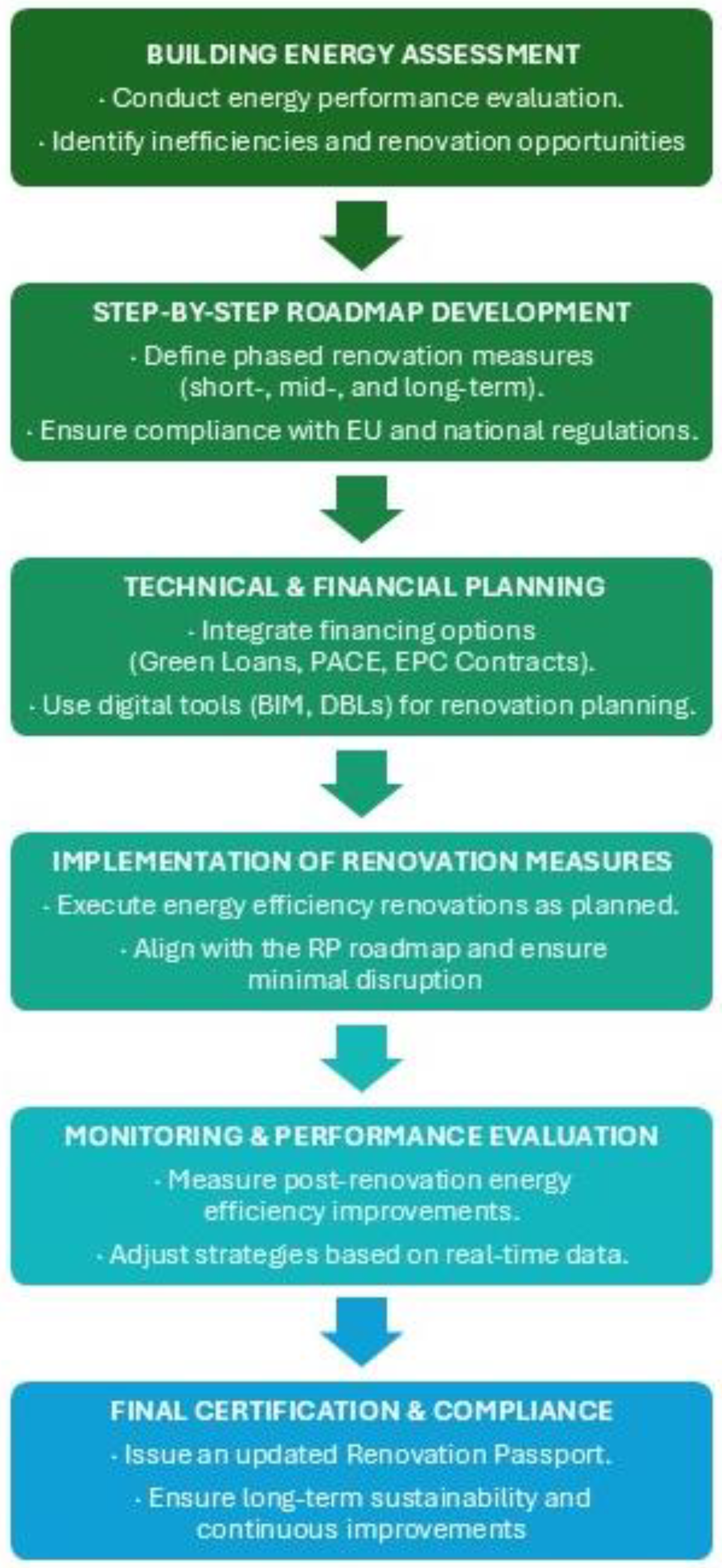
Figure 2.
Framework of the key phases of the methodology.
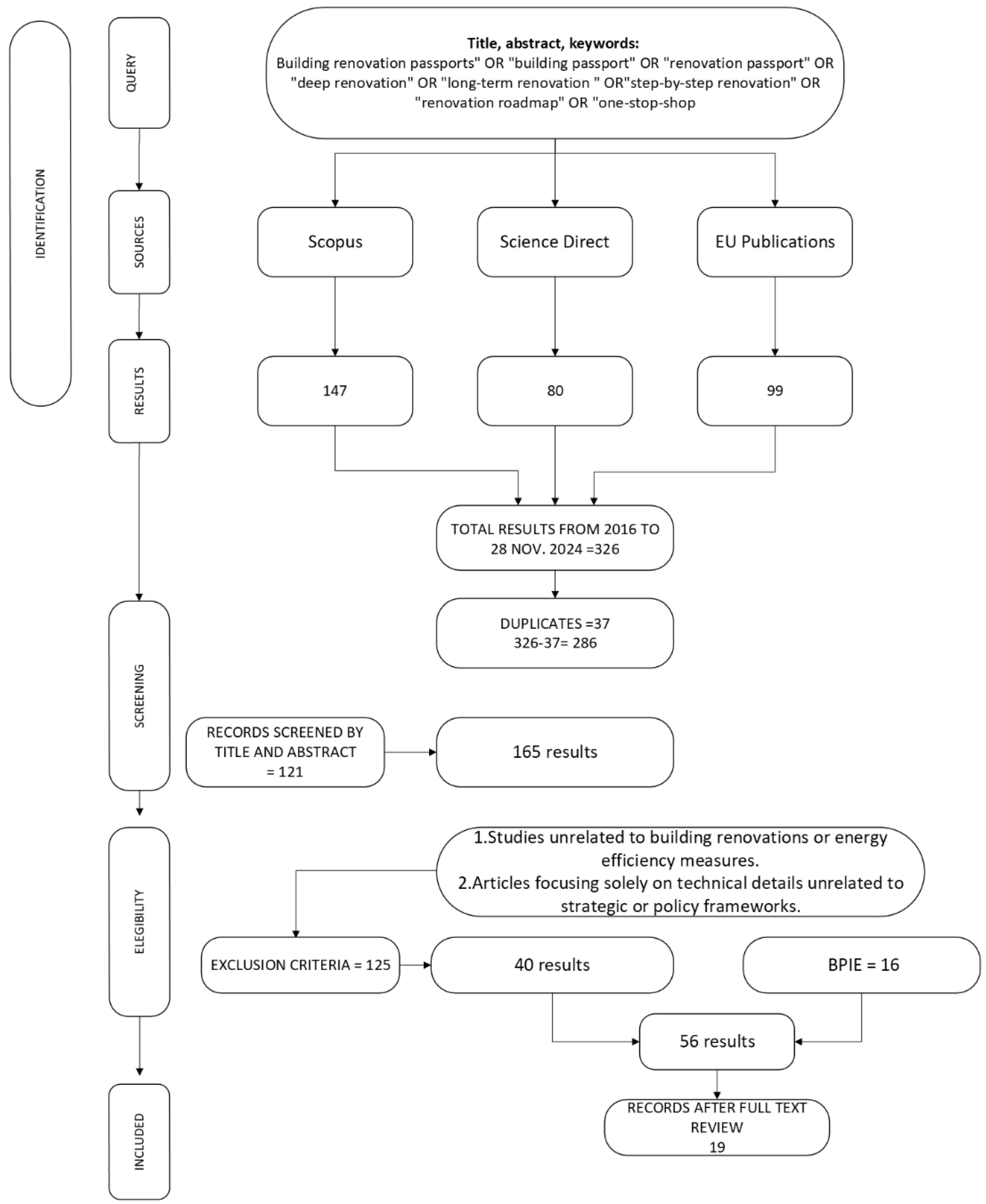
Figure 3.
Keyword occurrence bibliographic map.

Figure 4.
Top 15 keywords and number of occurrences.
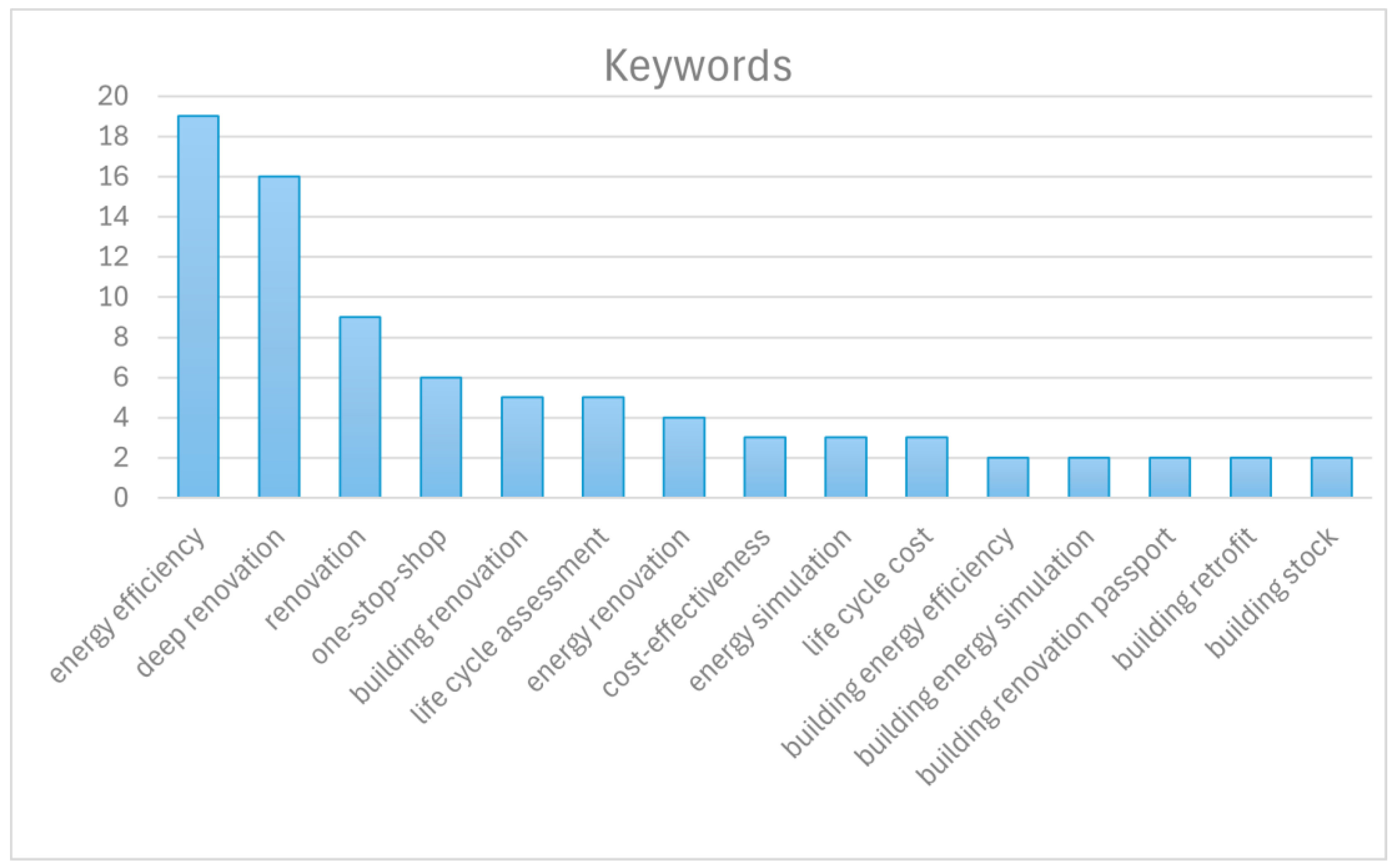

| Energy Efficiency Benefits | |
| Financial | Energy costs savings Reduced maintenance costs Increase the value of the property |
| Technical | Improve energy performance Reduce carbon emissions Improve indoor air quality |
| Economic | Energy demand savings Market development Jobs creation |
| Social | Reduction of energy poverty Improve health and quality of life Improve comfort Jobs creation |
| Energy Efficiency Barriers | |
| Financial | High investment costs Cost-effectiveness Lack of funding Lack of information on energy consumption |
| Technical | Knowledge of the energy-efficient measures Complexity of the energy renovations Order of the implementation of measures Require professional assistance Mistrust on experts Market lack of knowledge |
| Economic | Expected energy savings Accessible incentives Long payback period High upfront costs Need for loan Split incentives |
| Behavioural | Personal beliefs Awareness of the benefits Anticipated inconvenience of construction works Other priorities |
Table 3.
Article 2 - Definitions - EPBD (EU) 2024/1275 of the European Parliament and of the Council of 24 April 2024 [21].
Table 3.
Article 2 - Definitions - EPBD (EU) 2024/1275 of the European Parliament and of the Council of 24 April 2024 [21].
| EPBD (EU) 2024/1275- Article 2- Definitions | |
| Deep Renovation | means a renovation which is in line with the 'energy efficiency first' principle, which focuses on essential building elements and which transforms a building or building unit: (a) before the 1st of January 2030, into a nearly zero-energy building (b) from the 1st of January 2030 into a zero-emission building |
| Staged Deep Renovation | means a deep renovation carried out in a maximum number of steps, recorded in a renovation passport |
| Renovation Passport | means a tailored roadmap for the deep renovation of a specific building in a maximum number of steps that will significantly improve its energy performance |
| Energy Performance Certificate | means a certificate, recognised by a Member State or by a legal person designated by it, which indicates the energy performance of a building or building unit, calculated in accordance with a methodology adopted pursuant to Article 4 |
Table 4.
EU's main initiatives for building renovation plans.
| Building Renovation Passport | Characteristics | Intents | Country |
| Woningpas[20] | Renovation advice and EPC+ | Long-term efficiency objective | Belgium-Flandres |
| Passeport Efficacité Énergétique [23] | A web platform that connects owners, auditors and renovation professionals |
Promotes opportunities for energy renovation during routine building maintenance |
France |
| Individueller Sanierungsfahrplan [20] | A user-friendly tool that includes short and long-term measures and ways to avoid lock-in effects |
Turn renovation into an opportunity to improve homes | Germany |
| Opengela[24] | Home renovation service | Provide advice and support to the community through the whole process of renovation |
Basque Country |
| ALDREN- BRP (for non-residential buildings) [25] |
ALDREN BuildLog (current state of the building) + ALDREN RenoMap (technical/economic information of future steps) |
Proposed structure for RP for non-residential buildings |
EU |
| iBRoad2EPC [26] | A ready-to-use flexible, adaptable, modular, and expandable RP model designed to be integrated into EPC schemes |
A modular approach suitable for adoption by national markets | Bulgaria, Greece, Poland, Portugal, Romania and Spain |
Table 5.
Policy Recommendations for Developing Renovation Passport Schemes (Adapted from [31]).
Table 5.
Policy Recommendations for Developing Renovation Passport Schemes (Adapted from [31]).
| Policy Recommendations For Developing Renovation Passport Schemes |
| 1. Guidance on defining the renovation passport and its intended outcomes |
| Mandatory national RP schemes |
| Tailored RPs scheme |
| 2. Develop communication and awareness campaigns around renovation passports |
| Communication campaigns around RP |
| Promote their understanding, visibility and use among stakeholders |
| Guidance on how to integrate renovation passports with other policy instruments |
| Coordination with other tools EPCs, DBLs and OSS |
| 3. Guidance on developing tailored financing mechanisms |
| Ensure the affordability of RP |
| Design financial tools |
| Promote cooperation with the private sector to develop and enhance financial products |
| 4. Guidance on enhancing competencies and skills |
| Training stakeholders (public authorities, EPC auditors, and construction professionals) |
| Affordable software tools to calculate the required indicators |
| Develop training and courses on the technical specifications of renovation works |
|
5. Capacity-building for construction professionals to effectively use renovation passport recommendations |
| 6. Guidance in establishing monitoring and evaluation mechanisms |
| Establish key performance indicators to monitor the role and performance of renovation passports |
| FinancialSchemes for Building Renovation | |
| Green Loans | Loans with preferential terms designed to finance energy efficiency or renewable energy upgrades |
| On-Bill Financing/Repayment | Renovation costs are financed through the utility provider and repaid via utility bills, often offset by energy savings |
| Energy Efficiency as a Service (EEaaS) | Service providers install and maintain energy-saving equipment, charging clients based on achieved savings without upfront costs |
| Property Assessed Clean Energy (PACE) Financing |
Energy upgrades are funded via property tax assessments, with repayment tied to the property rather than the owner |
| Green Leasing | A leasing agreement for energy-efficient equipment or systems, with costs spread over the lease term |
| Grants and Subsidies | Non-repayable funds or partial funding for energy-efficient upgrades, often provided by governments or institutions |
| Tax Incentives and Rebates | Financial relief through tax credits or rebates for implementing energy efficiency measures |
| Revolving Loan Funds (RLFs) | Funds that provide low- or no-interest loans for energy efficiency projects, with repayments replenishing the fund for future projects |
| Third-Party Ownership Models | A third party finances, owns, and operates energy-efficient systems while clients benefit from savings, often used in cooperatives or energy communities |
| Energy Performance Contracting (EPC) | An ESCO manages the entire renovation process and guarantees energy savings, tying payment to achieved results |
| Energy-Efficient/Improvement Mortgages | Mortgage products offering better terms to borrowers investing in energy-efficient property upgrades |
Table 7.
Financial Mechanisms Options.
| Financial Mechanisms | Description | Benefits | Challenges |
| Green Loans | Low-interest loans for energy renovations |
Low-cost borrowing | Requires credit approval |
| On-Bill Financing | Energy savings pay for renovations via utility bill |
No upfront costs | Limited availability |
| PACE (Property-Assessed CE) | Tied to property taxes, financing major upgrades |
No credit score needed |
Dependent on legislation |
| Energy Performance Contracting | Third-party finances based on guaranteed savings |
Risk transfer to investors |
Complex contract structure |
Table 8.
RP Implementation Across EU Countries.
| Country | RP Implementation Status | Financial Support Available | Policy Framework | Challenges |
| Germany | Pilot Programs Ongoing | Green Loans, Grants | EPBD Aligned | High Initial Costs |
| France | Established RP Framework | Tax Credits, PACE | National Strategy | Homeowner Awareness |
| Netherlands | Widely Implemented | EPC-Linked Incentives | Strong Integration | Limited Digital Adoption |
Table 9.
Policy Framework.
| Directive/Policy | Key Requirements for RPs | Implementation Deadline | Countries Affected |
| EPBD 2024 | Mandatory RP for major renovations | 2025 | EU Member States |
| Renovation Wave Strategy | Targets doubling annual renovation rate | 2030 | EU-wide |
| National Energy & Climate Plans | Country-specific RP incentives | Varies | Individual Nations |
Disclaimer/Publisher’s Note: The statements, opinions and data contained in all publications are solely those of the individual author(s) and contributor(s) and not of MDPI and/or the editor(s). MDPI and/or the editor(s) disclaim responsibility for any injury to people or property resulting from any ideas, methods, instructions or products referred to in the content. |
© 2025 by the authors. Licensee MDPI, Basel, Switzerland. This article is an open access article distributed under the terms and conditions of the Creative Commons Attribution (CC BY) license (http://creativecommons.org/licenses/by/4.0/).
Copyright: This open access article is published under a Creative Commons CC BY 4.0 license, which permit the free download, distribution, and reuse, provided that the author and preprint are cited in any reuse.