

Submitted:
11 February 2025
Posted:
12 February 2025
You are already at the latest version
Abstract
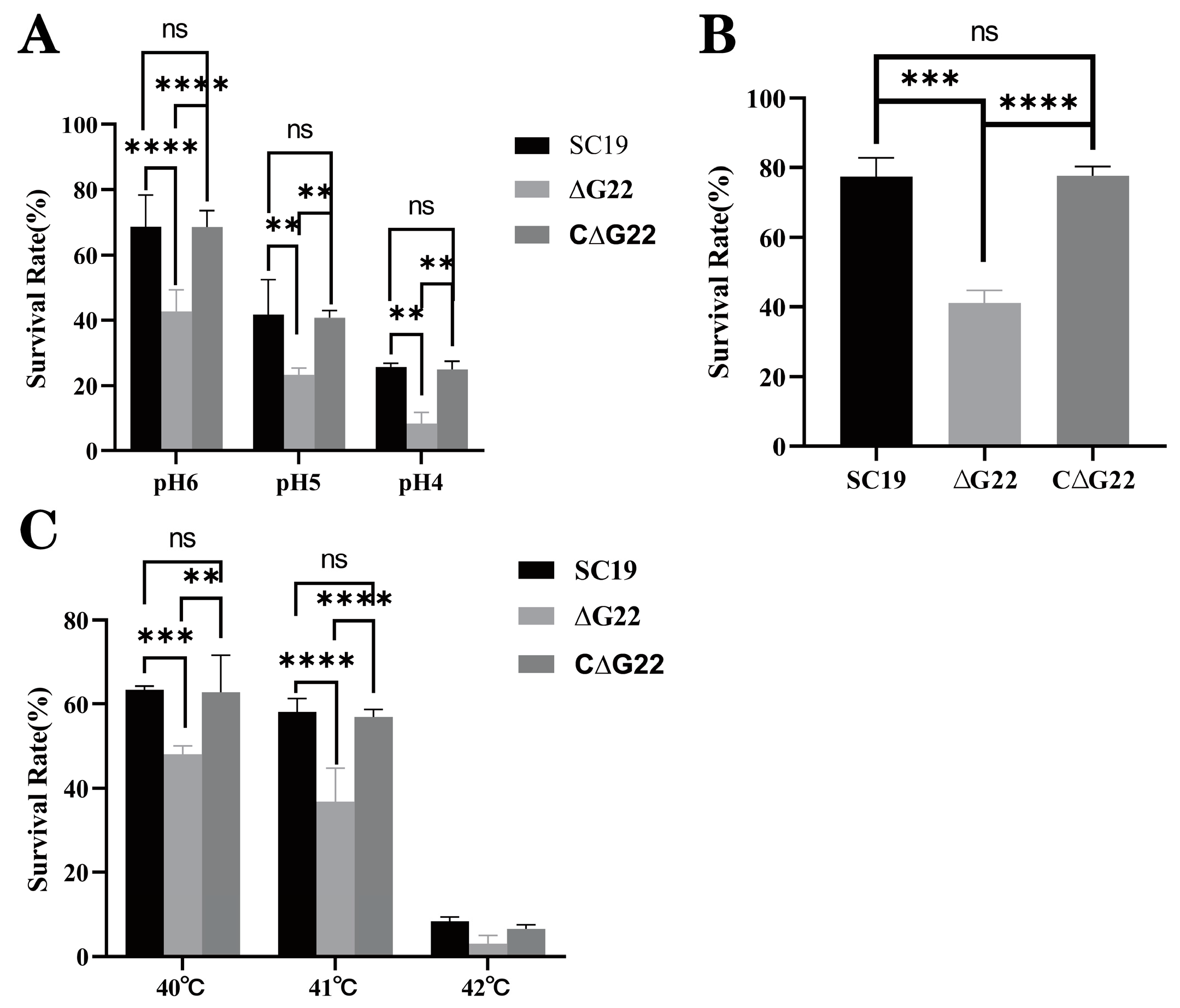
Streptococcus suis serotype 2 (SS2) is an important zoonotic pathogen that seriously harms the swine industry and human health. However, its pathogenic mechanisms are largely unknown, and the several virulence factors reported so far are insufficient to systematically explain its pathogenic and infectious mechanisms. In preliminary research, we identified a gene named G22 encoding a hypothetical secreted protein that may be closely associated with the high-level pathogenicity of S. suis. In this study, we constructed deletion and complementation strains of the G22 gene through homologous recombination and explored its roles in the pathogenicity and stress environment susceptibility of Streptococcus suis through in vitro and in vivo experiments. The deletion of G22 clearly influenced the typical capsular structure of SS2, and impaired the bacterium’s growth in medium containing hydrogen peroxide (showing a growth reduction of 32.98% ± 5.23% compared to the wildtype strain SC19, p < 0.001) or with a low pH (with a growth inhibition of 17.44% ± 1.9% relative to the wildtype strain SC19, p < 0.01). ΔG22 also showed reduced survival in whole blood and in RAW 264.7 macrophages (with a survival reduction of 16.44% ± 2.29% compared to the wildtype, p < 0.001). The deletion of G22 also sharply attenuated the virulence of SS2 in a mouse infection model (reducing the mortality rate by 50% ± 0.04%, p < 0.05). We also demonstrate that G22 induces the adhesion and invasion of SS2 in host cells. An RNA sequencing analysis revealed that 50 genes were differentially expressed in the ΔG22 and wild-type strains; 23 upregulated and 37 downregulated. Many of the genes are involved in carbohydrate metabolism and the synthesis of virulence-associated factors. Several genes associated with the phosphotransferase system were significantly upregulated in strain ΔG22. In summary, G22 plays a role in the morphological development and pathogenesis of the highly virulent SS2 strain SC19.
Keywords:
1. Introduction
2. Materials and Methods
2.1. Bacterial Strains and Plasmids
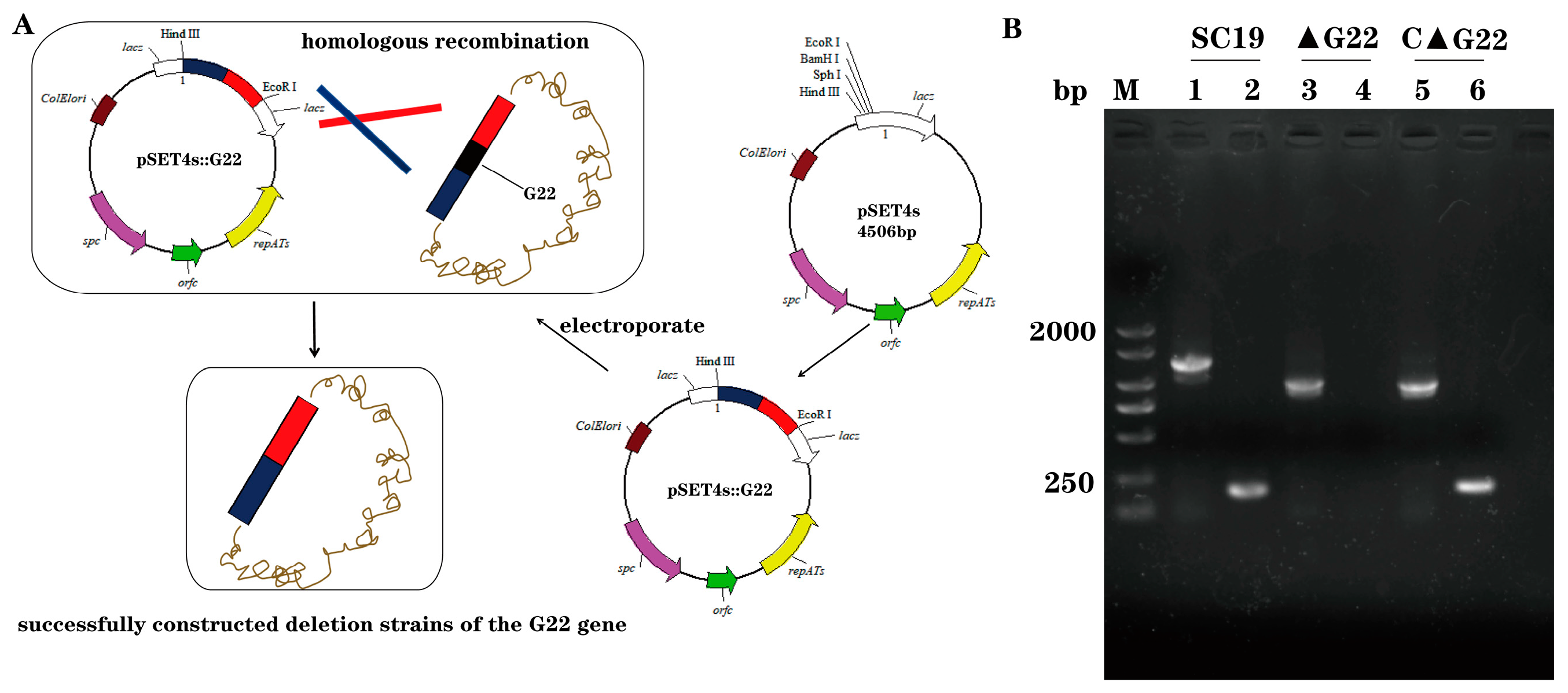
2.2. Construction of G22 Gene Knockout Strain and Complementary Strain
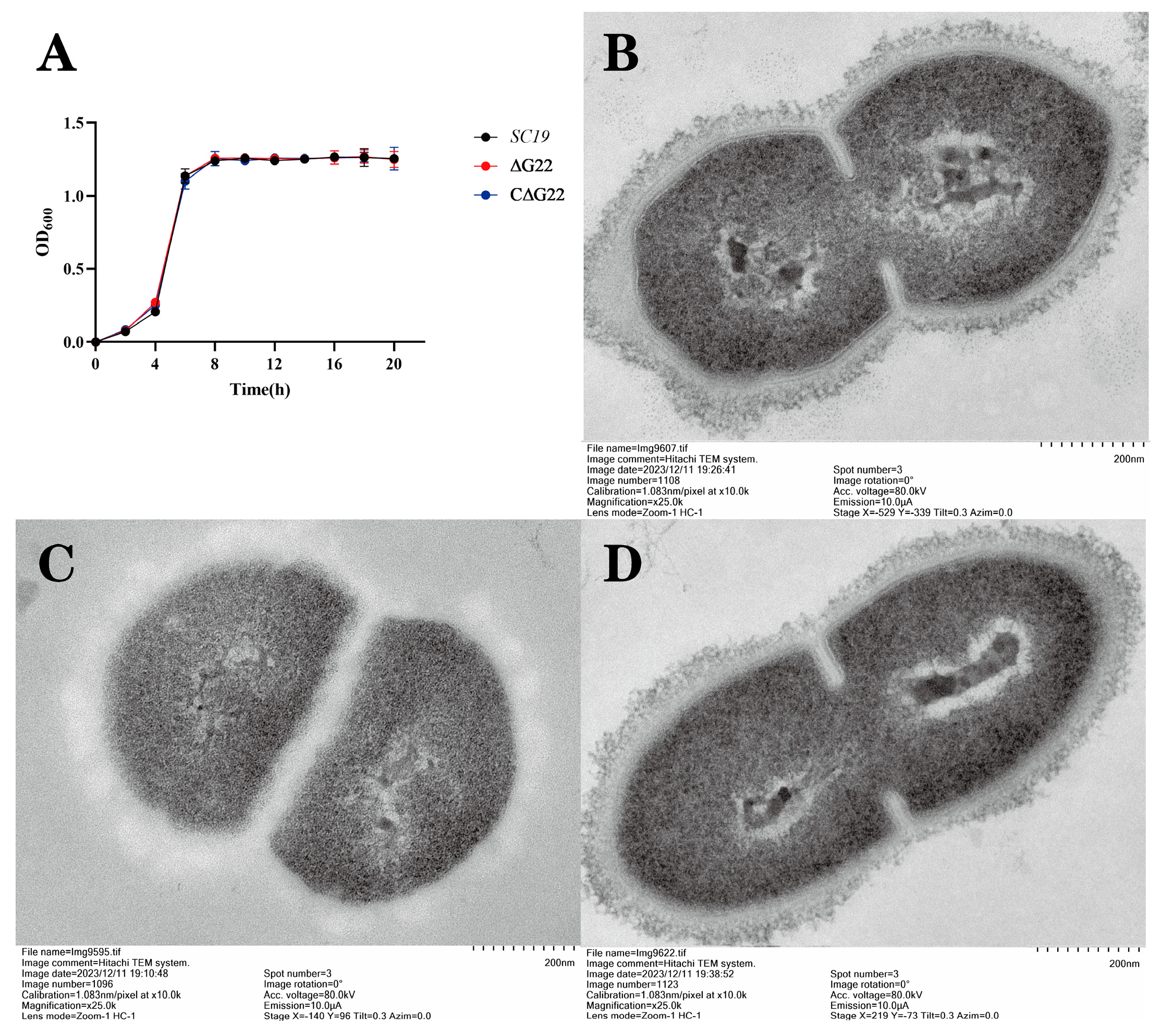
2.3. Growth characteristics and genetic stability of mutant strains
2.4. Observation with Transmission Electron Microscopy (TEM)
2.5. Survival Assays of SS2 in H2O2, at High Temperature, and Under Acidic Conditions
2.6. Experimental Infection of Mice
2.7. Adhesion and Invasion Assays in Caco-2 and HEp-2 Cells
2.8. Anti-phagocytosis Analysis in RAW 264.7 Macrophages
2.9. Whole-Blood Bactericidal Assay
2.10. RNA Sequencing Analysis
2.11. Statistical Analysis
3. Results
3.1. Identification of G22 Gene Knockout Strain and Complementary Strain
3.2. Characterization of Mutant Strain ∆G22
3.3. Role of G22 in Oxidative Stress Tolerance of SS2
3.4. Knockout of G22 Significantly Reduces Mortality
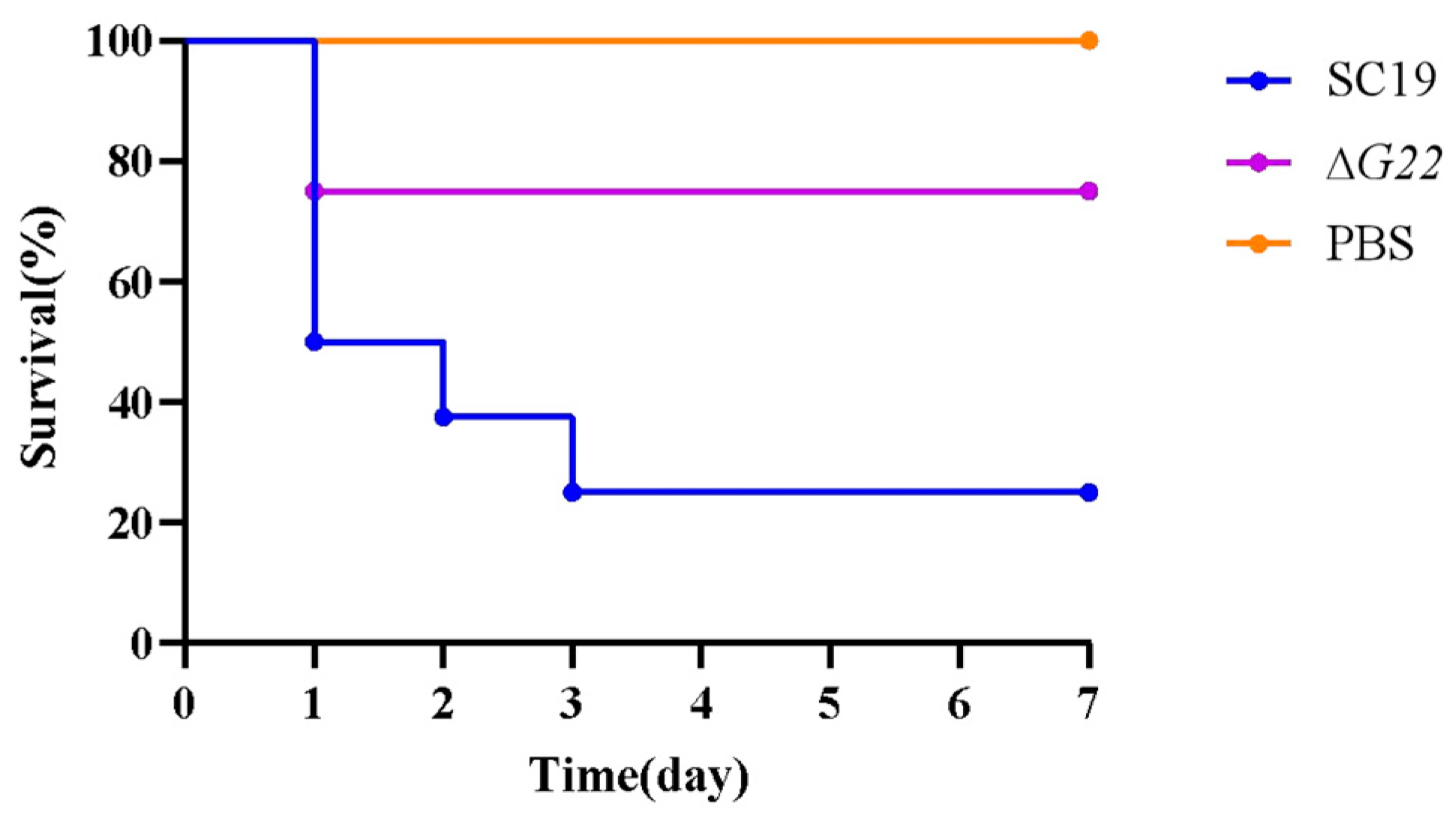
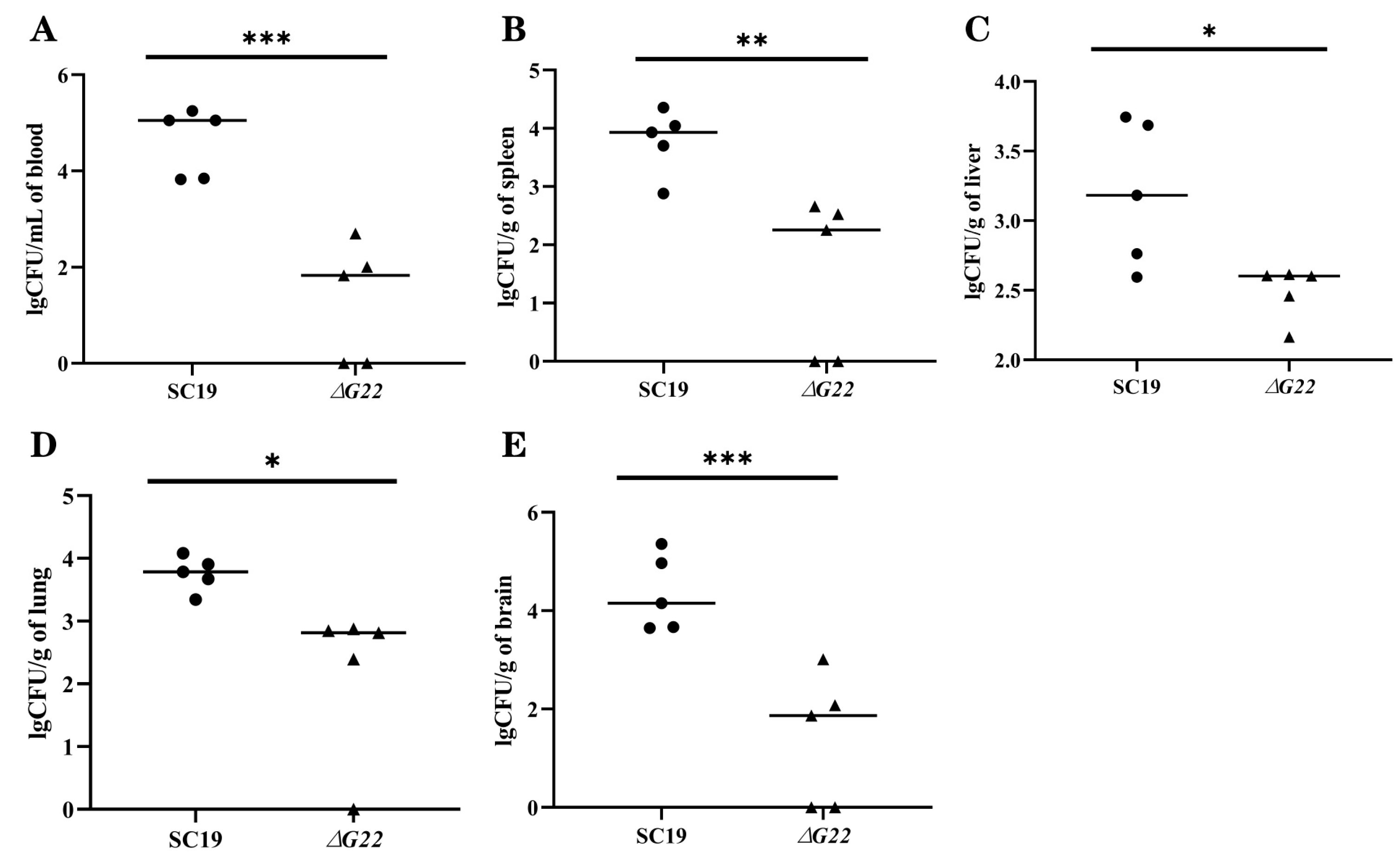
3.5. Colonization of Mouse Tissues by WT and ∆G22 Strains
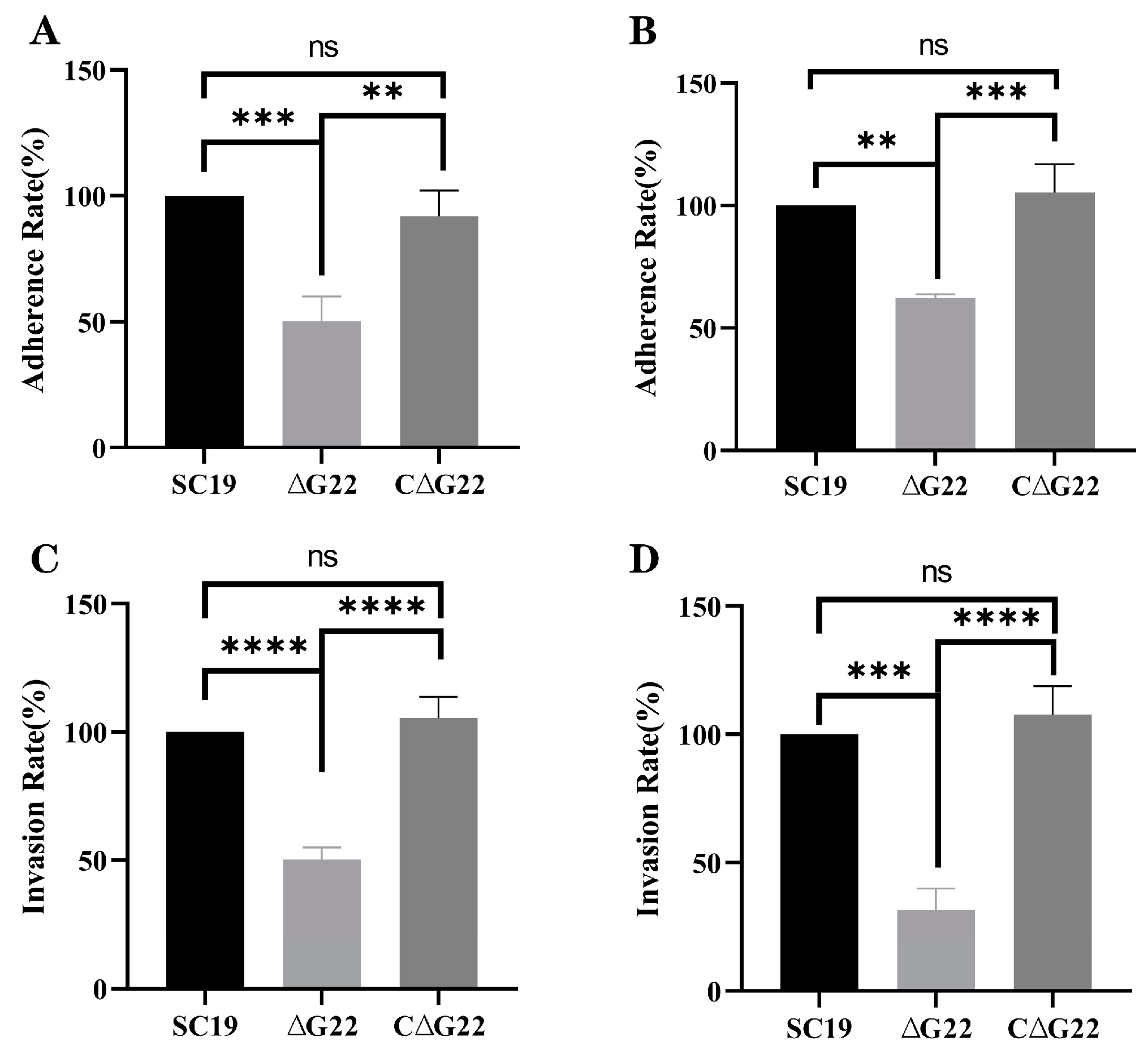
3.6. Role of G22 in Adhesion to and Invasion of Host Cells by SS2
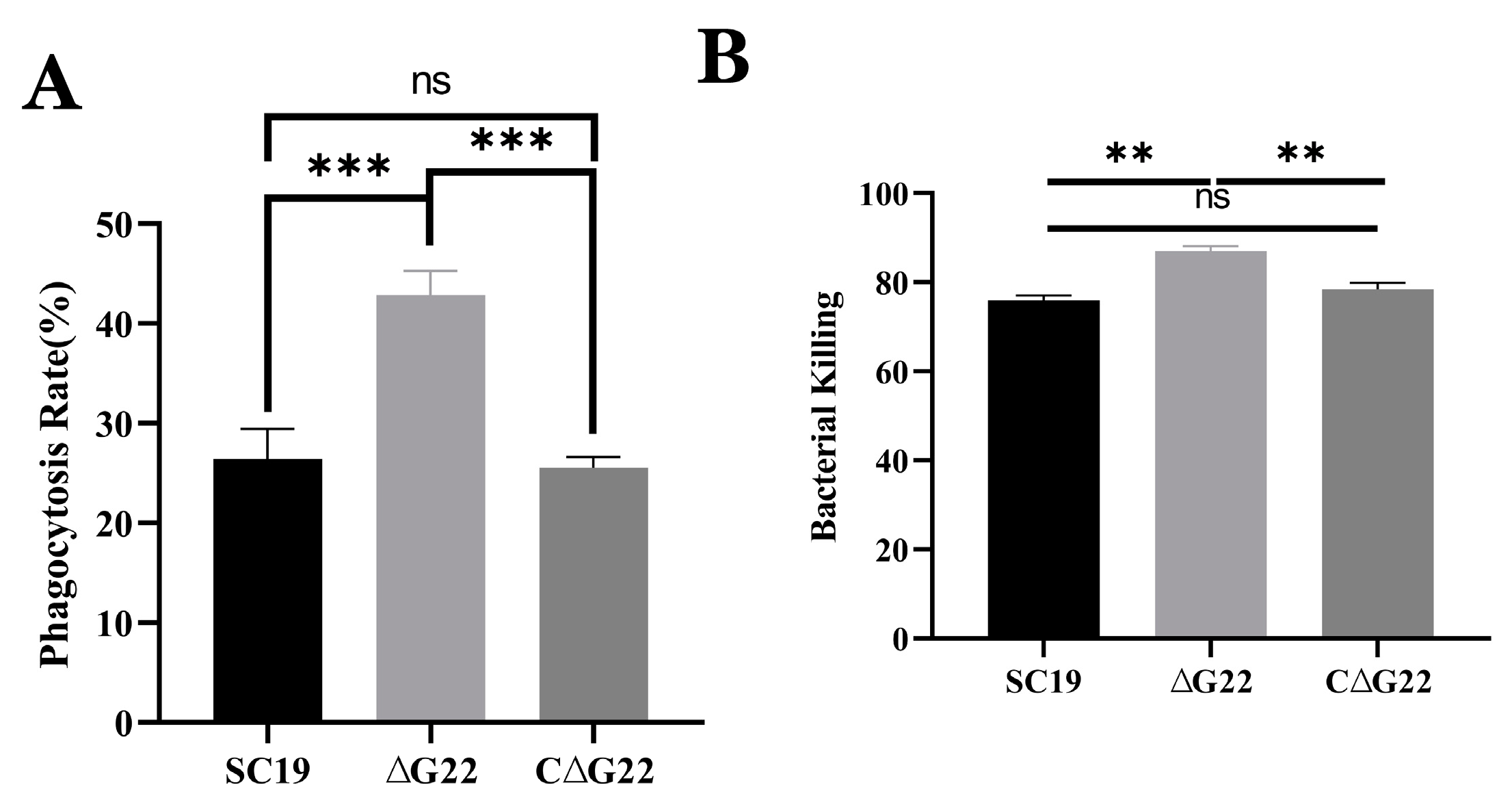
3.7. Role of G22 in resistance of SS2 to host cell phagocytosis and whole-blood resistance assay
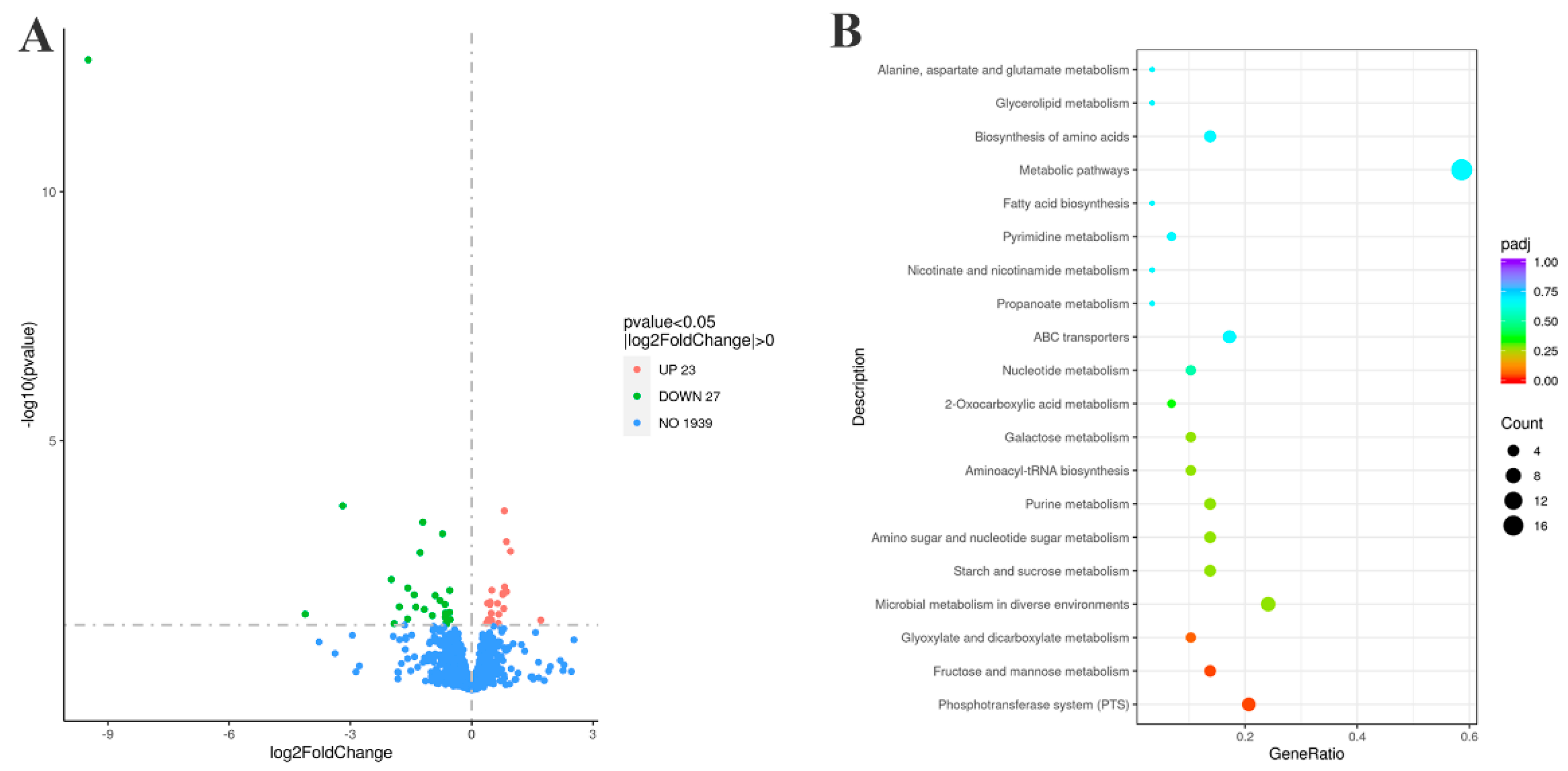
3.8. Significant Bacterial Transcriptomic Changes with G22 Gene Deletion
4. Discussion
Supplementary Materials
Ethics statement
Author Contributions
Funding
Data Availability Statement
Acknowledgments
Conflicts of Interest
References
- Gottschalk, M.; Segura, M.; Xu, J. Streptococcus suisinfections in humans: the Chinese experience and the situation in North America. Anim. Heal. Res. Rev. 2007, 8, 29–45. [Google Scholar] [CrossRef] [PubMed]
- Goyette-Desjardins, G.; Auger, J.-P.; Xu, J.; et al. Streptococcus suis, an important pig pathogen and emerging zoonotic agent—an update on the worldwide distribution based on serotyping and sequence typing. Emerging Microbes & Infections 2019, 3, 1–20. [Google Scholar]
- Nahuel, F.; Mariela, S.; Daniel, G.; et al. Virulence factors involved in the pathogenesis of the infection caused by the swine pathogen and zoonotic agent Streptococcus suis. Future microbiology 2012, 7, 259–79. [Google Scholar]
- Feng, Y.; Zhang, H.; Wu, Z.; et al. Streptococcus suisinfection. Virulence 2014, 5, 477–97. [Google Scholar] [CrossRef] [PubMed]
- Sheng, Q.; Xu, Q.; Lan, Z.; et al. Comparative Genome Analysis of TwoStreptococcus suisSerotype 8 Strains Identifies Two New Virulence-Associated Genes. Animals 2024, 14. [Google Scholar] [CrossRef]
- Wisselink, H.J.; Smith, H.E.; Stockhofe-Zurwieden, N.; Peperkamp, K.; Vecht, U. Distribution of capsular types and production of muramidase-released protein (MRP) and extracellular factor (EF) of Streptococcus suis strains isolated from diseased pigs in seven European countries. Veter- Microbiol. 2000, 74, 237–248. [Google Scholar] [CrossRef]
- Li, Q.; Fei, X.; Zhang, Y.; Guo, G.; Shi, H.; Zhang, W. The biological role of MutT in the pathogenesis of the zoonotic pathogen Streptococcus suis serotype 2. Virulence 2021, 12, 1538–1549. [Google Scholar] [CrossRef]
- Tang, J.; Wang, C.; Feng, Y.; Yang, W.; Song, H.; Chen, Z.; Yu, H.; Pan, X.; Zhou, X.; Wang, H.; et al. Streptococcal Toxic Shock Syndrome Caused by Streptococcus suis Serotype 2. PLoS Med. 2006, 3, e151. [Google Scholar] [CrossRef]
- Yong, H.; Shiming, F.; Geng, Z.; et al. Genome analysis provides insight into hyper-virulence of Streptococcus suis LSM178, a human strain with a novel sequence type 1005. Scientific Reports 2021, 11, 23919. [Google Scholar]
- Segura, M.; Fittipaldi, N.; Calzas, C.; Gottschalk, M. Critical Streptococcus suis Virulence Factors: Are They All Really Critical? Trends Microbiol. 2017, 25, 585–599. [Google Scholar] [CrossRef]
- Tong, W.; Hexiang, J.; Fengyang, L.; et al. O-acetyl-homoserine sulfhydrylase deficient Streptococcus suis serotype 2 strain SC19 becomes an avirulent strain and provides immune protection against homotype infection in mice. Veterinary Microbiology 2024, 288, 109943. [Google Scholar]
- Science C O A, Veterinary Medicine H I O S, Technology X, China; et al. How Streptococcus suis serotype 2 attempts to avoid attack by host immune defenses. Journal of Microbiology, Immunology and Infection 2019, 52, 516–25. [Google Scholar] [CrossRef]
- Willenborg, J.; Koczula, A.; Fulde, M.; et al. FlpS, the FNR-Like Protein of Streptococcus suis Is an Essential, Oxygen-Sensing Activator of the Arginine Deiminase System. Pathogens 2016, 5, 51. [Google Scholar] [CrossRef]
- Kietzman, C.C.; Caparon, M.G. CcpA and LacD.1 affect temporal regulation of Streptococcus pyogenes virulence genes. Infection and immunity 2010, 78, 241–52. [Google Scholar] [CrossRef] [PubMed]
- Fritz, T.; Wolfgang, H. Global control of sugar metabolism: a gram-positive solution. Antonie van Leeuwenhoek 2002, 82, 59–71. [Google Scholar]
- Zomer, A.L.; Buist, G.; Larsen, R.; Kok, J.; Kuipers, O.P. Time-resolved determination of the CcpA regulon of Lactococcus lactis subsp. cremoris MG1363. Journal of bacteriology 2007, 189, 1366–81. [Google Scholar] [CrossRef] [PubMed]
- A S S, DAVID K, NICOLA H, et al. A direct link between carbohydrate utilization and virulence in the major human pathogen group A Streptococcus. Proceedings of the National Academy of Sciences of the United States of America 2008, 105, 1698–703. [Google Scholar]
- Wen, Z.T.; Burne, R.A. Functional Genomics Approach to Identifying Genes Required for Biofilm Development by Streptococcus mutans. Appl Environ Microbiol 2003, 69, 722. [Google Scholar] [CrossRef]
- INSTITUTE FOR MICROBIOLOGY U O V M, HANNOVER, GERMANY., DEPARTMENT OF MICROBIAL PATHOGENESIS H C F I R, BRAUNSCHWEIG, GERMANY., ANIMAL SCIENCES GROUP W U, PO BOX 65, AB LELYSTAD, THE NETHERLANDS.; et al. Role of glucose and CcpA in capsule expression and virulence of Streptococcus suis. Microbiology (Reading, England) 2011, 157 Pt 6, 1823–33. [Google Scholar] [CrossRef]
- Zhou, Y.; Tu, T.; Yao, X.; Luo, Y.; Yang, Z.; Ren, M.; Zhang, G.; Yu, Y.; Lu, A.; Wang, Y.; et al. Pan-genome analysis of Streptococcus suis serotype 2 highlights genes associated with virulence and antibiotic resistance. Front. Microbiol. 2024, 15, 1362316. [Google Scholar] [CrossRef]
- Xiaowu, J.; Lexin, Z.; Dongbo, Z. Deletion of lacD gene affected stress tolerance and virulence of Streptococcus suis serotype 2. Journal of microbiology (Seoul, Korea) 2022, 60, 948–59. [Google Scholar]
- Xingxing, D.; Yanjie, C.; Yang, Z.; et al. The global emergence of a novel Streptococcus suis clade associated with human infections. EMBO molecular medicine 2021, 13, e13810. [Google Scholar]
- Human Streptococcus suis outbreak, Sichuan, China..pdf.
- Takamatsu, D.; Osaki, M.; Sekizaki, T. Thermosensitive Suicide Vectors for Gene Replacement in Streptococcus suis. Plasmid 2001, 46, 140–148. [Google Scholar] [CrossRef]
- Takamatsu, D.; Osaki, M.; Sekizaki, T. Construction and Characterization of Streptococcus suis–Escherichia coli Shuttle Cloning Vectors. Plasmid 2001, 45, 101–113. [Google Scholar] [CrossRef] [PubMed]
- STATE KEY LABORATORY OF AGRICULTURAL MICROBIOLOGY C O V M, HUAZHONG AGRICULTURAL UNIVERSITY, WUHAN, CHINA., HUSBANDRY I O A, VETERINARY MEDICINE J A O A S, NANCHANG, CHINA.; et al. The involvement of MsmK in pathogenesis of the Streptococcus suis serotype 2. MicrobiologyOpen 2017, 6, e00433. [Google Scholar]
- COLLEGE OF VETERINARY MEDICINE N A U, NANJING 210095, CHINA, KEY LAB OF ANIMAL BACTERIOLOGY M O A, NANJING 210095, CHINA, OIE REFERENCE LAB FOR SWINE STREPTOCOCCOSIS N, CHINA; et al. Role of ClpX and ClpP in Streptococcus suis serotype 2 stress tolerance and virulence. Microbiological Research 2019, 223-225, 99–109. [Google Scholar] [CrossRef]
- Yanyan, Z.; Rui, L.; Qian, L.; et al. Orphan response regulator CovR plays positive regulative functions in the survivability and pathogenicity of Streptococcus suis serotype 2 isolated from a pig. BMC Veterinary Research 2023, 19, 243. [Google Scholar]
- Haodan, Z.; Yong, W.; Yanxiu, N.; et al. The Redox-Sensing Regulator Rex Contributes to the Virulence and Oxidative Stress Response of Streptococcus suis Serotype 2. Frontiers in cellular and infection microbiology 2018, 8, 317. [Google Scholar]
- Cumley, N.J.; Smith, L.M.; Anthony, M.; May, R.C. The CovS/CovR acid response regulator is required for intracellular survival of group B Streptococcus in macrophages. Infection and immunity 2012, 80, 1650–61. [Google Scholar] [CrossRef]
- Jingyan, F.; Lelin, Z.; Qiao, H.; et al. Screening for Virulence-Related Genes via a Transposon Mutant Library of Streptococcus suis Serotype 2 Using a Galleria mellonella Larvae Infection Model. Microorganisms 2022, 10, 868. [Google Scholar] [CrossRef]
- Servane, P.; David, R.; Anaïs, B.; et al. Role of Maturation of Lipoproteins in the Pathogenesis of the Infection Caused by Streptococcus suis Serotype 2. Microorganisms 2021, 9, 2386. [Google Scholar] [CrossRef]
- Genglin, G.; Yuhang, Z.; Dan, W.; et al. Contribution of nadR to the cell growth and virulence of Streptococcus suis serotype 2. Veterinary Microbiology 2024, 288, 109928-. [Google Scholar]
- Suzuki, Y.; Nagasawa, R.; Senpuku, H. Inhibiting effects of fructanase on competence-stimulating peptide-dependent quorum sensing system in Streptococcus mutans. J. Infect. Chemother. 2017, 23, 634–641. [Google Scholar] [CrossRef] [PubMed]
- Disi, L.; Jinming, F.; Jingjie, W.; et al. The Fructose-Specific Phosphotransferase System of Klebsiella pneumoniae is regulated by global regulator CRP and link to virulence and growth. Infection and immunity 2018, 86. [Google Scholar]
- Adi, H.; Sivan, F.; Lior, L.; et al. L-glutamine Induces Expression of Listeria monocytogenes Virulence Genes. PLoS pathogens 2017, 13, e1006161. [Google Scholar]
- AFFSCHOOL OF LIFE SCIENCES A A U, HEFEI, ANHUI 230036, CHINA./RAW. The two-component system, BasSR, is involved in the regulation of biofilm and virulence in avian pathogenic Escherichia coli. Avian pathology : journal of the WVPA 2020, 51-. [Google Scholar]
- AFFDEPARTMENT OF ORAL BIOLOGY C O D, UNIVERSITY OF FLORIDA, GAINESVILLE, FLORIDA 32610/RAW. Utilization of lactose and galactose by Streptococcus mutans: transport, toxicity, and carbon catabolite repression. Journal of bacteriology 2010, 192, 2434–44. [Google Scholar] [CrossRef]
- UNIT OF ANIMAL INFECTIOUS DISEASES N K L O A M, COLLEGE OF VETERINARY MEDICINE, HUAZHONG AGRICULTURAL UNIVERSITY, WUHAN 430070, CHINA. ROBIN@163.COM., UNIT OF ANIMAL INFECTIOUS DISEASES N K L O A M, COLLEGE OF VETERINARY MEDICINE, HUAZHONG AGRICULTURAL UNIVERSITY, WUHAN 430070, CHINA. 05YISAN@163.COM., UNIT OF ANIMAL INFECTIOUS DISEASES N K L O A M, COLLEGE OF VETERINARY MEDICINE, HUAZHONG AGRICULTURAL UNIVERSITY, WUHAN 430070, CHINA. XZMJACK@126.COM.; et al. HP1717 Contributes to Streptococcus suis Virulence by Inducing an Excessive Inflammatory Response and Influencing the Biosynthesis of the Capsule. Microorganisms 2019, 7, 522. [Google Scholar] [CrossRef]
- Esgleas, M.; Dominguez-Punaro, M.d.l.C.; Li, Y.; Harel, J.; Dubreuil, J.D.; Gottschalk, M. Immunization with SsEno fails to protect mice against challenge withStreptococcus suisserotype 2. FEMS Microbiol. Lett. 2009, 294, 82–88. [Google Scholar] [CrossRef]
- Gao, S.; Shen, Y.; Yuan, S.; Quan, Y.; Li, X.; Wang, Y.; Yi, L.; Wang, Y. Methyl anthranilate deteriorates biofilm structure of Streptococcus suis and antagonizes the capsular polysaccharide defence effect. Int. J. Antimicrob. Agents 2023, 62, 106996. [Google Scholar] [CrossRef]
- Identification of an Autorepressing Two-Component Signaling System That Modulates Virulence in Streptococcus suis Serotype 2.pdf.
- Gu, Q.; He, P.; Wang, D.; Ma, J.; Zhong, X.; Zhu, Y.; Zhang, Y.; Bai, Q.; Pan, Z.; Yao, H. An Auto-Regulating Type II Toxin-Antitoxin System Modulates Drug Resistance and Virulence in Streptococcus suis. Front. Microbiol. 2021, 12. [Google Scholar] [CrossRef] [PubMed]

| Strain or Plasmid | Characteristics and Functions | Sources or Reference |
|---|---|---|
| SC19 | Virulent strain isolated from the brain of a dead pig; Serotype 2 | Laboratory collection |
| ∆G22 | ∆G22-deletion mutant strain | This study |
| C∆G22 | Complemented strain of G22 ,Spc R, CmR | This study |
| Escherichia coli DH5α | Cloning host for recombinant vector | Purchased from Shanghai Sangon Biotech Co., LTD |
| pSET4s | Temperature-sensitive E. coli-S. suis shuttlevector ,SpcR | Purchased from Shanghai ke Lei Biological Technology Co., LTD |
| pSET2 | E.coli-Streptococcus shuttle Cloning vectors; SpcR | Laboratory collection |
| pSET4s::G22 | A recombinant vector with the background of pSET4S, designed to ΔG22, SpcR | This study |
| pSET2::G22 | pSET2 containing the G22 gene and its promoter, SpcR | This study |
| Primers | Primers Sequence (5’-3’) | Functions or PCR Product |
|---|---|---|
| G22L-F | TTGTAAAACGACGGCCAGTGAATTCGAAGCAATCTGTCGTGGAGTTG | Upstream fragment amplification of G22 |
| G22L-R | ATTACTATCCACGTTTCATTTTTGAAATATCTCC | |
| G22R-F | AATGAAACGTGGATAGTAATTCAGTTTTG | Downstream fragment amplification of G22 |
| G22R-R | CTATGACCATGATTACGCCAAGCTTCCACTGTTCTCTATCCATATG | |
| W1 | TTGTAAAACGACGGCCAGTGAATTCGAAGCAATCTGTCGTGGAGTTG | Outside the homologous region identification |
| W2 | CTATGACCATGATTACGCCAAGCTTCCACTGTTCTCTATCCATATG | |
| N1 | AAGTTGGTCTGTGTGCTATGG | Internal fragment of G22 identification |
| N2 | TTAGAACCAGCAGCTCTCG |
Disclaimer/Publisher’s Note: The statements, opinions and data contained in all publications are solely those of the individual author(s) and contributor(s) and not of MDPI and/or the editor(s). MDPI and/or the editor(s) disclaim responsibility for any injury to people or property resulting from any ideas, methods, instructions or products referred to in the content. |
© 2025 by the authors. Licensee MDPI, Basel, Switzerland. This article is an open access article distributed under the terms and conditions of the Creative Commons Attribution (CC BY) license (http://creativecommons.org/licenses/by/4.0/).