

Submitted:
08 February 2025
Posted:
10 February 2025
You are already at the latest version
Abstract
Mobile Ad hoc Networks (MANETs) are becoming a popular networking technology as they can easily be set up and provide communication support on the go. These networks can be used in application areas such as battlefields and disaster relief operations where infrastructure networks are not available. Like media access control protocols, MANET routing protocols can also play an important role in determining the network capacity and system performance. Research on the impact of heterogeneous nodes in a MANET performance is required for proper deployment of such systems. While MANET routing protocols have been studied and reported in the networking literature extensively, the performance of heterogeneous nodes/devices on system performance has not been fully explored yet. The main objective of this paper is to review and compare the performance of four selected MANET routing protocols (AODV, OLSR, BATMAN and DYMO) in a heterogeneous MANET setting. We consider three different types of nodes in the MANET routing performance study, namely PDAs (fixed nodes with no mobility), Laptops (low mobility nodes) and mobile phones (high mobility nodes). We measure the QoS metrics such as end-to-end delays, throughput, and packet delivery ratios using OMNET++-network simulator. The findings reported in this paper provide some insights into MANET routing performance issues and challenges that can help network researchers and engineers to contribute further towards developing next generation wireless network capable of operating heterogeneous networking constraints.
Keywords:
Heterogeneous
; MANET
; AODV
; OLSR
; BATMAN
; DYMO
; Heterogeneous networks
1. Introduction
Mobile Ad hoc Networks (MANETs) are becoming very popular because the network can be set up easily and be operated on the go. These features make MANETs to be used in wide application in areas such as battle fields, disaster relief operations, and even at hotel lobbies, airports, and cafes. Another feature of MANETs is that mobile nodes can configure themselves without any centralized control. However, it is a challenge to maintain a high level of performance of the MANETs due to node mobility, battery-powered nodes, and multi-hop routing structure [1,2,3].
Wired networks are faster and contain more security and reliability [4,5,6]. The faults are generally less common in wired networks. The difficulties with wired networks show mainly the installation and overall costs to repair, maintain, and manage these setups. Unlike wired networks, wireless networks help to provide flexibility, as they allow users within the network to work from anywhere within the boundaries of the network itself [1,7]. However, wireless networks are less reliable regarding connections and security [8].
Infrastructure-based networks are where many wireless devices are connected to network infrastructure via an access point or router [9]. The access point allows users to connect to external networks like the Internet. Infrastructure-less or Ad-hoc networks can start as a peer-to-peer connection between two wireless devices. As more ad-hoc wireless devices enter this network by sharing the same SSID (Service Set Identifier), this becomes a multi-node system of connections where many users can exchange data and communicate with one another [6]. Between the two categories, ad-hoc networks are simpler and easier to implement, because no pre-existing setups and hardware are needed to establish a connection. And because of this, the overall costs to implement such a network are low.
Ad-hoc networks are categorized into Wireless Sensor Networks (WSN), Wireless Mesh Networks (WMN) and Mobile Ad-hoc Networks (MANET). MANET is a network where mobile nodes are in communication with one another without administration assistance [10,11]. Instead of having an access point, a wireless device connected to the network can act as a centralized router with access point software. In these networks, routing is needed to find a suitable path from a source node to its destination with the help of routing protocols.
1.1. Heterogeneous MANET Environment
Heterogeneous MANET (HMANET) is like a regular MANET, except that all devices/nodes connected to the network with varying capabilities including mobility, data transmission rates, distance coverage, battery life, and power consumption [12,13,14]. The heterogeneity of nodes can be complex if multiple heterogeneous devices are connected to the network for communications. Using OMNET++ simulation tool, a heterogeneous MANET model is developed to study the impact of heterogeneous nodes on the performance of various MANET routing protocols.
1.2. Research Challenges
In this study, we address the following three research questions/challenges.
Research Question 1: How do the routing protocols (AODV, OLSR, BATMAN, DYMO) affect MANET performance in a heterogeneous environment?
Mobile Ad hoc Networks (MANETs) are increasingly popular due to their ability to be set up easily and provide communication support in areas lacking infrastructure. However, maintaining a high level of performance in MANETs is challenging due to factors such as node mobility, battery limitations, and multi-hop routing structures. While extensive research has been conducted on MANET routing protocols, the performance implications of heterogeneous nodes—devices with varying capabilities—remain underexplored. This study aims to review and compare the performance of four selected MANET routing protocols in a heterogeneous setting, considering different types of nodes, including PDAs (fixed nodes), laptops (low mobility), and mobile phones (high mobility).
Research Question 2: What impact do heterogeneous nodes have on the quality of service (QoS) parameters in MANET routing protocols?
The heterogeneity of nodes in MANETs introduces complexity in communications, potentially affecting QoS metrics. Understanding how different types of nodes impact these metrics is crucial for optimizing the performance of MANETs. This research will utilize the OMNET++ network simulator to measure and analyze the QoS metrics across the selected routing protocols, providing insights into performance variations based on node capabilities and mobility.
Research Question 3: How can the findings from the performance comparison of MANET routing protocols in heterogeneous environments inform the development of next-generation wireless networks?
The insights gained from studying the performance of AODV, OLSR, BATMAN, and DYMO in a heterogeneous MANET can guide future network researchers and engineers in developing robust wireless networks. Identifying the strengths and weaknesses of each protocol under varying conditions will be essential for creating systems capable of efficiently managing heterogeneous nodes and enhancing overall network performance.
1.3. Research Scope and Contributions
The main contributions of this paper are summarized as follows.
- Comparative analysis of MANET routing protocols in heterogeneous environments: We thoroughly reviewed and compared the performance of four selected MANET routing protocols (AODV, OLSR, BATMAN, and DYMO) in a heterogeneous MANET. To this end, we analyze the impact of various node types on QoS parameters, such as end-to-end delays, throughput, and packet delivery ratios. We provide insights into the performance of routing protocols in heterogeneous networks.
- Evaluation of node types impacting QoS parameters: This study highlights the significance of node heterogeneity in MANETs and its effect on system performance. Using the OMNET++ simulator, we measure QoS metrics for heterogeneous nodes, thereby informing future implementations of MANETs in real-world applications.
- Guidance for next-generation wireless networks: The findings from this research offer valuable insights that can assist network researchers and engineers in developing next-generation wireless networks capable of accommodating heterogeneous networking constraints. By understanding the performance issues associated with various MANET routing protocols, this paper contributes to the ongoing advancement of efficient and robust wireless communication systems.
1.4. Structure of the Paper
The rest of this paper is organized as follows. Section 2 presents the related works on routing protocols in Mobile Ad Hoc Networks (MANETs) and their performance in heterogeneous environments, focusing on key literature addressing various protocols like AODV, OLSR, BATMAN, and DYMO. Section 3 discusses the research methodology, detailing the experimental setup using the OMNET++ simulation tool, as well as the design and performance metrics for evaluating the selected routing protocols.
In Section 4, the system evaluation and test results are presented, analyzing the impact of heterogeneous nodes on performance metrics including end-to-end delays, throughput, and packet delivery ratios. Section 5 presents research findings. Finally, Section 6 concludes the paper by summarizing the main findings and suggesting potential areas for future research to enhance routing performance in MANETs.
2. MANET Routing Protocols: Background and a Review of Literature
2.1. MANET Classification
MANETs have emerged as a vital networking technology, especially in scenarios where traditional infrastructure is unavailable. Their flexibility and self-configuring capabilities allow for dynamic networking solutions in diverse environments, such as battlefields and disaster relief operations. As highlighted in [15], the performance of MANETs significantly hinges on the choice of routing protocols, which are crucial for establishing efficient communication paths among mobile nodes.
Routing protocols in MANETs can be broadly classified into reactive, proactive, and hybrid categories. Reactive (on-demand) protocols, such as AODV and DSR, establish routes only when required, minimizing overhead during periods of low network activity [16]. These protocols, however, may introduce delays when routes need to be discovered. In contrast, proactive protocols, like OLSR, maintain up-to-date routing information for all nodes in the network. This characteristic allows for immediate route availability but may lead to increased bandwidth consumption due to periodic control message exchanges [17,18].
Hybrid routing protocols aim to combine the advantages of both reactive and proactive strategies. Sholander et al. [19] noted that hybrid protocols enhance scalability by allowing nodes to function reactively in nearby areas while adopting a proactive approach for distant communications. This adaptability can be beneficial in heterogeneous networks, where nodes with different capabilities coexist.
The evaluation of routing protocols in heterogeneous environments remains a crucial area of research. Studies by [6,20]ave explored the performance of AODV and DYMO in varying conditions, emphasizing the importance of understanding how different node types of influence network performance metrics such as end-to-end delay and throughput. Furthermore, the BATMAN protocol has been introduced as an innovative approach to address some limitations associated with traditional routing protocols, focusing on maximizing message delivery probabilities while minimizing control overhead [21,22]
Reference [23] reviewed recent advancements in routing strategies aimed at minimizing energy consumption in MANETs. They highlight that energy-efficient protocols are critical for prolonging the operational life of battery-powered devices, which are prevalent in mobile ad hoc networks. Their findings suggest that integrating energy-awareness into routing protocols can substantially improve the sustainability of MANETs.
Recent works have also shed light on the challenges faced by MANETs due to the diversity in node capabilities. Reference [24] analyzed the performance of AODV alongside the Optimized Link State Routing (OLSR) protocol in mobile ad hoc networks. Their comparative study reveals that while AODV excels in dynamic environments due to its reactive nature, OLSR’s proactive approach allows for faster route establishment under stable conditions. This analysis underscores the importance of context when selecting routing protocols, as the ideal choice can vary depending on mobility patterns and network topology.
Reference [25] offered a broader perspective by surveying various routing protocols used in MANETs, outlining key issues and challenges such as security vulnerabilities, scalability, and energy efficiency. Their work points to a growing need for innovative solutions that address these challenges while maintaining reliable communication. Reference [26] compared hybrid routing protocols under different mobility models, concluding that hybrid approaches can effectively balance the trade-offs between proactive and reactive strategies. This adaptability is essential in environments with varying mobility levels, as it allows for dynamic adjustments to routing behavior based on real-time conditions. Reference [27] introduced a trust-based routing protocol tailored for heterogeneous nodes, emphasizing the need for reliable communication in MANETs. Their approach highlights the significance of incorporating trust metrics into routing decisions, which can enhance security and network performance in the face of varying node capabilities.
MANET routing protocols can be classified into three main categories namely Reactive (On-demand), Proactive (Table-driven) and Hybrid as shown in Figure 1. These routing protocols are briefly described below.
- Reactive (On-demand) Routing Protocol: Reactive protocols look to set up routes that are on-demand. Suppose nodes want to establish a communication channel with a node with no path. In that case, these routing protocols will try to develop a route connecting two nodes to engage in communication [15,16]. Every node in a reactive routing protocol obtains a route to a destination in an on-demand fashion, which means that a source node demands a path to the destination when it is needed. Reactive protocols do not maintain up-to-date routes to any destination in the network and do not generally exchange periodic control messages. Reactive protocols were designed to reduce the overheads in proactive protocols by maintaining information for active routes only. The performance of the Ad Hoc On-Demand Distance Vector (AODV) protocol has been a focal point in MANET research, particularly regarding its application in heterogeneous environments. [28] enhanced the AODV protocol specifically for heterogeneous MANETs, demonstrating that modifications to routing mechanisms can significantly improve network performance. Their findings suggest that adapting AODV to consider node capabilities, such as transmission rates and mobility patterns, can lead to reduced end-to-end delay and increased throughput.
- Proactive (Table-driven) Routing Protocol: Every node in the network has one or more routes to any possible destination in its routing table at any given time. Each node maintains routing information to every other node (or nodes located in a specific part) in the network. The emphasis behind proactive protocols is that control messages are exchanged between nodes periodically [17,18]. Messages can be sent to inform and enable nodes to know their local network, exchanging knowledge of the network topology amongst all nodes within a network. [29]conducted a comprehensive survey on routing protocols in MANETs, highlighting the inherent challenges and solutions associated with different protocols. Their study outlines how the dynamic nature of MANETs, characterized by node mobility and varying transmission capabilities, complicates routing decisions. They emphasize that a robust understanding of the operational environment and the characteristics of the nodes is critical for optimizing protocol performance. The advantage of proactive protocols is that required routes are immediately available. Still, the downside to this is that bandwidth suffers due to the flooding of control messages and periodic updates of network topology amongst nodes locally.
- Hybrid Routing Protocols: Hybrid Routing Protocols are a combination of both distance-vector routing and link-state routing. Hybrid protocols aim to work out the kinks which both distance-vector and link-state protocols have by having the ability to choose which protocol is most suitable to use [19,30]. Every node acts reactively in the region close to its proximity and proactively outside that region or zone. Hybrid protocols are a new generation of protocols that are both proactive and reactive in nature. This protocol is designed to increase scalability by allowing nodes near work together to form some backbone to reduce the route discovery overheads.
2.2. MANET Routing Protocols Considered
In this section we provide an overview of the four selected MANET routing protocols, including Ad-hoc On-demand Distance Vector (AODV), Optimized Link State Routing (OLSR), Better Approach to Mobile Ad-hoc Networking (BATMAN), and Dynamic MANET On-demand (DYMO).
- Ad-hoc On-demand Distance Vector (AODV) Routing Protocol: AODV is a reactive routing protocol that combines with the DSR (Dynamic Source Routing) protocol and is a descendant of the proactive routing protocol DSDV (Destination Sequence Distance Vector) [20]. With this protocol, when an active node desires a route to a node that is not active, it broadcasts a Route Request (RREQ) packet across the network. This is known as the route discovery process—the source node creates the RREQ packet that contains: (i) Source and destination IP addresses; (ii) Source and destination sequence numbers; and (iii) Broadcast ID number (is initiated each time a source node uses a route request packet).
These broadcasts flow across the network through flooding, sending control packets to every node connected except for the source node. This allows for the discovery of available routes. Once one node receives the RREQ packet, an intermediate node (that is not the destination node) may send a Route Reply (RREP) packet. This packet notifies the source node that they are not the destination node and that it has a route to the destination with the corresponding sequence number. The sequence number may be greater or equal to that contained in the RREQ packet. Once the source receives RREP packets, it forwards data packets to their original destination. If any node moves, whether the destination node or the intermediate nodes, link failures may result in Route Error (RERR) messages being sent to other nodes. If a source node moves, then the route discovery process starts again and must send new RREQ packets. RERR messages are sent to all nodes connected within the network and mark the destination route as an invalid route—distance to destination then becomes infinity in the routing table. If the source node still needs to connect to the route, the route discovery process is re-initiated.
- OLSR (Optimized Link State Routing) Protocol: OLSR is a proactive routing protocol. This protocol reduces the overhead by using Multipoint Relay (MPRs) nodes that the protocol uses to retransmit the control message and is one of the main features of the OLSR routing protocol [15]. Due to its protective nature, one of the significant advantages of the OLSR protocol is that routes are immediately available when needed. This protocol can be split into three main modules: (i) Neighbor/link sensing; (ii) Optimized flooding/forwarding (multipoint relaying); and (iii) Link State messaging and route calculation.
Using the pure link state protocol causes full flooding of control packets among the nodes. All the nodes receive the HELLO message and flood it to all their neighbors, and this will lead to an increase in the overhead of the network. Packets are forwarded by hop-by-hop routing—meaning that each node can use the most recent information to route packets. And only nodes selected as MPRs can forward control traffic, thus reducing the size of the original control message [21]. Topology control (TC) messages are used along with the forwarding of Multipoint Relays to disseminate neighbor information throughout the network.
Link-state routing often requires the topology database to be correctly synchronized across the network, whereas OLSR does not bother reliability. Instead, it floods topology data enough to ensure that the topology database does not go unsynchronized for long periods. The primary importance of the OLSR routing protocol is to reduce this flooding of the control packets in the network by application of the MPRs technique.
- DYMO (Dynamic MANET On-demand) Routing Protocol: The DYMO routing protocol has most recently been developed and is the successor to the AODV routing protocol. It was implemented as an application layer module of the INET framework. The protocol shares and inherits many of AODV’s features, such as route discovery, sequence numbers for loop freedom and Route Error (RERR) messages [6,20]. The protocol aims to have a much simpler design that helps to lower the system requirements from nodes and simplify its implementation. Path accumulation is another feature that this routing protocol has inherited from the DSR (Dynamic Source Routing) protocol. These accumulated paths provide information that nodes are processing route discovery packets. From there, these routes that have been discovered are learned and used to route packets. The major difference between DYMO and its predecessor, AODV, is that the latter can only generate route table entries for the destination node and next hop node. DYMO, on the other hand, stores routes newly discovered for each intermediate hop. What this means essentially is that instead of skipping intermediate nodes as AODV does, DYMO learns the routes to discover new paths to destination nodes.
- BATMAN (Better Approach to Mobile Ad-hoc Networking): Due to the shortcomings that OLSR has delivered, the Better Approach to Mobile Ad-hoc Networking (BATMAN) protocol was introduced [21,22]. The weaknesses included routes regularly going up and down due to routing tables being unnecessarily flushed due to loops. In BATMAN, all the nodes connected broadcast HELLO packets, also known as originator messages, at periodic stages to their neighbors. These messages consist of their unique address, and sequence number and each neighbor change the sending address to its address and re-broadcasts messages from there. On receiving the message, the originator does a bidirectional link to confirm that the link detected can be used in both directions [19]. The currency of the message is then checked against the sequence number. This protocol does not maintain the full route to its destination. Instead, each node along the route only maintains information about the next link, which can be used to find the best route.
BATMAN’s objective is to maximize the probability of delivering a message and does not attempt to check the quality of each detected link, it just checks to ensure that the link is there. The links are then compared in terms of the total of originator messages that were received within the current window.
2.3. Related Work
The summary of related work on heterogeneous MANETs and their routing performance is shown in Table 1.
3. Simulation Environment and Settings
OMNeT++ (open source) simulation software was used for network modelling and simulation purposes. It is an extensible, modular, component-based C++ simulation library and framework for building network model for performance study [31]. OMNeT++ offers an Eclipse-based IDE, a graphical runtime environment for building simulation models. OMNeT++ provides a component architecture for its models. These components are written in the C++ programming language, where the modules’ relationships and communication links are then stored as plain-text Network Description (NED) files. These models can be reused as often as you like since the software is open source to their community of users. Simulations of these network models can be run interactively with the graphical environment or with command-line applications. This application supports GUI extensively, and because of its architecture, simulation models can be easily embedded into applications.
3.1. The INET Framework
The INET Framework is an open-source model library for the OMNeT++ simulation environment. It helps to provide network models, various protocols and agents for researchers and students to configure and develop communication networks. The framework is useful for the design and validation of network protocols, as well as the exploration of new and rare networking scenarios. It contains OMNeT++ models for the Internet protocol stack (TCP, UDP, IPv4, IPv6, and OSPF), as well as link layer protocols (e.g., Ethernet). There is also support for mobility and MANET routing protocols and other protocols and components. Other simulation frameworks have extended the INET Framework further whilst using it as a base to extend in specific directions such as peer-to-peer networks and LTE (4G).
INET builds around the concept that network modules communicate through message passing (routing). Networks can be built using devices such as hosts (nodes), routers and switches and a network operating system. New networking devices can be developed, but the existing components help users to understand and make it easier to modify certain areas of components. It benefits from the infrastructure that OMNeT++ simulator provides, and models can be developed, tested, and evaluated from the comfort of the OMNeT++ Simulation IDE. The command line can also provide the same functionalities as the Simulation IDE.
INETMANET has been based on the INET Framework, and to this day, it is continuously being developed which is like the INET Framework, except that INETMANET includes additional protocols and components that become useful when developing, testing, and evaluating wireless communication scenarios. OMNeT++ and the INET Framework help to provide all the necessary components and models needed for simulating networks and protocols in general. And because of the architecture that OMNeT++ provides, it is more than suitable for modelling, simulation and implementing sophisticated, complex network protocols.
3.2. Modelling the Network and Mobility Issues
We developed a MANET model with heterogeneous nodes (fixed node, mobile nodes with varying speed/mobility, and transmission ranges) using OMNET++ simulation software. Figure 2 shows the network model. Heterogeneous nodes comprise of PDAs (fixed nodes), Laptops serve as low mobility nodes, and mobile phones serve as high mobility nodes.
MANET routing protocols must cope with a wide range of network topologies, evaluations are only often performed when there is random waypoint mobility. The issue with this is, is that worst-case scenarios are not covered for these networks. The random topology that we applied involves the nodes being placed at random in a simulation grid and indicates how protocols may perform in an average scenario run. The density of the network also has an impact on routing performance, as it showed in the results we produced. As the distance between communicating nodes grew, it was evident to see such latencies in the network especially with message forwarding.
Mobility influences the results of a simulation to a certain degree. And one of the most important things we learnt from the mobility of nodes is, is that results can become inaccurate due to the random waypoint standard. With considerations aside, we simulated a scenario with different routing protocols to evaluate the performance of the network we developed. We then used the results from those simulations to make a comparison of network performance and configurations of parameters.
3.3. Simulation Parameter Settings
Parameter settings for our simulations remain the same across all four routing protocols. This ensures that comparisons of these routing protocols can be made adequately and accurately. We set the simulation parameters up and configure the network appropriately. To study the impact of heterogeneity on system performance, we consider mobility of various node types, data transmission speed, and transmission ranges of all nodes in the network. The following nodes are considered in the study.
- Fixed PDAs (no mobility).
- Laptops (low mobility), speed ranging from 1-2 Mbps.
- Mobile phones (high mobility), speed from 10-15 Mbps
- Radio transmission ranges of all nodes in the network (2 to 5mW).
3.4. Performance Metrics
To study the performance of four selected MANET routing protocols in heterogeneous networks, we considered the following three performance metrics, including throughput, end-to-end delay, and packet delivery ratio which are appropriate for our investigation. The simulation model we created can record several statistics, such as the number of packets being routed and delivered over a given period and latencies in message forwarding. Throughput is measured in bits per second and is the total number of packets delivered to the receiver. End-to-end delay (in sec) is the average time that a packet takes from a source node to the destination. The packet delivery ratio is a performance metric that measures the ratio of packets received to those generated by their sources.
3.5. Simulation Control and Setup
The simulation setup is the same, with all four selected routing protocols being tested, for comparison between each protocol, given various constraints and parameter conditions. These conditions include the mobility of nodes, fixed or mobile, and the radio transmission ranges. Because each network must be heterogeneous, each node must be configured differently with each scenario. By configuring the mobility speeds of each node and their transmission ranges, we can achieve the heterogeneity of nodes. Table 2 lists the parameters used in the simulation.
4. Result and Discussion
4.1. Delay Performance
These graphs illustrate the results that are gathered in part from OMNeT++ simulation tool. Each simulation is recorded along with the events that took place during the running of a simulation. We measure the end-to-end delays of mobile nodes over the amount of latency in the sending/receiving packets.
The effect of various mobile node types on end-to-end delays for the AODV routing protocol is shown in Figure 3. As the simulation progresses, packet delays decrease, indicating improved route stability and efficiency. The performance variations among heterogeneous nodes highlight the challenges in maintaining low latency in dynamic network conditions.
The effect of various node types on end-to-end delays for BATMAN routing protocol is shown in Figure 4. Throughout the simulation, delays tend to stabilize, reflecting the protocol’s proficiency in handling dynamic network conditions. The performance uniformity observed among heterogeneous nodes highlights BATMAN’s ability to sustain low latency in diverse operational environments.
The impact of node types on end-to-end delays for DYMO routing protocol is shown in Figure 5. As the simulation advances, the packet delays experience a rapid decrease, indicating the protocol’s efficiency in establishing stable communication paths. The consistent performance across heterogeneous nodes underscores DYMO’s effectiveness in maintaining minimal latency within dynamic networking scenarios.
The effect of various node types on end-to-end delays for the OLSR routing protocol is depicted in Figure 6. Throughout the simulation, the delays exhibit a gradual increase and eventual stabilization, illustrating the protocol’s ability to maintain consistent communication despite the mobility of nodes. The performance differences among heterogeneous nodes highlight OLSR’s strengths in managing routing efficiency in dynamic environments.
4.2. Throughput Performance
In this section we present throughput results for all four MANET routing protocols that we considered in the study. The impact of various node types (PDAs, laptops, and mobile phones) on system performance is also discussed and results are presented.
4.2.1. Node Throughput for AODV Routing Protocol
The throughput performance of laptop nodes utilizing the AODV routing protocol is illustrated in Figure 7. Throughout the simulation, the throughput stabilizes at approximately 1000 kbps, demonstrating the protocol’s capacity to efficiently manage data transmission across heterogeneous nodes. The consistent performance across different laptop hosts highlights AODV’s effectiveness in maintaining robust communication in varied network conditions.
The throughput behavior of mobile nodes for AODV routing protocol is shown in Figure 8. The graph shows a gradual increase in throughput over time, eventually stabilizing between 30,000 to 40,000 kbps for most nodes. The variations in performance across different nodes reflect the protocol’s ability to manage varying mobility patterns and network dynamics, demonstrating its effectiveness in maintaining high throughput under heterogeneous conditions.
The AODV throughput performance for fixed nodes is shown in Figure 9. Throughout the simulation, the throughput shows a steady increase, eventually reaching approximately 20,000 kbps for both fixed nodes. The higher throughput for Node 0 compared to Node 1 indicates the influence of individual node positioning or link quality, emphasizing the importance of network topology in static MANET environments.
4.2.2. Node Throughput for BATMAN Routing Protocol
Figure 10 shows the throughput performance of Laptop nodes for BATMAN routing protocol. Throughout the simulation, throughput stabilizes after an initial period of fluctuation, with all nodes converging to similar throughput values around 500-1000 kbps. The close alignment of throughput across the heterogeneous laptop nodes suggests effective load balancing and efficient routing across the network.
Figure 11 shows the throughput performance of fixed nodes for BATMAN routing protocol. The red and blue lines depict distinct fixed nodes, showcasing variations in throughput across the simulation time. Node 0 consistently maintains higher throughput compared to Node 1, with peaks exceeding 60,000 kbps. This contrast demonstrates the differential load distribution and routing efficiency, highlighting BATMAN’s ability to adapt to network conditions, though some performance disparities between nodes are evident.
Figure 12 illustrates the throughput performance of mobile nodes for BATMAN routing protocol. The data reveal variations in throughput across five different mobile hosts, with some hosts achieving peaks of nearly 60,000 kbps during the simulation period. These differences underscore the impact of mobility and node heterogeneity on overall network performance, where frequent changes in node positions influence the BATMAN protocol’s adaptive capabilities in managing route discovery and data transmission.
4.2.3. Node Throughput for DYMO Routing Protocol
The effect of laptop nodes (low mobility) on throughput performance for DYMO routing protocol is shown in Figure 13. The throughput shows significant variation in the early stages of the simulation but stabilizes after approximately 100 seconds. This stabilization indicates that DYMO effectively manages route discovery and traffic forwarding after initial route setup, leading to consistent performance across all laptop nodes, regardless of network topology changes.
The effect of mobile node on throughput performance of DYMO routing protocol is shown in Figure 14. The graph shows a significant increase in throughput as the simulation progresses, particularly between 50 and 200 seconds, where the network stabilizes. The variance in throughput across different mobile hosts is reflected in the varying mobility levels and traffic loads within the network. After 200 seconds, the throughput becomes more stable, indicating effective route management by DYMO under dynamic conditions, although slight fluctuations can still be observed towards the end of the simulation.
The effect of fixed nodes on DYMO throughput is shown in Figure 15. The blue node exhibits significantly higher throughput compared to the red node, stabilizing after approximately 150 seconds. This result emphasizes DYMO’s capacity to maintain efficient routing for fixed nodes under heterogeneous conditions.
4.2.4. Node Throughput for OLSR Routing Protocol
Figure 16 shows throughput performance of laptop nodes for OLSR routing protocol. The throughput stabilizes after initial fluctuations, maintaining a steady rate around 800-1000 kbps across all nodes. The OLSR protocol ensures consistent performance by leveraging its proactive nature, which helps sustain optimal throughput levels even in dynamic network conditions.
The effect of fixed nodes on throughput performance of OLSR routing protocol is shown in Figure 17. The throughput steadily increases as the simulation progresses, reflecting the proactive nature of the OLSR protocol, which maintains routing information consistently. Fixed nodes exhibit a stable upward trend in throughput, indicating efficient data transmission over time, with minimal fluctuations.
The effect of mobile nodes on throughput performance of OLSR routing protocol is shown in Figure 18. Throughout the simulation, there is a steady increase in throughput for the mobile nodes, although there are some fluctuations because of dynamic changes in the network topology. OLSR’s proactive nature helps to maintain relatively consistent throughput, despite the mobility of the nodes, reflecting its efficiency in routing updates and maintaining network stability.
4.3. Packet Delivery Ratio
In this section we present packet delivery ratio (PDR) performance for all four MANET routing protocols that we considered in the study. The PDR is the average time it takes for a source to deliver packets across the network. Figure 19 shows the PDR for AODV routing protocol across various node types, including both fixed and mobile nodes. The chart highlights the consistency of PDR between sent and received packets for mobile hosts compared to fixed hosts, with only minor variations observed. AODV performs well in terms of maintaining a high PDR, particularly for mobile nodes, emphasizing its effectiveness in dynamic network environments.
Figure 20 focuses on the PDR for the BATMAN routing protocol. As AODV, mobile nodes generally show a slightly better PDR compared to fixed nodes. However, the differences between fixed and mobile nodes are more pronounced in BATMAN, with mobile nodes consistently achieving higher sent and received packet values. This result emphasizes the effectiveness of BATMAN’s approach in managing packet delivery for varying mobility conditions, with mobile nodes better equipped to handle dynamic topology changes. Despite this, the overall PDR remains consistent across both fixed and mobile nodes, highlighting BATMAN’s robustness in diverse environments.
Figure 21 shows the PDR for DYMO for various node types. The PDR is relatively consistent across both fixed and mobile nodes, showing minimal variance in the sent and received packets. This indicates the reliability and efficiency of DYMO in maintaining data delivery across diverse network configurations.
Figure 22 illustrates the PDR for OLSR across various fixed and mobile nodes. The graph shows a stable PDR with minor variations between the sent and received packets for different nodes, indicating OLSR’s efficiency in maintaining reliable packet delivery across the network, especially for mobile hosts.
4.4. Model Validation
To gain confidence with simulation outcomes, the simulation models must be validated to ensure that the results are valid with statistical accuracy. All results presented in this paper are obtained with 95% confidence interval and ≤ 5% statistical errors. We validate the simulation model in the following ways. We first ensure that OMNET++ simulation parameters and configuration are working for N = 2 nodes. We also checked the log files to ensure that there were no runtime errors. Second, all assumptions, representations, and relationships are checked. Finally, the model is validated on how it reacts to its inputs and the model’s output behaviors [22]. We also validate our simulation model using the following methods.
- Animation—simulating average speed yielded information about the types of messages being sent across the network—contents, their sources, and destinations.
- Parameter variability and sensitivity analysis—systematically varying simulation parameters and analyzing the impact that they have on outputs (results).
- Face validity—seeking advice and opinions from experts to see whether a model concept is acceptable and reasonable to use for simulation.
The adopted validation techniques not only helped us in developing and building a network model that was appropriate and near accurate, but they also improved the quality of simulation results, which made analysis and evaluations of results more meaningful.
5. Summary of Research Findings and Practical Implications
There has been increasing research on Mobile Ad Hoc Networks (MANETs) and performance evaluation is done by network simulators. A considerable number of studies show the importance of MANETs in critical emergencies. MANETs are wireless networks where nodes are mobile constantly, and their infrastructures have no central routing resources in place. Nodes in heterogeneous MANETs have different resources and capabilities for each node within the network. Heterogeneous MANETs have rarely been explored through network simulation tools, so this work helps to shed some light on the functionalities of heterogeneous networks. In this work, we analyze and compare four MANET routing protocols—AODV, OLSR, BATMAN, and DYMO in a heterogeneous network environment. The simulations and evaluations of these protocols were conducted using OMNeT++ simulator. The results are summarized next.
- End-to-end delay performance
We have one abnormality which occurs during the test of AODV, which is the blue line. This is a mobile node. It doesn’t follow the same arc as the other mobile hosts. I believe this to be because it was further away from the gateway and couldn’t communicate with the gateway until it moved into range. We set the playground size for all these tests to 1 km.
AODV reacted well, though, with its fixed nodes. The End-to-End delay was minuscule compared to the mobile hosts, which had a more significant delay in a talk at the beginning of the scenario. This could be due to AODV being a reactive protocol. DYMO is a hybrid protocol that can use both proactive and reactive routing protocols. For evaluating End-to-End delays, it would produce good results as it should be able to figure out what protocol is the best for this simulation.
As we hypothesized, the graphs for DYMO show that it has a rapid connection time between End-To-End connections. Static hosts are extra fast yet again, followed closely by Mobile hosts. All the nodes stay below 0.02 except one mobile host, which initially took a long time to send and receive the packets. As seen in the graph above, OLSR has terrible end-to-end delays. Both the mobile and fixed hosts have had the same problem. We believe this is due to the proactive nature of OLSR, causing the network to be flooded with control messages, which causes a more significant delay.
BATMAN is a proactive routing protocol as well. It has been simulated with the same sort of results as OLSR. The network is flooded with so many control packets that it has slowed the network down. Two of the mobile hosts are intermittent because at 240 seconds into the simulation, this Mobile host has moved to the edge of its transmission range. It also explains why it slowly increases and then comes back down. Since these hosts are not set to move in any set pattern, it has moved outside the range for a second and came back in at 260 seconds, so for 20 seconds, we have lost communications with this node.
- Throughput performance
DYMO and BATMAN fixed nodes proved to have a higher throughput rate than that of their predecessors, which isn’t surprising considering that both protocols both share reactive and proactive routing capabilities. BATMAN’s fixed nodes proved to have more packets delivered than the rest, whilst AODV and OLSR managed to deliver the most miniature packets. The same was the case with mobile nodes. DYMO proved to have a better throughput rate in its mobile nodes than the other routing protocols. BATMAN had more of a variance in results than the rest of the protocols, particularly with a spike in packet throughput midway through running the simulation. This happened with fixed nodes and could only come down to the significance of the distance between the two nodes. Since there is high throughput, the nodes must be near each other in the space.
Laptop nodes for all protocols proved stable on all accounts, and all had similar throughput of packets across the board, which was surprising considering we thought there would be more of a variance in results.
- Packet delivery ratio performance
The graphs show how many packets are sent and received in (bytes) and the total Average of each Routing Protocol. The result indicates that each protocol is nearly identical, and there is not much gap difference in Ratios. This result is based on running a mobility scenario with two fixed hosts, five mobile and 5 laptops, with a simulation time limit of 600s (10mins), random mobility on an area 600x600m, and random nodes in every protocol. As you can see, laptop nodes are not in the graph because configuration parameters are not correctly configured. Therefore, AODV has the most significant packet delivery ratio amongst the other protocols in the mobility scenario, which means AODV has the most successful rate when delivering packets to the destination.
6. Conclusions
In this paper, we studied and compared the performance of four selected routing protocols AODV, OLSR, BATMAN and DYMO in a heterogeneous MANET network setting comprising of nodes with varying capabilities including fixed, mobility, data transmission rates, and power consumption. The system performance is evaluated by extensive OMNET++-based simulation model. We measure QoS parameters such as packet delays, throughput, and packet delivery ratios. Our research findings are discussed below.
Of the four routing protocols we studied, DYMO is the best-performing routing protocol in heterogeneous network environments with fixed as well as mobile nodes. Across all three-performance metrics (i.e., delay, throughput, and packet drop ratio) that we evaluated, DYMO achieves lower delays and higher throughput and packet delivery ratio.
AODV proved to be stable with respect to packet delays, but DYMO performed much better. This establishes that reactive and hybrid protocols demonstrate the capability of handling delays much better than proactive protocols do. We observed that DYMO is more efficient in achieving higher throughputs than compared to the other three routing protocols because more packets are successfully delivered over the network. Therefore, it is recommended that DYMO routing protocol would be the best one to use in heterogeneous networks. Developing a new technique to improve the performance of multi-hop routing for post-disaster recovery in MANETs is suggested as future work.
Funding
This research received no external funding.
Institutional Review Board Statement
Not applicable.
Informed Consent Statement
Not applicable.
Data Availability Statement
The original contributions presented in the study are included in the article, further inquiries can be directed to the corresponding author.
Acknowledgments
We would like to thank M John Paul Dela Rosa, Malcolm Cooper, and Aunese Gardiner for conducting simulation and Hazim Jarrah for mentoring this project.
Conflicts of Interest
The authors declare no conflicts of interest.
References
- Abid, S.A.; Othman, M.; Shah, N. A Survey on Dht-Based Routing for Large-Scale Mobile Ad Hoc Networks. ACM Comput Surv 2014, 47.
- Yang, B.; Wu, Z.; Shen, Y.; Jiang, X.; Shen, S. On Delay Performance Study for Cooperative Multicast MANETs. Ad Hoc Networks 2020, 102, . [CrossRef]
- Kanellopoulos, D.; Sharma, V.K. Survey on Power-Aware Optimization Solutions for Manets. Electronics (Switzerland) 2020, 9, 1–61.
- Kancharakuntla, D.; El-Ocla, H. EBR: Routing Protocol to Detect Blackhole Attacks in Mobile Ad Hoc Networks. Electronics (Basel) 2022, 11, 3480, . [CrossRef]
- Kang, M.W.; Chung, Y.W. An Improved Hybrid Routing Protocol Combining MANET and DTN. Electronics (Switzerland) 2020, 9, . [CrossRef]
- Safa, H.; Karam, M.; Moussa, B. PHAODV: Power Aware Heterogeneous Routing Protocol for MANETs. Journal of Network and Computer Applications 2014, 46, 60–71, . [CrossRef]
- Chavhan, S.; Venkataram, P. Emergent Intelligence Based QoS Routing in MANET. In Proceedings of the Procedia Computer Science; Elsevier B.V., 2015; Vol. 52, pp. 659–664.
- Adam, S.M.; Hassan, R. Delay Aware Reactive Routing Protocols for QoS in MANETs: A Review; Vol. 844;.
- Amri, H. Al; Abolhasan, M.; Wysocki, T. Scalability of MANET Routing Protocols for Heterogeneous and Homogenous Networks. Computers and Electrical Engineering 2010, 36, 752–765, . [CrossRef]
- Mazhar, N.; Farooq, M. A Hybrid Artificial Immune System (AIS) Model for Power Aware Secure Mobile Ad Hoc Networks (MANETs) Routing Protocols. Applied Soft Computing Journal 2011, 11, 5695–5714, . [CrossRef]
- Jafri, S.T.A.; Ahmed, I.; Ali, S. Queue-Buffer Optimization Based on Aggressive Random Early Detection in Massive NB-IoT MANET for 5G Applications. Electronics (Switzerland) 2022, 11, . [CrossRef]
- Ramalingam, R.; Muniyan, R.; Dumka, A.; Singh, D.P.; Mohamed, H.G.; Singh, R.; Anand, D.; Noya, I.D. Routing Protocol for MANET Based on QoS-Aware Service Composition with Dynamic Secured Broker Selection. Electronics (Switzerland) 2022, 11, . [CrossRef]
- Muchtar, F.; Abdullah, A.H.; Hassan, S.; Masud, F. Energy Conservation Strategies in Host Centric Networking Based MANET: A Review. Journal of Network and Computer Applications 2018, 111, 77–98.
- Castellanos, W.; Carlos Guerri, J.; Chacon, M. Improving Video Transmission over Heterogeneous Networks; Improving Video Transmission over Heterogeneous Networks; 2018;
- Benjbara, C.; Habbani, A.; Mouchfiq, N. New Multipath OLSR Protocol Version for Heterogeneous Ad Hoc Networks. Journal of Sensor and Actuator Networks 2022, 11, . [CrossRef]
- Kunz, T.; Alhalimi, R. Energy-Efficient Proactive Routing in MANET: Energy Metrics Accuracy. Ad Hoc Networks 2010, 8, 755–766, . [CrossRef]
- Alnumay, W.; Ghosh, U.; Chatterjee, P. A Trust-Based Predictive Model for Mobile Ad Hoc Network in Internet of Things. Sensors (Switzerland) 2019, 19, . [CrossRef]
- Alshehri, A.; Badawy, A.H.A.; Huang, H. FQ-AGO: Fuzzy Logic q-Learning Based Asymmetric Link Aware and Geographic Opportunistic Routing Scheme for MANETs. Electronics (Switzerland) 2020, 9, . [CrossRef]
- Sholander, P.; Yankopolus, A.; Coccoli, P.; Arfl, S.S.T.; Research Site, R. EXPERIMENTAL COMPARISON OF HYBRID AND PROACTIVE MANET ROUTING PROTOCOLS;
- Nabati, M.; Maadani, M.; Pourmina, M.A. AGEN-AODV: An Intelligent Energy-Aware Routing Protocol for Heterogeneous Mobile Ad-Hoc Networks., . [CrossRef]
- Guillen-Perez, A.; Montoya, A.M.; Sanchez-Aarnoutse, J.C.; Cano, M.D. A Comparative Performance Evaluation of Routing Protocols for Flying Ad-Hoc Networks in Real Conditions. Applied Sciences (Switzerland) 2021, 11, . [CrossRef]
- P, K.N.; Deepa Shenoy, P.; R, V.K.; Prabhu, V.T. Experimental Evaluation of BATMAN and BATMAN-Adv Routing Protocols in a Mobile Testbed; Experimental Evaluation of BATMAN and BATMAN-Adv Routing Protocols in a Mobile Testbed; 2018;
- Ghosh, S.; Mal, K. Energy-Efficient Routing in MANETs: A Review of Recent Advancements. Ad Hoc Networks 2024, 132, 102682.
- Kumar, S.; Singh, A. Performance Analysis of OLSR and AODV Protocols in Mobile Ad Hoc Networks. Int J Comput Appl 2021, 25–30.
- Ahmed, R.; Abbas, A. A Survey on MANET Routing Protocols: Issues and Challenges. Journal of King Saud University—Computer and Information Sciences 2020, 32, 1–14.
- Taha, A.; Awais, M. Comparative Study of Hybrid Routing Protocols for MANETs under Different Mobility Models. Future Generation Computer Systems 2023, 141, 675–688.
- Yang, F.; Li, H.; Zhao, L. Trust-Based Routing Protocol for MANETs with Heterogeneous Nodes. Journal of Computer Networks and Communications 2022.
- Chen, J.; Zhang, Y.; Liu, W. Enhancing the Performance of AODV Protocol in Heterogeneous MANETs. Wireless Networks 2022, 28, 2175–2190.
- Zhao, J.; Wu, H. A Survey on Routing Protocols in Mobile Ad Hoc Networks: Challenges and Solutions. Journal of Network and Computer Applications 2023, 204, 103405.
- Srilakshmi, U.; Veeraiah, N.; Alotaibi, Y.; Alghamdi, S.A.; Khalaf, O.I.; Subbayamma, B.V. An Improved Hybrid Secure Multipath Routing Protocol for MANET. IEEE Access 2021, 9, 163043–163053, . [CrossRef]
- Sommer, C.; Dietrich, I.; Dressler, F. Simulation of Ad Hoc Routing Protocols Using OMNeT++ : A Case Study for the DYMO Protocol. Mobile Networks and Applications 2010, 15, 786–801, . [CrossRef]
Figure 1.
Classification of MANET Routing protocols.
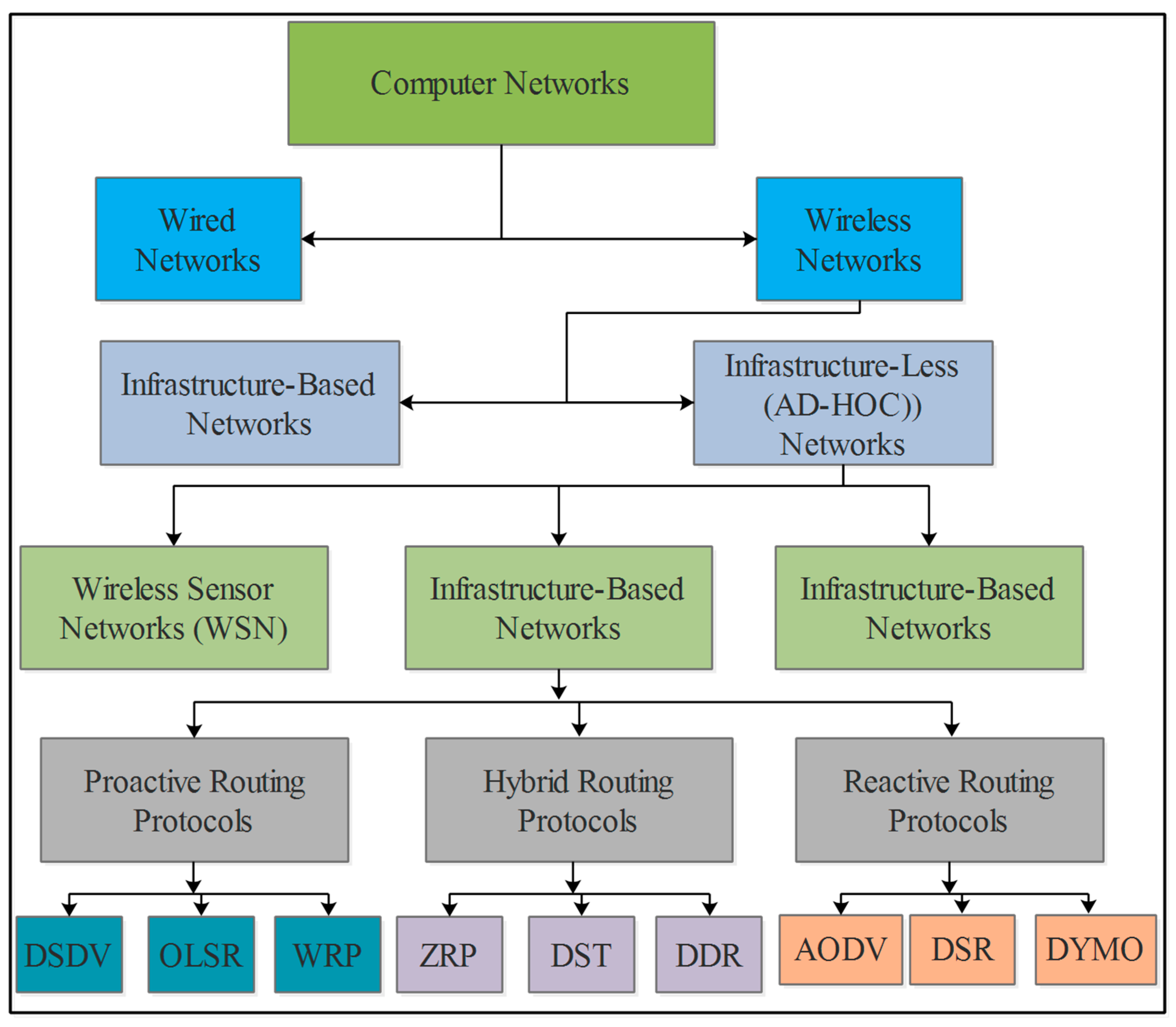
Figure 2.
The network model comprises of PDAs, Laptops, and mobile phones.
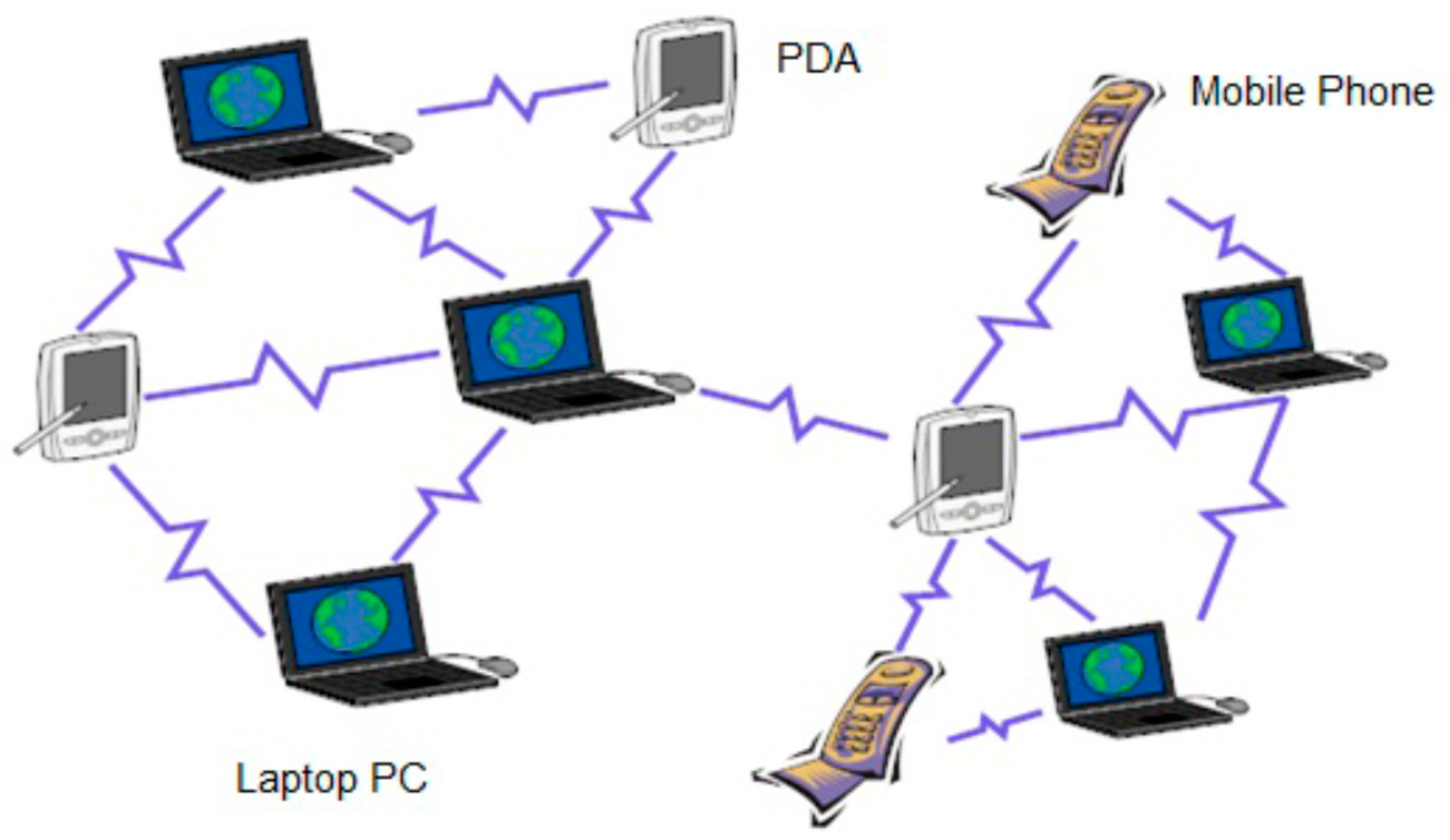
Figure 3.
End-to-end delays for AODV Routing protocol.
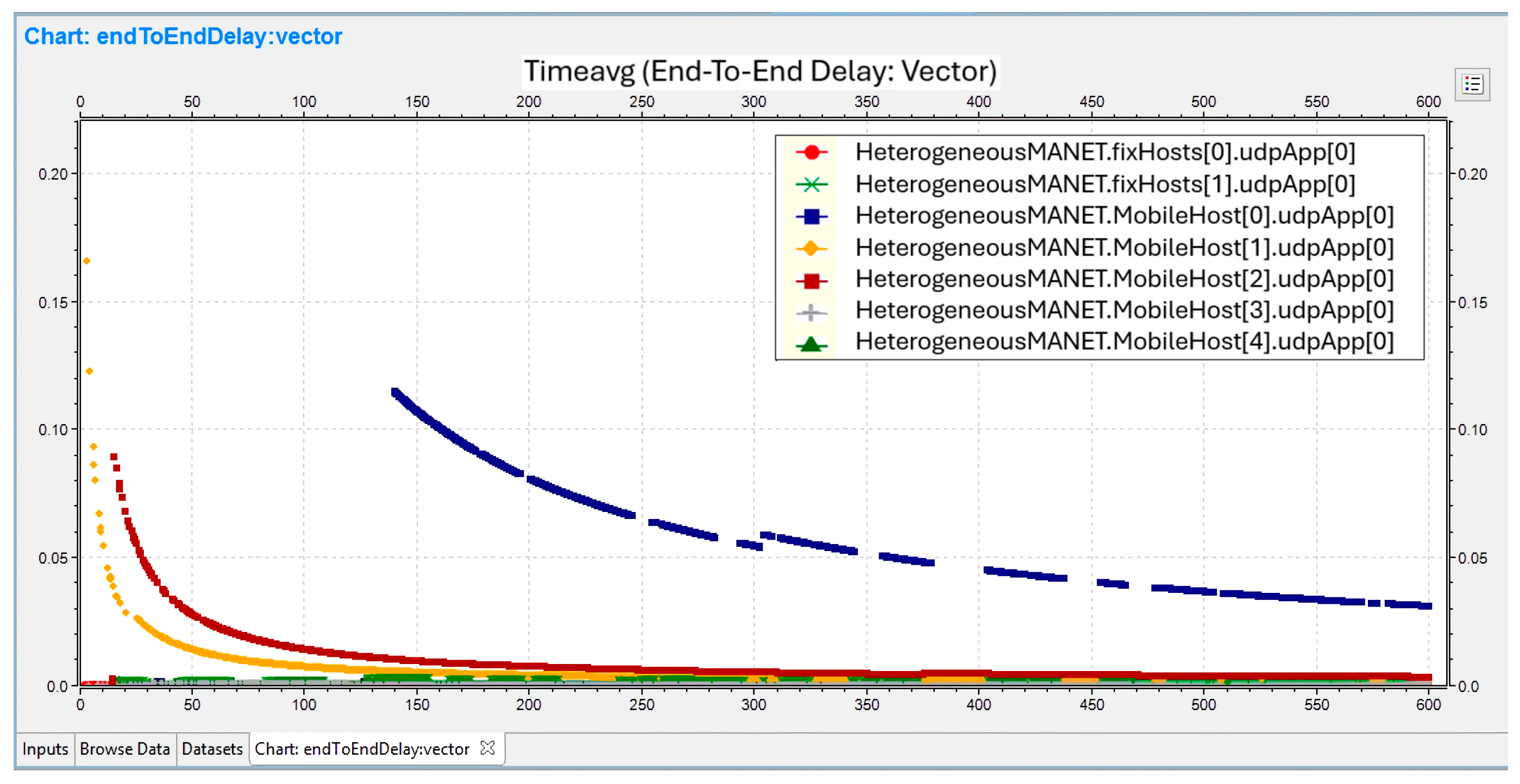
Figure 4.
End-to-end delays for BATMAN Routing protocol.
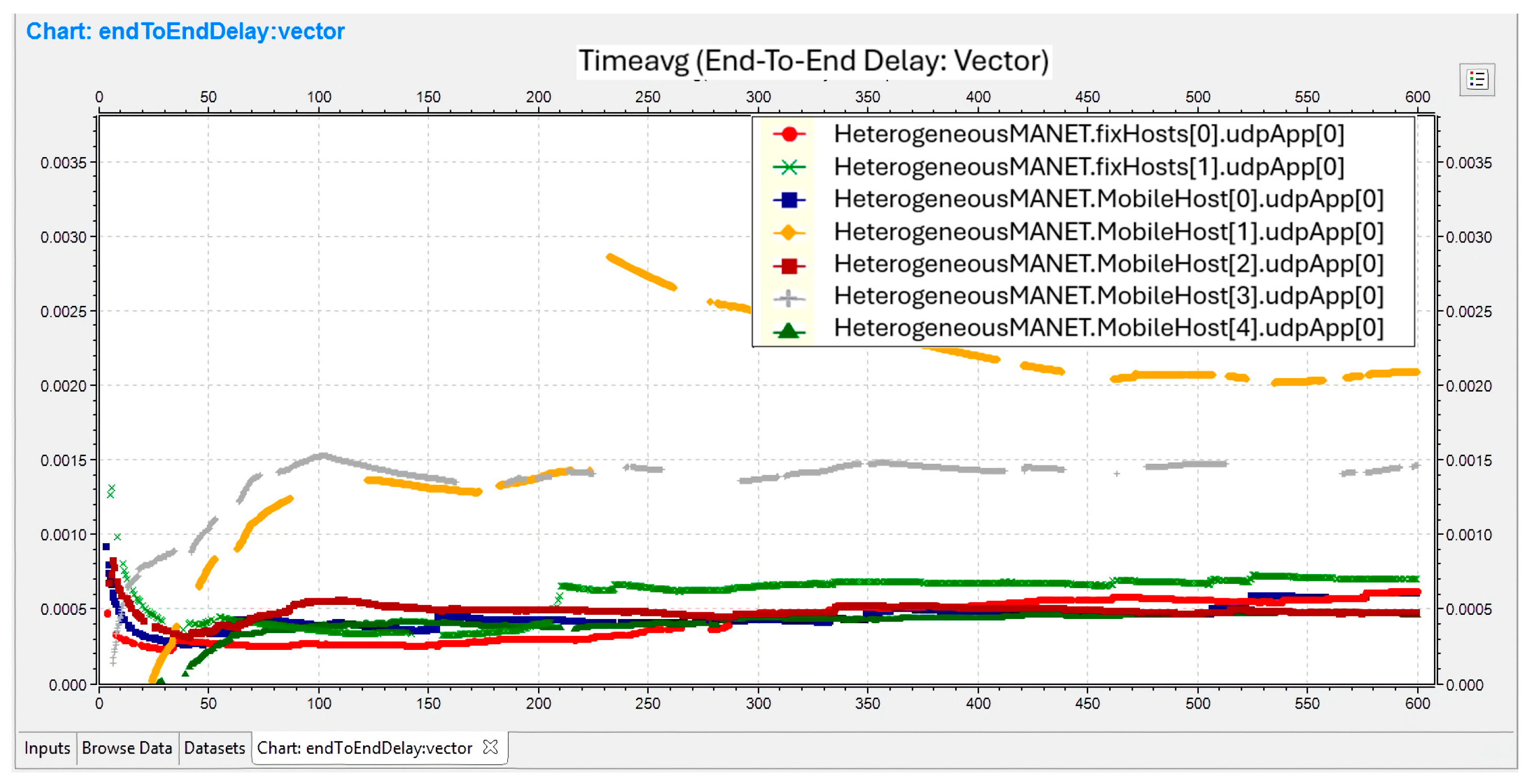
Figure 5.
End-to-end delays for DYMO Routing protocol.
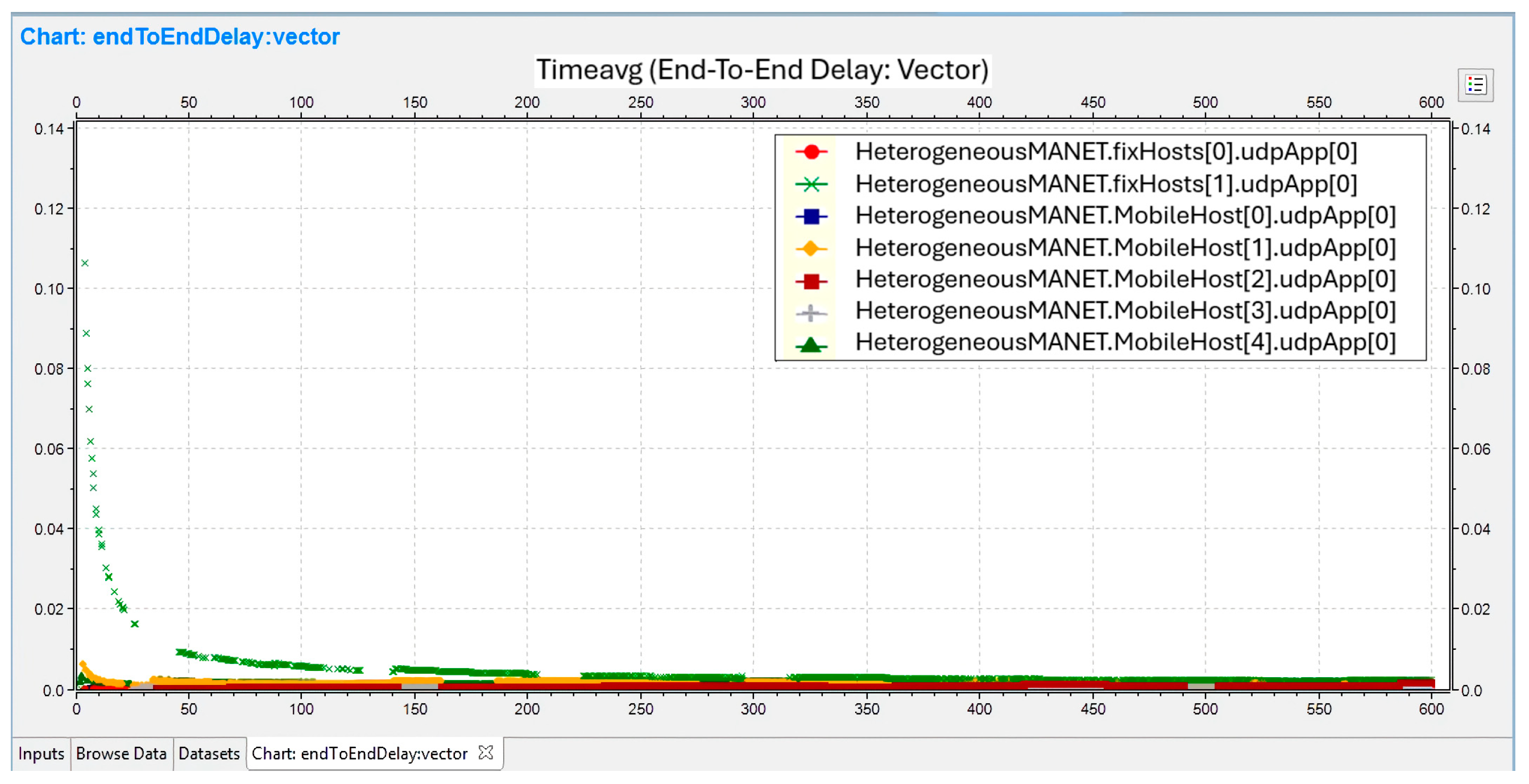
Figure 6.
End-to-end delays for OLSR routing protocol.
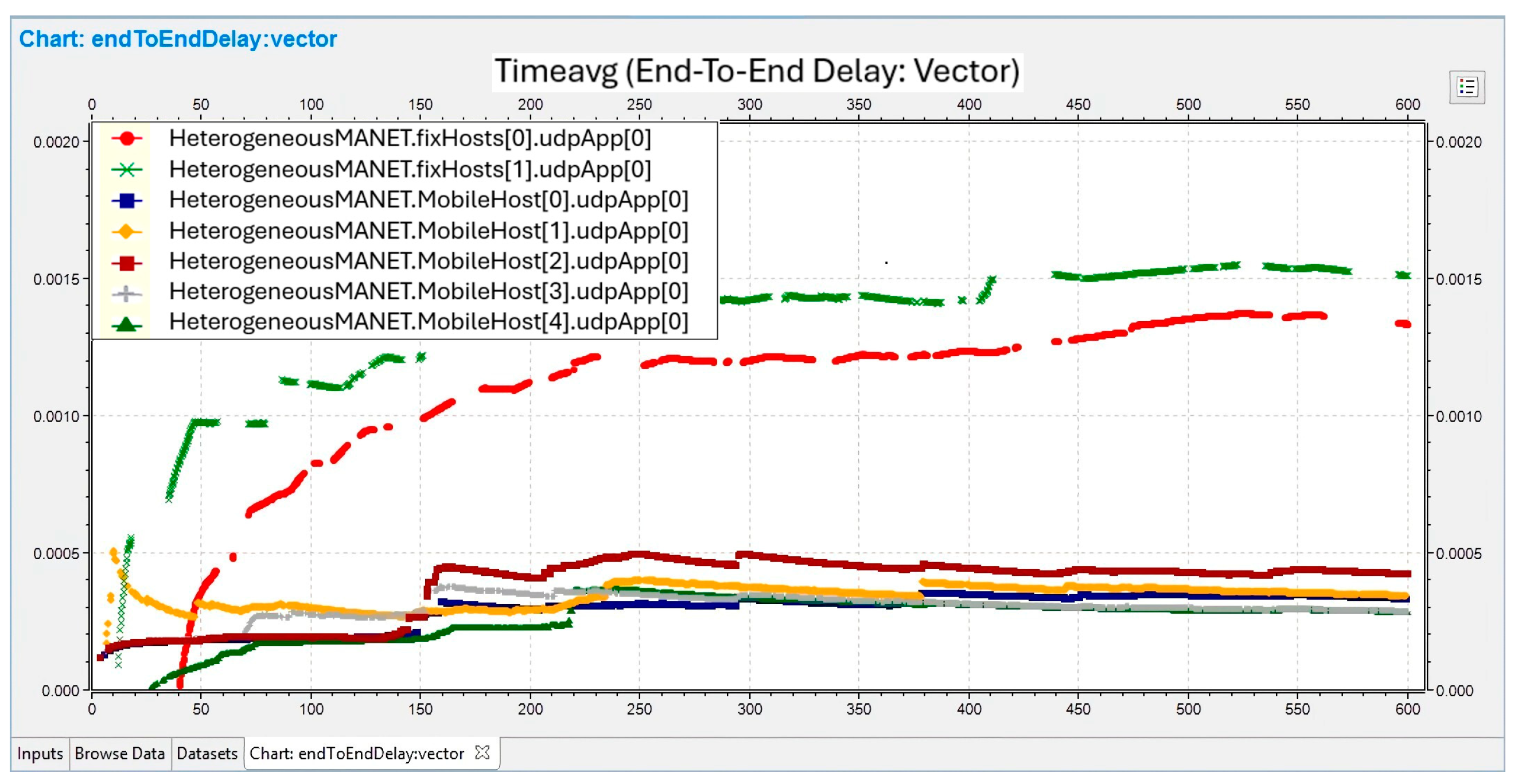
Figure 7.
AODV Throughput for laptop nodes.
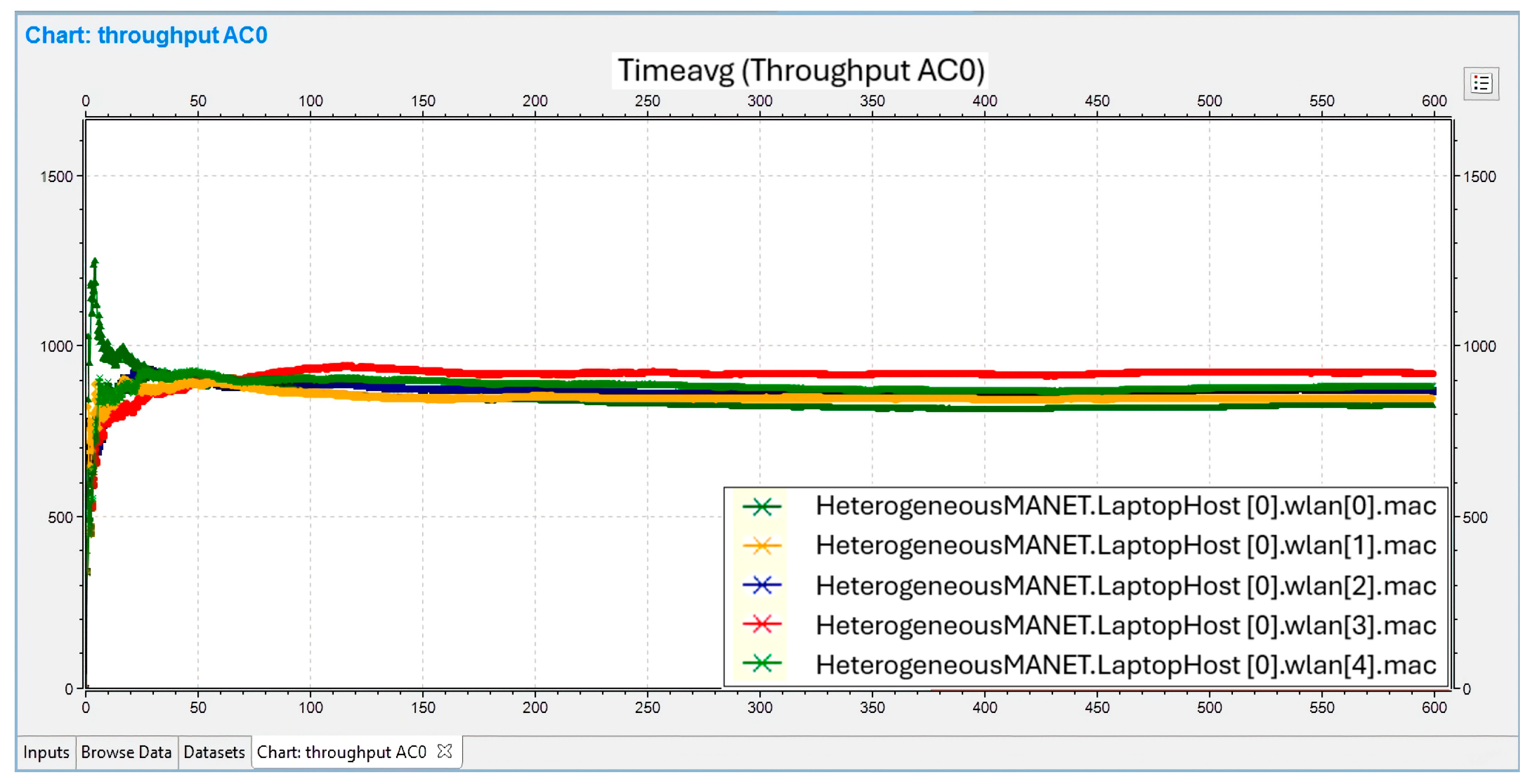
Figure 8.
AODV Throughput for mobile nodes.
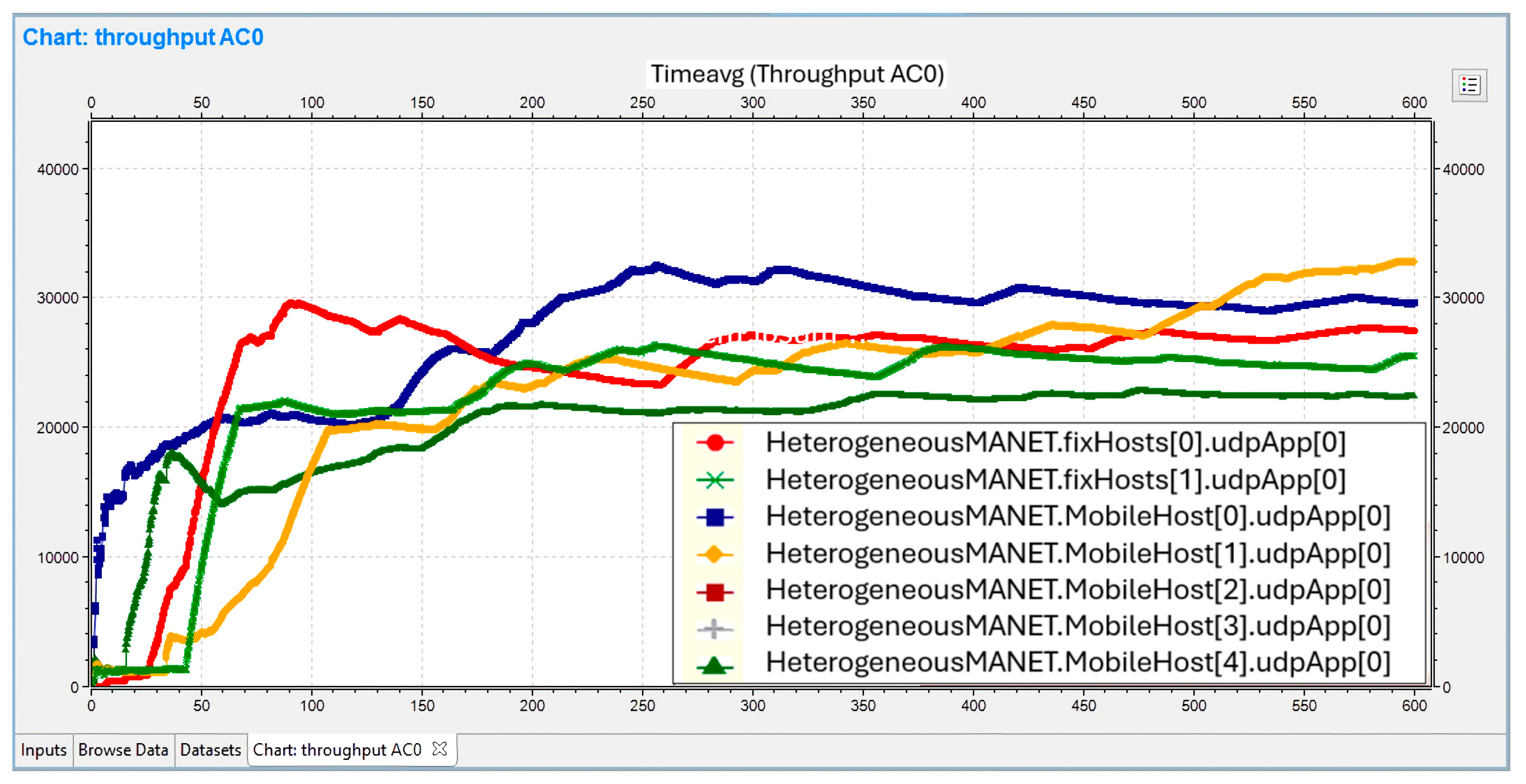
Figure 9.
AODV Throughput for fixed nodes.
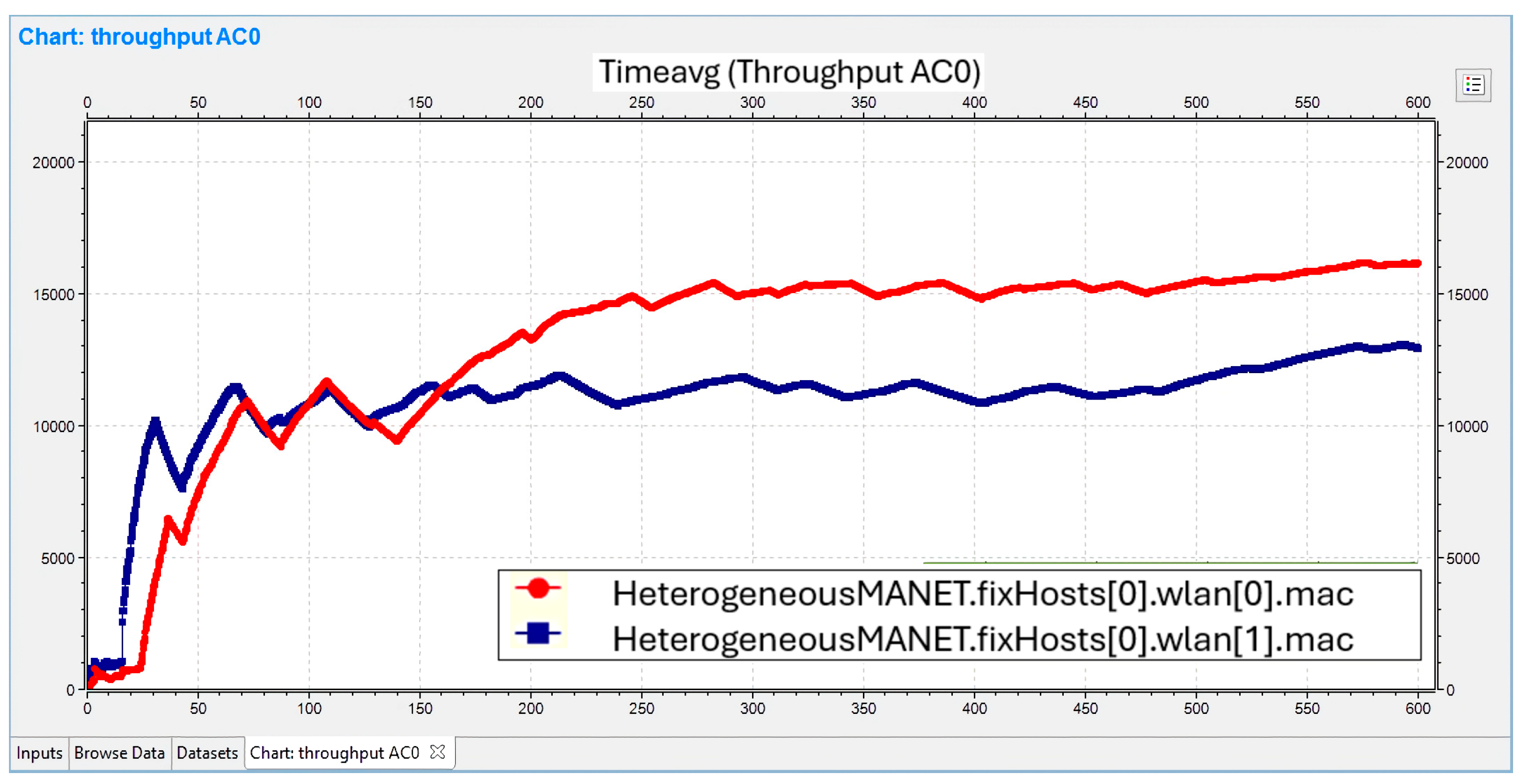
Figure 10.
BATMAN Throughput for laptop nodes (low mobility).
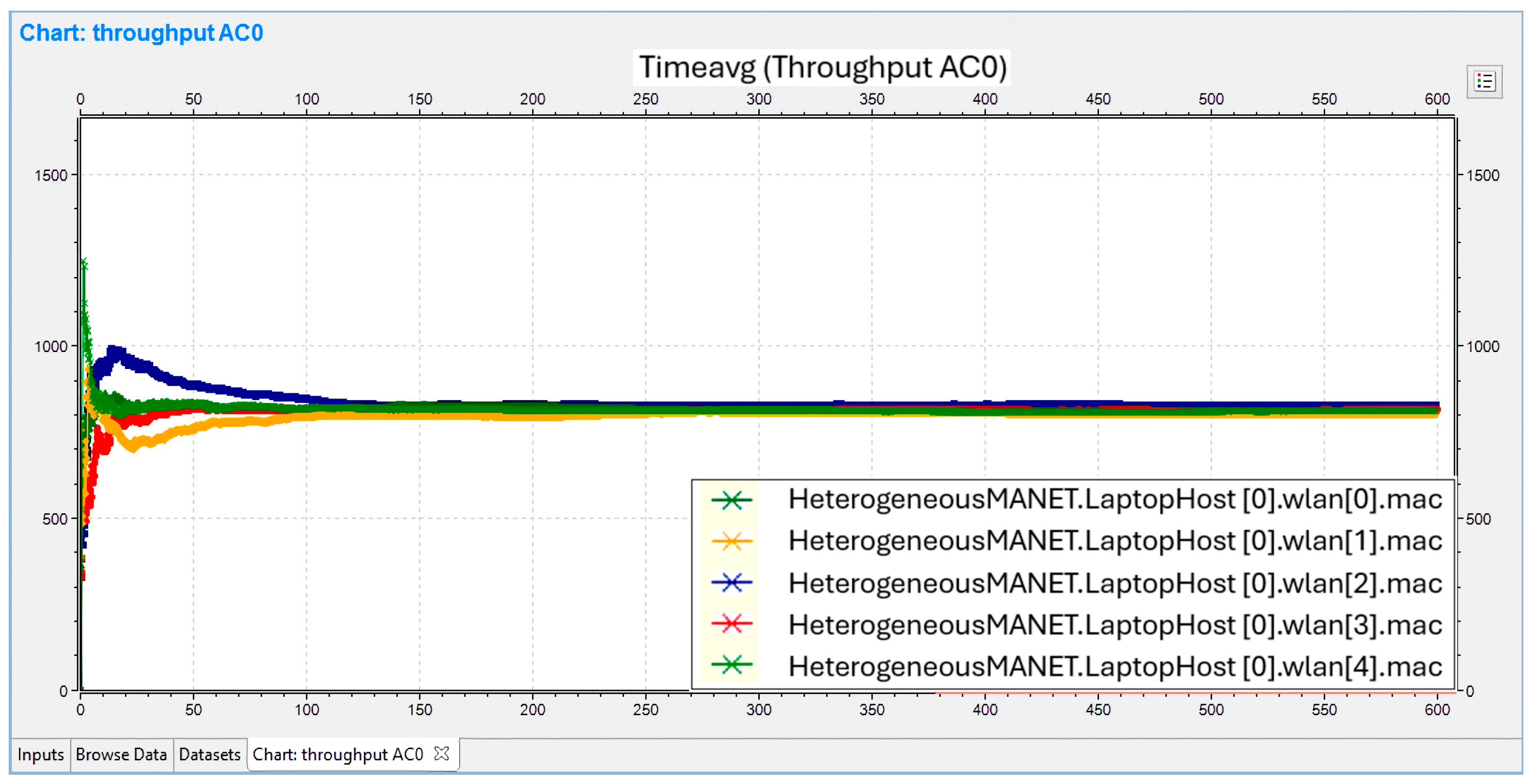
Figure 11.
BATMAN Throughput for fixed nodes.
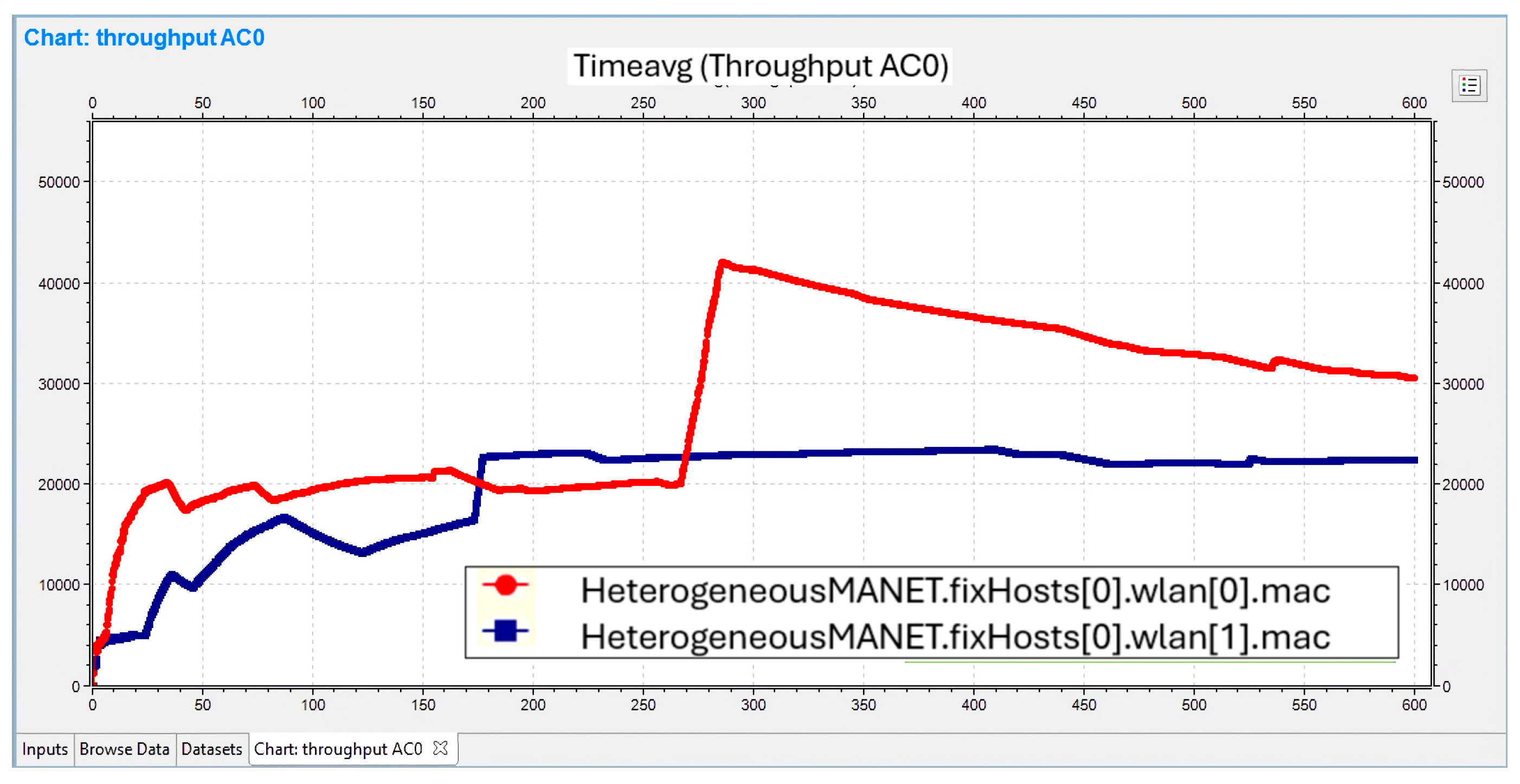
Figure 12.
BATMAN Throughput for mobile nodes.
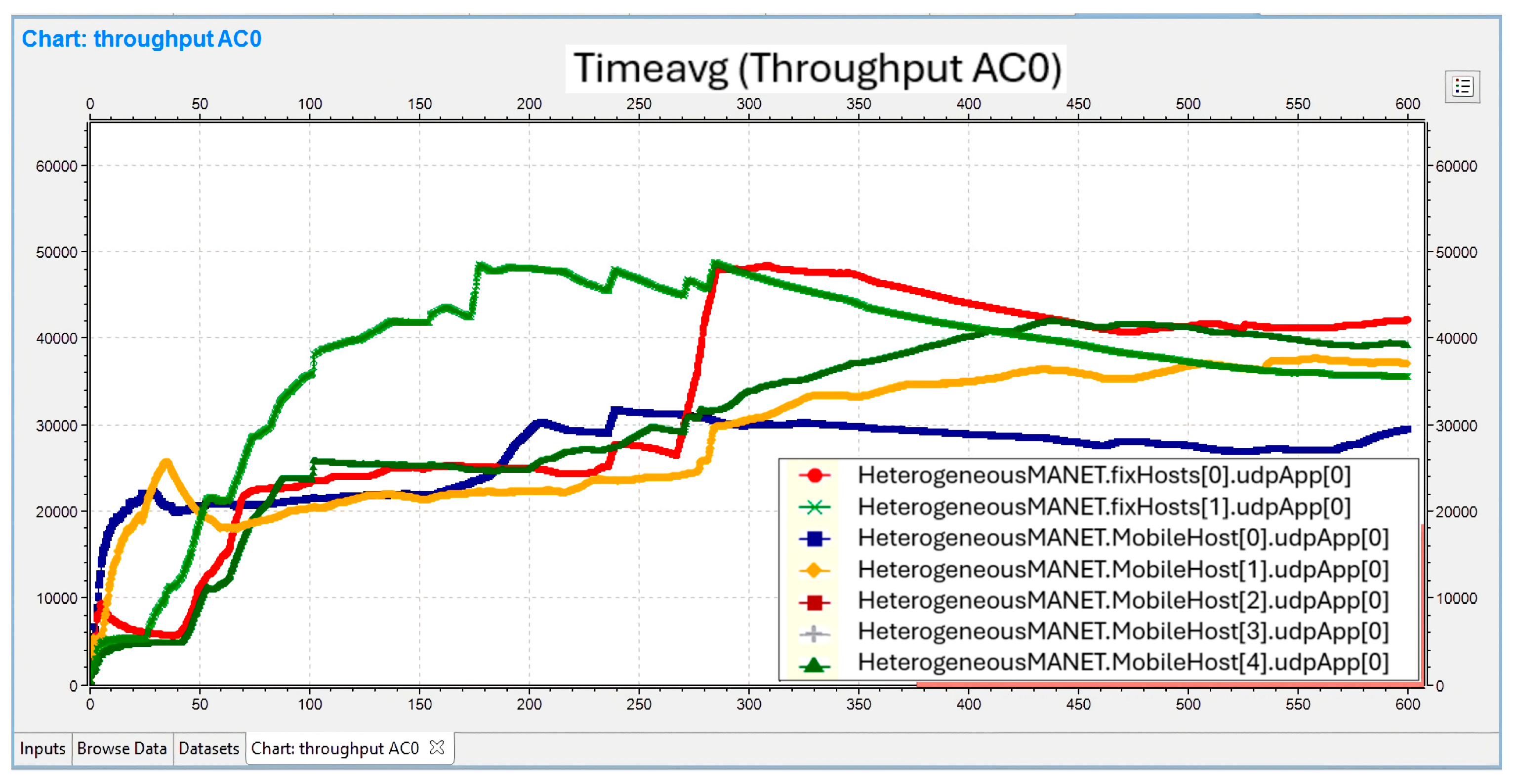
Figure 13.
DYMO Throughput for Laptop nodes.
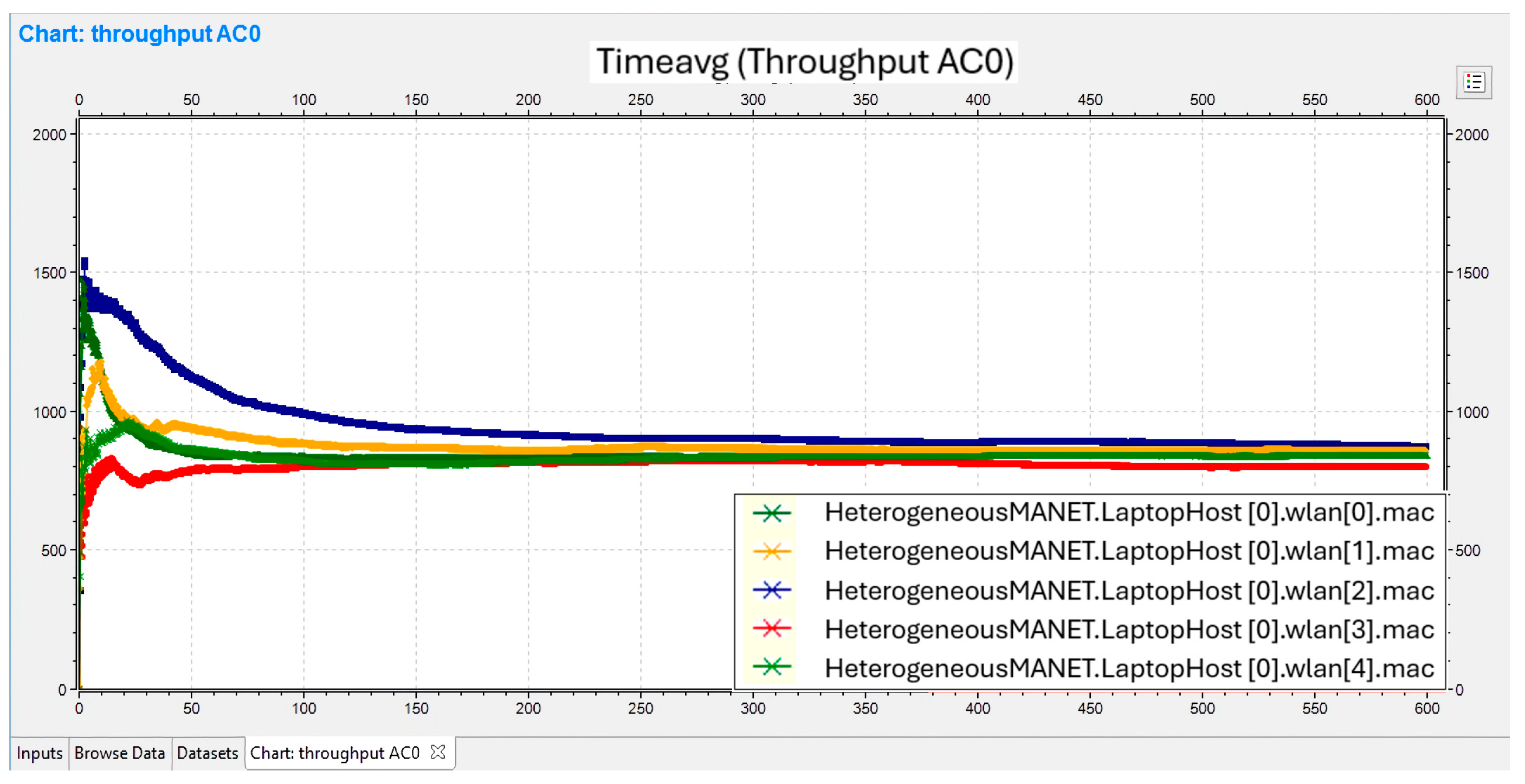
Figure 14.
DYMO Throughput for mobile nodes.
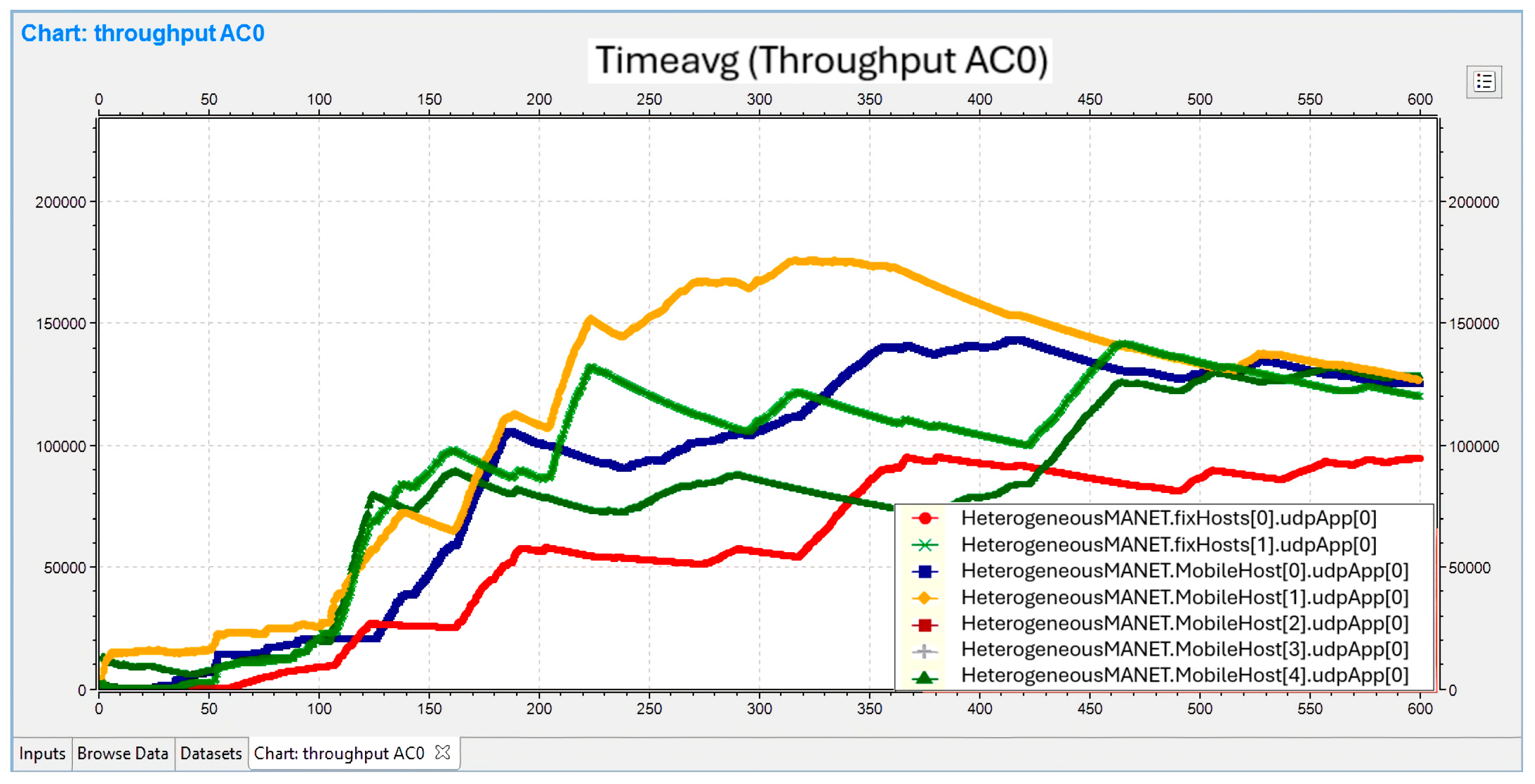
Figure 15.
DYMO Throughput for fixed nodes.
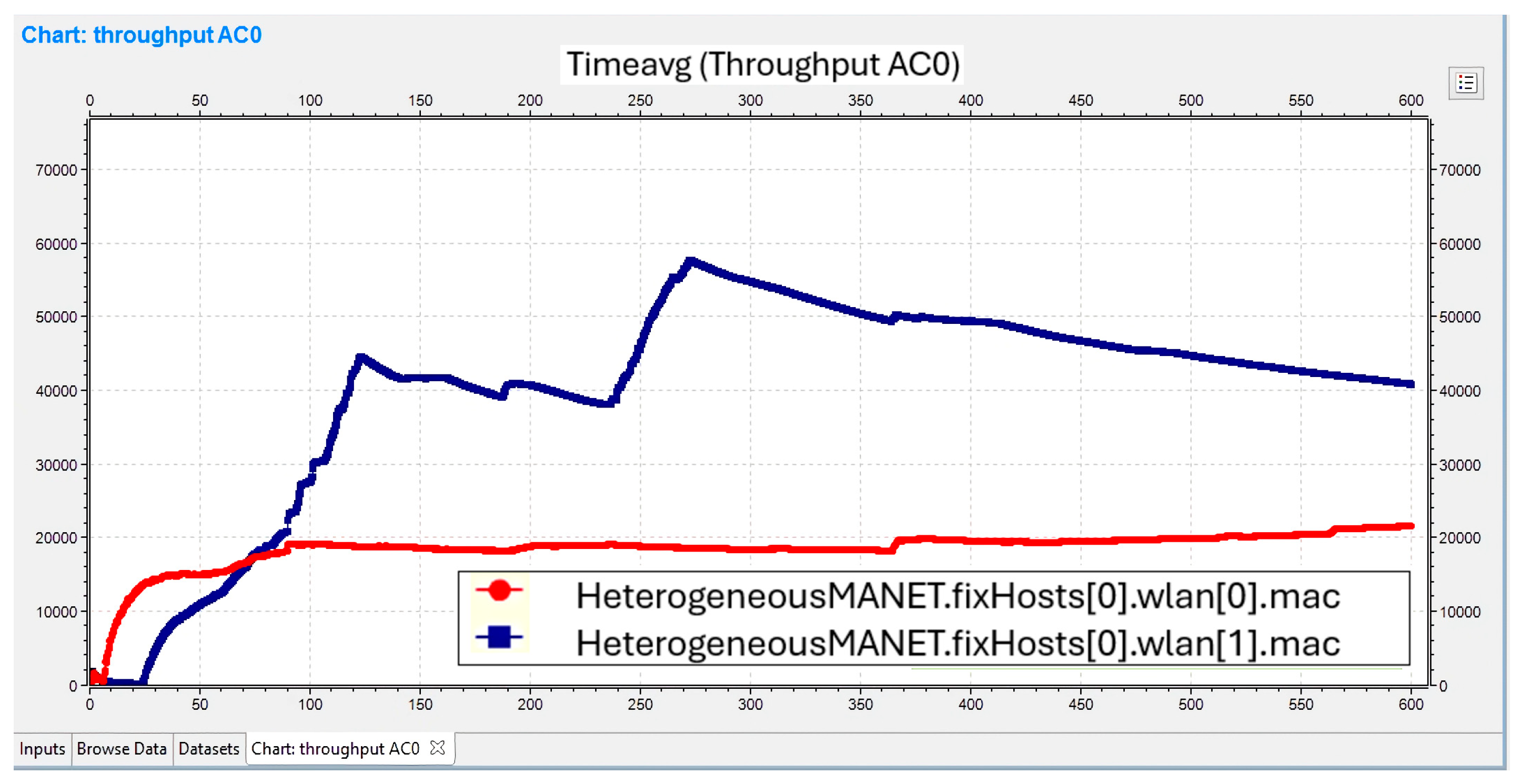
Figure 16.
OLSR Throughput for Laptop nodes.
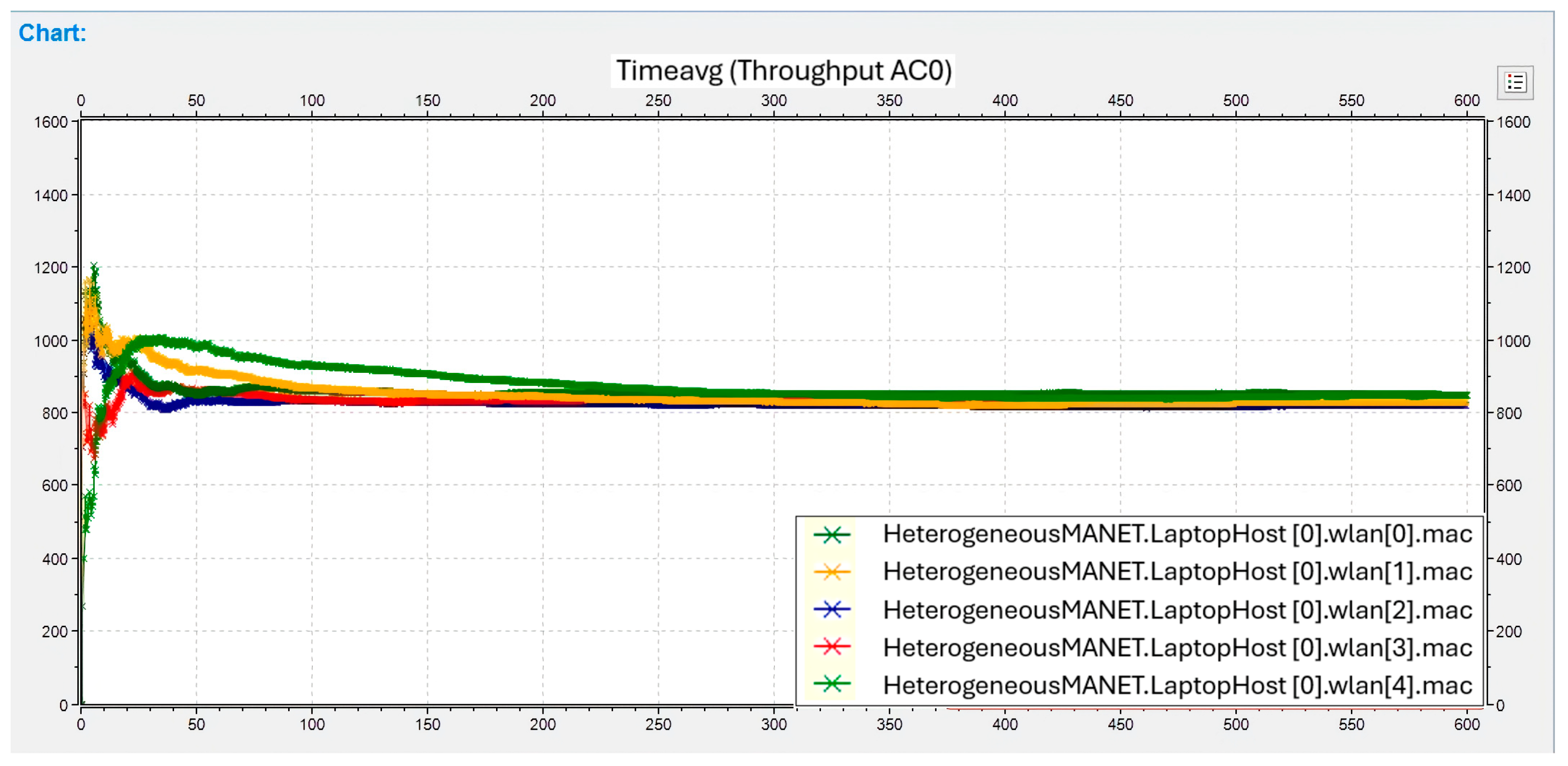
Figure 17.
OLSR Throughput for fixed nodes.
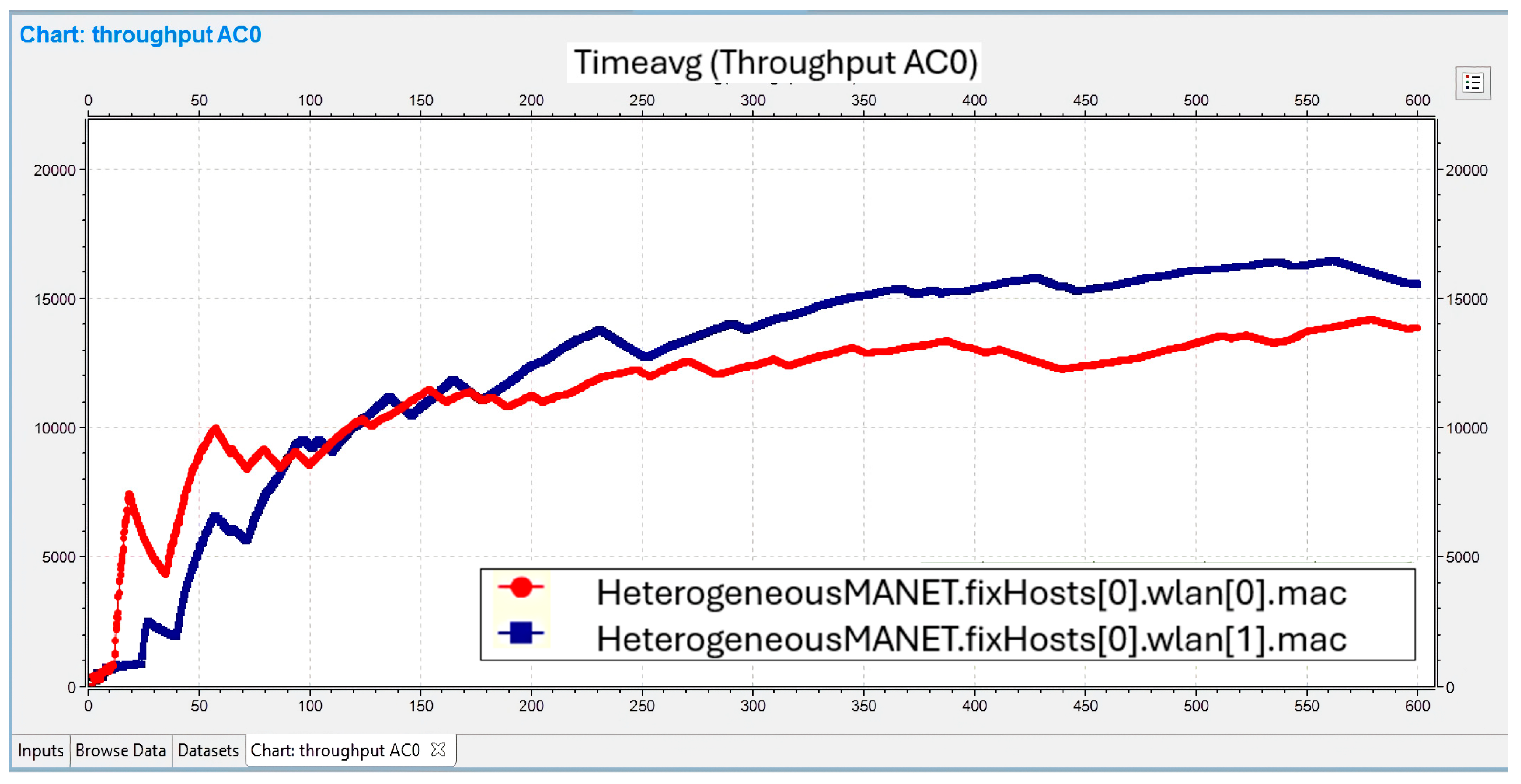
Figure 18.
OLSR Throughput for mobile nodes.
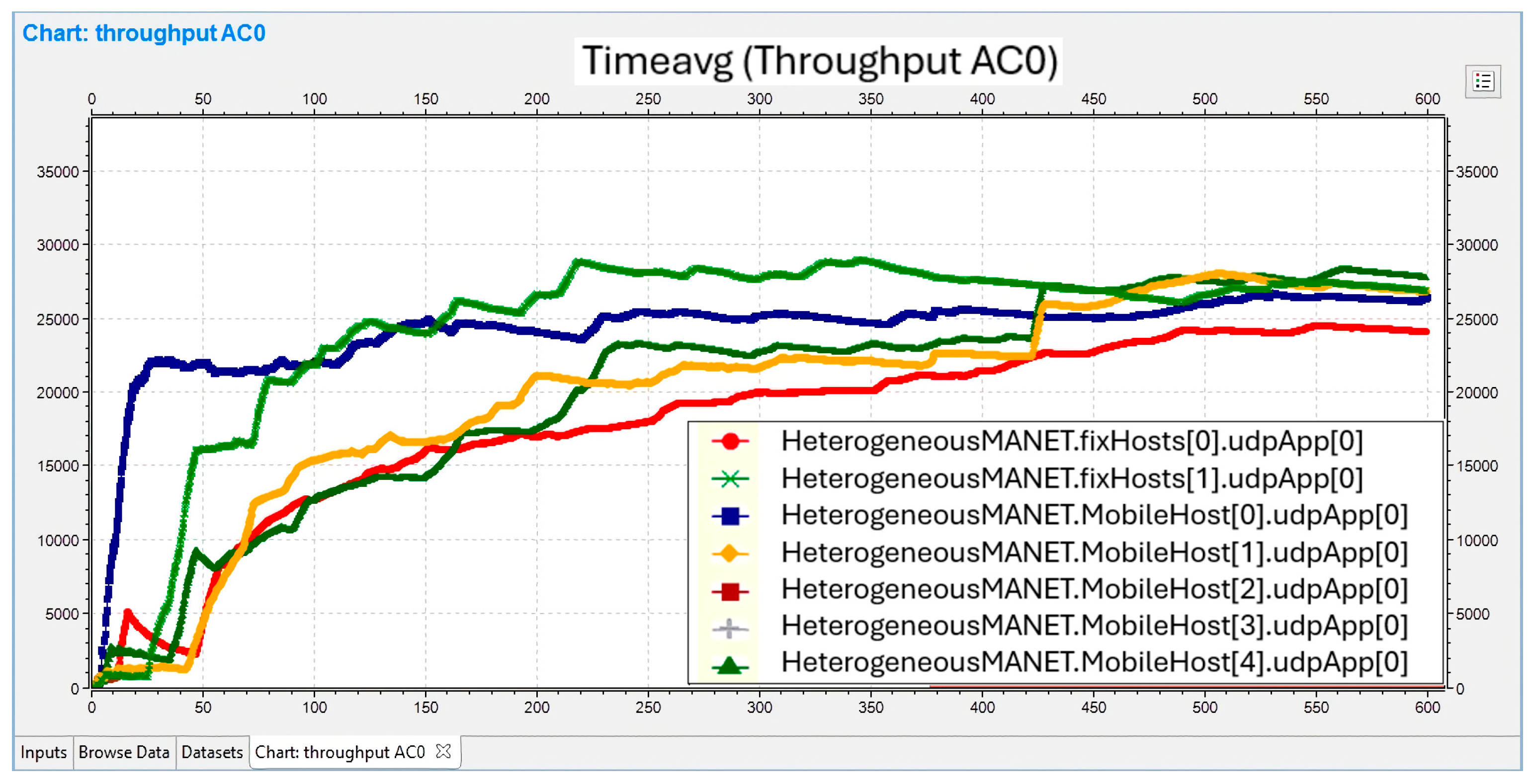
Figure 19.
Packet delivery ratio for AODV.
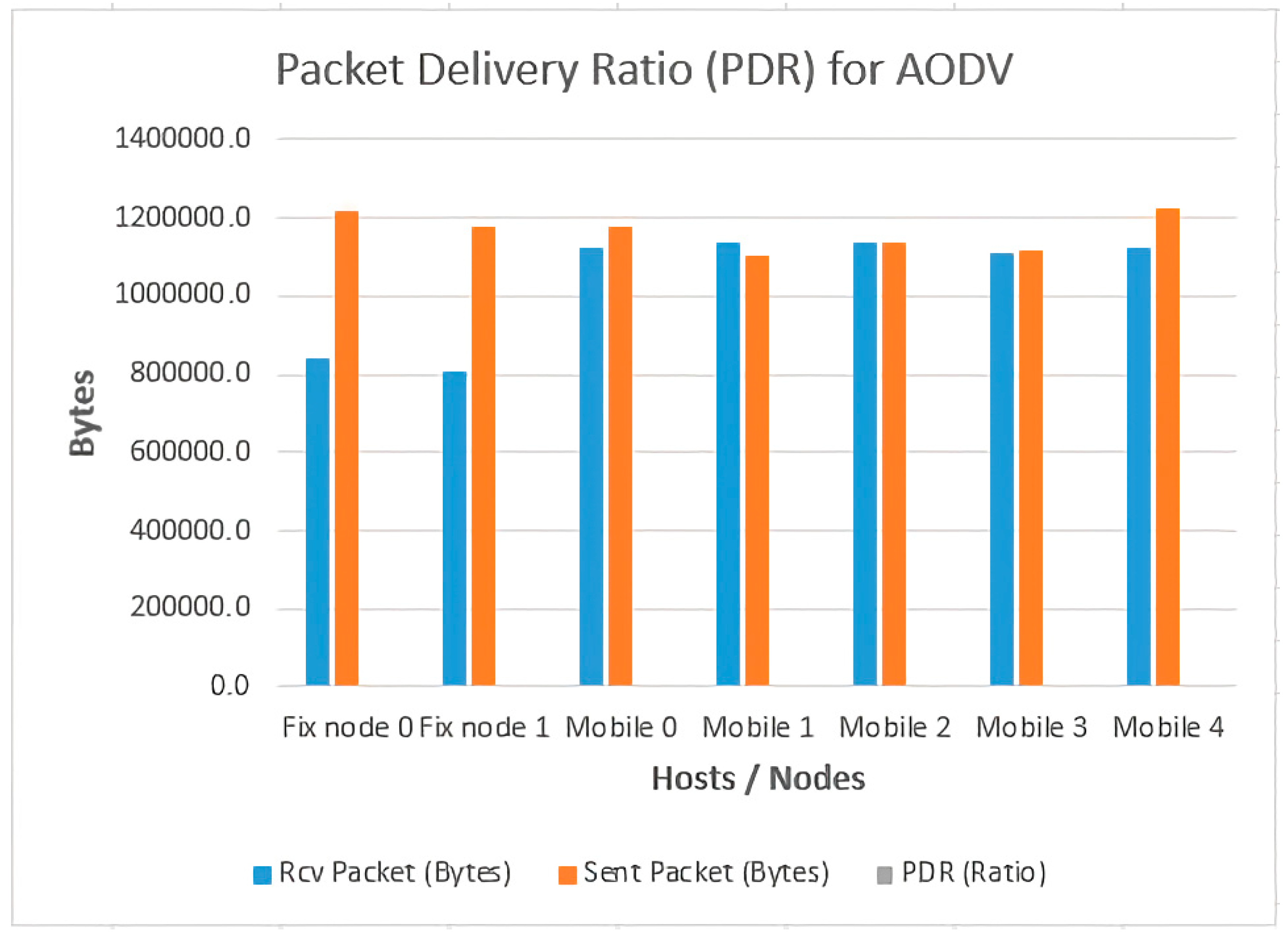
Figure 20.
Packet delivery ratio for BATMAN.
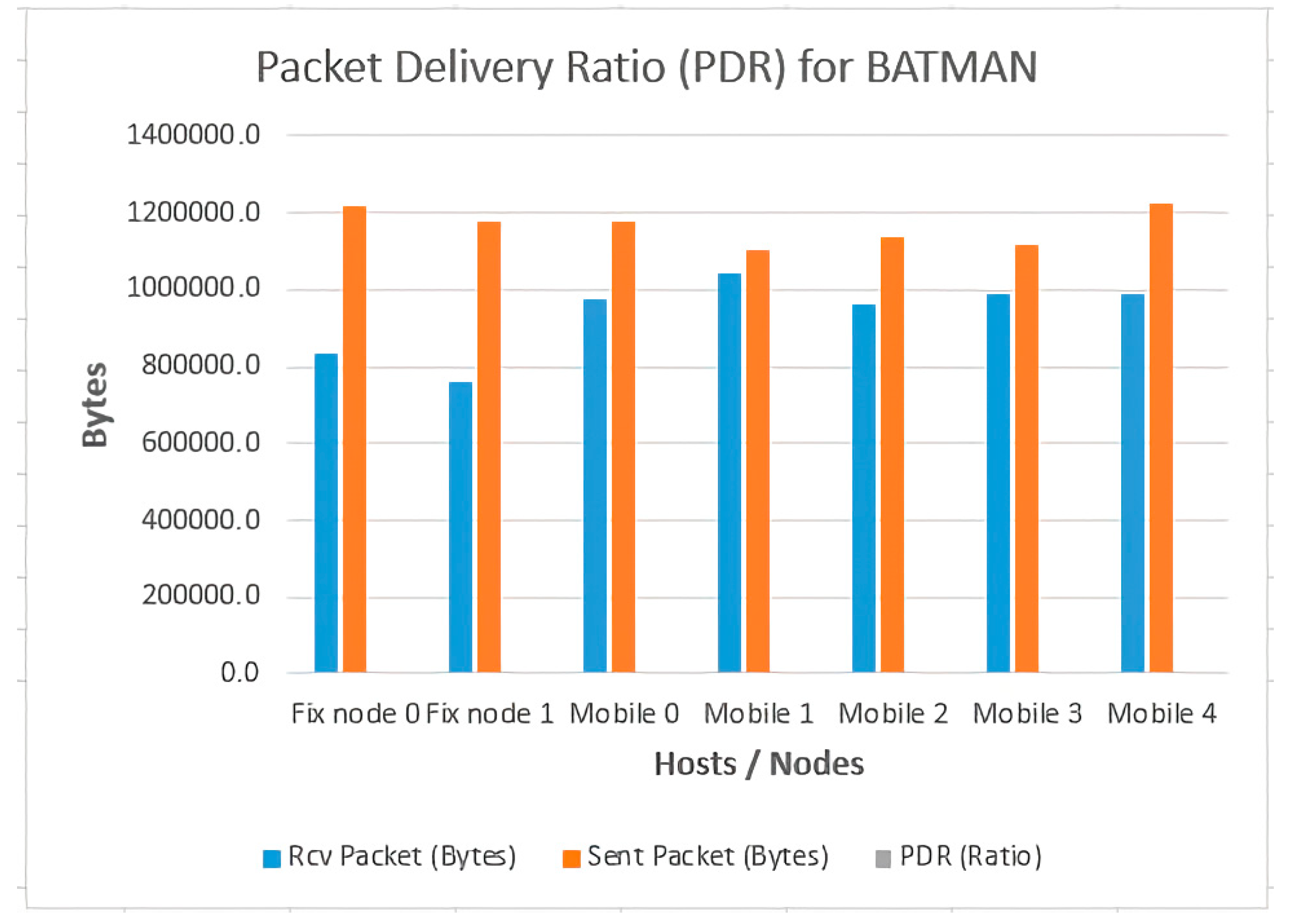
Figure 21.
Packet delivery ratio for DYMO.
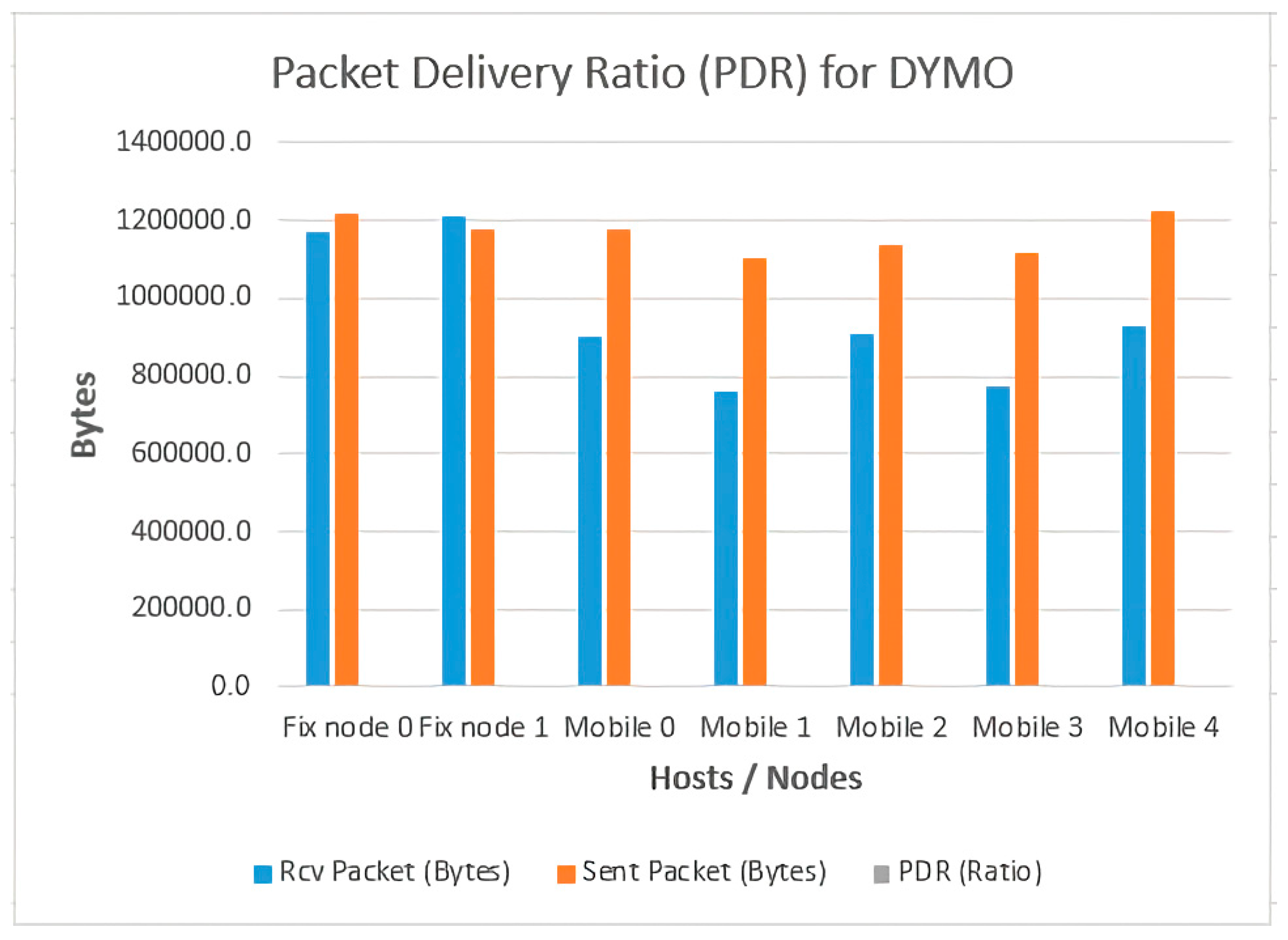
Figure 22.
Packet delivery ratio for OLSR.
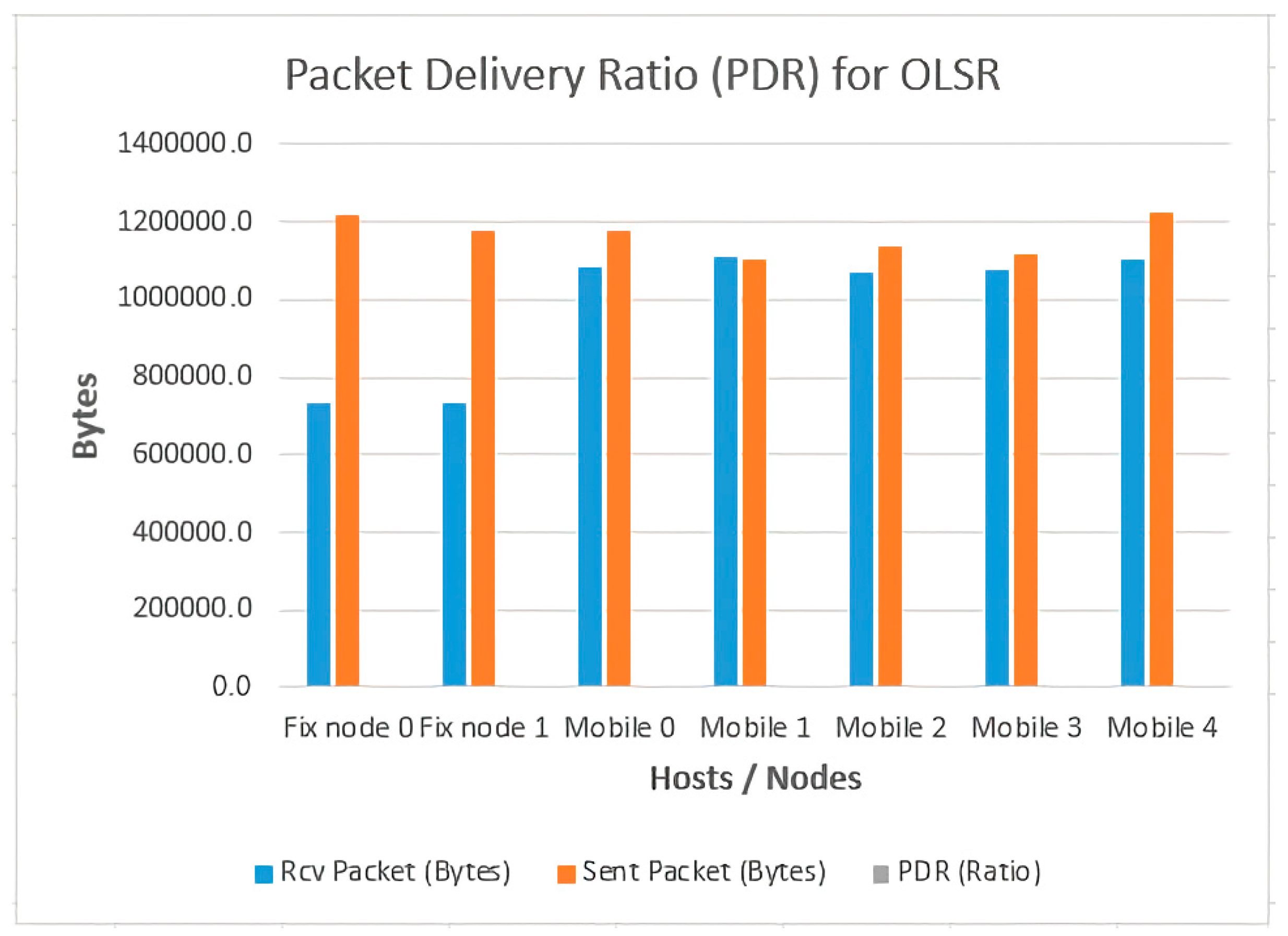

Table 1.
Summary of related work on MANET heterogenous routing protocols.
| Reference | Scope | Routing algorithm addressed |
Proactive/ Reactive? |
Heterogeneous nodes? | Simulation? |
| [15] | Routing protocols and their overheads | AODV, OLSR | Reactive | - | √ |
| [16] | On-demand routing | AODV | Reactive | - | √ |
| [17] | Periodic control message exchanges | OLSR | Proactive | - | √ |
| [18] | Proactive protocols | OLSR | Proactive | - | √ |
| [19] | Hybrid protocols | Hybrid | Both | - | √ |
| [30] | Scalability in hybrid protocols | Hybrid | Both | - | √ |
| [6] | DYMO routing and path accumulation | DYMO | Reactive | - | √ |
| [21] | BATMAN protocol and its message delivery | BATMAN | Reactive | - | √ |
| [22] | Challenges in OLSR and BATMAN | OLSR, BATMAN | Reactive | - | √ |
| [28] | AODV in heterogeneous MANETs | AODV | Reactive | - | √ |
| [24] | OLSR and AODV in mobile ad hoc networks | OLSR, AODV | Both | - | √ |
| [25] | Surveys MANET routing protocols | General | Both | - | √ |
| [23] | Reviews energy-efficient routing MANETs | General | Both | - | √ |
| [26] | Hybrid routing protocols for MANETs | Hybrid | Both | - | √ |
| [29] | Routing protocols in MANETs | General | Both | - | √ |
|
Our work |
Performance comparison of AODV, OLSR, BATMAN and DYMO in heterogenous networks | Both | √ |
√ |
|
Table 2.
Parameters used in the simulation.
| Parameter | Value |
| Number of nodes | 2 PDA (fixed node), 5 Laptops, and 5 mobile phones |
| Node type | PDA (Fixed); Mobile hosts: 10 to 15 Mbps; Laptops: 1 to 2 Mbps |
| Simulation time | 600 sec |
| Simulation trajectory | 600 x 600 m |
| Routing protocols | AODV, OLSR, BATMAN, DYMO |
| MAC Protocol | IEEE 802.11g; 2.4 GHz |
| Mobility type | Random waypoint mobility |
| Mobility waiting time | 0.1 sec (default) |
| Communication Port | UDP |
| Transmitter power | 2 to 5mW(milliwatts) |
| Bitrate | 54 Mbps |
Disclaimer/Publisher’s Note: The statements, opinions and data contained in all publications are solely those of the individual author(s) and contributor(s) and not of MDPI and/or the editor(s). MDPI and/or the editor(s) disclaim responsibility for any injury to people or property resulting from any ideas, methods, instructions or products referred to in the content. |
© 2025 by the authors. Licensee MDPI, Basel, Switzerland. This article is an open access article distributed under the terms and conditions of the Creative Commons Attribution (CC BY) license (http://creativecommons.org/licenses/by/4.0/).
Copyright: This open access article is published under a Creative Commons CC BY 4.0 license, which permit the free download, distribution, and reuse, provided that the author and preprint are cited in any reuse.


