

Submitted:
30 January 2025
Posted:
30 January 2025
You are already at the latest version
Abstract
Face recognition is a crucial area in computer vision and biometric applications, playing a significant role in security, authentication, and human-computer interaction. Despite its importance, traditional face recognition methods often encounter challenges such as variations in lighting, changes in facial expressions, and the presence of occlusions, which can affect their effectiveness. To address these limitations, hybrid approaches that combine multiple techniques have proven to enhance recognition accuracy and robustness, offering improved performance in diverse and challenging scenarios.This paper presents a hybrid approach combining Convolutional Neural Networks (CNN), Fuzzy Logic, and Support Vector Machine (SVM) classifiers for accurate and robust face recognition. The proposed model leverages the feature extraction capabilities of CNNs, the classification precision of SVMs, and the decision-making strength of Fuzzy Logic. Specifically, we use the ResNet50 CNN model to identify key facial features. The proposed method also employs Support Vector Machines (SVM) to achieve precise classification and fuzzy logic rules to refine the decision-making process by handling uncertainties and imprecise data effectively, enhancing the overall reliability of the system.Experimental results demonstrate the superiority of this hybrid model in terms of accuracy, efficiency, and robustness compared to existing techniques. Additionally, the results confirm that this hybrid approach enhances the robustness and adaptability of face recognition systems in real-world conditions. These findings highlight the potential of this integration to develop more reliable and efficient frameworks for practical applications.
Keywords:
Introduction
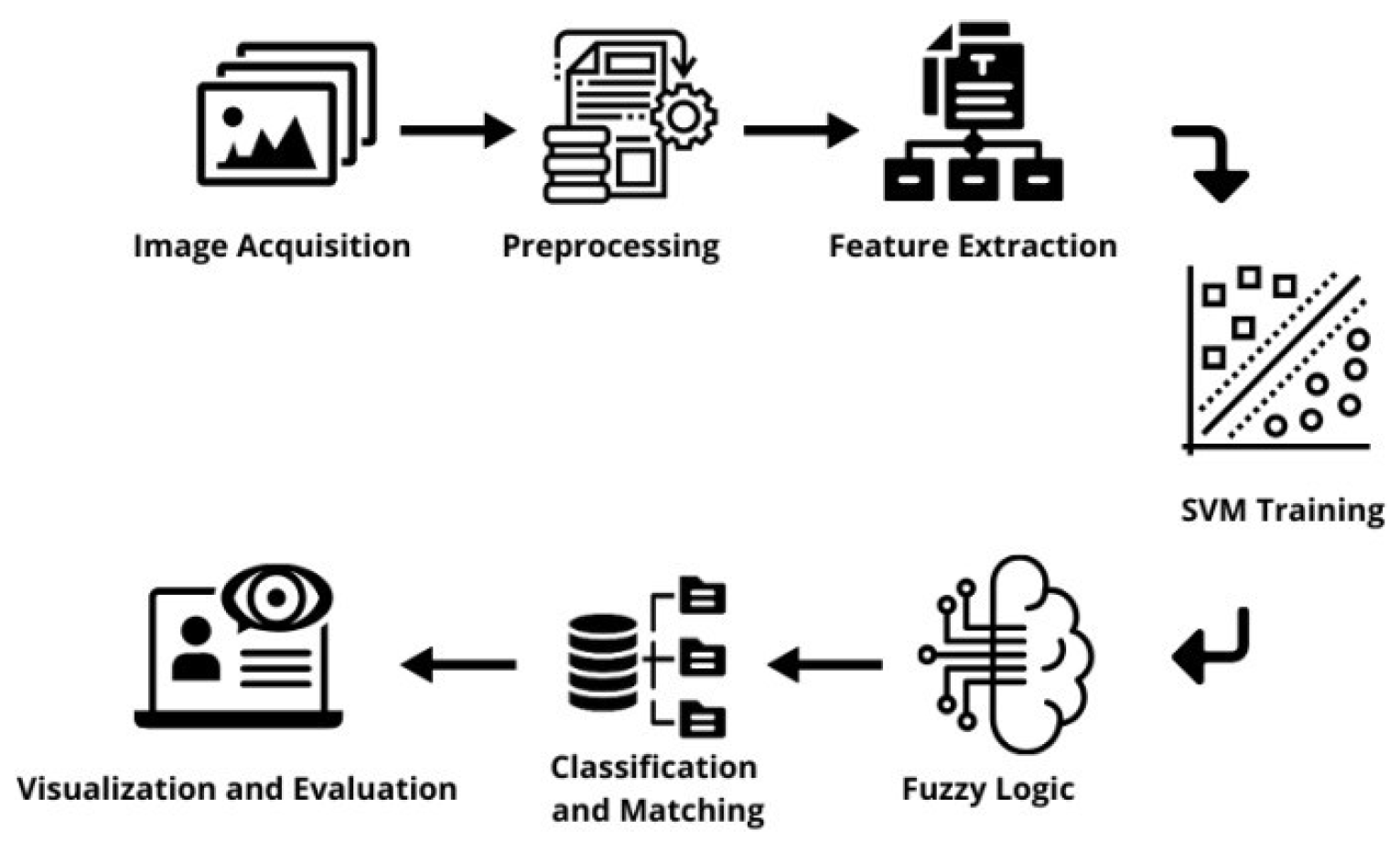
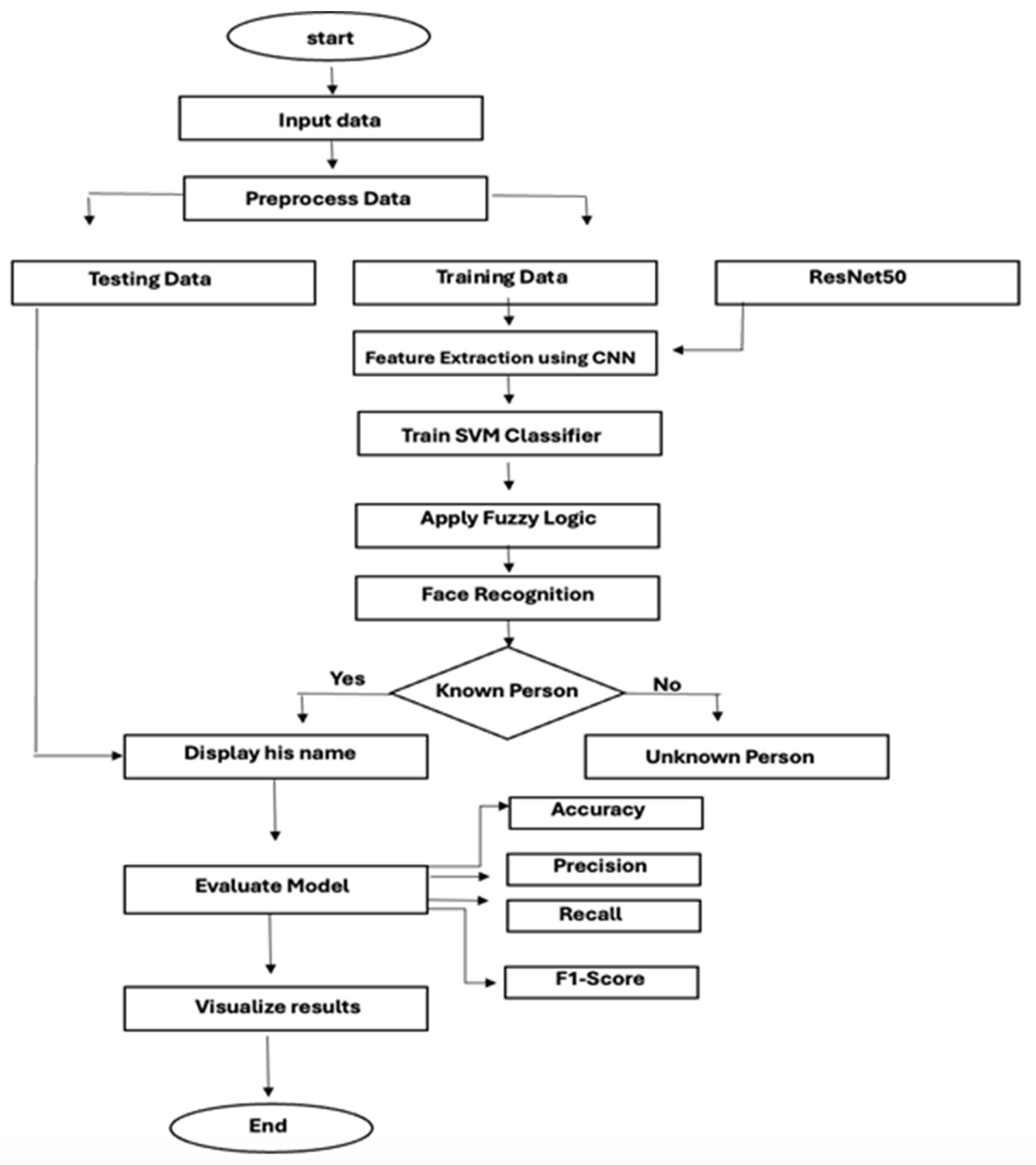
Proposed Method
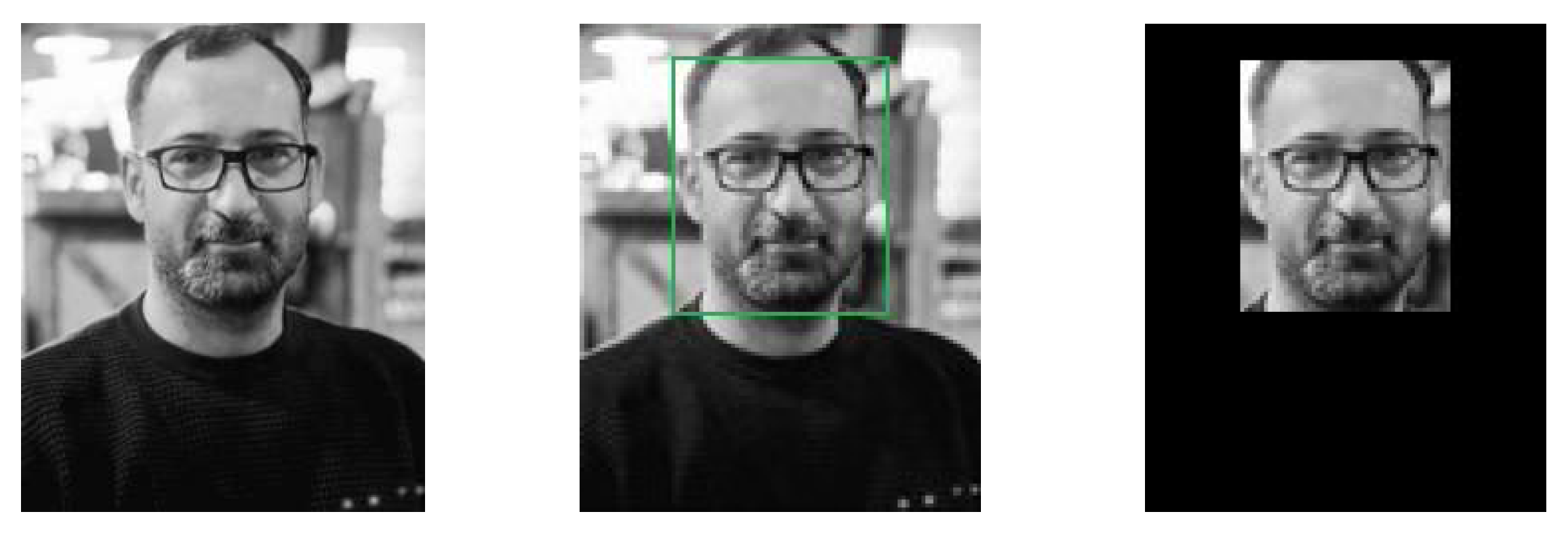
1.1.1. Input Data and preprocessing
1.1.1. Features extraction using CNN
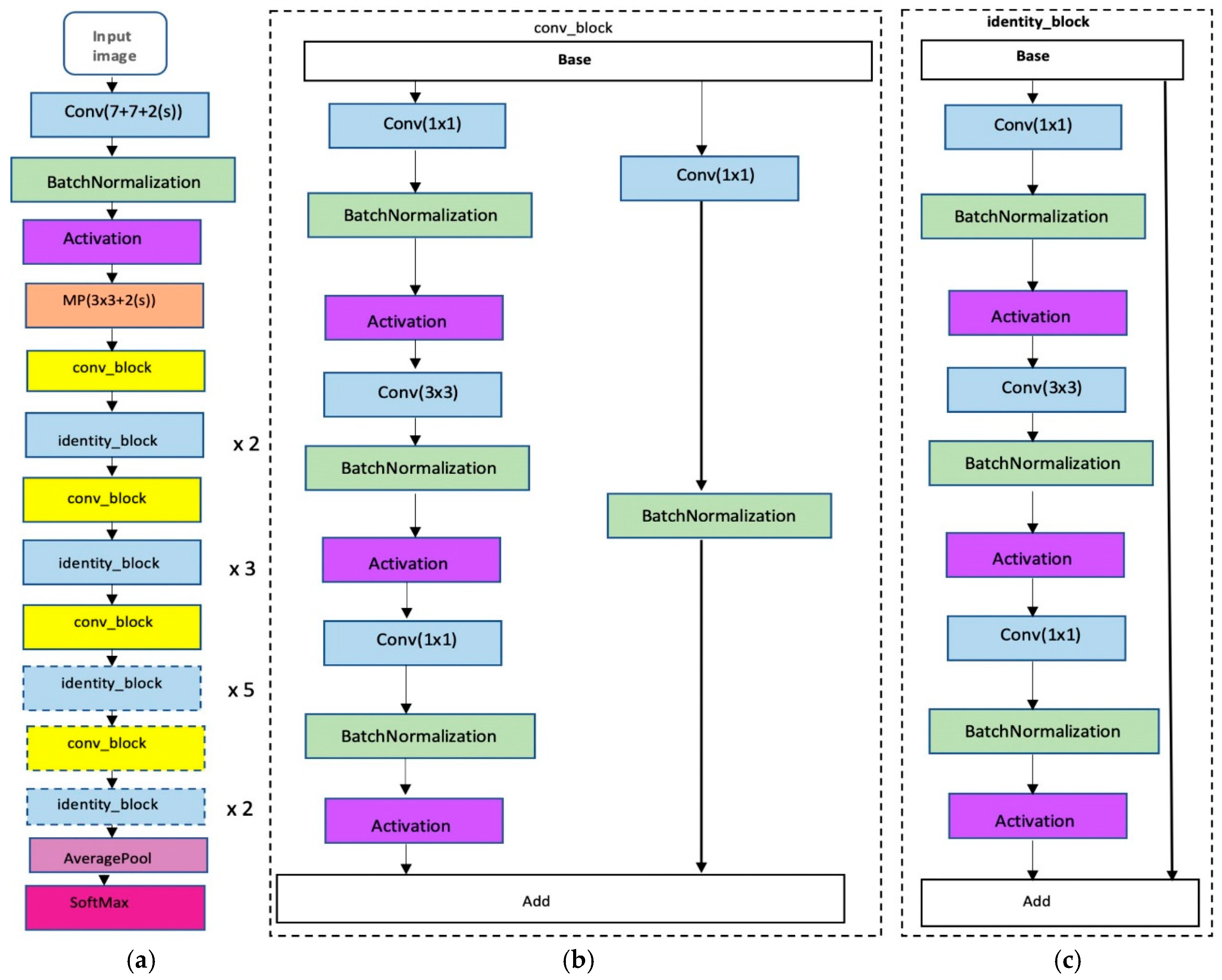
1.1.1. Classification using SVM
1.1.1. Fuzzy rules
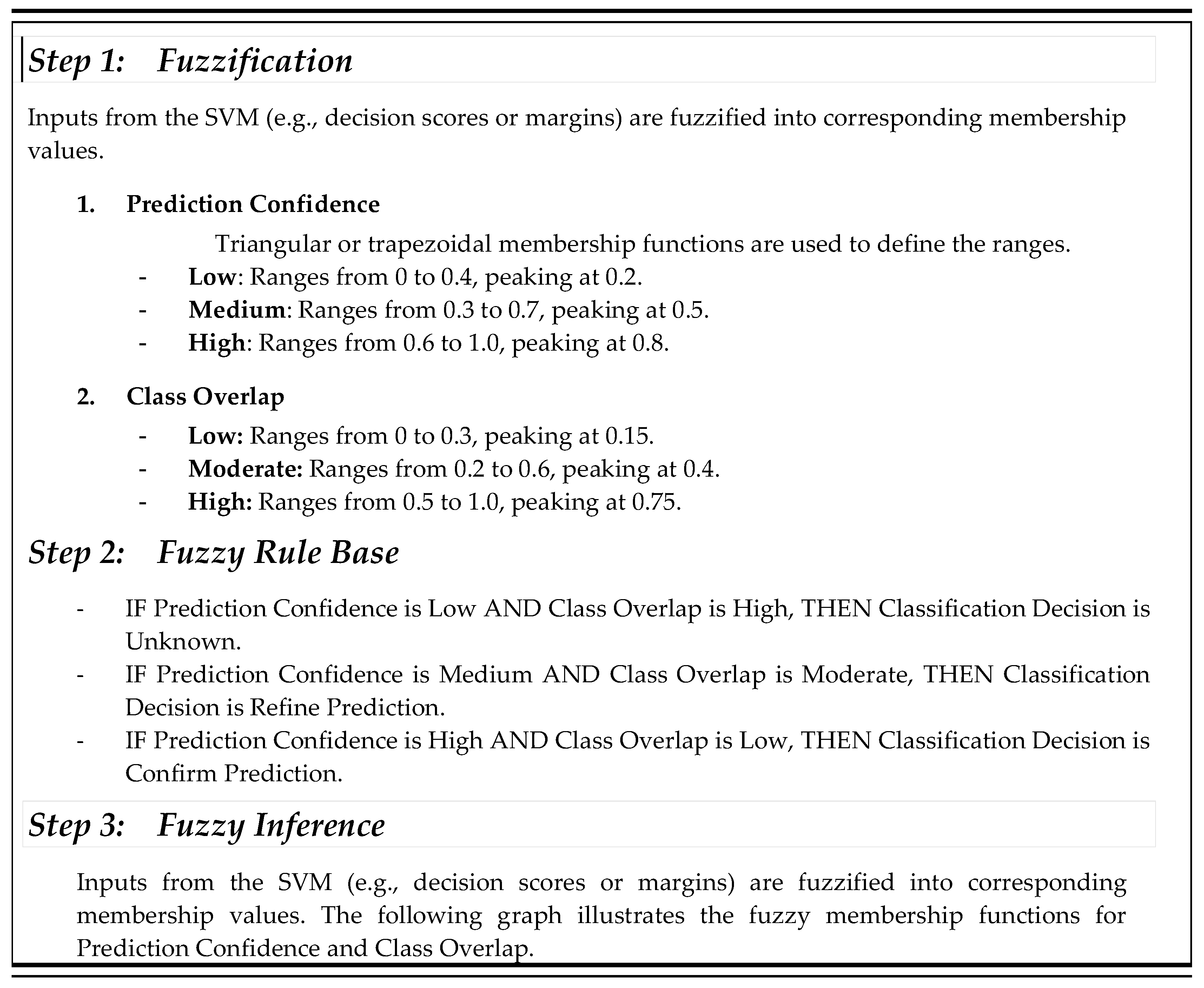
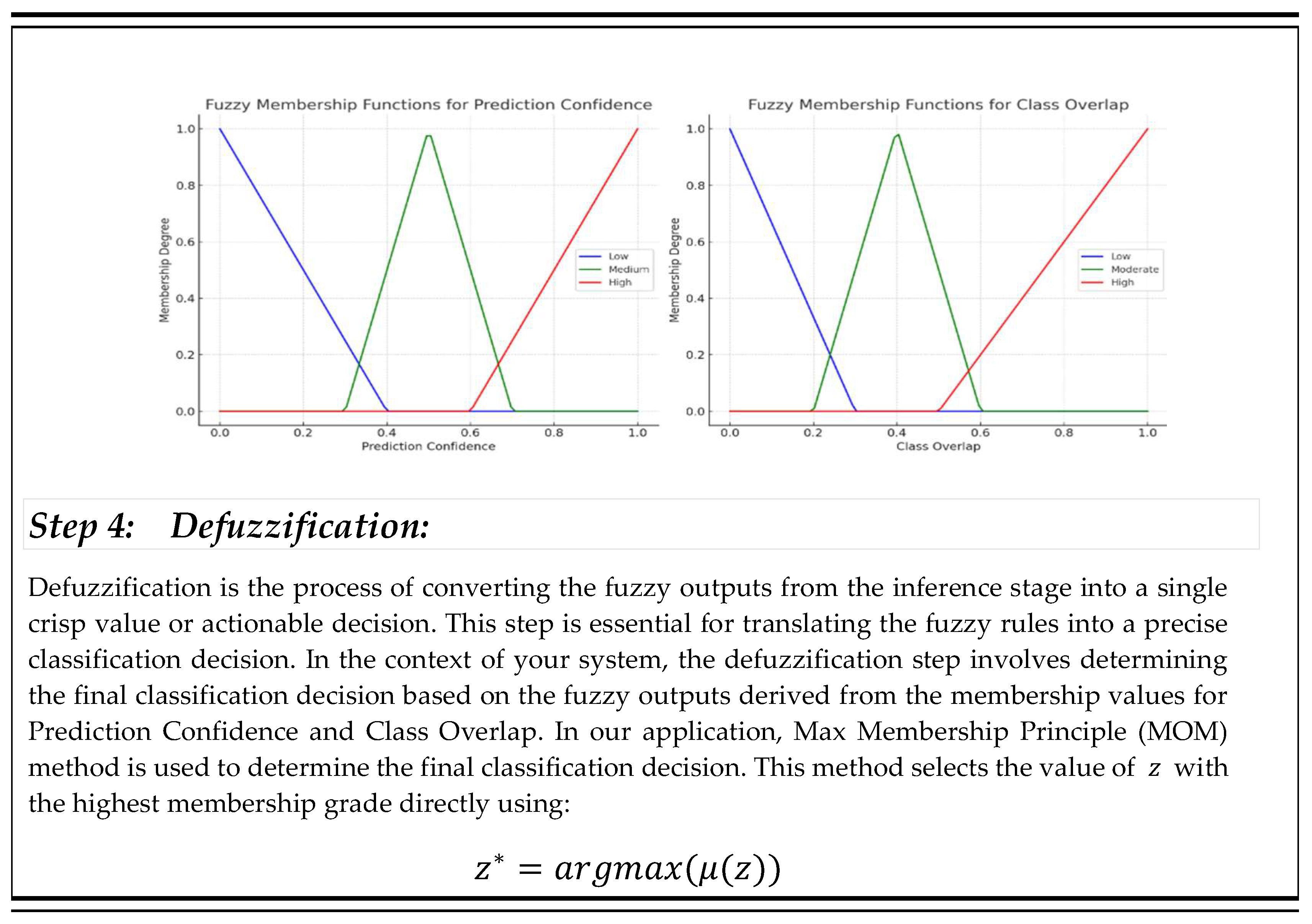
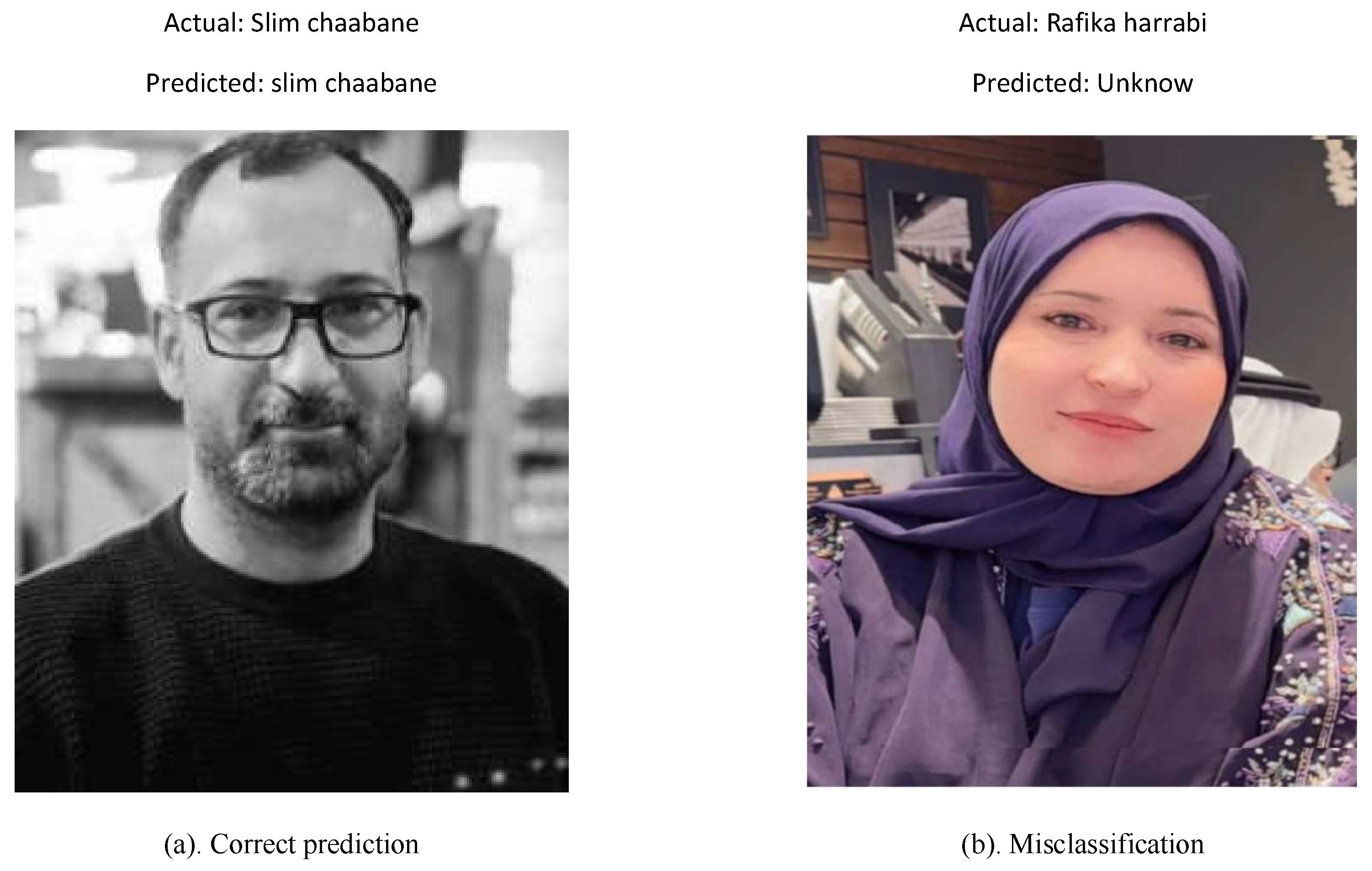
Experimental Results
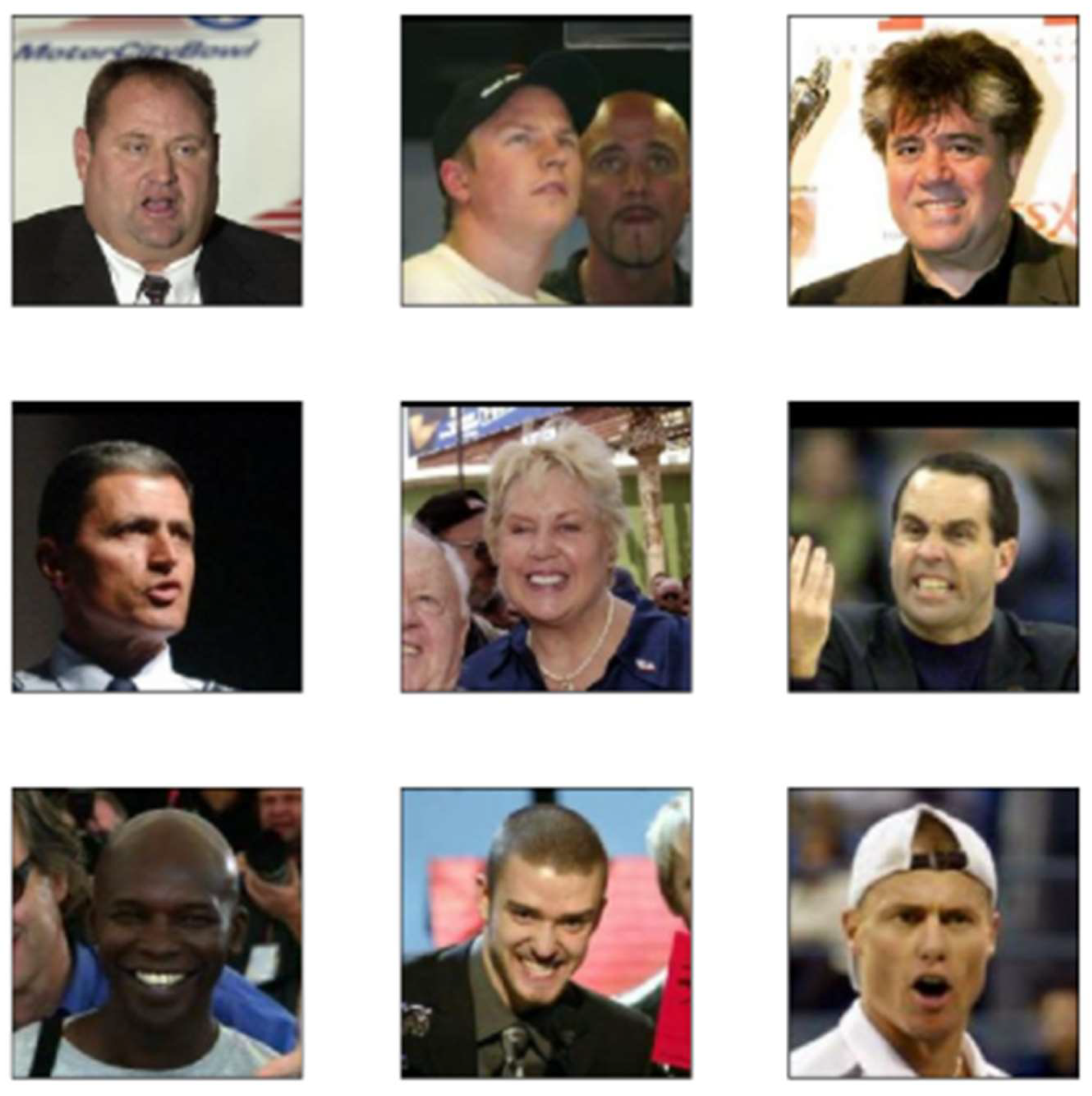
1.1. Dataset
1.1. Performance Measures
4. Conclusions
Abbreviations
| CNNs | Convolutional Neural Networks |
| SVMs | Support Vector Machines |
| PCA | Principal Component Analysis |
| LDA | Linear Discriminant Analysis |
| ICA | Independent Component Analysis |
| CK+ | Cohn-Kanade Plus database |
| FURIA | Fuzzy Unordered Rule Induction Algorithm |
| QIntTyII-DLM | Quaternion Interval Type II-Based Deterministic Learning Machine |
| ORL | Olivetti Research Laboratory |
| FERET | Face Recognition Technology |
| LFW | Labeled Faces in the Wild |
| FER | Facial Expression Recognition |
| ResNet-50 | Residual Network 50 |
| RBF | Radial Basis Function |
| FER-2013 | Facial Expression Recognition 2013 Dataset |
| PCA | Principal Component Analysis |
| PSCL | Point To Set Correlation Learning |
References
- Jha, Medha, et al. "Face Recognition: Recent Advancements and Research Challenges." 2022 13th International Conference on Computing Communication and Networking Technologies (ICCCNT). IEEE, 2022. [CrossRef]
- LI, Huixiang, et al. AI Face Recognition and Processing Technology Based on GPU Computing. Journal of Theory and Practice of Engineering Science, 2024, 4.05: 9-16. [CrossRef]
- Trigueros, Daniel Sáez, Li Meng, and Margaret Hartnett. "Face recognition: From traditional to deep learning methods." arXiv preprint arXiv: 1811.00116 (2018). [CrossRef]
- Ali, W., Tian, W., Din, S. U., Iradukunda, D., & Khan, A. (2021). Classical and modern face recognition approaches: a complete review. Multimedia tools and applications, 80, 4825-4880. [CrossRef]
- Dabhade, S. B., et al. "Face recognition using principle component analysis and linear discriminant analysis: comparative study." 2nd national conference on advancements in the era of multi-disciplinary systems AEMDS-2013. 2013.
- Hyvärinen, Aapo. "Independent component analysis: recent advances." Philosophical Transactions of the Royal Society A: Mathematical, Physical and Engineering Sciences 371.1984 (2013): 20110534. [CrossRef]
- Ahonen, T., Hadid, A., & Pietikäinen, M. (2006). Face description with local binary patterns: Application to face recognition. IEEE Transactions on Pattern Analysis and Machine Intelligence, 28(12), 2037-2041. [CrossRef]
- Sun, Yuechuan, and Jun Yu. "Facial expression recognition by fusing Gabor and local binary pattern features." MultiMedia Modeling: 23rd International Conference, MMM 2017, Reykjavik, Iceland, January 4-6, 2017, Proceedings, Part II 23. Springer International Publishing, 2017.
- Ali, Waqar, et al. "Classical and modern face recognition approaches: a complete review." Multimedia tools and applications 80 (2021): 4825-4880. [CrossRef]
- Zhao, W., Chellappa, R., Phillips, P. J., & Rosenfeld, A. (2003). Face recognition: A literature survey. ACM Computing Surveys (CSUR), 35(4), 399-458. [CrossRef]
- Hadid, A., Pietikäinen, M., & Ahonen, T. (2007). A discriminative feature space for detecting and recognizing faces. IEEE Transactions on Pattern Analysis and Machine Intelligence, 29(6), 1041-1046. [CrossRef]
- Bahreini, Kiavash, Wim Van der Vegt, and Wim Westera. "A fuzzy logic approach to reliable real-time recognition of facial emotions." Multimedia Tools and Applications 78 (2019): 18943-18966. [CrossRef]
- Yadav, Sudesh, and Virendra P. Vishwakarma. "Robust face recognition using quaternion interval type II fuzzy logic–based feature extraction on colour images." Medical & Biological Engineering & Computing 62.5 (2024): 1503-1518. [CrossRef]
- Algarni, Abeer D., et al. "Efficient implementation of homomorphic and fuzzy transforms in random-projection encryption frameworks for cancellable face recognition." Electronics 9.6 (2020): 1046. [CrossRef]
- Balovsyak, Serhiy, et al. "Face Mask Recognition by the Viola-Jones Method Using Fuzzy Logic." International Journal of Image, Graphics and Signal Processing (IJIGSP) 16.3 (2024): 39-51. [CrossRef]
- Liu, Chengjun, and Harry Wechsler. "Gabor feature based classification using the enhanced fisher linear discriminant model for face recognition." IEEE Transactions on Image processing 11.4 (2002): 467-476. [CrossRef]
- Liu, Chengjun, and Harry Wechsler. "Independent component analysis of Gabor features for face recognition." IEEE transactions on Neural Networks 14.4 (2003): 919-928. [CrossRef]
- Liu, Chengjun. "Gabor-based kernel PCA with fractional power polynomial models for face recognition." IEEE transactions on pattern analysis and machine intelligence 26.5 (2004): 572-581. [CrossRef]
- Liu, Chengjun, and Harry Wechsler. "Robust coding schemes for indexing and retrieval from large face databases." IEEE Transactions on image processing 9.1 (2000): 132-137. [CrossRef]
- Chan, Chi-Ho, Josef Kittler, and Kieron Messer. "Multi-scale local binary pattern histograms for face recognition." Advances in Biometrics: International Conference, ICB 2007, Seoul, Korea, August 27-29, 2007. Proceedings. Springer Berlin Heidelberg, 2007.
- Chan, Chi-Ho, Josef Kittler, and Kieron Messer. "Multispectral local binary pattern histogram for component-based color face verification." 2007 First IEEE International Conference on Biometrics: Theory, Applications, and Systems. IEEE, 2007. [CrossRef]
- Zhao, Deli, Zhouchen Lin, and Xiaoou Tang. "Laplacian PCA and its applications." 2007 IEEE 11th International Conference on Computer Vision. IEEE, 2007. [CrossRef]
- Wolf, Lior, Tal Hassner, and Yaniv Taigman. "Descriptor based methods in the wild." Workshop on faces in'real-life'images: Detection, alignment, and recognition. 2008.
- Yoo, Cheol-Hwan, et al. "High-dimensional feature extraction using bit-plane decomposition of local binary patterns for robust face recognition." Journal of Visual Communication and Image Representation 45 (2017): 11-19. [CrossRef]
- Y. Sun, X. Wang, and X. Tang, “Deep learning face representation from predicting 10,000 classes,” in Proceedings of the IEEE Conference on Computer Vision and Pattern Recognition, pp. 1891–1898, 2014.
- D. Yi, Z. Lei, S. Liao, and S. Z. Li, “Learning face representation from scratch,” arXiv preprint arXiv:1411.7923, 2014. [CrossRef]
- O. M. Parkhi, A. Vedaldi, A. Zisserman, et al., “Deep face recognition.,” in BMVC, vol. 1, p. 6, 2015.
- Y. Guo, L. Zhang, Y. Hu, X. He, and J. Gao, “Ms-celeb-1m: A dataset and benchmark for large-scale face recognition,” in European Conference on Computer Vision, pp. 87–102, Springer, 2016.
- A. Nech and I. Kemelmacher-Shlizerman, “Level playing field for million scale face recognition,” in 2017 IEEE Conference on Computer Vision and Pattern Recognition (CVPR), pp. 3406–3415, IEEE, 2017.
- A. Bansal, A. Nanduri, C. D. Castillo, R. Ranjan, and R. Chellappa, “Umdfaces: An annotated face dataset for training deep networks,” in Biometrics (IJCB), 2017 IEEE International Joint Conference on, pp. 464–473, IEEE, 2017. [CrossRef]
- Q. Cao, L. Shen, W. Xie, O. M. Parkhi, and A. Zisserman, “Vggface2: A dataset for recognising faces across pose and age,” arXiv preprint arXiv:1710.08092, 2017. [CrossRef]
- [103] S.-H. Lin, S.-Y. Kung, and L.-J. Lin, “Face recognition/detection by probabilistic decision-based neural network,” IEEE transactions on neural networks, vol. 8, no. 1, pp. 114–132, 1997. [CrossRef]
- S. Lawrence, C. L. Giles, A. C. Tsoi, and A. D. Back, “Face recognition: A convolutional neural-network approach,” IEEE transactions on neural networks, vol. 8, no. 1, pp. 98–113, 1997. [CrossRef]
- T. Kohonen, “The self-organizing map,” Neurocomputing, vol. 21, no. 1-3, pp. 1–6, 1998.
- S. Chopra, R. Hadsell, and Y. LeCun, “Learning a similarity metric discriminatively, with application to face verification,” in Computer Vision and Pattern Recognition, 2005. CVPR 2005. IEEE Computer Society Conference on, vol. 1, pp. 539–546, IEEE, 2005. [CrossRef]
- Megahed, M., C Mohammed, A. (2020). Modeling adaptive E-learning environment using facial expressions and fuzzy logic. Expert Systems with Applications, 157, 113460. [CrossRef]
- Madhloom, J. K., Diwan, S. A., & Abdulhussein, Z. A. (2020). Smile detection using convolutional neural network and fuzzy logic. Journal of Information Science and Engineering, 36(2), 269-278.
- 6. Balovsyak, S., Derevyanchuk, O., Kovalchuk, V., Kravchenko, H., & Kozhokar, M. (2024). Face Mask Recognition by the Viola-Jones Method Using Fuzzy Logic. International Journal of Image, Graphics and Signal Processing, 16(3), 39-51. [CrossRef]
- Huang, G. B., Mattar, M., Berg, T., & Learned-Miller, E. (2008). Labeled faces in the wild: A database forstudying face recognition in unconstrained environments. In Workshop on faces in'Real-Life'Images: detection, alignment, and recognition.
- Jakhete, Sumitra A., and Nilima Kulkarni. "A Comprehensive Survey and Evaluation of MediaPipe Face Mesh for Human Emotion Recognition." 2024 8th International Conference on Computing, Communication, Control and Automation (ICCUBEA). IEEE, 2024. [CrossRef]
- MANDAL, Bishwas; OKEUKWU, Adaeze; THEIS, Yihong. Masked face recognition using resnet-50. arXiv preprint arXiv:2104.08997, 2021. [CrossRef]
- Abdullah, Dahlan, et al. "Application of interpolation image by using bi-cubic algorithm." Journal of Physics: Conference Series. Vol. 1114. IOP Publishing, 2018. [CrossRef]
- Brownlee, J. (2021) Gentle Introduction to the Adam Optimization Algorithm for Deep Learning. Machine Learning Mastery.
- Sen, Pratap Chandra, Mahimarnab Hajra, and Mitadru Ghosh. "Supervised classification algorithms in machine learning: A survey and review." Emerging Technology in Modelling and Graphics: Proceedings of IEM Graph 2018. Springer Singapore, 2020. [CrossRef]
- Alqudah, A.; Qazan, S.; Alquran, H.; Qasmieh, I.; Alqudah, A. COVID-19 Detection from X-ray Images Using Different Artificial Intelligence Hybrid Models. Jordan J. Electr. Eng. 2020, 6, 168. [Google Scholar] [CrossRef]
- Alquran, H.; Alsalatie, M.; Mustafa, W.A.; Al Abdi, R.; Ismail, A.R. Cervical Net: A Novel Cervical Cancer Classification Using Feature Fusion. Bioengineering 2022, 9, 578. [Google Scholar] [CrossRef] [PubMed]
- Bahreini, K., Van der Vegt, W., C Westera, W. (2019). A fuzzy logic approach to reliable real-time recognition of facial emotions. Multimedia Tools and Applications, 78, 18943-18966. [CrossRef]
- Megahed, M., C Mohammed, A. (2020). Modeling adaptive E-learning environment using facial expressions and fuzzy logic. Expert Systems with Applications, 157, 113460. [CrossRef]
- Khan, A., et al.: Forensic video analysis: passive tracking system for automated Person of Interest (POI) localization. IEEE Access 6, 43392–43403 (2018). [CrossRef]
- Abdullah, N.A., et al.: Face recognition for criminal identification: an implementation of principal component analysis for face recognition. In: The 2nd International Conference on Applied Science and Technology 2017 (ICAST’17) (2017). [CrossRef]
- Huang, Z., et al.: A benchmark and comparative study of video-based face recognition on COX face database. IEEE Trans. Image Process. 24(12), 5967–5981 (2015). [CrossRef]

| Total Number of Images | 13,233 |
| Total Number of Individuals | 5,749 |
| Images per Individual | Varies (some individuals are represented by only one image) |
| Image Variations | Varying poses, lighting, and expressions |
| Evaluation Method | 10 subsets for cross-validation, each containing 300 positive and 300 negative image pairs |
| Standard Benchmark | View 2, used as the main benchmark for model evaluation |
| Image Source | Collected from the internet, making it diverse in terms of age, gender, and ethnicity |
| Usage | Primarily used for face verification tasks in machine learning models |
| Author | Approach | Algorithm | Dataset | Accuracy | Precision | Recall | F-score |
| Bahreini et al. [47] | Fuzzy Logic | FURIA | CK+ Database | 83.2% | 86.46% | 83.82% | 84.36% |
| Megahed et al. [48] | Hybrid Approach | CNN Fuzzy Logic |
FER-2013 | 67.15% | 69.78% | 67.65% | 68.08% |
| Khan et al. [49] | Machine Learning | PCA algorithm | NCR-IT | 77.5% | 80.54% | 78.07% | 78.58% |
| Abdullah et al. [50] | PCA algorithm | Real-time video stream | 80% | 83.13% | 80.59% | 81.16% | |
| Huang et al. [51] | Point-to-set correlation learning (PSCL) |
COX face database | 52.11% | 54.15% | 52.49% | 52.84% | |
| Our proposed method | Hybrid Approach |
CNN SVM Fuzzy Logic |
LFW | 92.51% | 96.14% | 93.18% | 93.78% |
Disclaimer/Publisher’s Note: The statements, opinions and data contained in all publications are solely those of the individual author(s) and contributor(s) and not of MDPI and/or the editor(s). MDPI and/or the editor(s) disclaim responsibility for any injury to people or property resulting from any ideas, methods, instructions or products referred to in the content. |
© 2025 by the authors. Licensee MDPI, Basel, Switzerland. This article is an open access article distributed under the terms and conditions of the Creative Commons Attribution (CC BY) license (http://creativecommons.org/licenses/by/4.0/).