

Submitted:
29 January 2025
Posted:
30 January 2025
You are already at the latest version
Abstract
This study presents the development of the Comprehensive Index for Beaches (CIB), a holistic tool designed to address the limitations of traditional beach monitoring systems by integrating social and ecological dimensions within a socio-ecological systems (SES) framework. While existing certification schemes predominantly emphasize physical parameters such as water quality and sand cleanliness, they often overlook critical social factors like safety perceptions, overcrowding, and user behavior. This oversight is significant because these social factors play a vital role in shaping visitor satisfaction, supporting community well-being, and ensuring the long-term sustainability of the destination. The CIB addresses this gap, offering a multidimensional approach that includes environmental, infrastructural, social, and safety-related dimensions. Through a multi-stage methodology, the index was developed and validated using Exploratory Factor Analysis (EFA) with data from over 600 beach visitors across key coastal destinations. Results indicate the robustness of the CIB in capturing both natural and social components, underscoring its theoretical alignment with SES principles and its practical potential to enhance beach management. By prioritizing user perceptions and behaviors alongside ecological parameters, the CIB provides an affordable and adaptable alternative to traditional schemes, fostering improved safety, user satisfaction, and sustainability in diverse beach contexts.
Keywords:
beach monitoring
; social-ecological system
; beach tourism
; index creation
1. Introduction
Coastal and marine tourism represents a significant segment within the tourism sector, and it is estimated that its economic impact on global GDP is around 5%, approximately between 3 and 6 trillion dollars annually [1]. Beach tourism accounts for 80% of this, positioning beaches as the primary and preferred coastal resource [2]. Due to the significant economic benefits that beaches generate, along with the wide range of ecosystem services offered (e.g., provisioning resources and recreation spaces, regulation of protection services against natural disasters, etc.), the implementation of beach monitoring systems that ensure resource quality and safety for the users is becoming a standard practice in well-established tourist destinations often seeking safety awareness through the use of prestigious international certifications, such as Blue Flag, Green Key Eco-Label, ISO13009 [3,4,5]
However, most beaches lack a monitoring system, mostly due to budget constraints [6]. Previous studies have shown that the lack of continuous monitoring leads to less safe conditions which impacts visitors’ satisfaction levels, word-of-mouth promotion and visitors intentions to return [3,4,5,7,8,9,10,11]. In addition, research indicates that beaches without monitoring tend to have the highest number of fatal and non-fatal drownings [12,13] as well as increased crime incidents [14,15,16]. This situation has only worsened since the COVID-19 pandemic, which led to increased demand for beaches [17,18].
As beach usage increased, so too has the need for improved holistic monitoring. However, in many cases, resources have not been scaled to meet this demand [19], which may explain the rise in drowning incidents and beach-related crime in recent years [13,20].
This underscores an urgent need for accessible, affordable, and comprehensive beach monitoring that can be implemented across all beaches, not just those with ample resources, especially when, in many cases, the resources used in expensive certification schemes could be allocated more efficiently toward other forms of monitoring that are equally effective in beach management and cost less [22]. This is particularly relevant considering that beach users are generally neutral or uncertain about how these certifications ensure their safety or provide any present or future benefit [17]. Thus, effective beach management doesn’t necessarily require endorsement from a well-known and costly certification [18]. What is crucial, however, is a robust system of monitoring and controlling natural spaces and social activities in these environments [5]. While beach management and monitoring initially focused almost exclusively on protecting public infrastructure and private properties near the shoreline [19,20], this paradigm has evolved significantly over the past few decades. Today, beach monitoring encompasses mainly three key areas: 1) ensuring the quality and sustainability of natural resources - e.g., sand volume [6] ; 2) managing risks associated with adverse weather events and environmental pollution - e.g., rip current warnings [22,23,24]; and 3) implementing and maintaining safety infrastructure, along with providing essential support services and access to the beach- e.g., first aid stations [3,4,12,13].
Although most efforts in beach management and monitoring have focused on physical parameters—largely due to the severe degradation of natural resources caused by pollution and the effects of climate change [13]—this approach has often overlooked the social dimension of beach systems [25] Key aspects such as beachgoers’ behavior and their perceptions of coastal hazards have been neglected [5,10]. Despite recent specialized literature highlighting the importance of incorporating the social component for comprehensive beach management—particularly in response to generational behavior changes and social interactions in the post-COVID era—certifications and monitoring indices rarely include these social aspects [4,5,7,10] This omission could directly affect the user experience and their assessment of the risks they face as beachgoers [13].
Thus, we sought to develop a comprehensive index for beaches (CIB), based on a holistic and systematic conceptualization of beach monitoring, where the beach is viewed as a socio-ecological system [25,26,27]. As such, its management must include control of both natural and social aspects. Our goal is then to create an index that not only reflects the traditional facets of monitoring (natural resource quality, risks associated with adverse weather events and environmental pollution, and infrastructure management and implementation) but also includes social dimensions and safety perceptions, as suggested by previous research [5,10,11,13,21,23]. Integrating these dimensions would incorporate the perspective of social actors as a key part of beach evaluation and monitoring. If these dimensions are validated, the proposed index would provide beach and destination managers with data on safety perceptions to determine whether they align with actual risks. Additionally, they could assess whether the behavior of other beachgoers (such as crowding, noise, criminal activities, etc.) should be included in the overall evaluation of the beach and the beachgoers’ experience, as suggested by the literature.
With that aim, the present study followed a multi-stage evaluation process. In the first phase, we reviewed the leading beach indices and certifications at both global and local levels, with a particular focus on South Carolina. We then compared the evaluation criteria of each index key factors considered in beach monitoring and certification. Following this, we performed an in-depth literature review to incorporate the dimensions and criteria suggested by the research, particularly those of a social nature and safety perceptions. Based on this analysis, we proposed an index to be validated in two stages: first through expert content validity and then through a survey targeting beach visitors in South Carolina. This survey helped to assess whether the proposed dimensions and criteria were held after running a exploratory factor analysis, allowing us to determine whether these dimensions should remain or be refined. We focused on Myrtle Beach, Hilton Head Island, and the Charleston coastal area for the geographical context since these beaches are already monitored for natural resources, infrastructure, and pollution, but the social component or visitors’ risk perception has not yet been evaluated. Given that these are highly visited beaches with well-developed tourism [6], we believe they provide an excellent context for testing the CIB.
This study contributes to the literature on safety in socio-ecological beach systems by contextualizing beachgoers’ social behavior and safety perceptions within monitoring these spaces through the lens of social – ecological systems framework. The findings provide an empirical foundation for safety monitoring in socio-environmental beach systems. The proposed CIB underscores the importance of critical social dimensions of beachgoers, which have been largely overlooked in traditional beach management practices. The five dimensions suggested by the CIB offer a more holistic approach to monitoring and integrating the social component into existing initiatives. In doing so, the CIB can assist beach and destination managers in enhancing user experiences and managing these environments more effectively.
2. Literature Review
2.1. Beaches as Socio Ecological-Systems
Beaches have supported communities for centuries, providing essential resources such as food, recreational spaces, cultural icons, and mental health benefits [25]. They provide multiple functions, such as natural reservoirs, coastal protection, and spaces for human recreational and economic activities [21]. The sustainability and quality of beach systems largely rely on the interconnectedness between human social systems and ecological systems, as humans are both participants in and influencers of these environments [25] thus, overlooking these connections can result in ineffective regulations [21]. Nonetheless, studying social dynamics within natural settings presents challenges. The Socio-Ecological System (SES) Framework was developed to overcome those challenges, offering a comprehensive approach to examining social and ecological interactions. Initially proposed by Ostrom in 2007, the SES framework facilitates the integration of governance and social actors’ roles within ecosystem studies, allowing for a multidisciplinary understanding of complex systems. The SES framework recognizes that actions taken by social actors (individuals and organizations) have a measurable impact on natural systems, and these actions are often intentional [28] As such, the SES framework enables both social and natural scientists to adopt a unified approach to research [15].
Many studies have applied the SES framework to marine and coastal environments in recent years—primarily to improve resilience, adaptive capacity, safety, and governance [29,30]—the majority has focused on the ecological component of the systems. These studies have primarily addressed the quality of natural resources and monitored physical parameters, such as water quality, sand levels, and the presence of algae and bacteria. However, a more socially centered socio-ecological analysis of beaches remains relatively unexplored [3,10,29,30,32].
Within the lens of beach management, the SES framework provides a robust theoretical foundation, especially for tourist destinations, where high visitor activity intensifies the impact on both natural and social elements of beaches [33,34]. SES framework emphasizes that managing systems are only efficient when they integrate social inputs—such as demographic and social activities undertaken by beach users (individuals, organizations, communities)—and the monitoring and management of ecological processes provided by ecosystem components (Figure 1).
Therefore, the SES framework offers a foundation for a holistic approach to beach monitoring, aligning seamlessly with the Comprehensive Index for Beaches (CIB) goals. This framework is valuable for integrating these elements into effective beach management practices by incorporating both natural and cultural dimensions and acknowledging their interconnectedness.
2.2. Traditional Beach Monitoring
Beach management and monitoring involve a range of interventions, including recycling, replenishing, and reconstruction, often in combination. These efforts aim to achieve a practical balance between financial resources and various objectives: coastal defenses, natural conservation, public infrastructure for recreational use, and industrial goals [3]. Beach management practices date back to the interwar period in Europe, spurred by the growing economic importance of beach tourism, which initially emphasized a predominantly social focus on beach spaces [21]. In the 1960s, a new management paradigm emerged, recognizing the need for sustainable beach resources and incorporating Gaia theory (where the earth is perceived as a system where living organisms and the environment co-evolve to maintain conditions suitable for life). However, this perspective was more philosophical than actionable in those early days. Only in the 1980s did a sustainability-centered paradigm become dominant as globalization and pressures on beaches (population growth, demographic changes, economic development, and climate change) intensified[3]. Certification schemes and awards, such as Blue Flag, Q for Quality, and ISO 13009, soon followed, claiming to support these sustainability outcomes [3,21]
Today, society widely acknowledges the critical interdependence between human activities and ecological processes for mutual survival [21]. However, current beach management and monitoring still prioritize maintaining the natural appeal of beach resources by tracking only physical and biological factors, such as water quality and algae presence, with the aim of meeting beach users’ expectations. Unfortunately, this approach often fails to incorporate social dynamics, illustrating how beach management focuses mainly on sustainability rather than a more comprehensive socio-ecological perspective [5,21,32]. This oversight neglects important aspects like public safety and awareness of potential hazards, which can undermine the safety and confidence of beachgoers [21].
Traditional monitoring practices align with most certification and award schemes in beach management, offering a framework to showcase recreational attributes with a primary focus on sand cleanliness and water clarity [3,21] Although these prestigious programs have contributed significantly to maintaining beach infrastructure and reducing pollution by monitoring water quality and ensuring essential infrastructure and personnel, they frequently fall short of addressing socio-ecological principles or entirely understanding the social dimension [24,33,35,36].
Effective beach management and monitoring should promote sustainable use, reduce maintenance and restoration costs through efficiency, improve coastal defenses, conserve natural resources, and foster socio-economic benefits [21]. It should also recognize the unique local geography and community characteristics, develop an understanding of coastal processes based on data, implement cost-effective strategies, and ensure the enforcement of appropriate legislation[13,37,38]. Thus, effective management includes not only physical aspects (such as local geology and geomorphology) and biological attributes (flora and fauna) but also social factors (such as infrastructure). Additionally, incorporating human perceptions and behaviors into beach management goes far beyond simply maintaining infrastructure. Reducing the social dimension to infrastructure alone is a limited approach that only captures part of the scope of beach management [21].
2.3. Perceptions of beachgoers’ Anti-Social Behavior and Their Implication for Beach/Destination Management
Beaches are popular destinations for recreation, relaxation, and enjoyment, yet they can also foster conditions that lower inhibitions, leading to behaviors that disrupt the experience for others or nearby communities [39,40,41,42,43]. This issue is particularly pronounced on urban and semi-urban beaches located near residential areas [44]. While antisocial behavior has been extensively studied in psychology and criminology, its occurrence in recreational spaces remains underexplored despite its frequent presence in such settings and at events [45].
A key challenge in addressing antisocial behavior in tourism and recreation studies is the difficulty in defining it and differentiating it from criminal acts. Although all criminal behaviors are inherently antisocial, not all antisocial behaviors constitute crimes [40]. Criminal actions are typically deliberate and harmful, such as burglary, assault, or sexual offenses. In contrast, non-criminal antisocial behaviors, often subjective and less severe, can range from minor nuisances to borderline criminal activity [40,43].
Public space management is crucial in mitigating antisocial behavior since those who engage in such actions frequently act impulsively or aggressively, underscoring the need for policies and external mechanisms to regulate behavior [41]. Antisocial behavior interferes with others’ ability to enjoy shared spaces, such as homes or public areas like beaches, which are inherently prone to conflicts between users with diverse interests [46].
On beaches, these behaviors can range from interpersonal conflicts, such as threats or altercations, to environmental disturbances, such as excessive noise, graffiti, littering, and misuse of recreational vehicles. Other forms include restricting access, aggressive panhandling, and substance abuse, which undermine the atmosphere and accessibility of these spaces [41,44,45,46,47]
Because individuals exhibiting antisocial tendencies often lack self-regulation, managing such behaviors in recreational areas is critical to preserving their value and benefits. Effective management should include not only implementing policies but also monitoring user behaviors to identify and address emerging issues promptly. Monitoring is particularly important as antisocial behavior has been recognized as one of the main threats to the social benefits of coastal tourism, potentially undermining the sense of community and shared enjoyment that these spaces are meant to foster [48]. By understanding and anticipating the actions of beachgoers, conflict can be minimized, and the social and recreational value of these areas can be protected[5,49,50].
2.4. Crowding
Beach overcrowding refers to a high density of people in a specific area, which can diminish user satisfaction, lead to conflicts, and contribute to environmental degradation[51]. Perceptions of overcrowding are subjective and influenced by visitors’ expectations, tolerance levels, cultural factors, and the purpose of their visit. Generally, excessive crowding creates discomfort, increases conflicts, and lowers satisfaction levels for most users [46]. Overcrowding also impacts visitor well-being and long-term satisfaction since negative experiences can affect sleep quality, expectations, and perceptions of destination accommodations [52].
Determining how many people are “too many” on a beach is challenging, as the maximum density at which users feel comfortable varies. While some visitors enjoy the lively atmosphere of a crowded beach, others may find it overwhelming [48]. Overcrowding can also exacerbate conflicts among users with differing needs, such as swimmers versus water sports participants, and reduce the perceived quality of the environment [52].
From a management perspective, overcrowding poses significant challenges. Studies suggest that beachgoers are more tolerant of crowding when recreational infrastructure is adequate or when events like tournaments are taking place [48]. However, respecting ecological and social carrying capacities is also essential to avoid overuse and degradation [46]. Thus, addressing overcrowding requires balancing the economic benefits of tourism with the preservation of natural and social environments to maintain sustainable and enjoyable spaces for all [53].
For that reason, monitoring overcrowding perceptions is crucial because diminished satisfaction from overcrowding discourages repeat visits, which negatively impacts the local economy [52]. Also, safety concerns often increase as the likelihood of crimes or antisocial behaviors, such as violence, grows in crowded settings [50]. Furthermore, excessive visitor numbers can strain natural resources and accelerate environmental degradation. Effectively managing these perceptions helps balance use and conservation efforts while maintaining the destination’s appeal. By understanding visitors’ perceptions of overcrowding, managers can implement targeted strategies such as regulating beach capacity, improving infrastructure, or promoting less congested visit times.
Safety perceptions among beach users
Safety is the condition of feeling protected from harm, risk, or danger [54]. It encompasses both physical and psychological dimensions, ensuring individuals feel secure in their environment and free from threats that could cause injury, illness, or emotional distress [55]. It is foundational to quality of life, enabling people to thrive without constant worry about their physical or mental well-being [56]. In social contexts, safety fosters trust, cohesion, and productive interactions, while in economic and tourism sectors, it directly impacts visitor satisfaction, investment, and sustainability [57].
In beach destinations, safety perceptions play a critical role in shaping visitors’ experiences and their decisions to return [58]. These perceptions involve how users feel about their environment—whether they perceive it as safe or unsafe—based on the behavior of others sharing the space and the inherent risks of coastal settings, such as strong currents or waves [56]. This is particularly important because research indicates that beachgoers, especially experienced ones, often underestimate these environments’ natural and social risks [59,60].
Individual safety perceptions vary widely, reflecting personal factors that influence how people assess and respond to risks [56]. This individual spectrum of safety encompasses psychological, social, cultural, and situational influences [61]. Unlike generalized safety concerns that apply broadly, individual perceptions are highly subjective, explaining why people react differently to the same environment or potential threats. For instance, some may feel secure on a crowded beach, while others may experience discomfort or anxiety in the same situation.
Understanding the individual spectrum of safety is essential for effective management of tourism, recreation, and public spaces. Tailoring safety measures to address diverse needs is more effective than a universal approach. For example, families might prioritize visible lifeguards and safe swimming areas, while solo travelers might value clear signage and accessible emergency services.
External factors such as media coverage, past experiences, and visible safety measures at the destination also shape safety perceptions on beaches[61]. These elements influence how visitors evaluate their surroundings and impact their overall satisfaction [59]. Addressing these perceptions is crucial for fostering positive visitor experiences and encouraging repeat visits[60]. Tailored strategies can enhance safety perceptions, ensuring beaches remain enjoyable and sustainable destinations.
3. Methods
Our methodology for developing the Comprehensive Index for Beaches (CIB) followed the procedures recommended by Hair et al. [62], which are suited for studies aiming to create indices that capture complex constructs. The process involved three key stages: (1) generating and evaluating items, (2) purifying items, and (3) finalizing items. In the first stage, we reviewed prominent beach indices and certifications related to beach monitoring, comparing them to identify items covering social and ecological dimensions. Additionally, we conducted a literature review on social behavior in coastal spaces and tourists’ safety perceptions. This resulted in an initial index of 94 items, which two experts then reviewed for content validity. In the second stage, we assessed item reliability by conducting a survey and applying Exploratory Factor Analysis (EFA) to test for construct validity. In the final stage, we refined the index by testing the reliability of each construct through independent Cronbach’s alpha tests for each dimension. We used IBM SPSS version 29 to perform statistical analyses. Figure 2 illustrates the flow of index development, with each step detailed in the following section.
3.1. First Step: Generating and Evaluating Items
Step 1 involved creating an initial pool of items by analyzing four prominent and widely recognized indices: Blue Flag, ISO 13009, Dr. Beach, and NOAA Beach Safety Index. These indexes were selected due to their extensive use and acceptance among both academics and practitioners [4,5,6,10,13,15]. Our objective was to evaluate and compare the indicators monitored locally and globally, identifying similarities, differences, and points of convergence. This information was gathered with the understanding that indicators should comprehensively reflect the scope of the latent variable, as outlined in the content specification [63], to form the foundation of our item pool (see Table 1).
Through this comparison, we identified that social indicators beyond infrastructure for beachgoers (e.g., restroom availability and first aid services) were generally absent—a gap contrary to recommendations in the specialized literature [64,65,66]. Thus, we conducted a literature review of the social behavior of beachgoers and safety perception to establish a robust item pool that included the recommendation of the specialized literature (Table 2)
The initial CIB included five set dimensions derived from the literature review (beach environmental issues, beach infrastructure/amenities, perception of safety, social behavior, aesthetics of the natural environment) and 94 items (Table 3).
To ensure the CIB’s comprehensiveness, we assessed content and face validity [62]. Face validity assesses whether the items accurately represent the intended construct. In contrast, content validity refers to the degree to which elements of an assessment instrument are relevant to and representative of the targeted construct for a particular assessment purpose [62]. Following Netemeyer et al. [67], we invited two experts (sustainable tourism faculty) to review the item pool, providing valuable input to refine and validate the content and face validity. The experts confirmed that the items adequately captured the five core dimensions of the construct, and ultimately, all 94 items were retained for the next step of the analysis.
3.2. Second Step: Purifying Items
To further refine the 94 items identified in Step 1, we conducted a survey from May to August 2024 (Step 2), targeting beach visitors to Charleston, Myrtle Beach, and Hilton Head Island—recognized as key coastal tourism destinations in the State [6]. The survey was administered via the Pollfish platform and focused on individuals aged 18 and older who had recently visited one of the three study sites: Hilton Head, the Charleston area (including Isle of Palms, Folly Beach, and Kiawah Island), or Myrtle Beach. Participants were asked to reflect on their most recent beach experience during the summer of 2024. To control for potential bias, residents of South Carolina were excluded, as their familiarity with these destinations could lead to more informed or subjective perceptions.
The survey gathered 607 responses: 203 from Hilton Head visitors, 203 from the Charleston area, and 201 from Myrtle Beach. To validate the dimensions and finalize the Comprehensive Index for Beaches (CIB), the collected data underwent Exploratory Factor Analysis (EFA). EFA was chosen for its ability to test whether the data fits a hypothesized measurement model, thereby confirming the factor structure of the CIB and assessing the reliability and validity of each dimension identified in the initial phase. The final sample (N = 607) exceeded the conservative minimum sample size of 300 recommended for CFA [62], enhancing the analysis’s robustness.
3.3. Third Step: Finalizing Items
After confirming the initial factor structure, the third step involved assessing the reliability of each dimension. To achieve this, we conducted Cronbach’s alpha analysis for each dimension to refine further and purify the items. This process ensured that each dimension possessed a high level of internal consistency, contributing to the overall reliability of the CIB.
4. Results
A total of 608 participants made up the sample to confirm the underlying structure of the CIB. Among respondents, 58% identified as female and 42% as male. The age distribution of survey participants indicated a higher concentration in the middle age ranges, with 23.0% of respondents between 45–54 years and 20.1% between 35–44 years. Younger adults (ages 18–24) represent a smaller portion at 7.4%, while older adults, particularly those 65 and over, make up 11.8% of the sample. This distribution suggests a balanced representation across age groups, with a notable emphasis on individuals in their mid-career and pre-retirement years. This diverse sample provided a comprehensive foundation for the CFA, helping to validate and refine the CIB’s dimensions.
To confirm the factor structure, we applied two criteria to assess the suitability of the data for factor analysis: the Kaiser–Meyer–Olkin (KMO) measure of sampling adequacy and Bartlett’s test of sphericity. The KMO value was 0.95, well above the recommended threshold of 0.60 [62], indicating excellent sampling adequacy. Bartlett’s test was also significant (p < 0.001), supporting the presence of adequate correlation patterns.
To verify the number of items, we conducted principal component factor analysis using the Direct Oblimin rotation method [68]. This iterative process validated our item analysis and led to the removal of 12 items across the five dimensions (Table 4).
In the Beach Environmental Issues dimension, items removed included “Scenery,” “Is polluted,” “Has a good environment,” “Is beautiful,” “Is well preserved,” “The beach is well preserved,” and “The beach has a good environment.” In the Beach Infrastructure/Amenities dimension, removed items included “Developed local urbanism,” “Explanatory signage,” “Car and bicycle parking areas,” “Defined zoned areas (swimming, surfing, sailing, boating, etc.),” and “Information on major access points, lifeguard stations, other beach facilities, or parking areas.” The CFA confirmed 82 items within the five dimensions of Beach Environmental Issues, Beach Infrastructure/Amenities, Climate and Natural Factors, Social Behavior, and Perception of Safety.
Additionally, some items shifted from their original dimensions to others based on factor loadings. In Beach Environmental Issues, items such as “Presence of domestic animals” and “There is frequent overcrowding” were reassigned to Social Behavior. In Beach Infrastructure/Amenities, items like “The area patrolled (for beaches with lifeguards)” and “There are enforcement patrols in the destination” were reassigned to Perception of Safety. In Perception of Safety, general safety items such as “Is the beach safe” remained, while items like “The beach is well preserved” were moved to Beach Environmental Issues. All remaining items loaded on their respective factors, with no cross-loadings exceeding 0.40, confirming the five underlying dimensions of the CIB and demonstrating satisfactory validity for each dimension.
After confirming the five-dimension structure underlying the CIB, we conducted a Cronbach’s alpha analysis for each dimension, as recommended by Hair et al. [62], to assess the reliability of the items following the initial factor structure confirmation. Cronbach’s alpha values for the five dimensions ranged from 0.86 to 0.75, exceeding the minimum criterion of 0.70 [62], indicating satisfactory internal consistency across the dimensions (Table 5).
4. Discussion
Current beach monitoring schemes often fail to integrate social dimensions that are critical for comprehensive and effective management. This limitation is significant, as social factors such as safety, overcrowding, and user behavior play a pivotal role in shaping visitor satisfaction, promoting community well-being, and ensuring the long-term sustainability of beach destinations. The omission of these factors results in an incomplete assessment framework, which may hinder effective management strategies and compromise the overall quality and appeal of the beach experience. While widely recognized certification programs such as Blue Flag and ISO 13009 focus on ecological parameters, including water quality and sand cleanliness, they neglect social factors like user behavior, safety perceptions, and crowding. These omissions undermine their effectiveness in addressing the full scope of socio-ecological dynamics on beaches, where human and natural systems are deeply interconnected. Although these traditional schemes contribute to maintaining infrastructure and reducing pollution, their narrow focus limits their ability to respond to issues like antisocial behaviors, overcrowding, and user satisfaction, all of which directly impact safety and the overall beach experience [13,48,50,51].
The Comprehensive Index for Beaches (CIB) addresses this gap by offering a holistic framework that integrates both natural and social dimensions. Grounded in the Socio-Ecological Systems (SES) framework, the CIB acknowledges the interdependence of human activities and ecological processes, providing a multidimensional approach to beach management. It includes five core dimensions: Beach Environmental Issues, Beach Infrastructure/Amenities, Climate and Natural Factors, Social Behavior, and Perception of Safety. By incorporating social inputs alongside ecological parameters, the CIB enables managers to evaluate beaches more comprehensively, ensuring that both visitor experiences and environmental sustainability are prioritized.
The structure of the CIB was further refined through a rigorous process of Exploratory Factor Analysis (EFA), which validated its dimensions and enhanced their clarity. To streamline the index, items that introduced ambiguity or overlap were removed. For instance, aesthetic-focused items like “Scenery” and “is beautiful” were eliminated from the Beach Environmental Issues dimension to maintain a focus on measurable environmental conditions. Similarly, non-essential infrastructure items such as “Developed local urbanism” and “Car and bicycle parking areas” were excluded from the Beach Infrastructure/Amenities dimension, ensuring it centers on amenities that directly impact user safety and comfort. These adjustments allowed the CIB to maintain its functional and safety-oriented goals while enhancing its precision and applicability.
The results of this study provide both theoretical and practical contributions. Theoretically, the CIB aligns with the SES framework, reinforcing the importance of holism and the interconnectedness of social and natural inputs in beach management. By integrating social factors such as safety perceptions and user behavior, the CIB expands the scope of traditional monitoring approaches, offering a model that better reflects the complex dynamics of beach systems. This perspective highlights the interplay between human activities and ecological processes, moving beyond compartmentalized management paradigms to embrace a holistic view of sustainability.
Practically, the CIB provides a cost-effective and scalable alternative to traditional certification schemes. Its multidimensional structure allows managers to address both ecological and social aspects, offering actionable insights to enhance safety, user satisfaction, and resource allocation. By understanding how users perceive beach attributes and hazards, managers can implement targeted interventions to improve visitor experience and reduce risks. The refinement process ensures that the CIB is not only comprehensive but also focused and adaptable, making it suitable for diverse cultural and geographical contexts.
The CIB could serve as a valuable tool for multiple stakeholders by enabling the alignment and comparison of visitor perceptions of beach quality and safety with physical parameters such as water quality and sand cleanliness. The index could be most effectively utilized in face-to-face settings, where data on visitor perceptions are collected simultaneously with physical measurements, ensuring real-time alignment of qualitative and quantitative data. Additionally, a post hoc evaluation could be conducted to understand how perceptions of beach quality and safety evolve over time, providing insights into seasonal or long-term trends.
The CIB could primarily benefit destination managers and beach managers, who can use the CIB to enhance strategic planning, improve resource allocation, and design interventions to address mismatches between visitor perceptions and physical realities. Property managers could also leverage the index to assess how perceptions of natural resource quality and social experiences impact real estate values, guiding investment decisions. In the hospitality sector, hotels and resorts can use the CIB to evaluate guest satisfaction and tailor experiences that align with visitor expectations, ultimately enhancing the overall quality of the guest experience, especially during peak seasons.
Ultimately, the CIB offers a robust tool for addressing the challenges of managing socio-ecological beach systems, fostering safer, more enjoyable, and sustainable coastal environments.
5. Conclusions and Limitations
This section is not mandatory but can be added to the manuscript if the discussion is unusually long or complex.
Informed Consent Statement
Informed consent was obtained from all subjects involved in the study
Data Availability Statement
The data supporting the findings of this study are available upon request. Interested researchers can contact the corresponding author for further information.
Conflicts of Interest
The authors declare no conflicts of interest.
Abbreviations
The following abbreviations are used in this manuscript:
| CIB | Comprehensive Index for Beaches |
| EFA | Exploratory Factor Analysis |
| SES | Socio-Ecological Systems |
References
- World Bank. Sustainable tourism can drive the blue economy. Available online: https://blogs.worldbank.org/en/voices/Sustainable-Tourism-Can-Drive-the-Blue-Economy (accessed on 27 January 2025).
- Dodds, R.; Holmes, M.R. Beach tourists: What factors satisfy them and drive them to return. Ocean Coast. Manag. 2019, 168, 158–166. [Google Scholar] [CrossRef]
- Micallef, A.; Williams, A. Beach Management: Principles and Practice; Routledge: London, UK, 2009. [Google Scholar]
- Ariza, E.; Pons, F.; Breton, F. Is “socio-ecological culture” really being taken into account to manage conflicts in the coastal zone? Inputs from Spanish Mediterranean beaches. Ocean Coast. Manag. 2016, 134, 183–193. [Google Scholar] [CrossRef]
- Chen, C.L.; Bau, Y.P. Establishing a multi-criteria evaluation structure for tourist beaches in Taiwan: A foundation for sustainable beach tourism. Ocean Coast. Manag. 2016, 121, 88–96. [Google Scholar] [CrossRef]
- Houston, J.R. The economic value of beach nourishment in South Carolina. Shore Beach 2021, 89, 3–12. [Google Scholar] [CrossRef]
- Staines, C.; Morgan, D.; Ozanne-Smith, J. Threats to tourist and visitor safety at beaches in Victoria, Australia. Tour. Mar. Environ. 2005, 1, 97–105. [Google Scholar] [CrossRef]
- Ariza, E.; Jimenez, J.A.; Sarda, R.; Villares, M. Proposal for an integral quality index for urban and urbanized beaches. Environ. Manag. 2010, 45, 965–975. [Google Scholar] [CrossRef] [PubMed]
- Lucrezi, S.; Saayman, M.; Van der Merwe, P. An assessment tool for sandy beaches: A case study for integrating beach description, human dimension, and economic factors to identify priority management issues. Ocean Coast. Manag. 2016, 134, 84–95. [Google Scholar] [CrossRef]
- Arozarena Llopis, I.; Gutiérrez Echeverría, A. Management Tools for Safety in Costa Rica Beaches. In Beach Management Tools—Concepts, Methodologies and Case Studies; Botero, C.M., Pereira, C., Eds.; Springer: Cham, Switzerland, 2018; pp. 441–467. [Google Scholar]
- Roca, E.; Villares, M. Integrating social perceptions in beach management. In Beach Management Tools—Concepts, Methodologies and Case Studies; Botero, C.M., Pereira, C., Eds.; Springer: Cham, Switzerland, 2018; pp. 875–893. [Google Scholar]
- Wilks, J.; Pendergast, D. Beach safety and millennium youth: Travellers and sentinels. In Tourism and Generation Y.; Benckendorff, P., Moscardo, G., Pendergast, D., Eds.; CABI: Wallingford, UK, 2009; pp. 98–108. [Google Scholar]
- Uebelhoer, L.; Koon, W.; Harley, M.D.; Lawes, J.C.; Brander, R.W. Characteristics and beach safety knowledge of beachgoers on unpatrolled surf beaches in Australia. Nat. Hazards Earth Syst. Sci. 2022, 22, 909–926. [Google Scholar] [CrossRef]
- Centers for Disease Control and Prevention (CDC). [Title of the document if available]. Available online: https://stacks.cdc.gov/view/cdc/156293 (accessed on 27 January 2025).
- Sohn, J.I.; Alakshendra, A.; Kim, H.J.; Kim, K.H.; Kim, H.D. Understanding the new characteristics and development strategies of coastal tourism for post-COVID-19: A case study in Korea. Sustainability 2021, 13, 7408. [Google Scholar] [CrossRef]
- Saayman, M.; Saayman, A. How important are Blue Flag awards in beach choice? J. Coast. Res. 2017, 33, 1436–1447. [Google Scholar] [CrossRef]
- Pennington-Gray, L.; Schroeder, A.; Wu, B.; Donohoe, H.; Cahyanto, I. Travelers’ perceptions of crisis preparedness certification in the United States. J. Travel Res. 2014, 53, 353–365. [Google Scholar] [CrossRef]
- Klein, L.; Dodds, R. Perceived effectiveness of Blue Flag certification as an environmental management tool along Ontario’s Great Lakes beaches. Ocean Coast. Manag. 2017, 141, 107–117. [Google Scholar] [CrossRef]
- Fletcher, J.E.; Kaiser, R.A.; Steele, R.J. Perceptions of beach safety: A comparison of beach users and managers. Coast. Manag. 1989, 17, 349–359. [Google Scholar] [CrossRef]
- Short, A.D.; Hogan, C.L. Rip currents and beach hazards: Their impact on public safety and implications for coastal management. J. Coast. Res. 1994, 10, 197–209. [Google Scholar]
- Sardá, R.; Valls, J.F.; Pintó, J.; Ariza, E.; Lozoya, J.P.; Fraguell, R.M.; Jimenez, J.A. Towards a new integrated beach management system: The ecosystem-based management system for beaches. Ocean Coast. Manag. 2015, 118, 167–177. [Google Scholar] [CrossRef]
- Colford, J.M., Jr.; Wade, T.J.; Schiff, K.C.; Wright, C.C.; Griffith, J.F.; Sandhu, S.K.; Weisberg, S.B. Water quality indicators and the risk of illness at beaches with nonpoint sources of fecal contamination. Epidemiology 2007, 18, 27–35. [Google Scholar] [CrossRef]
- Pranzini, E.; Pezzini, G.; Anfuso, G.; Botero, C.M. Beach safety management. In Beach Management Tools—Concepts, Methodologies and Case Studies; Botero, C.M., Pereira, C., Eds.; Springer: Cham, Switzerland, 2018; pp. 397–420. [Google Scholar]
- Brander, R.W.; Williamson, A.; Dunn, N.; Hatfield, J.; Sherker, S.; Hayen, A. Evaluating the effectiveness of a science-based community beach safety intervention: The Science of the Surf (SOS) presentation. Cont. Shelf Res. 2022, 241, 104722. [Google Scholar] [CrossRef]
- James, R.J. From beaches to beach environments: Linking the ecology, human use, and management of beaches in Australia. Ocean Coast. Manag. 2000, 43, 495–514. [Google Scholar] [CrossRef]
- Poe, M.R.; Norman, K.C.; Levin, P.S. Cultural dimensions of socioecological systems: Key connections and guiding principles for conservation in coastal environments. Conserv. Lett. 2014, 7, 166–175. [Google Scholar] [CrossRef]
- Stojanovic, T.; McNae, H.M.; Tett, P.; Potts, T.W.; Reis, J.; Smith, H.D.; Dillingham, I. The “social” aspect of social-ecological systems: A critique of analytical frameworks and findings from a multisite study of coastal sustainability. Ecol. Soc. 2016, 21. [Google Scholar]
- Berkes, F.; Colding, J.; Folke, C. (Eds.) Navigating Social-Ecological Systems: Building Resilience for Complexity and Change; Cambridge University Press: Cambridge, UK, 2008. [Google Scholar]
- McGinnis, M.D.; Ostrom, E. Social-ecological system framework: Initial changes and continuing challenges. Ecol. Soc. 2014, 19. [Google Scholar] [CrossRef]
- Basurto, X.; Gelcich, S.; Ostrom, E. The social–ecological system framework as a knowledge classificatory system for benthic small-scale fisheries. Glob. Environ. Change 2013, 23, 1366–1380. [Google Scholar] [CrossRef]
- Defeo, O. Sandy beach fisheries as complex social-ecological systems: Emerging paradigms for research, management, and governance. In Sandy Beaches and Coastal Zone Management, Proceedings of the Fifth International Symposium on Sandy Beaches, Rabat, Morocco, 11–12 September 2011; Travaux de l’Institut Scientifique: Rabat, Morocco, 2011; pp. 111–112. [Google Scholar]
- Leslie, H.M.; Basurto, X.; Nenadovic, M.; Sievanen, L.; Cavanaugh, K.C.; Cota-Nieto, J.J.; Aburto-Oropeza, O. Operationalizing the social-ecological systems framework to assess sustainability. Proc. Natl. Acad. Sci. USA 2015, 112, 5979–5984. [Google Scholar] [CrossRef]
- Cumming, G.S. Theoretical frameworks for the analysis of social–ecological systems. In Social-Ecological Systems in Transition; Springer: Cham, Switzerland, 2014; pp. 3–24. [Google Scholar]
- Virapongse, A.; Brooks, S.; Metcalf, E.C.; Zedalis, M.; Gosz, J.; Kliskey, A.; Alessa, L. A social-ecological systems approach for environmental management. J. Environ. Manag. 2016, 178, 83–91. [Google Scholar] [CrossRef] [PubMed]
- Moffatt, S.; Kohler, N. Conceptualizing the built environment as a social–ecological system. Build. Res. Inf. 2008, 36, 248–268. [Google Scholar] [CrossRef]
- Sarda, R.; Valls, J.F.; Pintó, J.; Ariza, E.; Lozoya, J.P.; Fraguell, R.M.; Jimenez, J.A. Towards a new integrated beach management system: The ecosystem-based management system for beaches. Ocean Coast. Manag. 2015, 118, 167–177. [Google Scholar] [CrossRef]
- Schlacher, T.A.; Schoeman, D.S.; Dugan, J.; Lastra, M.; Jones, A.; Scapini, F.; McLachlan, A. Sandy beach ecosystems: Key features, sampling issues, management challenges, and climate change impacts. Mar. Ecol. 2008, 29, 70–90. [Google Scholar] [CrossRef]
- Whitman, R.L.; Nevers, M.B. Escherichia coli sampling reliability at a frequently closed Chicago beach: Monitoring and management implications. J. Environ. Health 2004, 67, 9–14. [Google Scholar] [CrossRef]
- Wiedman, D.; Page, J.B. Drug use on the street and on the beach: Cubans and Anglos in Miami, Florida. Urban Anthropol. 1982, 11, 213–235. [Google Scholar]
- Millie, A. Anti-social behaviour, behavioural expectations and an urban aesthetic. Br. J. Criminol. 2008, 48, 379–394. [Google Scholar] [CrossRef]
- Catalano, R.F.; Hawkins, J.D. The social development model: A theory of antisocial behavior. In Delinquency and Crime: Current Theories; Hawkins, J.D., Ed.; Cambridge University Press: New York, NY, USA, 1996; pp. 149–197. [Google Scholar]
- Calkins, S.D.; Keane, S.P. Developmental origins of early antisocial behavior. Dev. Psychopathol. 2009, 21, 1095–1109. [Google Scholar] [CrossRef] [PubMed]
- Voyer, M.A.; Gollan, N. Contested spaces: We shall fight on the beaches. Available online: https://ro.uow.edu.au/lhapapers/2870/ (accessed on 27 January 2025).
- Araya López, A. Policing the ’Anti-Social’ Tourist. Mass Tourism and ’Disorderly Behaviors’ in Venice, Amsterdam, and Barcelona. Partecip. Confl. 2020, 13, 1190–1207. [Google Scholar]
- Deery, M.; Jago, L. Social impacts of events and the role of anti-social behaviour. Int. J. Event Festiv. Manag. 2010, 1, 8–28. [Google Scholar] [CrossRef]
- Serrano Giné, D.; Jurado Rota, J.; Pérez Albert, M.Y.; Bonfill Cerveró, C. The Beach Crowding Index: A tool for assessing social carrying capacity of vulnerable beaches. Prof. Geogr. 2018, 70, 412–422. [Google Scholar] [CrossRef]
- Jacobsen, J.K.S.; Iversen, N.M.; Hem, L.E. Hotspot crowding and over-tourism: Antecedents of destination attractiveness. Ann. Tour. Res. 2019, 76, 53–66. [Google Scholar] [CrossRef]
- De Ruyck, M.C.; Soares, A.G.; McLachlan, A. Social carrying capacity as a management tool for sandy beaches. J. Coast. Res. 1997, 13, 822–830. [Google Scholar]
- Kainthola, S.; Singh Kaurav, R.P. Research at the crowding and tourism: Insights. Tour. Int. Interdiscip. J. 2024, 72, 648–653. [Google Scholar] [CrossRef]
- Tarlow, P.E. Crime and tourism. In Tourism in Turbulent Times; Mansfeld, Y., Pizam, A., Eds.; Routledge: London, UK, 2006; pp. 93–106. [Google Scholar]
- Jin, Q.; Hu, H.; Kavan, P. Factors influencing perceived crowding of tourists and sustainable tourism destination management. Sustainability 2016, 8, 976. [Google Scholar] [CrossRef]
- Jin, Q.; Pearce, P. Tourist perception of crowding and management approaches at tourism sites in Xi’an. Asia Pac. J. Tour. Res. 2011, 16, 325–338. [Google Scholar] [CrossRef]
- Roberts, T. Residents’ perceptions on tourism impacts and quality of life: The case of Faro. Master’s Thesis, Universidade do Algarve, Faro, Portugal, 2021. [Google Scholar]
- Seabra, C.; Dolnicar, S.; Abrantes, J.L.; Kastenholz, E. Heterogeneity in risk and safety perceptions of international tourists. Tour. Manag. 2013, 36, 502–510. [Google Scholar] [CrossRef]
- Xie, C.; Zhang, J.; Morrison, A.M. Developing a scale to measure tourist perceived safety. J. Travel Res. 2021, 60, 1232–1251. [Google Scholar] [CrossRef]
- Knight, C. Field surveys of the effect of lamp spectrum on the perception of safety and comfort at night. Light. Res. Technol. 2010, 42, 313–329. [Google Scholar] [CrossRef]
- Mohammadi Amin, F.; Rezayati, M.; van de Venn, H.W.; Karimpour, H. A mixed-perception approach for safe human–robot collaboration in industrial automation. Sensors 2020, 20, 6347. [Google Scholar] [CrossRef]
- Pennington-Gray, L.; Schroeder, A. International tourists’ perceptions of safety and security: The role of social media. Matkailututkimus 2013, 9, 7–20. [Google Scholar]
- Barker, M.; Page, S.J.; Meyer, D. Urban visitor perceptions of safety during a special event. J. Travel Res. 2003, 41, 355–361. [Google Scholar] [CrossRef]
- Zhao, J.; Abdul Aziz, F.; Song, M.; Zhang, H.; Ujang, N.; Xiao, Y.; Cheng, Z. Evaluating visitor usage and safety perception experiences in national forest parks. Land 2024, 13, 1341. [Google Scholar] [CrossRef]
- Pennington-Gray, L.; Schroeder, A.; Wu, B.; Donohoe, H.; Cahyanto, I. Travelers’ perceptions of crisis preparedness certification in the United States. J. Travel Res. 2014, 53, 353–365. [Google Scholar] [CrossRef]
- Hair, J.F.; Astrachan, C.B.; Moisescu, O.I.; Radomir, L.; Sarstedt, M.; Vaithilingam, S.; Ringle, C.M. Executing and interpreting applications of PLS-SEM: Updates for family business researchers. J. Fam. Bus. Strateg. 2021, 12, 100392. [Google Scholar] [CrossRef]
- Diamantopoulos, A.; Winklhofer, H.M. Index construction with formative indicators: An alternative to scale development. J. Mark. Res. 2001, 38, 269–277. [Google Scholar] [CrossRef]
- Saayman, M.; Saayman, A. How important are Blue Flag awards in beach choice? J. Coast. Res. 2017, 33, 1436–1447. [Google Scholar] [CrossRef]
- Klein, L.; Dodds, R. Perceived effectiveness of Blue Flag certification as an environmental management tool along Ontario’s Great Lakes beaches. Ocean Coast. Manag. 2017, 141, 107–117. [Google Scholar] [CrossRef]
- Micallef, A.; Williams, A. Beach Management: Principles and Practice; Routledge: London, UK, 2009. [Google Scholar]
- Netemeyer, R.G. Scaling Procedures: Issues and Applications; Sage Publications: Thousand Oaks, CA, USA, 2003. [Google Scholar]
- Pallant, J. SPSS Survival Manual: A Step by Step Guide to Data Analysis Using IBM SPSS.; Routledge: London, UK, 2020. [Google Scholar]
- Leatherman, S.P.; Leatherman, S.B.; Rangel-Buitrago, N. Integrated strategies for management and mitigation of beach accidents. Ocean Coast. Manag. 2024, 253, 107173. [Google Scholar] [CrossRef]
- Short, A.D.; Hogan, C.L. Rip currents and beach hazards: Their impact on public safety and implications for coastal management. J. Coast. Res. 1994, 10, 197–209. [Google Scholar]
- Colford, J.M., Jr.; Wade, T.J.; Schiff, K.C.; Wright, C.C.; Griffith, J.F.; Sandhu, S.K.; Weisberg, S.B. Water quality indicators and the risk of illness at beaches with nonpoint sources of fecal contamination. Epidemiology 2007, 18, 27–35. [Google Scholar] [CrossRef] [PubMed]
- Botero, C.M.; Pereira, C.; Anfuso, G.; Cervantes, O.; Williams, A.T.; Pranzini, E.; Silva, C.P. Recreational parameters as an assessment tool for beach quality. J. Coast. Res. 2014, 70, 556–562. [Google Scholar] [CrossRef]
- Pranzini, E.; Pezzini, G.; Anfuso, G.; Botero, C.M. Beach safety management. In Beach Management Tools—Concepts, Methodologies and Case Studies; Botero, C.M., Pereira, C., Eds.; Springer: Cham, Switzerland, 2018; pp. 397–420. [Google Scholar]
- Brander, R.W.; Williamson, A.; Dunn, N.; Hatfield, J.; Sherker, S.; Hayen, A. Evaluating the effectiveness of a science-based community beach safety intervention: The Science of the Surf (SOS) presentation. Cont. Shelf Res. 2022, 241, 104722. [Google Scholar] [CrossRef]
- Wilks, J.; Pendergast, D. Beach safety and millennium youth: Travellers and sentinels. In Tourism and Generation Y.; Benckendorff, P., Moscardo, G., Pendergast, D., Eds.; CABI: Wallingford, UK, 2009; pp. 98–108. [Google Scholar]
- Taff, B.D.; Rice, W.L.; Lawhon, B.; Newman, P. Who started, stopped, and continued participating in outdoor recreation during the COVID-19 pandemic in the United States? Results from a national panel study. Land 2021, 10, 1396. [Google Scholar] [CrossRef]
- Sohn, J.I.; Alakshendra, A.; Kim, H.J.; Kim, K.H.; Kim, H.D. Understanding the new characteristics and development strategies of coastal tourism for post-COVID-19: A case study in Korea. Sustainability 2021, 13, 7408. [Google Scholar] [CrossRef]
- Centers for Disease Control and Prevention (CDC). [Title of the document if available]. Available online: https://stacks.cdc.gov/view/cdc/156293 (accessed on 27 January 2025).
- Uebelhoer, L.; Koon, W.; Harley, M.D.; Lawes, J.C.; Brander, R.W. Characteristics and beach safety knowledge of beachgoers on unpatrolled surf beaches in Australia. Nat. Hazards Earth Syst. Sci. 2022, 22, 909–926. [Google Scholar] [CrossRef]
- Houston, J.R. The economic value of beach nourishment in South Carolina. Shore Beach 2021, 89, 3–12. [Google Scholar] [CrossRef]
- Houston, J.R. The value and resilience of beach tourism during the COVID pandemic. Shore Beach 2023, 91, 1–13. [Google Scholar] [CrossRef] [PubMed]
- James, R.J. From beaches to beach environments: Linking the ecology, human use, and management of beaches in Australia. Ocean Coast. Manag. 2000, 43, 495–514. [Google Scholar] [CrossRef]
- Poe, M.R.; Norman, K.C.; Levin, P.S. Cultural dimensions of socioecological systems: Key connections and guiding principles for conservation in coastal environments. Conserv. Lett. 2014, 7, 166–175. [Google Scholar] [CrossRef]
- Stojanovic, T.; McNae, H.M.; Tett, P.; Potts, T.W.; Reis, J.; Smith, H.D.; Dillingham, I. The “social” aspect of social-ecological systems: A critique of analytical frameworks and findings from a multisite study of coastal sustainability. Ecol. Soc. 2016, 21. [Google Scholar]
- Refulio-Coronado, S.; Lacasse, K.; Dalton, T.; Humphries, A.; Basu, S.; Uchida, H.; Uchida, E. Coastal and marine socio-ecological systems: A systematic review of the literature. Front. Mar. Sci. 2021, 8, 648006. [Google Scholar] [CrossRef]
Figure 1.
Social-ecological system.
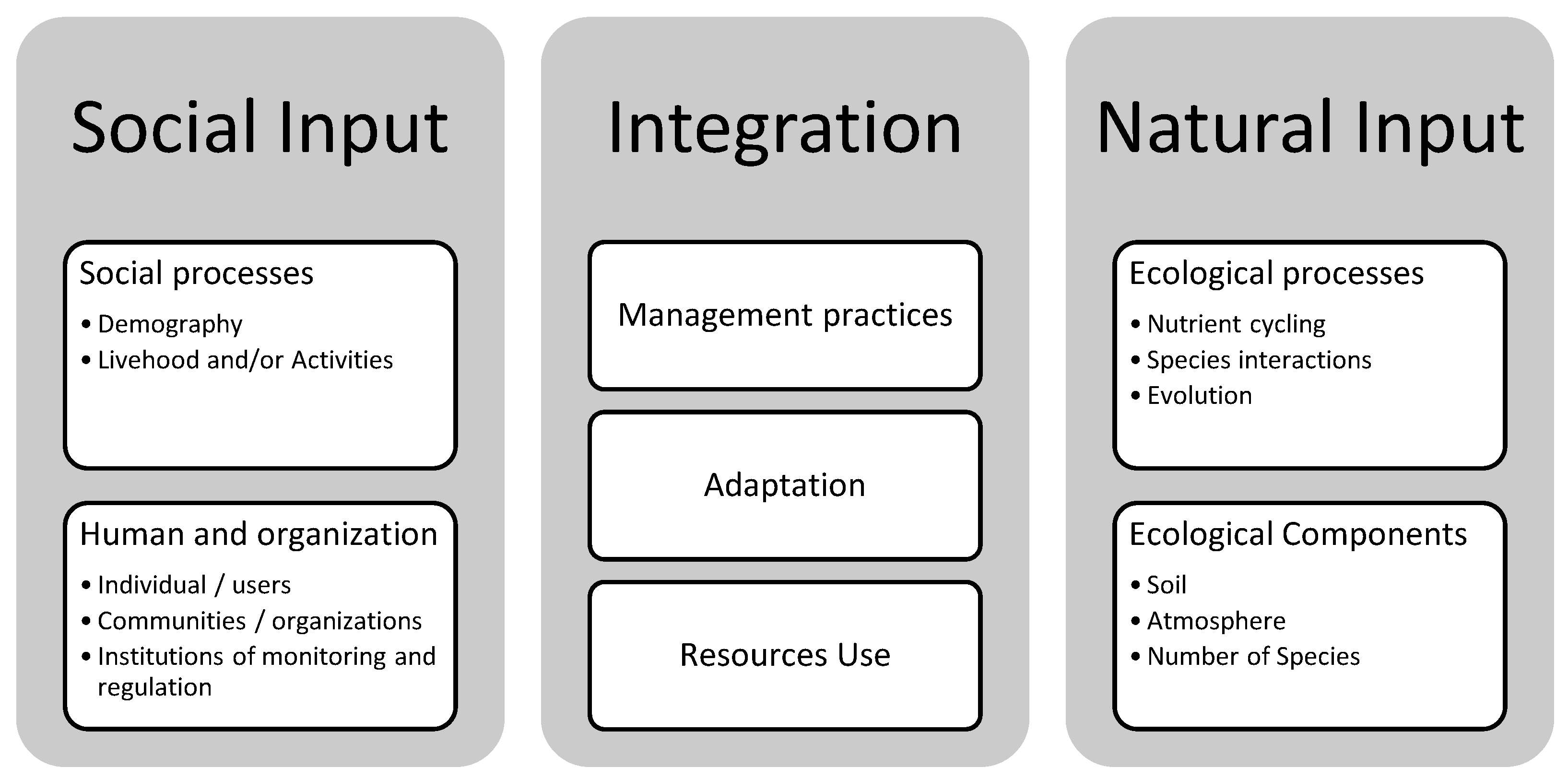
Figure 2.
Index development procedure.
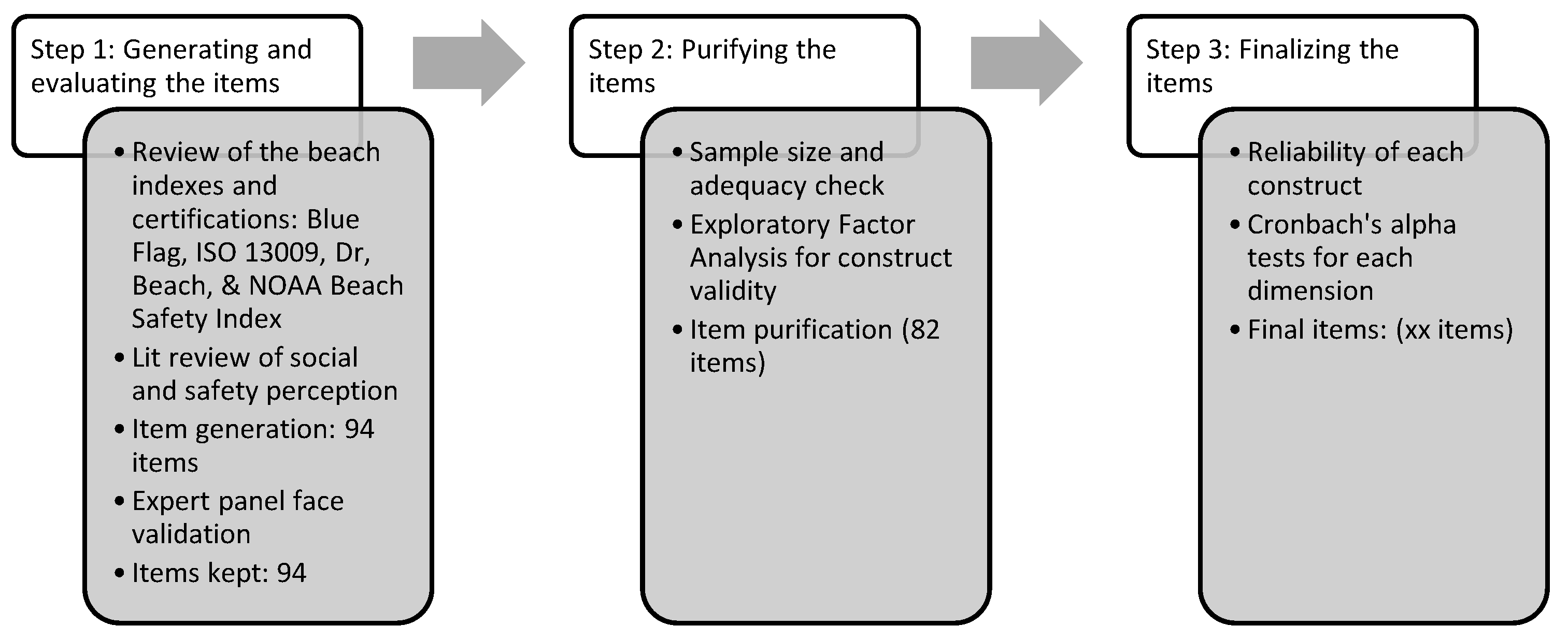

Table 1.
Comparison of prestigious beach monitoring indexes.
| Blue Flag | NOAA Beach Safety Index | Dr. Beach | ISO 13009 |
|
Safety Infrastructure and Services: The beach must provide lifeguards or adequate safety equipment like life buoys and first-aid stations. Information on emergency contacts and response plans must be displayed clearly. There should be facilities to ensure that the beach is accessible to all users, including people with disabilities.The beach must provide well-maintained and clearly labeled access points and walkways to ensure safe passage. |
Natural hazards
|
Safety infrastructure Availability of lifeguards and their effectiveness Safety measures for preventing drownings and accidents (e.g., flags, signage) Presence of rip currents and water hazards |
Beach Safety and Security: Lifeguard services First aid facilities Safety signage Emergency response plans |
|
Environmental Education and Information: Environmental education activities must be offered and promoted to beachgoers. Information about the local ecosystem, environmental phenomena, and cultural sites should be available at the beach. Display of Blue Flag information and a code of conduct for the area is required. |
Aesthetics preservation Preservation of wildlife and natural ecosystems Efforts to maintain sand dunes, wetlands, and vegetation Sustainability and conservation efforts, including waste management |
Beach Operation and Maintenance: Regular beach cleaning schedules Infrastructure maintenance (e.g., walkways, restrooms) Managing overcrowding and user density |
|
|
Water Quality: Beaches must meet excellent water quality standards based on testing for certain pollutants (e.g., E. coli, enterococci). No industrial, wastewater, or sewage-related discharges are allowed to affect the beach area. Frequent water testing should be conducted to ensure that swimming water is clean and safe. |
Environmental Issues cleanliness and clarity of the water Absence of harmful algal blooms and pollutants Temperature of the water Color and texture of the sand Absence of debris, litter, and oil deposits Degree of erosion or beach nourishment activities Presence of rip currents and water hazards |
Environmental Management: Waste management and recycling Water quality monitoring Biodiversity protection Sustainable use of natural resources |
|
|
Environmental Management: The beach must implement effective waste management and recycling measures to minimize litter. Restroom facilities should be clean and properly maintained. The beach area should comply with zoning regulations, ensuring that the natural environment is protected (e.g., sand dunes, flora and fauna). Sustainable transportation options should be promoted to reduce the environmental footprint. |
Infrastructure for beach use Cleanliness and regular maintenance of the beach Accessibility for people with disabilities Availability of restrooms, showers, and other facilities Parking availability Nearby food and accommodation options Recreational opportunities like beach sports or nearby parks |
Services and Amenities: Accessibility for all users, including people with disabilities Clean and well-maintained facilities (e.g., toilets, showers) Availability of food and beverage services Parking and transportation options |
|
|
Aesthetic value Scenic beauty of the beachViews of natural landscapes like dunes, cliffs, and forests |
Tourist and Visitor Information: Providing up-to-date information about beach conditions Educational programs about marine conservation Information on local wildlife and habitats Monitoring visitor satisfaction Collecting and responding to feedback Regular staff training on safety and customer service |
Table 2.
Literature review of dimensions.
| Dimension | Items | Citations |
| Beach Environmental Issues | Presence of litter, water pollution, visible industrial waste or sewage discharge, oil in the water, turbidity, floatable debris (e.g., wood, plastic, bottles), bad odor, temperature extremes, rip currents, strong waves and currents. | [64,65,66,69,70,71,72,80] |
| Beach Infrastructure/Amenities | Access to the beach, access for disabled individuals, showers, toilets, seating, informational signage, first aid equipment, lifeguards, webcams, warning signage, waste disposal bins, areas for separating recyclable waste. | [74,75,76] |
| Perception of Safety | Feeling of personal safety on the beach, safety of belongings, frequency of accidents (e.g., water-related, sand-related, recreational fishing, motor vehicles), presence of criminal activity, crowd control measures. | [77,78,79] |
| Social Behavior | Incidence of overcrowding, noise levels (e.g., from cars or radios), off-road driving on the beach, competition for beach space, alcohol and drug use, types of activities (e.g., sand sports, boating, fishing), presence of domestic animals. | [81,82,83,84,85] |
| Aesthetics of the Natural Environment | Scenic quality, beach width, softness of sand, presence of marine wildlife, vegetation nearby, overall cleanliness of beach areas, maintenance of promenades or natural spaces. | [64,65,66,69,70,71,72,80] |
Table 3.
CIB 94 proposed items.
| Dimension | Item Number | Item |
| Beach Environmental Issues | 1 | Scenery |
| 2 | Beach width | |
| 3 | Softness of sand | |
| 4 | Algae vegetation and natural debris | |
| 5 | Plenty of marine wildlife (e.g., birds) | |
| 6 | Vegetation nearby | |
| 7 | Well-kept grounds/promenades or natural environment | |
| 8 | The water was turbid | |
| 9 | There were submerged rocks | |
| 10 | There was a steeply sloping bottom | |
| 11 | There were seaweed/jellyfish on the beach | |
| 12 | There were harmful algae blooms | |
| 13 | I spotted sharks | |
| 14 | Has a good environment | |
| 15 | Is beautiful | |
| 16 | Is well preserved | |
| 17 | I encountered a lot of litter | |
| 18 | The water was very polluted | |
| 19 | There was visible industrial waste or sewage-related discharge | |
| 20 | There was oil in the water | |
| 21 | There were floatable in the water (wood, plastic articles, bottles, etc.) | |
| 22 | The water smelled bad | |
| 23 | There was a lot of marine debris (nets, fishing materials) | |
| 24 | Is polluted | |
| 25 | There were pests (biting flies, ticks, mosquitoes) | |
| Beach Infrastructure/Amenities | 26 | Developed local urbanism |
| 27 | Access to the beach | |
| 28 | Access points for disabled people | |
| 29 | Showers | |
| 30 | Toilets | |
| 31 | Toilets for disabled people | |
| 32 | Chairs | |
| 33 | Explanatory signage | |
| 34 | First aid equipment | |
| 35 | Lifeguards or lifesaving equipment | |
| 36 | Webcams | |
| 37 | Warning signage | |
| 38 | Shore protection structures | |
| 39 | Lost children’s services | |
| 40 | Information boards nearby | |
| 41 | Information on major access points, lifeguard stations, other beach facilities, or parking areas | |
| 42 | A map of the beach indicating different facilities must be displayed | |
| 43 | The area patrolled (for beaches with lifeguards) | |
| 44 | Telephones | |
| 45 | Drinking water | |
| 46 | Car and bicycle parking areas | |
| 47 | Authorized camping sites near the beach | |
| 48 | Defined zoned areas (swimming, surfing, sailing, boating, etc.) | |
| 49 | Nearby public transportation | |
| 50 | Waste disposal bins | |
| 51 | Facilities for the separation of recyclable waste materials | |
| 52 | There is healthcare available in the destination | |
| 53 | There is enforcement of transport safety at the destination | |
| 54 | The destination is pedestrian-friendly | |
| 55 | There are enforcement patrols in the destination | |
| 56 | There is traffic control in the destination | |
| Climate and Natural Factors | 57 | How was the weather there? |
| 58 | The water temperature was too cold | |
| 59 | The water temperature was too hot | |
| 60 | The waves were too strong | |
| 61 | The waves were really big | |
| 62 | There were too many waves | |
| 63 | There were strong currents | |
| 64 | There were rip currents | |
| 65 | The air temperature was extreme (too hot or too cold) | |
| 66 | The wind was too strong | |
| Social Behavior | 67 | Presence of domestic animals |
| 68 | There is frequent overcrowding | |
| 69 | There is a lot of noise (e.g., cars, highways, trains, radios) | |
| 70 | People often drive off-road (in the sand) | |
| 71 | There is competition for free use of the beach | |
| 72 | There is a high level of crime (e.g., assaults) | |
| 73 | Pickpocketing is common | |
| 74 | There have been human casualties (e.g., drowning) | |
| 75 | There have been water-related accidents (e.g., surfing, diving, snorkeling) | |
| 76 | There have been sand-related sports/activities accidents | |
| 77 | Recreational fishing-related accidents are frequent | |
| 78 | There have been accidents involving boats and jet skis | |
| 79 | Motor-vehicle-related accidents occur on the beach | |
| 80 | Slips, trips, and falls are common | |
| 81 | There have been accidents related to the use of drugs and alcohol on the beach | |
| Perception of Safety | 82 | Is the beach safe |
| 83 | Is dangerous | |
| 84 | The destination as a whole is safe | |
| 85 | I have been safe in the destination in the past | |
| 86 | The destination is secure | |
| 87 | I feel safe touring the destination in the daytime | |
| 88 | I feel safe walking the destination’s streets after dark | |
| 89 | I feel safe driving or using public transport at the destination | |
| 90 | I feel safe driving at the destination | |
| 91 | I feel safe staying in hotels at the destination | |
| 92 | I believe I could be a victim of crime in the destination | |
| 93 | The destination is a violent place | |
| 94 | It could be terrorist attacks on the destination |
Table 4.
Removed Items.
| Dimension | Item Description |
| Beach Environmental Issues | Scenery |
| Is polluted | |
| Has a good environment | |
| Is beautiful | |
| Is well preserved | |
| The beach is well preserved | |
| The beach has a good environment | |
| Beach Infrastructure/Amenities | Developed local urbanism |
| Explanatory signage | |
| Car and bicycle parking areas | |
| Defined zoned areas (swimming, surfing, sailing, boating, etc.) | |
| Information on major access points, lifeguard stations, other facilities |
Table 5.
CIB after CFA analysis and Cronbach Alpha analysis.
| Dimension | Item Number | Item Description | Factor Loading for each dimension |
| Beach Environmental Issues α=.922 |
1 | The water smelled bad | 0.804 |
| 2 | The water was turbid | 0.781 | |
| 3 | There was oil in the water | 0.772 | |
| 4 | There was visible industrial waste or sewage-related discharge | 0.765 | |
| 5 | Floatables were in the water (wood, plastic articles, bottles) | 0.758 | |
| 6 | There was a lot of marine debris (nets, fishing materials) | 0.753 | |
| 7 | The waves were too strong | 0.747 | |
| 8 | There was a steeply sloping bottom | 0.730 | |
| 9 | There were too many waves | 0.727 | |
| 10 | There were harmful algae blooms | 0.727 | |
| 11 | The water was very polluted | 0.715 | |
| 12 | The wind was too strong | 0.710 | |
| 13 | There were rip currents | 0.710 | |
| 14 | There were strong currents | 0.689 | |
| 15 | The water temperature was too cold | 0.684 | |
| 16 | The waves were really big | 0.663 | |
| 17 | There were submerged rocks | 0.643 | |
| 18 | I spotted sharks | 0.635 | |
| 19 | The water temperature was too hot | 0.613 | |
| 20 | I encountered a lot of litter | 0.600 | |
| 21 | There were seaweed/jellyfish on the beach | 0.582 | |
| 22 | There were pests (biting flies, ticks, mosquitoes) | 0.565 | |
| 23 | The air temperature was extreme (too hot or too cold) | 0.562 | |
| 24 | Presence of domestic animals | 0.552 | |
| Beach Infrastructure/Amenities α=.900 |
25 | First aid equipment | 0.764 |
| 26 | Lost children’s services | 0.696 | |
| 27 | Drinking water | 0.694 | |
| 28 | Toilets for disabled people | 0.688 | |
| 29 | A map of the beach indicating different facilities | 0.672 | |
| 30 | Telephones | 0.662 | |
| 31 | Nearby public transportation | 0.649 | |
| 32 | Lifeguards or lifesaving equipment | 0.648 | |
| 33 | Toilets | 0.647 | |
| 34 | Authorized camping sites at/near the beach | 0.644 | |
| 35 | Webcams | 0.636 | |
| 36 | Defined zoned areas (swimming, surfing, sailing, boating, etc.) | 0.636 | |
| 37 | The area patrolled (for beaches with lifeguards) | 0.624 | |
| 38 | Information boards closely displayed | 0.622 | |
| 39 | Chairs | 0.617 | |
| 40 | Facilities for the separation of recyclable waste materials | 0.576 | |
| 41 | Showers | 0.564 | |
| 42 | Shore protection structures (revetments, seawalls, groins, etc.) | 0.529 | |
| 43 | Information on major access points, lifeguard stations, etc. | 0.509 | |
| 44 | Access points for disabled people | 0.500 | |
| 45 | Warning signage | 0.427 | |
| 46 | There is available healthcare at the destination | 0.424 | |
| Climate and Natural Factors α=.871 |
47 | How was the weather there? | 0.710 |
| 48 | The water temperature was too cold | 0.684 | |
| 49 | The water temperature was too hot | 0.613 | |
| 50 | The waves were too strong | 0.576 | |
| 51 | The waves were really big | 0.564 | |
| 52 | There were too many waves | 0.529 | |
| 53 | There were strong currents | 0.509 | |
| 54 | There were rip currents | 0.500 | |
| 55 | The air temperature was extreme (too hot or too cold) | 0.427 | |
| 56 | The wind was too strong | 0.421 | |
| Social Behavior α=.951 |
57 | There have been accidents involving boats and jet skis | 0.868 |
| 58 | There have been sand-related sports/activities accidents | 0.848 | |
| 59 | There have been accidents related to the use of drugs/alcohol | 0.819 | |
| 60 | There have been water-related accidents | 0.816 | |
| 61 | Recreational fishing-related accidents are frequent | 0.789 | |
| 62 | Motor-vehicle-related accidents occur on the beach | 0.777 | |
| 63 | Slips, trips, and falls are common | 0.750 | |
| 64 | Pickpocketing is common | 0.734 | |
| 65 | There is a high level of crime (e.g., assaults) | 0.719 | |
| 66 | There have been human casualties (e.g., drowning) | 0.693 | |
| 67 | People often drive off-road (in the sand) | 0.662 | |
| 68 | There is competition for free use of the beach | 0.651 | |
| 69 | There is frequent overcrowding | 0.648 | |
| 70 | I believe I could be a victim of crime in the destination | 0.643 | |
| 71 | It could be terrorist attacks on the destination | 0.588 | |
| 72 | There is a lot of noise (e.g., cars, highways, trains, radios) | 0.585 | |
| 73 | The destination is a violent place | 0.556 | |
| Perception of Safety α=.861 |
74 | The destination is safe | 0.839 |
| 75 | The destination is secure | 0.804 | |
| 76 | I feel safe touring the destination in the daytime | 0.759 | |
| 77 | I feel safe walking the destination’s streets after dark | 0.731 | |
| 78 | I feel safe driving or using public transport in the destination | 0.699 | |
| 79 | I feel safe staying in hotels in the destination | 0.687 | |
| 80 | I feel safe driving in the destination | 0.668 | |
| 81 | I have been safe in the destination in the past | 0.637 | |
| 82 | The beach is safe | 0.567 |
Disclaimer/Publisher’s Note: The statements, opinions and data contained in all publications are solely those of the individual author(s) and contributor(s) and not of MDPI and/or the editor(s). MDPI and/or the editor(s) disclaim responsibility for any injury to people or property resulting from any ideas, methods, instructions or products referred to in the content. |
© 2025 by the authors. Licensee MDPI, Basel, Switzerland. This article is an open access article distributed under the terms and conditions of the Creative Commons Attribution (CC BY) license (http://creativecommons.org/licenses/by/4.0/).
Copyright: This open access article is published under a Creative Commons CC BY 4.0 license, which permit the free download, distribution, and reuse, provided that the author and preprint are cited in any reuse.


