Preprint
Article

This version is not peer-reviewed.

Prevalence of Upper Gastrointestinal Symptoms and Gastric Dysrhythmias in Diabetic and Nondiabetic Indian Population: A Real-World Retrospective Analysis from Electrogastrography Data

A peer-reviewed article of this preprint also exists.

Submitted:

28 January 2025

Posted:

29 January 2025

You are already at the latest version

Abstract

Background: Upper gastrointestinal (GI) motility disorders, such as gastroparesis and functional dyspepsia (FD), contribute significantly to morbidity, especially in populations at risk for type 2 diabetes. However, the prevalence and clinical manifestations of these disorders in India and associated gastric dysrhythmias are not well-studied within this population. Methods: A retrospective, cross-sectional study was conducted, analysing 3,689 patients who underwent electrogastrography with water load satiety test (EGGWLST) testing across multiple motility clinics in India. The prevalence of gastroparesis and FD-like symptoms, symptom severity, and their association with diabetes and other comorbidities were evaluated. Symptom severity was assessed using the Gastroparesis Cardinal Symptom Index (GCSI) and EGGWLST findings were documented including the Gastric myoelectric activity threshold (GMAT) scores. Results: The study population had a mean age of 43.18 years. GCSI scores indicated mild symptoms (55%), moderate (33%), and severe (8%). As compared to non-diabetic population diabetic subjects had significantly higher rates of early satiety (56% vs. 45%, p<0.0001), bloating (73% vs. 67%, p 0.005), and reflux (28% vs. 24%, p 0.029) while WLST data analysis revealed that significantly more diabetic subjects ingested <350ml (16% vs 12%, p 0.000016). EGG analysis revealed gastric dysthymias in 1/3rd (65%). Significantly more diabetic subjects (22% vs 18% p 0.015) had a >0.59 GMAT score. Conclusions: Upper GI motility disorders are prevalent in India, particularly among diabetic patients. EGG is a valuable tool for characterising these disorders which may help in appropriating therapeutic approaches. Further research is required to optimize treatment strategies.

Keywords: 
;  ;  ;  ;  ;  

1. Introduction

Upper gastrointestinal (GI) motility disorders including gastroparesis and functional dyspepsia (FD) are significant contributors to morbidity worldwide and particularly among individuals with diabetes [1]. Such individuals with upper GI disorders may often present with symptoms like bloating, early satiety and nausea which can impact quality of life & lead to substantial healthcare costs [2]. Gastroparesis and FD have traditionally been distinguished by the presence or absence of delayed gastric emptying. Gastroparesis- like symptoms have a global prevalence of 0.9%, with a higher rate of 1.3% among diabetic individuals [3]. In the Asian population, the prevalence of gastroparesis may be significantly underestimated. Asians are at an increased risk of developing type 2 diabetes, and research by Oshima et al. indicates that 13.8–29% of type 2 diabetic patients with upper GI symptoms may experience delayed gastric emptying [4]. Chronic upper GI symptoms and FD are prevalent among Asians, with a survey of 490 Asian doctors revealing that 47.2% suspect 25–45% of patients diagnosed with FD may suffer from gastroparesis. Considering that FD affects 8–23% of the Asian population, and that 23–35% of these patients exhibit delayed gastric emptying, the estimated prevalence of gastroparesis in this demographic ranges from 1.84% to 8.05% [5]. Despite its local and global relevance, the prevalence and clinical characteristics of these conditions remain minimally explored in specific populations including those with metabolic comorbidities.
Gastroparesis involves delayed gastric emptying without mechanical obstruction, due to neuromuscular dysfunction, while FD, or non-ulcer dyspepsia, is classified as a disorder of gut-brain interaction. Despite accumulating evidence suggesting significant overlap in the clinical presentation, symptoms, and treatment outcomes of these conditions, the notion that gastroparesis and FD belong to the same clinicopathological spectrum have been gaining prominence but remains a subject of ongoing debate. For instance, this perspective is supported by findings from a prospective study conducted by Pasricha PJ et al., which included 944 patients over a 12-month period at a tertiary care center. In this study, patients were classified as having gastroparesis if gastric emptying was delayed; otherwise, they were labeled as having FD based on the Rome III criteria. After a year of follow-up, patients with FD and gastroparesis were indistinguishable based on clinical and pathologic features, as well as assessments of gastric emptying. These findings reinforce the notion that gastroparesis and FD are interchangeable at tertiary care centers and underscore the importance of considering them within the same clinicopathological spectrum [6]. Gastric accommodation is a vital process that enables the fundus and proximal gastric body to relax properly, allowing the stomach to hold and process ingested food. This function is triggered by food intake and regulated by a nitric oxide-mediated vagal reflex [7]. Additionally, the antral distension triggers an antro-fundic reflex, further facilitating gastric accommodation. Studies have shown that impaired gastric accommodation occurs in 40% of patients with FD and 43% of those with idiopathic gastroparesis [8]. Damage to the vagus nerve or autonomic dysfunction may lead to impaired gastric accommodation, causing symptoms like early satiety and postprandial fullness in these patients. Antral hypomotility is a common gastric motor dysfunction in FD and gastroparesis, as shown by antroduodenal manometry. Its cause may be primary or related to antral distension and impaired gastric accommodation. The interstitial cells of Cajal (ICCs), essential for regulating gastric contractions, are reduced in severe diabetic and idiopathic gastroparesis, indicating a potential cellular basis for this hypomotility [9]. The diagnosis and management of these motility disorders are complicated by the nonspecific nature of symptoms and overlapping presentation with other GI conditions [10]. Electrogastrography (EGG), a non-invasive tool that measures gastric myoelectric activity (GMA) offers the potential to distinguish between different motility patterns such as normal GMA, dysrhythmia GMA like tachygastria, bradygastria, antropylordudenal dysfunction (APD) or accommodation dysfunction [11]. EGG is recommended as a diagnostic tool for evaluating patients with unexplained nausea, vomiting, and other dyspeptic symptoms to better understand the underlying mechanisms of these symptoms [12]. However it’s utility in routine clinical practice especially in diabetic population remain understudied.
EGG has revealed altered GMA in approximately two-thirds of patients with FD and a majority of those with gastroparesis. EGG identifies distinct gastric myoelectrical patterns in gastroparesis whether caused by mechanical obstruction oridiopathic causes. Abnormal EGG patterns, such as tachygastria, bradygastria, and persistent 3-cpm activity, correlate with delayed gastric emptying and suggest neuromuscular dysfunction or gastric outflow resistance, especially in idiopathic cases [13]. EGG measures GMA in response to the water load satiety test (WLST). In healthy individuals the water load satiety test typically evokes a normal 3cpm GMA response. However, patients with Gastroparesis and FD often display hyponormal 3cpm GMA and various gastric dysrhythmias which are frequently associated with the reduction of ICC in the gastric wall [14]. Classical as well as high resolution EGG studies have demonstrated a significant link between gastric dysrhythmia and nausea, a key symptom of gastroparesis. Collectively, these findings underscore the critical role of gastric dysrhythmias in the pathophysiology of FD and gastroparesis [14]. The absence of ICCs has been linked to increased abnormalities in gastric slow waves, more severe symptoms, and a reduced response to gastric electrical stimulation (GES). EGG may serve as a clinical marker for ICC depletion and could potentially predict treatment response to GES [15].
The GMAT score derived from the 3 cpm GMA responses to WLST may play a critical role in identifying a subset of patients with underlying APD dysfunction or gastric outflow dysfunction. Studies including Noar et al have shown that patients identified using GMAT score may respond positively to pyloric directed therapy like balloon dilation with a clinical success rate of up to 93% [14]. This provides preliminary evidence that may suggest GMAT score a valuable prognostic and predictive tool for tailoring therapeutic intervention for patients with gastroparesis and possibly FD.
India with its high burden of type 2 diabetes mellitus presents a unique opportunity to study the intersection of diabetes and GI motility disorders. Given the distinct regional dietary habits and metabolic risk profiles in this population, understanding the prevalence of GMA dysrhythmias and their influence on upper GI symptoms may help tailor more region-specific treatment strategies. The study aims to retrospectively analyse the prevalence of upper GI motility disorders in diabetic and non-diabetic population in India using EGG data to evaluated GMA subtypes, characteristics and its relationship to specific symptoms. By investigating the association between GMA abnormalities & symptom severity, we aim to provide insights that could lead to more personalised diagnostic and therapeutic approaches in clinical practice.

2. Materials and Methods

This retrospective cross-sectional multi-centre study analysed data from subjects who underwent EGG tests at motility clinics in various cities across India. The study aimed to determine the prevalence of gastroparesis like and functional dyspepsia like disorders, as well as to explore the age distribution, gender preponderance, EGG characteristics and associations of upper GI motility disorders related symptoms with comorbidities such as diabetes among Indian patients. The study adhered to the principles outlined in the Declaration of Helsinki, the International Council for Harmonisation-Good Clinical Practice (ICH-GCP) guidelines, the Indian Council of Medical Research, and the Indian GCP guidelines, in accordance with the approved protocol. The process of data analysis commenced only after receiving approval from the independent ethics committee (IEC NO. CIEC081024). As this was a retrospective data collection study, informed consent was not required. Patient confidentiality was maintained throughout the data entry and analysis process.

2.1. Electrogastrography (EGG)

EGG with water load satiety test (EGGWLST) is a standardised non-invasive diagnostic modality to measure the GMA [11]. It was recorded with a validated electrogastrography device of the 3CPM Company. The subjects were on (expected to be) 6 -8 hours fasting post which 10 min baseline readings were taken. Subjects ingested water until completely full over a five min period and later post WLST EGG readings were recorded for the next 30 minutes. Ingestion of water < 350ml was considered abnormal. GMA percentage distribution of power was recorded in four frequency ranges normal 2.5 -3.75 cpm, bradygastria 1-2.5cpm, tachygastria 3.75-10cpm and duodenal-respiration 10-15cpm. GMA percent frequency distribution of power of patients across all frequencies and time points were compared with control values to determine each patient’s GMA response to WLST.

2.2. Data Collection and Analysis

Qualitative (categorical) and quantitative (continuous) variables are presented using descriptive statistics. Quantitative variables were evaluated using t-tests or ANOVA, while qualitative variables were assessed using chi-square tests to determine relationships between variables in the study population. The corresponding p-values are reported. Data were analyzed using Graph pad statistical software.

3. Results

3.1. Description of Demographic and Symptom Characteristics in Overall Population and Between Diabetic Versus Non-Diabetic Populations

The study included 3,689 patients with a mean age of 43.18 years. Diabetic patients (n=714) were significantly older than non-diabetics (56 vs. 40 years, p < 0.0001). Gender distribution, detailed in Table 1, showed a slightly higher proportion of males (55%) overall. The most reported symptoms (Figure 1) were bloating (68%), early satiety (46%), and postprandial fullness (42%). Diabetic patients had a higher prevalence of early satiety (56% vs. 45%, p < 0.0001), bloating (73% vs. 67%, p = 0.0015), reflux (28% vs. 24%, p = 0.029), and constipation (35% vs. 30%, p = 0.006), while non-diabetics reported more epigastric pain (20% vs. 13%, p = 0.0003).
When evaluating the severity of GI symptoms using the GCSI score, most participants reported mild symptoms (55%), followed by moderate (33%), and severe symptoms (8%). The distribution of symptom severity was comparable between the non-diabetic and diabetic groups (Table 1).

3.2. Region-Wise Analysis of Demographic & Symptom Characteristics

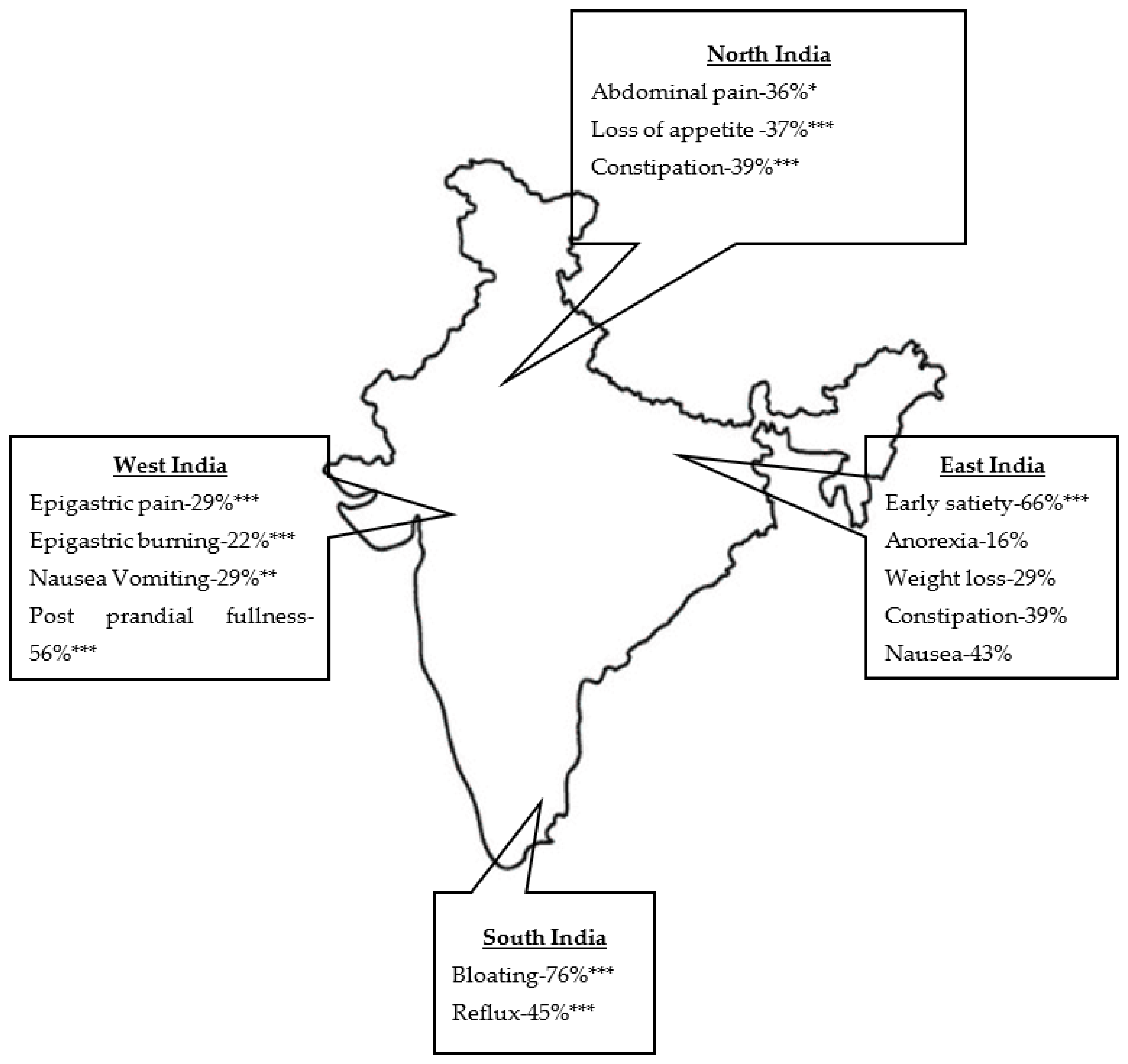
The study analysed the demographic characteristics and GI symptoms across four regions of India: North, South, West, and East, revealing significant differences among these regions (Table 2). Age distribution differed significantly, with median ages ranging from 42 years in the North to 44 years in the South (P = 0.0215). Gender distribution was similar across regions, with a slight male predominance. GI symptoms varied significantly across regions (Table 2). Early satiety was most prevalent in the East (66%) and least in the West (25%) (p < 0.0001). Postprandial fullness was more prevalent in the West (56%) and was lowest in the South (31%) (p < 0.0001). Bloating was highest in the South (76%) and lowest in the West (57%) (p < 0.0001). Abdominal pain was most common in the North (36%) (p = 0.0187), while epigastric pain and burning were highest in the West (29% and 22%, respectively) (p < 0.0001). Anorexia and weight loss were most frequent in the East (16% and 29%, respectively) (p < 0.0001). Loss of appetite was highest in the North (37%) and lowest in the South (19%) (p < 0.0001). Constipation was more in the West (44%) (p < 0.0001), while reflux was most common in the South (45%) and East (44%) (p < 0.0001). Nausea and vomiting varied significantly, with nausea highest in the East (43%) and vomiting in the West (29%) (p = 0.002). These findings highlight notable regional differences in GI symptoms.

3.3. Water Ingestion and Gastric Myoelectric Activity Characteristics

Table 3 details the water ingestion volumes with average water ingestion across the study population reported as 533.51ml. Though there were differences found in average water ingestion it did not reach statistical significance. Subgroup analysis revealed 87% participants ingesting more than 350 mL of water, with a higher proportion in non- diabetics (87%) compared to diabetics (83%) (p =0.00027). Diabetic participants were more likely to consume less than 350 mL (17% vs. 11%) (p = 0.000016).
In the overall population, 20% had a GMAT score >0.59, with a significantly higher proportion in diabetics (22%) compared to non-diabetics (18%) (p = 0.015). 25% had a GMAT scores <0.59, with no statistical differences found in diabetics (24%) compared to non-diabetics (25%). (Table 3).
A dysrhythmic GMA response was observed in over 65% subjects with tachygastria observed in 37%, Bradygastria in 22% and mixed dysrhythmias occurring in 6%. The dysrhytmic GMA responses were statistically similar in diabetics versus non-diabetic population as detailed in table 3. Hyponormal 3cpm GMA was observed in 55%, with no significant group differences (p = 0.97). In normal 3cpm GMA responses, 13% had normal GMA (p = 0.59), 5% had hypernormal GMA (p = 0.71), and 12% had normal GMA with dysrhythmia (p = 0.88), with no significant differences. APD dysfunction was seen in 20%, more common in diabetics (22%) vs. non-diabetics (18%) (p = 0.01). ICC dysfunction affected 55%, with no significant difference (p = 0.97).

3.4. Assessment of Upper GI Symptom Characteristics, EGG Based GMA Subtypes and Characteristics in Diabetic Versus Non-Diabetic Groups

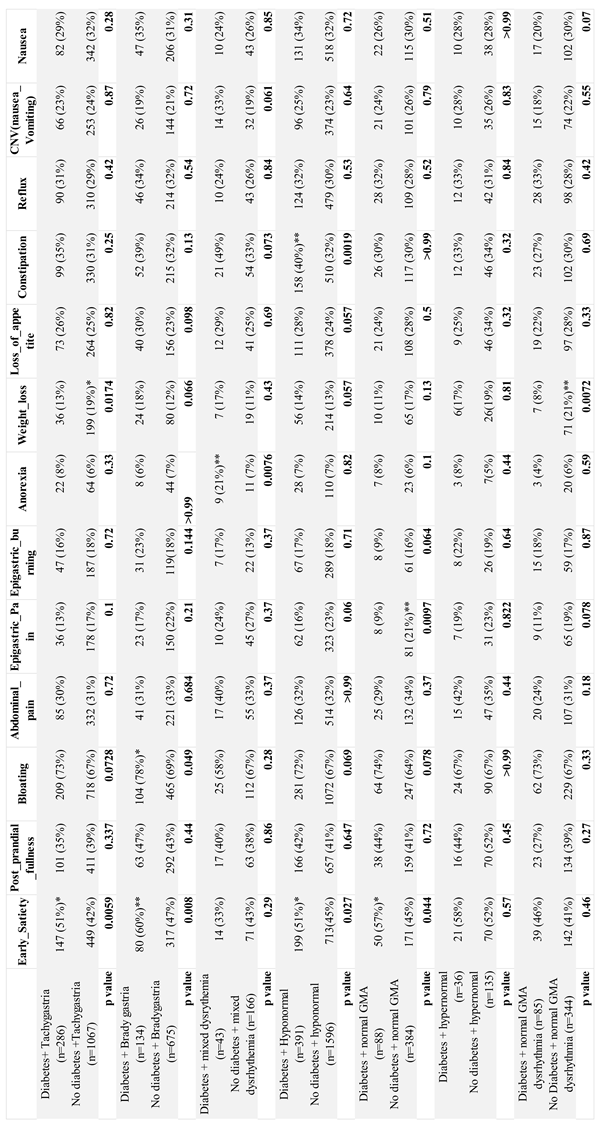
Table 4 details the symptom wise frequency distribution and its association to GMA responses to WLST comparison between diabetics and non-diabetic groups. Diabetic patients with early satiety were significantly more likely to be associated with tachygastria (51% vs. 42%, p = 0.0059), bradygastria (60% vs. 47%, p = 0.008), hyponormal 3cpm GMA (51% vs. 45%, p = 0.027), and normal 3cpm GMA (57% vs. 45%, p = 0.044) than non-diabetic patients. No significant differences were found in mixed dysrhythmia (33% vs. 43%, p = 0.29), hypernormal 3cpm GMA (58% vs. 52%, p = 0.57), or normal 3cpm GMA with gastric dysrhythmia (46% vs. 41%, p = 0.46). Bradygastria (78% vs 69% p=0.0.49) was found significantly more associated with bloating in diabetics.
Postprandial fullness in diabetics was less likely to be associated with normal 3cpm GMA with gastric dysrhythmias in comparison to non-diabetics (27% vs. 39%, p = 0.044). But there was no association observed in hyponormal 3cpm GMA (42% vs 41% p 0.647) or related predominant post WLST dysrhythmic responses between diabetic vs non-diabetic population(table 4).
Abdominal pain was consistent across groups with no significant differences. Diabetic patients with normal 3cpm GMA had significantly less epigastric pain (9% vs. 21%, p = 0.0097). No significant differences were found in other GMA patterns. Diabetic patients with mixed dysrhythmia were significantly associated with anorexia (21% vs. 7%, p = 0.0076) while weight loss was more common in diabetic patients with tachygastria (13% vs. 19%, p = 0.0174) but no significant differences were noted in other post WLST GMA responses. Reflux and nausea/vomiting rates did not differ significantly between groups across all GMA patterns (Table 4). No other significant differences were seen in other GMA patterns.

4. Discussion

Upper GI symptoms are prevalent in the general population and contribute significantly to healthcare costs and lost productivity [26]. The study findings provide valuable insights into the GI symptoms and motility patterns within a large cohort of patients, including both diabetic and non-diabetic populations. In the overall population, bloating (68%), early satiety (46%), and postprandial fullness (42%) were the most reported symptoms, indicating a significant burden of GI discomfort among the study participants. Bloating is common throughout the world. Nearly 18% of the general population experience bloating at least once per week [17]. In Asia, bloating is often reported as both an upper and lower GI symptom, with a prevalence of 26.9% [18]. In a cross-sectional study conducted in 300 participants identified to be having GI issues coming to tertiary care in India, 198 (66%) had sign of bloating, 236 (78%) had sign of post prandial fullness early satiety [19].
Various studies have consistently demonstrated that individuals with diabetes experience a higher prevalence of both upper and lower GI symptoms compared to healthy controls [20,21,22]. The findings of our study align with this trend, showing that GI symptoms are more prevalent among diabetic patients than in non-diabetic individuals. Contrarily, a study using the Bowel Disease Questionnaire (BDQ) found no significant difference in the frequency of GI symptoms between those with and without diabetes [23]. Sang et al. observed that upper GI symptoms were more frequent in diabetic patients compared to non-diabetic counterparts [24]. Additionally, it has been reported that diabetic patients have significantly higher incidences of constipation, diarrhea, alternating bowel habits, abdominal pain, eructation, and flatulence compared to control groups [16,25,26]. A study conducted on an Eastern Indian population found that early satiety was more common among diabetic females than males. Our findings corroborate this, with female patients showing a higher prevalence of early satiety (56%) compared to male patients (49%) [27]. One study indicated that the prevalence of gastroesophageal reflux symptoms in diabetic populations could be as high as 41% [28], whereas our study found a lower prevalence of 28%. We hypothesize that this lower prevalence in India may be attributable to a lesser consumption of junk, processed, and reflexogenic foods compared to Western populations.
The significant regional differences in GI symptoms across the North, South, West, and East highlight varying prevalence rates of conditions such as early satiety, bloating, abdominal pain, anorexia, weight loss, constipation, and nausea. These disparities suggest that geographic factors, including regional food variations, may influence symptom patterns. This emphasizes the need for region-specific management strategies to address the unique symptom profiles in each area.
The study explores water ingestion patterns and GI motor activity in individuals with and without diabetes. A water load test was used to assess satiety through gastric distension, without triggering hormonal responses from a caloric meal [29]. In this study, 18% of diabetic participants consumed less than 350 ml of water, compared to 13% of non-diabetic participants (p=0.044). Vagus nerve neuropathy in diabetes affects gastric motility and accommodation by impairing gastric relaxation [30]. Reduced nitric oxide (NO) synthesis, linked to decreased neuronal nitric oxide synthase (nNOS) expression, disrupts normal gastric accommodation and contributes to delayed gastric emptying and dysmotility, especially in gastroparesis [31]. Gastric dysrhythmias, observed in gastroparesis and functional dyspepsia, are associated with reduced interstitial cells of Cajal (ICCs) and a decrease in normal gastric motility at 3 cycles per minute (cpm). ICC loss impairs the gastric pacemaker function, leading to dysrhythmias [32].
Gastric dysrhythmias are linked to various clinical disorders, many of which can lead to nausea and vomiting. In diabetic gastroparesis, up to 70% of patients may experience tachygastria and bradygastria [33]. Our study's analysis of GMA subtypes revealed that tachygastria was the most prevalent dysrhythmia, affecting more than half of the participants. Among the diabetic population, the prevalence rates of tachygastria, bradygastria, and mixed dysrhythmias were 36%, 19%, and 5%, respectively.
Another important observation of our study is that early satiety is notably more prevalent in diabetic patients across various GMA subtypes, with statistically significant differences compared to their non-diabetic counterparts. This could be attributed to greater magnitude of gastric neuromuscular dysfunction in diabetic patients that significantly impacts patients’ quality of life [34].
Postprandial fullness showed no significant differences across most GMA patterns, except for normal 3cpm GMA with dysrhythmia, where non-diabetic patients had higher rates. Bloating was more common in diabetic patients with bradygastria, suggesting a link to slowed gastric emptying. Hyponormal 3cpm GMA showed a trend toward more bloating in diabetics, but it lacked statistical significance. Abdominal pain was consistent across both groups, indicating it may not be strongly influenced by GMA or diabetes. Diabetic patients with normal GMA reported less epigastric pain, warranting further investigation. Increased anorexia in diabetic patients with mixed dysrhythmia suggests a connection between gastric dysrhythmias and appetite regulation. Weight loss was more common in diabetic patients with tachygastria, potentially indicating more severe gastroparesis. No significant differences in reflux or nausea/vomiting between groups across GMA patterns suggest other factors may influence these symptoms. These findings highlight the complexity of GI symptoms in diabetes and the need for tailored management based on specific GMA patterns.
Patients with gastroparesis or FD face significant challenges in being appropriately stratified for the most effective therapeutic interventions, often resulting in suboptimal health outcomes [34,35]. A subset of these patients is refractory to standard treatments, necessitating advanced diagnostic approaches to guide management. The EGGWLST subtyping system has emerged as a promising modality for identifying patients who may benefit from targeted therapies. Notably, individuals with gastric outflow resistance or antropyloroduodenal dysfunction, characterized by a GMAT score > 0.59, have shown substantial clinical improvement following pyloric-directed interventions [14]. Our data reveal that diabetic patients are disproportionately affected, with 22% of diabetics presenting with elevated GMAT scores, suggesting a higher prevalence of diabetes-induced pathophysiological alterations in the antrum and pylorus. These findings underscore the impact of diabetes on gastric motor function, particularly in the antropyloroduodenal region.
This critical patient subgroup, identified through EGGWLST subtyping and GMAT scoring, represents a population for whom pyloric-directed therapy may alleviate symptoms effectively and potentially achieve long-term remission. Therefore, EGGWLST based subtyping may enable precise patient stratification, an approach that holds significant potential to advance therapeutic outcomes in gastroparesis and FD.
Overall, our study highlights the complexity of GI motor activity and dysfunction in diabetic individuals. Further research is warranted to explore these relationships in more detail, particularly regarding the role of diet, lifestyle, and other non-glycemic factors in the development of GI symptoms and dysrhythmias.
This study has several limitations. Its retrospective design may introduce selection bias, as patients with more severe symptoms were more likely to be referred for EGG, potentially skewing results. The absence of gastric emptying studies limits the correlation between EGG findings and actual gastric motility. While the study offers valuable insights into the Indian population, its applicability to other populations may be limited by regional and dietary differences. Future research should focus on prospective studies that include both EGG and gastric emptying assessments for a more comprehensive understanding of gastric motility across populations.

5. Conclusions

This study reveals a clear link between diabetes and GI symptoms such as early satiety, bloating and anorexia which are associated with GMA dysrhythmias like bradygastria and tachygastria. EGG and WLST based GMA subtyping may aid in personalising treatments in diabetic patients with GI disorders. EGG has shown promise as a diagnostic tool for upper gastrointestinal disorders. While early satiety and bloating are more common in diabetics, symptoms like abdominal pain show no statistical significance between diabetic and non-diabetic individuals, highlighting the need for further research into the non-glycemic factors that may influence GI symptoms and personalised treatment strategies.

Author Contributions

Conceptualization: Sanjay Bandyopadhyay, Ajit Kolatkar, Methodology: Sanjay Bandyopadhyay, Ajit Kolatkar, Formal analysis: Sanjay Bandyopadhyay, Ajit Kolatkar, Data curation; review and editing; visualization; supervision; project administration: Sanjay Bandyopadhyay, Ajit Kolatkar. All authors have read and agreed to the published version of the manuscript.

Funding

This research received no external funding.

Institutional Review Board Statement

The process of data analysis commenced only after receiving approval from the independent ethics committee (IEC NO. CIEC081024).

Informed Consent Statement

Patient consent was waived due retrospective study with anonymous data collection.

Data Availability Statement

All data generated or analyzed during this study are included in this article. The additional raw data files can be obtained from the corresponding author upon request through email.

Acknowledgments

We would like to acknowledge Parv enterprise for statistical data analysis and medical writing support. Gastrolab for data collection, data cleaning and providing insight on data analysis.

Conflicts of Interest

Ajit Kolatkar is a shareholder/stakeholder in GastroLab India Pvt. Ltd. None of the authors have any conflicts of interest to declare.

Abbreviations

The following abbreviations are used in this manuscript:
APD Antropyloroduodenal dysfunction
BDQ Bowel Disease Questionnaire
cpm Cycles per minute
FD Functional dyspepsia
GCSI Gastroparesis Cardinal Symptom Index
GES Gastric electrical stimulation
GI Gastrointestinal
GMA Gastric myoelectric activity
ICH International Council for Harmonisation
GCP Good Clinical Practice
GMAT Gastric myoelectric activity threshold
IEC Independent ethics committee
ICCs Interstitial cells of Cajal
nNOS Neuronal nitric oxide synthase
NO Nitric oxide
EGG Electrogastrography
EGGWLST Electrogastrography with water load satiety test
WLST Water load satiety test

References

  1. Rothstein, R.D. Gastrointestinal motility disorders in diabetes mellitus. Am J Gastroenterol. 1990, 85, 782–785. [Google Scholar] [PubMed]
  2. Frank, L.; Kleinman, L.; Ganoczy, D.; McQuaid, K.; Sloan, S.; Eggleston, A.; Tougas, G.; Farup, C. Upper gastrointestinal symptoms in North America: prevalence and relationship to healthcare utilization and quality of life. Dig Dis Sci. 2000, 45, 809–818. [Google Scholar] [CrossRef] [PubMed]
  3. Huang, I.H.; Schol, J.; Khatun, R.; Carbone, F.; Van den Houte, K.; Colomier, E.; et al. , Worldwide prevalence and burden of gastroparesis-like symptoms as defined by the United European Gastroenterology (UEG) and European Society for Neurogastroenterology and Motility (ESNM) consensus on gastroparesis. United European Gastroenterol J. 2022, 10, 888–897. [Google Scholar] [CrossRef] [PubMed]
  4. Oshima, T.; Siah, K.T.H.; Kim, Y.S.; Patcharatrakul, T.; Chen, C.L; Mahadeva, S.; et al. , Knowledge, Attitude, and Practice Survey of Gastroparesis in Asia by Asian Neurogastroenterology and Motility Association. J Neurogastroenterol Motil. 2021, 27, 46–54. [Google Scholar] [CrossRef] [PubMed]
  5. Hsu, C.T.; Azzopardi, N.; Broad, J. Prevalence and disease burden of gastroparesis in Asia. J Gastroenterol Hepatol. 2024, 39, 649–657. [Google Scholar] [CrossRef]
  6. Pasricha, P.J.; Grover, M.; Yates, K.P.; Abell, T.L.; Bernard, C.E.; Koch, K.L.; et al. , National Institute of Diabetes and Digestive and Kidney Diseases/National Institutes of Health Gastroparesis Clinical Research Consortium. Functional Dyspepsia and Gastroparesis in Tertiary Care are Interchangeable Syndromes With Common Clinical and Pathologic Features. Gastroenterology. 2021, 160, 2006–2017. [Google Scholar] [CrossRef]
  7. Salet, G.A.; Samsom, M.; Roelofs, J.M.; van Berge Henegouwen, G.P.; Smout, A.J.; Akkermans, L.M. Responses to gastric distension in functional dyspepsia. Gut 1998, 42, 823–829. [Google Scholar] [CrossRef]
  8. Tack, J.; Piessevaux, H.; Coulie, B.; Caenepeel, P.; Janssens, J. Role of impaired gastric accommodation to a meal in functional dyspepsia. Gastroenterology 1998, 115, 1346–1352. [Google Scholar] [CrossRef]
  9. Wang, Y.; Chen, J. D,Z.; Nojkov, B. Diagnostic Methods for Evaluation of Gastric Motility-A Mini Review. Diagnostics (Basel). 2023, 13, 803. [Google Scholar] [CrossRef]
  10. Lacy, B.E.; Crowell, M.D.; Cangemi, D.J.; Lunsford, T.N.; Simren, M.; Tack, J. Diagnostic Evaluation of Gastric Motor and Sensory Disorders. Am J Gastroenterol. 2021, 116, 2345–2356. [Google Scholar] [CrossRef]
  11. Kenneth, L.; Koch, Electrogastrography for suspected gastroparesis. In Gastroparesis, McCallum, R.W.; Parkman, H.P.; Academic Press. 2021, 189-205. [CrossRef]
  12. Parkman, H.P.; Hasler, W.L.; Barnett, J.L.; Eaker, E.Y. American Motility Society Clinical GI Motility Testing Task Force. Electrogastrography: a document prepared by the gastric section of the American Motility Society Clinical GI Motility Testing Task Force. Neurogastroenterol Motil. 2003, 15, 89–102. [Google Scholar] [CrossRef] [PubMed]
  13. Brzana, R.J.; Koch, K.L.; Bingaman, S. Gastric myoelectrical activity in patients with gastric outlet obstruction and idiopathic gastroparesis. Am J Gastroenterol. 1998, 93, 1803–1809. [Google Scholar] [CrossRef] [PubMed]
  14. Noar, M.; Khan, S. Gastric myoelectrical activity based AI-derived threshold predicts resolution of gastroparesis post-pyloric balloon dilation. Surg Endosc. 2023, 37, 1789–1798. [Google Scholar] [CrossRef] [PubMed]
  15. Forster, J.; Damjanov, I.; Lin, Z.; Sarosiek, I.; Wetzel, P.; McCallum, R.W. Absence of the interstitial cells of Cajal in patients with gastroparesis and correlation with clinical findings. J Gastrointest Surg. 2005, 9, 102–108. [Google Scholar] [CrossRef]
  16. Bröker, L.E.; Hurenkamp, G.J.B.; Riet, G.; Schellevis, F.G.; Grundmeijer, H.G.; van Weert, H.C. Upper gastrointestinal symptoms, psychosocial co-morbidity and health care seeking in general practice: population based case control study. BMC Fam Pract 2009, 10, 63. [Google Scholar] [CrossRef]
  17. Ballou, S.; Singh, P.; Nee, J.; Rangan, V.; Iturrino, J.; Geeganage, G.; et al. , Prevalence and Associated Factors of Bloating: Results From the Rome Foundation Global Epidemiology Study. Gastroenterology. 2023, 165, 647–655.e4. [Google Scholar] [CrossRef]
  18. Ryu, M.S.; Jung, H.K.; Ryu, J.I.; Kim, J.S.; Kong, K.A. Clinical Dimensions of Bloating in Functional Gastrointestinal Disorders. J Neurogastroenterol Motil. 2016, 22, 509–516. [Google Scholar] [CrossRef]
  19. Khan, U.; Samant, B.R.; Naik, N.; Sanwalka, N. Gastro-intestinal health and dietary intake in asymptomatic patient. Clinical Nutrition. ESPEN. 2023, 58, 424e750. [Google Scholar] [CrossRef]
  20. Du, Y.T.; Rayner, C.K.; Jones, K.L.; Talley, N.J.; Horowitz, M. Gastrointestinal Symptoms in Diabetes: Prevalence, Assessment, Pathogenesis, and Management. Diabetes Care. 2018, 41, 627–637. [Google Scholar] [CrossRef]
  21. Asgharnezhad, M.; Joukar, F.; Fathalipour, M.; Khosousi, M.; Hassanipour, S.; Pourshams, A.; et al. , Gastrointestinal symptoms in patients with diabetes mellitus and non-diabetic: A cross-sectional study in north of Iran. Diabetes Metab Syndr. 2019, 13, 2236–2240. [Google Scholar] [CrossRef]
  22. Bytzer, P.; Talley, N.J.; Hammer, J.; Young, L.J.; Jones, M.P.; Horowitz, M. GI symptoms in diabetes mellitus are associated with both poor glycemic control and diabetic complications. Am J Gastroenterol. 2002, 97, 604–11. [Google Scholar] [CrossRef] [PubMed]
  23. Maleki, D.; Locke, G.R.; Camilleri, M.; et al. Gastrointestinal tract symptoms among persons with diabetes mellitus in the community. Arch Intern Med. 2000, 160, 2808–2816. [Google Scholar] [CrossRef] [PubMed]
  24. Sang, M.; Wu, T.; Zhou, X.; Horowitz, M.; Jones, K.L.; Qiu, S.; et al. , Prevalence of Gastrointestinal Symptoms in Chinese Community-Dwelling Adults with and without Diabetes. Nutrients. 2022, 14, 3506. [Google Scholar] [CrossRef] [PubMed]
  25. Leeds, J.S.; Hadjivassiliou, M.; Tesfaye, S.; Sanders, D.S. Lower gastrointestinal symptoms are associated with worse glycemic control and quality of life in type 1 diabetes mellitus. BMJ Open Diabetes Res Care. 2018, 6, e000514. [Google Scholar] [CrossRef]
  26. Ihana-Sugiyama, N.; Nagata, N.; Yamamoto-Honda, R.; Izawa, E.; Kajio, H.; Shimbo, T.; et al. , Constipation, hard stools, fecal urgency, and incomplete evacuation, but not diarrhea is associated with diabetes and its related factors. World J Gastroenterol. 2016, 22, 3252–3260. [Google Scholar] [CrossRef]
  27. Pathak, H.S.; Banik, K.; Bhattacharya, R.; Kayal, R.; Lahiri, A. Recent Trends of GI Symptoms in Diabetic Population in Eastern India: An Original Article. International Journal of Research & Review. 2019, 6, 242–250. [Google Scholar]
  28. Wang, X.; Pitchumoni, C.S.; Chandrarana, K.; Shah, N. Increased prevalence of symptoms of gastroesophageal reflux diseases in type 2 diabetics with neuropathy. World J Gastroenterol. 2008, 14, 709–712. [Google Scholar] [CrossRef]
  29. Parkman, H.P.; Hallinan, E.K.; Hasler, W.L.; Farrugia, G.; Koch, K.L.; Nguyen, L.; et al. , NIDDK Gastroparesis Clinical Research Consortium (GpCRC). Early satiety and postprandial fullness in gastroparesis correlate with gastroparesis severity, gastric emptying, and water load testing. Neurogastroenterol Motil. 2017, 29, 10. [Google Scholar] [CrossRef]
  30. Channer, K.S.; Jackson, P.C.; O'Brien, I.; Corrall, R.J.; Coles, D.R.; Davies, E.R.; Virjee, J.P. Oesophageal function in diabetes mellitus and its association with autonomic neuropathy. Diabet Med. 1985, 2, 378–382. [Google Scholar] [CrossRef]
  31. Idrizaj, E.; Traini, C.; Vannucchi, M.G.; Baccari, M.C. Nitric Oxide: From Gastric Motility to Gastric Dysmotility. Int J Mol Sci. 2021, 22, 9990. [Google Scholar] [CrossRef]
  32. Koch, K.L.; Van Natta, M.; Parkman, H.P.; Grover, M.; Abell, T.L.; McCallum, R.W.; et al. , Gastroparesis Clinical Research Consortium. Effect of liquid and solid test meals on symptoms and gastric myoelectrical activity in patients with gastroparesis and functional dyspepsia. Neurogastroenterol Motil. 2023, 35, e14376. [Google Scholar] [CrossRef] [PubMed]
  33. Witczyńska, A.; Alaburda, A.; Grześk, G.; Nowaczyk, J.; Nowaczyk, A. Unveiling the Multifaceted Problems Associated with Dysrhythmia. Int J Mol Sci. 2023, 25, 263. [Google Scholar] [CrossRef] [PubMed]
  34. Sanger, G.J.; Chang, L.; Bountra, C.; Houghton, L.A. Challenges and prospects for pharmacotherapy in functional gastrointestinal disorders. Therap Adv Gastroenterol. 2010, 3, 291–305. [Google Scholar] [CrossRef] [PubMed]
  35. Lacy, B.E.; Cangemi, D.J.; Distinguishing between functional dyspepsia and gastroparesis: Does it matter?, In Gastroparesis, Editor(s): McCallum, R.W.; Parkman, H.P.; Academic Press. 2021, 481-493.
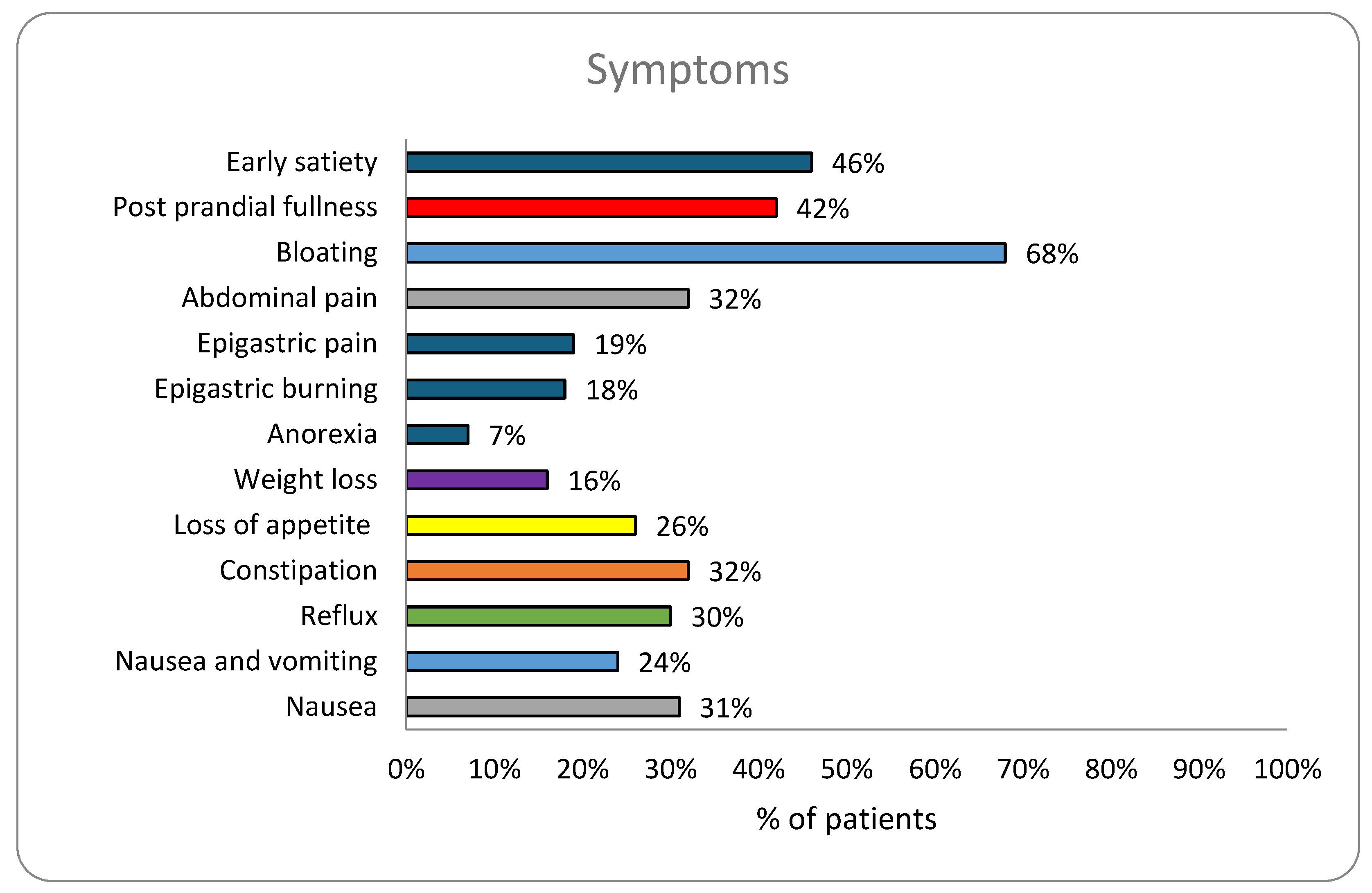
Figure 1. Prevalence of symptoms in overall population (n=3689).
Preprints 147585 g001
Figure 2. Regional variation in upper gastrointestinal symptoms in India. Only significant value represented *p<0.05, **p<0.01, ***p<0.0001, $- Analyzed using One way ANOVA, symptoms. p value using Chi-Square test.
Preprints 147585 g002
Table 1. Summary of baseline characteristics, symptoms and symptoms severity.
Variables Overall population (n=3689) Diabetic population (n=714) Non-diabetic population (n=2937) P value (Diabetes vs non-diabetes)
Age, yrs(SD) 43.18 (15.30) 56 (12) 40(14.40) <0.0001$
Gender
Male, n (%)
Female, n (%)

2011 (55%)
1675 (45%)

365 (51%)
349 (49%)

1627 (55%)
1310 (45%)
Symptoms, n (%)
Early satiety 1686 (46%) 376 (56%)*** 1310 (45%) <0.0001
Post prandial fullness 1531 (42%) 295 (38%) 1221 (42%) 0.899
Bloating 2498 (68%) 519 (73%)** 1956 (67%) 0.0015
Abdominal pain 1191 (32%) 217 (30%) 954 (32%) 0.30
Epigastric pain 684 (19%) 100 (13%) 583 (20%)*** 0.0003
Epigastric burning 668 (18%) 124 (17%) 187 (6%) 0.83
Anorexia 244 (7%) 57 (8%) 471 (16%) 0.13
Weight loss 586 (16%) 103 (14%) 759 (26%) 0.30
Loss of appetite 963 (26%) 194 (27%) 917 (31%) 0.47
Constipation 1191 (32%) 261 (35%)** 869 (30%) 0.006
Reflux 1118 (24%) 241 (28%)* 703 (24%) 0.029
Nasuea& vomiting 879 (24%) 174 (23%) 905 (31%) 0.80
Nausea 1128 (31%) 212 (30%) 355 (13%) 0.55
GCSI score, n(%)
Mild 2015 (55%) 363 (51%) 1544 (53%) 0.40
Moderate 1234 (33%) 252 (35%) 973 (33%) 0.27
Severe 299 (8%) 68 (10%) 227 (8%) 0.11
Abbreviation: GCSI- Gastroparesis Cardinal Symptom Index, SD- Standard Deviation *p<0.05, **p<0.01, ***p<0.0001, Chi-square test, $- p value using t-test.
Table 2. Region-wise demographic and prevalence of symptoms.
Variables North (n=949) South (n=1368) West (n=651) East (n=720) P value
Age 42 (11-85) 44 (5-87) 43 (13-86) 43 (6-82) 0.0215* ($)
Gender
Female
Male

420 (44%)
527 (56%)

586 (43%)
782 (57%)

294 (45%)
357 (55%)

375 (52%)
345 (48%)
Early satiety 264 (28%) 790 (58%) 159 (24%) 473 (66%)*** <0.0001
Post prandial fullness 435 (46%) 428 (31%) 366 (56%)*** 302 (42%) <0.0001
Bloating 583 (61%) 1040 (76%)*** 370 (57%) 504 (70%) <0.0001
Abdominal pain 342 (36%)* 418 (31%) 210 (33%) 216 (30%) 0.0187
Epigastric pain 227 (24%) 128 (9%) 186 (29%)*** 142 (20%) <0.0001
Epigastric burning 160 (17%) 281 (21%) 141 (22%)*** 86 (12%) <0.0001
Anorexia 40 (4%) 43 (3%) 46 (7%) 115 (16%)*** <0.0001
Weight loss 85 (9%) 208 (15%) 65 (12%) 212 (29%)*** <0.0001
Loss of appetite 352 (37%)*** 258 (19%) 185 (28%) 167 (23%) <0.0001
Constipation 372 (39%)*** 253 (18%) 288 (44%) 278 (39%)*** <0.0001
Reflux 125 (13%) 622 (45%)*** 53 (8%) 318 (44%) <0.0001
Nausea and vomiting 195 (21%) 324 (24%) 187 (29%)** 170 (24%) 0.002
Nausea 294 (31%) 315 (23%) 212 (33%) 306 (43%)*** <0.0001
*p<0.05, **p<0.01, ***p<0.0001, $- Analyzed using One way ANOVA, symptoms p value using Chi-Square test.
Table 3. Summary of water load test and GMA response to WLST.
Variables Overall population (n=3689) Diabetic population (n=714) Non-diabetic population (n=2937) P value (Diabetes vs non-
diabetes)
Amount of water ingested in ml, n (%)
Average amount of water ingested 533.51±216.35 543.32±261.58 532.32±204.16 0.22
>350ml 3201 (87%) 590 (83%)*** 2578 (87%) 0.00027
<350ml 472 (13%) 114 (16%)*** 342 (12%) 0.000016
Average water consumed >350ml±SD 579.97±189.86 605.38±237.26** 579.98±177.27 0.0032$
Average water consumed <350ml±SD 218.49±77.14 217.19±74.39*** 150.67 ±52.49 0.0001$
GMAT score
>0.59 772 (20%) 154 (22%)* 518 (18%) 0.015
<0.59 905 (25%) 171 (21%)*** 711(20%) 0.18
Dysrhythmic GMAa response
Tachygastria 1370 (37%) 257 (36%) 1067 (36%) 0.86
Bradygastria 795 (22%) 134(19%) 645 (22%) 0.061
Mixed dysrhythemia 210 (6%) 43(6%) 166 (6%) 0.70
Hyponormal 3cpm GMA 2012 (55%) 387(54%) 1590 (54%) 0.97
Normal 3cpm GMA response
Normal 3cpm GMA 472 (13%) 88 (12%) 384 (13%) 0.59
Hypernormal 3cpm GMA 194 (5%) 36 (5%) 158 (5%) 0.71
Normal 3 cpm with dysrhythmiab 439 (12%) 85 (12%) 344 (12%) 0.88
Dysfunction, n (%)
APD 772 (20%) 154 (22%)* 518 (18%) 0.01
ICC 2012 (55%) 387 (54%) 1590 (54%) 0.97
Normal 3 cpm with and without dysrhythemia 911 (24.7%) 173(24.22%) 728(4.78%) 0.75
Abbreviations: GMA- gastric myoelectric activity, GMAT- Gastric myoelectric activity threshold, APD-antropylordudenal dysfunction, ICC- interstitial cells of Cajal, cpm- cycle per minute *p<0.05, **p<0.01, ***p<0.0001, Chi-square test, $- p value using t-test. aDysrhythemic GMA and hyponormal 3 cpm occur in response to WLST. bIncludes patients with tachygastria, bradygastria and mixed dysrhythemia *p<0.05, **p<0.01, ***p<0.0001, Chi-square test, $- p value using t-test.
Table 4. Prevalence oComparison of Gastrointestinal Symptoms in Diabetic and Non-Diabetic Populations across Different Gastric Myoelectrical Activity (GMA) Subtypes.
Preprints 147585 i001
*p<0.05, **p<0.01,***p<0.001 *p<0.05, **p<0.01,***p<0.001.
Disclaimer/Publisher’s Note: The statements, opinions and data contained in all publications are solely those of the individual author(s) and contributor(s) and not of MDPI and/or the editor(s). MDPI and/or the editor(s) disclaim responsibility for any injury to people or property resulting from any ideas, methods, instructions or products referred to in the content.
Copyright: This open access article is published under a Creative Commons CC BY 4.0 license, which permit the free download, distribution, and reuse, provided that the author and preprint are cited in any reuse.
Prerpints.org logo

Preprints.org is a free preprint server supported by MDPI in Basel, Switzerland.

Subscribe

Disclaimer

Terms of Use

Privacy Policy

Privacy Settings

© 2025 MDPI (Basel, Switzerland) unless otherwise stated