

Submitted:
27 January 2025
Posted:
28 January 2025
You are already at the latest version
Abstract
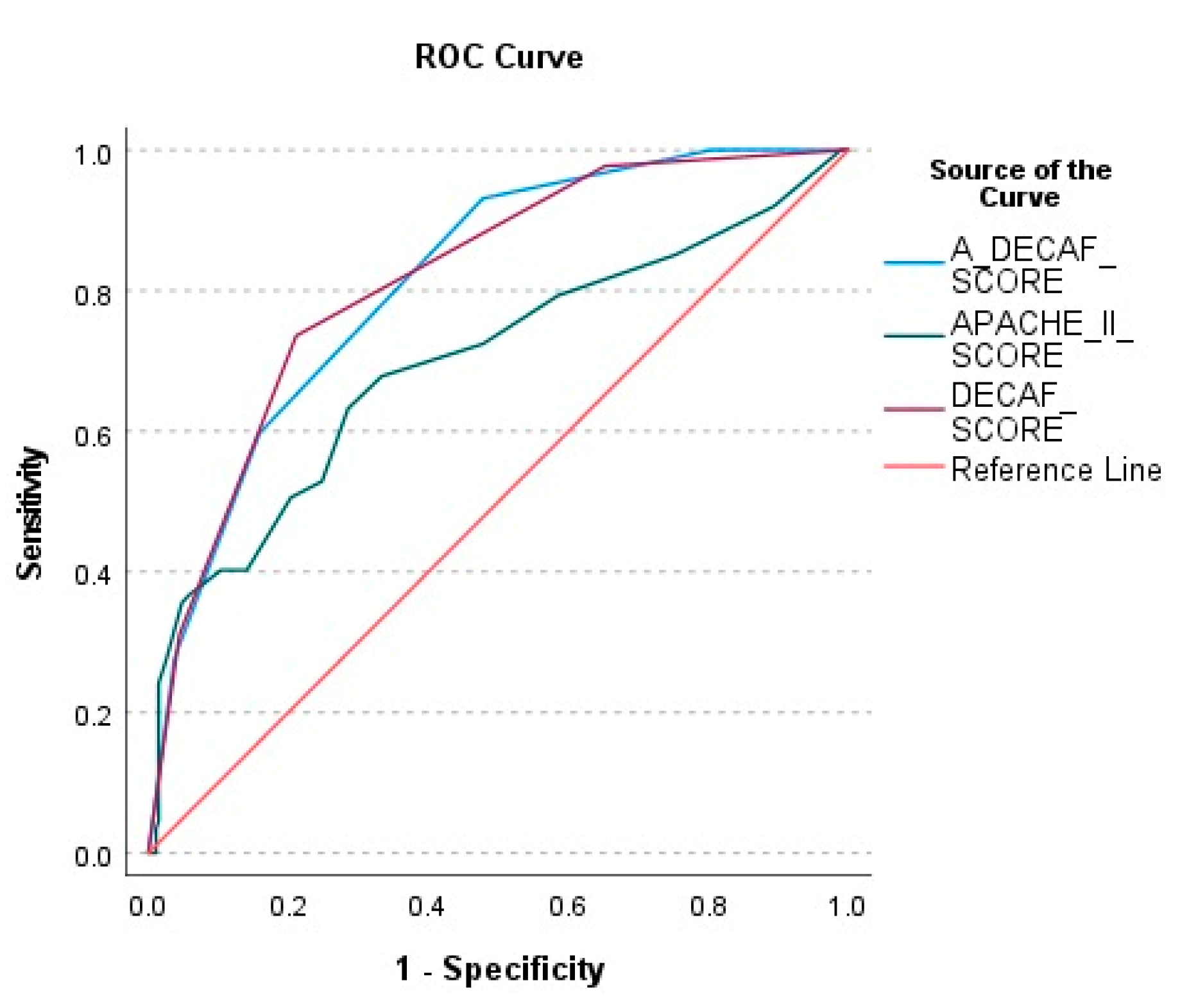
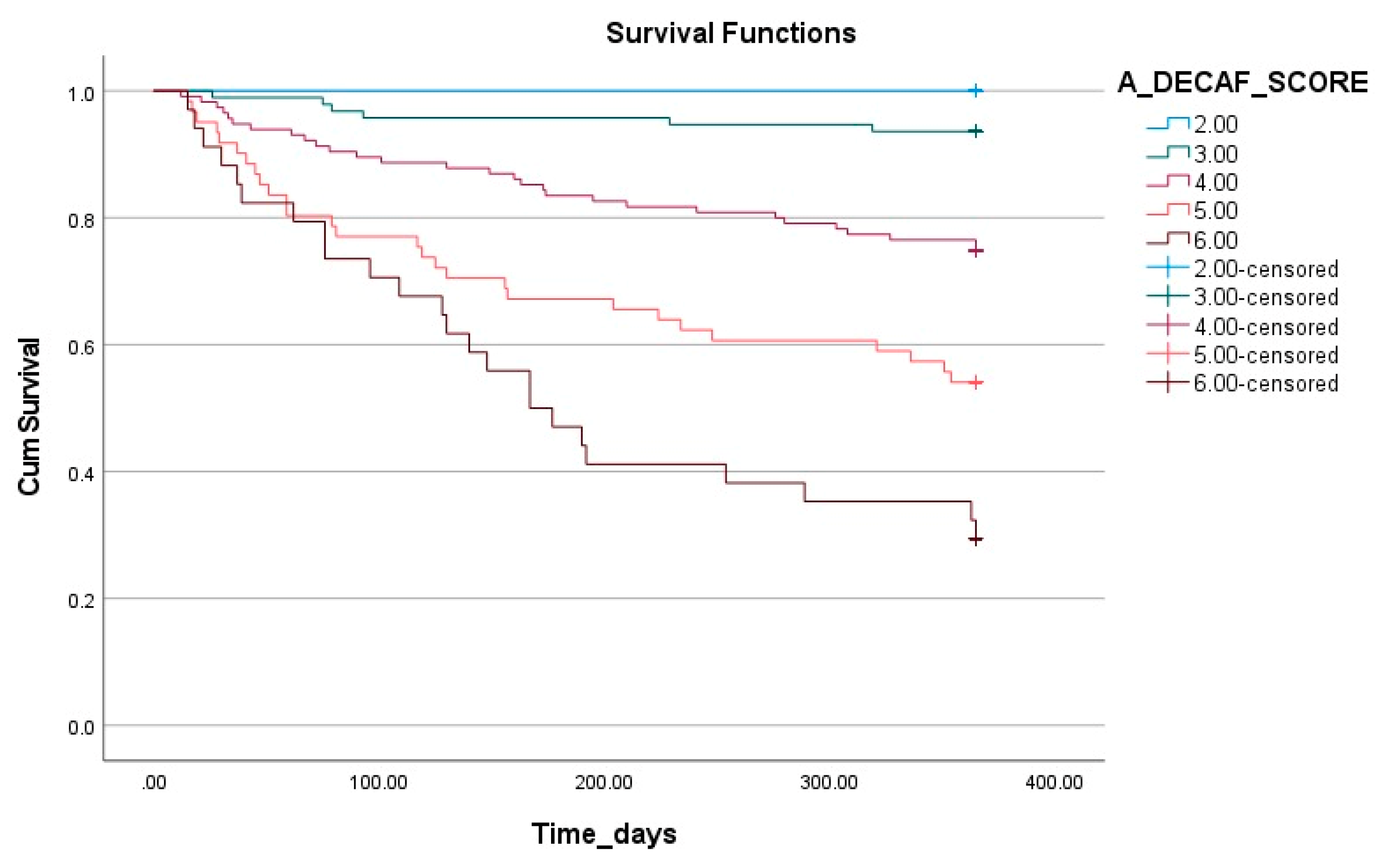
Background and Objectives: Data on the prognosis of hypercapnic respiratory failure (HRF) are limited, despite existing studies focusing on its causes and association with mortality. This study aimed to evaluate prognostic factors influencing long-term survival in patients with HRF due to chronic obstructive pulmonary disease (COPD) and to assess the effectiveness of the Age-adjusted Dyspnea, Eosinopenia, Consolidation, Acidemia and Atrial Fibrillation (A-DECAF) score. Materials and Methods: This retrospective study included patients admitted to the intensive care unit from the emergency department with HRF between April 2022-November 2023. Demographic data, comorbidities, laboratory results, and treatment protocols were recorded. A-DECAF scores were calculated, and survival was analyzed using Kaplan-Meier and ROC analysis. Results: Among 357 patients, 24.4% died within one year of discharge. Deceased patients had significantly higher mean ages (p<0.001) and higher APACHE-II, DECAF and A-DECAF scores (p<0.001). ROC analysis showed that A-DECAF had the highest sensitivity (93.1%) and accuracy (AUC=0.813) for predicting survival. Kaplan-Meier analysis indicated that higher A-DECAF scores were associated with reduced survival rates. Conclusion: The A-DECAF score is an effective tool for predicting long-term survival in COPD patients with HRF, particularly aiding clinical decisions in elderly populations. Further research is needed to validate its use in diverse patient groups.
Keywords:
1. Introduction
2. Materials and Methods
2.1. Patient Selection
2.1.1. Inclusion Criteria
- Patients diagnosed with HRF in the emergency department and subsequently monitored in the intensive care unit.
2.1.2. Exclusion Criteria
- Patients who did not consent to participate in the study
- Patients with HRF caused by procedures requiring general anesthesia and/or sedation
- Patients with HRF attributed to cardiac causes
- Patients with HRF resulting from interstitial lung disease
- Patients with HRF due to neuromuscular diseases
- Patients with HRF related to obstructive sleep apnea syndrome
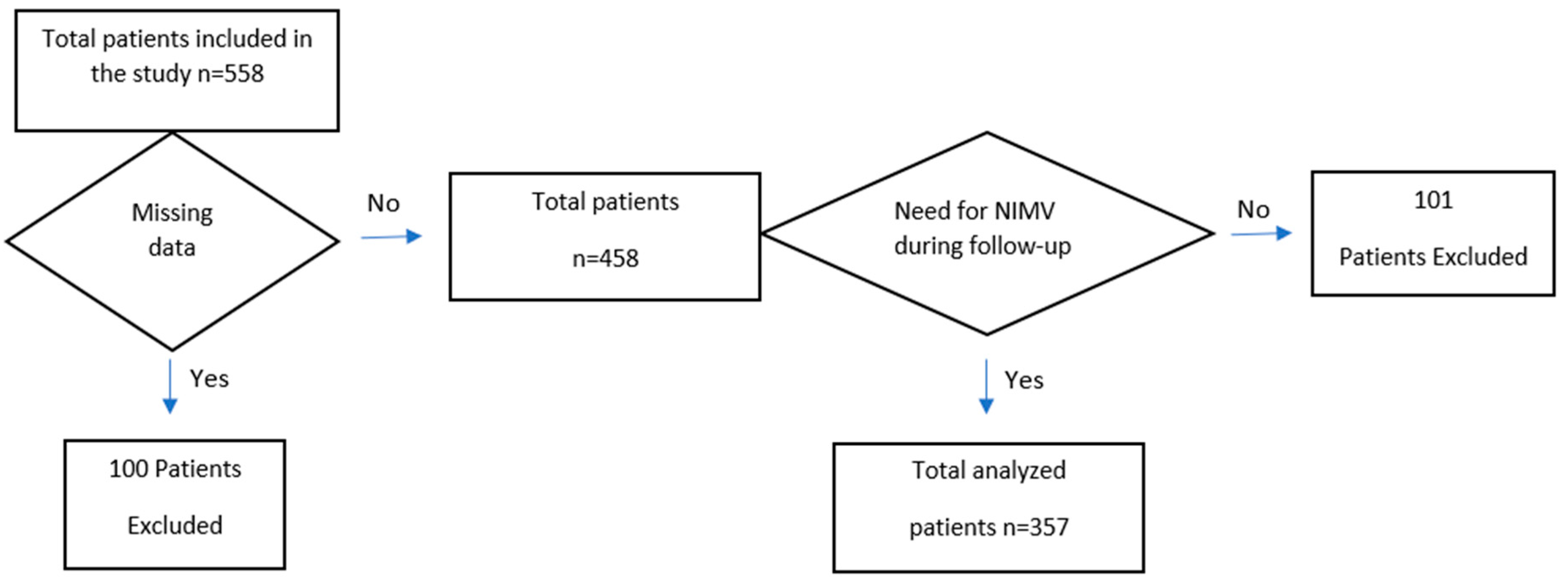
- Patients who no longer required NIMV during follow-up
- Patients with a length of stay less than one day
- Patients who died during the ICU follow-up period
- Patients with incomplete data
2.1.3. Follow-Up Period
2.2. Calculation of the DECAF Score
- Dyspnea: Assessed using British Medical Research Council (mMRC) dyspnea scale.
- Eosinopenia: A point is added if the blood eosinophil level is below 0.05x10⁹/L.
- Presence of Consolidation: A risk factor identified through clinical or radiological findings.
- Acidosis: A pH < 7.30 on arterial blood gas analysis is considered a high-risk factor and is scored.
- Atrial Fibrillation: The presence of atrial fibrillation is evaluated as an additional risk factor and scored.
- Low risk: 0-1 points
- Moderate risk: 2 points
- High risk: ≥3 points
2.3. Calculation of the A-DECAF Score
2.4. Statistical Analysis
3. Results
4. Discussion
5. Limitations
6. Conclusions
Author Contributions
Funding
Institutional Review Board Statement
Informed Consent Statement
Data Availability Statement
Conflicts of Interest
References
- Vykopal M, Mizera J, Jakubec P, Genzor S, Pobeha P. Hypercapnic respiratory failure - review. Cas Lek Cesk. 2023, Cilt 162(1):13-18.
- NR, MacIntyre. Acute Hypercapnic ResNR, MacIntyre. Acute Hypercapnic Respiratory Failure in COPD. Respir Care. 2023, Cilt 68(7):973-982.
- Villgran VD, Lyons C, Nasrullah A et al. Acute Respiratory Failure. Crit Care Nurs Q. 2022, Cilt 01;45(3):233-247.
- Candemir Ergene G, Doğan NÖ, Ergül T et al. Evaluating the prognostic value of DECAF score and procalcitonin in patients with COPD exacerbation. Am J Emerg Med. 2025, Cilt 6;90:23-30.
- Chung E, Chung KS, Leem AY et al. Impact of age on mortality and transfer to long-term care in patients in an intensive care unit. BMC Geriatr. 2023, Cilt 12;23(1):839.
- Rousseau AF, Prescott HC, Brett SJ et al. Long-term outcomes after critical illness: recent insights. Crit Care. 2021, Cilt 17;25(1):108.
- Flaatten H, Jung C. Long-Term Outcomes After Critical Care: Another Brick in the Wall. Chest. 2021, Cilt 160(5):1587-1588.
- Chung Y, Garden FL, Marks GB, Vedam H. Long-term cohort study of patients presenting with hypercapnic respiratory failure. BMJ Open Respir Res. 2024, Cilt 20;11(1):e002266.
- United Nations, Department of Economic and Social Affairs, Population Division. World Population Prospects 2019. Ten Key Findings. 2019.
- Sjoding MW, Prescott HC, Wunsch H, Iwashyna TJ, Cooke CR. Longitudinal Changes in ICU Admissions Among Elderly Patients in the United States. Crit Care Med. 2016, Cilt 44(7):1353-60.
- Guillon A, Hermetet C, Barker KA et al. Long-term survival of elderly patients after intensive care unit admission for acute respiratory infection: a population- based, propensity score-matched cohort study. Crit Care. 2020, Cilt 29;24(1):384.
- Barisich PS, Ramírez-Santana M. One-year survival after admission in the intensive care unit: a retrospective cohort study. Rev Assoc Med Bras (1992). . 2024, Cilt 16;70(9):e20240463.
- Ari M, Ozdemir T, Yildiz M et al. Factors Affecting the Length of Hospital Stay in Hypercapnic Respiratory Failure. Diagnostics (Basel). 2024, Cilt 25;15(1):14.
- Simpson A, Puxty K, McLoone P et al. Comorbidity and survival after admission to the intensive care unit: A population-based study of 41,230 patients. J Intensive Care Soc. 2021, Cilt 22(2):143-151.
- Echevarria C, Steer J, Heslop-Marshall K et al. Validation of the DECAF score to predict hospital mortality in acute exacerbations of COPD. Thorax. 2016, Cilt 71(2):133-40.
- Hu X, Cai W, Xu D et al. Performance of the DECAF score in predicting hospital mortality due to acute exacerbations of COPD. Int J Tuberc Lung Dis. 2024 , Cilt 1;28(12):564-571.
- Almarshoodi K, Echevarria C, Kassem A et al. An International Validation of the "DECAF Score" to Predict Disease Severity and Hospital Mortality in Acute Exacerbation of COPD in the UAE. Hosp Pharm. 2024, Cilt 59(2):234-240.
- Jiang J, Yu X, Wang B, Ma L, Guan Y. DECAF: An interpretable deep cascading framework for ICU mortality prediction. Artif Intell Med. 2023, Cilt 138:102437.

| Characteristics | Deceased Patients (N=87) (24.4%) |
Surviving Patients (N=270) (75.6%) |
p-Value |
|---|---|---|---|
| Age, years (Mean±SD) | 73.21±10.92 | 67.41±11.15 | <0.001 |
| Male Gender | 60 (69%) | 166 (61.5%) | 0.208 |
| Comorbidities | |||
| Emphysema | 20 (23.8%) | 96 (37.2%) | 0.024 |
| Lung Cancer | 15 (17.2%) | 7 (2.6%) | <0.001 |
| Hypertension | 56 (64.4%) | 136 (50.4%) | 0.023 |
| Coronary Artery Disease | 23 (26.4%) | 41 (15.2%) | 0.017 |
| Atrial Fibrillation | 19 (21.8%) | 29 (10.7%) | 0.008 |
| APACHE-II Score | 23±5 | 19±4 | <0.001 |
| Need for Invasive Mechanical Ventilation | 21 (24.7%) | 28 (10.5%) | <0.001 |
| DECAF Score | 4.02±0.80 | 2.91±0.82 | <0.001 |
| A-DECAF Score | 4.80±0.92 | 3.47±1.05 | <0.001 |
| Laboratory Findings | All Patients (N=357) Median (Interquartile Range (25–75)) |
Deceased Patients (N=87) Median (Interquartile Range (25–75)) |
Surviving Patients (N=270) Median (Interquartile Range (25–75)) |
p-Value |
|---|---|---|---|---|
| Blood Urea Nitrogen | 50 (33-72) | 56 (38-89) | 47 (31-66) | 0.001 |
| Creatinine | 1 (0.80-1.28) | 1 (0.79-1.35) | 1 (0.80-1.26) | 0.940 |
| pH | 7.31 (7.24-7.38) | 7.29 (7.22-7.33) | 7.33 (7.25-7.39) | <0.001 |
| pCO2 | 72 (65-86) | 77 (68-88) | 71 (64-84) | 0.003 |
| Variable | AUC | 95% Confidence Interval | Cut-Off Value | Sensitivity (%) | Specificity (%) | PPV (%) | NPV (%) | LR+ | LR− | p-Value |
|---|---|---|---|---|---|---|---|---|---|---|
| APACHE-II | 0.699 | 0.629-0.768 | 20.50 | 63.2 | 71.5 | 41.7 | 85.8 | 2.22 | 0.51 | <0.001 |
| DECAF Score | 0.816 | 0.766-0.865 | 3.50 | 73.6 | 78.9 | 52.9 | 90.3 | 3.48 | 0.34 | <0.001 |
| A-DECAF Score | 0.813 | 0.765-0.861 | 3.50 | 93.1 | 52.2 | 38.6 | 95.9 | 1.95 | 0.13 | <0.001 |
Disclaimer/Publisher’s Note: The statements, opinions and data contained in all publications are solely those of the individual author(s) and contributor(s) and not of MDPI and/or the editor(s). MDPI and/or the editor(s) disclaim responsibility for any injury to people or property resulting from any ideas, methods, instructions or products referred to in the content. |
© 2025 by the authors. Licensee MDPI, Basel, Switzerland. This article is an open access article distributed under the terms and conditions of the Creative Commons Attribution (CC BY) license (http://creativecommons.org/licenses/by/4.0/).