Preprint
Article

This version is not peer-reviewed.

The Symmetry Number Structure about Line-1/2

A peer-reviewed article of this preprint also exists.

Submitted:

13 February 2025

Posted:

14 February 2025

Read the latest preprint version here

Abstract
In this paper, we discuss the symmetry number structure about line-1/2 . We find that using the symmetry characters of those structures we can give proofs of the number Conjectures: Goldbach Conjecture、Twins Prime Conjecture and Polignac’s conjecture and the Riemann Hypothesis. In this paper, we also gave concise proofs of the Fermat’ Last Theorem and the 3n+1 conjecture.
Keywords: 
;  ;  

The Symmetry of P/2n and Prime Numbers Conjectures

We have
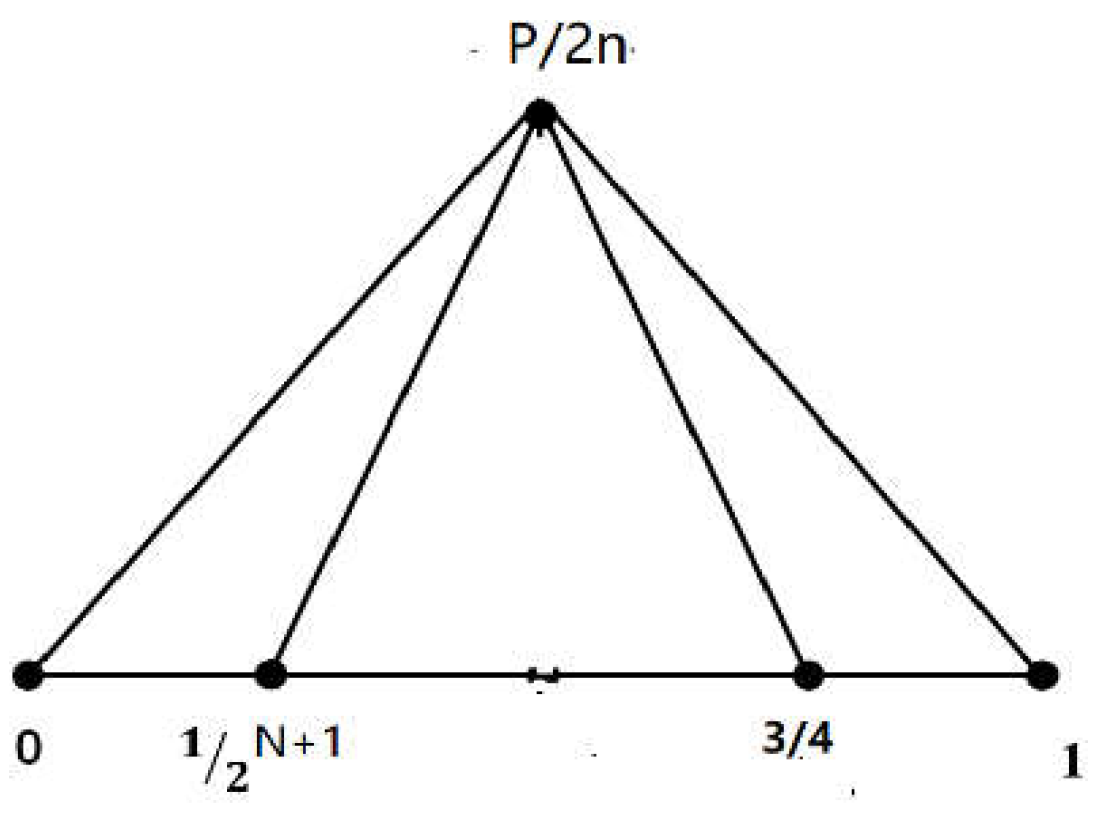
P 2 n =       1 2 N + 1                     n = 2 N P                       3 4                                   n = 2       P = 3                               1                                         n = 1       P = 2
Figure 1. P/2n number structure with points [ 0 1/2N+1 3/4 1].
Preprints 149242 g001
N ~   0 ,     1   2 3 4 . All natural numbers
n ~   1   2 3 4 . All natural numbers excepted 0
P ~ 2 3 5 7 . All prime numbers
And
P 2 n =                               1 2 1 2 n                         P = n 1   ( n 3 ) 1 2                             P = n   1 2 + 1 2 n                     P = n + 1
And We have
p 0 P ~ ( 0 , n ]       ( n 2 )
And based on Bertrand -Chebyshev Theorem:when n 2 , there are at least a prime number between n and 2n.
p n P ~ [ n , 2 n ) ( n 2 )
So we have:
0 < p 0 2 n 1 2
1 2 p n 2 n < 1
So we have
p 0 2 n = 1 2 1 2 n   ( n 3 )
p n 2 n = 1 2 + 1 2 n
So
( 1 2 1 2 n ) + ( 1 2 + 1 2 n ) = p 0 2 n + p n 2 n
2 n = p 0 + p n   ( n 3 )
This is the proof of Goldbach conjecture.
And
p n 2 n p 0 2 n = 1 2 + 1 2 n ( 1 2 1 2 n )
p n p 0 = 2      
This is the proof of Twin Primes Conjecture
And we also have
0 < p 0 2 n = 2 k 1 + 1 2 n 1 2 ( n 3 )
0 < 2 k 1 + 1 n
0 < k 1 n 1 2
k 1     i s   a   p o s i t i v e   i n t e g e r                  
s o           k 1 ~ 1,2 , 3 · · · · · · n 1 2       ( n 3 )      
And
1 2 p n 2 n = 2 k 2 + 1 2 n < 1
n 2 k 2 + 1 < 2 n
n 1 2 k 2 < 2 n 1 2 ( n 3 )
k 2     i s   a   p o s i t i v e   i n t e g e r                  
s o           k 2 ~ n 1 2 , n 1 2 + 1 , · · · · · · 2 n 1 2       ( n 3 )    
we have
p n 2 n p 0 2 n = 2 k 2 + 1 2 n 2 k 1 + 1 2 n
p n p 0 = 2 ( k 2 k 1 )
( p n p 0 ) m a x = 2 ( k 2 m a x k 1 m i n ) = 2 2 n 1 2 1 = 2 ( n 2 )   ( n 3 )
This is the proof of Polignac’s conjecture.
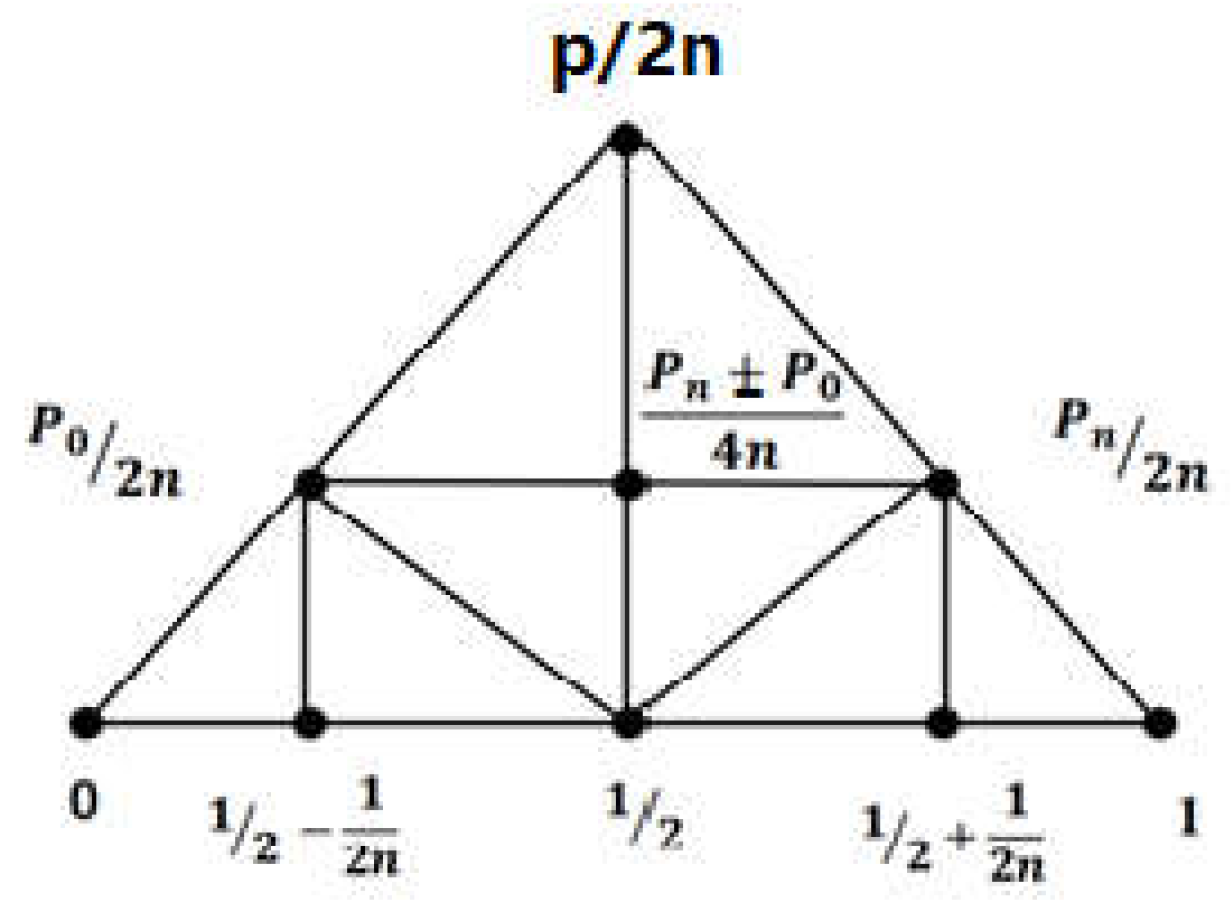
So we get a symmetry structure of P/2n as Figure 2
p 0 2 n = 1 2 1 2 n     ( n 3 )
p n 2 n = 1 2 + 1 2 n
p n ± p 0 4 n = 1 2
A Concise Proof of The Fermat’ Last Theorem
The Fermat’ Last Theorem:
x n + y n = z n x , y , z n ,     x y z 0     n > 2 h a s   n o   s o l u t i o n .
n ~ 1,2 , 3,4 , 5 , 6 .   a l l   t h e   n a t u r a l   n u m b e r s   e x c e p t e d   0
The equivalent proposition of this conjecture is
( x z ) n + ( y z ) n = 1
( x , y , z n ,     x y z 0     n > 2 ) has no solution.
We have
( x z ) n + y z n = 1 = 1 2 n
n ~ 1,2 , 3,4 , 5 ,   6 .   a l l   t h e   n a t u r a l   n u m b e r s   e x c e p t e d   0
( x z ) n + y z n = 1
= ( 1 2 n 1 2 n ) + 1
= ( 1 2 1 2 n ) + ( 1 2 + 1 2 n )
= 1 2 n + ( 1 1 2 n )
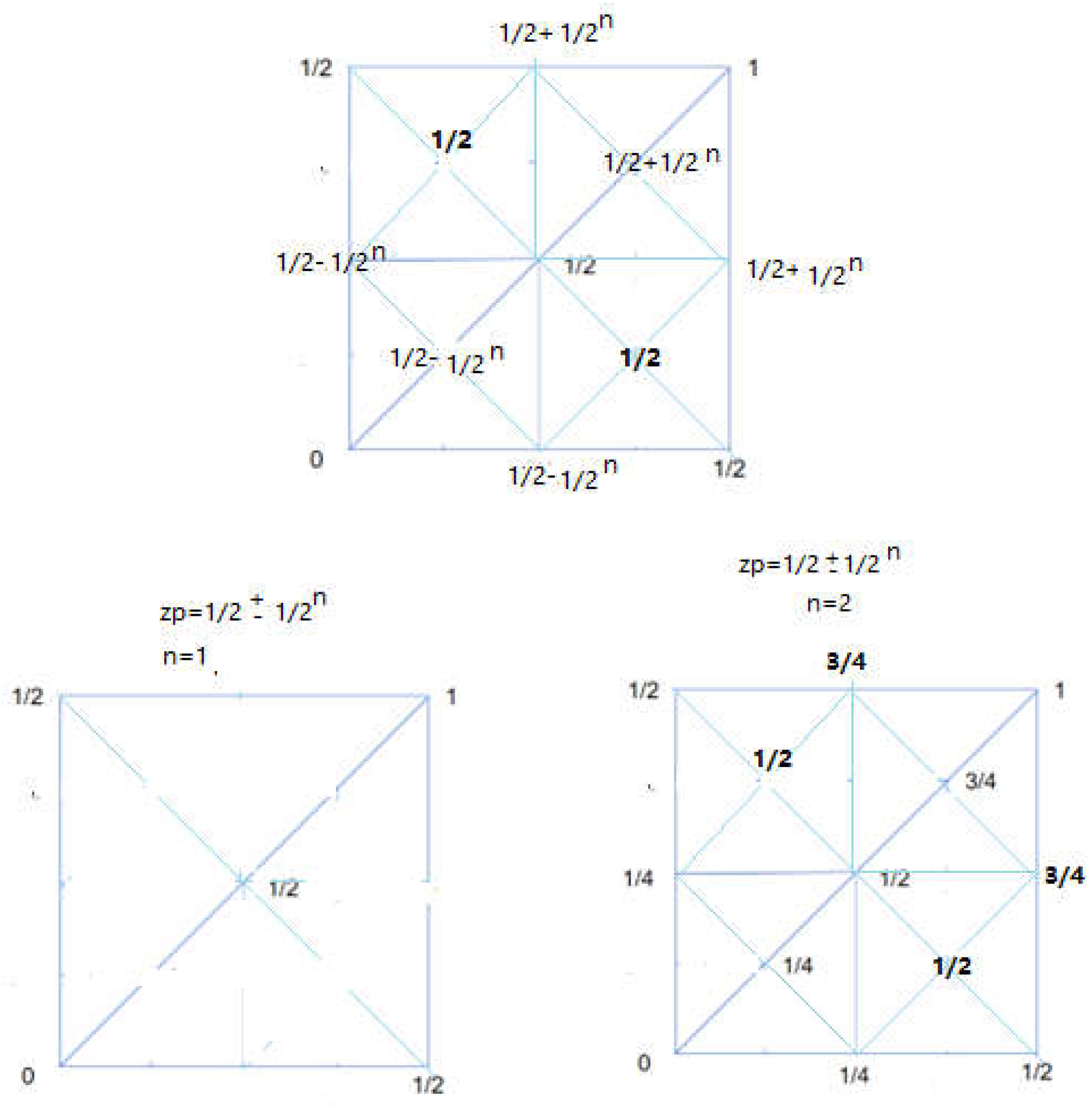
Only When n = 1 we have
1 2 n 1 2 n = 1 2 1 2 n = 0
1 = ( 1 2 + 1 2 n ) = ( 1 2 + 1 2 )
And Only When n = 2
1 2 n = 1 2 1 2 n = 1 4
1 1 2 n = 1 2 + 1 2 n = 3 4
And We can get the figures as Figure 3.
n = 1   a n d   n = 2
In fact we have
1 = 1 2 1 + 1 2 1 = 1 2 2 + 3 2 2 = 1 2 3 + 7 2 3 o r   3 2 3 + 5 2 3
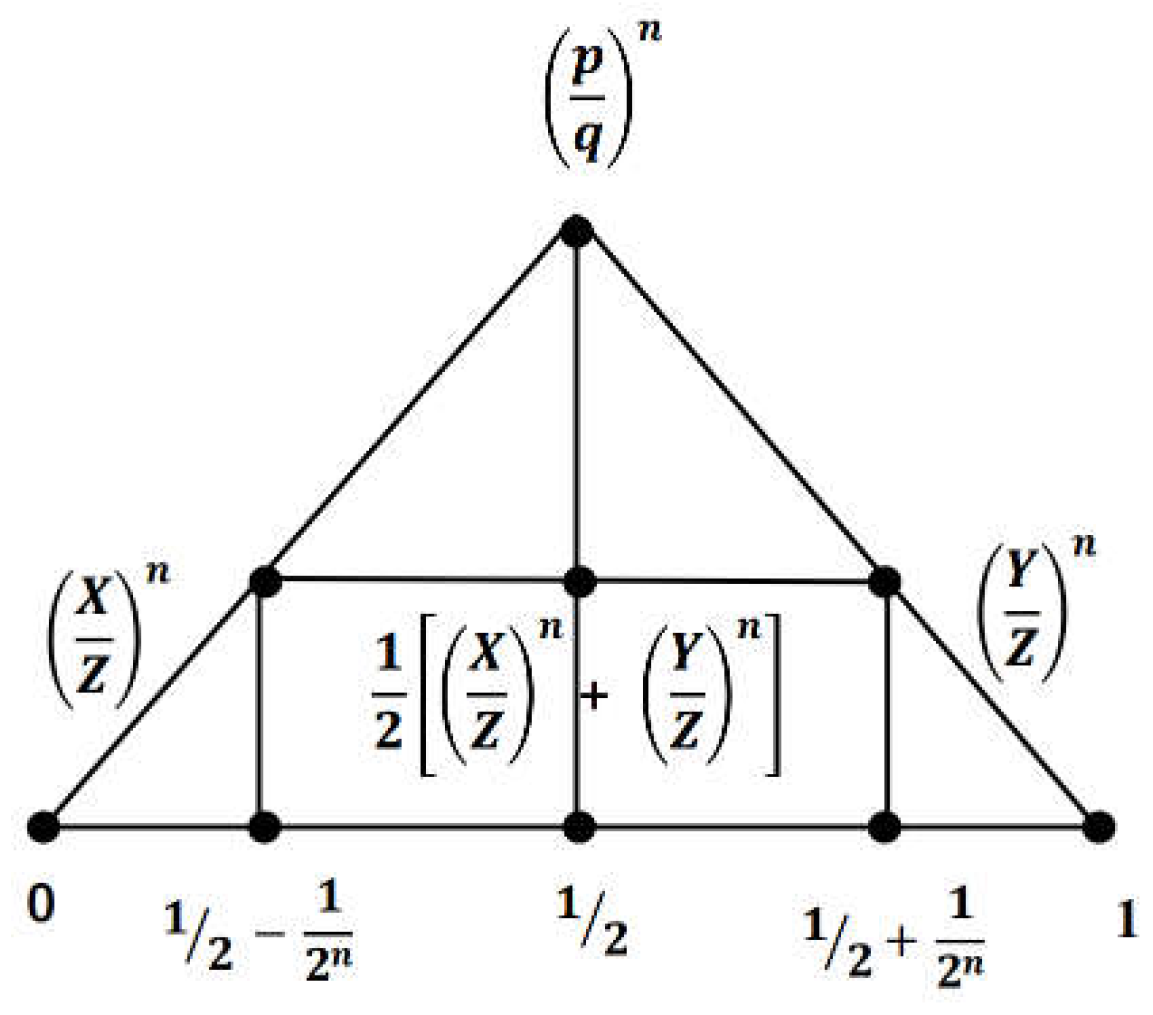
Figure 4. a symmetry structure of ( p q ) n about line-1/2.
Preprints 149242 g004
( p q ) n     p, q is relatively prime and n ~   1   2 3 4 .
1 / 2 [ ( x z ) n + y z n ] = 1 / 2 ( x z ) n + y z n = 1
( x z ) n = 1 2 1 2 n
( y z ) n = 1 2 + 1 2 n
3. a concise proof of Collatz Conjecture
Collatz Conjecture:
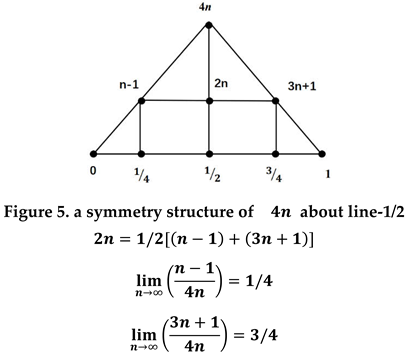
f ( n ) = n 2                       i f n 0   ( m o d 2 ) 3 n + 1     i f n 1   ( m o d 2 )
k N   f k n = 1
      n ~ 1 2 3 4 . a l l   t h e   n a t u r a l   n u m b e r s   e x c e p t e d   0
n + 1 2 + [ n 1 2 ] [ n 2 ] = 2 n + 2 n + 1 = n 1 + 3 n + 1 2 n = 4 n 2 n = 4 2 = 2 1 = 1 1 2
= 1 2 N
Preprints 149242 i001
4. The symmetry of L1/2±ε (0 1/2 1) and Riemann Hypothesis
RiemannZeta-Function
ξ ( s ) = n = 1 1 n s = 1 1 p s ( s = a + b i )
S > 1 ξ ( s ) c o n s t
The trivial zero-points of Riemann Zeta-Function is -2n (n~1,2,3,…….)
Riemann Hypothesis: all the Non-trivial zero-point of Zeta-Function Re ( s ) = 1 2 .
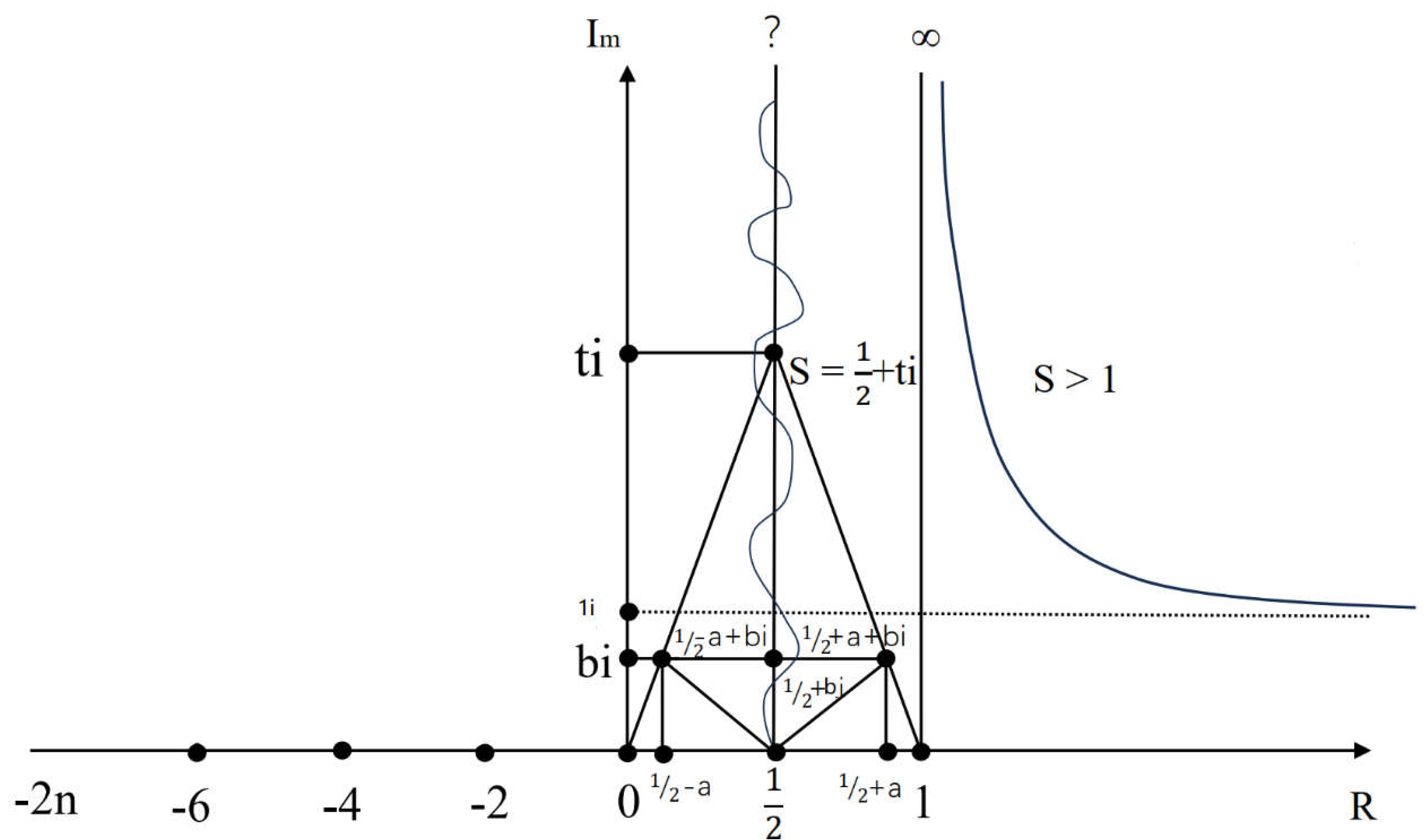
We can get a symmetry structure including all numbers about the line-1/2 as Figure 6
s = 1 2 + t i           t R
z p 1 = 1 2 a + b i         z p 0 = 1 2 + b i         z p 2 = 1 2 + a + b i
z p 1 + z p 2 = 1 2 a + b i + 1 2 + a + b i = 1 + 2 b i
z p 2 z p 1 = 1 2 + a + b i 1 2 a + b i = 2 a
a , b R           0 a 1 2
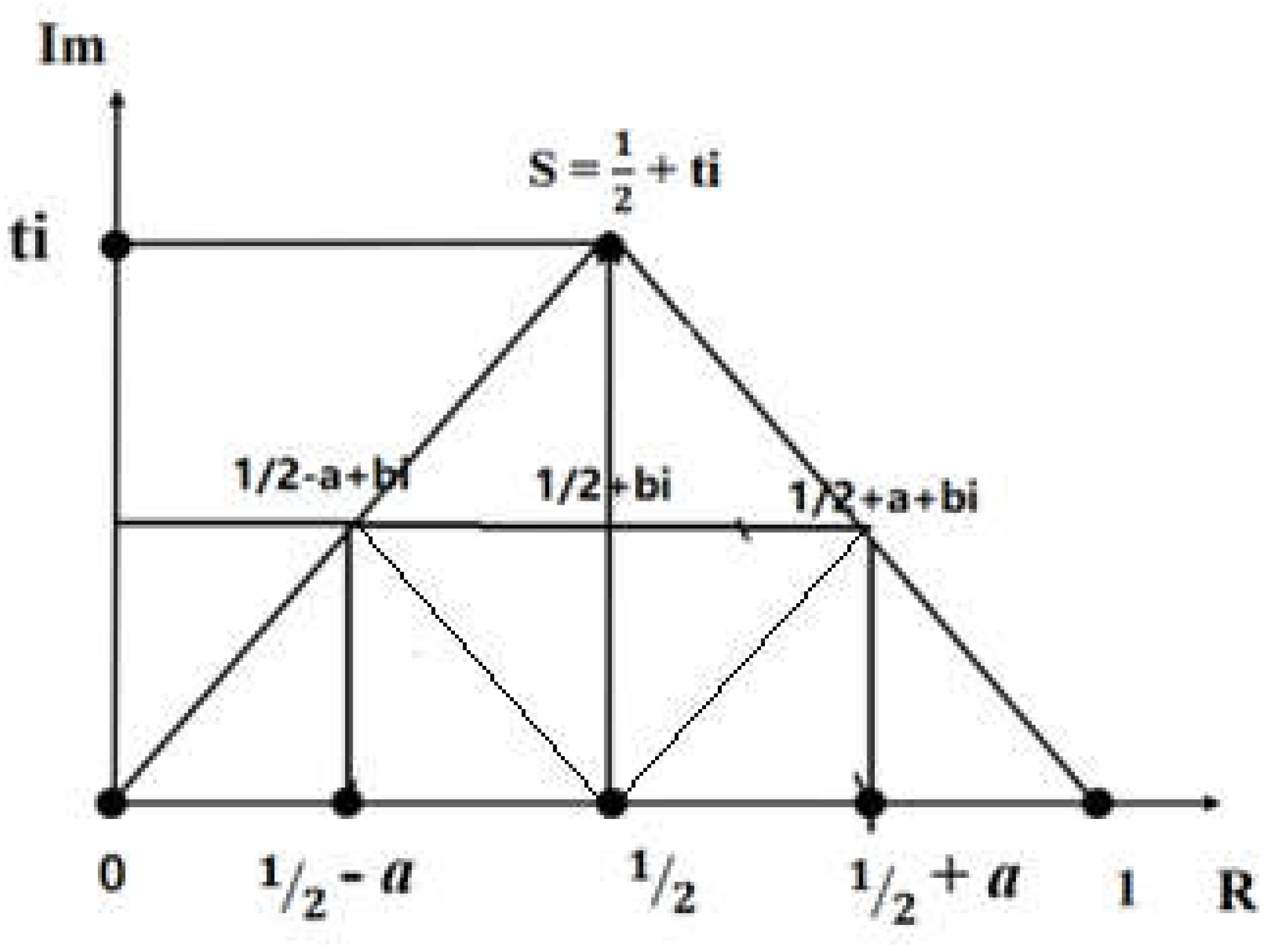
As the Figure 7. If we have zero points of ξ ( s ) as
z p 1 = 1 2 a + b i         z p 2 = 1 2 + a + b i
And s = 1 2 + t i   t R is the first zero point on line-1/2
We can get a zero point as
z p 0 = 1 2 + b i         b < t b , t R
It is contrary to that s = 1 2 + t i   t R is the first zero point on line-1/2
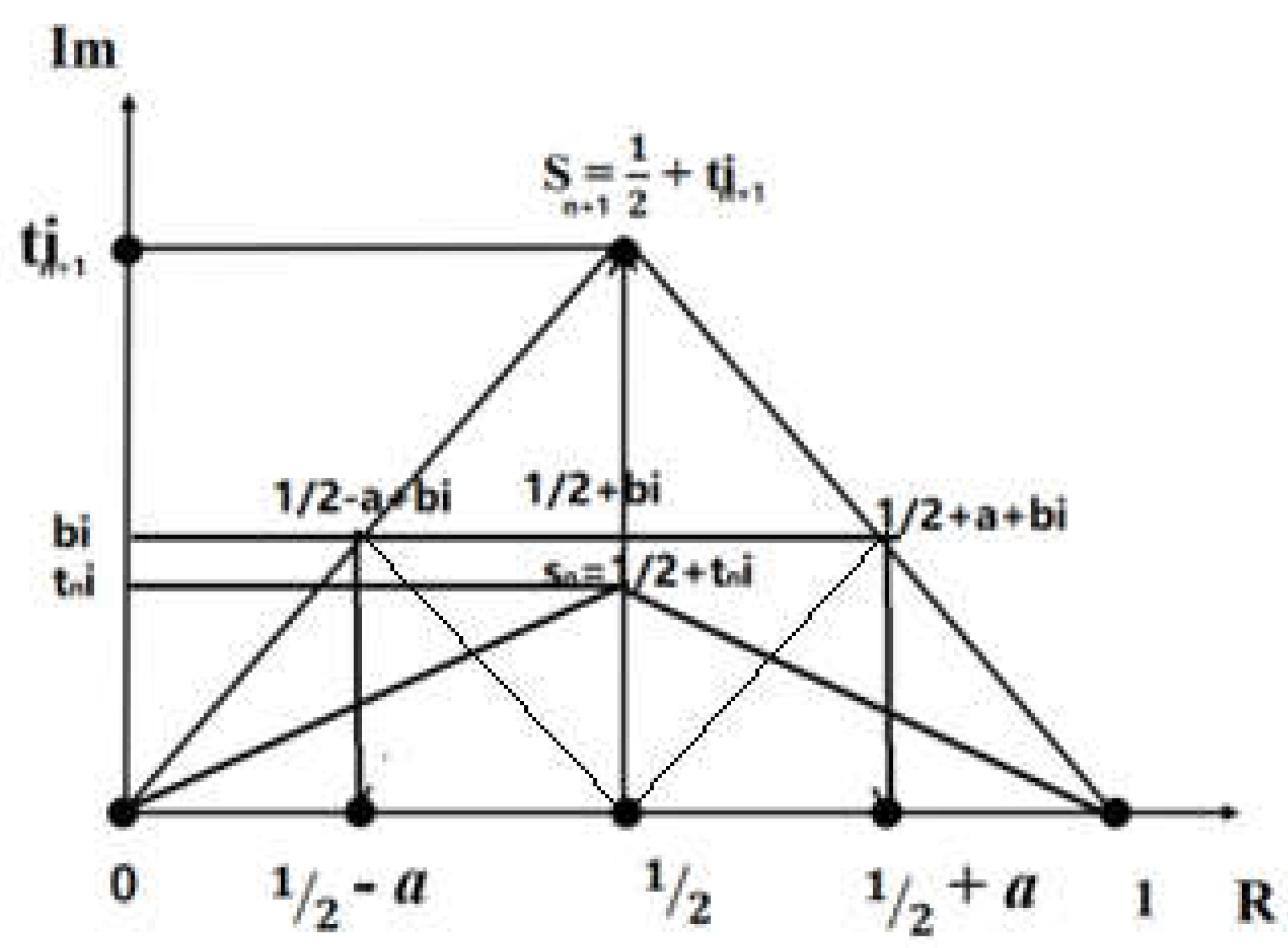
As the Figure 8. If we have zero points of ξ ( s ) as
z p 1 = 1 2 a + b i         z p 2 = 1 2 + a + b i
And s n = 1 2 + t n i t R is the No. n zero point on line-1/2
s n + 1 = 1 2 + t n + 1 i t R is the No. n+1 zero point on line-1/2
We can get a zero point between s n       a n d       s n + 1     o n       l i n e 1 / 2 as
z p 0 = 1 2 + b i         t n < b < t n + 1         b , t R
It is contrary to that s n     a n d         s n + 1   are the adjacent zero points on line-1/2
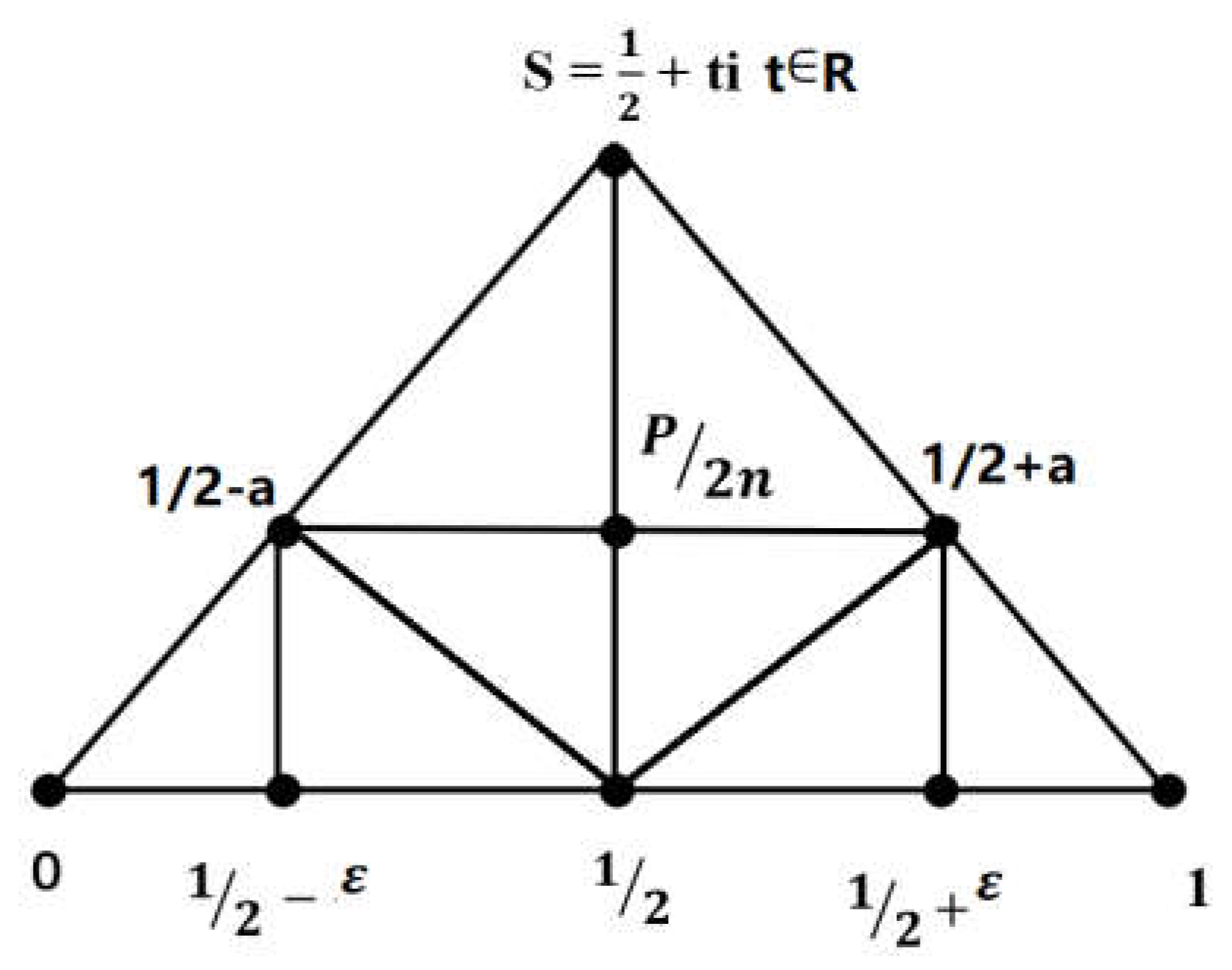
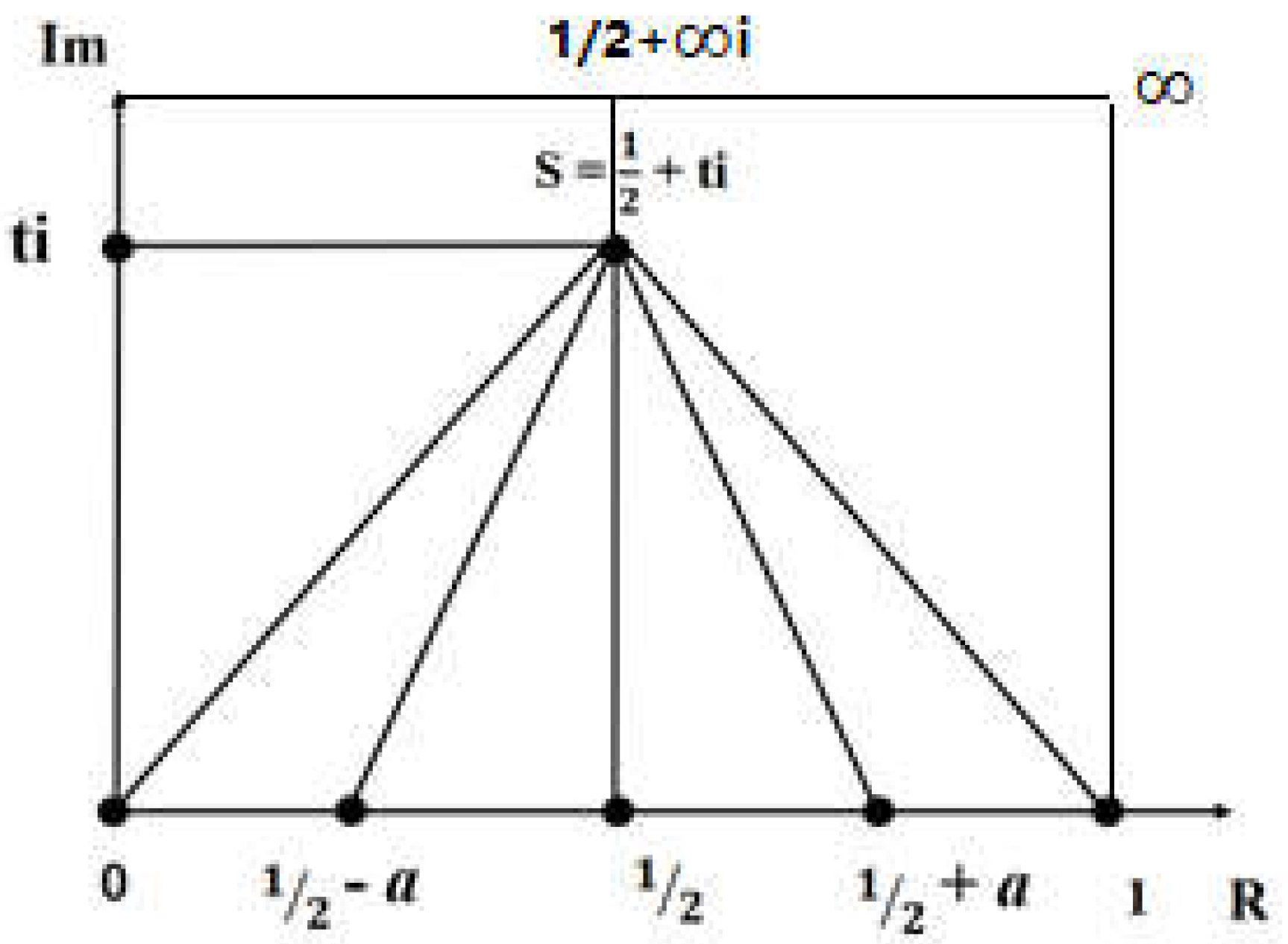
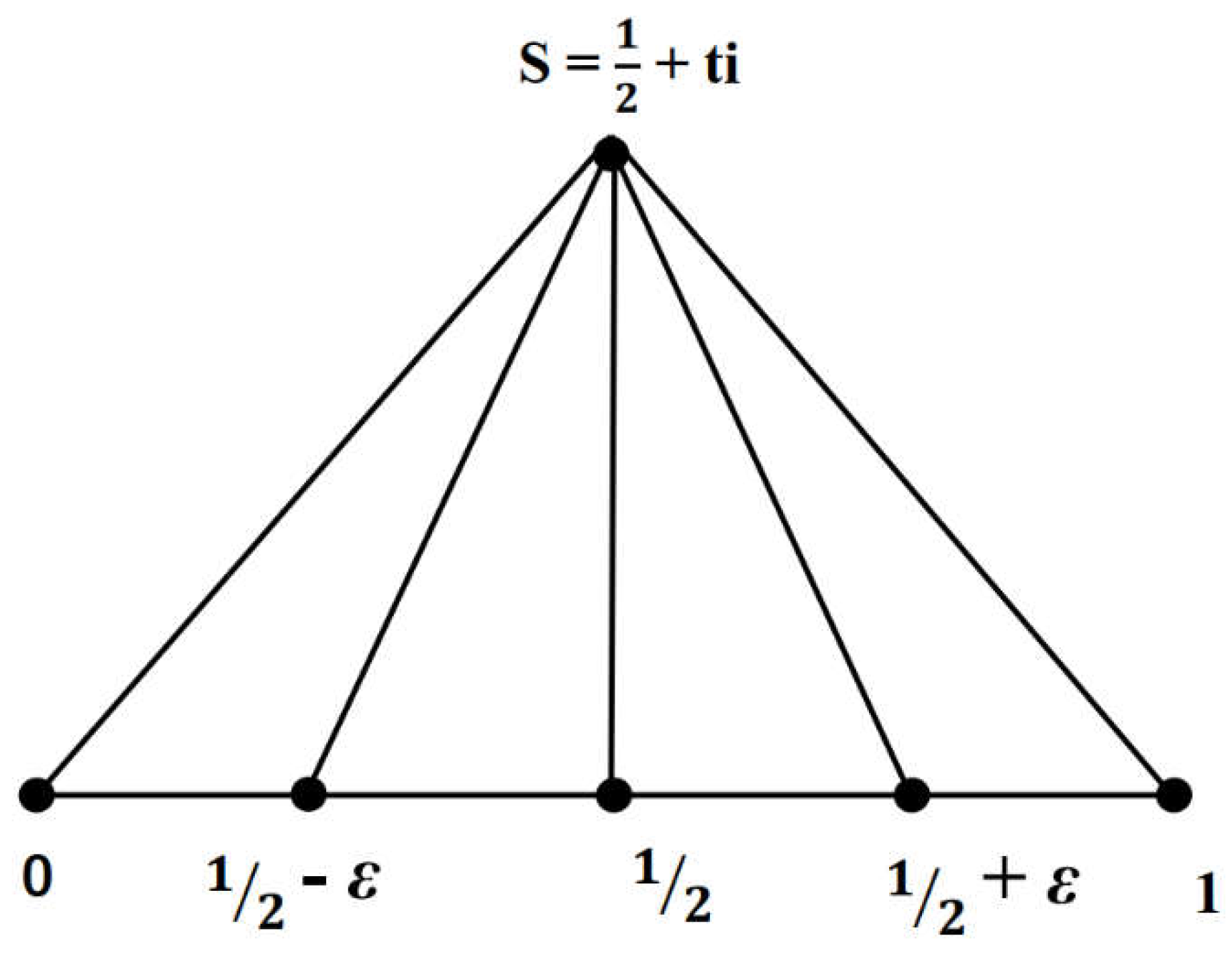
So on complex plane, We can have the symmetry structure about the line-1/2 with zp=1/2±a (       0 a 1 2               a   R ) show as on Figure 9.
S = 1 2 + t i ( t R )
z p = 1 2 ± a ( 0 a 1 2     a R )
z p 1 = 1 2 a         z p 0 = 1 2 z p 2 = 1 2 + a
z p 1 + z p 2 = 1 2 a + 1 2 + a = 1
z p 2 z p 1 = 1 2 + a 1 2 a = 2 a
This is mean that there are no zero points on line-1/2± a     (       0 a 1 2               a   R ) .
Hardy and Littlewood give a proof that there are infinite zero points on line-1/2 (Hardy and Littlewood. 1914 )
So we give a proof that all the non-trivial Zero points of Riemann zeta-function are on the Line-1/2. This is the proof of Riemann Hypothesis.
In fact, we have a symmetry number structure about line-1/2 as Figure 10.
S = 1 2 + t i     ( t R )
z p = 1 2 ± ε     ( ε = a + b i         a , b R       0 a 1 2 )
And we can get a symmetry number structure about line-1/2 as Figure 11. We should call it Reimann dynamic space.
1 + i 2 = 0
1 + 1 / 2   ( i + 1 ) i 1 = 0
S = 1 2 + t i ( t R )
z p = 1 2 ± ε ( ε = a + b i         a , b R 0 a 1 2 )
P 2 n =       1 2 N + 1                     n = 2 N P                       3 4                                     n = 2       P = 3                 1                                     n = 1       P = 2
N ~   0 ,     1   2 3 4 . All natural numbers
n ~   1   2 3 4 . All natural numbers excepted 0
P ~ 2 3 5 7 . All prime numbers
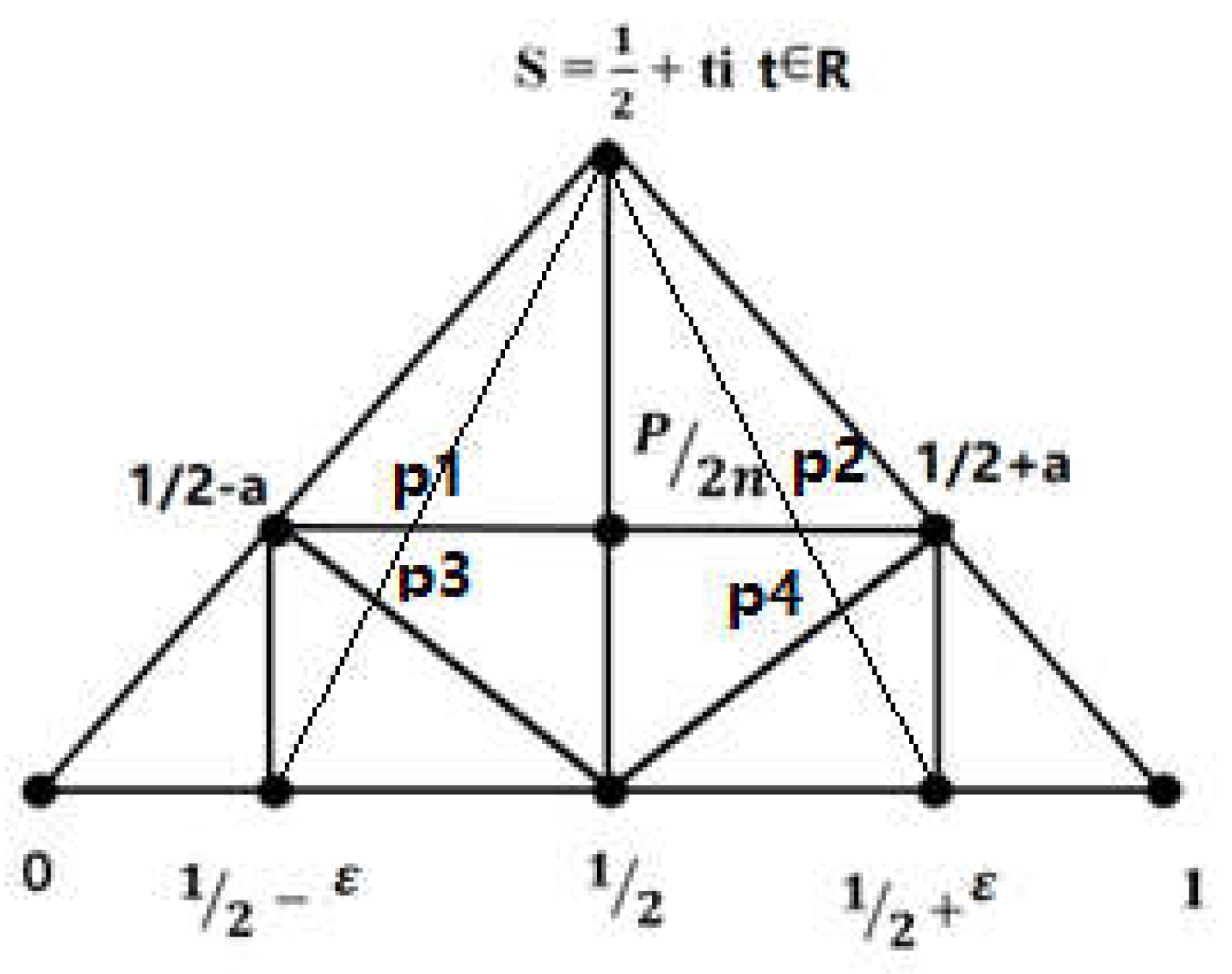
Figure 12. Reimann dynamic space with p1 p2 p3 p4.
Preprints 149242 g011
We can have point p1 p2 p3 p4 and
p 1 1 2 a , p 2 n   a n d   p 1 ( 1 2 ε , 1 2 + t i )
p 2 p 2 n , 1 2 + a   a n d   p 2 ( 1 2 + ε , 1 2 + t i )
p 3 1 2 a , 1 2   a n d   p 3 ( 1 2 ε , 1 2 + t i )
p 4 1 2 , 1 2 + a   a n d   p 4 ( 1 2 + ε , 1 2 + t i )
And we can find that
1 2 a , p 2 n 1 2 ε , 1 2 + t i =
p 2 n , 1 2 + a 1 2 + ε , 1 2 + t i =
1 2 a , 1 2 1 2 ε , 1 2 + t i =
1 2   , 1 2 + a 1 2 + ε , 1 2 + t i =
This means that there are no zero points on line -1/2 ± ε .
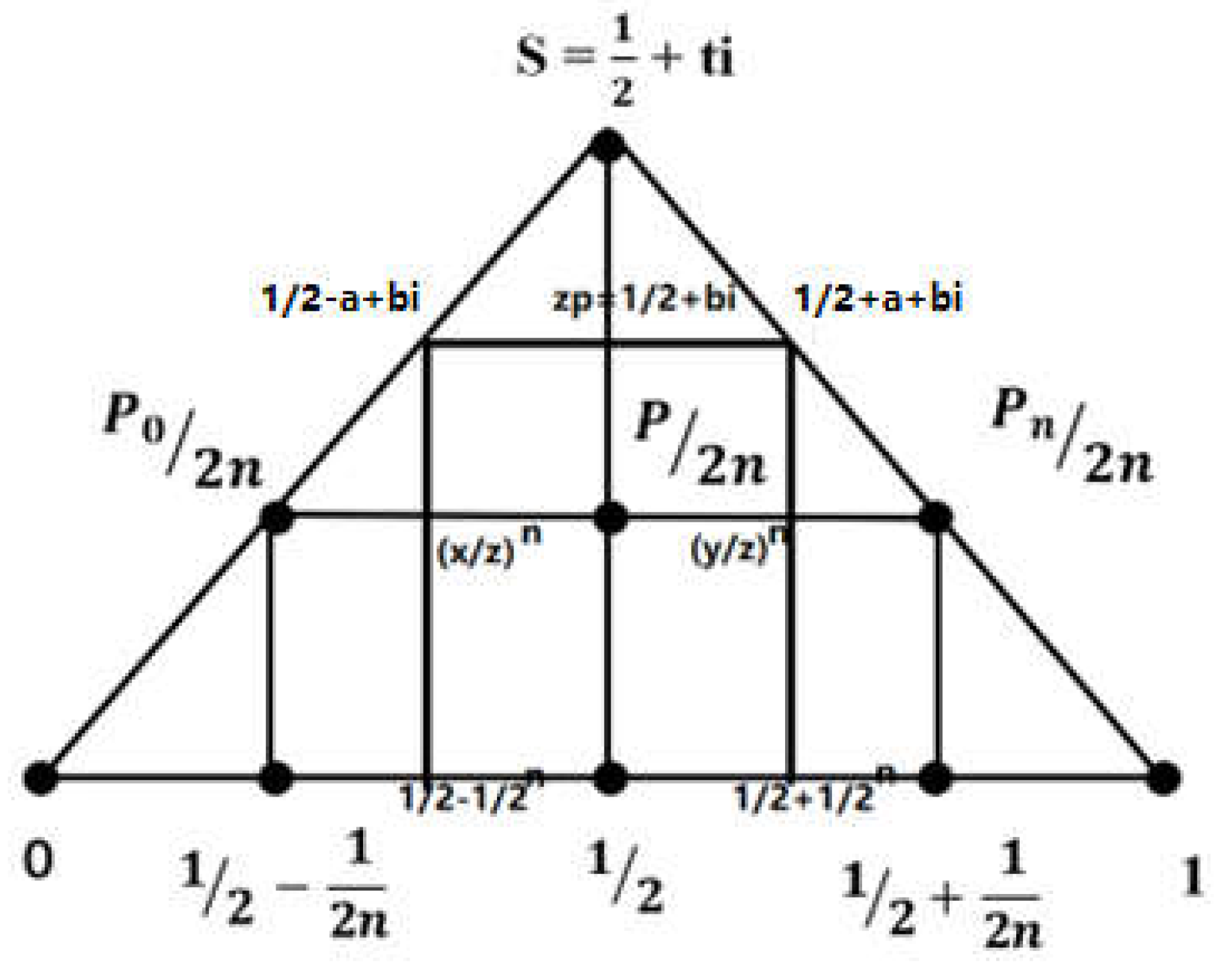
So we can get Figure 13.
  1 . z p = 1 2 + b i 0 < b < t b , t R ( t h e   p r o o f   o f   R H )
2 . ( x z ) n + y z n = 1
( x z ) n 1 2 1 2 n
( y z ) n 1 2 + 1 2 n             ( t h e   p r o o f   o f   F . L . T )
3. p 0 2 n 1 2 1 2 n
p n 2 n 1 2 + 1 2 n ( t h e   p r o o f   o f   G C / B C / T P C )

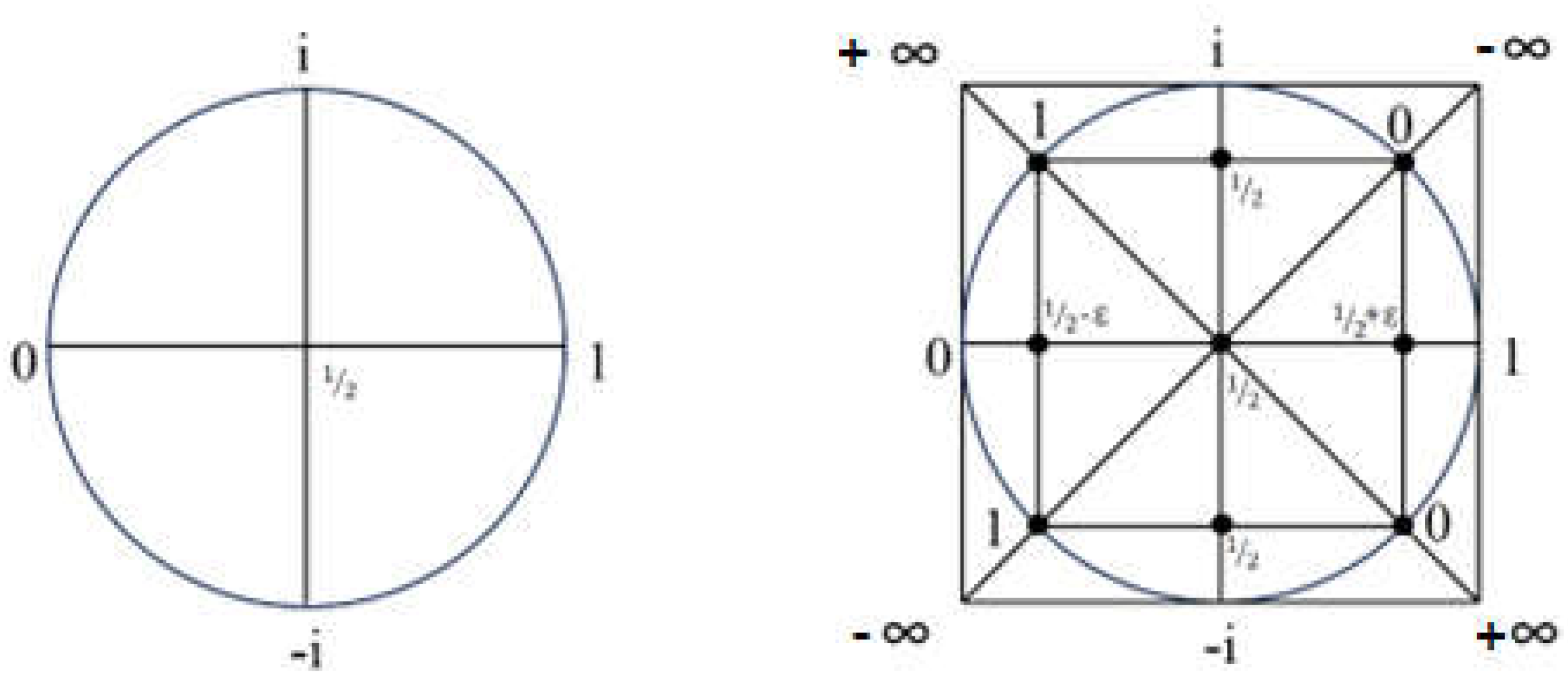
The Symmetry Number Structure about Line-1/2 including all numbers

And we have
1 / 2 = 1 / 2   0 = 1 / 2 - 1 / 2   1 = 1 / 2 + 1 / 2  
1 + ( ± i ) 2 = 0
1 + 1 / 2 ( i + 1 ) i 1 = 0
= 1 + 1 + 1 + 1 +
We called it L1/2±ε 【0 1/2 1】 and analytic continuation to + + we can get Figure 14.
So we have:
1 + +         i           0         1 / 2         1         - i         + 1               1 / 2               0 1 2 ε           1 / 2           1 2 + ε 1               1 / 2               0 1 = 0
z p = 1 2 ± ε
ε = a + b i ( a , b R 0 a 1 2 )
z p 1 = 1 2 ε z p 2 = 1 2 + ε
We have
z p 1 + z p 2 = 1 2 ε + 1 2 + ε = 1
z p 2 z p 1 = 1 2 + ε 1 2 ε = 2 ε = 2 ( a + b i )
And we have
n 2 = 1 2 · n · 2 n = N   1 2 N 1 2 N [ 1 2 ε + 1 2 + ε ]
N ~   0 ,     1   2 3 4 . All natural numbers
n ~   1   2 3 4 . All natural numbers excepted 0
We can get a matrix ( n × n )
1 / 2         . .             1 2 n ( 1 / 2 + ε )             1 / 2             . . 1 2 n ( 1 / 2 - ε ) . .             1 / 2         ( n × n )    
The tr(A)=1/2*n
We have
0 = 1 2 1 2     1 = 1 2 + 1 2         2 = 1 + 1
    1 + i 2 = 0               1 / 2 + i 4 N + 1 = 1 / 2 + i
= 1 + 1 + 1 + 1 +
p 0 P 2 n   pn P 2 n
N ~ 0 1 2 3 4 . all the natural numbers.
n ~   1   2 3 4 . All natural numbers excepted 0
P ~ 2 3 5 7 . All odd prime number
S = 1 2 + t ( t R )
z p = 1 2 ± ε ( ε = a + b i a , b R 0 a 1 2 )
And we find that
1. 1 + e π i = 0 (Euler’s Formula)
1 + i 2 = 0         1 + 1 2 i + 1 i 1 = 0             ( 1 + i ) ( 1 i )   = 1 2 N
1 + e π i = 0         1 + 1 2 ( e i p π e i 2 N π ) = 0
N ~ 0 1 2 3 4 . all the natural numbers.
  p ~ 3 5 7 . All odd prime number
2 .                       2 ( n ± 1 ) = p n ± p 0
p n 2 n + p 0 = 2
And
      2 n p n + p 0 = 2
It is like the Euler’s Polyhedron Formula
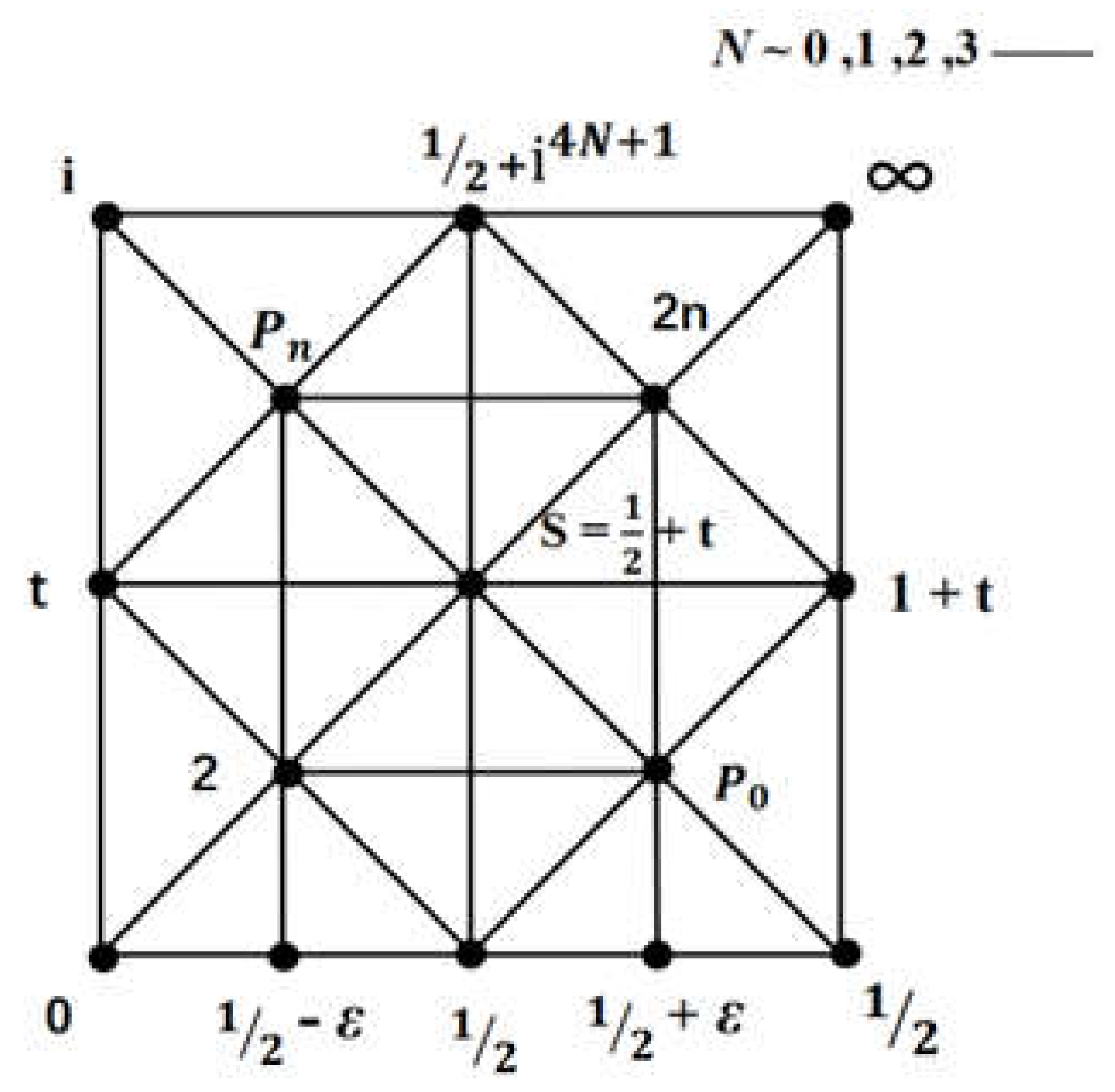
We can get Figure 15. This is a symmetry number structure about line-1/2 including all numbers.

Competing Interests statement

The authors declare that they have no known competing financial interests or personal relationships that could have appeared to influence the work reported in this paper.

Data Availability statement

No datasets were generated or analyzed during the current study.

References

  1. Weisstein, Eric W. " Riemann Hypothesis." From MathWorld--A Wolfram Web Resource. https://mathworld.wolfram.com/ Riemann Hypothesis.html.
  2. Weisstein, Eric W. " Goldbach conjecture." From MathWorld--A Wolfram Web Resource. https://mathworld.wolfram.com/ Goldbach conjecture.html.
  3. Weisstein, Eric W. " Fermat Last Theorem." From Math World--A Wolfram Web Resource. https://mathworld.wolfram.com/Fermat Last Theorem.html.
  4. Weisstein, Eric W. "Collatz Problem." From Math World--A Wolfram Web Resource. https://mathworld.wolfram.com/Fermat Last Theorem.html.
Figure 2. a symmetry structure of P/2n about line-1/2.
Preprints 149242 g002
Figure 3. D1/2+1/2 with points 1/2-1/2n and 1/2-1/2n  n ~   1   2 3 4 . .
Preprints 149242 g003
Figure 6. Riemann Hypothesis: all the non-trivial Zero points of Riemann zeta-function are on the 1/2 axis.
Preprints 149242 g005
Figure 7. a symmetry structure about line1/2+/-a at the zero piont s=1/2+ti.
Preprints 149242 g006
Figure 8. a symmetry structure about line1/2+/-a at the zero point sn=1/2+tni and sn+1=1/2+tn+1i.
Preprints 149242 g007
Figure 9. symmetry structure about the line-1/2 with zp=1/2±a.
Preprints 149242 g008
Figure 10. symmetry structure about the line-1/2 with zp=1/2±ε.
Preprints 149242 g009
Figure 11. Reimann dynamic space.
Preprints 149242 g010
Figure 13. Reimann dynamic space and number conjectures.
Preprints 149242 g012
Figure 14. The Symmetry of L1/2±ε 【0 1/2 1】 with z p = 1 2 ± ε .
Preprints 149242 g013
Figure 15. The Symmetry of S∞+i.
Preprints 149242 g014
Disclaimer/Publisher’s Note: The statements, opinions and data contained in all publications are solely those of the individual author(s) and contributor(s) and not of MDPI and/or the editor(s). MDPI and/or the editor(s) disclaim responsibility for any injury to people or property resulting from any ideas, methods, instructions or products referred to in the content.
Copyright: This open access article is published under a Creative Commons CC BY 4.0 license, which permit the free download, distribution, and reuse, provided that the author and preprint are cited in any reuse.
Prerpints.org logo

Preprints.org is a free preprint server supported by MDPI in Basel, Switzerland.

Subscribe

Disclaimer

Terms of Use

Privacy Policy

Privacy Settings

© 2026 MDPI (Basel, Switzerland) unless otherwise stated