

Submitted:
26 January 2025
Posted:
27 January 2025
You are already at the latest version
Abstract
Quinolones represent one of the largest classes of synthetic antibiotics used in both human and veterinary medicine. Subsequent to the discovery of nalidixic acid, a substantial body of research has been carried out on quinolones, resulting in the synthesis of a number of quinolone derivatives with exceptional pharmacology. In addition to their antibacterial action, quinolones have a broad spectrum of diverse biological activities. In this regard, the present review examines the literature of recent years describing synthesis protocols, reactivity and biological properties, with particular emphasis on the antibacterial, antimalarial, antitrypanosomal, antileishmanial, antiviral and anticancer activities of these famous nuclei. Finally, this review highlights the potential of quinolones as preferred pharmacophores in medicinal chemistry. The aim is to highlight the innovative aspects of rationally designing new therapeutic agents with this structural motif, in the face of emerging antibiotic resistance and the urgent need for new active molecules.
Keywords:
Quinolones
; Antibiotics
; one-pot reactions
; metal-catalyzed couplings
; drug candidates
; biological activities
1. Introduction
The synthesis of organic molecules has gained so much intricacy over the years and applies to several areas such as pharmaceutical chemistry, agrochemicals, and cosmetics [1,2]. Contributing further is probably the fact that most of these molecules need to be synthesized in a multistep fashion a factor that results in increased complexity on how newly evolved reaction techniques can be ingeniously applied. In particular, recent advances in new pharmacophore design are being focused on addressing the ever-growing problem of antibacterial resistance, which has been created by bacteria, fungi, parasites, and viruses, represents a significant concern to human health and the safety of our food products [3]. Over the past seven decades, antibacterial compounds have played a very important role in preventing serious bacterial infections. However, in view of the emergence of resistant populations, there is an urgent need to develop newer and more potent antibacterial agents [4]. Quinolones represent a class of useful antibacterial agents that have been used in human medicine since they were first synthesized. This category ranges from the earliest agent, nalidixic acid, to the advanced fourth-generation fluoroquinolones. Quinolines I-III belong to the benzo-pyridine family and are naturally occurring compounds derived from plants. A wide range of derivatives can be synthesised from them (Scheme 1) [5,6].
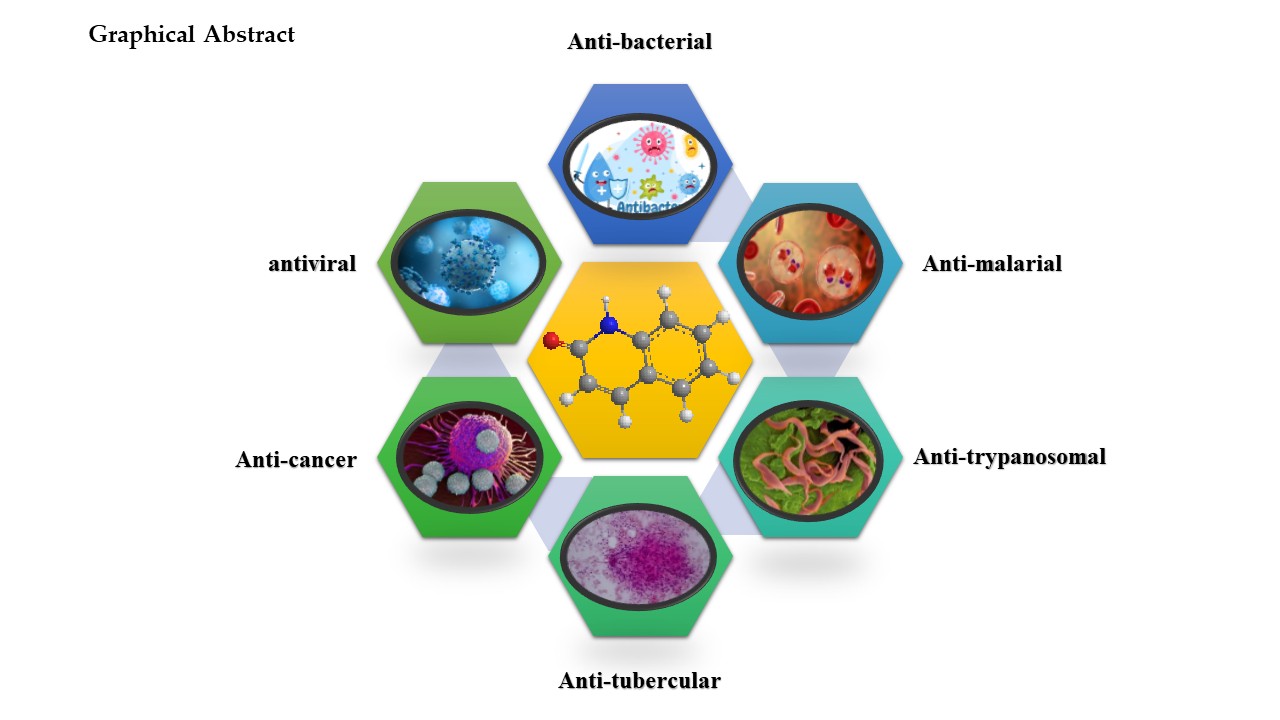
Quinolones, or oxo-quinolines, are among the most commonly encountered heterocycles in drug discovery. Their derivatives have found extensive use in medicinal chemistry due to their distinctive structure, which confers several remarkable pharmacological effects (Figure 1). These effects include activities such as antitubercular [7], antimalarial [8], antibacterial [9], anti-HIV [10], antitumor [11], anti-HCV [12], anticancer [13] and numerous other biological properties [14,15,16,17] (Figure 1).
Quinolones, a widely prescribed class of antibacterial agents worldwide, are used to treat a wide range of bacterial infections in humans [18,19]. However, the extensive utilization of these medications has resulted in a substantial surge in quinolone-resistant bacterial strains since the early 1990s [20], a trend that continues to escalate. With the emergence of bacterial and fungal resistance to established chemotherapeutic drugs [21], the search for new chemotherapeutic molecules has become an ongoing challenge. There is an urgent need for new, potent chemotherapeutic agents, ideally with novel mechanisms of action [22,23].
The medicinal chemistry of quinolones has been the subject of research studies, with a particular attention given to 4-quinolones. Liu et al. emphasized the medicinal potential of quinolones as putative antitubercular agents, while Jiang et al. focused on the potential therapeutic usage of 4-quinolones against gram-negative bacteria [23]. Another research group, Gao et al., examined the anticancer potentials of quinolone hybrids [24]. From a more general point of view, other researchers have investigated the antibacterial and antituberculosis activities of fluoroquinolone derivatives [25,26,27,28,29]. However, these works only cover certain aspects of the medicinal chemistry of these compounds, and recent developments in this field have not been included. Although the ring system is recognized as, having played a key role in the medicinal chemistry of quinolones, and considerable progress has been made in understanding their biological activities. The present review aims to fill this gap by highlighting important and recent advances in the synthesis of new quinolone derivatives, as well as various reactions carried out on the reactive sites of the molecules and these derivatives. This review will also highlight the potential activities of synthetic 2- and 4-quinolone derivatives. It aims to provide an overview of recent research studies carried out on these compounds with regard to their antibacterial, antiproliferative, antiviral, antitrypanosomal, and antimalarial activities. Through its objectives, this review will hopefully assist organic and medicinal chemists working in the field of drug discovery and development, as well as those interested in exploiting the rich chemistry of quinolone derivatives for chemical or biological purposes.
2. Methods of Synthesis of Quinolone Derivatives
2.1. Synthesis from Derivatives of Aniline and an Arylamine
2.1.1. Conrad Limpach Knorr's Reaction
Conrad's group [30] developed a synthesis method for quinolone derivatives 5 using β-ketoester 2 as a cyclization agent. Different products are formed depending on the reaction conditions. Heating to 250°C leads to the formation of p-arylaminoacrylate 3, which then undergoes intramolecular cyclization to give 4-quinolones 5. Conversely, at temperatures above 100°C and in the presence of a strong acid, a β-ketoanilide 4 is formed which undergoes cyclization to give a 2-quinolone 5 (Scheme 2).
The same authors [30] showed that the synthesis of aminoacrylates required for the Conrad-Limpach synthesis could be achieved by the interaction of arylamines 1 with either β-ketoesters or ethyl ethoxymethylene malonate 2. The proposed mechanism is shown in Scheme 4.
An alternative and highly efficient method of synthesis, a modification of the Conrad-Limpach reaction, has been developed [31]. The mechanism of this method is shown in Scheme 5. It uses aniline 1, ethyl orthoformate and a compound with an activated methylene group (such as ethyl malonate or malononitrile) as starting materials.
The use of a basic medium promotes the condensation reaction between ethyl orthoformate, aniline, and ethyl malonate.
2.1.2. Doebner Multicomponent Reaction
2.1.3. Gould-Jacobs Reactions
The Gould-Jacobs synthesis is a widely used technique for the synthesis of quinolone derivatives [34]. By heating ethanol to reflux and stirring while reacting anilines 1 with an acyl malonic acid ester or an alkoxymethyl malonic acid ester 22, Michael products are formed. The corresponding quinolone derivatives 25 [35] are then prepared by condensation of the resulting condensed product 24 in an alkaline environment (Scheme 8).
2.1.4. Jampilek Reaction:
2.1.5. Cheng Reaction
Long reaction times, the use of toxic phosphorus oxychloride, low yields and the use of dehydrating agents such as ZnCl2 are disadvantages of this method [38]. However, it has been found that MW-assisted condensation can increase the yield in the presence of DMF (N,N-dimethylformamide) is present [39,40,41]. In the process described by Cheng et al. in Scheme 11, excess diethylmalonate 32 was reacted with anilines to give N,N-diarylmalonamide derivatives 31, which were then catalytically cyclized with polyphosphoric acid (PPA) to give 4-hydroxyquinolin-2(1H)-one 33 [42].
2.2. Syntheses from the Indole-2,3-Dione Ring
Instead of conventional techniques such as reflux, El Ashry et al [43] established a productive approach for the synthesis of 2-quinolone-4-carboxylic acid derivatives 35 using microwave irradiation. Surprisingly, 2-quinolone-4-carboxylic acid 35 was produced with a yield of 78% in only 15 minutes. An esterification reaction was also performed under microwave irradiation to produce ethyl 2-oxo-1,2-dihydroquinoline-4-carboxylate 37. The equivalent of 2-quinolone-4-carbohydrazide 38 was obtained after further addition of hydrazine hydrate (Scheme 12).
The same applies to the reaction pathway shown above, between 2014 and 2020, Filali Baba et al [44,45] carried out a series of investigations on the Pfitzinger reaction was used in conjunction with the N-alkylation method and the esterification reaction to prepare new derivatives of quinoline-4-carboxylic acid 35. They then investigated several quinoline-4-carboxamide derivatives 39, as a result of their research (Scheme 13).
Under these aspects, Moussaoui et al. [46] realized an extended synthesis towards different 2-quinolone-4-carboxamide derivatives 47 with microbial inhibitory activity. Their synthesis approach consists of coupling protected L-alaninate with 2-oxo-quinoline-4-carboxylic acid 45 under controlled conditions (TEA/DCM), which is necessary to obtain analogs with strong antibacterial activity (Scheme 14).
Previous studies have highlighted the enormous role of various quinolones in a wide range of biological applications [47,48,49,50]. However, there is a need for newer strategies with an emphasis on simplifying the synthesis route and reducing the number of steps. Using the readily available starting materials, isatoic anhydride 48 and indoline-1,3-dione 34, Ma et al. established an effective, green one-step method for the preparation of 4-quinolone derivatives 50. The process involves the interaction of isatoic anhydride 48 with compounds having a carbonyl function in the presence of K2CO3 as a weak base and water as a solvent to give bioactive 4-quinolone derivatives 50.
Similarly, indoline-1,3-dione 34 was reacted with alkyl/aryl substituted aldehydes in the presence of tert-butyl hydroperoxide (TBHP) and potassium carbonate (K2CO3) in DMSO solvent. This reaction led to the synthesis of a series of 4-quinolone derivatives 50 with yields varying between 87% and 95% [51], these synthesized quinolone derivatives were further evaluated for their antimalarial activity (Scheme 15).
2.3. Reactions Catalyzed by Pd
The synthesis of 2-quinolones has been approached in a variety of ways in recent years, with palladium-catalyzed reactions involving two coupling components emerging as practical procedures for the preparation of 2-quinolone derivatives with a wide range of substituents.
O-iodoanilines 51 have often been used in the preparation of the 2-quinolone derivatives 54. In addition, dimethyl maleate and readily available 2-iodoanilines can be used to prepare (Z)-acrylic esters 3, from which methyl 2-oxo-1,2-dihydroquinoline-4-carboxylate 54 can be efficiently prepared with yields ranging from 30% to 73% (Scheme 16). The Heck reaction provides the essential intermediate. In addition, 4-phenyl-2-quinolone 57 can be prepared from 2-iodoaniline 55 and (Z)-N-phenylcinnamamide 56 with a yield of 66%, whereas the yield of the E-isomer is only 15%. This finding demonstrates that (Z)-isomers are preferred substrates for arylpalladium complexation [52,53].
In their 2007 study, Cho and Kim described a reaction between dialkyl itaconates 58 and 2-iodoaniline 59 that produced 2-quinolones 61 with substituents at the C-3 position. And the conditions used to optimize the reactions: PPh3, Pd(OAc)2 as catalyst and NaOAc as base. The reactions were carried out at 100 °C for 20 hours. The desired products were obtained in yields ranging from 67% to 76% [54] after studying several dialkyl itaconates 58. It's also important to note that 2,3-dialkyl-substituted quinoline, rather than quinolone, was produced when 2,3,-unsaturated ketones were used (Scheme 17).
For the synthesis of 4-quinolone derivatives 65, Linda et al. proposed a two-stage substituted 2-iodoaniline 63 and terminal alkyne carbonylation 62 cyclization approach in 2015.
The first phase produced the cyclized products 64 were obtained in less than 20 min at 120°C and MW heating.
For the second phase, the catalyst used was Palladium (II) (Acetate (Pd(OAc)2) to produce the cyclized product at room temperature in equivalent yields. It was found that under ideal conditions, the Pd(OAc)2 catalyst is required for aryl halogenide activation. As demonstrated in Scheme 18, Mo(CO)6 was employed as a solid source of carbon monoxide in both processes, providing favorable environmental properties as well as tolerance to a variety of functional groups. This method of synthesis allowed the preparation of a variety of substituted quinolones 65 [55].
2.4. Catalytic Reduction:
2.5. Silver-Catalyzed Carboxylation:
In 2014, Kikuchi and Yamada reported a high-yield reaction with o-alkynylaniline derivatives 68. The reaction was carried out with 1,8-diazabicyclo[5.4.0]undec-7-ene (DBU) and AgNO3. The reaction was performed under atmospheric pressure of CO2 in dimethylsulfoxide. As a result, the C-C bond was formed. Moreover, the yield from 70% to 97% (Scheme 21) [59].
Kobayashi and Harayama also described an efficient one-pot synthesis of 3-hydroxy-4-phenylquinolin-2(1H)-one 72. A decyanative epoxide-arene cyclization is used to prepare the quinolinone 72; this technique involved a Knoevenagel condensation/epoxidation of cyanoacetanilide 71, (Scheme 22) [60].
In addition, Ribeiro et al. described the synthesis of a compound derived from 2-quinolone 75 with a phenyl at C4 and a methoxy at C3. In this procedure, 2-aminobenzophenone 73 was acylated with methoxyacetyl chloride and then subjected to an alkaline cyclization step. The formation of an intermediate allowed the reaction to continue. Various substituents could be added at the 3-position by controlling the reaction between an aminobenzophenone and bromoacetyl bromide (Scheme 23) [61].
In 2013, Liu et al. published a versatile and effective approach for the synthesis of different 3-arylquinolin-2-ones 77. This included the preparation of substituted 3-arylquinolones by the reaction of N-alkyl-N-phenylcinnamides 76 with PIFA (phenyliodine bis(trifluoroacetate)) in the presence of BF3, which is a Lewis acid (Scheme 24) [62].
3. Reactivity of Quinolones Derivatives
3.1. Amidation and Amination
The large number of organic syntheses of amines holds an important position in the development of biologically active compounds. Their functions are quite versatile, and thus usually many chemical transformations are usually in the synthesis of pharmaceuticals, agrochemicals, and functional materials. Among them, the nucleophilic substitution of alkyl halides and the Buchwald-Hartwig reaction on aryl halides are among the most common ways to establish C-N bonds in modern organic chemistry. These reactions not only emphasize the growing importance of amines but also extend in their versatility to aid in the synthesis of complex organic compounds [63]. Mikhalev et al. reported the synthesis of 2-oxo-4-quinoline-carboxylic acid arylamides 79 in a two-step process. First, they carried out the esterification of 2-oxo-1,2-dihydro-quinoline carboxylic acid in ethanol using H2SO4 as a catalyst. This step facilitated the formation of the corresponding ester 78 (Scheme 25) [64].
Otherwise, Kumar et al. reported an efficient synthetic route to access a library of substituted N-(3-acetyl-2-oxoquinoline-1(2H)-yl)benzamides 82 by coupling 3-acetyl-1-aminoquinoline-2-one 80 with various benzoic acids 81 under reflux conditions using pyridine and silicon tetrachloride. These compounds were prepared to investigate their therapeutic potential and structure-activity correlations (Scheme 26) [65] .
Shivaraj and colleagues [66] synthesized and evaluated the in vitro antibacterial activity of a series of 2-chloroquinolin-4-carboxamides 84 against Escherichia coli and Staphylococcus aureus (Scheme 27). The results indicate that the majority of the prepared compounds exhibited activity against the tested microorganisms when evaluated on a milligram scale.
Kumar Suthar and his team [67] introduced additional substitutions to increase the biological activity of these backbones. They synthesized a library of thirty-one quinolone-thiazolidinone hybrids 86 and evaluated them for their ability to depict cancer and inflammation. The hybrids 86 were obtained through a one-pot reaction sequence involving the addition of dicyclohexylcarbodiimide in the presence of various aldehydes and thioglycolic acid (Scheme 28).
In a recent publication, Ibrahim et al. [68] described the synthesis of a variety of bioactive molecules [69,70,71,72,73]. They attempted to prepare a series of methyl salts of dipeptides bearing amino acids conjugated to quinoline nucleosides at position 4. The reaction sequence depended on the regioselective silylation of quinolines 35 and 87 [74] with protected ribose tosylate 88 in dry DMF in the presence of NaH. Using a slightly modified technique, this resulted in the synthesis of methyl 5-deoxy-2,3-O-isopropylidene-D-ribofuranosyl-5-yl)-2-oxo-1,2-dihydroquinoline-4-carboxylate 89 and acid 90 in 80-90% yields [75,76].The structure of the nucleoside was chemically validated by hydrolysis with alcoholic potash from ester 89. Furthermore, ester 90 was esterified using thionyl chloride in 100% methanol to gave fully deprotected nucleoside 93 in a yield of 60%.
Furthermore, compound 92 was obtained by heating ester 89, under the influence of hydrazine hydrate in ethyl alcohol; ester 89 was subjected to a reaction which resulted in the formation of hydrazide 91. This hydrazide 91 was then converted to the azide 92 by treatment with NaNO2 and HCl (Scheme 29).
3.2. Esterification
Esterification is one of the most important fundamental chemical reactions involving the formation of esters by the reaction of alcohol with a carboxylic acid. Thus, this process is very important in organic chemistry and applicable directly to food, cosmetic, and pharmaceutical industries. The esterification of quinolone derivatives, especially ciprofloxacin, is reported in the literature with different methods and biological activity relationships [77].
Among the factors influencing the increasing resistance of some microbes to antibiotics, their irrational use should be highlighted. Therefore, the design and study of heterocyclic compounds with various biological activities become highly important. The antimicrobial agent ciprofloxacin 94 was the subject of recent studies by Alasadi et al., who reported the preparation of novel esterification products of ciprofloxacin 96 by reacting ciprofloxacin 94 with glycerol 95 in the presence of sulfuric acid as a refluxing Brønsted-Lowry acid [78] (Scheme 30).
Selig and Bach were the first to report that acetoxy-quinolones 98 have antiplatelet activity. This process is accomplished by the activation of platelet Nitric Oxide Synthase (NOS) through CRTAase, which results in acetylation. This acetylation then leads to the inhibition of platelet aggregation that is dependent on ADP/Arachidonic acid (AA). The researchers discovered that the selectivity of platelet CRTAase towards various acetoxy quinolone analogues 98, as well as the resulting levels of intracellular NO, played a critical role in inhibiting platelet aggregation. Among the acetoxy-quinolones 98 studied, 2-oxo-1,2-dihydroquinolin-4-yl acetate was found to be the most efficient substance for platelet CRTAase. It exhibited the best antiplatelet activity in both in vitro and in vivo experiments. The target molecule was synthesized by the esterification reaction of 4-hydroxy-2(1H)-quinolone 30 with acetic anhydride 97 in a basic solution containing triethylamine. Under acidic conditions, the reaction with acetic acid produced 4-acetoxyquinolin-2-one 98 in a good yield (Scheme 31) [79,80].
The SARS CoV 3CLpro is a very promising target for the development of therapeutic agents against SARS. In this direction, Y. Sun et al. reported the synthesis of the 2-oxo-1,2-dihydroquinolin-4-yl acetate derivatives 100 from the acyl chloride derivatives 99 reacting with 4-hydroxy- 2- quinolone 30 in the presence of pyridine as solvent at room temperture (Scheme 32) [79].
3.3. N-, O- and C-Alkylation
Alkylation is one of the most important reactions in the synthesis of new quinolone derivatives. The substitutions at the N and O positions vary from substituent to substituent, but after optimization of the reaction conditions, i.e. temperature, base, and alkylating agent—selectivity and higher yields could be achieved. New methods, such as microwave irradiation, are far ahead of classical heating methods.
Xian-Qing Deng and his colleagues [82] have reported the synthesis of various 2-quinoline alkylation products. The starting product, 4-hydroxyquinoline-2(1H) 30, was reacted with the appropriate alkyl halide or benzyl chloride to give 4-alkoxyquinolinones 102 in DMF or acetone, with stirring (Scheme 34).
According to Morel et al. [83], the reaction of 4-hydroxy-2-quinolones 30 with alkyl iodides, benzyl bromides, and allyl bromides in benzene at room temperature, using Ag2CO3 as a catalyst, 2,4-dialkoxyquinolines 103 are produced with moderate to excellent yields. This method exhibits a high degree of regioselectivity and provides a novel and gentle one-pot strategy for synthesizing this particular class of compounds (Scheme 35).
In addition, Chen et al. [84] successfully carried out the targeted alkylation of substituted quinoline-2(1H)-one derivatives 104. They demonstrated the alkylation of relatively large 8-methoxy, 8-benzyloxy, and 8-chloroquinoline-2(1H)-ones 104 using 2-bromoacetophenone, DMF, and K2CO3 under standard conditions. The selectivity observed in this case does not apply to the substituted C(6) and C(7) homologues of quinoline-2(1H)-one. In these compounds, alkylation takes place at both the N1 and O2 positions, with the N1-alkylated product being the major one. Thus, the process of introducing alkyl groups into substituted quinoline-2(1H)-ones 104 was primarily affected by the size and shape of the substituents rather than their electronic properties (Scheme 36).
Recently, Grzelakowska et al. [85] synthesized new compounds derived from 3-formyl-2(1H)-quinolones 107 and N-methyl-3-formyl-2-quinolones 108, through attaching a methyl or methoxy group at the 6-position of both compound. The resulting compounds were evaluated for their activity as chemosensors for detecting thiol-containing amino acids. The spectroscopic properties of the samples were analyzed, which included studying their absorption and emission spectra, fluorescence quantum yields, and singlet lifetimes. The behavior of the compounds was studied at pH 7.4 in the presence of amino acids. The findings demonstrated that these compounds exhibited a notable decrease in fluorescence and a strong preference for L-cysteine over other amino acids, indicating their potential as L-cysteine sensors (Scheme 37).
The same authors [86] synthesized and characterized new compounds derived from the 2(1H)-quinolone structure. The samples were subjected to studies of spectroscopic properties, including their absorption and emission spectra evaluation, as well as fluorescence quantum yield determination. The maleimide derivatives 7-maleimido-4-methyl-2(1H)-quinolone, 7-maleimido-3,4-dimethyl-2(1H)-quinolone, 7-maleimido-4-propyl-2(1H)-quinolone, and 7-maleimido-4-phenyl-2(1H)-quinolone 111 were investigated as potential sensors for the determination of sulfhydryl amino acid groups. Newly prepared compounds 111 showed a large fluorescence enhancement with prominent selectivity to L-cysteine over other amino acids and metal cations (Scheme 38).
Selevero et al. [87] used 2,2,2-trifluoroethanol as a solvent for the highly effective and simple preparation of symmetrical 3,3-disubstituted quinoline-2,4-diones 113. This method is based on the reaction of 4-hydroxy-2-quinolones 112 with electrophiles such as methyl iodide, benzyl bromides, allyl bromides, phenyl iodide, and isopropyl iodide in the presence of K2CO3. Ag2O enhances the efficiency of the methylation reactions. The developed method proceeds with very good yields and excellent regioselectivity (Scheme 39).
Refouvelet et al. [88] prepared aromatic coumarins and aromatic α-quinolones 115 through the Knovenagel condensation of 2,4-quinolinediol 30 with benzaldehyde 114 in pyridine. The formed compounds were provided in only one diastereoisomeric (Z) form. These compounds 115 were subsequently tested in vitro for their potential to protect human liver cells, represented by a human hepatoma cell line, HepG2, and primary human hepatocytes, against oxidative insults exerted by t-BHP. Their work demonstrated that the protective efficacy of such compounds against t-BHP-induced decrease in cell viability decline depended on the presence of a benzylidene group at the 3-position or a heterocycle containing nitrogen and sulfur atoms on the benzopyrone or quinolone system. Furthermore, it was found that the presence of a methoxy group on the aromatic ring systems reduced the protective ability (Scheme 40).
3.4. Halogenation
However, Hao et al. evaluated the potential for vicinal functionalization using 1-methyl-3,6-dinitroquinolin-2(1H)-one 116 as a model substrate. Upon treatment of 1-methyl-3,6-dinitroquinolin-2(1H)-one 116 with sodium methoxide in methanol at ambient temperature, the solution promptly exhibited a reddish-yellow color, and a yellow solid precipitated from the reaction mixture. Then chlorination of the product formed 117 by NCS in acetonitrile leads to the formation of 3-chloro-4-methoxy-1-methyl-6-nitro-3,4-dihydroquinolin-2(1H)-one 118 (Scheme 41) [89].
3.5. Thionation
Tetraphosphorus decasulfide (P₄S₁₀) 120 is commonly used as a thionating agent in pyridine. The thionating capabilities of this reagent have been investigated and extended to include solvents such as acetonitrile and pyridine. In these solvents, the reagent has shown considerable utility in synthesis and remarkable selectivity. The properties of this substance have been compared to those of the well known Lawesson reagent (LR).
Bergman et al. [90] described the method of thionation of 3-hydroxy-2-quinolone 119 using tetraphosphorus decasulfide (P₄S₁₀) 120. The compound 2-phenylquinoline-4(1H)-thione 121 was produced through the reaction of 2-phenylquinoline-4(1H)-one 119 with P₄S₁₀ 120 in the presence of pyridine. The reaction was carried out under reflux conditions using dimethyl sulfone as the solvent for a duration of 2 hours. The reaction afforded 2-phenylquinoline-4(1H)-thione 121 in a favorable yield of 77%, exhibiting a melting point range of 192-194°C (Scheme 42).
The same authors carried out the thionation reaction of 3-hydroxy-2-quinolone 122 using tetraphosphorus decasulfide (P₄S₁₀) 120 in acetonitrile. This reaction synthesized 3-hydroxyquinoline-2(1H)-thione 123 with a yield of 93%, which is higher than that of the previous reaction. The product had a melting temperature of 306-308°C (Scheme 43).
Researchers have been highly interested in derivatives of thioquinolines, which has resulted in the development of several methods for thionation of this compound class. An example of a method entails the synthesis of 3-(dimethylsulfaneylidenes)-4-hydroxy-3,4-dihydroquinolin-2(1H)-one 125. The synthesis is accomplished by combining 4-hydroxy-2-quinolones 30 with dimethyl sulfoxide 124 and using acetic anhydride as the solvent at a temperature of 100°C for a duration of 2 hours (Scheme 44) [97].
3.6. Hydrolyse and Decarboxylation
Furthermore, Ukrainets et al. (2006) reported that the ethyl esters of 4-halo-substituted 2-oxo-1,2-dihydroquinoline-3-carboxylic acids are formed when 3-ethoxycarbonyl-4-morpholino-2-oxo-1,2-dihydroquinoline 126 is treated with aqueous solutions of hydrohalogenic acids for a short time. Upon longer boiling, it was found that hydrolysis in HF leads exclusively to the formation of the 4-hydroxy2-quinolones 30 derivatives (Scheme 45) [92].
In addition, the same authors studied the decarboxylation and hydration of 4-chloro-2-oxo-1,2-dihydroquinoline-3-carboxylic acid 127 in DMF at high temperatures, resulting in the formation of N-ethyl 4-hydroxy-1H-quinoline-2-one 128. The structures of these compounds, obtained in crystal form, were confirmed by X-ray analysis (Scheme 46) [93].
3.7. Azidation
Täubl et al. have described the nucleophilic substitution of chlorine in 4-chloro-1-methyl-3-phenylsulfanyl-2-quinolone 129 using the azide anion. This was carried out with sodium azide in dimethylformamide at a temperature of 60°C, giving an almost quantitative yield of the product (Scheme 47) [94].
Aizikovich et al. [95] describe the conversion of the hydroxy group in 2-quinolone 30 to a 4-azido-2-quinolone 131, which is subsequently converted to 4-amino derivatives with moderate yields. This conversion is accomplished through a novel, concise, and convenient process employing diphenylphosphoryl azide (DPPA) as the reagent. A proposed mechanism for this innovative application of DPPA is derived from the identification of certain intermediates (Scheme 48).
4-Azido-2-quinolone derivatives 135 were synthesized in several steps from 4-hydroxy-2-quinolone 132 by Alshammari et al. [96]. First of all, 4-hydroxy-2-quinolone 132 was treated with phosphoryl chloride to form the corresponding intermediate compound. The hydrolysis of the latter gave 4-chloro-2-quinolone 134, which was then treated with sodium azide in DMF. This afforded the desired 4-azido-2-quinolone derivatives 135 (Scheme 49).
3.8. Cycloaddition
3.8.1. Preparation of Triazoles-Quinolone:
Quinoline molecules are frequently present in living organisms as important secondary metabolites [97], while 1,2,3-triazoles, which are chemically unreactive compounds, have not been observed in naturally occurring substances [98]. The combination of quinoline and 1,2,3-triazole skeletons through various methods can produce important biomolecules that are useful for the development of drugs. Moreover, 1,2,3-triazole has the ability to function as pharmacophores and linkers connecting quinoline with other pharmacophoric molecules, which makes them particularly interesting in molecular hybridization strategies [99].
Scientists are motivated to synthesize uniform and diverse ring compounds in order to develop treatments for a wide variety of diseases [100]. 2-quinolones represent an interesting class of compounds due to their greater pharmacological importance and diverse biological activity [101,102]. 1,2,3-triazoles are an important class of compounds containing a wide range of biological activities such as antibacterial, anti-tubercular, anticancer, antifungal, and anti-HIV activities [99,103]. The development of the copper-catalyzed [3 + 2] cycloaddition of organic azides with terminal alkynes under mild conditions has significantly increased the value and applications of 1,2,3-triazole compounds [104,105]. One of the most representative examples of click chemistry is the regioselective preparation of 1,2,3-triazoles, which has recently been used extensively in almost all fields of chemistry [106,107,108]. The Cu-catalyzed [3 + 2] cycloadditions of azides and alkynes, commonly referred to as the Meldal-Sharpless 'click' reaction, is one of the most widely used methods for the generation of 1,2,3-triazoles. Indeed, this reaction provides a wide functional range for biomolecules. Cycloaddition, which is used in molecular hybridization strategies for heterocyclic compounds, is a chemical cyclization reaction in which two or more unsaturated molecules or fragments of the same molecule join to form a cyclic structure. It reduces the number of bonds between atoms and therefore facilitates the formation of new heterocyclic compounds. Click chemistry is used in the synthesis of 8-((1-(anthracen-9-ylmethyl)-1H-1,2,3-triazol-4-yl)methoxy)-4-hydroxyquinoline-2-carbaldehyde 140. The widely applied synthetic methodology in bioconjugation, drug design, and materials chemistry has been click chemistry through the coupling of terminal alkynes with organic azides via a 1,3-dipolar cycloaddition process, which afforded 1,2,3-triazoles.
Additionally, the 1,2,3-triazole linker has the potential to be utilized for the attachment of cations, which could be advantageous for the identification of metal ions. According to this method, the probe is 8-((1-(anthracen-9-ylmethyl)-1H-1,2,3-triazol-4-yl)methoxy)-4-hydroxyquinoline-2-carbaldehyde 140 can be achieved by reacting anthracene azide 139 with the alkyne of 8-oxyquinoline 138 in the presence of CuSO4 as a catalyst (Scheme 50) [109].
In this study, El-Sheref et al. described the synthesis of novel classes of 1,2,3-triazoles derived from 2-quinolone via Cu-catalyzed [3+2] cycloadditions (Meldal-Sharpless 'click' reactions). The reactions included the treatment of 4-azidoquinolin-2(1H)-ones 141 with various alkynes such as ethyl propiolate 142 and 1-(4-(prop-2-yn-1-yloxy)phenyl)ethan-1-one derivatives 144. These reactions were performed in the presence of sodium ascorbate, which reduced Cu(II) to Cu(I), and DMF was used as the solvent. The reactions were carried out for a duration of 12 hours at temperatures that varying from 30 to 50°C (Scheme 51) [110].
On the other hand, El-Sheref E. M. et al. [111] reported the synthesis of a new hybrid molecule from the previously synthesized triazole ring with 1,8-bis(prop-2-yn-1-yloxy)naphthalene 147 through Cu(I)-catalyzed [3+2] cycloadditions. The hybrid product produced 148 in the anti-form acts as a fascinating precursor for functionalized inhibitors of the epidermal growth factor receptor (EGFR) with the potential to inhibit cell proliferation and induce apoptosis. The synthesized compound demonstrated potent antiproliferative activity against four cancer cell lines, with average GI50 values ranging from 34 nM to 134 nM (Scheme 53).
The same authors, M. El-Sheref et al. [112], developed an effective and adaptable technique that utilizes Cu-catalyzed [3+2] cycloaddition (Huisgen-Meldal-Sharpless reaction) for coupling 3,3'-((4-(prop-2-yn-1-yloxy)phenyl)methylene)bis(4-hydroxyquinoline-2(1H)-ones) 151 with 4-azido-2-quinolone derivatives 152. This process produces products 153 with high yields. This approach facilitated the joining of three quinolone molecules using a triazole linker. The resulting products are valuable precursors because of their potential to inhibit cell proliferation (Scheme 54).
In a recent study, M. Alshammari et al. [96] synthesized (E)-4-(4-((4-(3-oxo-3-phenylprop-1-en-1-yl)phenoxy)methyl)-1H-1,2,3-triazol-1-yl)quinolin-2(1H)-one 155 through the reaction of 4-azido-2-quinolone derivatives 141 with 1-phenyl-3-(4-propargyloxyphenyl)prop-2-en-1-one 154 in the click condition. The desired hybrids were synthesized with excellent yields using a copper (I)-catalyzed azide-alkyne [3+2] dipolar cycloaddition reaction (CuAAC).
The synthetic sequence initiated with the preparation of 4-hydroxy-2-quinolone, which was subsequently treated with phosphoryl chloride to yield an intermediate compound. In the next step, the compound was subjected to hydrolysis. Finally, treatment of the 4-chloro-2-quinolone with sodium azide in DMF yielded the formation of 4-azido-2-quinolone derivatives 141 (Scheme 55).
As microbial inhibitors, Moussaoui et al. [8] described in detail the synthesis of a variety of 2-quinolone-4-carboxamide derivatives 18. Under appropriate conditions, protected L-alaninate 46 is coupled with 2-oxo-quinoline-4-carboxylic acid 45 using triethylamine (TEA) as the base and DCM as the solvent. The resulting chemical was then subjected to N-alkylation using propargyl bromide. The desired products, methyl (1-((1H-1,2,3-triazol-4-yl)methyl)-2-oxo-1,2-dihydroquinoline-4-carbonyl)-L-alaninate derivatives 157 (shown in Scheme 9), were then prepared by an azidation reaction using different azides (Scheme 56).
3.8.2. Preparation of Furanoquinolones and Pyranoquinolones
Furanoquinolones and pyranoquinolones are organic compounds that have a wide range of biological applications, making them of great interest. Sakharov et al. discovered a method for the furo-annulation of 4-hydroxy-2-oxoquinoline-3-carboxylates 158 using 3-arylazirines and Cu(acac)2 as a catalyst. This method combines various 2-phenylfuro[3,2-c]quinolin-4(5H)-one compounds. The reaction entails the cleavage of the azirine ring at the N−C2 bond, resulting in the formation of a dihydrofuran ring that includes two carbon atoms from the azirine. Additionally, the ester group undergoes a migration to the nitrogen atom. The efficacy of this approach ranges from 56% to 87% (Scheme 57) [113].
Furthermore, Aly et al. reported a reaction in which 4-Hydroxy-quinoline-2-ones were combined with 2-[bis(methylthio)methylene]malononitrile 165 in the presence of DMF as a solvent and triethylamine (Et3N). This reaction resulted in the formation of two distinct products. 3-(methylthio)-4-oxo-4,5-dihydrofuro[3,2-c] 168-169 . The predominant product obtained is quinolone-2-carbonitriles 168, with yields ranging from 45% to 56%. Additionally, 3-(methylthio)-4-oxo-4,5-dihydrofuro[3,2-c] 169 was identified as a secondary product, albeit with lower yields ranging from 25% to 33% (Scheme 59) [114].
The mechanism proposed for the formation of the three compounds depicted in Scheme 60.
Pyrano[3,2-c]quinolone forms a class of scaffolds that present a wide range of important biological activities in nature. Haiting Y. et al. have reported the acid-catalyzed formal [3+3]/ [3+2] cascade annulation processes for the synthesis of pyrano[3,2-c]quinolone and furo[3,2-c]quinolone derivatives 177. These processes utilize 4-hydroxy-1-methylquinoline-2(1H)-one 175 and propargylic alcohols 176 as starting materials [115,116].
In the initial reaction, 4-hydroxy-1-methyl-2-quinolone 175 was reacted with 1,1,3-triphenylprop-2-yn-1-ol in 1,2-dichlorethane (DCE) 176 with pTsOH·H₂O as a catalyst for 1 hour. This reaction yielded 6-methyl-2,2,4-triphenyl-2,6-dihydro-5H-pyrano[3,2-c]quinolin-5-one 177 with a 70% yield (Scheme 61).
3.8.3. Preparation of Imidazole Quinolones
Abonia and colleagues [118] presented a one-pot synthesis of hybrid compounds. The synthesis of 3-(1H-benzimidazol-2-yl)quinolin-2(1H)-ones 182 was achieved by the addition of variously substituted o-phenylenediamines 181 to 2-chloro-3-formylquinoline 180. The reaction was carried out in a 70% aqueous acetic acid solution, with the use of Amberlyst-15 at a concentration of 20% w/w. The resulting hybrid compounds exhibited antitumor potential against various cancer cells (Scheme 63).
3.8.4. Preparation of Thiazolidin-4-One Quinolones:
H. Al-Wahaibi et al. described the synthesis of novel series of quinoline-2-one-based derivatives as potential apoptotic antiproliferative agents targeting the epidermal growth factor receptor (EGFR) inhibitory pathway. Specifically, 4-((quinolin-4-yl)amino)-thia-azaspiro[4.4/5]alkan-3-ones 188 were prepared via thioglycolic acid-catalyzed reactions between 4-(2-cyclodenehydrazinyl)quinolin-2(1H)-one 187 and thioglycolic acid. [119]. Compounds 187 and 188 exhibited potent EGFR inhibitory activity, with IC₅₀ values of 0.18 and 0.09 µM, respectively. Additionally, these compounds markedly increased apoptotic markers (caspase-3, caspase-8, and Bax) while reducing anti-apoptotic BCl2 levels (Scheme 64).
The mechanism proposed for the formation of the compounds 188 depicted in Scheme 65.
3.8.5. Preparation of Tetrazole Quinolones
Xian-Qing Deng et al. [82] reported the synthesis of a series of 5-alkoxy-tetrazolo[1,5-a]quinolines 194 and evaluated their anticonvulsant and antidepressant properties. The target compounds 194 were obtained through a multistep process. Initially, 4-hydroxyquinoline-2(1H) 30 was reacted with the appropriate alkyl halide or benzyl chloride in DMF, yielding 4-alkoxyquinolinones 192. These intermediates 192 were subsequentlytreated with POCl₃ at 80°C to produce 2-chloro-4-alkoxyquinoline derivatives 193. Finally, reaction of compounds 3a–3s with sodium azide in DMSO afforded the desired target compounds 194. All the synthesized compounds exhibited potent anticonvulsant activity at a dose of 300 mg/kg (Scheme 66).
4. Biological Activities of Quinolone Derivatives
4.1. Antibacterial Activity
Such variations can be considered important in estimating the effect of esterification on the antibiotic activity and selectivity of fluoroquinolones, which are broad-spectrum antimicrobial agents. In this regard, Pais, J. P. [120] reported that the newly synthesized derivatives were tested against several clinically significant bacterial strains belonging to both Gram-positive (Gram+) and Gram-negative (Gram-) categories. As expected and consistent with previous studies, the minimum inhibitory concentration (MIC) values for the ester derivatives increased compared to the original compounds, levofloxacin and ciprofloxacin. Nevertheless, the data may provide additional valuable information [121,122,123,124]. The results show discernible patterns of bioactivity differences between Gram-negative and Gram-positive bacteria.
Similar to mycobacteria, MIC values for Gram-negative bacteria generally increase as a function of increasing ester chain length. For Gram-positive bacteria, there is no simple relationship between chain length and MIC; there is an optimal chain length. Typically, this level of efficacy is observed in compounds containing aliphatic chains of 9 and 10 carbons, reflecting an optimal chain length for the effectiveness of antibacterial activity (Figure 2).
Xue et al. [124] reported the activity of N-thiadiazole-4-hydroxy-2-quinolone-3-carboxamides against Staphylococcus aureus ATCC29213 through both in vitro and in vivo systems. Ten derivatives with better antibacterial activities than those previously reported were identified (196, 197, 198, 199, 200, 201, 202, 203, 204, and 205); It was observed that all compounds demonstrated a minimum inhibitory concentration of less than 1 µg/mL. Of these, compound 205 was the most active in this chemical series; however, until now, its target has not been reported. Although promising activity can be observed from this compound, its high PPB may limit its wider use clinically (Figure 3).
4.2. Antiproliferative Activity:
The compounds recently developed by El-Sheref, E.M. et al. in 2019, 2021, and 2022 were tested for their ability to inhibit the growth of four different types of cancer cells: A-549 (epithelial cancer), MCF-7 (breast cancer), Panc-1 (pancreatic cancer), and HT-29 (colon cancer) [111]. The mean GI50 value of the test compounds ranged from 34 to 134 nM, indicating their substantial antiproliferative activity. In contrast, the GI50 for the reference compound erlotinib was 33nM against the four tested cancer cell lines. The synthetic derivative with R1 = R2 = R3 = H exhibited an average GI50 of 34nM, which was nearly equivalent to the GI50 of erlotinib at 33nM, designating it as the most potent synthetic derivative.
The study also examined the properties and placement of substitutions on the quinoline structure. The derivative, 6-methylquinoline, compound 4b, which has R1 = R2 = H and R3 = CH3 and is 1.8 times more potent than the derivative, 6-methoxyquinoline, compound 4c, that has R1 = R2 = H and R3 = OCH3. This finding suggests that the methyl group is better tolerated than the methoxy group. Moreover, compound 4d (R1 = R3 = H, R2 = CH3) demonstrated that the compound 4b, being a derivative of 6-methylquinoline, possessed at least half the potency of compound 4c, a derivative of 8-methylquinoline. This observation suggests that 6-substituted quinoline structures are better tolerated than 8-substituted ones (Figure 4).
The most potent activities against all four cell lines, with average IC50 values within 1.57 –3.85 μM, were recorded for those compounds bearing R2 and R4 groups as OCH3. The highest antiproliferative activity was shown by the compound possessing R1 = R3 = H and R2 = R4 = OCH3 with an average IC50 of 1.575 µM. In comparison, the reference doxorubicin had an average IC50 of 1.136 µM. Subsequently, compounds with the substituents R1 = R3 = R4 = H and R2 = OCH3 with an average IC50 of 1.875 µM and and compound 8c, with R1 = R2 = R3 = H and R4 = OCH3, demonstrating an average IC50 of 3.850 µM, exhibited higher IC50 values, indicative of diminished potency, in comparison to the aforementioned compound. Substitution of the OCH3 group with either H or CH3 resulted in a decrease in antiproliferative activity. The results clearly indicate that the electronic effect of substitutions (R2 and R4) on the phenyl groups of the quinoline moieties is crucial for the antiproliferative activity. It means that the position in the scaffold of the substituent determines significantly the activity of these compounds. In general, the triazoles substituted in positions (R1 and R3 = H) exhibited higher antiproliferative activity compared to N-methylated analogues with radicals (R1 and R3 = CH3). To illustrate, the derivative lacking substitutions (R1 = R2 = R3 = R4 = H) exhibited an average IC50 of 5.575 µM against the four cell lines examined. Substitution of the NH group with N-CH3 resulted in a minimum 4-fold increase in the average IC50 value (average IC50 = 24.725 µM) [110,112] (Figure 5).
In addition, H. Al-Wahaibi et al. reported synthesizing two novel series of quinoline-2-one-based derivatives as potential apoptotic antiproliferative agents targeting the epidermal growth factor receptor (EGFR) inhibitory pathway [119]. The three Compounds 209, 210 and 211 inhibited significant inhibitory effects on EGFR, with IC50 values of 0.18 and 0.09 µM, respectively. Furthermore, the two compounds significantly increased the apoptotic markers caspase-3, caspase-8, and the Bax levels while decreasing the antiapoptotic BCl2 levels (Figure 6).
4.3. Antiviral Activity:
Acquired immune deficiency syndrome (AIDS) represents the most advanced stage of infection caused by the human immunodeficiency virus (HIV) [126,127,128]. One of most effective classes of chemical agents reported to be useful against HIV is quinolone derivatives, among which are drugs like Elvitegravir (GS-9137). A representative compound showing the scope of quinolone derivatives in AIDS treatment, Elvitegravir is a member of the quinolone derivative class and was approved by the FDA in 2012 [129]. Recent studies have demonstrated that certain quinolone-3-carboxylic acid derivatives contain integrase enzyme, a key in the cycle of viral replication. This finding underscores the significant therapeutic value of these derivatives in combating drug-resistant strains of HIV [130]. For this reason, these structure-activity relationship (SAR) investigations for quinolone derivatives are directed toward increasing their ability to attack HIV. Substitutions at individual positions of the quinolone nucleus, such as C-7, C-8, and others, have been found to give an improved antiviral profile; however, the substitutions at the C-2 position of the quinolone ring have not yielded significant added advantages [130].
In a recent study, Xu et al. developed novel quinolone acid derivatives that may have the ability to inhibit HIV-1 integrase. Of these synthesized compounds, 160, featuring 3,4,5-trihydroxylated aromatic substituents at the N-1 position of the quinolone ring, showed most effective inhibitory activity against the strand transfer process of HIV-1 integrase with an IC50 value of 2.6 μM. In contrast, its IC50 value in a control compound, S-1360, was lower at 0.50 μM. A new derivative, compound 163, was synthesized and reported by Massari et al. This compound displayed significant antiviral activity on both HIV-1IIIB and HIV-2ROD in MT-4 cells, with effective concentration (EC50) values of 1.85 ± 0.76 mg/mL and 1.31 ± 0.89 mg/mL, respectively. The findings indicate that compound 163 exhibits higher potency compared to nevirapine, an antiretroviral agent currently in clinical use. The EC50 value of nevirapine for HIV-1 is 23nM, and it is more than 4000-fold higher (i.e., greater than 4000nM) for HIV-2.Sriram and colleagues have developed a novel series of prodrugs for the treatment of HIV/AIDS. Bioevaluation studies revealed that compound 164 exhibited the greatest activity against HIV-1 replication, with an EC50 value of 5.2 μM. The compound also demonstrated low toxicity against CEM cells, with a CC50 value of 200 μM. Additionally, compound 164 exhibited a MIC of 0.2 mg/mL against the Mycobacterium tuberculosis H37Rv strain (Figure 7).
In their study, Naik et al. described a novel class of compounds, 4-aminoquinolone piperidine amides (AQs), which were identified in whole-cell screening. The estimation of minimum inhibitory concentrations (MICs) and whole-genome sequencing on mutants resistant to 4-aminoquinolone piperidine amides (AQs) indicated DprE1 as the main target for these compounds against M. tuberculosis. Results from mass spectrometry and enzyme kinetic experiments revealed that AQs function as slow-binding, reversible noncovalent inhibitors of DprE1, characterized by long residence times on the enzyme, around 100 minutes. Overall, AQs present promising hit-like properties and an interesting secondary pharmacological profile in vitro. Initially, the scaffold started with a single compound showing moderate potency in whole-cell screening. Through structure-activity relationship (SAR) optimization, the series produced compounds with potent DprE1 inhibition (IC50 < 10 nM) and strong cellular activity (MIC = 60 nM) against Mtb [131] (Figure 8).
4.4. Antitrypanosomal and Antileishmaniasis Activity:
The protozoan parasites Trypanosoma brucei are the causative agents of two distinct human diseases. The more prevalent of these is African trypanosomiasis, which is also referred to as sleeping sickness. Sleeping sickness is a severe, neglected tropical disease caused by protozoan parasites of the species Trypanosoma brucei. Humans contract the disease through the bite of an infected tsetse fly, primarily in regions south of the Sahara desert. An additional protozoan parasite, Trypanosoma cruzi, is the causative agent of chagas disease, which is more commonly referred to as American trypanosomiasis. The disease is transmitted to humans through bites from an infected Triatominae bugs, commonly known as the kissing bug. The disease is endemic in many regions in Central and South America; hence, about 6 million cases are estimated to occur among people globally [132,133,134].
In recent years, quinoline derivatives have been increasingly recognized in the treatment of various infectious diseases, especially those caused by species of Leishmania and Trypanosoma, leading to devastating diseases such as leishmaniasis and Chagas disease. More contemporary studies have focused on the preparation and evaluation of new quinolone derivatives and the pharmacological activity of potent antitrypanosomal agents. On that line, Pedron et al. reported a study of a series of new quinolone derivatives and their evaluation against Leishmania infantum, Trypanosoma brucei brucei, and Trypanosoma cruzi. Among these, Compound 219 emerged as the lead compound, potent with inhibitory effects showing EC50 values of 12 nM against T. b. brucei trypomastigotes and 500 nM against T. cruzi amastigotes. Furthermore, this compound was highly microsomal stable with a half-life of less than 40 min and displayed good pharmacokinetic properties in mice. Notably, bioactivation by the type 1 nitroreductase was also reported to occur within the Leishmania and Trypanosoma species, giving a probable mechanism of their antiprotozoal activity [135].
Moreover, quinolone derivatives have been reported to exhibit significant cytotoxic effects on the HepG2 cell line, underscoring the selective nature of Compound 219, which was shown to target parasitic cells while sparing human cells. This property is crucial for the development of safe and effective therapeutic agents [135,136,137].
Hiltensperger et al. very recently presented a library of quinolone-based compounds exhibiting strong antitrypanosomal activity, with selective activity against Trypanosoma brucei. However, Compound 220, the lead compound in the study, inherently suffers from problems associated with its poor aqueous solubility. This is a significant challenge in drug development: better solubility will enhance bioavailability and pharmacokinetics to effectively support therapeutic applications [138].
Beteck et al. also reported a library of nonfluoroquinolones, which revealed moderate to poor antitrypanosomal activity. Compound 221 was the most active compound obtained in the research of his group, showing an IC50 value of 7.14 µM against Trypanosoma brucei. Most importantly, the compounds tested within this study were not cytotoxic, which suggests that such nonfluoroquinolone derivatives may be safe [139]. Continuing with this work, Angula et al. studied new quinolone derivatives which had a heteroarylidene moiety at position 6 of the quinolone ring. This was followed by the discovery of compound 221, which had relatively improved antitrypanosomal activity compared with the previously synthesized derivatives, showing an IC50 value of 80 nM against T. b. brucei. This enhancement in potency suggests the potential for structural modifications within the quinolone framework to provide effective treatment for Trypanosomiasis [140].
Both studies underline the importance of exploring various structural modifications to the quinolone framework in the quest for optimization of antitrypanosomal activity with low toxicity. Further relevance of the finding is that it can be valuable for emerging opportunities in the search for effective therapies for diseases caused by Trypanosoma spp.—which are a significant global health challenge (Figure 9).
Another kind of neglected tropical disease is leishmaniasis, caused by protozoan parasites of the genus Leishmania. The major mode through which these protozoa are transmitted to humans is through bites from infected female phlebotomine sandflies. The disease manifests in various clinical forms, with cutaneous, mucocutaneous, and visceral leishmaniasis being the most common [141] (Figure 10).
4.5. Anti-Malaria Activity:
Malaria is an acute, life-threatening infectious disease caused by protozoan parasites of the Plasmodium type. These parasites are transmitted to humans through the bites of infected Anopheles mosquitoes. The parasites undergo multiplication in the liver cells prior to invading red blood cells, where they subsequently multiply and proliferate rapidly within the blood cells [142]. The disease is concentrated in 11 countries; 70% of the global burden rests there. In Africa, young children bear the brunt of the majority of cases, where under-fives account for 61% of all malaria deaths in the world [143].
Even though preventable and curable, artemisinin resistance developing, a drug widely used in the treatment of malaria, already poses a huge challenge in the control of malaria. Therefore, there is a need for urgency for new compounds that target the malarial parasite [3]. Quinolone-based derivatives have exhibited activity against all stages of the Plasmodium life cycle, including blood, liver, and gametocyte. Their multi-target effectiveness positions them as promising lead compounds in the development of novel antimalarial treatments, a critical endeavor to ensure the ongoing effectiveness of efforts to combat the emerging resistance [144,145].
Endochin-like quinolones (ELQs) are a promising class of antimalarial agents that have garnered attention due to their unique chemical structure and potent activity against various stages of the malaria parasite Plasmodium falciparum. These compounds are characterized by a quinolone nucleus that features a methyl group and a diphenyl ether substituent at positions 2 and 3, respectively. This distinctive configuration, along with various substituents in the benzenoid ring, enhances their pharmacological properties and efficacy [146]. ELQs, particularly ELQ-300, have been shown to inhibit the cytochrome bc1 complex of the malaria parasite, disrupting the mitochondrial electron transport chain. This mechanism is similar to that of atovaquone, a well-known antimalarial drug. By targeting the electron transport chain, ELQs effectively impair the parasite's ability to generate ATP, leading to reduced viability and replication of the parasite within the host [147,148].
Research has demonstrated that ELQ-300 and its prodrugs, ELQ-331 and ELQ-337, exhibit significant antimalarial activity. In preclinical studies, a single oral dose of ELQ-300 (0.03 mg/kg) effectively prevented malaria infections in mouse models. Furthermore, administering four daily doses of 1 mg/kg resulted in complete cures of established infections. These findings indicate that ELQ-300 possesses favorable pharmacokinetic properties that allow for effective oral administration and the ability to block transmission in rodent models of malaria [149]
Despite its promising efficacy, ELQ-300 faces challenges related to its physicochemical properties. Its relatively high degree of crystallinity limits its aqueous solubility and absorption, leading to low blood concentrations after oral dosing. This limitation can significantly affect the drug's overall efficacy, making it difficult to achieve therapeutic levels in the bloodstream.To address these challenges, researchers have turned to prodrug strategies, which involve modifying the chemical structure to enhance bioavailability and absorption [150].
One notable prodrug, ELQ-337, has been developed to overcome the limitations of ELQ-300. Studies have shown that ELQ-337, a bio-reversible prodrug, achieves a three- to fourfold increase in bioavailability compared to ELQ-300 when administered at a molar equivalent dose of 3 mg/kg body weight. This prodrug reaches a maximum serum concentration (Cmax) of 5.9 µM and has demonstrated the ability to cure malaria infections in mice with low doses. These results suggest that prodrug strategies can effectively enhance the delivery of the active drug to the bloodstream, improving therapeutic outcomes.In addition to ELQ-337, several bio-reversible ester prodrugs of ELQ-300 have been synthesized. These compounds are converted back to ELQ-300 by esterases present in the liver and bloodstream, further improving their pharmacokinetic profiles. For instance, ELQ-331 has shown the ability to cure Plasmodium yoelii infections in murine models at a single dose of 3 mg/kg, indicating its potential for clinical application [151,152].
ELQs are not limited to treating malaria; they also show promise against other apicomplexan pathogens. For example, ELQ-316 has been identified as a lead compound for treating toxoplasmosis, a disease caused by Toxoplasma gondii. This compound exhibits specificity for T. gondii cytochrome b over human cytochrome b, which is crucial for minimizing potential side effects.A carbonate ester prodrug of ELQ-316, known as ELQ-334, has been synthesized to improve its pharmacokinetic properties. Oral administration of ELQ-334 resulted in a sixfold increase in both maximum plasma concentration (Cmax) and area under the curve (AUC) of ELQ-316. This enhanced bioavailability has led to effective treatment against latent toxoplasmosis, demonstrating the versatility of ELQs in combating various parasitic infections [153] (Figure 11).
5. Conclusion and Perspectives
In conclusion, quinolones represent an important class of synthetic antibiotics with high therapeutic potential to treat a wide range of medical conditions. Due to their wide-ranging biological activities attained by the development of innovative approaches in organic synthesis, numerous derivatives have been prepared to respond critical demands in health, such as bacterial resistance and efficient anti-cancer agents.
Going forward, the sustained struggle against antimicrobial resistance demands a further deliberate attempt at designing and synthesizing novel quinolone derivatives with higher potency against resistant strains. Future research should be directed toward the pursuit of new synthetic strategies enabling structural diversification and functionalization of the quinolone scaffold. The reactivity study of quinolones will enhance the possibility of finding new derivatives with new mechanisms of action and wider scopes of therapeutic application beyond traditional antibacterial uses.
To further elucidate of the pharmacodynamics and pharmacokinetics of quinolones requires close interdisciplinary collaboration among medicinal chemists, biologists, and pharmacologists. This would encompass computational methodologies such as molecular docking and structure-based drug design. Keeping an eye on the rich chemistry of quinolone derivatives and with determination to solve the challenge of drug resistance, it would be a labor toward next-generation therapeutics that would answer emerging needs in modern medicine.
Author Contributions
Conceptualization, visualization, and formal analysis, A.E-M.; investigation, data curation, and writing—original draft preparation, A.E-M. and A.H.; supervision, project administration, and funding acquisition, Y.K-R. and A.M, writing review and editing, A.M. All authors have read and agreed to the published version of the manuscript.
Funding
This research was funded by the Science Committee of the Ministry of Science and Higher Education of the Morocco Kingdom through Sidi Mohamed Ben Abdellah University, Science and Technology Faculty, Chemistry Department.
Data Availability Statement
The original contributions presented in the study are included in thearticle; further inquiries can be directed to the corresponding authors.
Conflicts of Interest
The authors declare no conflicts of interest.
References
- Barros, A.I.; Nunes, F.M.; Gonçalves, B.; Bennett, R.N.; Silva, A.P. Effect of cooking on total vitamin C contents and antioxidant activity of sweet chestnuts (Castanea sativa Mill.). Food Chemistry. 2011, 128, 165–172. [Google Scholar] [CrossRef] [PubMed]
- Gothelf, K.V.; Jørgensen, K.A. Asymmetric 1, 3-dipolar cycloaddition reactions. Chemical Reviews. 1998, 98, 863–910. [Google Scholar] [CrossRef] [PubMed]
- Ashley, E.A.; Dhorda, M.; Fairhurst, R.M.; Amaratunga, C.; Lim, P.; Suon, S.; et al. Spread of Artemisinin Resistance in Plasmodium falciparum Malaria. N Engl J Med. 2014, 371, 411–423. [Google Scholar] [CrossRef]
- Xing, G.; Pan, L.; Yi, C.; Li, X.; Ge, X.; Zhao, Y.; et al. Design, synthesis and biological evaluation of 5-(2-amino-1-hydroxyethyl)-8-hydroxyquinolin-2 (1H)-one derivatives as potent β2-adrenoceptor agonists. Bioorganic & Medicinal Chemistry. 2019, 27, 2306–2314. [Google Scholar]
- Batista, V.F.; Pinto, D.C.G.A.; Silva, A.M.S. Synthesis of Quinolines: A Green Perspective. ACS Sustainable Chem Eng. 1 août 2016, 4, 4064–4078. [Google Scholar] [CrossRef]
- Diaz, G.; Miranda, I.L.; Diaz, M.A.N. Quinolines, isoquinolines, angustureine, and congeneric alkaloids—Occurrence, chemistry, and biological activity. Phytochemicals-isolation, characterisation and role in human health 2015, 141–162. [Google Scholar]
- Pranger, A.D.; Van Der Werf, T.S.; Kosterink, J.G.W.; Alffenaar, J.W.C. The Role of Fluoroquinolones in the Treatment of Tuberculosis in 2019. Drugs. févr 2019, 79, 161–171. [Google Scholar] [CrossRef]
- Fan, Y.L.; Cheng, X.W.; Wu, J.B.; Liu, M.; Zhang, F.Z.; Xu, Z.; et al. Antiplasmodial and antimalarial activities of quinolone derivatives: An overview. European Journal of Medicinal Chemistry. 2018, 146, 1–14. [Google Scholar] [CrossRef]
- Sood, D.; Kumar, N.; Singh, A.; Sakharkar, M.K.; Tomar, V.; Chandra, R. Antibacterial and pharmacological evaluation of fluoroquinolones: A chemoinformatics approach. Genomics & informatics. 2018, 16, 44. [Google Scholar]
- Chokkar, N.; Kalra, S.; Chauhan, M.; Kumar, R. A review on quinoline derived scaffolds as anti-hiv agents. Mini reviews in medicinal chemistry. 2019, 19, 510–526. [Google Scholar] [CrossRef]
- Kojima, H.; Kaita, K.D.E.; Hawkins, K.; Uhanova, J.; Minuk, G.Y. Use of Fluoroquinolones in Patients with Chronic Hepatitis C Virus-Induced Liver Failure. Antimicrob Agents Chemother. oct 2002, 46, 3280–3282. [Google Scholar] [CrossRef] [PubMed]
- Xia, Y.; Yang, Z.Y.; Morris-Natschke, S.L.; Lee, K.H. Recent advances in the discovery and development of quinolones and analogs as antitumor agents. Current medicinal chemistry. 1999, 6, 179–194. [Google Scholar] [CrossRef] [PubMed]
- Li, J.; Zheng, T.c.; Jin, Y.; Xu, J.g.; Yu, J.g.; Lv, Y.w. Synthesis, molecular docking and biological evaluation of quinolone derivatives as novel anticancer agents. Chemical and Pharmaceutical Bulletin. 2018, 66, 55–60. [Google Scholar] [CrossRef]
- Sharma, V.; Das, R.; Mehta, D.K.; Gupta, S.; Venugopala, K.N.; Mailavaram, R.; et al. Recent insight into the biological activities and SAR of quinolone derivatives as multifunctional scaffold. Bioorganic & Medicinal Chemistry. 2022, 59, 116674. [Google Scholar]
- Daneshtalab, M.; Ahmed, A. Nonclassical biological activities of quinolone derivatives. Journal of Pharmacy & Pharmaceutical Sciences. 2012, 15, 52–72. [Google Scholar]
- Dhiman, P.; Arora, N.; Thanikachalam, P.V.; Monga, V. Recent advances in the synthetic and medicinal perspective of quinolones: A review. Bioorganic Chemistry. 2019, 92, 103291. [Google Scholar] [CrossRef]
- Sales, E.M.; Figueroa-Villar, J.D. Recent studies about synthesis and biological activity of quinolones and derivatives: A Review. World J Pharm Pharm Sci. 2016, 5, 253–268. [Google Scholar]
- Lungu, I.A.; Moldovan, O.L.; Biriș, V.; Rusu, A. Fluoroquinolones hybrid molecules as promising antibacterial agents in the fight against antibacterial resistance. Pharmaceutics. 2022, 14, 1749. [Google Scholar] [CrossRef]
- Dube, P.S.; Legoabe, L.J.; Beteck, R.M. Quinolone: A versatile therapeutic compound class. Mol Divers. juin 2023, 27, 1501–1526. [Google Scholar] [CrossRef]
- Aldred, K.J.; Kerns, R.J.; Osheroff, N. Mechanism of Quinolone Action and Resistance. Biochemistry. 18 mars 2014, 53, 1565–1574. [Google Scholar] [CrossRef]
- Terreni, M.; Taccani, M.; Pregnolato, M. New antibiotics for multidrug-resistant bacterial strains: Latest research developments and future perspectives. Molecules. 2021, 26, 2671. [Google Scholar] [CrossRef] [PubMed]
- Uddin, T.M.; Chakraborty, A.J.; Khusro, A.; Zidan, B.R.M.; Mitra, S.; Emran, T.B.; et al. Antibiotic resistance in microbes: History, mechanisms, therapeutic strategies and future prospects. Journal of infection and public health. 2021, 14, 1750–1766. [Google Scholar] [CrossRef] [PubMed]
- Liu, X.; Deng, J.; Xu, Z.; Lv, Z.S. Recent advances of 2-Quinolone-based derivatives as anti-tubercular agents. Anti-Infective Agents. 2018, 16, 4–10. [Google Scholar] [CrossRef]
- Gao, F.; Zhang, X.; Wang, T.; Xiao, J. Quinolone hybrids and their anti-cancer activities: An overview. European journal of medicinal chemistry. 2019, 165, 59–79. [Google Scholar] [CrossRef]
- Ezelarab, H.A.A.; Abbas, S.H.; Hassan, H.A.; Abuo-Rahma, G.E.A. Recent updates of fluoroquinolones as antibacterial agents. Archiv der Pharmazie https://onlinelibrary.wiley.com/doi/10.1002/ardp.201800141. 2018, 351, 9. [Google Scholar] [CrossRef]
- Fan, Y.L.; Wu, J.B.; Cheng, X.W.; Zhang, F.Z.; Feng, L.S. Fluoroquinolone derivatives and their anti-tubercular activities. European journal of medicinal chemistry. 2018, 146, 554–563. [Google Scholar] [CrossRef]
- Chu, X.M.; Wang, C.; Liu, W.; Liang, L.L.; Gong, K.K.; Zhao, C.Y.; et al. Quinoline and quinolone dimers and their biological activities: An overview. European journal of medicinal chemistry. 2019, 161, 101–117. [Google Scholar] [CrossRef]
- Xu, Z.; Zhao, S.J.; Lv, Z.S.; Gao, F.; Wang, Y.; Zhang, F.; et al. Fluoroquinolone-isatin hybrids and their biological activities. European Journal of Medicinal Chemistry. 2019, 162, 396–406. [Google Scholar] [CrossRef]
- Naeem, A.; Badshah, S.L.; Muska, M.; Ahmad, N.; Khan, K. The current case of quinolones: Synthetic approaches and antibacterial activity. Molecules. 2016, 21, 268. [Google Scholar] [CrossRef]
- Conrad, M.; Limpach, L. Ueber das γ-Oxychinaldin und dessen Derivate. Berichte der deutschen chemischen Gesellschaft. 1887, 20, 948–959. [Google Scholar] [CrossRef]
- Weyesa, A.; Mulugeta, E. Recent advances in the synthesis of biologically and pharmaceutically active quinoline and its analogues: A review. RSC advances. 2020, 10, 20784–20793. [Google Scholar] [CrossRef] [PubMed]
- Zhou, W.; Zhang, L.; Jiao, N. The tandem reaction combining radical and ionic processes: An efficient approach to substituted 3, 4-dihydroquinolin-2-ones. Tetrahedron. 2009, 65, 1982–1987. [Google Scholar] [CrossRef]
- Kostopoulou, I.; Tzani, A.; Chronaki, K.; Prousis, K.C.; Pontiki, E.; Hadjiplavlou-Litina, D.; et al. Novel Multi-Target Agents Based on the Privileged Structure of 4-Hydroxy-2-quinolinone. Molecules. 2023, 29, 190. [Google Scholar] [CrossRef] [PubMed]
- Li, J.J. Name Reactions: A Collection of Detailed Mechanisms and Synthetic Applications [Internet]. Berlin, Heidelberg: Springer Berlin Heidelberg; 2009. https://link.springer.com/10.1007/978-3-642-01053-8.
- Wang, H. Comprehensive Organic Name Reactions [Internet]. Vol. 2. Wiley New York, NY, USA:; 2010. http://sutlib2.sut.ac.th/sut_contents/H124526_V2.pdf.
- Jampilek, J.; Musiol, R.; Pesko, M.; Kralova, K.; Vejsova, M.; Carroll, J.; et al. Ring-substituted 4-hydroxy-1 H-quinolin-2-ones: Preparation and biological activity. Molecules. 2009, 14, 1145–1159. [Google Scholar] [CrossRef]
- Aly, A.A.; Ramadan, M.; Abuo-Rahma, G.E.D.A.; Elshaier, Y.A.; Elbastawesy, M.A.; Brown, A.B.; et al. Quinolones as prospective drugs: Their syntheses and biological applications. In: Advances in heterocyclic chemistry [Internet]. Elsevier; 2021. p. 147-96.
- Abdou, M.M. Chemistry of 4-Hydroxy-2 (1H)-quinolone. Part 1: Synthesis and reactions. Arabian Journal of Chemistry. 2017, 10, S3324–S3337. [Google Scholar] [CrossRef]
- Ahmed, N.; Brahmbhatt, K.G.; Singh, I.P.; Bhutani, K.K. Efficient chemoselective alkylation of quinoline 2,4-diol derivatives in water. Journal of Heterocyclic Chem. janv 2011, 48, 237–240. [Google Scholar] [CrossRef]
- Ahmed, N.; Brahmbhatt, K.G.; Sabde, S.; Mitra, D.; Singh, I.P.; Bhutani, K.K. Synthesis and anti-HIV activity of alkylated quinoline 2, 4-diols. Bioorganic & medicinal chemistry. 2010, 18, 2872–2879. [Google Scholar]
- Arya, K.; Agarwal, M. Microwave prompted multigram synthesis, structural determination, and photo-antiproliferative activity of fluorinated 4-hydroxyquinolinones. Bioorganic & Medicinal Chemistry Letters. 2007, 17, 86–93. [Google Scholar]
- Cheng, P.; Gu, Q.; Liu, W.; Zou, J.F.; Ou, Y.Y.; Luo, Z.Y.; et al. Synthesis of quinolin-2-one alkaloid derivatives and their inhibitory activities against HIV-1 reverse transcriptase. Molecules. 2011, 16, 7649–7661. [Google Scholar] [CrossRef]
- El Ashry, E.S.H.; Ramadan, E.S.; Abdel Hamid, H.; Hagar, M. Microwave-Assisted Synthesis of Quinoline Derivatives from Isatin. Synthetic Communications. 1 sept 2005, 35, 2243–2250. [Google Scholar] [CrossRef]
- Baba, Y.F.; Gökce, H.; Rodi, Y.K.; Hayani, S.; Chahdi, F.O.; Boukir, A.; et al. Syntheses of novel 2-oxo-1, 2-dihydroquinoline derivatives: Molecular and crystal structures, spectroscopic characterizations, Hirshfeld surface analyses, molecular docking studies and density functional theory calculations. Journal of Molecular Structure. 2020, 1217, 128461. [Google Scholar] [CrossRef]
- Baba, Y.F.; Misbahi, K.; Chahdi, F.O.; Kerbal, A. SYNTHESE ET REACTIVITE DE NOUVEAUX SYSTEMES HETEROCYLIQUES DERIVES DE LA QUINOLEINE. Moroccan Journal of Heterocyclic Chemistry [Internet]. 2014 ;13(1).
- Moussaoui, O.; Bhadane, R.; Sghyar, R.; Ilaš, J.; El Hadrami, E.M.; Chakroune, S.; et al. Design, Synthesis, in vitro and in silico Characterization of 2-Quinolone-L-alaninate-1,2,3-triazoles as Antimicrobial Agents. ChemMedChem. 4 mars 2022, 17, e202100714. [Google Scholar] [CrossRef] [PubMed]
- Pashaei, H.; Rouhani, A.; Nejabat, M.; Hadizadeh, F.; Mirzaei, S.; Nadri, H.; et al. Synthesis and molecular dynamic simulation studies of novel N-(1-benzylpiperidin-4-yl) quinoline-4-carboxamides as potential acetylcholinesterase inhibitors. Journal of Molecular Structure. 2021, 1244, 130919. [Google Scholar] [CrossRef]
- Slania, S.L.; Das, D.; Lisok, A.; Du, Y.; Jiang, Z.; Mease, R.C.; et al. Imaging of Fibroblast Activation Protein in Cancer Xenografts Using Novel (4-Quinolinoyl)-glycyl-2-cyanopyrrolidine-Based Small Molecules. J Med Chem. 8 avr 2021, 64, 4059–4070. [Google Scholar] [CrossRef]
- Baragaña, B.; Norcross, N.R.; Wilson, C.; Porzelle, A.; Hallyburton, I.; Grimaldi, R.; et al. Discovery of a Quinoline-4-carboxamide Derivative with a Novel Mechanism of Action, Multistage Antimalarial Activity, and Potent in Vivo Efficacy. J Med Chem. 10 nov 2016, 59, 9672–9685. [Google Scholar] [CrossRef]
- Jansen, K.; Heirbaut, L.; Cheng, J.D.; Joossens, J.; Ryabtsova, O.; Cos, P.; et al. Selective Inhibitors of Fibroblast Activation Protein (FAP) with a (4-Quinolinoyl)-glycyl-2-cyanopyrrolidine Scaffold. ACS Med Chem Lett. 9 mai 2013, 4, 491–496. [Google Scholar] [CrossRef]
- Ma, Y.; Zhu, Y.; Zhang, D.; Meng, Y.; Tang, T.; Wang, K.; et al. Eco-friendly decarboxylative cyclization in water: Practical access to the anti-malarial 4-quinolones. Green Chemistry. 2019, 21, 478–482. [Google Scholar] [CrossRef]
- Bernini, R.; Cacchi, S.; Fabrizi, G.; Sferrazza, A. 4-Aryl-2-quinolones via a domino Heck reaction/cyclization process. Heterocycles. 2006, 69, 99. [Google Scholar] [CrossRef]
- Cortese, N.A.; Ziegler, C.B.; Hrnjez, B.J.; Heck, R.F. Palladium-catalyzed synthesis of 2-quinolone derivatives from 2-iodoanilines. J Org Chem. juill 1978, 43, 2952–2958. [Google Scholar] [CrossRef]
- Cho, C.S.; Kim, J.U. An approach for quinolines via palladium-catalyzed Heck coupling followed by cyclization. Tetrahedron letters. 2007, 48, 3775–3778. [Google Scholar] [CrossRef]
- Åkerbladh, L.; Nordeman, P.; Wejdemar, M.; Odell, L.R.; Larhed, M. Synthesis of 4-Quinolones via a Carbonylative Sonogashira Cross-Coupling Using Molybdenum Hexacarbonyl as a CO Source. J Org Chem. 6 févr 2015, 80, 1464–1471. [Google Scholar] [CrossRef] [PubMed]
- Bunce, R.A.; Nammalwar, B. 4(1 H )-Quinolinones by a Tandem Reduction-Addition-Elimination Reaction. Organic Preparations and Procedures International. 12 nov 2010, 42, 557–563. [Google Scholar] [CrossRef]
- Flipo, M.; Beghyn, T.; Leroux, V.; Florent, I.; Deprez, B.P.; Deprez-Poulain, R.F. Novel Selective Inhibitors of the Zinc Plasmodial Aminopeptidase PfA-M1 as Potential Antimalarial Agents. J Med Chem. 2007, 50, 1322–1334. [Google Scholar] [CrossRef] [PubMed]
- Ismail, M.M.; Kamel, M.M.; Mohamed, L.W.; Faggal, S.I. Synthesis of new indole derivatives structurally related to donepezil and their biological evaluation as acetylcholinesterase inhibitors. Molecules. 2012, 17, 4811–4823. [Google Scholar] [CrossRef]
- Kikuchi, S.; Yamada, T. Carbon Dioxide Incorporation into Alkyne Compounds Mediated by Silver Catalysts. The Chemical Record. févr 2014, 14, 62–69. [Google Scholar] [CrossRef]
- Kobayashi, Y.; Harayama, T. A Concise and Versatile Synthesis of Viridicatin Alkaloids from Cyanoacetanilides. Org Lett. 2 avr 2009, 11, 1603–1606. [Google Scholar] [CrossRef]
- Ribeiro, N.; Tabaka, H.; Peluso, J.; Fetzer, L.; Nebigil, C.; Dumont, S.; et al. Synthesis of 3-O-methylviridicatin analogues with improved anti-TNF-α properties. Bioorganic & medicinal chemistry letters. 2007, 17, 5523–5524. [Google Scholar]
- Liu, L.; Lu, H.; Wang, H.; Yang, C.; Zhang, X.; Zhang-Negrerie, D.; et al. PhI(OCOCF 3 ) 2 -Mediated C–C Bond Formation Concomitant with a 1,2-Aryl Shift in a Metal-Free Synthesis of 3-Arylquinolin-2-ones. Org Lett. 2013, 15, 2906–2909. [Google Scholar] [CrossRef]
- Schlummer, B.; Scholz, U. Palladium-Catalyzed CN and CO Coupling–A Practical Guide from an Industrial Vantage Point †. Adv Synth Catal. déc 2004, 346, 1599–1626. [Google Scholar] [CrossRef]
- Dubrovin, A.N.; Mikhalev, A.I.; Ukhov, S.V.; Goldshtein, A.G.; Novikova, V.V.; Odegova, T.F.; et al. Synthesis, Properties, and Biological Activities of 2-Methyl- and 2-Styrylquinoline-4-Carboxylic Acids. Pharm Chem J. août 2015, 49, 309–312. [Google Scholar] [CrossRef]
- Kumar, A.; Fernandes, J.; Kumar, P. Synthesis, antimicrobial and antitubercular activities of some novel carboxamide derivatives of 2-quinolones. Orient J Chem. 2014, 4, 1993–1997. [Google Scholar] [CrossRef]
- Shivaraj, Y.; Naveen, M.H.; Vijayakumar, G.R.; Kumar, D.B.A. Design, synthesis and antibacterial activity studies of novel quinoline carboxamide derivatives. 대한화학회지. 2013, 57, 241–245. [Google Scholar] [CrossRef]
- Suthar, S.K.; Jaiswal, V.; Lohan, S.; Bansal, S.; Chaudhary, A.; Tiwari, A.; et al. Novel quinolone substituted thiazolidin-4-ones as anti-inflammatory, anticancer agents: Design, synthesis and biological screening. European journal of medicinal chemistry. 2013, 63, 589–602. [Google Scholar] [CrossRef]
- Ibrahim, S.A.; Rizk, H.F.; El-Borai, M.A.; Sadek, M.E. Green routes for the synthesis of new pyrazole bearing biologically active imidiazolyl, pyridine and quinoxaline derivatives as promising antimicrobial and antioxidant agents. J IRAN CHEM SOC. juin 2021, 18, 1391–1404. [Google Scholar] [CrossRef]
- Ibrahim, S.R.; Mohamed, G.A.; Al Haidari, R.A.; El-Kholy, A.A.; Zayed, M.F.; Khayat, M.T. Biologically active fungal depsidones: Chemistry, biosynthesis, structural characterization, and bioactivities. Fitoterapia. 2018, 129, 317–365. [Google Scholar] [CrossRef]
- Donaire-Arias, A.; Montagut, A.M.; Puig de la Bellacasa, R.; Estrada-Tejedor, R.; Teixidó, J.; Borrell, J.I. 1 H-Pyrazolo [3, 4-b] pyridines: Synthesis and biomedical applications. Molecules. 2022, 27, 2237. [Google Scholar] [CrossRef]
- Polo-Cuadrado, E.; Rojas-Peña, C.; Acosta-Quiroga, K.; Camargo-Ayala, L.; Brito, I.; Cisterna, J.; et al. Design, synthesis, theoretical study, antioxidant, and anticholinesterase activities of new pyrazolo-fused phenanthrolines. RSC advances. 2022, 12, 33032–33048. [Google Scholar] [CrossRef]
- Noser, A.A.; Baren, M.H.; Ibrahim, S.A.; Rekaby, M.; Salem, M.M. New Pyrazolothiazole as Potential Wnt/β-Catenin Inhibitors: Green Synthesis, Characterization, Antimicrobial, Antioxidant, Antineoplastic Evaluation, and Molecular Docking Study. ChemistrySelect. 28 mars 2023, 8, e202204670. [Google Scholar] [CrossRef]
- Aljaar, N.; Ibrahim, M.M.; Younes, E.A.; Al-Noaimi, M.; Abu-Safieh, K.A.; Ali, B.F.; et al. Strategies towards the Synthesis of 2-Ketoaryl Azole Derivatives using C-H Functionalization Approach and 1,2-Bis-Nucleophile Precursors. Asian J Org Chem. avr 2023, 12, e202300036. [Google Scholar] [CrossRef]
- Okada, K.; Sakuma, H.; Kondo, M.; Inoue, S. DIELS–ALDER REACTION OF 3-METHOXYCARBONYLMETHYLENE-2-OXOINDOLINE DERIVATIVES WITH UNSYMMETRICAL BUTADIENES. Chemistry Letters. 1979, 8, 213–216. [Google Scholar] [CrossRef]
- Abdel-Rahman, A.A.H.; Abdel-Megied, A.E.S.; Goda, A.E.S.; Zeid, I.F.; El Ashry, E.S.H. Synthesis and Anti-HBV Activity of Thiouracils Linked via S and N-1 to the 5-Position of Methyl β-D-Ribofuranoside. Nucleosides, Nucleotides and Nucleic Acids. nov 2003, 22, 2027–2038. [Google Scholar] [CrossRef] [PubMed]
- Kuş, N.S. The synthesis of ribose and nucleoside derivatives. Madridge J Nov Drug Res. 2018, 2, 37–56. [Google Scholar] [CrossRef]
- Khwaza, V.; Mlala, S.; Aderibigbe, B.A. Advancements in Synthetic Strategies and Biological Effects of Ciprofloxacin Derivatives: A Review. International Journal of Molecular Sciences. 2024, 25, 4919. [Google Scholar] [CrossRef]
- Alasadi, G.M.; Al-Obaidi, Z. Synthesis of novel acylated and esterified ciprofloxacin derivatives as efficient anticancer and antimicrobial agents. Frontiers in Materials. 2023, 10, 1255955. [Google Scholar] [CrossRef]
- Sun, Y.; Zhang, N.; Wang, J.; Guo, Y.; Sun, B.; Liu, W.; et al. Synthesis and Biological Evaluation of Quinolinone Compounds as SARS CoV 3CL pro Inhibitors. Chin J Chem. sept 2013, 31, 1199–1206. [Google Scholar] [CrossRef]
- Priya, N.; Gupta, A.; Chand, K.; Singh, P.; Kathuria, A.; Raj, H.G.; et al. Characterization of 4-methyl-2-oxo-1, 2-dihydroquinolin-6-yl acetate as an effective antiplatelet agent. Bioorganic & medicinal chemistry. 2010, 18, 4085–4094. [Google Scholar]
- El-Mrabet, A.; Haoudi, A.; Dalbouha, S.; Skalli, M.K.; Hökelek, T.; Capet, F.; et al. Crystal structure, Hirshfeld surface analysis, interaction energy and energy framework calculations, as well as density functional theory (DFT) computation, of methyl 2-oxo-1-(prop-2-ynyl)-1, 2-dihydroquinoline-4-carboxylate. Acta Crystallographica Section E: Crystallographic Communications. 2023, 79, 883–889. [Google Scholar] [CrossRef]
- Deng, X.Q.; Wei, C.X.; Song, M.X.; Chai, K.Y.; Sun, Z.G.; Quan, Z.S. Synthesis and studies on anticonvulsant and antidepressant activities of 5-alkoxy-tetrazolo [1, 5-a] quinolines. Bulletin of the Korean Chemical Society. 2010, 31, 447–452. [Google Scholar] [CrossRef]
- Morel, A.F.; Larghi, E.L.; Selvero, M.M. Mild, Efficient and Selective Silver Carbonate Mediated O-Alkylation of 4-Hydroxy-2-quinolones: Synthesis of 2,4-Dialkoxyquinolines. Synlett. 2005, 18, 2755–2758. [Google Scholar] [CrossRef]
- Chen C,l. ; Chen, I.l.; Chen, J.j.; Wei, D.c.; Hsieh, H.j.; Chang, K.M.; et al. Studies on the alkylation of quinolin-2 (1H)-one derivatives. Journal of the Chilean Chemical Society. 2015, 60, 2812–2816. [Google Scholar]
- Grzelakowska, A.; Kolińska, J.; Mąkiewicz, M. The synthesis and spectroscopic characterisation of 3-formyl-2-quinolones in the presence of biothiols. Coloration Technology. déc 2018, 134, 440–449. [Google Scholar] [CrossRef]
- Kolińska, J.; Grzelakowska, A.; Sokołowska, J. Novel 7-maleimido-2(1 H )-quinolones as potential fluorescent sensors for the detection of sulphydryl groups. Coloration Technology. avr 2018, 134, 148–155. [Google Scholar] [CrossRef]
- Selvero, M.M.; Ledesma, G.N.; Abram, U.; Schulz-Lang, E.; Morel, A.F.; Larghi, E.L. 2, 2, 2-trifluoroethanol-promoted access to symmetrically 3, 3-disubstituted quinoline-2, 4-diones. Journal of Fluorine Chemistry. 2020, 234, 109520. [Google Scholar] [CrossRef]
- Refouvelet, B.; Guyon, C.; Jacquot, Y.; Girard, C.; Fein, H.; Bévalot, F.; et al. Synthesis of 4-hydroxycoumarin and 2, 4-quinolinediol derivatives and evaluation of their effects on the viability of HepG2 cells and human hepatocytes culture. European journal of medicinal chemistry. 2004, 39, 931–937. [Google Scholar] [CrossRef]
- Hao, F.; Asahara, H.; Nishiwaki, N. A direct and vicinal functionalization of the 1-methyl-2-quinolone framework: 4-alkoxylation and 3-chlorination. Organic & Biomolecular Chemistry. 2016, 14, 5128–5135. [Google Scholar]
- Bergman, J.; Pettersson, B.; Hasimbegovic, V.; Svensson, P.H. Thionations Using a P 4 S 10 −Pyridine Complex in Solvents Such as Acetonitrile and Dimethyl Sulfone. J Org Chem. 18 mars 2011, 76, 1546–1553. [Google Scholar] [CrossRef]
- de Macedo, M.B.; Kimmel, R.; Urankar, D.; Gazvoda, M.; Peixoto, A.; Cools, F.; et al. Design, synthesis and antitubercular potency of 4-hydroxyquinolin-2 (1H)-ones. European Journal of Medicinal Chemistry. 2017, 138, 491–500. [Google Scholar] [CrossRef]
- Ukrainets, I.V.; Sidorenko, L.V.; Gorokhova, O.V.; Slobodzyan, S.V. 4-Hydroxy-2-quinolones. 97. Simple synthesis of the esters of 4-halo-substituted 2-oxo-1,2-dihydroquinoline-3-carboxylic acids. Chem Heterocycl Compd. juill 2006, 42, 882–885. [Google Scholar] [CrossRef]
- Ukrainets, I.V.; Sidorenko, L.V.; Slobodzyan, S.V.; Rybakov, V.B.; Chernyshev, V.V. 4-Hydroxyquinol-2-ones. 87. Unusual Synthesis of 1-R-4-Hydroxy-2-oxo-1,2-dihydroquinoline-3-carboxylic Acid Pyridylamides. Chem Heterocycl Compd. sept 2005, 41, 1158–1166. [Google Scholar] [CrossRef]
- Täubl, A.E.; Langhans, K.; Kappe, T.; Stadlbauer, W. Thermolytic ring closure reactions of 4-azido-3-phenylsulfanyl-and 4-azido-3-phenylsulfonyl-2-quinolones to 12 H -quinolino-[3,4- b ][1,4]benzothiazin-6(5 H )-ones. Journal of Heterocyclic Chem. nov 2002, 39, 1259–1264. [Google Scholar] [CrossRef]
- Aizikovich, A.; Kuznetsov, V.; Gorohovsky, S.; Levy, A.; Meir, S.; Byk, G.; et al. A new application of diphenylphosphorylazide (DPPA) reagent: Convenient transformations of quinolin-4-one, pyridin-4-one and quinazolin-4-one derivatives into the 4-azido and 4-amino counterparts. Tetrahedron letters. 2004, 45, 4241–4243. [Google Scholar] [CrossRef]
- Alshammari, M.B.; Aly, A.A.; Brown, A.B.; Bakht, M.A.; Shawky, A.M.; Abdelhakem, A.M.; et al. An efficient click synthesis of chalcones derivatized with two 1-(2-quinolon-4-yl)-1,2,3-triazoles. Zeitschrift für Naturforschung B 2021, 76, 395–403. [Google Scholar] [CrossRef]
- Chung, P.Y.; Bian, Z.X.; Pun, H.Y.; Chan, D.; Chan, A.S.C.; Chui, C.H.; et al. Recent Advances in Research of Natural and Synthetic Bioactive Quinolines. Future Med Chem. juin 2015, 7, 947–967. [Google Scholar] [CrossRef] [PubMed]
- Faraz, K.M.; Garima, V.; Wasim, A.; Akranth, M.; Mumtaz, A.M.; Mymoona, A.; et al. Synthetic trends followed for the development of 1, 2, 3-triazole derivatives. Int J Drug Dev. 2017, 9, 22–25. [Google Scholar]
- Agalave, S.G.; Maujan, S.R.; Pore, V.S. Click Chemistry: 1,2,3-Triazoles as Pharmacophores. Chemistry An Asian Journal. 4 oct 2011, 6, 2696–2718. [Google Scholar] [CrossRef]
- Chen, Y.L.; Fang, K.C.; Sheu, J.Y.; Hsu, S.L.; Tzeng, C.C. Synthesis and Antibacterial Evaluation of Certain Quinolone Derivatives. J Med Chem. 1 juill 2001, 44, 2374–2377. [Google Scholar] [CrossRef]
- Abass, M.; Hassanin, H.M.; Allimony, H.A.; Hassan, H. Substituted quinolinones 27.* Regioselective synthesis of pyrazolo-, oxazolo-, and triazepinoquinoline derivatives. Chem Heterocycl Comp, 1023; 51. [Google Scholar]
- Abass, M.; Mostafa, B.B. Synthesis and evaluation of molluscicidal and larvicidal activities of some novel enaminones derived from 4-hydroxyquinolinones: Part IX. Bioorganic & medicinal chemistry. 2005, 13, 6133–6144. [Google Scholar]
- Ganesh, I. Conversion of carbon dioxide into several potential chemical commodities following different pathways-a review. In: Materials Science Forum [Internet]. Trans Tech Publ; 2013. p. 1-82.
- Rostovtsev VV, Green LG, Fokin VV, Sharpless KB. [No title found]. Angew Chem. 15 juill 2002, 114, 2708–2711. [Google Scholar] [CrossRef]
- Tornøe, C.W.; Christensen, C.; Meldal, M. Peptidotriazoles on Solid Phase: [1,2,3]-Triazoles by Regiospecific Copper(I)-Catalyzed 1,3-Dipolar Cycloadditions of Terminal Alkynes to Azides. J Org Chem. 1 mai 2002, 67, 3057–3064. [Google Scholar] [CrossRef]
- Goddard-Borger, E.D.; Stick, R.V. An Efficient, Inexpensive, and Shelf-Stable Diazotransfer Reagent: Imidazole-1-sulfonyl Azide Hydrochloride. Org Lett. 2007, 9, 3797–3800. [Google Scholar] [CrossRef]
- Bock, V.D.; Hiemstra, H.; Van Maarseveen, J.H. Cu I -Catalyzed Alkyne–Azide “Click” Cycloadditions from a Mechanistic and Synthetic Perspective. Eur J Org Chem. 2006, 2006, 51–68. [Google Scholar] [CrossRef]
- Kolb, H.C.; Finn, M.G.; Sharpless, K.B. Click Chemistry: Diverse Chemical Function from a Few Good Reactions. Angew Chem Int Ed. 1 juin 2001, 40, 2004–2021. [Google Scholar] [CrossRef]
- Gumus, A.; Gumus, S. Synthesis of Triazole-Coupled Quinoline-Based Fluorescent Sensor. The Eurasia Proceedings of Science Technology Engineering and Mathematics. 2019, 7, 58–62. [Google Scholar]
- El-Sheref, E.M.; Aly, A.A.; Ameen, M.A.; Brown, A.B. Synthesis of new 4-(1,2,3-triazolo)quinolin-2(1H)-ones via Cu-catalyzed [3 + 2] cycloaddition. Monatsh Chem. avr 2019, 150, 747–756. [Google Scholar] [CrossRef]
- El-Sheref, E.M.; Ameen, M.A.; El-Shaieb, K.M.; Abdel-Latif, F.F.; Abdel-Naser, A.I.; Brown, A.B.; et al. Design, synthesis and biological evaluation of syn and anti-like double warhead quinolinones bearing dihydroxy naphthalene moiety as epidermal growth factor receptor inhibitors with potential apoptotic antiproliferative action. Molecules. 2022, 27, 8765. [Google Scholar] [CrossRef]
- El-Sheref, E.M.; Elbastawesy, M.A.; Brown, A.B.; Shawky, A.M.; Gomaa, H.A.; Bräse, S.; et al. Design and synthesis of (2-oxo-1, 2-dihydroquinolin-4-yl)-1, 2, 3-triazole derivatives via click reaction: Potential apoptotic antiproliferative agents. Molecules. 2021, 26, 6798. [Google Scholar] [CrossRef]
- Sakharov, P.A.; Rostovskii, N.V.; Khlebnikov, A.F.; Panikorovskii, T.L.; Novikov, M.S. 2 H -Azirines as C–C Annulation Reagents in Cu-Catalyzed Synthesis of Furo[3,2- c ]quinolone Derivatives. Org Lett. 2019, 21, 3615–3619. [Google Scholar] [CrossRef]
- Aly, A.A.; Ishak, E.A.; Shwaky, A.M.; Mohamed, A.H. Formation of furo[3,2-c]quinolone-2-carbonitriles and 4-oxo-4,5-dihydrofuro[3,2-c]quinolone-2-carboxamides from reaction of quinoline-2,4-diones with 2-[bis(methylthio)methylene]malononitrile. Monatsh Chem. févr 2020, 151, 223–229. [Google Scholar] [CrossRef]
- Michael, J.P. Quinoline, quinazoline and acridone alkaloids. Natural Product Reports. 2002, 19, 742–760. [Google Scholar] [CrossRef]
- Michael, J.P. Quinoline, quinazoline and acridone alkaloids. Natural product reports. 2007, 24, 223–246. [Google Scholar] [CrossRef]
- Yin, H.; Wu, Y.; Gu, X.; Feng, Z.; Wang, M.; Feng, D.; et al. Synthesis of pyrano [3, 2-c] quinolones and furo [3, 2-c] quinolones via acid-catalyzed tandem reaction of 4-hydroxy-1-methylquinolin-2 (1 H)-one and propargylic alcohols. RSC advances. 2022, 12, 21066–21078. [Google Scholar] [CrossRef] [PubMed]
- Abonia, R.; Castillo, J.; Cuervo, P.; Insuasty, B.; Quiroga, J.; Ortíz, A.; et al. A Simple One-Pot Synthesis of New Imidazol-2-yl-1 H -quinolin-2-ones from the Direct Reaction of 2-Chloroquinolin-3-carbaldehyde with Aromatic o -Diamines. Eur J Org Chem. 2010, 2010, 317–325. [Google Scholar] [CrossRef]
- Al-Wahaibi, L.H.; El-Sheref, E.M.; Hammouda, M.M.; Youssif, B.G. One-pot synthesis of 1-Thia-4-azaspiro [4.4/5] alkan-3-ones via schiff base: Design, synthesis, and apoptotic antiproliferative properties of dual EGFR/BRAFV600E inhibitors. Pharmaceuticals. 2023, 16, 467. [Google Scholar] [CrossRef]
- Pais, J.P.; Policarpo, M.; Pires, D.; Francisco, A.P.; Madureira, A.M.; Testa, B.; et al. Fluoroquinolone derivatives in the treatment of mycobacterium tuberculosis infection. Pharmaceuticals. 2022, 15, 1213. [Google Scholar] [CrossRef]
- Tan, Y.M.; Li, D.; Li, F.F.; Ansari, M.F.; Fang, B.; Zhou, C.H. Pyrimidine-conjugated fluoroquinolones as new potential broad-spectrum antibacterial agents. Bioorganic & Medicinal Chemistry Letters. 2022, 73, 128885. [Google Scholar]
- Bush, N.G.; Diez-Santos, I.; Abbott, L.R.; Maxwell, A. Quinolones: Mechanism, lethality and their contributions to antibiotic resistance. Molecules. 2020, 25, 5662. [Google Scholar] [CrossRef]
- Aldred, K.J.; Kerns, R.J.; Osheroff, N. Mechanism of Quinolone Action and Resistance. Biochemistry. 18 mars 2014, 53, 1565–1574. [Google Scholar] [CrossRef]
- Szulczyk, D.; Woziński, M.; Koliński, M.; Kmiecik, S.; Głogowska, A.; Augustynowicz-Kopeć, E.; et al. Menthol- and thymol-based ciprofloxacin derivatives against Mycobacterium tuberculosis: In vitro activity, lipophilicity, and computational studies. Sci Rep. 2023, 13, 16328. [Google Scholar] [CrossRef]
- Xue, W.; Li, X.; Ma, G.; Zhang, H.; Chen, Y.; Kirchmair, J.; et al. N-thiadiazole-4-hydroxy-2-quinolone-3-carboxamides bearing heteroaromatic rings as novel antibacterial agents: Design, synthesis, biological evaluation and target identification. European Journal of Medicinal Chemistry. 2020, 188, 112022. [Google Scholar] [CrossRef]
- Berhan, A.; Bayleyegn, B.; Getaneh, Z. HIV/AIDS Associated Lymphoma: Review. BLCTT. 2022, 12, 31–45. [Google Scholar] [CrossRef]
- He, N. Research progress in the epidemiology of HIV/AIDS in China. China CDC weekly. 2021, 3, 1022. [Google Scholar] [CrossRef] [PubMed]
- Obeagu, E.I.; Amekpor, F.; Scott, G.Y. An update of human immunodeficiency virus infection: Bleeding disorders. J Pub Health Nutri [Internet]. 2023.
- Wang, R.; Xu, K.; Shi, W. Quinolone derivatives: Potential anti-HIV agent—Development and application. Archiv der Pharmazie. sept 2019, 352, 1900045. [Google Scholar] [CrossRef] [PubMed]
- Hu, L.; Yan, S.; Luo, Z.; Han, X.; Wang, Y.; Wang, Z.; et al. Design, practical synthesis, and biological evaluation of novel 6-(pyrazolylmethyl)-4-quinoline-3-carboxylic acid derivatives as HIV-1 integrase inhibitors. Molecules. 2012, 17, 10652–10666. [Google Scholar] [CrossRef] [PubMed]
- Dube, P.S.; Legoabe, L.J.; Beteck, R.M. Quinolone: A versatile therapeutic compound class. Mol Divers. juin 2023, 27, 1501–1526. [Google Scholar] [CrossRef]
- Papagni, R.; Novara, R.; Minardi, M.L.; Frallonardo, L.; Panico, G.G.; Pallara, E.; et al. Human African Trypanosomiasis (sleeping sickness): Current knowledge and future challenges. Frontiers in Tropical Diseases. 2023, 4, 1087003. [Google Scholar] [CrossRef]
- Ortiz-Martínez, Y.; Kouamé, M.G.; Bongomin, F.; Lakoh, S.; Henao-Martínez, A.F. Human African Trypanosomiasis (Sleeping Sickness)—Epidemiology, Clinical Manifestations, Diagnosis, Treatment, and Prevention. Curr Trop Med Rep. 25 oct 2023, 10, 222–234. [Google Scholar] [CrossRef]
- Jamabo, M.; Mahlalela, M.; Edkins, A.L.; Boshoff, A. Tackling sleeping sickness: Current and promising therapeutics and treatment strategies. International Journal of Molecular Sciences. 2023, 24, 12529. [Google Scholar] [CrossRef]
- Pham, T.D.; Ziora, Z.M.; Blaskovich, M.A. Quinolone antibiotics. Medchemcomm. 2019, 10, 1719–1739. [Google Scholar] [CrossRef]
- Dine, I.; Mulugeta, E.; Melaku, Y.; Belete, M. Recent advances in the synthesis of pharmaceutically active 4-quinolone and its analogues: A review. RSC advances. 2023, 13, 8657–8682. [Google Scholar] [CrossRef]
- Pedron, J.; Boudot, C.; Brossas, J.Y.; Pinault, E.; Bourgeade-Delmas, S.; Sournia-Saquet, A.; et al. New 8-Nitroquinolinone Derivative Displaying Submicromolar in Vitro Activities against Both Trypanosoma brucei and cruzi. ACS Med Chem Lett. 2020, 11, 464–472. [Google Scholar] [CrossRef]
- Hiltensperger, G.; Jones, N.G.; Niedermeier, S.; Stich, A.; Kaiser, M.; Jung, J.; et al. Synthesis and Structure–Activity Relationships of New Quinolone-Type Molecules against Trypanosoma brucei. J Med Chem. 22 mars 2012, 55, 2538–2548. [Google Scholar] [CrossRef] [PubMed]
- Beteck, R.M.; Isaacs, M.; Hoppe, H.C.; Khanye, S.D. Synthesis, in vitro cytotoxicity and trypanocidal evaluation of novel 1, 3, 6-substituted non-fluoroquinolones. South African Journal of Chemistry. 2018, 71, 188–195. [Google Scholar] [CrossRef]
- Angula, K.T.; Legoabe, L.J.; Swart, T.; Hoppe, H.C.; Beteck, R.M. Synthesis and in vitro antitrypanosomal evaluation of novel 6-heteroarylidene-substituted quinolone derivatives. European Journal of Medicinal Chemistry. 2022, 227, 113913. [Google Scholar] [CrossRef] [PubMed]
- Chanquia, S.N.; Larregui, F.; Puente, V.; Labriola, C.; Lombardo, E.; Liñares, G.G. Synthesis and biological evaluation of new quinoline derivatives as antileishmanial and antitrypanosomal agents. Bioorganic Chemistry. 2019, 83, 526–534. [Google Scholar] [CrossRef]
- Arora, G.; Chuang, Y.M.; Sinnis, P.; Dimopoulos, G.; Fikrig, E. Malaria: Influence of Anopheles mosquito saliva on Plasmodium infection. Trends in immunology. 2023, 44, 256–265. [Google Scholar] [CrossRef]
- Patel, P.; Bagada, A.; Vadia, N. Epidemiology and Current Trends in Malaria. In: Amponsah SK, Shegokar R, Pathak YV, éditeurs. Rising Contagious Diseases [Internet]. 1re éd. Wiley; 2024. p. 261-82.
- Shaw, W.R.; Marcenac, P.; Catteruccia, F. Plasmodium development in Anopheles: A tale of shared resources. Trends in Parasitology. 1 févr 2022, 38, 124–135. [Google Scholar] [CrossRef]
- Balogun, T.A.; Omoboyowa, D.A.; Saibu, O.A. In silico Anti-malaria Activity of Quinolone Compounds against Plasmodium falciparum Dihydrofolate Reductase (pfDHFR). International Journal of Biochemistry Research & Review. 1 août 2020, 29, 10–17. [Google Scholar]
- Van Schalkwyk, D.A.; Riscoe, M.K.; Pou, S.; Winter, R.W.; Nilsen, A.; Duffey, M.; et al. Novel Endochin-Like Quinolones Exhibit Potent In Vitro Activity against Plasmodium knowlesi but Do Not Synergize with Proguanil. Antimicrob Agents Chemother. 2020, 64, e02549–e19. [Google Scholar] [CrossRef]
- Pou, S.; Dodean, R.A.; Frueh, L.; Liebman, K.M.; Gallagher, R.T.; Jin, H.; et al. New Scalable Synthetic Routes to ELQ-300, ELQ-316, and Other Antiparasitic Quinolones. Org Process Res Dev. 2021, 25, 1841–1852. [Google Scholar] [CrossRef]
- Doggett, J.S.; Schultz, T.; Miller, A.J.; Bruzual, I.; Pou, S.; Winter, R.; et al. Orally Bioavailable Endochin-Like Quinolone Carbonate Ester Prodrug Reduces Toxoplasma gondii Brain Cysts. Antimicrob Agents Chemother. 20 août 2020, 64, e00535–e20. [Google Scholar] [CrossRef]
- Miley, G.P.; Pou, S.; Winter, R.; Nilsen, A.; Li, Y.; Kelly, J.X.; et al. ELQ-300 Prodrugs for Enhanced Delivery and Single-Dose Cure of Malaria. Antimicrob Agents Chemother. 2015, 59, 5555–5560. [Google Scholar] [CrossRef] [PubMed]
- Frueh, L.; Li, Y.; Mather, M.W.; Li, Q.; Pou, S.; Nilsen, A.; et al. Alkoxycarbonate Ester Prodrugs of Preclinical Drug Candidate ELQ-300 for Prophylaxis and Treatment of Malaria. ACS Infect Dis. 2017, 3, 728–735. [Google Scholar] [CrossRef] [PubMed]
- Balbino, L.S.; Bernardes, J.C.; Ladeia, W.A.; Martins, F.D.C.; Nino, B.D.S.L.; Mitsuka-Breganó, R.; et al. Epidemiological study of toxoplasmosis outbreaks in Brazil. Transbounding Emerging Dis. juill 2022, 69, 2021–2028. [Google Scholar] [CrossRef] [PubMed]
- Garrido-Cardenas, J.A.; Mesa-Valle, C.; Manzano-Agugliaro, F. Human parasitology worldwide research. Parasitology. mai 2018, 145, 699–712. [Google Scholar] [CrossRef]
- Eberhard, N.; Balmer, V.; Müller, J.; Müller, N.; Winter, R.; Pou, S.; et al. Activities of Endochin-Like Quinolones Against in vitro Cultured Besnoitia besnoiti Tachyzoites. Front Vet Sci 2020, 7. [Google Scholar] [CrossRef]
Scheme 1.
Quinolones cores.
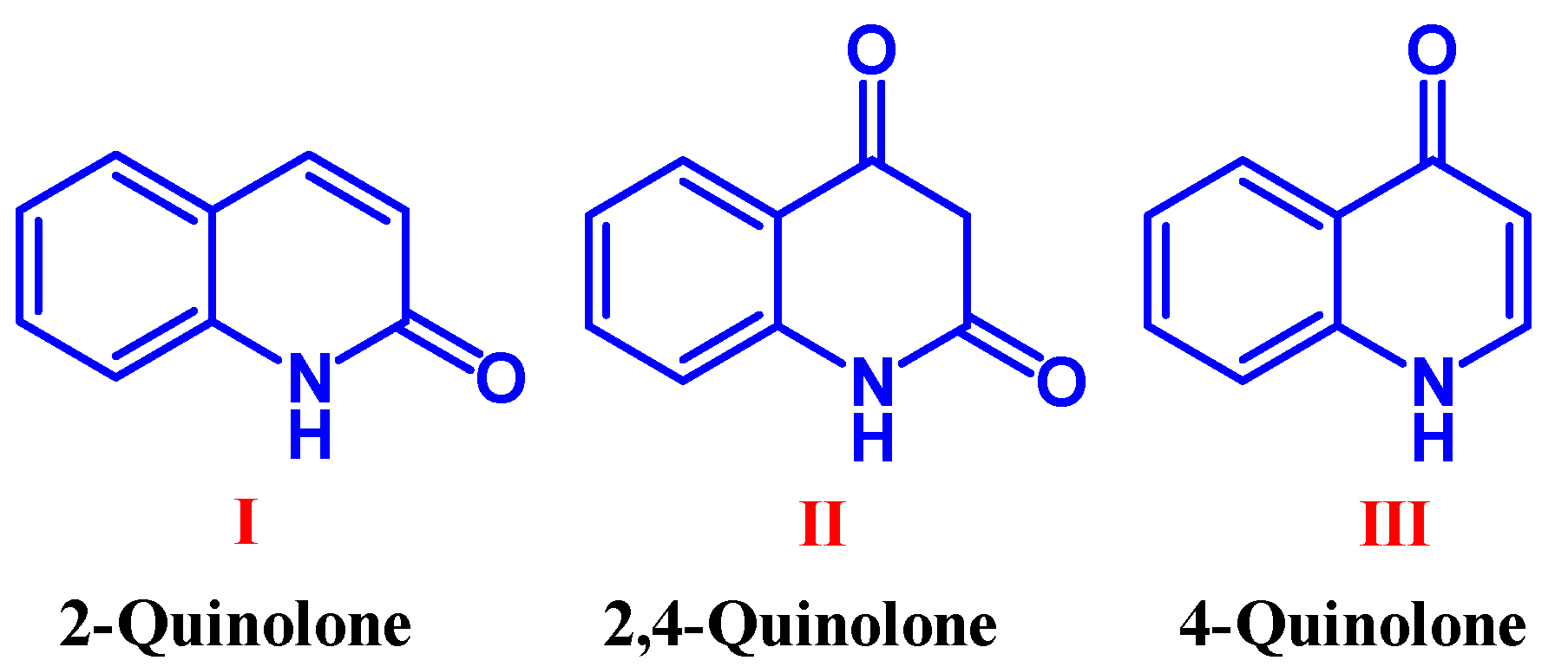
Figure 1.
Biological activities quinolone derivatives.
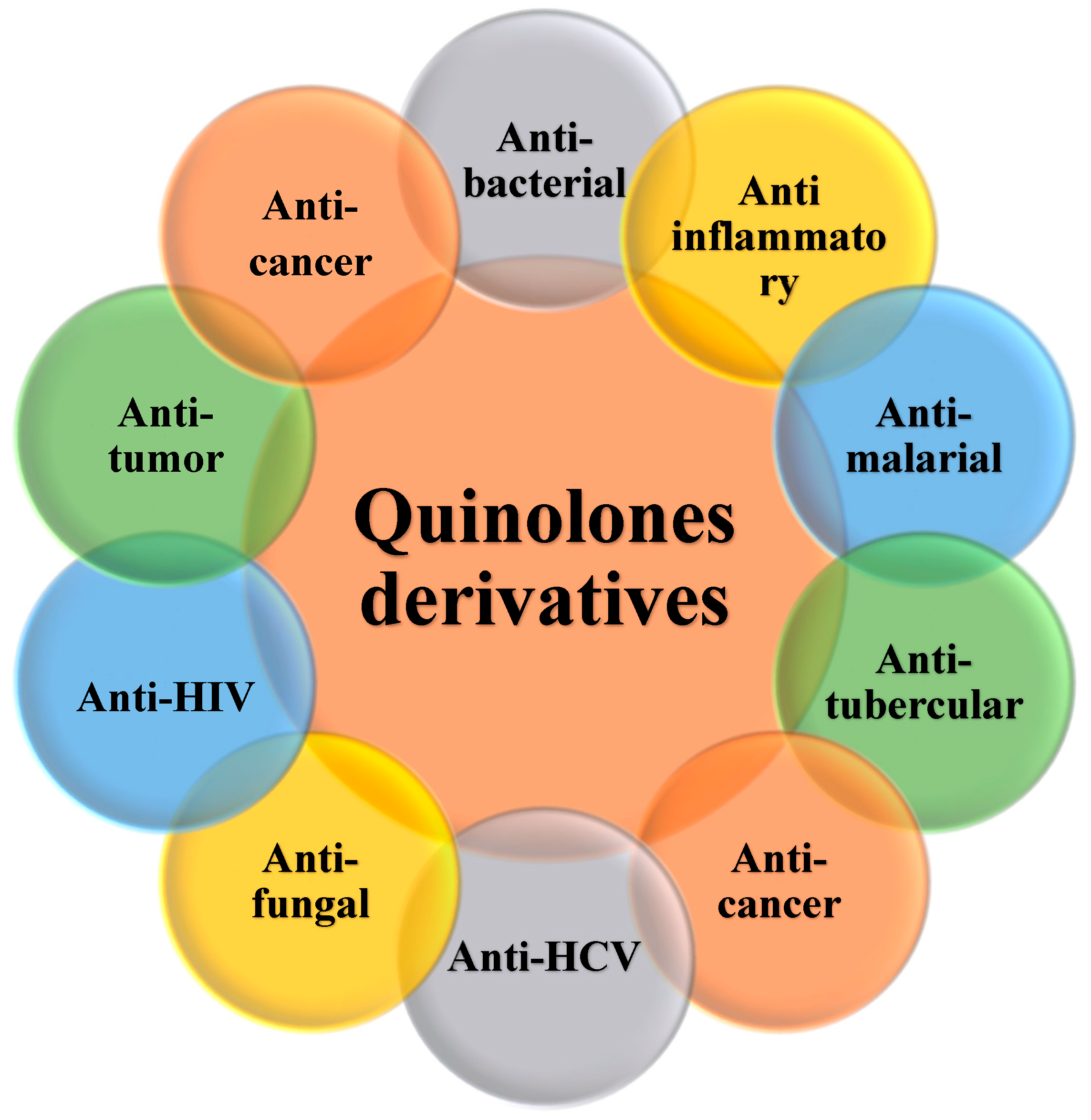
Scheme 2.
Conrad-Limpach-Knorr reaction.
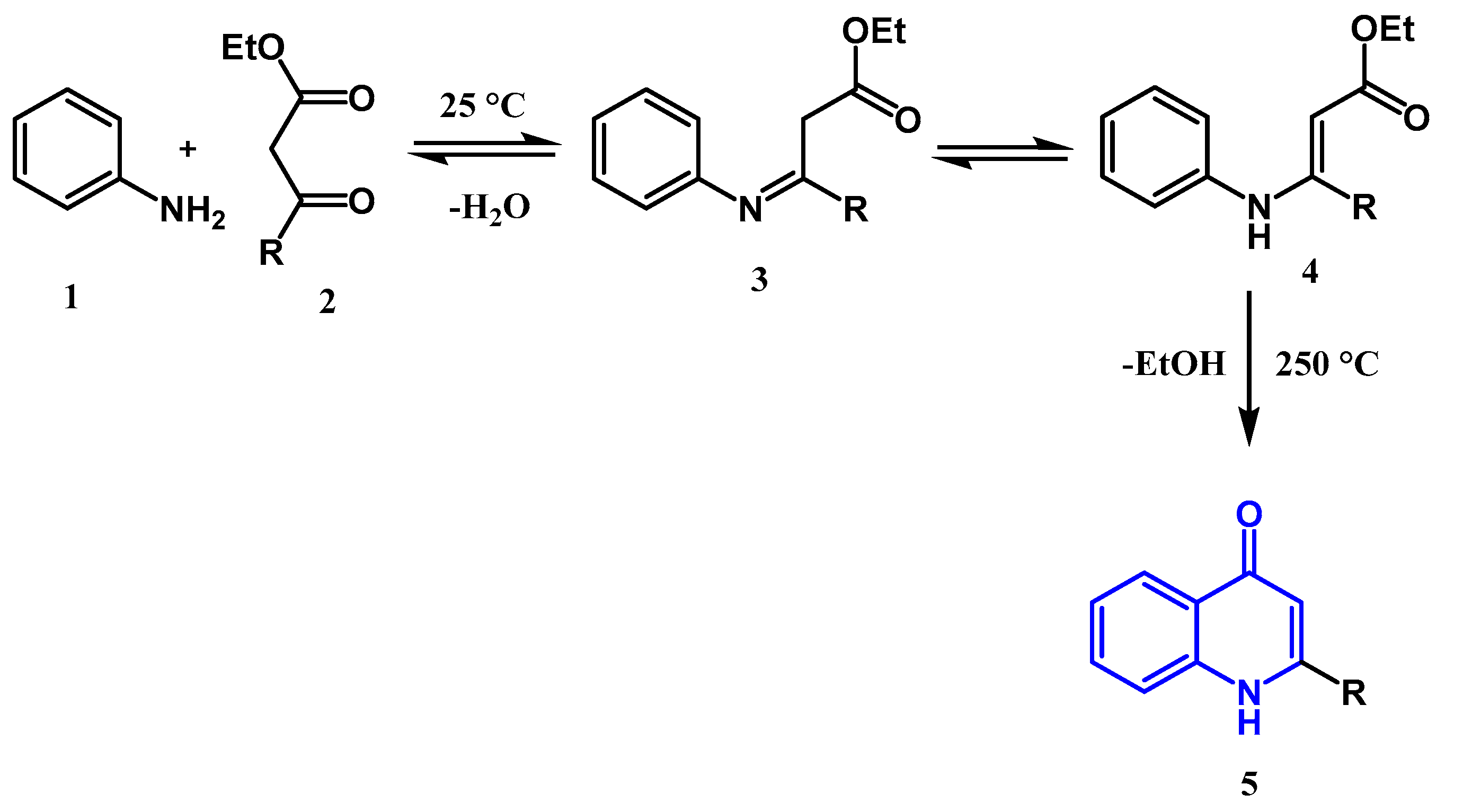
Scheme 3.
Reaction mechanism of Conrad et al.
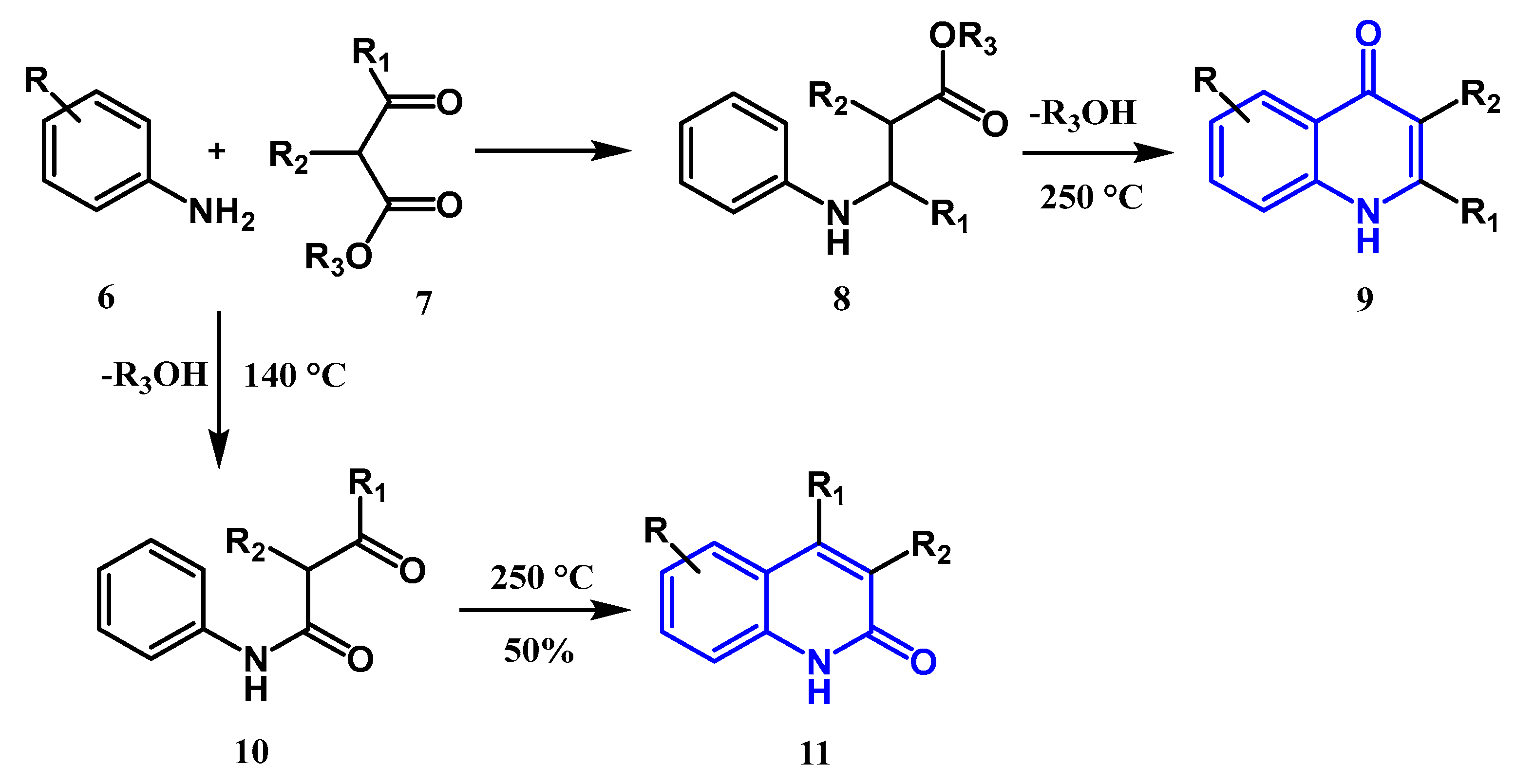
Scheme 4.
Mechanism of formation of quinolone derivatives from dicarbonyl compounds.
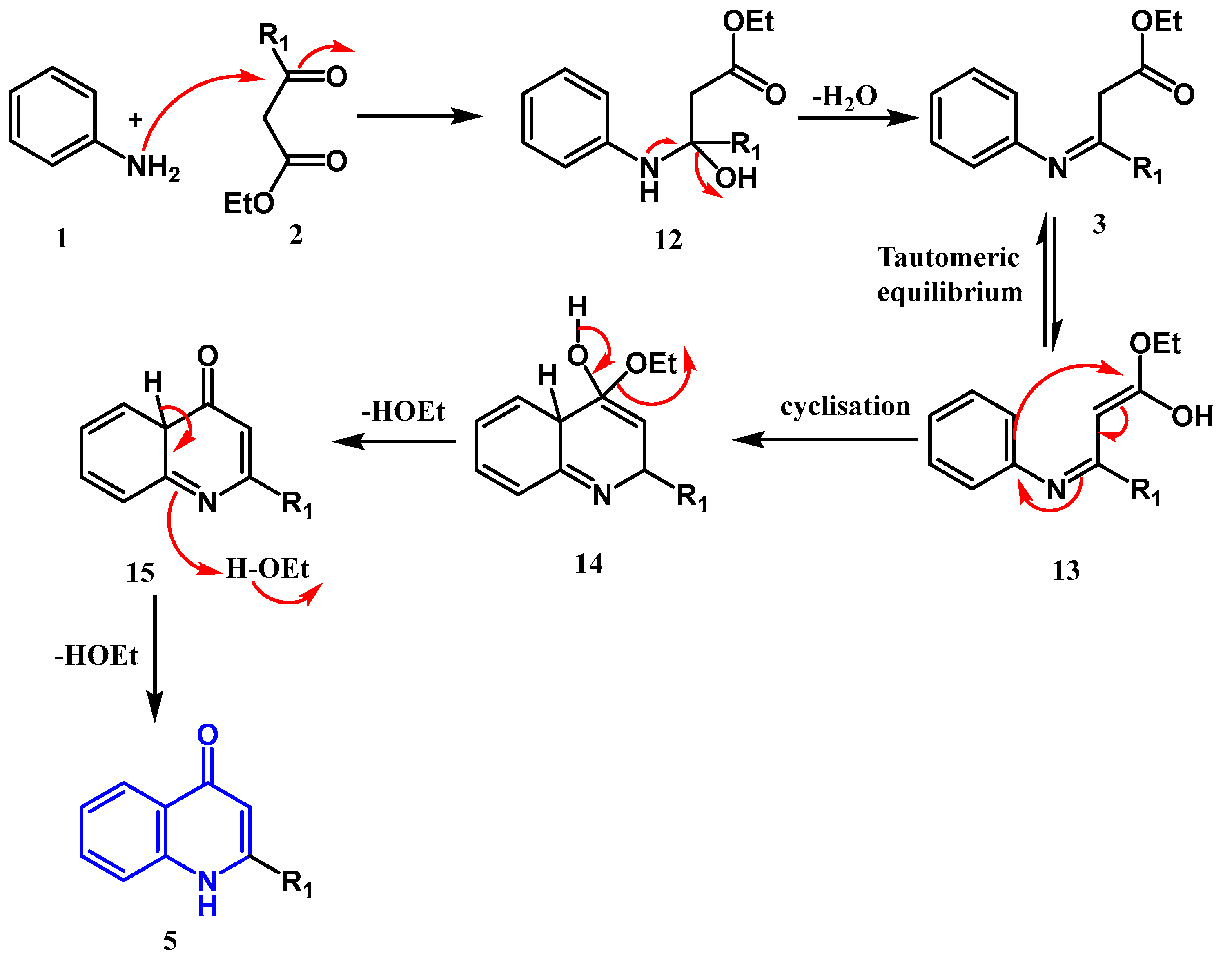
Scheme 5.
Mechanism of formation of quinolone derivatives by a condensation reaction between three compounds.
Scheme 5.
Mechanism of formation of quinolone derivatives by a condensation reaction between three compounds.
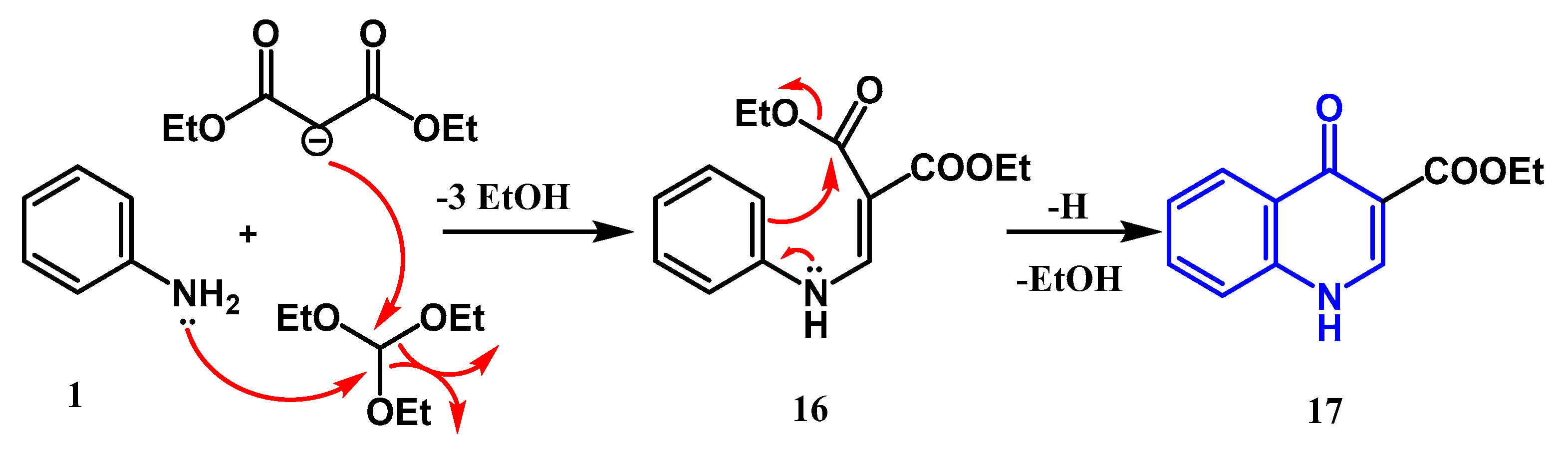
Scheme 6.
3,4-dimethylquinolin-2-one Synthesis.
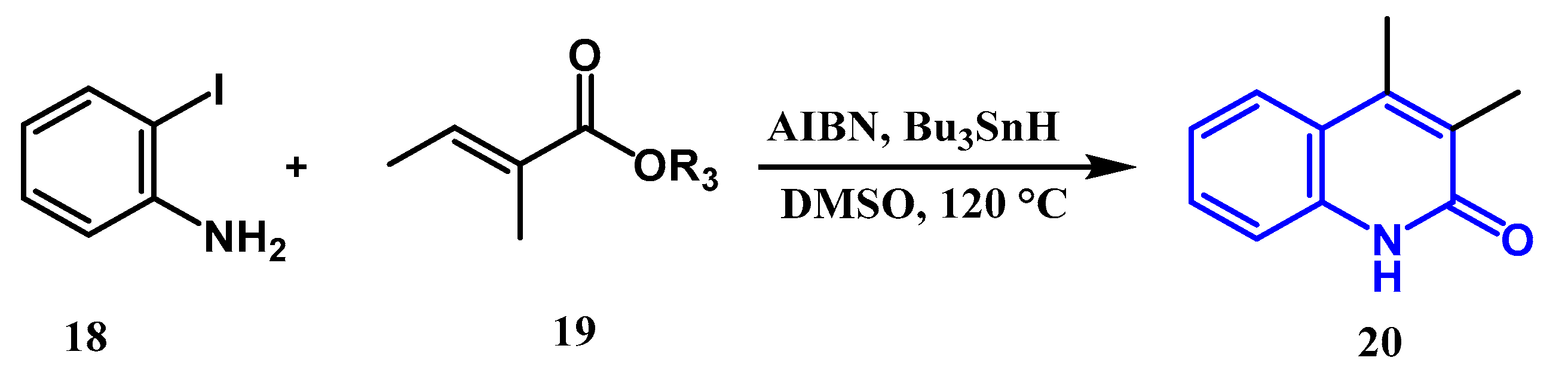
Scheme 7.
2,4-quinolone alkaloid analogues Synthesis.
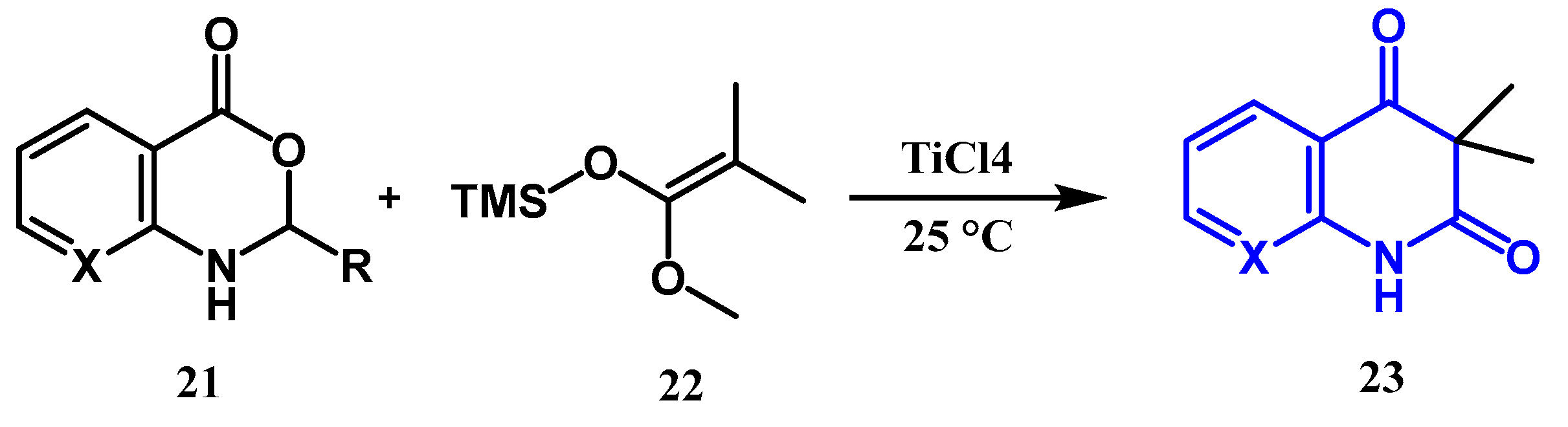
Scheme 8.
Gould-Jacobs reactions.
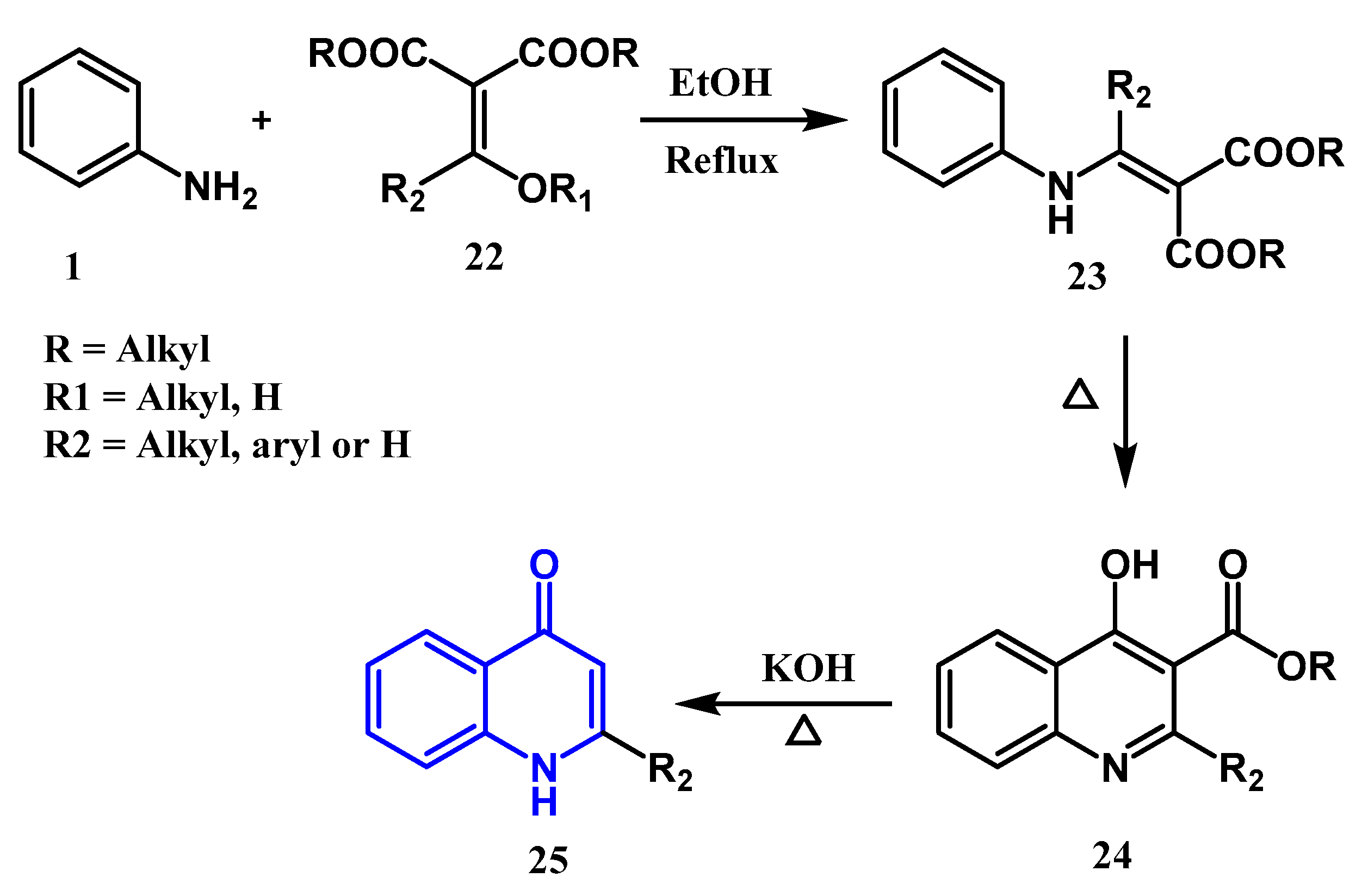
Scheme 9.
Jampilek et al reactions.
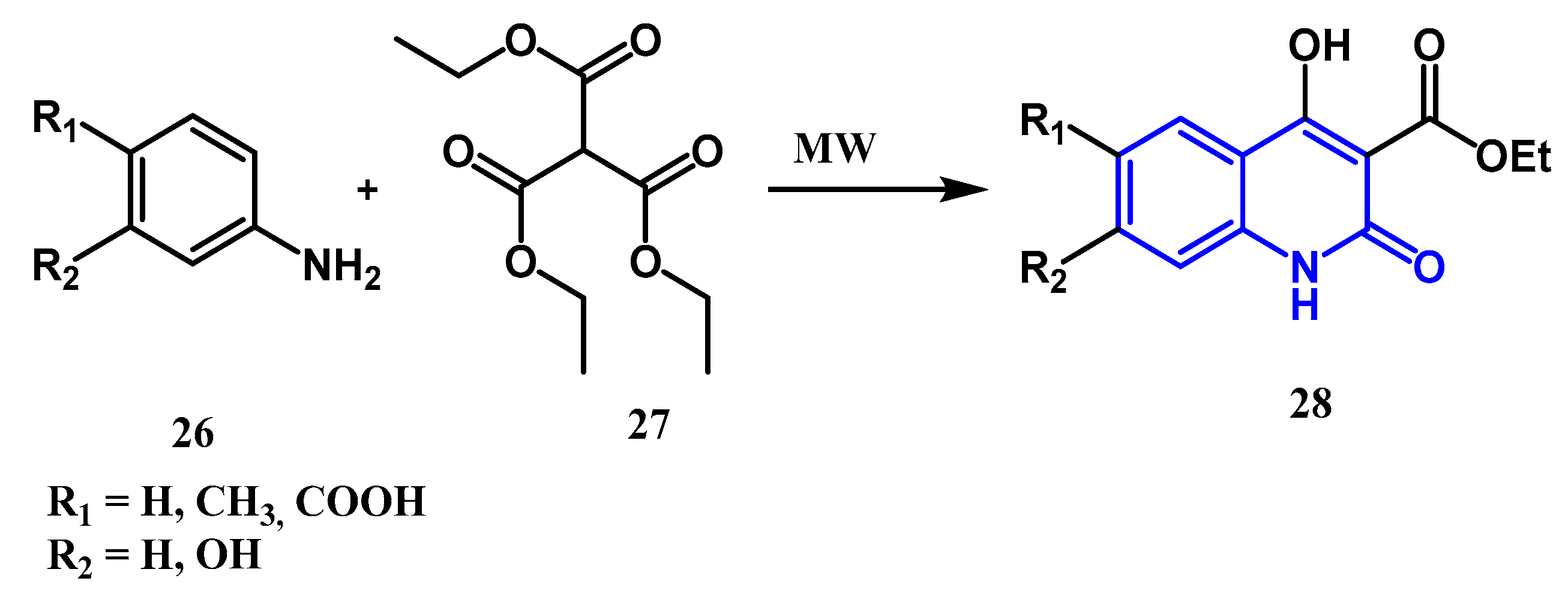
Scheme 10.
4-hydroxyquinolin-2-one synthesis.
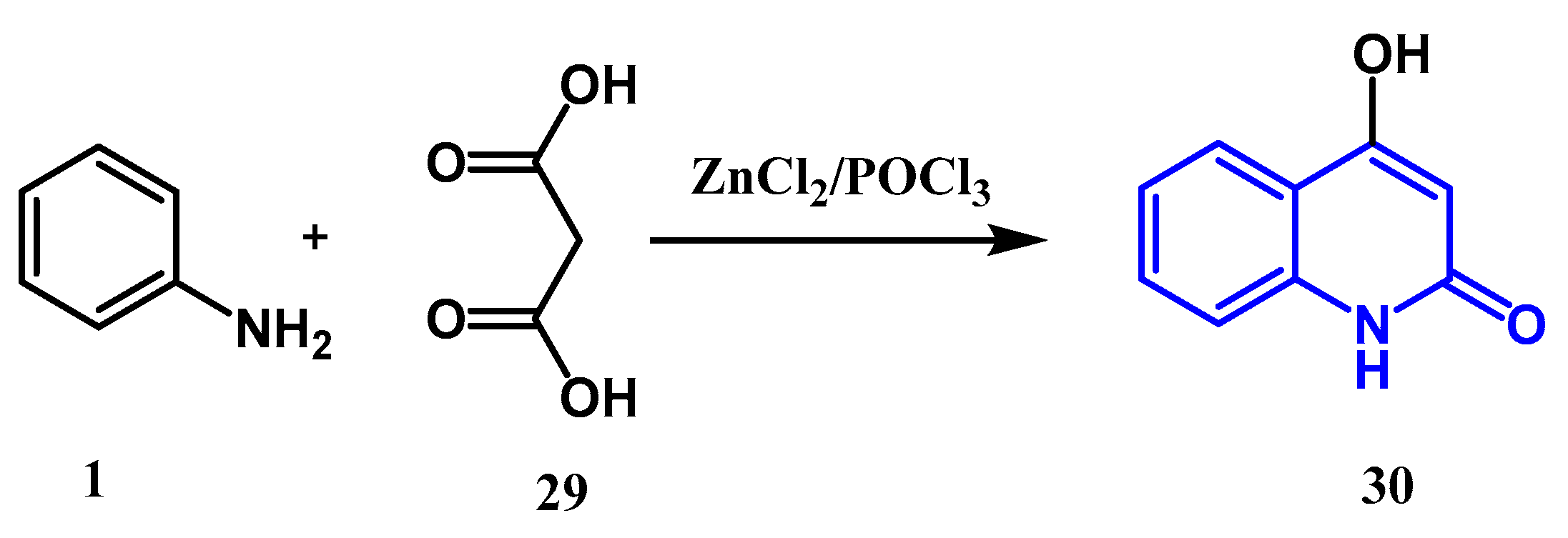
Scheme 11.
4-hydroxyquinolin-2-one synthesis under irradiation MW.
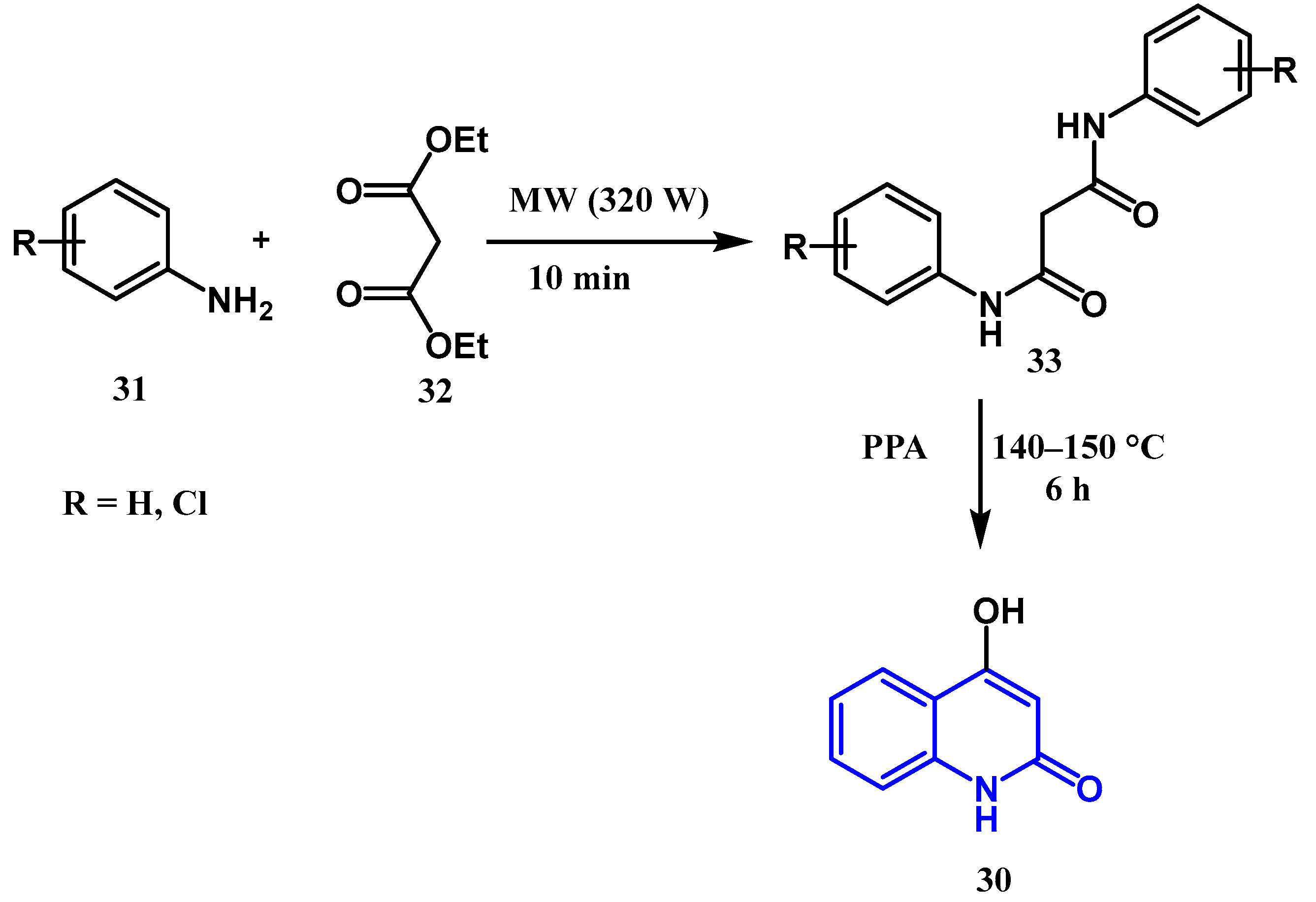
Scheme 12.
2-quinolone-4-carboxylic acid microwave-irradiated and its derivatives synthesized.
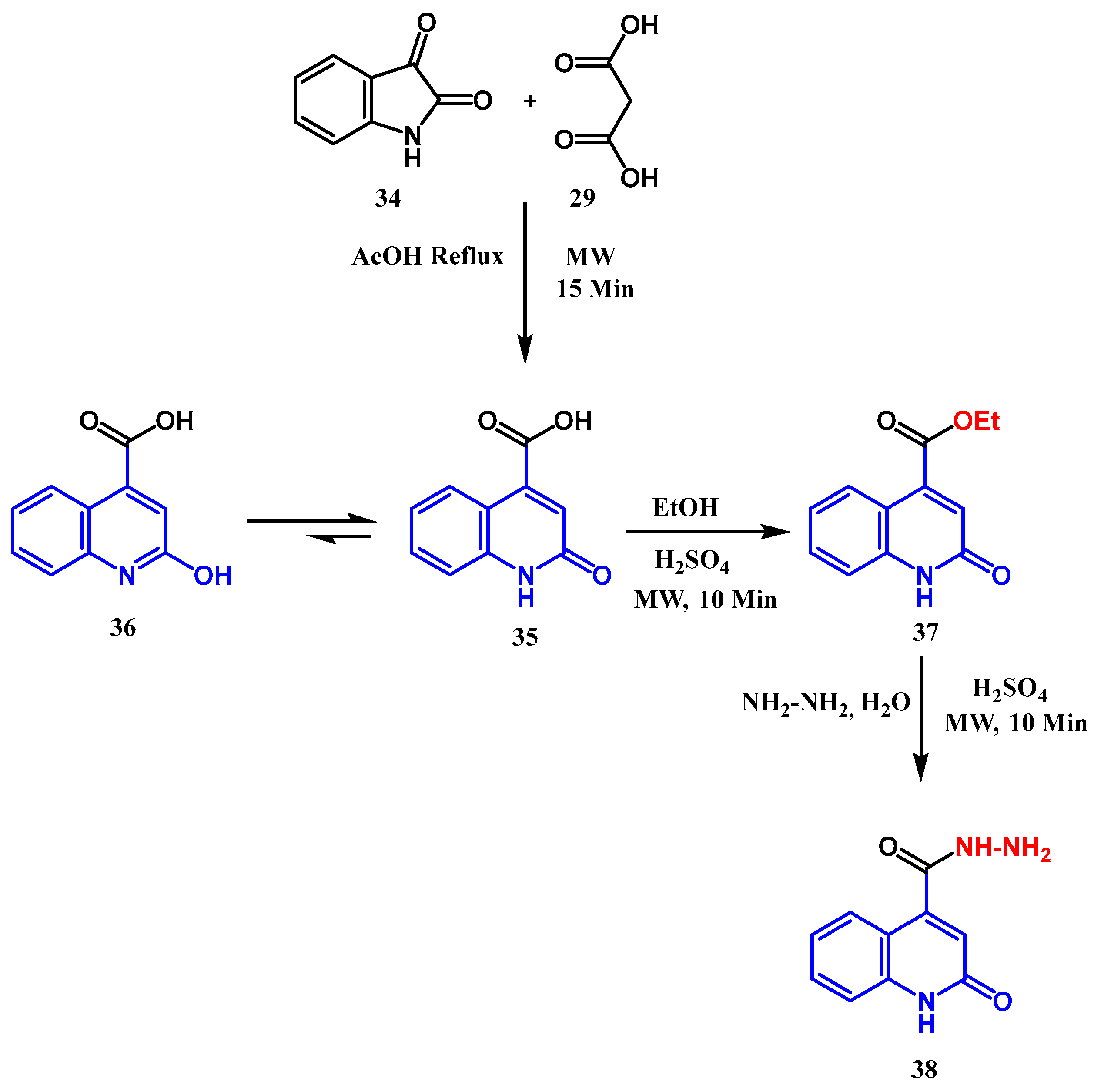
Scheme 13.
The synthetic pathway for new 2-quinolone-4-carboxylic acid derivatives.
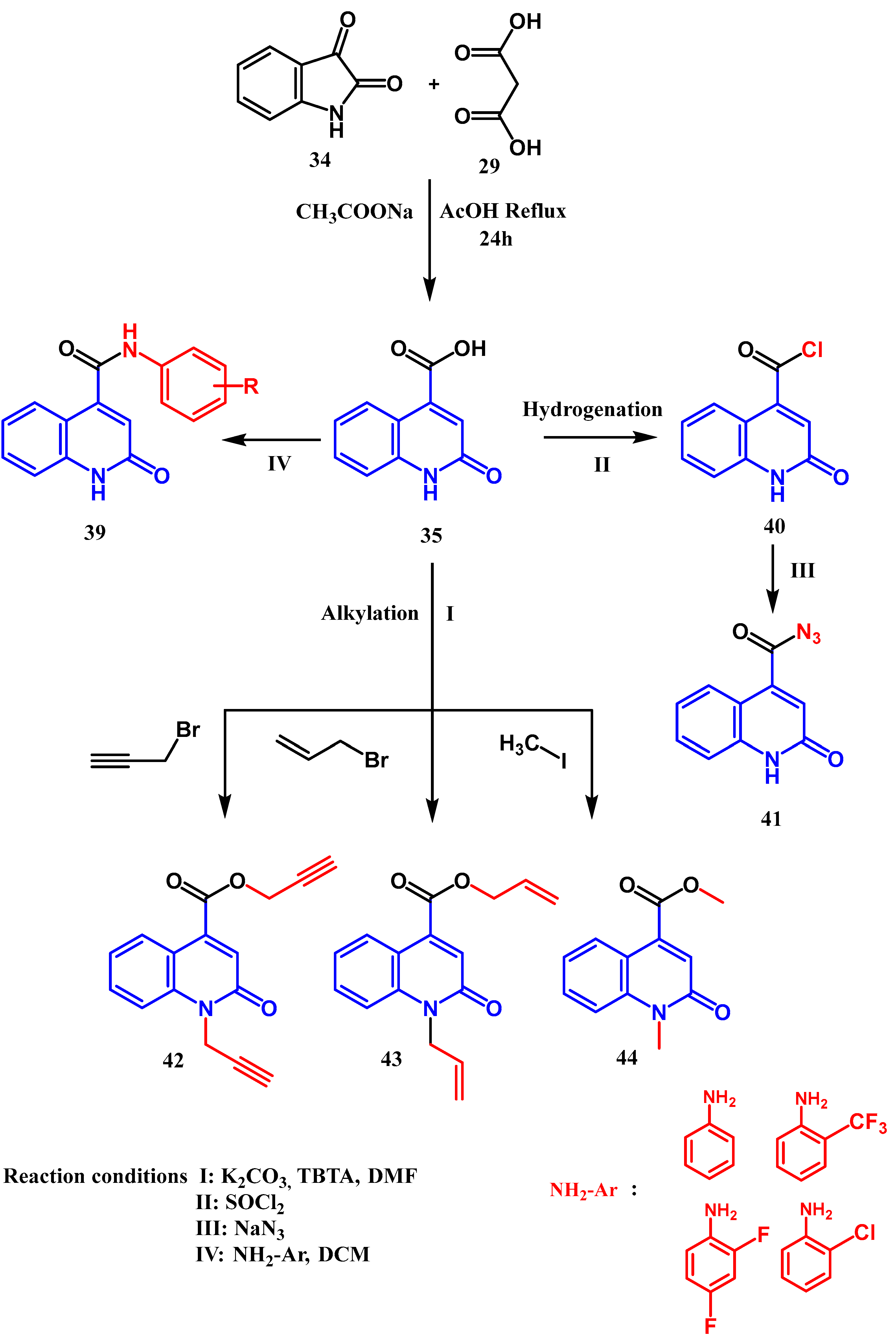
Scheme 14.
Synthesis of 2-quinolone-4-carboxamide derivatives.
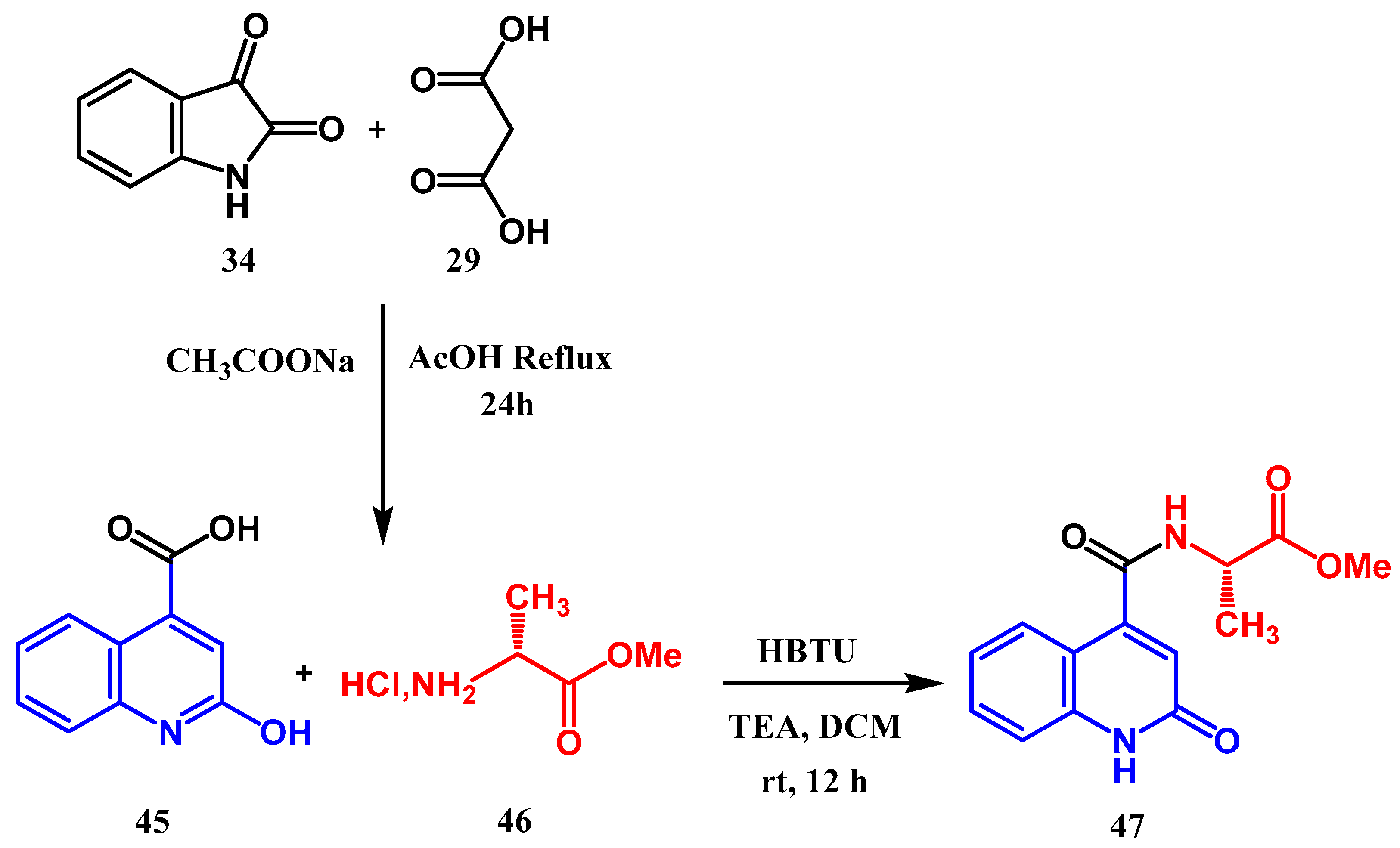
Scheme 15.
4-quinolone synthesis from indoline derivatives.
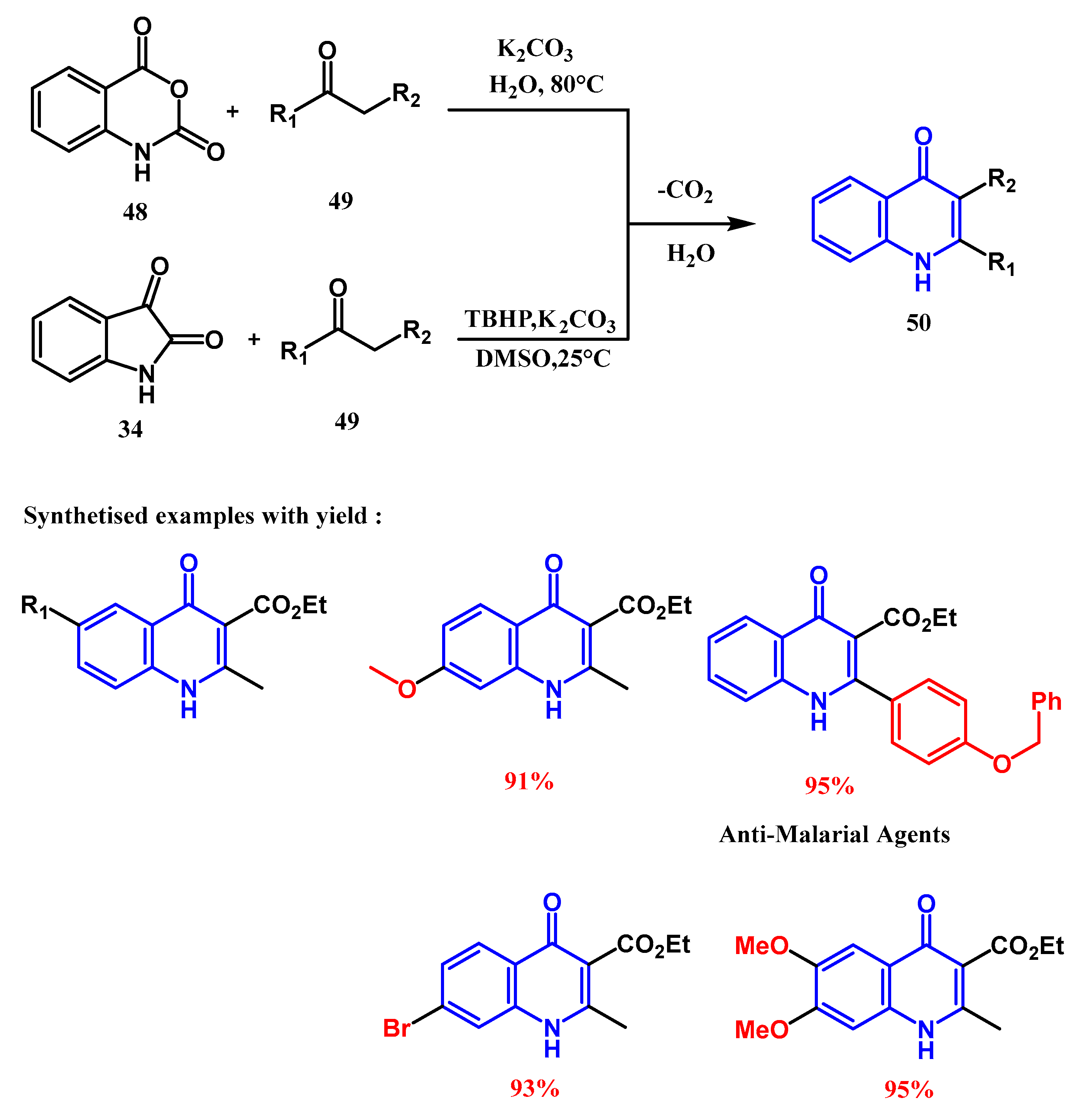
Scheme 16.
2-Iodoanilines undergo a Pd-catalyzed reaction to produce derivatives of 2-quinolones.
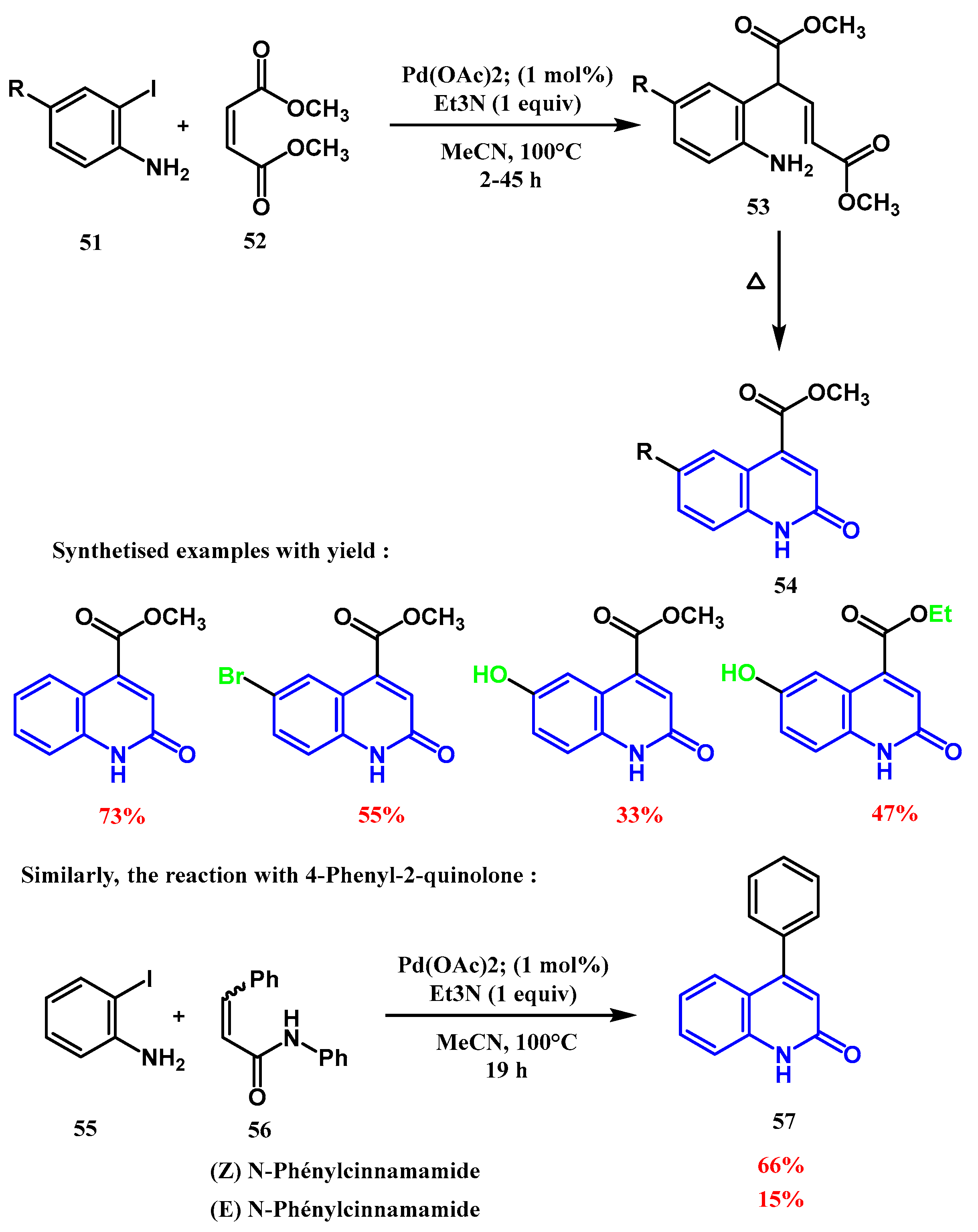
Scheme 17.
4-aryl-2-quinolones are produced by sequential Heck reaction/amination.
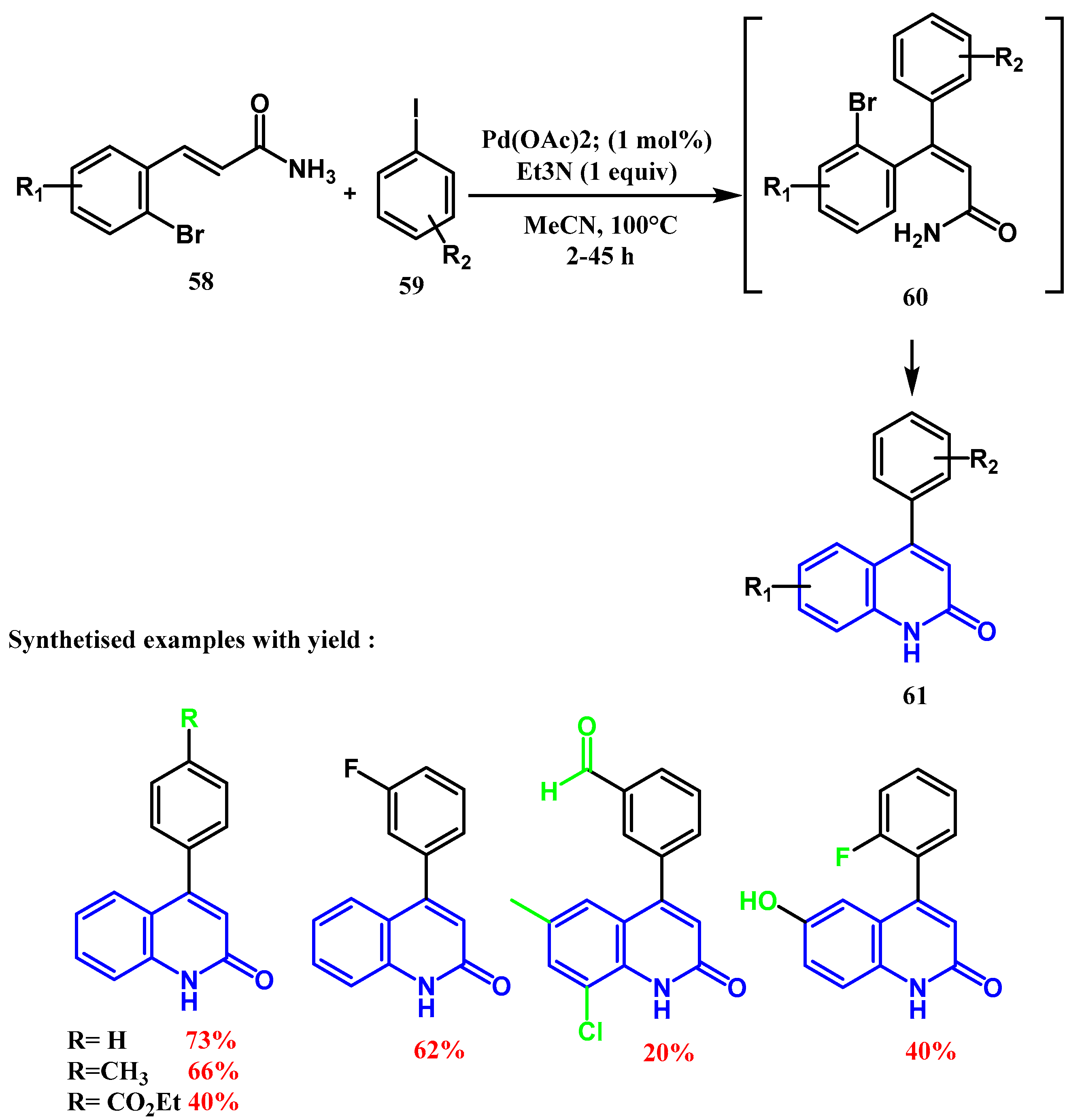
Scheme 18.
Sonogashira reactions for the preparation of 4-quinolones and their derivatives.
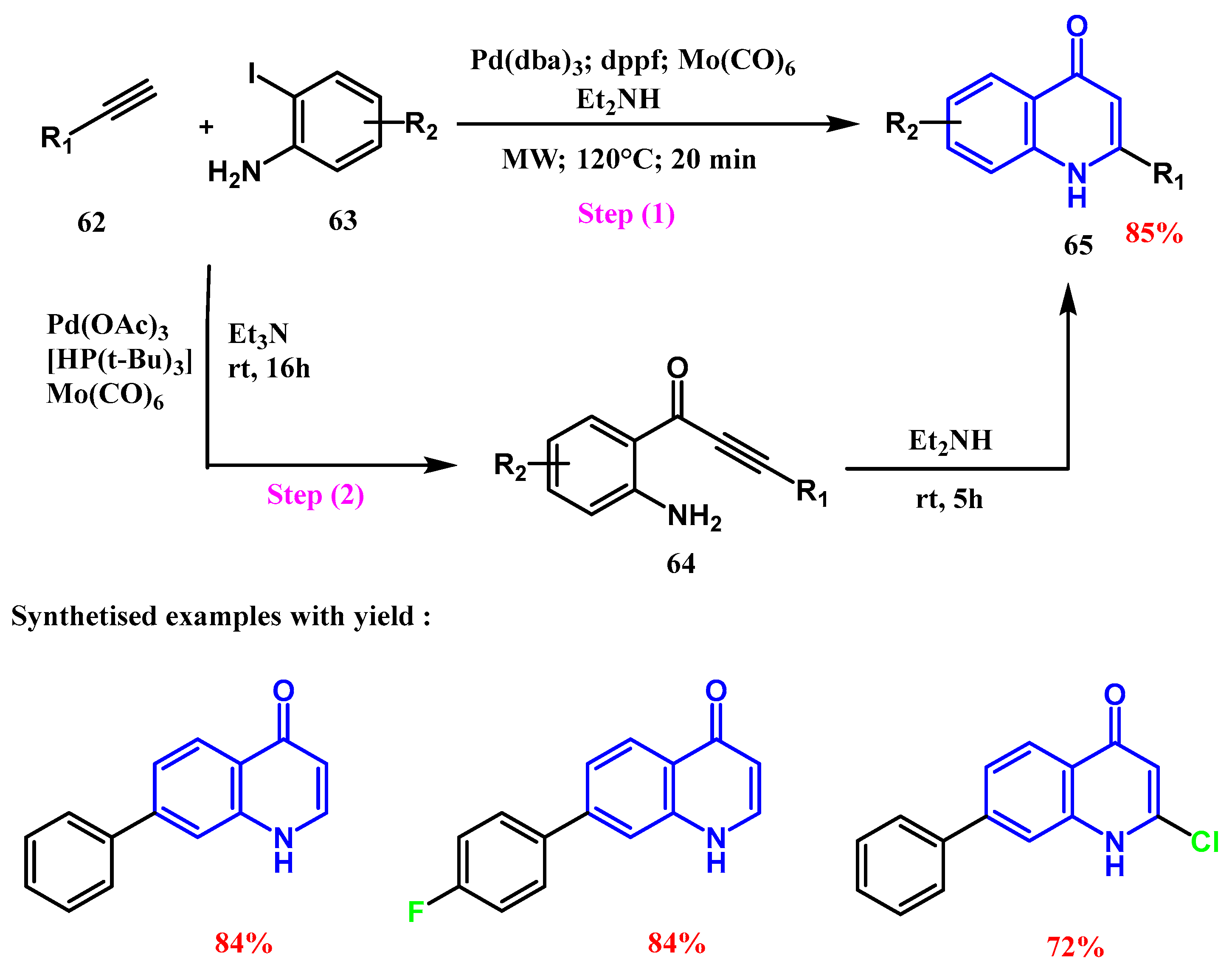
Scheme 19.
synthesis of 4-hydroxyquinolin-2-one.
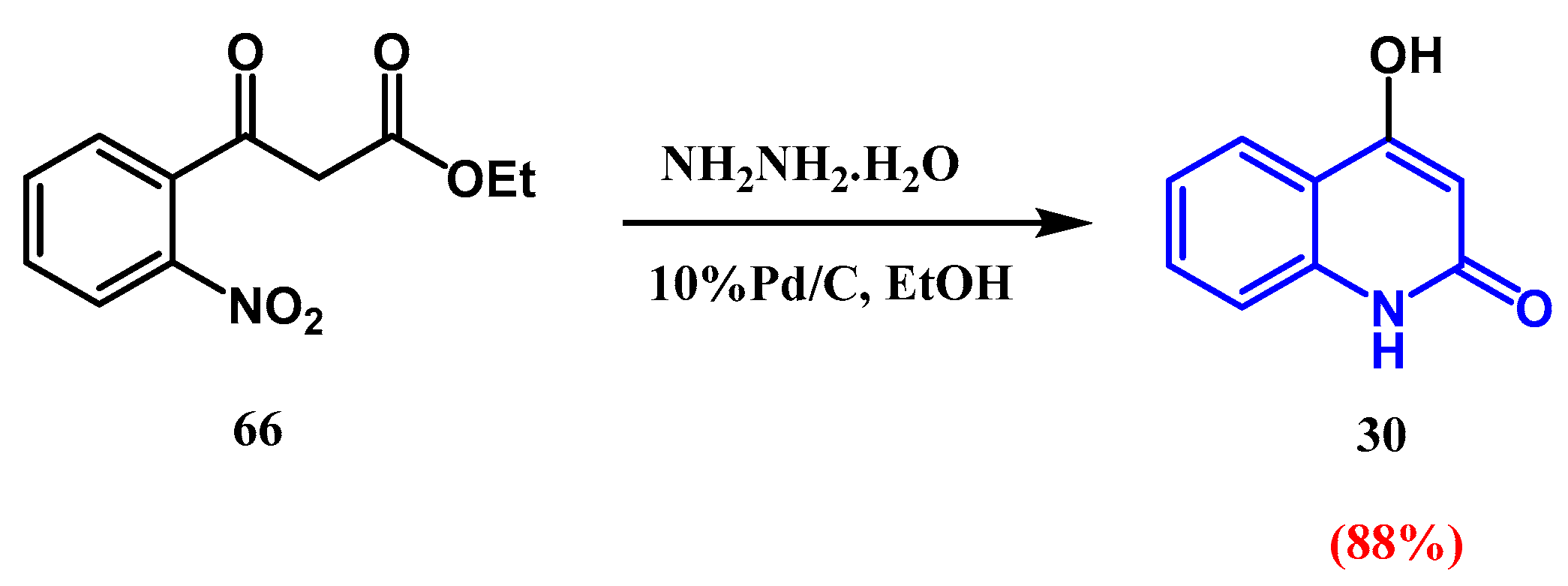
Scheme 20.
Huntress and Bornstein reaction.
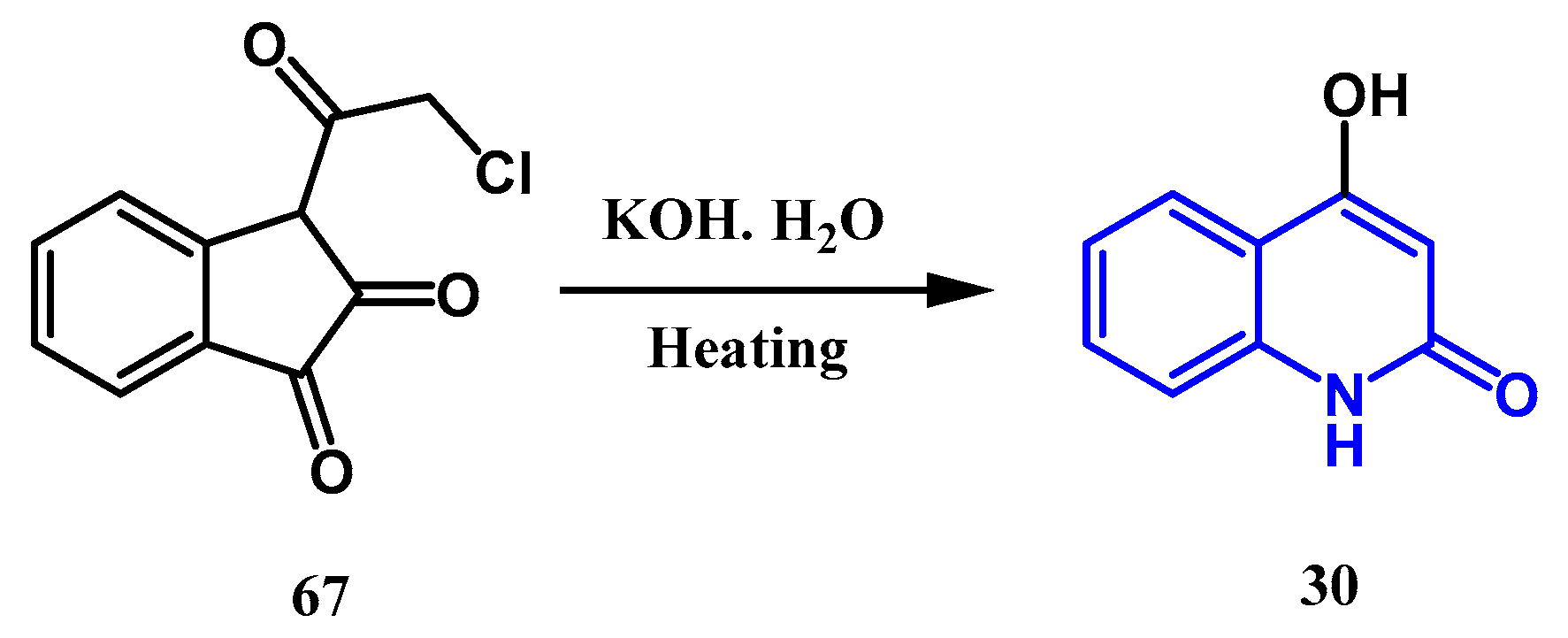
Scheme 21.
Kikuchi and Yamada reactions.
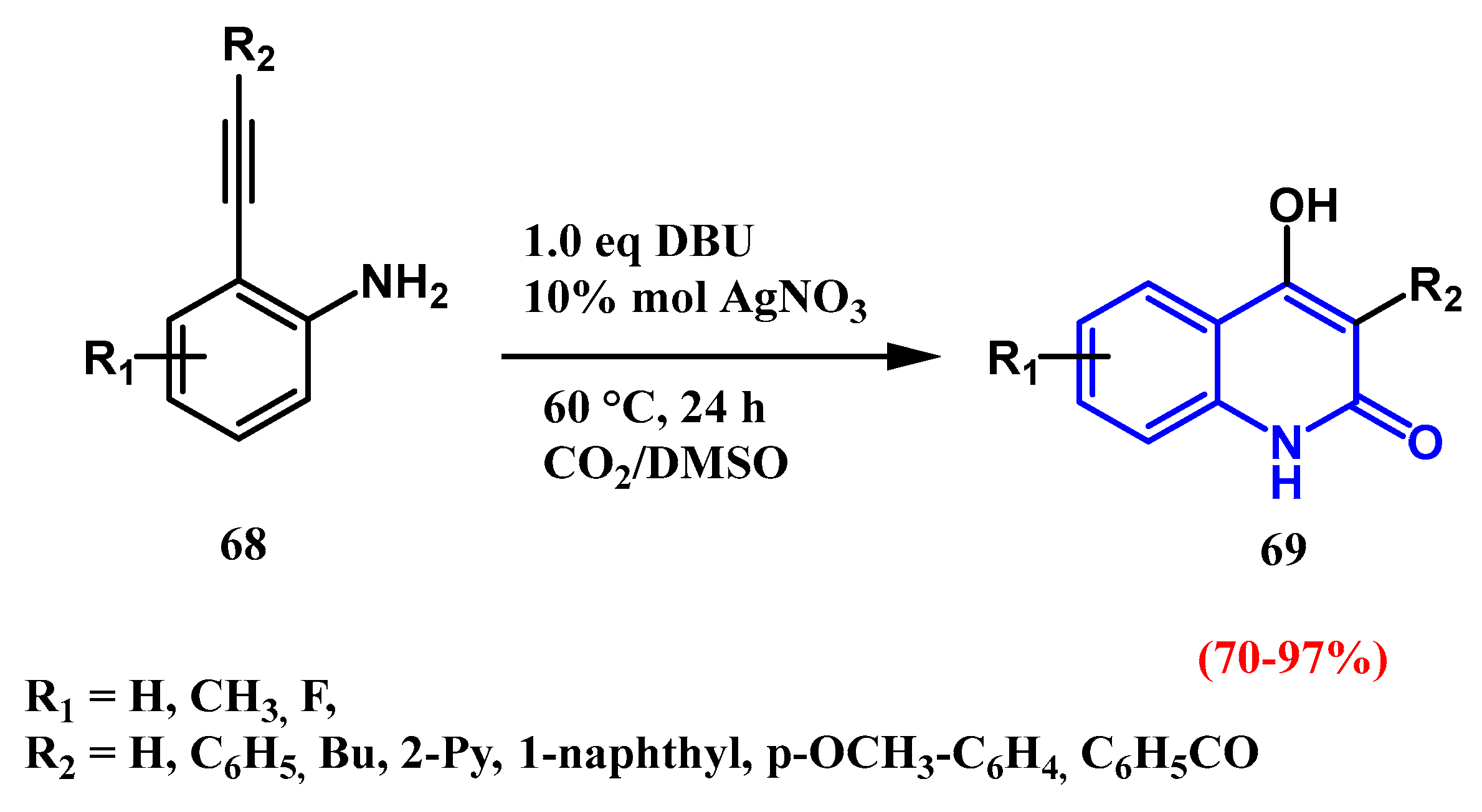
Scheme 22.
Kobayashi and Harayama reactions.
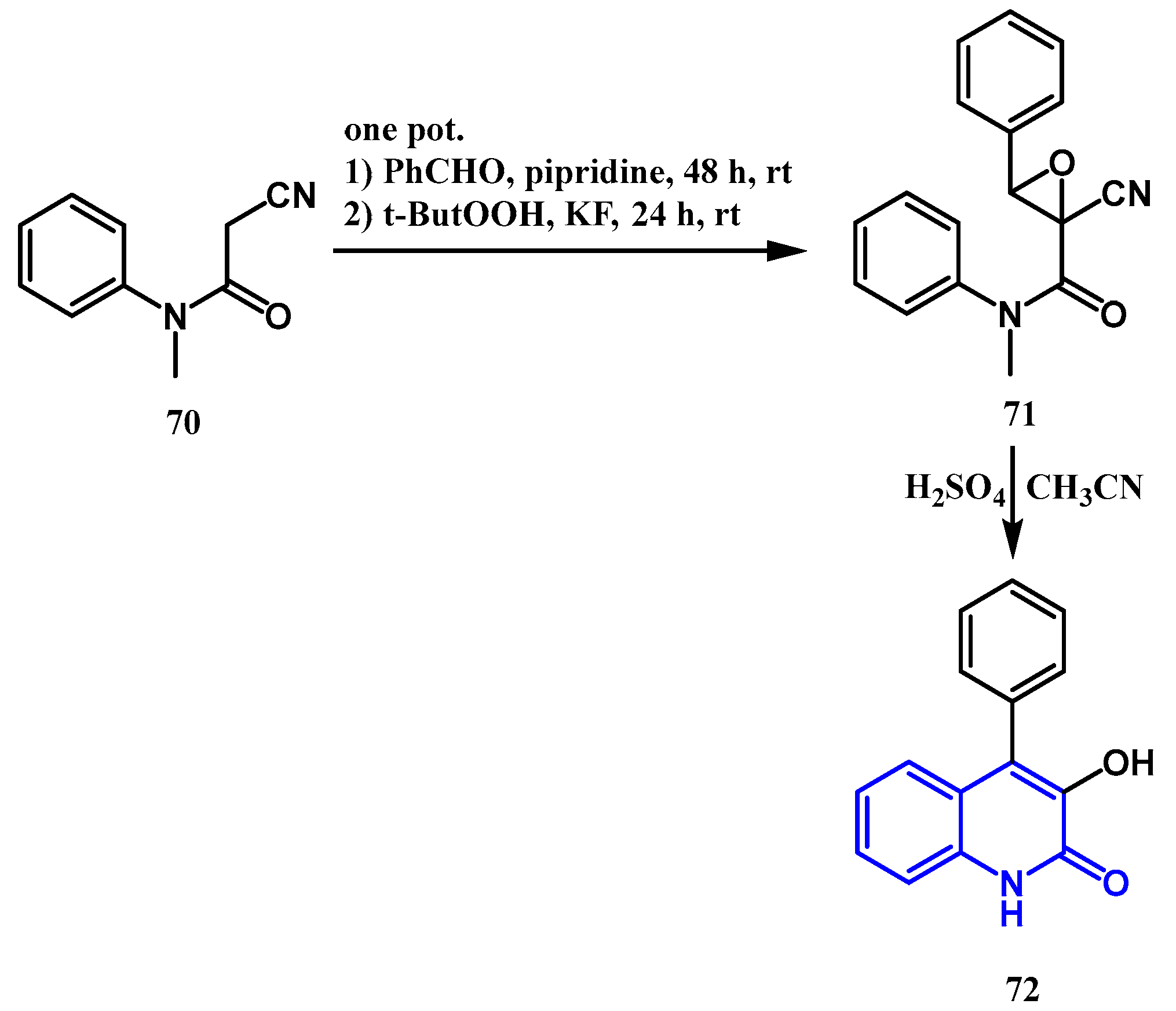
Scheme 23.
synthesis of 3-methoxy-4-phenyl-2-quinolone.
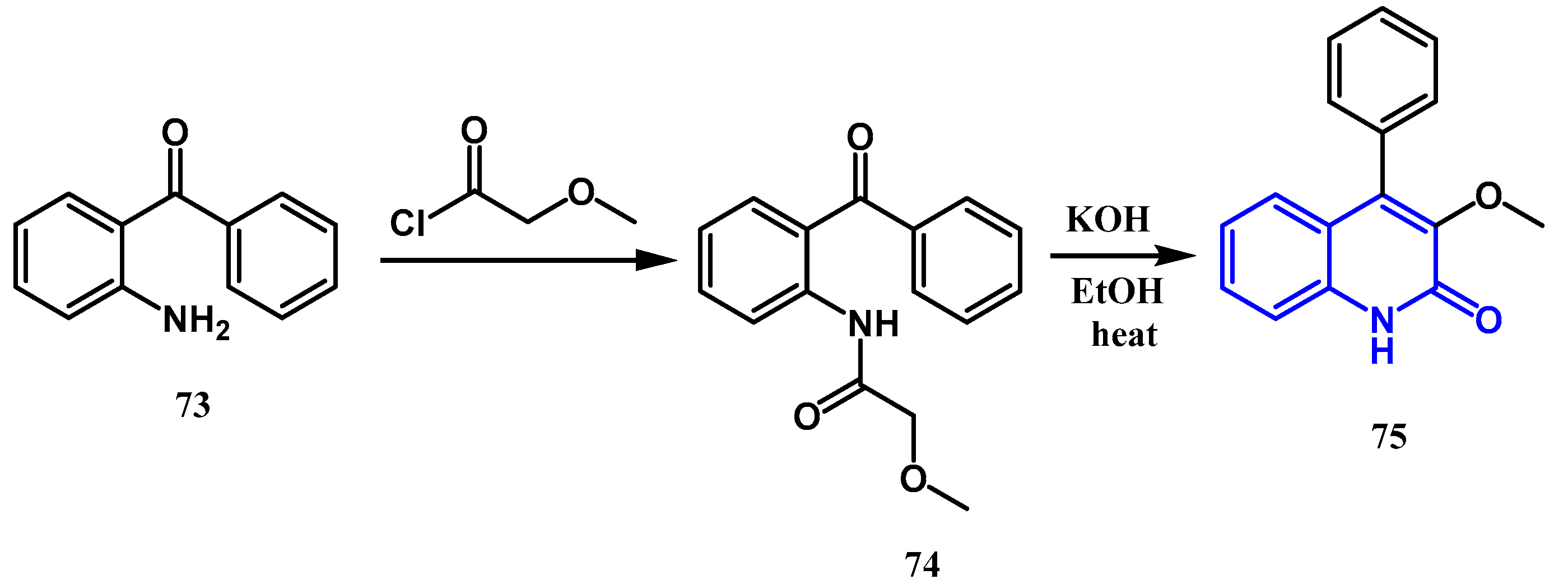
Scheme 24.
The formation of various 3-arylquinolin-2-ones.
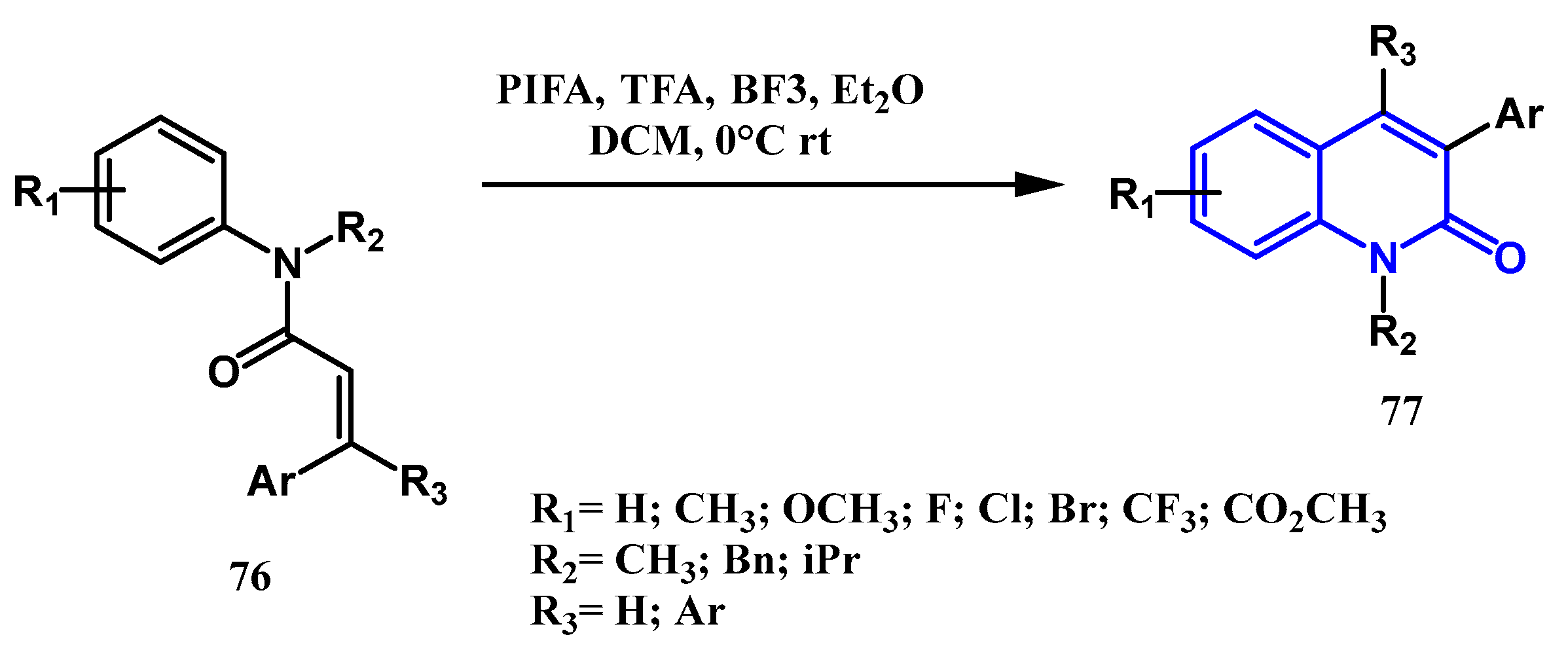
Scheme 25.
Synthesis of 1,2-dihydroquinolone-4-carboxamide derivatives.
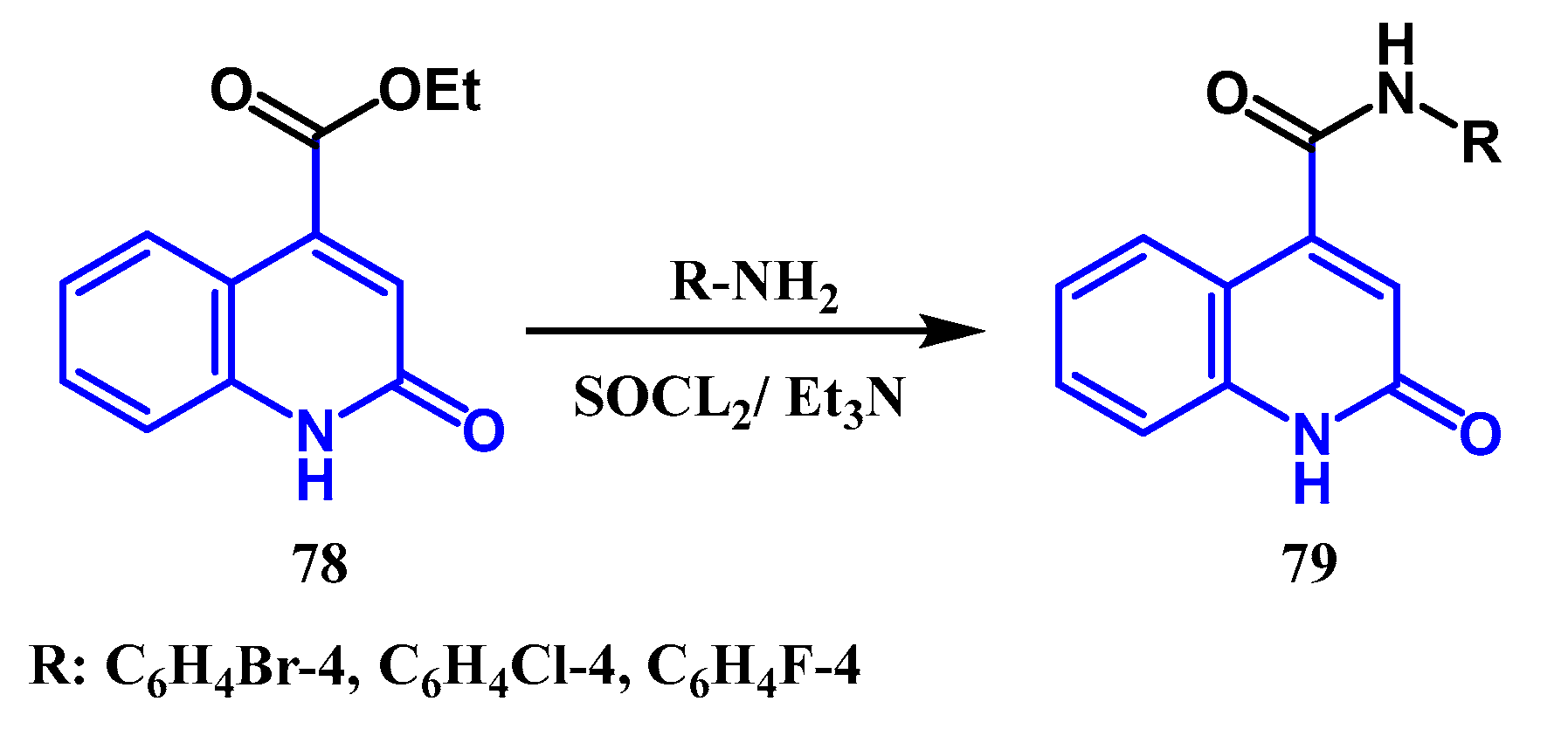
Scheme 26.
Synthesis of N-(3-acetyl-2-oxoquinolin-1(2H)-yl)benzamide derivatives.
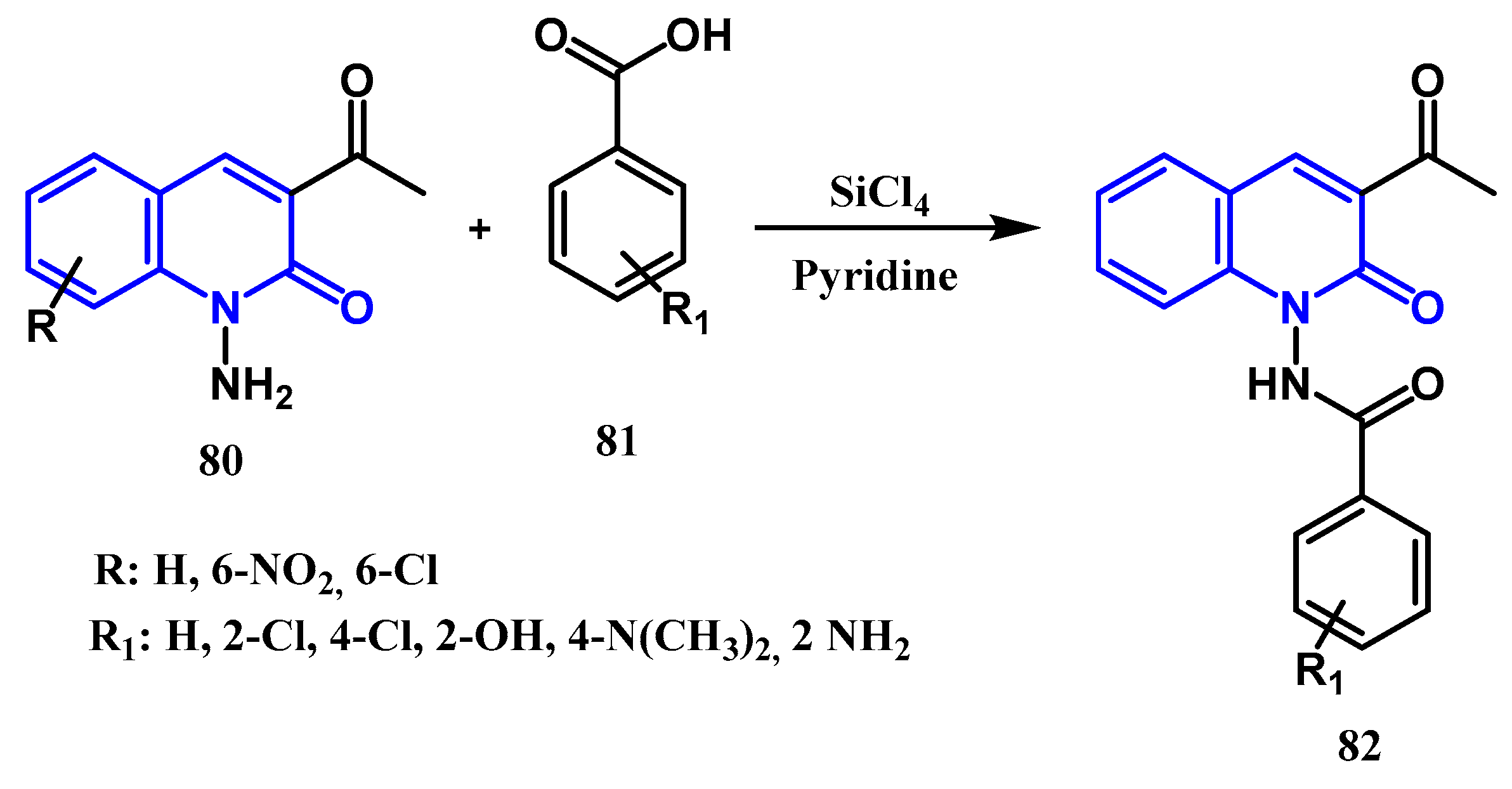
Scheme 27.
synthesis of 2-chloroquinolin-4-carboxamides and -6-carboxamides.
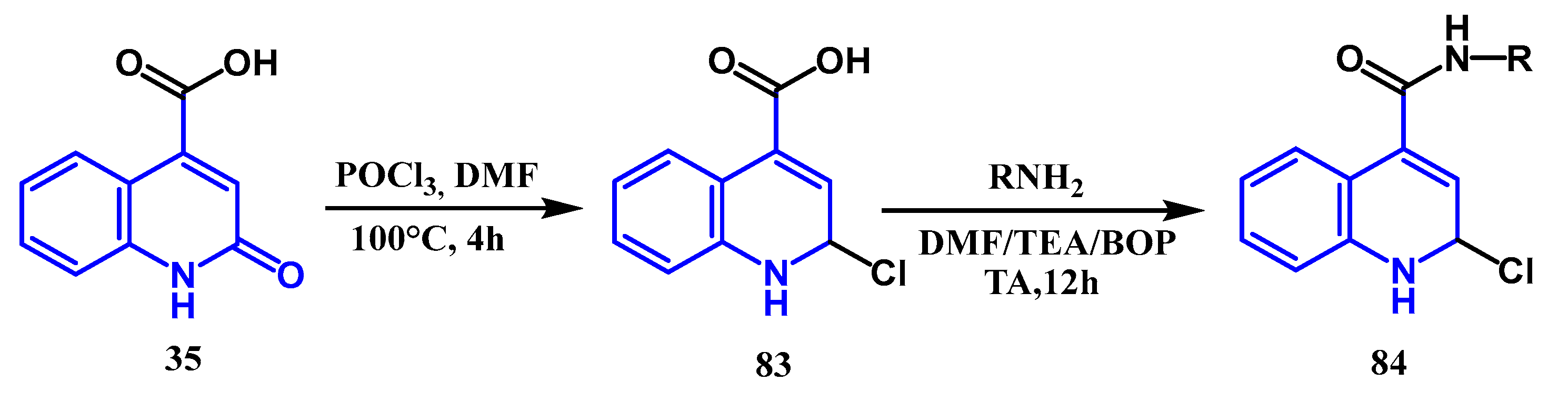
Scheme 28.
Synthesis of hybrid compounds of quinolone and thiazolidinone.
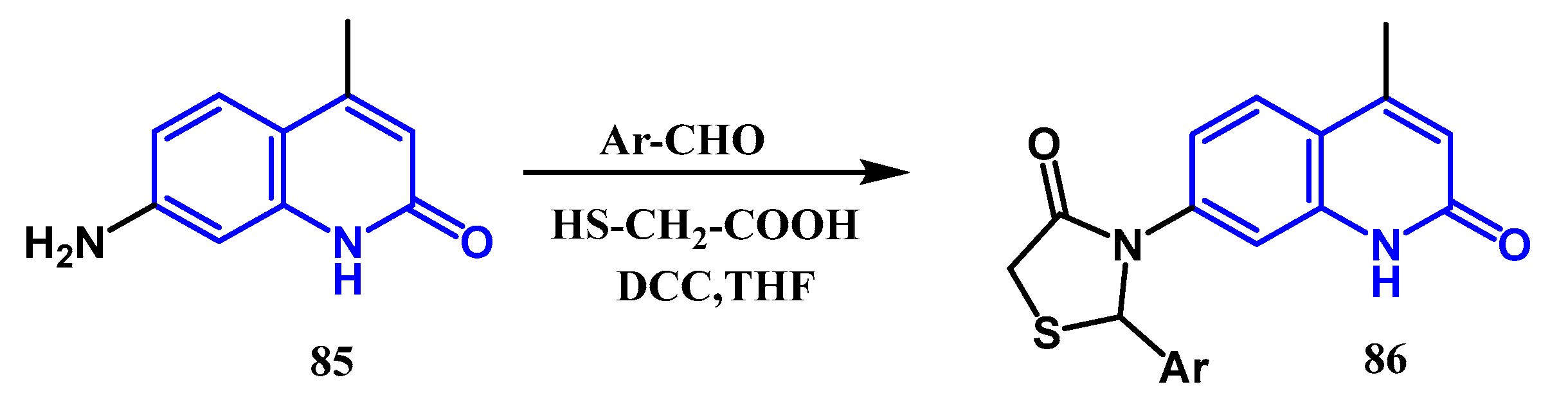
Scheme 29.
synthesis of various bioactive molecules.
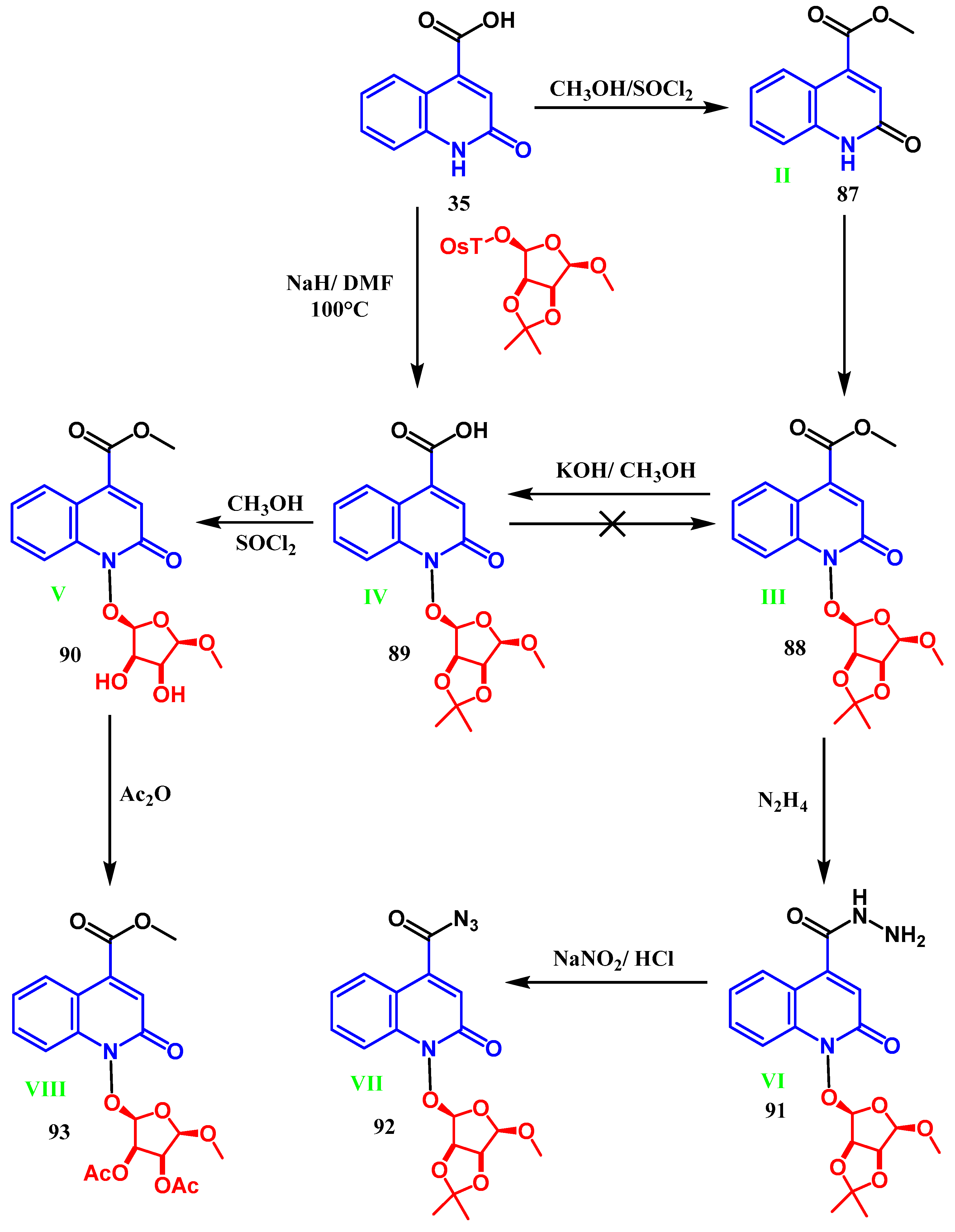
Scheme 30.
esterification of ciprofloxacin.
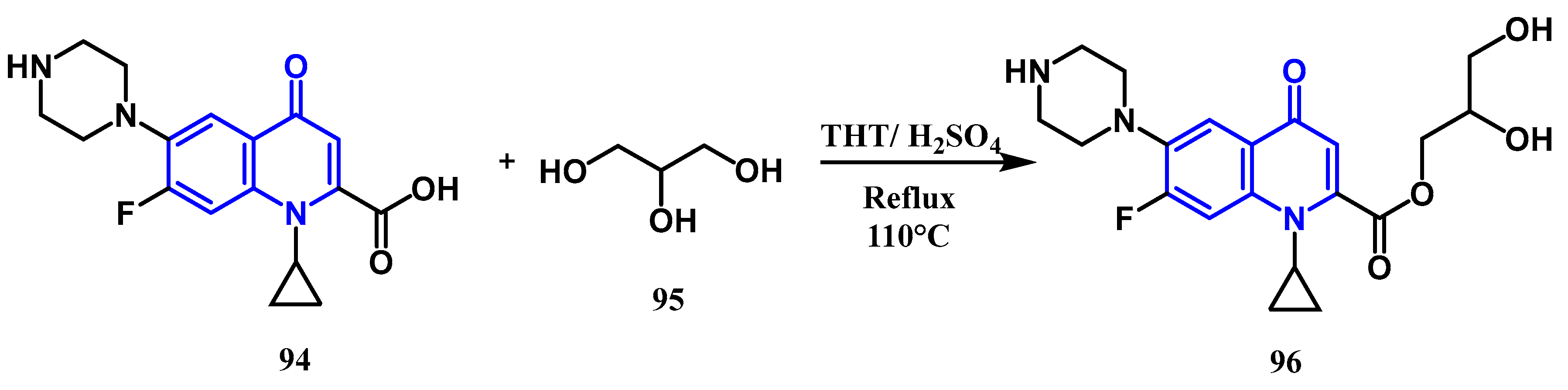
Scheme 31.
Synthesis of 2-oxo-1,2-dihydroquinolin-4-yl acetate.
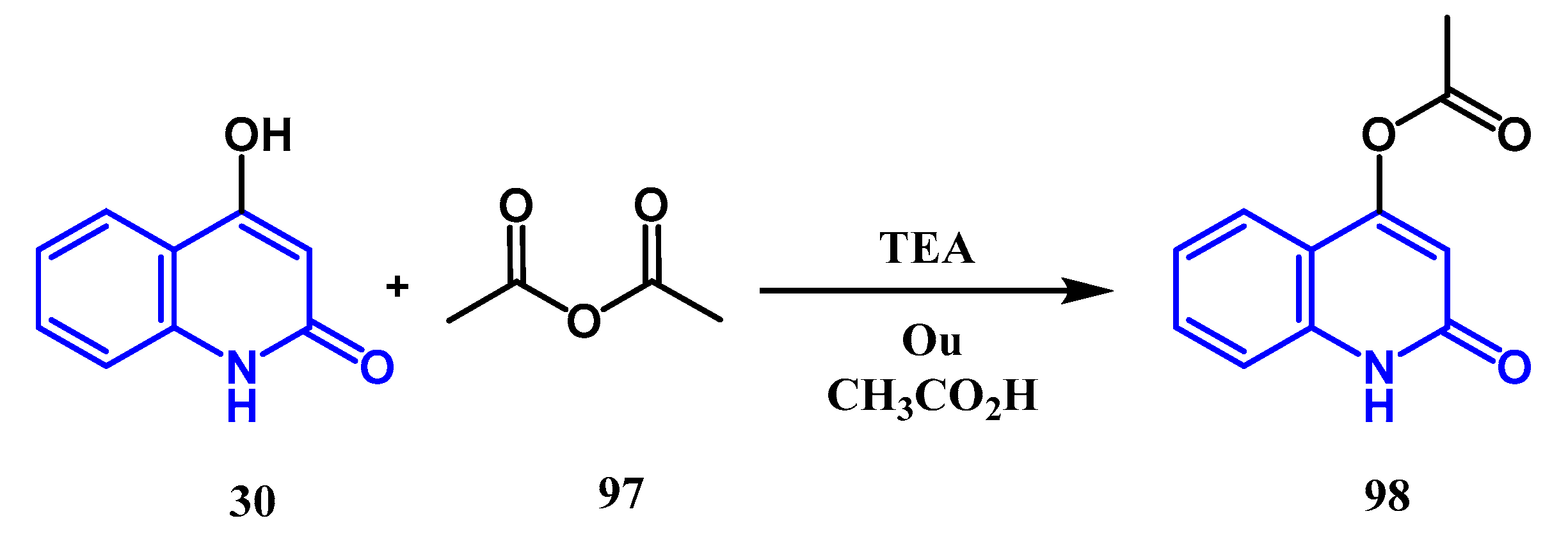
Scheme 32.
Synthesis of 2-oxo-1,2-dihydroquinolin-4-yl acetate derivatives.
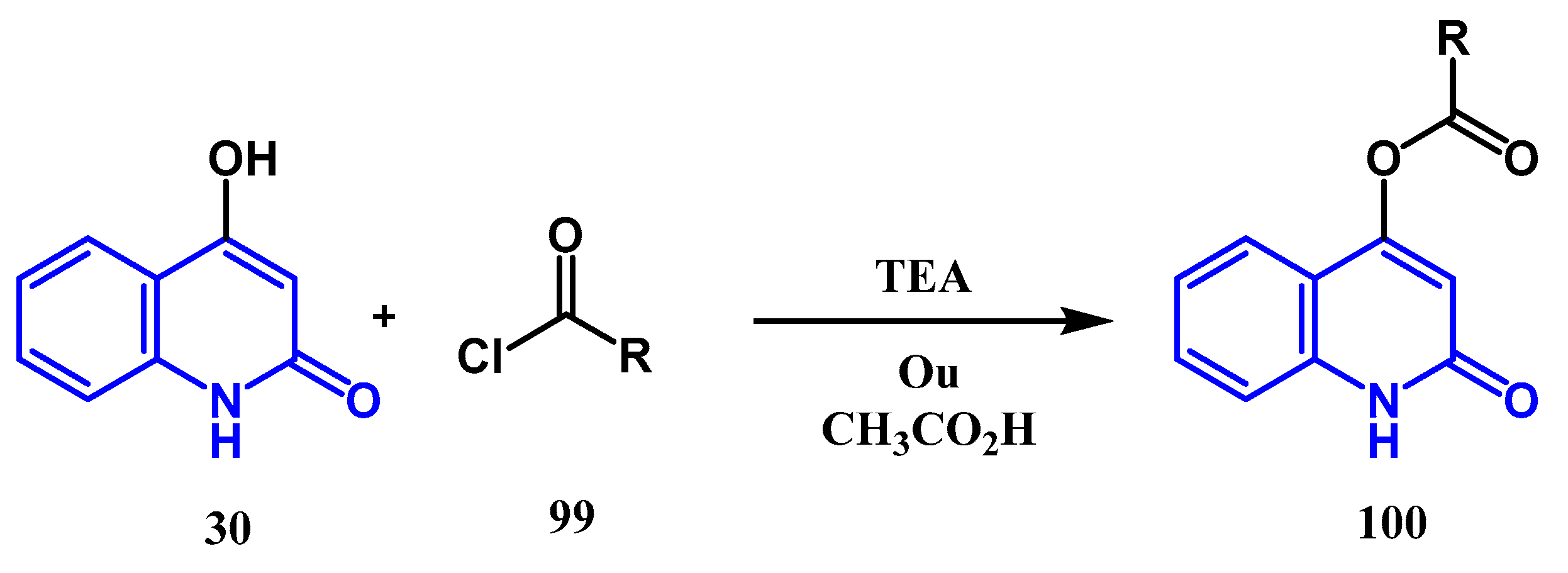
Scheme 33.
Esterification of 2-oxo-1,2-dihydroquinoline carboxylic acid derivatives.
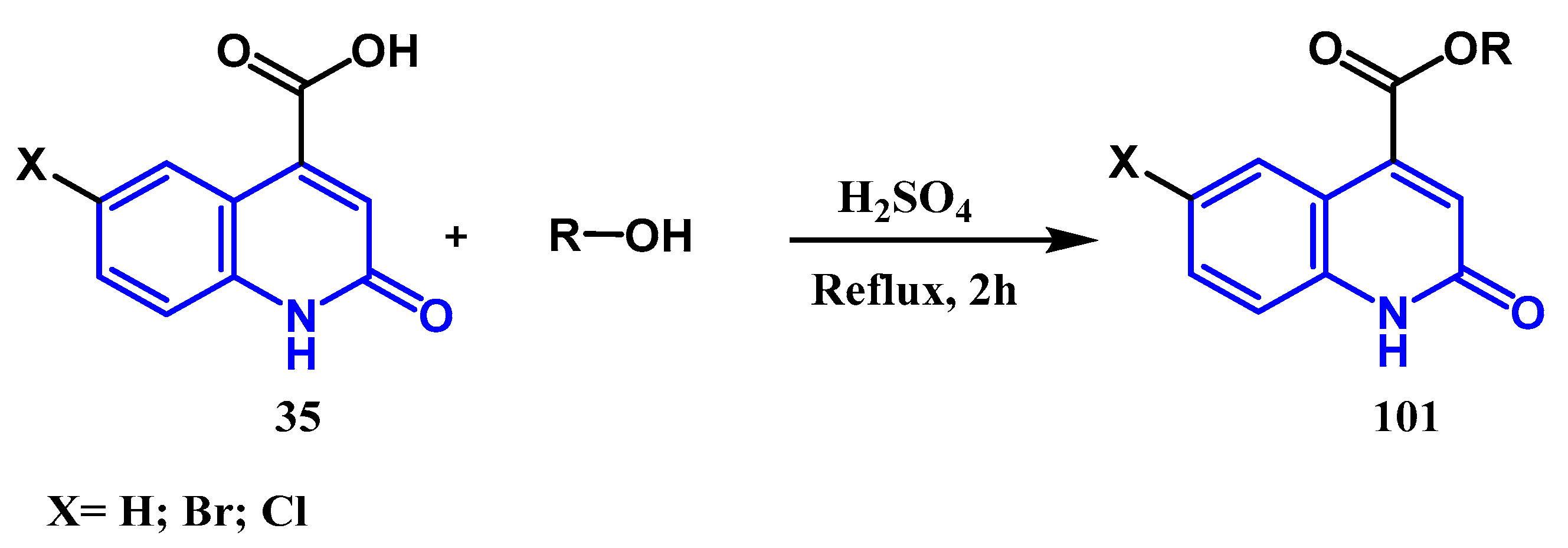
Scheme 34.
Alkylation of 4-hydroxyquinolin-2-one.
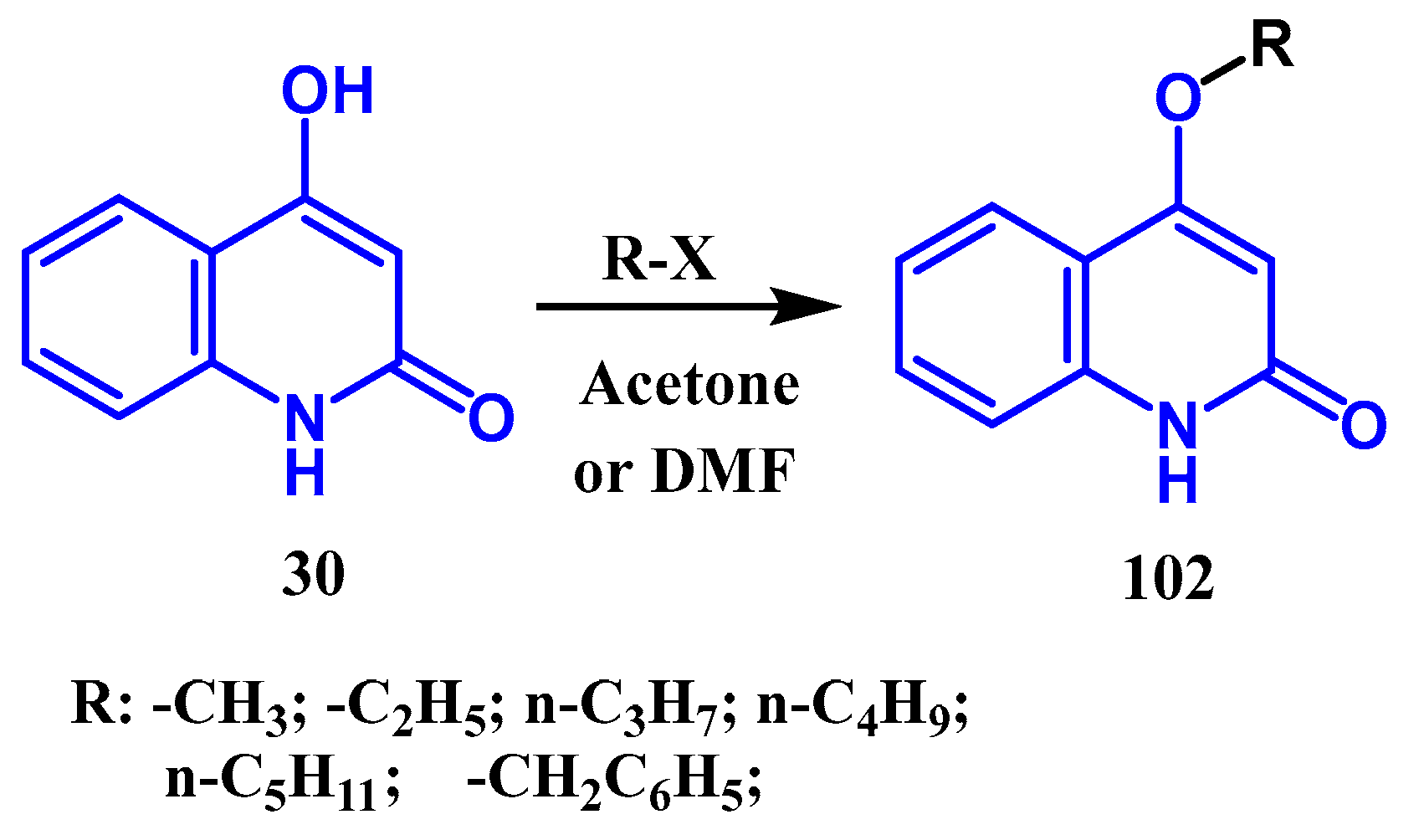
Scheme 35.
4-hydroxy-2-quinolone derivatives synthesis.
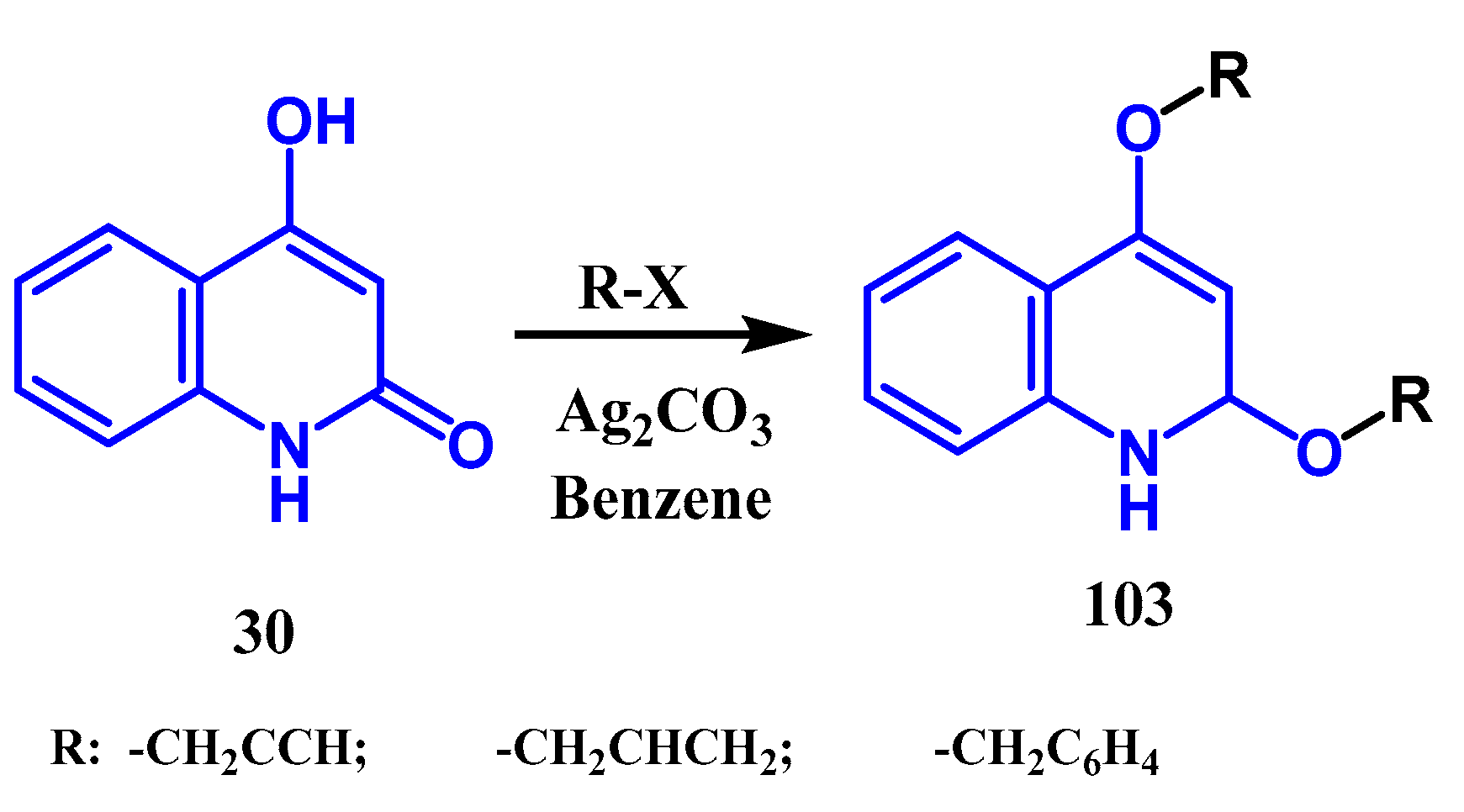
Scheme 36.
O and N-Alkylation of quinolin-2(1H)-one.
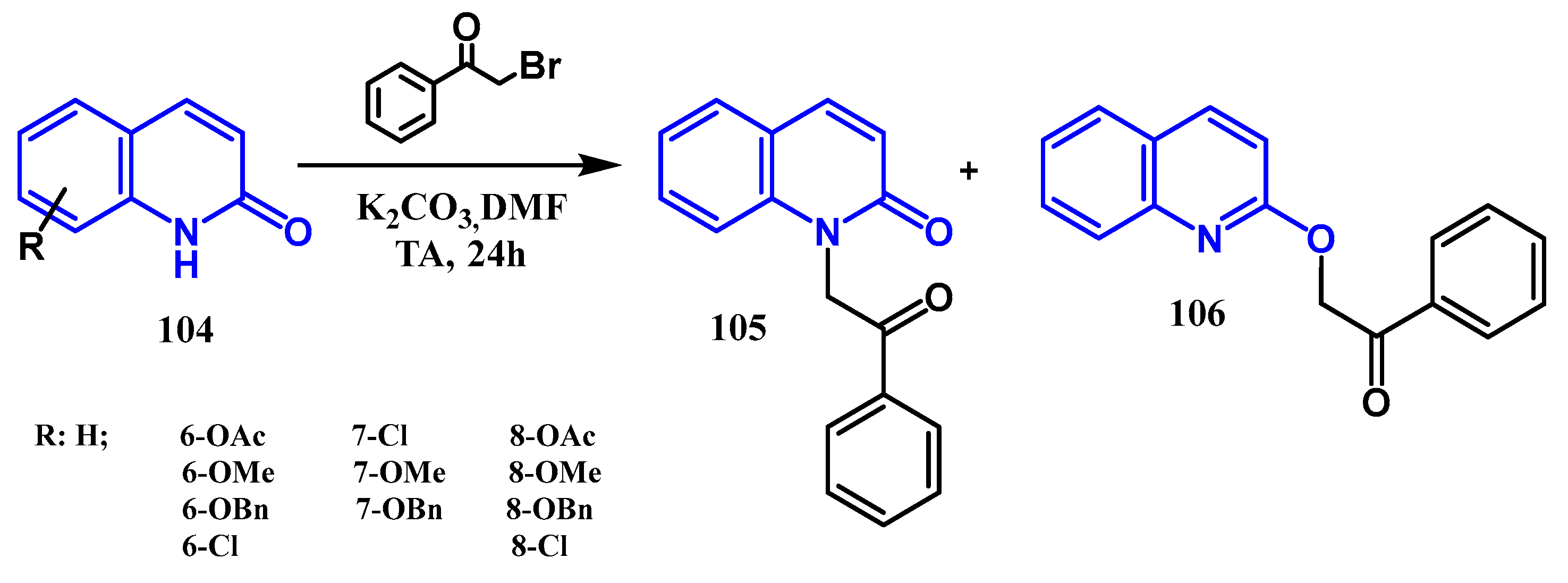
Scheme 37.
Synthesis of N-methyl-3-formyl-2-quinolones derivatives.
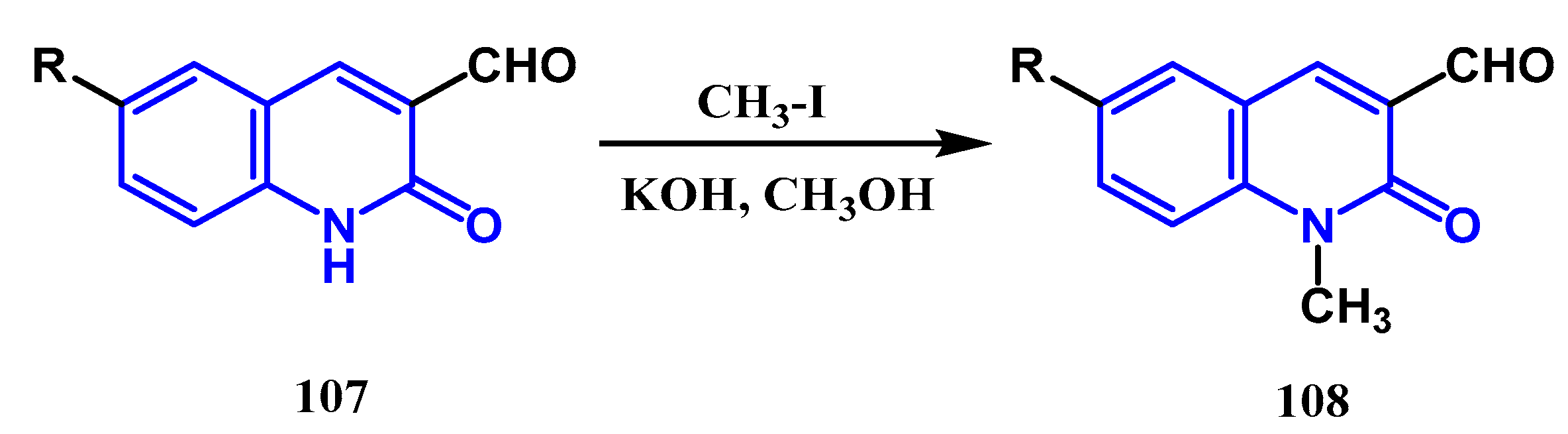
Scheme 38.
Synthesis of 1-(2-oxo-1,2-dihydroquinolin-7-yl)-1H-pyrrole-2,5-dione derivatives.
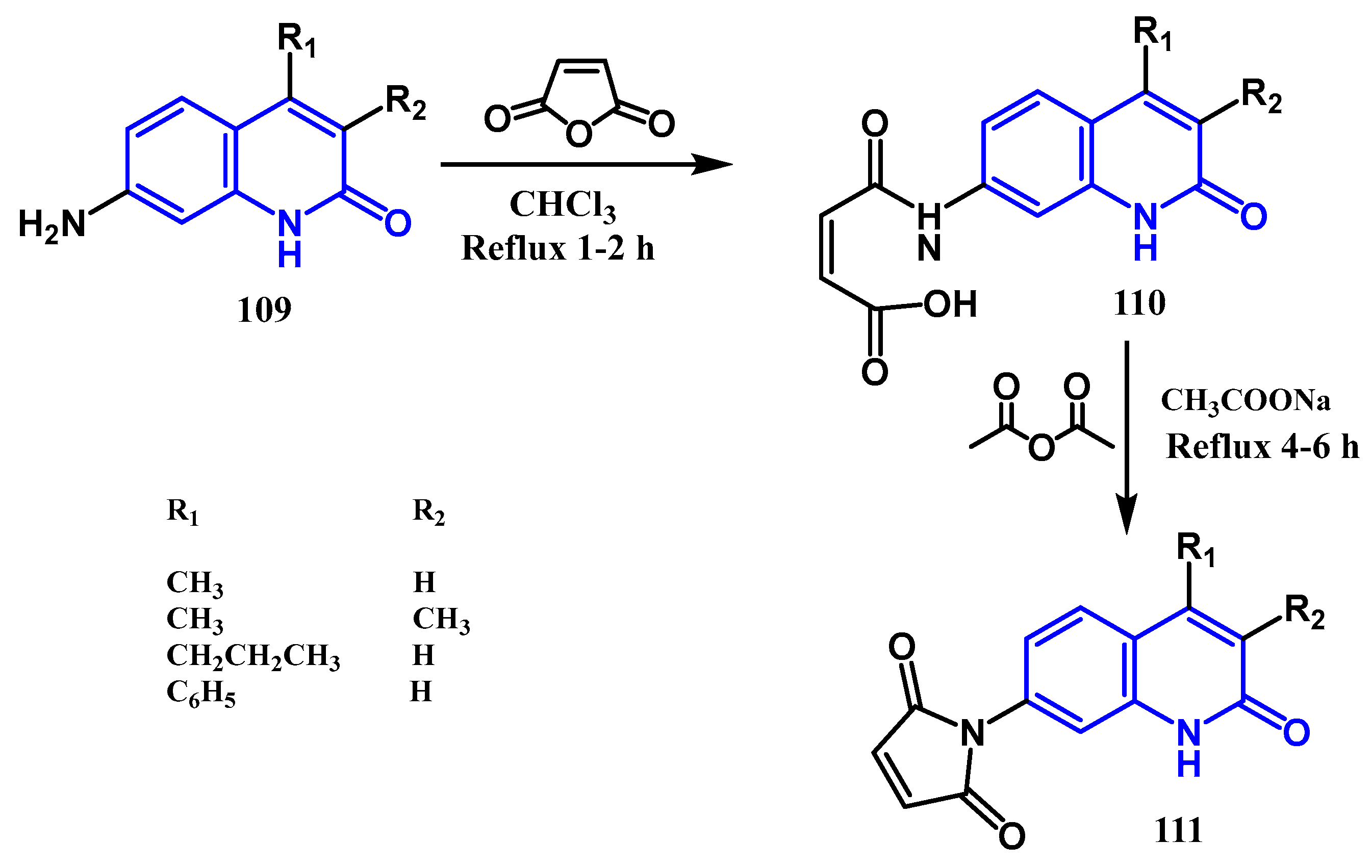
Scheme 39.
The alkylation at the C3 position of 4-hydroxyquinoline-2,4-diones derivatives.
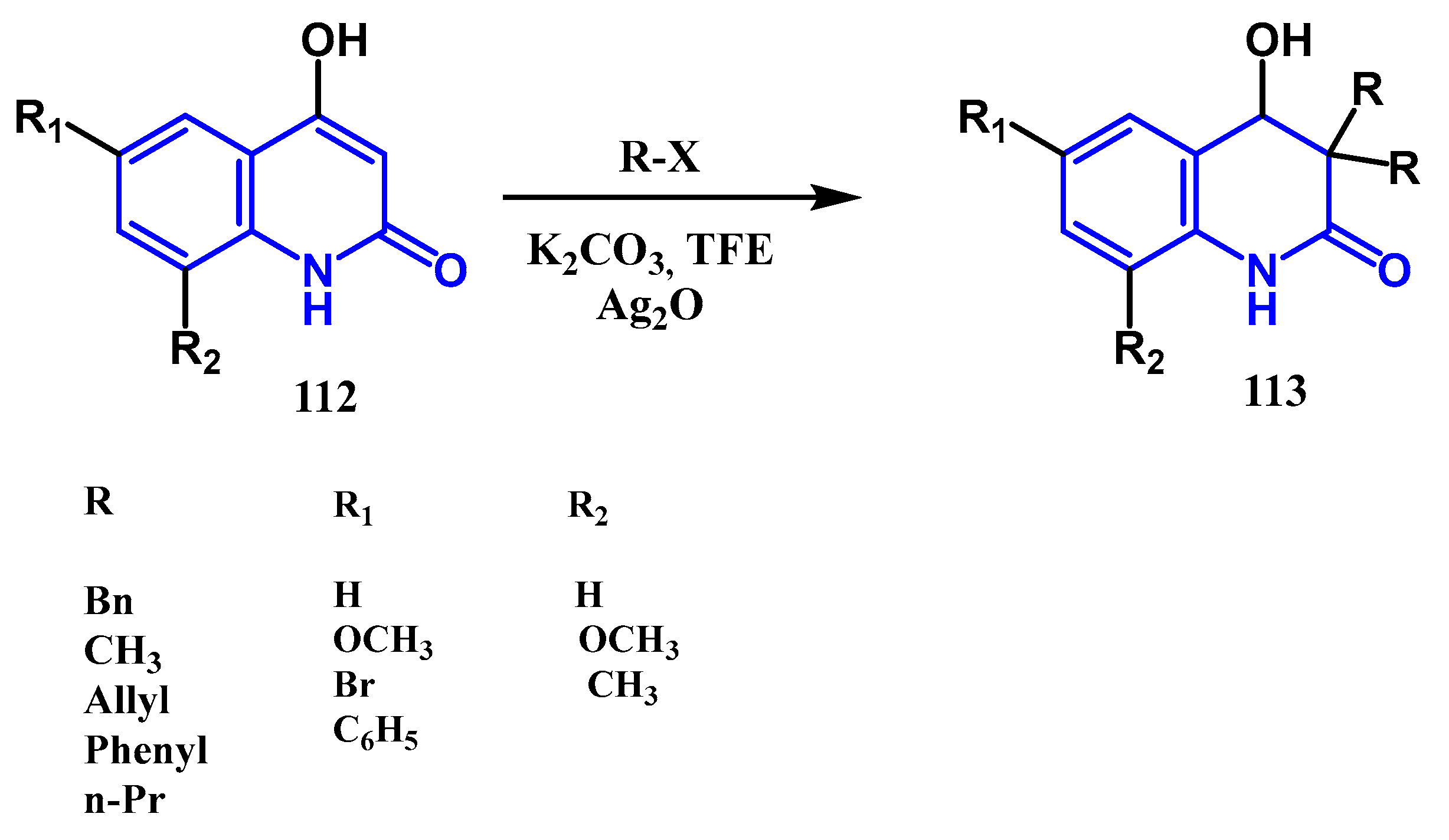
Scheme 40.
Synthesis of aromatic coumarins and aromatic α-quinolones.
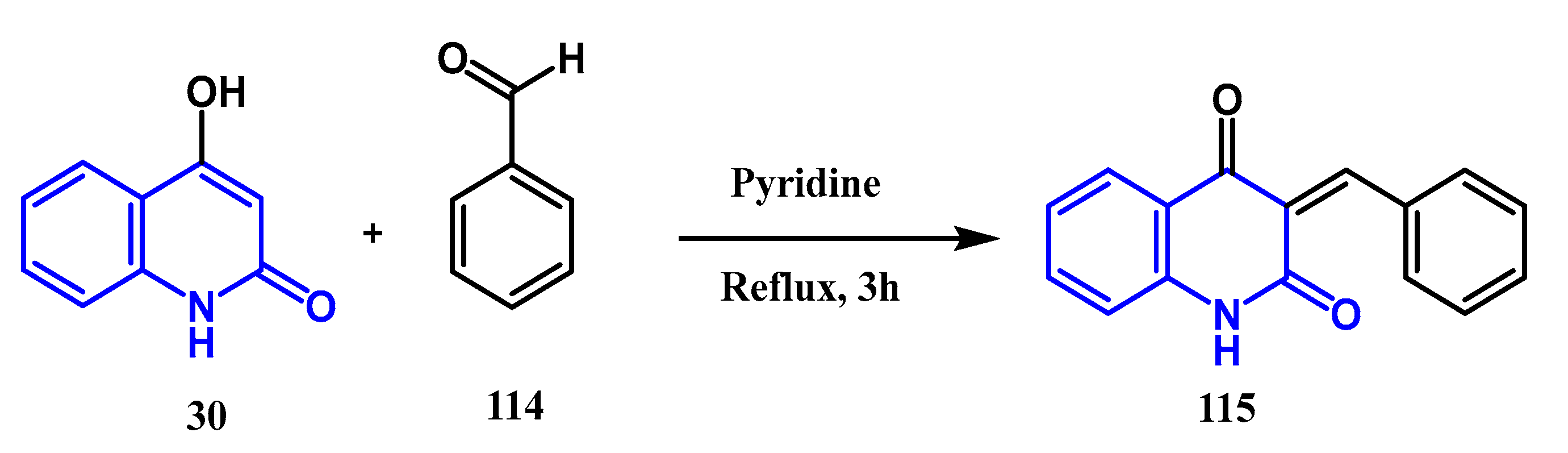
Scheme 41.
Synthesis of 3-chloro-4-methoxy-1-methyl-6-nitro-3,4-dihydroquinolin-2(1H)-one derivatives.
Scheme 41.
Synthesis of 3-chloro-4-methoxy-1-methyl-6-nitro-3,4-dihydroquinolin-2(1H)-one derivatives.
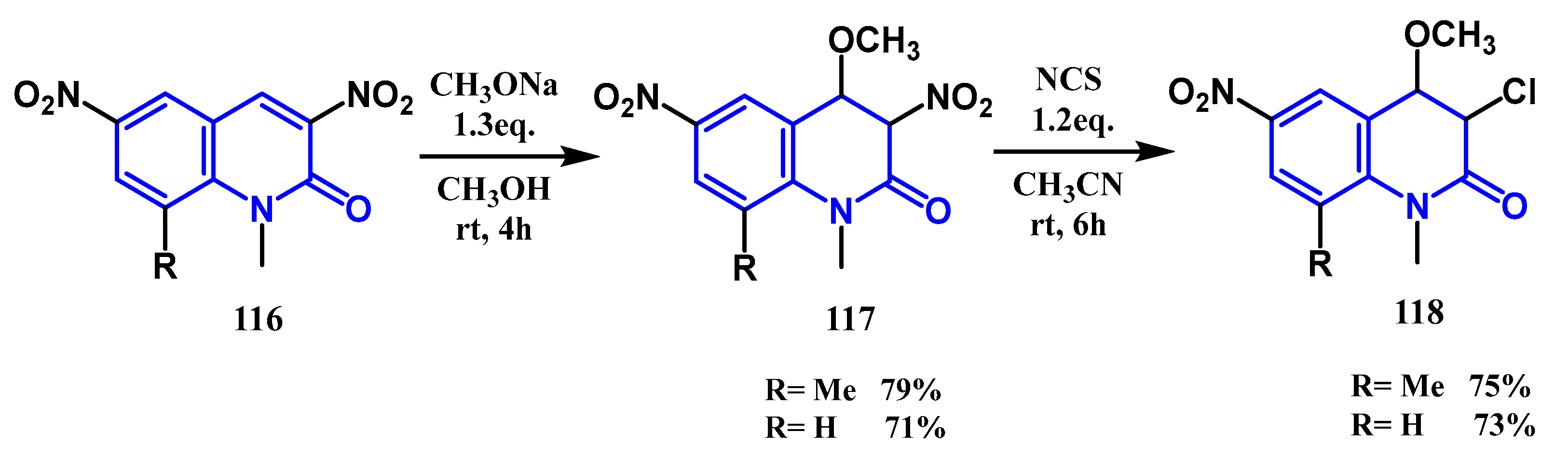
Scheme 42.
Synthesis of 2-phenylquinoline-4(1H)-thione.
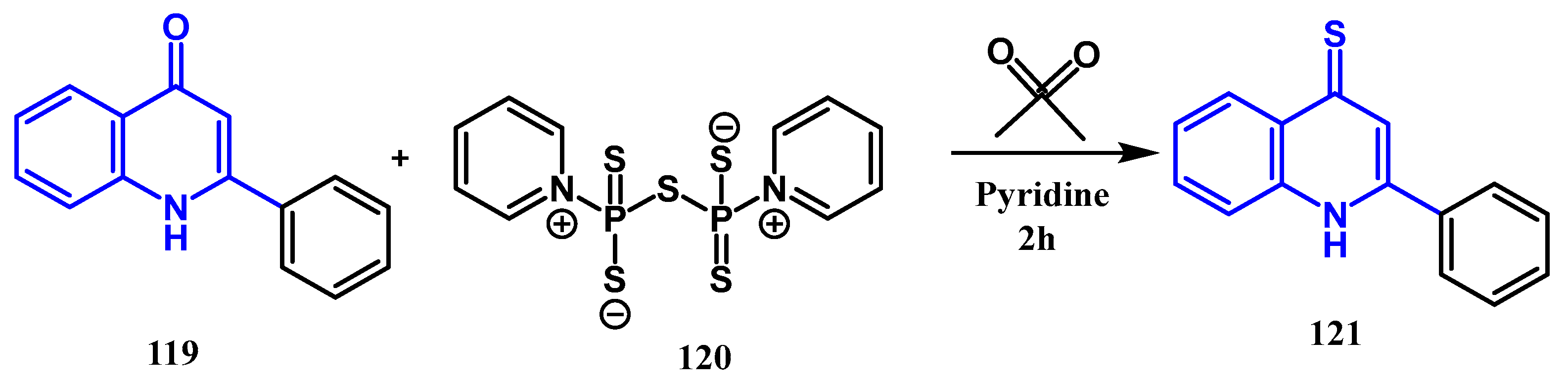
Scheme 43.
Synthesis of 3-hydroxyquinoline-2(1H)-thione.
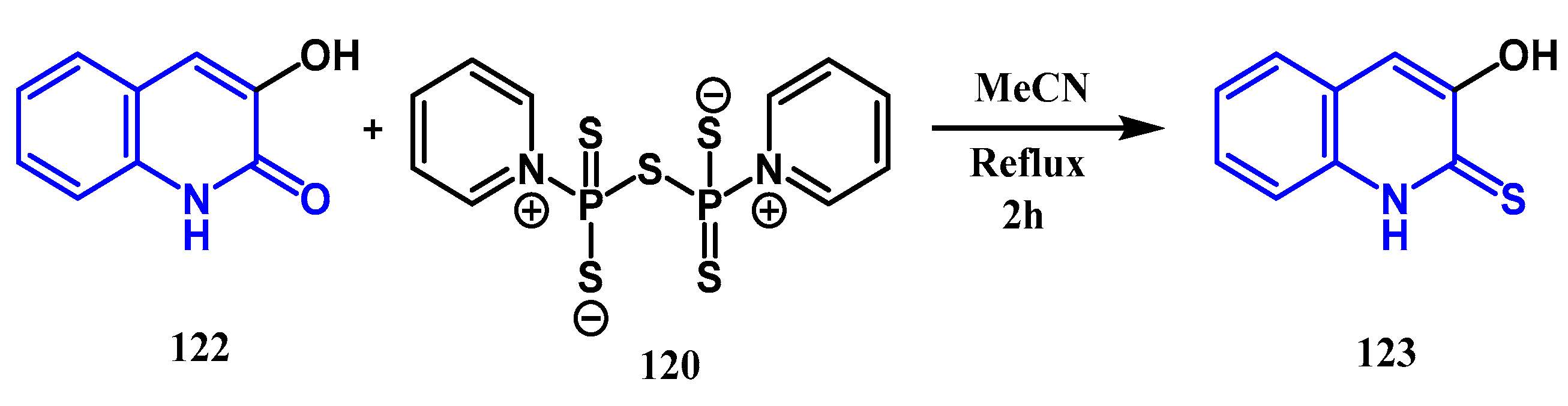
Scheme 44.
Synthesis of 3-(dimethyl-sulfaneylidene)-4-hydroxy-3,4-dihydroquinolin-2(1H)-one.
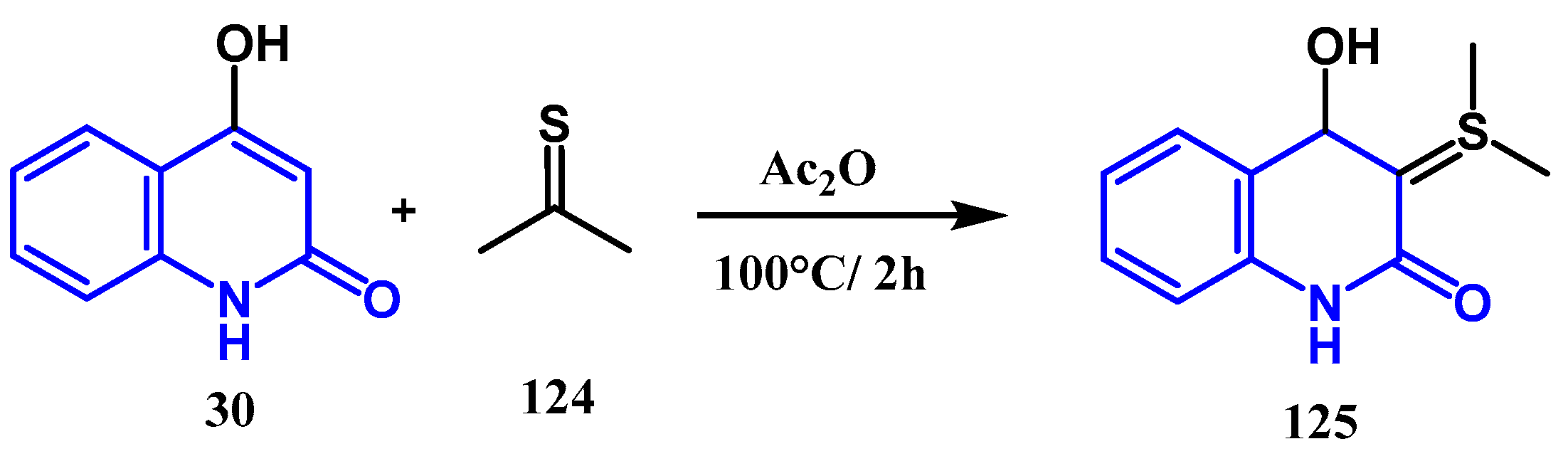
Scheme 45.
Hydrolysis of ethyl 4-morpholino-2-oxo-1,2,3,4-tetrahydroquinoline-3-carboxylate.
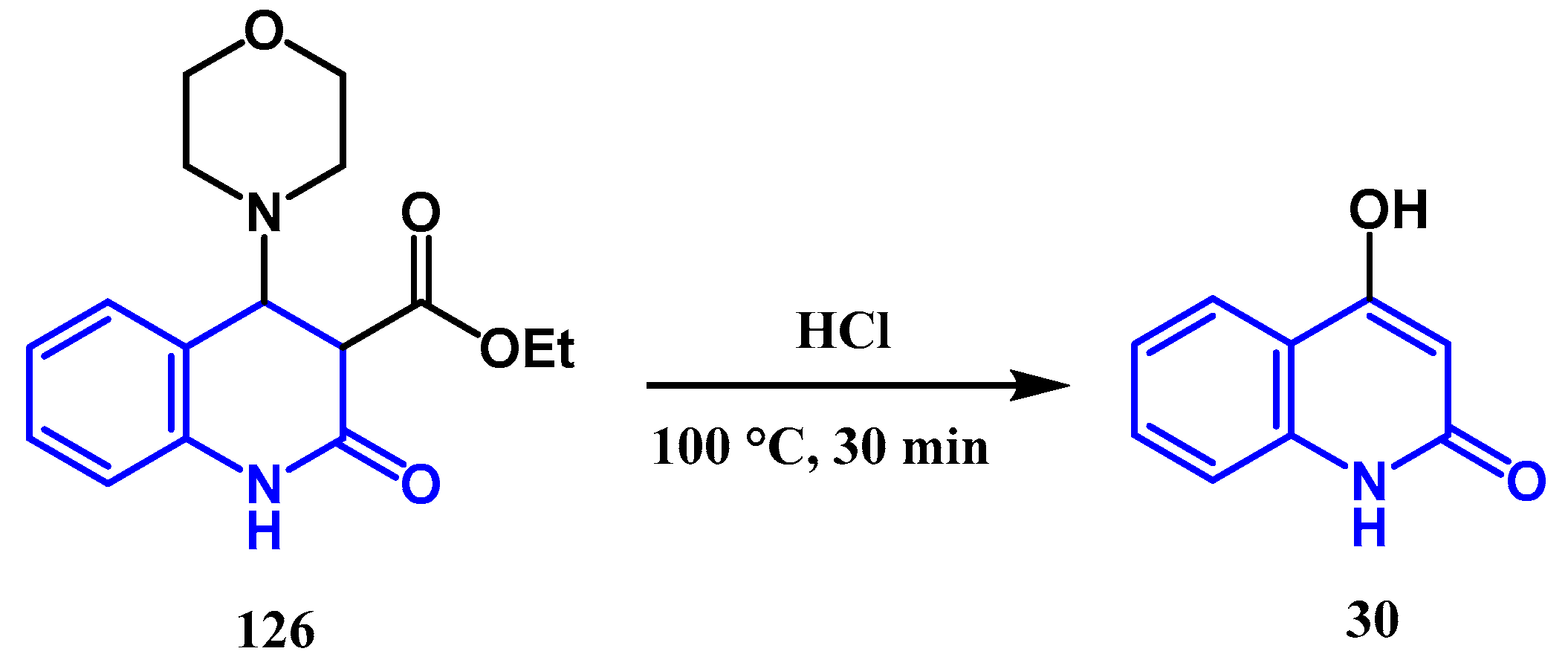
Scheme 46.
Synthesis of 1-ethyl-4-hydroxyquinolin-2(1H)-one.
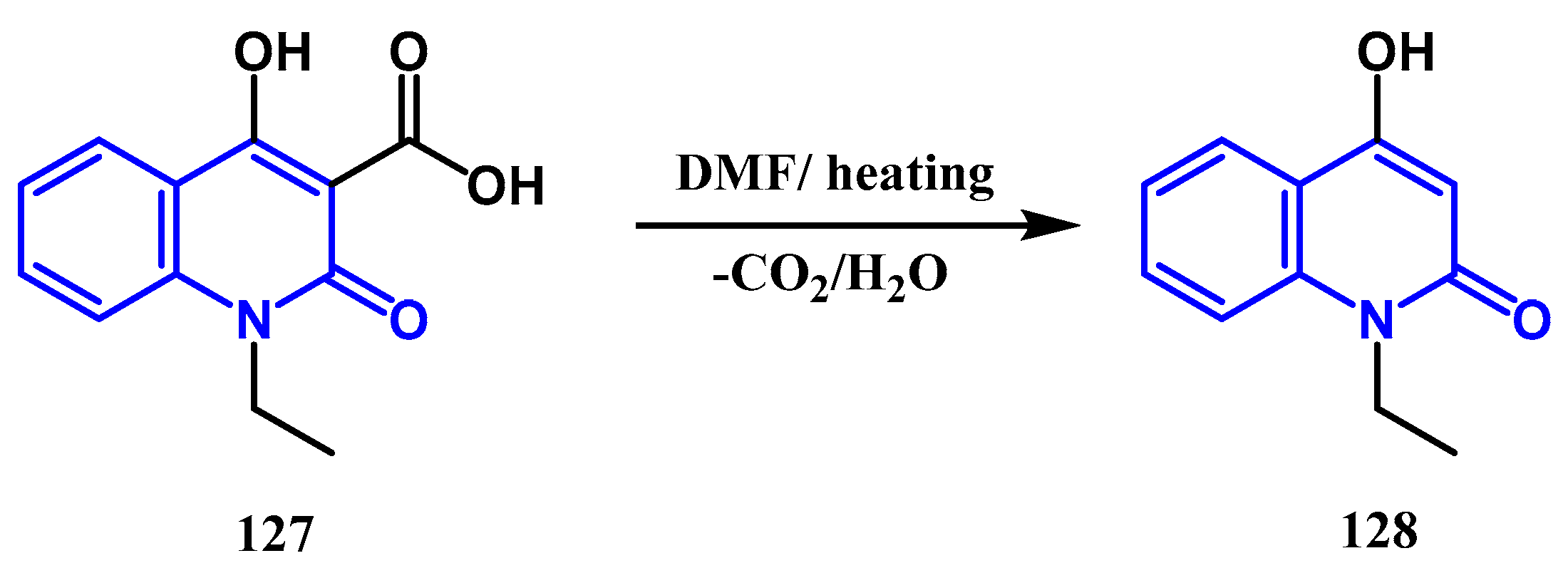
Scheme 47.
Nucleophilic substitution of 4-chloro-1-methyl-3-phenylsulfanyl-2-quinolone.
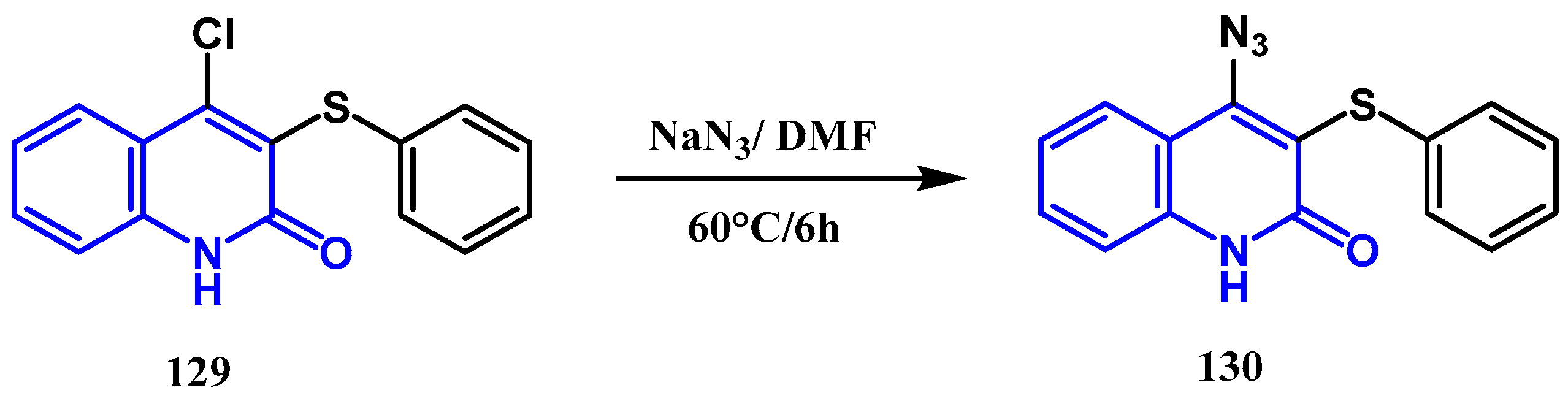
Scheme 48.
Synthesis of 4-azidoquinolin-2(1H)-one.
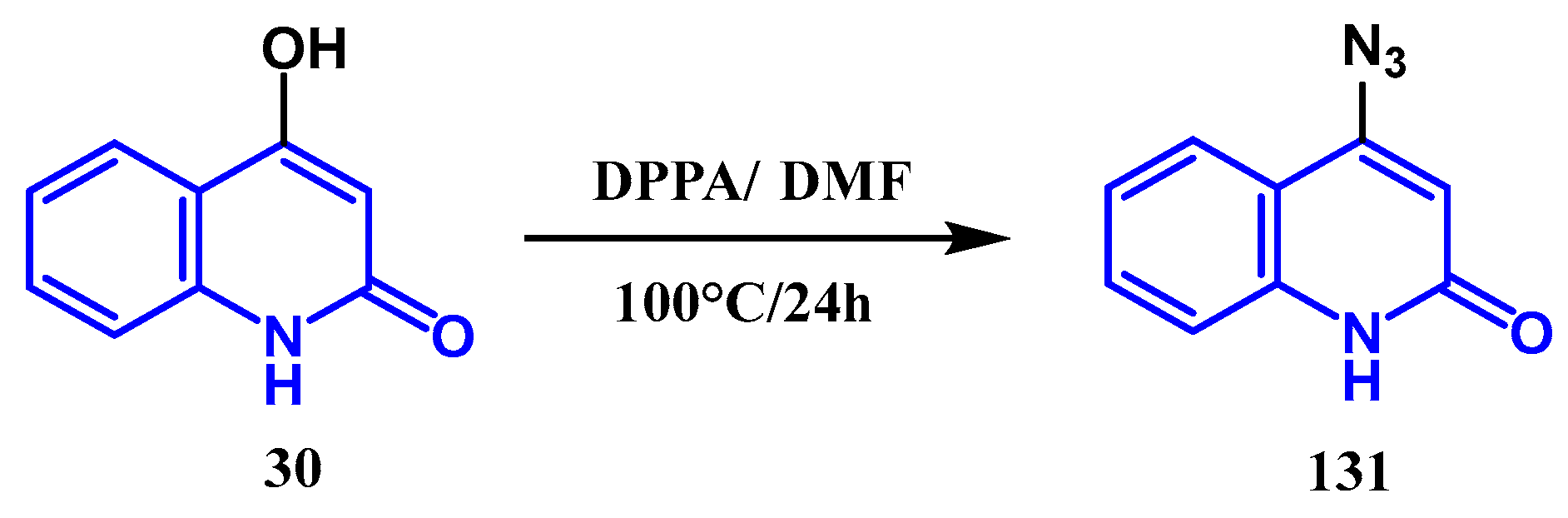
Scheme 49.
Synthesis of 4-azido-2-quinolone derivatives.
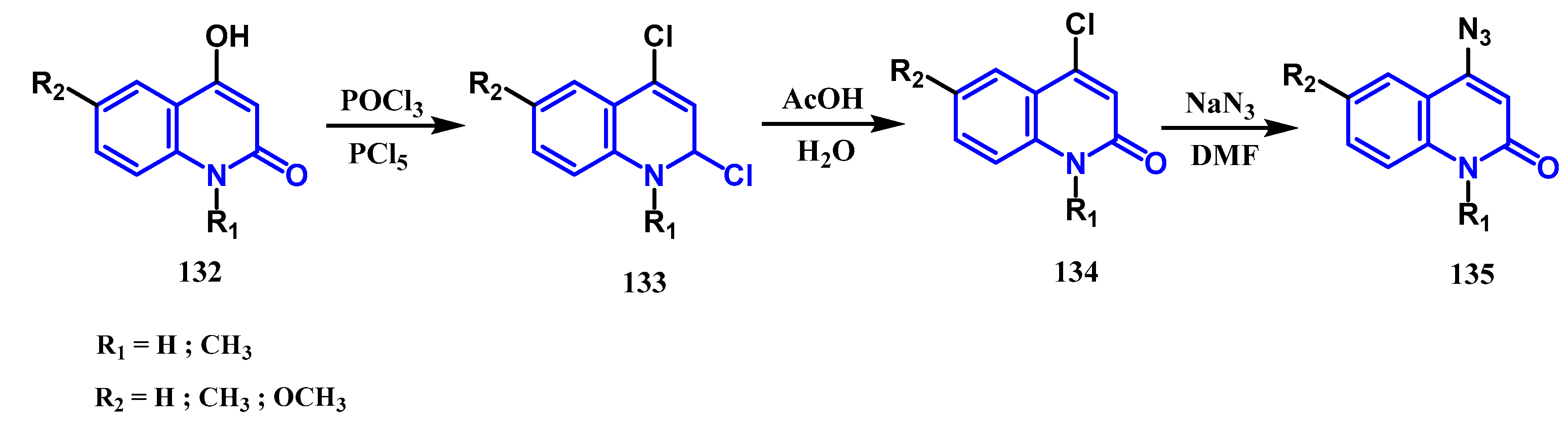
Scheme 50.
Synthesis of 8-((1-(anthracen-9-ylmethyl)-1H-1,2,3-triazol-4-yl)methoxy)-4-hydroxyquinoline-2-carbaldehyde.
Scheme 50.
Synthesis of 8-((1-(anthracen-9-ylmethyl)-1H-1,2,3-triazol-4-yl)methoxy)-4-hydroxyquinoline-2-carbaldehyde.
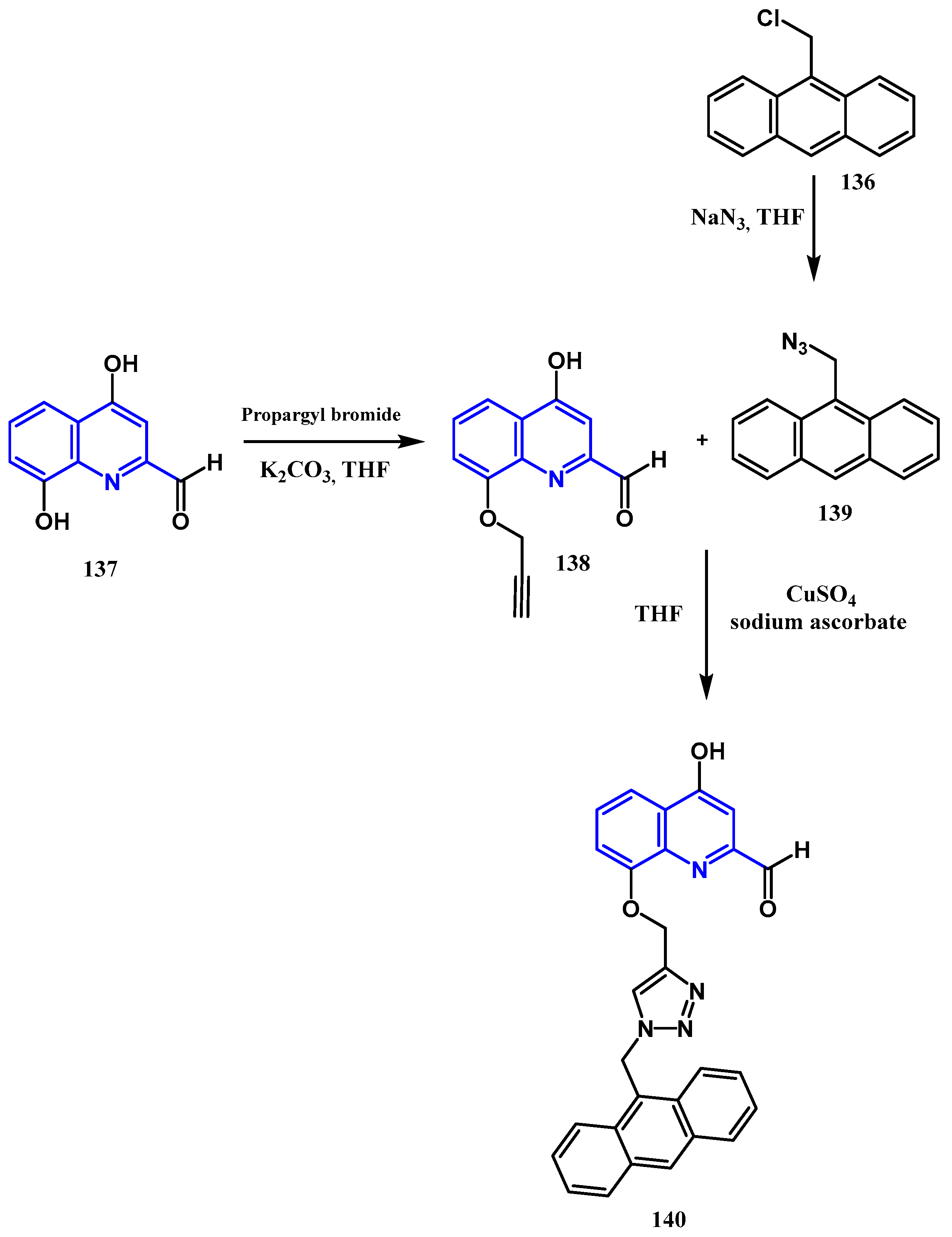
Scheme 51.
Synthesis of ethyl 1-(2-oxo-1,2-dihydroquinolin-4-yl)-1H-1,2,3-triazole-4-carboxylate derivatives.
Scheme 51.
Synthesis of ethyl 1-(2-oxo-1,2-dihydroquinolin-4-yl)-1H-1,2,3-triazole-4-carboxylate derivatives.
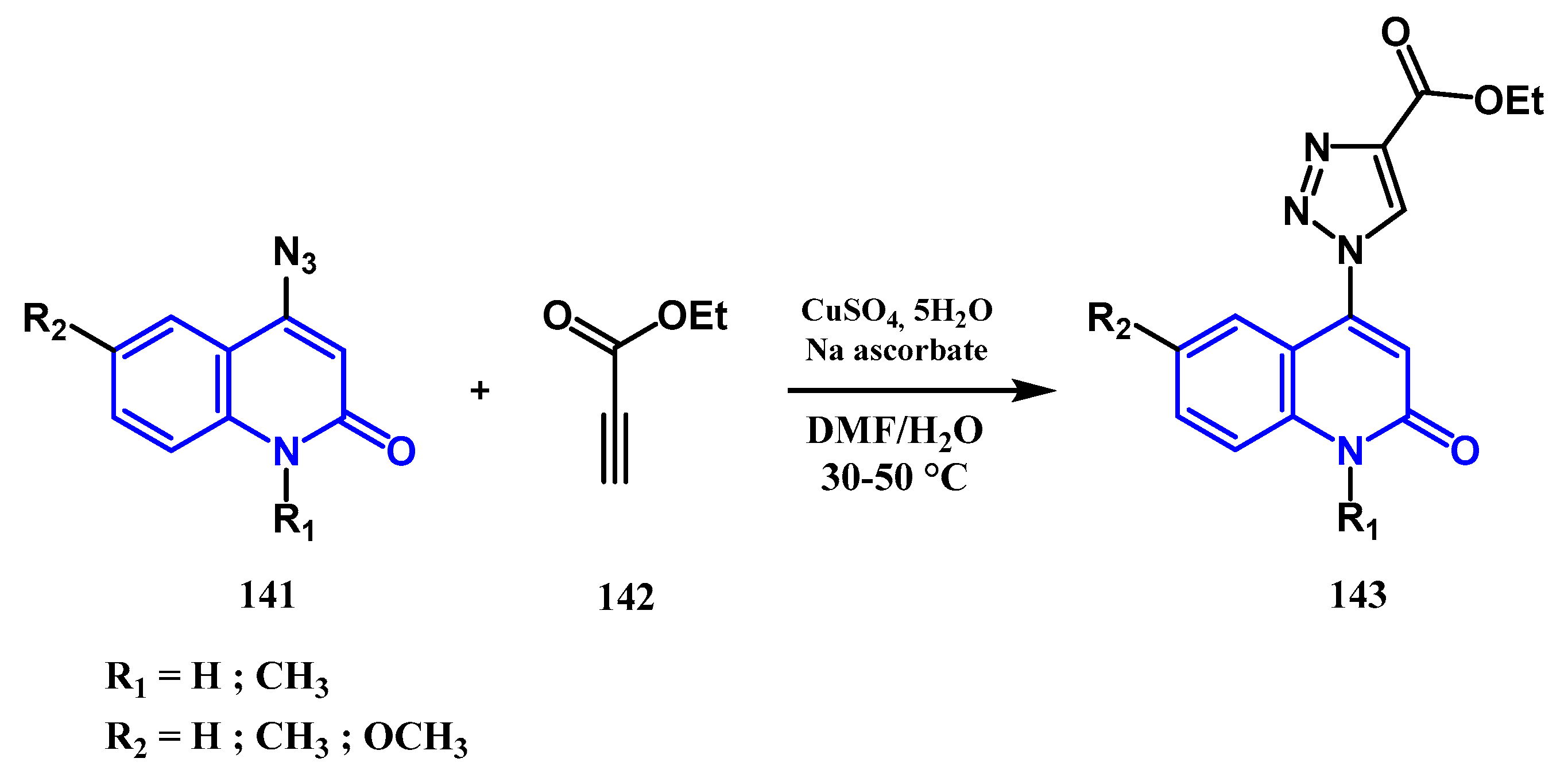
Scheme 52.
Synthesis of 4-(4-((4-acetylphenoxy)methyl)-1H-1,2,3-triazol-1-yl)quinolin-2(1H)-one derivatives.
Scheme 52.
Synthesis of 4-(4-((4-acetylphenoxy)methyl)-1H-1,2,3-triazol-1-yl)quinolin-2(1H)-one derivatives.
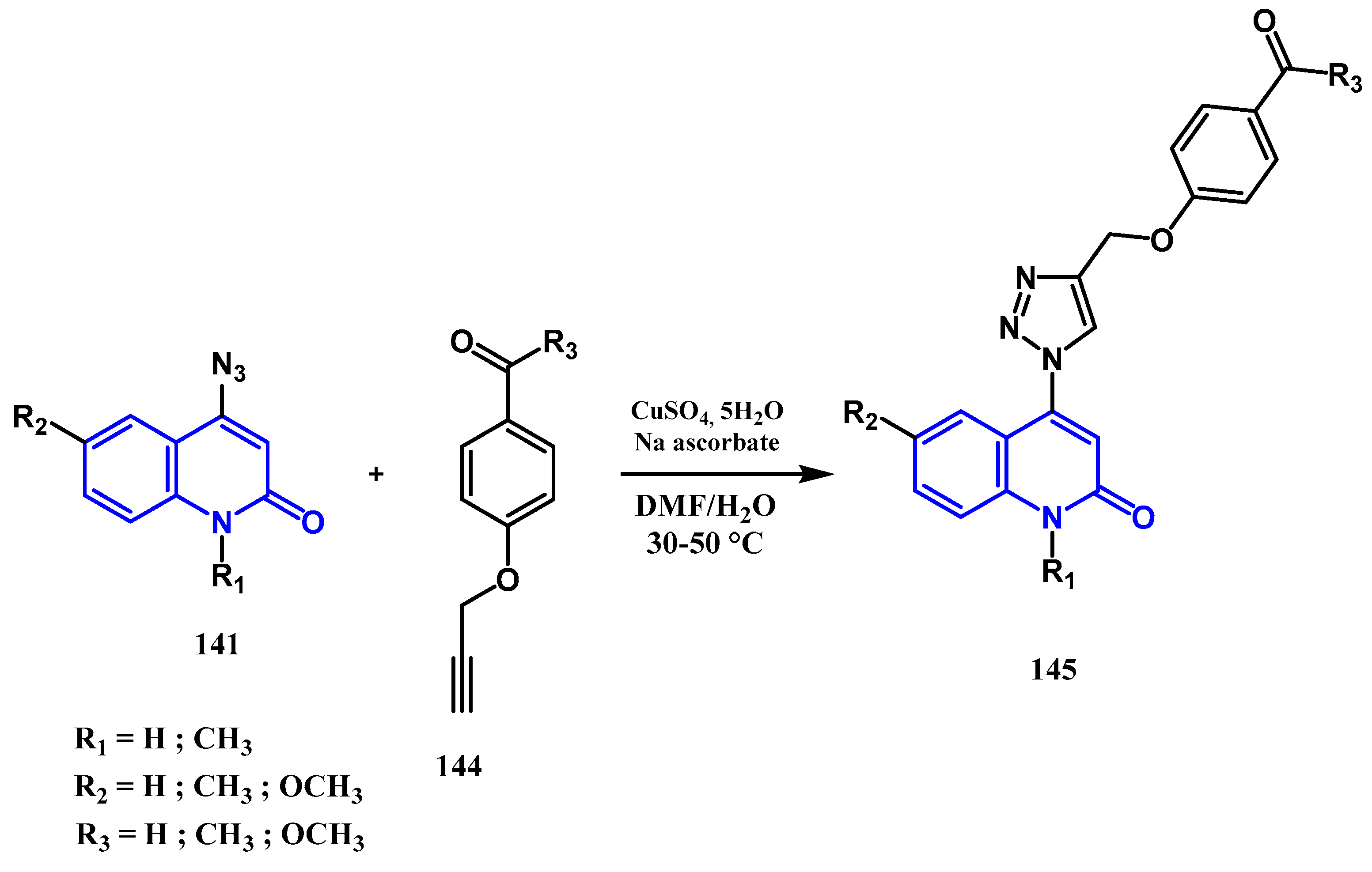
Scheme 53.
Synthesis of a new hybrid molecule.
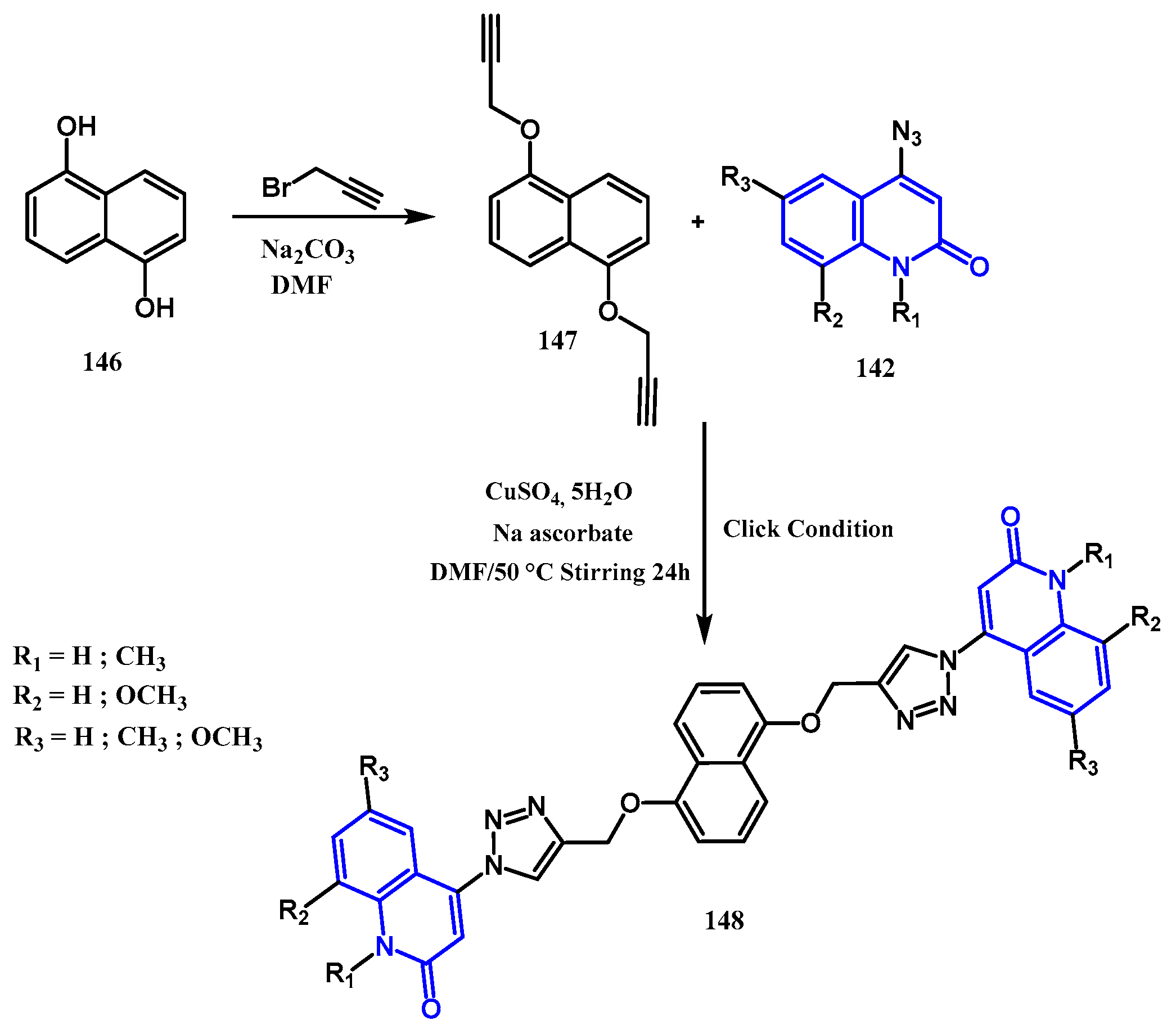
Scheme 54.
Cu-catalyzed [3+2] cycloaddition.
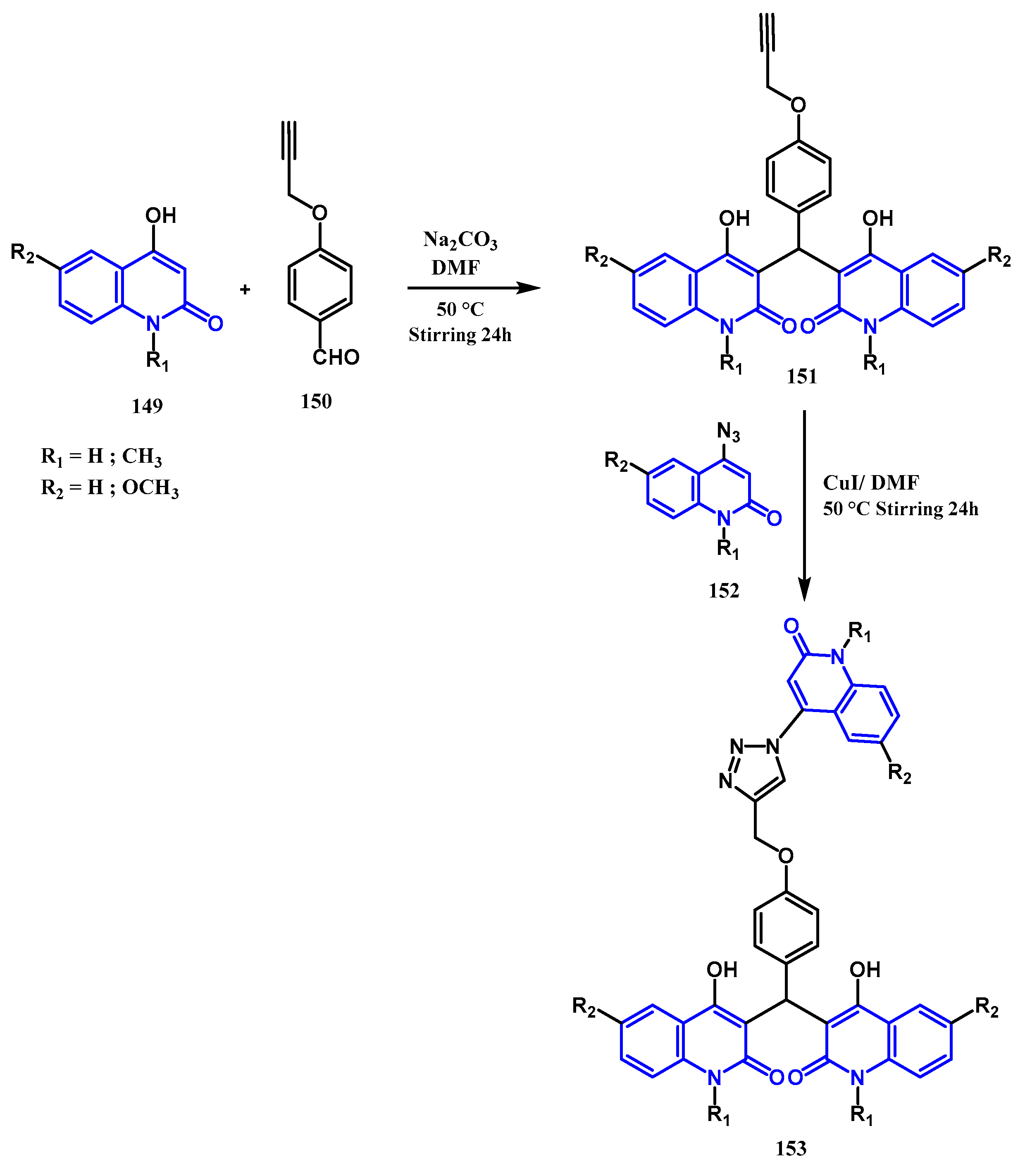
Scheme 55.
Synthesis of (E)-4-(4-((4-(3-oxo-3-phenylprop-1-en-1-yl)phenoxy)methyl)-1H-1,2,3-triazol-1-yl)quinolin-2(1H)-one.
Scheme 55.
Synthesis of (E)-4-(4-((4-(3-oxo-3-phenylprop-1-en-1-yl)phenoxy)methyl)-1H-1,2,3-triazol-1-yl)quinolin-2(1H)-one.
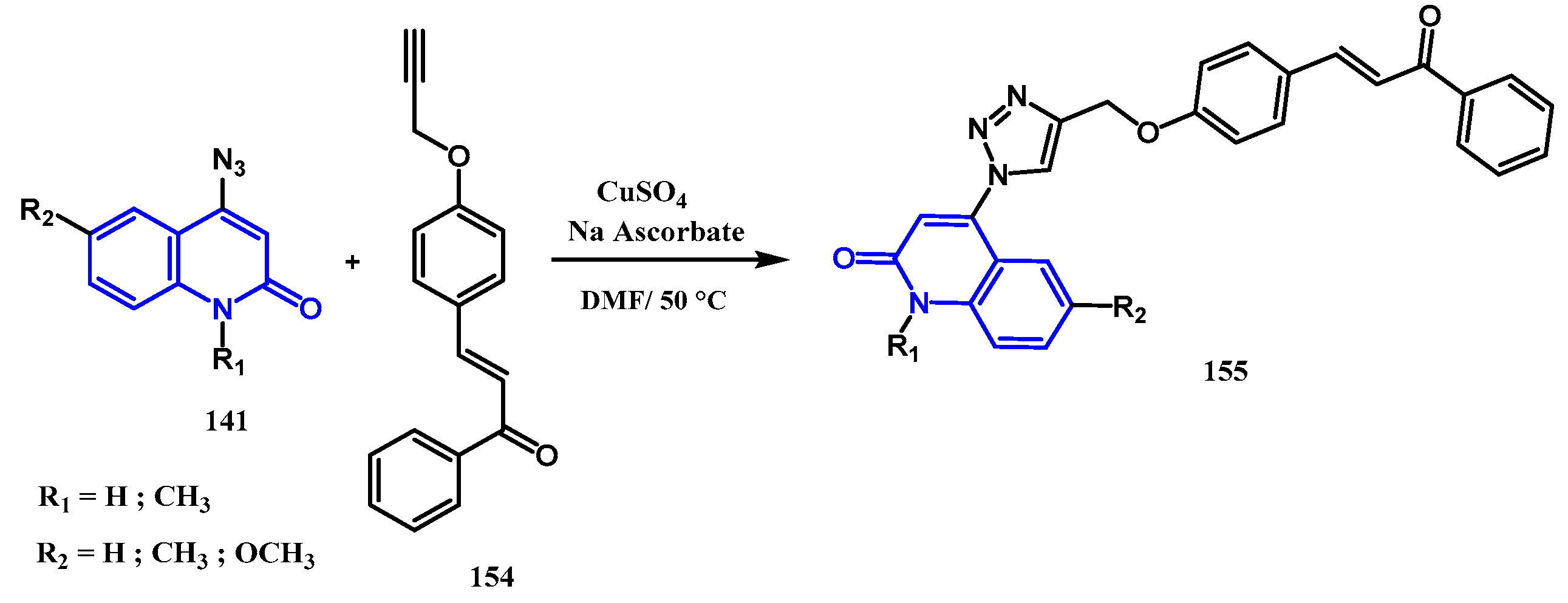
Scheme 56.
Synthesis of 2-quinolone-4-carboxamide derivatives containing a triazole nucleus.
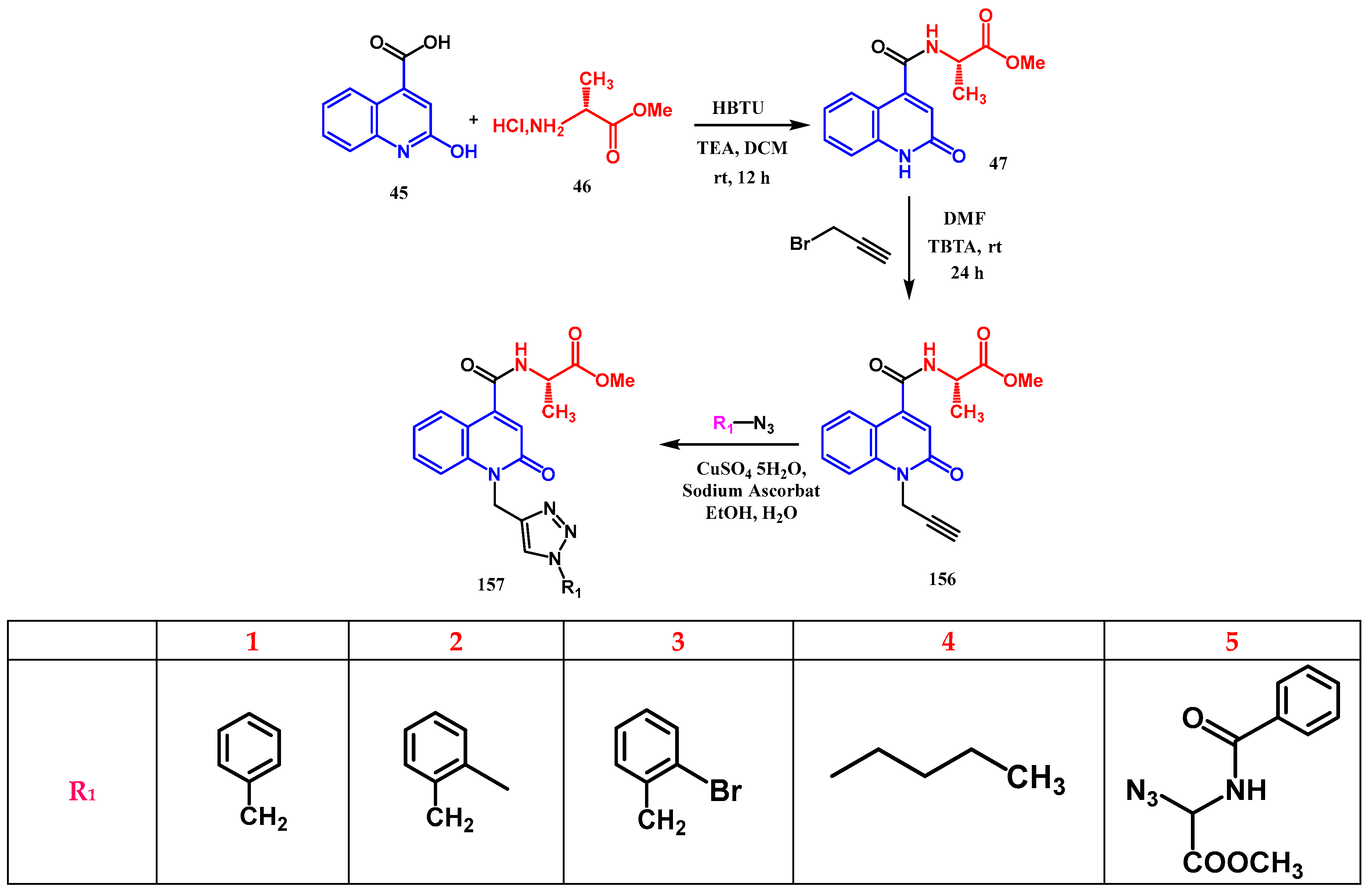
Scheme 57.
Synthesis of 2-phenylfuro[3,2-c]quinolin-4(5H)-one derivatives.
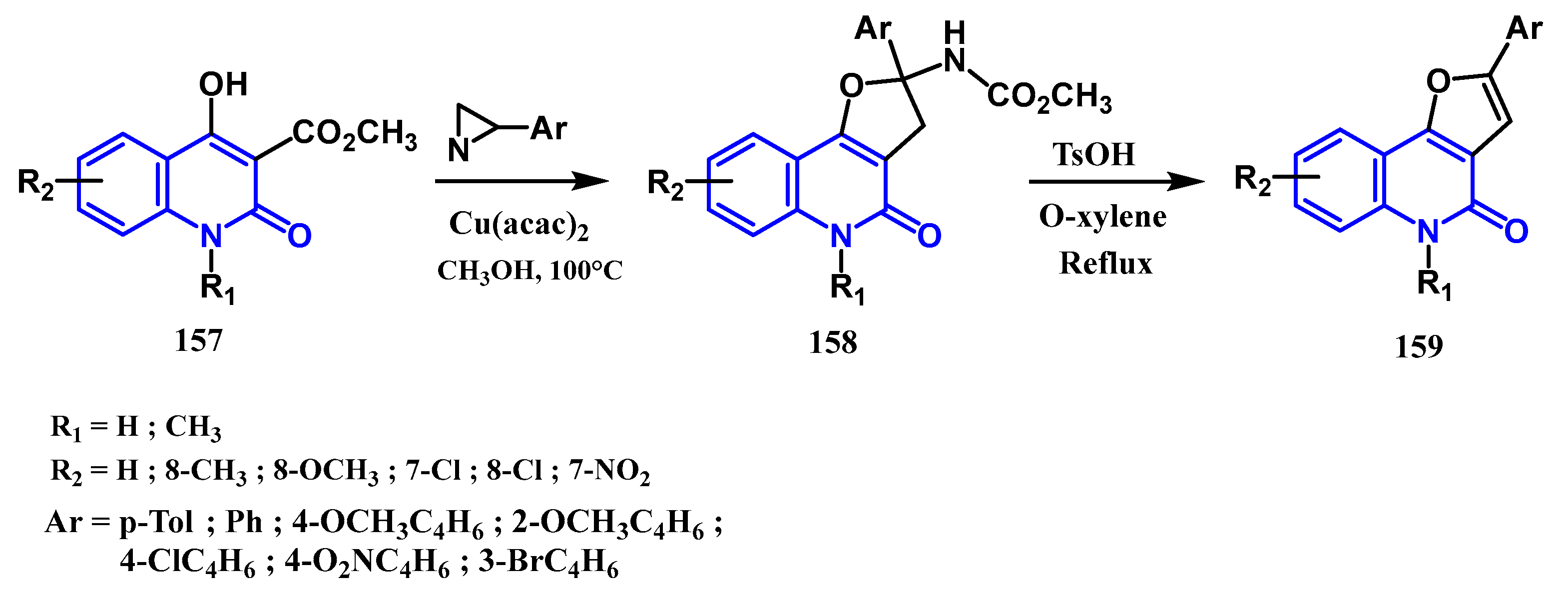
Scheme 58.
Plausible mechanism of Sakharov reaction.
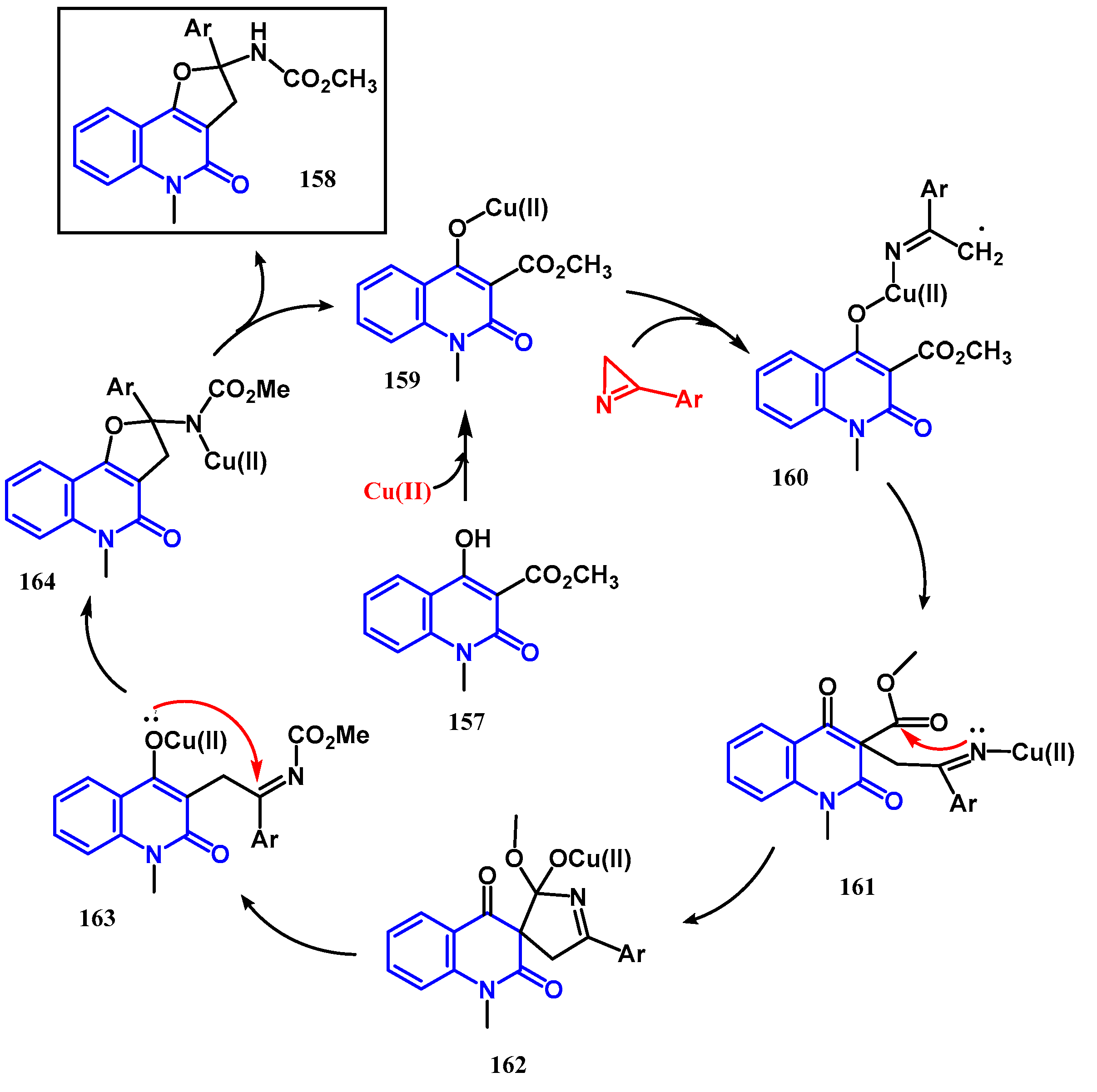
Scheme 59.
Synthesis of furo[3,2-c]quinolin-4(5H)-one derivatives.
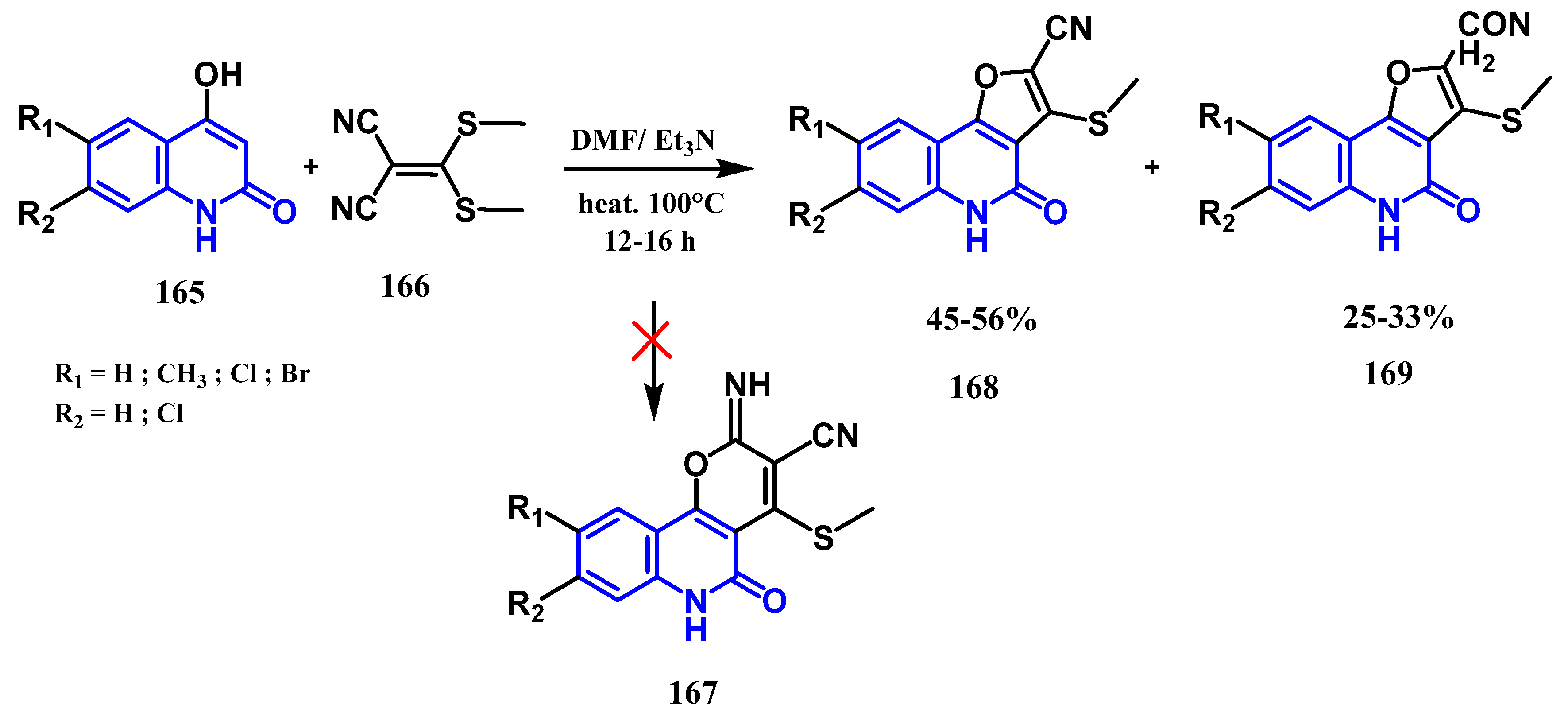
Scheme 60.
Plausible mechanism of Aly reaction.
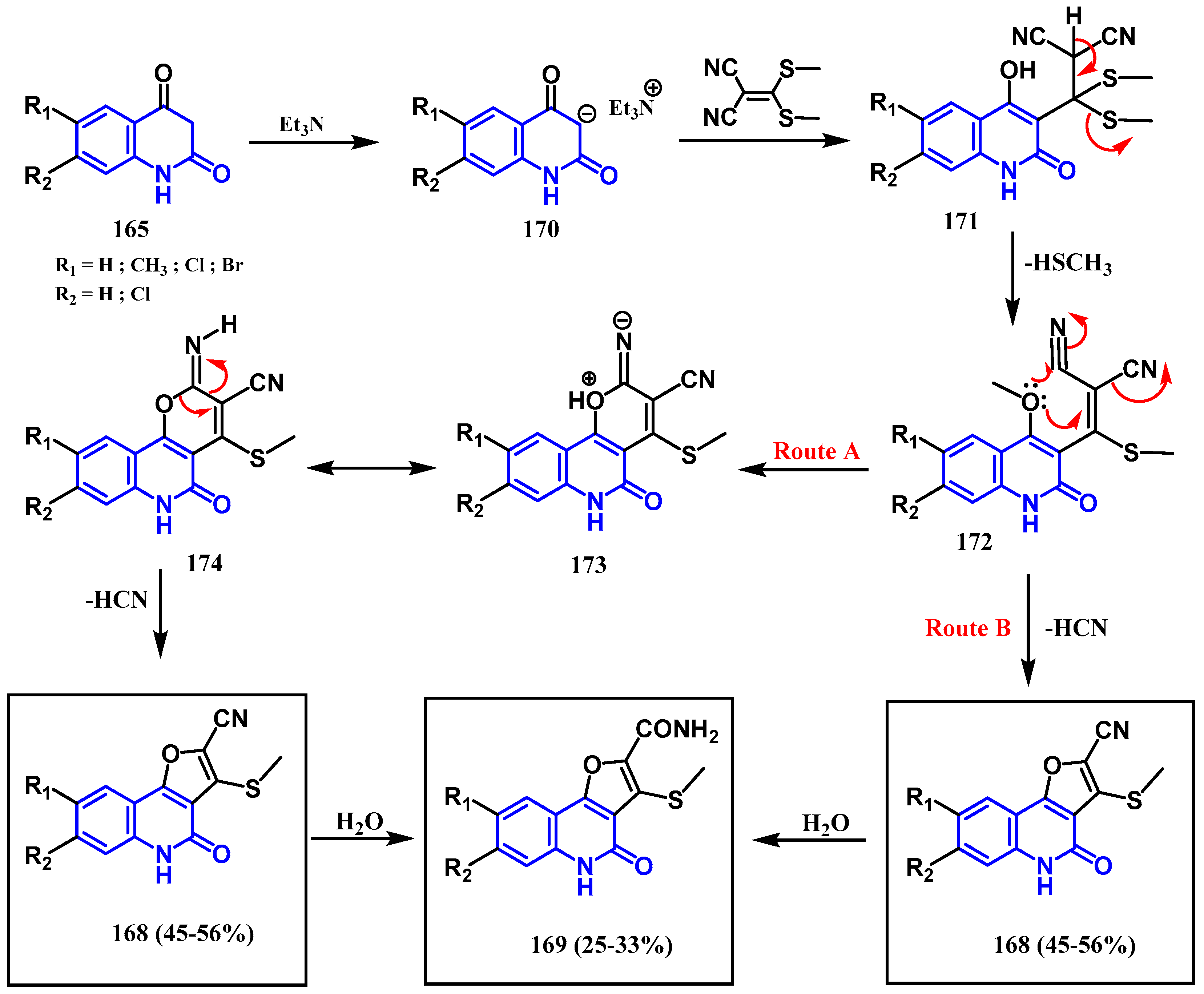
Scheme 61.
Synthesis of 6-methyl-2,2,4-triphenyl-2,6-dihydro-5H-pyrano[3,2-c]quinolin-5-one.
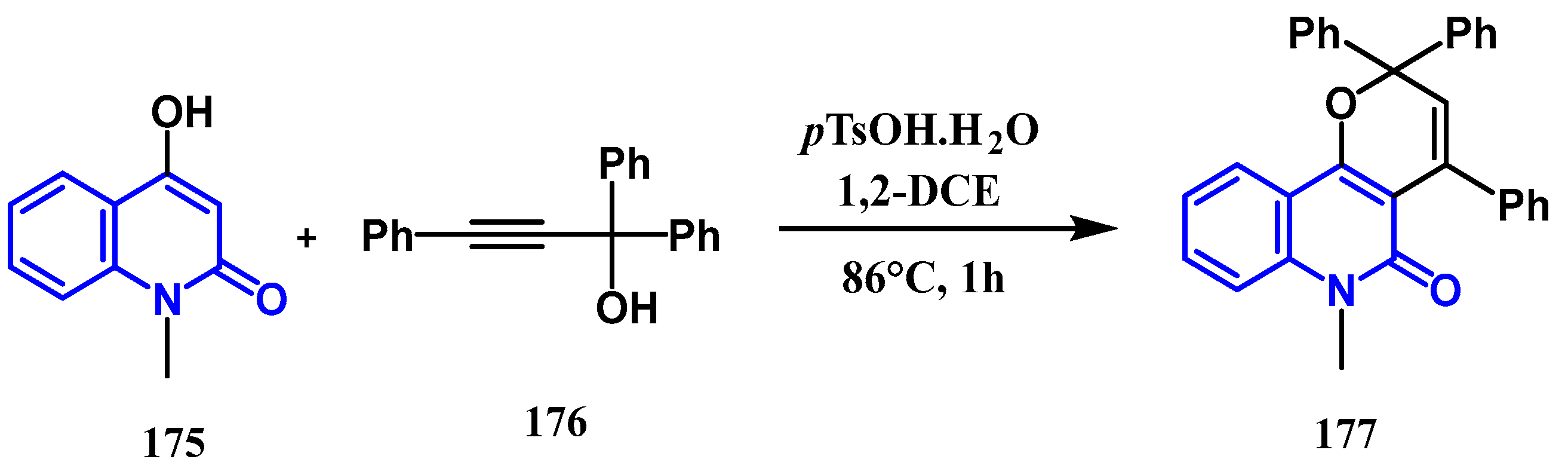
Scheme 62.
Synthesis of (Z)-2-benzylidene-5-methyl-3-phenyl-3,5-dihydrofuro[3,2-c]quinolin-4(2H)-one.
Scheme 62.
Synthesis of (Z)-2-benzylidene-5-methyl-3-phenyl-3,5-dihydrofuro[3,2-c]quinolin-4(2H)-one.
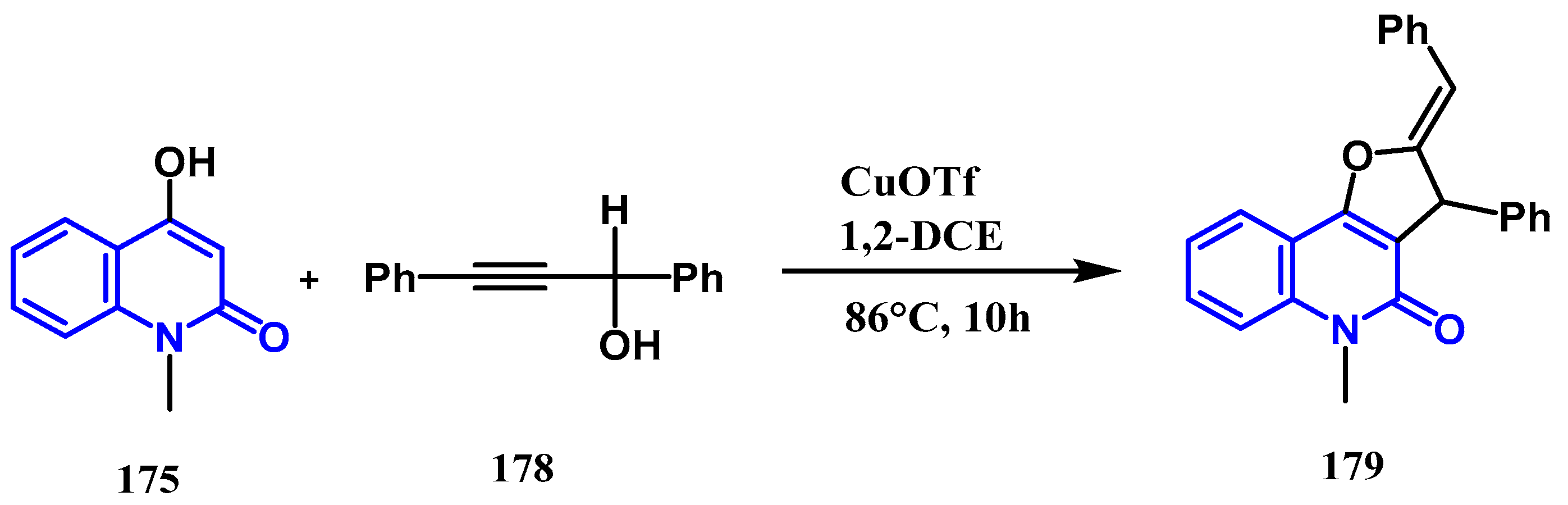
Scheme 63.
Synthesis of a 2-quinolone with a benzimidazol ring.
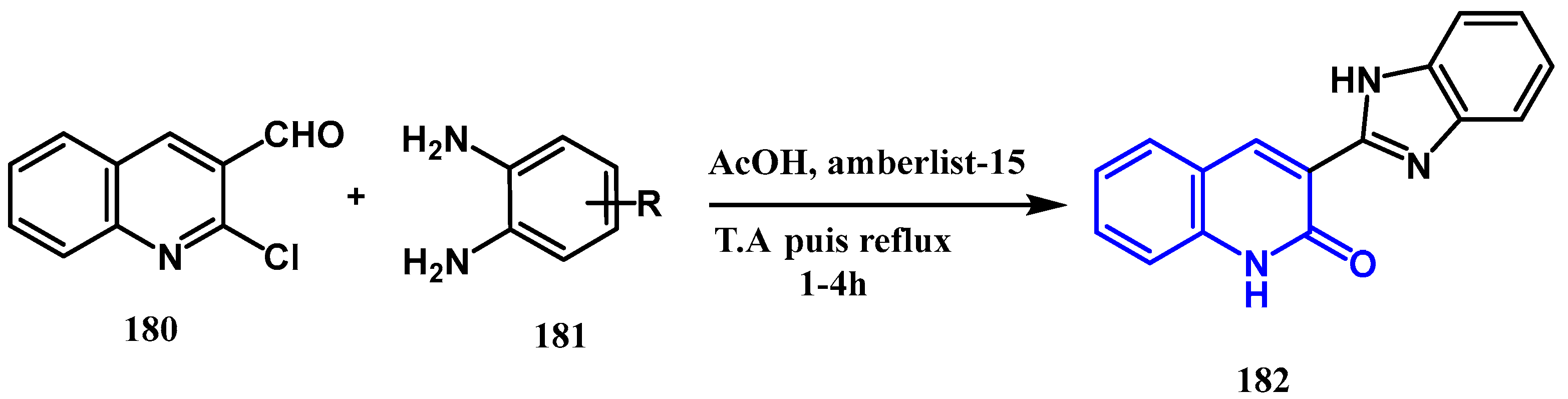
Scheme 64.
Synthesis of 4-((2-oxo-1,2-dihydroquinolin-4-yl)amino)-1-thia-4-azaspiro[4.5]decan-3-one.
Scheme 64.
Synthesis of 4-((2-oxo-1,2-dihydroquinolin-4-yl)amino)-1-thia-4-azaspiro[4.5]decan-3-one.
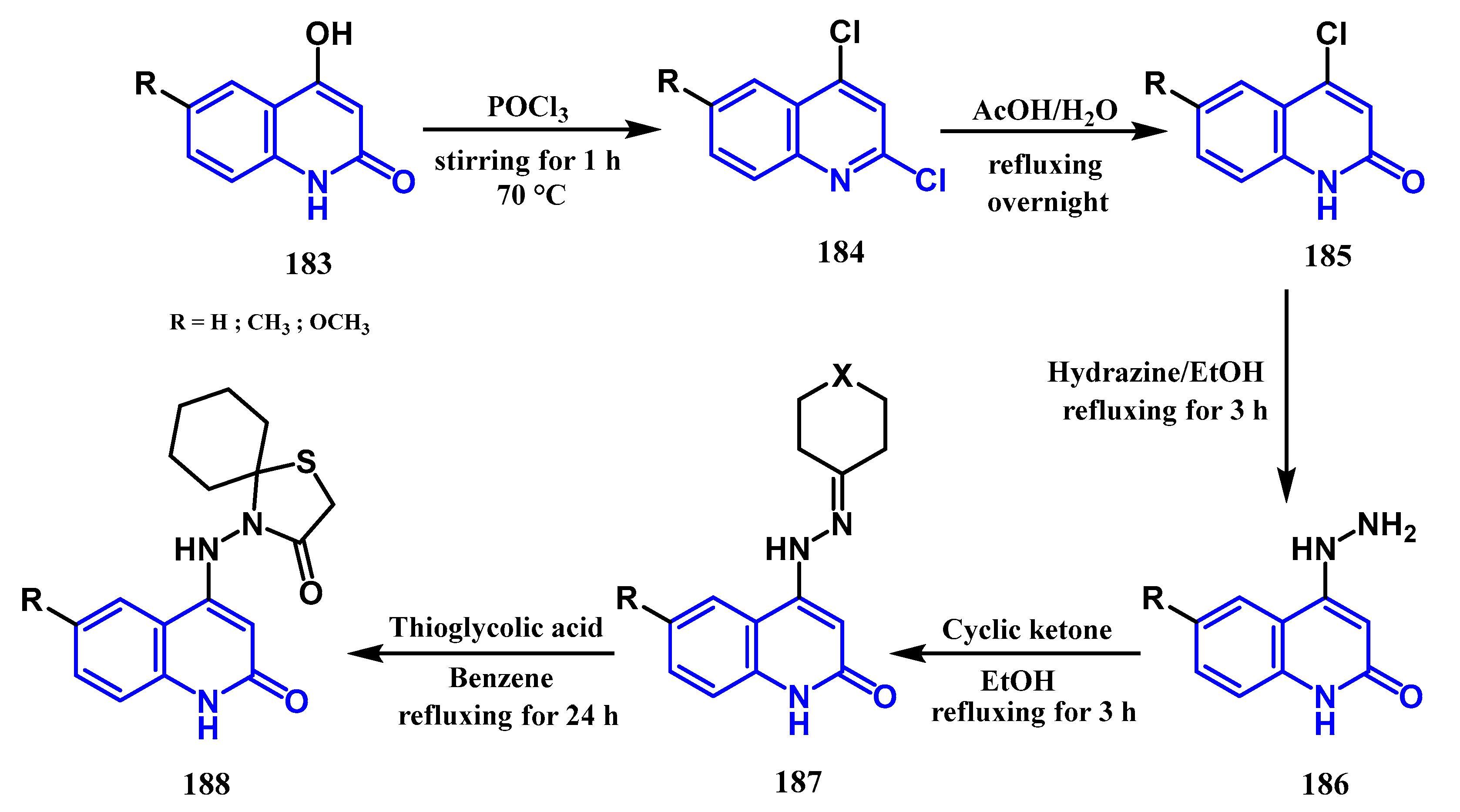
Scheme 65.
Proposed mechanism for the cyclization step.
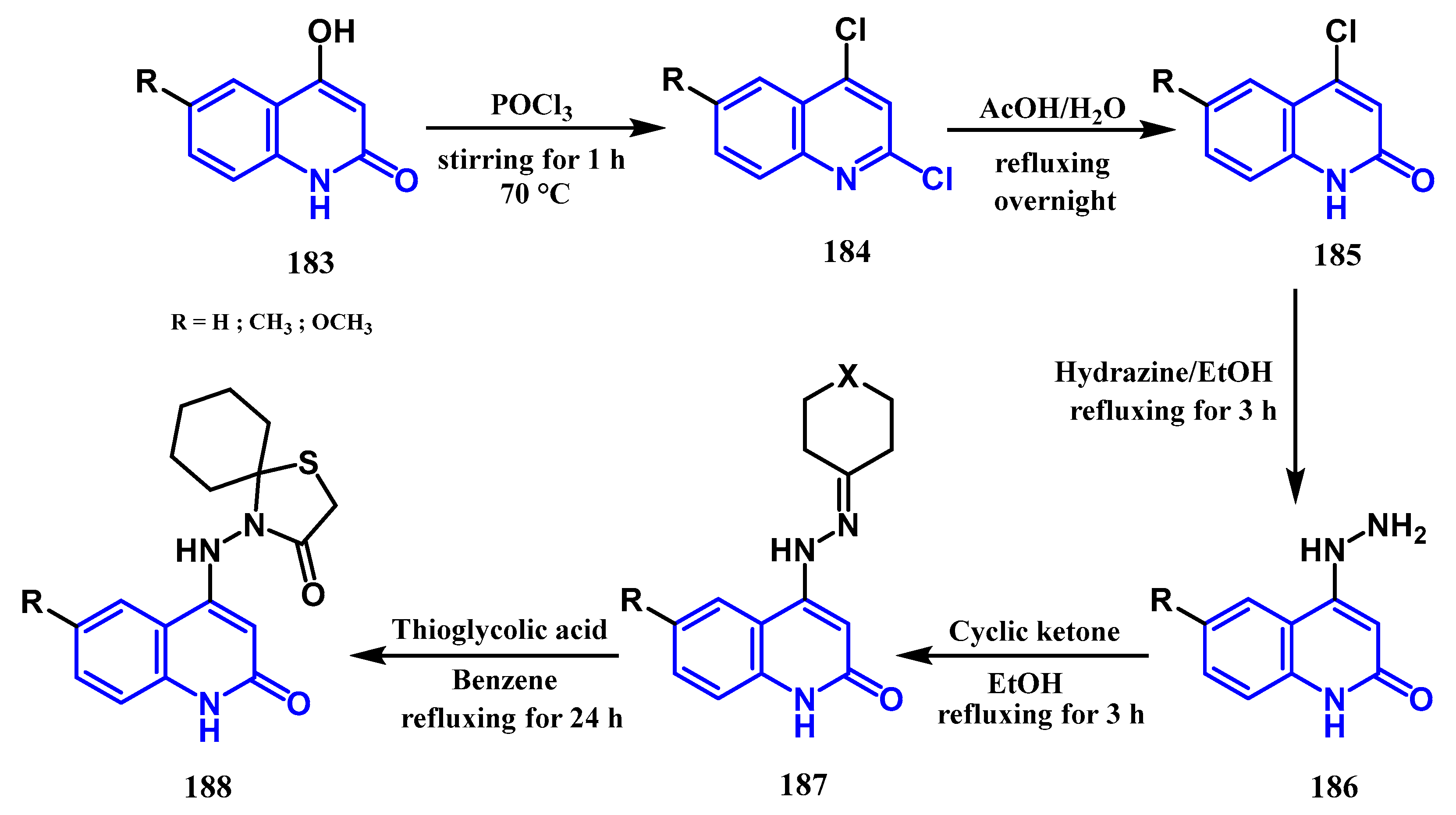
Scheme 66.
Synthesis of a series of 5-alkoxy-tetrazolo[1,5-a]quinolones.
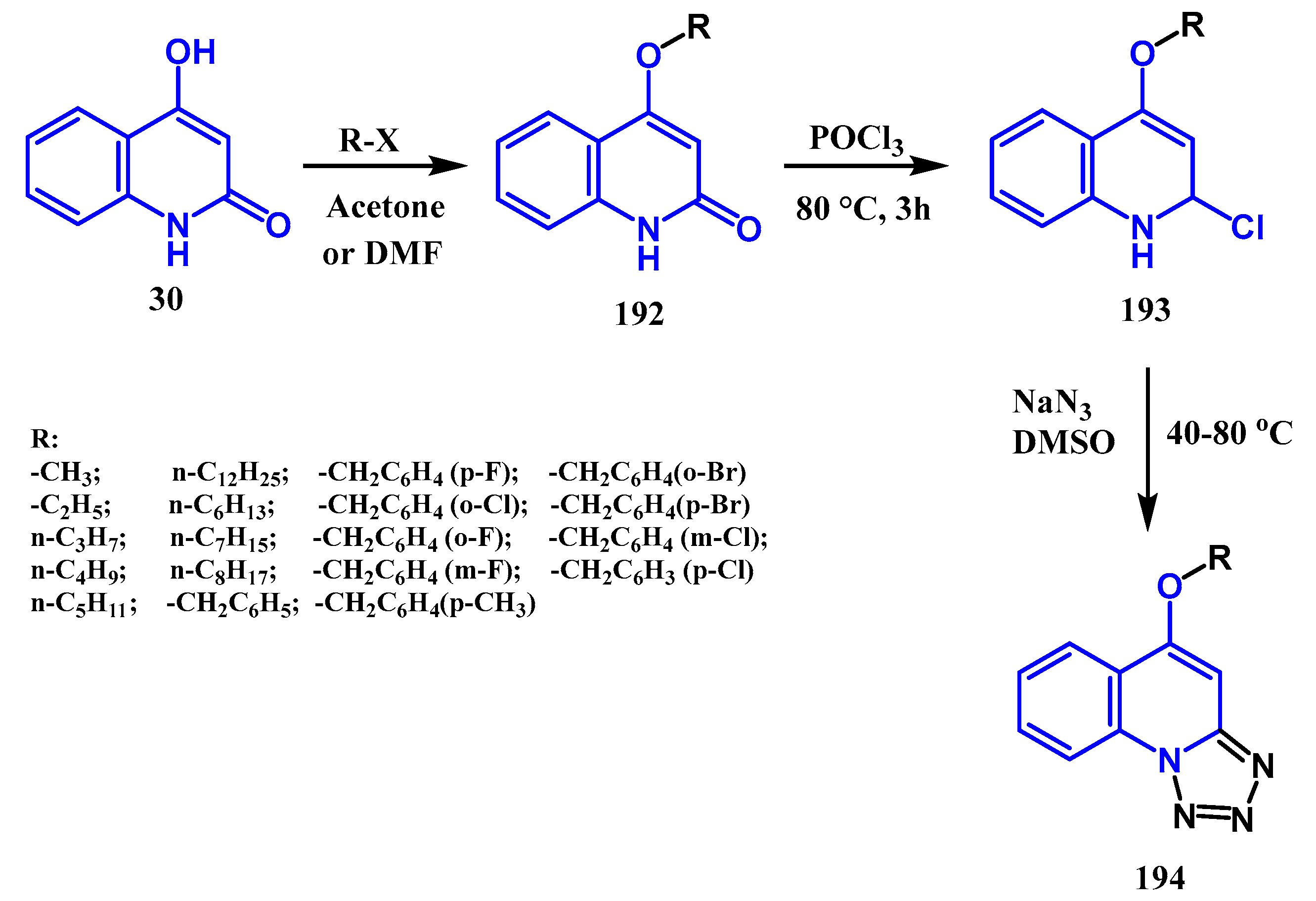
Figure 2.
Antibacterial activity of fluoroquinolone esters.
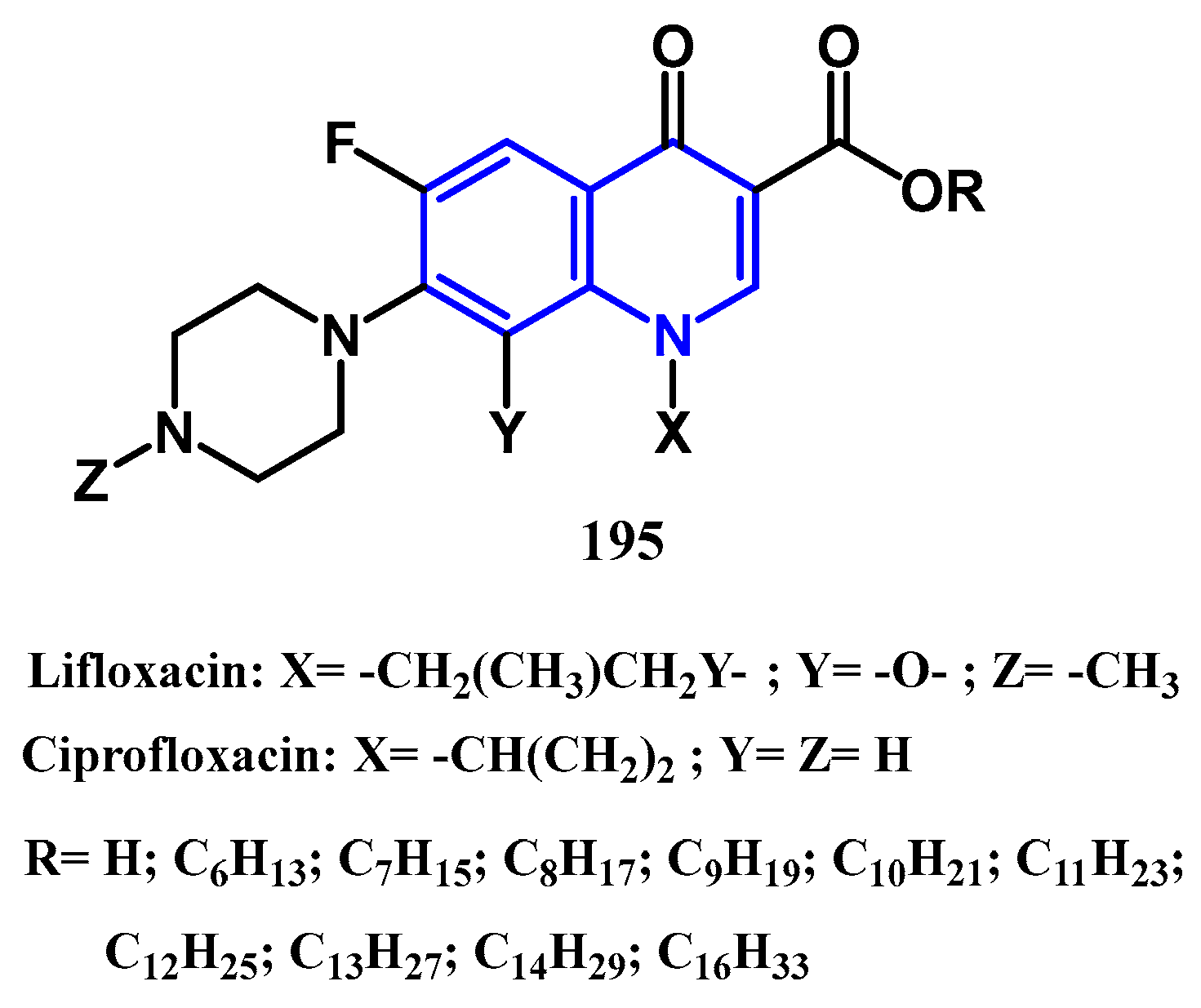
Figure 3.
Quinolones demonstrating antibacterial efficacy.
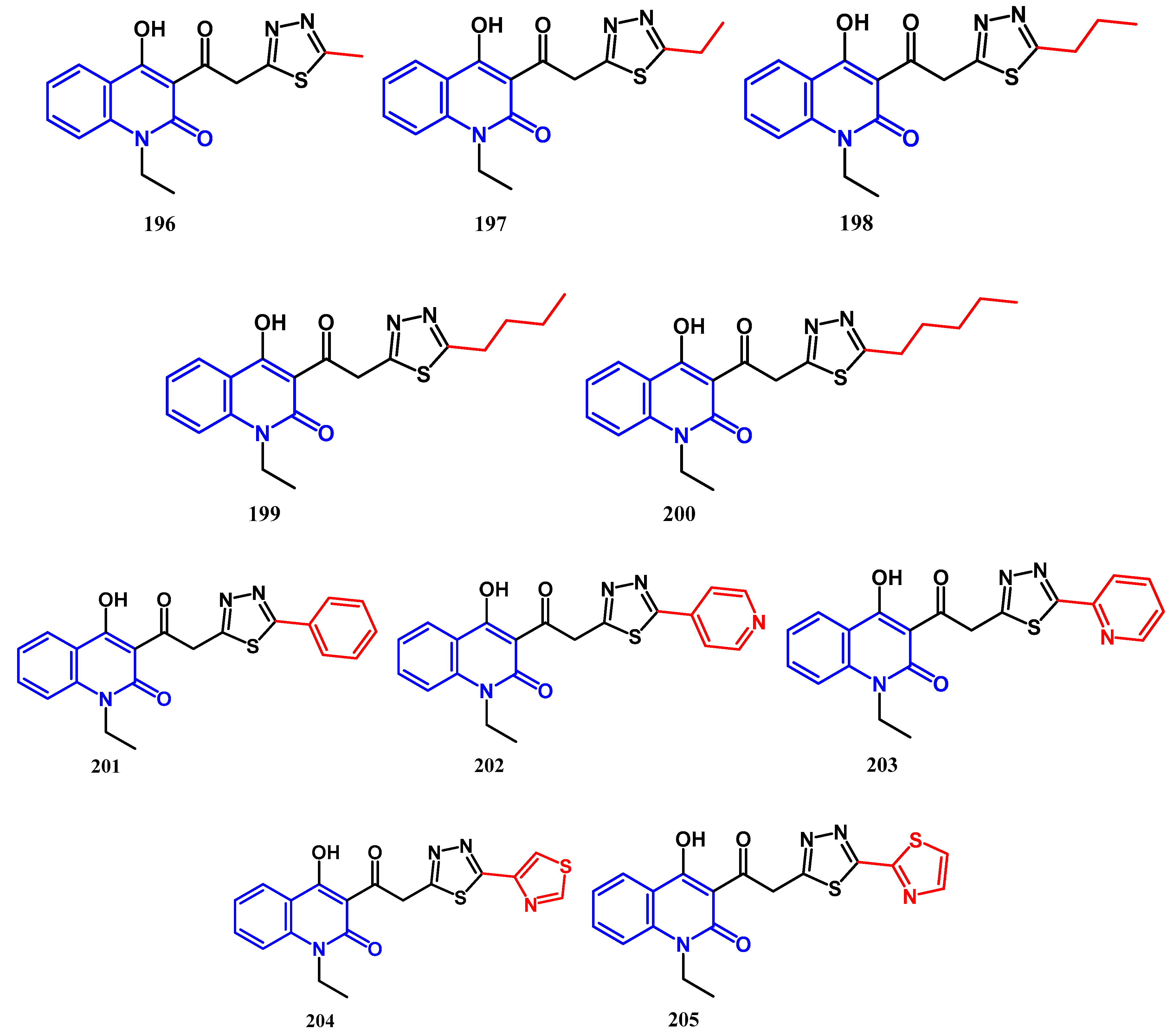
Figure 4.
Quinolones exhibiting efficacy against cancer cells.
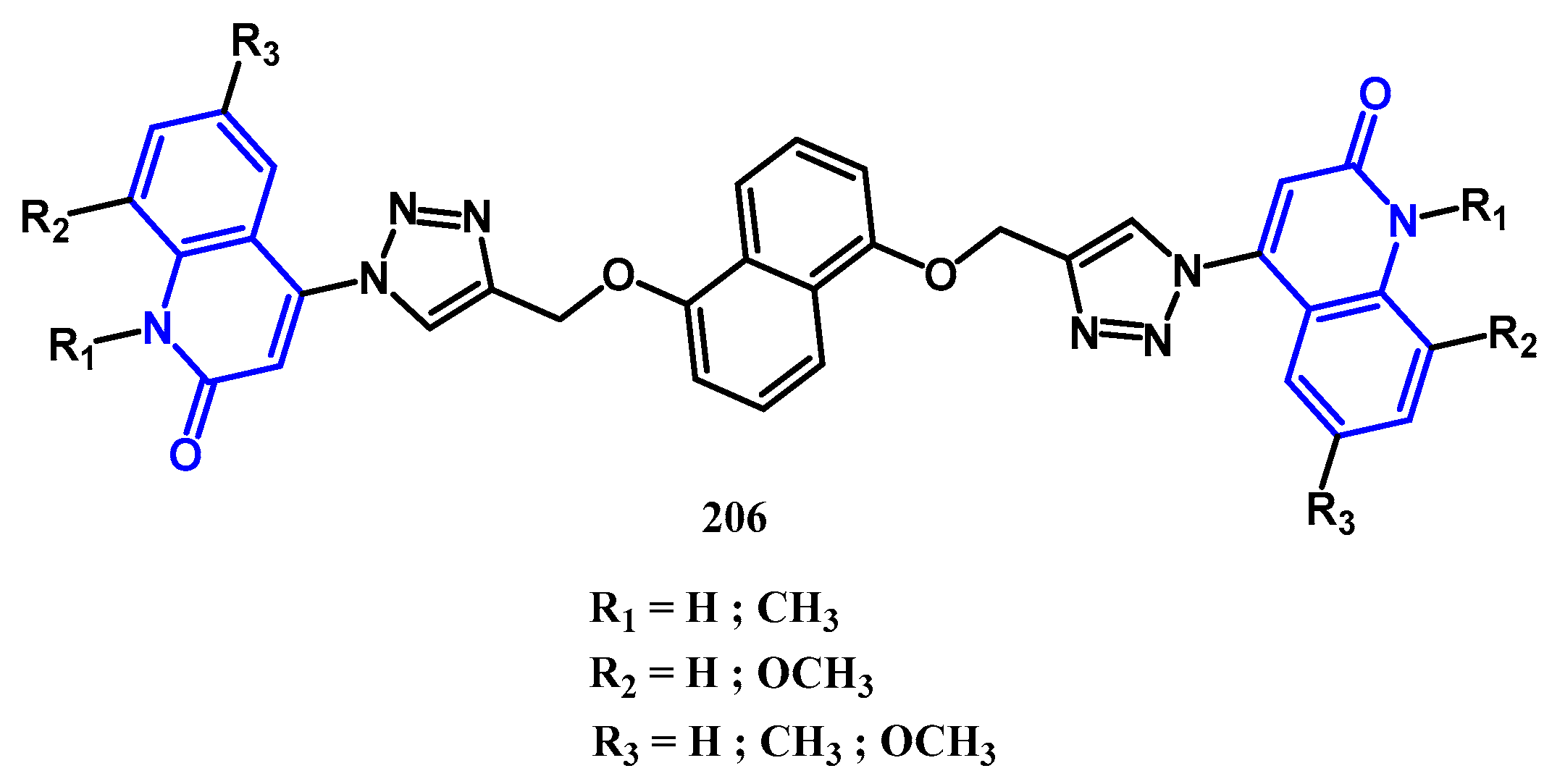
Figure 5.
Antiproliferative activity of quinolones.
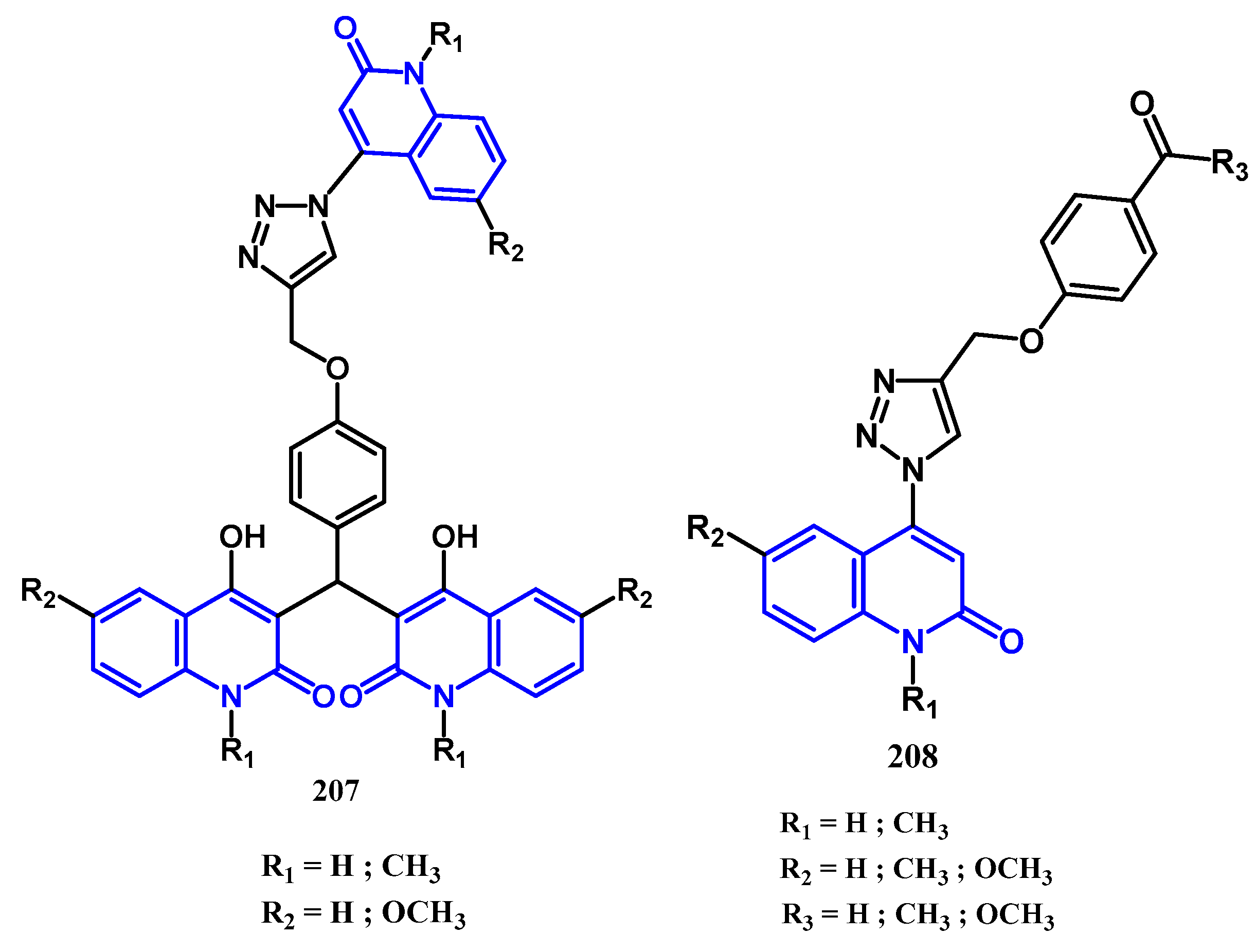
Figure 6.
Quinolones derivatives as potential apoptotic antiproliferative.
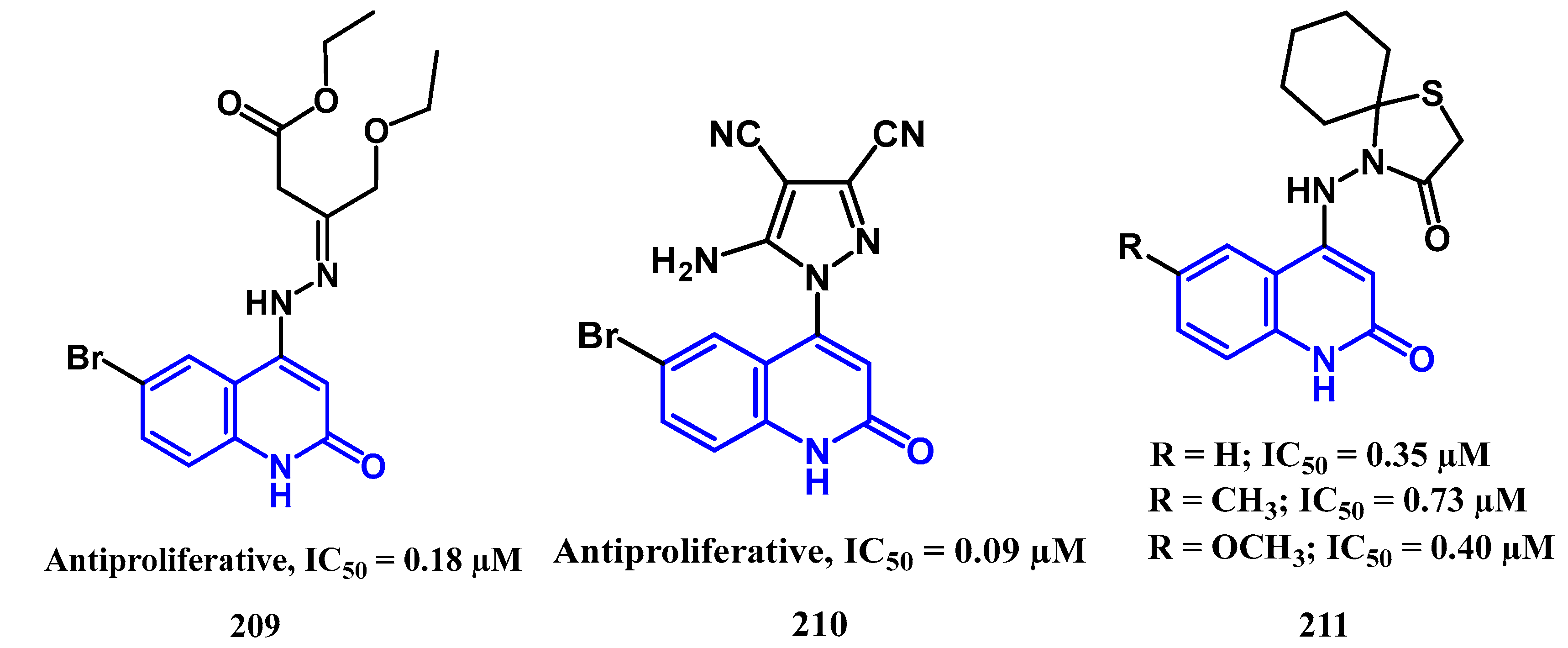
Figure 7.
Quinolones exhibiting efficacy against HIV.
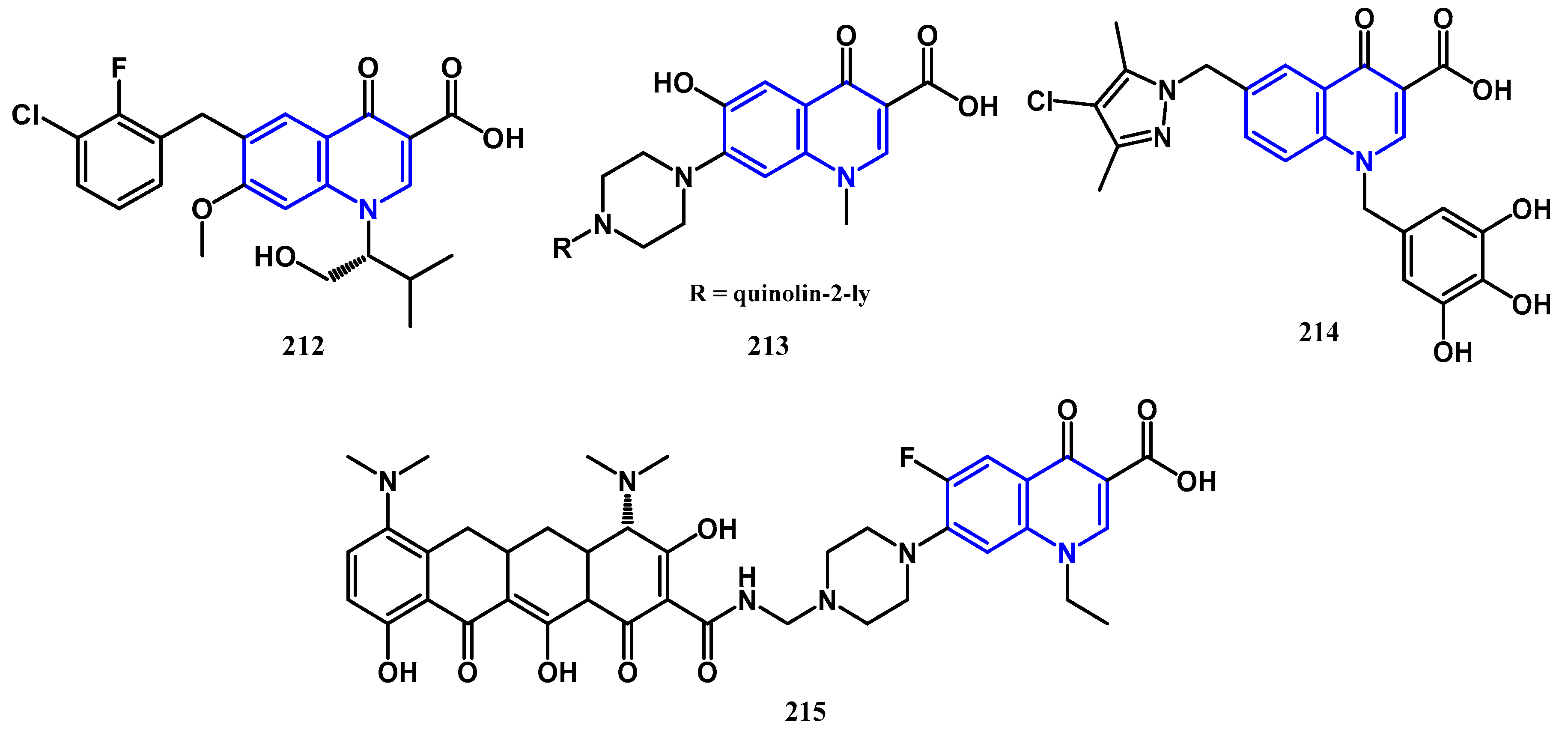
Figure 8.
2-Quinolones with activity against HIV.
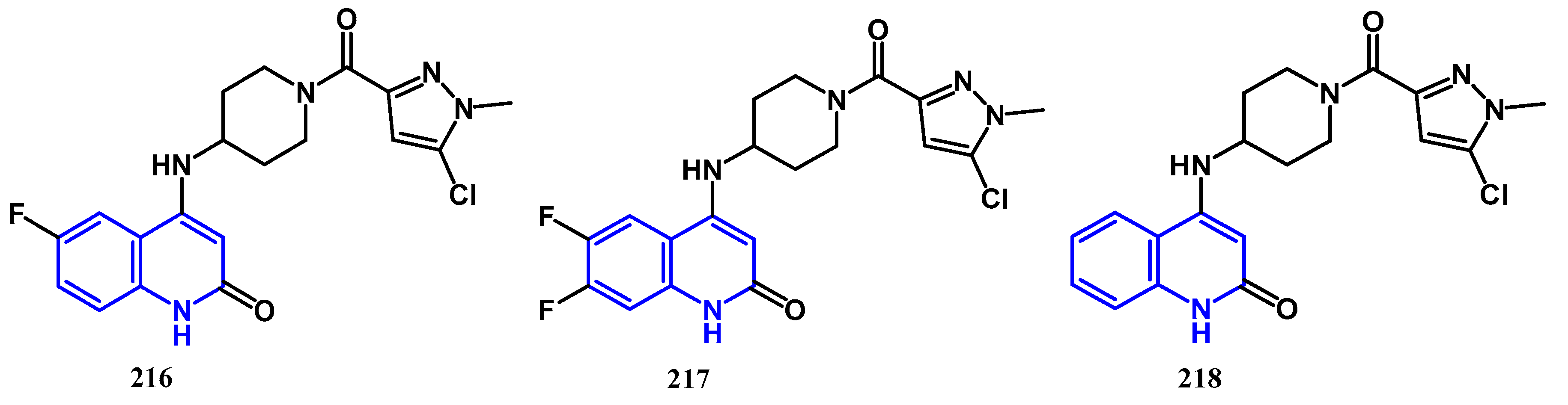
Figure 9.
Quinolones exhibiting efficacy against the trypanosoma.
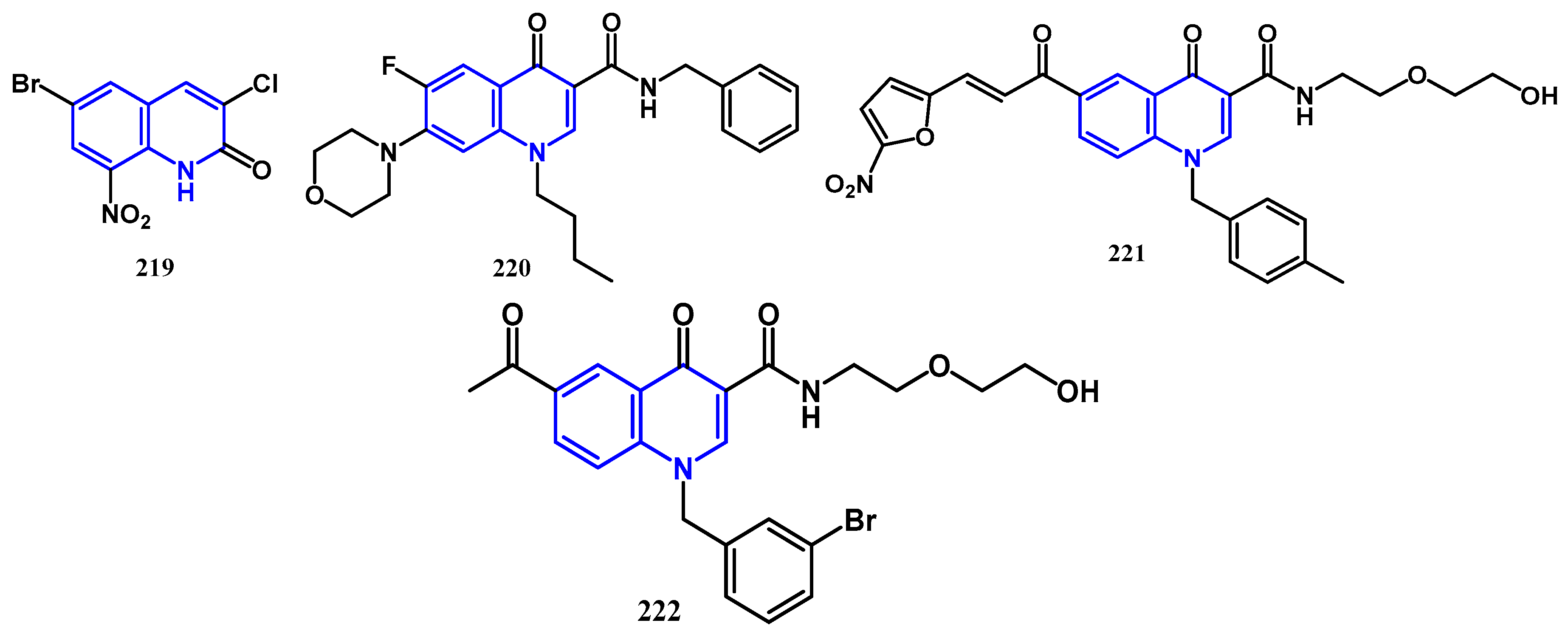
Figure 10.
Quinolones exhibiting efficacy against Leishmania parasites.
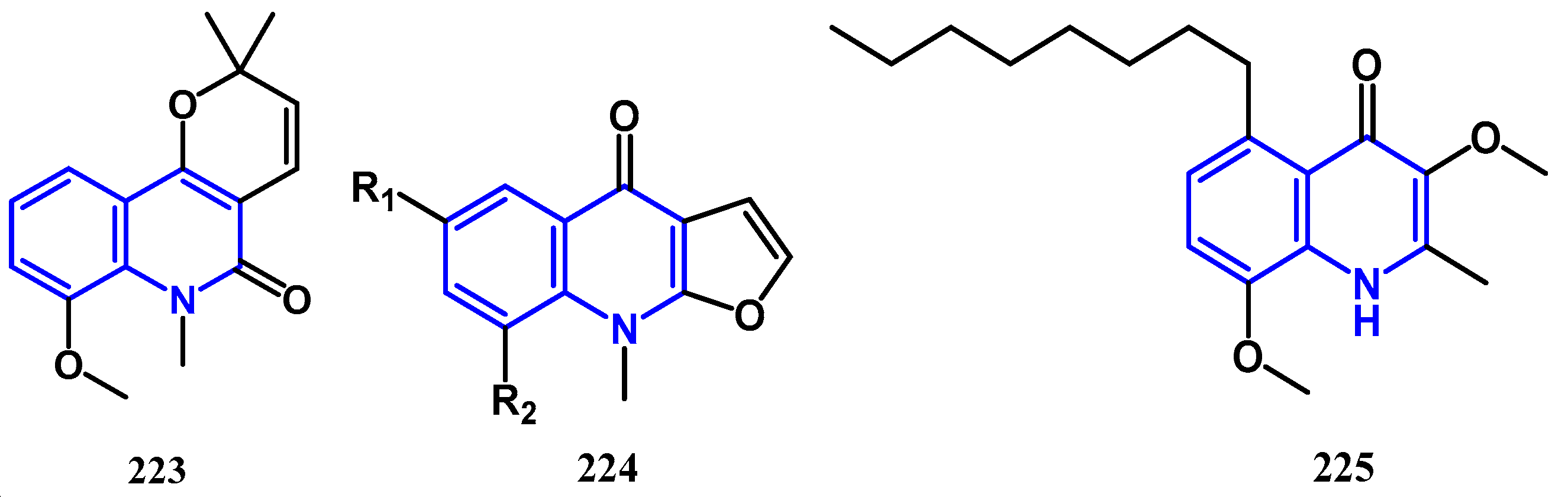
Figure 11.
Quinolones with activities against malaria.
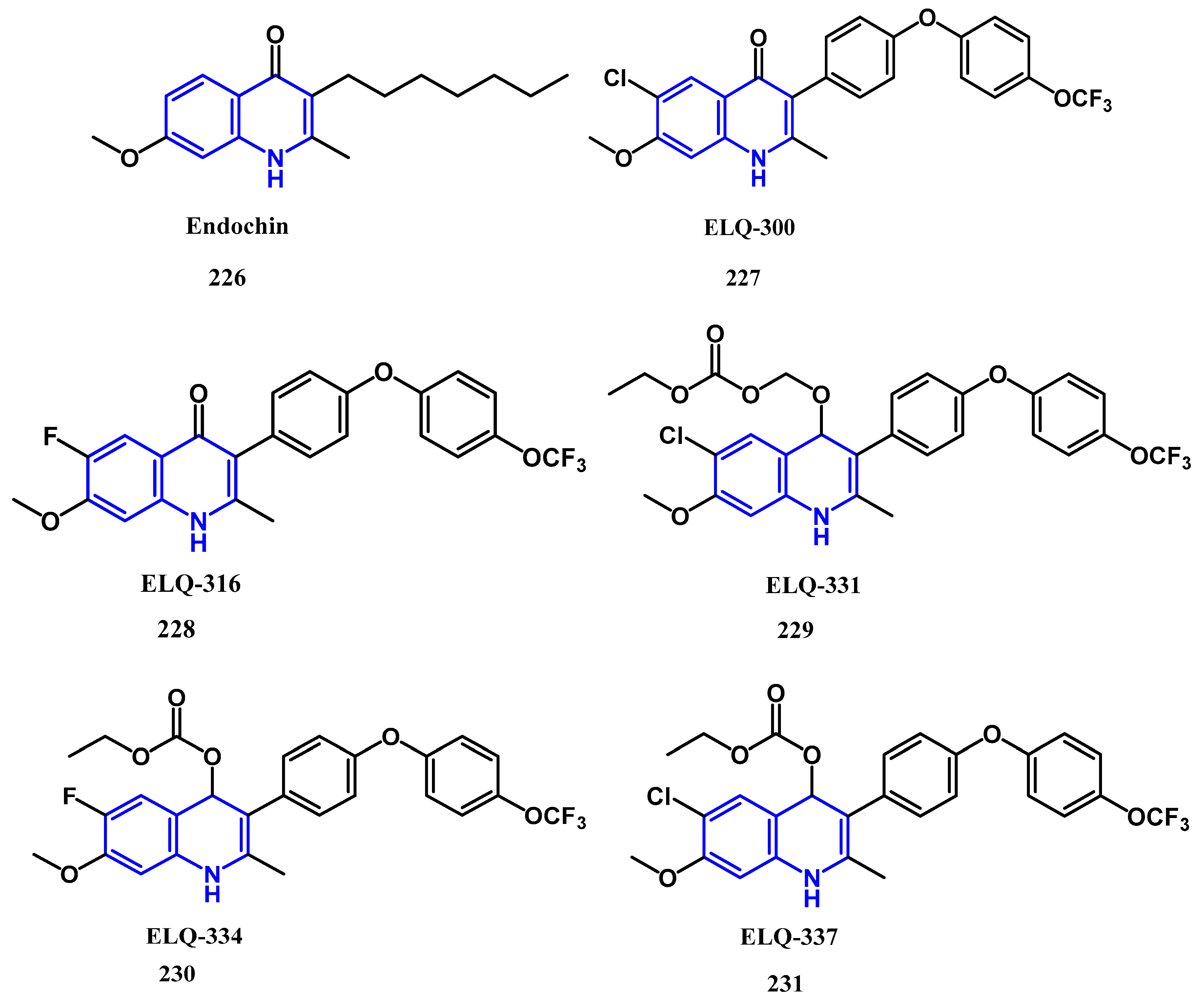
Disclaimer/Publisher’s Note: The statements, opinions and data contained in all publications are solely those of the individual author(s) and contributor(s) and not of MDPI and/or the editor(s). MDPI and/or the editor(s) disclaim responsibility for any injury to people or property resulting from any ideas, methods, instructions or products referred to in the content. |
© 2025 by the authors. Licensee MDPI, Basel, Switzerland. This article is an open access article distributed under the terms and conditions of the Creative Commons Attribution (CC BY) license (http://creativecommons.org/licenses/by/4.0/).
Copyright: This open access article is published under a Creative Commons CC BY 4.0 license, which permit the free download, distribution, and reuse, provided that the author and preprint are cited in any reuse.