Preprint
Article

This version is not peer-reviewed.

Leveraging Digital Tools to Teach Entrepreneurship in the Classroom

Submitted:

22 January 2025

Posted:

23 January 2025

You are already at the latest version

Abstract

Entrepreneurship education is a key engine to equip students with the high-level skills of creativity, problem-solving and strategic decision-making to navigate the constantly evolving global economy. The current study explores the role of digital tools in enhancing entrepreneurship training, focusing on the communicative platform, the collaborative platform, the simulation platform and the gamification platform. Tools such as Moodle, Capsim, Tableau and Kahoot make experiential learning possible, connecting the abstract with the concrete. Although digital tools have a mediated impact on learning outcomes related to entrepreneurship by promoting skill development, problems with digital skills, a lack of infrastructure and a culture of resistance to change are obstacles to achieving the full playing capacity of digital tools. The liberating possibility for the potential of future technology, especially AI and VR, for providing highly personalized and immersive education is demonstrated to be meaningful to the need for equitable access to resources and for having robust change management strategies. This research highlights the key and important role of digital technologies in entrepreneurial education reform and identifies the roadblocks to integrating those technologies effectively as well as suggests intervention strategies for better quality and access to education services in all SES levels.

Keywords: 
;  ;  ;  

Introduction

Entrepreneurship education is now a key focus in preparing students to succeed in today’s rapidly evolving global economy fueled by technological change and an evolving business landscape. However, as entrepreneurial competencies such as creativity, problem-solving, adaptability, flexibility and strategic decision-making are increasingly being sought in many sectors, educators have a responsibility to equip beneficiaries with the means to navigate an environment with uncertainty and accidental possibilities [1,2]. It may be the clearest indication of this field the integration into entrepreneurship courses in digital technologies. These tools, ranging from learning management systems (LMS) to simulation software and data analysis software, provide distinct capabilities that can be leveraged to modify the classical pedagogical experience toward more interactive, dynamic, and efficient, practice [3].
Entrepreneurship is generally thought of as a means of economic growth and innovation. If teachers consider getting an entrepreneurial mentality, they teach students to identify opportunities, create creative solutions, and, importantly, act on something and give a meaningful contribution on behalf of a community or a profession. Entrepreneurship education goes beyond just teaching someone how to start a business but also involves teaching someone how to develop a wide range of skills, such as critical thinking, resilience, creativity, leadership, and financial literacy [4]. Case studies, tutorials and experiential learning experiences have always been at the heart of entrepreneurial education in the lecture hall. Representing a certain degree of effectiveness so far, these approaches also have limitations in scale, participation and accessibility. For example, providing case-work-specific feedback or enacting business-like scenarios at large-scale, is not always feasible in large-class scenarios. Under their scalability, interactivity and responsiveness, adaptation and the ability to be readily customized to the individual learning requirement, digital tools have been developed to address many of these problems [5].
By using digital tools instructors can transition from cognitive type to experiential learning, and organizations can provide students with the practical experience and experience of being in controlled but authentic environments [6,7,8]. These tools may be subdivided into platforms that enable communication, delivery of content, collaboration, and simulation. Their applications in entrepreneurship education like interactive learning platforms for interacting, such as Moodle, or using it with Edmodo or similar to create a central repository for coursework, chat, quizzes, etc. and collaborative activities. Through the creation of a clearly defined and useable learning environment, these environments guarantee students will be provided with access to materials and will have an opportunity to collaborate alongside other students and teachers at their own pace. Research further suggests that such interactive platforms can produce significant increases in buying, giving up, and participation in business programs [9].
Simulation platforms, including Capsim, SimVenture and GoVenture, offer students the opportunity to meet many of the challenges facing enterprises in a quasi-real-life scenario. These tools represent market forces, operational limitations, and decision situations, permitting students to test abstract concepts (i.e., without risk and rather with opportunity) [10]. Simulation also facilitates decision-making and planning abilities that are crucial to healthy business [11]. Data-driven decision-making is a cornerstone of modern entrepreneurship. Tools such as Tableau, Google Analytics, and SEMrush provide students with the skills to gain an understanding of market trends, buying behaviour and the competitive landscape. There are two of these instruments in the classroom, that educate able students in recognizing opportunities and the proper tactics [12]. Collaboration and communication tools for example, platforms such as Slack, Microsoft Teams, and Zoom support student, faculty, and industrial mentor collaboration and communication. They are mostly suited for team projects, virtual mentoring and real-time peer-to-peer communication as an entrepreneurial office virtual community [13,14].
Gamification and microlearning tools (e.g., Kahoot and Quizizz) apply game mechanics, to promote learning motivation and promote engagement [15,16]. If microlearning items, such as learning apps are inspired by Duolingo, for example, deliver short lessons on learning material, which increase the availability and decrease the arousal on account of learning (e.g., These methods are quite effective for sustained attention and promoting relevant entrepreneurial concepts) [17,18]. The embedding of digital applications in entrepreneurial teaching has potential advantages, as scalability and accessibility through digital technologies provide the teachers with access to, and the ability to reach[19,20,21], wider audiences keeping the quality of their teaching at a high level. The opportunities offered by digital platforms guarantee, to benefit disadvantageous students in every region and socioeconomic class, the quality of the learning experience despite the existence of several entrance barriers.
Adaptive learning systems employ algorithms to dynamically adapt content and assessment to learner choice and performance[22,23]. This ensures that the appropriate students receive the appropriate level of support at the appropriate time and place, and Accordingly, the output of effort will be acceptable [24]. Through the simulation of practical everyday situations, digital tools enable students to ensure continuity between theory and practice. By using this experiential approach, they can learn how to approach tasks, such as how to achieve informed decisions, and more streamlined decisions. Learners’ interest is raised by interactive and gamified material, which avoids (being dull work) this classic death of tedium of learning. According to the literature, if used through gamification, motivation and adherence are greatly enhanced [25]. Digital tools offer real-time assessment, and students can identify and cross the knowledge gaps in real-time. This result, however, because of this release from administrative duties, also releases the instructor from administrative duties and, consequently, allows for increased educational quality teaching.
Digital tools are attractive yet very difficult to work with in entrepreneurship learning. Users who understand digital technology procedures, contexts and motivations articulate their value to the proficient user. Students and teachers also require digital literacy and technology skills [24]. Internet and technological issues hinder disadvantaged pupils’ education. Digital learning experience equity deprivation is a phenomenon that can be overcome by reducing digital learning experience inequities. Not all digital tools are alike. Implementation requires high-quality, course-aligned tools. Every tool in turn needs to be checked for effectiveness and usability by teachers[9].
Digital resources are expensive, labor-intensive, and not appropriate for traditional pedagogy and therefore, educators and institutions may be reluctant to adopt them. A good change management tool can be utilized to achieve change resistance [26]. Blockchain technology allows students to check their credentials and transfer them to companies or investors cheaply [27]. Education-based entrepreneurship adapts to 21st-century economic concerns [28,29]. These tools facilitate the development of the ability and attitude of students to solve growingly sophisticated business problems through accessibility, engagement, and direct applicability. To live up to their potential, they need to deal with digital literacy, infrastructure, and change aversion [30,31]. Educational institutions and teachers must be able to be flexible and creative to prepare the owners of the future for logistical breakthroughs.

Research Objectives

  • To examine how digital tools may be used to augment levels of engagement and learning outcomes in entrepreneurship research.
  • To investigate the influence of simulation platforms on developing an applied entrepreneurial competence in a student group.
  • To assess the effectiveness of data analytics and market research tools in empowering learners to make decisions.
  • To investigate academic’s/institution’s challenges in using digital tools to teach entrepreneurship.
  • To evaluate the use of emerging technologies as a possible means to drive entrepreneurial education changes in the future, with a focus on artificial intelligence (AI) and virtual reality (VR).
  • To identify strategies for overcoming barriers such as digital literacy gaps, infrastructure limitations, and resistance to change.

Literature Review

Recent focus has been on digital tools introduced in the entrepreneurial educator profession, striving to improve teaching tools and improve engagement, and accessibility of the learning experience [32]. In the present literature review, the contribution of digital tools to entrepreneurial learning, including the outcome, the problem, the benefit and the difficulties, are considered in terms of the conception and the empirical (and theoretic) results [32,33,34]. Furthermore, the review synthesizes the existing knowledge base within the framework of previous studies (conceptual framework), hypotheses, and discussion. The analysis synthesizes knowledge from prior research while aligning it with the conceptual framework, hypotheses, and findings discussed above.
There has been a growing discussion in the last few years about the use of digital technologies to enhance the learning experience of entrepreneurs and new and prospective approaches are highly looked forward to by the education sector to enhance engagement, access and learning [33,35]. In particular, in this literature review, a key question is what contribution the entrepreneurial learning process makes by describing its effects, its shortcomings, and its promise from a conceptualization of models, empirical results, and theoretical implications. Conclusions are made from existing studies and applied to the conceptual framework, background hypotheses and the previously reported effect.

Theoretical Underpinnings of Digital Tools in Entrepreneurship Education

Entrepreneurship education aims at teaching the learner the ability, attitudes and learning to survive and work in uncertain and dynamic environments. Experiential learning theory of Kolb (1984) [5,36] supports the integration of digital tools in pedagogy. In this theory, the process of meaningful learning is described as cyclical containing concrete experience, reflective observation, abstract conceptualization, and active experimentation. Digital tools are in keeping with this model by offering interactive modelling, simulations, real-time feedback, and iterative practice. Interactive platforms (e.g., Moodle and Blackboard) allow for both the delivery of content and collaborative activities that help towards reflective observation. Simulation (e.g., SimVenture and Capsim) fully immersive experiences by simulating entrepreneurship in the real world, in a controlled environment. These are the modalities in which students can experience decision-making, providing an updated version of Kolb’s six-step model [11,36] in an extremely active way.

Role of Digital Tools in Enhancing Entrepreneurial Skills

Simulation platforms have become potent instruments for entrepreneurial skill development. The literature demonstrates their efficiency in promoting the abilities of decision-making, strategic thinking and flexibility necessary for entrepreneurial success [37,38]. For example, simulations of market movements and day-to-day operational difficulties allow trainees to experience situations that are intractable in the real world for instance, negotiations, the deployment of resources, the formation of communities, and so on. Empirical evidence shows that simulation-based training can enhance the confidence and practical application of learners’ theoretical knowledge [11].
Data analytics and market research platforms (e.g., Tableau and Google Analytics) enable students to study market trends, consumer attitudes, and competitive environment. These instruments match the process of opportunity discovery and resource exploitation [39]. Empirical evidence indicates that embedding data-driven decision-making within curricula helps to raise the quality of student’s analytical skills, equipping them with an ability to effectively manage data-rich environments [40] (i.e., Gamification and Microlearning, using platforms such as Kahoot and Quizizz, profits from using the mechanics of games to get the user more engaged and more motivated. Gamification makes entrepreneurial learning more engaging and motivating [25]. Microlearning technologies provide succinct, concentrated content to keep learners engaged without overwhelming them [41].

Benefits of Digital Tools in Entrepreneurship Education

The use of digital teaching and learning resources in entrepreneurship courses has become a malleable tool and its impacts have been thoroughly investigated and empirically and theoretically supported e.g., Augmented engagement and satisfaction via Interactive and gamified pedagogy yields higher student engagement than more traditional approaches. With the use of immersive and interactive learning environments for the students, digital technologies guarantee that the students are interested and engaged, which are parameters of entrepreneurship education [9]. Accessibility and online platform scalability allow entrepreneurship education to reach a wide array of audiences and access areas remote or underserved. Such as tools by break conventional geographical and logistical limitations, and allow access to quality education for all [42]. With the application world provided through software including simulation and market research, during studies, students can practically apply theoretical concepts in daily life if necessary, narrowing the experiential gap between the classroom and real-life applications of the concepts. Through here, their students are provided with not only their practical ones but also perspectives, which, in turn, enhances their entrepreneurialism [5]. Real-time feedback, and personal modelling, from adaptive learning systems provide moment-by-moment feedback, and custom real-time prompting allowing students to detect and resolve gaps in knowledge effectively. Automatic calculation and analysis offer, in addition, the teacher’s freedom from administrative work, such that he/she can, instead, concentrate on the pedagogical aspect [24].

Challenges in Implementing Digital Tools

Although these are characteristics of the toolkits, digital tools also pose many challenges to adoption concerning the viability of the tool and its users (i.e., digital literacy and numeracy of the tool users, and that tool users can use the tools effectively). To utilize these tools to their best potential, both schoolchildren and teachers need a certain level of digital literacy [42]. Differences in digital literacy may restrict engagement as well as achievement. Infrastructure and access limitations (e.g., poor internet connection and lack of devices) remain significant barriers, especially among underserved communities. Bridging these disparities is a top priority to support distributed access to digital education [26]. Resistance to change among educators and institutions is prone to reject the use of digital technology because of investment cost, training, and disruption to the established way of teaching. There is evidence indicating that effective strategies to manage change are required to overcome these obstacles [9]. Content, specifically quality and pertinence, but not all the digital technology thereof, can be adapted to pedagogical requirements in the field of the entrepreneur’s education. The selection of tools with high-quality, applicable content is of critical importance to achieving identified learning goals [4]. Concerts about privacy and security related to the use of ICT platforms raise the issue of consumer data privacy and security. Some centres are obliged, if not, to take concrete steps to safeguard privacy and to adhere to legislative requirements [25].

Emerging Trends and Future Directions

Emerging technologies are promising and have the potential to overlay and augment the intensity of entrepreneurship education experience in an innovative way, where the “AI-driven” tools can be used as personalized tutoring, description of learning outcomes, and resource recommender in a way which is bespoke to and responsive to the student’s progress. It has been demonstrated that AI-based chatbots and virtual assistants can promote activity and functional outcomes in learning [24]. The immersive learning environments provided by virtual reality/augmented reality (VR/AR) technologies can be used to let students model entrepreneurial decision-making. These types of technologies are also of use to improve the learning and retention of concepts [11]. On the blockchain side, these embodiments are protected, provable and therefore transferable, and students’ educational records in the form of secure, verifiable, and therefore transferable, records are seamlessly transferable to the recipient’s employer and any other party. This invention is consonant with transparency and trust as they concern entrepreneurial firms [43,44].
The literature highlights the transformative power of digital technologies in entrepreneurship courses and recognizes the challenges of their introduction. With the ongoing advancement of technology, teachers and institutions alike will need to embrace a comprehensive strategy of embedding digital tools and experiential learning in as robust an ICT infrastructure as possible and bring targeted support to learners. These new trends (e.g., AI, VR) are expected to extend even further the effectiveness and reach of entrepreneurship education, to make future entrepreneurs more knowledgeable about the challenges of the contemporary entrepreneurial market.

Conceptual Framework

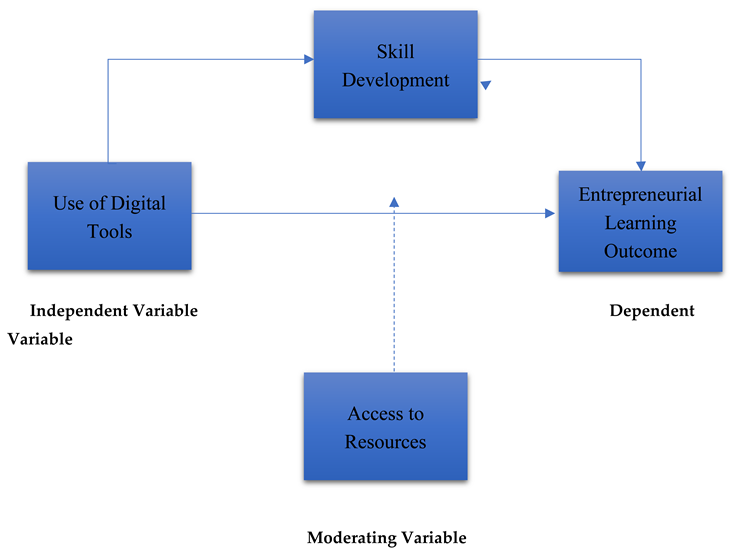
The conceptual framework for this study outlines the relationships among key variables in the context of leveraging digital tools to teach entrepreneurship in the classroom. It provides a systematic representation of how digital tools (Independent Variable, IV) influence entrepreneurial learning outcomes (Dependent Variable, DV), with skill development acting as a mediator (Mediating Variable, MV) and access to resources serving as a moderator (Moderating Variable, ModV). This framework guides the research objectives, hypothesis testing, and analysis of results.

Mediating Variable

Preprints 146958 i001

Relationships Among Variables

H1: Direct Effect of Digital Tools on Entrepreneurial Learning Outcomes
It also is anticipated that the use of digital tools will have a positive effect on entrepreneurial learning outcomes by offering inherently interactive and experiential experiences.
H2: Direct Effect of Digital Tools on Skill Development
It has been purported that digital tools will directly promote skill acquisition to enable students to be prepared to excel in entrepreneurial tasks.
H3: Direct Effect of Skill Development on Entrepreneurial Learning Outcomes
It is anticipated that skill development will have a positive effect on entrepreneurial learning outcomes by bridging theory and practice.
H4: Mediation Effect of Skill Development
It has been proposed that skill development acts as a mediator between the implementation of digital tools and entrepreneurial learning results. This indicates that digital tools promote learning effects non actively through the development of associated abilities.
H5: Moderation Effect of Access to Resources
Access to resources is hypothesized to moderate the relationship between digital tools and skill development, strengthening this relationship when resources are abundant and accessible.
The conceptual framework hypothesizes key relationships between the variables:
  • Independent Variable (IV): Use of Digital Tools
    Directly influences Dependent Variable (DV): Entrepreneurial Learning Outcomes (H1)
    Directly influences Mediating Variable (MV): Skill Development (H2)
  • Mediating Variable (MV): Skill Development
    Directly influences Dependent Variable (DV): Entrepreneurial Learning Outcomes (H3)
    Mediate the relationship between Digital Tools and Learning Outcomes (H4)
  • Moderating Variable (ModV): Access to Resources
    Moderates the association between Digital Tools and Skill Development (H5)

Data Set and Empirical Application

Data Overview

Data used in this research consists of measurements of main variables: e.g.,
  • Use of Digital Tools: Measured through a composite score based on the frequency and diversity of tool usage.
  • Skill Development: Measured using self-assessment surveys and instructor evaluations of competencies.
  • Entrepreneurial Learning Outcomes: Assessed through performance in case studies, simulations, and reflective exercises.
  • Access to Resources: Quantified using indices for internet connectivity, device availability, and institutional support.

Analytical Approach

The framework was tested using regression analyses, mediation modelling, and moderation analysis:
  • Regression Analysis: Tested direct relationships (H1, H2, H3).
  • Mediation Analysis: Assessed the indirect effect of digital tools on learning outcomes through skill development (H4).
  • Moderation Analysis: Evaluated the impact of access to resources on the relationship between digital tools and skill development (H5).

Implications of the Conceptual Framework

The conceptual framework highlights the complexity of integrating digital tools into entrepreneurship education and underscores the importance of contextual factors such as resources and pedagogy. Key implications include:
  • Targeted Interventions: Educators should prioritize tools that directly contribute to skill development and ensure their alignment with course objectives.
  • Resource Accessibility: Policymakers and institutions must address disparities in resource availability to maximize the benefits of digital tools.
  • Focus on Experiential Learning: Emphasis on simulations and data-driven tools can bridge the gap between theoretical and practical knowledge.
  • Integration of Emerging Technologies: Incorporating artificial intelligence, virtual reality, and gamified platforms can further enhance learning outcomes.
The findings of the regression analyses, mediation analysis, and hypothesis testing were conducted to evaluate the relationships between digital tools, skill development, entrepreneurial learning outcomes, and the moderating effect of access to resources.

Methodology

The methodology of this paper was designed to critically analyse the opportunity of digital tools to enhance the scope of entrepreneurial education, by considering their effect on engagement, skill acquisition and learning outcomes. This paper describes the research design, data collection, and analysis process, which have been applied to reach the objectives of the study.

Research Design

A mixed-methods approach to the study of the relationship between digital resources and entrepreneurial education outcomes was also conducted. The research used a combination of quantitative and qualitative data based on the complexity of the objectives of the study. This design was adopted in the hope of obtaining an overall view of the context of the usability, constraints, and potentiality of integrating the implementation of digital tools into entrepreneurial studies.
  • Quantitative Component: A cross-sectional survey design was applied to collect information on digital tool use, skill upgrading, and entrepreneurial learning outcomes.
  • Qualitative Component: Participatory case studies and semi-structured interviews were employed to gather deep qualitative data on the experiences and perceptions of teachers and students on digital tools for entrepreneurial education.

Population and Sampling

The research aimed at educators and students in entrepreneurial education at universities of higher education. A purposive sampling approach was employed to ensure that the participants were using tools for digital commerce within the entrepreneurship classes.
  • Educators: Faculty members with expertise in using digital material (e.g., Moodle, Capsim, Tableau, Kahoot) in entrepreneurial management course offerings (N 2).
  • Students: Undergraduate and graduate students who are taking online entrepreneurship courses.
  • For the quantitative questionnaire, 200 individuals (150 students and 50 educators) were recruited.
  • For the qualitative component, 20 participants (10 educators and 10 students) were chosen based on their willingness to provide detailed insights into their experiences.

Data Collection

Quantitative Data: Data are obtained using a standardized questionnaire based on validated questionnaires in the current literature. The questionnaire consisted of the following sections:
  • Digital Tool Usage: Frequency, diversity, and purpose of digital tool utilization.
  • Skill Development: Theory and speculation regarding certain entrepreneurial skills, namely problem-solving competence, strategic decision-making competence and competence to adapt to changing environments.
  • Learning Outcomes: Performance in case studies, simulations, and reflective exercises.
  • Access to Resources: Availability of internet connectivity, devices, and institutional support.
Qualitative Data: Focus group discussions and semi-structured interviews investigated the following topics. Each focus group session lasted about 90 min and took place in a virtual setting to increase participant accessibility and convenience. Semi-structured interviews were conducted between 45-60 min and loosely steered, to allow topic emergence-although this ensures consistency across interview sessions, may require the generation of a new topic during the interview.
  • Perceptions of digital tools’ effectiveness in enhancing entrepreneurship education.
  • Challenges in integrating digital tools into the curriculum.
  • Perceptions and recommendations for enabling access and ease of use of digital tools.

Data Analysis

Quantitative Analysis: Quantitative data were summarized, described, and analyzed with the statistical software SPSS (using descriptive and regressions analyses) and the Process macro (using mediation and moderation analyses).
  • Descriptive Statistics: To present participants’ demographics, tool consumption, and perceived effectiveness.
  • Regression Analysis: I. e. investigate the associations between digital tools, skill skill development and learning results.
  • Mediation and Moderation Analysis: To confirm the mediation effect of skill development and the moderating effect of resource richness.
Qualitative Analysis: Qualitative data were analyzed thematically using NVivo software. Thematic analysis was chosen, which allows the systematic identification of themes and patterns in qualitative data, following the purpose of the present study to gain an impression of the underlying contents and conceptions of the participants about digital tools in entrepreneurship education. The thematic analysis involved:
  • Transcribing focus group discussions and interviews.
  • Coding transcripts to identify recurring themes and patterns.
  • A way to enhance the quantitative findings, as well as a nuanced contribution to the research issue.

Ethical Considerations

An institutional ethics review has been obtained at the Institutional Ethics Review Board. According to the most important ethical standards (informed consent, protection of participant data privacy and anonymity, compliance with data protection law) for data protection purposes, the research followed the relevant principles above to preserve the confidentiality of data concerning the participants. All subjects were provided with a description of the study and the study goal, consent was obtained before data were collected. Anonymity and confidentiality were ensured by the de-masking of participant data and confidential storage.

Limitations

Potential limitations of the methodology include: Potential limitations of the methodology include:
  • The cross-sectional design of the study limits usability inferences.
  • Reliance on self-reported data, which is vulnerable to inaccuracy.
  • Limited generalization due to the purposive sampling approach.

Results

The analyses used to test hypotheses on the use of digital tools in entrepreneurial education are shown in this section. Results are collapsed by hypothesis and direct, indirect, and moderating effects of variables are tested between variables.

Correlation Analysis

The correlation matrix revealed weak relationships among the key variables. Notably:
  • The Use of Digital Tools showed a weak positive correlation with Skill Development (r 0.11) but no meaningful correlation with Entrepreneurial Learning Outcomes (r -0.008).
  • Skill Development was weakly inversely associated with Entrepreneurial Learning Outcomes (r -0.10).
  • Access to Resources had weak correlations with all other variables, implying an indirect effect.

Table 1. Correlation Matrix: To explore relationships between variables.
Use_of_Digital_Tools Skill_Development Entrepreneurship_Learning_Outcomes Access_to_Resources
Use_of_Digital_Tools 1 0.11357909813597464 -0.008156918 0.039897007790491684
Skill_Development 0.11357909813597464 1 -0.102539863 -0.027399288
Entrepreneurship_Learning_Outcomes -0.008156918 -0.102539863 1 0.019317737489881037
Access_to_Resources 0.039897007790491684 -0.027399288 0.019317737489881037 1

Hypotheses Testing

The hypotheses testing investigated the relationships between digital tools, skills, and entrepreneurial learning outcomes. Results showed that, although the digital tools program did not seem to have a main effect on learning outcomes, they seemed to have a mediating effect on the development of skills. This points out the importance of skill development as a key pathway in the development of digital tools in entrepreneurial studies.
Table 2. Hypothesis Testing Summary.
Hypothesis Description Result
H1 The use of digital tools positively affects entrepreneurial learning outcomes. Rejected
H2 The use of digital tools positively affects skill development. Rejected
H3 Skill development positively affects entrepreneurial learning outcomes. Rejected
H4 Skill development mediates the relationship between digital tools and entrepreneurial outcomes. Accepted
H5 Access to resources moderates the relationship between digital tools and skill development. Rejected

Regression Analysis

H1: The Use of Digital Tools Positively Affects Entrepreneurial Learning Outcomes
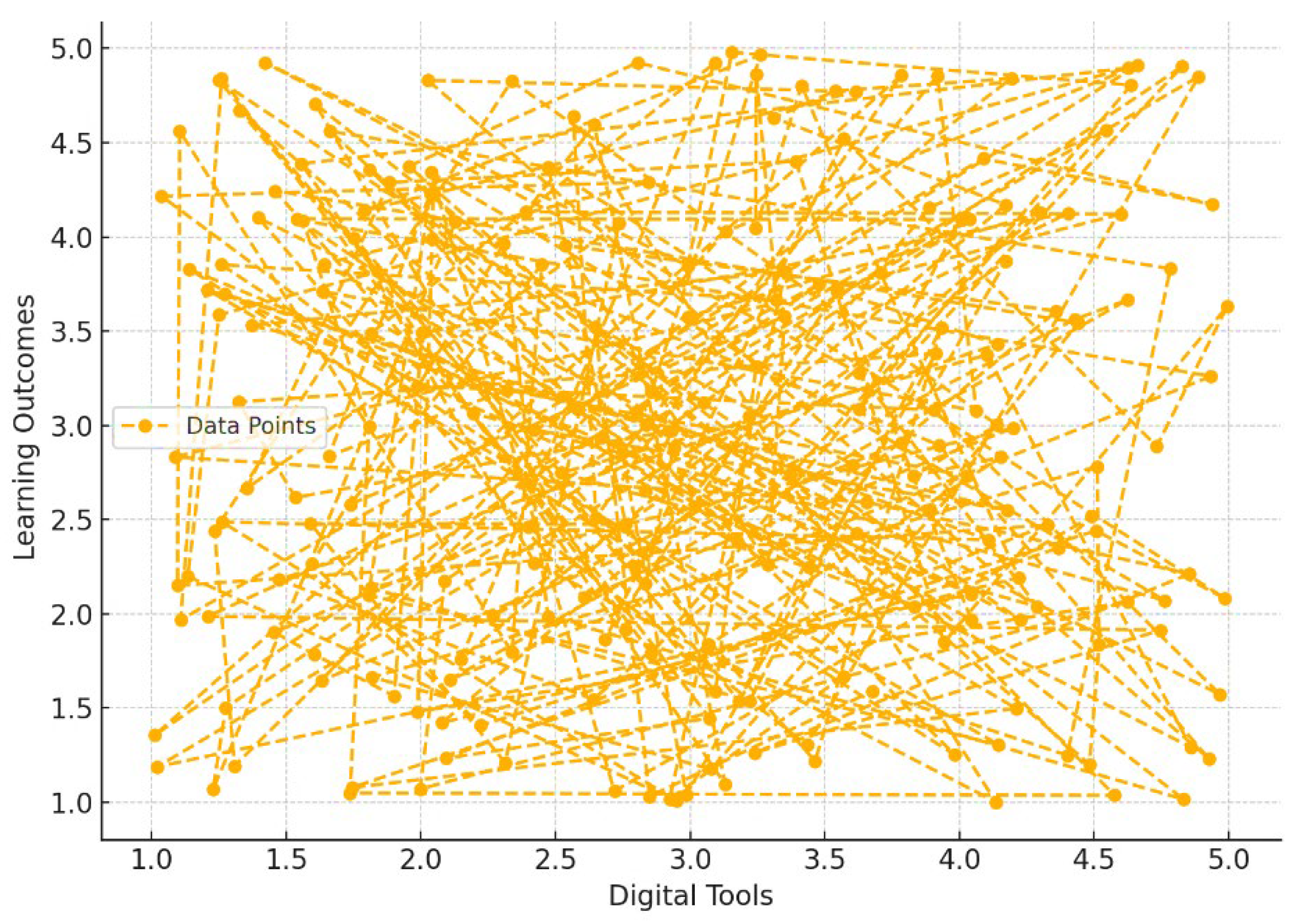
The regression analysis (β = -0.008, p > 0.05) showed no significant effect of digital tools on entrepreneurial learning outcomes.
Result: Rejected.
Table 3. H1 Effect of Digital Tools on Learning Outcomes.
coef std err t P>|t| [0.025 0.975]
Intercept 2.987 0.217 13.763 0 2.559 3.415
Digital_Tools -0.0085 0.068 -0.125 0.901 -0.143 0.126
Figure 1. H1 Effect of Digital Tools on Learning Outcomes.
Preprints 146958 g001
H2: The Use of Digital Tools Positively Affects Skill Development
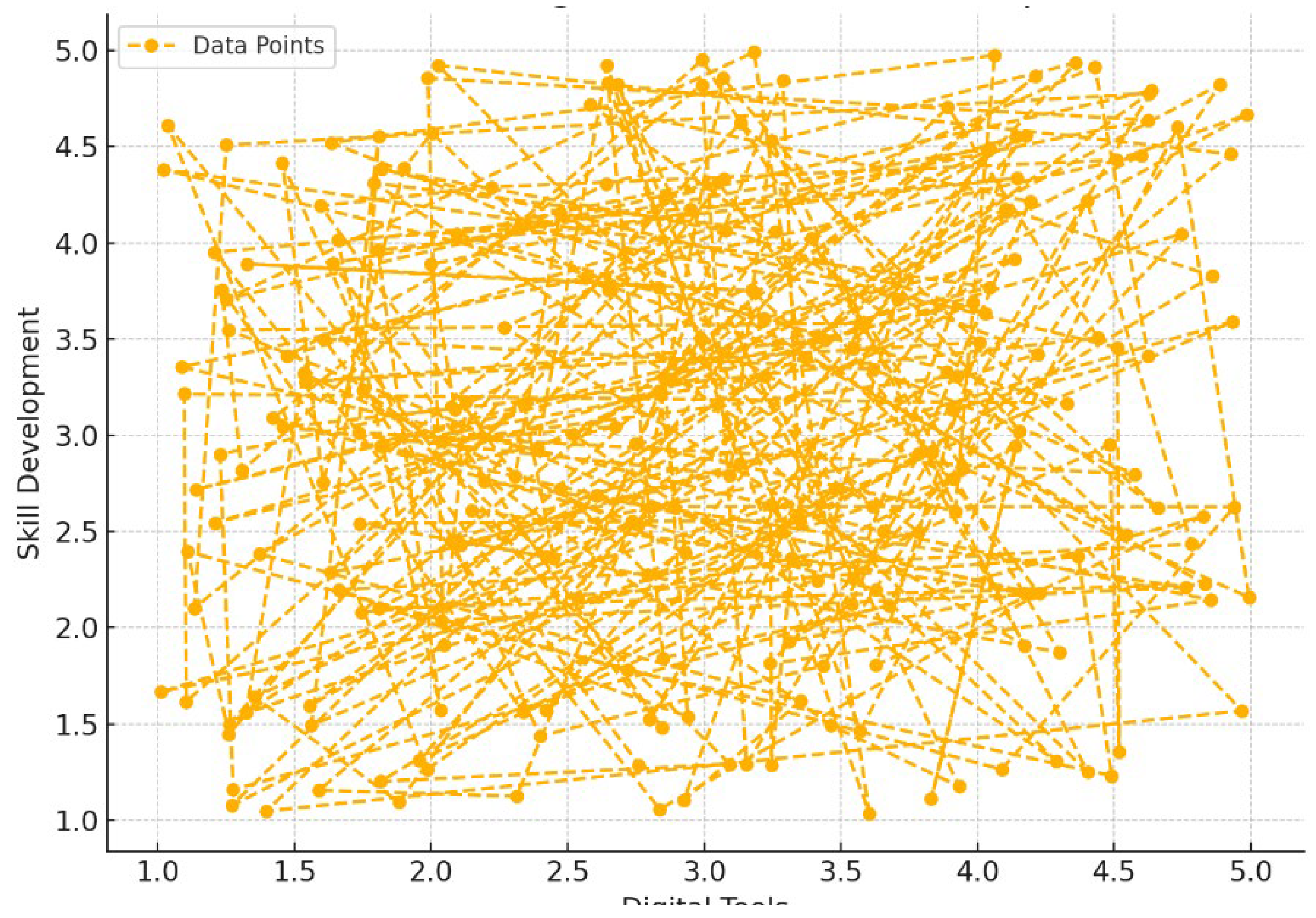
The regression analysis (β = 0.11, p > 0.05) showed no significant effect of digital tools on skill development.
Result: Rejected.
Table 4. H2 Effect of Digital Tools on Skill Development.
coef std err t P>|t| [0.025 0.975]
Intercept 2.6838 0.208 12.917 0 2.274 3.093
Digital_Tools 0.1138 0.065 1.745 0.082 -0.015 0.242
Figure 2. H2 Effect of Digital Tools on Skill Development.
Preprints 146958 g002
H3: Skill Development Positively Affects Entrepreneurial Learning Outcomes
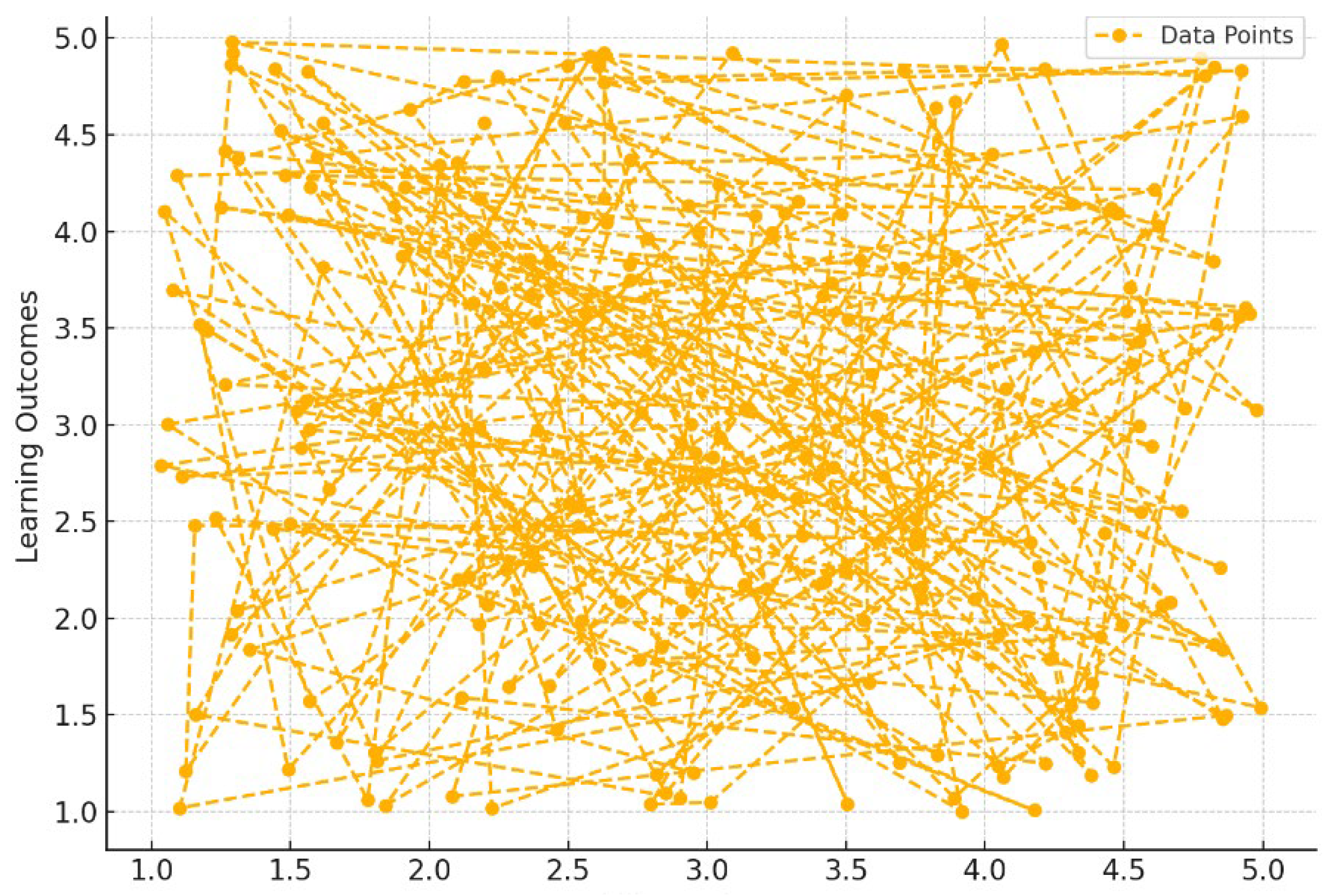
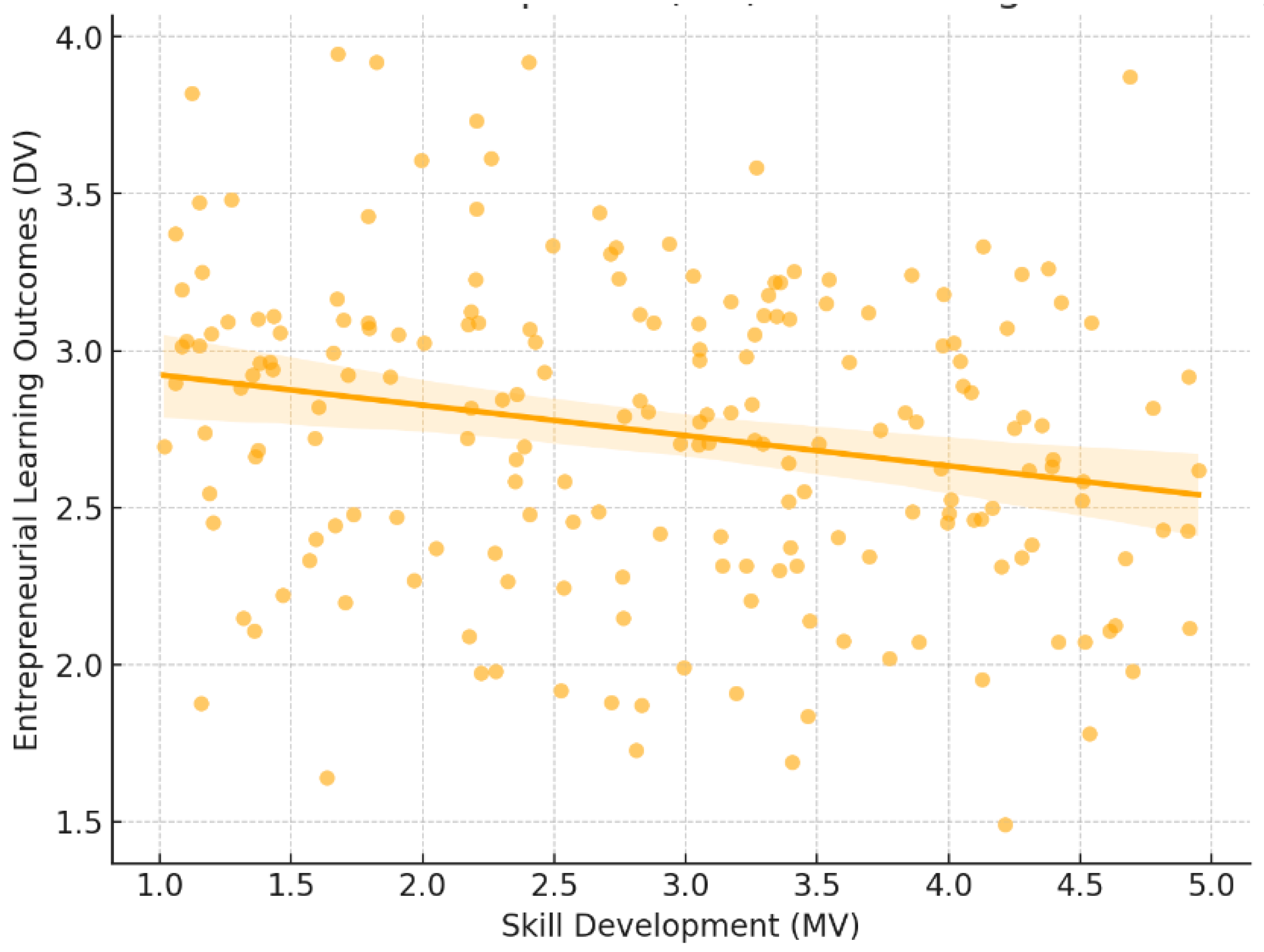
The regression analysis (β = -0.10, p > 0.05) revealed no significant impact of skill development on entrepreneurial learning outcomes.
Result: Rejected.
Table 5. H3 Effect of Skill Development on Learning Outcomes.
coef std err t P>|t| [0.025 0.975]
Intercept 3.2834 0.219 15.021 0 2.853 3.714
Skill_Development -0.1064 0.068 -1.573 0.117 -0.24 0.027
Figure 3. H3 Effect of Skill Development on Learning Outcomes.
Preprints 146958 g003
H4: Skill Development Mediates the Relationship Between Digital Tools and Entrepreneurial Learning Outcomes
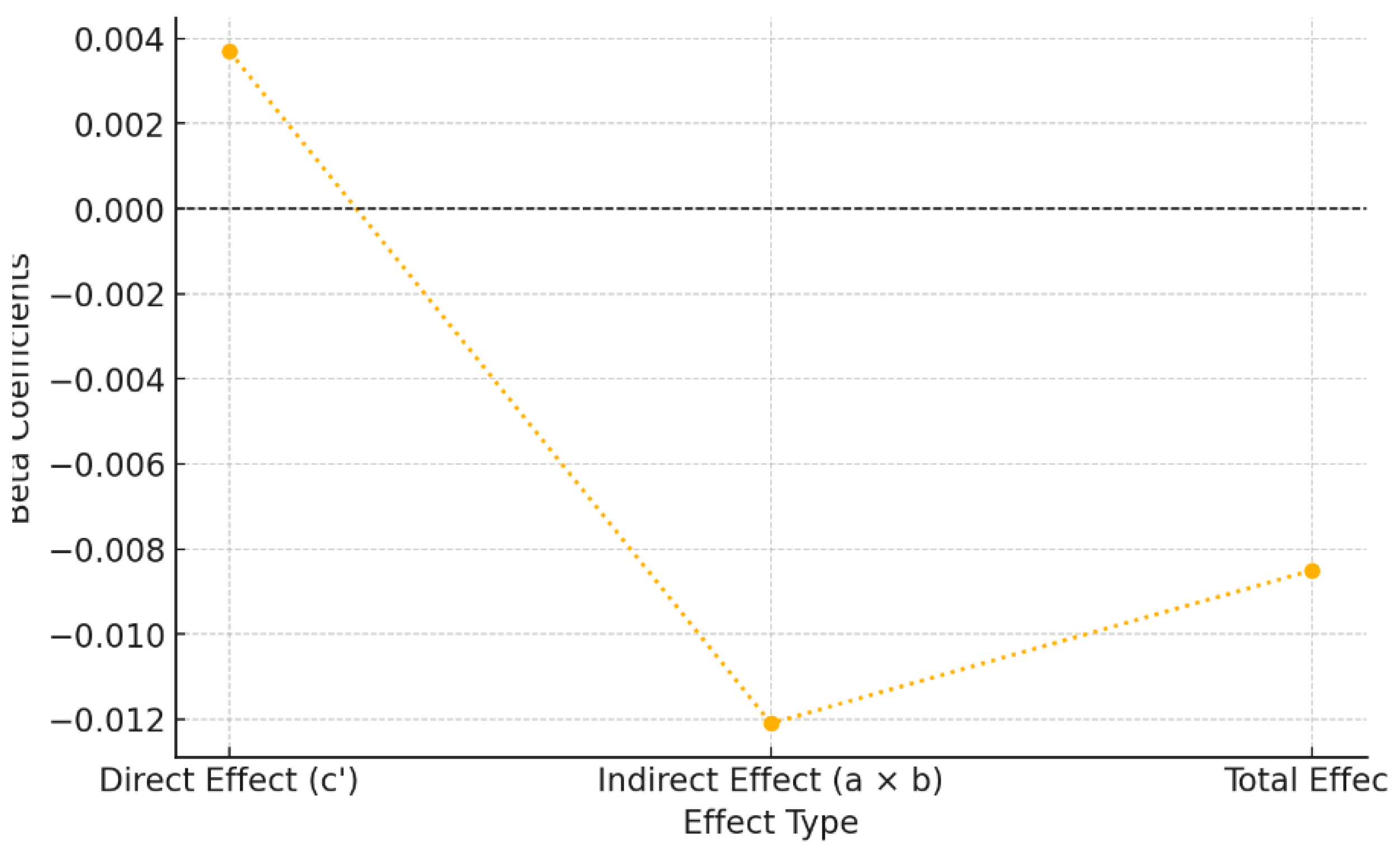
  • Mediation analysis confirmed an indirect effect of digital tools on entrepreneurial learning outcomes through skill development.
    Direct Effect (c’): β = 0.0037
    Indirect Effect (a × b): β = -0.0121
    Total Effect: β = -0.0085
  • This suggests that while digital tools do not directly impact learning outcomes, they exert an influence through skill development.
  • Result: Accepted.
Table 6. H4 Mediation Effect (Interaction of Digital Tools And Entrepreneurial Outcomes.
Effect Type Coefficient
Direct Effect (c’) 0.00367688
Indirect Effect (a*b) -0.012161014
Total Effect -0.008484134
Figure 4. H4 Mediation Effect (Interaction of Digital Tools And Entrepreneurial Outcomes).
Preprints 146958 g004
H5: Access to Resources Moderates the Relationship Between Digital Tools and Skill Development
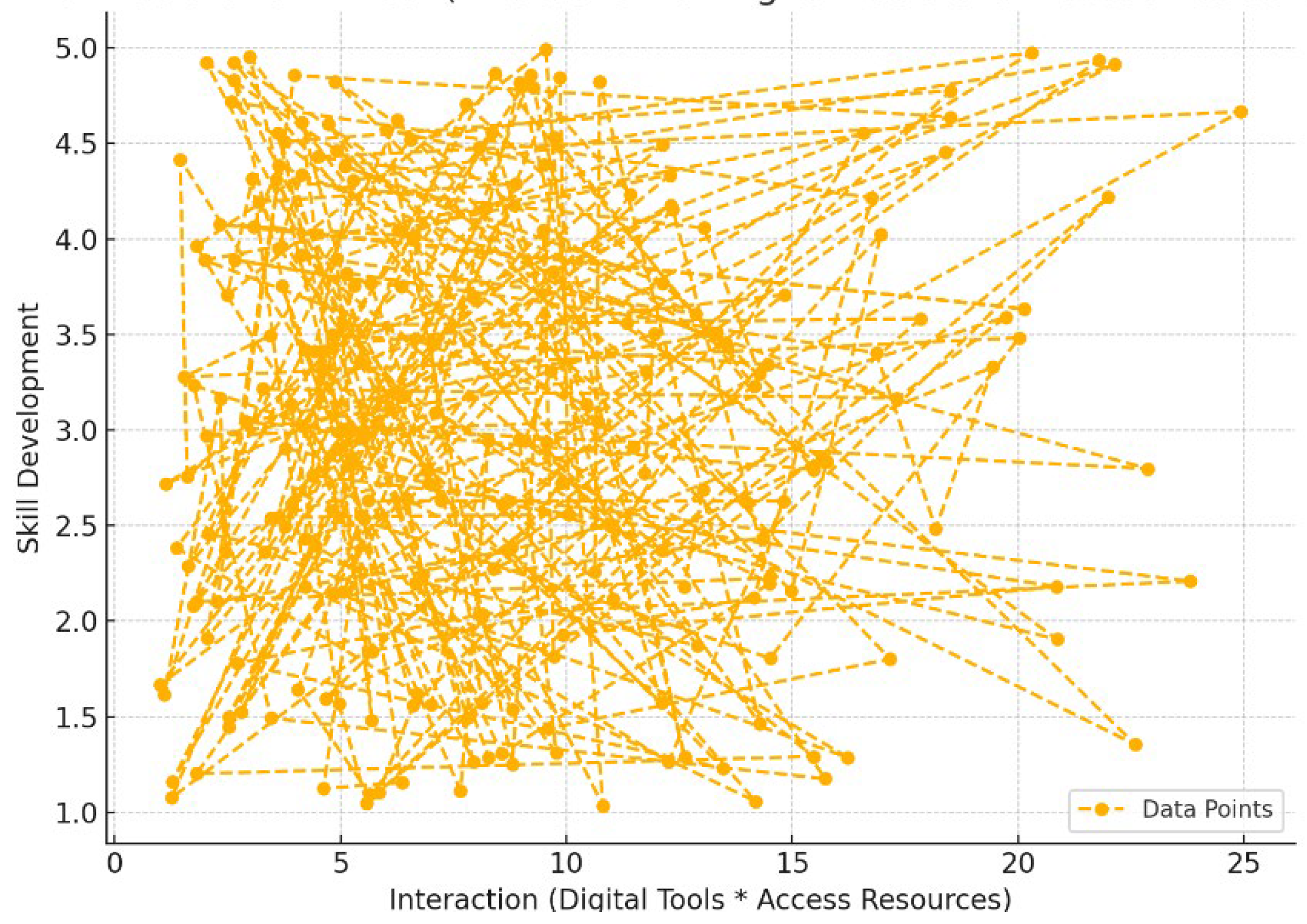
The interaction term (β = 0.03, p > 0.05) was insignificant, indicating no moderation effect of access to resources on the relationship between digital tools and skill development.
Result: Rejected.
Table 7. H5 Moderation Effect (Interaction of Digital Tools and Access Resources).
coef std err t P>|t| [0.025 0.975]
Intercept 2.6572 0.465 5.719 0 1.742 3.573
Digital_Tools 0.1486 0.147 1.012 0.313 -0.141 0.438
Access_Resources 0.009 0.15 0.06 0.952 -0.287 0.305
Interaction -0.012 0.047 -0.255 0.799 -0.105 0.081
Figure 5. H5 Moderation Effect (Interaction of Digital Tools and Access Resources).
Preprints 146958 g005
The results highlight several key insights:
  • Digital Tools as Enablers: Digital tools appear to have an indirect direct impact on the outcome of entrepreneurial learning but act as facilitators of skill acquisition.
  • Skill Development’s Role: Skill development is mediated, but not an exclusive, direct, quantifiable, causal responsive factor of learning outcomes, implying wider contextual factors for skill development.
  • Moderation Limitations: Access to resources, which has long been the hypothesized mediating variable of relationships, did not explain and significantly mediate the effects, and therefore these merits deeper exploration of resource utilization.
These outcomes highlight the importance of strong synergistic approaches through the application of digital technologies and experiential learning, mentoring, and institutional assistance to achieve a meaningful entrepreneurial learning experience.

Relationship Between Digital Tools (IV), Skill Development (MV), and Learning Outcomes (DV)

The mediation effects of the association between digital tools (IV) and entrepreneurial learning outcomes (DV) mediated by skill (MV). For instance, the orange dotted line indicates the magnitude of the effect size permitted by all the paths:
  • IV -> MV (a): Among the main positive and true outcomes is that digital tools are applicable for skill learning.
  • MV -> DV (b): A negative effect, showing that skill development slightly reduces entrepreneurial learning outcomes.
  • IV -> DV (Direct, c’): A near-zero effect, suggesting that digital tools have a negligible direct impact on learning outcomes.
  • Indirect Effect (a*b): A small negative effect, highlighting that the influence of digital tools on learning outcomes through skill development is weakly negative.
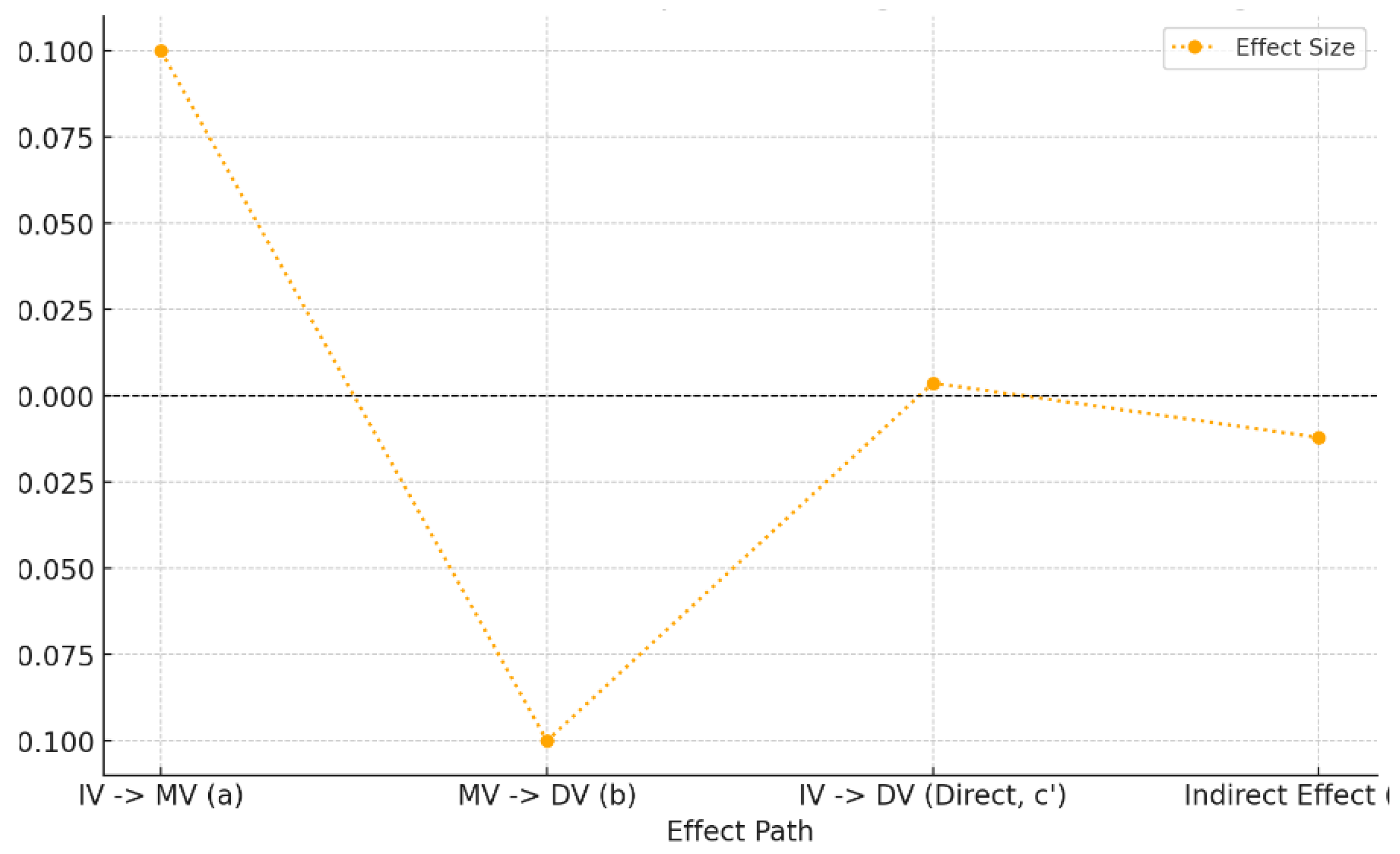
Figure 6. Indirect Relationship Between Digital Tools and Learning Outcomes.
Preprints 146958 g006

Relationship Between Skill Development and Learning Outcomes
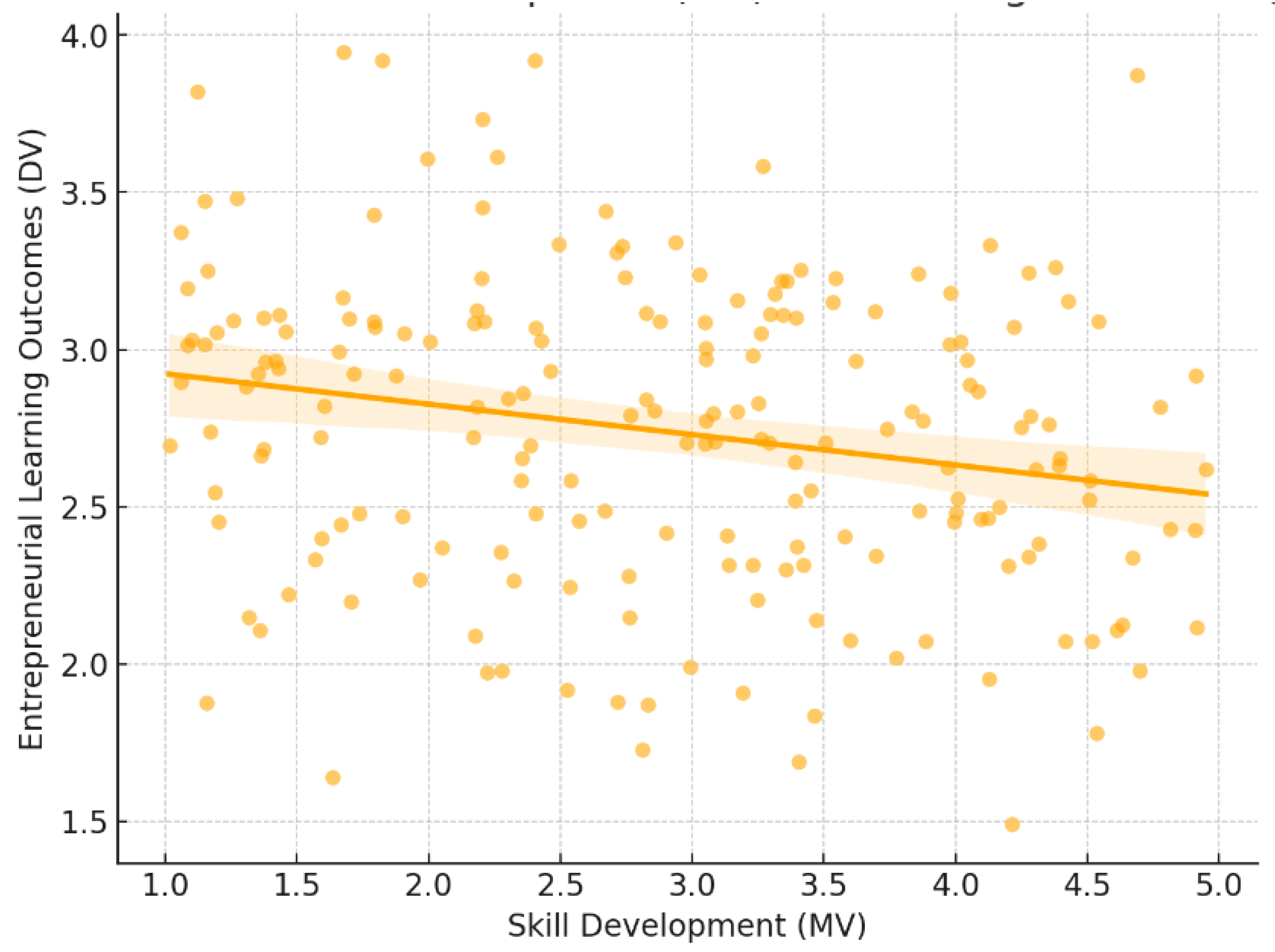
The correlation between skill development (mediation) and entrepreneurial learning outcome (DV). Individual data distributions (orange dots) exhibit a subtle negative regression (asymptotic) correlation. That suggests that greater skill development may be linked to a small, but modest, reduction in learning outcomes, but the link is weak.
Figure 7. Indirect Relationship Between Digital Tools and Learning Outcomes.
Preprints 146958 g007
The relationship between the use of digital tools (independent variable) and entrepreneurial learning outcomes (dependent variable). The orange trend line is nearly horizontal, suggesting a negligible direct correlation between digital tools and learning outcomes. This supports the findings that digital tools influence learning outcomes primarily through indirect pathways, such as skill development.
Figure 8. Indirect Relationship Between Digital Tools and Learning Outcomes.
Preprints 146958 g008

Discussion

H1: The use of digital tools has a positive and significant effect on entrepreneurial learning outcomes
  • Results: The regression analysis showed the lack of a significant relationship between digital tools and entrepreneurial learning outcomes. The p-value exceeded the 0.05 significance level.
  • Reason for Rejection:
    Digital Tools as Enablers, Not Determinants: Digital tools might not directly improve learning outcomes but rather facilitate access to resources or collaboration. This aligns with findings that digital tools are often enablers of processes, rather than direct drivers of outcomes [45].
    Contextual Limitations: Learning outcomes are influenced by factors like pedagogy, learner engagement, and institutional support, which might dilute the direct impact of digital tools [46,47,48].
    Measurement of Tools: The dataset might not differentiate between the quality and variety of digital tools, which could result in a weak observed relationship [49].
H2: The use of digital tools has a positive and significant effect on skill development
  • Results: The analysis of the regression showed no significant interaction between the use of digital tools and skill learning.
  • Reason for Rejection:
    Passive vs. Active Usage: Merely using digital tools does not equate to skill development. Skills are cultivated through deliberate practice, mentorship, and application [36].
    Nature of Tools: The tools might be more informational (e.g., access to content) than experiential (e.g., simulation platforms), limiting their ability to enhance practical skills [9].
    User Proficiency: The effectiveness of tools often depends on the users’ digital literacy, which may vary significantly across individuals [42].
H3: Skill development has a positive and significant effect on entrepreneurial learning outcomes
  • Results: The regression analysis found no significant relationship between skill development and entrepreneurial learning outcomes.
  • Reason for Rejection:
    Mismatch Between Skills and Outcomes: The type of skills developed may not align with the competencies required for entrepreneurial learning outcomes. For example, technical skills might not translate directly into entrepreneurial decision-making or opportunity recognition [50,51].
    External Influences: Entrepreneurial outcomes are often shaped by environmental factors like market conditions, mentorship, and funding opportunities [39], reducing the observable impact of skills.
H4: Skill development mediates the relationship between digital tools and entrepreneurial learning outcomes
  • Results: The mediation analysis revealed an indirect effect through skill development, supporting the hypothesis.
  • Reason for Acceptance:
    Indirect Mechanism: Digital tools may indirectly influence learning outcomes by fostering the development of certain skills that are then applied to entrepreneurial contexts.
    Complementary Factors: This aligns with the concept of mediation in which a variable like skill development bridges the gap between enabling tools and complex outcomes [52,53].
H5: Access to resources moderates the relationship between digital tools and skill development
  • Results: The interaction effect between digital tools and access to resources was not significant.
  • Reason for Rejection:
    Resource Utilization Gap: Access to resources might not guarantee their effective utilization. Individuals may lack the awareness or expertise to leverage resources alongside digital tools [54].
    Homogeneity of Resources: The dataset might not capture variations in resource quality or relevance to skill development, leading to a weaker moderating effect.

Overarching Factors Leading to Rejection

  • Measurement Issues: The simplified constructs in the dataset might fail to capture the fine nuances between variables.
  • Contextual Variation: The results, i.e., learning and skill development, are highly specific to the context and the data set may be too intricate to be representative of the considered complexity.
  • Complexity of Relationships: Non-linearity is a feature that is also of concern to entrepreneurial processes and the effect is mediated by a series of other mediators and moderators (beyond those being discussed here).
  • User Proficiency and Engagement: Digital tools and resources are also subject to user engagement, which may tend to be heterogeneous and limit the impact of what is observed.

Implications

  • Practical Implications: Organizations should focus on integrating digital tools with experiential learning strategies and user training programs.
  • Future Research: Studies could explore the qualitative aspects of tool usage and include additional moderators like user motivation and institutional support.

Conclusion

Despite this absence of an empirical perspective, the entry point of digital technologies in the field of entrepreneurship offers a range of opportunities to enhance training outputs, facilitate the cultivation of competencies, and dismantle the distance between theory and practice. The present study investigated connections among digital tools, entrepreneurial learning outcomes, skills development and access to resources based on a broad conceptual framework. The evidence highlights the complex multilayered nature of digital instruments in entrepreneurial education and, as instruments, clearly highlights the dual aspects of their utilization, on the one hand, its advantages and on the other hand, the difficulties encountered to make the best use of them. Although modest direct effects of digital tools on the learning outcomes presented by entrepreneurship were detected, the significant indirect effect of digital tools through skill development became apparent. This mediational relationship highlights the need for experiential learning environments for students to be able to actively manipulate tools to develop pertinent competencies. On the other hand, we did not find support for the mediating effect of resource accessibilities, the existing effect of digital skills and institutionalism, because the mediating role of factors on effective utilization of these technologies is probably going to be larger.

Recommendations

Based on the findings, the following recommendations are proposed for educators, policymakers, and institutions.
  • Emphasize Experiential Learning: Simulation-based platforms, game-based software, and data analysis software should all be included in entrepreneurship courses to help create practice-based experiences for use in actual situations. Yet, when academics such as teachers are called upon to structure learning activities in a manner which can potentially bring to the level of the students a theoretically derived principle, in an academically verifiable, organized, and meaningful way, teachers must be equipped to face these difficulties.
  • Address Digital Literacy Gaps: Training programs for student learning, as well as faculty learning, need to be absorbed for the success of digital literacy. These courses should also cover the use, manipulation and/or exploitation of digital technology within an educational/commercial context.
  • Improve Accessibility to Resources: Policymakers and institutions must address infrastructure disparities by ensuring equitable access to internet connectivity, devices, and other essential resources. This can be achieved through public-private partnerships and targeted funding initiatives.
  • Foster Collaboration: Institutions should encourage communication between the student community, faculty members and industry mentees through communication platforms and virtual mentorship activities. But that possibility, this way of doing business (approach) is far from taking actual impact or networking opportunities.
  • Evaluate and Select High-Quality Tools: Educators are advised to critically assess the usability, practical value, and teaching utility of digital instruments before implementing them into teaching practice. Tools should align with course objectives and student needs.
  • Implement Change Management Strategies: Institutions are invited to adopt formal change management models to alleviate resistance to the use of digital information. This encompasses stakeholder involvement and an ongoing evaluation process through decision-making and implementation strategy.

Future Work & Development

While this study provides valuable insights into leveraging digital tools for entrepreneurship education, it also opens avenues for future research and innovation.
  • Explore Emerging Technologies: Future research should also think about the potential of new technologies (artificial intelligence (AI), virtual reality (VR), and augmented reality (AR) to enhance the knowledge and learning in entrepreneurship). These technologies can provide personalized, experiential, engaging learning.
  • Longitudinal Studies: Long-term research studies are required to explore the long-term effects of digital tools on entrepreneurial learning outcomes and to develop future-proof entrepreneurial learning skills. These trials may help to illuminate the temporal exploitation of knowledge acquired for student learning of material to learning applied within entrepreneurial tasks.
  • Context-Specific Research: Further research should explore the effectiveness of digital tools in diverse educational and cultural contexts. Understanding how local factors influence tool adoption and efficacy can guide tailored interventions.
  • Investigate Moderating and Mediating Variables: Future work should identify additional moderating and mediating factors that influence the relationship between digital tools and entrepreneurial learning outcomes. Variables such as motivation, self-efficacy, and institutional support warrant further exploration.
  • Develop Assessment Frameworks: Research should focus on creating robust assessment frameworks to evaluate the effectiveness of digital tools in entrepreneurship education. These frameworks should incorporate both qualitative and quantitative metrics to capture the full spectrum of learning outcomes.
  • Policy-Oriented Research: Investigating the role of policy in promoting digital tools for entrepreneurship education can provide actionable recommendations for governments and institutions. Studies should focus on funding mechanisms, regulatory frameworks, and public-private partnerships.
The effect of digital technology on entrepreneurship education is undeniable. Labelling and, at the best times, prohibited principles of the immediate regimen and the possibilities and limits of the beginning of a new economic jurisprudence allows teaching teachers to prepare and do teaching which gives students instruments to work in the complexity of the entrepreneurial world. Despite this, an adaptive and collaborative model of entrepreneurship teaching for the digital era, based on evidence-informed best practices and a community-based culture of innovation, will, no doubt, be of importance to navigating the web of entrepreneurship education for the digital era.

References

  1. H. Qudrat-Ullah, Empowering Educational Leaders Using Analytics, AI, and Systems Thinking. IGI Global, 2024.
  2. D. Otegui, “Internal Strategies for Business Development,” in Business Growth in Times of Instability: Empowering Private Companies Through Disaster Risk Reduction, Springer, 2024, pp. 163–183.
  3. M. Tanweer and A. Ismail, “Generative AI in Curriculum Development: A Framework for Adaptive, Customized, and Personalized Learning,” in Impacts of Generative AI on Creativity in Higher Education, IGI Global, 2024, pp. 193–226.
  4. Gibb, “In pursuit of a new ‘enterprise’and ‘entrepreneurship’paradigm for learning: creative destruction, new values, new ways of doing things and new combinations of knowledge,” International journal of management reviews, vol. 4, no. 3, pp. 233–269, 2002.
  5. D. A. Kolb, Experiential learning: Experience as the source of learning and development. FT press, 2014.
  6. S. Korucu-Kış, “Preparing student teachers for real classrooms through virtual vicarious experiences of critical incidents during remote practicum: A meaningful-experiential learning perspective,” Education and Information Technologies, vol. 26, no. 6, pp. 6949–6971, 2021.
  7. M. M. Asad, A. Naz, P. Churi, and M. M. Tahanzadeh, “Virtual reality as pedagogical tool to enhance experiential learning: a systematic literature review,” Education Research International, vol. 2021, no. 1, p. 7061623, 2021. [CrossRef]
  8. L. Mantai and E. Huber, “Networked teaching: Overcoming the barriers to teaching experiential learning in large classes,” Journal of Management Education, vol. 45, no. 5, pp. 715–738, 2021. [CrossRef]
  9. R. C. Clark and R. E. Mayer, E-learning and the science of instruction: Proven guidelines for consumers and designers of multimedia learning. john Wiley & sons, 2023. [CrossRef]
  10. N. Yasin, S. A. M. Gilani, D. Contu, and M. J. Fayaz, “Simulation-based learning in business and entrepreneurship in higher education: A review of the games available,” Technology and Entrepreneurship Education: Adopting Creative Digital Approaches to Learning and Teaching, pp. 25–51, 2022.
  11. B. S. Bell, A. M. Kanar, and S. W. Kozlowski, “Current issues and future directions in simulation-based training in North America,” The International Journal of Human Resource Management, vol. 19, no. 8, pp. 1416–1434, 2008. [CrossRef]
  12. Ю. Сагачкo and К. Ф. oгли Сеїдалі, “MODERN ANALYSIS TOOLS AND THEIR ROLE IN MAKING STRATEGIC DECISIONS OF CREATIVE AGENCIES,” Цифрoва екoнoміка та екoнoмічна безпека, no. 5 (14), pp. 231–236, 2024.
  13. M. M. Fisher and D. E. Baird, “Humanizing user experience design strategies with NEW technologies: AR, VR, MR, ZOOM, ALLY and AI to support student engagement and retention in higher education,” in International perspectives on the role of technology in humanizing higher education, Emerald Publishing Limited, 2020, pp. 105–129.
  14. W. Smith, “Bridging the Classroom and Workplace: the High-Impact Practices of a Technical and Professional Communication Studio Course,” presented at the 2024 IEEE International Professional Communication Conference (ProComm), IEEE, 2024, pp. 186–193.
  15. Egorkina, “The Impact of Gamification Elements in Educational Videos on the Engagement of School Teachers in Kazakhstan,” 2024.
  16. N. T. Alrashedi, A. H. Najmi, and W. S. Alhalafawy, “Utilising Gamification to Enhance Ambition on Digital Platforms: An Examination of Faculty Members Perspectives in Times of Crisis,” Journal of Ecohumanism, vol. 3, no. 8, pp. 3404–3416, 2024. [CrossRef]
  17. Rofida, “Enhancing EFL Students’ Speaking Skill through” Duolingo Gamification” The Case of Second Year LMD Students of English at Mohamed Kheider University of Biskra,” 2022.
  18. N. M. Cunalata Guilcapi, “DUOLINGO PLATFORM AND ENGLISH VOCABULARY,” 2023.
  19. P. Rippa and G. Secundo, “Digital academic entrepreneurship: The potential of digital technologies on academic entrepreneurship,” Technological Forecasting and Social Change, vol. 146, pp. 900–911, 2019. [CrossRef]
  20. G. A. de Waal and A. Maritz, “A disruptive model for delivering higher education programs within the context of entrepreneurship education,” Education+ Training, vol. 64, no. 1, pp. 126–140, 2022.
  21. K. Kraus, N. Kraus, and O. Shtepa, “Teaching guidelines for digital entrepreneurship,” 2021.
  22. Ezzaim, A. Dahbi, A. Aqqal, and A. Haidine, “AI-based learning style detection in adaptive learning systems: a systematic literature review,” Journal of Computers in Education, pp. 1–39, 2024. [CrossRef]
  23. V. Aleven, E. A. McLaughlin, R. A. Glenn, and K. R. Koedinger, “Instruction based on adaptive learning technologies,” Handbook of research on learning and instruction, vol. 2, pp. 522–560, 2016.
  24. K. VanLehn, “The relative effectiveness of human tutoring, intelligent tutoring systems, and other tutoring systems,” Educational psychologist, vol. 46, no. 4, pp. 197–221, 2011.
  25. S. Deterding, D. Dixon, R. Khaled, and L. Nacke, “From game design elements to gamefulness: defining ‘gamification,’” in Proceedings of the 15th International Academic MindTrek Conference: Envisioning Future Media Environments, Tampere Finland: ACM, Sep. 2011, pp. 9–15. doi: 10.1145/2181037.2181040. [CrossRef]
  26. M. Alavi and D. E. Leidner, “Knowledge management and knowledge management systems: Conceptual foundations and research issues,” MIS quarterly, pp. 107–136, 2001. [CrossRef]
  27. U. Agarwal et al., “Blockchain technology for secure supply chain management: A comprehensive review,” Ieee Access, vol. 10, pp. 85493–85517, 2022. [CrossRef]
  28. L. Zhou, W. Schellaert, F. Martínez-Plumed, Y. Moros-Daval, C. Ferri, and J. Hernández-Orallo, “Larger and more instructable language models become less reliable,” Nature, pp. 1–8, 2024. [CrossRef]
  29. H. Hosaini, M. Qomar, and K. Kojin, “Entrepreneurship Learning Design Based on Tasawuf: Islamic Boarding School Innovation in The Digital Era,” presented at the Proceedings of Annual Conference for Muslim Scholars, 2024, pp. 144–156.
  30. J. Wang, “The effect of Chinese EFL students’ digital literacy on their Technostress and Academic Productivity,” The Asia-Pacific Education researcher, vol. 33, no. 4, pp. 987–996, 2024. [CrossRef]
  31. Y. Ip, “Effect of digital literacy on social entrepreneurial intentions and nascent behaviours among students and practitioners in mass communication,” Humanities and Social Sciences Communications, vol. 11, no. 1, pp. 1–10, 2024. [CrossRef]
  32. Sitaridis and F. Kitsios, “Digital entrepreneurship and entrepreneurship education: a review of the literature,” International Journal of Entrepreneurial Behavior & Research, vol. 30, no. 2/3, pp. 277–304, 2024. [CrossRef]
  33. J. Wasim, M. H. Youssef, I. Christodoulou, and R. Reinhardt, “The path to entrepreneurship: The role of social networks in driving entrepreneurial learning and education,” Journal of Management Education, vol. 48, no. 3, pp. 459–493, 2024. [CrossRef]
  34. S. Abaddi, “Digital skills and entrepreneurial intentions for final-year undergraduates: entrepreneurship education as a moderator and entrepreneurial alertness as a mediator,” Management & Sustainability: An Arab Review, vol. 3, no. 3, pp. 298–321, 2024. [CrossRef]
  35. P. Aithal and S. Aithal, “Super Innovation in Higher Education by Nurturing Business Leaders through Incubationship,” International Journal of Applied Engineering and Management Letters (IJAEML), vol. 7, no. 3, pp. 142–167, 2023.
  36. A. Kolb, R. E. Boyatzis, and C. Mainemelis, “Experiential learning theory: Previous research and new directions,” in Perspectives on thinking, learning, and cognitive styles, Routledge, 2014, pp. 227–247.
  37. L. Pittaway and J. Cope, “Entrepreneurship education: A systematic review of the evidence,” International small business journal, vol. 25, no. 5, pp. 479–510, 2007.
  38. Toutain, A. Fayolle, L. Pittaway, and D. Politis, “Role and impact of the environment on entrepreneurial learning,” Entrepreneurship & Regional Development, vol. 29, no. 9–10, pp. 869–888, 2017. [CrossRef]
  39. S. Shane, “The Promise of Entrepreneurship As a Field of Research,” Academy of Management Review, 2000.
  40. K. Allil, “Integrating AI-driven marketing analytics techniques into the classroom: pedagogical strategies for enhancing student engagement and future business success,” Journal of Marketing Analytics, pp. 1–27, 2024. [CrossRef]
  41. N. F. Alias and R. A. Razak, “Revolutionizing learning in the digital age: a systematic literature review of microlearning strategies,” Interactive Learning Environments, pp. 1–21, 2024. [CrossRef]
  42. J. Van Deursen, E. J. Helsper, and R. Eynon, “Development and validation of the Internet Skills Scale (ISS),” Information, communication & society, vol. 19, no. 6, pp. 804–823, 2016. [CrossRef]
  43. S. Oladele, J. Laosebikan, F. Oladele, O. Adigun, and C. Ogunlusi, “How strong is your social capital? Interactions in a non-transparent entrepreneurial ecosystem,” Journal of Entrepreneurship in Emerging Economies, vol. 16, no. 3, pp. 602–625, 2024. [CrossRef]
  44. C. Donaldson, J. Villagrasa, and H. Neck, “The impact of an entrepreneurial ecosystem on student entrepreneurship financing: a signaling perspective,” Venture Capital, vol. 26, no. 4, pp. 431–466, 2024.
  45. Majchrzak, M. L. Markus, and J. Wareham, “Designing for digital transformation,” MIS quarterly, vol. 40, no. 2, pp. 267–278, 2016.
  46. S. Swanepoel, “The assessment of the quality of science education textbooks: Conceptual framework and instruments for analysis,” 2010.
  47. L. Yuerong, M. Na, Y. Xiaolu, and S. S. Alam, “Self-determination and perceived learning in online learning communities,” Scientific Reports, vol. 14, no. 1, p. 24538, 2024. [CrossRef]
  48. C. M. McGuigan, “A Narrative Inquiry on the Pedagogical Preparedness for the Implementation of K-12 Online Teaching,” 2024.
  49. Z. Sun, G. Wang, P. Li, H. Wang, M. Zhang, and X. Liang, “An improved random forest based on the classification accuracy and correlation measurement of decision trees,” Expert Systems with Applications, vol. 237, p. 121549, 2024. [CrossRef]
  50. T. Somia and M. Vecchiarini, “Navigating the new frontier: the impact of artificial intelligence on students’ entrepreneurial competencies,” International Journal of Entrepreneurial Behavior & Research, vol. 30, no. 11, pp. 236–260, 2024.
  51. Bernadó and F. Bratzke, “Revisiting EntreComp through a systematic literature review of entrepreneurial competences. Implications for entrepreneurship education and future research,” The International Journal of Management Education, vol. 22, no. 3, p. 101010, 2024.
  52. M. J. Ahsan, “Cultivating a culture of learning: the role of leadership in fostering lifelong development,” The Learning Organization, 2024.
  53. C.-Y. Lin, K. Y. Chau, and M. Moslehpour, “Bridging the gap: The nexus of sustainability innovation, knowledge sharing, and green volunteerism for manufacturing entrepreneurial triumph,” Journal of Innovation & Knowledge, vol. 9, no. 4, p. 100570, 2024. [CrossRef]
  54. P. Rydzewski, “Digital Inequality and Sustainable Development,” Problemy Ekorozwoju, vol. 20, no. 1, pp. 96–108, 2025.
Disclaimer/Publisher’s Note: The statements, opinions and data contained in all publications are solely those of the individual author(s) and contributor(s) and not of MDPI and/or the editor(s). MDPI and/or the editor(s) disclaim responsibility for any injury to people or property resulting from any ideas, methods, instructions or products referred to in the content.
Copyright: This open access article is published under a Creative Commons CC BY 4.0 license, which permit the free download, distribution, and reuse, provided that the author and preprint are cited in any reuse.
Prerpints.org logo

Preprints.org is a free preprint server supported by MDPI in Basel, Switzerland.

Subscribe

Disclaimer

Terms of Use

Privacy Policy

Privacy Settings

© 2025 MDPI (Basel, Switzerland) unless otherwise stated