

Submitted:
20 January 2025
Posted:
21 January 2025
You are already at the latest version
Abstract
Background: The skin represents the first barrier of defence, and its integrity is crucial for overall health. Skin wounds present a considerable risk seeing how their progression is rapid and sometimes they are caused by comorbidities like diabetes and venous diseases. Nutraceutical combinations like the ones between polyphenols and metal ions present considerable applications thanks to their increased bioavailability and their ability to modulate intrinsic molecular pathways.; Methods: The research findings presented in this paper are based on a systematic review of current literature with an emphasis on nanotechnology and regenerative medicine strategies that incorporate polyphenols and metallic nanoparticles (NPs). The key studies which described the action mechanisms, efficacy and safety of these hybrid formulations were reviewed. Results: The polyphenol-metal complexes like curcumin conjugated with silver NPs and resveratrol with copper NPs showed improved antibacterial activity, fibroblast proliferation and collagen formation. The formulations proved effective in reducing inflammation and oxidative stress, which are key impediments to wound healing. Conclusions: The use of polyphenol-metal hybrids has the potential of being the new advancement in managing chronic wounds through the enhancement of the healing processes and anti-infective properties. Further research is needed to determine the effects of these agents and how they work and to prove their efficacy in large scale randomised controlled trials. It will be crucial to gain deeper insights into the stability as well as the delivery of these new approaches in order to integrate them into the clinical practice.
Keywords:
polyphenol-metal combinations
; wound healing
; antimicrobial
; anticancer
; nutraceuticals
1. Introduction
One of the most difficult and widespread problems facing modern healthcare is the treatment of chronic wounds, which may take more than a month to heal. Wounds like this don't heal well for a variety of reasons; some of them include diabetes, venous insufficiency, and pressure ulcers. Effective care of chronic wounds involves tackling both the wound and the systemic factors that impede healing. To fully comprehend these wounds, a thorough knowledge of their genesis and pathophysiology is necessary. Healthcare resources are being overwhelmed by the growing number of chronic wounds caused by obesity and an aging population. These wounds have a profound effect on patients' quality of life and call for new ways of treating them to improve their healing results[1,2].
The yearly cost of treating and maintaining chronic wounds is in the billions of dollars, which results in huge economic expenses within healthcare systems worldwide, these wounds have severe physical, mental and social effects, which negatively impact the patient's quality of life. The need of effective care is shown by the fact that current figures indicate that 6.5 million people in the US alone suffer from chronic wounds [3]. A chronic wound is one that does not heal normally, meaning it does not undergo haemostasis, inflammation, proliferation, or remodelling. An unusual inflammatory response, characterized by the overproduction of pro-inflammatory cytokines, bacterial colonization and poor angiogenesis, is often associated with these abnormal wounds, the treatment problem is worsened because this inflammation-damage spiral slows healing, which causes additional necrosis [4,5].
Fruits, vegetables, and herbs are rich sources of polyphenols, a varied family of phytochemicals known for their anti-inflammatory, antibacterial, and powerful antioxidant capabilities. With an expected increase in demand for both recreational and medicinal uses, the worldwide polyphenols market was worth over $1.67 billion in 2023 and will reach $2.4 billion in 2027. Flavonoids, phenolic acids, polyphenolic amides, and other types of polyphenols are present in variable amounts in different foods. Certain foods have high concentrations of these chemicals, such as berries, tea, red wine, and dark chocolate. Recent research suggests that polyphenols may considerably improve the healing process, expanding their medicinal potential beyond conventional uses. Acutely problematic in chronic wound settings due to overproduction of reactive oxygen species (ROS), they exercise their actions via regulating inflammatory responses, increasing angiogenesis, and decreasing oxidative stress [6,7,8].
Polyphenols like flavonoids, for instance curcumin, have been found to suppress oxidative damage by acting as a free radical scavenger and enhancing the body’s natural antioxidants including superoxide dismutase and catalase. Besides this, curcumin has also been found to accelerate collagen production, and important biomolecule in the wound healing and especially scarring process, helping close open injuries and reduce bacterial infections This is very important in the case of chronic wounds since one of the features is inflammation which leads to the production of ROS. In this way, polyphenols help to reduce oxidative stress not only as a protective mechanism for the cells, but also as a more favourable environment for tissue healing [9,10,11].
Figure 1.
The diverse properties of polyphenols, ranging from anti-inflammatory to anticancer.
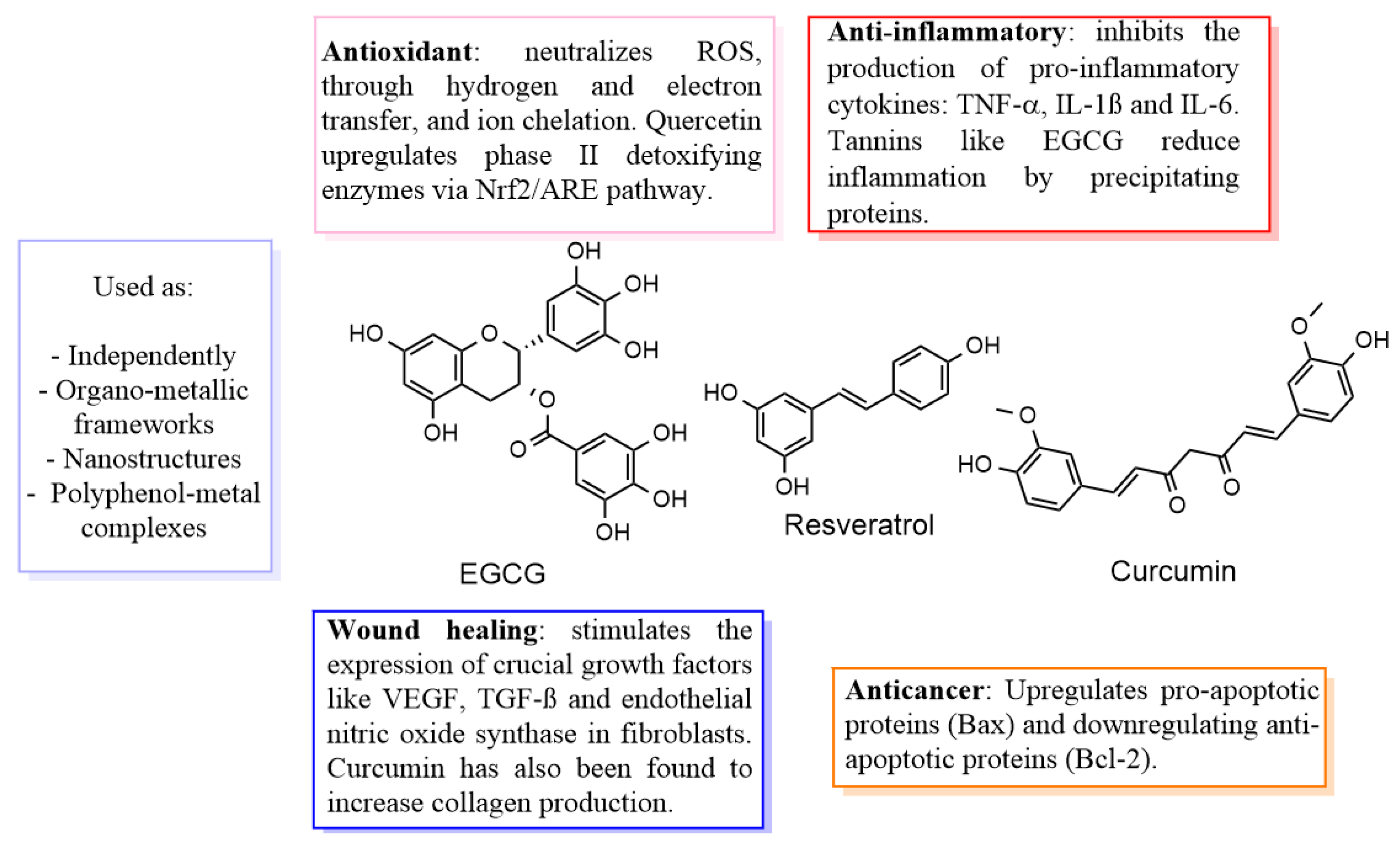
Nanomedicine and smart dressings are two examples of emerging technologies that could improve wound healing, infection prevention, and inflammation management. In order to better understand how these novel tactics work, how they are applicable in clinical practice, and what kind of research is still needed to enhance the treatment of chronic wounds, this study will analyse the existing literature on the topic [12,13].
The unique physical and chemical properties of nanoscale materials provide an opportunity for the creation of innovative drug delivery systems, the improvement of antimicrobial capabilities, and the acceleration of wound healing, because nanotechnology can precisely deliver medications to the injured region with little or no side effects and high concentrations, it has found extensive usage in wound care [14].
This study will focus on flavonoids, phytoalexins, catechins and polyphenol rich plant extracts as means to synthesize nanoparticles, for their use in dermatology, for afflictions like chronic wounds, pressure ulcers, skin infections and skin cancer.
2. Literature review process
A comprehensive literature review was performed for this article, using international public sources including Google Scholar, PubMed, and ScienceDirect to get the necessary data. Keywords like “polyphenol-metal complexes”, “wound-healing ”, “topical application ”, “skin cancer”, “dermal infection” and “nutraceuticals” were used to identify relevant papers for our investigation.
Subsequent to this search, publications underwent a two-step screening procedure, as seen in Figure 2, made using protocols designed by Haddaway et al. (2022) [15]. The articles were selected based on the information provided in the title and abstract. The year of publication was significant, selecting only publications published post-2010, with exceptions for important works.
Secondly, the publications underwent a more stringent filtration process, resulting in the exclusion of non-peer-reviewed studies and those lacking succinct information about the effects of polyphenols and metal complexes in dermal applications. Ultimately, all publications remaining following this procedure were included into a citation database.
The data extraction focused on essential facts about the attributes of various kinds of polyphenol-metal nanoparticles and complexes and their proven effects in wound-healing, inflammation, skin infections and cancer.
This review was designed to discuss a particular problem, that being the use of green-synthesized nanoparticles and complexes for topical and transdermal use. Seeing how not many studies of this kind are present in the current literature, this work will contribute greatly to our understanding of nutraceuticals in dermatological care.
3. Wound healing aided by polyphenol-metal combinations
Wound healing is a complex biochemical process that aims at restoring the structure of the tissue to its normal state after an injury; it consists of several distinct and consecutive stages: haemostasis, inflammation, proliferation and remodelling. All these stages are important; haemostasis is the body’s primary response to injury, which includes coagulation to ensure that there is no bleeding, inflammation is to remove debris and pathogens from the wounded area. The proliferation phase is the tissue building and the re-epithelialisation process which results in the formation of granulation tissue that is replaced by collagen during the remodelling phase. Delayed healing wounds or chronic wounds are classified as those which fail to heal within the expected time frame of four to six weeks and are associated with comorbidities leading to sustained inflammation and dysregulated tissue responses. Chronic diseases not only inhibit healing but also increase the risk of infection and make the recovery even more challenging [16,17,18,19].
Polyphenols’ properties are enhanced when they are conjugated with metal NPs to produce composite nanomaterials with enhanced therapeutic effects, presented in Table 1. Silver NPs are known to possess excellent antibacterial effects as they are capable of disrupting the microbial cell membrane and preventing biofilm formation, which are the two most important problems in the management of chronic wounds. The synergy between polyphenols, such as quercetin, and AgNPs leads to enhanced fibroblast migration and proliferation through the activation of key signalling pathways, including the PI3K/Akt and ERK1/2 pathways, which are critical for collagen synthesis and tissue repair. Additionally, polyphenols modulate inflammation by inhibiting the NF-κB pathway, thereby reducing levels of pro-inflammatory cytokines like IL-1β and TNF-α, essential for maintaining a controlled inflammatory response at the wound site. The presence of AgNPs not only aids in preventing biofilm formation—one of the primary challenges in chronic wounds—but also promotes angiogenesis by upregulating vascular endothelial growth factor (VEGF) and fibroblast growth factor (FGF), ultimately facilitating neovascularization [20,21,22,23].
Besides silver, other metal NPs like copper are also being used due to their physiological functions that are vital in wound healing. Copper is an essential element that is involved in numerous enzymatic processes that include collagen formation and angiogenesis [31,32]. Copper has been also demonstrated to enhance the expression of VEGF signalling pathways which results in the formation of new blood vessels and the healing of the injured tissue. When copper NPs are conjugated with polyphenols such as resveratrol composites are formed and the biological activity of these composites is enhanced with the ability to heal wounds and the factors that cause chronic wounds [33,34,35,36].
The use of polyphenol-metal composites in the formulation of hydrogel is another latest and rather smart approach through which these bioactive compounds can be deposited at the wound site and at the same time provide the right moist environment that is required for healing. The non-bioactive hydrogels can be compatible with polyphenol-metal NPs, to provide a constant and local delivery of the therapeutic agents. The hydrogels are able to cover the wound and can also change with the wound condition since it is dynamic; they can change in response to pH and temperature to enhance the therapeutic effects for example, hydrogels that are sensitive to inflammation will release more polyphenols when there are pro-inflammatory cytokines present thereby providing a way of targeting the wound specific needs [37,38,39,40].
Tang et al. (2023) extensively discussed the integration of metallic elements with herbal compounds in microneedle applications, emphasizing their potential to enhance wound healing processes. Microneedles act as minimally invasive delivery systems, facilitating direct deposition of polyphenol-metal complexes into the dermal layers, promoting localized therapy [41]. For instance, zinc, known for its regulatory role in collagen synthesis and its ability to stabilize antioxidant enzymes, worked synergistically when complexed with polyphenols to expedite tissue regeneration and reduce healing time. Zinc’s contribution to the metabolism of key growth factors involved in the wound healing cascade further supported this synergistic approach (Figure 3.) [42,43,44,45].
Johnson et al. (2022) researched the pervasive challenge of oxidative stress in chronic wounds, oxidative stress fosters a hostile wound environment, prolonging inflammation and delaying healing. Polyphenols can mitigate this as potent free radical scavengers, via their oxidative stress-mitigating capabilities, when complexed with metals like copper, known not only for its essential role in angiogenesis and skin reconstruction but also for its ability to modulate pro-inflammatory cytokines [46]. The synergistic effect of the polyphenols and metals could be further enhanced through precise formulations, offering a targeted approach to disrupt chronic inflammation [47,48].
The application of NPs is a focal point in advancing wound healing technologies. Huang et al. (2024) introduced polyphenol-based photothermal NPs, which exhibit a unique ability to modulate the wound microenvironment, by reducing the production of ROS and inflammatory cytokines, while at the same time stimulating the formation of new blood vessels and oxygenating the wound. These NPs leverage near-infrared light to generate heat, aiding in microbial eradication while simultaneously promoting blood flow, a crucial factor in accelerating healing in diabetic wounds. This heat-induced modality stimulated cellular activities crucial for repair, including fibroblast proliferation and angiogenesis, the incorporation of polyphenols within these NPs not only enhanced their thermal stability but also maintained their biological activities, showcasing the combination’s multimodal approach to wound management [49]. According to the work done by Blanco-Fernandez et al. (2021), copper NPs hold the capacity of promoting wound healing through the promotion of endothelial cell growth and new blood vessel formation [25].
The stability and bioavailability of these complexes are critical factors in their application, Ohanyan et al. (2024) detailed the use of tannin–albumin particles as stable carriers for therapeutic agents, which have significant potential in ensuring longevity and controlled release, the stability provided by albumin in these complexes allowed for sustained release, maintaining therapeutic levels longer than conventional formulations [50]. This stability is particularly vital for delivering consistent therapeutic doses over prolonged periods, thus reducing the frequency of applications and improving patient compliance, their findings align with previous studies highlighting the advantages of biopolymer-based carriers in drug delivery formulated for targeted applications [51,52].
Nakajima et al. (2023) delved into the engineering bioactive nanocomplexes that possessed targeted delivery capabilities, enhancing therapeutic precision in gingival and potentially dermal applications. This innovative work showcased not only the utility of polyphenols and metals but also their potential for application in tissue regeneration beyond dermal contexts. The targeted delivery mechanisms in their study underscored the importance of localizing treatment to reduce systemic side effects while ensuring effective drug action at the wound site [53].
Polyphenols are known for their anti-inflammatory properties and thus have the potential of being used as wound healing enhancers, prevention of over inflammation which can worsen the condition of the wound and delay the healing process also requires control of cytokines that mediate inflammation such as IL- 1 β and TNF- α [54,55,56,57]. These cytokines are needed for the inflammatory response. According to Gowda et al. (2023), polyphenols can decrease cytokine levels and thus lead to the decrease of chronic wound inflammation. With the appearance of polyphenol-metal composites there is a new strategy in the treatment of infections as these compounds also have anti-inflammatory effects [58].
Even if these novel materials hold great promise for use in the clinical setting, there are certain issues that have to be considered before they can be implemented in the practice. However, their potential to tackle the barriers to healing, including infection and inflammation, offers hope to transform the management of wounds. The use of polyphenolic compounds that modulate several cellular pathways in conjunction with the antimicrobial effects of metal NPs provides a basis for the creation of advanced wound dressings that are adaptable to the dynamic nature of chronic wounds.
4. Polyphenol-metal combinations against bacteria
Bacterial killing is as a result of the damage that is caused to the cell membranes of the microorganisms hence, they die due to lack of oxygen as well as release of ROS. This action can be further coupled with an unattractive environment for the bacteria as polyphenols can modulate inflammatory response and target bacterial metabolism. This stemmer, as pointed out by Zhang et al. in 2024, improves the healing time through the reduction of inflammation and the control of infection [59].
Building up the therapeutic applications of polyphenol-metal mixtures, the use of copper NPs and complexes along with polyphenols, for instance, resveratrol [60] or quercetin [61,62,63] and gallic acid [64,65] has demonstrated quite encouraging results in combating bacterial and fungal infections.
The use of metals in polyphenols provides an interesting perspective on how these two act. The formation of ROS is an important mechanism through which metal NPs exhibit antimicrobial activity. Some of the effects include damage on bacterial DNA, lipid peroxidation and cell death through oxidative stress. This method is especially useful in the fight against biofilm forming bacteria which are very hard to eradicate as they have a protective extracellular matrix. It has been seen that bacteria are already in a compromised state as far as growth and survival is concerned and the addition of ROS further worsens the situation by enhancing cell stress and suppressing metabolic processes [66,67,68,69,70,71].
In research by Li et al. (2022), green-synthesis not only results in the formation of NPs that still possess the biological activity of the parent polyphenols and at the same time is compliant with the principles of sustainable materials science [72].
The efficacies of the curcumin conjugated silver NPs for the treatment of the antibiotic resistant bacterium, methicillin-resistant Staphylococcus aureus (MRSA) were demonstrated, research proved that these NPs cut down the numbers of bacteria in the infected wounds, which means that the polyphenol-metal hybrids might be new efficient antibacterial agents that could replace traditional antibiotics which are becoming less efficient due to bacterial resistance [73]. The former provides the antimicrobial effect to the mixture while at the same time it enhances the structural integrity of the NPs and boosts their antibacterial activity. A common hypothesis is that this symbiosis is because of curcumin’s ability to interact with metal ions thus altering the release profile and enhancing the bioavailability at the site of infection [74,75,76,77].
Li et al. (2021) further explored innovations in wound care through the use of polyphenol and Cu²⁺-modified chitin sponges, which demonstrate remarkable antibacterial properties due to the intrinsic characteristics of both components. This study emphasized not only the direct antimicrobial action of these complexes but also their antioxidant capabilities, showing that layered treatment can target various aspects of the wound healing process [78]. The enhanced vascularization observed in their study suggests a profound impact on early wound closure and reduced scarring, attributed to copper’s facilitative role in VEGF signalling pathways and its ability to stimulate new capillary formation [79,80,81].
Table 2. provides a brief overview of recent polyphenol-metal combinations with proven antimicrobial activity.
Because of their complex action mechanisms, polyphenol-metal combos are very efficient against bacterial infections. The formation of ROS is an important fundamental process, silver and copper NPs stand out; when these nanostructures come into contact with bacterial cells, they have the ability to trigger reactions that result in increased levels of ROS [67,95,96,97]. Indirect cellular damage to DNA, proteins, and lipids results from this oxidative burst, which in turn makes the environment unsuitable for bacterial life. Mohammadi et al. (2021) shown that silver NPs stabilized with curcumin greatly boosted ROS generation, leading to elevated oxidative stress and, eventually, the lysis and death of bacterial cells [98].
These composites have antibacterial properties because they induce oxidative stress and break bacterial membranes. For example, Siriphap et al. (2022) showed that cellular function and integrity are compromised due to changes in membrane permeability caused by EGCG incorporation in gold NPs [99]. When polyphenol-metal composites come into contact with bacterial membranes, it may cause changes in conformation that increase the membrane's permeability and make it easier for metal ions and polyphenols to penetrate the cell. This action has two effects: first, it damages cells more effectively, and second, it blocks essential metabolic pathways that bacteria need to multiply [100,101,102,103,104].
Additionally, metal ions and polyphenols interact intricately, leading to a synergistic increase in antibacterial efficacy. The antibacterial and bioavailable effects of polyphenols may be enhanced by their complexation with metal ions. In a study by Rohatgi et al. (2023), for instance, the antibacterial activity against Pseudomonas aeruginosa was shown to be improved when quercetin and copper NPs were used together. This was mainly because the copper ions generate ROS, while resveratrol modulates inflammatory pathways. In addition to influencing the bacteria themselves, this combination helped lower the inflammatory response [105].
Lastly, these combinations play a crucial role in modulating the host immunological responses. In order to reduce the excessive inflammation that often occurs with infections, polyphenols are able to control pro-inflammatory cytokines. According to Braga et al. (2019), quercetin-silver NPs have antibacterial properties against Listeria monocytogenes and significantly reduce cellular inflammation. Improving antibacterial efficacy and creating a healing environment are two goals of these composites, which target the infection and the inflammatory response via signal management [106].
5. Polyphenol-metal combinations as future anti-cancer agents
Skin cancer including melanoma and other forms of skin cancer such as basal cell carcinoma and squamous cell carcinoma is a major health challenge across the globe. The etiology of skin cancer is diverse and it involves UV radiation exposure, hereditary factors and immunodeficiency mechanisms. Standard therapies include surgery, chemotherapy and radiotherapy and can be successful; however, they are associated with numerous adverse effects and rely to some extent on the stage of the cancer. Due to the increasing demand for new and more effective skin cancer treatment options, researchers are working on the synthesis and use of polyphenol-metal hybrids as potential therapies for skin cancers [107,108,109,110,111].
The ways through which polyphenol-metal combinations display their anti-cancer potential are numerous and interrelated (Table 3.) and they affect many cellular processes and signalling pathways.
The first mechanism is the induction of apoptosis or programmed cell death through which cancer cells are eliminated, silver NPs, especially the ones that are functionalized with curcumin have been found to induce apoptosis in melanoma and other skin cancer cells effectively. The contact between the NPs and the cancer cells contributes to the production of ROS, which in turn cause oxidative stress and apoptosis signalling [112,113,114,115].
The superoxide anion is known to activate a number of pro-apoptotic factors like Bax while at the same time inactivating the anti-apoptotic factors like Bcl-2. Such imbalances result in the release of cytochrome c from mitochondria, hence enhancing the activity of caspases that are well-known mediators of apoptosis [127].
Research showed that ROS levels are increased when curcumin-stabilized silver NPs are used and this results in apoptosis of melanoma cells through the activation of apoptotic pathways [116].
Another important way through which polyphenol-metal combinations are thought to exhibit their anti-cancer potential is through the modulation of the inflammatory pathways (Figure 4.). Inflammation has been postulated to play a role in carcinogenesis and tumour growth, the anti-inflammatory properties of polyphenols make them act on the inflammatory environment that is associated with tumours. For instance, NF-κB, a transcription factor that works in activation of inflammatory cytokines is known to be suppressed by resveratrol when used together with copper NPs. Resveratrol also interferes with the expression of pro-inflammatory cytokines such as IL-1β and TNF-α thus decreasing the inflammatory response and promoting tissue healing [128,129,130].
The polyphenols and metal NPs’ interaction does not only increase the effectiveness of the individual anticancer properties but also the ability of suppressing cell proliferation and metastasis. Polyphenols have been found to interfere with cell cycle regulation signalling pathways which include the CDKs. For instance, CDK activity has been halted by curcumin thus leading to cell cycle arrest at the G1 phase thus preventing proliferation of cancer cells. This activity is particularly helpful in the case of skin cancers since the uncontrolled cell division is a key feature of the disease [131,132,133].
Also, the use of polyphenol-metal combination may help in the enhancement of the apoptotic process through the modulation of these other signalling pathways. Notably, the MAPK pathway, which is a mitogen-activated protein kinase that governs several cellular activities including proliferation, differentiation, and apoptosis, is frequently altered in cancer. Some polyphenols have been also found to be able to activate the pro-apoptotic signals and to block the anti-apoptotic ones through the MAPK cascade. For instance, curcumin has been proved to activate p38 numerous MAPK cancer pathway cell resulting lines in. When combined with silver or gold NPs the overall pro-apoptotic signals could be stronger and therefore more effective against skin cancers [134,135,136,137].
In the work of Vladu et al. (2022), the authors show that the stability and the therapeutic effect of polyphenols are significantly increased when these are used together with metals such as zinc or copper and applied to skin tumours. For example, polyphenols combine with copper 2+ ions dissociate in biological liquids into the polyphenoxyl radical + and copper 1+, further copper 1+ ions give a Fenton reaction with intrinsically produced hydrogen peroxide to produce copper 2+ and hydroxyl anions which will induce apoptosis in cancer cells. Some of the polyphenols, resveratrol, including curcumin not only offer antioxidant and anti-inflammatory properties that are useful in the maintenance of skin health but also offer promising anticancer potential against different skin cancers including melanoma and squamous cell carcinoma. When these compounds are delivered through transdermal delivery systems, these ingredients are able to penetrate through the skin to a certain extent to treat the tumours without affecting other parts of the body to a large extent. The use of metals in these formulations can help with delivery and uptake of the formulations. For instance, the use of zinc in the formulation of curcumin has been seen to improve the bioavailability of the compound and its capacity to bring about apoptosis in skin cancer, thus improving the therapeutic effect [133].
The polyphenol-metal complexes’ antitumor activities are associated with a broad spectrum of the phenotypic modulation of the pathways critical to skin cancer development. Korkina et al. (2009) explain that the combination of polyphenols with metal ions can greatly increase the polyphenols’ ability to regulate the activity of the NF-κB and MAPK which are very important in cell survival and proliferation. For example, Cu2+ –resveratrol has been found to be very effective in inducing apoptosis in melanoma cells through the activation of AIF pathway [138]. Also, it has been established that when quercetin is used together with zinc it can inhibit the activity of matrix metalloproteinases (MMPs) which are involved in skin cancer invasion and metastasis. These mechanisms explain how these combinations can be effective in delivering therapy that can interfere with the development of skin cancer and encourage repair of normal tissue at the same time [139,140,141].
Current research also focuses on the use of topical as well as transdermal techniques for the enhancement of the bioavailability as well as the therapeutic potential of polyphenol-metal mixtures. Leena et al. (2020) explain the benefits of using nutraceuticals in the form of topical preparations for the management of skin cancer. For instance, the copper curcumin loaded nanocarrier formulations can significantly increase the skin penetration of the drug through the stratum corneum and achieve high drug concentration at the tumour site. Such systems exploit nanotechnology to encapsulate the complexes, enhancing targeted delivery that not only enhances the efficacy against skin tumours but also reduces the toxicity on normal skin cells. This is in consistent with the current trends of developing and applying personalized medicine where the effects of certain treatments on individuals could lead to the development of specific topical gels. Also, these compounds have antioxidant properties that can be beneficial in protecting the healthy skin during the concomitant therapies with radiation or chemotherapy, and thus improve the patients’ quality of life [142]. With the advancement of knowledge and application of polyphenol-metal combination in the formulation of topical gels, we can be in a position to change the face of skin cancer management, thus increasing the therapeutic indices and patient satisfaction.
The development of polyphenol-metal composites is not limited to their cytotoxic effects; these combinations also hold the promise of enhancing the overall therapeutic landscape for skin tumours through improved delivery systems and reduced side effects. The application of nanoencapsulation methods for the creation of stable formulations that deliver the drugs to the tumour site only ensures that the side effects are minimized and the drug absorption is increased. For instance, the NPs can be developed in a way that polyphenols will be released in a gradual manner so as to maintain the therapeutic concentrations at the tumour site while minimizing the exposure all through the body.
Also, the efficacy of polyphenol-metal combinations for the inhibition of angiogenesis is of increasing interest for the comprehensive treatment of tumours. Angiogenesis is the formation of new blood vessels and is an essential process in the growth and spread of tumours. This way polyphenol-metal composites can starve the tumours of the nutrients and oxygen that are needed for their survival by suppressing angiogenesis [142,143].
6. Conclusions
Chronic wounds are one of the major concerns in present-day healthcare, defined as wounds that take more than 12 weeks to heal. These wounds which result from diseases including diabetes and pressure ulcers not only have a negative impact on the patients’ quality of life but also are costly to the health care systems. According to the estimation, 6. 5 million people suffer from chronic wounds in the United States only, therefore efficient management techniques are crucial to tackle this problem. This is because obstacles that hinder normal wound healing such as inflammation, microbial colonisation and angiogenesis pose a challenge to treatment and therefore require new approaches.
Through well-defined molecular mechanisms, polyphenol-metal nanocomposites show promising therapeutic benefits in the treatment of wounds and cancer. The PI3K/Akt and ERK1/2 signaling pathways are critical for collagen production and tissue regeneration; when combined with AgNPs, polyphenols like quercetin improve fibroblast migration and proliferation, which aids in wound healing. A regulated inflammatory response at the wound site may be maintained with the aid of these polyphenols, which modify inflammation by blocking the NF-κB pathway and lowering pro-inflammatory cytokines like IL-1β and TNF-α. Crucial for the management of chronic wounds, silver nanoparticles' antibacterial characteristics break microbial membranes and limit biofilm development. When used to treat cancer, polyphenol-metal combinations, such silver nanoparticles functionalized with curcumin, promote cell death in cancer cells by releasing cytochrome c, which activates caspases, and by activating mitochondrial pathways and producing ROS. Curcumin promotes programmed cell death by increasing ROS generation and decreasing levels of anti-apoptotic proteins such as Bcl-2. In addition, these composites stop cancer cells from proliferating by suppressing NF-κB, which in turn reduces inflammation associated with tumors and blocks cell cycle regulators including CDK. By interacting with various signaling pathways, polyphenols and metal ions have the potential to improve healing processes and target cancer.
Further research should be aimed at determining the mechanisms of action of these hybrids in the body, especially as it relates to modulating the cellular and inflammatory responses. It is also important to establish the stability, bioavailability and the proper delivery of these composites so that these outcomes can be achieved in the real world.
Author Contributions
Conceptualization, O.C. and M.H.; methodology, I.I.L.; software, G.A.M.; validation, A.S., A.L. and R.H.; formal analysis, D.B.M.; investigation, A.S.; resources, N.S.; data curation, D.B.M.; writing—original draft preparation, I.I.L.; writing—review and editing, R.H.; visualization, A.L.; supervision, N.S.; project administration, M.H.; funding acquisition, O.C. All authors have read and agreed to the published version of the manuscript.
Funding
This research received no external funding.
Institutional Review Board Statement
Not applicable.
Data Availability Statement
No new data was created.
Acknowledgments
In this section, you can acknowledge any support given which is not covered by the author contribution or funding sections. This may include administrative and technical support, or donations in kind (e.g., materials used for experiments).
Conflicts of Interest
The authors declare no conflicts of interest.
Abbreviations
The following abbreviations are used in this manuscript:
| NPs | Nanoparticles |
| US | United States |
| ROS | Reactive oxygen species |
| VEGF | Vascular endothelial growth factor |
| IL | Interleukin |
| TNF-α | Tumour necrosis factor alpha |
| DNA | Deoxyribonucleic acid |
| EGCG | Epigallocatechin gallate |
| MRSA | Methicillin-resistant Staphylococcus aureus |
| UV | Ultraviolet |
| CDK | Cyclin-dependent kinases |
| MAPK | Mitogen-activated protein kinase |
| MMPs | Matrix metalloproteinase |
References
- Frykberg, R.G.; Banks, J. Challenges in the Treatment of Chronic Wounds. Advances in Wound Care 2015, 4, 560–582. [Google Scholar] [CrossRef] [PubMed]
- Kathawala, M.H.; Ng, W.L.; Liu, D.; Naing, M.W.; Yeong, W.Y.; Spiller, K.L.; Van Dyke, M.; Ng, K.W. Healing of Chronic Wounds: An Update of Recent Developments and Future Possibilities. Tissue Engineering Part B: Reviews 2019, 25, 429–444. [Google Scholar] [CrossRef]
- Cavalcante-Silva, J.; Fantuzzi, G.; Minshall, R.; Wu, S.; Oddo, V.M.; Koh, T.J. Racial/Ethnic Disparities in Chronic Wounds: Perspectives on Linking Upstream Factors to Health Outcomes. Wound Repair and Regeneration 2024, 32, 770–779. [Google Scholar] [CrossRef] [PubMed]
- Cho, S.K.; Mattke, S.; Gordon, H.; Sheridan, M.; Ennis, W. Development of a Model to Predict Healing of Chronic Wounds Within 12 Weeks. Advances in Wound Care 2020, 9, 516–524. [Google Scholar] [CrossRef] [PubMed]
- Powers, J.G.; Higham, C.; Broussard, K.; Phillips, T.J. Wound Healing and Treating Wounds: Chronic Wound Care and Management. Journal of the American Academy of Dermatology 2016, 74, 607–625. [Google Scholar] [CrossRef]
- Abbas, M.; Saeed, F.; Anjum, F.M.; Afzaal, M.; Tufail, T.; Bashir, M.S.; Ishtiaq, A.; Hussain, S.; Suleria, H.A.R. Natural Polyphenols: An Overview. International Journal of Food Properties 2017, 20, 1689–1699. [Google Scholar] [CrossRef]
- Di Ferdinando, M.; Brunetti, C.; Agati, G.; Tattini, M. Multiple Functions of Polyphenols in Plants Inhabiting Unfavorable Mediterranean Areas. Environmental and Experimental Botany 2014, 103, 107–116. [Google Scholar] [CrossRef]
- Zhang, H.; Tsao, R. Dietary Polyphenols, Oxidative Stress and Antioxidant and Anti-Inflammatory Effects. Current Opinion in Food Science 2016, 8, 33–42. [Google Scholar] [CrossRef]
- Alizadeh, M.; Kheirouri, S. Curcumin Reduces Malondialdehyde and Improves Antioxidants in Humans with Diseased Conditions: A Comprehensive Meta-Analysis of Randomized Controlled Trials. Biomedicine (Taipei) 9. [CrossRef]
- Chen, B.; He, Q.; Chen, C.; Lin, Y.; Xiao, J.; Pan, Z.; Li, M.; Li, S.; Yang, J.; Wang, F.; et al. Combination of Curcumin and Catalase Protects against Chondrocyte Injury and Knee Osteoarthritis Progression by Suppressing Oxidative Stress. Biomedicine & Pharmacotherapy 2023, 168, 115751. [Google Scholar] [CrossRef]
- Esmaeili, E.; Eslami-Arshaghi, T.; Hosseinzadeh, S.; Elahirad, E.; Jamalpoor, Z.; Hatamie, S.; Soleimani, M. The Biomedical Potential of Cellulose Acetate/Polyurethane Nanofibrous Mats Containing Reduced Graphene Oxide/Silver Nanocomposites and Curcumin: Antimicrobial Performance and Cutaneous Wound Healing. International journal of biological macromolecules 2020, 152, 418–427. [Google Scholar] [CrossRef] [PubMed]
- Rajendran, N.K.; Kumar, S.S.D.; Houreld, N.N.; Abrahamse, H. A Review on Nanoparticle Based Treatment for Wound Healing. Journal of Drug Delivery Science and Technology 2018, 44, 421–430. [Google Scholar] [CrossRef]
- Kalashnikova, I.; Das, S.; Seal, S. Nanomaterials for Wound Healing: Scope and Advancement. Nanomedicine 2015, 10, 2593–2612. [Google Scholar] [CrossRef]
- Sharifi, S.; Hajipour, M.J.; Gould, L.; Mahmoudi, M. Nanomedicine in Healing Chronic Wounds: Opportunities and Challenges. Mol. Pharmaceutics 2021, 18, 550–575. [Google Scholar] [CrossRef]
- Haddaway, N.R.; Page, M.J.; Pritchard, C.C.; McGuinness, L.A. PRISMA2020 : An R Package and Shiny App for Producing PRISMA 2020-compliant Flow Diagrams, with Interactivity for Optimised Digital Transparency and Open Synthesis. Campbell Systematic Reviews 2022, 18, e1230. [Google Scholar] [CrossRef] [PubMed]
- Littig, J.P.B.; Moellmer, R.; Estes, A.M.; Agrawal, D.K.; Rai, V. Increased Population of CD40+ Fibroblasts Is Associated with Impaired Wound Healing and Chronic Inflammation in Diabetic Foot Ulcers. Journal of Clinical Medicine 2022, 11, 6335. [Google Scholar] [CrossRef] [PubMed]
- Singh, S.; Young, A.; McNaught, C.-E. The Physiology of Wound Healing. Surgery (Oxford) 2017, 35, 473–477. [Google Scholar] [CrossRef]
- Schultz, G.S.; Chin, G.A.; Moldawer, L.; Diegelmann, R.F. Principles of Wound Healing. In Mechanisms of Vascular Disease: A Reference Book for Vascular Specialists; Fitridge, R., Thompson, M., Eds.; University of Adelaide Press: Adelaide (AU), 2011 ISBN 978-0-9871718-2-5.
- Schreml, S.; Szeimies, R.-M.; Prantl, L.; Landthaler, M.; Babilas, P. Wound Healing in the 21st Century. Journal of the American Academy of Dermatology 2010, 63, 866–881. [Google Scholar] [CrossRef]
- Arghand, N.; Reiisi, S.; Karimi, B.; Khorasgani, E.M.; Heidari, R. Biosynthesis of Nanocomposite Alginate-Chitosan Loaded with Silver Nanoparticles Coated with Eugenol/Quercetin to Enhance Wound Healing. BioNanoSci. 2024, 14, 5149–5166. [Google Scholar] [CrossRef]
- Alemzadeh, E.; Karamian, M.; Abedi, F.; Hanafi-Bojd, M.Y. Topical Treatment of Cutaneous Leishmaniasis Lesions Using Quercetin/ Artemisia-Capped Silver Nanoparticles Ointment: Modulation of Inflammatory Response. Acta Tropica 2022, 228, 106325. [Google Scholar] [CrossRef] [PubMed]
- Badhwar, R.; Mangla, B.; Neupane, Y.R.; Khanna, K.; Popli, H. Quercetin Loaded Silver Nanoparticles in Hydrogel Matrices for Diabetic Wound Healing. Nanotechnology 2021, 32, 505102. [Google Scholar] [CrossRef] [PubMed]
- Ebrahimzadeh, A.; Karamian, M.; Abedi, F.; Hanafi-Bojd, M.Y.; Ghatee, M.A.; Hemmati, M.; Alemzadeh, E. Topically Applied Luteolin /Quercetin-Capped Silver Nanoparticle Ointment as Antileishmanial Composite: Acceleration Wound Healing in BALB/c Mice. Advances in Materials Science and Engineering 2023, 2023, 1878170. [Google Scholar] [CrossRef]
- Li, S.; Mu, B.; Zhang, H.; Kang, Y.; Wang, A. Incorporation of Silver Nanoparticles/Curcumin/Clay Minerals into Chitosan Film for Enhancing Mechanical Properties, Antioxidant and Antibacterial Activity. International Journal of Biological Macromolecules 2022, 223, 779–789. [Google Scholar] [CrossRef] [PubMed]
- Blanco-Fernandez, B.; Castaño, O.; Mateos-Timoneda, M.Á.; Engel, E.; Pérez-Amodio, S. Nanotechnology Approaches in Chronic Wound Healing. Advances in Wound Care 2021, 10, 234–256. [Google Scholar] [CrossRef]
- Guo, X.; Huang, Z.; Chen, J.; He, K.; Lin, J.; Zhang, H.; Zeng, Y. Synergistic Delivery of Resveratrol and Ultrasmall Copper-Based Nanoparticles by Aptamer-Functionalized Ultrasound Nanobubbles for the Treatment of Nonalcoholic Fatty Liver Disease. Front. Physiol. 2022, 13. [Google Scholar] [CrossRef]
- Sharma, R.; Basist, P.; Alhalmi, A.; Khan, R.; Noman, O.M.; Alahdab, A. Synthesis of Quercetin-Loaded Silver Nanoparticles and Assessing Their Anti-Bacterial Potential. Micromachines 2023, 14, 2154. [Google Scholar] [CrossRef] [PubMed]
- Chahardoli, A.; Hajmomeni, P.; Ghowsi, M.; Qalekhani, F.; Shokoohinia, Y.; Fattahi, A. Optimization of Quercetin-Assisted Silver Nanoparticles Synthesis and Evaluation of Their Hemocompatibility, Antioxidant, Anti-Inflammatory, and Antibacterial Effects. Global Challenges 2021, 5, 2100075. [Google Scholar] [CrossRef] [PubMed]
- Usama, S.; Riaz, M.; Ali, B.; Khan, D.S.; Ahmad, S.; Ahmad, Z. Hydrogel-Plant Extract Composites in Wound Healing. Phytopharmacology Research Journal 2024, 3, 26–29. [Google Scholar]
- Wang, J.; Sun, Y.; Liu, X.; Kang, Y.; Cao, W.; Ye, J.; Gao, C. An Antibacterial and Anti-Oxidant Hydrogel Containing Hyperbranched Poly-l-Lysine and Tea Polyphenols Accelerates Healing of Infected Wound. Biomaterials Advances 2024, 157, 213755. [Google Scholar] [CrossRef]
- Lungu, I.I.; Cioanca, O.; Mircea, C.; Tuchilus, C.; Stefanache, A.; Huzum, R.; Hancianu, M. Insights into Catechin–Copper Complex Structure and Biologic Activity Modulation. Molecules 2024, 29, 4969. [Google Scholar] [CrossRef]
- Alizadeh, S.; Seyedalipour, B.; Shafieyan, S.; Kheime, A.; Mohammadi, P.; Aghdami, N. Copper Nanoparticles Promote Rapid Wound Healing in Acute Full Thickness Defect via Acceleration of Skin Cell Migration, Proliferation, and Neovascularization. Biochemical and Biophysical Research Communications 2019, 517, 684–690. [Google Scholar] [CrossRef]
- Li, S.; Xie, H.; Li, S.; Kang, Y.J. Copper Stimulates Growth of Human Umbilical Vein Endothelial Cells in a Vascular Endothelial Growth Factor-Independent Pathway. Exp Biol Med (Maywood) 2012, 237, 77–82. [Google Scholar] [CrossRef]
- Giacomelli, C.; Trincavelli, M.L.; Satriano, C.; Hansson, Ö.; La Mendola, D.; Rizzarelli, E.; Martini, C. ♦Copper (II) Ions Modulate Angiogenin Activity in Human Endothelial Cells. The International Journal of Biochemistry & Cell Biology 2015, 60, 185–196. [Google Scholar] [CrossRef]
- Hecker, A.; Schellnegger, M.; Hofmann, E.; Luze, H.; Nischwitz, S.P.; Kamolz, L.-P.; Kotzbeck, P. The Impact of Resveratrol on Skin Wound Healing, Scarring, and Aging. International Wound Journal 2022, 19, 9–28. [Google Scholar] [CrossRef] [PubMed]
- Yaman, I.; Derici, H.; Kara, C.; Kamer, E.; Diniz, G.; Ortac, R.; Sayin, O. Effects of Resveratrol on Incisional Wound Healing in Rats. Surg Today 2013, 43, 1433–1438. [Google Scholar] [CrossRef] [PubMed]
- Xue, R.; He, L.; Wu, J.; Kong, X.; Wang, Q.; Chi, Y.; Liu, J.; Wang, Z.; Zeng, K.; Chen, W.; et al. Multifunctional Sprayable Carboxymethyl Chitosan/Polyphenol Hydrogel for Wound Healing. International Journal of Biological Macromolecules 2024, 275, 133303. [Google Scholar] [CrossRef] [PubMed]
- Lin, X.; Zhang, H.; Li, S.; Huang, L.; Zhang, R.; Zhang, L.; Yu, A.; Duan, B. Polyphenol-Driving Assembly for Constructing Chitin-Polyphenol-Metal Hydrogel as Wound Dressing. Carbohydrate Polymers 2022, 290, 119444. [Google Scholar] [CrossRef]
- Wei, Q.; Zhao, Y.; Wei, Y.; Wang, Y.; Jin, Z.; Ma, G.; Jiang, Y.; Zhang, W.; Hu, Z. Facile Preparation of Polyphenol-Crosslinked Chitosan-Based Hydrogels for Cutaneous Wound Repair. International Journal of Biological Macromolecules 2023, 228, 99–110. [Google Scholar] [CrossRef]
- Quan, L.; Xin, Y.; Zhang, H.; Wu, X.; Li, X.; Zhou, C.; Ao, Q. Polyphenol Enhances the Functionality of Borate Hydrogel in Wound Repair by Regulating the Wound Microenvironment. Colloids and Surfaces B: Biointerfaces 2025, 247, 114390. [Google Scholar] [CrossRef]
- Tang, X.; Li, L.; You, G.; Li, X.; Kang, J. Metallic Elements Combine with Herbal Compounds Upload in Microneedles to Promote Wound Healing: A Review. Front. Bioeng. Biotechnol. 2023, 11. [Google Scholar] [CrossRef] [PubMed]
- Ansari, Md.M.; Ahmad, A.; Mishra, R.K.; Raza, S.S.; Khan, R. Zinc Gluconate-Loaded Chitosan Nanoparticles Reduce Severity of Collagen-Induced Arthritis in Wistar Rats. ACS Biomater. Sci. Eng. 2019, 5, 3380–3397. [Google Scholar] [CrossRef] [PubMed]
- Gammoh, N.Z.; Rink, L. Zinc in Infection and Inflammation. Nutrients 2017, 9, 624. [Google Scholar] [CrossRef]
- Lungu, I.I.; Stefanache, A.; Crivoi, F.; Burec, A.-F.; Belei, D.; Cioanca, O.; Hancianu, M. INNOVATIVE SYNTHESIS OF ZINC AND SELENIUM COMPLEXES WITH GALLIC ACID: EXPLORING THEIR ANTIOXIDANT POTENTIAL. The Medical-Surgical Journal 2024, 128, 177–188. [Google Scholar] [CrossRef]
- Han, B.; Fang, W.H.; Zhao, S.; Yang, Z.; Hoang, B.X. Zinc Sulfide Nanoparticles Improve Skin Regeneration. Nanomedicine: Nanotechnology, Biology and Medicine 2020, 29, 102263. [Google Scholar] [CrossRef] [PubMed]
- Johnson, J.B.; Broszczak, D.A.; Mani, J.S.; Anesi, J.; Naiker, M. A Cut above the Rest: Oxidative Stress in Chronic Wounds and the Potential Role of Polyphenols as Therapeutics. Journal of Pharmacy and Pharmacology 2022, 74, 485–502. [Google Scholar] [CrossRef] [PubMed]
- Li, L.; Liu, L.; Li, L.; Guo, F.; Ma, L.; Fu, P.; Wang, Y. Chitosan Coated Bacteria Responsive Metal-Polyphenol Coating as Efficient Platform for Wound Healing. Composites Part B: Engineering 2022, 234, 109665. [Google Scholar] [CrossRef]
- Yu, R.; Chen, H.; He, J.; Zhang, Z.; Zhou, J.; Zheng, Q.; Fu, Z.; Lu, C.; Lin, Z.; Caruso, F.; et al. Engineering Antimicrobial Metal–Phenolic Network Nanoparticles with High Biocompatibility for Wound Healing. Advanced Materials 2024, 36, 2307680. [Google Scholar] [CrossRef] [PubMed]
- Huang, X.; Fu, M.; Lu, M.; Wu, X.; Hong, W.D.; Wang, X.; Wu, P.; Wu, K. Polyphenol-Based Photothermal Nanoparticles with Sprayable Capability for Self-Regulation of Microenvironment to Accelerate Diabetic Wound Healing. Engineered Regeneration 2024, 5, 505–520. [Google Scholar] [CrossRef]
- Ohanyan, N.; Abelyan, N.; Manukyan, A.; Hayrapetyan, V.; Chailyan, S.; Tiratsuyan, S.; Danielyan, K. Tannin–Albumin Particles as Stable Carriers of Medicines. Nanomedicine 2024, 19, 689–708. [Google Scholar] [CrossRef]
- Choudhury, H.; Pandey, M.; Lim, Y.Q.; Low, C.Y.; Lee, C.T.; Marilyn, T.C.L.; Loh, H.S.; Lim, Y.P.; Lee, C.F.; Bhattamishra, S.K.; et al. Silver Nanoparticles: Advanced and Promising Technology in Diabetic Wound Therapy. Materials Science and Engineering: C 2020, 112, 110925. [Google Scholar] [CrossRef] [PubMed]
- Choudhary, A.; Kant, V.; Jangir, B.L.; Joshi, V.G. Quercetin Loaded Chitosan Tripolyphosphate Nanoparticles Accelerated Cutaneous Wound Healing in Wistar Rats. European Journal of Pharmacology 2020, 880, 173172. [Google Scholar] [CrossRef] [PubMed]
- Nakajima, M.; Nakajima, N.; Guo, J.; Mitragotri, S. Engineering of Bioactive Nanocomplexes on Dental Floss for Targeted Gingival Therapy. Bioengineering & Translational Medicine 2023, 8, e10452. [Google Scholar] [CrossRef]
- Scheller, J.; Chalaris, A.; Schmidt-Arras, D.; Rose-John, S. The Pro- and Anti-Inflammatory Properties of the Cytokine Interleukin-6. Biochimica et Biophysica Acta (BBA) - Molecular Cell Research 2011, 1813, 878–888. [Google Scholar] [CrossRef] [PubMed]
- Justiz Vaillant, A.A.; Qurie, A. Interleukin. In StatPearls; StatPearls Publishing: Treasure Island (FL), 2024. [Google Scholar]
- Weber, A.; Wasiliew, P.; Kracht, M. Interleukin-1 (IL-1) Pathway. Science Signaling 2010, 3, cm1–cm1. [Google Scholar] [CrossRef] [PubMed]
- Sabat, R.; Grütz, G.; Warszawska, K.; Kirsch, S.; Witte, E.; Wolk, K.; Geginat, J. Biology of Interleukin-10. Cytokine & Growth Factor Reviews 2010, 21, 331–344. [Google Scholar] [CrossRef]
- Gowda, B.H.J.; Mohanto, S.; Singh, A.; Bhunia, A.; Abdelgawad, M.A.; Ghosh, S.; Ansari, M.J.; Pramanik, S. Nanoparticle-Based Therapeutic Approaches for Wound Healing: A Review of the State-of-the-Art. Materials Today Chemistry 2023, 27, 101319. [Google Scholar] [CrossRef]
- Zhang, Y.; Hao, F.; Liu, Y.; Yang, M.; Zhang, B.; Bai, Z.; Zhao, B.; Li, X. Recent Advances of Copper-Based Metal Phenolic Networks in Biomedical Applications. Colloids and Surfaces B: Biointerfaces 2024, 244, 114163. [Google Scholar] [CrossRef]
- Flieger, J.; Tatarczak-Michalewska, M.; Blicharska, E.; Świeboda, R.; Banach, T. HPLC Identification of Copper (II)-Trans-Resveratrol Complexes in Ethanolic Aqueous Solution. Journal of Chromatographic Science 2017, 55, 445–450. [Google Scholar] [CrossRef] [PubMed]
- Moodi, Z.; Bagherzade, G.; Peters, J. Quercetin as a Precursor for the Synthesis of Novel Nanoscale Cu (II) Complex as a Catalyst for Alcohol Oxidation with High Antibacterial Activity. Bioinorganic Chemistry and Applications 2021, 2021, 8818452. [Google Scholar] [CrossRef]
- Somturk Yilmaz, B. Anticancer and Antimicrobial Activities of Quercetin-CuhNFs and Quercetin-CohNFs on MDA-MB-231 (Breast Cancer). J Inorg Organomet Polym 2024. [Google Scholar] [CrossRef]
- Ramzan, N.; Abbas, G.; Mahmood, K.; Aziz, M.; Rasul, S.; Ahmed, N.; Shah, S.; Uzair, M.; Usman, M.; Khan, W.S.; et al. Concomitant Effect of Quercetin and Its Copper Complex in the Development of Sustained-Release Nanoparticles of Polycaprolactone, Used for the Treatment of Skin Infection. Mol. Pharmaceutics 2023, 20, 1382–1393. [Google Scholar] [CrossRef] [PubMed]
- El-Megharbel, S.M.; Hamza, R.Z. Synthesis, Spectroscopic Characterizations, Conductometric Titration and Investigation of Potent Antioxidant Activities of Gallic Acid Complexes with Ca (II), Cu (II), Zn(III), Cr(III) and Se (IV) Metal Ions. Journal of Molecular Liquids 2022, 358, 119196. [Google Scholar] [CrossRef]
- Hamedi, H.; Javanbakht, S.; Mohammadi, R. In-Situ Synthesis of Copper-Gallic Acid Metal–Organic Framework into the Gentamicin-Loaded Chitosan Hydrogel Bead: A Synergistic Enhancement of Antibacterial Properties. Journal of Industrial and Engineering Chemistry 2024, 133, 454–463. [Google Scholar] [CrossRef]
- Guo, L.; Gong, S.; Wang, Y.; Sun, Q.; Duo, K.; Fei, P. Antibacterial Activity of Olive Oil Polyphenol Extract Against Salmonella Typhimurium and Staphylococcus Aureus: Possible Mechanisms. Foodborne Pathogens and Disease 2020, 17, 396–403. [Google Scholar] [CrossRef] [PubMed]
- Nassarawa, S.S.; Nayik, G.A.; Gupta, S.D.; Areche, F.O.; Jagdale, Y.D.; Ansari, M.J.; Hemeg, H.A.; AL-Farga, A.; Alotaibi, S.S. Chemical Aspects of Polyphenol-Protein Interactions and Their Antibacterial Activity. Critical Reviews in Food Science and Nutrition 2023, 63, 9482–9505. [Google Scholar] [CrossRef]
- Bouarab-Chibane, L.; Forquet, V.; Lantéri, P.; Clément, Y.; Léonard-Akkari, L.; Oulahal, N.; Degraeve, P.; Bordes, C. Antibacterial Properties of Polyphenols: Characterization and QSAR (Quantitative Structure–Activity Relationship) Models. Front. Microbiol. 2019, 10. [Google Scholar] [CrossRef] [PubMed]
- Bae, J.-Y.; Seo, Y.-H.; Oh, S.-W. Antibacterial Activities of Polyphenols against Foodborne Pathogens and Their Application as Antibacterial Agents. Food Sci Biotechnol 2022, 31, 985–997. [Google Scholar] [CrossRef]
- Coppo, E.; Marchese, A. Antibacterial Activity of Polyphenols. Current Pharmaceutical Biotechnology 2014, 15, 380–390. [Google Scholar] [CrossRef] [PubMed]
- Nakamura, K.; Ishiyama, K.; Sheng, H.; Ikai, H.; Kanno, T.; Niwano, Y. Bactericidal Activity and Mechanism of Photoirradiated Polyphenols against Gram-Positive and -Negative Bacteria. J. Agric. Food Chem. 2015, 63, 7707–7713. [Google Scholar] [CrossRef]
- Li, Y.; Miao, Y.; Yang, L.; Zhao, Y.; Wu, K.; Lu, Z.; Hu, Z.; Guo, J. Recent Advances in the Development and Antimicrobial Applications of Metal–Phenolic Networks. Advanced Science 2022, 9, 2202684. [Google Scholar] [CrossRef] [PubMed]
- Cai, L.; Zhu, X.; Ruan, H.; Yang, J.; Wei, W.; Wu, Y.; Zhou, L.; Jiang, H.; Ji, M.; Chen, J. Curcumin-Stabilized Silver Nanoparticles Encapsulated in Biocompatible Electrospun Nanofibrous Scaffold for Sustained Eradication of Drug-Resistant Bacteria. Journal of Hazardous Materials 2023, 452, 131290. [Google Scholar] [CrossRef] [PubMed]
- Al-Thubaiti, E.H. Antibacterial and Antioxidant Activities of Curcumin/Zn Metal Complex with Its Chemical Characterization and Spectroscopic Studies. Heliyon 2023, 9. [Google Scholar] [CrossRef] [PubMed]
- Zheng, D.; Huang, C.; Huang, H.; Zhao, Y.; Khan, M.R.U.; Zhao, H.; Huang, L. Antibacterial Mechanism of Curcumin: A Review. Chemistry & Biodiversity 2020, 17, e2000171. [Google Scholar] [CrossRef]
- Liao, Y.; Yao, Y.; Yu, Y.; Zeng, Y. Enhanced Antibacterial Activity of Curcumin by Combination With Metal Ions. Colloid and Interface Science Communications 2018, 25, 1–6. [Google Scholar] [CrossRef]
- Syed, H.K.; Iqbal, M.A.; Haque, R.A.; Peh, K.-K. Synthesis, Characterization and Antibacterial Activity of a Curcumin–Silver(I) Complex. Journal of Coordination Chemistry 2015, 68, 1088–1100. [Google Scholar] [CrossRef]
- Li, Z.; Huang, X.; Lin, L.; Jiao, Y.; Zhou, C.; Liu, Z. Polyphenol and Cu2+ Surface-Modified Chitin Sponge Synergizes with Antibacterial, Antioxidant and pro-Vascularization Activities for Effective Scarless Regeneration of Burned Skin. Chemical Engineering Journal 2021, 419, 129488. [Google Scholar] [CrossRef]
- Urso, E.; Maffia, M. Behind the Link between Copper and Angiogenesis: Established Mechanisms and an Overview on the Role of Vascular Copper Transport Systems. Journal of Vascular Research 2015, 52, 172–196. [Google Scholar] [CrossRef] [PubMed]
- Fujie, T.; Murakami, M.; Yoshida, E.; Tachinami, T.; Shinkai, Y.; Fujiwara, Y.; Yamamoto, C.; Kumagai, Y.; Naka, H.; Kaji, T. Copper Diethyldithiocarbamate as an Activator of Nrf2 in Cultured Vascular Endothelial Cells. J Biol Inorg Chem 2016, 21, 263–273. [Google Scholar] [CrossRef] [PubMed]
- Trickler, W.J.; Lantz, S.M.; Schrand, A.M.; Robinson, B.L.; Newport, G.D.; Schlager, J.J.; Paule, M.G.; Slikker, W.; Biris, A.S.; Hussain, S.M.; et al. Effects of Copper Nanoparticles on Rat Cerebral Microvessel Endothelial Cells. Nanomedicine 2012, 7, 835–846. [Google Scholar] [CrossRef] [PubMed]
- Vatani, E.; Shayestehpour, M.; Motallebi, M.; Razmjoue, D.; Moosavi, G.A.; Khaledi, A.; Rahimi, M. Antimicrobial Effect of Curcumin Nanoparticles and Ferulago Angulate Boiss Extract Against Methicillin-Resistant Staphylococcus Aureus (MRSA) Isolated from Wound Infections. BioNanoSci. 2024, 14, 2228–2236. [Google Scholar] [CrossRef]
- El-Kattan, N.; N. Emam, A.; S. Mansour, A.; A. Ibrahim, M.; El-Razik, A.B.A.; M. Allam, K.A.; Youssef Riad, N.; A. Ibrahim, S. Curcumin Assisted Green Synthesis of Silver and Zinc Oxide Nanostructures and Their Antibacterial Activity against Some Clinical Pathogenic Multi-Drug Resistant Bacteria. RSC Advances 2022, 12, 18022–18038. [Google Scholar] [CrossRef] [PubMed]
- Krausz, A.E.; Adler, B.L.; Cabral, V.; Navati, M.; Doerner, J.; Charafeddine, R.A.; Chandra, D.; Liang, H.; Gunther, L.; Clendaniel, A.; et al. Curcumin-Encapsulated Nanoparticles as Innovative Antimicrobial and Wound Healing Agent. Nanomedicine: Nanotechnology, Biology and Medicine 2015, 11, 195–206. [Google Scholar] [CrossRef]
- Cai, L.; Zhang, L.; Yang, J.; Zhu, X.; Wei, W.; Ji, M.; Jiang, H.; Chen, J. Encapsulating Antibiotic and Protein-Stabilized Nanosilver into Sandwich-Structured Electrospun Nanofibrous Scaffolds for MRSA-Infected Wound Treatment. ACS Appl. Mater. Interfaces 2023, 15, 48978–48995. [Google Scholar] [CrossRef] [PubMed]
- Avila, S.R.R.; Schuenck, G.P.D.; Silva, L.P.C. e.; Keijok, W.J.; Xavier, L.M.; Endringer, D.C.; Oliveira, J.P.; Schuenck, R.P.; Guimarães, M.C.C. High Antibacterial in Vitro Performance of Gold Nanoparticles Synthesized by Epigallocatechin 3-Gallate. Journal of Materials Research 2021, 36, 518–532. [Google Scholar] [CrossRef]
- Lee, Y.J.; Ahn, E.-Y.; Park, Y. Shape-Dependent Cytotoxicity and Cellular Uptake of Gold Nanoparticles Synthesized Using Green Tea Extract. Nanoscale Res Lett 2019, 14, 129. [Google Scholar] [CrossRef]
- Xu, F.-W.; Lv, Y.-L.; Zhong, Y.-F.; Xue, Y.-N.; Wang, Y.; Zhang, L.-Y.; Hu, X.; Tan, W.-Q. Beneficial Effects of Green Tea EGCG on Skin Wound Healing: A Comprehensive Review. Molecules 2021, 26, 6123. [Google Scholar] [CrossRef] [PubMed]
- Cheng, J.; Zhang, H.; Lu, K.; Zou, Y.; Jia, D.; Yang, H.; Chen, H.; Zhang, Y.; Yu, Q. Bi-Functional Quercetin/Copper Nanoparticles Integrating Bactericidal and Anti-Quorum Sensing Properties for Preventing the Formation of Biofilms. Biomater. Sci. 2024, 12, 1788–1800. [Google Scholar] [CrossRef] [PubMed]
- Rohatgi, N.; Ganapathy, D.; Sathishkumar, P. Eradication of Pseudomonas Aeruginosa Biofilm Using Quercetin-Mediated Copper Oxide Nanoparticles Incorporated in the Electrospun Polycaprolactone Nanofibrous Scaffold. Microbial Pathogenesis 2023, 185, 106453. [Google Scholar] [CrossRef] [PubMed]
- Sharifi, S.; Hajipour, M.J.; Gould, L.; Mahmoudi, M. Nanomedicine in Healing Chronic Wounds: Opportunities and Challenges. Mol. Pharmaceutics 2021, 18, 550–575. [Google Scholar] [CrossRef] [PubMed]
- ARASOĞLU, T.; DERMAN, S.; MANSUROĞLU, B.; UZUNOĞLU, D.; KOÇYİĞİT, B.; GÜMÜŞ, B.; ACAR, T.; TUNCER, B. Preparation, Characterization, and Enhanced Antimicrobial Activity: Quercetin-Loaded PLGA Nanoparticles against Foodborne Pathogens. Turkish Journal of Biology 2017, 41, 127–140. [Google Scholar] [CrossRef]
- Braga, L.R.; Pérez, L.M.; Soazo, M. del V.; Machado, F. Evaluation of the Antimicrobial, Antioxidant and Physicochemical Properties of Poly(Vinyl Chloride) Films Containing Quercetin and Silver Nanoparticles. LWT 2019, 101, 491–498. [Google Scholar] [CrossRef]
- Rahaiee, S.; Ranjbar, M.; Azizi, H.; Govahi, M.; Zare, M. Green Synthesis, Characterization, and Biological Activities of Saffron Leaf Extract-Mediated Zinc Oxide Nanoparticles: A Sustainable Approach to Reuse an Agricultural Waste. Applied Organometallic Chemistry 2020, 34, e5705. [Google Scholar] [CrossRef]
- Bae, J.-Y.; Seo, Y.-H.; Oh, S.-W. Antibacterial Activities of Polyphenols against Foodborne Pathogens and Their Application as Antibacterial Agents. Food Sci Biotechnol 2022, 31, 985–997. [Google Scholar] [CrossRef]
- Peng, L.; Chen, Z.; Hei, Y.; Wei, W.; Chen, D. The Antibacterial Efficacy and Mechanism of Tea Polyphenol Against Drug-Resistant Aeromonas Veronii TH0426 In Vitro. Foodborne Pathogens and Disease 2024. [Google Scholar] [CrossRef] [PubMed]
- Zhang, Y.; Wei, J.; Qiu, Y.; Niu, C.; Song, Z.; Yuan, Y.; Yue, T. Structure-Dependent Inhibition of Stenotrophomonas Maltophilia by Polyphenol and Its Impact on Cell Membrane. Front. Microbiol. 2019, 10. [Google Scholar] [CrossRef]
- Mohammadi, E.; Amini, S.M.; Mostafavi, S.H.; Amini, S.M. An Overview of Antimicrobial Efficacy of Curcumin-Silver Nanoparticles. Nanomedicine Research Journal 2021, 6, 105–111. [Google Scholar] [CrossRef]
- Siriphap, A.; Kiddee, A.; Duangjai, A.; Yosboonruang, A.; Pook-In, G.; Saokaew, S.; Sutheinkul, O.; Rawangkan, A. Antimicrobial Activity of the Green Tea Polyphenol (−)-Epigallocatechin-3-Gallate (EGCG) against Clinical Isolates of Multidrug-Resistant Vibrio Cholerae. Antibiotics 2022, 11, 518. [Google Scholar] [CrossRef] [PubMed]
- Tarahovsky, Y.S.; Kim, Y.A.; Yagolnik, E.A.; Muzafarov, E.N. Flavonoid–Membrane Interactions: Involvement of Flavonoid–Metal Complexes in Raft Signaling. Biochimica et Biophysica Acta (BBA) - Biomembranes 2014, 1838, 1235–1246. [Google Scholar] [CrossRef]
- Álvarez-Martínez, F.J.; Barrajón-Catalán, E.; Encinar, J.A.; Rodríguez-Díaz, J.C.; Micol, V. Antimicrobial Capacity of Plant Polyphenols against Gram-Positive Bacteria: A Comprehensive Review. Current Medicinal Chemistry 2020, 27, 2576–2606. [Google Scholar] [CrossRef]
- Kim, H.J.; Kim, D.-G.; Yoon, H.; Choi, Y.-S.; Yoon, J.; Lee, J.-C. Polyphenol/FeIII Complex Coated Membranes Having Multifunctional Properties Prepared by a One-Step Fast Assembly. Advanced Materials Interfaces 2015, 2, 1500298. [Google Scholar] [CrossRef]
- Yao, T.; Zeng, X.; Li, H.; Luo, T.; Tao, X.; Xu, H. Metal-Polyphenol Coordination Nanosheets with Synergistic Peroxidase-like and Photothermal Properties for Efficient Antibacterial Treatment. International Journal of Biological Macromolecules 2024, 269, 132115. [Google Scholar] [CrossRef] [PubMed]
- Chen, Z.; Świsłocka, R.; Choińska, R.; Marszałek, K.; Dąbrowska, A.; Lewandowski, W.; Lewandowska, H. Exploring the Correlation Between the Molecular Structure and Biological Activities of Metal–Phenolic Compound Complexes: Research and Description of the Role of Metal Ions in Improving the Antioxidant Activities of Phenolic Compounds. Int J Mol Sci 2024, 25, 11775. [Google Scholar] [CrossRef]
- Rohatgi, N.; Ganapathy, D.; Sathishkumar, P. Eradication of Pseudomonas Aeruginosa Biofilm Using Quercetin-Mediated Copper Oxide Nanoparticles Incorporated in the Electrospun Polycaprolactone Nanofibrous Scaffold. Microbial Pathogenesis 2023, 185, 106453. [Google Scholar] [CrossRef]
- Braga, L.R.; Pérez, L.M.; Soazo, M. del V.; Machado, F. Evaluation of the Antimicrobial, Antioxidant and Physicochemical Properties of Poly(Vinyl Chloride) Films Containing Quercetin and Silver Nanoparticles. LWT 2019, 101, 491–498. [Google Scholar] [CrossRef]
- Apalla, Z.; Nashan, D.; Weller, R.B.; Castellsagué, X. Skin Cancer: Epidemiology, Disease Burden, Pathophysiology, Diagnosis, and Therapeutic Approaches. Dermatol Ther (Heidelb) 2017, 7, 5–19. [Google Scholar] [CrossRef]
- Craythorne, E.; Al-Niami, F. Skin Cancer. Medicine 2017, 45, 431–434. [Google Scholar] [CrossRef]
- Leiter, U.; Eigentler, T.; Garbe, C. Epidemiology of Skin Cancer. In Sunlight, Vitamin D and Skin Cancer; Reichrath, J., Ed.; Springer: New York, NY, 2014; ISBN 978-1-4939-0437-2. [Google Scholar]
- Lomas, A.; Leonardi-Bee, J.; Bath-Hextall, F. A Systematic Review of Worldwide Incidence of Nonmelanoma Skin Cancer. British Journal of Dermatology 2012, 166, 1069–1080. [Google Scholar] [CrossRef] [PubMed]
- Madan, V.; Lear, J.T.; Szeimies, R.-M. Non-Melanoma Skin Cancer. The Lancet 2010, 375, 673–685. [Google Scholar] [CrossRef] [PubMed]
- Jiang, A.-J.; Jiang, G.; Li, L.-T.; Zheng, J.-N. Curcumin Induces Apoptosis through Mitochondrial Pathway and Caspases Activation in Human Melanoma Cells. Mol Biol Rep 2015, 42, 267–275. [Google Scholar] [CrossRef]
- Zhang, Y.P.; Li, Y.Q.; Lv, Y.T.; Wang, J.M. Effect of Curcumin on the Proliferation, Apoptosis, Migration, and Invasion of Human Melanoma A375 Cells. Genet. Mol. Res. 2015, 14, 1056–1067. [Google Scholar] [CrossRef] [PubMed]
- Chen, J.; Li, L.; Su, J.; Li, B.; Chen, T.; Wong, Y.-S. Synergistic Apoptosis-Inducing Effects on A375 Human Melanoma Cells of Natural Borneol and Curcumin. PLOS ONE 2014, 9, e101277. [Google Scholar] [CrossRef] [PubMed]
- Lungu, I.I. SYNTHESIS AND BIOACTIVITY OF A NOVEL DANDELION-LIKE SELENIUM AND CATECHIN COMPLEX. FARMACIA 2024, 72, 346–357. [Google Scholar] [CrossRef]
- Karan, T.; Erenler, R.; Bozer, B.M. Synthesis and Characterization of Silver Nanoparticles Using Curcumin: Cytotoxic, Apoptotic, and Necrotic Effects on Various Cell Lines. Zeitschrift für Naturforschung C 2022, 77, 343–350. [Google Scholar] [CrossRef] [PubMed]
- Ali, I.; Ahmed, S.B.M.; Elhaj, B.M.; Ali, H.S.; Alsubaie, A.; Almalki, A.S.A. Enhanced Anticancer Activities of Curcumin-Loaded Green Gum Acacia-Based Silver Nanoparticles against Melanoma and Breast Cancer Cells. Appl Nanosci 2021, 11, 2679–2687. [Google Scholar] [CrossRef]
- Sheikh, E.; Bhatt, M.L.; Tripathi, M. Bio-Based Synthesised and Characterized Monodispersed Curcuma Longa Silver Nanoparticles Induces Targeted Anticancer Activity in Breast Cancer Cells. Pharmacognosy Magazine 2018, 14, s340–s345. [Google Scholar] [CrossRef]
- Nirmala, J.G.; Akila, S.; Narendhirakannan, R.T.; Chatterjee, S. Vitis Vinifera Peel Polyphenols Stabilized Gold Nanoparticles Induce Cytotoxicity and Apoptotic Cell Death in A431 Skin Cancer Cell Lines. Advanced Powder Technology 2017, 28, 1170–1184. [Google Scholar] [CrossRef]
- Nirmala, J.G.; Akila, S.; Nadar, M.S.A.M.; Narendhirakannan, R.T.; Chatterjee, S. Biosynthesized Vitis Vinifera Seed Gold Nanoparticles Induce Apoptotic Cell Death in A431 Skin Cancer Cells. RSC Adv. 2016, 6, 82205–82218. [Google Scholar] [CrossRef]
- Nirmala, J.G.; Narendhirakannan, R.T. Vitis Vinifera Peel and Seed Gold Nanoparticles Exhibit Chemopreventive Potential, Antioxidant Activity and Induce Apoptosis through Mutant P53, Bcl-2 and Pan Cytokeratin down-Regulation in Experimental Animals. Biomedicine & Pharmacotherapy 2017, 89, 902–917. [Google Scholar] [CrossRef]
- Inbaraj, B.S.; Hua, L.-H.; Chen, B.-H. Comparative Study on Inhibition of Pancreatic Cancer Cells by Resveratrol Gold Nanoparticles and a Resveratrol Nanoemulsion Prepared from Grape Skin. Pharmaceutics 2021, 13, 1871. [Google Scholar] [CrossRef]
- Yang, T.; Ren, H.; Zhang, W.; Rong, L.; Zhang, D. Resveratrol-Coated Gold Nanoflowers for CT Imaging and Apoptosis/Photothermal Synergistic Therapy of Malignant Melanoma. ACS Omega 2023, 8, 34629–34639. [Google Scholar] [CrossRef] [PubMed]
- Thipe, V.C.; Panjtan Amiri, K.; Bloebaum, P.; Raphael Karikachery, A.; Khoobchandani, M.; Katti, K.K.; Jurisson, S.S.; Katti, K.V. Development of Resveratrol-Conjugated Gold Nanoparticles: Interrelationship of Increased Resveratrol Corona on Anti-Tumor Efficacy against Breast, Pancreatic and Prostate Cancers. International Journal of Nanomedicine 2019, 14, 4413–4428. [Google Scholar] [CrossRef] [PubMed]
- Nisar, M.F.; Yousaf, M.; Saleem, M.; Khalid, H.; Niaz, K.; Yaqub, M.; Waqas, M.Y.; Ahmed, A.; Abaid-Ullah, M.; Chen, J.; et al. Development of Iron Sequester Antioxidant Quercetin@ZnO Nanoparticles with Photoprotective Effects on UVA-Irradiated HaCaT Cells. Oxidative Medicine and Cellular Longevity 2021, 2021, 6072631. [Google Scholar] [CrossRef]
- Kalam, M.A.; Ali, R.; Alhowyan, A.; Ahmad, A.; Iqbal, M.; Raish, M. Quercetin-Loaded Transliposomal Gel for Effective Management of Skin Cancer: In Vitro and Cell Line Efficacy Studies. Journal of Drug Delivery Science and Technology 2024, 96, 105659. [Google Scholar] [CrossRef]
- Curti, V.; Di Lorenzo, A.; Dacrema, M.; Xiao, J.; Nabavi, S.M.; Daglia, M. In Vitro Polyphenol Effects on Apoptosis: An Update of Literature Data. Seminars in Cancer Biology 2017, 46, 119–131. [Google Scholar] [CrossRef] [PubMed]
- Arulselvan, P.; Fard, M.T.; Tan, W.S.; Gothai, S.; Fakurazi, S.; Norhaizan, M.E.; Kumar, S.S. Role of Antioxidants and Natural Products in Inflammation. Oxidative Medicine and Cellular Longevity 2016, 2016, 5276130. [Google Scholar] [CrossRef] [PubMed]
- Fan, Y.; Mao, R.; Yang, J. NF-κB and STAT3 Signaling Pathways Collaboratively Link Inflammation to Cancer. Protein Cell 2013, 4, 176–185. [Google Scholar] [CrossRef] [PubMed]
- Dinarello, C.A. Interleukin-1 in the Pathogenesis and Treatment of Inflammatory Diseases. Blood 2011, 117, 3720–3732. [Google Scholar] [CrossRef] [PubMed]
- Pormohammad, A.; Monych, N.K.; Ghosh, S.; Turner, D.L.; Turner, R.J. Nanomaterials in Wound Healing and Infection Control. Antibiotics 2021, 10, 473. [Google Scholar] [CrossRef]
- TABREZ, S.; PRIYADARSHINI, M.; UROOJ, M.; SHAKIL, S.; ASHRAF, G.M.; KHAN, M.S.; KAMAL, M.A.; ALAM, Q.; JABIR, N.R.; ABUZENADAH, A.M.; et al. Cancer Chemoprevention by Polyphenols and Their Potential Application as Nanomedicine. Journal of Environmental Science and Health, Part C 2013, 31, 67–98. [Google Scholar] [CrossRef] [PubMed]
- Vladu, A.F.; Ficai, D.; Ene, A.G.; Ficai, A. Combination Therapy Using Polyphenols: An Efficient Way to Improve Antitumoral Activity and Reduce Resistance. International Journal of Molecular Sciences 2022, 23, 10244. [Google Scholar] [CrossRef]
- Shamsnia, H.S.; Roustaei, M.; Ahmadvand, D.; Butler, A.E.; Amirlou, D.; Soltani, S.; Momtaz, S.; Jamialahmadi, T.; Abdolghaffari, A.H.; Sahebkar, A. Impact of Curcumin on P38 MAPK: Therapeutic Implications. Inflammopharmacol 2023, 31, 2201–2212. [Google Scholar] [CrossRef] [PubMed]
- Camacho-Barquero, L.; Villegas, I.; Sánchez-Calvo, J.M.; Talero, E.; Sánchez-Fidalgo, S.; Motilva, V.; Alarcón de la Lastra, C. Curcumin, a Curcuma Longa Constituent, Acts on MAPK P38 Pathway Modulating COX-2 and iNOS Expression in Chronic Experimental Colitis. International Immunopharmacology 2007, 7, 333–342. [Google Scholar] [CrossRef]
- Jeong, C.-W.; Yoo, K.Y.; Lee, S.H.; Jeong, H.J.; Lee, C.S.; Kim, S.J. Curcumin Protects Against Regional Myocardial Ischemia/Reperfusion Injury Through Activation of RISK/GSK-3β and Inhibition of P38 MAPK and JNK. J Cardiovasc Pharmacol Ther 2012, 17, 387–394. [Google Scholar] [CrossRef]
- Li, G.; Duan, L.; Yang, F.; Yang, L.; Deng, Y.; Yu, Y.; Xu, Y.; Zhang, Y. Curcumin Suppress Inflammatory Response in Traumatic Brain Injury via P38/MAPK Signaling Pathway. Phytotherapy Research 2022, 36, 1326–1337. [Google Scholar] [CrossRef]
- Korkina, L.G.; De Luca, C.; Kostyuk, V.A.; Pastore, S. Plant Polyphenols and Tumors: From Mechanisms to Therapies, Prevention, and Protection Against Toxicity of Anti-Cancer Treatments. Current Medicinal Chemistry 2009, 16, 3943–3965. [Google Scholar] [CrossRef] [PubMed]
- Yadav, E.; Neupane, N.P.; Otuechere, C.A.; Yadav, J.P.; Bhat, M.A.; Al-Omar, M.A.; Yadav, P.; Verma, A. Cutaneous Wound-Healing Activity of Quercetin-Functionalized Bimetallic Nanoparticles. Chemistry & Biodiversity n/a. [CrossRef]
- Lee, Y.-H.; Tuyet, P.-T. Synthesis and Biological Evaluation of Quercetin–Zinc (II) Complex for Anti-Cancer and Anti-Metastasis of Human Bladder Cancer Cells. In Vitro Cell.Dev.Biol.-Animal 2019, 55, 395–404. [Google Scholar] [CrossRef] [PubMed]
- Huynh, C.B.; Nagaarudkumaran, N.; Kalyaanamoorthy, S.; Ngo, W. In Silico and In Vitro Approach for Validating the Inhibition of Matrix Metalloproteinase-9 by Quercetin. Eye & Contact Lens 2023, 49, 193. [Google Scholar] [CrossRef]
- Leena, M.M.; Silvia, M.G.; Vinitha, K.; Moses, J.A.; Anandharamakrishnan, C. Synergistic Potential of Nutraceuticals: Mechanisms and Prospects for Futuristic Medicine. Food Funct. 2020, 11, 9317–9337. [Google Scholar] [CrossRef]
Figure 2.
The selection process designed for this review's subject to extract only pertinent material.
Figure 2.
The selection process designed for this review's subject to extract only pertinent material.
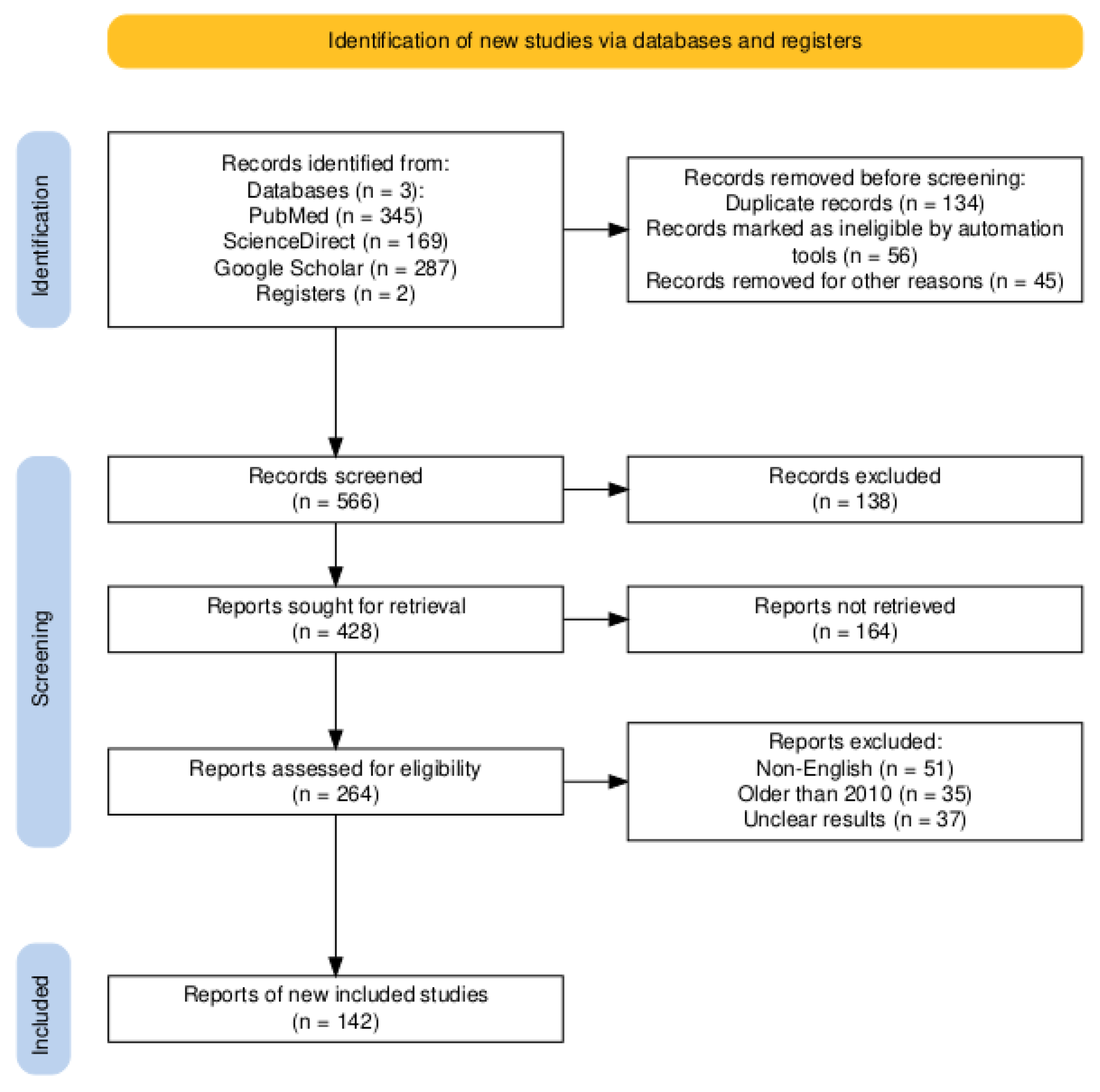
Figure 3.
The biochemical effects of polyphenol-metal combinations on wound healing.
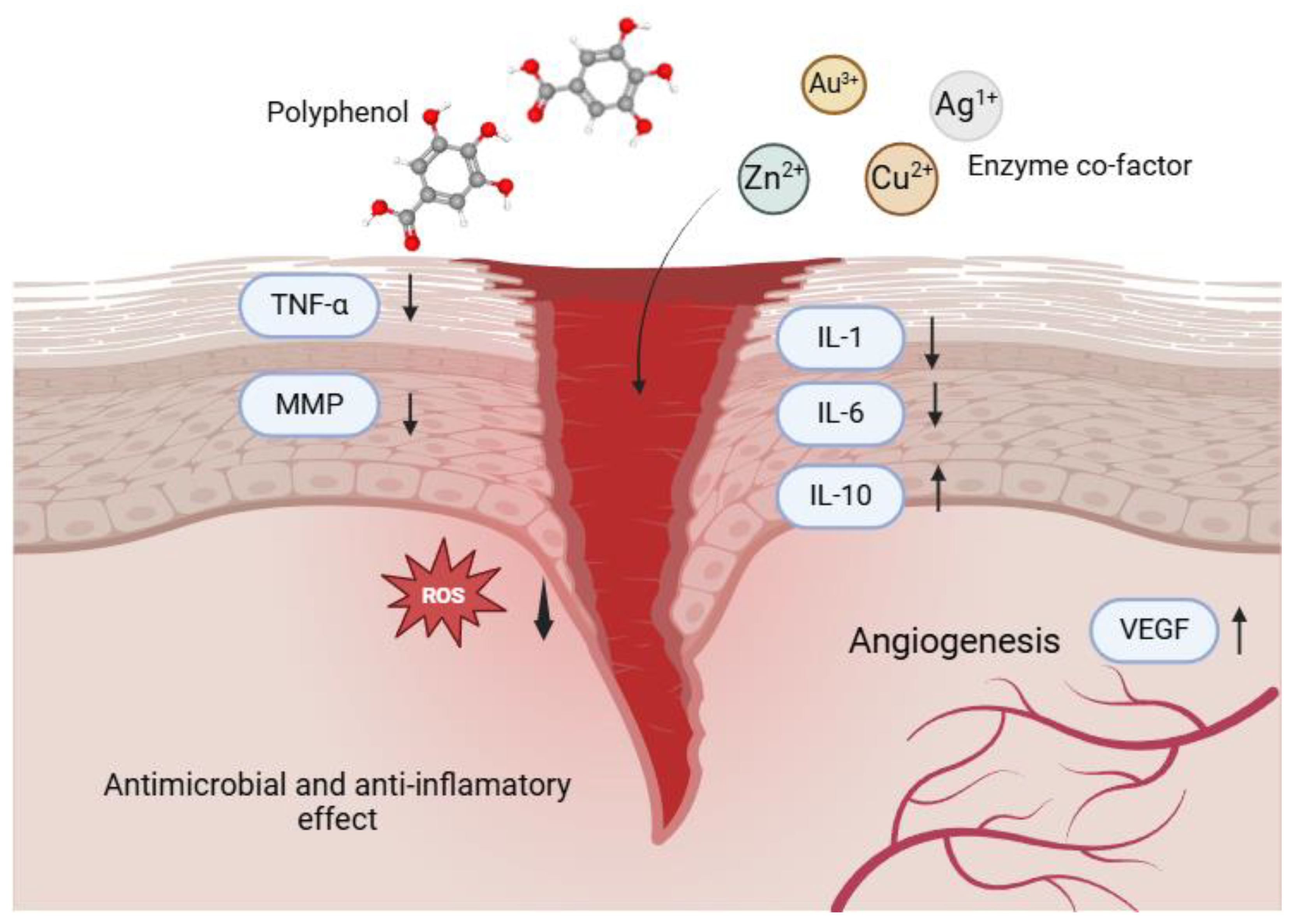
Figure 4.
Molecular mechanisms through which polyphenols induce apoptosis in cancer cells.
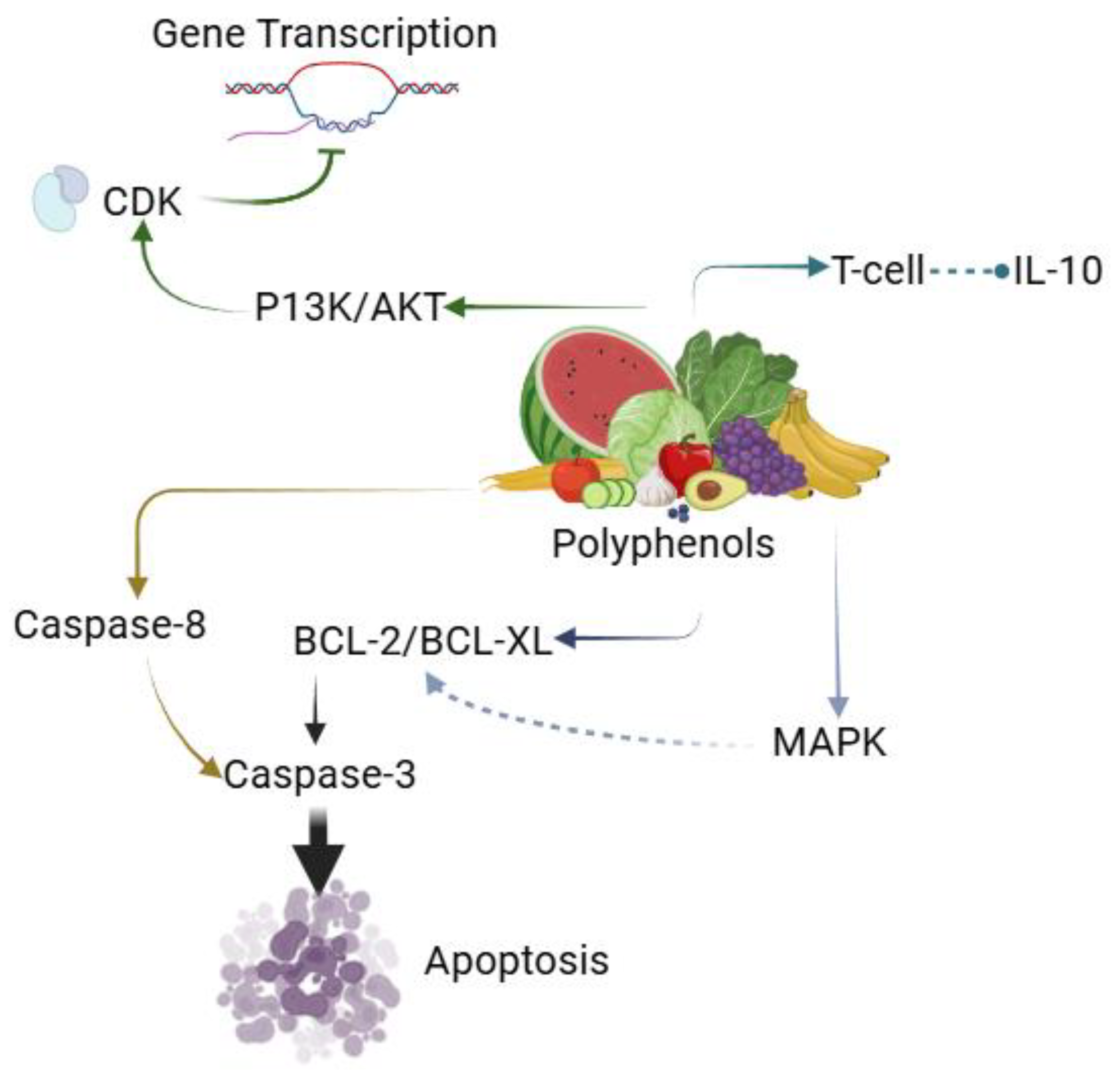

Table 1.
Polyphenol-metal composites reported in the literature for wound healing.
| Combination | Properties | Mechanisms | Reference |
| Silver NPs + Curcumin | Enhances fibroblast activity | Scavenges ROS; Enhances cell migration and proliferation | [24] |
| Copper NPs + Resveratrol | Essential for angiogenesis, promotes collagen synthesis | Stimulates endothelial cell proliferation; Supports VEGF signalling for new blood vessel formation | [25,26] |
| Quercetin-Stabilized silver NPs | Provides dual antibacterial and anti-inflammatory benefits | Scavenges free radicals; Modulates inflammatory pathways; Enhances fibroblast activity | [22,27,28] |
| Polyphenol-Infused hydrogels | Biocompatible; Maintains moist environment | Sustained release of bioactive compounds; Modulates inflammation; Facilitates localized delivery | [29,30] |
Table 2.
Polyphenol-metal combinations with proven antimicrobial activity.
| Combination | Target Bacteria | Effects | References |
| Curcumin-Stabilized silver NPs | MRSA | Significant reduction in viability; inhibition of biofilm formation | [82,83,84,85] |
| Epigallocatechin gallate (EGCG) + Gold NPs | Escherichia coli | Broad-spectrum antibacterial activity; enhanced stability | [86,87,88] |
| Quercetin + Copper NPs | Pseudomonas aeruginosa | Increase in bioavailability; enhanced anti-inflammatory effects; biofilm inhibition | [89,90] |
| Quercetin + Zinc/Silver NPs | Listeria monocytogenes | Significant bacterial inhibition; membrane disfunction | [91,92,93,94] |
Table 3.
Molecular pathways and effects of polyphenol-combinations on cancerous cells.
| Combination | Effects | Molecular pathway | References |
| Curcumin- Silver NPs | Induction of apoptosis; significant reduction in cell viability | Generation of ROS; activation of caspase pathways; inhibition of NF-κB signalling | [116,117,118] |
| Grape polyphenols + Gold NPs | Reduction of metastatic potential | Disruption of membrane integrity; modulation of MAPK pathways; induction of apoptosis via increased ROS | [119,120,121] |
| Resveratrol + Gold NPs | Inhibition of tumour growth; anti-angiogenic effects | Activation of p38 MAPK pathway; suppression of VEGF; enhancement of ROS production leading to cell death | [122,123,124] |
| Quercetin + Zinc NPs | Inhibition of proliferation; enhancement of apoptosis | Inhibition of CDK activity leading to G1 arrest; reduction of pro-inflammatory cytokines | [125,126] |
Disclaimer/Publisher’s Note: The statements, opinions and data contained in all publications are solely those of the individual author(s) and contributor(s) and not of MDPI and/or the editor(s). MDPI and/or the editor(s) disclaim responsibility for any injury to people or property resulting from any ideas, methods, instructions or products referred to in the content. |
© 2025 by the authors. Licensee MDPI, Basel, Switzerland. This article is an open access article distributed under the terms and conditions of the Creative Commons Attribution (CC BY) license (https://creativecommons.org/licenses/by/4.0/).
Copyright: This open access article is published under a Creative Commons CC BY 4.0 license, which permit the free download, distribution, and reuse, provided that the author and preprint are cited in any reuse.


