

Submitted:
20 January 2025
Posted:
21 January 2025
You are already at the latest version
Abstract
The purpose of this work was to investigate the posibilties of ultrafiltration with three polyacrylonitrile membranes (molecular weight cut-off 1 kDa, 10 kDa, and 25 kDa) to recover the total polyphenolic compounds, phenolic acids and flavonoids from rose wastewater. The permeate flux, energy demand, contents of total polyphenolic compounds, phenolic acids and flavonoid phenolic compounds were determined during ultrafiltration at volume reduction ratio of 2, 4, 6 and 8, and the rejections and concentration factors were established. The permeate flux decreased with the rise in the volume reduction ratio, and with the decrease in the transmembrane pressure and the molecular weight cut-off of the membranes. Inverse relationship was observed between the permeate flux and the energy demand at the same operating conditions. The rejections and concentration factors of total polyphenolic compounds, phenolic acids and flavonoid phenolic compounds rose with the increase in the volume reduction ratio for all membranes. The 1 kDa membrane had higher concentration and rejection effectiveness than 10 and 25 kDa membranes. Protocatehuic and vanillic acid, determined by using HPLC, increased in the retentate when 1 kDa membrane was used, while gallic acid, catechin, p-coumaric acid, rutin, hesperidin, rosmarinic acid decreased.
Keywords:
ultrafiltration
; rose wastewater
; bioactive phenolic compounds
1. Introduction
The food industry generates vast amounts of byproducts from the processing of fruits, vegetables, beer, wine, and essential oil crops, which are often treated as environmental pollutants despite their potential [1]. Current practices, including landfilling or incineration of these waste products, contribute to greenhouse gas emissions and waste mismanagement, highlighting the need for innovative approaches to minimize environmental impact [2]. Recycling wastewater has become essential, creating an urgent demand for the development of more efficient and cost-effective wastewater treatment techniques [3]. Circular economy approaches promote the valorization of these byproducts, extracting bioactive molecules such as phenolic compounds, fibers, and lipids for use in various industries [4]. Such advancements not only reduce wastes but also create new revenue streams, aligning with global sustainability goals for waste reduction and resource efficiency [5].
The pursuit of bioactive compounds from plant-based materials has grown significantly due to their diverse applications in food, pharmaceutical, and cosmetic industries [6]. Plants, especially their by-products, offer a storage of secondary metabolites like polyphenols, which are known for their antioxidant, antimicrobial, and therapeutic properties [7,8]. Among these, polyphenols are particularly valued for their ability to neutralize free radicals and support human health by reducing the risks of diseases such as cardiovascular ailments, cancer, and diabetes [9,10].
One of the symbols of the Republic of Bulgaria, alongside yogurt, is rose oil. Cultivated Rosa damascena Mill. is grown in the Rose Valley due to favorable climatic conditions [11,12]. Hydro distillation and steam distillation are among the oldest and most commonly used methods for extracting essential oils, including rose oil [13,14]. The process of rose oil distillation generates significant amounts of waste byproducts, which often remain unused and pose a serious environmental challenge [10]. Aromatic products derived from Bulgarian rose blossoms, such as concrete, absolute essential oil, and rose water, find widespread application in fine perfumery, cosmetics, and medicine [11].
The sustainable utilization of byproducts from the essential oil industry, particularly those derived from Rosa damascena Mill., has become a key focus of research due to their significant environmental and economic implications [8]. The processing of Rosa damascena Mill. generates substantial byproducts rich in flavonoids and tannins, which have potential applications as natural additives in food industry. The byproducts from rose oil distillation are rose petals and rose wastewater [10,15]. They are abundant resource of polyphenols, flavonoids, and antioxidants, making it highly suitable for different applications [16]. Recent researches on extraction techniques, including microwave-assisted extraction [17], enzyme-assisted extraction [18] and membrane-based methods [19], have enabled the efficient recovery of these compounds. These technologies not only enhance the yield and purity of polyphenols but also contribute to sustainable waste management practices, transforming byproducts into valuable resources [8]. Furthermore, innovative uses of these extracts include their incorporation into functional foods and natural preservatives, addressing growing consumer demands for sustainable and health-promoting solutions [16].
Ultrafiltration is a sustainable technology widely used for recovery and concentration of valuable compounds, including bioactive molecules, from food and beverage industry byproducts [20]. This process has proven effective in separating and concentrating valuable bioactive compounds while simultaneously reducing the environmental impact of industrial effluents [21]. Its advantages include low energy consumption, gentle processing, and the ability to operate without the need for chemical additives [22]. The use of ultrafiltration and nanofiltration offer high selectivity and scalability for industrial applications [23]. These processes have been particularly effective in recovering phenolic compounds from diverse sources such as winemaking residues, olive oil byproducts, and fruit processing wastes, thereby supporting the circular economy in agro-food systems [7,9]. They not only enhance the efficiency of polyphenol recovery but also address environmental concerns by converting industrial byproducts into valuable ingredients [24,25].
Byproducts from rose oil production were used for developing biopolymer packaging films using post-oil extraction. These rose-derived materials were incorporated into PolyLactic Acid (PLA) to create PLA-based films, which demonstrated enhanced resistance to UVB-induced degradation, suggesting their suitability for eco-friendly packaging applications [26].
Over the past few decades, both industry and society have been focused on reducing and valorizing wastes, driven by ecological concerns and the need to recover valuable biologically active substances. Although methods for valorizing rose waste have been in use for over fifty years, new approaches and ideas continue to emerge [27].
The aim of this research was to study the possibilities for application of ultrafiltration with three different membranes (UF1-PAN, UF10-PAN and UF25-PAN) for recovery of phenolic compounds from rose wastewater. The resulting retentates would be used to develop functional additives for food, cosmetic, and pharmaceutical applications, aligning with the principles of green technology and circular economy.
2. Materials and Methods
2.1. Materials
2.1.1. Rose Wastewater
Rose wastewater was provided from an industrial company BulPhytoOils JSC, located in Zelenikovo village, Brezovo municipality, Bulgaria. Each batch involved processing approximately 500 kg of petals from Rosa damascena Mill. with a water-to-petals ratio of 1:5. The distillation process was conducted at a flow rate of 500 L/h (8.33 L/min) over 120 minutes. The resulting wastewater was then stored at refrigerator conditions (4±0.5 °C) for further investigations.
2.1.2. Chemicals
Concentrated hydrochloric acid (Merck, Darmstadt, Germany), methyl alcohol 99,9% (Marvin, Dimitrovgrad, Bulgaria), ethyl alcohol 96% (Fillab Sole LLC, Plovdiv, Bulgaria) and DPPH [2,2-diphenyl-1-picrylhydrazyl] (Sigma-Aldrich, Burlington, USA) were used for the analyzes of total phenolic compounds, phenolic acids, flavonoid phenolic compounds, and antioxidant activity.
2.2. Methods
2.2.1. Coarse filtration
A coarse filtration with pore diameter of 2 mm was used for pre-filtration of rose wastewater in order to eliminate solid particles remaining after distillation of rose flowers.
2.2.3. Membrane Filtration
A laboratory scale equipment using a modular plate and frame system was employed for membrane filtration. Polyacrylonitrile membranes (UF1-PAN, UF10-PAN and UF25-PAN) with a molecular weight cut-off of 1 kDa, 10 kDa and 25 kDa, respectively were used. The membrane area was 1250 cm² [28]. The initial volume of rose wastewater used for membrane filtration was 8 L. The pH of initial rose wastewater was 4.1. Ultrafiltration was conducted under varying transmembrane pressures (0.2, 0.35 and 0.5 MPa), at a temperature of 50°C, with a feed flow rate of 330 dm³/h, and volume reduction ratio of 2, 4, 6 and 8. Membrane cleaning was conducted using a 0.5% NaOH solution at 50°C and 0.2 MPa, with a circulation time of 30 minutes, followed by a final rinse with distilled water.
2.2.4. Determination of the Key Parameters of the Ultrafiltration Process
- The permeate flux (J, L/(m2h)) was determined using the following formula:
J=V/(A*t)
where: V is the volume of the collected permeate, L;
A is the area of the membrane, m2;
t is the duration (time) of ultrafiltration, h.
- The volume reduction ratio was determined by the formula:
where: VF is the feed volume of rose wastewater, dm3;
VR is the volume of the collected retentate, dm3.
- Energy demand was calculated as:
where: Wpump is the power required by the pump, kWh;
J is the permeate flux, L/(m2h) calculated by equation (1);
A is the area of the membrane, m2.
The power required by the pump was determined as:
where: p is the pressure at the entry of the ultrafiltration module, Pa;
Qfeed is volumetric flow rate, m3/s;
ղ=0.7 is the pump’s efficiency according to [29].
- Rejection and concentration factor were determined by the equations:
where: CP, CR, and CF are the contents of the phenolic compounds in the permeate, retentate, and feed rose wastewater, respectively.
2.2.5. Determination of Phenolic Compounds
Total phenolic compounds, phenolic acids and flavonoid phenolic compounds in initial rose wastewater, retentates and permeates were determined by modified Glories Method [30]. The procedure involved the preparation of a mixture containing 1 mL of 0.1 % HCl in 96 % ethanol (v/v), 18.2 mL of 2 % HCl (v/v), and 1 mL of the methanol extract, incubated at room temperature for 15 minutes. A blank solution, prepared with distilled water, was used as a reference for the spectrophotometric measurements of total phenolic compounds at 280 nm, phenolic acids at 320 nm, and flavonoids at 360 nm. Calibration curves were employed to express the results as mg gallic acid equivalent per liter for total phenolic compounds, mg caffeic acid equivalent per liter for phenolic acids, and mg quercetin equivalent per liter for flavonoid phenolic compounds, respectively.
2.2.6. Antioxidant Activity
The following procedure was used to determine the free radical-scavenging ability (DPPH test; 2,2-diphenyl-1-picrylhydrazyl) in order to evaluate the antioxidant activity of rose wastewater, retentates, and permeates: The results were given as equivalents of Trolox (used as a reference) in μmol per L of sample, which is a soluble in water analogue of vitamin E. The method of Brand-Williams et al. [31] was used with the modifications as follows: 250 μL of extract with methanol (after dilution with distilled water in a ratio of 1:3, v/v) was added to 2250 μL of a 6x10⁵ M DPPH methanol solution (made on the day when the analysis was performed). After 30 minutes of dark storage at room temperature, the absorbance at 517 nm was determined with a Shimadzu UV-1800 spectrophotometer (Kyoto, Japan).
2.2.7. HPLC Analysis of Phenolic Compounds
High-performance liquid chromatography (HPLC) analysis was conducted using a Nexera-i LC2040C Plus UHPLC system (Shimadzu Corporation, Kyoto, Japan) containing a UV-VIS detector, a binary pump and a Poroshell 120 EC-C18 column (3 mm × 100 mm, 2.7 μm), thermostated at 26 °C. The flow rate was set to 0.3 mL/min, and the injection volume was 5 μL. Detection of derivatives occurred at a wavelength of 280 nm. The mobile phase comprised 0.5% acetic acid (A) and 100% acetonitrile (B). The gradient began at 14% (B), increased linearly to 25% (B) between 6 and 30 minutes, and reached 50% (B) by 40 minutes. Compound identification was confirmed by comparing retention times with standard solutions and calibration curves of various phenolics, including neochlorogenic acid, gallic acid, 3,4-dihydroxybenzoic acid, catechin, chlorogenic acid, vanillic acid, epicatechin, caffeic acid, p-coumaric acid, rutin, ferulic acid, ellagic acid, naringin, quercetin-3-β-glucoside, rosmarinic acid, myricetin, cinnamic acid, luteolin, quercetin, naringenin, kaempferol, and apigenin. The concentrations of individual phenolic compounds were reported as mg per 100 g of dry weight (DW) ± standard deviation (SD).
2.2.8. Statistical Analysis
The results were given as mean values derived from three determinations. Statistical analysis was performed using Excel 2016 and one-way ANOVA. To determine differences among experimental groups, Fisher’s Least Significant Difference method was applied at a 0.05 level of significance.
3. Results and Discussion
The permeate flux is one of the main characteristics of each membrane process. Figure 1 shows the effect of volume reduction ratio on the permeate flux during ultrafiltration of rose wastewater. The flux decreased with the rise in the volume reduction ratio for all three membranes studied (p < 0.05). This is due to the increase of the concentration solution leading to an increase in the dynamic viscosity [32] and concentration polarization [33] provoking a flux decrease. According to Cai et al. [34], the decrease in the flux is related to the formation of cake layer, whose thickness increased during the process. These authors found a linear dependence between the flux and the transmembrane pressure when pomegranate juice was subjected to ultrafiltration. Similar to their results, in our study, the permeate flux increased with the transmembrane pressure rise for all membranes (p < 0.05). This could be explained with the fact that an increase in the recirculation velocity improves the mass transfer coefficient and the hydrodynamical conditions, leading to a decrease in the effect of the concentration polarization and an increase in the flux [35]. According to Gaglianò et al. [36], the decrease in the permeate flux is different for various membrane types during nanofiltration of apple juice. Our results demonstrated that the permeate flux depended on the molecular weight cut-off of the membrane, as it increased at higher molecular weight cut-off. Acosta et al. [37] also found a dependence between the permeate flux and the molecular weight cut-off of the membrane when blackberry (Rubus adenotrichus Schltdl.) juice was subjected to ultrafiltration. Yilmaz and Bagci [38] established no significant difference between the permeate flux of 5 and 10 kDa membranes during 7-fold ultrafiltration of broccoli juice, while 50 kDa membrane had 3-4 times higher flux. The observed relationship suggests that the selection of an appropriate molecular weight cut-off is crucial for optimizing the ultrafiltration process, particularly for complex matrices such as rose wastewater. This aligns with previous studies that emphasize the role of molecular weight cut-off in determining flux behavior and fouling propensity during ultrafiltration of organic-rich feed solutions [39]. In our case, the lowest results for the permeate flux were obtained at 1 kDa membrane, volume reduction ratio of 8, and transmembrane pressure of 0.2 MPa, while the highest were at 25 kDa membrane, volume reduction ratio of 0 (beginning of the process), and transmembrane pressure of 0.5 MPa.
The consumed energy is one of the most important parameter for each industrial process. Figure 2 presents the energy demand at working conditions as in Figure 1. The energy demand increased with the transmembrane pressure and volume reduction ratio rise (p < 0.05). The effect of transmembrane pressure is related to the increase in the power required by the pump, provoking an energy consumption increase [40]. The same authors established that the increase in the operational pressure from 3 to 6 bar provoked a rise of the consumed total energy from 51.57 to 62.54 kJ/dm3. The effect of volume reduction ratio could be explained by the fluid viscosity increase with the volume reduction ratio rise because of the increase in the dry matter content, as well as the augmentation of the duration of the process [41]. An inverse relationship was observed between the permeate flux and the energy demand. This can be explained with the fact that the permeate flux participates in the denominator of the equation 3 used for calculating the energy demand. The effect of the molecular weight cut-off was also observed, as the energy demand increased with its diminution. This could be explained by the fact that the pore size decreases with the decrease in the molecular weight cut-off of the membrane [42] which led to a drop of the permeate flux and thus increase in the energy demand. In our study, the highest value of energy demand was established at volume reduction ratio of 8, transmembrane pressure of 0.5 MPa and 1 kDa membrane, (38.11 kW/m3), the lowest – at volume reduction ratio of 0 (beginning of the process), and transmembrane pressure of 0.2 MPa - 5.90 kW/m3 for 10 kDa membrane and 6.01 kW/m3 for 25 kDa membrane (p > 0.05).
The content of total phenolic compounds, phenolic acids and flavonoid phenolic compounds in initial rose wastewater, retentates and permeates with the three investigated membranes is presented in Table 1. All measured phenolic compounds increased in retentates during ultrafiltration from volume reduction ratio of 2 to volume reduction ratio of 8 (p < 0.05) for all membranes tested. The lowest values were obtained in permeate for all membranes studied. Comparing the phenolic compounds between the three membranes, it can be seen that the highest values were observed when 1 kDa membrane was used for ultrafiltration.
The rejection of total phenolic compounds, phenolic acids and flavonoid phenolic compounds depending on the volume reduction ratio is presented in Figure 3. An increase in the rejection of all studied phenolic compounds was observed with the increase in the volume reduction ratio from 2 to 8 (p < 0.05). Comparing the studied membranes, it can be seen that 1 kDa membrane at volume reduction ratio of 8 offered the highest values of rejections of total phenolic compounds (42.10%), phenolic acids (42.94 %) and flavonoid phenolic compounds (41.58 %), followed by 10 kDa and 25 kDa membranes. Similar results were obtained by Toker et al. [43] for blood orange juice, who found that the polyphenolic concentration depended on the molecular weight cut-off of the membrane. Qaid et al. [35] established higher rejections of total polyphenols during ultrafiltration of Valencia orange juice when 20 kDa membrane was used than 30 kDa membrane. According to Mondal et al. [44], the rejection of total phenols and flavonoids increased when the molecular weight cut-off of the membranes decreased. Wei et al. [45] studied ultrafiltration of apple juice and found a rise in the concentration factor and rejection of total polyphenols during ultrafiltration. According to Cissé et al. [46], a logarithmic decrease in the rejection of anthocyanins with the rise in the molecular weight cut-off of the membranes was observed during ultrafiltration of roselle extract (Hibiscus sabdariffa L.). Huang et al. [47] declared that the rejection rate of the jujube juice compounds depended on the molecular weight cut-off of the membrane, probably due to the different sieving effect of the membranes.
The effect of the volume reduction ratio on the concentration factor of total phenolic compounds, phenolic acids and flavonoid phenolic compounds during ultrafiltration of rose wastewater are presented in Figure 4. The concentration factor increased with the volume reduction ratio rise for all compounds tested and membranes studied (p < 0.05). Concerning different membranes, there was an inverse proportional relationship between the corresponding molecular weight cut-off and the concentration factor. The highest values of concentration factor of total phenolic compounds (1.45), phenolic acids (1.44) and flavonoid phenolic compounds (1.45) were obtained for 1 kDa membrane. According to Wei et al. [45], the concentration of polyphenolics in the retentate increased exponentially during apple juice filtration process. The separation and concentration of the compounds depend also on the membrane’s material. Cai et al. [34] compared membranes with molecular weight cut-off of 50 kDa from polyethersulfone (PES), polyvinylidene fluoride (PVDF), and polyacrylonitrile (PAN) during ultrafiltration of apple juice and established the highest values of the total phenolic content with PVDF membrane. Mir-Cerdà et al. [48] found that phenolic concentration of wine lees extract after ultrafiltration depended not only on the membrane’s material but on the molecular weight cut-off of the membranes. Acosta et al. [37] used membranes from 1 to 150 kDa and found that the membrane with a nominal molecular weight cut-off of 2 kDa showed the highest anthocyanin flux at 2 MPa and was classified as the most promising for fractionation of the polyphenolic compounds.
The changes in the antioxidant activity of retentates during ultrafiltration of rose wastewater are presented in Figure 5. The biggest antioxidant activity was established at volume reduction ratio of 8 with 1 kDa membrane, the smallest – at volume reduction ratio of 2 with 25 kDa membrane. Similar to the content of total phenolic compounds, phenolic acids and flavonoid phenolic compounds, the antioxidant activity increased with decrease in the molecular weight cut-off of the membrane. A linear diminution of the total anthocyanins and total ellagitannins with the increase in the molecular weight cut-off of the membranes at ultrafiltration of juice from blackberry (Rubus adenotrichus Schltdl.) was found by Acosta et al. [37]. Observing the obtained results for permeate flux, energy demand, rejection, concentration factor and antioxidant activity, we recommend to work at volume reduction ratio of 8, transmembrane pressure of 0.5 MPa and 1 kDa membrane. These working conditions will be used in our further investigations to obtain extrudates from rice semolina enriched with ultrafiltered rose wastewater.
The chromatograms of initial rose wastewater (A) and retentate at volume reduction ration of 8 (B) with 1 kDa membrane are presented in Figure 6. It can be seen that the main compounds presented in initial rose wastewater are gallic and rosmarinic acids. Concerning the retetante at volume reduction ratio of 8 with 1 kDa membrane (Figure 7), the main compounds are gallic acid and routin. An increase in the content of protocatehuic and vanillic acids was observed in the retentate, while the other compounds decreased in the retenate compared to the initial rose wastewater. The rejection of phenolic acids depends on the type of initial solution, as well as on the molecular weight cut-off of the membrane. Yilmaz and Bagci [37] studied 5, 10 and 50 kDa membranes for ultrafiltration of broccoli juice and found that the rejection of 10 kDa membrane towards chlorogenic acid, sinapic acid, kaempferol, quercetin, and rutin was in the range of 4.2–44 %. The most retained phenolic compound was rutin which could be explained by the higher number of a benzene ring on the molecular structure and higher acidity coefficient. Comparing the tested membranes, the authors found that 5 kDa membrane had the highest rejection of citric and malic acid.
4. Conclusions
The permeate flux decreased when the volume reduction ratio rose, and the transmembrane pressure and the molecular weight cut-off of the membranes decreased. Inverse relationship was observed between the permeate flux and the energy demand at the same working conditions. The concentration factor and rejection of total polyphenolic compounds, phenolic acids and flavonoids increased with the rise in the volume reduction ratio for all membranes. The concentration and rejection efficiency of the 1 kDa membrane was higher than these observed for 10 and 25 kDa. The performance of the 1 kDa membrane in retaining specific bioactive compounds highlights its potential for selective recovery in wastewater valorization. Additionally, the observed trends in energy consumption and compound rejection emphasize the importance of optimizing operational parameters to balance efficiency with energy costs. Future studies will also focus on evaluating the shelf-life stability and bioavailability of the recovered polyphenolic compounds in enriched food matrices. Protocatehuic and vanillic acid, determined by HPLC, increased in the retentate with 1 kDa membrane, while gallic acid, catechin, p-coumaric acid, rutin, hesperidin, rosmarinic acid decreased. Observing the obtained results for permeate flux, energy demand, rejection, concentration factor and antioxidant activity, we recommend to work at volume reduction ratio of 8, transmembrane pressure of 0.5 MPa and 1 kDa membrane. These working conditions will be used in our further investigations to obtain extrudates from rice semolina enriched with ultrafiltered rose wastewater.
Author Contributions
Conceptualization, M.D. and M.M.; methodology, M.D. and M.M.; software, M.M.; validation, M.D. and I.B.; formal analysis, M.D., M.M. and I.B.; investigation, M.D., M.M., I.B. and M.M.-P.; resources, M.D., M.M. and N.M.; data curation, M.D., M.M. and I.B.; writing—original draft preparation, M.D. and M.M.; writing—review and editing, M.D., M.M., I.B., M.M.-P. and N.M.; visualization, M.D. and M.M.; supervision, M.D., I.B. and N.M.; project administration, M.D. All authors have read and agreed to the published version of the manuscript.
Funding
This research received no external funding.
Institutional Review Board Statement
Not applicable
Informed Consent Statement
Not applicable
Data Availability Statement
Data are contained within the article.
Acknowledgments
The authors are grateful to Samuil Mitov from the company BulPhytoOils JSC company, village of Zelenikovo, municipality of Brezovo, Bulgaria for providing the rose wastewater used in this study.
Conflicts of Interest
The authors declare no conflict of interest.
References
- Mallek-Ayadi, S.; Bahloul, N.; Kechaou, N. Chemical composition and bioactive compounds of Cucumis melo L. seeds: Potential source for new trends of plant oils Process Safety and Environmental Protection 2018, 113, 68–77. [Google Scholar] [CrossRef]
- Winans, K.; Kendall, A.; Deng, H. The history and current applications of the circular economy concept. Renewable and Sustainable Energy Reviews 2017, 68, 825–833. [Google Scholar] [CrossRef]
- Avsar, Y.; Kurt, U.; Gonullu, T. Comparison of classical chemical and electrochemical processes for treating rose processing wastewater. Journal of Hazardous Materials. [CrossRef]
- Ueda, J.M.; Pedrosa, M.C.; Heleno, S.A.; Carocho, M. , Ferreira, I.C.F.R., Barros, L. Food additives from fruit and vegetable by-products and bio-residues: A comprehensive review focused on sustainability. Sustainability (Switzerland) 2022, 14, 5212. [Google Scholar] [CrossRef]
- Ferreira, D.C.M.; dos Santos, P.N.; Santos, F.H.; Molina, G.; Pelissari, F.M. Sustainability approaches for agrowaste solution: Biodegradable packaging and microbial polysaccharides bio-production. Science of the Total Environment 2023, 886, 163922. [Google Scholar] [CrossRef]
- Dobreva, A.; Nedeva, D.; Mileva, M. Comparative study of the yield and chemical profile of rose oils and hydrosols obtained by industrial plantations of oil-bearing roses in Bulgaria. Resources 2023, 12, 83. [Google Scholar] [CrossRef]
- Alsobh, A.; Zin, M.M.; Vatai, G.; Bánvölgyi, S. The application of membrane technology in the concentration and purification of plant extracts: A review. Periodica Polytechnica Chemical Engineering 2022, 66, 394–408. [Google Scholar] [CrossRef]
- Dinkova, R.; Vardakas, A.; Dimitrova, E.; Weber, F.; Passon, M.; Shikov, V.; Schieber, A.; Mihalev, K. Valorization of rose (Rosa damascena Mill.) by-product: polyphenolic characterization and potential food application. European Food Research and Technology 2022, 248, 2351–2358. [Google Scholar] [CrossRef]
- Cassano, A.; Conidi, C.; Ruby-Figueroa, R.; Castro-Muñoz, R. Nanofiltration and tight ultrafiltration membranes for the recovery of polyphenols from agro-food by-products. International Journal of Molecular Sciences 2018, 19, 351. [Google Scholar] [CrossRef] [PubMed]
- Dragoev, S.; Vlahova-Vangelova, D.; Balev, D.; Bozhilov, D.; Dagnon, S. Valorization of waste by-products of rose oil production as feedstuff phytonutrients. Bulgarian Journal of Agricultural Science 2021, 27, 209–219. [Google Scholar] [CrossRef]
- Gochev, V.; Dobreva, A.; Girova, T.; Stoyanova, A. Antimicrobial activity of essential oil from Rosa alba. Biotechnology and Biotechnological Equipment 2010, 24, 512–515. [Google Scholar] [CrossRef]
- Antonova, D.V.; Medarska, Y.N.; Stoyanova, A.S.; Nenov, N.S.; Slavov, A.M.; Antonov, L.M. Chemical profile and sensory evaluation of Bulgarian rose (Rosa damascena Mill.) aroma products, isolated by different techniques. Journal of Essential Oil Research 2021, 33, 171–181. [Google Scholar] [CrossRef]
- Rassem, H.H.A.; Nour, A.H.; Yunus, R.M. Techniques for extraction of essential oils from plants: A review. Australian Journal of Basic and Applied Sciences 2016, 10, 117–127. [Google Scholar]
- Machado, C.A.; Oliveira, F.O.; de Andrade, M.A.; Hodel, K.V.S.; Lepikson, H.; Machado, B.A.S. Steam distillation for essential oil extraction: An evaluation of technological advances based on an analysis of patent documents. Sustainability (Switzerland) 2022, 14, 7119. [Google Scholar] [CrossRef]
- Chroho, M.; Bouymajane, A.; Oulad El Majdoub, Y.; Cacciola, R.; Mondello, L.; Aazzaa, M.; Zair, T.; Bouissane, L. Phenolic composition, antioxidant and antibacterial activities of extract from flowers of Rosa damascena from Morocco. Separations 2022, 9, 247. [Google Scholar] [CrossRef]
- Boso, S.; Gago, P.; Santiago, J.L.; Álvarez-Acero, I.; Bartolomé, M.A.M.; Martínez, M.C. Polyphenols in the waste water produced during the hydrodistillation of ‘Narcea roses’ cultivated in the Cibea river valley (Northern Spain). Horticulturae 2022, 8, 376. [Google Scholar] [CrossRef]
- Cardoso-Ugarte, G.A.; Juárez-Becerra, G.P.; Sosa-Morales, M.E.; López-Malo, A. Microwave-assisted extraction of essential oils from herbs. Journal of Microwave Power and Electromagnetic Energy 2013, 47, 63–72. [Google Scholar] [CrossRef] [PubMed]
- Kalcheva-Karadzhova, K.; Shikov, V.; Mihalev, K.; Dobrev, G.; Ludneva, D.; Penov, N. Enzyme-assisted extraction of polyphenols from rose (Rosa damascena Mill.) petals. Acta Universitatis Cibiniensis - Series E: Food Technology 2014, 18, 65–72. [Google Scholar] [CrossRef]
- Ilieva, Y.; Dimitrova, L.; Georgieva, A.; Vilhelmova-Ilieva, N.; Zaharieva, M.M.; Kokanova-Nedialkova, Z.; Dobreva, A.; Nedialkov, P.; Kussovski, V.; Kroumov, A.D.; Najdenski, H.; Mileva, M. In vitro study of the biological potential of wastewater obtained after the distillation of four Bulgarian oil-bearing roses. Plants 2022, 11, 1073. [Google Scholar] [CrossRef] [PubMed]
- Salazar-González, C.; Ramos, C.M.; Martínez-Correa, H.A.; García, H.F.L. Extraction and concentration of spirulina water-soluble metabolites by ultrafiltration. Plants 2024, 13, 2770. [Google Scholar] [CrossRef]
- Chen, G.; Huang, B.X.; Guo, M. Current advances in screening for bioactive components from medicinal plants by affinity ultrafiltration mass spectrometry. Phytochemical Analysis 2018, 29, 375–386. [Google Scholar] [CrossRef] [PubMed]
- Mohammad, A.W.; Ng, C.Y.; Lim, Y.P.; Ng, G.H. Ultrafiltration in food processing industry: Review on application, membrane fouling, and fouling control. Food and Bioprocess Technology 2012, 5, 1143–1156. [Google Scholar] [CrossRef]
- Sahu, L.R.; Yadav, D.; Borah, D.; Gogoi, A.; Goswami, S.; Hazarika, G.; Karki, S.; Gohain, M.B.; Sawake, S.V.; Jadhav, S.V.; Chatterjee, S.; Ingole, P.G. Polymeric membranes for liquid separation: Innovations in materials, fabrication, and industrial applications. Polymers 2024, 16, 3240. [Google Scholar] [CrossRef] [PubMed]
- Tapia-Quirós, P.; Montenegro-Landívar, M.F.; Reig, M.; Vecino, X.; Cortina, J.L.; Saurina, J.; Granados, M. Recovery of polyphenols from agri-food by-products: The olive oil and winery industries cases. Foods 2022, 11, 362. [Google Scholar] [CrossRef] [PubMed]
- Dushkova, M.; Vardakas, A.; Shikov, V.; Mihalev, K.; Terzyiska, M. Application of ultrafiltration for recovery of polyphenols from rose petal byproduct. Membranes 2023, 13, 818. [Google Scholar] [CrossRef]
- Dintcheva, N.T.; Morici, E. Recovery of rose flower waste to formulate eco-friendly biopolymer packaging films. Molecules 2023, 28, 3165. [Google Scholar] [CrossRef]
- Slavov, A.; Vasileva, I.; Stefanov, L.; Stoyanova, A. Valorization of wastes from the rose oil industry. Reviews in Environmental Science and Biotechnology 2017, 16, 309–325. [Google Scholar] [CrossRef]
- Dushkova, M.; Mihalev, K.; Dinchev, A.; Vasilev, K.; Georgiev, D.; Terziyska, M. Concentration of polyphenolic antioxidants in apple juice and extract using ultrafiltration. Membranes 2022, 12, 1032. [Google Scholar] [CrossRef] [PubMed]
- Verberk, J.Q.J.C.; Van Dijk, J.C. Air sparging in capillary nanofiltration. Journal of Membrane Science 2006, 284, 1–2. [Google Scholar] [CrossRef]
- Glories, Y. Reserches sur la matière colorante des vins rouges. Bulletin de la Société Chimique de France 1979, 9, 2649–2655. [Google Scholar]
- Brand-Williams, W.; Cuvelier, M.E.; Berset, C. Use of a free radical method to evaluate antioxidant activity. LWT Food Science and Technology 1995, 28, 25–30. [Google Scholar] [CrossRef]
- Cassano, A.; Conidi, C.; Drioli, E. Clarification and concentration of pomegranate juice (Punica granatum L.) using membrane processes. Journal of Food Engeneering 2011, 107, 366–373. [Google Scholar] [CrossRef]
- Cassano, A.; Donato, L.; Drioli, E. Ultrafiltration of kiwifruit juice: Operating parameters, juice quality and membrane fouling. Journal of Food Engineering 2007, 79, 613–621. [Google Scholar] [CrossRef]
- Cai, M.; Xie, C.; Lv, Y.; Yang, K.; Sun, P. Changes in physicochemical profiles and quality of apple juice treated by ultrafiltration and during its storage. Food Science and Nutrition 2020, 8, 2913–2919. [Google Scholar] [CrossRef] [PubMed]
- Qaid, S.; Zait, M.; El Kacemi, K.; El Midaoui, A.; El Hajji, H.; Taky, M. Ultrafiltration for clarification of Valencia orange juice: Comparison of two flat sheet membranes on quality of juice production. Journal of Materials and Environmental Science 2017, 8, 1186–1194. [Google Scholar]
- Gaglianò, M.; Conidi, C.; De Luca, G.; Cassano, A. Partial removal of sugar from apple juice by nanofiltration and discontinuous diafiltration. Membranes 2022, 12, 712. [Google Scholar] [CrossRef]
- Acosta, O.; Vaillant, F.; Pérez, A.M.; Dornier, M. Potential of ultrafiltration for separation and purification of ellagitannins in blackberry (Rubus adenotrichus Schltdl.) juice. Separation and Purification Technology 2014, 125, 120–125. [Google Scholar] [CrossRef]
- Yilmaz, E.; Bagci, P.O. Ultrafiltration of broccoli juice using polyethersulfone membrane: Fouling analysis and evaluation of the juice quality. Food and Bioprocess Technology 2019, 12, 1273–1283. [Google Scholar] [CrossRef]
- Van der Bruggen, B.; Vandecasteele, C.; Gestel, T.V.; Doyen, W.; Leysen, R. A review of pressure-driven membrane processes in wastewater treatment and drinking water production. Environmental Progress 2003, 22, 46–56. [Google Scholar] [CrossRef]
- Bahnasawy, H.; Shenana, M. Flux behavior and energy consumption of ultrafiltration (UF) process of milk. Australian Journal of Agricultural Engineering 2010, 1, 54–65. [Google Scholar]
- Méthot-Hains, S.; Benoit, C.; Bouchard, C.; Doyen, A.; Bazinet, L.; Pouliot, Y. Effect of transmembrane pressure control on energy efficiency during skim milk concentration by ultrafiltration at 10 and 50°C. Journal of Dairy Science 2016, 99, 8655–8664. [Google Scholar] [CrossRef] [PubMed]
- Yehl, C. J.; Zydney, A.L. Characterization of dextran transport and molecular weight cutoff (MWCO) of large pore size hollow fiber ultrafiltration membranes, Journal of Membrane Science 2021, 622, 119025. 622. [CrossRef]
- Toker, R.; Karhan, M.; Tetik, N.; Turhan, I.; Oziyci, H.R. Effect of ultrafiltration and concentration processes on the physical and chemical composition of blood orange juice. Journal of Food Processing and Preservation 2014, 38, 1321–1329. [Google Scholar] [CrossRef]
- Mondal, M.; Biswas, P.P.; De, S. Clarification and storage study of bottle gourd (Lagenaria siceraria) juice by hollow fiber ultrafiltration. Food and Bioproducts Processing 2016, 100, 1–15. [Google Scholar] [CrossRef]
- Wei, D.S.; Hossain, M.; Saleh, Z.S. Separation of polyphenolics and sugar by ultrafiltration: Effects of operating conditions on fouling and diafiltration. International Journal of Natural and Engineering Sciences 2007, 1, 10–17. [Google Scholar]
- Cissé, M.; Vaillant, F.; Pallet, D.; Dornier, M. Selecting ultrafiltration and nanofiltration membranes to concentrate anthocyanins from roselle extract (Hibiscus sabdariffa L.). Food Research International 2011, 44, 2607–2614. [Google Scholar] [CrossRef]
- Huang, W.; Wang, B.; Cheng, N.; Gao, H.; Cao, W. Effects of molecular weight cut-off (MWCO) on jujube juice quality during ultrafiltration. Acta Hortic 2013, 993, 225–230. [Google Scholar] [CrossRef]
- Mir-Cerdà, A.; Carretero, I.; Coves, J.R.; Pedrouso, A.; Castro-Barros, C.M.; Alvarino, T.; Cortina, J.L.; Saurina, J.; Granados, M.; Sentellas, S. Recovery of phenolic compounds from wine lees using green processing: Identifying target molecules and assessing membrane ultrafiltration performance, Science of The Total Environment 2023, 857, 159623. 857. [CrossRef]
Figure 1.
Permeate flux depending on the volume reduction ratio during ultrafiltration of rose wastewater.
Figure 1.
Permeate flux depending on the volume reduction ratio during ultrafiltration of rose wastewater.
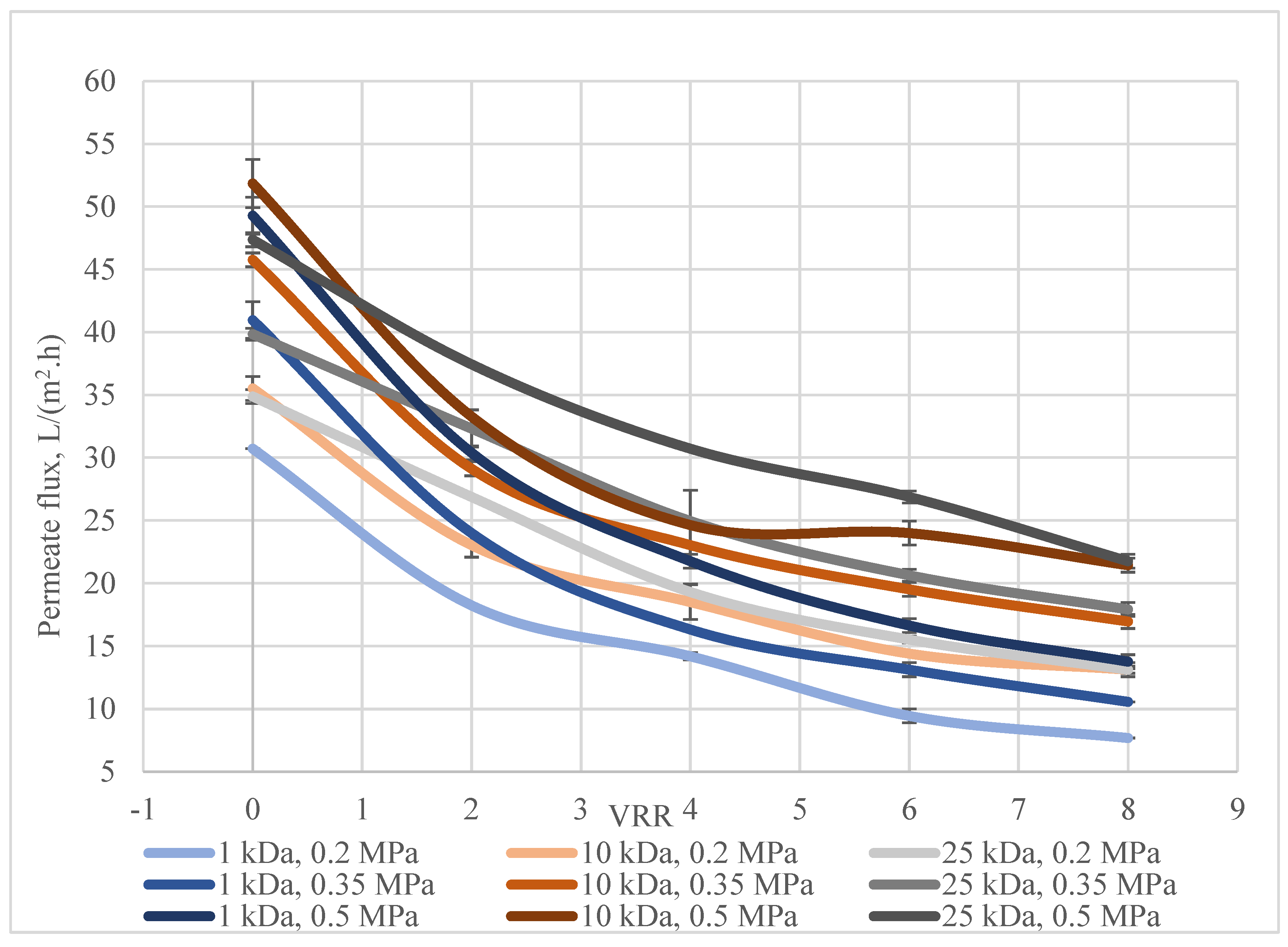
Figure 2.
Energy demand depending on the volume reduction ratio during ultrafiltration of rose wastewater.
Figure 2.
Energy demand depending on the volume reduction ratio during ultrafiltration of rose wastewater.
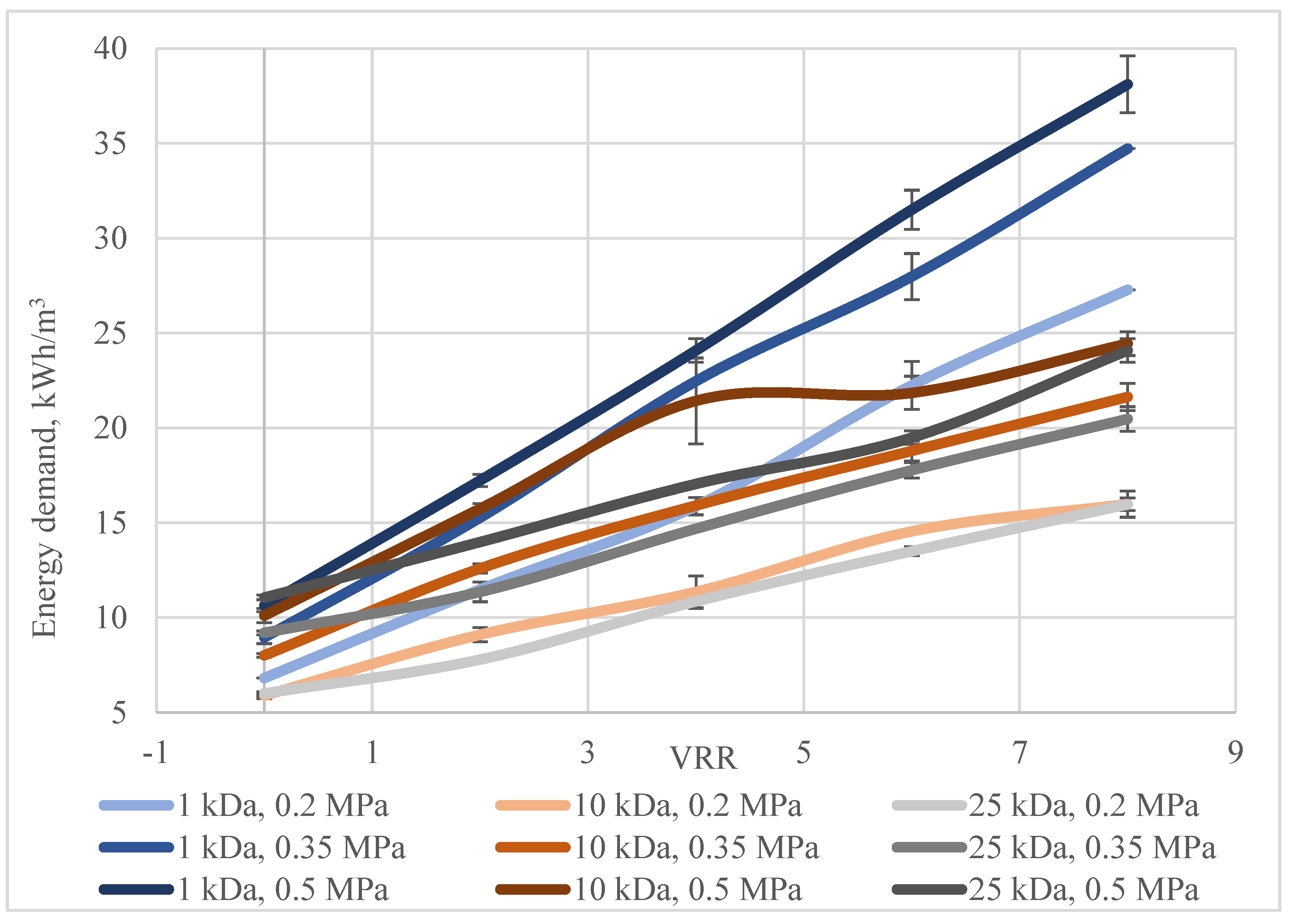
Figure 3.
Rejection (%) of total phenolic compounds, phenolic acids and flavonoid phenolic compounds depending on the volume reduction ratio.
Figure 3.
Rejection (%) of total phenolic compounds, phenolic acids and flavonoid phenolic compounds depending on the volume reduction ratio.
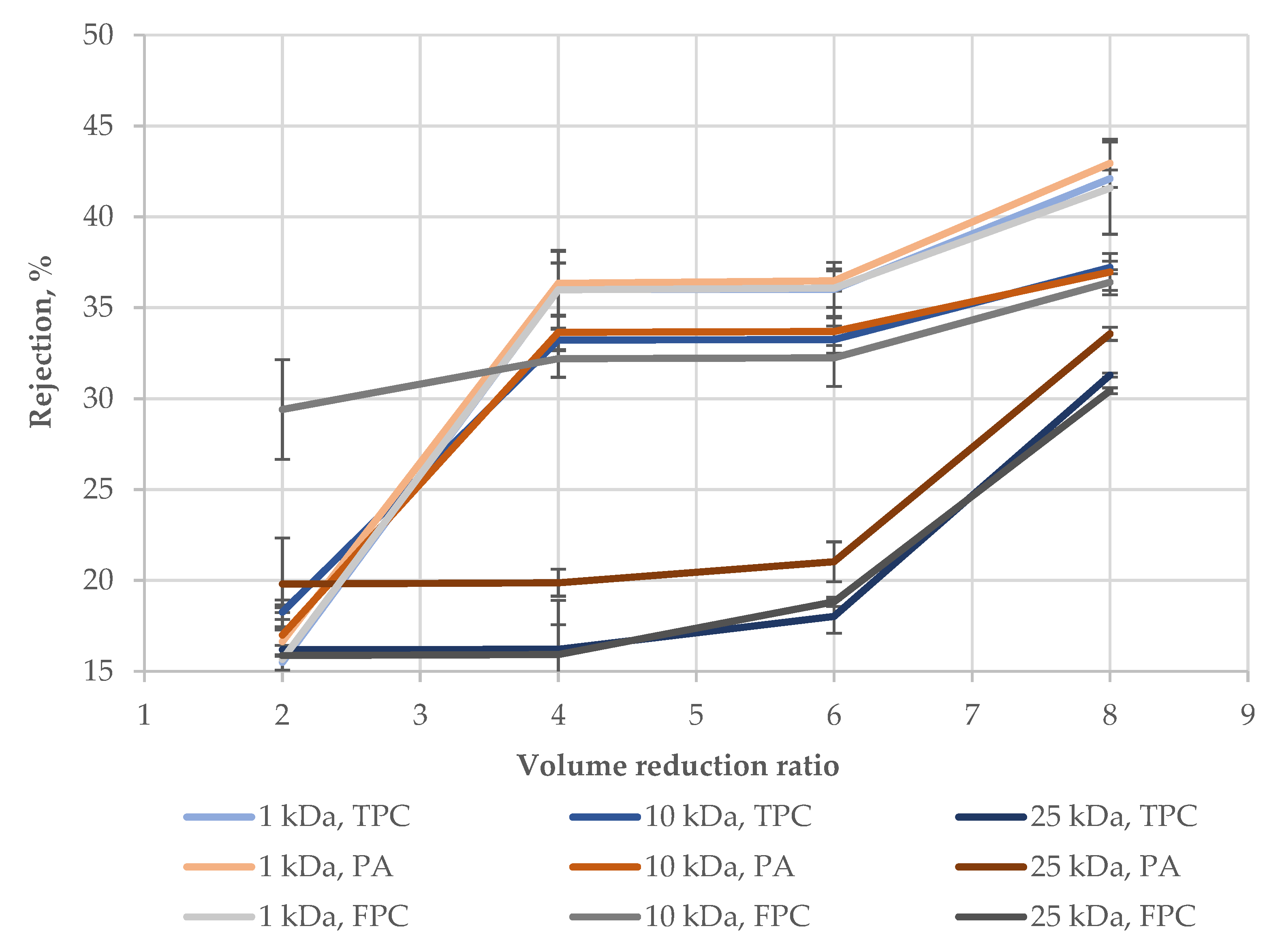
Figure 4.
Concentration factor of total phenolic compounds, phenolic acids and flavonoid phenolic compounds depending on the volume reduction ratio.
Figure 4.
Concentration factor of total phenolic compounds, phenolic acids and flavonoid phenolic compounds depending on the volume reduction ratio.
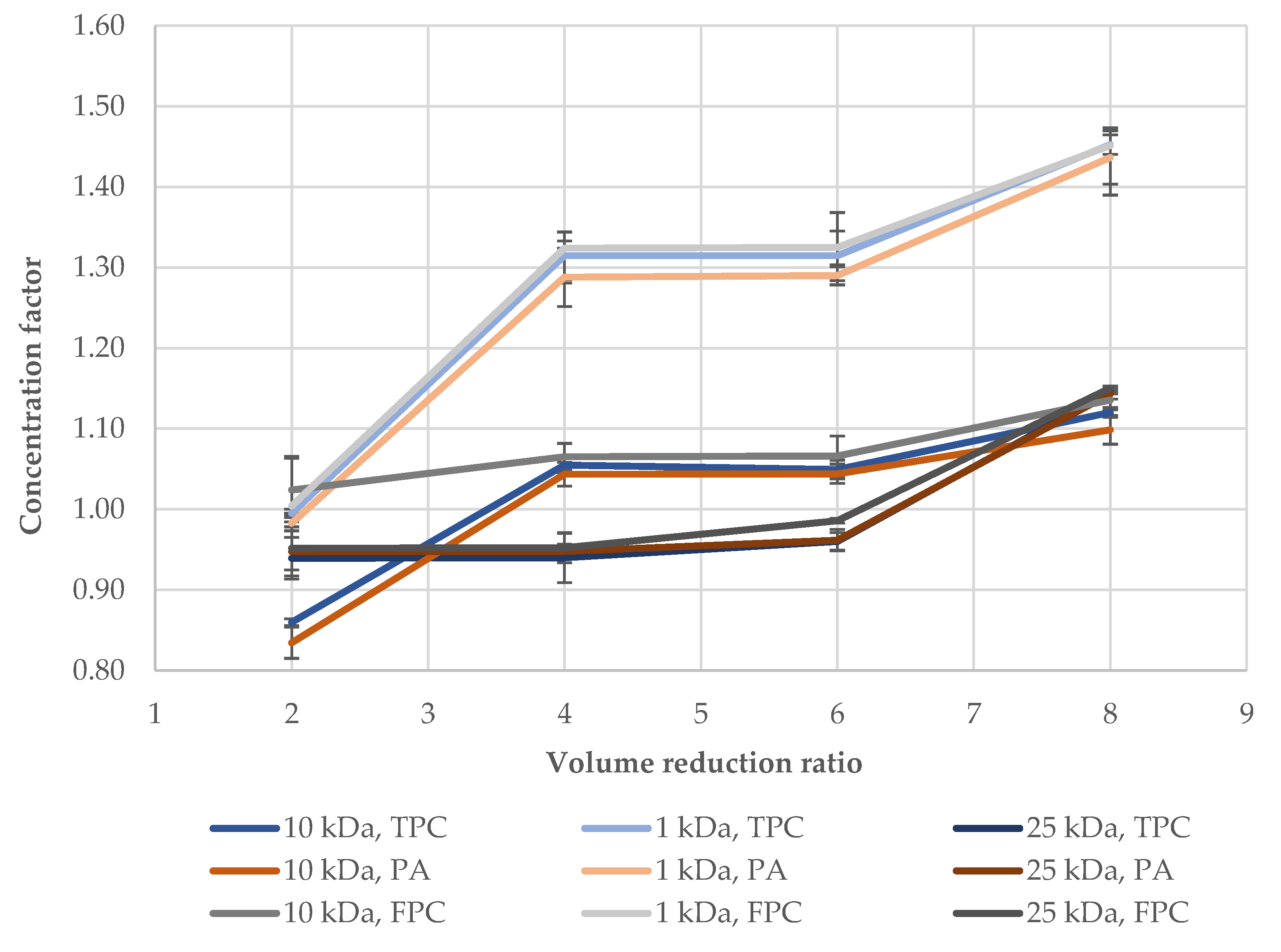
Figure 5.
Changes in antioxidant activity of retentates during ultrafiltration of rose wastewater.
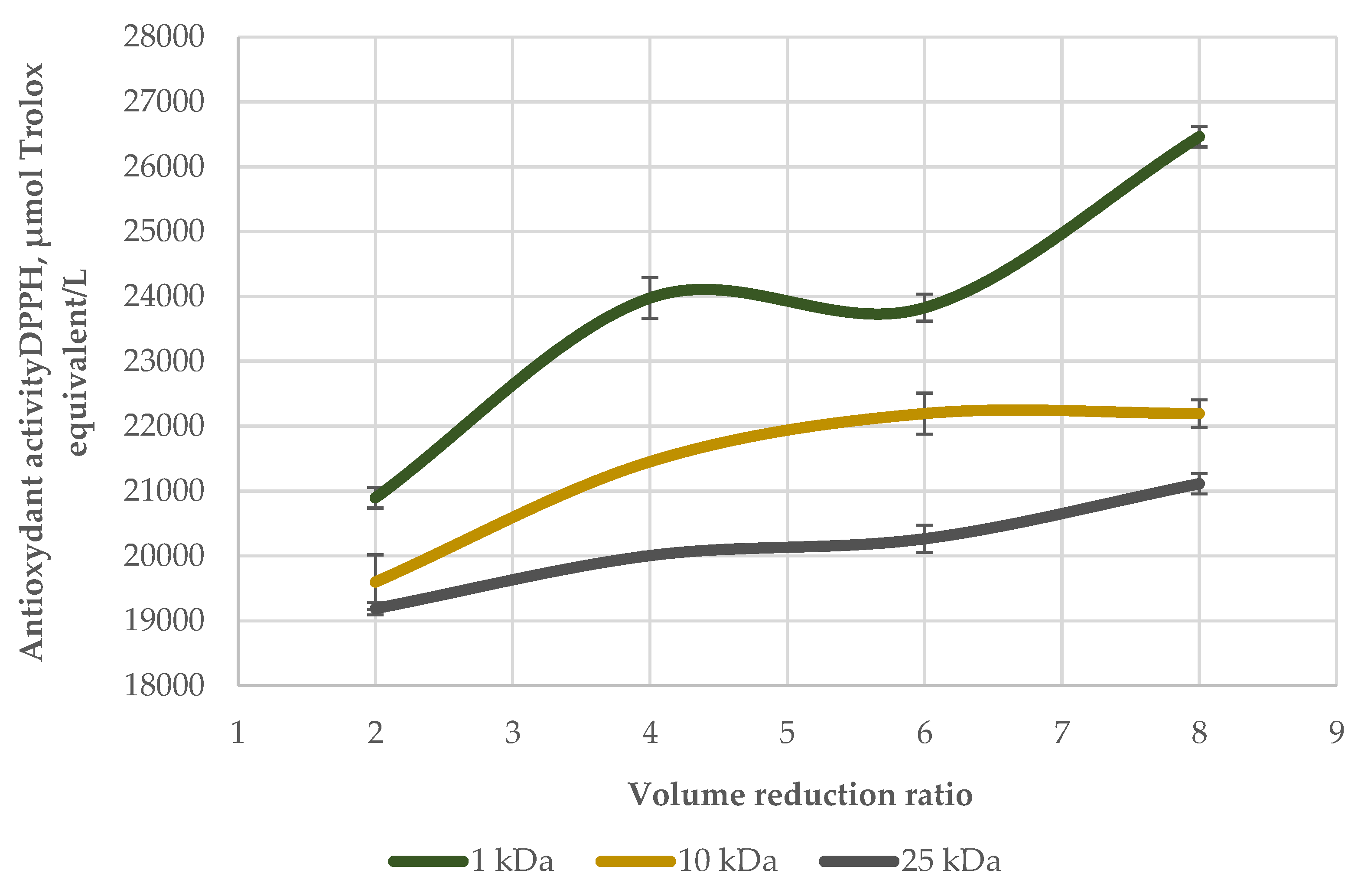
Figure 6.
Chromatograms of initial rose wastewater (A) and retentate at volume reduction ratio of 8 (B) with 1 kDa membrane.
Figure 6.
Chromatograms of initial rose wastewater (A) and retentate at volume reduction ratio of 8 (B) with 1 kDa membrane.
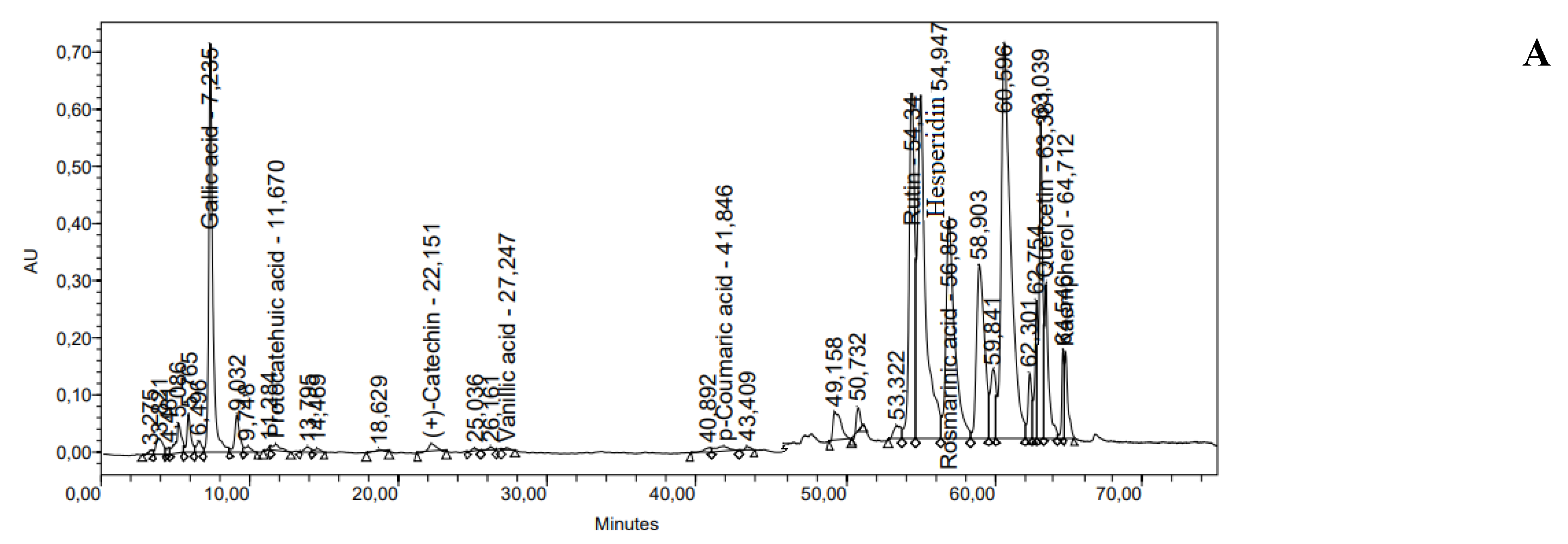
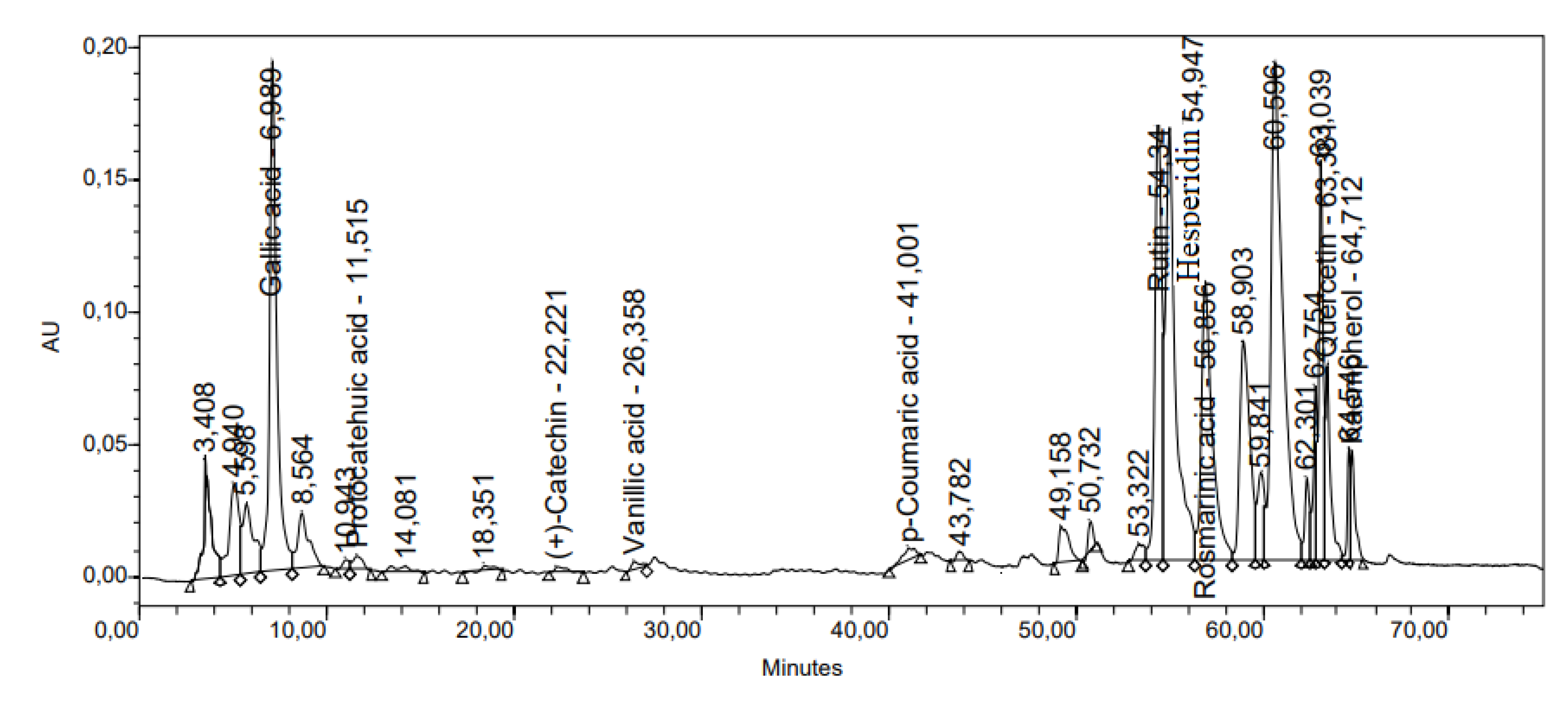
Figure 7.
Change in the polyphenolic profile of retentate at volume reduction ratio of 8 with 1 kDa membrane relative to initial rose waste water.
Figure 7.
Change in the polyphenolic profile of retentate at volume reduction ratio of 8 with 1 kDa membrane relative to initial rose waste water.
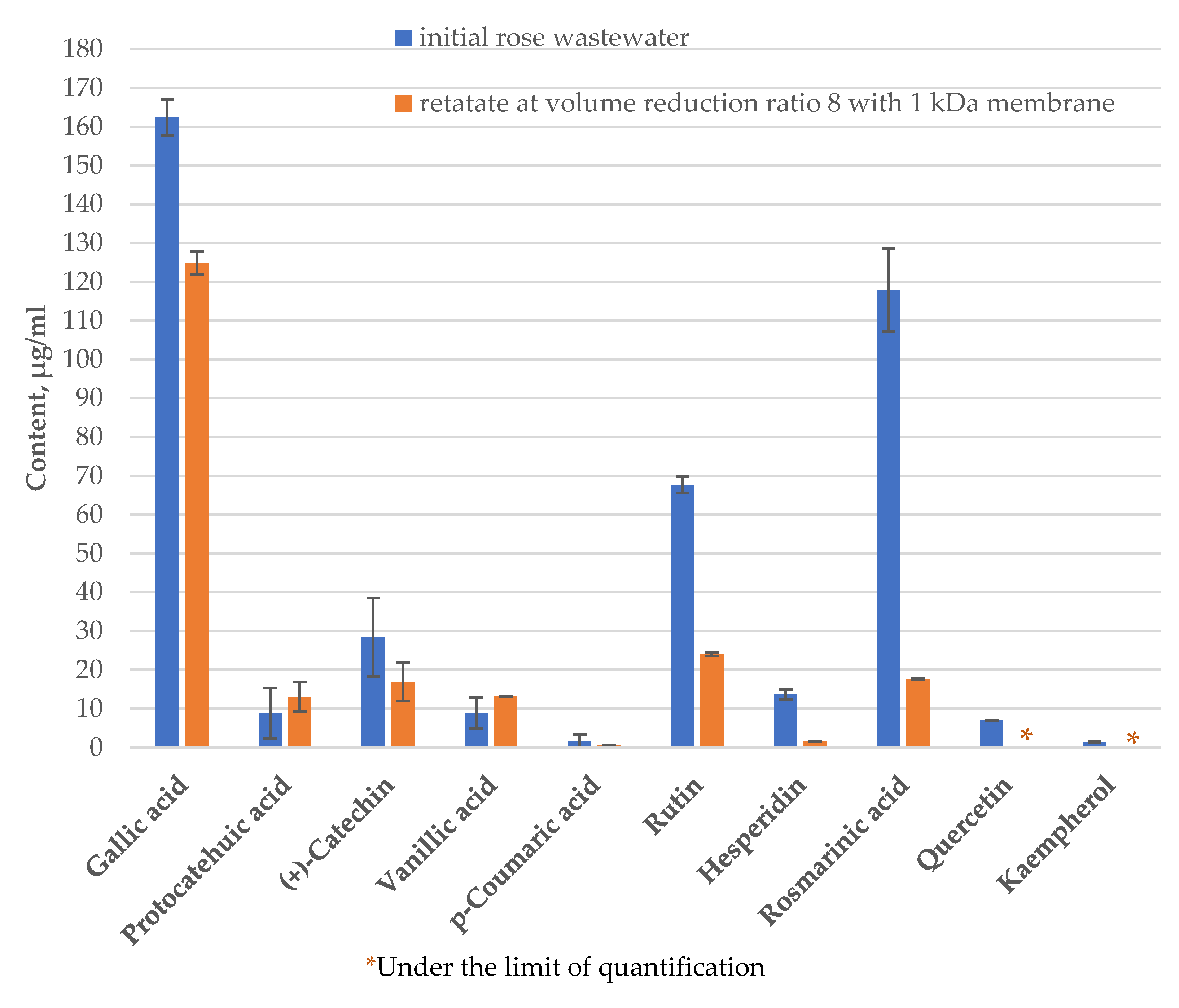

Table 1.
Total phenolic compounds, phenolic acids and flavonoid phenolic compounds in initial rose wastewater, retentates and permeates.
Table 1.
Total phenolic compounds, phenolic acids and flavonoid phenolic compounds in initial rose wastewater, retentates and permeates.
| № | Membrane Solution type: |
1 kDa | 10 kDa | 25kDa |
|---|---|---|---|---|
| Total phenolic compounds, mg/dm3 gallic acid equivalent | ||||
| 1 | Initial rose wastewater | 1646.66±10.78a | 1646.66±10.78a | 1646.66±10.78a |
| 2 | Retentate at volume reduction ratio 2 | 1638.55±8.24a,A | 1415.89±6.87b,B | 1546.66±42.51b,C |
| 3 | Retentate at volume reduction ratio 4 | 2164.40±48.79b,c,A | 1736.90±15.38c,B | 1547.47±50.46b,C |
| 4 | Retentate at volume reduction ratio 6 | 2164.49±50.74b,A | 1727.90±19.41c,B | 1581.32±12.71b,C |
| 5 | Retentate at volume reduction ratio 8 | 2391.57±19.87c,A | 1844.56±10.01d,B | 1885.77±2.95c,C |
| 6 | Permeate | 1384.64±13.34d,A | 1154.66±46.43e,B | 1295.57±7.27d,C |
| Phenolic acids, mg/dm3 caffeic acid equivalent | ||||
| 1 | Initial rose wastewater | 387.72±7.61a | 387.72±7.61a | 529.03±8.89a |
| 2 | Retentate at volume reduction ratio 2 | 381.06±3.69a,A | 323.54±7.51b,B | 503.52±14.20b,B |
| 3 | Retentate at volume reduction ratio 4 | 499.32±14.04b,A | 404.61±5.79c,B | 503.73±9.87a,C |
| 4 | Retentate at volume reduction ratio 6 | 500.07±4.37b,A | 404.86±4.64c,B | 521.58±1.61b,C |
| 5 | Retentate at volume reduction ratio 8 | 556.94±12.88c,A | 425.96±6.93d,B | 608.63±1.38c,B |
| 6 | Permeate | 317.65±7.18d,A | 268.46±16.68e,B | 423.38±3.22d,C |
| Flavonoid phenolic compounds, mg/dm3 quercetin | ||||
| 1 | Initial rose wastewater | 529.03±8.89a | 529.03±8.89a | 529.03±8.89a |
| 2 | Retentate at volume reduction ratio 2 | 531.22±4.83a,A,B | 541.70±20.95a,b,A | 503.52±14.20b,B |
| 3 | Retentate at volume reduction ratio 4 | 700.43±22.87b,A | 563.64±8.63b,B | 503.73±9.87a,C |
| 4 | Retentate at volume reduction ratio 6 | 700.93±11.56c,A | 564.00±13.12b,B | 521.58±1.61b,C |
| 5 | Retentate at volume reduction ratio 8 | 767.83±32.55d,A | 600.76±6.47c,B | 608.63±1.38c,B |
| 6 | Permeate | 448.03±8.87e,A | 382.04±18.09d,B | 423.38±3.22d,C |
Note: Different lowercase letters (a, b, c, d, e) show statistically significant difference in column (by solution type), different capital letters (A, B, C) show statistically significant difference in row (by membrane) at a significance level α < 0.05.
Disclaimer/Publisher’s Note: The statements, opinions and data contained in all publications are solely those of the individual author(s) and contributor(s) and not of MDPI and/or the editor(s). MDPI and/or the editor(s) disclaim responsibility for any injury to people or property resulting from any ideas, methods, instructions or products referred to in the content. |
© 2025 by the authors. Licensee MDPI, Basel, Switzerland. This article is an open access article distributed under the terms and conditions of the Creative Commons Attribution (CC BY) license (http://creativecommons.org/licenses/by/4.0/).
Copyright: This open access article is published under a Creative Commons CC BY 4.0 license, which permit the free download, distribution, and reuse, provided that the author and preprint are cited in any reuse.


