Preprint
Article

This version is not peer-reviewed.

The Influence of Noise Exposure on Cognitive Function in Children and Adolescents: A Meta-Analysis

A peer-reviewed article of this preprint also exists.

Submitted:

19 January 2025

Posted:

20 January 2025

You are already at the latest version

Abstract

Environmental noise has been consistently associated with adverse effects on cognitive function in children and adolescents. This study aimed to systematically evaluate research examining the impact of noise exposure on young individuals on cognitive function. This meta-analysis systematically reviewed and synthesized findings on the effects of different types of noise from eight original studies published between 2001 and 2023, examining the impact of noise exposure on cognitive performance across various cognitive domains in young populations. Our results indicate that noise exposure exerts a detrimental effect on cognitive performance in children and adolescents, SMD= –0.544, 95% CI [-0.616 to -0.472], z= -14.85; p < 0.0001. These findings demonstrate the significant influence of noise on cognition function.

Keywords: 
;  ;  ;  ;  ;  

1. Introduction

Environmental conditions during early stages of life are critical for the development of cognitive abilities required for future challenges in life. Environment also plays a crucial role in the development of academic skills in children [1], such as reading acquisition, abstract thinking and overall executive functions, where environment plays a crucial role in the academic outcome.
Environmental noise exposure is known to have a negative impact on global human health and to disrupt the development of cognitive domains in children and adolescents [1]. A significant amount of work has identified that children and adolescents exposed to noise from traffic [2], aircraft [3], in-home [4], or in-class [5], perform worse academically and show low scores in cognitive tests, this highlights the importance of studying the impact of noise on young population.
Both acute and chronic types of exposure to noise have an impact on cognitive performance in children and adolescents [6]. Acute classroom noise may compromise complex listening tasks: children in simulated classrooms with noise have low scores in comprehension learning tasks [7], suggesting that noise has a negative impact on the ability to process complex linguistic tasks. In highly populated cities, acute exposure to road traffic noise is often a public health concern and can negatively affect attention and overall IQ scores in elementary school children [8]. Cross-national studies can help to understand the effect of chronic environmental stressors in children such as aircraft noise. Research shows that areas around large airports have detrimental effects on the reading skills of elementary school students [9].
Because frontal lobes are not fully developed until late adolescence [10], executive functions are vulnerable to noise, therefore, special attention should be paid to the role of noise in adolescence age. Research shows that older adolescents exposed to higher levels of in-home noise performed better than their younger peers in their ability to inhibit responses in a particular context [4], this suggests that more developed executive functions may compensate for environmental disruptive conditions. Other cognitive skills such as reading comprehension and vocabulary-learning tasks can be sensitive to noise, when adolescents are exposed to higher levels of classroom noise, they show significantly lower reading comprehension skills than their peers exposed to a better acoustic environment [5]. Because the acquisition of several academic skills happens in early stages of life, noise can have long term effects in individual’s daily life and negatively impact executive functions in adulthood.
Understanding the effects that noise can have on the cognitive development in young population can help us to generate better environments for their overall health. This study aimed to systematically evaluate research examining the impact of noise exposure on young individuals on cognitive function.

2. Materials and Methods

This Meta-Analysis was registered in the international prospective register of systematic reviews (PROSPERO) under the ID CRD42024606851 on 07 November 2024. The search strategy for each database was designed based on the research question, following the guidelines outlined in the Preferred Reporting Items for Systematic Reviews and Meta-Analyses (PRISMA) [12].

2.1. Search Strategy

A comprehensive literature search was conducted to examine the impact of noise exposure on cognitive function in children and adolescents. The search was performed across PubMed and Web of Science databases, targeting relevant research articles published from inception through December 4, 2024. Table 1 presents a summary of the keywords utilized in the search strategy, with a detailed account of the search methodology provided in Table S1.

2.2. Inclusion and Exclusion Criteria

We included all studies that reported the effects of noise exposure on cognitive function in children and adolescents. Only studies that employed quantitative measures of memory, learning, executive function, attention, or intelligence quotient (IQ) were selected. In cases where the abstract did not provide sufficient information for inclusion, the full text was reviewed. The analysis was limited to studies published in English. The experimental group consisted of individuals exposed to various types of noise, with the focus restricted to minors under 18 years of age.
Exclusions included letters to the editor, clinical cases, commentaries, systematic reviews, qualitative studies, short communications, and meta-analyses. Any full-text publications that were inaccessible were also excluded; Table S2.

2.3. Data Extraction

The reviewers (D. F.-Q., and D.E.M.-F.) independently screened and identified eligible papers based on title, abstract, and full text, in accordance with predefined inclusion criteria. Following the selection process, relevant data from the included studies were extracted into an R project (Figure 1). The researchers independently coded the studies for the following variables of interest: first author, year of publication, publication venue, study design, total sample size, sample size for each group and measure, sample age, primary outcome measure, study location by country, sex, noise source, noise level, exposure assessment, exposure setting, cognitive outcome measures, and the principal test used to evaluate cognitive function. Finally, effect size calculations were performed by a single researcher, with input and guidance provided by the other two researchers in cases where the information presented in the studies was unclear or ambiguous.

2.4. Quality Evaluation

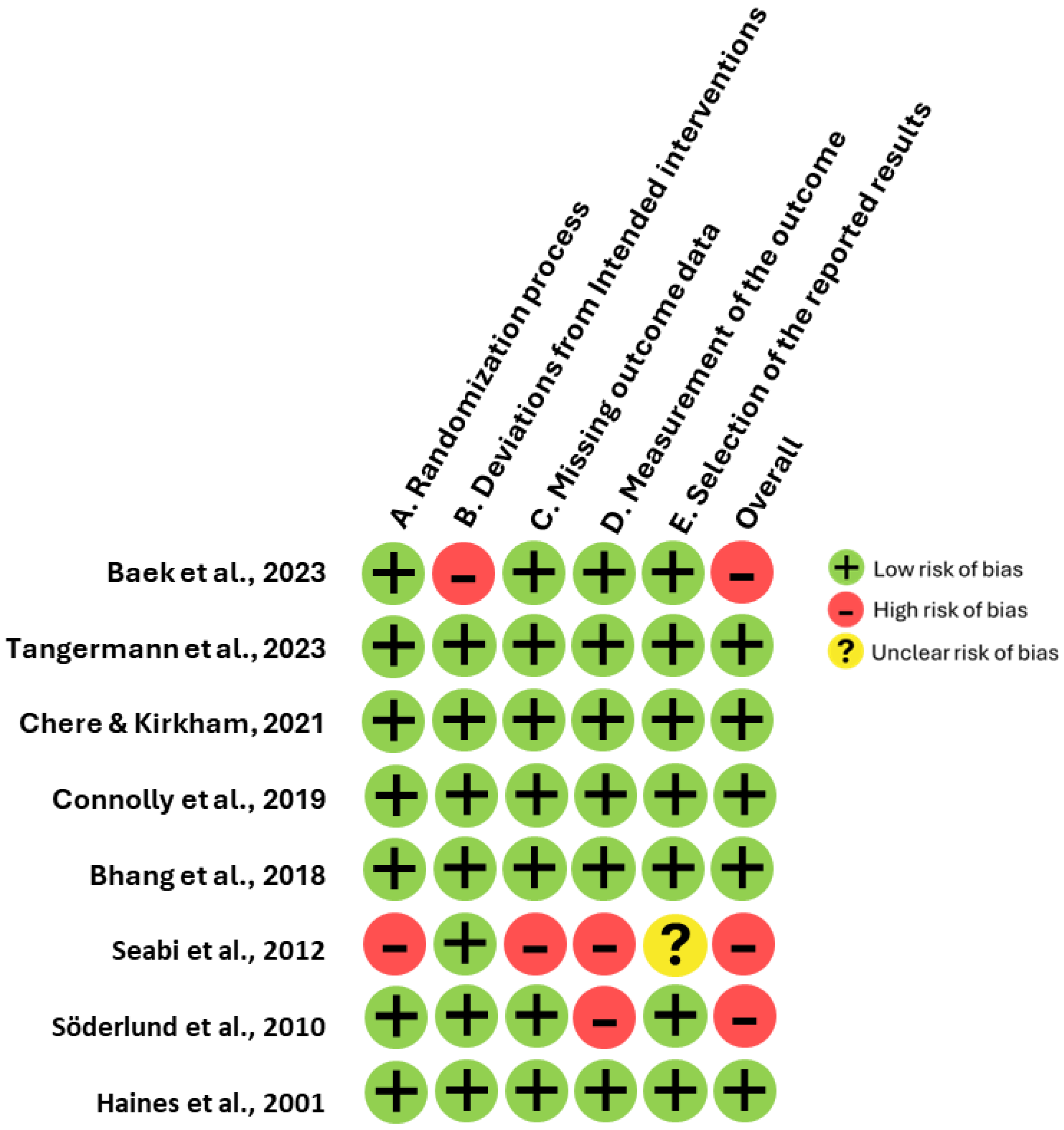
Document quality was assessed using the Risk of Bias 2 (RoB 2) tool [16]. The assessment of risk of bias (RoB-2) was conducted by two independent researchers, D. F.-Q. and J.G.-E., with a third researcher, S. L., available for mediation if needed. However, mediation was unnecessary due to consistent agreement among the reviewers. This tool assesses risk across five distinct domains: (1) randomization process, (2) deviations from the planned intervention, (3) missing outcome data, (4) outcome measurement, and (5) selection of reported results. Each domain is rated on three levels of risk: high, some concerns, and low, which is based on signaling questions within that domain. The overall risk of bias for the study is determined by combining the ratings from these domains. A study is typically categorized as having a high risk of bias if any domain is rated high risk, or if multiple domains raise concerns. A study is classified as having a low risk of bias if all domains are rated low risk. If a few domains raise some concerns, the study is considered to have some concerns overall.

2.5. Statistical Methods

Meta-analysis was carried out by R Software (version 4.1.2, http://www.Rproject.org), R “meta” package was employed (Supplementary S3). We used both random and fixed effects models to pool the estimate of the impact of noise exposure on cognitive function. We calculated the mean difference (MD), and then the pooled SD is calculated to reflect the shared variability between the groups, while the standard error (SE) is obtained by multiplying the pooled SD by the square root of the sum of the inverse of the sample sizes from each group. The standardized mean difference (SMD) is determined by dividing the MD by the pooled SD, and it represents Cohen’s d, according to the methods proposed by Shim and Kim [17], the extracted data are presented in Table 2. Additionally, if the mean and standard deviation were missing from a graph or table were calculated as indicate by Meta-analysis accelerator tool [18,19].
The I2 statistic was used to measure the degree of heterogeneity caused by variability in the true effect size. The effect sizes of g = 0.20 as small, g = 0.50 as moderate and g = 0.80 as High heterogeneity [20]. Forest plots were created by the meta, metadata, metafor and rmeta function of meta packages, and funnel plots were constructed by the funnel function to estimate the publication bias.

3. Results

In this meta-analysis, we evaluated the impact of noise exposure on cognitive function among children and adolescents. A comprehensive database search initially yielded 5,126 articles, of which eight studies from Korea, Switzerland, the United Kingdom, South Africa, and Sweden were included in the final analysis. The total sample was evenly divided between the experimental group (n = 1,687) and the control group (n = 1,698). The PRISMA flow diagram, presented in Figure 1, illustrates the study selection process.

3.1. Study Characteristics

The studies, published between 2001 and 2023, involved sample sizes ranging from 20 to 509 participants, with ages spanning 8 to 16 years. Each study included a control group that was not exposed to noise or was unrelated to noisy environments. The primary source of noise was aircraft noise, while other sources included road traffic noise, environmental noise, and white noise. Noise exposure levels ranged from 55 to 80 dB, as determined by the exposure assessments. The primary locations of exposure were schools, followed by homes.
The Cognitive function in the selected studies was assessed using a variety of tests, scales, and tasks designed to evaluate distinct domains of cognition. For instance, the KIT-P assessed multiple areas of intelligence, such as verbal and non-verbal reasoning, problem-solving, memory, and processing speed, offering insights into children’s intellectual development. The IST focused on verbal, numerical, and figural reasoning, alongside memory capacity. To evaluate attentional control and executive function, the Flanker Task was utilized, specifically targeting the ability to inhibit distractions and concentrate on relevant stimuli. The Reading Task measured latency in learning, recognizing, or recalling new words during reading activities, while the KEDI-WISC assessed verbal comprehension, perceptual reasoning, working memory, and processing speed, taking into account the cultural and educational context of South Korea. Reading fluency, comprehension, and accuracy were evaluated using the SRS2, while memory function was assessed with the Verbal Episodic Recall Test. Additionally, the Suffolk Reading Scale was applied to gauge word recognition, reading fluency, and comprehension, providing a comprehensive evaluation of reading skills in children and adolescents. A summary of the characteristics of the included studies, including their cognitive assessment tools, is presented in Table 3.

3.2. Impact of Noise Exposure on Cognition Function in Children and Adolescents

The results revealed a significant reduction in cognition function in the youth when they were exposed to noise. Under the common effect model, the SMD was –0.544 with a 95% confidence interval ranging from -0.616 to -0.472 (z= -14.85, p < 0.0001). The random effects model, which accounts for variability among studies, indicated a less effect size SMD = -1.432 with a 95% confidence interval from -2.672 to -0.192 (z= -2.26, p= 0.0236).
Regarding the heterogeneity among the included studies, it was found to be high, I2 of 98.3% (Q= 562.66, df= 7, p< 0.0001), indicating a significant variability among studies, Figure 2.

3.3. Sensitivity Analysis

A sensitivity analysis was conducted sequentially excluding each individual study to evaluate their impact on the combined effect size. The findings indicated that the overall effect size remained relatively stable with individual study effect sizes varying between SMD= -0.3924 and -0.7167. This consistency supports the robustness and dependability of the meta-analysis results.

3.4. Quality Analysis of Research Reports

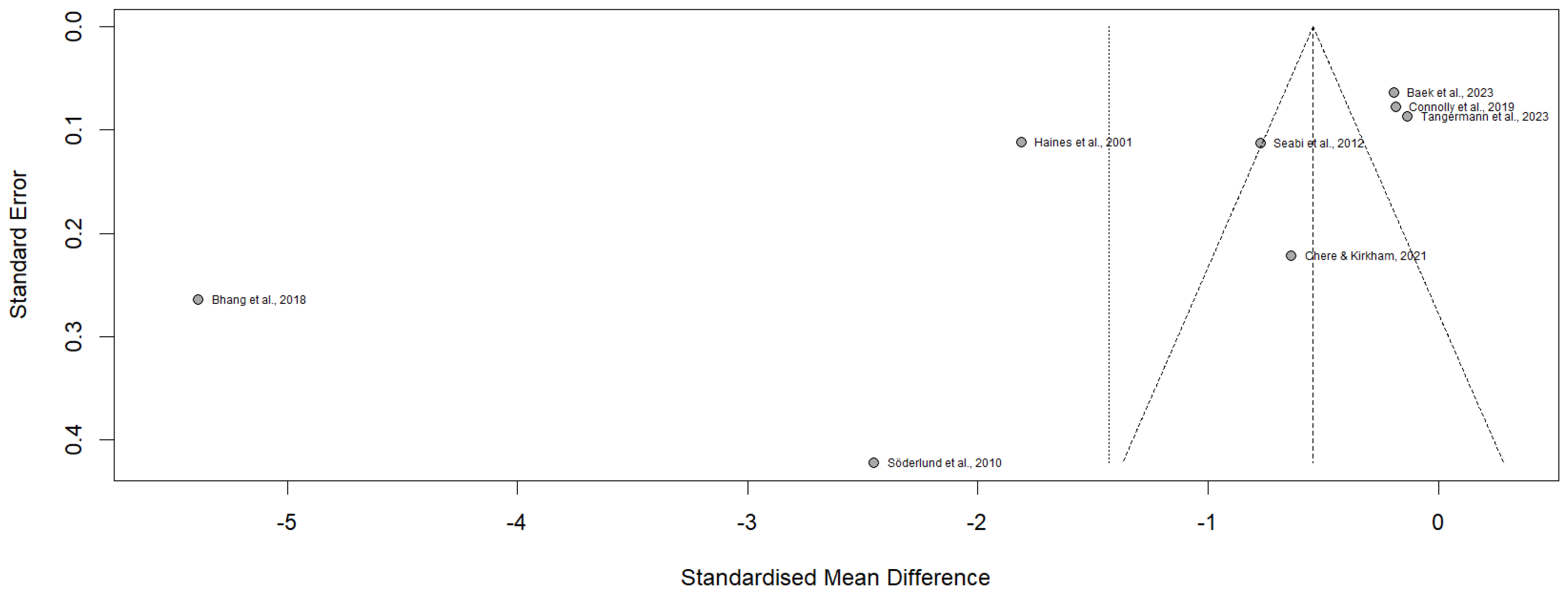
The funnel plot (Figure 3) demonstrates an asymmetrical distribution of studies included in the meta-analysis. Specifically, studies such as "Bhang et al., 2018" and "Söderlund et al., 2010," located on the lower left quadrant, display disproportionately large effect sizes coupled with higher standard errors, suggesting potential small-study effects. Conversely, studies such as "Baek et al., 2023" and "Connolly et al., 2019" cluster near the mean effect size with lower standard errors. Whereas "Haines et al., 2001" deviates notably towards positive values. This asymmetry indicates systematic differences in the methodologies used to measure cognitive function or in the population characteristics across the included studies. The Risk of Bias (RoB 2) assessment revealed that most studies demonstrated a low risk of bias across cognitive domains (Figure 4), ensuring robust methodological quality. However, "Seabi et al., 2012" and "Baek et al., 2023" showed a high risk in the randomization process and selective reporting of results, while "Söderlund et al., 2010" had an unclear risk due to insufficient information on missing outcome data.

4. Discussion

A total of 3,385 children and adolescents were included in this meta-analysis to assess the impact of noise exposure on cognitive function. The findings reveal that various sources of noise exposure can significantly impair cognitive abilities, including learning, memory, executive function, IQ, and other related domains. However, the analysis also identified substantial heterogeneity among the included studies. This suggests that the effects of noise exposure on cognitive function in youth may vary depending on study-specific factors such as the type of noise source, population characteristics, and methodological approaches.
The high heterogeneity observed (98.3%) underscores the significant variability among the included studies. This variability could arise from several sources, including differences in the types of noise exposure (e.g., traffic noise, industrial noise, or classroom noise), variations in the measurement of cognitive function, and discrepancies in population demographics, such as age, socioeconomic status, and baseline cognitive abilities. Additionally, methodological inconsistencies, such as variations in study design (e.g., cross-sectional versus longitudinal studies) and differences in noise exposure assessment methods, may have contributed to this heterogeneity.
Moreover, the funnel plot analysis revealed an asymmetrical distribution of studies, suggesting potential small-study effects and systematic differences among the included studies. For instance, studies such as Bhang et al. [8] and Söderlund et al. [11] exhibited disproportionately large effect sizes with higher standard errors, indicating possible publication bias or methodological variability. In contrast, studies like Baek et al. [13] and Connolly et al. [5] clustered around the mean effect size with lower standard errors, reflecting greater consistency and methodological rigor. Additionally, Haines et al. [15] deviated significantly towards positive effect values, further underscoring differences in population characteristics or study design. The RoB 2 assessment confirmed overall strong methodological quality across most studies, with the majority classified as having a low risk of bias. However, specific exceptions were noted. These observations emphasize the need for greater methodological transparency and standardization in future research to enhance the reliability and comparability of findings.
These findings are consistent with prior research indicating that chronic noise exposure adversely affects attention and memory processes [11,21,22]. These effects are likely mediated through stress-related mechanisms and physiological responses triggered by prolonged noise exposure [23,24,25,26]. Moreover, an a large body of research in humans consistently reports that noise has detrimental impacts on cognitive performance across various domains [27].
Noise exposure impacts human physiology through direct and indirect mechanisms, both of which contribute to cognitive impairment. The direct pathway primarily involves damage to auditory hair cells caused by prolonged exposure to high sound pressure levels. This damage disrupts auditory signal processing and can indirectly affect cognitive function through impaired sensory input [28]. Additionally, noise-induced sleep disruption, a recognized cardiovascular risk factor, further exacerbates cognitive deficits by impairing neural restoration processes during sleep [2]. The indirect pathway involves emotional and metabolic responses triggered by noise stimuli. Activation of the limbic system in response to noise elicits neuroendocrine arousal, leading to alterations in glucose metabolism, lipid dysregulation, and hemodynamic changes [29,30,31,32,33,34]. These disruptions are strongly linked to cognitive decline and an increased risk of neurodegenerative diseases. Furthermore, noise exposure induces oxidative stress through the generation of reactive oxygen species (ROS), a critical factor in neuronal damage and cognitive deterioration [38,39,40].
Both pathways converge to produce physiological stress responses, including increased secretion of cortisol and other stress-related hormones, disruption of circadian rhythms, and reductions in melatonin production. These effects are compounded by inflammatory processes marked by elevated levels of TNF-α, IL-1β, IL-6, and C-reactive protein (CRP) [35,36,37]. Such systemic stress responses impair neural plasticity and cognitive performance, underscoring the multifaceted impact of noise exposure on cognitive health.
However, the underlying mechanisms linking chronic noise exposure to cognitive impairments remain poorly understood. While the results of various studies are relatively consistent in demonstrating the adverse effects of noise on cognitive functions, the specific pathways involved remain ambiguous.
The limitations of the reviewed studies primarily stem from their reliance on cross-sectional designs, which inherently limit the ability to identify causal relationships and fully explain the underlying mechanisms linking noise exposure to cognitive function. Additionally, various contextual factors were not consistently accounted for, such as the structural characteristics of educational facilities, proximity to industrial zones, and the potential compounding effects of air pollution or socioeconomic disparities.
Individual exposure to noise prior to the study was not systematically measured, nor were participants’ subjective perceptions or sensitivities to noise, both of which could substantially mediate the observed effects. Furthermore, differences in cultural or linguistic contexts that might influence cognitive assessments were not addressed, w hich makes results difficult to compare between populations across studies.
Several studies also lacked adequate control for confounding variables, such as comorbid health conditions, sleep disturbances, or variations in teaching quality, which could independently affect cognitive outcomes. The small sample sizes in many studies further limit the generalization of their findings. Also, there was considerable variability in the cognitive assessment tools used, leading to challenges in conclusive data.
Future research should aim to mitigate these limitations by incorporating longitudinal designs, larger and more representative cohorts, and robust control for potential confounders. Additionally, there is a critical need to establish a standardized, culturally inclusive cognitive assessment framework for children and adolescents, as well as to identify the threshold levels and durations of noise exposure that significantly impact cognitive development.

5. Conclusions

This evidence demonstrates that noise exposure negatively affects cognitive function in children and adolescents. While the findings provide valuable insights, variability among studies highlights the need for further research to better understand this relationship. Efforts to address these challenges are crucial for protecting the cognitive development and well-being of younger populations.

Supplementary Materials

The following supporting information can be downloaded at the website of this paper posted on Preprints.org, Search S1, Table S2, R code S3.

Author Contributions

Design and conceptualization, D.F.-Q., and S.L.; Methodology and formal analysis, D.F.-Q., D.E.M.-F., I.F., and J.G.-E.; Writing (original draft preparation), D.F.-Q. and S.L.; Writing (review and editing), D.E.M.-F., I.F., J.G.-E., S.L., and D.F.-Q.; supervision, D.F.-Q and S.L. All authors have read and agreed to the published version of the manuscript.

Funding

Open Access Funding by UDG, Universidad de Guadalajara, Centro Universitario de Ciencias de la Salud, CUCS.

Institutional Review Board Statement

This study was employed in accordance with the guidelines in the Preferred Reporting Items for Systematic Reviews and Meta-analyses (PRISMA) statement, and the protocol of the review was registered in the International Prospective Register of Systematic Reviews (PROSPERO) (registration number CRD42024606851). Ethical committee approval for this study was not required.

Informed Consent Statement

Not applicable.

Data Availability Statement

The data extracted from the included studies and the analytic code are available.

Conflicts of Interest

The authors declare no conflicts of interest.

References

  1. Spiegel, J.A.; Goodrich, J.M.; Morris, B.M.; Osborne, C.M.; Lonigan, C.J. Relations between Executive Functions and Academic Outcomes in Elementary School Children: A Meta-Analysis. Psychological Bulletin 2021, 147, 329–351. [Google Scholar] [CrossRef]
  2. Hahad, O.; Kuntic, M.; Al-Kindi, S.; Kuntic, I.; Gilan, D.; Petrowski, K.; Daiber, A.; Münzel, T. Noise and Mental Health: Evidence, Mechanisms, and Consequences. J Expo Sci Environ Epidemiol 2024. [Google Scholar] [CrossRef] [PubMed]
  3. Tangermann, L.; Vienneau, D.; Saucy, A.; Hattendorf, J.; Schäffer, B.; Wunderli, J.M.; Röösli, M. The Association of Road Traffic Noise with Cognition in Adolescents: A Cohort Study in Switzerland. Environmental Research 2023, 218, 115031. [Google Scholar] [CrossRef] [PubMed]
  4. Chere, B.; Kirkham, N. The Negative Impact of Noise on Adolescents’ Executive Function: An Online Study in the Context of Home-Learning During a Pandemic. Front. Psychol. 2021, 12. [Google Scholar] [CrossRef] [PubMed]
  5. Connolly, D.; Dockrell, J.; Shield, B.; Conetta, R.; Mydlarz, C.; Cox, T. The Effects of Classroom Noise on the Reading Comprehension of Adolescents. J Acoust Soc Am 2019, 145, 372. [Google Scholar] [CrossRef] [PubMed]
  6. Klatte, M.; Bergström, K.; Lachmann, T. Does Noise Affect Learning? A Short Review on Noise Effects on Cognitive Performance in Children. Front Psychol 2013, 4. [Google Scholar] [CrossRef]
  7. Valente, D.L.; Plevinsky, H.M.; Franco, J.M.; Heinrichs-Graham, E.C.; Lewis, D.E. Experimental Investigation of the Effects of the Acoustical Conditions in a Simulated Classroom on Speech Recognition and Learning in Children. J Acoust Soc Am 2012, 131, 232–246. [Google Scholar] [CrossRef] [PubMed]
  8. Bhang, S.-Y.; Yoon, J.; Sung, J.; Yoo, C.; Sim, C.; Lee, C.; Lee, J.; Lee, J. Comparing Attention and Cognitive Function in School Children across Noise Conditions: A Quasi-Experimental Study. Psychiatry Investig 2018, 15, 620–627. [Google Scholar] [CrossRef]
  9. Stansfeld, S.A.; Berglund, B.; Clark, C.; Lopez-Barrio, I.; Fischer, P.; Ohrström, E.; Haines, M.M.; Head, J.; Hygge, S.; van Kamp, I.; et al. Aircraft and Road Traffic Noise and Children’s Cognition and Health: A Cross-National Study. Lancet 2005, 365, 1942–1949. [Google Scholar] [CrossRef]
  10. Herring, C.A.; Simmons, R.K.; Freytag, S.; Poppe, D.; Moffet, J.J.D.; Pflueger, J.; Buckberry, S.; Vargas-Landin, D.B.; Clément, O.; Echeverría, E.G.; et al. Human Prefrontal Cortex Gene Regulatory Dynamics from Gestation to Adulthood at Single-Cell Resolution. Cell 2022, 185, 4428–4447.e28. [Google Scholar] [CrossRef] [PubMed]
  11. Söderlund, G.B.; Sikström, S.; Loftesnes, J.M.; Sonuga-Barke, E.J. The Effects of Background White Noise on Memory Performance in Inattentive School Children. Behavioral and Brain Functions 2010, 6, 55. [Google Scholar] [CrossRef]
  12. Page, M.J.; McKenzie, J.E.; Bossuyt, P.M.; Boutron, I.; Hoffmann, T.C.; Mulrow, C.D.; Shamseer, L.; Tetzlaff, J.M.; Akl, E.A.; Brennan, S.E.; et al. The PRISMA 2020 Statement: An Updated Guideline for Reporting Systematic Reviews. BMJ 2021, 372, n71. [Google Scholar] [CrossRef] [PubMed]
  13. Baek, K.; Park, C.; Sakong, J. The Impact of Aircraft Noise on the Cognitive Function of Elementary School Students in Korea. Noise Health 2023, 25, 83–91. [Google Scholar] [CrossRef]
  14. Seabi, J.; Cockcroft, K.; Goldschagg, P.; Greyling, M. The Impact of Aircraft Noise Exposure on South African Children’s Reading Comprehension: The Moderating Effect of Home Language. Noise Health 2012, 14, 244–252. [Google Scholar] [CrossRef]
  15. Haines, M.M.; Stansfeld, S.A.; Brentnall, S.; Head, J.; Berry, B.; Jiggins, M.; Hygge, S. The West London Schools Study: The Effects of Chronic Aircraft Noise Exposure on Child Health. Psychol Med 2001, 31, 1385–1396. [Google Scholar] [CrossRef]
  16. Sterne JAC, Savović J, Page MJ, Elbers RG, Blencowe NS, Boutron I, Cates CJ, Cheng H-Y, Corbett MS, Eldridge SM, Hernán MA, Hopewell S, Hróbjartsson A, Junqueira DR, Jüni P, Kirkham JJ, Lasserson T, Li T, McAleenan A, Reeves BC, Shepperd S, Shrier I, Stewart LA, Tilling K, White IR, Whiting PF, Higgins JPT RoB 2: A Revised Tool for Assessing Risk of Bias in Randomised Trials. BMJ 2019, I4898. [CrossRef]
  17. Shim, S.R.; Kim, S.-J. Intervention Meta-Analysis: Application and Practice Using R Software. Epidemiol Health 2019, 41, e2019008. [Google Scholar] [CrossRef] [PubMed]
  18. Abbas, A.; Hefnawy, M.T.; Negida, A. Meta-Analysis Accelerator: A Comprehensive Tool for Statistical Data Conversion in Systematic Reviews with Meta-Analysis. BMC Medical Research Methodology 2024, 24, 243. [Google Scholar] [CrossRef] [PubMed]
  19. Wan, X.; Wang, W.; Liu, J.; Tong, T. Estimating the Sample Mean and Standard Deviation from the Sample Size, Median, Range and/or Interquartile Range. BMC Med Res Methodol 2014, 14, 135. [Google Scholar] [CrossRef] [PubMed]
  20. Borenstein, M. How to Understand and Report Heterogeneity in a Meta-Analysis: The Difference between I-Squared and Prediction Intervals. Integrative Medicine Research 2023, 12, 101014. [Google Scholar] [CrossRef]
  21. Liu, L.; Shen, P.; He, T.; Chang, Y.; Shi, L.; Tao, S.; Li, X.; Xun, Q.; Guo, X.; Yu, Z.; et al. Noise Induced Hearing Loss Impairs Spatial Learning/Memory and Hippocampal Neurogenesis in Mice. Scientific Reports 2016, 6. [Google Scholar] [CrossRef]
  22. Fernández-Quezada, D.; Moran-Torres, D.; Luquin, S.; Ruvalcaba-Delgadillo, Y.; García-Estrada, J.; Jáuregui-Huerta, F. Male/Female Differences in Radial Arm Water Maze Execution After Chronic Exposure to Noise. Noise Health 2019, 21, 25–34. [Google Scholar] [CrossRef] [PubMed]
  23. Fernández-Quezada, D.; Luquín, S.; Ruvalcaba-Delgadillo, Y.; García-Estrada, J.; Jauregui-Huerta, F. Sex Differences in the Expression of C-Fos in a Rat Brain after Exposure to Environmental Noise. Sustainability 2022, 14, 2798. [Google Scholar] [CrossRef]
  24. Fernandez-Quezada, D.; García-Zamudio, A.; Ruvalcaba-Delgadillo, Y.; Luquín, S.; García-Estrada, J.; Jáuregui Huerta, F. Male Rats Exhibit Higher Pro-BDNF, c-Fos and Dendritic Tree Changes after Chronic Acoustic Stress. Biosci Trends 2019, 13, 546–555. [Google Scholar] [CrossRef]
  25. Wright, B.; Peters, E.; Ettinger, U.; Kuipers, E.; Kumari, V. Understanding Noise Stress-Induced Cognitive Impairment in Healthy Adults and Its Implications for Schizophrenia. Noise and Health 2014, 16, 166. [Google Scholar] [CrossRef] [PubMed]
  26. Westman, J.C.; Walters, J.R. Noise and Stress: A Comprehensive Approach. Environmental Health Perspectives 1981, 41, 291. [Google Scholar] [CrossRef] [PubMed]
  27. Neuman, A.C.; Wroblewski, M.; Hajicek, J.; Rubinstein, A. Combined Effects of Noise and Reverberation on Speech Recognition Performance of Normal-Hearing Children and Adults. Ear Hear 2010, 31, 336–344. [Google Scholar] [CrossRef]
  28. Babisch, W. The Noise/Stress Concept, Risk Assessment and Research Needs. Noise and Health 2002, 4, 1. [Google Scholar] [PubMed]
  29. Faisal, A.A.; Selen, L.P.J.; Wolpert, D.M. Noise in the Nervous System. Nature Reviews Neuroscience 2008, 9, 292–303. [Google Scholar] [CrossRef]
  30. Spreng, M. Central Nervous System Activation by Noise. Noise Health 2000, 2, 49–58. [Google Scholar] [PubMed]
  31. Zijlema, W.L.; de Kluizenaar, Y.; van Kamp, I.; Hartman, C.A. Associations between Road Traffic Noise Exposure at Home and School and ADHD in School-Aged Children: The TRAILS Study. Eur Child Adolesc Psychiatry 2021, 30, 155–167. [Google Scholar] [CrossRef] [PubMed]
  32. Münzel, T.; Sørensen, M.; Gori, T.; Schmidt, F.P.; Rao, X.; Brook, J.; Chen, L.C.; Brook, R.D.; Rajagopalan, S. Environmental Stressors and Cardio-Metabolic Disease: Part I-Epidemiologic Evidence Supporting a Role for Noise and Air Pollution and Effects of Mitigation Strategies. Eur Heart J 2017, 38, 550–556. [Google Scholar] [CrossRef] [PubMed]
  33. Münzel, T.; Daiber, A. Environmental Stressors and Their Impact on Health and Disease with Focus on Oxidative Stress. Antioxid Redox Signal 2018, 28, 735–740. [Google Scholar] [CrossRef] [PubMed]
  34. Henry, J.P. Biological Basis of the Stress Response. Integr Physiol Behav Sci 1992, 27, 66–83. [Google Scholar] [CrossRef] [PubMed]
  35. Molitor, M.; Bayo-Jimenez, M.T.; Hahad, O.; Witzler, C.; Finger, S.; Garlapati, V.S.; Rajlic, S.; Knopp, T.; Bieler, T.K.; Aluia, M.; et al. Aircraft Noise Exposure Induces Pro-Inflammatory Vascular Conditioning and Amplifies Vascular Dysfunction and Impairment of Cardiac Function after Myocardial Infarction. Cardiovasc Res 2023, 119, 1416–1426. [Google Scholar] [CrossRef] [PubMed]
  36. Cho, I.; Kim, J.; Jung, S.; Kim, S.Y.; Kim, E.J.; Choo, S.; Kam, E.H.; Koo, B.-N. The Impact of Persistent Noise Exposure under Inflammatory Conditions. Healthcare (Basel) 2023, 11, 2067. [Google Scholar] [CrossRef] [PubMed]
  37. Farahbakht, E.; Alsinani, Y.; Safari, M.; Hofmeister, M.; Rezaie, R.; Sharifabadi, A.; Jahromi, M.K. Immunoinflammatory Response to Acute Noise Stress in Male Rats Adapted with Different Exercise Training. Noise Health 2023, 25, 226–235. [Google Scholar] [CrossRef]
  38. Daiber, A.; Kröller-Schön, S.; Frenis, K.; Oelze, M.; Kalinovic, S.; Vujacic-Mirski, K.; Kuntic, M.; Bayo Jimenez, M.T.; Helmstädter, J.; Steven, S.; et al. Environmental Noise Induces the Release of Stress Hormones and Inflammatory Signaling Molecules Leading to Oxidative Stress and Vascular Dysfunction-Signatures of the Internal Exposome. Biofactors 2019, 45, 495–506. [Google Scholar] [CrossRef]
  39. Zhou, Z.; Jiang, W.-J.; Wang, Y.-P.; Si, J.-Q.; Zeng, X.-S.; Li, L. CD36-Mediated ROS/PI3K/AKT Signaling Pathway Exacerbates Cognitive Impairment in APP/PS1 Mice after Noise Exposure. Sci Total Environ 2024, 952, 175879. [Google Scholar] [CrossRef]
  40. Wu, F.; Xiong, H.; Sha, S. Noise-Induced Loss of Sensory Hair Cells Is Mediated by ROS/AMPKα Pathway. Redox Biol 2020, 29, 101406. [Google Scholar] [CrossRef] [PubMed]
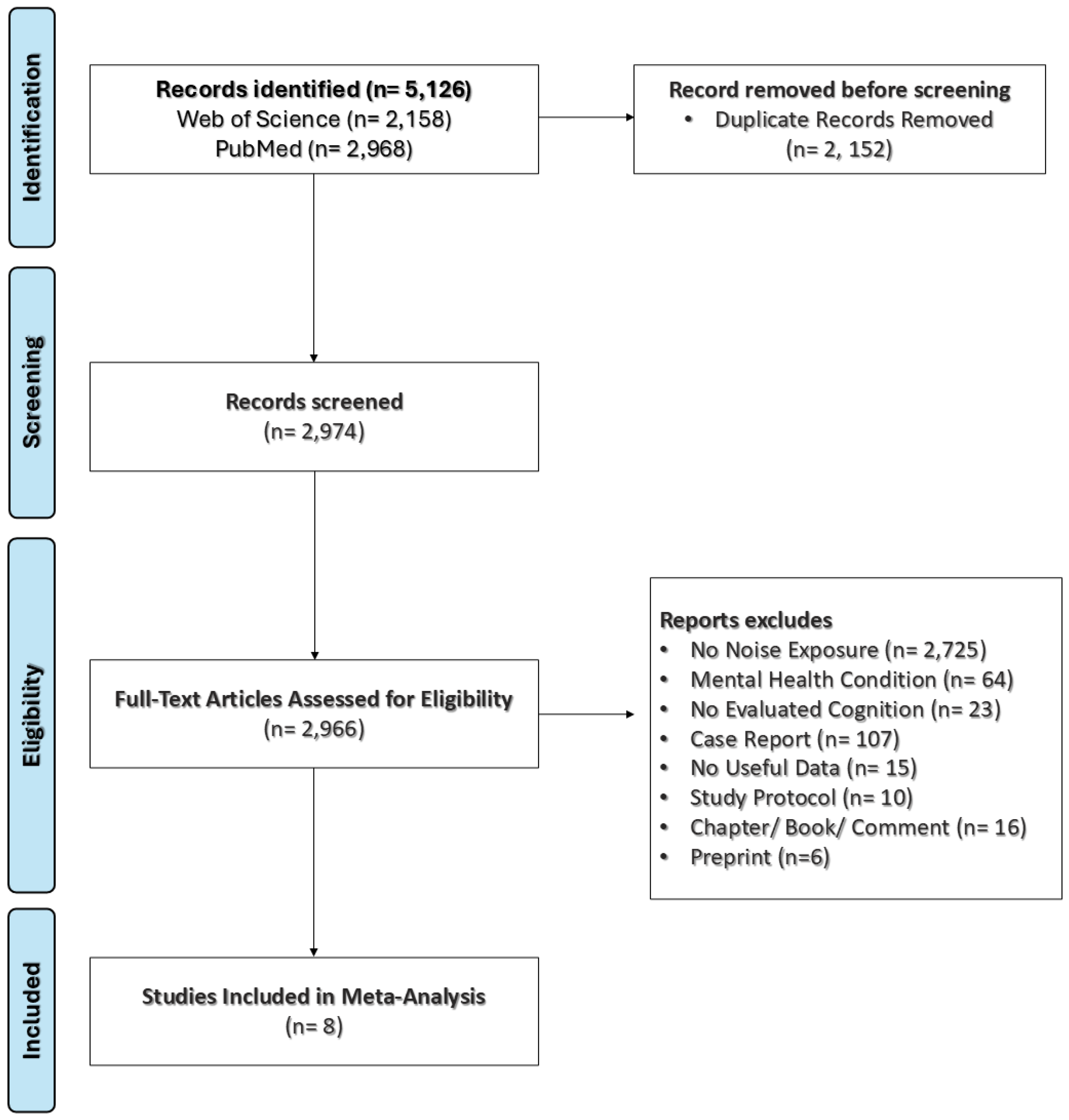
Figure 1. Flow diagram of study selection process [3,4,5,8,11,13,14,15].
Preprints 146556 g001
Figure 2. Forest plot. Negative values indicate less cognition function in noise exposure group (experimental) than the control.
Preprints 146556 g002
Figure 3. Funnel Plot.
Preprints 146556 g003
Figure 4. Risk-of-Bias tool for randomized trials version 2 (RoB-2). In this color-coded ranking, green color represents low risk of bias, yellow unclear risk of bias, and red high risk of bias.
Preprints 146556 g004
Table 1. Summary of Keywords Used in the Search Strategy.
Variables Search Fields Keyword
Independent All Fields Noise, acoustic, environmental noise, chronic noise, broadband, white noise
Dependent All Fields Cognition, cognitive, cognitive function, memory, learning, attention
Population All Fields Children, minor, youths, young, adolescents
Table 2. Summary of Data Extracted from Research Assessing Noise Exposure Effects on Cognitive Function in Youth.
study n1 m1 s1 n2 m2 s2 md sd se cohen_d cohen_se
Baek et al.,
2023
480 105.9 15.57 509 109.0 16.30 -3.1 15.9499 0.5472 -0.2 0.0637
Tangermann et al., 2023 287 7.5 2.98 252 7.9 2.98 -0.4 2.9800 0.2573 -0.1 0.0915
Chere & Kirkham,
2021
43 132.85 176.67 43 285.72 285.42 -152.57 237.3572 51.1898 -0.6 0.2205
Connolly et al.,
2019
335 6.7 3.2 334 7.4 4.3 -0.7 3.7893 0.2930 -0.2 0.0775
Bhang et al.,
2018
134 110.04 1.29 134 116.54 1.11 -6.5 1.2034 0.1470 -5.4 0.1296
Seabi et al.,
2012
151 30.16 13.76 191 40.95 14.06 -10.79 13.9284 1.5167 -0.8 0.1154
Söderlund et al.,
2010
21 0.41 0.02 20 0.46 0.02 -0.05 0.0200 0.0062 -2.5 0.3323
Haines et al.,
2001
236 37.11 1.02 215 38.97 1.03 -1.86 1.0248 0.0019 -1.8 0.1000
* n1, Noise group sample size; m1, Noise group mean; s1, Noise group standard deviation; n2, Control group sample size; m2, Control group mean; s2, Control group standard deviation; md, mean difference; sd, pooled sd; se, pooled standard error; cohen_d, SMD; cohen_se, standard error of SMD; g, group.
Table 3. Summarized characteristics of the studies.
First author Year Country Sex (male/ female) Noise
source
Noise value (dB) Exposure assessment Place of exposure Age Outcome Measurement
Baek 2023 Korea 520/469 Aircraft Noise 75≤80 dB WECPNL Schools 10–11 IQ KIT-P
Tangermann 2023 Switzerland 432/340 Home Road Traffic Noise >55 dB SiRENE project Home 13-15 Memory IST
Chere & Kirkham 2021 UK 72/88 Environmental Noise Perception of Noise Questionnaire Home 11-14 Executive function Flanker (∆RT Accuracy score)
Connolly 2019 UK Not reported Sound events (chair, scrapes, pencil drops, and movement) 70 dB LAeq HATS Schools 11-16 Learning The reading task (latency word learning)
Bhang 2018 Korea 135/133 Road Traffic/ Aircraft Noise 60.8–62.8 dB NS Schools 10-12 IQ KEDI-WISC
Seabi 2012 South Africa 322/331
(181 did not respond)
Aircraft Noise LAeq > 69-95 dBA SVAN 955
Type 1
Schools 09-14 Learning SRS2
Söderlund 2010 Sweden 21/20 White Noise 78 dB NS Schools 11-12 Memory Verbal episodic recall test
Haines 2001 UK 229/222 Aircraft Noise Leq > 63 dBA NS Schools 08-11 Memory and attention Suffolk Reading Scale
*WECPNL, weighted equivalent continuous perceived noise level; KIT-P, Korean Intelligence Test-Primary; IQ, intelligence quotient; LAeq, equivalent average sound level A-weighted; HATS, B&K 4100 Head and Torso Simulator; NS, Non Specificized, SRS2, The Suffolk Reading Scale Level 2; KEDI-WISC, Korean Wechsler Intelligence Scale for Children; IST, Intelligenz-Struktur-Test.
Disclaimer/Publisher’s Note: The statements, opinions and data contained in all publications are solely those of the individual author(s) and contributor(s) and not of MDPI and/or the editor(s). MDPI and/or the editor(s) disclaim responsibility for any injury to people or property resulting from any ideas, methods, instructions or products referred to in the content.
Copyright: This open access article is published under a Creative Commons CC BY 4.0 license, which permit the free download, distribution, and reuse, provided that the author and preprint are cited in any reuse.
Prerpints.org logo

Preprints.org is a free preprint server supported by MDPI in Basel, Switzerland.

Subscribe

Disclaimer

Terms of Use

Privacy Policy

Privacy Settings

© 2025 MDPI (Basel, Switzerland) unless otherwise stated