

Submitted:
16 January 2025
Posted:
17 January 2025
You are already at the latest version
Abstract
Public corruption has long been a scourge for city governments. Current - and speculative - UN estimates of the costs of corruption of all forms amount to 5% of global GDP, a sizable number. In some places, and in some cities especially, the problem is more extensive and proportionally more costly. Rational actor models have become the dominant mode of analysis in the corruption arena, especially bribery, which sees actors as rational seekers of gain through transactions undertaken for mutual gain between corrupt parties though at the cost of the greater good. However, urban corruption takes many forms, and there has always been a recognition that, at a minimum, corruption may start out as rational and transactional but that it can build into something more relational and cultural, especially in dense cities with extensive political and social complexes such as local government "machines". This paper reviews the evolution of the concept of corruption over time and the urban corruption literature in particular to explore various patterns that have emerged in types and motivations of corrupt behavior at the municipal government level. The discussions closes with a template of urban corruption types encompassed in a number of “spheres”, with rational/transactional models explaining some instances, but others being more non-rational and social in nature.
Keywords:
corruption
; malfeasance
; governance
; municipal government
; urban planning
; rational choice theory
1. Introduction
George Washington Plunkitt (1842-1924) was a long-time State Senator from New York’s Fifteenth Assembly District, and for forty years an operative of the infamous Tammany Hall political machine in New York City. He became wealthy through the use of his office as a means for garnering private gain for himself, and indeed even boasted about it publicly in a series of interviews given from his regular seat on a bootblack stand at the New York County Court-House.
The journalist William L. Riordon published a series of these interviews in a 1905 book entitled Plunkitt of Tammany Hall and in one of these Plunkitt claimed that “dishonest graft” consisted of things like blackmailing gamblers, extorting small businesses, or trumping up charges against disorderly people to shake out money from them. Plunkitt argued that he instead made much of his money more honorably from insider information about unannounced but upcoming city projects that allowed him to buy up land where he knew development was to take place and then sell it at a tidy profit once the municipal development efforts became publicly known. He summed it up by saying: “There’s an honest graft, and I’m an example of how it works. I might sum up the whole thing by sayin’: “I seen my opportunities and I took ‘em.” [1] (McClure, Philipps & Co., 1905)
Plunkitt offers an especially colorful example of the traits of much corrupt behavior and many corrupt agents working in municipal governments, especially their need to justify their actions in a moral or ethical frame of their own, allowing them to look or feel good about their actions. This is not just about evading legal or societal penalties. Plunkitt was an elected official, well protected by the political machine, about whose operations everyone was well aware. Why did even he feel the need to say that his actions were not “corrupt” at all? This suggests the importance of non-rational elements, such as psychology and social relations, in the genesis and execution of many corrupt acts.
Many models of public corruption, however, posit it as a “rational choice” by actors who weigh the potential material benefits of corrupt acts against their material costs which, for the latter, consist mostly of the price of getting caught. The Plunkitt case indicates this to be only part of the story in many cases, especially in city governments where density of population and economic activity in often dynamic and sometimes rapid social change environments make corruption an inherent component of a larger political symbiosis. Moreover, at least in its earliest stages, the experience of developing cities of the past and present suggest the corruption is not necessarily a net negative in its impacts, though with time it typically becomes so. The overall literature on the concept of corruption indeed shows the term to have shifting meaning over time and multiple dimensions of relevance.
This article will selectively explore the causes and effects of public corruption in urban government and examine some of the history of municipal corruption over the last century, focusing on the most recent decades. The analysis starts with a presentation of the main method of analysis, followed by a brief overview of the extent of government corruption worldwide, a review of the different concepts of the nature of corruption, and ends with an exposition of a typology that incorporates both “rational” and “nonrational” corruption. The main aim of the work is to highlight the importance and nature of urban corruption while broadening the framework for its analysis beyond the “rational actor” approach. The working conclusion is that such a frame covers only a subset of corrupt behavior.
2. Materials and Methods
A stand-alone exploratory narrative review format is employed in this article. This type of review evaluates the general agreements and disagreements of the literature on a particular topic and explores how this point was reached. Such a review is typically conducted using search words of standard literature databases, with articles selected using expert opinion of the author, but not employing specific or detailed selection or review protocols, as are used in systematic or meta-analysis reviews.
The specific type of review done here combines aspects of narrative sub-types referred to as conceptual and critical, focusing respectively on determining the current understanding of a topic to consider whether a better understanding or consensus is needed; and developing a new perspectives on what the current gaps in understanding may be and how these may be bridged. A review such as this offers a great deal of fluidity and flexibility in analysis, though at the cost of being less systematic and less replicable [2].
The literature reviewed here is on: (a) the general theory of corruption and its evolution over time; and (b) the history of urban public corruption during the modern period into the present.
3. The Current Extent of Urban Public Corruption
In general corruption can be defined as the abuse of authority for improper gain. Public corruption refers to the misuse of governmental authority while private corruption indicates a misuse of purely nongovernmental power. Even in these broad senses corruption is very hard to measure or even observe since it is typically done in the shadows, so to speak. For this reason, the Corruption Perception Index (CPI) maintained by Transparency International (TI), is the common benchmark often used. TI’s data will be the starting point for the discussion here, even though it is only reported at the national level and does have some significant limitations, especially as it is largely based primarily on a survey of expert opinions and, as the dataset’s title indicates, is about perceptions rather than actual acts. The overall CPI also covers both public and private corruption [3].
TI information nonetheless does offer some useful insight into the geographical distribution of public corruption globally. Figure 1 shows TI’s Global Corruption Barometer (GCB) which surveys individuals, and not just experts, in this case asking them to rate their perception on a scale of 1 to 5 of the question: “To what extent do you think that corruption is a problem in the public sector in this country?” with “5” denoting high perceived public sector corruption. The data here indicate that the public in a majority of countries across the world see their governments as at least moderately corrupt (around 3), with the greatest levels concentrated more in the global “South” and the former Communist bloc countries.
Figure 2 shows 2017 GCB data in which individuals across countries were asked what specific public institutions they saw as corrupt, in this case showing global aggregate figures corresponding to the percentage of survey respondents who think that “Most” or “All” of each institution is corrupt in their home country. In that sense these are “worst case” data. There is quite a bit of overlap between some categories, especially “government officials” which would seem to capture some of the others, like “tax officials”. But from an urban government perspective, the presence of “local governmental councillors” as 4th on the list, and “police” as 2nd, indicates that much public corruption is local.
Finally, Figure 3 presents GCB data on one of the most pervasive acts of public corruption, namely bribery. Some major countries, most notably the US and Canada, are absent from this list. A majority of respondents to this survey reported having paid a bribe within the past year, but the frequency varied across countries. European country residents reported very low rates of bribery, while some countries, notably India, Pakistan, and Vietnam, had 80% to 90% of those surveyed having paid at least one bribe in the same time window.
These data must be taken with reservation, especially the impression they tend to give that corruption is more of a “developing” rather than a “developed” country problem. Public corruption, as will be seen, is a multifaceted and highly contextual phenomenon, whose subtleties cannot be fully captured in the bright-line definitions that data categories require. But they do indicate the wide breadth of the issue.
Systematic and comparable data for cities rather than countries is not as readily available. The closest there is presently are a variety of city “competitiveness” indices (the leading examples being the Global City Competitiveness Index of the Economist Intelligence Unit (EIU), A.T. Kearney’s Global Cities Index, CityLab’s Global Economic Power Index and the Mori Memorial Foundation’s Global Power City Index). These collate and weight available data on various social, economic, political and cultural dimensions of cities to compile an index number for each city which purportedly shows how well place an urban area is to further its economic development relative to others [4].
Some of the data that go into these indices do have broad relevance to corruption at the municipal government level. The EIU index has, for example, a government effectiveness sub-category that has sub-indicators, including the likely level of corruption among public officials (10=Very low, 0=Very high) drawn from a proprietary database. There is also a measure of ability of prospective governments to effectively formulate policy (0=Strongly no, 5=Strongly yes), mechanisms for the orderly transfer from one government to another, and whether or not a city has clear and transparent performance indicators. A local government fiscal autonomy sub-index contains sub-indicators for local electoral process and pluralism, taxation and rule of law, while other sub-indexes measure the prevalence of petty and violent crimes as well as external factors affecting future crime. These are drawn from a variety of public and proprietary information. [5]
The EUI report is interesting, but it has not been updated regularly (the 2025 outlook report was done in 2013) and rankings by sub-index are not publicly available (though presumably can be generated for a fee). Much of the underlying information is also proprietary making it difficult to independently investigate. The Kearney Global Cities Outlook (GCO) is, by contrast, regularly updated across four dimensions: personal well-being, economics, innovation, and governance, consisting of 13 indicators. The governance dimension is the most relevant for corruption but it, and the other metrics, are much less detailed than the EIU measures. The authors note that rankings of the GCO are much more volatile than a parallel Global Cities Index (GCI) the firm maintains which is based on more stable metrics such as economic growth and productivity. Table 1 shows the 2024 and 2023 rankings of the top 30 cities [6].
The Kearney ranking, and others like it, provide only a very indirect relative indication of public sector corruption at the municipal level because the measures used focus on broad institutional characteristics rather than corruption directly which are, in any case, only a part of the overall index itself. The biases of such indices are also clearly oriented mostly towards rich, global “North” nations. This is particularly clear in the Kearney rankings but it also comes out in other city indices like the EIU, though Chinese cities often rank more highly in some cases. The purpose of this particular discussion segment is to show that at present national corruption data are mostly perceptual and city corruption data are largely unavailable, which is why a more qualitative approach is required, as taken in the following sections.
Either way, estimates of the direct costs of corruption, while also somewhat speculative, are nonetheless substantial in magnitude, e.g., a 2003 UN analysis estimating these to be 5% of the world economy, or more than $US1.5 trillion dollars annually in 2003 dollars. The Asian Development Bank (ADB) calculated that as much as $30 billion in aid for Africa ended up in foreign bank accounts, with one East Asian country losing $48 billion over the course of 20 years due to corruption, while businesses in one North American city were able to cut $330 million from an annual waste disposal bill of $1.5 billion by removing Mafia domination from its garbage collection. Other studies indicate that some Asian national governments paid from 20% to 100% more for goods and services because of corrupt practices by contractors. Added to these direct costs are indirect burdens imposed on economic development through distortions to implicit and explicit pricing, and misallocation of resources such as investment funds being diverted to uneconomical projects because of payoffs. [7]
4. Differing Concepts of Corruption: The “Rational” Consensus
The consensus analysis of corruption uses some standard working definitions of corruption developed by global policymakers and academic analysts. Below are some prominent examples:
World Bank (1997) – “the abuse of public power for private benefit.” [8]
Bradhan (1997) – “[public] corruption ordinarily refers to the use of public office for private gains where an official (the agent) entrusted with carrying out a task by the public (the principal) engages in some sort of malfeasance for private enrichment which is difficult to monitor for the principal.” [9]
Tanzi (1998) – “intentional non-compliance with arm’s length relationship aimed at deriving some advantage from this behavior for oneself or for related individuals.” [10]
Nye (1967) – “behavior which deviates from the formal duties of a public role because of private-regarding (personal, close family, private clique) pecuniary or status gains.” [11]
These definitions – and there are many others in current use – have a number of important commonalities: the general (though not universal) tendency to focus on the public-private nexus, i.e., the private actor interacting with government power; a focus on transactions between individual actors as the basic unit of analysis; an emphasis (sometimes implicit, sometimes explicit) on calculation of gains versus losses. (Illustratively, Joseph Nye’s very influential 1967 definition comes from an article entitled: Corruption and political development: A cost-benefit analysis); a distinction between agents, who are entrusted with delegated authority to carry out the wishes of principals, where in a governmental setting, the “principal” is the “public interest” of the people, while the “agent” is an official who pursues private interest instead.
All of these can be said to be drawn from the rational actor model. The basic analytical unit of this approach is an agent faced with a set of choices and constraints that contain inherent incentives. The agent navigates all this by calculating which choices deliver the most personal material gain at the least cost. While individual agent preferences may differ, this basic cognitive template is shared by all agents, competing with one another, each respectively seeking “optimal” material positions through conduct of a variety of transactions in their given choice arena. At the extreme, all human choice is assumed to conform to this dynamic, including corruption.
Seminal approaches to rational corruption include Becker’s 1968 paper on the economics of crime, which can rightly be considered foundational. Here crime of any sort, including corruption, is like any other economic choice (and for Becker all choice is economic). Criminal action is based on weighing of the gains from the crime versus the penalties for getting caught (probabilistically adjusted for likelihoods of detection and severity of punishment). Therefore: corruption is a benefit-cost calculation [12]. Nye’s paper [11], already mentioned, does not quite follow Becker’s approach but has a similar logic of agents weighing probability-weighted costs of an action against its probability-weighted benefits.
Niskanen’s 1968 paper on bureaucracy made the influential argument that bureaucrats, and politicians more generally, are like any other economic actor, i.e., pursuing their own personal self-interest, despite their rhetoric of “public interest”. Therefore: public officials and private actors make the same calculations of self-interest with respect to engaging in corruption [13]. Related to this is Coase’s “transaction cost theory” of the firm (1938) which established a template by which all organizations exist simply to minimize transactions costs that would otherwise militate against “welfare-increasing” transactions between individuals. The principal-agent problem arises, however, from such organizations existing outside the discipline of the market. Therefore: Corruption is a principal-agent coordination problem [14].
Tullock (1967), meanwhile, introduced the very influential concept of “rent-seeking”, i.e., the chase for unearned returns by rational actors. This is a general idea but especially applicable to corruption. Therefore: corruption is about rent-seeking. In a government setting, it can also be about “rent-creation”, e.g., a bureaucracy creating a regulation not for any public purpose but as an opportunity to extract a bribe from private actors for regulatory approval [15].
These rational actor models also rely on two additional assumptions about agents: (1) Agents are maximizing. That is, given their preferences (desire for money, power, status etc.) agents will always seek to get the most possible of what they want, and more is always better; (2) Agents are “atomistic”. This is almost never stated explicitly but in rational agent models there are no “social” influences on action. Individual preferences about other agents exist, and individual choices obviously are deeply affected by the decisions of others. It is recognized that aggregations of agents may collude to maximize individual gain for group members (e.g., in the form of conspiracies). But in the end individuals always seek to maximize their individual gains and see themselves as individuals. “Aggregations” here apply but “collectives” in the sense of subsumed individual identity contained by a larger social group, do not. “Social relations” reduce to “transactions”.
5. Corruption in Urban Government: Broader Possibilities
Rational actor models have become the dominant mode of analysis in the corruption arena and there is considerable empirical validation for them. They also do have an intuitive appeal as they seem to apply to many “real world” instances of corruption that appear to truly be “transactional” and “rent-seeking”, especially bribery, which is the major focus of much policy and analysis, The opening case about Tammany Hall and George Washington Plunkitt, for example would seem on its face to be a clear case of rational rent-seeking. Plunkitt tried to distinguish his behavior as more principled than that potentially practiced by others. But nonetheless the core of his actions was about personal profit through the abuse of public position, the basic outline of most current definitions of public corruption.
More recent examples of city government malfeasance similarly center around some form of theft of public resources or abuse of office to take private money. A study of the Indonesian urban planning apparatus found that 50% of Jakarta’s housing stock was built without any compliance with building law, that 85% of new housing stock was built informally, and that much of this “off-plan” development was “greased” with bribes and improper paperwork. Plan development itself was often manipulated through political interference and indirect graft [16] An analysis of urban infrastructure procurement found it to be regularly subject to distortion of procedures, misappropriation of resources, collusion, fraud and malfeasance in pursuit of personal private gain [17]. An assessment of the largest 110 Spanish municipalities between 2000–2009 uncovered numerous instances of municipal government corruption that resulted in official investigations and penalties at the national and European level, while also finding that cities with better paid mayors had less corruption than those with more poorly paid ones [18]. Another study of Spanish cities between 1997 and 2007 found many illicit funds transfers by city officials, in this case lack of institutional transparency being a major facilitator [19]. A special issue of contemporary urban case studies of Cardiff (UK), Naples (Italy), Istanbul (Turkey), Bogota (Colombia), New York (US) and Chicago (US) reviewed substantial episodes of “rent” seeking and stealing, closely related to deficiencies in urban governance. [20]
Indeed, rent-seeking by urban officials does fit much of the current experience of city government misappropriation. It makes sense that cities, especially growing ones, would be subject to a lot of graft and other misbehavior, since the presence of a large amount of rent offers a lot of opportunity for greedy individuals to collect it. The presence of corruption in areas of urban land development and regulation is not surprising in this regard, as it evokes the the legendary answer to the question posed to famed American bank robber John Dillinger of why he robbed banks: “because that’s where the money is.”
Moreover much municipal rent seeking is inhibited – or exacerbated by their opposite – of strong public institutions, clear and well-enforced penalties for criminal activity, sufficient public salaries and accountability, and transparency in transactions. This is captured in a version of the well-known identity of: C = R + D – A, where C = corruption, R = the number and power of rent-seekers, D = discretionary power of the state, and A = accountability [21] (288-289).
The experience of modern city malfeasance – and, as will be seen, historical experience as well – shows that corruption is primarily pecuniary in the main, fitting the central claim of rational actor theory that it is fundamentally about rent and the seeking of it. However, urban corruption takes many forms. First one may ask whether all corruption is actually always rational in nature. Behavioral economics is already influencing the study of corruption by positing its well-known array of heuristics, cognitive biases, and “bounded rationality” (limitations on cognitive processing power) to incorporate non-rational elements into this arena of economic choice [22].
Corrupt actors are not always maximizing either. Tullock pointed out what has become known in the literature as the “Tullock Paradox”. This refers to the fact that many bribes and corrupt transfers are far smaller than the rents received by the bribe payer. Tullock himself refers to New York Congressman Mario Biaggi, who was bribed to save an enormous government dockyard in Brooklyn from bankruptcy. Yet the bribes consisted of three Florida vacations worth $3,000 in total. This is quite a common occurrence [15].
Rational choice theory tries to explain this behavior on its own terms, e.g., as deviations from perfect information (perhaps the bribe-taker does not know the true value of the favor being asked for); or perverse individual preferences; dissipation of rents through competition between bribe takers; strategic behavior in a game-theoretic context; or simple minimization of transaction costs of risk [9].
But while these may be suitable explanations in some contexts they do not appear to be applicable to all instances. The Tullock Paradox may at times be an where agents may not always be fully maximizing or fully rational.
The question is why, especially in the urban context, non-rational/maximizing factors may take hold. The secret may be in the often non-atomistic nature of the phenomenon. The oldest traditions of corruption narratives hearken back to the meaning of the term’s Latin root, “corrumpero”: to break up, to spoil. “Rumpo means “to break, to shatter, to burst open, destroy, violate,” and “co” means “with”; instead of two things breaking apart (dirumpo), or one thing breaking open (erumpo), corruption is when something breaks within itself: the apple rots on the shelf; narcissism corrodes the soul; government internally disintegrates. The integrity of the object of corruption is threatened by internal decay” [23] (346-347). Here corruption is inherently collective, social – and political. It is also a process that, once begun, takes on a collective, organic tack of its own, often overriding individual actor desires and aims.
In fact the earliest notions of public corruption directly embodied this notion of a natural “ideal” state that was prone to “decay” and “deteriorate”. The ancient Greek city-state philosophers of Aristotle, Plato and Socrates believed that the task of political theory and practice was to design a “constitution” – the term denoting a living political “body politic” rather than a written document – that was immune from the natural forces that imbalanced and degraded the state, which for the Greeks was the city containing the citizens collaborating to govern on behalf of the collective good. This was adapted by English and American constitutionalists in the 18th century (who styled themselves are “classicists” in the Greek and Roman traditions) into a notion of “checks and balances”, tied with institutional “reforms”, to keep the political system meeting the needs of the key interest groups without getting captured by inordinately strong alliances [24] (26-28).
In other words earlier concepts of corruption were inherently political, moral, and social in nature [25] (14-17). The ancients viewed corruption as “endogenous” to human relationships which were inherently virtuous in their “ideal” state but which degraded as the fiber of civil society was damaged by the abuse of trust, an equally innate human tendency. Industrialization and modernization, however, pushed this endogeneity into the background. Material outcomes based on “productivity” guaranteed by market processes were now paramount, and government was seen as a hindrance to these if not properly contained. Individualism and the universality of Enlightenment values (such as rationality) over what were seen as backwards “traditions” cemented a view, most clearly initially stated by the 18th century economist Adam Smith, that governments should be small, clearing the way for competitive markets where individual preference – and individual conscience, or “moral sentiments” to use Smith’s phraseology – would ensure both efficiency and morality [21] (279-281).
This is the genealogy of the purely materialist concepts of corruption in place today in which technical “self-regulating” and “self-optimizing” systems must be allowed to run as freely as possible, with the natural greed and selfishness of individual actors channeled into efficient competition rather than than rent-seeking.
This turn of thought is not “wrong”, per se. Corruption has always involved transfers of material resources between groups and individuals, and much of this can be captured under a rational actor model. But city administration and civil society in particular have always consisted of dense networks of social connections deeply intertwined with economic production, distribution and consumption, typically evolving rapidly over time.
And here social relations are critical. Extraction has always been a key feature of corruption, but not all extraction is alike. O’Hara (2014) [21] provides a template for different types, a modified version of which is detailed in Table 2 [21] (293).
This template is obviously simplified and the modes are not necessarily mutually exclusive within countries or across time. In fact, there often is a progression from one mode to another in city evolution. Corruption in many urban political machines, like Tammany in New York, for example, could be said to have started out in the oligarch/clan mode while ending up in more modern times in the influence buying mode. In New York’s case, there was also a clear distinction between political elites and economic elites, the former being built out of the teeming immigrant slums with the Irish becoming the main power brokers, the latter being drawn from a sort of “permanent” wealthy class that began with the landed estate holders under Dutch colonization in the 17th century.
The relevant point here is that the current policy solutions proposed for corruption will not always be applicable depending upon mode. Modern influence buying is, arguably, unconstrained by transparency or formal accountability mechanisms. Also, corruption in some cases may serve an economic function in some places and at some times. To return to the urban political machines, it has been claimed by some that these actually allowed for orderly integration of immigrants into emerging social and political orders, warding off disruptive social strife in the process and allowing for upward social mobility for the masses [26] This “functionalist” approach is not without controversy, of course. It was highly influential during the period of “modernization” theory of the 1950s and 1960s which claimed that shifts from traditional to modern society had distinct stages that were shared across societies. This particular universalism has been discarded but it is now accepted that corruption can be “useful” in a broader social sense, especially in times of transition [27]
Finally, defining what constitutes a “corrupt” act varies considerably across cultures, between nations and sometimes even within them (e.g., nepotism). Social “norms” are extremely important in the parameters of acceptability of different acts, such as bribery, nepotism, favoritism etc. Donaldson and Dunfee (1999) thus present a template of the culturally determined “social contract” that governs licit and illicit behavior [28]. One has to be careful not to lapse into relativism or nihilism here, but Enlightenment universalism swept away not just outmoded practice and attitude but also genuinely useful variations of social convention. Rational choice theory treats norms, when they do treat them at all, as variations in agent preferences and/or “rules of the game” of rational maximization. But in corruption they appear to be considerably more than this.
This can be clearly seen in the transition to modernity across the world over the past few centuries. The sociologist Karl Polanyi referred to Western modernization as a process of “disembedding” formerly communal and informal relations from their overall social context, and separating them from a formalized, economic sector which comes to dominate and define the entire society [21] (286). The old relative particularities become replaced with a new market-based generality of efficiency, expressed in material terms.
Another result of this process has been a new sharp separation between “public” and “private” spheres that were once much more amalgamated. This is particularly clear when considering both sides of 18th and 19th century colonialism. On the side of the colonized, Europeans imposed formalized institutions like the European centralized state and the corporation, on to widely differing societies. This is most stark on the continent of Africa which Europeans took over almost wholesale over the course of the last half of the 19th century. Some scholars argue that African society was unique is that it developed a model of organizing people into larger aggregates without using an organized State, instead relying on large-scale ethnological groupings informally governed through traditional hierarchies such as chiefs and tribes. Even here the continent exhibited a wide set of variants on a loose model. The key social tasks of reciprocity and authority relations were managed informally across varying cultural norms, using a delicate and flexible set of organic checks and balances that were informally managed and enforced. European law, state structures, and markets largely eviscerated all this, replacing it with enforceable legal rules based on logical, context-less, principles [29] (206).
In fact, the earliest notions of public corruption directly addressed this dimension. Matters became confused when colonial masters, in typical divide-and-rule fashion, co-opted local chiefs to lend informal legitimacy to colonial exploitation. This process imposed corruption on various practices that used to be conducted in the normal course of social government and transactions, solidifying corruption into a seemingly coherent and settled concept based on explicit legal and ethical distinctions drawn from generalisable ideals [30] (29).
The colonizers were also in the process of their own formalization of previously “informal” norms-based social practice in their own societies. Georgian England had, in fact, a highly-patronage based political system, which became the focus of change for internal reformers, following the ideas of, among others, Adam Smith. Patronage was also the basis of most colonizing institutions, especially the overseas trading company, where officials were appointed largely on the basis of connections and who were expected to finance their own positions from their own field activities. It was expected that they would skim something off for themselves – and they did. In Indonesia, Javanese kings had done something comparable for centuries, appointing underlings who would perform their delegated functions while extracting rents, but not at the cost of disruption economic or social stability. Max Weber referred to this “pattern of politics” as “patrimonalism” and defined as one where the ruler retains the loyalty of powerful elites through personalistic relationships that keep them onside while keeping the masses quiescent. The Dutch East India Company (known by its Dutch initials VOC) initially started with a rather similar model, with nominal salaries for officials, covered by extraction that would meet the metropole’s requirements material requirements without putting any strain on its finances. Other European trading companies worked on similar models [31] (606-607).
These modalities were once seen as part of the social fabric, a system of reciprocity parallel to those found in Africa and elsewhere though in the context of European state entities. Now they were seen as impediments to social and economic “progress”. European trading companies went out of fashion over the course of the 19th century, being seen as a corrupt, the end result being the takeover of the VOC in Indonesia by the Dutch Crown [31] (606-607). The East India Company of England was similarly taken over by the English Crown in 1857, though in this case the cause was the Indian “mutiny” (a euphemism for general revolt), which broke the other part of the contract between ruler and ruled which was to keep social peace. Of course in the end the colonial subject peoples were not part of the bargain except as accessories to be exploited as thoroughly as possible. [32]
What all this history indicates is that the modern notion of corruption has been the product of a long evolution which, no doubt, is not over. But at present the notion is one of a technocratic one of a “coherent, discrete referent” [33] (9) that can be applied to acts regardless of social context. Moreover, unlike ancient ideas were static in that there was an ideal state to return to, from which corruption “endogenously” arose and degraded, while modern ideas posit a dynamic society that is constantly “improving”, with corruption being a sort of “exogenous” deviation from a better future. Indeed, “reform” traditions in the UK and the US and elsewhere sounded moralistic, but were in fact inherently opposed to traditional moral systems, efficiency being the new watchword [33] (10-11).
Interestingly “morality” and “ethics”, which are at least in part inherently socio-cultural, get re-introduced when considerations of culture are considered – elements that tend to be implicitly dropped in rational actor models, where the only thing mattering for agents is personal maximization of material gains, whether that is achieve singly or by groups of people, and for societies the maximization of material efficiency. Norms are not completely absent from modern theory; for example, there are models that incorporate preexisting standards such as favoritism or nepotism, to see what corruption incentives these lead to and how they affect ultimate outcomes and efficiency gains and losses [34]. But these formulations do not incorporate where these norms came from in the first place and see them as deviations from “homo economicus”, much as behavioral economics sees cognitive biases and heuristics as deviations from the same. In other words, norms are anomalies without any particularly useful purpose or meaning except as they effect overall material outcomes.
6. Conclusions: Municipal Government Spheres of Corruption
Where does this discussion leave us with respect to public corruption in cities? On the methodological side, “rational” corruption does fit some – perhaps many – instances of urban corruption, but certainly not all. Private material gain at public expense is a unifying baseline element underlying most corruption to be sure. But the dynamics behind this process can be said to vary by context.
In understanding the phenomenon one might consider corruption being encompassed in a number of “spheres”, with current models explaining a subset, particularly those where agent behavior overlaps with being rational, maximizing and atomistic. Other instances might fit rational agent models but less tightly (e.g., rational and atomistic but not maximizing). While still others might fall outside of these spheres (i.e., be non-rational, non-maximizing and non-atomistic). Figure 4 lays out the possibilities – and not that the areas are not drawn to scale but are merely indicative.
“Rational” corruption models are best suited to corruption dynamics that are actually predominantly rational, maximizing and atomistic in nature – the shaded area in the diagram. Somewhat provocatively that area is drawn here as being very small. How big that area is in fact is a matter of empirical analysis. Modern corruption models implicitly assume a very large area, perhaps almost all-encompassing. But much depends on the situation at hand, i.e., the type of governance, the nature of the city involved, the dominant cultural norms and, especially, the way in which social reciprocity is handled.
Rational choice theory nonetheless is still likely adequate for many non-maximizing and non-rational cases of atomistic corruption as well. Behavioral economics offers a ready template for the numerous examples of decision-making anomalies such as the Tullock paradox that often inhabit the municipal corruption space. In some ways, one could argue that corruption is more likely to see non-optimizing behavior by agents because it is often done in secret and under various sorts of pressure, and certainly not in an open and competitive market environment. And many corrupt agents may not be fully rational, with particularly distorted preferences and perceptions at play.
Where the rational choice model most likely is inadequate is in considering non-atomistic corruption. This is the area where social norms, “informal” relations, and collective action are predominant. And these are likely to be especially operative in cities at various times. The phrase “culture of corruption” points to a social element underlying corruption that is well known and yet brushed over – or ignored – by rational actor models. Defining what constitutes a “corrupt” act varies considerably across cultures, between nations and sometimes even within them (e.g., nepotism). Indeed, corruption may be an example of cultural transmission of beliefs, knowledge, and ideas, and, as noted, not always “negative” in its impact. That is, corruption may represent a social nexus that is co-created by agents and the social networks and relations they operate in. Unlike rational agent models, where the nature of the agent remains fixed across transactions, corruption may transform the agent themselves – in other words “corrupts” them.
Funding
This research received no external funding.
Data Availability Statement
Data were drawn from the articles reference.
Conflicts of Interest
The author declares no conflict of interest.
References
- Riordan, W.L. Plunkitt of Tammany Hall. McClure, Philipps & Co. 1905.
- Stratton, S.J. Literature Reviews: Methods and Applications. Prehospital and Disaster Medicine. 2019, 34, 347–349. [Google Scholar] [CrossRef] [PubMed]
- Transparency International. Corruption Perceptions Index (2023). https://www.transparency.org/en/cpi/2023. 2023.
- Sgambati S, Gargiulo C. The evolution of urban competitiveness studies over the past 30 years. A bibliometric analysis. Cities. 2022, 128, 103811. [Google Scholar]
- Economist Intelligence Unit. Hot spots 2025: Benchmarking the future competitiveness of cities. Economist Intelligence Unit 2013, 25-28.
- Kearney. Resurgent in a world at risk: 2024 Global Cities Report. https://www.kearney.com/service/global-business-policy-council/gcr/2024-full-report.
- Gordon, C. “Corruption”. Wankel, C. (Ed.). Encyclopedia of Business in Today′ s World. Sage Publications 2009.
- World Bank. World Bank Development Report: Helping Countries Combat Corruption: The Role of the World Bank 1997.
- Bradhan, P. Corruption and development: a review of the issues. Journal of Economic Literature 1997, 35, 1320–1346. [Google Scholar]
- Tanzi, V. Corruption around the world: causes, consequences, scope and cures. IMF Staff Papers 1998, 45. [Google Scholar]
- Nye, J. S. Corruption and political development: A cost-benefit analysis. American Political Science Review 1967, 61, 417–427. [Google Scholar] [CrossRef]
- Becker, G.S. Crime and Punishment: an Economic Approach. In: Fielding, N.G., Clarke, A., Witt, R. (eds) The Economic Dimensions of Crime. Palgrave Macmillan 1968.
- Niskanen, W. A. The peculiar economics of bureaucracy. The American Economic Review, 1968; 58, 293–305. [Google Scholar]
- Coase, R. H. The nature of the firm. Economica 1937, 4, 386–405. [Google Scholar] [CrossRef]
- Tullock, G. Rent-Seeking as a Negative-Sum Game, in Toward a theory of the rent-seeking society. Eds.: Buchanan, J. M., Tollison, R.D. & Tullock, G., 16–36 1980.
- Server, O. B. Corruption: A major problem for urban management: Some evidence from Indonesia. Habitat International 1996, 20, 23–41. [Google Scholar] [CrossRef]
- Owusu, E. K. , Chan, A.P.C., Wang, T. Tackling corruption in urban infrastructure procurement: Dynamic evaluation of the critical constructs and the anti-corruption measures. Cities 2021, 119, 103379. [Google Scholar] [CrossRef]
- Bernardino, B. , Guillamón, M. D., Bastida, F.. Determinants of urban political corruption in local governments. Crime, Law and Social Change 2015, 63, 191–210. [Google Scholar]
- Quesada, M. G. , Jiménez-Sánchez, F., & Villoria, M. Building local integrity systems in Southern Europe: the case of urban local corruption in Spain. International Review of Administrative Sciences 2013, 79, 618–637. [Google Scholar]
- Jones, P. Urban governance and its disorders: Corruption in the cities. International Journal of Regional and Local History 2019, 14, 55–61. [Google Scholar] [CrossRef]
- O’Hara, P. A. Political economy of systemic and micro-corruption throughout the world. Journal of Economic Issues 2014, 48, 279–308. [Google Scholar] [CrossRef]
- Di Donato, L. Behavioural research and corruption: A new promise for governments? European Law Journal 2018, 24, 510–523. [Google Scholar] [CrossRef]
- Teachout, Z. The Anti-Corruption Principle. Cornell Law Review 2009, 342–414. [Google Scholar]
- Wallis, J. J. The concept of systematic corruption in American history. In Corruption and Reform: Lessons from America’s economic history, pp. 23-62. University of Chicago Press. Edward L. Glaeser and Claudia Goldin, editors 2006.
- Génaux, M. Social sciences and the evolving concept of corruption. Crime, law and social change 2004, 42, 13–24. [Google Scholar] [CrossRef]
- Scott, J. C. Corruption, machine politics, and political change.” American political science review. 1969, 63, 1142–1158. [Google Scholar]
- Osrecki, F. A short history of the sociology of corruption: The demise of counter-intuitivity and the rise of numerical comparisons. The American Sociologist 2017, 48, 103–125. [Google Scholar] [CrossRef]
- Donaldson, T. , Dunfee, T. W. When ethics travel: The promise and peril of global business ethics. California Management Review 1999, 41, 45–63. [Google Scholar] [CrossRef]
- Ellis, S. D. K. The roots of African corruption, S.D.K. Ellis. Current history, 2006, 105, 203–208. [Google Scholar] [CrossRef]
- Ochonu, M. E. Corruption and political culture in Africa: History, meaning, and the problem of naming. The Law and Development Review 208, 4, 27–58. [Google Scholar] [CrossRef]
- Ying, D. Y. Corruption in Indonesia: A Curable Cancer? Dwight Y. King. Journal of International Affairs, 2000; 53, 603–624. [Google Scholar]
- Barrow, I. The East India Company, 1600–1858: A Short History with Documents. Hackett Publishing. 2017. [Google Scholar]
- Pierce, S. Moral economies of corruption. Duke University Press 2016. [Google Scholar]
- Williams, A. , Dupuy, K. Corruption and the city. How aid donors can support integrity building in urban spaces. U4 Brief 2018. [Google Scholar]
Figure 1.
Average rating of perceived corruption in public sector, 2013. Average of all individuals’ perception ratings on a scale from 1 (corruption is not a problem) to 5 (corruption is a very serious problem). Data from Transparency International, Global Corruption Barometer (2017). Visualisation generated by OurWorldinData.org/corruption and used under a CC BY license.
Figure 1.
Average rating of perceived corruption in public sector, 2013. Average of all individuals’ perception ratings on a scale from 1 (corruption is not a problem) to 5 (corruption is a very serious problem). Data from Transparency International, Global Corruption Barometer (2017). Visualisation generated by OurWorldinData.org/corruption and used under a CC BY license.
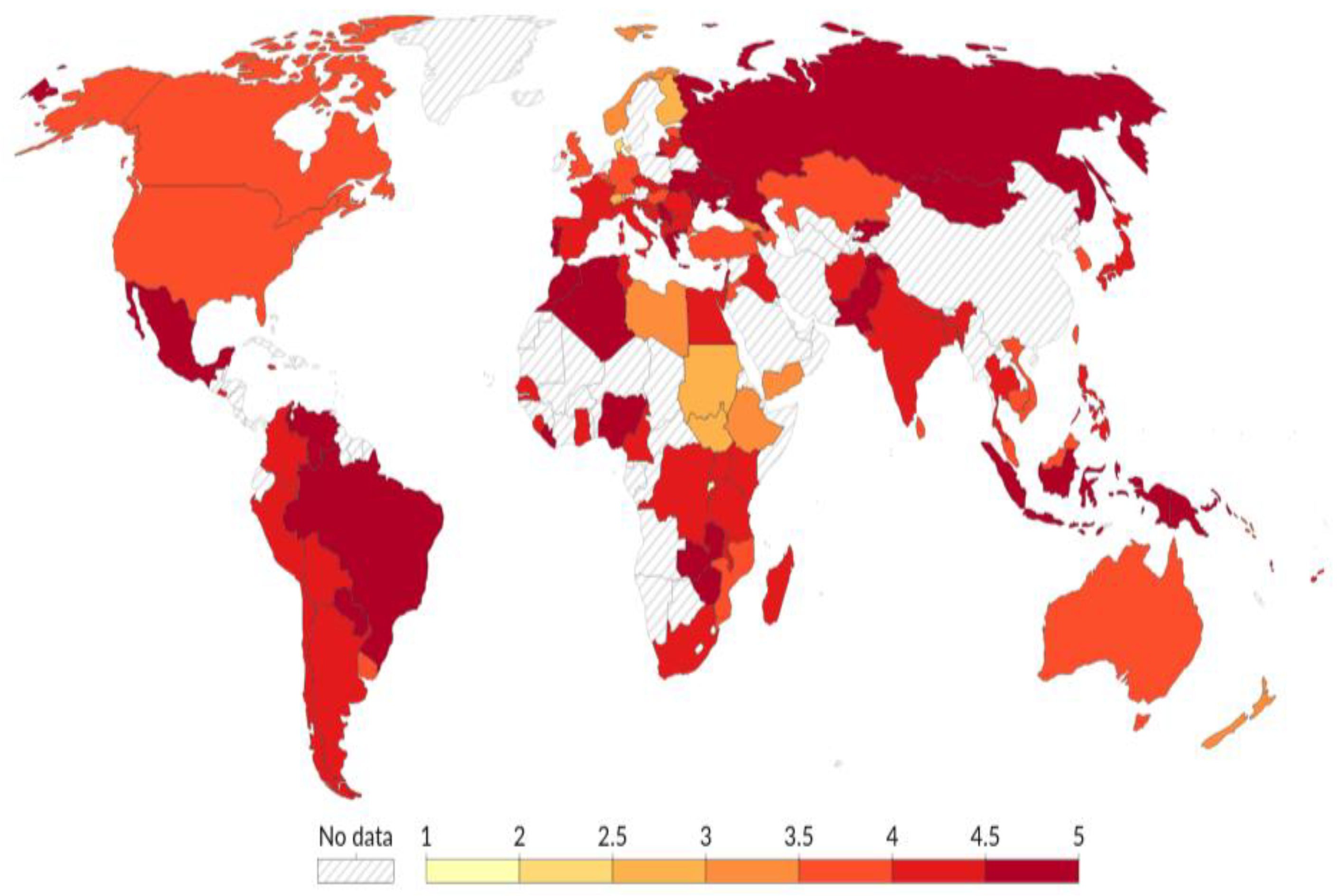
Figure 2.
Perception of corruption by institution, World, 2017. Percentage of survey respondents who answered that either “Most” or “All” are corrupt. Data from Transparency International, Global Corruption Barometer (2017). Visualisation generated by OurWorldinData.org/corruption and used under a CC BY license.
Figure 2.
Perception of corruption by institution, World, 2017. Percentage of survey respondents who answered that either “Most” or “All” are corrupt. Data from Transparency International, Global Corruption Barometer (2017). Visualisation generated by OurWorldinData.org/corruption and used under a CC BY license.
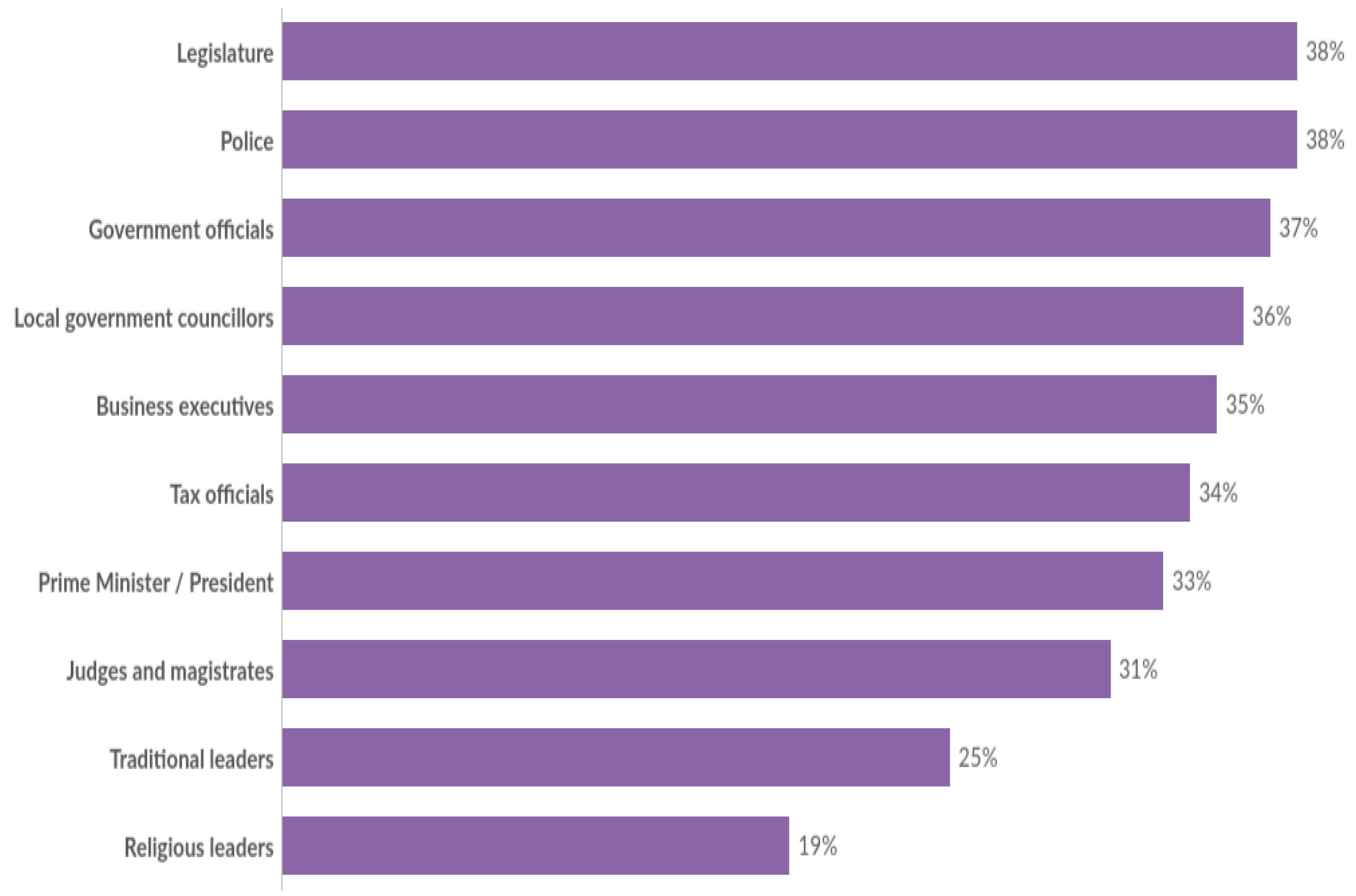
Figure 3.
Bribery rates, World, 2017. Percentage of survey respondents who report having paid a bribe in the last year to access public services such as education;judiciary; medical and health; police; registry and permit services; utilities; tax revenue and customs; and land service. Visualisation generated by OurWorldinData.org/corruption and used under a CC BY license.
Figure 3.
Bribery rates, World, 2017. Percentage of survey respondents who report having paid a bribe in the last year to access public services such as education;judiciary; medical and health; police; registry and permit services; utilities; tax revenue and customs; and land service. Visualisation generated by OurWorldinData.org/corruption and used under a CC BY license.
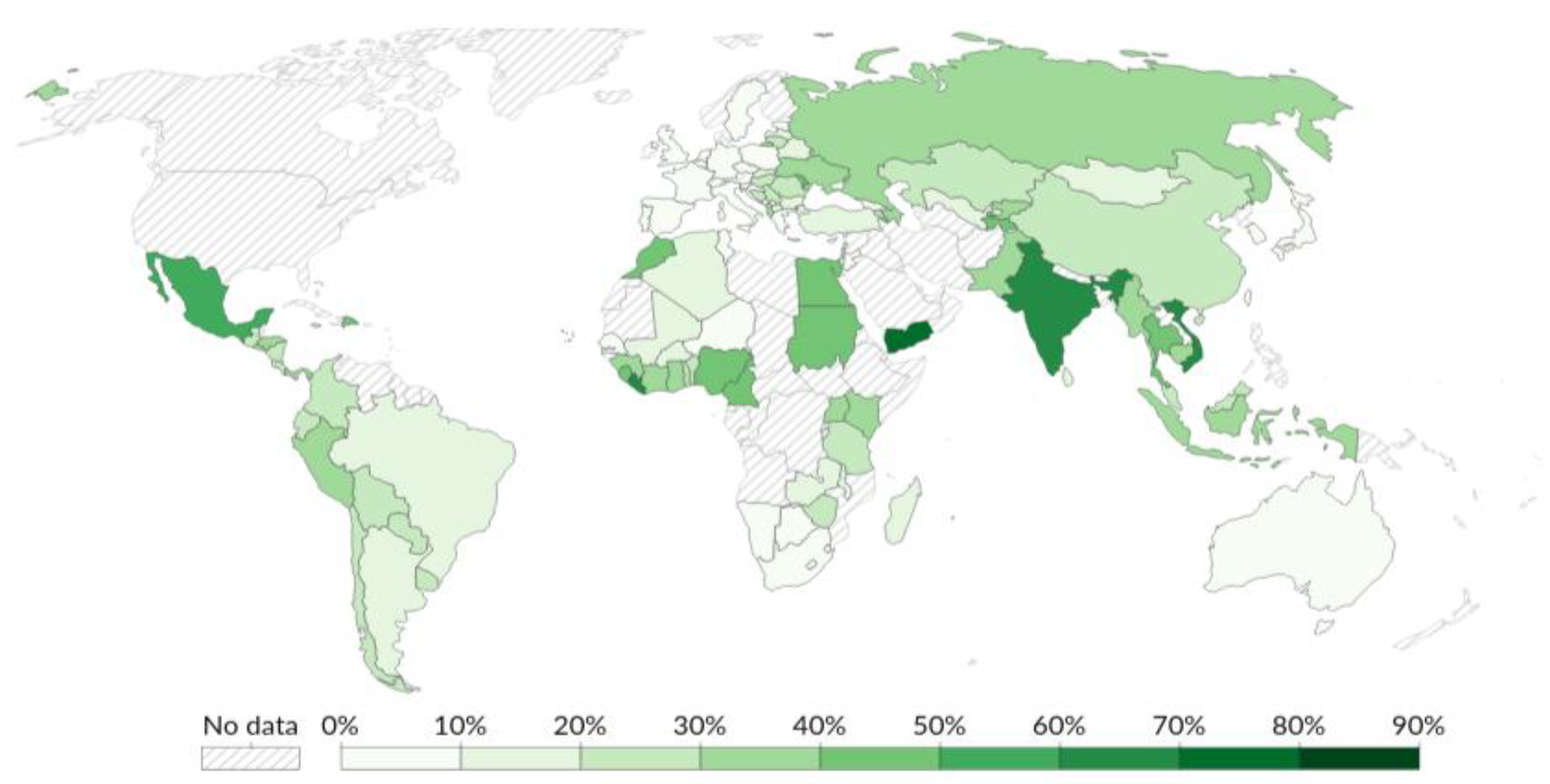
Figure 4.
A Venn diagram of corruption motivations.
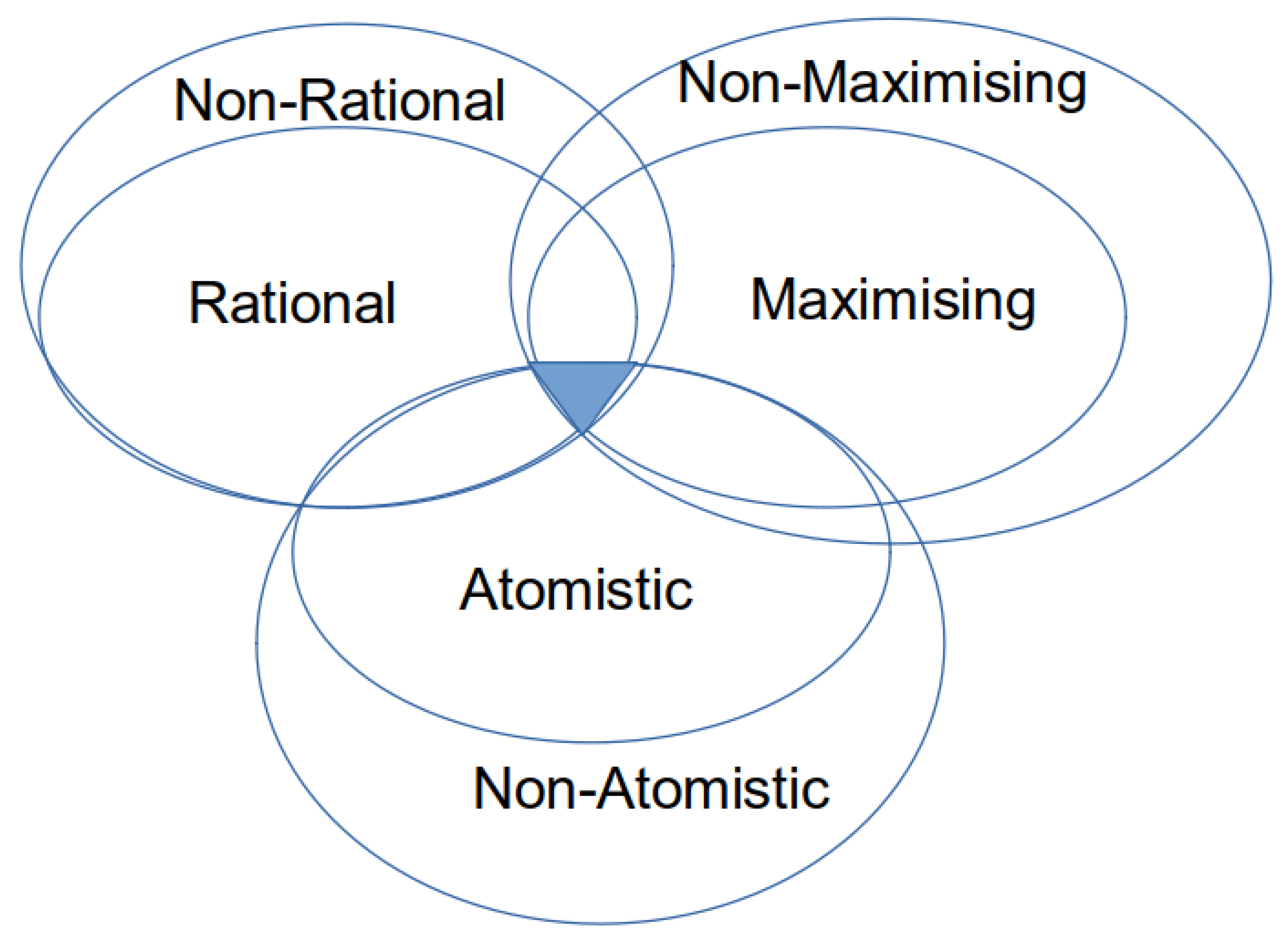

Table 1.
Kearney CGO City ranks (see text).
| City | 2024 CGO rank | 2023 CGO rank |
|---|---|---|
| San Francisco | 1 | 1 |
| Munich | 2 | 9 |
| Copenhagen | 3 | 2 |
| Luxembourg | 4 | 4 |
| Seoul | 5 | 14 |
| Stockholm | 6 | 8 |
| Paris | 7 | 5 |
| Dublin | 8 | 6 |
| Düsseldorf | 10 | 25 |
| Tokyo | 11 | 23 |
| Phoenix | 12 | 19 |
| Oslo | 13 | 20 |
| Minneapolis | 14 | 15 |
| Boston | 15 | 12 |
| London | 16 | 3 |
| Zurich | 17 | 18 |
| New York | 18 | 17 |
| Geneva | 19 | 13 |
| Singapore | 20 | 10 |
| Frankfurt | 21 | 26 |
| Berlin | 22 | 21 |
| Sydney | 23 | 24 |
| Amsterdam | 24 | 11 |
| Osaka | 25 | 28 |
| Barcelona | 26 | 22 |
| Montreal | 27 | 31 |
| Los Angeles | 28 | 42 |
| Chicago | 29 | 44 |
| Perth | 30 | 32 |
Table 2.
Typologies of urban extraction (see text).
| Mode type | Dynamics | Archetypal Example – Country – city |
|---|---|---|
| Influence buying | Money buys power exercised through strong public and private institutions (often “legally” and openly) | USA – Washington DC |
| Elite cartel | Elites are inoculated from broader social forces and can collude with each other to extract more easily because of weak public and private institutions in the midst of relative social stability | Italy - Naples |
| Oligarch/Clan | Elites take advantage of weak public and private institutions in the presence of chaotic social and political conditions | Russia - Moscow |
| Official mogul | Elites cooperate with each other working through strong state power and weak private sector to extract | China - various |
Disclaimer/Publisher’s Note: The statements, opinions and data contained in all publications are solely those of the individual author(s) and contributor(s) and not of MDPI and/or the editor(s). MDPI and/or the editor(s) disclaim responsibility for any injury to people or property resulting from any ideas, methods, instructions or products referred to in the content. |
© 2025 by the authors. Licensee MDPI, Basel, Switzerland. This article is an open access article distributed under the terms and conditions of the Creative Commons Attribution (CC BY) license (http://creativecommons.org/licenses/by/4.0/).
Copyright: This open access article is published under a Creative Commons CC BY 4.0 license, which permit the free download, distribution, and reuse, provided that the author and preprint are cited in any reuse.


