

Submitted:
16 January 2025
Posted:
16 January 2025
Read the latest preprint version here
Abstract
Microplastics and electromagnetic/magnetic fields (EMF/MF) represent two emerging environmental health concerns. Microplastics are widely distributed in the environment and have permeated human tissues, including the bloodstream, where their presence can provoke toxicological effects, such as inflammation and oxidative stress. Meanwhile, household EMF/MF exposure derives from the increased use of electronic devices and is linked to physiological stress and cellular disruption, with possible long-term health risks. For instance, research is being carried out on the effect of microplastics and EMF/MF on human health, but these are being done in isolation. The present review deals with the possible synergy between microplastics present in the circulatory system and exposure to EMF/MF. Despite a direct study of this interaction not being conducted, separate studies on their influences suggest that the way of interaction goes through oxidative stress and inflammation. The paper describes relevant biological mechanisms, gives an overview of the currently available evidence, and highlights the deficiency in research regarding the joint effects of microplastics together with EMF/MF on human health.
Keywords:
ELF-MF
; Microplastics
; Bloodstream
; Potential risk
Introduction
In recent years, concerns have risen concerning environmental pollutants, leading to increased research on microplastics and electromagnetic/magnetic fields. Microplastics are everywhere in nature and enter the human body through ingestion, inhalation, and dermal absorption. Once they enter the bloodstream, the particles may induce toxic effects such as inflammation, oxidative stress, and disruption of normal cellular processes. At the same time, there has been increased questioning about the long-term exposure to EMF/MF exposure, primarily due to the rapid proliferation of electronic devices within the household, on issues of neurological functions, sleep patterns, and risks for developing cancer.
While both microplastics and EMF/MF have been studied independently for their health impacts, little is known concerning their interaction. Both can modulate oxidative stress and inflammation in biological tissues, so this review will look for the possible synergism between microplastics in the bloodstream and household EMF/MF exposure. It will synthesize the current evidence on the independent health impacts of microplastics and EMF/MF and discuss hypotheses of combined effects, focusing on oxidative stress, inflammation, and cellular disruption.
Microplastics in the Bloodstream
Definition and Characteristics
Micro was derived from micro-plastics, particles below 5 millimeters, and most of them below 5 micrometers. They can be formed through the breakdown of larger plastic particles, industrial outputs, or first-generation microplastics, which are polyethylene and polypropylene used in products such as facial wash. These are small, so they can easily transfer from one media to another, whether airborne, waterborne, or soilborne. They can be ingested in food and water, through the air, or by taking objects containing microplastics with bare hands.
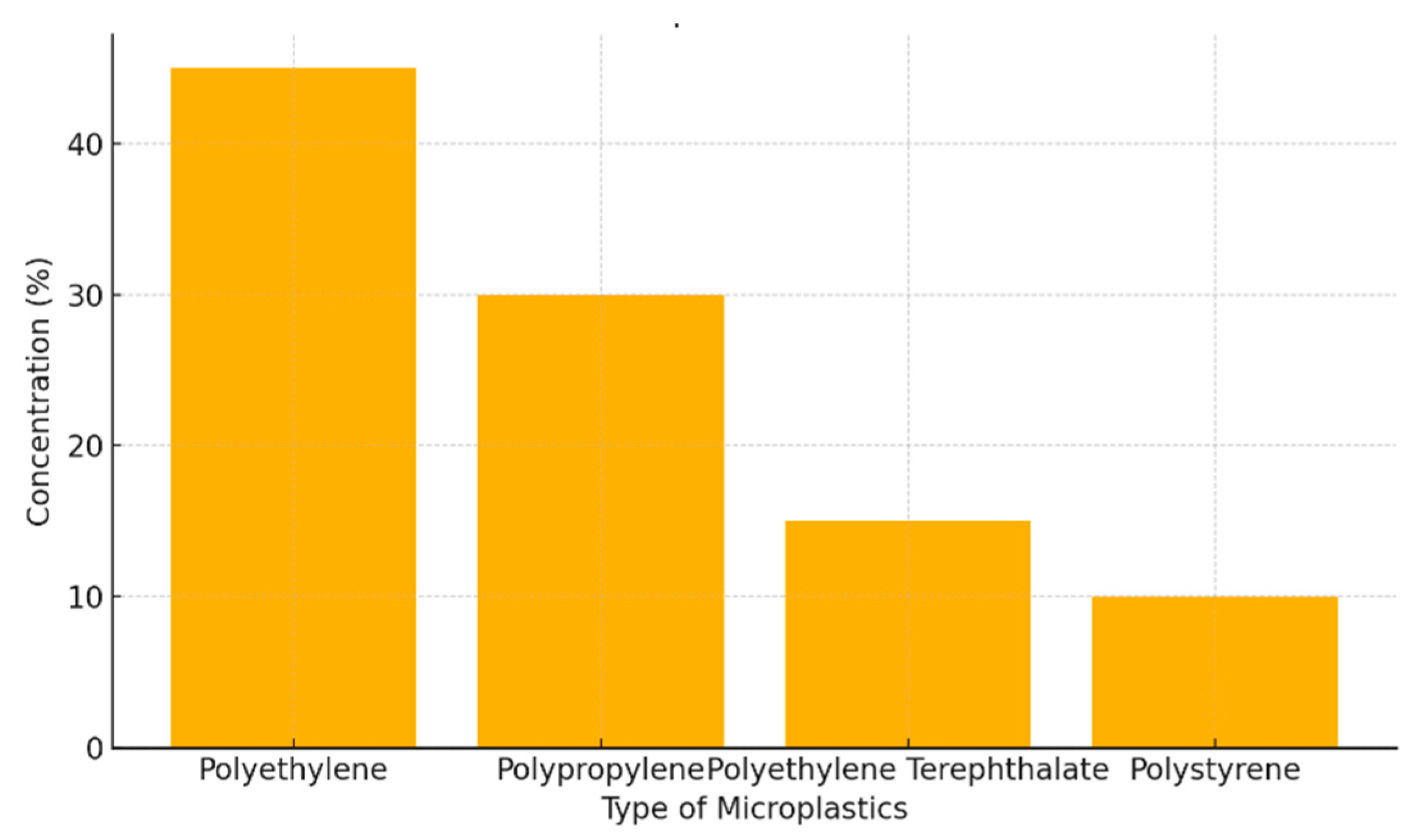
Figure 1.
The concentration of Microplastics in the human bloodstream.
Routes of Exposure and Translocation
An important fact is that microplastics can travel from the gastrointestinal (GI) tract into the bloodstream if only they penetrate the human body. During the examination of animals’ bodies, microplastic particles have been observed to penetrate the intestinal wall and get into the bloodstream where they are detected in high concentrations in the liver, spleen, and kidneys [1]. In people, microplastics have been seen in different organs and blood, which can imply the occurrence of similar translocation processes [2].
Swallowed microplastics can deposit on the lining of the small intestine, gastric walls, and the large intestine wall and mucosa and thereby be taken up through the bloodstream or get into the body cavity and be distributed throughout the body. Likewise, when microplastics are consumed, they are capable of crossing the intestinal epithelial barrier, normally through increased permeability of the paracellular space, and gain access to the bloodstream [3]. However, once in the bloodstream, microplastics can trigger diseases that mess up healthy body functioning by causing inflammation, oxidative stress, and cellular deterioration.
Health Impacts of Microplastics in the Bloodstream
Microplastics in the bloodstream have been associated with different effects. It was also found that these particles are capable of eliciting immune responses and hence cause inflammation and pro-inflammatory cytokine synthesis [4]. Microplastics also cause oxidative stress due to the formation of ROS, leading to lipids, proteins, and DNA alterations [3]. It is unclear whether this oxidative stress is linked to chronic diseases, including cardiovascular disease or cancer.
Besides inflammation and oxidative stress, they may also disrupt normal cellular processes. Research has confirmed that microplastic debris negatively interferes with cell membranes, mobility of intracellular signals, and cell metabolic processes [2]. Such disruptions can equally pose several health risks, especially to vital organs such as the liver and kidneys.
Health Impacts of EMF/MF Exposure
Electromagnetic fields or EMF and magnetic fields or MF are categories of man-made non-ionized radiation prevalent in many homes today. Some of the sources of non-ionizing radiation include wireless communication devices such as cell phones, Wi-Fi routers, household appliances such as microwave ovens, television amongst others; electrical wiring. Also, the electric sources such as high voltage transmission lines and industrial machinery [5,9] Compared to ionizing radiation, non-ionizing radiation is not strong enough to ionize atoms or molecules, but it is capable of affecting physiological tissues.
Serious discussion has been aroused regarding chronic exposure to the health effects of EMF/MF. Many reports show no serious health risk, though some point out possible associations with active neurologic disorders, disturbed sleep, and even cancer [6,8]. World Health Organization proposed mechanisms are the influence of EMF/MF on cell membrane permeability, disruption of ion channels, and cellular signal transduction pathways Further studies show that exposure to EMF/MF from high voltage powerlines has potential health hazards due to the charged aerosols [5].
Exposure to EMF/MF also results in the induction of oxidative stress, a state occurring from an imbalance between ROS generation and the body's antioxidant defense capability. Indeed, evidence suggests that exposure to EMFs increases the generation of ROS, thereby inducing oxidative damage and inflammation [7]. These changes are particularly important since oxidative stress is widely recognized as playing a significant role in the development of chronic conditions like cancer, neurodegenerative diseases, and cardiovascular disease.
Potential Synergistic Effects of Microplastics and EMF/MF Exposure
Mechanisms of Interaction
Although studies of the interaction of microplastics with exposures to EMF/MF are at their inception, a few modes of interaction may thus be postulated. For example, one can speculate that EMF/MF exposure changes the behavior of microplastic particles in the bloodstream, interfering with their cellular and tissue interactions. It is thus possible that exposure to EMF/MF can change the surface charge of microplastic particles, increasing the adhesion of such particles to cell membranes or allowing cells to take up such particles more easily.
Finally, exposure to EMF/MF could also act on the aggregation and mobility of microplastics within the blood. Magnetic fields, in particular, might influence the movements of the microplastic particles that contain metal ions or other magnetically active components, according to Belyanskaya et al. (2019). This may affect the increased accumulation of microplastics in specific tissues or organs, thus amplifying the health effects of microplastic exposure.
Oxidative Stress and Inflammation
Both microplastics and EMF/MF exposure demonstrated the ability to cause oxidative stress and inflammation. Because it is a common pathway, co-exposure to both microplastics and EMF/MF could be causing increased oxidative damage and inflammation. For example, blood-circulating microplastics may enhance the susceptibility of cells to oxidative injury from exposure to EMF/MF or vice versa.
This view is further set in concrete by the fact that both microplastic and EMF/MF were proven to disrupt cellular processes, whereby microplastics impair cell membrane integrity and exposure to EMF/MF can alter membrane permeability, with disruptions in ion homeostasis. Thus, both disruptions, when combined, could increase the risk of dysfunction of cells or disease.
Potential Health Risks
The combined exposure to microplastics and EMF/MF may result in serious health implications, especially in chronic diseases. Oxidative stress and inflammation are some of the basic mechanisms of tumorigenesis, cardiovascular disease, and neurodegenerative disorders. If co-exposure to microplastics and EMF/MF enhances oxidative damage and inflammation, this may lead to an acceleration of disease processes or increase the risk of these conditions.
More importantly, co-exposure might also affect the immune system. Both components have individually been observed to trigger some sort of immune system response, such as the induction of pro-inflammatory cytokines. Chronic activation of the immune system is associated with autoimmune diseases and other immune-related disorders, an aspect which again establishes the co-exposure risks.
Discussion
The review provides a preliminary framework for understanding the possible synergistic effects of microplastics in the bloodstream and exposure to electromagnetic/magnetic fields (EMF/MF). Given the ubiquity of both pollutants in modern environments, their interaction could represent a significant but poorly understood risk to human health. This discussion expands upon key aspects of the review, exploring broader implications, scientific challenges, and practical approaches to addressing this emerging issue.
Potential Interaction of Microplastics and EMF/MF
The potential interaction of microplastics and EMF/MF is a critical and emerging issue in human health, since both pollutants disrupt biological systems at various levels via mechanisms such as oxidative stress, inflammation, and cellular dysfunction. However, the possibility of combined effects being mostly unexamined gives rise to several pressing questions on their possible synergistic impacts. Mechanistically, one might consider that EMF/MF exposure could alter the physical and chemical properties of microplastics, such as changing their surface charge, aggregation state, or mobility, which in turn would enhance their bioactivity and reactivity with biologic tissues. This might be one way for microplastics to become more interactive with cellular membranes and thus increase the uptake or adhesion rate and enhance their toxicological outcome. Also, microplastics containing magnetic or metal-based additives will behave differently in the event of exposure to EMF/MF and result in accumulation within specific tissues, thereby enhancing their localized toxicity.
Both microplastics and EMF/MF independently contribute to oxidative stress, a condition characterized by excessive reactive oxygen species production that causes damage to lipids, proteins, and DNA, and to chronic inflammation, which is considered a driver of several chronic diseases. Co-exposure to these pollutants may overwhelm the body's antioxidant defenses and create a compounding effect, resulting in heightened oxidative damage and inflammation. That is, this could establish a feedforward where tissue damage sensitizes cells to further disruption and thereby accelerates the course of a chronic disease. These mechanisms raise serious concern, therefore, in the acceleration of conditions such as cardiovascular diseases inflammation and oxidative stress have been identified as primary contributors to atherosclerosis; neurodegenerative disorders, where the function of the nervous system has been compromised by oxidative damage and inflammatory processes; and cancer, wherein chronic inflammation and ROS generation create pathways of tumorigenesis and genetic mutation.
It has also been observed that both microplastics and EMF/MF disrupt immune system functioning by the induction of pro-inflammatory cytokines and chronic immune activation. Long-term immune system dysregulation could add the risk of infections, autoimmune diseases, and a variety of other immune-related disorders to health risks by combined exposure. Vulnerable populations may include children, pregnant women, and individuals with pre-existing health conditions, where the risks could be more serious because physiological systems are either in development or compromised. Children's developing immune and nervous systems are more susceptible to the compounded effects of these pollutants; similarly, pregnant women have an increased risk of adverse developmental outcomes for their fetuses due to co-exposure.
The presence of microplastics everywhere in food, water, and air, coupled with nearly ubiquitous exposure to EMF/MF in contemporary home and workplace settings, underscores the pervasiveness of the problem. Such an interaction can have significant implications for public health in as much as it might greatly heighten the burden of chronic diseases, put stress on health services, and further widen health inequity in vulnerable groups. The potential synergistic effects imply the urgent need for multidisciplinary research investigating these interactions at the level of establishing causality and identifying dose-response relationships. Moreover, regulatory frameworks have to be upgraded to consider their combined effects by setting more rigid safety thresholds and guidelines to reduce exposure.
Implications for Public Health
Therefore, interaction between microplastics and EMF/MF could become an emerging public health concern, since both elements are widely distributed in daily life and environments. Independently, microplastics and EMF/MF have been linked to inflammation, oxidative stress, and the development of chronic diseases. In such a case, the synergistic action of such pollutants will increase health risks-for instance, cardiovascular diseases, neurodegenerative diseases, and immune dysfunctions may also increase. That would add up to many cases of load and economic resource burden on global healthcare systems in an attempt to control chronic diseases. Such an effect can, furthermore, have higher vulnerability in groups like children, pregnant women, and persons with previous ailments, therefore accentuating health inequity. The omnipresence of these exposures underlines the need for systemic public health interventions and regulatory measures that will minimize risks and protect population health.
Challenges
The combined effects of microplastics and EMF/MF are difficult to address both scientifically and practically. The most serious issue at the moment is that there is no direct evidence about how these two pollutants can interact within biological systems. Current research focuses primarily on their independent effects, leaving a significant gap in understanding their combined impacts. Besides, in real-life settings, exposure scenarios always face complex and multivariable features. Examples are microplastic size, shape, chemical composition, and source, while the EMF/MF varies concerning frequency, intensity, and duration. Such are variables that make the design of studies quite challenging to realistically mimic environmental and human exposure conditions. Moreover, the analytical instrumentation and techniques are not yet fully capable of following the interaction of microplastics with EMF/MF at a cellular and systemic level. The absence of long-term epidemiological studies further limits the possibility of drawing causal links and assessing chronic health risks in exposed populations.
Future Directions
The challenges and knowledge gaps associated with such areas demand a multidisciplinary approach. Future research should focus on the development of advanced experimental models, including in vitro and in vivo systems, which could simulate co-exposure scenarios and investigate the underlying mechanisms of interaction. Long-term epidemiological studies will also be important in determining any possible links between multiple exposures and adverse health effects in a wide range of populations, especially in populations thought to be at high risk, such as industrial workers or those living near sources of EMF/MF. Monitoring this dynamic interaction among microplastics and EMF/MF within biological systems requires investment in advanced detection and analytical technologies. This may require updating the regulatory frameworks of these pollutants for possible synergistic action, considering their combined toxicities while fixing up the exposure limits. Finally, awareness among the general public through mass campaigns about mitigating practices will go a long way in protecting population health from present and future risks by minimizing unnecessary plastic use and avoiding excess EMF/MF exposure.
Conclusion
The combined synergy between microplastics in the blood and electromagnetic/magnetic fields represents an emerging critical environmental health concern. Both are pervasive in modern life and, independently, are linked to oxidative stress, inflammation, and the development of chronic diseases. Their interaction is not fully understood but may amplify health risks through enhanced cellular uptake, compounded oxidative damage, and chronic inflammation. These could act synergistically to hasten the development of diseases such as cardiovascular diseases, neurodegenerative disorders, immune dysfunction, and cancer, placing a high burden on public health and affecting the most vulnerable populations, including children, pregnant women, and those with pre-existing health conditions.
To address these risks, interdisciplinary research is essential in uncovering the mechanisms of co-exposure and establishing evidence-based guidelines for mitigating their impact. This implies the development of increasingly sophisticated experimental models, long-term epidemiological studies, and continuous updating of the regulatory frameworks concerning combined effects. Of equal importance is public awareness and strategies for reduced plastic use or limitation of unnecessary exposures to EMF/MF. By prioritizing these efforts, society proactively undertakes understanding and minimizing risks associated with these environmental health threats and thus ensures a healthy and sustainable future.
References
- Hirt, N., Body-Malapel, M. Immunotoxicity and intestinal effects of nano- and microplastics: a review of the literature. Part Fibre Toxicol 17, 57 (2020). [CrossRef]
- Wright SL, Kelly FJ. Plastic and Human Health: A Micro Issue? Environ Sci Technol. 2017 Jun 20;51(12):6634-6647. Epub 2017 Jun 7. PMID: 28531345. [CrossRef]
- Prata JC, da Costa JP, Lopes I, Duarte AC, Rocha-Santos T. Environmental exposure to microplastics: An overview on possible human health effects. Science of The Total Environment. 2020 Feb 1;702:134455.
- Schwabl P, Koppel S, Konigshofer P, Bucsics T, Trauner M, Reiberger T, et al. Detection of various microplastics in human stool: A prospective case series. Annals of Internal Medicine [Internet]. 2019 Oct 1 [cited 2024 Dec 31];171(7):453–7. Available from: https://www.acpjournals.org/doi/10.7326/M19-0618.
- Jung JS, Rajitha Kawshalya MAD, Shim IK, Ryu JM, Kwon MH, Park DS, et al. Extremely low-frequency magnetic field exposure level for Koreans by occupational code. Emerging Contaminants. 2018 Jan 1;4(1):40–6.
- Santini, R., Santini, P., Le Ruz, P., Danze, J. M., & Seigne, M. (2003). Survey Study of People Living in the Vicinity of Cellular Phone Base Stations. Electromagnetic Biology and Medicine, 22(1), 41–49. [CrossRef]
- Simpson DSA, Oliver PL. ROS Generation in Microglia: Understanding Oxidative Stress and Inflammation in Neurodegenerative Disease. Antioxidants (Basel, Switzerland) [Internet]. 2020 Aug 1 [cited 2025 Jan 13];9(8):1–27. Available from: https://pubmed.ncbi.nlm.nih.gov/32823544/.
- Schwabl P, Koppel S, Konigshofer P, Bucsics T, Trauner M, Reiberger T, et al. Detection of various microplastics in human stool: A prospective case series. Annals of Internal Medicine [Internet]. 2019 Oct 1 [cited 2024 Dec 31];171(7):453–7. Available from: https://www.acpjournals.org/doi/10.7326/M19-0618.
- Mailan Arachchige Don, R. K., Jung, J. S., Lee, Y. J., & Hong, S. C. (2018). ELF-MF occupational exposure in die-casting and electroplating workers in Korea. International Journal of Occupational Safety and Ergonomics, 26(3), 624–631. [CrossRef]
Disclaimer/Publisher’s Note: The statements, opinions and data contained in all publications are solely those of the individual author(s) and contributor(s) and not of MDPI and/or the editor(s). MDPI and/or the editor(s) disclaim responsibility for any injury to people or property resulting from any ideas, methods, instructions or products referred to in the content. |
© 2025 by the author. Licensee MDPI, Basel, Switzerland. This article is an open access article distributed under the terms and conditions of the Creative Commons Attribution (CC BY) license (https://creativecommons.org/licenses/by/4.0/).
Copyright: This open access article is published under a Creative Commons CC BY 4.0 license, which permit the free download, distribution, and reuse, provided that the author and preprint are cited in any reuse.