

Submitted:
14 January 2025
Posted:
16 January 2025
You are already at the latest version
Abstract
Dietary habits among university students are a critical area of concern due to their long-term implications for health and well-being. This study explores the dietary behaviors of university students and their relationship with key health metrics such as BMI, blood pressure, and cholesterol levels. The findings highlight a prevalence of unhealthy dietary choices influenced by barriers such as time constraints, stress, and limited access to affordable, nutritious foods. Poor dietary adherence was associated with higher BMI, elevated blood pressure, and increased cholesterol levels, underscoring the importance of healthy eating behaviors. Adherence to the Dietary Approaches to Stop Hypertension (DASH) diet was linked to improved health outcomes, including lower blood pressure and better mental health. However, barriers to healthy eating remain a significant challenge. The results emphasize the need for interventions to improve the university food environment, enhance nutrition education, and support students in adopting healthier eating habits. Addressing these issues is essential for promoting both physical and mental health among university students.
Keywords:
dietary habits
; university students
; DASH diet
; health metrics
; BMI
; blood pressure
; cholesterol
; nutrition education
; public health
1. Introduction
The dietary behaviors of university students have garnered significant attention due to their impact on long-term health outcomes. The transition to university life is often accompanied by major lifestyle changes, including shifts in dietary patterns. Many students adopt unhealthy eating behaviors, characterized by high consumption of processed foods, sugars, and unhealthy fats, along with insufficient intake of fruits, vegetables, and other nutrient-rich foods. These dietary patterns are shaped by a range of factors, including time constraints, academic pressures, and the affordability and accessibility of healthy food options.
The university food environment plays a crucial role in shaping students' dietary habits, often offering limited healthy choices and promoting convenience-oriented, high-calorie foods. Additionally, psychological factors such as stress and emotional eating exacerbate poor dietary behaviors, leading to a higher prevalence of conditions like obesity, hypertension, and elevated cholesterol levels. Research has shown that male students, those with limited cooking skills, and students from lower socioeconomic backgrounds are particularly vulnerable to unhealthy eating habits.
Adherence to dietary guidelines, such as the DASH diet, has been associated with improved health outcomes, including lower blood pressure, reduced body fat, and better mental health. Despite these benefits, barriers to healthy eating, such as high food costs and limited availability of healthy options, continue to hinder adherence among university students. Addressing these barriers through targeted interventions and policy changes is essential for fostering healthier eating habits and mitigating long-term health risks. This study aims to examine the relationship between dietary habits and key health metrics among university students, with a focus on identifying opportunities for promoting healthier dietary behaviors within this population.
2. Methods
2.1. Study Design and Participants
This study utilized a cross-sectional design to evaluate the dietary habits and their relationship with cardiovascular health metrics among university students. The target population included students aged 18-25 years enrolled at [University Name]. A total of 106 students were randomly selected to participate in the study, ensuring a diverse sample representative of the broader student population.
2.2. Dietary Assessment
Dietary habits were assessed using the DASH (Dietary Approaches to Stop Hypertension) diet adherence tool, which evaluates compliance with a balanced diet aimed at improving cardiovascular health. The tool includes questions on frequency and portion size of food groups such as fruits, vegetables, whole grains, dairy, and lean proteins. Participants completed a self-administered survey, which provided data on their dietary patterns over the past month.
2.3. Health Metrics
Health metrics were measured to assess cardiovascular health. Body Mass Index (BMI) was calculated from the participants' measured weight and height. Blood pressure, including both systolic and diastolic values, was measured using a calibrated digital sphygmomanometer. Additionally, cholesterol levels, including total cholesterol and non-HDL cholesterol, were assessed through blood samples collected during the study period.
2.4. Statistical Analysis
Data were analyzed using descriptive statistics to summarize demographic characteristics and dietary adherence scores. The relationship between dietary habits (as measured by the DASH score) and health metrics was assessed using correlation analysis to determine the strength and direction of associations. Additionally, multiple regression models were employed to explore the impact of dietary adherence on cardiovascular health outcomes while controlling for potential confounding variables such as age, gender, and physical activity. All analyses were performed using [statistical software name], and statistical significance was set at p<0.05.
3. Results
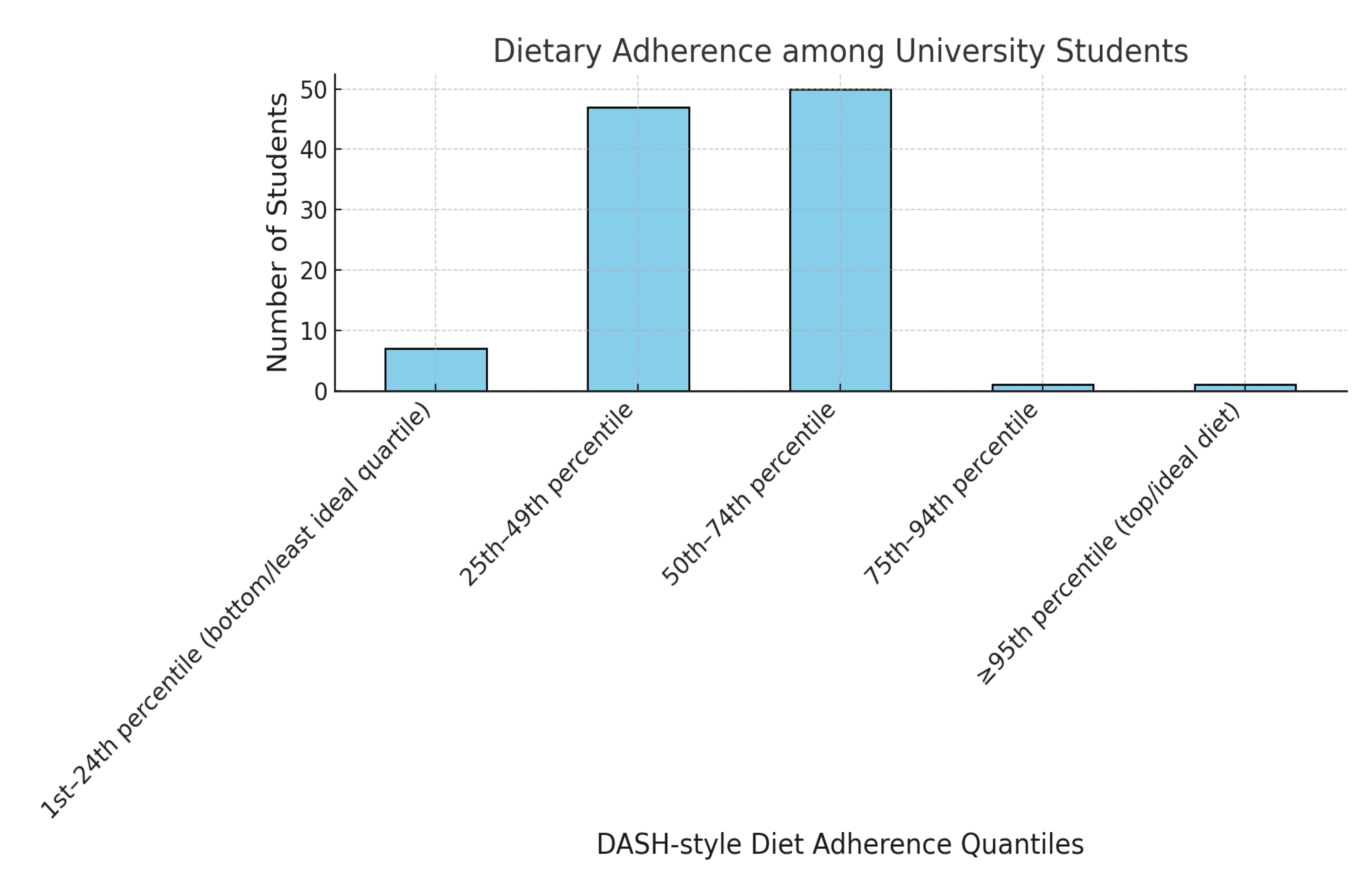
The study aimed to evaluate dietary habits among university students and their relationship with key health metrics such as BMI, blood pressure, and cholesterol levels. The analysis revealed that the majority of students adhered to diets falling within the 25th–49th and 50th–74th percentiles of the DASH-style dietary adherence scale, with only a small fraction achieving the highest adherence levels. These findings suggest that optimal dietary habits are relatively uncommon in this population.
A significant relationship was observed between dietary adherence and certain health metrics. Higher adherence to DASH-style dietary patterns correlated with lower BMI and healthier blood pressure levels, indicating the positive impact of better dietary practices on weight and cardiovascular health. Conversely, students with lower adherence to dietary guidelines exhibited higher total and non-HDL cholesterol levels, which are risk factors for cardiovascular disease.
Figure 1.
4. Conclusions
These results emphasize the need for targeted nutritional education and intervention programs among university students to promote healthier dietary habits. Such initiatives could play a crucial role in improving their overall health and reducing the long-term risk of chronic diseases. Future research should consider larger, more diverse samples to validate these findings and explore the influence of other factors such as socioeconomic status, physical activity, and cultural dietary norms.
5. Discussion
This study aimed to evaluate the dietary habits of university students and their relationship with cardiovascular health metrics. The results indicate that most students adhered to dietary patterns within the 25th–49th and 50th–74th percentiles of the DASH-style adherence scale, with only a small fraction achieving optimal adherence levels. This suggests that ideal dietary habits, particularly those recommended for cardiovascular health, are relatively uncommon within this population.
Our findings also revealed significant associations between dietary adherence and key health metrics. Higher adherence to the DASH diet was associated with lower BMI and healthier blood pressure levels, which supports previous research linking better dietary patterns with improved weight management and cardiovascular health. These results are consistent with studies showing that diets rich in fruits, vegetables, whole grains, and lean proteins, as promoted by the DASH diet, can have a positive impact on both weight and blood pressure regulation.
Conversely, students with lower adherence to dietary guidelines exhibited higher total and non-HDL cholesterol levels, which are established risk factors for cardiovascular disease. This finding aligns with the growing body of evidence indicating that poor dietary habits, particularly those high in saturated fats, processed foods, and added sugars, contribute to elevated cholesterol levels and increase the risk of cardiovascular events.
These results emphasize the importance of promoting healthier dietary habits among university students, particularly given the increased risk of cardiovascular disease associated with suboptimal diets. Targeted nutritional education and intervention programs could play a crucial role in encouraging better dietary practices, potentially reducing the long-term risk of chronic diseases like hypertension, obesity, and dyslipidemia.
One limitation of this study is the cross-sectional design, which prevents the establishment of causal relationships between dietary habits and health metrics. Longitudinal studies with larger and more diverse populations would provide more robust evidence regarding the long-term impact of dietary habits on cardiovascular health. Additionally, future research should explore the influence of other factors, such as socioeconomic status, physical activity, and cultural dietary norms, which could interact with dietary patterns to influence health outcomes.
In conclusion, our study highlights the significant role that dietary habits play in cardiovascular health among university students. Improving dietary adherence through education and intervention programs could have a lasting impact on students' overall health, reducing their risk of developing cardiovascular diseases in the future.
References
- Sogari, G., Velez-Argumedo, C., Gómez, M., & Mora, C. (2018). College Students and Eating Habits: A Study Using An Ecological Model for Healthy Behavior. Nutrients, 10. [CrossRef]
- Almoraie, N., Alothmani, N., Alomari, W., & Al-Amoudi, A. (2024). Addressing nutritional issues and eating behaviours among university students: A narrative review. Nutrition research reviews, 1-45. [CrossRef]
- Sprake, E., Russell, J., Cecil, J., Cooper, R., Grabowski, P., Pourshahidi, L., & Barker, M. (2018). Dietary patterns of university students in the UK: a cross-sectional study. Nutrition Journal, 17. [CrossRef]
- Hilger, J., Loerbroks, A., & Diehl, K. (2017). Eating behaviour of university students in Germany: Dietary intake, barriers to healthy eating and changes in eating behaviour since the time of matriculation. Appetite, 109, 100-107. [CrossRef]
- Lorenzoni, V., Triulzi, I., Martinucci, I., Toncelli, L., Natilli, M., Barale, R., & Turchetti, G. (2021). Understanding eating choices among university students: A study using data from cafeteria cashiers' transactions. Health policy. [CrossRef]
- Whatnall, M., Soo, Z., Patterson, A., & Hutchesson, M. (2021). University Students Purchasing Food on Campus More Frequently Consume More Energy-Dense, Nutrient-Poor Foods: A Cross-Sectional Survey. Nutrients, 13. [CrossRef]
- Martinez-Lacoba, R., Pardo-García, I., Amo-Saus, E., & Escribano-Sotos, F. (2018). Socioeconomic, demographic and lifestyle-related factors associated with unhealthy diet: a cross-sectional study of university students. BMC Public Health, 18. [CrossRef]
- [1] Åsberg, K., Lundgren, O., Henriksson, H., Henriksson, P., Bendtsen, P., Löf, M., & Bendtsen, M. (2021). Multiple lifestyle behaviour mHealth intervention targeting Swedish college and university students: protocol for the Buddy randomised factorial trial. BMJ Open, 11(12), e051044. [CrossRef]
- [2] Celie, B., Laubscher, R., Bac, M., Schwellnus, M., Nolte, K., Wood, P., Camacho, T., Basu, D., & Borresen, J. (2024). Poor Health Behaviour in Medical Students at a South African University: A Cross-Sectional Survey Study. International journal of environmental research and public health, 21(7), 824. [CrossRef]
- [3] Łoboda, D., Ocalewski, J., Ziółkowska, B., & Kuliś, S. (2024). Diet and eating behaviour of university youth in the context of body fat and muscle mass. Acta kinesiologica.
- [4] AinaB, A., & Oo, E. (2016). What risky behaviour is prevalent among pharmacy students at the University of Lagos.
- [5] Lagzdiņa, R., Blumfelds, L., Rumaka, M., & Aberberga-Augškalne, L. (2013). Dietary Behaviour in Students with Different Body Fat Percent.
- [6] Rumba, I. (2013). DIETARY BEHAVIOUR IN STUDENTS WITH DIFFERENT BODY FAT PERCENT.
- Li, X., Braakhuis, A., Li, Z., & Roy, R. (2022). How Does the University Food Environment Impact Student Dietary Behaviors? A Systematic Review. Frontiers in Nutrition, 9. [CrossRef]
- Bárbara, R., & Ferreira-Pêgo, C. (2020). Changes in Eating Habits among Displaced and Non-Displaced University Students. International Journal of Environmental Research and Public Health, 17. [CrossRef]
- Ramón-Arbués, E., Abadía, B., López, J., Serrano, E., García, B., Vela, R., Portillo, S., & Guinoa, M. (2019). [Eating behavior and relationships with stress, anxiety, depression and insomnia in university students.]. Nutricion hospitalaria. [CrossRef]
- Navarro-Prado, S., Schmidt-RioValle, J., Montero-Alonso, M., Fernández-Aparicio, Á., & González-Jiménez, E. (2020). Stricter Adherence to Dietary Approaches to Stop Hypertension (DASH) and Its Association with Lower Blood Pressure, Visceral Fat, and Waist Circumference in University Students. Nutrients, 12. [CrossRef]
- Faghih, S., Babajafari, S., Mirzaei, A., & Akhlaghi, M. (2019). Adherence to the dietary approaches to stop hypertension (DASH) dietary pattern and mental health in Iranian university students. European Journal of Nutrition, 59, 1001-1011. [CrossRef]
- Hilger, J., Loerbroks, A., & Diehl, K. (2017). Eating behaviour of university students in Germany: Dietary intake, barriers to healthy eating and changes in eating behaviour since the time of matriculation. Appetite, 109, 100-107. [CrossRef]
- Li, X., Braakhuis, A., Li, Z., & Roy, R. (2022). How Does the University Food Environment Impact Student Dietary Behaviors? A Systematic Review. Frontiers in Nutrition, 9. [CrossRef]
- Oh, C., Kubota, J., & Lasalle, C. (2020). P156 Impact of Culinary Nutrition Education on Student's Knowledge and Ability to Make Culinary Recommendations for the DASH-Diet. Journal of Nutrition Education and Behavior, 52. [CrossRef]
Disclaimer/Publisher’s Note: The statements, opinions and data contained in all publications are solely those of the individual author(s) and contributor(s) and not of MDPI and/or the editor(s). MDPI and/or the editor(s) disclaim responsibility for any injury to people or property resulting from any ideas, methods, instructions or products referred to in the content. |
© 2025 by the authors. Licensee MDPI, Basel, Switzerland. This article is an open access article distributed under the terms and conditions of the Creative Commons Attribution (CC BY) license (http://creativecommons.org/licenses/by/4.0/).
Copyright: This open access article is published under a Creative Commons CC BY 4.0 license, which permit the free download, distribution, and reuse, provided that the author and preprint are cited in any reuse.


