

Submitted:
13 January 2025
Posted:
14 January 2025
You are already at the latest version
Abstract
Integrating smart devices from the Internet of Things (IoT) with Customer Relationship Management (CRM) systems presents significant opportunities for enhancing customer experience through real-time data utilization. This article examines how data generated by IoT devices, when processed and shared across Distributed Web Systems, enables CRM platforms to improve both responsiveness and personalization. By continuously analyzing real-time information about customer interactions, behaviors, and preferences, companies can adapt their offerings to meet individual needs proactively, delivering highly customized services that anticipate and satisfy customer demands. The study provides a detailed framework for integrating IoT data within CRM systems, focusing on the technological architecture necessary for seamless data flow, improved system scalability, and efficient data management. Furthermore, it highlights the critical role of distributed computing in enabling the processing power required for managing large-scale data from IoT devices. This paper also addresses various challenges, such as data security concerns, the complexity of system integration, and the demand for real-time analytics, offering practical solutions and innovative strategies to overcome these obstacles and fully leverage IoT data for optimizing customer relationships.
Keywords:
integrating
; distributed web systems
; crm platforms
; optimizing
; user experience
; business efficiency
1. Introduction
In today’s digital age, a business’s success is increasingly based on its ability to understand and anticipate customer needs in real time [1]. The IoT has once and for all transformed the interaction between businesses and consumers, providing access to a huge volume of data generated by interconnected devices [2]. This abundance of information opens up new possibilities to improve the customer experience through personalization of services and faster and more relevant responses. But in order to meet these new challenges and effectively capitalize on these real-time data, companies must adopt technologies that allow them to manage and analyze data in a scalable and secure way [3].
CRM systems play an important role in centralizing and utilizing these data [4]. Integrating IoT-generated data with CRM systems, along with the use of Distributed Web Systems, can greatly improve the efficiency and ability of these platforms to provide personalized services. By distributing processing and storage tasks across multiple systems, companies can scale their infrastructure without compromising speed or security [5].
Security and reliability are key factors when handling large volumes of real-time data. Distributed Web Systems play a crucial role in this regard, providing an architectural framework that ensures optimized management of processing and storage tasks. These systems allow companies to balance the load between different servers, avoid overload, and ensure service continuity even during peak traffic times [6]. By implementing distributed solutions, one can achieve higher data processing speed, lower latency, and improve security by reducing vulnerabilities at central data management points [7].
High flexibility is another significant advantage of integrating IoT data into CRMs via Distributed Web Systems. Companies are able to adapt their IT infrastructure to meet new customer demands or to rapidly increase the number of connected devices [8]. Providing real-time responses, proactive actions, and advanced personalization optimizes the user experience. Therefore, customers enjoy more relevant and effective interactions, and companies strengthen their relationships with them, which means more loyalty and greater financial growth of the business [9].
2. Literature Review
2.1. Actual Works in the Field of Study
A study by Eslami et al. analyzes the segmentation and behavior of IoT customers to optimize CRM strategies. The research uses the Self-Organizing MAP (SOM) algorithm to identify three distinct clusters of IoT users based on their usage patterns of connected devices. The second stage of the study analyzes 17 key factors that influence purchase decisions and customer satisfaction of IoT customers using the decision tree classification and regression technique (CART). These analyses provide essential information for companies, enabling them to develop personalized marketing strategies and improve customer loyalty in the context of the IoT ecosystem [10].
In research carried out by Sanodia, it is analyzed how technologies from the IoT spectrum can be integrated into CRM systems to improve the understanding of customer behavior and preferences. The study details the methods by which IoT data is collected and processed, such as the use of sensors and connected devices, to provide contextual and real-time information about customers. Through these technologies, organizations can gain a much more detailed insight into user behavior, allowing them to deliver personalized services and efficiently optimize customer interactions based on the data obtained. It also addresses major challenges such as data security and technological complexity while highlighting the potential of these technologies to revolutionize CRM by automating certain processes, providing proactive recommendations, and anticipating customer needs. The author presents a broad analysis of current and future trends in the integration of IoT into CRM, demonstrating how the two can contribute to deeper personalization of customer experiences and better use of data to support business decisions [11].
Research by Dr. Karunakar et al. analyzes how data obtained through the IoT can improve decision-making processes in CRM. The study explores how IoT devices can collect highly valuable data on customer behavior, which is then integrated into CRM systems to provide a more complete view of customer preferences and needs. Detailed information allows companies to anticipate customer actions and customize experiences to better meet market demands. The research also highlights the difficulties companies face in integrating IoT into CRM, including a lack of expertise in software development and the management of large volumes of data. By integrating these two technologies, companies can develop innovative business models focused on consumer needs and improving their loyalty [12].
2.2. Authors and Research Groups Analysis
Numerous authors signed various works on the topic of CRM systems using a dynamic analytical approach. The empirical investigation was carried out using the online platform "Dimensions.ai" as a database. In the research category, Distributed Computing and Software Systems. The VOSviewer tool was used to interpret the data and facilitate the identification of each author who wrote a paper on this topic. This analysis resulted in a graph. There are 3166 total writers in the dataset. In addition to having at least three citations, an author must be listed as an author in three of five publications to be considered relevant. In total, 68 authors met these requirements (see Figure 1) [13].
A map of the countries where the research centers in which the writers conduct their investigations are located was made using the same data set. For a country to be considered relevant, it must have at least three papers with three citations each. After applying the criteria described above, research centers in 84 countries were found to meet the requirement. A graph was created with the centers that collaborate for the creation of scientific writings, so 54 of these countries are presented in Figure 2 [14].
3. Methodology
3.1. Distributed Web Systems
Distributed Web Systems are an essential factor for modern architectures that want scalability, performance, and high security. These systems allow processing and storage tasks to be distributed across multiple servers, ensuring an optimal balance of resources and reducing the risks associated with overloading a single workstation [15].
These systems are designed to handle large volumes of data and variable traffic requirements. In this study, we implemented a distributed architecture that allows horizontal scaling, that is, the addition of new nodes to handle an increased number of users or connected devices. This approach improves the overall performance of the platform, ensuring fast response times and efficient real-time data processing [16].
One of the main advantages of distributed web systems is the ability to balance loads between multiple servers. In this study, we used load-balancing mechanisms to distribute traffic evenly among the available nodes. This was achieved by using a load balancer that constantly monitors the resources of each server and directs requests to the least loaded one. This mechanism prevents certain servers from becoming overloaded and helps ensure service continuity, even during periods of high traffic [17].
Security is one of the main issues when handling sensitive data or a large volume of real-time transactions. Distributed systems offer an additional advantage in that data and processes are shared between multiple locations, reducing the risk of vulnerabilities concentrated at a single centralized point. In our analysis, we considered TLS/SSL encryption protocols to secure all communications between distributed nodes. Each node was also equipped with role-based access control mechanisms, limiting access to resources based on the permissions of each user [18].
This system ensures scalability and reliability, with multiple servers responding to requests and domain resolution through DNS (see Table 1).
- Distributed Web Servers: Several servers (Server 1, Server 2, Server N-1, Server N) are connected via a LAN, and each has a database (Db 1) associated with it. This suggests load balancing or redundancy.
- DNS (Domain Name System): A laptop sends an HTTPS request to the Internet for a domain (www.example.com). A DNS server resolves the domain name to an IP address (93.184.216.34).
- DNS Authority: The authoritative DNS server handles domain queries and returns the corresponding IP address to the laptop.
3.2. IoT
The Internet of Things (IoT) refers to a system of interconnected physical devices, vehicles, household appliances, industrial machinery, and other objects equipped with sensors, software, and network capabilities, allowing them to gather, process, and share data over the Internet. This interconnected ecosystem allows these devices to communicate not only with each other but also with centralized or distributed systems, creating opportunities for enhanced automation, real-time monitoring, and data-driven decision-making. IoT has the potential to revolutionize numerous industries by optimizing resource allocation, reducing operational costs, and improving service quality [19].
For example, in customer relationship management (CRM), integrating IoT can help businesses gain in-depth insights into customer interactions and preferences by analyzing data from various touchpoints, like smart devices and IoT-enabled environments. This information can be leveraged to deliver highly personalized services, anticipate customer needs, and improve overall customer satisfaction (see Table 2). In addition, IoT-driven CRM systems can automate repetitive tasks, improve response times, and offer predictive analytics, enabling businesses to stay competitive in an increasingly data-centric market [20].
3.3. CRM
CRM is a strategic and technological approach that businesses use to monitor interactions with customers throughout their entire lifecycle[21].
Figure 4 presents the architecture of a CRM system, with the "Customer Data Management" module at its center, playing a key role in collecting, processing, and distributing information across various departments. The sales, marketing, and support teams maintain bidirectional connections with this central module, enabling data exchange and personalized customer interactions. Additionally, each team is linked to a specific functional module: "Sales Automation" for tracking deals and tasks, "Marketing" for building campaigns, and "Customer Support" for managing and resolving issues.
Table 3 summarizes the key modules of CRM systems, their functions, and the benefits for businesses. Each module plays a specific role in improving customer data management, optimizing sales and marketing, and enhancing customer service. The data management and analytics modules provide centralized information and valuable insights that help to make informed decisions. Sales and marketing modules, along with process automation, increase the efficiency of marketing campaigns and reduce human involvement in routine tasks, leading to higher conversions and time savings.
Figure 5 demonstrates the stages of automation within a CRM system, including data collection, task automation, and sales forecasting, streamlining workflows for greater efficiency.
Combining tools, processes, and strategies, CRM enhances customer satisfaction, loyalty, and profitability by centralizing customer-related data and enabling personalized engagement. CRM systems typically include tools for managing customer data, automating sales and marketing activities, and analyzing interactions. These systems provide a unified view of the customer journey, from the first contact to post-sale support, empowering cross-departmental teams to align their efforts and deliver consistent, high-quality experiences. Automation features streamline workflows, such as follow-ups, while data analytics reveal trends, enabling predictive actions such as upselling or customer retention strategies [22].
The system’s process is based on data centralization and task automation, ensuring efficient synchronization between departments. Data from marketing campaigns are sent back to the sales team for lead tracking, while feedback from support is analyzed to improve services. In addition, automated processes such as sales forecasts, targeted marketing recommendations, and support requests facilitate fast, data-driven decision-making. This architecture ensures a unified view of the customer, improves operational efficiency, and delivers a better, more personalized customer experience [22].
Advancements in artificial intelligence (AI) and machine learning have significantly reshaped CRM. Predictive algorithms now examine both historical and real-time data to pinpoint opportunities, while AI-powered assistants streamline customer support and recommend the best sales strategies. Cloud-based CRMs enhance scalability and accessibility, allowing businesses of all sizes to securely access and utilize data in real time.
A critical aspect of CRM is ensuring data security and compliance with regulations like GDPR and CCPA. Implementing encrypted communications, secure storage, and role-based access controls protects sensitive information, fostering customer trust. Using these features, organizations can optimize both operational efficiency and customer relationships, making CRM an indispensable tool in the modern business landscape [23].
CRM systems also optimize customer service by providing tools for quickly resolving issues and managing interactions across different channels. With integrated communication management, these systems ensure a personalized experience that increases customer loyalty and satisfaction. As a result, CRM systems not only improve business processes but also contribute to long-term growth and company competitiveness [24].
3.4. CRM Using Dates from IoT
The integration of IoT data into CRM systems represents a revolutionary advancement, enabling organizations to leverage real-time, context-rich insights for better CRM. IoT devices continuously collect and transmit data, offering unprecedented opportunities to understand customer preferences, behaviors, and product usage. By incorporating these data, CRMs deliver hyperpersonalized experiences and proactive services [25].
IoT-CRM integration allows for real-time monitoring and automation. For example, smart home devices can report usage patterns, enabling energy companies to offer customized efficiency tips or maintenance alerts. Similarly, wearable fitness trackers can feed data into CRMs to generate personalized recommendations, improving customer satisfaction and engagement [25].
Figure 6 shows the diagram of the integration of the IoT with CRM. The integration of IoT devices begins with the collection of data from various sensors and devices such as thermostats, smartwatches, and motion sensors. This data is sent to edge processing, where preliminary filtering and processing are done to reduce latency and cloud load. The processed data is then sent to cloud storage, which allows for the storage of large volumes of data for further processing and analysis.
Subsequently, the data passes through the CRM system, which provides modules for data management, analytics, and automation. Based on these analyses, the CRM system can generate automatic actions, such as sending maintenance alerts or adjusting the settings of IoT devices. These actions are sent back to the IoT devices, enabling process optimization and improving customer interaction [25].
From a technical point of view, IoT-enhanced CRMs rely on distributed architectures and cloud computing to handle large-scale data processing. Advanced analytics and machine learning algorithms transform raw IoT data into actionable insights, while real-time frameworks ensure immediate responsiveness. These capabilities enable businesses to anticipate customer needs, resolve issues preemptively, and foster deeper relationships.
Security and privacy are paramount in IoT-CRM ecosystems, given the sensitive nature and volume of data involved. Robust encryption, secure APIs, and adherence to international data protection standards ensure that organizations can safeguard information while utilizing it to optimize customer experiences. Clear governance policies and compliance frameworks are essential for maintaining trust in this context.
By integrating IoT data into CRMs, businesses also achieve process automation and operational efficiency. For example, predictive maintenance alerts from IoT devices can automatically generate service requests in CRM systems, while usage insights can trigger targeted marketing campaigns. This level of automation reduces human intervention, improves precision, and saves resources [25].
In summary, the fusion of IoT and CRM systems allows organizations to remain agile, customer-focused, and innovative in a rapidly evolving digital landscape. This integration elevates CRM capabilities, driving personalization, improving operational efficiency, and building stronger and longer-lasting customer relationships.
4. Results and Discussion
The use of distributed architectures within CRM systems has highlighted a significant improvement in the processing speed of data generated by IoT devices. By distributing processing tasks across multiple nodes and using load balancing techniques, the platform can handle large volumes of data in real time without affecting performance. This process was achieved by implementing a horizontal processing system, which allows the dynamic addition of new resources to support the ever-growing data requirements [26].
Integrating IoT data into CRM systems has given companies deep insights into customer behavior and preferences, allowing advanced personalization of interactions with them. IoT devices, through their smart sensors, collect real-time data about product and service usage, as well as operating conditions. This data is analyzed using machine learning algorithms implemented in distributed systems to identify patterns and anticipate customer needs [27].
Integrating IoT with CRM systems significantly improves operational efficiency by automating customer interactions and personalizing services. IoT devices continuously collect real-time data on customer behavior, which is then processed by CRM platforms to predict needs, recommend personalized offers, and trigger proactive actions. This reduces the need for manual intervention, allowing businesses to respond to customer demands faster and more effectively. For example, CRM can automatically initiate marketing campaigns based on real-time data from IoT devices, such as customer preferences or behavior patterns. In addition, IoT data are instrumental in areas such as inventory management, predictive maintenance, and supply chain optimization. By automatically forecasting stock levels and maintenance needs, companies can ensure smoother operations, lower operational costs, and greater resource efficiency, ultimately improving overall productivity [28].
Distributed Web Systems within CRM platforms allow businesses to scale efficiently as their data and device networks grow. As the number of IoT devices increases, companies need to handle larger data volumes without compromising performance. Distributed systems offer horizontal scalability, meaning businesses can add new nodes or servers to their network to manage increased loads without interrupting services [29]. This capability allows CRM systems to seamlessly integrate additional IoT devices and customers, ensuring that the system can handle growing data volumes as the business expands. The flexibility to scale infrastructure without significant hardware upgrades or downtime allows businesses to remain agile and adapt to market demands. By maintaining high system performance, even during peak usage, companies can confidently grow their customer base and data collection capabilities [30].
5. Conclusions
In conclusion, optimizing the customer experience by analyzing real-time data generated by IoT devices and using Distributed Web Systems within CRM platforms brings significant advantages in terms of both security and system performance. Security is essential because distributed systems reduce the risks associated with centralized data storage by dispersing it across multiple nodes. This architecture improves resilience against cyber threats, such as DDoS attacks, and guarantees the protection of sensitive customer information through encryption and role-based access control.
A major benefit of integrating Distributed Web Systems with edge processing is reduced latency. Faster response times, facilitation of real-time interaction, and improved service delivery can be achieved by processing data closer to its source and distributing the workload across multiple servers. In situations such as alerts or immediate maintenance actions triggered by IoT devices, this enables faster decision-making and more efficient customer service without waiting for data to reach a central server.
These improvements not only increase operational efficiency but also contribute to increasing customer satisfaction and strengthening their trust in the online service provided. By reducing latency and implementing robust security measures, companies can improve overall agility and provide faster and more reliable services, making Distributed Web Systems a powerful tool to optimize CRM platforms in the digital age.
Author Contributions
Conceptualization, M.I.; methodology, M.I., P.P., and V.M.; software, M.I., P.P., and V.M; validation, M.I., P.P., and V.M.; formal analysis, M.I.; investigation, P.P.; resources, V.M.; data curation, M.I., P.P., and V.M.; writing—original draft preparation, M.I.; writing—review and editing, P.P. and V.M.; visualization, M.I. and P.P.; supervision, P.P.; project administration, M.I. All authors have read and agreed to the published version of the manuscript.
References
- Georgieva-Trifonova, T.; Petrov, P.; Milev, V. Application of Semantic Web Technologies for Supporting Customer Relationship Management: a Systematic Literature Review. BRAIN. Broad Research in Artificial Intelligence and Neuroscience 2023, 14, 168–198. [Google Scholar] [CrossRef]
- Oproiu, M.I.; Ileana, M.; Marian, C.V. Exploring the Intricacies of the Architectural Framework Underlying the Internet of Things Ecosystem. In Proceedings of the 16th International Conference on Electronics, Computers and Artificial Intelligence (ECAI), 2024; pp. 1–6.
- Anghel, M.M.; Ianc, P.; Ileana, M.; Modi, L.I. The Influence of Privacy and Security on the Future of IoT. Informatica Economica 2020, 24, 2–2020. [Google Scholar] [CrossRef]
- Hashem, T.N. The reality of internet of things (IoT) in creating a data-driven marketing opportunity: mediating role of customer relationship management (CRM). Journal of Theoretical and Applied Information Technology 2021, 99, 329–342. [Google Scholar]
- Ileana, M. Optimizing Performance of Distributed Web Systems. Informatica Economica 2023, 27, 78–87. [Google Scholar] [CrossRef]
- Deep, S.; Zanke, P. Digital Transformation Strategy with CRM and AI for SMB’s Sustainable Growth. ESP Journal of Engineering & Technology Advancements (ESP-JETA) 2024, 4, 9–22. [Google Scholar]
- Sihombing, D.J.C. Agile-Based CRM System Development to Improve Customer Satisfaction in Cargo Companies. Jurnal Ekonomi 2024, 13, 2344–2353. [Google Scholar]
- Wijesinghe, S.; Nanayakkara, I.; Pathirana, R.; Wickramarachchi, R.; Fernando, I. Impact of IoT Integration on Enterprise Resource Planning (ERP) Systems: A Comprehensive Literature Analysis. In Proceedings of the International Research Conference on Smart Computing and Systems Engineering (SCSE); 2024; pp. 1–5. [Google Scholar]
- Ren, G.; Chen, Y.; Yang, M. Customer Perception, Integration Behavior, and Loyalty of Internet of Things Enterprises. Technology in Society 2024, 102600. [Google Scholar] [CrossRef]
- Eslami, E.; Razi, N.; Lonbani, M.; Rezazadeh, J. Unveiling IoT Customer Behaviour: Segmentation and Insights for Enhanced IoT-CRM Strategies: A Real Case Study. Sensors 2024, 24, 4–1050. [Google Scholar] [CrossRef]
- Sanodia, G. Leveraging Internet of Things (IoT) for Enhanced Customer Insights in CRM. Journal of Computer and Mathematics Education (TURCOMAT) 2024, 9, 775–794. [Google Scholar] [CrossRef]
- Karunakar, P.; Haritha, M.R.; Kallappan, J. Making Better CRM Decisions with IoT Data.
- Arruda, H.; Silva, E.R.; Lessa, M.; Proença Jr, D.; Bartholo, R. VOSviewer and bibliometrix. Journal of the Medical Library Association: JMLA 2022, 110, 3–392. [Google Scholar] [CrossRef] [PubMed]
- Thelwall, M. Dimensions: A competitor to Scopus and the Web of Science? Journal of Informetrics 2018, 12, 430–435. [Google Scholar] [CrossRef]
- Zhou, S.; Yuan, B.; Xu, K.; Zhang, M.; Zheng, W. The Impact of Pricing Schemes on Cloud Computing and Distributed Systems. Journal of Knowledge Learning and Science Technology 2024, 3, 193–205. [Google Scholar] [CrossRef]
- Zangana, H.M.; Zeebaree, S.R. Distributed Systems for Artificial Intelligence in Cloud Computing: A Review of AI-Powered Applications and Services. International Journal of Informatics, Information System and Computer Engineering (INJIISCOM) 2024, 5, 11–30. [Google Scholar] [CrossRef]
- Mishra, S.K.; Sahoo, B.; Parida, P.P. Load Balancing in Cloud Computing: A Big Picture. Journal of King Saud University-Computer and Information Sciences 2020, 32, 149–158. [Google Scholar] [CrossRef]
- Golightly, L.; Modesti, P.; Garcia, R.; Chang, V. Securing Distributed Systems: A Survey on Access Control Techniques for Cloud, Blockchain, IoT, and SDN. Cyber Security and Applications 2023, 1, 100015. [Google Scholar] [CrossRef]
- Morchid, A.; El Alami, R.; Raezah, A.A.; Sabbar, Y. Applications of Internet of Things (IoT) and Sensors Technology to Increase Food Security and Agricultural Sustainability: Benefits and Challenges. Ain Shams Engineering Journal 2024, 15, 3–102509. [Google Scholar] [CrossRef]
- Usman, M.; Gangadharan, S.; Muralidhar, L.B.; Murugesh, M.K.; Gunday, I.; Tiwari, M. Utilising the Internet of Things to Enhance Customer Relationship Management in the Field of Digital Marketing. In Proceedings of the International Conference on Trends in Quantum Computing and Emerging Business Technologies; 2024; pp. 1–6. [Google Scholar]
- Ghaus-Pasha, A. The Evolution of Customer Relationship Management (CRM): From Contact Management to Experience Orchestration. Research Studies of Business 2024, 2, 1–9. [Google Scholar]
- Stefanov, T.; Varbanova, S.; Stefanova, M.; Ivanov, I. CRM System as a Necessary Tool for Managing Commercial and Production Processes. TEM Journal 2023, 12, 785. [Google Scholar] [CrossRef]
- Sarghi, E.; Ileana, M. Evolution of Legal Systems in the Digital Era: An Analysis of Artificial Intelligence in E-Business. Analele Științifice ale Universității Alexandru Ioan Cuza din Iași Științe Juridice 2024, 70, 53. [Google Scholar] [CrossRef]
- Berestetska, O.; Iankovets, T.; Orozonova, A.; Voitovych, S.; Parmanasova, A.; Medvedieva, K. Using CRM Systems for the Development and Implementation of Communication Strategies for Digital Brand Management and Internet Marketing: EU Experience. International Journal of Professional Business Review (Int. J. Prof. Bus. Rev.) 2023, 8, 36. [Google Scholar] [CrossRef]
- Motevalli, S.H.; Razavi, H. Enhancing Customer Experience and Business Intelligence: The Role of AI-Driven Smart CRM in Modern Enterprises. Journal of Business and Future Economy 2024, 1, 1–8. [Google Scholar]
- Afek, Y.; Giladi, G.; Patt-Shamir, B. Distributed Computing with the Cloud. Distributed Computing 2024, 37, 1–18. [Google Scholar] [CrossRef]
- Adhicandra, I.; Tanwir, T.; Asfahani, A.; Sitopu, J.W.; Irawan, F. Latest Innovations in Internet of Things (IoT): Digital Transformation Across Industries. Innovative: Journal of Social Science Research 2024, 4, 3–1027. [Google Scholar] [CrossRef]
- Rane, N.; Choudhary, S.; Rane, J. Artificial Intelligence (AI), Internet of Things (IoT), and Blockchain-Powered Chatbots for Improved Customer Satisfaction, Experience, and Loyalty. Internet of Things, 29 May 2024. [Google Scholar]
- Johnson, E.; Seyi-Lande, O.B.; Adeleke, G.S.; Amajuoyi, C.P.; Simpson, B.D. Developing Scalable Data Solutions for Small and Medium Enterprises: Challenges and Best Practices. International Journal of Management & Entrepreneurship Research 2024, 6, 6–1910. [Google Scholar]
- Rustandi, I.; Hindarsah, I.; Jamaludin, M. Electronic Customer Relationship Management Systems in E-Commerce Platforms: Exploring the Antecedents of Technology Acceptance and Customer Satisfaction. Media Ekonomi dan Manajemen 2024, 39, 1–1. [Google Scholar] [CrossRef]
Figure 1.
A graphic map of authors for the search term "Customer Relationship Management and Internet of Things".
Figure 1.
A graphic map of authors for the search term "Customer Relationship Management and Internet of Things".
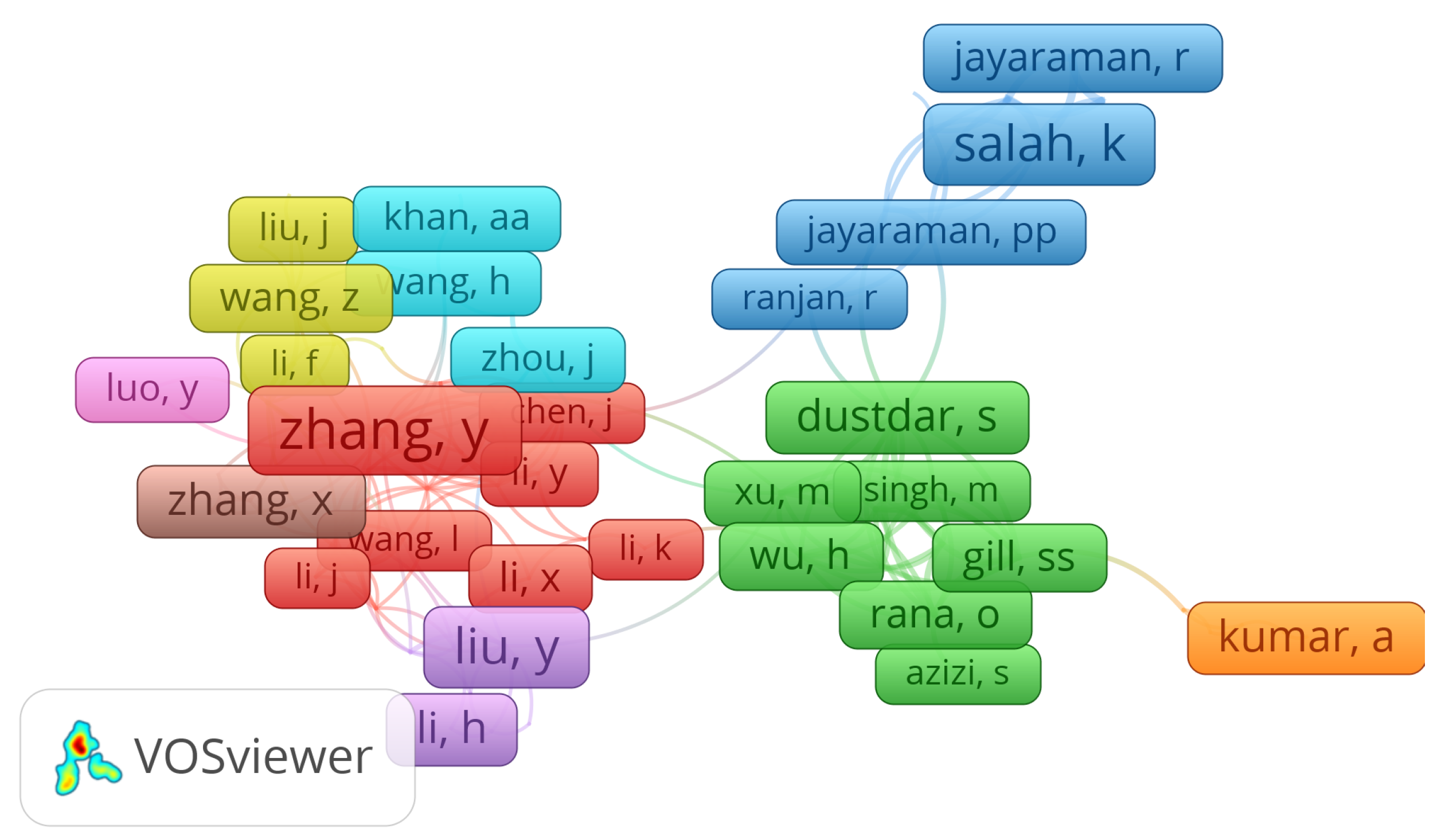
Figure 2.
A country map of authors for the search term "Customer Relationship Management and Internet of Things".
Figure 2.
A country map of authors for the search term "Customer Relationship Management and Internet of Things".
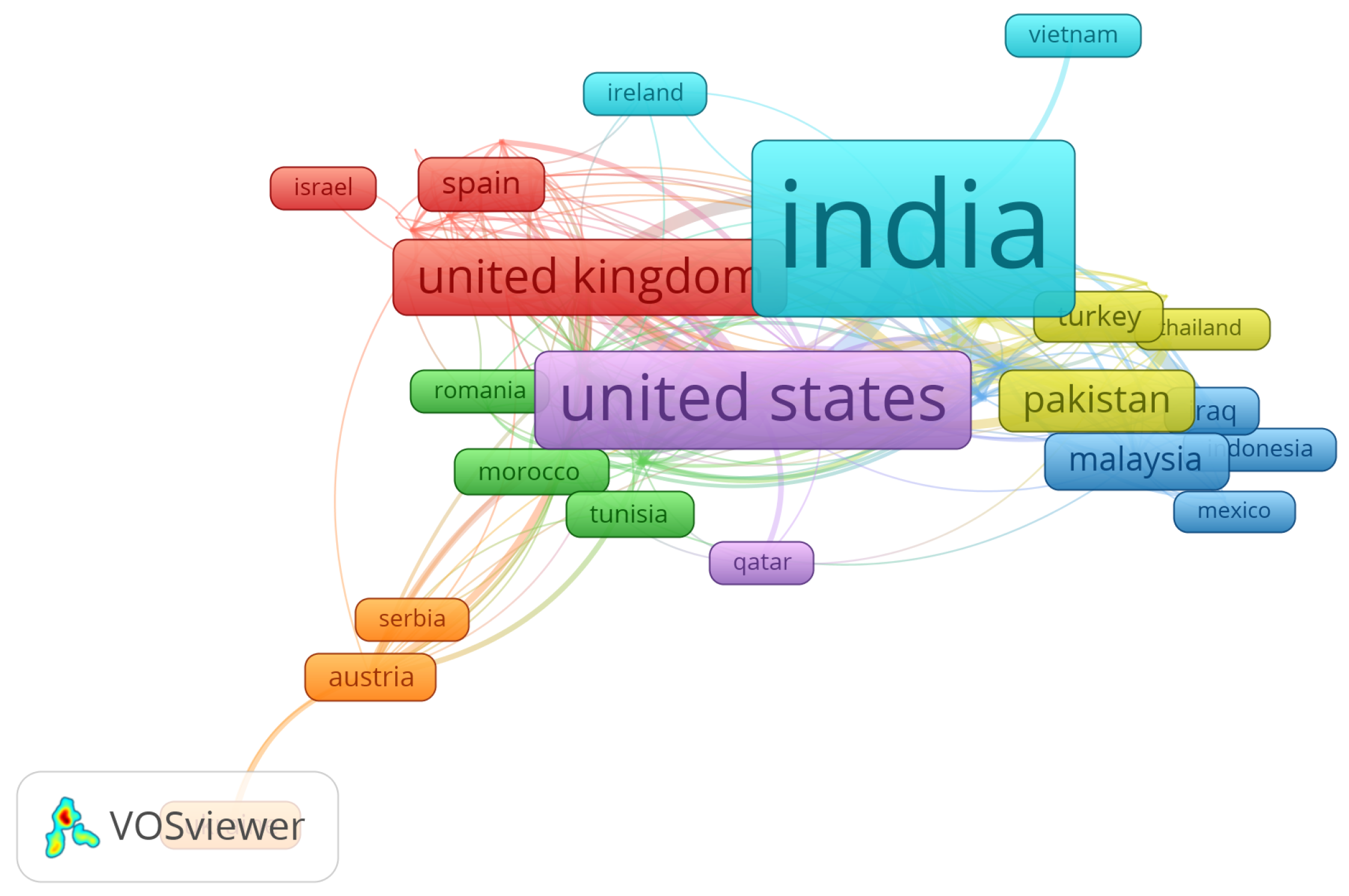
Figure 3.
Architecture of a Distributed Web System.
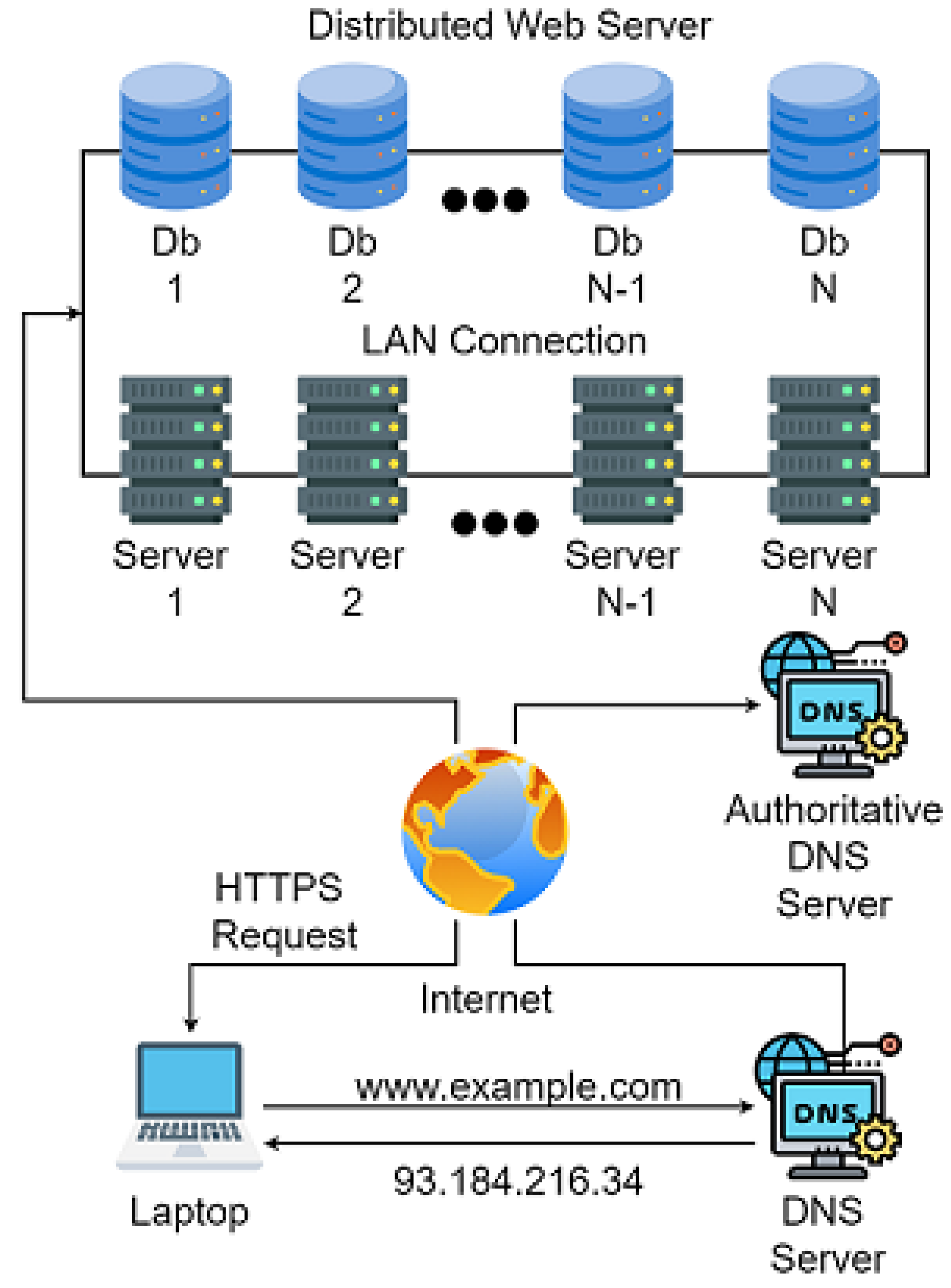
Figure 4.
Architecture of a CRM system.
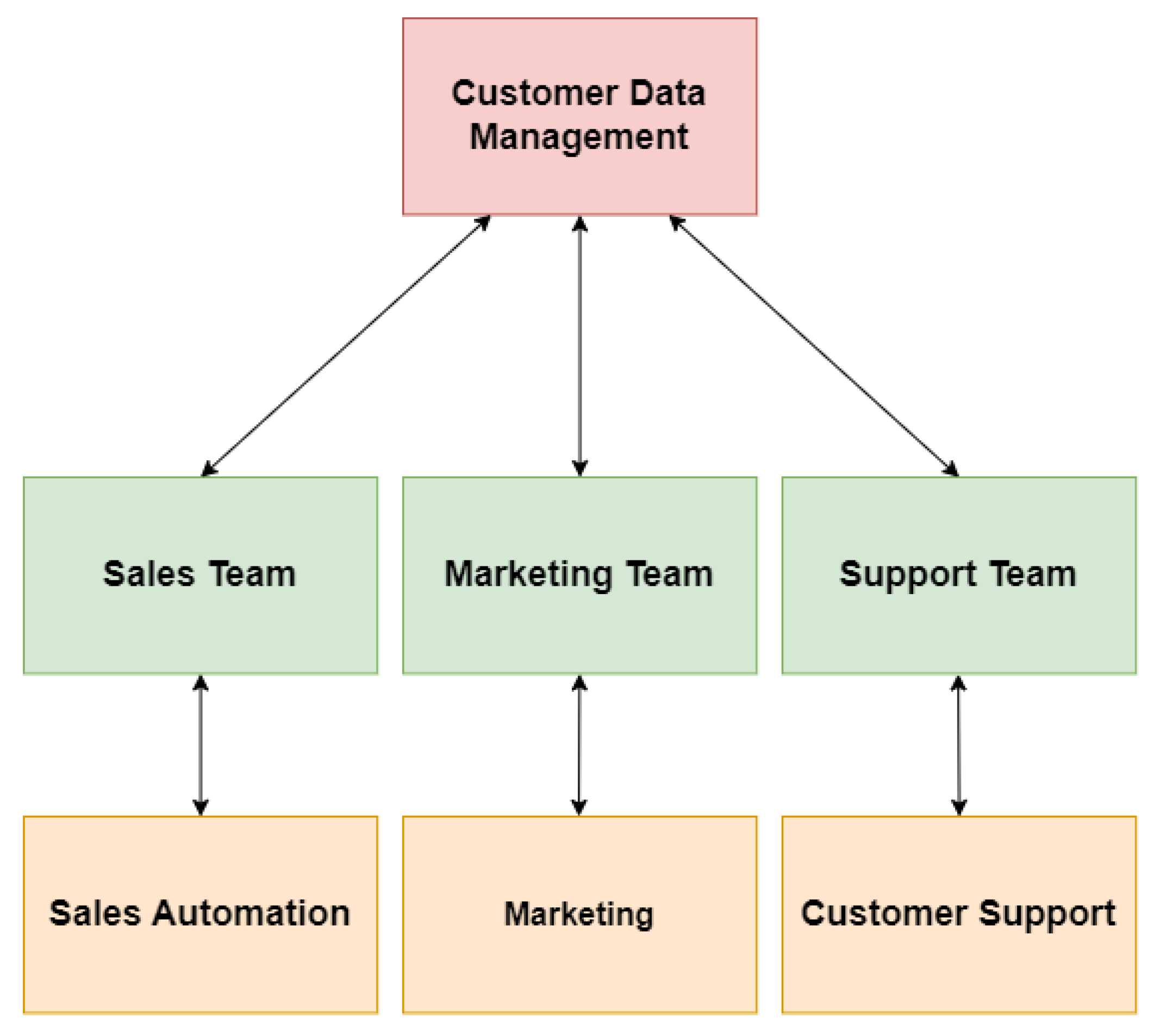
Figure 5.
Automation in CRM system.
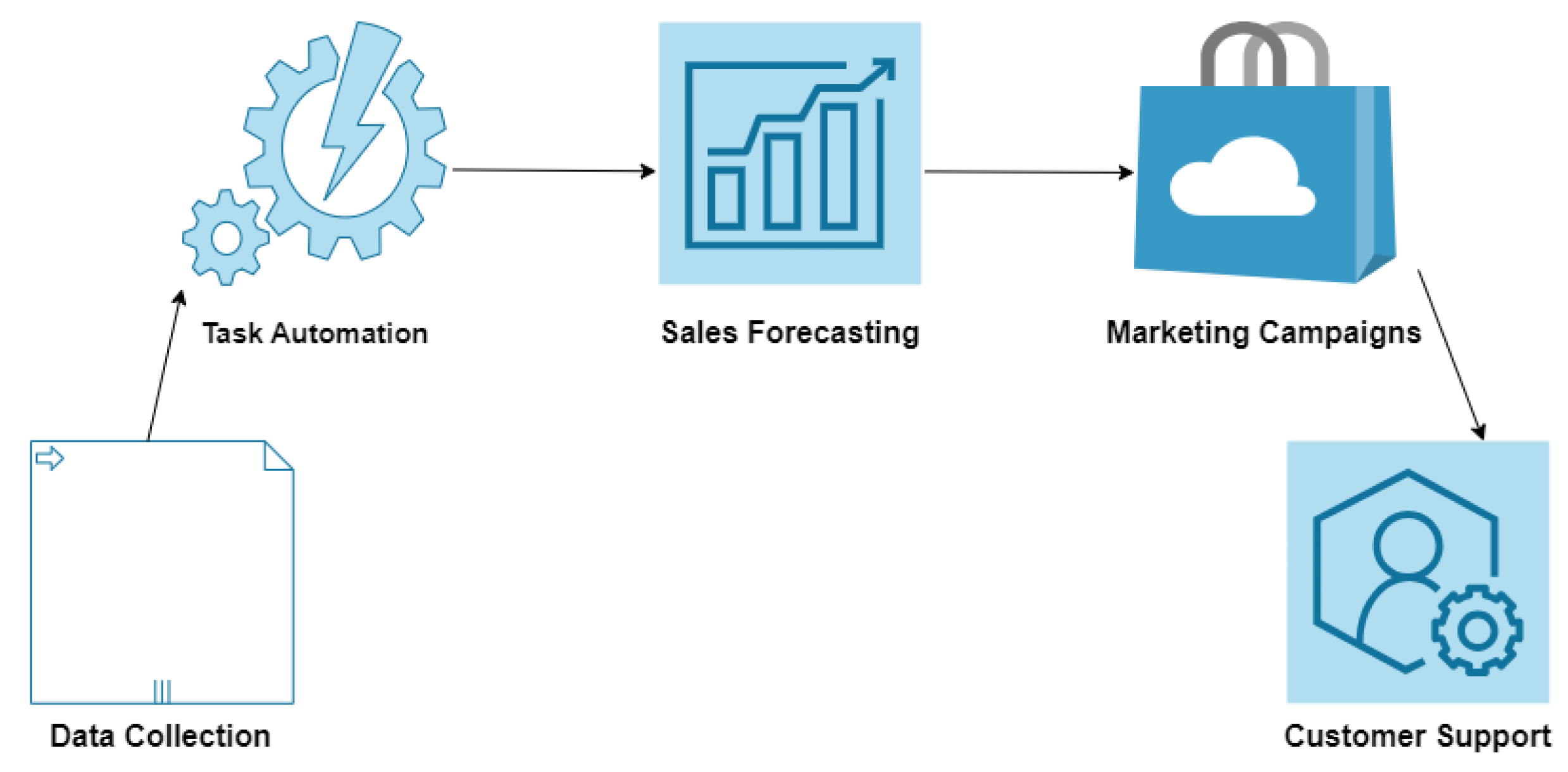
Figure 6.
IoT integration diagram.
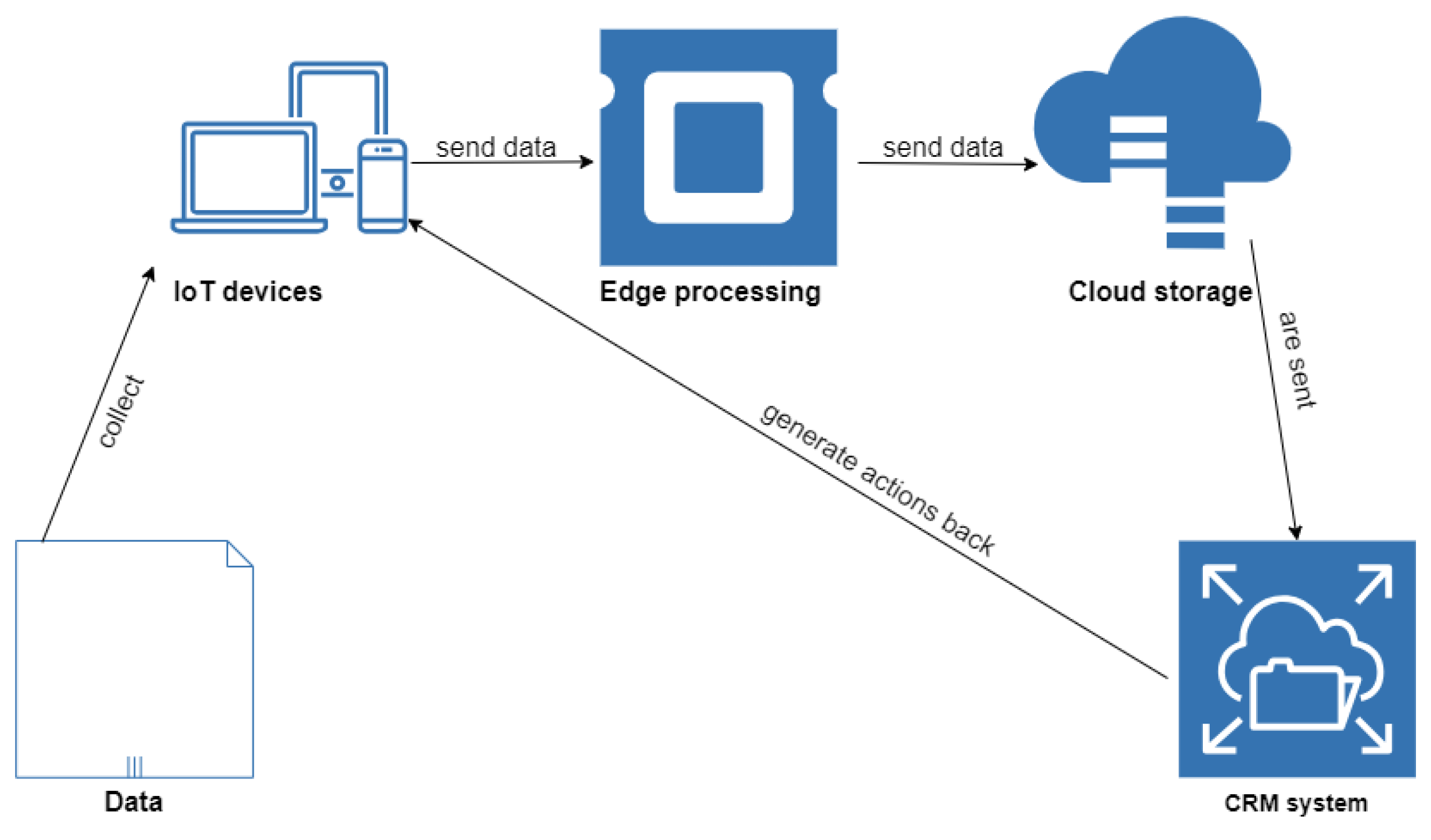

Table 1.
Advantages of using Distributed Web Systems.
| Advantage | Description |
|---|---|
| High scalability | It allows adding additional resources (nodes or servers) to handle traffic increases without affecting performance. |
| Fault tolerance | In the event of a node or server failure, the system automatically redistributes tasks to other functional nodes, maintaining service continuity. |
| Improving response times | Requests are split among several servers, which lowers latency and gives users faster answers. |
| Balanced load | By spreading traffic among all available resources, you can maintain optimal performance and prevent certain servers from being overloaded. |
| Enhanced security | Data and processes are shared across multiple nodes, reducing vulnerabilities and risks of a single point of failure. |
| Effective management of resources | Optimized use of available resources, ensuring that each node or server is used efficiently without wasting resources. |
| Flexibility in adaptation | Systems can be quickly configured and adjusted to meet dynamic requirements, such as increasing numbers of users or IoT devices. |
Table 2.
Advantages of Using IoT in Customer Relationship Management.
| Advantage | Description |
|---|---|
| Real-Time Data Collection | IoT devices can collect data on customer behavior in real-time, providing valuable insights for service personalization. |
| Advanced Personalization | Analyzing the collected data enables companies to provide personalized recommendations and offers, enhancing customer satisfaction. |
| Process Automation | Integrating IoT allows for the automation of processes, reducing the need for human intervention and increasing operational efficiency. |
| Proactive Monitoring | By continuously monitoring customer interactions, companies can anticipate their needs and intervene before issues arise. |
| Service Improvement | IoT data can be used to identify areas needing improvement, allowing companies to optimize their services. |
| Increased Customer Loyalty | By providing personalized and relevant experiences, companies can build stronger relationships with customers, increasing their loyalty. |
Table 3.
Features and benefits of CRM.
| CRM module | Function | Advantages |
|---|---|---|
| Data Management | Collecting and storing customer data, interaction history | Centralized data storage, better customer management |
| Sales and Marketing | Automating marketing campaigns, managing sales opportunities | Increased marketing efficiency, higher sales |
| Customer Service | Managing customer inquiries and issues, tracking satisfaction | Improved customer service, higher satisfaction and loyalty |
| Analytics and Reporting | Generating reports on sales, performance, and customer data | Better business understanding, informed decisions, and strategies |
| Process Automation | Automating routine tasks such as email sending, reminders, and alerts | Saving time and resources, better efficiency and accuracy |
| Interaction Management | Tracking contacts and communication with customers across channels | Enhanced communication, personalized approach to each customer |
Disclaimer/Publisher’s Note: The statements, opinions and data contained in all publications are solely those of the individual author(s) and contributor(s) and not of MDPI and/or the editor(s). MDPI and/or the editor(s) disclaim responsibility for any injury to people or property resulting from any ideas, methods, instructions or products referred to in the content. |
© 2025 by the authors. Licensee MDPI, Basel, Switzerland. This article is an open access article distributed under the terms and conditions of the Creative Commons Attribution (CC BY) license (http://creativecommons.org/licenses/by/4.0/).
Copyright: This open access article is published under a Creative Commons CC BY 4.0 license, which permit the free download, distribution, and reuse, provided that the author and preprint are cited in any reuse.


