Preprint
Review

This version is not peer-reviewed.

Chimeric Antigen Receptor Cell Therapy: Empowering Treatment Strategies for Solid Tumors

A peer-reviewed article of this preprint also exists.

Submitted:

13 January 2025

Posted:

14 January 2025

You are already at the latest version

Abstract

Chimeric antigen receptor-T (CAR-T) cell therapy has demonstrated impressive efficacy in the treatment of blood cancers; however, its effectiveness in solid tumors has been significantly limited. The differences arise from a range of difficulties linked to solid tumors, including an unfriendly tumor microenvironment, variability within the tumors, and barriers to CAR-T cell infiltration and longevity at the tumor location. Research shows that the reasons for the decreased effectiveness of CAR-T cells in treating solid tumors are not well understood, highlighting the ongoing need for strategies to address these challenges. Current strategies frequently incorporate combinatorial therapies designed to boost CAR-T cell functionality and enhance their capacity to effectively target solid tumors. Nonetheless, these strategies remain in the testing phase and necessitate additional validation to assess their potential benefits. CAR-NK (Natural Killer), CAR-iNKT (invariant Natural Killer T), and CAR-M (Macrophage) are emerging as promising strategies for treating solid tumors. Recent studies highlight the construction and optimization of CAR-NK cells, emphasizing their potential to overcome the unique challenges posed by the solid tumor microenvironment, such as hypoxia and metabolic barriers. This review focuses on CAR cell therapy in the treatment of solid tumors.

Keywords: 
;  ;  ;  ;  ;  

1. Introduction

Immunotherapy is a powerful cancer treatment, with adoptive cell therapy (ACT) proving to be particularly effective. Chimeric antigen receptor (CAR)-T cells are featured in six FDA-approved treatments for hematological malignancies [1]. CAR-T cell therapy encounters significant hurdles, including elevated production expenses, cytokine release syndrome, immune effector cell-associated neurotoxicity syndrome, and graft-versus-host disease (GVHD) [2,3]. The tumor microenvironment (TME) plays a crucial role in influencing cancer progression and reducing the efficacy of CAR-T cells [4].
CAR-NK (Natural Killer) and CAR-iNKT (invariant Natural Killer T) cell therapies are promising for treating solid tumors [5]. Commonly used sources of functional NK cells for CAR-NK production include the NK-92 cell line, adult peripheral blood, umbilical cord blood, and induced pluripotent stem cells [6]. CAR-NK cells have shown efficacy in treating breast, ovarian, and prostate cancer [7,8]. CAR-iNKT cells, found in both blood and tissues, show superior antitumor activity in vivo compared to CAR-T cells, especially against tumors not easily accessible through circulation [9]. Both CAR-NK and CAR-iNKT cells show comparable antitumor effects in laboratory settings, but CAR-iNKT cells provide a more robust response in live models [10]. These therapies represent significant advancements in cancer immunotherapy.
CAR-macrophages (CAR-M) are anticipated to improve solid tumor treatment efficacy as a new type of immunotherapy, potentially addressing significant challenges linked to CAR-T/NK therapy [11]. Research indicates that CAR-M cells not only exhibit potent anti-tumor capabilities but also open new avenues for immunotherapy, positioning them as a novel therapeutic strategy against solid cancers [12,13]. The review of CAR therapies highlights the differences among CAR-T, CAR-NK, CAR-iNKT, and CAR-M cells, each offering unique advantages and challenges in cancer treatment.

2. What Can Go Wrong with CAR-T Cell Therapy for Solid Tumors?

2.1. Physical Barriers Within Tumor Microenvironment

CAR-T cell therapy encounters considerable obstacles in the context of solid tumors, largely stemming from the diverse physical barriers present within the TME [4,14]. The obstacles consist of poorly regulated tumor blood vessels and a thick fibrogenic extracellular matrix, which collectively hinder the effective infiltration and migration of CAR-T cells into the tumor tissue [15]. The architecture of the tumor stroma presents a complex obstacle, as it can create a hostile TME that impedes CAR-T cell penetration [16]. Additionally, factors such as high interstitial fluid pressure further complicate the ability of these engineered T cells to reach and effectively engage tumor cells [17,18]. Consequently, understanding and addressing these physical barriers is crucial for enhancing the efficacy of CAR-T cell therapies in treating solid tumors.
Overall, overcoming these challenges is essential for improving patient outcomes and expanding the applicability of CAR-T cell therapies beyond hematological malignancies to solid tumors.

2.2. Trafficking and Penetration into Neoplastic Tissue

CAR-T cell treatment is constrained in solid tumors because of the absence of chemokines and the presence of a thick fibrotic matrix in tumor tissue [19]. Recent literature emphasizes that the dysregulated tumor vasculature significantly restricts CAR-T cell access to solid tumors, as it hinders proper circulation and distribution of therapeutic agents [20]. Localized injection of CAR-T cells is more efficacious in confined tumor locations, with intracranial transport being safe and effective in glioblastoma [21,22]. A comprehensive grasp of the mechanisms that enhance or restrict T cell entry into tumors will influence the potential to enhance CAR-T cell movement [23]. CAR-T cells can be engineered to express receptors that are specific to chemokines, including C-C motif chemokine receptor 2 (CCR2) and CCR4, which support efficient contact with tumor cells [24,25]. Recent research suggests a promising method to improve CAR-T cell therapy by promoting tumor chemokine release, which is more acceptable than traditional methods that target specific tumor chemokine profiles [22]. By leveraging the TME, researchers have found ways to direct and activate CAR-T cells through the manipulation of chemokine signals, thereby improving their efficacy in solid tumors [26].

2.3. Immunosuppressive Tumor Microenvironment

The TME significantly contributes to immunosuppression via mechanisms including nutrient deprivation and the buildup of toxic metabolites [27]. Modifications in nutrients and signals within the TME can substantially hinder immune responses, resulting in metabolic immune suppression. Strategies to enhance CAR-T cell therapy include reshaping the TME to promote better infiltration and reduce immunosuppressive responses [28]. Studies demonstrate that cancer cells can establish an immunosuppressive metabolic microenvironment by limiting immune cells’ access to crucial metabolites, thereby impairing their function and facilitating tumor survival [29,30,31]. Moreover, a hostile TME marked by nutrient deficiency and the accumulation of detrimental metabolites can further undermine the efficacy of anti-tumor immunity [27]. Research shows immune suppressive mechanisms like hypoxia and inhibitory metabolites cause T cell exhaustion and senescence, complicating CAR-T cell activity. Strategies to enhance function include targeting exhaustion pathways [32]. The interaction between metabolic reprogramming and h underscores the intricate connection between cancer metabolism and immune suppression, indicating that targeting these metabolic pathways could provide novel therapeutic strategies for improving anti-tumor immunity [33]. Understanding the metabolic dynamics within the TME is essential for developing strategies to mitigate its immunosuppressive effects.

2.4. Tumor-Infiltrating Immune Cells Reversed the Hostile Tumor Immune Environment

The presence of myeloid-derived suppressor cells (MDSCs) in the TME poses a significant challenge, as these cells exert potent immunosuppressive effects that impair CAR-T cell functionality [34]. These cells are produced abnormally and recruited to the TME, where they play a significant role in creating an immunosuppressive environment that obstructs effective anti-tumor immune responses [35]. MDSCs inhibit T cell trafficking to tumors and directly suppress CAR-T cell activity through multiple mechanisms, including the production of immunosuppressive cytokines and reactive species [36,37].
Tumor-associated macrophages (TAMs), especially the M2 subtype, contribute to the immunosuppressive environment, complicating CAR-T cell responses [38,39,40]. Ongoing efforts are aimed at addressing MDSCs and TAMs to enhance the efficacy of CAR-T therapies, particularly in the context of hematological malignancies and solid tumors [41,42]. Addressing the immunosuppressive roles of MDSCs and TAMs is essential for enhancing the efficacy of CAR-T cell therapies in oncology.

2.5. Soluble Inhibitors Impair the Functionality of CAR-T Cells

Soluble inhibitors, such as B-cell maturation antigen (BCMA) and vascular endothelial growth factor A (VEGF-A), can impair the functionality of CAR-T cells, which are designed to target and eliminate cancer cells [43,44]. These inhibitors disrupt the binding process necessary for CAR-T cell activation and action against tumors. Other soluble factors like Prostaglandin E2 (PGE2) and VEGFR-2 also contribute to the dysfunction of CAR-T cells in the TME, making CAR-T therapies in solid tumors challenging [45,46]. These inhibitors limit therapeutic efficacy and hinder clinical application, highlighting the need for strategies to counteract immune suppression.

2.6. Immune Checkpoint Overexpression Hinders the Effector Functions of CAR-T Cells

Research on checkpoint inhibition is crucial for improving CAR-T cell therapy for solid tumors. Overexpression of immune checkpoints like PD-L1 and PD-L2 can hinder the effectiveness of CAR-T cells, making it difficult to achieve desired outcomes [47,48]. Combining CAR-T cell therapy with immune checkpoint inhibitors may improve efficacy and safety, potentially leading to better clinical responses [49]. This innovative approach aims to leverage the strengths of both therapies: CAR-T cells can target and infiltrate tumors that are otherwise immunologically silent, while ICIs can help overcome tumor-induced immune suppression [47,50]. However, challenges remain, such as the downregulation of target antigens by tumor cells under CAR-T therapies. Additional investigation is essential to enhance these combination therapies and completely unlock their potential in solid tumors. Figure 1 illustrates the limitations of CAR-T cell therapy and the challenges it faces in solid tumors.

3. Overview of CAR-T Cell Therapy Application in Solid Tumors

CAR-T cell therapy has revolutionized blood cancer treatment, but its application in solid tumors faces challenges, resulting in limited effectiveness and inconsistent outcomes in real-world situations. The disparity between clinical trial results and real-world outcomes underscores the complexity of CAR-T cell therapy for treating solid tumors. Second and third generations of CAR-T cell therapy mark advancements in solid tumor treatment. Second-generation cells incorporate co-stimulatory domains like CD28 or 4-1BB, enhancing T cell activation and persistence in the fight against cancer cells. Third-generation cells combine multiple domains, which may enhance the anti-tumor response. These advancements aim to overcome limitations in solid tumors [51].

3.1. Clinical Insights on CAR-T Cell Applications for Solid and Brain Tumors

For over a decade, clinical studies have evaluated CAR-T cells targeting various tumor antigens. Initial research concentrated on first-generation CARs targeting carbonic anhydrase IX (CAIX), CD171, FRα, GD2, or IL-13Rα [52]. However, First-generation CAR-T cells showed limited antitumor activity, except for GD2-CAR/EBV-specific T cells, which responded fully in 3 out of 11 patients [53]. The induction of cholangitis by CAIX-CAR T cells was expected, given that CARs lacking co-stimulatory endodomains were integrated into T cells and patients did not undergo lymphodepleting chemotherapy before adoptive transfer [54].
A meta-analysis of 22 trials conducted by Hou et al. revealed that CAR-T cell therapy demonstrates the highest efficacy for neuroblastoma while showing minimal effectiveness for gastrointestinal cancers [55]. The pooled response rate stood at 9%, and treatment success showed no significant variation due to factors such as lymphodepletion, transfection method, or the duration of cell culture. Researchers continue to express optimism regarding future efficacy through additional structural modifications.

3.2. Challenges of CAR-T Cell Immunotherapy for Solid Tumors

The design of CARs is modular, comprising an antigen-binding domain, a hinge, and a transmembrane domain, along with an intracellular signaling domain. They identify epitopes of cell surface proteins independently of the major histocompatibility complex (MHC), yet the recognition of target antigens relies on a specific human leukocyte antigen (HLA) type, limiting its use to a select group of patients. CAR-T cells exhibit sensitivity to reduced HLA expression and flaws in the antigen processing pathway, tactics employed by tumor cells to escape immune responses [54,56]. Initial iterations of CARs featured solely a T-cell activation domain; however, subsequent designs have incorporated signaling domains from co-stimulatory molecules [57]. CARs are classified as either second or third-generation based on the quantity of co-stimulatory molecules present [58].
Despite these challenges, understanding real-world experiences is crucial for optimizing CAR T-cell therapy for solid tumors. Tumor heterogeneity and immune evasion are crucial concepts in cancer biology and treatment resistance. Tumor heterogeneity refers to the diverse characteristics of cancer cells within a single tumor, influencing their interaction with the immune system. Cellular plasticity, particularly dedifferentiation, helps tumors evade detection [33]. Table 1 presents the counterstrategies for the challenges associated with CAR T-cell therapy. Further exploration and innovation are needed to enhance its effectiveness in this area.

4. If CAR-T Therapy Is Unsuccessful, Should We Consider an Alternative Approach?

CAR-T cell therapy offers a promising option for cancer treatment, but its effectiveness can be hindered by factors like tumor heterogeneity, antigen escape, and cell exhaustion. T cell exhaustion or activation-induced CAR-T death has been suspected to contribute to the poor persistence of CAR-T cells [4]. In cases where CAR-T fails, alternative strategies like a second dose and genetic modifications may improve its efficacy [41,72,73]. Current CAR-T therapies have limitations, particularly in specific cancers like leukemia and pancreatic cancer, indicating that alternative approaches may be needed when first-line treatments fail to produce results [74]. Some researchers support developing next-generation CARs or other immunotherapies targeting various tumor antigens, potentially opening new treatment avenues [75]. This highlights the importance of tailored approaches in oncology.

4.1. CAR Race Towards Cancer Immunotherapy: Exploring CAR-NK, CAR-iNKT, and CAR-M Therapies

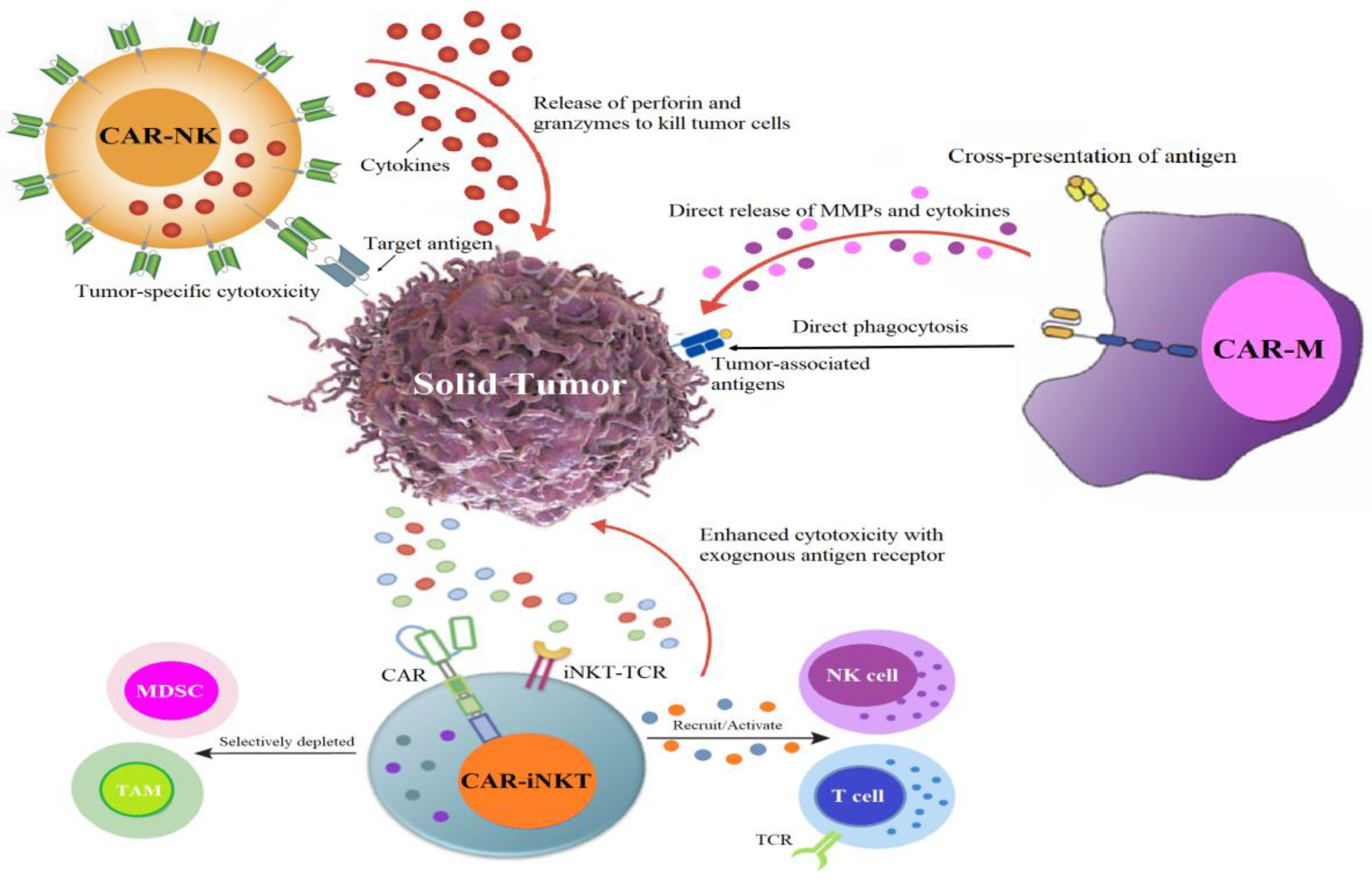
When CAR-T therapy fails, exploring alternative options like CAR-NK, CAR-iNKT, or CAR-M therapies is becoming increasingly relevant in the landscape of cancer treatment [76]. CAR-NK cells retain natural cytotoxicity, allowing them to target tumors even when cancer cells downregulate antigen expression. CAR-iNKT cells combine natural killer T cells with CAR technology, enhancing effectiveness against various tumors while minimizing toxicity. CAR-M cells, derived from macrophages, penetrate tumors more effectively and exhibit enhanced antitumor efficacy with reduced toxicity. These therapies offer distinct advantages for personalized cancer immunotherapy. Figure 2 illustrates the killing mechanisms of CAR-NK, CAR-iNKT, and CAR-M cells.
CAR-NK cells present numerous benefits when contrasted with CAR-T cells. Production can occur using established cell lines or allogeneic NK cells that lack matched MHC. Furthermore, they possess the ability to eradicate cancer cells through both CAR-dependent and CAR-independent pathways, while demonstrating diminished toxicity, especially regarding cytokine-release syndrome and neurotoxicity [79,80]. A phase I clinical trial is presently in progress, concentrating on individuals with relapsed/refractory mantle cell lymphoma, to assess the safety and tolerability of this treatment [81]. Macrophages adeptly infiltrate tumors, act as crucial immune regulators, and are plentiful within the tumor microenvironment. M2 immunosuppressive macrophages demonstrate effectiveness comparable to proinflammatory M1 macrophages in the phagocytosis of target cells, and they possess the capability to be induced into the M1 phenotype [38,82]. There is significant enthusiasm surrounding the advancement of CAR macrophages for cancer immunotherapy, aimed at tackling critical challenges associated with CAR T/NK therapy, especially in the context of solid tumors [77]. Both CAR-NK and CAR-M present unique challenges. This review article examines the present landscape and significant challenges of CAR-T and CAR-NK therapies, subsequently addressing the structure and recent advancements in the development of CAR-M as cancer-specific phagocytes, antigen presenters, immunostimulators, and TME modifiers.

4.2. CAR-NK: An Encouraging Substitute for CAR-T Therapy

NK cells act as the primary line of defense within the innate immune system, focusing on the identification and destruction of virus-infected and cancerous cells. NK cells are not dependent on HLA matching like T cells, which positions “off-the-shelf” NK cell therapy as a practical alternative [83]. Similar to CAR-T cells, the precise interaction of CAR with its target antigen on tumor cells triggers CAR-NK cells, resulting in the release of perforin and granzymes that eliminate tumor cells. At present, the majority of CAR-T therapies employ autologous T cells, whereas CAR-NK cell therapies can originate from allogeneic donors [84].
CAR-NK employs a range of techniques for gene transduction, such as retroviruses, lentiviruses, electroporation, liposomes, and DNA transposons [85,86]. These approaches present drawbacks, such as possible cancer risks and the inhibition of primary NK cell viability. Lentiviral systems are efficient for genome engineering, particularly in gene therapy and CRISPR/Cas systems. They efficiently deliver large, complex transgenes, positioning them as optimal candidates for stable gene transfer in disease treatment [87]. Electroporation and liposome transfection facilitate the rapid introduction of exogenous genes; however, they do not integrate these genes into the genome of the target cell [88]. DNA transposons present benefits such as minimal immunogenicity, enhanced biosafety, and reduced production costs [89]. However, they need to overcome low efficiency and NK cell death. CAR-NK’s application in solid tumors requires a design that bypasses or improves the tumor microenvironment [90].
CAR-NK therapy is a unique approach to cancer treatment, replacing carrier cells with NK cells. NK cells exhibit cytotoxic capabilities and operate in a manner akin to CD8+ T cells. These can originate from multiple sources and possess the ability to eliminate tumor cells and cells infected by viruses without the need for prior sensitization [91]. CAR-NK cells eliminate target cells via direct killing, the release of cytokines, and antibody-dependent cell-mediated cytotoxicity. Designing CAR-NK CARs considers autocrine cytokines, tumor metabolic composition, tumor evasion, and stable chemokine receptors. This therapy is increasingly recognized for its safety and efficacy [92].
Hypoxia represents a pathological process that leads to abnormal alterations in tissue metabolism, function, and structure, stemming from inadequate oxygen supply or issues in oxygen utilization. This can encourage the development of new blood vessels and modify energy metabolism, support immune evasion, trigger invasion and metastasis, initiate pro-tumor inflammation, sustain proliferative signals, and lead to genomic instability. Hypoxia results in the increased expression of hypoxia-inducible factors, decreased phosphorylation levels of extracellular signal-regulated kinases and signal transducer and activator of transcription 3 (STAT3), along with diminished cytotoxicity of NK cells [93]. It also increases autophagy levels and enhances the degradation of granzyme B.
The hypoxic microenvironment in tumor cells accumulates adenosine triphosphate, inhibiting NK cell maturation and promoting tumor metastasis, with CD73 expression upregulated during breast cancer and sarcoma growth [94]. Hypoxic conditions inhibit the nuclear factor of activated T-cell production, increase MDSCs, and decrease NK cell activity [95]. Focusing on rapamycin and the suppression of mTORC1 along with glycolysis could potentially restrict tumor proliferation [96].

4.3. CAR-iNKT Immunotherapy: A Novel Path for CAR-Based Cancer Immunotherapy

Researchers are using CAR technology to enhance iNKT cells’ tumor-targeting capabilities, aiming to overcome barriers in solid tumor therapy. These iNKT cells, characterized by their semi-invariant T-cell receptor, bridge innate and adaptive immunity, modulate TME and exhibit intrinsic resistance to exhaustion. iNKT represents a compelling option for CAR-based cancer immunotherapy, given their strong antitumor responses along with their direct killing and adjuvant effects [97]. NKT cells, which encompass iNKT cells, are T lineage cells that do not rely on MHC restriction and can develop into mature iNKT cells upon recognizing glycolipid antigens. They generate immunomodulatory factors and tumor-eradicating cytokines, supporting adaptive defense and eliminating TAM. [98]. Current research on synthetic glycolipid activators seeks to utilize these cells for therapeutic purposes, potentially providing novel strategies for cancer treatment [99].

4.3.1. Development of iNKT Cells

iNKT cells possess a unique T-cell receptor (Vα24-Jα18 and Vβ11) that allows them to identify glycolipidic antigens through non-polymorphic class I-like HLA molecules (such as CD1d) [100,101]. They are capable of releasing both Th1 and Th2 cytokines, which enhance adjuvant effects and promote the maturation of NK cells and dendritic cells (DCs). They stimulate interferon (IFN)-γ-producing iNKT cells and can mediate a robust antitumor response through cytolysis or tumor cell death via the Fas/FasL pathway. IL-12 secreted by DCs also stimulates iNKT cell production [102].

4.3.2. Antitumoral Role of iNKT Cells

iNKT cells, which are restricted by CD1d, can be activated both in vitro and in vivo; however, their frequency remains low because of their limited presence in human peripheral blood mononuclear cells. Combining α-Galcer with DCs enhances the iNKT cell survival rate. However, repeated infusions are required, and combining α-Galcer with TLR9 stimulation improves activation. iNKT cells are divided into three subsets, secreting Th1 and Th2 cytokines, and their regulation remains unclear [97,103]. Future iNKT immunotherapy should prioritize CD4-iNKT cell production.

4.3.3. iNKT Protects from GVHD

The various groups of iNKT cells, such as iNKT1, iNKT2, and iNKT17, enhance both proliferation and migration in mice following gene transplantation. They regulate GVHD via IL-4 production and possess immunomodulatory characteristics [104]. GVHD stands as the primary cause of morbidity and mortality in diverse HCT, with iNKT cells being presented by CD1d molecules rather than being restricted by MHC [105]. iNKT cell immunotherapy effectively prevents GVHD in mouse models through the inhibition of conventional DCs; however, immune rejection arises when autologous T cells identify non-self peptide MHC [95].
Comprehensive pre-clinical and clinical evidence underscores the promising role of iNKT in safeguarding against GVHD, highlighting the potential of iNKT-based immunotherapy derived from healthy donors without the associated risk of GVHD [106].

4.3.4. Essential Cytokines Enhance CAR-iNKT Activity

Cytokines play a crucial role in immune effector cell activation, proliferation, differentiation, and immigration, including CAR-based immunotherapy. Recent research highlights the role of STAT5-related cytokines, IL-2 and IL-15, in tumor immunotherapy efficacy, with IL-15 inhibiting tumor growth and preventing metastasis, making them promising cancer treatment strategies [107]. IL-23 promotes memory T-cell proliferation and provides a selective proliferation signal [97,108].
iNKT cells have shown antitumor efficacy in pre-clinical studies and clinical trials, but limited expansion hinders clinical application. Synthetic activators with specific effects could improve understanding and clinical application. Contemporary high-throughput sequencing methods have the potential to enhance our comprehension of iNKT cell characteristics at the single-cell level [97,98].

4.4. CAR-Macrophage: Pioneering Advancements in Cellular Immunotherapy

Macrophages, key components of the immune system, present exciting opportunities for CAR-based therapies because of their capacity to penetrate tumors, influence the TME, and maintain anti-tumor responses [109]. CAR-M represents a groundbreaking approach in cancer immunotherapy, leveraging the unique properties of macrophages to enhance anti-tumor responses. The primary method of action for CAR-M involves the interaction between tumor-associated antigens and the CAR receptors located on their surface. This binding initiates activation signals that result in tumor phagocytosis and the secretion of pro-inflammatory cytokines, thereby enhancing an immune response. CAR-M integrates inherent benefits with CAR technology, presenting a more secure and resilient method for cancer immunotherapy [11].

4.4.1. Structure and Functioning of CAR-Ms

CAR-Ms, similar to CAR-T cells, have an extracellular, transmembrane, and intracellular domain structure. They target antigens for tumor clearance and fibroblast activation protein for liver fibrosis treatment [110]. CAR macrophages use CD3ζ, a signaling domain, similar to CAR-T cells. Dual-signaling CARs incorporating CD3ζ and Toll-like receptor domains significantly boost target phagocytosis, facilitate antigen-dependent M1 polarization, and enhance resistance to M2 polarization [109,111]. Macrophages are categorized into M1 (pro-inflammatory) and M2 (anti-inflammatory) subtypes, regulated by key signaling pathways and mechanisms. M1 macrophages promote Th1 response, while M2 suppresses inflammation [112].

4.4.2. Cell Source of CAR-Ms

CAR-Ms from various sources have advantages and limitations, including Tamm-Horsfall Protein-1 (THP-1) cell lines, monocytes, bone marrow-derived macrophages (BMDMs), and PSCs. THP-1 offers stable genetics, BMDMs provide raw materials, and PSCs offer ease of amplification [12,113].

4.4.3. Preclinical and Clinical Studies of CAR-Ms

Researchers have developed various antigen receptors, including CAR-P, HER2 CAR, CAR-iMac, injectable gene nanocarrier-hydrogel superstructure, and Mosaic antigen receptor-modified macrophages, which have shown potential in cancer immunotherapy, but further research is needed to determine their safety and effectiveness in humans [108].
A clinical trial in the UK has demonstrated that autologous macrophage therapy derived from peripheral blood monocytes is both safe and effective for patients with cirrhosis. The study reported a reduction in severe adverse events and a lower mortality rate within 360 days, representing a significant advancement in this area of research [114].

4.4.4. The Advantages, Obstacles, and Prospective Trajectory of CAR-M

CAR-Ms is a novel cellular immunotherapy with unique advantages over CAR-T and CAR-NK. It can infiltrate tumor tissues, reduce antigens, and improve tumor treatment. It can reprogram the TME, directly kill antigen-expressing cells, and create a pro-inflammatory environment [109,115]. CAR-M therapy faces time and cost challenges, but rapid production and in vivo induction strategies are being developed. Macrophages could improve effectiveness, but clinical trials confirm safety and efficacy [116].

4.4.5. The Future Direction of CAR-M Therapy

Further research is needed to enhance the effectiveness of CAR-M therapy, including structural optimization, genetic engineering, and safety considerations. Non-viral delivery systems can program macrophages into CAR-Ms, aiding tissue reconstruction and resolving pulmonary alveolar proteinosis [117].

4.4.6. CAR-M Therapy Alongside Additional Immunotherapeutic Approaches

Researchers are exploring combining CAR-Ms with other immunotherapies to enhance tumor inhibition, reduce CRS risk, and reduce neurotoxicity, as CAR-Ms and CAR-T cells show synergistic cytotoxicity [94]. CAR-T therapies, when combined with targeted drugs, can enhance tumor infiltration, enhancing their effectiveness against untreatable cancers. This promising pathway also offers potential for CRISPR/Cas9 gene editing [118].

5. Conclusions

ACT, particularly CAR-T cell therapy, has revolutionized cancer treatment, but concerns about secondary malignancies persist, prompting calls for comprehensive studies to better understand this phenomenon. There is a pressing need for new treatments, including NK cells, iNKT cells, and macrophage cells. CAR-M cells, owing to their inherent characteristics, present a compelling option for solid tumor therapy, given their crucial function in the tumor microenvironment and their effectiveness in eradicating tumor cells. Their advanced infiltration enables more efficient therapy adjustments. This review explores the latest advancements in CAR cell therapy and the potential future developments of this immunotherapy treatment approach.

Author Contributions

Conceptualization, T.-H.J.; methodology, T.-H.J., and Y.-L.W.; writing-original draft preparation, T.-H.J.; writing-review and editing, Y.-W.H. All co-authors have been actively involved in the preparation and discussion of this manuscript. All authors have read and agreed to the published version of the manuscript.

Funding

This research received no external funding.

Institutional Review Board Statement

Not applicable.

Copyright Disclaimer

The figure is owned by the authors and was created using Microsoft Paint.

Informed Consent Statement

Not applicable.

Data Availability Statement

Not applicable.

Conflicts of Interest

The authors declare no conflicts of interest.

References

  1. Zhang, X.; Zhu, L.; Zhang, H.; Chen, S.; Xiao, Y. CAR-T Cell Therapy in Hematological Malignancies: Current Opportunities and Challenges. Front. Immunol. 2022; 13:927153. [CrossRef]
  2. Chohan, K.L.; Siegler, E.L.; Kenderian, S.S. CAR-T Cell Therapy: the Efficacy and Toxicity Balance. Curr. Hematol. Malig. Rep. 2023; 18:9-18. [CrossRef]
  3. Choudhery, M.S.; Arif, T.; Mahmood, R.; Harris, D.T. CAR-T-Cell-Based Cancer Immunotherapies: Potentials, Limitations, and Future Prospects. J. Clin. Med. 2024; 13:3202. [CrossRef]
  4. Kankeu Fonkoua, L.A.; Sirpilla, O.; Sakemura, R.; Siegler, E.L.; Kenderian, S.S. CAR T cell therapy and the tumor microenvironment: Current challenges and opportunities. Mol. Ther. Oncolytics. 2022; 25:69-77. [CrossRef]
  5. Elahi, R.; Heidary, A.H.; Hadiloo, K.; Esmaeilzadeh, A. Chimeric Antigen Receptor-Engineered Natural Killer (CAR NK) Cells in Cancer Treatment; Recent Advances and Future Prospects. Stem. Cell. Rev. Rep. 2021; 17:2081-2106. [CrossRef]
  6. Moscarelli, J,; Zahavi, D.; Maynard, R.; Weiner, LM. The Next Generation of Cellular Immunotherapy: Chimeric Antigen Receptor-Natural Killer Cells. Transplant. Cell. Ther. 2022; 28:650-656. [CrossRef]
  7. Marofi, F.; Abdul-Rasheed, O.F.; Rahman, H.S.; Budi, H.S.; Jalil, A.T; Yumashev, A.V.; Hassanzadeh, A.; Yazdanifar, M.; Motavalli, R.; Chartrand, M.S.; et al. CAR-NK cell in cancer immunotherapy; A promising frontier. Cancer. Sci. 2021; 112:3427-3436. [CrossRef]
  8. Zhang, Y., Zhou, W., Yang, J.; Yang, J.; Wang, W. Chimeric antigen receptor engineered natural killer cells for cancer therapy. Exp. Hematol. Oncol. 2023; 12:70. [CrossRef]
  9. Zhou, X.; Wang, Y.; Dou, Z.; Delfanti, G.; Tsahouridis, O.; Pellegry, C.M.; Zingarelli, M.; Atassi, G.; Woodcock, M.G.; Casorati, G.; et al. CAR-redirected natural killer T cells demonstrate superior antitumor activity to CAR-T cells through multimodal CD1d-dependent mechanisms. Nat. Cancer. 2024; 5:1607-1621. [CrossRef]
  10. Moraes Ribeiro, E.; Secker, K.A.; Nitulescu, A.M.; Schairer, R.; Keppeler, H.; Wesle, A.; Schmid, H.; Schmitt, A.; Neuber, B.; Chmiest, D.; et al. PD-1 checkpoint inhibition enhances the antilymphoma activity of CD19-CAR-iNKT cells that retain their ability to prevent alloreactivity. J. Immunother. Cancer. 2024; 12:e007829.
  11. Lu, J.; Ma, Y.; Li, Q.; Xu, Y.; Xue, Y.; Xu, S. CAR Macrophages: a promising novel immunotherapy for solid tumors and beyond. Biomark. Res. 2024; 12:86. [CrossRef]
  12. Su, S.; Lei, A.; Wang, X.; Lu, H.; Wang, S.; Yang, Y.; Li, N.; Zhang, Y.; Zhang, J. Induced CAR-Macrophages as a Novel Therapeutic Cell Type for Cancer Immune Cell Therapies. Cells. 2022; 11:1652. [CrossRef]
  13. Yang, S.; Wang, Y.; Jia, J.; Fang, Y.; Yang, Y.; Yuan, W.; Hu, J. Advances in Engineered Macrophages: A New Frontier in Cancer Immunotherapy. Cell. Death. Dis. 2024; 15:238. [CrossRef]
  14. Donnadieu, E.; Dupré, L.; Pinho, L.G.; Cotta-de-Almeida, V. Surmounting the obstacles that impede effective CAR T cell trafficking to solid tumors. J. Leukoc. Biol. 2020; 108:1067-1079. [CrossRef]
  15. Yuan, Z.; Li, Y.; Zhang, S.; Wang, X.; Dou, H.; Yu, X.; Zhang, Z.; Yang, S.; Xiao, M. Extracellular matrix remodeling in tumor progression and immune escape: from mechanisms to treatments. Mol. Cancer. 2023; 22:48. [CrossRef]
  16. Rojas-Quintero, J.; Díaz, M.P.; Palmar, J.; Galan-Freyle, N.J.; Morillo, V.; Escalona, D.; González-Torres, H.J.; Torres, W.; Navarro-Quiroz, E.; Rivera-Porras, D.; et al. Car T Cells in Solid Tumors: Overcoming Obstacles. Int. J. Mol. Sci. 2024; 25:4170. [CrossRef]
  17. de Visser, K.E.; Joyce, J.A. The evolving tumor microenvironment: From cancer initiation to metastatic outgrowth. Cancer. Cell. 2023; 41:374-403.
  18. Liu, Z.L.; Chen, H.H.; Zheng, L.L.; Sun, L.P.; Shi, L. Angiogenic signaling pathways and anti-angiogenic therapy for cancer. Signal. Transduct. Target. Ther. 2023; 8:198. [CrossRef]
  19. Zhang, K.; Chen, H.; Li, F.; Huang, S.; Chen, F.; Li, Y. Bright future or blind alley? CAR-T cell therapy for solid tumors. Front. Immunol. 2023; 14:1045024. [CrossRef]
  20. Daei Sorkhabi, A.; Mohamed Khosroshahi, L.; Sarkesh, A.; Mardi, A.; Aghebati-Maleki, A.; Aghebati-Maleki, L.; Baradaran, B. The current landscape of CAR T-cell therapy for solid tumors: Mechanisms, research progress, challenges, and counterstrategies. Front. Immunol. 2023; 14:1113882. [CrossRef]
  21. Guzman, G.; Pellot, K.; Reed, M.R.; Rodriguez, A. CAR T-cells to treat brain tumors. Brain. Res. Bull. 2023; 196:76-98. [CrossRef]
  22. Marofi, F.; Motavalli, R.; Safonov, V.A.; Thangavelu, L.; Yumashev, A.V.; Alexander, M.; Shomali, N.; Chartrand, M.S.; Pathak, Y.; Jarahian, M.; et al. CAR T cells in solid tumors: challenges and opportunities. Stem. Cell. Res. Ther. 2021; 12:81. [CrossRef]
  23. Srivastava, S.; Riddell, S.R. Chimeric Antigen Receptor T Cell Therapy: Challenges to Bench-to-Bedside Efficacy. J. Immunol. 2018; 200:459-468. [CrossRef]
  24. Foeng, J.; Comerford, I.; McColl, S.R. Harnessing the chemokine system to home CAR-T cells into solid tumors. Cell. Rep. Med. 2022; 3:100543. [CrossRef]
  25. Tian, Y.; Li, Y.; Shao, Y.; Zhang, Y. Gene modification strategies for next-generation CAR T cells against solid cancers. J. Hematol. Oncol. 2020; 13:54. [CrossRef]
  26. Charrot, S.; Hallam, S. CAR-T Cells: Future Perspectives. Hemasphere. 2019; 3:e188.
  27. Liu, J.; Bai, Y.; Li, Y.; Li, X.; Luo, K. Reprogramming the immunosuppressive tumor microenvironment through nanomedicine: an immunometabolism perspective. EBioMedicine. 2024; 107:105301. [CrossRef]
  28. Xia, X.; Yang, Z.; Lu, Q.; Liu, Z.; Wang, L.; Du, J.; Li, Y.; Yang, D.H.; Wu, S. Reshaping the tumor immune microenvironment to improve CAR-T cell-based cancer immunotherapy. Mol. Cancer. 2024; 23:175. [CrossRef]
  29. Cortellino, S.; Longo, V.D. Metabolites and Immune Response in Tumor Microenvironments. Cancers (Basel). 2023; 15:3898. [CrossRef]
  30. Shi, R.; Tang, Y.Q.; Miao, H. Metabolism in tumor microenvironment: Implications for cancer immunotherapy. MedComm. 2020; 1:47-68. [CrossRef]
  31. Zheng, Y.; Xu, R.; Chen, X.; Lu, Y.; Zheng, J.; Lin, Y.; Lin, P.; Zhao, X.; Cui, L. Metabolic gatekeepers: harnessing tumor-derived metabolites to optimize T cell-based immunotherapy efficacy in the tumor microenvironment. Cell. Death. Dis. 2024; 15:775. [CrossRef]
  32. Poorebrahim, M.; Melief, J.; Pico de Coaña, Y.; L Wickström, S.; Cid-Arregui, A.; Kiessling, R. Counteracting CAR T cell dysfunction. Oncogene. 2021; 40:421-435.
  33. Zhang, H.; Li, S.; Wang, D.; Liu, S.; Xiao, T.; Gu, W.; Yang, H.; Wang, H.; Yang, M.; Chen, P. Metabolic reprogramming and immune evasion: the interplay in the tumor microenvironment. Biomark. Res. 2024; 12:96.
  34. Shi, H.; Li, K.; Ni, Y.; Liang, X.; Zhao, X. Myeloid-Derived Suppressor Cells: Implications in the Resistance of Malignant Tumors to T Cell-Based Immunotherapy. Front. Cell. Dev. Biol. 2021; 9:707198. [CrossRef]
  35. Lu, J.; Luo, Y.; Rao, D.; Wang, T.; Lei, Z.; Chen. X.; Zhang, B.; Li, Y.; Liu, B.; Xia, L.; et al. Myeloid-derived suppressor cells in cancer: therapeutic targets to overcome tumor immune evasion. Exp. Hematol. Oncol. 2024; 13:39. [CrossRef]
  36. Dysthe, M.; Parihar, R. Myeloid-Derived Suppressor Cells in the Tumor Microenvironment. Adv. Exp. Med. Biol. 2020; 1224:117-140.
  37. Li, K.; Shi, H.; Zhang, B.; Ou, X.; Ma, Q.; Chen, Y.; Shu, P.; Li, D.; Wang, Y. Myeloid-derived suppressor cells as immunosuppressive regulators and therapeutic targets in cancer. Signal. Transduct. Target. Ther. 2021; 6:362. [CrossRef]
  38. Huang, R.; Kang, T.; Chen, S. The role of tumor-associated macrophages in tumor immune evasion. J. Cancer. Res. Clin. Oncol. 2024; 150:238. [CrossRef]
  39. Chen, Y.; Song, Y.; Du, W.; Gong, L.; Chang, H.; Zou, Z. Tumor-associated macrophages: an accomplice in solid tumor progression. J. Biomed. Sci. 2019; 26:78. [CrossRef]
  40. Xiang, X.; Wang, J.; Lu, D.; Xu, X. Targeting tumor-associated macrophages to synergize tumor immunotherapy. Signal. Transduct. Target. Ther. 2021; 6:75. [CrossRef]
  41. Sterner, R.C.; Sterner, R.M.; CAR-T cell therapy: current limitations and potential strategies. Blood. Cancer. J. 2021; 11:69.
  42. Maalej, K.M.; Merhi, M.; Inchakalody, V.P.; Mestiri, S.; Alam, M.; Maccalli, C.; Cherif, H.; Uddin, S.; Steinhoff, M.; Marincola, F.M.; et al. CAR-cell therapy in the era of solid tumor treatment: current challenges and emerging therapeutic advances. Mol. Cancer. 2023; 22:20. [CrossRef]
  43. Tai, Y.T.; Anderson, K.C. B cell maturation antigen (BCMA)-based immunotherapy for multiple myeloma. Expert. Opin. Biol. Ther. 2019; 19:1143-1156. [CrossRef]
  44. Akbari, P.; Katsarou, A.; Daghighian, R.; van Mil, L.W.H.G.; Huijbers, E.J.M.; Griffioen, A.W.; van Beijnum, J.R. Directing CAR T cells towards the tumor vasculature for the treatment of solid tumors. Biochim. Biophys. Acta. Rev. Cancer. 2022; 1877:188701. [CrossRef]
  45. Boccalatte, F.; Mina, R.; Aroldi, A.; Leone, S.; Suryadevara, C.M.; Placantonakis, D.G.; Bruno, B. Advances and Hurdles in CAR T Cell Immune Therapy for Solid Tumors. Cancers (Basel). 2022; 14:5108. [CrossRef]
  46. Mirzaei, H.R.; Rodriguez, A.; Shepphird, J.; Brown, C.E.; Badie, B. Chimeric Antigen Receptors T Cell Therapy in Solid Tumor: Challenges and Clinical Applications. Front. Immunol. 2017; 8:1850. [CrossRef]
  47. Grosser, R.; Cherkassky, L.; Chintala, N.; Adusumilli, P.S. Combination Immunotherapy with CAR T Cells and Checkpoint Blockade for the Treatment of Solid Tumors. Cancer. Cell. 2019; 36:471-482. [CrossRef]
  48. Lin, X.; Kang, K.; Chen, P.; Zeng, Z.; Li, G.; Xiong, W.; Yi, M.; Xiang, B. Regulatory mechanisms of PD-1/PD-L1 in cancers. Mol. Cancer. 2024; 23:108.
  49. Lv, Y.; Luo, X.; Xie, Z.; Qiu, J.; Yang, J.; Deng, Y.; Long, R.; Tang, G.; Zhang, C.; Zuo, J. Prospects and challenges of CAR-T cell therapy combined with ICIs. Front. Oncol. 2024; 14:1368732. [CrossRef]
  50. Najafi, S.; Mortezaee, K. Modifying CAR-T cells with anti-checkpoints in cancer immunotherapy: A focus on anti PD-1/PD-L1 antibodies. Life. Sci. 2024; 338:122387.
  51. Tang, L.; Pan, S.; Wei, X.; Xu, X.; Wei, Q. Arming CAR-T cells with cytokines and more: Innovations in the fourth-generation CAR-T development. Mol. Ther. 2023; 31:3146-3162. [CrossRef]
  52. Whilding, L.M.; Maher, J. CAR T-cell immunotherapy: The path from the by-road to the freeway? Mol. Oncol. 2015; 9:1994-2018.
  53. Louis, C.U.; Savoldo, B.; Dotti, G.; Pule, M.; Yvon, E.; Myers, G.D.; Rossig, C.; Russell, H.V.; Diouf, O.; Liu, E.; Liu, H. et al. Antitumor activity and long-term fate of chimeric antigen receptor-positive T cells in patients with neuroblastoma. Blood. 2011; 118:6050-6056. [CrossRef]
  54. Wagner, J.; Wickman, E.; DeRenzo, C.; Gottschalk, S. CAR T Cell Therapy for Solid Tumors: Bright Future or Dark Reality? Mol. Ther. 2020; 28:2320-2339.
  55. Hou, B.; Tang, Y.; Li, W.; Zeng, Q.; Chang, D. Efficiency of CAR-T Therapy for Treatment of Solid Tumor in Clinical Trials: A Meta-Analysis. Dis. Markers. 2019; 2019:3425291. [CrossRef]
  56. Hazini, A.; Fisher, K.; Seymour, L. Deregulation of HLA-I in cancer and its central importance for immunotherapy. J. Immunother. Cancer. 2021; 9:e002899. [CrossRef]
  57. Jayaraman, J.; Mellody, M.P.; Hou, A.J.; Desai, R.P. Fung, A.W.; Pham, A.H.T.; Chen, Y.Y.; Zhao, W. CAR-T design: Elements and their synergistic function. EBioMedicine. 2020; 58:102931.
  58. De Marco, R.C.; Monzo, H.J.; Ojala, P.M. CAR T Cell Therapy: A Versatile Living Drug. Int. J. Mol. Sci. 2023; 24:6300. [CrossRef]
  59. Oldham, K.A.; Parsonage, G.; Bhatt, R.I.; Wallace, D.M.; Deshmukh, N.; Chaudhri, S.; Adams, D.H.; Lee, S.P. T lymphocyte recruitment into renal cell carcinoma tissue: a role for chemokine receptors CXCR3, CXCR6, CCR5, and CCR6. Eur. Urol. 2012; 61:385-394. [CrossRef]
  60. O’Cathail, S.M.; Pokrovska, T.D.; Maughan, T.S.; Fisher, K.D.; Seymour, L.W.; Hawkins, M.A. Combining Oncolytic Adenovirus with Radiation-A Paradigm for the Future of Radiosensitization. Front. Oncol. 2017; 7:153. [CrossRef]
  61. Zhu, X.; Chen, J.; Li, W.; Xu, Y.; Shan, J.; Hong, J.; Zhao, Y.; Xu, H.; Ma, J.; Shen, J.; Qian, C. Hypoxia-Responsive CAR-T Cells Exhibit Reduced Exhaustion and Enhanced Efficacy in Solid Tumors. Cancer. Res. 2024; 84:84-100. [CrossRef]
  62. Stampone, E.; Bencivenga, D.; Capellupo, M.C.; Roberti, D.; Tartaglione, I.; Perrotta, S.; Della Ragione, F.; Borriello, A. Genome editing and cancer therapy: handling the hypoxia-responsive pathway as a promising strategy. Cell. Mol. Life. Sci. 2023; 80:220. [CrossRef]
  63. Tang, J.; Zou, Y.; Li, L.; Lu, F.; Xu, H.; Ren, P.; Bai, F.; Niedermann, G.; Zhu, X. BAY 60-6583 Enhances the Antitumor Function of Chimeric Antigen Receptor-Modified T Cells Independent of the Adenosine A2b Receptor. Front. Pharmacol. 2021; 12:619800. [CrossRef]
  64. Zhang, Z.Z.; Wang, T.; Wang, X.F.; Zhang, Y.Q.; Song, S.X.; Ma, C.Q. Improving the ability of CAR-T cells to hit solid tumors: Challenges and strategies. Pharmacol. Res. 2022; 175:106036. [CrossRef]
  65. Huang, M.; Deng, J.; Gao, L.; Zhou, J. Innovative strategies to advance CAR T cell therapy for solid tumors. Am. J. Cancer. Res. 2020; 10:1979-1992.
  66. Huang, Y.; Shao, M.; Teng, X.; Si, X.; Wu, L.; Jiang, P.; Liu, L.; Cai, B.; Wang, X.; Han, Y.; Feng, Y.; et al. Inhibition of CD38 enzymatic activity enhances CAR-T cell immune-therapeutic efficacy by repressing glycolytic metabolism. Cell. Rep. Med. 2024; 5:101400. [CrossRef]
  67. Xiong, D.; Yu, H.; Sun, Z.J. Unlocking T cell exhaustion: Insights and implications for CAR-T cell therapy. Acta. Pharm. Sin. B. 2024; 14:3416-3431. [CrossRef]
  68. Rafiq, S.; Yeku, O.O.; Jackson, H.J.; Purdon, T.J.; van Leeuwen, D.G.; Drakes, D.J.; Song, M.; Miele, M.M.; Li, Z.; Wang, P.; Yan, S.; et al. Targeted delivery of a PD-1-blocking scFv by CAR-T cells enhances anti-tumor efficacy in vivo. Nat. Biotechnol. 2018; 36:847-856. [CrossRef]
  69. de Campos, N.S.P.; de Oliveira Beserra, A.; Pereira, P.H.B.; Chaves, A.S.; Fonseca, F.L.A.; da Silva Medina, T.; Dos Santos, T.G.; Wang, Y.; Marasco, W.A.; Suarez, E.R. Immune Checkpoint Blockade via PD-L1 Potentiates More CD28-Based than 4-1BB-Based Anti-Carbonic Anhydrase IX Chimeric Antigen Receptor T Cells. Int. J. Mol. Sci. 2022; 23:5448. [CrossRef]
  70. Johnson, A.; Townsend, M.; O’Neill, K. Tumor Microenvironment Immunosuppression: A Roadblock to CAR T-Cell Advancement in Solid Tumors. Cells. 2022; 11:3626. [CrossRef]
  71. Gatto, L.; Ricciotti, I.; Tosoni, A.; Di Nunno, V.; Bartolini, S.; Ranieri, L.; Franceschi, E. CAR-T cells neurotoxicity from consolidated practice in hematological malignancies to fledgling experience in CNS tumors: fill the gap. Front. Oncol. 2023; 13:1206983. [CrossRef]
  72. Li, W.; Wu, L.; Huang, C.; Liu, R.; Li, Z.; Liu, L.; Shan, B. Challenges and strategies of clinical application of CAR-T therapy in the treatment of tumors-a narrative review. Ann. Transl. Med. 2020; 8:1093. [CrossRef]
  73. Shah, N.N.; Fry, T.J. Mechanisms of resistance to CAR T cell therapy. Nat. Rev. Clin. Oncol. 2019; 16:372-385. [CrossRef]
  74. Dagar, G.; Gupta, A.; Masoodi, T.; Nisar, S.; Merhi, M.; Hashem, S.; Chauhan, R.; Dagar, M.; Mirza, S.; Bagga, P.; et al. Harnessing the potential of CAR-T cell therapy: progress, challenges, and future directions in hematological and solid tumor treatments. J. Transl. Med. 2023; 21:449.
  75. Garg, P.; Pareek, S.; Kulkarni, P.; Horne, D.; Salgia, R.; Singhal, S.S. Next-Generation Immunotherapy: Advancing Clinical Applications in Cancer Treatment. J. Clin. Med. 2024; 13:6537. [CrossRef]
  76. Huang, J.; Yang, Q.; Wang, W.; Huang, J. CAR products from novel sources: a new avenue for the breakthrough in cancer immunotherapy. Front. Immunol. 2024; 15:1378739. [CrossRef]
  77. Pan, K.; Farrukh, H.; Chittepu, V.C.S.R.; Xu, H.; Pan, C.X.; Zhu, Z. CAR race to cancer immunotherapy: from CAR T, CAR NK to CAR macrophage therapy. J. Exp. Clin. Cancer. Res. 2022; 41:119. [CrossRef]
  78. Peng, L.; Sferruzza, G.; Yang, L.; Zhou, L.; Chen, S. CAR-T and CAR-NK as cellular cancer immunotherapy for solid tumors. Cell. Mol. Immunol. 2024; 21:1089-1108. [CrossRef]
  79. Xie, G.; Dong, H.; Liang, Y.; Ham, J.D.; Rizwan, R.; Chen, J. CAR-NK cells: A promising cellular immunotherapy for cancer. EBioMedicine. 2020; 59:102975. [CrossRef]
  80. Li, W.; Wang, X.; Zhang, X.; Aziz, A.U.R.; Wang, D. CAR-NK Cell Therapy: A Transformative Approach to Overcoming Oncological Challenges. Biomolecules. 2024; 14:1035. [CrossRef]
  81. Sun, X.; Wu, Y.; Li, H.; Zhao, A.; Niu, T. Harmonizing efficacy and safety: the potentials of CAR-NK in effectively addressing severe toxicities of CAR-T therapy in mantle cell lymphoma. Int. J. Surg. 2024; 110:5871-5872. [CrossRef]
  82. Strizova, Z.; Benesova, I.; Bartolini, R.; Novysedlak, R.; Cecrdlova, E.; Foley, L.K.; Striz, I. M1/M2 macrophages and their overlaps - myth or reality? Clin Sci (Lond). 2023; 137:1067-1093.
  83. Heipertz, E.L.; Zynda, E.R.; Stav-Noraas, T.E.; Hungler, A.D.; Boucher, S.E.; Kaur, N.; Vemuri, M.C. Current Perspectives on “Off-The-Shelf” Allogeneic NK and CAR-NK Cell Therapies. Front. Immunol. 2021; 12:732135.
  84. Berrien-Elliott, M.M.; Jacobs, M.T.; Fehniger, T.A. Allogeneic natural killer cell therapy. Blood. 2023; 141:856-868. [CrossRef]
  85. Maia, A.; Tarannum, M.; Romee, R. Genetic Manipulation Approaches to Enhance the Clinical Application of NK Cell-Based Immunotherapy. Stem. Cells. Transl. Med. 2024; 13:230-242. [CrossRef]
  86. Robbins, G.M.; Wang, M.; Pomeroy, E.J.; Moriarity, B.S. Nonviral genome engineering of natural killer cells. Stem. Cell. Res. Ther. 2021;12:350. [CrossRef]
  87. Dong, W.; Kantor, B. Lentiviral Vectors for Delivery of Gene-Editing Systems Based on CRISPR/Cas: Current State and Perspectives. Viruses. 2021; 13:1288. [CrossRef]
  88. Chong, Z.X.; Yeap, S.K.; Ho, W.Y. Transfection types, methods and strategies: a technical review. PeerJ. 2021; 9:e11165. [CrossRef]
  89. Ucha, M.; Štach, M.; Kaštánková, I.; Rychlá, J.; Vydra, J.; Lesný, P.; Otáhal, P. Good manufacturing practice-grade generation of CD19 and CD123-specific CAR-T cells using piggyBac transposon and allogeneic feeder cells in patients diagnosed with B-cell non-Hodgkin lymphoma and acute myeloid leukemia. Front. Immunol. 2024; 15:1415328. [CrossRef]
  90. Wrona, E.; Borowiec, M.; Potemski, P. CAR-NK Cells in the Treatment of Solid Tumors. Int. J. Mol. Sci. 2021; 22:5899. [CrossRef]
  91. Yu, Y. The Function of NK Cells in Tumor Metastasis and NK Cell-Based Immunotherapy. Cancers (Basel). 2023; 15:2323. [CrossRef]
  92. Khawar, M.B.; Sun, H. CAR-NK Cells: From Natural Basis to Design for Kill. Front. Immunol. 2021; 12:707542. [CrossRef]
  93. Teng, R.; Wang, Y.; Lv, N.; Zhang, D.; Williamson, R.A.; Lei, L.; Chen, P.; Lei, L.; Wang, B.; Fu, J.; et al. Hypoxia Impairs NK Cell Cytotoxicity through SHP-1-Mediated Attenuation of STAT3 and ERK Signaling Pathways. J. Immunol. Res. 2020; 2020:4598476. [CrossRef]
  94. Chen, Z.; Han, F.; Du, Y.; Shi, H.; Zhou, W. Hypoxic microenvironment in cancer: molecular mechanisms and therapeutic interventions. Signal. Transduct. Target. Ther. 2023; 8:70. [CrossRef]
  95. Riggan, L.; Shah, S.; O’Sullivan, T.E. Arrested development: suppression of NK cell function in the tumor microenvironment. Clin. Transl. Immunology. 2021; 10:e1238. [CrossRef]
  96. Tian, T.; Li, X.; Zhang, J. mTOR Signaling in Cancer and mTOR Inhibitors in Solid Tumor Targeting Therapy. Int. J. Mol. Sci. 2019; 20:755. [CrossRef]
  97. Liu, Y.; Wang, G.; Chai, D.; Dang, Y.; Zheng, J.; Li, H. iNKT: A new avenue for CAR-based cancer immunotherapy. Transl. Oncol. 2022; 17:101342. [CrossRef]
  98. Hadiloo, K.; Tahmasebi, S.; Esmaeilzadeh, A. CAR-NKT cell therapy: a new promising paradigm of cancer immunotherapy. Cancer. Cell. Int. 2023; 23:86. [CrossRef]
  99. Carreño, L.J.; Saavedra-Ávila, N.A.; Porcelli, S.A. Synthetic glycolipid activators of natural killer T cells as immunotherapeutic agents. Clin. Transl. Immunology. 2016; 5:e69. [CrossRef]
  100. Kitayama, S.; Zhang, R.; Liu, T.Y.; Ueda, N.; Iriguchi, S.; Yasui, Y.; Kawai, Y.; Tatsumi, M.; Hirai, N.; Mizoro, Y.; et al. Cellular Adjuvant Properties, Direct Cytotoxicity of Re-differentiated Vα24 Invariant NKT-like Cells from Human Induced Pluripotent Stem Cells. Stem. Cell. Reports. 2016; 6:213-227.
  101. Kim, S.; Lalani, S.; Parekh, V.V.; Wu, L.; Van Kaer, L. Glycolipid ligands of invariant natural killer T cells as vaccine adjuvants. Expert. Rev. Vaccines. 2008; 7:1519-1532. [CrossRef]
  102. Hung, J.T.; Huang, J.R.; Yu, A.L. Tailored design of NKT-stimulatory glycolipids for polarization of immune responses. J. Biomed. Sci. 2017; 24:22. [CrossRef]
  103. Liu, Y.; Dang, Y.; Zhang, C.; Liu, L.; Cai, W.; Li, L.; Fang, L.; Wang, M.; Xu, S.; Wang, G.; et al. IL-21-armored B7H3 CAR-iNKT cells exert potent antitumor effects. iScience. 2023; 27:108597.
  104. Maas-Bauer, K.; Lohmeyer, J.K.; Hirai, T.; Ramos, T.L.; Fazal, F.M.; Litzenburger, U.M.; Yost, K.E.; Ribado, J.V.; Kambham, N.; Wenokur, A.S.; et al. Invariant natural killer T-cell subsets have diverse graft-versus-host-disease-preventing and antitumor effects. Blood. 2021; 138:858-870. [CrossRef]
  105. Matsuda, J.L.; Mallevaey, T.; Scott-Browne, J.; Gapin, L.; CD1d-restricted iNKT cells, the ’Swiss-Army knife’ of the immune system. Curr. Opin. Immunol. 2008; 20:358-368.
  106. Li, Y.R.; Zeng, S.; Dunn, Z.S.; Zhou, Y.; Li, Z.; Yu, J.; Wang, Y.C.; Ku, J.; Cook, N.; Kramer, A.; Yang, L. Off-the-shelf third-party HSC-engineered iNKT cells for ameliorating GvHD while preserving GvL effect in the treatment of blood cancers. iScience. 2022; 25:104859. [CrossRef]
  107. Sim, G.C.; Radvanyi, L. The IL-2 cytokine family in cancer immunotherapy. Cytokine. Growth. Factor. Rev. 2014; 25:377-390. [CrossRef]
  108. Yang, Y.; Lundqvist, A. Immunomodulatory Effects of IL-2 and IL-15; Implications for Cancer Immunotherapy. Cancers (Basel). 2020; 12:3586. [CrossRef]
  109. Huang, T.; Bei, C.; Hu, Z.; Li, Y. CAR-macrophage: Breaking new ground in cellular immunotherapy. Front. Cell. Dev. Biol. 2024; 12:1464218. [CrossRef]
  110. Meng, S.; Hara, T.; Miura, Y.; Ishii, H. Fibroblast activation protein constitutes a novel target of chimeric antigen receptor T-cell therapy in solid tumors. Cancer. Sci. 2024; 115:3532-3542. [CrossRef]
  111. Feng, F.; Shen, J.; Qi, Q.; Zhang, Y.; Ni, S. Empowering brain tumor management: chimeric antigen receptor macrophage therapy. Theranostics. 2024; 14:5725-5742. [CrossRef]
  112. Chen, S.; Saeed, A.F.U.H.; Liu, Q.; Jiang, Q.; Xu, H.; Xiao, G.G.; Rao, L.; Duo, Y. Macrophages in immunoregulation and therapeutics. Signal. Transduct. Target. Ther. 2023; 8:207. [CrossRef]
  113. Herb, M.; Schatz, V.; Hadrian, K.; Hos, D.; Holoborodko, B.; Jantsch, J.; Brigo, N. Macrophage variants in laboratory research: most are well done, but some are RAW. Front. Cell. Infect. Microbiol. 2024; 14:1457323. [CrossRef]
  114. Moroni, F.; Dwyer, B.J.; Graham, C.; Pass, C.; Bailey, L.; Ritchie, L.; Mitchell, D.; Glover, A.; Laurie, A.; Doig, S.; et al. Safety profile of autologous macrophage therapy for liver cirrhosis. Nat. Med. 2019; 25:1560-1565. [CrossRef]
  115. Wang, L.; Zhang, L.; Dunmall, L.C.; Wang, Y.Y.; Fan, Z.; Cheng, Z.; Wang, Y. The dilemmas and possible solutions for CAR-T cell therapy application in solid tumors. Cancer. Lett. 2024; 591:216871. [CrossRef]
  116. Hadiloo, K.; Taremi, S.; Heidari, M.; Esmaeilzadeh, A. The CAR macrophage cells, a novel generation of chimeric antigen-based approach against solid tumors. Biomark. Res. 2023; 11:103. [CrossRef]
  117. Giorgioni, L.; Ambrosone, A.; Cometa, M.F.; Salvati, A.L.; Nisticò, R.; Magrelli, A. Revolutionizing CAR T-Cell Therapies: Innovations in Genetic Engineering and Manufacturing to Enhance Efficacy and Accessibility. Int. J. Mol. Sci. 2024; 25:10365. [CrossRef]
  118. Amiri, M.; Moaveni, A.K.; Majidi Zolbin, M.; Shademan, B.; Nourazarian, A. Optimizing cancer treatment: the synergistic potential of CAR-T cell therapy and CRISPR/Cas9. Front. Immunol. 2024; 15:1462697. [CrossRef]
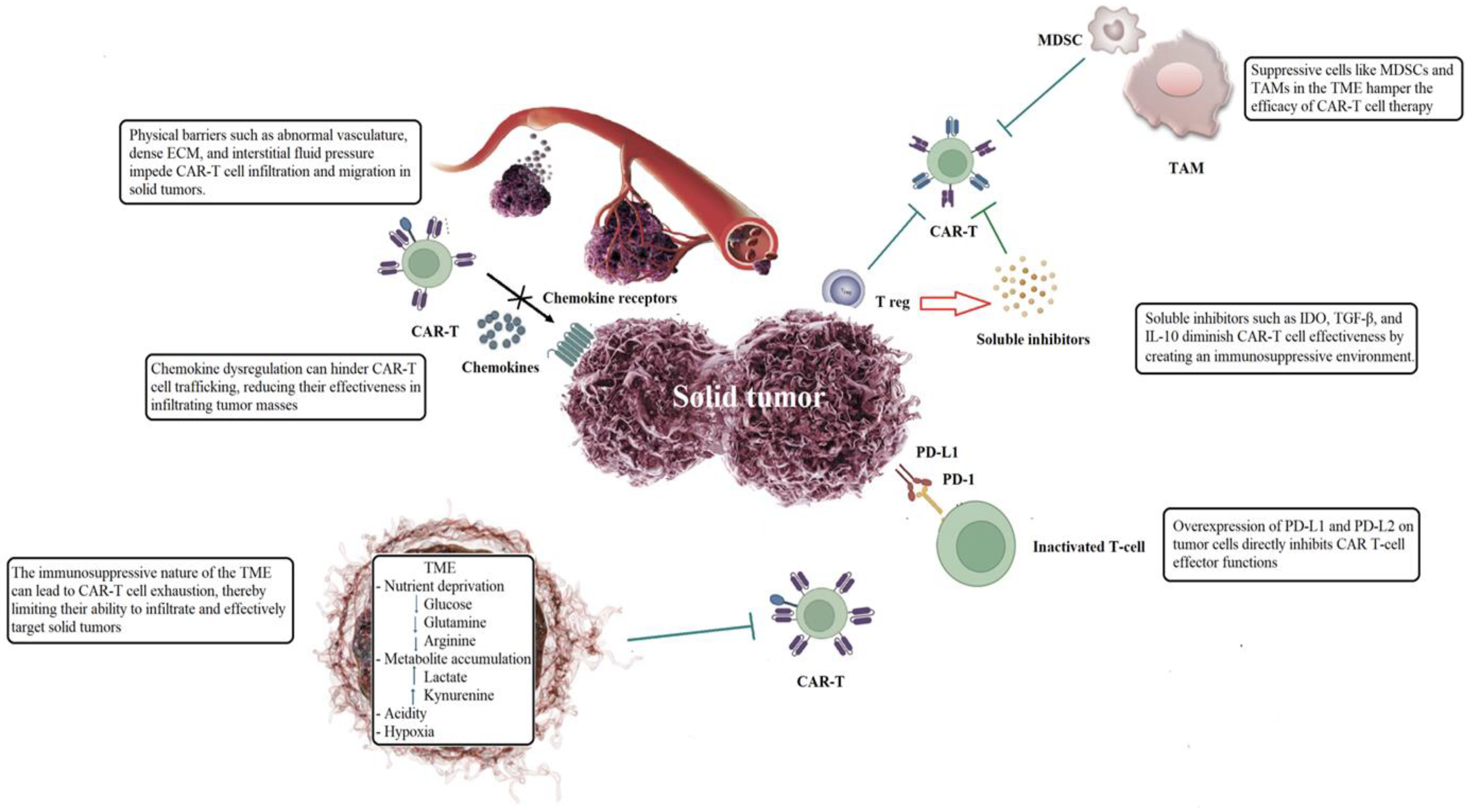
Figure 1. CAR-T cell therapy encounters a variety of obstacles, such as tumor heterogeneity, antigen escape, cell exhaustion, on-target/off-tumor effects, and CAR-T cell-related toxicities including cytokine-release syndrome and neurotoxicity. The most significant obstacle remains the immunosuppressive tumor microenvironment. Tregs, TAMs, MDSCs, and stromal cells contribute significantly to the TME by suppressing immune responses. T-cells redirected toward universal cytokine killing release interleukins to boost CAR T-cell activity and longevity while reactivating host immunity. Abbreviations: ECM, extracellular matrix; IDO, indoleamine 2,3-dioxygenase; MDSC, myeloid-derived suppressor cell; PD-L, programmed cell death ligand; TAM, tumor-associated macrophages; TGF-β, transforming growth factor–β; TME, tumor microenvironment; Treg, regulatory T cells.
Preprints 145972 g001
Figure 2. An overview of the mechanisms through which CAR cells, derived from various cell types, eliminate tumor cells. CAR-NK cells are engineered to specifically seek out and eliminate tumor cells by utilizing cytotoxic mechanisms. They release cytolytic granules that contain perforin and granzymes, leading to cell lysis and apoptosis. CAR-iNKT cells can directly induce cytotoxicity against tumor cells without relying on MHC interactions, enhance the immune response, and migrate to tumor sites through the expression of chemokines. CAR-iNKT cells recognize CD1d-positive TAMs and MDSCs, promoting tumor progression and immune protection. Their unique ability enhances their effectiveness in targeting tumors through CAR-dependent and CAR-independent cytotoxicity. CAR-Ms use macrophages’ unique properties to enhance anti-tumor responses. They bind to tumor-associated antigens, trigger phagocytosis, and stimulate pro-inflammatory cytokines, thereby creating a robust immune response against cancer cells. Abbreviations: MDSC, myeloid-derived suppressor cells; TAM, tumor-associated macrophages.
Preprints 145972 g002
Table 1. Strategies to address challenges in CAR-T cell therapy.
Current Challenges Strategies
  • Ameliorating CAR-T cell trafficking to solid tumor
Engineering methods for CAR T-cell recruitment
• Chemokine receptors employed to direct T cell movement into solid tumors and particular anatomical niches encompass CXCR1, CXCR2, CXCR4, CXCR6, CCR2, CCR4, CCR8, and CX3CR1 [59]
• Non-tumor specificity of chemokines can induce toxicity and diminished activity
• Radiation and oncolytic virus intra-tumoral administration were studied [60]
• Neuroblastoma combination treatment is promising
• Enhancing tumor receptivity and overcoming physical limitations are sought
2.
Overcoming hypoxic TME
CAR T-cells in hypoxic TMEs [61]
• Over-proliferation and microvasculature in tumor cells challenge CAR-T cells
• Hypoxic conditions activate hypoxia-inducible factor (HIF) proteins, enhancing immune checkpoint expression and Treg recruitment
• HIF1 stabilization increases glycolytic enzyme production, decreases oxidative phosphorylation, and enhances VEGF expression
• Interventions to enhance HIF include HIF-CAR, HiCAR, and HypoxiCAR, which are hypoxic sensitive [62]
3.
Counteracting metabolic challenges
Enhanced anti-tumor effects of hypoxic tumor mesenchymal stem cells
• RIAD-CAR and BAY 60-6583 are used for enhanced anti-tumor effects [63]
• Lactate dehydrogenase blockade explored alongside CAR T-cell immunotherapy [64]
• Optimizing CAR T-cell metabolism, including PD-1/PD-L1 axis blockade, GLUT-1 inhibitors, and CRISPR/Cas9 technology, crucial for tumor metastasis treatment [65]
4.
Reversing CAR-T cell exhaustion
CD19-specific CAR-T cells and hematologic malignancies
• CD19-specific CAR-T cells show better outcomes in hematologic malignancies
• CD38 inhibition improves memory differentiation and counteracts CAR-T cell exhaustion [66]
• Exhausted CAR T-cells in TME upregulated PD-1, TOX, NR4A, CBL-B, and TGF-β [67]
• The combination of PD-1 blockade and scFv engineering demonstrates promising outcomes [68,69]
5.
Overcoming tumor heterogeneity
Innovative engineering strategies to enhance CAR T-cell effectiveness in solid tumors
• Targeting multiple tumor-associated antigens
• Co-expressing and secreting BiTEs using CAR-T cells
• Applying CARs targeting adapter molecules
• BiTE-secreting CAR T-cells successfully overcome antigen heterogeneity
• Universal CARs use adaptor elements as ligands
• Vaccines, including viruses or dendritic cells, activate CAR-T cells in vivo, with nanoparticles or oncolytic viruses modified to carry drugs, genes, or stimulatory cytokines [65]
6.
Counteracting immunosuppressive TME
CAR-T cell therapy resistance to TME-induced immunosuppression [70]
• Disrupts the function of immunosuppressive cytokines and their associated signaling pathways.
• Enhances the release of pro-inflammatory cytokines
• Depletes immune suppressor cells in tumor microenvironment.
• Strategies include blocking inhibitory pathways, releasing mAbs, and targeting CD-47
• The risk of grade 3 neurotoxicity and cytokine release syndrome in CAR-T cell therapy for solid tumors varies across studies, with severe neurotoxicity occurring in 21.7% of patients
Disclaimer/Publisher’s Note: The statements, opinions and data contained in all publications are solely those of the individual author(s) and contributor(s) and not of MDPI and/or the editor(s). MDPI and/or the editor(s) disclaim responsibility for any injury to people or property resulting from any ideas, methods, instructions or products referred to in the content.
Copyright: This open access article is published under a Creative Commons CC BY 4.0 license, which permit the free download, distribution, and reuse, provided that the author and preprint are cited in any reuse.
Prerpints.org logo

Preprints.org is a free preprint server supported by MDPI in Basel, Switzerland.

Subscribe

Disclaimer

Terms of Use

Privacy Policy

Privacy Settings

© 2025 MDPI (Basel, Switzerland) unless otherwise stated