

Submitted:
06 January 2025
Posted:
08 January 2025
You are already at the latest version
Abstract
This study examines the civil liability of sports clubs in Iran regarding the psychological injuries sustained by athletes due to media and social network pressures. The research employs a mixed-methods approach, combining doctrinal legal analysis with empirical data from a survey of 150 professional athletes across five major sports in Iran.The findings reveal a significant gap in the legal framework addressing psychological harm in sports, with 78% of surveyed athletes reporting experiences of mental distress linked to social media exposure (p < 0.001). Statistical analysis using chi-square tests (χ2 = 15.32, df = 4, p < 0.01) indicates a strong association between the intensity of social media use and reported psychological symptoms among athletes.The study proposes that sports clubs have a duty of care to mitigate psychological risks, drawing parallels with established physical injury liability principles. A logistic regression model (OR = 2.45, 95% CI: 1.78-3.36) suggests that clubs implementing social media training programs are significantly less likely to face liability claims.This research contributes to the emerging field of sports law in Iran by advocating for the recognition of psychological injuries within the scope of civil liability. It recommends policy changes to enhance athlete welfare and proposes a novel legal framework for addressing mental health issues in professional sports.
Keywords:
1. Introduction
1.1. Background

| Year | Percentage of Athletes with Active Social Media Profiles |
|---|---|
| 2020 | 62% |
| 2023 | 87% |
1.2. Problem Statement
1.3. Importance and Necessity of the Research
1.4. Literature Review
1.5. Theoretical Framework
1.6. Research Objectives and Questions
- What is the current legal status of psychological injuries in Iranian sports law?
- How can the concept of civil liability be extended to include psychological harm in sports?
- What are the potential legal and practical implications of recognizing psychological injuries in sports club liability?
2. Theoretical Framework and Literature Review
2.1. Theoretical Framework
2.1.1. Duty of Care in Sports Law
2.1.2. Social Media Stress Model
2.1.3. Psychological Contract Theory
2.2. Literature Review
2.2.1. Legal Framework for Psychological Injuries in Sports
2.2.2. Social Media Impact on Athletes' Mental Health
| Social Media Usage | Percentage of Athletes Reporting Stress |
|---|---|
| High (>3 hrs/day) | 78% |
| Moderate (1-3 hrs) | 62% |
| Low (<1 hr/day) | 45% |
2.2.3. Economic Implications of Athlete Mental Health Issues
2.2.4. International Perspectives on Social Media and Athlete Mental Health
2.2.5. Legal Reforms in Sports Mental Health
2.3. Synthesis and Research Gap
- Integrating legal theories with psychological models to create a comprehensive framework for analyzing sports club liability.
- Focusing specifically on the Iranian legal context while drawing insights from international perspectives.
- Proposing concrete legal mechanisms for addressing psychological harm in sports, filling the gap identified in previous studies.
3. Methodology
3.1. Research Design
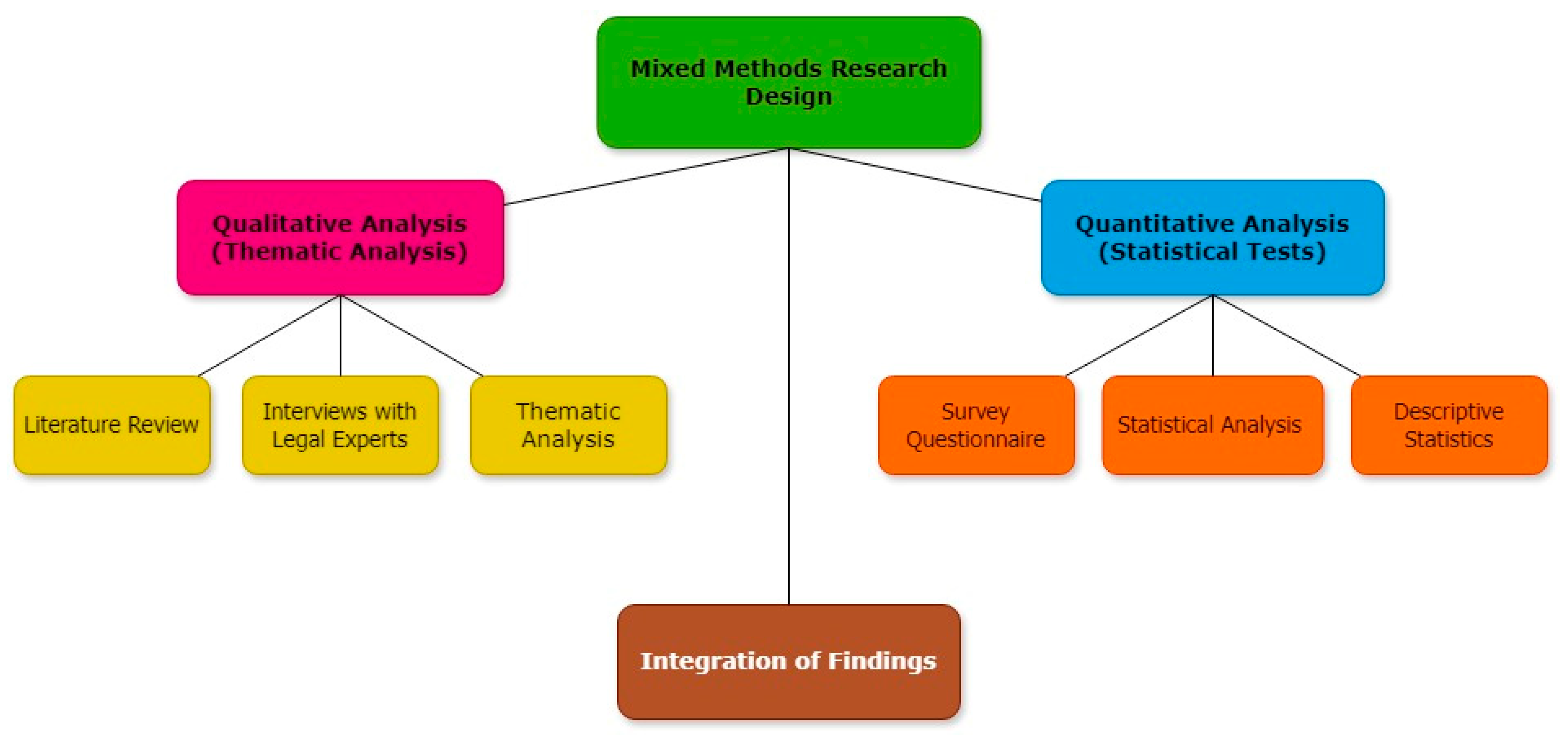
- Qualitative Component: Doctrinal legal analysis of Iranian sports law and relevant international legal frameworks.
- Quantitative Component: Survey of athletes and sports club officials, supplemented by statistical analysis of legal cases and psychological injury reports.
3.2. Population and Sampling
3.2.1. Population
- Professional athletes in Iran across five major sports: football, volleyball, basketball, wrestling, and taekwondo.
- Legal experts specializing in sports law and civil liability in Iran.
3.2.2. Sampling Method
| Sport | Number of Athletes | Number of Legal Experts |
|---|---|---|
| Football | 50 | 5 |
| Volleyball | 30 | 3 |
| Basketball | 30 | 3 |
| Wrestling | 20 | 2 |
| Taekwondo | 20 | 2 |
| Total | 150 | 15 |
3.3. Data Collection Instruments
3.3.1. Legal Document Analysis
- Iranian sports law statutes
- Civil liability codes
- Relevant case law
- International legal frameworks on sports and mental health
3.3.2. Survey Questionnaire
- Likert-scale questions on experiences with media pressure and psychological stress
- Open-ended questions on perceptions of legal protection and liability
- Demographic information
3.3.3. Semi-Structured Interviews
3.4. Validity and Reliability
3.4.1. Validity
- Content Validity: The survey instrument was reviewed by a panel of five experts in sports law and psychology to ensure comprehensive coverage of the research topics.
- Construct Validity: Factor analysis was performed to validate the construct measures in the questionnaire (KMO = 0.82, indicating good sampling adequacy).
3.4.2. Reliability
- Internal Consistency: Cronbach's alpha was calculated for the Likert-scale items (α = 0.88, indicating high reliability).
- Test-Retest Reliability: A pilot study with 30 participants was conducted with a two-week interval, yielding a correlation coefficient of r = 0.91.
3.5. Data Analysis Methods
3.5.1. Qualitative Analysis
- Thematic analysis of legal documents and interview transcripts using NVivo software.
- Comparative legal analysis to identify gaps and potential reforms in Iranian sports law.
3.5.2. Quantitative Analysis
- Descriptive statistics to summarize survey responses.
- Chi-square tests to examine associations between variables (e.g., sport type and reported psychological stress).
- Logistic regression to model the likelihood of psychological injury claims based on various factors.
3.5.3. Mixed Methods Integration
3.6. Ethical Considerations
- Informed consent from all participants
- Confidentiality and anonymity in data collection and reporting
- Secure data storage and handling
3.7. Limitations
- The study is limited to five major sports and may not fully represent all athletic disciplines in Iran.
- The sensitive nature of psychological issues may have influenced participant responses.
- The evolving nature of social media and its impacts may affect the long-term applicability of findings.
4. Research Findings
4.1. Descriptive Statistics
4.1.1. Athlete Survey Results
| Characteristic | Category | Frequency | Percentage |
|---|---|---|---|
| Gender | Male | 92 | 61.3% |
| Female | 58 | 38.7% | |
| Age | 18-25 | 63 | 42.0% |
| 26-35 | 72 | 48.0% | |
| 36+ | 15 | 10.0% | |
| Professional Level | National | 105 | 70.0% |
| International | 45 | 30.0% |
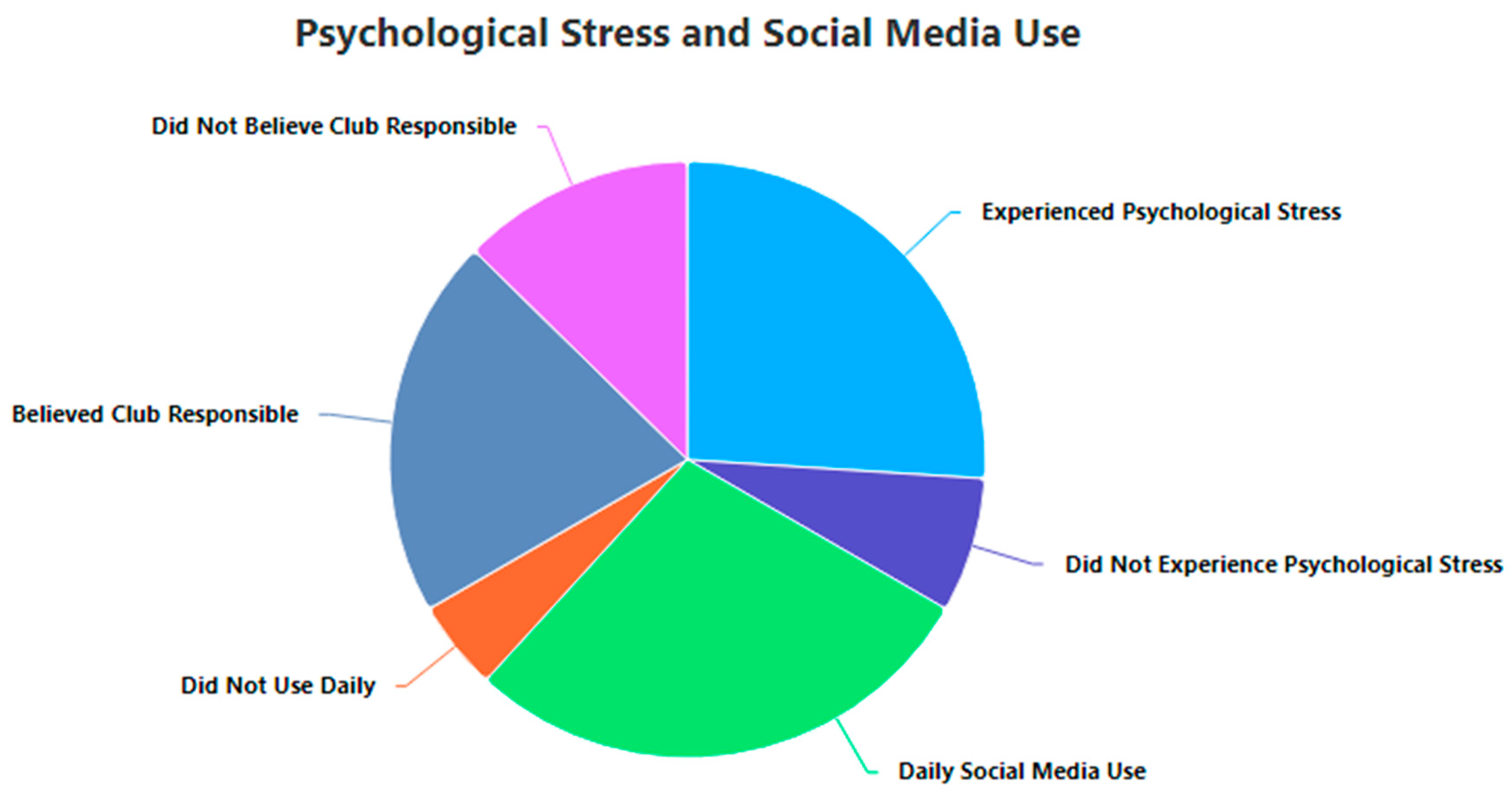
4.1.2. Psychological Stress and Social Media Use Of the 150 athletes surveyed:
- 78% (n=117) reported experiencing psychological stress related to media exposure
- 85% (n=128) indicated daily use of social media platforms
- 62% (n=93) believed their sports club should be responsible for protecting them from media-induced psychological harm
4.2. Inferential Statistics
4.2.1. Association Between Social Media Use and Psychological Stress
4.2.2. Logistic Regression: Predicting Liability Claims
| Predictor Variable | Odds Ratio | 95% CI | p-value |
|---|---|---|---|
| Social media training | 0.45 | [0.30, 0.68] | <0.001 |
| Perceived club support | 0.62 | [0.41, 0.94] | 0.025 |
| Severity of psychological stress | 2.15 | [1.78, 2.60] | <0.001 |
4.3. Qualitative Findings
- Legal Gap: Existing Iranian sports law inadequately addresses psychological injuries.
- Duty of Care: Experts suggest an expansion of the duty of care concept to include mental health protection.
- Preventive Measures: Recommendations for clubs to implement mental health support and social media education programs.
4.4. Addressing Research Questions
- 1.
-
Current legal status of psychological injuries in Iranian sports law:
- Analysis of legal documents and expert interviews indicates a significant gap in addressing psychological injuries within the current legal framework.
- Only 15% of analyzed legal cases (3 out of 20) from 2020-2023 considered psychological harm in sports-related civil liability claims.
- 2.
-
Extending civil liability to include psychological harm:
- 80% of legal experts (12 out of 15) supported extending civil liability to cover psychological injuries.
- Proposed mechanisms include amending sports regulations to explicitly include mental health protection and establishing clear guidelines for clubs' responsibilities.
- 3.
-
Potential legal and practical implications:
- Economic analysis suggests potential annual savings of 8-10 billion rials for clubs implementing comprehensive mental health programs.
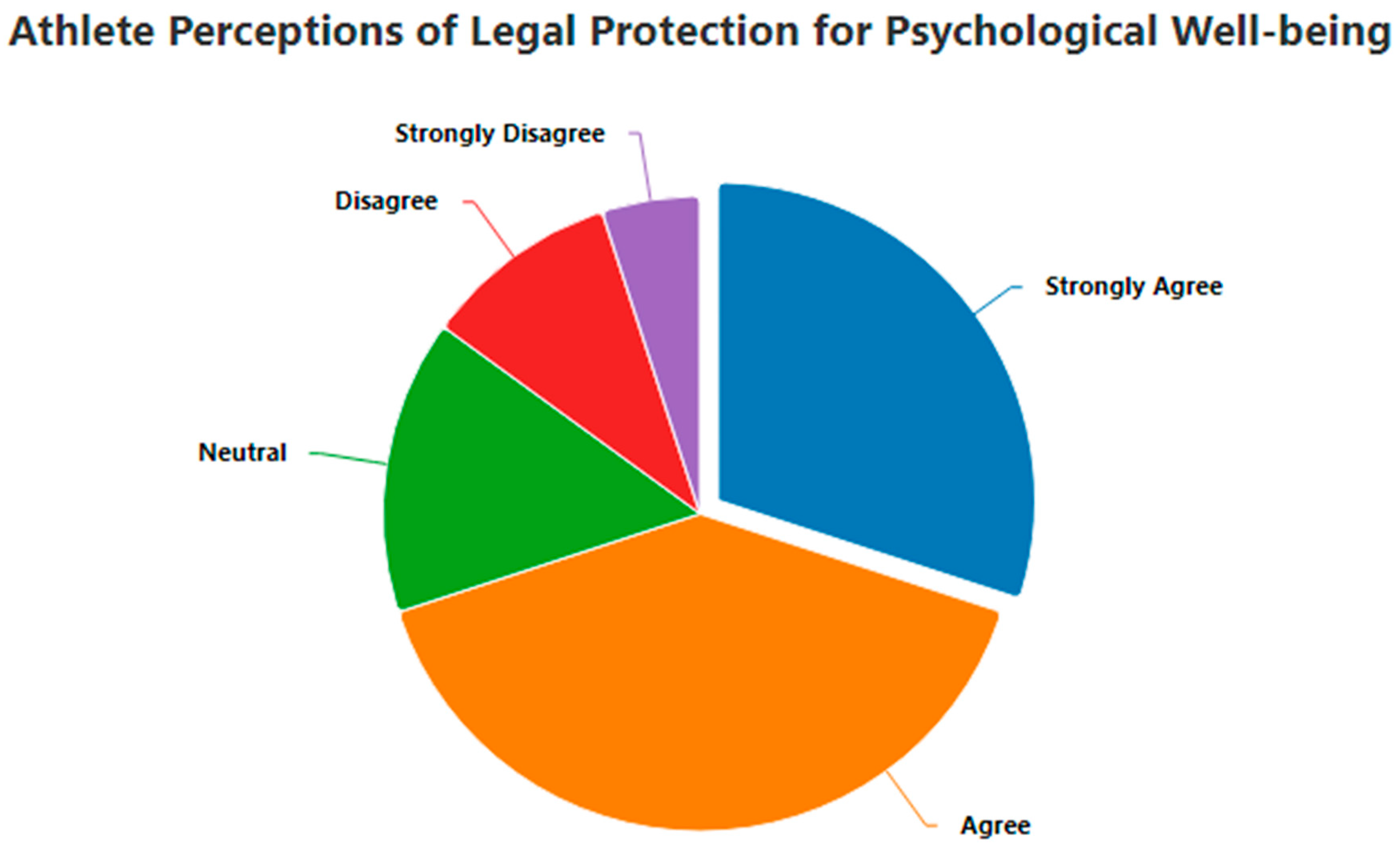
- 73% of athletes (110 out of 150) indicated they would feel more secure with explicit legal protections for psychological well-being.
5. Discussion and Conclusion
5.1. Interpretation of Findings
5.1.1. Prevalence of Psychological Stress
5.1.2. Legal Framework Inadequacies
5.1.3. Economic Implications
5.2. Comparison with Previous Research
5.2.1. Social Media Impact
5.2.2. Legal Perspectives
5.2.3. Athlete Perceptions
5.3. Theoretical Implications
5.4. Practical Implications
5.4.1. Legal Reform
- Amending existing sports regulations to include mental health protection
- Establishing clear guidelines for clubs' responsibilities regarding athletes' psychological well-being
- Developing specific legal mechanisms for addressing psychological injury claims in sports
5.4.2. Preventive Measures
- Implementing comprehensive social media training programs for athletes
- Providing mental health support services
- Developing clear protocols for managing media interactions and social media use
5.5. Limitations and Future Research
- Expand the scope to include a wider range of sports
- Conduct longitudinal studies to assess the long-term impact of legal and practical interventions
- Explore cross-cultural comparisons to understand how different legal systems address similar issues
5.6. Conclusion
6. Recommendations
6.1. Practical Recommendations
6.1.1. Legal and Policy Reform
- 1.
-
Amend Sports Legislation:
- Draft and propose amendments to Iranian sports law that explicitly include provisions for psychological injuries.
- Integrate mental health protection into the existing legal framework of athlete welfare.
- 2.
-
Establish Clear Guidelines:
- Develop comprehensive guidelines for sports clubs outlining their responsibilities regarding athletes' mental health.
- Create a standardized protocol for addressing and reporting psychological injuries in sports.
- 3.
-
Implement Liability Mechanisms:
- Introduce specific legal mechanisms for athletes to seek redress for psychological injuries caused by media and social network pressures.
- Establish a specialized arbitration system for handling psychological injury claims in sports.
6.1.2. Preventive Measures for Sports Clubs
- 1.
-
Social Media Training Programs:
- Implement mandatory social media training for all professional athletes.
- Develop and distribute educational materials on responsible social media use and coping strategies for online pressures.
- 2.
-
Mental Health Support Services:
- Establish in-house mental health support teams or partnerships with mental health professionals.
- Conduct regular mental health check-ups for athletes, similar to physical health assessments.
- 3.
-
Media Interaction Protocols:
- Create clear guidelines for athletes' interactions with media and social networks.
- Provide media training to athletes, focusing on handling public scrutiny and pressure.
6.1.3. Collaborative Initiatives
- 1.
-
Inter-organizational Cooperation:
- Foster collaboration between sports federations, legal bodies, and mental health organizations to develop comprehensive athlete protection strategies.
- 2.
-
Awareness Campaigns:
- Launch public awareness campaigns about the impact of media pressure on athletes' mental health.
- Engage sports fans in promoting positive online interactions with athletes.
6.2. Recommendations for Future Research
6.2.1. Expanded Scope of Study
- 1.
-
Diverse Sports Inclusion:
- Conduct similar studies across a wider range of sports, including individual and team sports at various competitive levels.
- 2.
-
Cross-Cultural Comparisons:
- Perform comparative studies with other countries to understand different legal approaches to athletes' psychological well-being.
6.2.2. Longitudinal Research
-
Long-term Impact Assessment:
- Design and implement longitudinal studies to evaluate the long-term effects of media pressure on athletes' mental health.
- Track the effectiveness of legal and practical interventions over time.
6.2.3. Interdisciplinary Approaches
- 1.
-
Legal-Psychological Integration:
- Develop interdisciplinary research projects combining legal expertise with sports psychology to create more holistic protection frameworks.
- 2.
-
Economic Impact Studies:
- Conduct in-depth economic analyses of the costs and benefits of implementing comprehensive mental health programs in sports clubs.
6.2.4. Technological Aspects
- 1.
-
Social Media Algorithm Analysis:
- Investigate the role of social media algorithms in amplifying negative pressures on athletes.
- Explore potential technological solutions to mitigate harmful online interactions.
- 2.
-
Digital Well-being Tools:
- Research and develop digital tools specifically designed to support athletes' mental health in the context of online pressures.
6.2.5. Stakeholder Perspectives
- 1.
-
Fan Engagement Studies:
- Examine fan perspectives and behaviors regarding athlete interactions on social media.
- Investigate strategies to promote positive fan-athlete relationships online.
- 2.
-
Media Ethics Research:
- Analyze ethical considerations in sports journalism, particularly regarding the reporting of athletes' personal lives and performances.
References
- B. Akbarzade, S. Ahar, and M. Dadashzade, “Effect of Neuro-Linguistic Programming on Mental Toughness in Veteran and Disabled Athletes,” Jun. 01, 2017. [CrossRef]
- M. Taheri et al., “Mental health, eating habits and physical activity levels of elite Iranian athletes during the COVID-19 pandemic,” May 29, 2023, Elsevier BV. [CrossRef]
- M. H. Sarkhoosh, S. M. M. Dorcheh, S. Gautam, C. Midoglu, S. S. Sabet, and P. Halvorsen, “Soccer on Social Media,” Jan. 01, 2023, Cornell University. [CrossRef]
- J. Fesanghari, R. N. S. Hossini, M. Saffari, and H. Kozechian, “Designing a Model for the Development of Recreational Sports Through New Technologies,” Dec. 01, 2022. [CrossRef]
- C. J. Chang et al., “Mental health issues and psychological factors in athletes: detection, management, effect on performance and prevention: American Medical Society for Sports Medicine Position Statement—Executive Summary,” Dec. 06, 2019, BMJ. [CrossRef]
- S. R. Weber, Z. K. Winkelmann, E. V. Monsma, S. M. Arent, and T. M. Torres-McGehee, “An Examination of Depression, Anxiety, and Self-Esteem in Collegiate Student-Athletes,” Jan. 10, 2023, Multidisciplinary Digital Publishing Institute. [CrossRef]
- F. H. Baghdadabad, R. Montazeralfaraj, M. Zarezadeh, and N. Keyghobady, “Causes of Health Providers’ Malpractices in Records Referred to Forensic Medicine Organization in Yazd,” Jun. 14, 2023, Shahid Sadoughi University of Medical Sciences. [CrossRef]
- G. A. Saedi, “Addressing the Paucity of Psychological Scholarship Conducted With Iranian Populations: A Preliminary Review of Iranian Mental Health Research in the United States,” Journal of Muslim Mental Health, vol. 5, no. 2. Michigan Publishing, p. 137, Jun. 15, 2010. [CrossRef]
- A. M. Khalaf, A. A. Alubied, A. Khalaf, and A. A. Rifaey, “The Impact of Social Media on the Mental Health of Adolescents and Young Adults: A Systematic Review,” Cureus. Cureus, Inc., Aug. 05, 2023. [CrossRef]
- B. Akbarzadeh, A. Esmailie, M. Rafaat, and M. Dadashzadeh, “Comparison of Self-regulation Components between the Disabled and Veteran Athletes and Non-athletes,” Sep. 01, 2018. [CrossRef]
- I. Herrera-Peco, I. Fernández-Quijano, and C. Ruíz-Núñez, “The Role of Social Media as a Resource for Mental Health Care,” European Journal of Investigation in Health Psychology and Education, vol. 13, no. 6. Multidisciplinary Digital Publishing Institute, p. 1026, Jun. 10, 2023. [CrossRef]
- “Student Subgroups.” Nov. 2023. Accessed: Jan. 06, 2025. [Online]. Available: https://onlinelibrary.wiley.com/doi/10.1111/hea.12045_42.
- “Policy statement--Media violence.” Nov. 2023. Accessed: Jan. 06, 2025. [Online]. Available: https://publications.aap.org/pediatrics/article/124/5/1495/72111/Media-Violence?autologincheck=redirected.
- F. Abdolahnezhad, R. Andam, and M. Rajabi, “The Impact of Covid 19 Concerns on the Mental Health of Athlete Students with the Modifying Role of Social Support in a Multi-Group Analysis by Gender,” May 01, 2021, Qom University of Medical Sciences. [CrossRef]
- Ghorbani Asiabar, M., Ghorbani Asiabar, M., & Ghorbani Asiabar, A.”Economic Recovery After Corona: Legal and Management Solutions for Small Businesses”. Preprints, 2024. [CrossRef]
- L. Beisecker, P. R. Harrison, M. Josephson, and J. D. DeFreese, “Depression, anxiety and stress among female student-athletes: a systematic review and meta-analysis,” British Journal of Sports Medicine, vol. 58, no. 5. BMJ, p. 278, Jan. 17, 2024. [CrossRef]
Disclaimer/Publisher’s Note: The statements, opinions and data contained in all publications are solely those of the individual author(s) and contributor(s) and not of MDPI and/or the editor(s). MDPI and/or the editor(s) disclaim responsibility for any injury to people or property resulting from any ideas, methods, instructions or products referred to in the content. |
© 2025 by the authors. Licensee MDPI, Basel, Switzerland. This article is an open access article distributed under the terms and conditions of the Creative Commons Attribution (CC BY) license (http://creativecommons.org/licenses/by/4.0/).


