

Submitted:
06 January 2025
Posted:
07 January 2025
You are already at the latest version
Preprints on COVID-19 and SARS-CoV-2
Abstract
Melatonin was primarily identified for its indispensable roles in animals. Recently, it has been described as a potent regulator of several physiological pathways in plants. In humans, it has shown effects in the prevention or as an adjuvant treatment for several diseases mainly related to the immune system, inflammation, and oxidative stress. Moreover, a melatonin-rich diet is linked to several health benefits, such as regulation of the circadian rhythm, regulation of the immunological system, epilepsy control, reduced allergic reactions, delaying the aging process, diminishing hormones related to cancer, and delaying Alzheimer’s and Parkinson’s disease symptoms. This review aimed to show the effects of melatonin in diseases beyond its traditional use. The outcome of clinical trials showed that it can present scavenging of free radicals (reducing reactive oxygen species) and inflammation (reducing the synthesis of inflammatory cytokines modulating the immune system. Moreover, it can minimize apoptosis, insulin resistance, blood pressure, LDL-c, body mass index, adipose tissue mass, waist circumference, adhesion molecules, endothelial impairment, plaque formation, and muscle atrophy. It can also reduce hyperleptinemia, alanine aminotransferase, and liver fat. These effects result in neuro and cardioprotection, improvement of liver diseases, rheumatoid arthritis, dermatitis, COVID-19, polycystic ovaries, dermatitis, and sepsis. We conclude that plant melatonin can benefit patients with many diseases besides sleep problems and neurodegeneration. Plant melatonin may also be more cost-effective, less adverse, and more sustainable than synthetic; therefore, it is better than the typical already sold. However, more clinical trials should show adequate doses, formulation, and treatment time.
Keywords:
Melatonin
; plants
; cardiovascular diseases
; rheumatoid arthritis
; sepsis
; cancer
; COVID-10
; dysbiosis
; polycystic ovary syndrome
1. Introduction
Adaptive responses and vegetable growth under stress conditions are regulated by several complex networks of molecules, such as hormones. Melatonin (N-acetyl-5-methoxytryptamine) is included in this group and has a key role in controlling and relieving abiotic stress in tuning with other plant hormones [1,2]. This indoleamine was primarily identified for its several roles in animals but, recently, has been described as an influent and potent regulator of several physiologic pathways in plant and human biology [3,4,5,6].
In plants, it has a vital role in modulating several aspects of plant growth and development. These actions may include the regulation of photoperiodic responses and circadian rhythms. Notwithstanding, it also can contribute to antioxidant and stress resistance in plants. It is produced by many food plants such as olive oil, pistachio, strawberry, cherry, mango, grape, banana, pineapple, orange, papaya, tomato, almonds, hazelnuts, and walnuts, but the amount can vary greatly [7,8,9,10,11,12].
In humans, melatonin is produced mainly by the pineal gland and has a crucial role in the sleep-wake cycle. However, it can be produced by the skin, retina, lymphocytes, gastrointestinal tract, and bone marrow [13,14,15,16,17]. Furthermore, melatonin is essential in homeostasis in the human body, particularly in adulthood. It has a critical role in promoting adaptation through allostasis. As a natural substance, it can be obtained in the diet or utilized as a supplement and therapeutic agent, offering the above-mentioned health benefits [18,19,20,21,22,23].
A melatonin-rich diet is related to several health benefits such as regulation of the circadian rhythm, cardiovascular protection, regulation of the immunological system, epilepsy control, reducing allergic reactions, delaying the aging process, diminishing hormones related to cancer, delaying Alzheimer’s and Parkinson’s disease symptoms, working as an antioxidant and anti-inflammatory molecule [13,14,15,16,17,22,24,25,26,27,28]. This hormone's anti-inflammatory and antioxidant effects contribute much to preventing or treating the cited conditions. Melatonin presents scavenger properties, though it can remove Reactive Oxygen Species (ROS) and Reactive Nitrogen Species (RNS), inhibiting the actions of nuclear factor kappa B (NFκB) and myeloperoxidases pathways. The downregulation in the expression of pro-inflammatory genes reduces the release of interleukin (IL)-1β, IL-6, Tumor Necrosis Factor-α (TNF-α), and many other inflammatory molecules. It can also be associated with the production and activation of the apoptosis-related speck-like protein. Due to the up-regulation in monocyte synthesis, proliferation, and maturation of T and B lymphocytes, melatonin also improves the immune response [23,29,30,31,32]. Figure 1 shows the main effects of melatonin.
Many clinical studies have shown that melatonin can work as an adjuvant therapeutic or an option to prevent and treat several human diseases, such as Alzheimer’s disease [33,34,35], Parkinson’s disease [36], non-alcoholic fatty liver disease [35,37,38], rheumatoid arthritis [39,40,41], multiple sclerosis [42], polycystic ovary syndrome [43,44], dermatitis [45,46], COVID-19 [47], and sepsis [48]. Figure 1 shows the effects of melatonin in humans.
Since melatonin has been extensively studied in sleep-related disorders and other neurodegenerative diseases, this comprehensive review aims to draw on clinical trials to show the effects of this hormone beyond its commonly observed purposes.
2. Summary of Melatonin Biosynthesis in Plants
Melatonin is a hormone described much in mammals, amphibians, and birds. In the synthesis pathways, tryptophan (Trp) results in melatonin [2,49,50,51,52]. Trp is converted into tryptamine through the shikimic acid pathway, mainly by chloroplasts by the enzyme tryptophan decarboxylase (TDC). A similar path is mediated by tryptophan hydroxylase (TPH) to transform tryptophan into 5-hydroxytryptophan. These two enzymes are essential for synthesizing melatonin in vegetables [7,17,53]. Tryptamine and 5-hydroxytryptophan are transformed into serotonin by the enzyme tryptamine 5-hydroxylase and TDC, respectively. On the other hand, serotonin goes through other conversions by different enzymes depending on its location. In the cytoplasm, serotonin is converted into N-acetylserotonin through serotonin N-acetyltransferase (SNAT), which is methylated by N-acetylserotonin methyltransferase (ASMT) to produce 5-methoxy tryptamine. Another possible path for serotonin in the chloroplast is methylation by caffeic acid O-methyltransferase (COMT) to the conversion in N-acetylserotonin, which also undergoes methylation to generate melatonin. Plant melatonin production may involve several complex enzymatic pathways in different transformation routes depending on environmental conditions and organelle [7,54,55,56].
Mitochondria can also produce melatonin using a skmilar pathway. In summary, Trp can be transformed into N-acetyltryptamine and N-acetylserotonin. This compound can finally be converted to serotonin. Alternatively, Trp can produce serotonin that is further converted to melatonin. The contribution of mitochondria to the production of melatonin seems to be increased under stress conditions, and depending on the environment, the contribution of this organelle and chloroplast may change [17]. Figure 2 summarizes the biosynthesis of melatonin in chloroplasts and mitochondria.
The production and accumulation of melatonin amounts can vary widely among different plant parts and plant species. It was first described in grapes and after in olive oil. Depending on the plant, its highest levels are in the seed, skin, leaves, roots, grain, flower buds (embryonic stage of flowers), and ripe fruits [7,54,57,58,59,60]. Table 1 shows some examples of plants and their respective amounts of this hormone.
As pointed out above, melatonin can improve or prevent several human conditions (Figure 3). In the next Fs, we discuss the role of melatonin in unusual diseases.
3. Melatonin in Cardiovascular Diseases and MAFLD
Cardiovascular diseases (CVD) are considered the main cause of death on the globe. They are related to several conditions, such as obesity, diabetes, hypertension, metabolic syndrome, and liver disease (such as Metabolic-Associated Fat Liver Disease - MAFLD) [69,70,71,72,73,74]. Some studies have shown that melatonin can be used to shortten the effects of risk factors for CVD and MAFLD [24,74,75]. Table 2 shows clinical studies involving melatonin and the diseases mentioned above.
AMI, Acute Myocardial Infarction; CTnI, Cardiac Troponina-I; FMD, flow-mediated dilatation; IL-1β, interleucina-1beta; iNOS, inducible nitric oxide synthase; MAFLD, Metabolic Associated Fat Liver Disease; NIHSS, National Institute of Health Stroke Scale; mRS, modified Rankin Scale score; MLHFQ, Minnesota Living with Heart Failure Questionnaire; NT-Pro BNP: N-Terminal Pro–B-Type Natriuretic Peptide ↓: reduction.In a randomized study, some authors [76] investigated the effects of melatonin on the circadian cycle and social and environmental factors. Their results showed that rotating night-shift work results in moderate sleep quality impairment and insulin resistance. Melatonin improved sleep quality but did not significantly interfere with insulin resistance in these workers.
Based on the knowledge that using melatonin affects blood pressure regulation, Ramos et al. [77] investigated the effects of this hormone in subjects receiving a high-sodium diet for 10 days. Their results showed that melatonin can be beneficial in reducing blood pressure in young, healthy, normotensive adults.
Mehrpooya et al. [78] conducted a double-blind, placebo-controlled study in patients diagnosed with acute ischemic stroke and not eligible for reperfusion therapy to assess the possible benefits of melatonin supplementation over traditional treatment for these patients. 65 patients were divided between placebo and melatonin (20mg/day for 5 days) groups. After melatonin supplementation, patients were evaluated 5, 30, and 90 days later. The results showed a mean reduction in the National Institute of Health Stroke Scale and modified Rankin Scale score. However, there was no significant difference in the functional independence criteria.
Hoseini et al. [79] performed a randomized, double-blind, placebo-controlled clinical to evaluate the role of melatonin supplementation in heart failure patients with reduced ejection fraction. 92 patients were randomized between placebo and melatonin groups. The melatonin group received 10 mg of melatonin orally once daily for 24 weeks. After the intervention, there was a reduction in NT-Pro BNP >>> N-Terminal Pro–B-Type Natriuretic Peptide (NT-Pro BNP) levels, accompanied by an improvement in the quality of life measured by the Minnesota Living with Heart Failure Questionnaire (MLHFQ). However, there were no significant changes in echocardiographic parameters.
Hoseini et al. [80] investigated the role of melatonin intake on endothelial function in subjects with heart failure and dcreased ejection fraction through a randomized, double-blind, placebo-controlled clinical trial. 92 patients received either placebo or 10mg/day of melatonin for 24 weeks. After treatment, there was a significant increase in flow-mediated dilatation (FMD); however, there were no changes in blood pressure, total antioxidant capacity, and MDA levels.
Dwaich et al. [81] analyzed the effect of different dosages of melatonin in patients undergoing coronary artery bypass grafting through a double-blind, placebo-controlled study. 45 patients were allocated into three groups according to the treatment employed: placebo group, melatonin 10mg/day treatment group, and melatonin 20mg/day treatment group from the fifth day before surgery. The results indicated that the individuals treated with melatonin showed an increase in the ejection fraction associated with a reduction in heart rate and a reduction in the levels of cardiac enzymes such as CtnI (Cardiac Troponina-I), IL-1β, inducible nitric oxide synthase (iNOS), and caspase-3. These changes were most prominent in the group treated with 20 mg of melatonin daily.
Dominguez-Rodriguez et al. [82] investigated the role of intravenous melatonin administration in reducing cardiac damage in patients who presented within 6 hours Acute Myocardial Infarction (AMI) symptoms through a phase 2, single-center, prospective, randomized, double-blind, placebo-controlled study, 272 patients were randomized to receive placebo or intravenous melatonin 11.61 mg 30 min before percutaneous revascularization and remaining doses for the subsequent 120 min. Surviving patients were evaluated 90 days after the intervention, and it was possible to observe a reduction in cardiac damage and improvement in clinical criteria in patients in the melatonin-treated group.
Regarding MAFLD, Bahrarni et al. [75] conducted a randomized, double-blind, placebo-controlled clinical trial to investigate the action of melatonin supplementation in patients diagnosed with this liver disease. 45 patients were randomized to receive placebo or 6mg of melatonin orally once daily for 12 weeks. After treatment, there was a significant improvement in anthropometric parameters such as weight and waist circumference, in addition to a reduction in blood pressure, a reduction in serum levels of leptin and alanine aminotransferase, and a decrease in the degree of liver fat in the group treated with melatonin.
According to some authors, melatonin has some effects that produce a unique therapeutic adjuvant for treating cardiovascular conditions, such as regulation of circadian rhythms (adaption for internal and external environmental changes), works as an anti-inflammatory, antioxidant (free radical scavenger), protecting cells from oxidative damage. These effects permit the integrity of endothelial cells, preventing atherosclerosis, which is considered a major contributor to CVD. Moreover, melatonin properties potentially reduce CVD risk factors, ameliorating metabolic disorders [74,83,84].
4. Effects of Melatonin on Rheumatoid Arthritis
Besides the many effects of melatonin in the human body, some authors have also Besides the many effects of melatonin in the human body, some authors have also demonstrated that it can benefit bone and cartilage-related disorders such as osteoarthritis, rheumatoid arthritis, and bone fracture healing [85,86,87]. The effects of melatonin in reducing oxidative stress (reducing ROS and malonaldehyde) and inflammation (reducing he release of pro-inflammatory cytokines such as IL-1, IL-6, and TNF-α), is important in the improvement of rheumatoid arthritis since it is characterized by an autoimmune, chronic systemic connective tissue disease, resulting in joint inflammation and systemic complications like pain, restriction of movements, and significant reduction in the quality of life [85,88,89,90,91].
This hormone can regulate the relationship between inflammation and myogenesis in rheumatoid arthritis synovial fibroblasts and myoblasts. Furthermore, it can regulate pro-inflammation and atrophy in differentiated myocytes and myoblasts by interfering in the NFκB signaling route. The oral administration of melatonin in a mouse collagen-induced arthritis model showed significant improvement in hind limb grip strength, arthritic swelling, and pathological muscle atrophy [85,91,92]. Although melatonin has potential effects in rheumatoid arthritis, only two clinical trials were performed to evaluate its effects on this inflammatory condition. Table 3 shows clinical trials investigating this hormone's effects on rheumatoid arthritis.
5. Effects of Melatonin on Polycystic Ovary Syndrome (PCOS)
Polycystic ovaries syndrome (PCOS) is one of the most common endocrine conditions in reproductive-age women. It is marked by ano or oligo-ovulation, polycystic ovarian morphology, and signs of hyperandrogenism. The main symptoms include infertility, menstrual irregularities, and hirsutism. PCOS can also be linked to insulin resistance/diabetes, obesity, and metabolic syndrome. For these reasons, it is also associated with CVD. Anxiety and reduction in the quality of life are also reported [93,94,95].
Many researchers have investigated the effects of melatonin in PCOS and showed that the benefits include improving metabolic risk parameters. Melatonin receptors are found in ovarian granulosa cells, and minor modifications in these receptor genes are linked to a higher risk of PCOS in sporadic cases or familial origin [96,97]. Some interesting studies have shown the effects of melatonin supplementation in women with PCOS. The results are shown below and are summarized in Table 4.
Mousavi et al. [98] performed an investigation to evaluate the role of melatonin and magnesium supplementation in the amounts of inflammatory markers and oxidative stress in women with POS. 84 women were randomized into 4 different groups according to the treatment used: placebo, melatonin (2 tablets of 3mg each), magnesium oxide (tablet of 250mg), or melatonin+magnesium oxide (2 tablets of 3mg of melatonin each+tablet of 250 mg magnesium oxide) for 8 weeks. After treatment, there was a reduction in weight, body mass index, waist circumference, and TNF-α in the group treated with melatonin+magnesium oxide and melatonin alone, a reduction in hirsutism, and an increase in total antioxidant capacity (TAC) in the group treated with melatonin+oxide of magnesium only [94].
In a double-blind, randomized, placebo-controlled clinical trial, Shabani et al. [99] investigated the effects of melatonin intake on mental health parameters and metabolic and genetic profiles in women with POS. 58 women were randomized between the placebo and melatonin groups (2 capsules of 5mg of melatonin each day), with intervention during 12 weeks. After treatment, melatonin-treated women had better PSQI (Pittsburgh Sleep Quality Index), Beck Depression Inventory index (BDI), and Beck Anxiety Inventory index (BAI) scores compared to the placebo group. In addition, melatonin treatment promoted a reduction in serum insulin and LDL-c levels, a reduction in Homeostasis model assessment of insulin resistance (HOMA-IR), and an increase in PPAR-γ (Peroxisome proliferator-activated receptor gamma) and LDL-receptor gene expression.
Pacchiarotti et al. [100] evaluated the role of co-supplementation with melatonin and myo-inositol in optimizing in vitro fertilization in women with POS through a clinical trial, randomized, double-blind, and controlled by placebo. 526 patients were randomized into three groups according to treatment: control (folic acid: 400 mcg) group A (myo-inositol: 4000 mg, folic acid: 400 mcg and melatonin: 3 mg) and group B (myo-inositol: 4000 mg and folic acid: 400 mcg). Treatment occurred from the first day of the cycle to 14 days after embryo transfer. After the intervention, the quality of the oocyte and the embryo was improved with melatonin+myo-inositol co-supplementation.

Table 4.
Effects of melatonin in polycystic ovary syndrome patients (PCOS).
| References | Study | Population | Intervention | Duration | Outcomes |
|---|---|---|---|---|---|
| [101] | Randomized, double-blind, placebo-controlled clinical trial | 84 women with polycystic ovary syndrome were randomized into 4 groups: placebo group (26,200 ± 5.72y, 20♀), melatonin+magnesium group (28.22 ± 6.38y, 22♀), melatonin group (25.57 ± 4.99y, 21♀) and magnesium group (25.57 ± 4.88y, 21♀) | 2 tablets a day of 3 mg melatonin each + 250-mg magnesium oxide tablet | 8 weeks | ↓Weight, BMI, WC in the melatonin and melatonin+magnesium groups. ↓TNF-α in the melatonin and melatonin+magnesium groups. ↓Hirsutism in the melatonin+magnesium group. ↑TAC in the melatonin+magnesium group |
| [102] | Randomized, double-blinded, placebo-controlled clinical trial (Iran) | 58 patients with polycystic ovary syndrome were randomized into 2 groups: placebo (26.0±3.3y, 29♀) or melatonin (26.5±3.5y, 29 ♀) | 2 capsules of 5mg of melatonin each a day | 12 weeks | ↓PSQI, BDI index, BAI index, serum insulin, HOMA-IR, LDL-c in the melatonin group. ↑PPAR-γ and LDL Receptor gene expression in the melatonin group |
| [103] | Randomized, controlled, double-blind trial (Italy) | 526 women with PCOS were randomized into 3 groups: control group (32 ± 3.6y, 195♀), group A (31.2 ± 2.1y, 165♀), and group B (31.5 ± 2.8y, 166♀) | 3 mg of melatonin + 4000 mg myo-inositol + 400 mcg folic acid daily | From the first day of the cycle to 14 days after embryo transfer | ↑Oocyte and embryo quality with melatonin+myo-inositol supplementation |
BAI, Beck Anxiety Inventory; Beck Depression Inventory index (BDI); BMI: Body mass index; HOMA: Homeostasis model assessment of insulin resistance; LDL-c: Low-density lipoprotein; PPARγ: Peroxisome proliferator-activated receptor gamma; PSQI: Pittsburgh Sleep Quality Index; TAC, total antioxidant capacity; TNF-α: Tumor Necrosis Factor-α; WC: waist circumference.
6. Effects of Melatonin on Dermatitis
Atopic dermatitis can be described as a chronic inflammatory skin condition with a multifactorial origin. The regular symptoms are itching and lesions. The treatment for this condition can include immunosuppressive agents, steroids, and biological therapies [46,101]. Melatonin has been considered to treat atopic dermatitis as well as dermatitis provoked by irradiation, as shown by the below studies (Table 5).
Zetner et al. [102] investigated the role of topical application of melatonin in improving the quality of life in patients with primary breast cancer undergoing radiotherapy through a randomized, double-blind, placebo-controlled clinical trial. 48 patients were randomized between placebo and melatonin groups. The melatonin group was treated with 1g of cream containing 25mg/g of melatonin twice a day on the skin area irradiated during radiotherapy. After treatment, there was no significant improvement in patients' quality of life treated with melatonin-containing cream compared to placebo cream. However, there was a reduction in breast symptom scores in patients in the melatonin group.
In a randomized, double-blind, placebo-controlled study with children and diagnosed with atopic dermatitis, Taghavi et al. [103] analyzed the effects of melatonin supplementation on the sleep quality of these patients. 70 patients were randomized between the placebo and melatonin groups who received 2 pills containing 3mg of melatonin each day for 6 weeks. After treatment, the melatonin group tended to improve sleep onset latency and total sleep time. Still, there was no statistically significant difference in pruritus, weight, and C Reactive Protein (CRP) scores.
In a randomized, double-blind, placebo-controlled clinical trial, Chang et al. [104] investigated the impact of melatonin supplementation in children with atopic dermatitis. Forty-eight patients were assigned randomly to either the placebo group or the melatonin group, where the latter received oral melatonin at a dose of 3mg per day for a duration of 4 weeks. Following the intervention, the melatonin group exhibited improved SCORAD scores and a reduction in sleep onset latency.
Table 5.
Effects of melatonin in dermatitis.
| References | Study | Population | Intervention | Duration | Outcomes |
|---|---|---|---|---|---|
| [105] | Randomized, double-blind, controlled, clinical trial (Denmark) | 48 patients diagnosed with breast cancer undergoing radiotherapy were randomized between the groups: placebo (64± 10y, 22♀) and melatonin group (62± 9y, 26♀) | Application of 1g of cream containing 25 mg/g of melatonin twice a day on the irradiated area of the skin during radiotherapy | from the first day of radiation to the last fraction of radiation |
There was no significant difference in quality of life between groups after treatment. ↓BS score in the melatonin group |
| [106] | Randomized, double-blinded, placebo-controlled trial (Iran) | 70 children diagnosed with atopic dermatitis were randomized between the groups: placebo (8.4±2.2y, 17♀ and 18♂) and melatonin (8.9±2.1y, 19♀ and 16♂) | Supplementation with 2 tablets of 3mg of melatonin a day | 6 weeks | ↓ sleep latency, ↑total sleep time in the melatonin group. There was no significant difference in pruritus, CRP, weight and BMI scores |
| [107] | Randomized clinical trial used a double-blind, placebo-controlled | 48 pacientes com dermatite atópica foram randomizados em dois grupos: placebo (7.3±3.5y, 10♀ e 14♂) e melatonina (13± 54y, 13♀ e 11♂) | 3mg/dia de melatonina oralmente | 4 weeks | ↓ SCORAD index; ↓ sleep latency in the melatonin-treated group |
| [108] | Phase II, prospective, randomized, double-blind, placebo-controlled study | 47 patients undergoing conservative surgery for breast cancer were randomized between the groups: placebo (55y, 21♀) and melatonin (54y, 26♀) | Cream containing 50g melatonin, applied on the irradiated breast twice a day | 5 weeks | ↓ presence of dermatitis in the group treated with melatonin |
CRP: C-reactive protein; BS: breast symptom; SCORAD: Scoring Atopic Dermatitis; ↓: reduction; ↑: increase.
Ben-David et al. [105] investigated the effects of creams containing melatonin against radiation-induced dermatitis in patients diagnosed with breast cancer through a phase II, randomized, double-blind, placebo-controlled study. 47 women were randomized to receive placebo cream or melatonin-containing cream twice daily for 5 weeks during radiotherapy treatment. After treatment, it was observed that patients treated with melatonin showed fewer signs of dermatitis compared to those treated with placebo.
7. Effects of Melatonin on Sepsis
Sepsis can be identified as an overpowering host's inflammatory response to infection. This inflammatory cascade induces multi-organ dysfunction syndrome and may cause death. It can be separated into phases, and in the first, macrophage and leukocyte stimulation with subsequent cytokine production is observed, leading to ROS and RNS production and consequent oxidative stress. This last condition leads to endothelial dysfunction and oxidative damage that reaches cells and organs. There is no specific treatment to control sepsis and the inflammation storm, oxidative stress that lead to multi-organ failure and death [106,107,108,109].
In a trial, the researchers investigated the use of melatonin in sepsis patients. After the 5-day treatment, they observed a reduction in hospital stay (reduction of 19.60%) compared to placebo). In the placebo group, there were five deaths, and three were in the melatonin group. They concluded that the use of this hormone improved (without side effects) the course of the disease in surgical patients with severe sepsis [106].
Taher et al., [110] conducted another prospective, double-blind, randomized study, evaluated the benefit of melatonin in patients with early septic shock. Forty patients were randomized to receive a placebo or 50mg of melatonin in a liquid solution for 5 consecutive nights. Study results showed that patients receiving melatonin required significantly lower doses of vasopressors compared to patients receiving placebo. In addition, the melatonin-treated group had fewer deaths, lower SOFA scores, improved severity of organ dysfunction, reduced need for invasive ventilatory therapy and renal replacement therapy, although without statistically significant difference.
Galley et al. [111] evaluated the pharmacokinetics of two different doses of melatonin in sepsis patients due to community-acquired pneumonia through a cohort study. Ten eligible patients were divided into two cohorts according to the dose of melatonin in liquid solution administered: cohort 1 (50mg oral melatonin single dose) and cohort 2 (20mg oral melatonin single dose). After the intervention, a higher maximum concentration of serum melatonin was observed in the group treated with 50mg and a similar maximum concentration of 6-OHMS between the two groups, indicating that the 20mg dose seems to be more adequate for the administration of melatonin in liquid solution.
Aisa-Alvarez et al [112] investigated the role of melatonin and other antioxidant agents as adjuvant therapy in patients with a septic shock through a randomized, controlled, triple-blind clinical trial. Ninety-seven patients were randomized into 5 groups according to the treatment employed: vitamin C group (1mg capsule 4x a day), vitamin E group (400UI capsule 3x a day), N-acetylcysteine group (600mg tablet 2x a day ), melatonin group (50 mg capsule a day) and control group. After 5 days of intervention, it was observed that patients treated with melatonin showed a decrease in the SOFA score, and a reduction in lipid peroxidation and procalcitonin levels.
Table 6 shows clinical trials performed with the use of melatonin in septic patients.
8. Effects of Melatonin on COVID-19
During the last two decades, coronaviruses have spread around the world. The severe acute respiratory syndrome coronavirus (SARS-CoV) was known, but the new one emerged in China in 2019, is named severe acute respiratory syndrome coronavirus 2 (SARS-CoV-2), resulting in a tragic pandemic in 2020-2022 and leading to millions of deaths. Although vaccines and prevention measures are well known against this disease, the virus is still circulating and evolving [113,114,115,116,117].
The virus acts in the spike protein to enter the host cell by the angiotensin-converting enzyme 2 (ACE2) receptor, which is present in most organs. The stimulation of the immune system originates a pro-inflammatory cascade resulting in augmented cytokines production and release, such as IL-1, IL-6, TNF-α, and interferon 1. This scenario can lead to a systemic condition termed cytokine storm that is related to the worst outcomes of the disease [23,118,119,120].
Purinergic signaling that is related to the P2X7 receptor is closely related to the melatonin. The impairment of P2X7 and other receptors contributes to the cytokine storm and the hyper-inflammatory state. This condition initially leads to lung injury and acute respiratory distress syndrome. This hyper-inflammatory state can affect other organs, causing a widespread multi-organ dysfunction [23,121,122].
Melatonin has been considered a potential therapeutic for COVID-19 since, as pointed out before, it can modulate inflammation, oxidative stress, and the immune system. Therefore, it can reduce the cytokine storm and further oxidative conditions. Melatonin can modulate many receptors related to the cytokine storm, preventing hyper-inflammation [32,123,124,125].
As shown in Table 7, some clinical trials investigated the effects of melanin in COVID patients and showed improvement in quality of life, reduced hospitalization time, respiratory symptoms, risk of thrombosis, sepsis, and mortality rate.
9. Effects of Melatonin on Cancer
Like CVD, cancer is considered a leading sake of mortality worldwide, and it is possible to find historical records of this disease since ancient times (the first documented cases are found in civilizations from Egypt and Greece. Despite this high prevalence, many issues should be considered regarding its etiology and treatment [126]. Over the years, immeasurable efforts have been made to uncover the possible causes and appropriate treatment for each type of cancer. Many drugs have been developed that have positive effects on the disease, even leading to remission. However, they are associated with countless side effects. Because of this, compounds of natural origin have been considered in preventing and treating different types of cancer [127,128,129,130,131,132]. For example, Jurju et al [133], informing that Inflammatory bowel disease (IBD) is a chronic inflammatory condition tightly linked to immune system impairment and dysbiosis, resulting in inflammation of the gastrointestinal tract, colorectal cancer, and multiple systemic manifestations, showed that melatonin improves the integrity of the intestinal mucosal barrier, modulates the immune response, and reduces inflammation and oxidative stress. For these reasons, it can help control inflammation in IBD patients, preventing or working as an adjuvant therapy to colorectal cancer.
Besides melatonin's anti-inflammatory and antioxidant effects, it can also exert pro-apoptotic actions on cancer cells, resulting in malignant cell death while preserving healthy cells. Due to these reasons, this hormone arises as a multifaceted molecule with significant therapeutic effects to combat cancer. Its property of modulating immune responses and improving cellular resilience reaches the symptoms and pathophysiological pathways associated with cancer [134,135,136,137].
Some researchers have demonstrated the effects of melatonin on cancer. The study of Li et al [138] pointed out that surgery is a common treatment for lung cancer in the initial phases; however, there is a significant malignancy of other nodules in other areas. Their study combined local radiofrequency ablation associated with melatonin improved clinical outcomes for lung cancer with multiple pulmonary nodules. They observed a reduction of lung injury nodules by diminishing lung function injury and reducing the probability of malignant transformation or enlargement of nodules in non-ablated areas. Melatonin could enhance local radiofrequency ablation-stimulated natural killer (NK) cell activity and re-programmed tumor metabolism.
In another trial, the authors showed that melatonin may be effective in radioprotection against ionizing radiation-induced DNA damage in human lymphocytes [139].
Due to the fact that oral cavity squamous cell carcinoma (OSCC) may be in the sixth most common malignancy, Kartini et al [140] investigated the effects of melatonin in this condition. Surgery is a challenge since the head and neck present critical structures that can be affected by the tumor or treatment. Chemoresistancy is a concern due to the hypoxic microenvironment, which is seen as highly expressed HIF-1α. It is also affected by miR-210 and augmented expression of CD44 and CD133. Due to the powerful antioxidant and oncostatic melanin effects, it is expected that it can improve tumor hypoxia and clinical response. Their results showed that the use of melatonin, compared to placebo, can reduce miR-210, CD44, and miR-210. Moreover, these effects were followed by a decrease in residual tumor percentage.
The interesting study performed by Sookprasert et al [141] investigated the use of melatonin in patients with advanced Non-small cell lung cancer (NSCLC). Monthly overnight or morning urine was tested and the marker of DNA damage and repair was measured (8-oxo-7,8-dihydro-2’deoxyguanosine (8-oxodG)). Patients received 10 or 20 mg of melatonin or placebo. Subjects in the melatonin group had better health-related quality of life compared to placebo. A smaller amount of DNA damage biomarkers was found in the melatonin-treated group, suggesting the hormone's protective effects in healthy cells.
In another trial, the authors investigated the effects of melatonin on breast cancer markers (insulin-like growth factor I (IGF-1), estradiol, insulin-like growth factor-binding protein 3 (IGFBP-3), and IGF-1/IGFBP-3 ratio) in postmenopausal breast cancer survivors. The results showed that postmenopausal women with a history of breast cancer who received melatonin did not show modifications in the levels of IGF-1, estradiol, or IGFBP-3 levels [142].
Table 8 brings clinical trials performed with melatonin and cancer.
10. Effects of Melatonin on Dysbiosis
The gut microbiota is indispensable in protecting the gastrointestinal tract, maintaining homeostasis, and, thus, health. Bacteria colonize the gastrointestinal tract after birth, and the microbiota subsequently undergoes many modifications. It is profoundly influenced by diet and environmental factors. When some factor interferes with it, the condition is named dysbiosis [133,143,144,145].
Dysbiosis can lead to several diseases, such as neurodegenerative diseases, diabetes, obesity, cancer, metabolic syndrome, and cardiovascular diseases. Some animal studies have shown that melatonin, due to its anti-inflammatory and antioxidant actions, can affect the gastrointestinal tract and prevent dysbiosis. Moreover, melatonin has the ability to modulate gut microbiota, leading to eubiosis [146,147,148]. Notwithstanding, the anti-obesity and anti-diabetic melatonin effects can also contribute to the improvement of gut microbiota [149,150,151,152]. Although melatonin has a crucial role in gut microbiota maintenance, as shown in animal studies [153,154,155,156,157,158,159,160,161,162,163], we only found one clinical trial in the databases consulted to write this review.
This study is a single-blinded, parallel randomized controlled trial, and the authors investigated the use of melatonin (100 mg daily/12 weeks) in adults (66 ± 3 years). Sleep quality was assessed in the Pittsburg Sleep Quality Index, and Global Sleep Score (GSS). The composition of gut microbiota and short-chain fatty acids in stool were evaluated at weeks 0 and 12. Their results showed that the use of melatonin could exhibit beneficial effects on sleep quality. Furthermore, the authors observed an increase in microbiota diversity as well as a relative abundance of short-chain fatty acids-producing bacteria in the gut [164].
11. Conclusions
Since melatonin can scavenge free radicals and downregulate inflammation (reducing the release of pro-inflammatory cytokines such as pro-inflammatory interleukins, TNF-α, and IFN-1), it can modulate the immune system, reduce apoptosis, adipose tissue mass, insulin resistance, blood pressure, LDL-c, body weight, waist circumference, endothelial dysfunction, and plaque formation. These effects, isolated or combined, can make the use of melatonin a systemic-disease protection. In this study, we showed it can prevent risk factors for several diseases and can work as a therapeutic adjuvant in CVD, MAFLD, rheumatoid arthritis, dermatitis, COVID-19, polycystic ovaries, and sepsis. In summary, we can conclude that melatonin can benefit patients with many diseases besides sleep problems and neurodegeneration.
It is worth noting that using melatonin from plants presents several advantages. Firstly, plant-derived melatonin can be associated with other bioactive compounds, which are also naturally encountered in plants and often possess antioxidant, anti-inflammatory, and other effects. Depending on the plant species, these may be flavonoids, vitamins, and other compound classes. These compounds may also exert synergistic effects, improving bioavailability and imposing fewer adverse effects, making melatonin more cost-effective and available for the final consumer. Additionally, exploring phyto-melatonin helps valorize biodiversity and enhance the therapeutic potential of plants, which is mostly unknown. Finally, extraction methods of melatonin from plants may be more sustainable than synthetic production, which also has high costs depending on the process utilized. This is particularly interesting in the context of an environmentally friendly industry, especially regarding green healthcare. Synthetic medications pass through rigorous regulation processes, while naturally occurring pharmacies are easily regulated, making them more accessible and rapidly available for the consumer.
Author Contributions
Conceptualization, L.F.L. and S.M.B.; methodology, L.F.L. and S.M.B.; software, L.F.L. and S.M.B.; validation, L.F.L. and S.M.B.; formal analysis, L.F.L. and S.M.B.; investigation, L.F.L. and S.M.B.; resources, L.F.L. and S.M.B.; data curation, L.F.L. and S.M.B.; writing—original draft preparation, L.F.L., O.A.G.S., A.C.A., E.L.G., R.D., V.E.V., V.d.O., J.S.d.O.M., J.L.Y.J., J.A.D., D.A.M., R.E.G.R., M.d.S.B., and S.M.B.; writing—review and editing, L.F.L., O.A.G.S., A.C.A., E.L.G., R.D., V.E.V., V.d.O., J.S.d.O.M., J.L.Y.J., J.A.D., D.A.M., R.E.G.R., M.d.S.B., and S.M.B.; visualization, L.F.L. and S.M.B.; supervision, L.F.L. and S.M.B.; project administration, L.F.L. and S.M.B.; funding acquisition, L.F.L. and S.M.B. All authors have read and agreed to the published version of the manuscript.
Funding
This research received no external funding.
Institutional Review Board Statement
Not applicable.
Informed Consent Statement
Not applicable.
Data Availability Statement
No new data were created or analyzed in this study. Data sharing is not applicable to this article.
Conflicts of Interest
The authors declare no conflicts of interest.
References
- Ali, M.A.; Nasser, M.A.; Abdelhamid, A.N.; Ali, I.A.; Saudy, H.S.; Hassan, K.M.J.J.o.S.S.; Nutrition, P. Melatonin as a key factor for regulating and relieving abiotic stresses in harmony with phytohormones in horticultural plants—a review. 2024, 24, 54–73.
- Kolupaev, Y.E.; Yemets, A.; Yastreb, T.O.; Blume, Y. Functional interaction of melatonin with gasotransmitters and ROS in plant adaptation to abiotic stresses. Frontiers in plant science 2024, 15, 1505874. [Google Scholar] [CrossRef]
- Altaf, M.A.; Shahid, R.; Ren, M.-X.; Altaf, M.M.; Jahan, M.S.; Khan, L.U.J.J.o.S.S.; Nutrition, P. Melatonin mitigates nickel toxicity by improving nutrient uptake fluxes, root architecture system, photosynthesis, and antioxidant potential in tomato seedling. 2021, 21, 1842–1855.
- Esmaeili, S.; Sharifi, M.; Ghanati, F.; Soltani, B.M.; Samari, E.; Sagharyan, M.J.S.R. Exogenous melatonin induces phenolic compounds production in Linum album cells by altering nitric oxide and salicylic acid. 2023, 13, 4158.
- Cano, A.; Hernández-Ruiz, J.; Arnao, M.B.J.C.R.i.P.S. Role of exogenous melatonin in plant biotechnology: Physiological and applied aspects. 2024, 43, 395–404.
- Li, L.; Cheng, X.; Zhang, Y.; Kohtz, D.; Wang, X.; Zhang, X.; Kong, X.; Xue, H.; Jia, P.; Bai, N.J.F.C.R. Exogenous melatonin improves peanut field productivity and quality at reduced nitrogen application. 2024, 319, 109650.
- Zhang, Z.; Zhang, Y. Melatonin in plants: what we know and what we don’t. Food Quality and Safety 2021, 5, fyab009. [Google Scholar] [CrossRef]
- Venkat, A.; Muneer, S. Role of Circadian Rhythms in Major Plant Metabolic and Signaling Pathways. Front Plant Sci 2022, 13, 836244. [Google Scholar] [CrossRef]
- Nawaz, M.A.; Huang, Y.; Bie, Z.; Ahmed, W.; Reiter, R.J.; Niu, M.; Hameed, S. Melatonin: Current Status and Future Perspectives in Plant Science. Frontiers in Plant Science 2016, 6. [Google Scholar] [CrossRef] [PubMed]
- Murch, S.J.; Erland, L.A.E. A Systematic Review of Melatonin in Plants: An Example of Evolution of Literature. Frontiers in Plant Science 2021, 12. [Google Scholar] [CrossRef] [PubMed]
- Xu, L.; Zhu, Y.; Wang, Y.; Zhang, L.; Li, L.; Looi, L.J.; Zhang, Z. The potential of melatonin and its crosstalk with other hormones in the fight against stress. Frontiers in plant science 2024, 15, 1492036. [Google Scholar] [CrossRef]
- Álvarez-López, A.I.; Cruz-Chamorro, I.; Lardone, P.J.; Bejarano, I.; Aspiazu-Hinostroza, K.; Ponce-España, E.; Santos-Sánchez, G.; Álvarez-Sánchez, N.; Carrillo-Vico, A. Melatonin, an Antitumor Necrosis Factor Therapy. Journal of pineal research 2025, 77, e70025. [Google Scholar] [CrossRef] [PubMed]
- Shneider, A.; Kudriavtsev, A.; Vakhrusheva, A. Can melatonin reduce the severity of COVID-19 pandemic? Int Rev Immunol 2020, 39, 153–162. [Google Scholar] [CrossRef]
- Vasey, C.; McBride, J.; Penta, K. Circadian Rhythm Dysregulation and Restoration: The Role of Melatonin. Nutrients 2021, 13. [Google Scholar] [CrossRef] [PubMed]
- Gunata, M.; Parlakpinar, H.; Acet, H.A. Melatonin: A review of its potential functions and effects on neurological diseases. Rev Neurol (Paris) 2020, 176, 148–165. [Google Scholar] [CrossRef] [PubMed]
- Talib, W.H. Melatonin and Cancer Hallmarks. Molecules (Basel, Switzerland) 2018, 23. [Google Scholar] [CrossRef] [PubMed]
- Zeng, W.; Mostafa, S.; Lu, Z.; Jin, B.J.F.i.p.s. Melatonin-mediated abiotic stress tolerance in plants. 2022, 13, 847175.
- Yawoot, N.; Govitrapong, P.; Tocharus, C.; Tocharus, J. Ischemic stroke, obesity, and the anti-inflammatory role of melatonin. Biofactors 2021, 47, 41–58. [Google Scholar] [CrossRef]
- Hardeland, R. Aging, Melatonin, and the Pro- and Anti-Inflammatory Networks. Int J Mol Sci 2019, 20. [Google Scholar] [CrossRef]
- Chitimus, D.M.; Popescu, M.R.; Voiculescu, S.E.; Panaitescu, A.M.; Pavel, B.; Zagrean, L.; Zagrean, A.M. Melatonin's Impact on Antioxidative and Anti-Inflammatory Reprogramming in Homeostasis and Disease. Biomolecules 2020, 10. [Google Scholar] [CrossRef] [PubMed]
- Cardinali, D.P.; Pandi-Perumal, S.R.; Brown, G.M. Melatonin as a Chronobiotic and Cytoprotector in Non-communicable Diseases: More than an Antioxidant. Sub-cellular biochemistry 2024, 107, 217–244. [Google Scholar] [CrossRef]
- Kamieniak, M.; Kośmider, K.; Miziak, B.; Czuczwar, S.J. The Oxidative Stress in Epilepsy-Focus on Melatonin. International journal of molecular sciences 2024, 25. [Google Scholar] [CrossRef]
- Bertollo, A.G.; Dalazen, J.B.; Cassol, J.V.; Hellmann, M.B.; Mota, T.L.; Ignácio, Z.M.; Bagatini, M.D. Melatonin's Impact on Cytokine Storm and Modulation of Purinergic Receptors for COVID-19 Prognosis: A Mental Health Perspective. Journal of molecular neuroscience: MN 2024, 74, 113. [Google Scholar] [CrossRef] [PubMed]
- Reiter, R.J.; Sharma, R.; Romero, A.; Simko, F.; Dominguez-Rodriguez, A.; Cardinali, D.P. Melatonin stabilizes atherosclerotic plaques: an association that should be clinically exploited. Frontiers in medicine 2024, 11, 1487971. [Google Scholar] [CrossRef]
- Reiter, R.J.; Sharma, R.N.; Manucha, W.; Rosales-Corral, S.; Almieda Chuffa, L.G.; Loh, D.; Luchetti, F.; Balduini, W.; Govitrapong, P. Dysfunctional mitochondria in age-related neurodegeneration: Utility of melatonin as an antioxidant treatment. Ageing research reviews 2024, 101, 102480. [Google Scholar] [CrossRef] [PubMed]
- Anderson, G. Melatonin, BAG-1 and cortisol circadian interactions in tumor pathogenesis and patterned immune responses. Exploration of targeted anti-tumor therapy 2023, 4, 962–993. [Google Scholar] [CrossRef] [PubMed]
- Steinbach, M.J.; Denburg, N.L. Melatonin in Alzheimer's Disease: Literature Review and Therapeutic Trials. Journal of Alzheimer's disease : JAD 2024, 101, S193–s204. [Google Scholar] [CrossRef] [PubMed]
- Galvani, F.; Cammarota, M.; Vacondio, F.; Rivara, S.; Boscia, F. Protective Activity of Melatonin Combinations and Melatonin-Based Hybrid Molecules in Neurodegenerative Diseases. Journal of pineal research 2024, 76, e70008. [Google Scholar] [CrossRef] [PubMed]
- Zhang, R.; Wang, X.; Ni, L.; Di, X.; Ma, B.; Niu, S.; Liu, C.; Reiter, R.J.J.L.s. COVID-19: Melatonin as a potential adjuvant treatment. 2020, 250, 117583.
- Borges, L.; Gennari-Felipe, M.; Dias, B.B.; Hatanaka, E.J.F.i.N. Melatonin, zinc, and vitamin C: Potential adjuvant treatment for COVID-19 patients. 2022, 8, 1325.
- Calvo, J.R.; Maldonado, M.D. Immunoregulatory properties of melatonin in the humoral immune system: A narrative review. Immunology letters 2024, 269, 106901. [Google Scholar] [CrossRef]
- Faridzadeh, A.; Tabashiri, A.; Miri, H.H.; Mahmoudi, M. The role of melatonin as an adjuvant in the treatment of COVID-19: A systematic review. Heliyon 2022, 8, e10906. [Google Scholar] [CrossRef] [PubMed]
- Chen, C.; Yang, C.; Wang, J.; Huang, X.; Yu, H.; Li, S.; Li, S.; Zhang, Z.; Liu, J.; Yang, X.; et al. Melatonin ameliorates cognitive deficits through improving mitophagy in a mouse model of Alzheimer's disease. J Pineal Res 2021, 71, e12774. [Google Scholar] [CrossRef]
- Kaufman, M.W.; DeParis, S.; Oppezzo, M.; Mah, C.; Roche, M.; Frehlich, L.; Fredericson, M. Nutritional Supplements for Healthy Aging: A Critical Analysis Review. American journal of lifestyle medicine 2024, 15598276241244725. [Google Scholar] [CrossRef]
- Bian, R.; Xiang, L.; Su, Z. Harnessing the benefits of physical exercise-induced melatonin: a potential promising approach to combat Alzheimer's disease by targeting beta-amyloid (Aβ). Hormones (Athens, Greece), 2024. [Google Scholar] [CrossRef]
- Pérez-Lloret, S.; Cardinali, D.P. Melatonin as a Chronobiotic and Cytoprotective Agent in Parkinson's Disease. Front Pharmacol 2021, 12, 650597. [Google Scholar] [CrossRef]
- Joshi, A.; Upadhyay, K.K.; Vohra, A.; Shirsath, K.; Devkar, R. Melatonin induces Nrf2-HO-1 reprogramming and corrections in hepatic core clock oscillations in Non-alcoholic fatty liver disease. Faseb j 2021, 35, e21803. [Google Scholar] [CrossRef]
- Ji, Y.; Elkin, K.; Yip, J.; Guan, L.; Han, W.; Ding, Y. From circadian clocks to non-alcoholic fatty liver disease. Expert review of gastroenterology & hepatology 2019, 13, 1107–1112. [Google Scholar] [CrossRef]
- MacDonald, I.J.; Huang, C.C.; Liu, S.C.; Tang, C.H. Reconsidering the Role of Melatonin in Rheumatoid Arthritis. Int J Mol Sci 2020, 21. [Google Scholar] [CrossRef] [PubMed]
- Kikyo, N. Circadian Regulation of Macrophages and Osteoclasts in Rheumatoid Arthritis. International journal of molecular sciences 2023, 24. [Google Scholar] [CrossRef]
- de Carvalho, J.F.; Skare, T.L. Melatonin supplementation improves rheumatological disease activity: A systematic review. Clinical nutrition ESPEN 2023, 55, 414–419. [Google Scholar] [CrossRef] [PubMed]
- Skarlis, C.; Anagnostouli, M. The role of melatonin in Multiple Sclerosis. Neurol Sci 2020, 41, 769–781. [Google Scholar] [CrossRef]
- Mojaverrostami, S.; Asghari, N.; Khamisabadi, M.; Heidari Khoei, H. The role of melatonin in polycystic ovary syndrome: A review. Int J Reprod Biomed 2019, 17, 865–882. [Google Scholar] [CrossRef] [PubMed]
- Ziaei, S.; Hasani, M.; Malekahmadi, M.; Daneshzad, E.; Kadkhodazadeh, K.; Heshmati, J. Effect of melatonin supplementation on cardiometabolic risk factors, oxidative stress and hormonal profile in PCOS patients: a systematic review and meta-analysis of randomized clinical trials. Journal of ovarian research 2024, 17, 138. [Google Scholar] [CrossRef] [PubMed]
- Jaworek, A.K.; Szepietowski, J.C.; Hałubiec, P.; Wojas-Pelc, A.; Jaworek, J. Melatonin as an Antioxidant and Immunomodulator in Atopic Dermatitis-A New Look on an Old Story: A Review. Antioxidants (Basel) 2021, 10. [Google Scholar] [CrossRef] [PubMed]
- Greco, G.; Di Lorenzo, R.; Ricci, L.; Di Serio, T.; Vardaro, E.; Laneri, S. Clinical Studies Using Topical Melatonin. International journal of molecular sciences 2024, 25. [Google Scholar] [CrossRef] [PubMed]
- Cardinali, D.P.; Brown, G.M.; Pandi-Perumal, S.R. Possible Application of Melatonin in Long COVID. Biomolecules 2022, 12. [Google Scholar] [CrossRef] [PubMed]
- Qiu, W.; An, S.; Wang, T.; Li, J.; Yu, B.; Zeng, Z.; Chen, Z.; Lin, B.; Lin, X.; Gao, Y. Melatonin suppresses ferroptosis via activation of the Nrf2/HO-1 signaling pathway in the mouse model of sepsis-induced acute kidney injury. Int Immunopharmacol 2022, 112, 109162. [Google Scholar] [CrossRef]
- Yong, W.; Ma, H.; Na, M.; Gao, T.; Zhang, Y.; Hao, L.; Yu, H.; Yang, H.; Deng, X. Roles of melatonin in the field of reproductive medicine. Biomed Pharmacother 2021, 144, 112001. [Google Scholar] [CrossRef]
- Falcón, J.; Besseau, L.; Fuentès, M.; Sauzet, S.; Magnanou, E.; Boeuf, G. Structural and functional evolution of the pineal melatonin system in vertebrates. Ann N Y Acad Sci 2009, 1163, 101–111. [Google Scholar] [CrossRef] [PubMed]
- Ivko, O.M.; Trofimova, S.V.; Trofimov, A.V.; Sharkovich, Z.; Mogilev, V.A. [Peptidergic regulation of expression of cellular aging marker proteins in buccal epithelium.]. Advances in gerontology = Uspekhi gerontologii 2024, 37, 516–524. [Google Scholar] [PubMed]
- Gubin, D.; Malishevskaya, T.; Weinert, D.; Zakharova, E.; Astakhov, S.; Cornelissen, G. Circadian Disruption in Glaucoma: Causes, Consequences, and Countermeasures. Frontiers in bioscience (Landmark edition) 2024, 29, 410. [Google Scholar] [CrossRef] [PubMed]
- Nehela, Y.; Killiny, N. Diaphorina citri Genome Possesses a Complete Melatonin Biosynthesis Pathway Differentially Expressed under the Influence of the Phytopathogenic Bacterium, Candidatus Liberibacter asiaticus. Insects 2021, 12. [Google Scholar] [CrossRef]
- Kang, S.; Kang, K.; Lee, K.; Back, K. Characterization of tryptamine 5-hydroxylase and serotonin synthesis in rice plants. Plant Cell Rep 2007, 26, 2009–2015. [Google Scholar] [CrossRef] [PubMed]
- Altaf, M.A.; Sharma, N.; Srivastava, D.; Mandal, S.; Adavi, S.; Jena, R.; Bairwa, R.K.; Gopalakrishnan, A.V.; Kumar, A.; Dey, A.; et al. Deciphering the melatonin-mediated response and signalling in the regulation of heavy metal stress in plants. Planta 2023, 257, 115. [Google Scholar] [CrossRef] [PubMed]
- Rehaman, A.; Mishra, A.K.; Ferdose, A.; Per, T.S.; Hanief, M.; Jan, A.T.; Asgher, M.J.F. Melatonin in plant defense against abiotic stress. 2021, 12, 1404.
- Jindal, P.; Kant, K.; Kaur, N.; Gupta, S.; Ali, A.; Naeem, M.J.E.; Botany, E. Melatonin: Discovery, biosynthesis, phytohormones crosstalk, and roles in agricultural crops under abiotic stress conditions. 2024, 105942.
- Yan, M.; Li, M.; Ding, Z.; Qiao, F.; Jiang, X.J.H. Plant Hormone Signals Mediate Melatonin Synthesis to Enhance Osmotic Stress Tolerance in Watermelon Cells. 2023, 9, 927. 9.
- Arnao, M.B.; Giraldo-Acosta, M.; Castejón-Castillejo, A.; Losada-Lorán, M.; Sánchez-Herrerías, P.; El Mihyaoui, A.; Cano, A.; Hernández-Ruiz, J.J.M. Melatonin from microorganisms, algae, and plants as possible alternatives to synthetic melatonin. 2023, 13, 72. 13.
- Kang, K.; Lee, K.; Park, S.; Byeon, Y.; Back, K. Molecular cloning of rice serotonin N-acetyltransferase, the penultimate gene in plant melatonin biosynthesis. Journal of Pineal Research 2013, 55. [Google Scholar] [CrossRef]
- Salehi, B.; Sharopov, F.; Fokou, P.V.T.; Kobylinska, A.; Jonge, L.d.; Tadio, K.; Sharifi-Rad, J.; Posmyk, M.M.; Martorell, M.; Martins, N.J.C. Melatonin in medicinal and food plants: occurrence, bioavailability, and health potential for humans. 2019; 8, 681. [Google Scholar]
- Padumanonda, T.; Johns, J.; Sangkasat, A.; Tiyaworanant, S. Determination of melatonin content in traditional Thai herbal remedies used as sleeping aids. Daru : journal of Faculty of Pharmacy, Tehran University of Medical Sciences 2014, 22, 6. [Google Scholar] [CrossRef]
- Meng, X.; Li, Y.; Li, S.; Zhou, Y.; Gan, R.-Y.; Xu, D.-P.; Li, H.-B.J.N. Dietary sources and bioactivities of melatonin. 2017, 9, 367.
- Aguilera, Y.; Herrera, T.; Benítez, V.; Arribas, S.M.; López de Pablo, A.L.; Esteban, R.M.; Martín-Cabrejas, M.A. Estimation of scavenging capacity of melatonin and other antioxidants: contribution and evaluation in germinated seeds. Food chemistry 2015, 170, 203–211. [Google Scholar] [CrossRef]
- Afzal, A. Melatonin as a multifunctional modulator: emerging insights into its role in health, reproductive efficiency, and productive performance in livestock. Frontiers in physiology 2024, 15, 1501334. [Google Scholar] [CrossRef]
- Hattori, A.; Migitaka, H.; Iigo, M.; Itoh, M.; Yamamoto, K.; Ohtani-Kaneko, R.; Hara, M.; Suzuki, T.; Reiter, R.J. Identification of melatonin in plants and its effects on plasma melatonin levels and binding to melatonin receptors in vertebrates. Biochemistry and molecular biology international 1995, 35, 627–634. [Google Scholar] [PubMed]
- Oladi, E.; Mohamadi, M.; Shamspur, T.; Mostafavi, A. "Expression of Concern to Spectrofluorimetric Determination of Melatonin in Kernels of Four Different Pistacia Varieties after Ultrasound-Assisted Solid-Liquid Extraction" [Spectrochimica Acta Part A: Molecular and Biomolecular Spectroscopy 132 (2014) 326-329]. Spectrochimica acta. Part A, Molecular and biomolecular spectroscopy 2019, 217, 322. [Google Scholar] [CrossRef]
- Manchester, L.C.; Tan, D.-X.; Reiter, R.J.; Park, W.; Monis, K.; Qi, W.J.L.S. High levels of melatonin in the seeds of edible plants: possible function in germ tissue protection. 2000, 67, 3023–3029.
- Tauil, R.B.; Golono, P.T.; de Lima, E.P.; de Alvares Goulart, R.; Guiguer, E.L.; Bechara, M.D.; Nicolau, C.C.T.; Yanaguizawa Junior, J.L.; Fiorini, A.M.R.; Méndez-Sánchez, N.; et al. Metabolic-Associated Fatty Liver Disease: The Influence of Oxidative Stress, Inflammation, Mitochondrial Dysfunctions, and the Role of Polyphenols. Pharmaceuticals (Basel, Switzerland) 2024, 17. [Google Scholar] [CrossRef] [PubMed]
- de Lima, E.P.; Tanaka, M.; Lamas, C.B.; Quesada, K.; Detregiachi, C.R.P.; Araújo, A.C.; Guiguer, E.L.; Catharin, V.; de Castro, M.V.M.; Junior, E.B.; et al. Vascular Impairment, Muscle Atrophy, and Cognitive Decline: Critical Age-Related Conditions. Biomedicines 2024, 12. [Google Scholar] [CrossRef] [PubMed]
- de Lima, E.P.; Moretti, R.C., Jr.; Torres Pomini, K.; Laurindo, L.F.; Sloan, K.P.; Sloan, L.A.; Castro, M.V.M.; Baldi, E., Jr.; Ferraz, B.F.R.; de Souza Bastos Mazuqueli Pereira, E.; et al. Glycolipid Metabolic Disorders, Metainflammation, Oxidative Stress, and Cardiovascular Diseases: Unraveling Pathways. Biology 2024, 13. [Google Scholar] [CrossRef] [PubMed]
- De Cól, J.P.; de Lima, E.P.; Pompeu, F.M.; Cressoni Araújo, A.; de Alvares Goulart, R.; Bechara, M.D.; Laurindo, L.F.; Méndez-Sánchez, N.; Barbalho, S.M. Underlying Mechanisms behind the Brain-Gut-Liver Axis and Metabolic-Associated Fatty Liver Disease (MAFLD): An Update. International journal of molecular sciences 2024, 25. [Google Scholar] [CrossRef]
- Silveira Rossi, J.L.; Barbalho, S.M.; Reverete de Araujo, R.; Bechara, M.D.; Sloan, K.P.; Sloan, L.A. Metabolic syndrome and cardiovascular diseases: Going beyond traditional risk factors. Diabetes/metabolism research and reviews 2022, 38, e3502. [Google Scholar] [CrossRef]
- Luo, Z.; Tang, Y.Y.; Zhou, L. Melatonin as an adjunctive therapy in cardiovascular disease management. Science progress 2024, 107, 368504241299993. [Google Scholar] [CrossRef] [PubMed]
- Bahrami, M.; Cheraghpour, M.; Jafarirad, S.; Alavinejad, P.; Asadi, F.; Hekmatdoost, A.; Mohammadi, M.; Yari, Z. The effect of melatonin on treatment of patients with non-alcoholic fatty liver disease: a randomized double blind clinical trial. Complement Ther Med 2020, 52, 102452. [Google Scholar] [CrossRef]
- Hannemann, J.; Laing, A.; Middleton, B.; Schwedhelm, E.; Marx, N.; Federici, M.; Kastner, M.; Skene, D.J.; Böger, R. Effect of oral melatonin treatment on insulin resistance and diurnal blood pressure variability in night shift workers. A double-blind, randomized, placebo-controlled study. Pharmacological research 2024, 199, 107011. [Google Scholar] [CrossRef]
- Ramos Gonzalez, M.; Axler, M.R.; Kaseman, K.E.; Lobene, A.J.; Farquhar, W.B.; Witman, M.A.; Kirkman, D.L.; Lennon, S.L. Melatonin supplementation reduces nighttime blood pressure but does not affect blood pressure reactivity in normotensive adults on a high-sodium diet. American journal of physiology. Regulatory, integrative and comparative physiology 2023, 325, R465–r473. [Google Scholar] [CrossRef]
- Mehrpooya, M.; Mazdeh, M.; Rahmani, E.; Khazaie, M.; Ahmadimoghaddam, D. Melatonin supplementation may benefit patients with acute ischemic stroke not eligible for reperfusion therapies: Results of a pilot study. J Clin Neurosci 2022, 106, 66–75. [Google Scholar] [CrossRef] [PubMed]
- Hoseini, S.G.; Heshmat-Ghahdarijani, K.; Khosrawi, S.; Garakyaraghi, M.; Shafie, D.; Mansourian, M.; Roohafza, H.; Azizi, E.; Sadeghi, M. Melatonin supplementation improves N-terminal pro-B-type natriuretic peptide levels and quality of life in patients with heart failure with reduced ejection fraction: Results from MeHR trial, a randomized clinical trial. Clin Cardiol 2022, 45, 417–426. [Google Scholar] [CrossRef]
- Hoseini, S.G.; Heshmat-Ghahdarijani, K.; Khosrawi, S.; Garakyaraghi, M.; Shafie, D.; Roohafza, H.; Mansourian, M.; Azizi, E.; Gheisari, Y.; Sadeghi, M. Effect of melatonin supplementation on endothelial function in heart failure with reduced ejection fraction: A randomized, double-blinded clinical trial. Clin Cardiol 2021, 44, 1263–1271. [Google Scholar] [CrossRef] [PubMed]
- Dwaich, K.H.; Al-Amran, F.G.; Al-Sheibani, B.I.; Al-Aubaidy, H.A. Melatonin effects on myocardial ischemia-reperfusion injury: Impact on the outcome in patients undergoing coronary artery bypass grafting surgery. Int J Cardiol 2016, 221, 977–986. [Google Scholar] [CrossRef] [PubMed]
- Dominguez-Rodriguez, A.; Abreu-Gonzalez, P.; Garcia-Gonzalez, M.J.; Kaski, J.C.; Reiter, R.J.; Jimenez-Sosa, A. A unicenter, randomized, double-blind, parallel-group, placebo-controlled study of Melatonin as an Adjunct in patients with acute myocaRdial Infarction undergoing primary Angioplasty The Melatonin Adjunct in the acute myocaRdial Infarction treated with Angioplasty (MARIA) trial: study design and rationale. Contemp Clin Trials 2007, 28, 532–539. [Google Scholar] [CrossRef]
- Li, X.; He, Y.; Wang, D.; Momeni, M.R. Chronobiological disruptions: unravelling the interplay of shift work, circadian rhythms, and vascular health in the context of stroke risk. Clinical and experimental medicine 2024, 25, 6. [Google Scholar] [CrossRef] [PubMed]
- Rahmani, S.; Roohbakhsh, A.; Pourbarkhordar, V.; Hayes, A.W.; Karimi, G. Melatonin regulates mitochondrial dynamics and mitophagy: Cardiovascular protection. Journal of cellular and molecular medicine 2024, 28, e70074. [Google Scholar] [CrossRef] [PubMed]
- Bagherifard, A.; Hosseinzadeh, A.; Koosha, F.; Sheibani, M.; Karimi-Behnagh, A.; Reiter, R.J.; Mehrzadi, S. Melatonin and bone-related diseases: an updated mechanistic overview of current evidence and future prospects. Osteoporosis international : a journal established as result of cooperation between the European Foundation for Osteoporosis and the National Osteoporosis Foundation of the USA 2023, 34, 1677–1701. [Google Scholar] [CrossRef] [PubMed]
- Yoo, Y.M.; Joo, S.S. Melatonin Can Modulate Neurodegenerative Diseases by Regulating Endoplasmic Reticulum Stress. International journal of molecular sciences 2023, 24. [Google Scholar] [CrossRef] [PubMed]
- Munmun, F.; Witt-Enderby, P.A. Melatonin effects on bone: Implications for use as a therapy for managing bone loss. Journal of pineal research 2021, 71, e12749. [Google Scholar] [CrossRef]
- Wróbel, A.; Szklarczyk, J.; Barańska, I.; Majda, A.; Jaworek, J. Association between levels of serotonin, melatonin, cortisol and the clinical condition of patients with rheumatoid arthritis. Rheumatology international 2023, 43, 859–866. [Google Scholar] [CrossRef]
- Park, D.J.; Jeong, H.; Choi, S.E.; Kang, J.H.; Lee, S.S. Impact of obesity on clinical outcomes and treatment continuation in rheumatoid arthritis patients receiving non-TNF-targeted therapies. Therapeutic advances in musculoskeletal disease 2024, 16, 1759720x241308027. [Google Scholar] [CrossRef] [PubMed]
- Laurindo, L.F.; de Maio, M.C.; Barbalho, S.M.; Guiguer, E.L.; Araújo, A.C.; de Alvares Goulart, R.; Flato, U.A.P.; Júnior, E.B.; Detregiachi, C.R.P.; Dos Santos Haber, J.F.; et al. Organokines in Rheumatoid Arthritis: A Critical Review. International journal of molecular sciences 2022, 23. [Google Scholar] [CrossRef]
- Huo, Y.; Gao, Y.; Li, B.; Zhang, P.; Liu, H.; Wang, G.; Pang, C.; Wang, Y.; Bai, L. Analysis of how melatonin-upregulated clock genes PER2 and CRY2 alleviate rheumatoid arthritis-associated interstitial lung disease. European journal of pharmacology 2025, 986, 177136. [Google Scholar] [CrossRef] [PubMed]
- Su, C.M.; Tsai, C.H.; Chen, H.T.; Wu, Y.S.; Yang, S.F.; Tang, C.H. Melatonin Regulates Rheumatoid Synovial Fibroblasts-Related Inflammation: Implications for Pathological Skeletal Muscle Treatment. Journal of pineal research 2024, 76, e13009. [Google Scholar] [CrossRef]
- Feghhi, F.; Ghaznavi, H.; Sheervalilou, R.; Razavi, M.; Sepidarkish, M. Effects of metformin and curcumin in women with polycystic ovary syndrome: A factorial clinical trial. Phytomedicine : international journal of phytotherapy and phytopharmacology 2024, 135, 156160. [Google Scholar] [CrossRef]
- Hellberg, A.; Salamon, D.; Ujvari, D.; Rydén, M.; Hirschberg, A.L. Weight Changes Are Linked to Adipose Tissue Genes in Overweight Women with Polycystic Ovary Syndrome. International journal of molecular sciences 2024, 25. [Google Scholar] [CrossRef]
- Magalhães, F.M.V.; Pestana, R.M.C.; Ferreira, C.N.; Silva, I.F.O.; Candido, A.L.; Oliveira, F.R.; Reis, F.M.; Gomes, K.B. GDF-15 levels in patients with polycystic ovary syndrome treated with metformin: a combined clinical and in silico pathway analysis. Archives of endocrinology and metabolism 2024, 68, e230416. [Google Scholar] [CrossRef] [PubMed]
- Li, Q.; Zheng, T.; Chen, J.; Li, B.; Zhang, Q.; Yang, S.; Shao, J.; Guan, W.; Zhang, S. Exploring melatonin's multifaceted role in female reproductive health: From follicular development to lactation and its therapeutic potential in obstetric syndromes. Journal of advanced research 2024. [Google Scholar] [CrossRef] [PubMed]
- Postolache, T.T.; Al Tinawi, Q.M.; Gragnoli, C. The melatonin receptor genes are linked and associated with the risk of polycystic ovary syndrome. Journal of ovarian research 2024, 17, 17. [Google Scholar] [CrossRef] [PubMed]
- Mousavi, R.; Alizadeh, M.; Asghari Jafarabadi, M.; Heidari, L.; Nikbakht, R.; Babaahmadi Rezaei, H.; Karandish, M. Effects of Melatonin and/or Magnesium Supplementation on Biomarkers of Inflammation and Oxidative Stress in Women with Polycystic Ovary Syndrome: a Randomized, Double-Blind, Placebo-Controlled Trial. Biol Trace Elem Res 2022, 200, 1010–1019. [Google Scholar] [CrossRef] [PubMed]
- Shabani, A.; Foroozanfard, F.; Kavossian, E.; Aghadavod, E.; Ostadmohammadi, V.; Reiter, R.J.; Eftekhar, T.; Asemi, Z. Effects of melatonin administration on mental health parameters, metabolic and genetic profiles in women with polycystic ovary syndrome: A randomized, double-blind, placebo-controlled trial. J Affect Disord 2019, 250, 51–56. [Google Scholar] [CrossRef]
- Pacchiarotti, A.; Carlomagno, G.; Antonini, G.; Pacchiarotti, A. Effect of myo-inositol and melatonin versus myo-inositol, in a randomized controlled trial, for improving in vitro fertilization of patients with polycystic ovarian syndrome. Gynecol Endocrinol 2016, 32, 69–73. [Google Scholar] [CrossRef] [PubMed]
- De Simoni, E.; Candelora, M.; Belleggia, S.; Rizzetto, G.; Molinelli, E.; Capodaglio, I.; Ferretti, G.; Bacchetti, T.; Offidani, A.; Simonetti, O. Role of antioxidants supplementation in the treatment of atopic dermatitis: a critical narrative review. Frontiers in nutrition 2024, 11, 1393673. [Google Scholar] [CrossRef]
- Zetner, D.; Kamby, C.; Gülen, S.; Christophersen, C.; Paulsen, C.B.; Piga, E.; Hoffmeyer, B.; Mahmood, F.; Rosenberg, J. Quality-of-life outcomes following topical melatonin application against acute radiation dermatitis in patients with early breast cancer: A double-blind, randomized, placebo-controlled trial. J Pineal Res 2023, 74, e12840. [Google Scholar] [CrossRef] [PubMed]
- Taghavi Ardakani, A.; Farrehi, M.; Sharif, M.R.; Ostadmohammadi, V.; Mirhosseini, N.; Kheirkhah, D.; Moosavi, S.G.A.; Behnejad, M.; Reiter, R.J.; Asemi, Z. The effects of melatonin administration on disease severity and sleep quality in children with atopic dermatitis: A randomized, double-blinded, placebo-controlled trial. Pediatr Allergy Immunol 2018, 29, 834–840. [Google Scholar] [CrossRef]
- Chang, Y.S.; Lin, M.H.; Lee, J.H.; Lee, P.L.; Dai, Y.S.; Chu, K.H.; Sun, C.; Lin, Y.T.; Wang, L.C.; Yu, H.H.; et al. Melatonin Supplementation for Children With Atopic Dermatitis and Sleep Disturbance: A Randomized Clinical Trial. JAMA Pediatr 2016, 170, 35–42. [Google Scholar] [CrossRef] [PubMed]
- Ben-David, M.A.; Elkayam, R.; Gelernter, I.; Pfeffer, R.M. Melatonin for Prevention of Breast Radiation Dermatitis: A Phase II, Prospective, Double-Blind Randomized Trial. Isr Med Assoc J 2016, 18, 188–192. [Google Scholar] [PubMed]
- Mansilla-Roselló, A.; Hernández-Magdalena, J.; Domínguez-Bastante, M.; Olmedo-Martín, C.; Comino-Pardo, A.; Escames, G.; Acuña-Castroviejo, D. A phase II, single-center, double-blind, randomized placebo-controlled trial to explore the efficacy and safety of intravenous melatonin in surgical patients with severe sepsis admitted to the intensive care unit. Journal of pineal research 2023, 74, e12845. [Google Scholar] [CrossRef] [PubMed]
- van Wagenberg, L.; Witteveen, E.; Wieske, L.; Horn, J. Causes of Mortality in ICU-Acquired Weakness. Journal of intensive care medicine 2020, 35, 293–296. [Google Scholar] [CrossRef] [PubMed]
- Rulli, I.; Carcione, A.M.; D'Amico, F.; Quartarone, G.; Chimenz, R.; Gitto, E. Corticosteroids in Pediatric Septic Shock: A Narrative Review. Journal of personalized medicine 2024, 14. [Google Scholar] [CrossRef] [PubMed]
- Bottari, G.; Ranieri, V.M.; Ince, C.; Pesenti, A.; Aucella, F.; Scandroglio, A.M.; Ronco, C.; Vincent, J.L. Use of extracorporeal blood purification therapies in sepsis: the current paradigm, available evidence, and future perspectives. Critical care (London, England) 2024, 28, 432. [Google Scholar] [CrossRef] [PubMed]
- Taher, A.; Shokoohmand, F.; Abdoli, E.; Mohammadi, Y.; Mehrpooya, M. A pilot study on the melatonin treatment in patients with early septic shock: results of a single-center randomized controlled trial. Ir J Med Sci 2022, 191, 1913–1924. [Google Scholar] [CrossRef]
- Galley, H.F.; Allen, L.; Colin, P.J.; Galt, S.P.; Webster, N.R. Dose assessment of melatonin in sepsis (DAMSEL2) study: Pharmacokinetics of two doses of oral melatonin in patients with sepsis. J Pineal Res 2022, 73, e12830. [Google Scholar] [CrossRef] [PubMed]
- Aisa-Alvarez, A.; Soto, M.E.; Guarner-Lans, V.; Camarena-Alejo, G.; Franco-Granillo, J.; Martínez-Rodríguez, E.A.; Gamboa Ávila, R.; Manzano Pech, L.; Pérez-Torres, I. Usefulness of Antioxidants as Adjuvant Therapy for Septic Shock: A Randomized Clinical Trial. Medicina (Kaunas) 2020, 56. [Google Scholar] [CrossRef] [PubMed]
- Mo, W.; Wen, J.; Huang, J.; Yang, Y.; Zhou, M.; Ni, S.; Le, W.; Wei, L.; Qi, D.; Wang, S.; et al. Classification of Coronavirus Spike Proteins by Deep-Learning-Based Raman Spectroscopy and its Interpretative Analysis. J Appl Spectrosc 2023, 1–9. [Google Scholar] [CrossRef] [PubMed]
- He, J.; Zhu, S.; Zhou, J.; Jiang, W.; Yin, L.; Su, L.; Zhang, X.; Chen, Q.; Li, X. Rapid detection of SARS-CoV-2: The gradual boom of lateral flow immunoassay. Front Bioeng Biotechnol 2022, 10, 1090281. [Google Scholar] [CrossRef]
- Akkız, H. The Biological Functions and Clinical Significance of SARS-CoV-2 Variants of Corcern. Front Med (Lausanne) 2022, 9, 849217. [Google Scholar] [CrossRef]
- Barbalho, S.M.; Minniti, G.; Miola, V.F.B.; Haber, J.; Bueno, P.; de Argollo Haber, L.S.; Girio, R.S.J.; Detregiachi, C.R.P.; Dall'Antonia, C.T.; Rodrigues, V.D.; et al. Organokines in COVID-19: A Systematic Review. Cells 2023, 12. [Google Scholar] [CrossRef] [PubMed]
- Wu, Y.; Cao, Z.; Yang, J.; Bi, X.; Xiong, W.; Feng, X.; Yan, Y.; Zhang, Z.; Zhang, Z. Innovative public strategies in response to COVID-19: A review of practices from China. Health care science 2024, 3, 383–408. [Google Scholar] [CrossRef]
- Che Mohd Nassir, C.M.N.; Che Ramli, M.D.; Jaffer, U.; Abdul Hamid, H.; Mehat, M.Z.; Mohamad Ghazali, M.; Kottakal Cheriya, E.N. Neurological Sequelae of Post-COVID-19 Fatigue: A Narrative Review of Dipeptidyl Peptidase IV-Mediated Cerebrovascular Complications. Current issues in molecular biology 2024, 46, 13565–13582. [Google Scholar] [CrossRef] [PubMed]
- Cáceres, E.; Divani, A.A.; Viñan-Garces, A.E.; Olivella-Gomez, J.; Quintero-Altare, A.; Pérez, S.; Reyes, L.F.; Sasso, N.; Biller, J. Tackling persistent neurological symptoms in patients following acute COVID-19 infection: an update of the literature. Expert review of neurotherapeutics 2024, 1–17. [Google Scholar] [CrossRef]
- Koga, T.; Kawashiri, S.Y.; Nonaka, F.; Tsuji, Y.; Tamai, M.; Kawakami, A. The COVID-19 Pandemic Heightens Interest in Cytokine Storm Disease and Advances in Machine Learning Diagnosis, Telemedicine, and Primordial Prevention of Rheumatic Diseases. European journal of rheumatology 2024, 11, 410–417. [Google Scholar] [CrossRef] [PubMed]
- Franciosi, M.L.M.; Lima, M.D.M.; Schetinger, M.R.C.; Cardoso, A.M. Possible role of purinergic signaling in COVID-19. Molecular and cellular biochemistry 2021, 476, 2891–2898. [Google Scholar] [CrossRef] [PubMed]
- Arruvito, L.; Sananez, I.; Seery, V.; Russo, C.; Geffner, J. Purinergic signaling pathway in severe COVID-19. Current opinion in pharmacology 2023, 70, 102379. [Google Scholar] [CrossRef] [PubMed]
- Yehia, A.; Abulseoud, O.A. Melatonin: a ferroptosis inhibitor with potential therapeutic efficacy for the post-COVID-19 trajectory of accelerated brain aging and neurodegeneration. Molecular neurodegeneration 2024, 19, 36. [Google Scholar] [CrossRef] [PubMed]
- Lempesis, I.G.; Georgakopoulou, V.E.; Reiter, R.J.; Spandidos, D.A. A mid-pandemic night's dream: Melatonin, from harbinger of anti-inflammation to mitochondrial savior in acute and long COVID-19 (Review). International journal of molecular medicine 2024, 53. [Google Scholar] [CrossRef]
- Alomari, T.; Al-Abdallat, H.; Hamamreh, R.; Alomari, O.; Hos, B.H.; Reiter, R.J. Assessing the antiviral potential of melatonin: A comprehensive systematic review. Reviews in medical virology 2024, 34, e2499. [Google Scholar] [CrossRef] [PubMed]
- Nwosu, N. Cancer: A Disease of Modern Times? Cureus 2024, 16, e74666. [Google Scholar] [CrossRef]
- Laurindo, L.F.; Pomini, K.T.; de Lima, E.P.; Laurindo, L.F.; Rodrigues, V.D.; da Silva Camarinha Oliveira, J.; Araújo, A.C.; Guiguer, E.L.; Rici, R.E.G.; Maria, D.A.; et al. Isoorientin: Unveiling the hidden flavonoid's promise in combating cancer development and progression - A comprehensive review. Life sciences 2025, 360, 123280. [Google Scholar] [CrossRef]
- Barbalho, S.M.; Torres Pomini, K.; Lima, E.P.; da Silva Camarinha Oliveira, J.; Boaro, B.L.; Cressoni Araújo, A.; Landgraf Guiguer, E.; Rici, R.E.G.; Maria, D.A.; Haber, J.; et al. Fantastic Frogs and Where to Use Them: Unveiling the Hidden Cinobufagin's Promise in Combating Lung Cancer Development and Progression Through a Systematic Review of Preclinical Evidence. Cancers 2024, 16. [Google Scholar] [CrossRef] [PubMed]
- Laurindo, L.F.; de Lima, E.P.; Laurindo, L.F.; Rodrigues, V.D.; Chagas, E.F.B.; de Alvares Goulart, R.; Araújo, A.C.; Guiguer, E.L.; Pomini, K.T.; Rici, R.E.G.; et al. The therapeutic potential of bee venom-derived Apamin and Melittin conjugates in cancer treatment: A systematic review. Pharmacological research 2024, 209, 107430. [Google Scholar] [CrossRef]
- Bishayee, A.; Kavalakatt, J.; Sunkara, C.; Johnson, O.; Zinzuwadia, S.S.; Collignon, T.E.; Banerjee, S.; Barbalho, S.M. Litchi (Litchi chinensis Sonn.): A comprehensive and critical review on cancer prevention and intervention. Food chemistry 2024, 457, 140142. [Google Scholar] [CrossRef]
- Wen, R.; Huang, X.; Long, J.; Guo, Y.; Wei, Y.; Lin, P.; Xie, S.; Zhao, Z.; Zhang, L.; Fan, A.Y.; et al. Advances in traditional Chinese herbal medicine and their pharmacodynamic mechanisms in cancer immunoregulation: a narrative review. Translational cancer research 2024, 13, 1166–1187. [Google Scholar] [CrossRef] [PubMed]
- Collignon, T.E.; Webber, K.; Piasecki, J.; Rahman, A.S.W.; Mondal, A.; Barbalho, S.M.; Bishayee, A. Avocado (Persea americana Mill) and its phytoconstituents: potential for cancer prevention and intervention. Critical reviews in food science and nutrition 2024, 64, 13072–13092. [Google Scholar] [CrossRef]
- Jurjus, A.; El Masri, J.; Ghazi, M.; El Ayoubi, L.M.; Soueid, L.; Gerges Geagea, A.; Jurjus, R. Mechanism of Action of Melatonin as a Potential Adjuvant Therapy in Inflammatory Bowel Disease and Colorectal Cancer. Nutrients 2024, 16. [Google Scholar] [CrossRef] [PubMed]
- Sheibani, M.; Hosseinzadeh, A.; Fatemi, I.; Naeini, A.J.; Mehrzadi, S. Practical application of melatonin for pancreas disorders: protective roles against inflammation, malignancy, and dysfunctions. Pharmacological reports : PR, 2024. [Google Scholar] [CrossRef]
- Zolfagharypoor, A.; Ajdari, A.; Seirafianpour, F.; Pakbaz, Y.; Hosseinzadeh, A.; Mehrzadi, S. Signaling pathways in skin cancers and the protective functions of melatonin. Biochimie 2024. [Google Scholar] [CrossRef] [PubMed]
- Reiter, R.J.; De Almeida Chuffa, L.G.; Simão, V.A.; Martín Giménez, V.M.; De Las Heras, N.; Spandidos, D.A.; Manucha, W. Melatonin and vitamin D as potential synergistic adjuvants for cancer therapy (Review). International journal of oncology 2024, 65. [Google Scholar] [CrossRef] [PubMed]
- Rafiyian, M.; Reiter, R.J.; Rasooli Manesh, S.M.; Asemi, R.; Sharifi, M.; Mohammadi, S.; Mansournia, M.A.; Asemi, Z. Programmed cell death and melatonin: A comprehensive review. Functional & integrative genomics 2024, 24, 169. [Google Scholar] [CrossRef]
- Li, M.; Hao, B.; Zhang, M.; Reiter, R.J.; Lin, S.; Zheng, T.; Chen, X.; Ren, Y.; Yue, L.; Abay, B.; et al. Melatonin enhances radiofrequency-induced NK antitumor immunity, causing cancer metabolism reprogramming and inhibition of multiple pulmonary tumor development. Signal transduction and targeted therapy 2021, 6, 330. [Google Scholar] [CrossRef] [PubMed]
- Esmaely, F.; Mahmoudzadeh, A.; Cheki, M.; Shirazi, A. The radioprotective effect of melatonin against radiation-induced DNA double-strand breaks in radiology. Journal of cancer research and therapeutics 2020, 16, S59–s63. [Google Scholar] [CrossRef] [PubMed]
- Kartini, D.; Taher, A.; Panigoro, S.S.; Setiabudy, R.; Jusman, S.W.; Haryana, S.M.; Abdullah, M.; Rustamadji, P.; Purwanto, D.J.; Sutandyo, N.; et al. Effect of melatonin supplementation in combination with neoadjuvant chemotherapy to miR-210 and CD44 expression and clinical response improvement in locally advanced oral squamous cell carcinoma: a randomized controlled trial. Journal of the Egyptian National Cancer Institute 2020, 32, 12. [Google Scholar] [CrossRef]
- Sookprasert, A.; Johns, N.P.; Phunmanee, A.; Pongthai, P.; Cheawchanwattana, A.; Johns, J.; Konsil, J.; Plaimee, P.; Porasuphatana, S.; Jitpimolmard, S. Melatonin in patients with cancer receiving chemotherapy: a randomized, double-blind, placebo-controlled trial. Anticancer research 2014, 34, 7327–7337. [Google Scholar] [PubMed]
- Schernhammer, E.S.; Giobbie-Hurder, A.; Gantman, K.; Savoie, J.; Scheib, R.; Parker, L.M.; Chen, W.Y. A randomized controlled trial of oral melatonin supplementation and breast cancer biomarkers. Cancer causes & control : CCC 2012, 23, 609–616. [Google Scholar] [CrossRef] [PubMed]
- Wang, H.; Li, S.; Zhang, L.; Zhang, N. The role of fecal microbiota transplantation in type 2 diabetes mellitus treatment. Frontiers in endocrinology 2024, 15, 1469165. [Google Scholar] [CrossRef]
- Mir, R.; Albarqi, S.A.; Albalawi, W.; Alatwi, H.E.; Alatawy, M.; Bedaiwi, R.I.; Almotairi, R.; Husain, E.; Zubair, M.; Alanazi, G.; et al. Emerging Role of Gut Microbiota in Breast Cancer Development and Its Implications in Treatment. Metabolites 2024, 14. [Google Scholar] [CrossRef]
- Muruganandam, A.; Migliorini, F.; Jeyaraman, N.; Vaishya, R.; Balaji, S.; Ramasubramanian, S.; Maffulli, N.; Jeyaraman, M. Molecular Mimicry Between Gut Microbiome and Rheumatoid Arthritis: Current Concepts. Medical sciences (Basel, Switzerland) 2024, 12. [Google Scholar] [CrossRef]
- Semenova, N.; Garashchenko, N.; Kolesnikov, S.; Darenskaya, M.; Kolesnikova, L. Gut Microbiome Interactions with Oxidative Stress: Mechanisms and Consequences for Health. Pathophysiology : the official journal of the International Society for Pathophysiology 2024, 31, 309–330. [Google Scholar] [CrossRef]
- Wang, Y.; Zhang, X.; Hung, I.; Liu, C.; Ren, W.; Ge, L.; Wang, H. Melatonergic Signaling Sustains Food Allergy Through FcεRI Recycling. Research (Washington, D.C.) 2024, 7, 0418. [Google Scholar] [CrossRef]
- Li, C.; Wen, Y.; Tong, Q.; Peng, Y.; Yu, D.; Rao, Y.; Zeng, Y. Gut microbiota-melatonin signaling axis in acute pancreatitis: Revealing the impact of gut health on pancreatic inflammation and disease severity in a case-control study. Medicine 2024, 103, e38689. [Google Scholar] [CrossRef] [PubMed]
- Zimmermann, P.; Kurth, S.; Pugin, B.; Bokulich, N.A. Microbial melatonin metabolism in the human intestine as a therapeutic target for dysbiosis and rhythm disorders. NPJ biofilms and microbiomes 2024, 10, 139. [Google Scholar] [CrossRef]
- Ahmadi, S.; Taghizadieh, M.; Mehdizadehfar, E.; Hasani, A.; Khalili Fard, J.; Feizi, H.; Hamishehkar, H.; Ansarin, M.; Yekani, M.; Memar, M.Y. Gut microbiota in neurological diseases: Melatonin plays an important regulatory role. Biomedicine & pharmacotherapy = Biomedecine & pharmacotherapie 2024, 174, 116487. [Google Scholar] [CrossRef]
- LeFort, K.R.; Rungratanawanich, W.; Song, B.J. Melatonin Prevents Alcohol- and Metabolic Dysfunction- Associated Steatotic Liver Disease by Mitigating Gut Dysbiosis, Intestinal Barrier Dysfunction, and Endotoxemia. Antioxidants (Basel, Switzerland) 2023, 13. [Google Scholar] [CrossRef] [PubMed]
- Bonmatí-Carrión, M.; Rol, M.A. Melatonin as a Mediator of the Gut Microbiota-Host Interaction: Implications for Health and Disease. Antioxidants (Basel, Switzerland) 2023, 13. [Google Scholar] [CrossRef] [PubMed]
- Gao, M.; Li, J.; Han, X.; Zhang, B.; Chen, J.; Lang, J.; Zhang, Q. Effect of melatonin on gut microbiome and metabolomics in diabetic cognitive impairment. Frontiers in pharmacology 2024, 15, 1489834. [Google Scholar] [CrossRef]
- Liu, X.; Kang, W.; Li, J.; Li, X.; Yang, P.; Shi, M.; Wang, Z.; Wang, Y.; Medina, A.; Liu, D.; et al. Melatonin Ameliorates Cadmium-Induced Liver Fibrosis Via Modulating Gut Microbiota and Bile Acid Metabolism. Journal of pineal research 2024, 76, e70005. [Google Scholar] [CrossRef]
- Guo, X.; Xu, J.; Zhao, Y.; Wang, J.; Fu, T.; Richard, M.L.; Sokol, H.; Wang, M.; Li, Y.; Liu, Y.; et al. Melatonin alleviates heat stress-induced spermatogenesis dysfunction in male dairy goats by regulating arachidonic acid metabolism mediated by remodeling the gut microbiota. Microbiome 2024, 12, 233. [Google Scholar] [CrossRef]
- Zhao, R.; Bai, Y.; Yang, F. Melatonin in animal husbandry: functions and applications. Frontiers in veterinary science 2024, 11, 1444578. [Google Scholar] [CrossRef]
- Cao, B.; Gao, J.W.; Zhang, Q.P.; Xu, X.M.; Zhao, R.Y.; Li, H.H.; Wei, B. Melatonin supplementation protects against traumatic colon injury by regulating SERPINA3N protein expression. iMeta 2023, 2, e141. [Google Scholar] [CrossRef] [PubMed]
- Ye, Y.; Huang, J.; Li, S.; Li, Y.; Zhao, Y. Effects of Dietary Melatonin on Antioxidant Capacity, Immune Defense, and Intestinal Microbiota in Red Swamp Crayfish (Procambarus clarkii). Marine biotechnology (New York, N.Y.) 2024, 26, 623–638. [Google Scholar] [CrossRef] [PubMed]
- Li, Y.; Ma, B.; Wang, Z.; Chen, Y.; Dong, Y. The Effect Mechanism of N6-adenosine Methylation (m6A) in Melatonin Regulated LPS-induced Colon Inflammation. International journal of biological sciences 2024, 20, 2491–2506. [Google Scholar] [CrossRef] [PubMed]
- Vohra, A.; Karnik, R.; Desai, M.; Vyas, H.; Kulshrestha, S.; Upadhyay, K.K.; Koringa, P.; Devkar, R. Melatonin-mediated corrective changes in gut microbiota of experimentally chronodisrupted C57BL/6J mice. Chronobiology international 2024, 41, 548–560. [Google Scholar] [CrossRef]
- He, W.; Wang, X.; Yang, X.; Zhang, G.; Zhang, J.; Chen, L.; Niu, P.; Chen, T. Melatonin mitigates manganese-induced neural damage via modulation of gut microbiota-metabolism in mice. The Science of the total environment 2024, 923, 171474. [Google Scholar] [CrossRef] [PubMed]
- Yang, K.; Yong, J.Y.; He, Y.; Yu, L.; Luo, G.N.; Chen, J.; Ge, Y.M.; Yang, Y.J.; Ding, W.J.; Hu, Y.M. Melatonin restores DNFB-induced dysbiosis of skin microbiota in a mouse model of atopic dermatitis. Life sciences 2024, 342, 122513. [Google Scholar] [CrossRef]
- Wu, J.J.; Zheng, X.; Wu, C.; Ma, W.; Wang, Y.; Wang, J.; Wei, Y.; Zeng, X.; Zhang, S.; Guan, W.; et al. Melatonin alleviates high temperature exposure induced fetal growth restriction via the gut-placenta-fetus axis in pregnant mice. Journal of advanced research 2024. [Google Scholar] [CrossRef]
- Sutanto, C.N.; Xia, X.; Heng, C.W.; Tan, Y.S.; Lee, D.P.S.; Fam, J.; Kim, J.E. The impact of 5-hydroxytryptophan supplementation on sleep quality and gut microbiota composition in older adults: A randomized controlled trial. Clinical nutrition (Edinburgh, Scotland) 2024, 43, 593–602. [Google Scholar] [CrossRef] [PubMed]
Figure 1.
Melatonin can exert several actions in the human body. These effects can occur in several organs, such as the heart, liver, kidney, skin, and bones. Besides that, melatonin can modulate molecular and systemic actions.
Figure 1.
Melatonin can exert several actions in the human body. These effects can occur in several organs, such as the heart, liver, kidney, skin, and bones. Besides that, melatonin can modulate molecular and systemic actions.
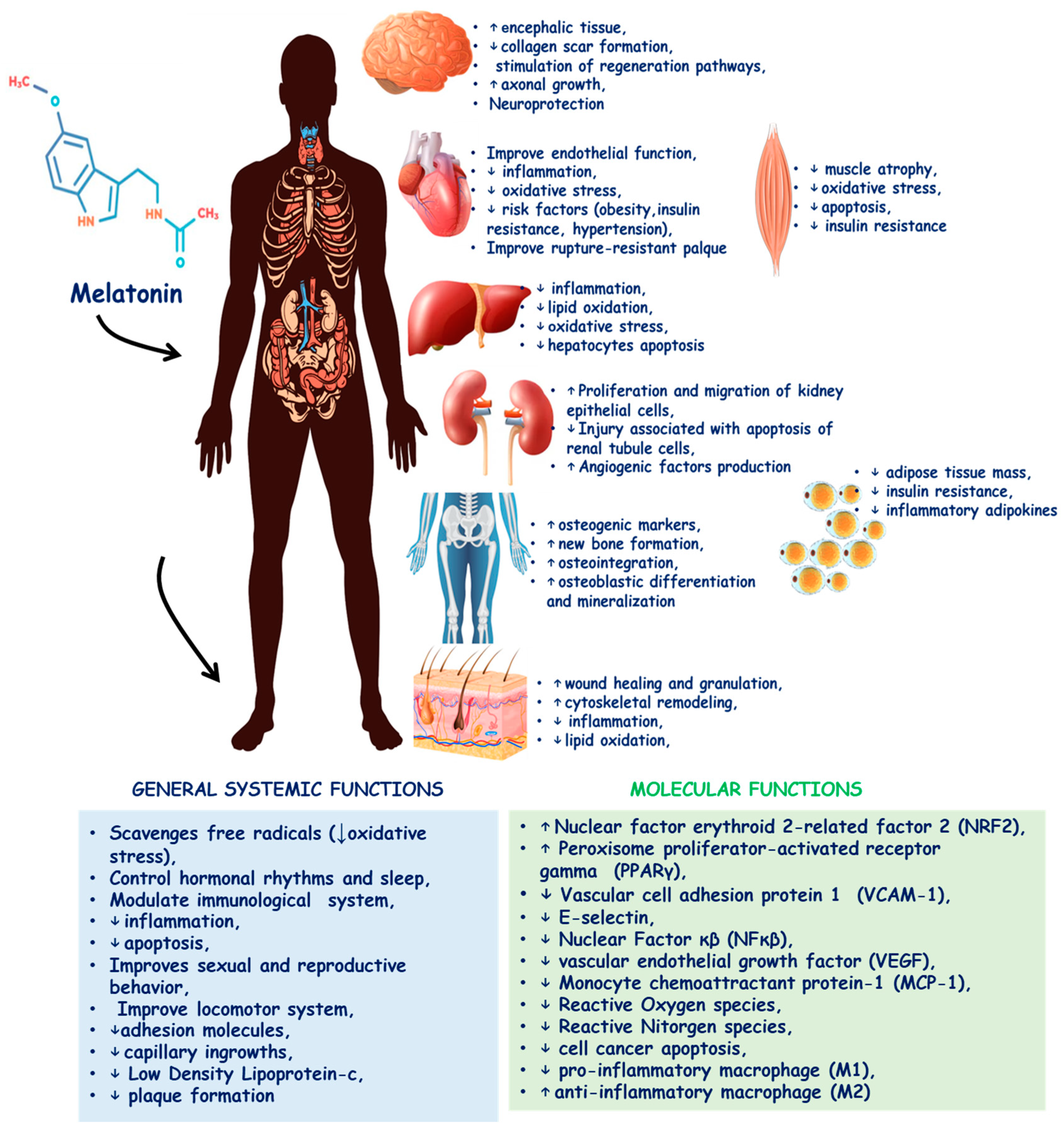
Figure 2.
Biosynthesis of melatonin in chloroplast (A) under heat conditions and in mitochondria (B) under cold temperature. ASMT: N-acetylserotonin methyltransferase; CO2: Carboxylic acid; COMT: Caffeic acid O-methyltransferase; Trp: Tryptophan.
Figure 2.
Biosynthesis of melatonin in chloroplast (A) under heat conditions and in mitochondria (B) under cold temperature. ASMT: N-acetylserotonin methyltransferase; CO2: Carboxylic acid; COMT: Caffeic acid O-methyltransferase; Trp: Tryptophan.
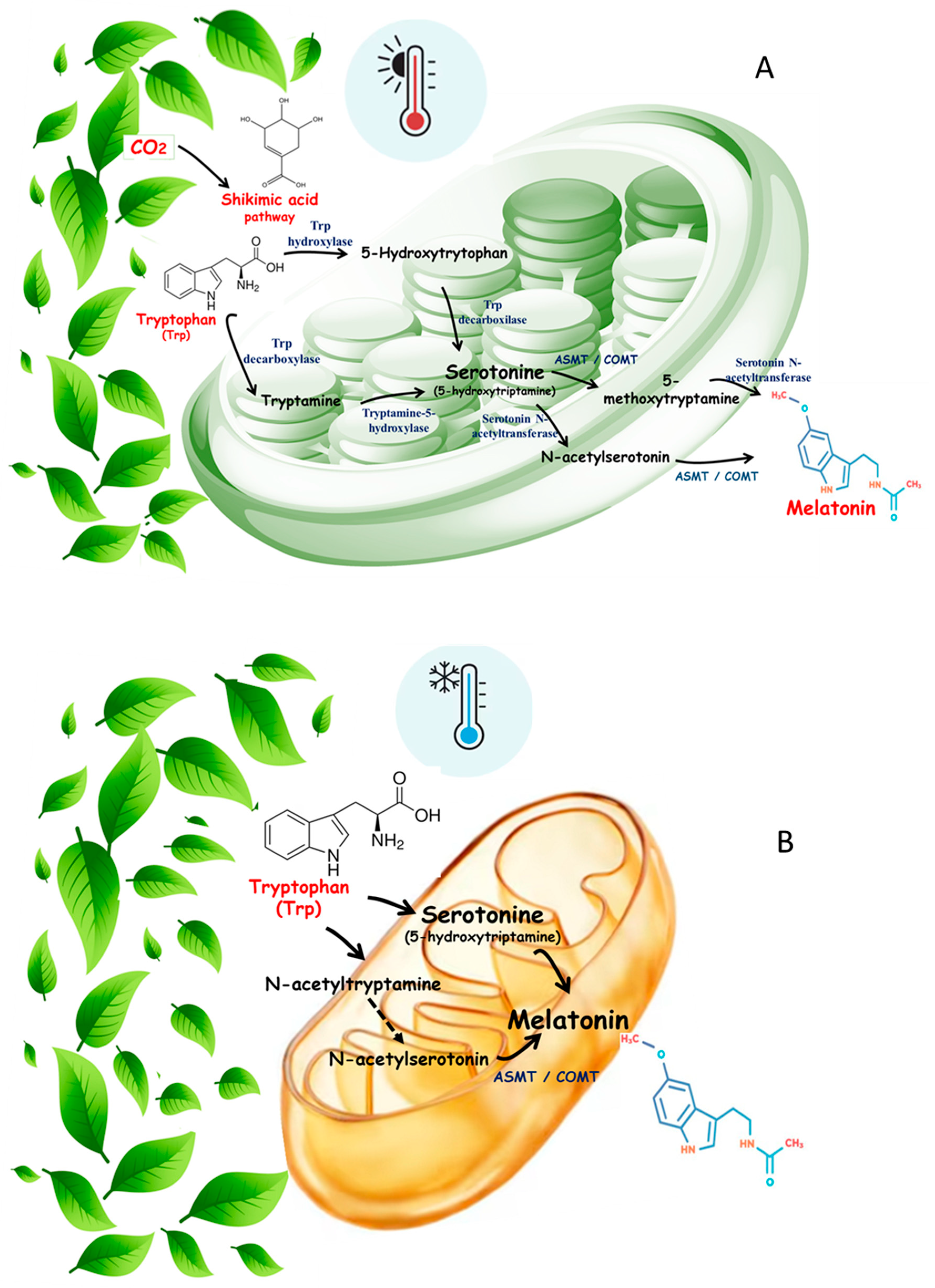
Figure 3.
Melatonin can positively affect several human conditions, such as cardiovascular and neurodegenerative diseases (NDD), Metabolic-Associated Fat Liver Disease (MAFLD); cancer, dysbiosis, polycystic ovary, rheumatoid arthritis, COVID-19, periodontal diseases, and sepsis.
Figure 3.
Melatonin can positively affect several human conditions, such as cardiovascular and neurodegenerative diseases (NDD), Metabolic-Associated Fat Liver Disease (MAFLD); cancer, dysbiosis, polycystic ovary, rheumatoid arthritis, COVID-19, periodontal diseases, and sepsis.
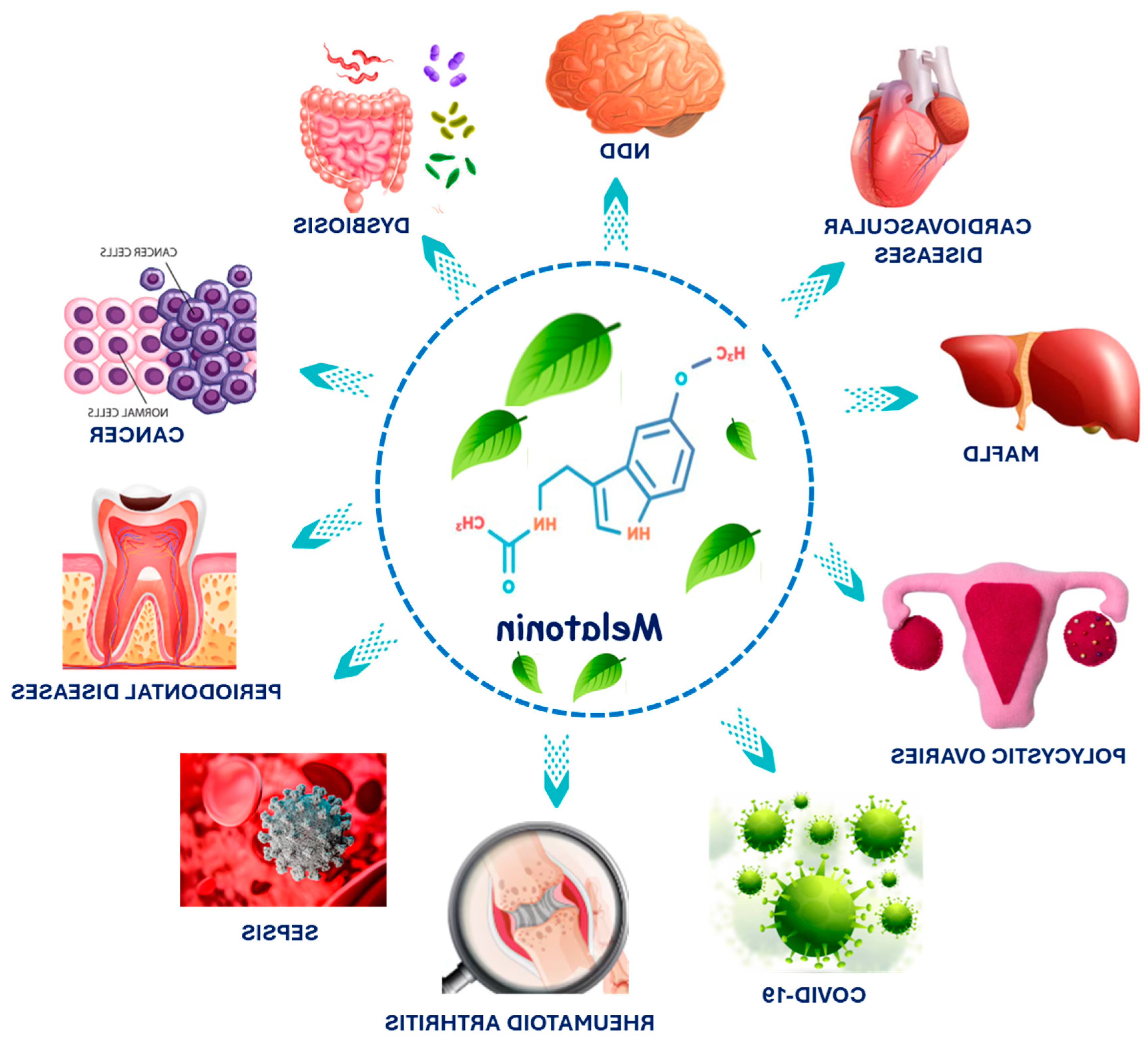
Table 1.
Amounts of melatonin in some edible plant sources.
| Plant Source | Part of the Plant | Melatonin (ng/g Or pg/g Of Dry Weight) | Reference | Edible Part |
|---|---|---|---|---|
| Almond | Seeds | 39 ng/g | [61] |  |
| Black pepper | Leaves | 1093 ng/g | [61,62] |  |
| Coffee arabica | Beans | 6800 ng/g | [61,63] |  |
| Curcuma longa | Roots | 120 ng/g | [63] |  |
| Grape | Skin | 0.9 ng.g−1 | [1] |  |
| Lentils | Seeds | 15–25 pg/g | [64] |  |
| Oats | Grain | 25–45 pg/g | [65] |  |
| Rice | Bran | 80–150 pg/g | [66] |  |
| Pistachio | Seeds | 233,000 ng/g | [63,67] |  |
| Soybeans | Seeds | 10–50 pg/g | [65] |  |
| Sunflower | Seeds | 29 | [68] |  |
| Walnuts | Nuts | 3,000–4,000 ng/g | [65] |  |
Table 2.
Effects of melatonin in cardiovascular diseases patients and in Metabolic Associated Fat Liver Disease (MAFLD).
Table 2.
Effects of melatonin in cardiovascular diseases patients and in Metabolic Associated Fat Liver Disease (MAFLD).
| References | Study | Population | Intervention | Duration | Outcomes |
|---|---|---|---|---|---|
| Cardiovascular Risk Factors | |||||
| [76] | Double-blind, randomized, multicenterplacebo-controlled study | 24 rotating night shift workers | 2 mg of sustained-release melatonin versus placebo | 12 weeks of treatment | The treatment improved sleep quality but did not significantly affect insulin resistance and blood pressure in rotating night-shift subjects |
| [77] | Randomized double-blind placebo-controlled crossover design | 22 participants (11 men/11 women, 26.5 ± 3.1 y | Subjects in a high-sodium diet (6,900 mg Na/d) received 10 mg/day of melatonin or placebo | 10 days | Melatonin did not change 24-h Mean arterial pressure but reduced nighttime peripheral and central blood pressure on the high-sodium diet compared to placebo |
| [78] | Double-blind, placebo-controlled single-center clinical trial | 65 patients with acute ischemic stroke and not eligible for reperfusion therapy were divided into groups: placebo (67.33 ± 12.81y, 22♂ and 11♀) and melatonin (64.22 ± 10.26y, 20♂ and 12♀) | Supplementation with 20mg of melatonin orally daily | 5 days | ↓Mean of NIHSS and mRS in the melatonin group There was no significant difference in the functional independence criteria |
| [79] | Placebo-controlled double-blinded randomized clinical trial (Finland) | 92 heart failure patients with reduced ejection fraction were randomized between the d groups: placebo (58.5y, 40♂ and 6♀) and melatonin (63.5y, 40♂ and 6♀) | 10 mg of melatonin (tablets) daily | 24 weeks | ↓NT-Pro BNP Improved quality of life by MLHFQ There was no difference in echocardiographic parameters |
| [80] | Randomized double-blinded placebo-controlled clinical trial | 92 heart failure patients with reduced ejection fraction were randomized between the groups: placebo (59.1±11.5y, 40♂ and 6♀) and melatonin (62.7±10.3y, 40♂ and 6♀) | 10mg/day of melatonin orally | 24 weeks | ↑FMD There was no difference in blood pressure, total antioxidant capacity, and MDA levels |
| [81] | Double-blind placebo-controlled study | 45 patients undergoing coronary artery bypass grafting were distributed into three groups: placebo (47-60y, 12♂ and 3♀), low-dose melatonin (45-65y, 12♂ and 3♀) and high-dose melatonin (45-64y, 11♂ and 4♀) | 10 or 20 mg melatonin capsules daily | From the fifth day before surgery | ↑Ejection fraction, ↓heart rate, ↓CTnI, ↓IL-1β, ↓iNOS and ↓caspase-3 in both melatonin-treated groups |
| [82] | Single-center, randomized, prospective, double-blind, placebo-controlled study (phase 2) (Spain) | 272 patients presenting within 6 h of onset of AMI symptoms were randomized between placebo and melatonin groups | 11.61 mg intravenous melatonin (approximately 166 μg/kg) | 30 min before percutaneous revascularization and remaining doses in the subsequent 120 min | ↓area of Infarction |
| MAFLD | |||||
| [75] | Randomized double-blind, placebo-controlled, clinical trial (Iran) | 45 patients with MAFLD were randomized into 2 groups: placebo (44 ± 9.62y, 17♂ and 7♀) and melatonin (37.71± 11.31y, 14♂e 7♀) | 6 mg melatonin daily | 12 weeks | ↓ Weight, ↓waist circumference, ↓blood pressure, ↓leptin levels, ↓alanine aminotransferase, and ↓liver fat in the melatonin group |
Table 3.
Effects of melatonin in Rheumatoid Arthritis patients.
| References | Study | Population | Intervention | Duration | Outcomes |
|---|---|---|---|---|---|
| [94] | Randomized double-blind, placebo-controlled trial | 64 participants diagnosed with rheumatoid arthritis were randomized between the melatonin (49,31 ± 10.82y, 24 ♀ and 8♂) and placebo (49.44 ± 12.71y, 27♀ and 5♂) groups | Oral supplementation with 6 mg/ day of melatonin (2 tablets containing 3mg of melatonin) 1 hour before bedtime | 12 weeks | ↓MDA and ↓LDL-c |
| [95] | Randomized double-blind, placebo-controlled trial | 75 participants diagnosed with rheumatoid arthritis were randomized between the melatonin (65.11±2.1y, 25♀ and 12♂) and placebo (60.0±1.8y, 28♀ and 10♂) groups | Oral supplementation with 10 mg/ day of melatonin (melatonina de liberação imediata, 8,5 mg/day, and | 6 months | No significant outcomes |
LDL-c: Low-density lipoprotein; MDA: malonaldehyde; ↓: reduction.
Table 6.
Effects of melatonin in sepsis.
| References | Study | Population | Intervention | Duration | Outcomes |
|---|---|---|---|---|---|
| [109] | Phase II double-blind, randomized, placebo-controlled trial | 29 subjects with severe sepsis (with an infectious systemic inflammatory syndrome, organ dysfunction, hypoperfusion, and/ or hypotension (needing surgery). | Patients received 60 mg of melatonin | 5 days | Melatonin decreased redox status compared to the placebo. Procalcitonin showed better effects in the melatonin subjects (neutrophil to lymphocyte ratio reduced significantly, improving the evolution of the condition. |
| [113] | Prospective, double-blind, randomized clinical trial | 40 patients with septic shock were randomized between groups: placebo (53.95 ± 13.17y, 14♂ and 6♀) and melatonin (55.75 ± 11.45y, 13♂ and 7♀) | 50 mg/day melatonin orally | 5 days | ↓ significant in required vasopressor dose ↓Number of deaths, ↓severity of organ dysfunctions, ↓mean SOFA score, ↓use of ventilatory support and ↓need for renal replacement therapy all without statistically significant difference |
| [114] | Cohort study | 10 patients with sepsis due to community-acquired pneumonia were divided into two cohorts: cohort 1- melatonin 50mg (54-70y, 5♂ and 0♀) melatonin and cohort 2- 20mg (45-83y, 4♂ and 1♀) | 20 or 50mg of solution containing 1mg/mL of melatonin orally in a single dose | 24 hours | ↑Maximum concentration of melatonin in the group treated with 50mg Maximum concentration of 6-OHMS similar between the two groups |
| [115] | Controlled, randomized, triple-blind clinical trial | 97 patients diagnosed with septic shock were randomized between groups: vitamin C (22–95y, 6♂ and 6♀), vitamin E (22-91y, 12♂ and 6♀), NAC (18-95y, 11♂ and 9♀), melatonin (46-95y, 10♂ and 10♀) and control (51-89y, 10♂e 11♀) | 50 mg of melatonin in capsules daily | 5 days | ↓SOFA score, ↓LPO, ↓PCT in melatonin-treated group |
6-OHM, 6-hidroximelatonina ; NAC, n-acetylcysteine; LPO, lipid peroxidation; PCT, procalcitonin; ↓: reduction.
Table 7.
Effects of melatonin in COVID-19.
| References | Study | Population | Intervention | Duration | Outcomes |
|---|---|---|---|---|---|
| [130] | Single-center, double-blind, randomized clinical trial | 44 hospitalized patients with confirmed mild-to-moderate COVID-19 divided into intervention (50,75±14,43y, 10♀ and 14♂) and control (52,95±14,07y, 12♀ and 8♂) groups | 3 mg of melatonina 3 times daily | 14 days | ↓ Time of hospital discharge, ↓respiratory symptoms, ↓fatigue |
| [131] | 3 arm, parallel, randomized, double-blind, placebo-controlled trial | 96 non-hospitalized patients that tested positive for COVID-19 divided into placebo (54y, 24♀ and 10♂), Vitamin C (50y, 19♀ and 13♂) and melatonin (52y, 21♀ and 11♂) groups | 10 mg of melatonin once a day at bedtime orally | 14 days | ↑ Symptoms improvement, ↑quality-of-life scores |
| [132] | Single-center, prospective, randomized clinical trial | 158 patients with severe COVID-19 divided into melatonin (56,8±7,5y, 24♀ and 58♂) and control (55,7±8,0y, 20♀ and 56♂) groups | 10 mg/day of melatonin, 20-30 minutes before bedtime orally | 14 days | ↓Thrombosis, ↓sepsis, ↓mortality rate |
| [133] | Open-label, randomized controlled clinical trial | 96 hospitalized patients with COVID-19 divided into melatonin (51,06±15,86y, 23♀ and 25♂) and control (54.77±15.34y, 30♀ and 18♂) groups | 3 mg/day of melatonin orally 1 hour before bedtime | 10 days | ↑Sleep quality, ↑oxygen blood saturation |
Table 8.
Effects of melatonin on cancer.
| References | Study | Population | Intervention | Duration | Outcomes |
|---|---|---|---|---|---|
| [146] | Non-randomized and open-label study | Patients >18 y with biopsy-proven of lung cancer | 5 mg/day orally melatonin 1 week after radiofrequency (RFA) ablation treatment. | 12 months | ↓ lung injury nodules and the probability of malignant transformation or enlargement of nodules in other areas. Enhancement of local RFA ablation-stimulated natural killer (NK) cells and re-programmed tumor metabolism |
| [147] | Non-randomized and open-label study | Volunteers of 25-35 y without a history of radiation exposure | 100g of melatonin at 9 am; blood samples collected 5–10 min before and at 1 and 2 h after melatonin administration. Sample was irradiated with a dose of 10 mGy |
- | Melatonin significantly reduced the induction of γH2AX foci after irradiation with X-ray when ingested 2 or 1 h before it. Melatonin before exposure to irradiation can benefit a patient set to undergo computed tomography |
| [148] | Double blinded, parallel, randomized controlled trial | Fifty patients with Oral squamous cell carcinoma (OSCC) | 25 patients received a melatonin (20mg) and NC (cisplatin, taxane, and 5-fluorouracil), and 25 received neoadjuvant chemotherapy alone | 3 cycles (each cycle with an interval of 3 weeks) | Melatonin decreased miR-210, CD44, and miR-210 compared to the placebo. These effects were followed by a decrease in residual tumor percentage (not significant) compared to placebo |
| [149] | Randomized, double-blind, placebo-controlled study | 151 patients with advanced NSCLC; 18-70y | 10 or 20 mg of melatonin or placebo (associated with traditional therapy) | 7 months | Subjects in the melatonin group: had better health-related quality of life and a smaller amount of DNA damage |
| [150] | Double-blind, placebo-controlled study | 97 postmenopausal women with a history of stages 0-III breast cancer | 3 mg of melatonin (n = 48) or placebo/day | 4 months | Postmenopausal women with a history of breast cancer did not show modifications in the levels of hormones (IGF-1, estradiol, or IGFBP-3) after having melatonin |
IGF-1: insulin-like growth factor 1; IGFBP-3: Estradiol, insulin-like growth factor-binding protein 3, NC: neoadjuvant chemotherapy; NSCLC: Non-small cell lung cancer; ↓: reduction.
Disclaimer/Publisher’s Note: The statements, opinions and data contained in all publications are solely those of the individual author(s) and contributor(s) and not of MDPI and/or the editor(s). MDPI and/or the editor(s) disclaim responsibility for any injury to people or property resulting from any ideas, methods, instructions or products referred to in the content. |
© 2025 by the authors. Licensee MDPI, Basel, Switzerland. This article is an open access article distributed under the terms and conditions of the Creative Commons Attribution (CC BY) license (http://creativecommons.org/licenses/by/4.0/).
Copyright: This open access article is published under a Creative Commons CC BY 4.0 license, which permit the free download, distribution, and reuse, provided that the author and preprint are cited in any reuse.


