1. Introduction
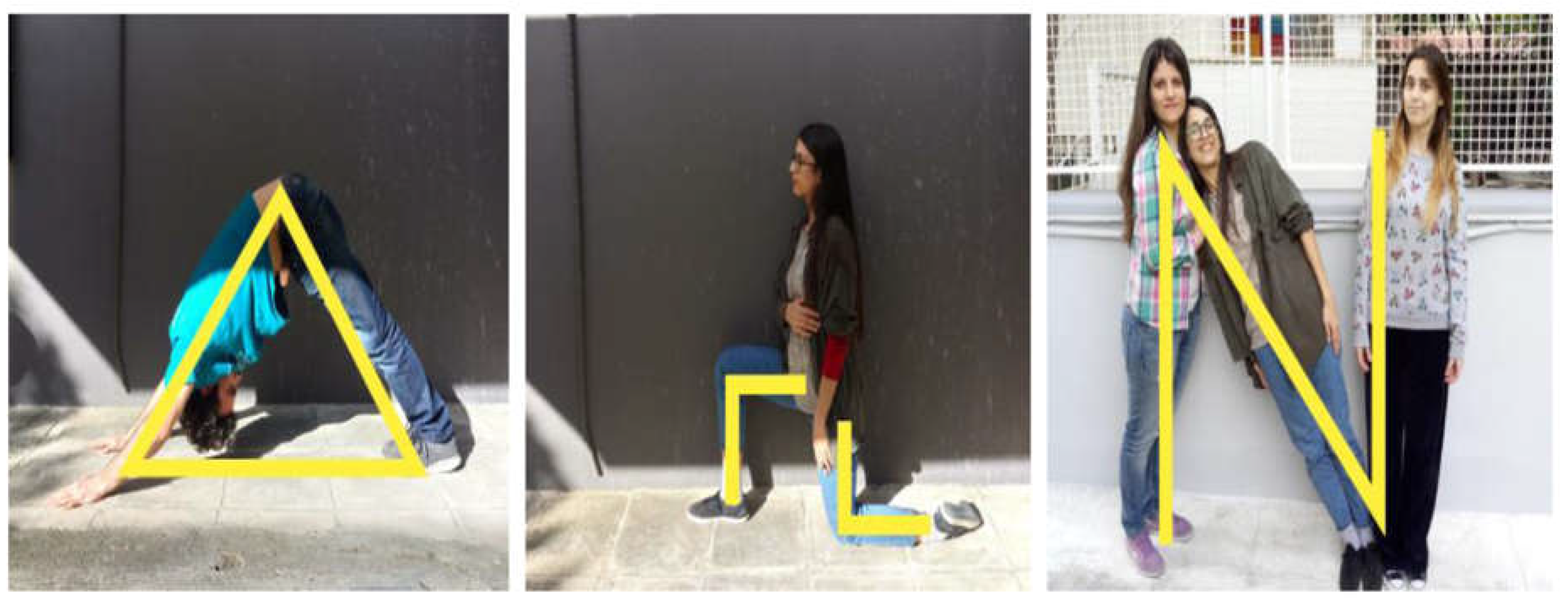
In everyday life, we can experience the three interconnected pieces of human knowledge, namely, the art of dancing, physical eduction(PE), and language of mathematics, which, up to a certain belief is widely spoken, almost everywhere.
The work of [
1] emphasizes that in dance, the focus has expanded beyond just the physical body to include the influence of technology, which has significantly advanced both dance education and performance. While digital tools are important and necessary in today's world, they should enhance rather than replace traditional teaching methods. Effective dance pedagogy involves understanding each student's unique needs and adapting teaching approaches accordingly, as there is no one-size-fits-all method for teaching dance.
Figure 1(c.f., [
1]) refers to the cover page of a book titled "Improvisation Technologies: A Tool for the Analytical Dance Eye," written by William Forsythe and published in 1999. This book explores the intersection of dance and technology, providing insights into how improvisation can be analyzed and understood through a technological lens. The copyright information indicates that the image is owned by the ZKM | Center for Art and Media in Karlsruhe, which is known for its focus on art and digital media.
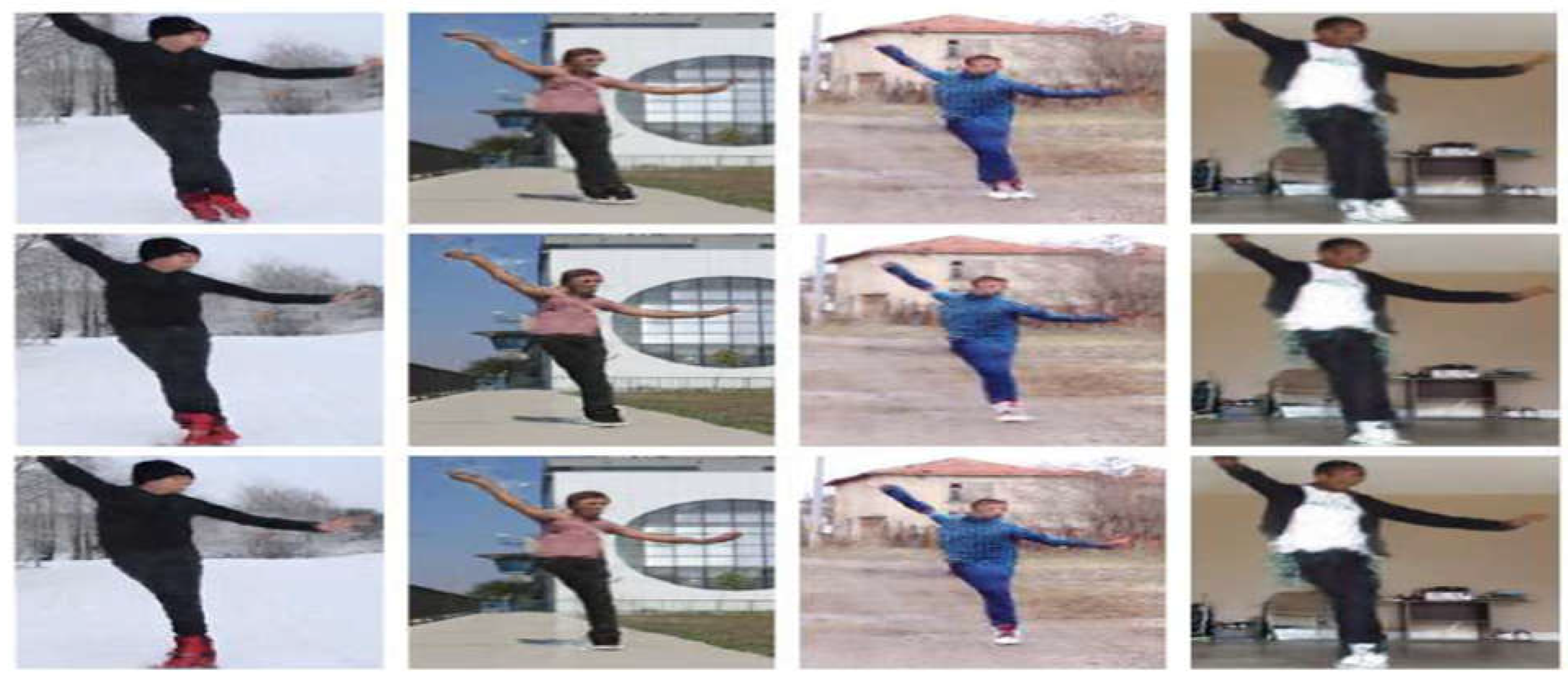
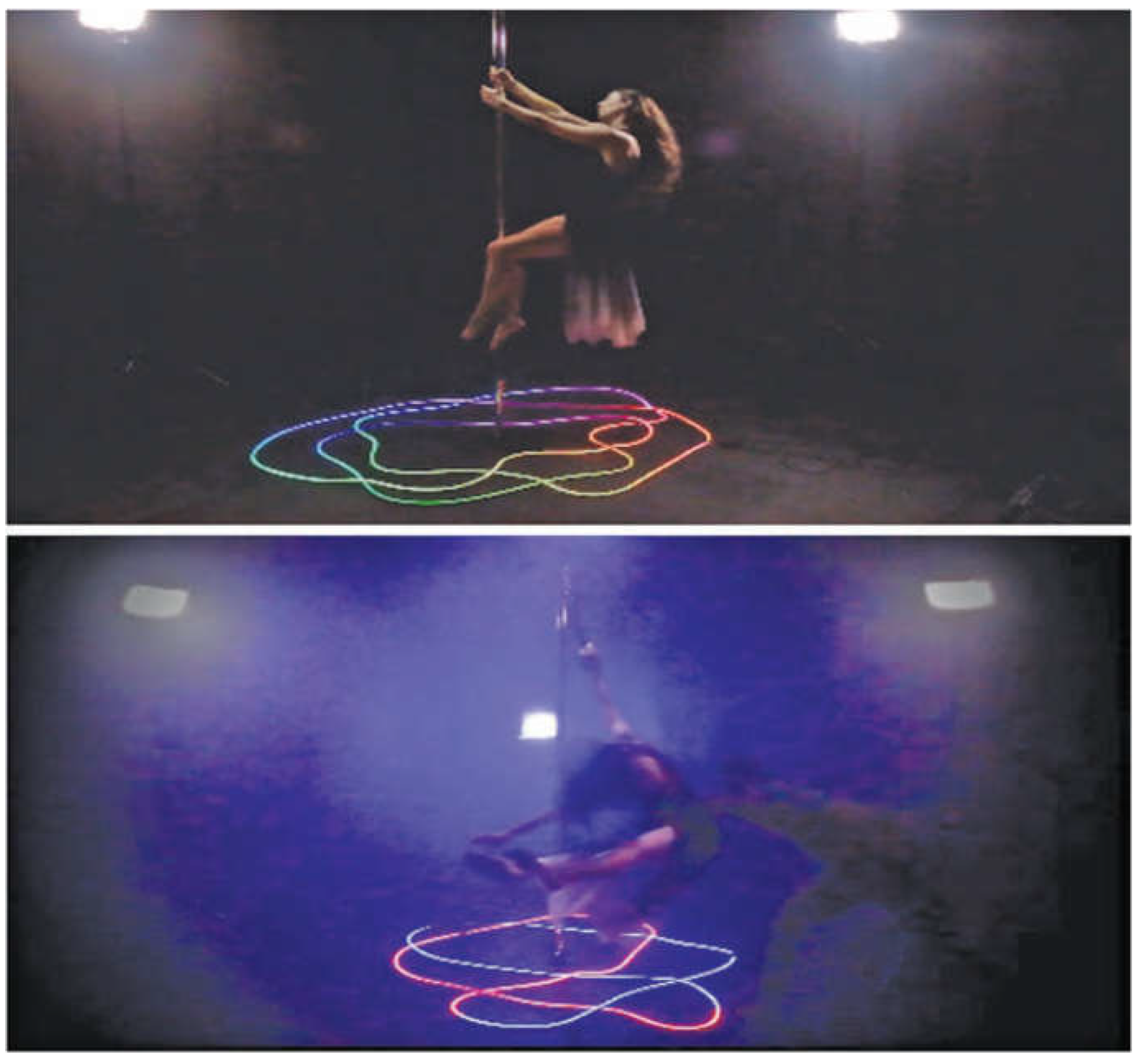
The phrase "Do as I Do" motion [
2] transfer refers to a technique that allows a graduate student to mimic the movements of a ballerina shown in a YouTube video. By using this method, the student's performance can be enhanced by directly transferring the ballerina's dance motions onto them, effectively teaching the student how to perform those specific movements. This approach highlights how digital technology can be used in dance education to improve learning and performance through visual examples.This can be vizualized by
Figure 2 (c.f., [
2]).
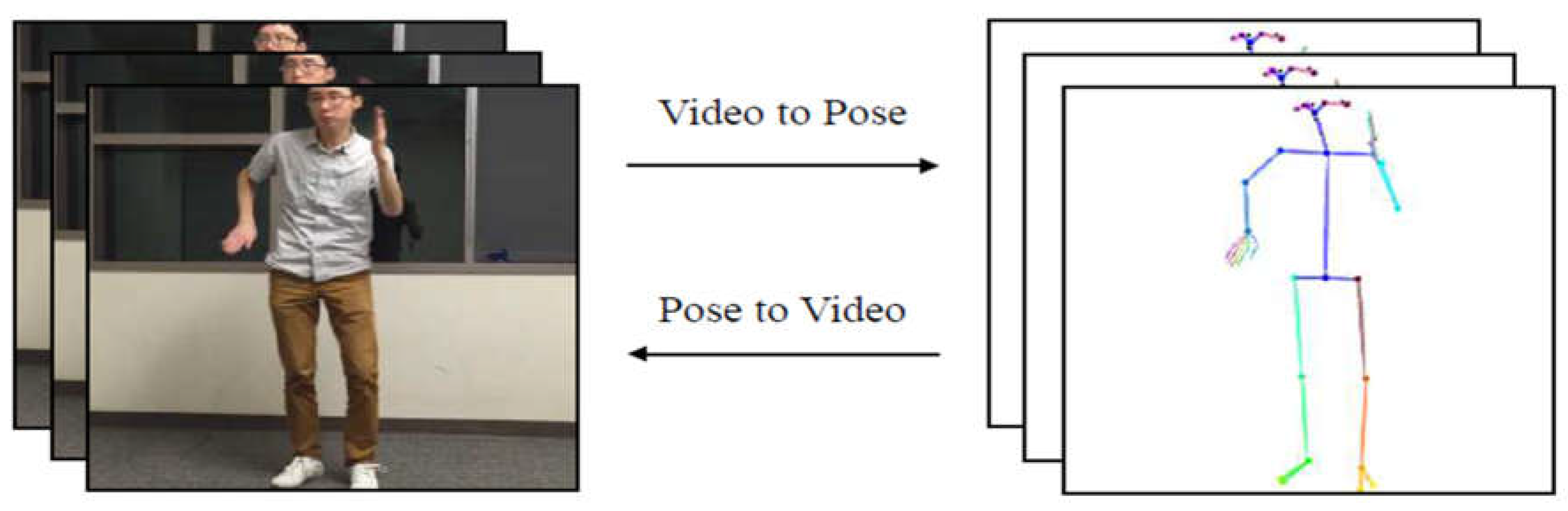
The method [
2] [
2]described involves two main steps to create videos from poses detected in video frames. First, it identifies the specific body positions or poses of a person in the video (Video to Pose). Then, it uses that information to generate new images or video frames of the same person based on those poses (Pose to Video). This approach allows for the creation of dynamic visual content by translating physical movements into digital representations, as illustrated by
Figure 3 (c.f., [
2]).
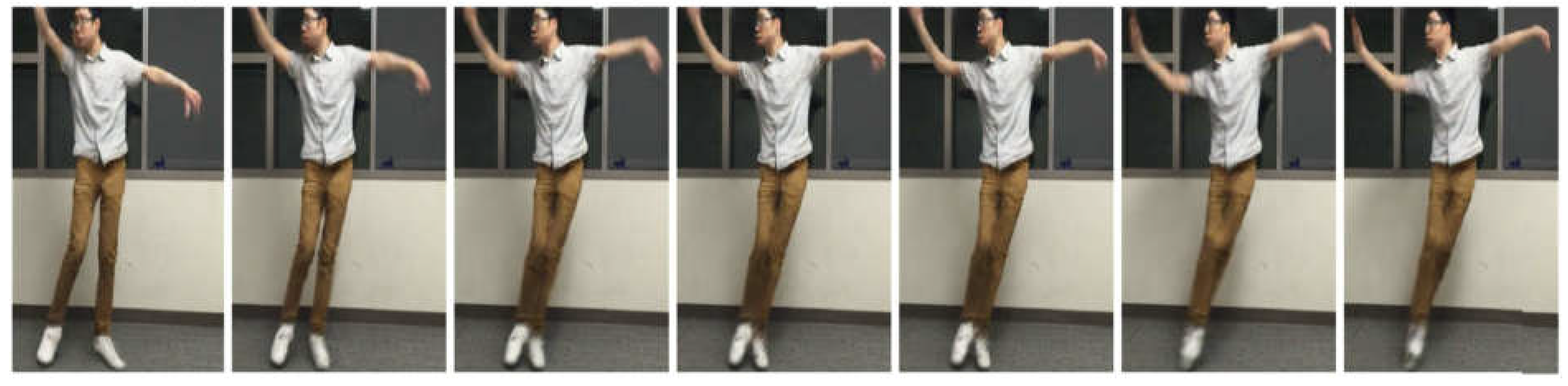
Multi-subject synchronized dancing refers to a performance technique where several dancers use the same initial movement or motion as a starting point. By applying this shared source motion, the dancers can create the illusion that they are moving in perfect harmony, executing synchronized dance moves together. This approach enhances the visual impact of the performance and emphasizes the connection between the dancers, making it a compelling aspect of choreographic practice in genres like Screendance, as showcased by
Figure 4 (c.f., [
2]).
The study[
3] aimed to explore the factors that influence the availability of arts education courses, like visual art, music, dance, and theater, in U.S. high schools. By analyzing data from 940 high schools, the researchers found that larger schools were more likely to offer arts courses, with traditional public schools having the highest availability, while public charter schools had the least. Additionally, schools with a higher percentage of students eligible for free or reduced-price lunch tended to offer fewer arts courses, and factors like location or region did not significantly affect arts availability.
The authors [
4] have emphsaized the significance of dance as a vital part of Uzbekistan's cultural and spiritual heritage, preserved by ancestors for future generations. This highlights the government's commitment to promoting and developing national dance[
4], especially after the country's independence, by creating schools and fostering respect for this art form. The importance of dance is seen not only in its artistic expression but also in its role in educating the younger generation about national values and traditions.
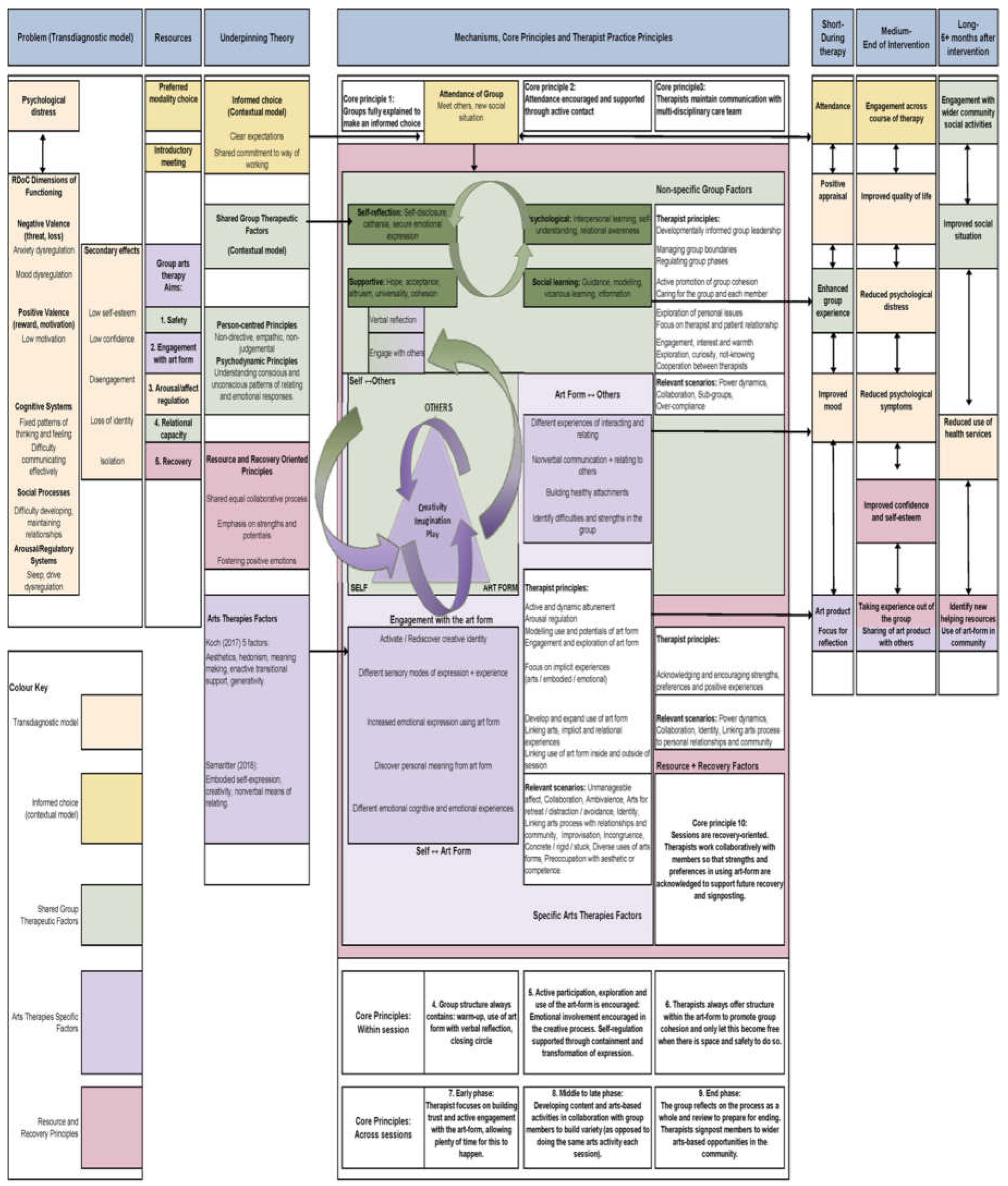
In the model presented, as shown by
Figure 5 (c.f., [
5]) , the art form used in therapy is important because it attracts patients based on their preferences and encourages them to actively participate and engage emotionally. This creative involvement helps foster interactions among group members[
5], which can enhance the therapeutic experience. The model also shows that while these arts-based processes are valuable, they work alongside other therapeutic methods, like talking therapies, and benefit from the diverse backgrounds and needs of the group members.
Creative arts therapists[
6], including art, dance/movement, and music therapists, work with military families dealing with traumatic brain injury (TBI) and posttraumatic stress disorder (PTSD) to support their overall well-being. They use specific methods to address the emotional and psychological needs of these families, helping them to bond, identify challenges, and recognize their strengths. The therapy sessions lead to improved family interactions and resilience, making creative arts therapies an important part of the care for military families facing these challenges.
Dance/movement therapy (DMT) uses the connection between the mind and body to help people heal[
6], recognizing that movement can express feelings and improve communication. Originating from programs for veterans after World War II, DMT today incorporates ideas from polyvagal theory to address trauma by focusing on how the nervous system responds to movement. This therapy helps families bond and understand each other better by allowing them to share experiences and emotions through dance, which can be especially beneficial when verbal communication is challenging due to trauma.
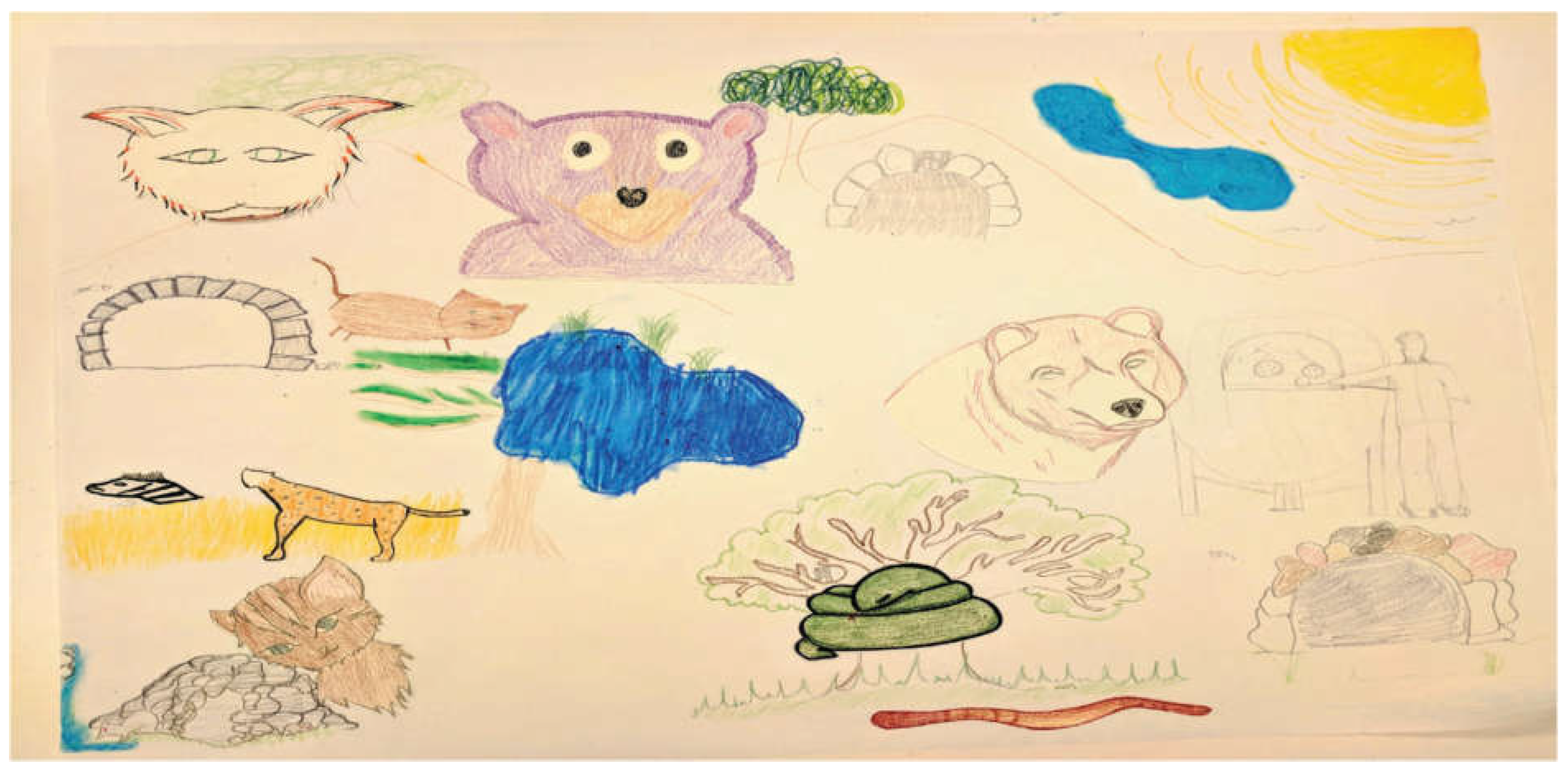
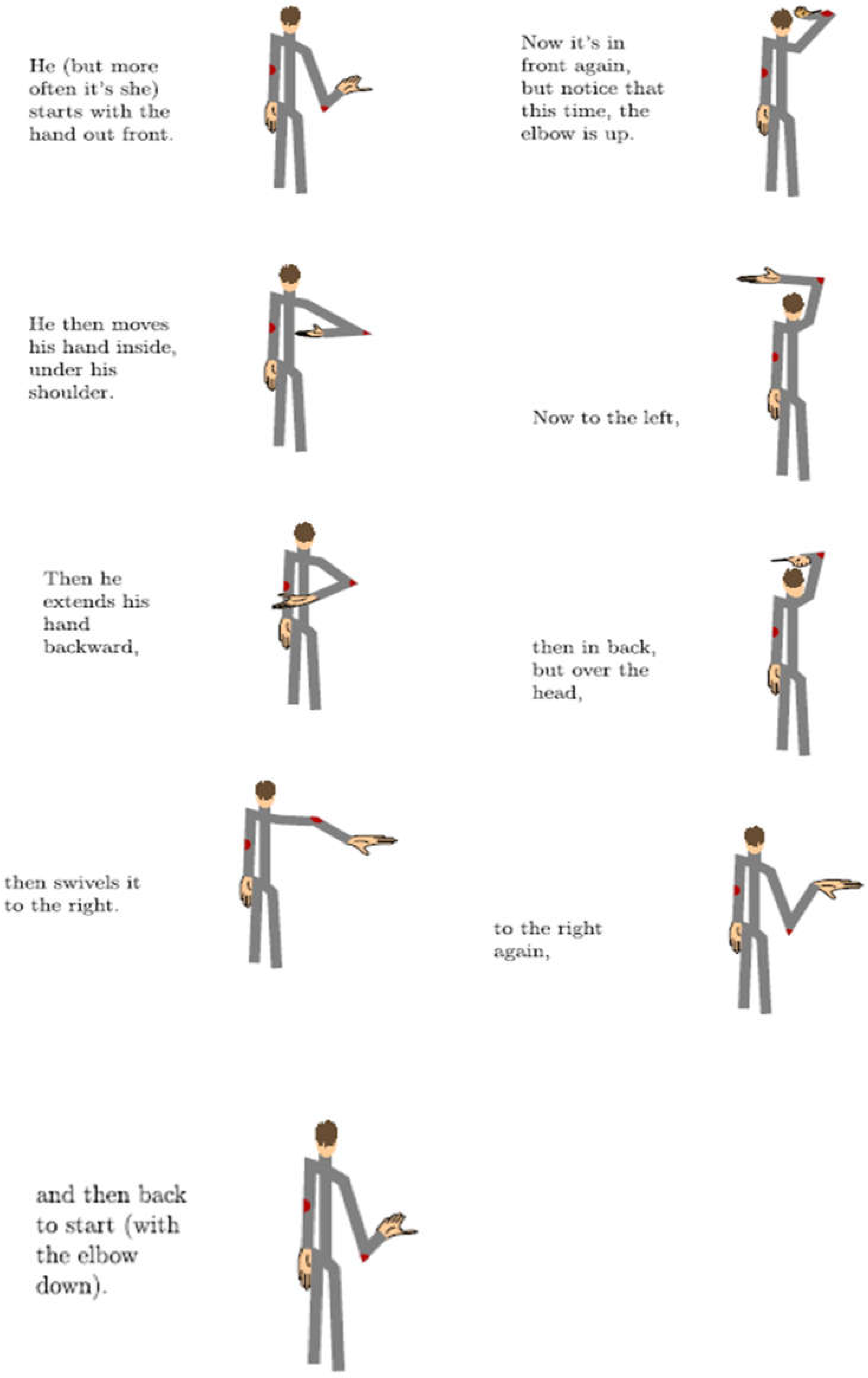
In the context of their therapy[
6], Susan and Linda engaged in an exercise where they observed and copied each other's physical movements and emotional expressions, a technique known as mirroring(See
Figure 6 (c.f.,[
6])). This activity allowed them to explore their dynamic as a couple, where they typically fell into a pattern of Susan leading and Linda following. By practicing leading and following together, they aimed to foster empathy and better understand their roles in the relationship, which could help them address their conflicts.
The undertaken research in [
7] has examined how dance can help reduce human suffering and reconnect us with our humanity by linking it to the ideas of French philosopher Maurice Merleau-Ponty. Merleau-Ponty emphasizes that our experiences and interactions are shaped by our physical bodies[
7], which allows us to see dance as a healing art that helps us connect with ourselves and others. By using his philosophical ideas[
7], it has been argued that dance can be a powerful and positive experience that enhances well-being and self-care.
The process of dancing with someone involves a unique form of communication that happens without words[
7], relying instead on physical closeness and body movements. Dancers develop a deep awareness of each other's bodies and intentions[
7], allowing them to respond instinctively to one another, which creates a strong emotional and mental connection. This connection enhances their understanding of each other as individuals[
7], fostering a sense of shared experience and mutual openness during the dance.
Intercorporeality and the transfer of corporeal schema in dance refer to how dancers physically connect and understand each other through movement[
7], leading to emotional and mental closeness. This connection allows dancers to sense each other's feelings and states of being without needing to communicate verbally[
7], creating a deep sense of empathy and shared experience. As dancers engage with one another, they can let down their emotional barriers, fostering a genuine connection that highlights their shared humanity.
There is growing evidence that participating in the arts[
8], especially performing arts like dance, can have significant health benefits for people of all ages. A review of various studies found that even short sessions of performing arts[
8], such as drumming or dance, can promote health across multiple areas. However[
8], the exact health effects and the best ways to engage in these activities are still not fully understood, indicating a need for more research in this field.
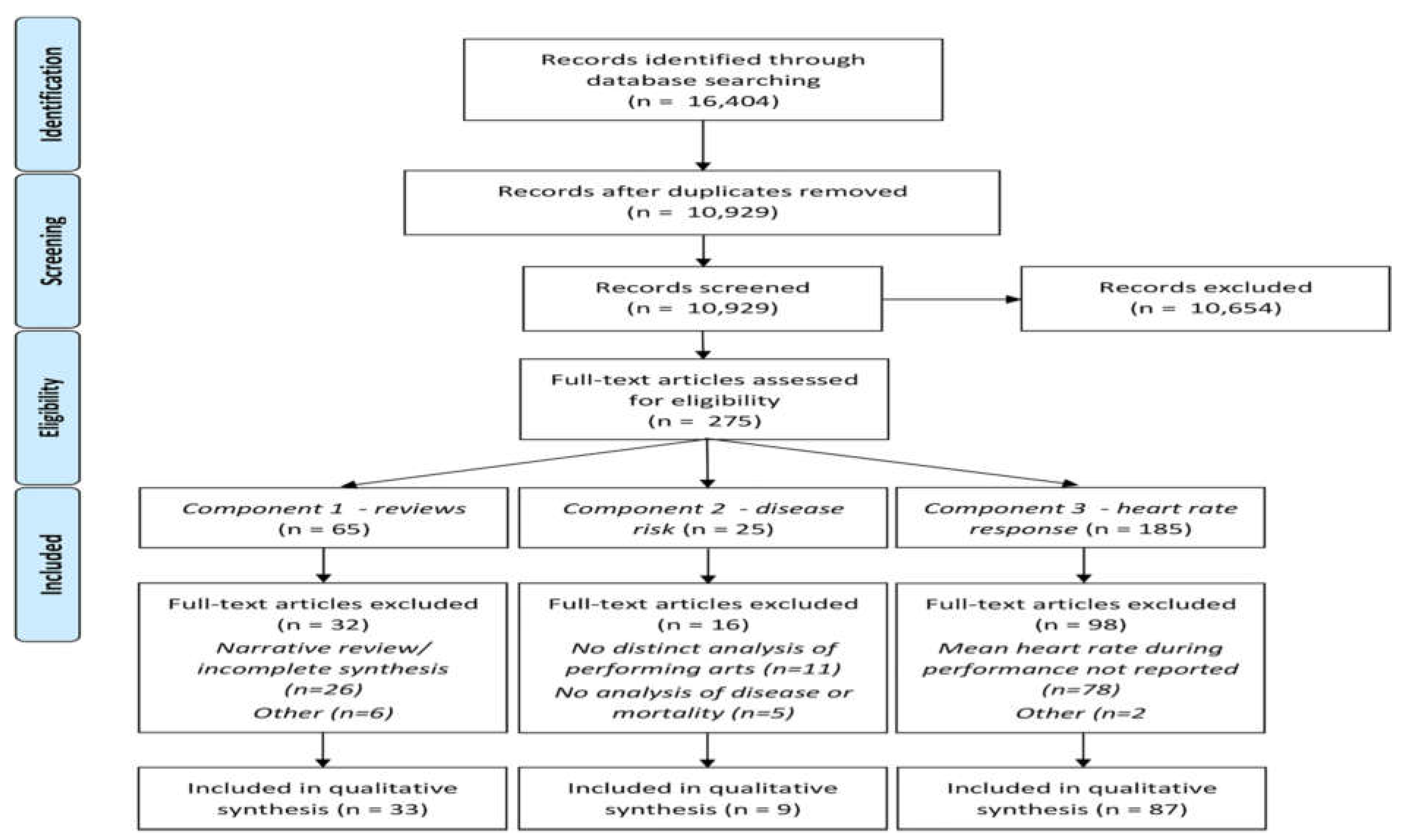
A PRISMA diagram, as portrayed by
Figure 7 (c.f., [
8]) is a visual tool used to summarize the results of a systematic review, showing how many studies were included or excluded in the research process. In this context[
8], the diagram details the findings of an umbrella review, which looks at multiple studies on the health impacts of participating in music and dance. The specific reasons for excluding certain reviews or studies are provided in an appendix, allowing readers to understand the selection criteria used in the research.
The authors of [
9] have thouroughly investigated how traditional physical education (PE) programs, which focus mainly on various sports, can limit students' engagement and learning opportunities. The study [
9] aimed to explore how a new educational approach to PE can enhance student participation by considering the school as a learning community and examining different ways students learn about movement. By analyzing data from observations and student focus groups, the researchers [
9] found that this broader approach encourages more students to engage in PE, depending on their roles within the school community.
In the educational physical education (PE) program[
9], the goal was to connect PE to the overall school environment, making it more relevant for students. Some students[
9], especially those who were academically inclined, found this connection meaningful and felt they could contribute more to PE activities. However[
9], there were also students who resisted this approach, viewing PE as separate from school and preferring the informal nature of leisure sports, which created challenges for the teacher in bridging these different perspectives and fostering engagement.
The aim of [
10] was to examine the lessons learned in Physical Education (PE) during the COVID-19 pandemic across three countries: Argentina, Spain, and Sweden. Through semi-structured interviews, the researchers found differences in class content, resources used, teachers' emotions, and physical contact, all influenced by local regulations and available resources. The pandemic disrupted traditional PE practices[
10], challenging both teachers' and students' habits, while teachers adapted their teaching methods to address new challenges and uncertainties brought about by the situation.
The participating teachers from Argentina[
10], Spain, and Sweden emphasized the importance of physical contact in physical education (PE) for building relationships and providing emotional support to students. It is noted that during the COVID-19 pandemic[
10], the shift to online classes led to a loss of this essential interaction, making teaching feel "dehumanized" and "disembodied." As schools returned to face-to-face learning[
10], teachers expressed relief and comfort in re-establishing physical connections with their students, which they believe enhances the learning experience and allows them to better assess student progress.
The authors [
10] emphasized that the teaching of Physical Education (PE) varies greatly depending on the resources and guidelines available in different countries, such as Argentina, Sweden, and Spain. Additionally[
10], it is argued that there is no single "best practice" for teaching PE that can be applied universally, as each context has unique challenges and needs.
An exploratory research was undertaken [
11] to investigate how decision-making and learning are connected, particularly in the context of Physical Education (PE). This was aimed[
11] to create a methodology that combines theoretical ideas from John Dewey's educational theories with practical research methods, allowing researchers to better understand how individuals make decisions while learning in PE. By doing this[
11], the authors believed they can uncover important aspects of learning that are often overlooked in current research methods.
This would evidence[
11] the importance of understanding how students make decisions during their learning in physical education (PE), but it also acknowledges that it doesn't focus enough on the teacher's role in this process. The authors [
11] suggested creating a framework that explores how teachers can support different types of student decision-making, which could include guiding students in reflecting on their choices to enhance their learning. They [
11] also noted that by concentrating on student decision-making, other important aspects of student learning may be overlooked.
On another different note, the critical review [
12] highlighted that remote teaching and learning in Physical Education (PE) and Physical Education Teacher Education (PETE) during the COVID-19 pandemic was often viewed negatively, with many describing it as disengaging and lacking motivation. Surprisingly[
12], there was little pushback from educators against these negative views, leading to a reliance on traditional teaching methods rather than exploring innovative approaches in the online environment. The authors [
12] argued that future online PE should focus on creating more engaging and inclusive learning experiences by breaking down traditional hierarchies and fostering a sense of care and connection among teachers and students.
The authors [
12] suggested principles for improving online learning environments in Physical Education (PE) and Physical Education Teacher Education (PETE) based on bell hooks' engaged pedagogy. These principles [
12]emphasize the importance of creating democratic and inclusive spaces that recognize diverse truths and cultural experiences, especially those of marginalized groups. Additionally[
12], they advocate for challenging discriminatory norms and promoting cultural pluralism by sharing personal stories and discussing our shared social realities, which can enhance the learning experience for all students.
The purpose of [
13] to ensure that physical education for students with disabilities is taught by qualified instructors. To achieve this[
13], the project aims to develop national standards for adapted physical education and create a certification exam to assess knowledge of these standards. The first two years focus on establishing these standards[
13], which will then be used to create the certification exam in the following years, with ongoing input and evaluation from various stakeholders to refine the process.
In recent years[
14], the criteria used to define an "able" physical education (PE) student have been questioned, as traditional assessments often focus on skills in sports, fitness, and competitiveness. Despite previous calls for more research on this topic[
14], there has been little new empirical work, and most existing studies rely on interviews rather than direct observations of teaching practices. The study [
14] aimed to explore how students are categorized as "able" or "less able" in PE classes, using discourse theory to analyze observations from 92 classes in Oslo, revealing that specific physical test scores and skills in traditional games are key factors in these assessments, while also highlighting gender biases in evaluations.
The concept of "ability" in Norwegian physical education (PE) has changed over time[
14], shifting from a focus on military training to promoting health and fitness based on scientific principles. After World War II, sports, especially English ball games like football[
14], became more central, emphasizing the skills needed for these activities to define an "able" student. Additionally[
14], influences from gymnastics and dance led to a more individualized approach in PE, particularly for girls, highlighting creativity, cooperation, and expressive movement alongside traditional sports skills.
The Norwegian educational system for physical education (PE) is decentralized[
14], meaning that individual PE teachers have significant control over what sports and activities are taught. The curriculum focuses on students achieving specific competence aims related to practicing movements and understanding physical activity[
14], rather than how well they perform specific skills. Additionally[
14], unlike many other countries, Norwegian policy emphasizes that students' effort should influence their grades[
14], rewarding those who put in significant effort even if their skill level is low.
The research in [
14] investigated how students are categorized as 'able' or 'less able' in physical education (PE) based on their sports skills and physical fitness. It was found that [
14] that traditional ideas of masculinity and sports performance heavily influence these classifications, often favoring boys and those with prior sports experience. The author [
14] argued that this approach is unfair and does not promote equitable learning opportunities for all students, suggesting a need to rethink how 'ability' is defined in PE to support social equity.
The study [
15] have deeply identified that while students often focus on sports and techniques, there is an opportunity to explore other areas, like "Movement Composition," which encourages creativity and collaboration. The study [
15] aimed to investigate how this creative content is implemented in school PE, highlighting the importance of diverse learning experiences in teacher education.
On another strong note[
15], Physical Education Teacher Education (PETE) students often prioritizes practical skills, like teaching sports, over theoretical knowledge in their training. This focus is influenced by what is assessed in their courses, leading them to value physical skills more than critical perspectives on physical education. The study [
15] suggested that while this emphasis can limit the scope of teaching, it also presents an opportunity to incorporate creative and collaborative content areas, such as Movement Composition, into school physical education, promoting a more well-rounded approach to teaching.
Over the past twenty years[
16], using models in physical education (PE) has been recognized as a promising approach, and collaboration between teachers and researchers is crucial for successfully implementing these models. However[
16], the actual practice of collaboration has not been thoroughly studied, and it varies widely. The undertaken research in [
16] has emphasized the importance of understanding different collaborative practices and their effects on how teachers implement models, showcasing three examples that illustrate the evolution from a "researcher knows best" mindset to one where teachers have more autonomy and can shape their own learning experiences.
Researchers can challenge teachers' thinking and help them improve their practices by suggesting overall objectives. Additionally[
16], there is a strong supporting evidence that even after a formal collaboration ends, teachers can continue to apply and develop the ideas they learned, indicating that the collaboration can lead to ongoing improvements in their teaching methods. Therefore[
16], it has been evidenced that effective collaboration requires flexibility and planning, allowing teachers to become active participants in their own practices rather than just following researchers' instructions.
Peer assessment is a process where students evaluate each other's work[
17], and research shows that it enhances learning for both the person giving feedback (the observer) and the one receiving it (the observed). In the context of physical education teacher education (PETE), this study explores how Swedish preservice teachers perceive peer assessment, highlighting four key aspects[
17]: building social relationships, clarifying learning objectives, providing accurate feedback, and managing sensitive or gender-related comments. The authors also discuss how social and physical factors influence the effectiveness of peer assessment in educational settings.
Building social relationships is crucial in peer assessment during Physical Education Teacher Education (PETE) placements, as it fosters trust between the teacher and students[
17], as well as among the students themselves. For peer assessment to be effective[
17], students need to feel comfortable with each other, which can help alleviate pressure during evaluations. Additionally[
17], establishing these relationships early on prepares students for future collaborative environments, emphasizing the importance of social dynamics in educational settings.
The meaningful physical education approach [
18] provides a framework for teaching physical education but does not specifically guide teacher educators on how to teach future teachers (pre-service teachers) to use this approach. To fill this gap[
18], the Learning about Meaningful Physical Education (LAMPE) method was developed to help teacher educators effectively teach PSTs about meaningful physical education. The research [
18] primary focus was on understanding how to implement one of LAMPE's principles, which emphasizes using features of meaningful participation in teaching, and involves a self-study where the researcher collaborates with PSTs to create a shared understanding of these concepts.
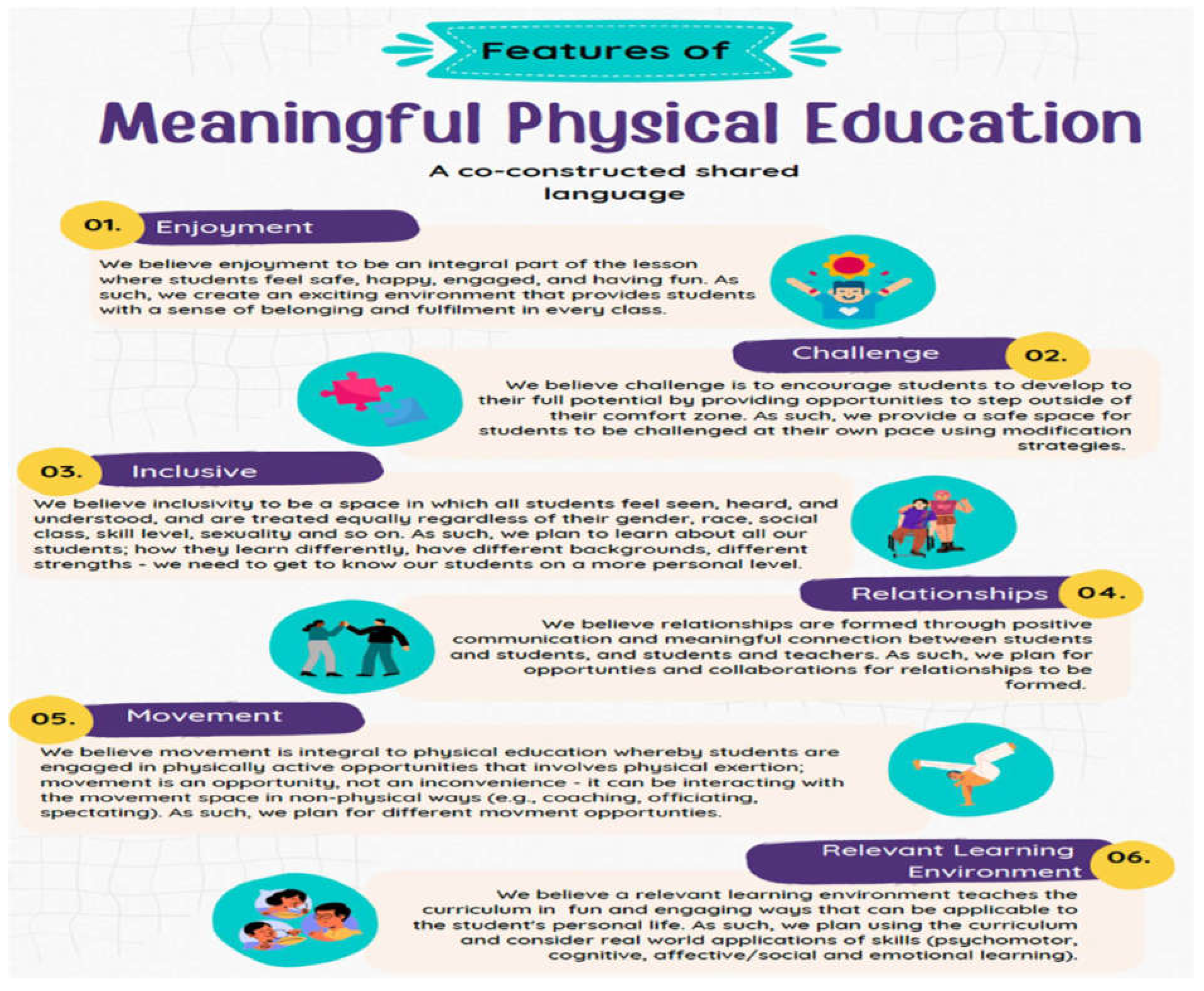
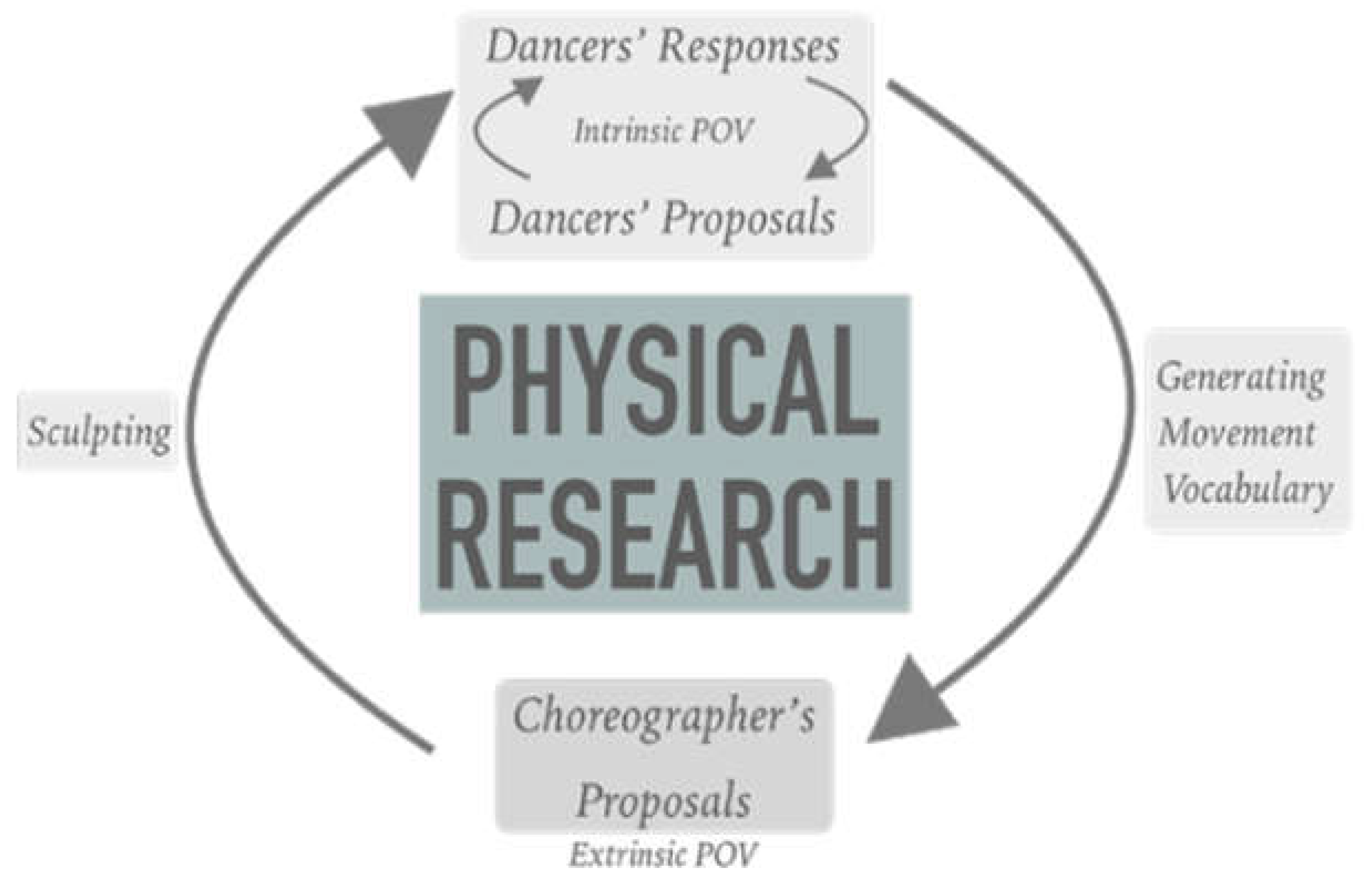
The phrase “Features of meaningful physical education
– a co-constructed shared language” refers to the idea that effective
physical education involves collaboration among teachers(See
Figure 8 (c.f., [
18]), students, and the community to create a common understanding of what is important in physical education. This shared language[
18] helps everyone involved to communicate their goals, values, and expectations, making the learning experience more relevant and engaging. By co-constructing this language[
18], participants can better appreciate the significance of physical education in promoting health, teamwork, and personal development.
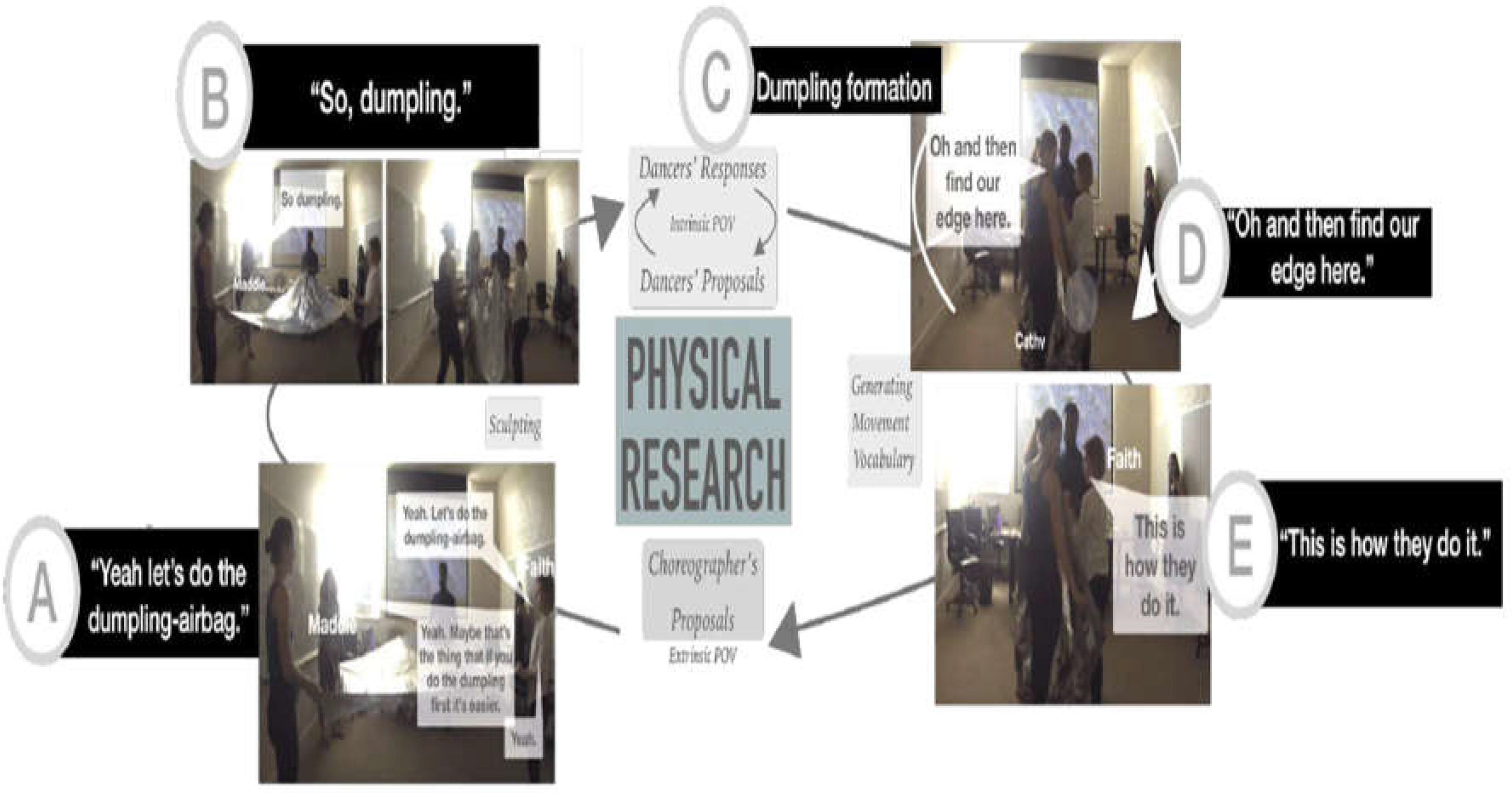
In discussion of the process of developing a shared language for meaningful physical education (MPE) among prospective teachers (PSTs) through a cyclical approach of identification[
18], exploration, experience, and reflection, this method allows PSTs to define and refine what "meaningful" means to them, while also balancing their perspectives as both learners and future teachers. The challenges include defining "meaningful" and navigating the established features of MPE, emphasizing the importance of dialogue and co-construction in understanding and teaching physical education.
The S-STEP [
18] research focuses on a teacher educator's experience in teaching meaningful physical education within Physical Education Teacher Education (PETE) by applying the fourth principle of LAMPE. The educators and their students worked together to create a common understanding or "shared language" around what meaningful physical education means[
18], and they shared their findings from this collaborative process.
The concept of "weak education" refers to a teaching approach that embraces uncertainty and risk[
18,
19,
20], allowing for a more flexible and creative learning environment. In contrast to "strong education," which follows a structured and predictable path[
18,
19,
20], weak education encourages teacher-student collaboration and exploration, giving students more control over their learning process. Dylan's experience[
18,
19,
20] illustrates how this approach can lead to deeper understanding and engagement, even though it may involve challenges and moments of vulnerability for the teacher.
The LAMPE principles are interconnected ideas that guide teacher education[
18], and in this research, Dylan [
18] focused on principle four while also using all five principles in his teaching approach. By emphasizing principle four, he was able to incorporate aspects of the other principles, such as promoting democratic practices and encouraging continuous reflection among prospective teachers. The authors[
18] suggested that these principles should be refined to better support teacher educators in teaching meaningful physical education, and they propose adding a "principle zero" to help educators understand what meaningfulness means before applying the other principles.
The reaserach findings [
18] suggested that educators should embrace the idea of "weak education," which involves taking risks in teaching methods while having support from a "critical friend," someone who provides constructive feedback. Although this wasn't the main focus of the research, the authors found that having supportive communities helps teachers like Dylan take these risks effectively. Overall, the research promotes the idea of incorporating "weak practice" into teacher education and proposes adding a new foundational principle to the existing LAMPE principles to enhance teaching practices.
The authors [
21] have explored how well mathematics teachers can relate mathematical concepts to real-life situations and how this affects students' interest in the subject. By surveying over 1,200 students from ten high schools [
21], the researchers used statistical methods to analyze the data and found that teachers' ability to make these connections significantly influences students' interest, accounting for 57.4% of the variation in their engagement with mathematics. The findings [
21] suggested that when teachers spend quality time on practical exercises and link mathematics to other subjects, students are more likely to develop a greater interest in mathematics.
The teaching of mathematics [
21] becomes more engaging for students when teachers connect mathematical concepts to real-life problems and experiences. This approach [
21] helps students see the relevance of math in their daily lives and enhances their understanding of how different mathematical ideas relate to each other. Research [
21] shows that when teachers effectively make these connections, it can improve students' interest and performance in mathematics, which is crucial for their academic success.
The study [
21] used statistical methods like exploratory factor analysis and multiple linear regression to evaluate how well mathematics teachers connect math concepts to real-life problems and other subjects. It found that [
21] a significant majority of participants believed that teachers' ability to make these connections positively influences students' interest in mathematics. The results [
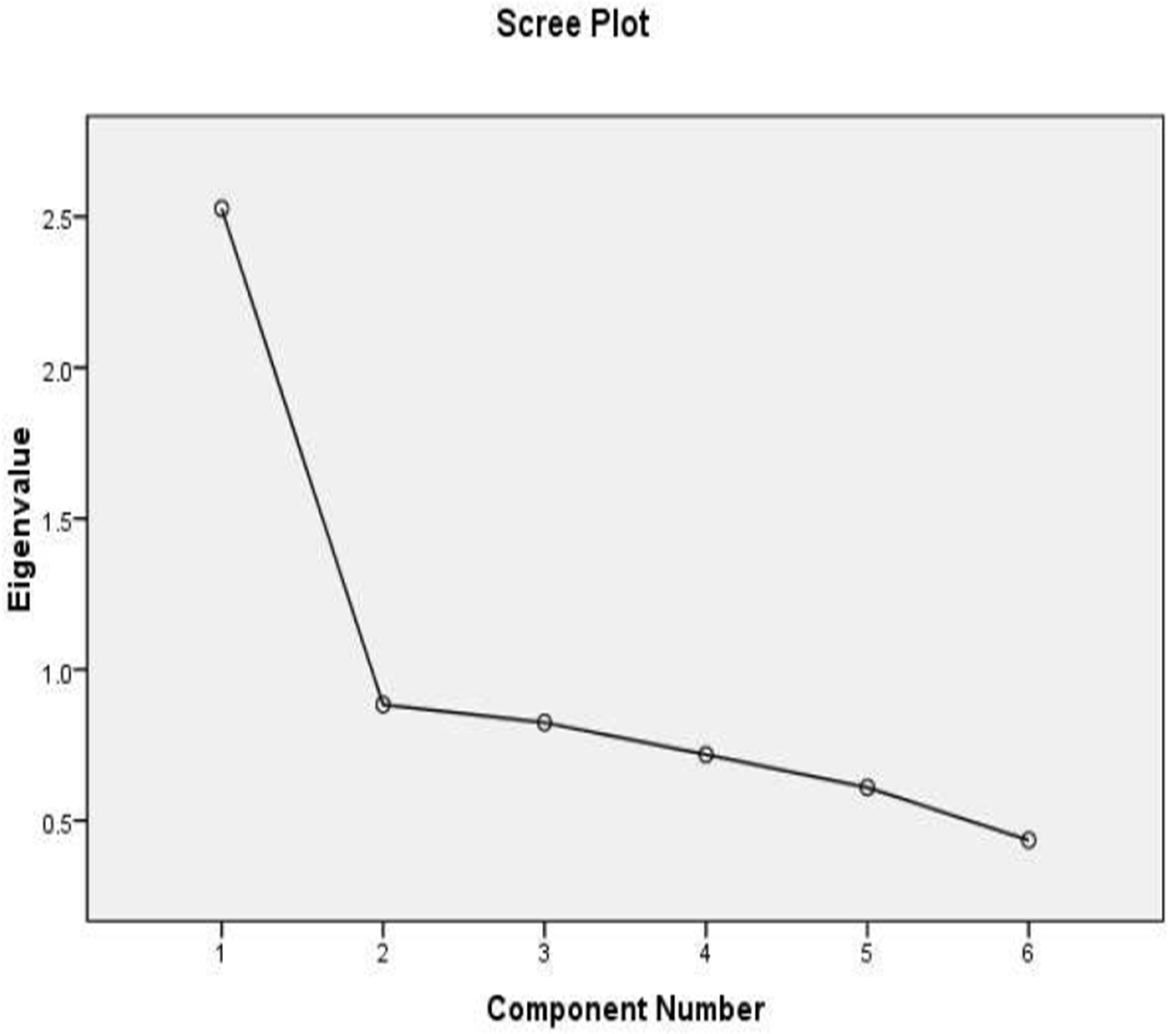
22] also highlighted the importance of providing examples and coordinating classwork with assignments to enhance student engagement and understanding of mathematics, as depicted by scree plot 9 (c.f., [
21]).
A scree plot is a graphical tool used in statistics to help determine the number of significant components or factors in a dataset after performing a factor analysis. It displays the eigenvalues (which represent the amount of variance explained by each component) on the y-axis against the component number on the x-axis. The "rotated structure component" refers to the process of adjusting the axes of the plot to make the patterns in the data clearer, helping researchers identify which components are meaningful and should be retained for further analysis.
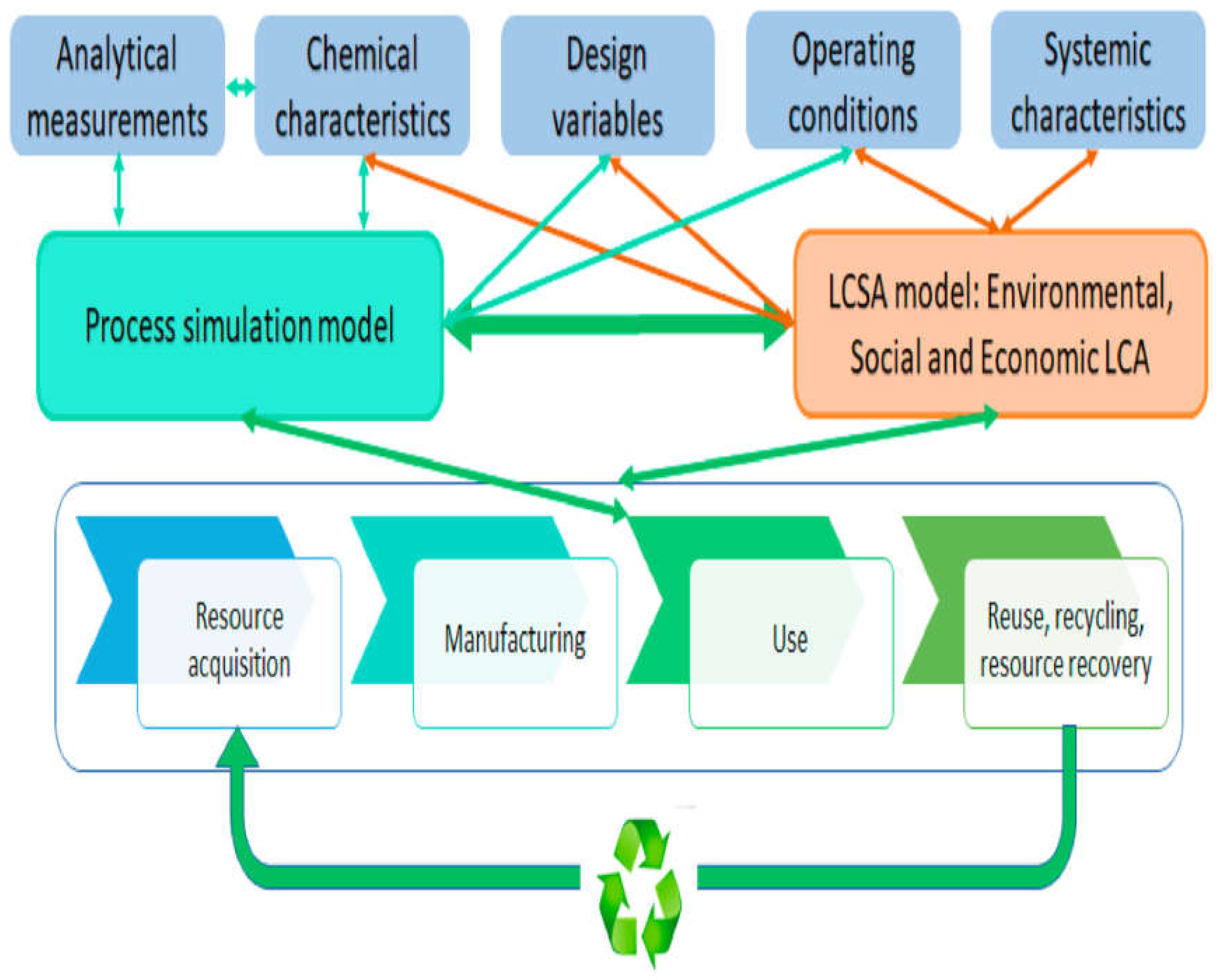
Figure 10 (c.f., [
22]) visualizes a part of a study called Life Cycle Sustainability Assessment (LCSA) or Life Cycle Assessment (LCA), which involves gathering data about the environmental impact of products throughout their entire life cycle. A significant challenge in this process is extracting life cycle inventory data[
22], which is essential for understanding the effects of pollutants. The paper aims to present a new web-based tool called TESARREC™, which will help automate and simplify these complex calculations, making the data more accessible and useful for researchers and engineers.
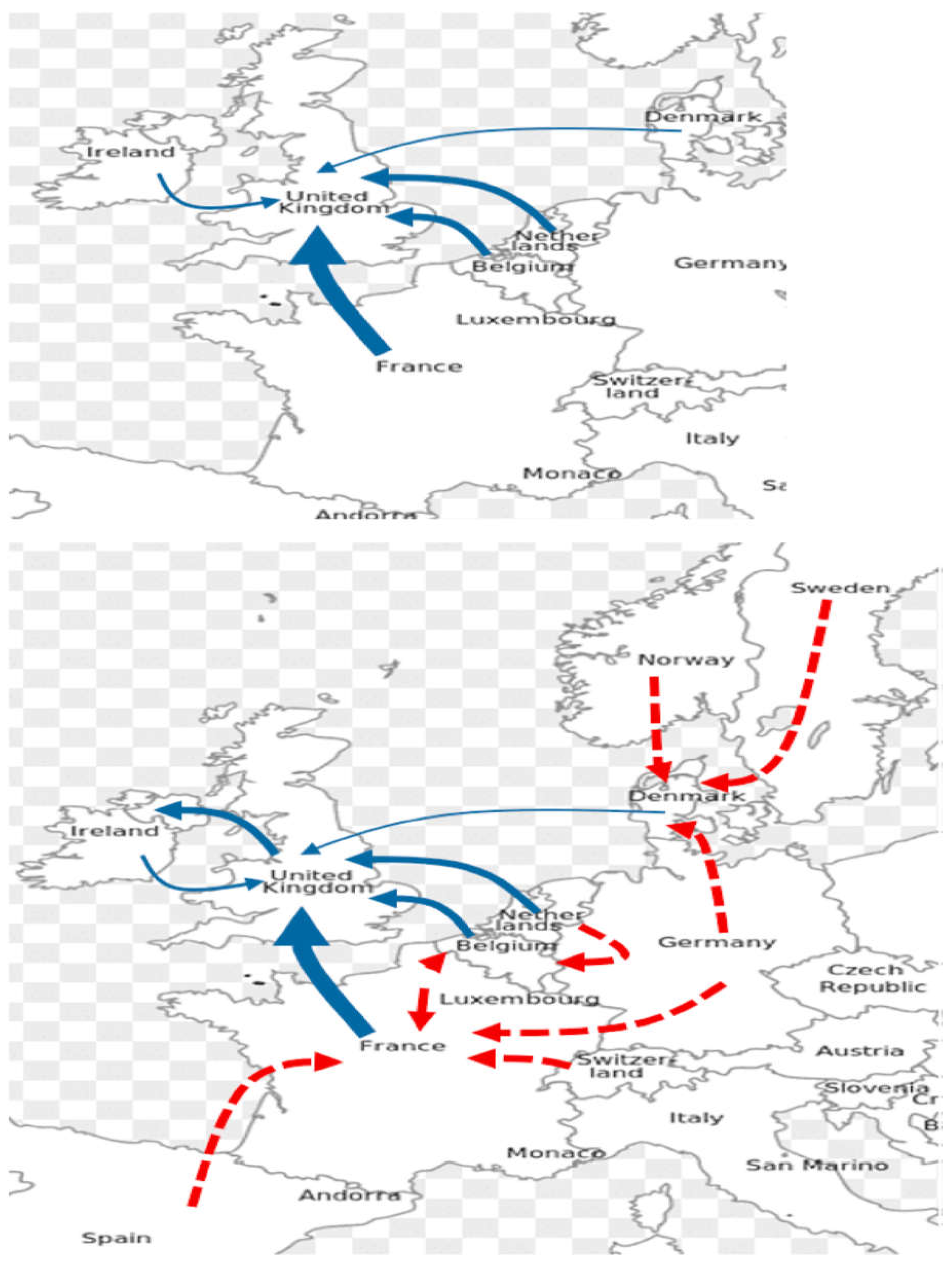
The supply chain [
22]for electricity import to the UK involves the process of bringing electricity from other countries into the UK market. The "country of origin approach" in Sustainable Life Cycle Assessment (SLCA) focuses on evaluating the environmental impacts based on where the electricity is generated[
22], while the "life cycle approach" considers the entire journey of electricity, from production to consumption, assessing its environmental effects at each stage. Both approaches help in understanding the sustainability of electricity imports and their implications for the UK’s energy policies. This is illustrated by
Figure 11 (c.f., [
22]).
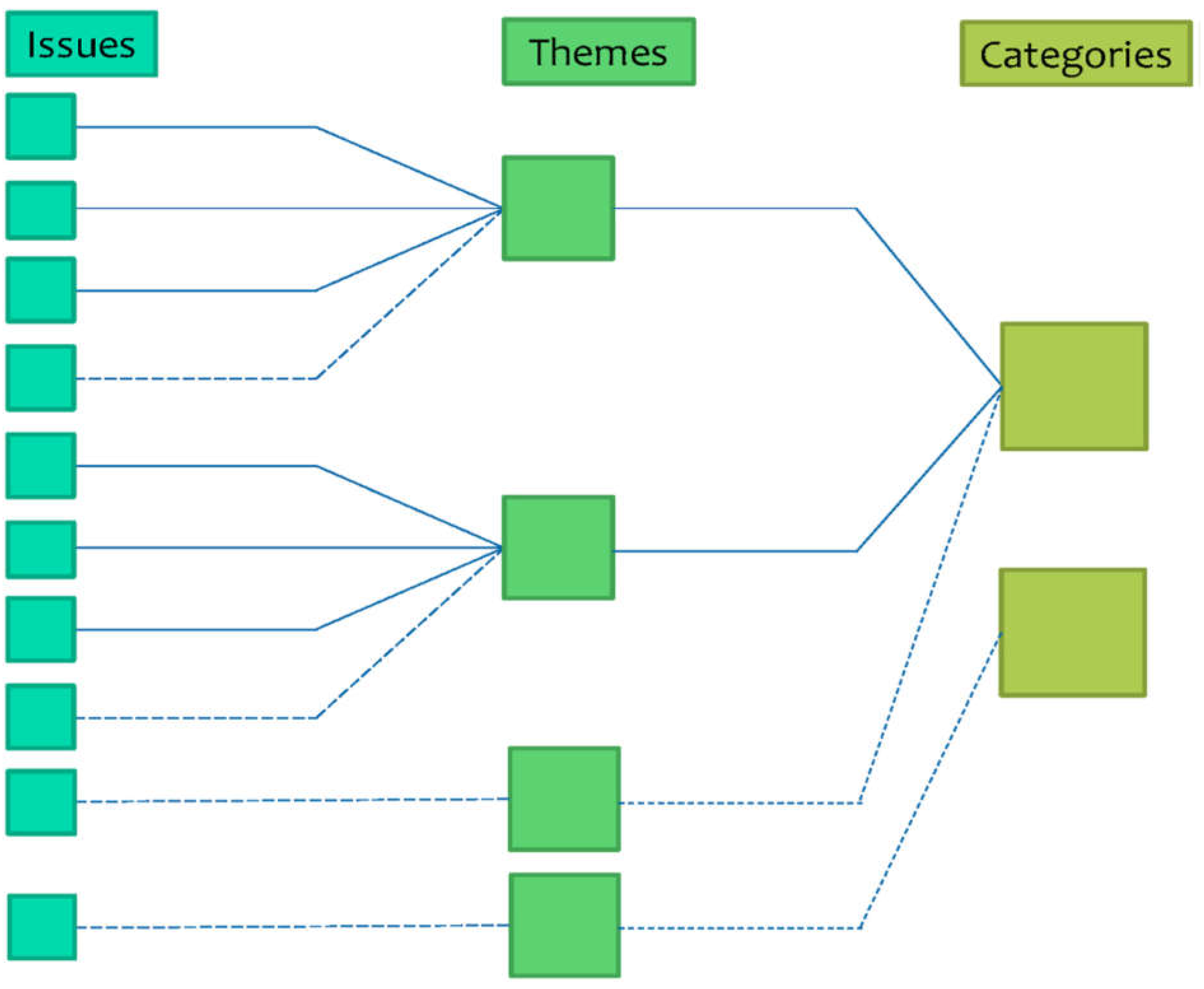
On the furthest remit of the spectrum[
22], the "hierarchy of weighted risk calculations" refers to a structured approach for assessing risks by breaking them down into smaller, more specific issues (granular), as depicted by Figure 123 (c.f., [
22]). These issues are then grouped into broader themes, which are further organized into categories that reflect their overall importance or impact. This method allows for a more systematic evaluation of risks, helping decision-makers prioritize and address them effectively.
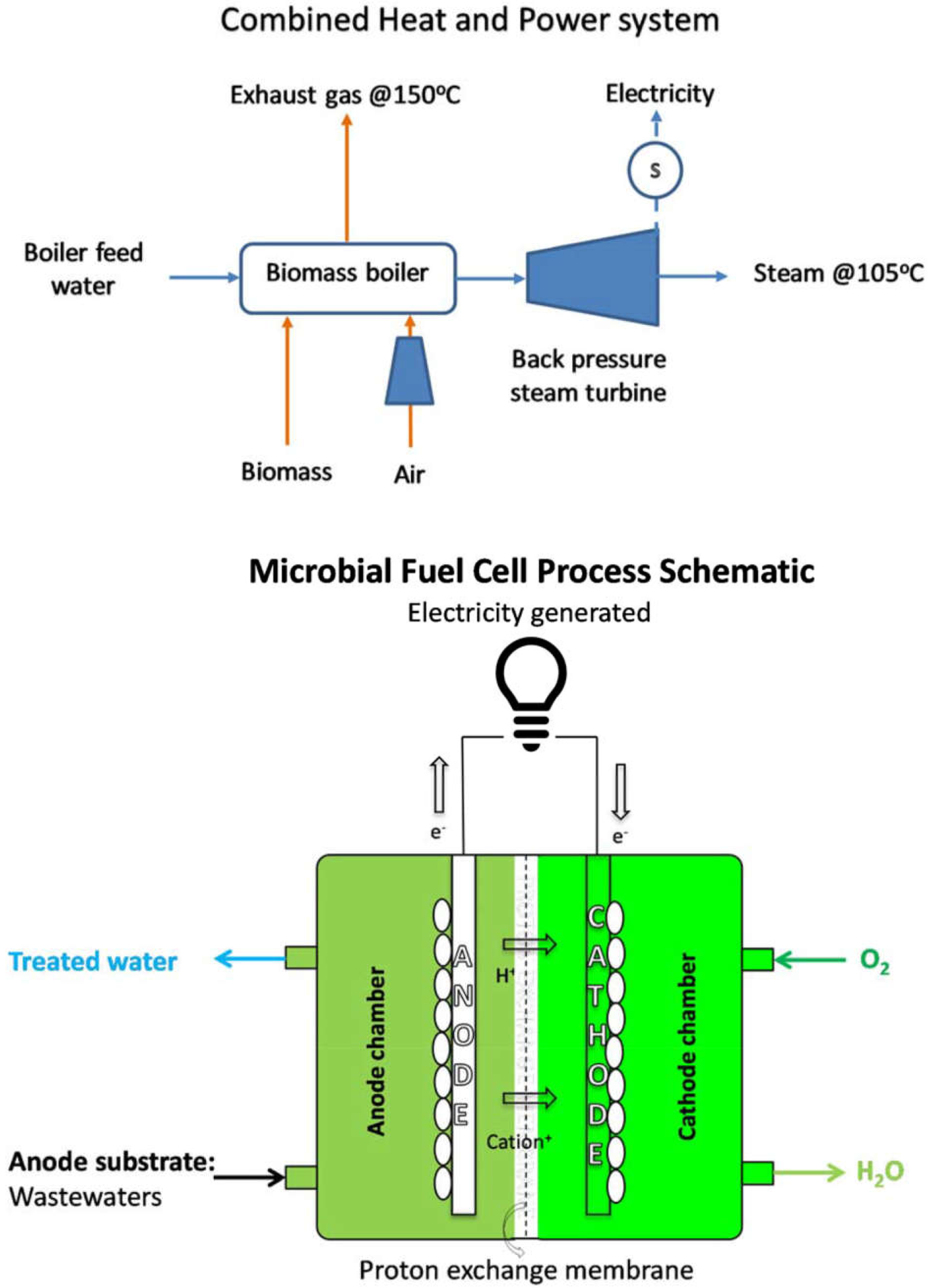
Figure 13 (c.f., [
22]) describes two different energy generation systems: Combined Heat and Power (CHP) and Microbial Fuel Cells (MFC). It lists various input variables that are important for techno-economic models of these systems, such as biomass moisture content, efficiency, and costs associated with different components. These variables help evaluate the performance and economic feasibility of generating electricity from biomass in both configurations.
The work of [
23] has reviewed the key concepts of systematic reviews and meta-analyses, which are methods used to combine results from multiple studies on the same topic. It has discussed how to calculate the "effect size," which measures the strength of the results, using different approaches for various types of data, such as continuous or categorical outcomes. Researchers[
23] can use fixed-effect or random-effect models to average these effect sizes and visualize the findings with a forest plot, helping them understand and conduct their own meta-analyses effectively.
The Cochrane Database of Systematic Reviews, established in 1994[
24], marked a significant shift in how research reviews are conducted. Before this[
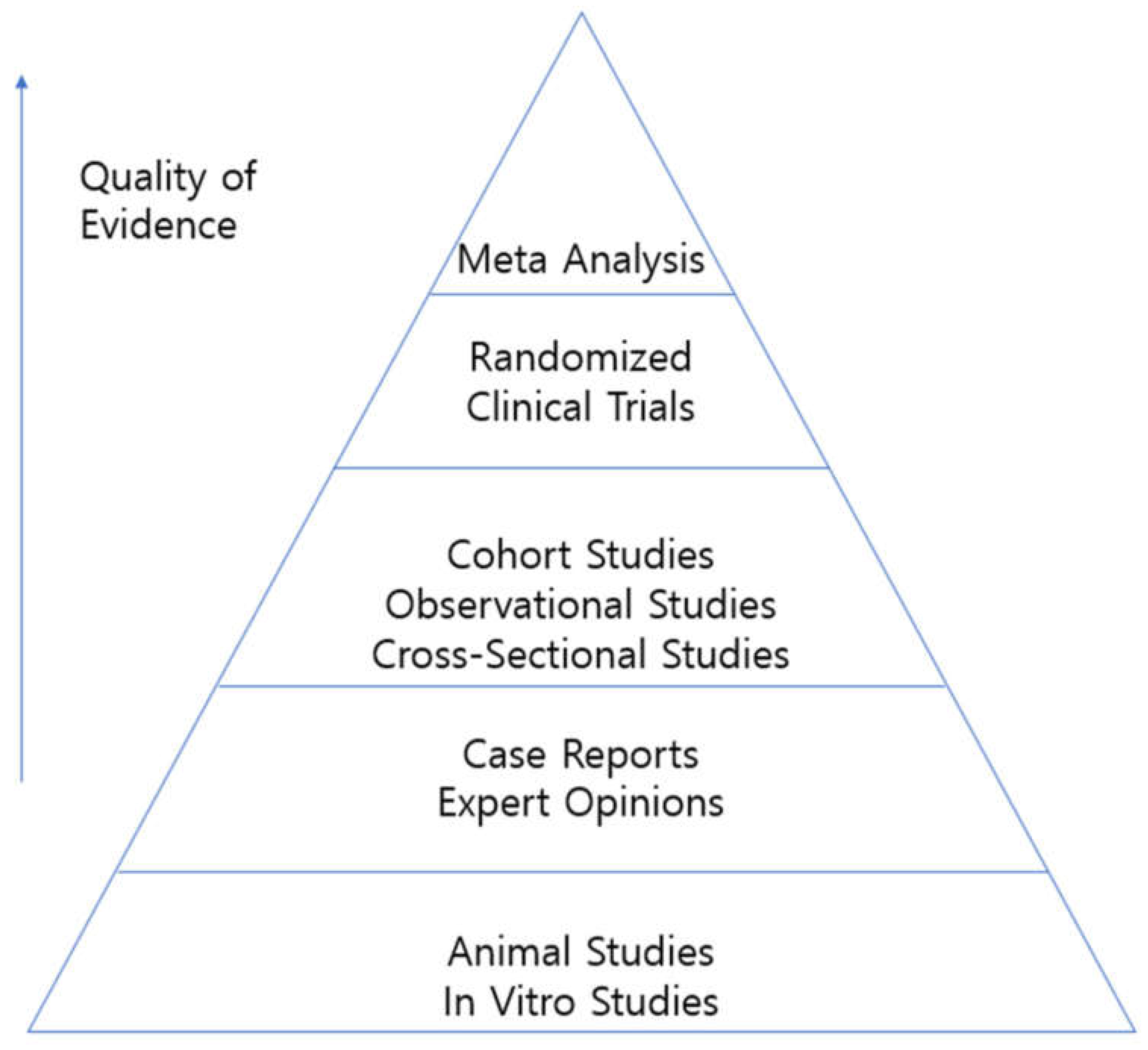
23], many reviews were based on personal opinions and narratives, but now they focus on systematic reviews that rely on objective data and rigorous methods. This change aligns with the principles of evidence-based medicine, which prioritizes accurate and reliable information to guide healthcare decisions, as in
Figure 14 (c.f., [
23]).
In research[
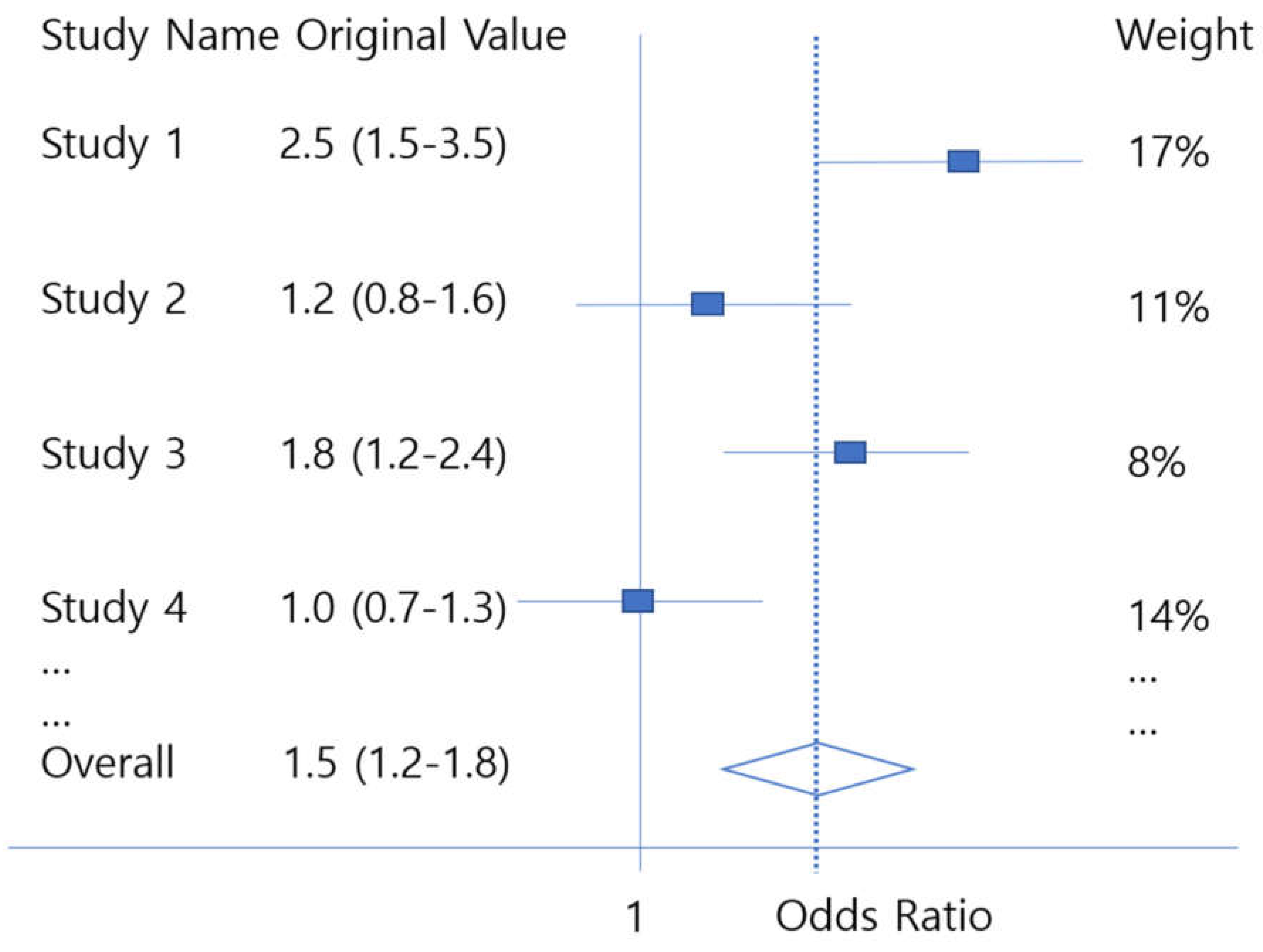
23], a forest plot is a visual tool used to display the results of multiple studies, particularly in meta-analysis. Some researchers prefer to use original values[
23], like the odds ratio (OR), instead of effect sizes (ES) because it makes the data easier for readers to interpret, especially in studies with two possible outcomes (dichotomous outcomes). Typically, the log odds ratio is calculated as the effect size, but presenting the original odds ratio helps clarify the findings for a broader audience(
Figure 15 (c.f., [
23]).
[
25] discussed the dual nature of mathematics, highlighting that while it is often seen as a positive and essential subject in education and society, it can also have negative effects. Some students may feel discouraged or rejected by mathematics, leading to a sense of failure that impacts their future opportunities. The author[
25] argued for the importance of teaching the ethical implications of mathematics, suggesting that incorporating discussions about its social responsibilities can help mitigate these negative outcomes.
The value of mathematics [
25] can be observed in two main ways: intrinsic and extrinsic. Intrinsic value refers to the appreciation of mathematics as a discipline and an important part of human culture[
25], while extrinsic value highlights its practical applications in society, such as in science and technology. Learning mathematics [
25] not only helps individuals gain skills for various opportunities but also boosts their confidence and sense of self-worth.
In discussion of the key components of mathematics that contribute to its value[
25], highlighting numbers and calculation as the most important aspects. Calculation has been central to mathematics since its origins around 3000 BCE, with proof only becoming significant later. Additionally[
25], algebra emerged during the Middle Ages, providing a more abstract language for mathematics that allows for general rules and procedures, rather than focusing solely on specific numerical values.
It is an ever-recurring task to explore how mathematics is expressed through a specific language that often uses commands or instructions[
25], known as the imperative mood, which directs actions like "add" or "solve." This strict adherence to rules in mathematics means that students must learn to follow these rules precisely[
25], as any mistakes can disrupt their calculations. Additionally[
25], the early and continuous teaching of mathematics instills a mindset in individuals to quantify and measure everything in their lives, reflecting the importance of numerical values in society.
The teaching and learning of mathematics in schools[
25], starting from a young age, requires children to adopt a specific language focused on objects and processes. They learn to perform mathematical operations without necessarily understanding their meaning or value[
25], leading to a detachment from their real-life experiences. This process involves replacing their natural understanding with simplified models and prioritizing the results of mathematical work over personal feelings or connections[
25], which can impact their development of mathematical identity.
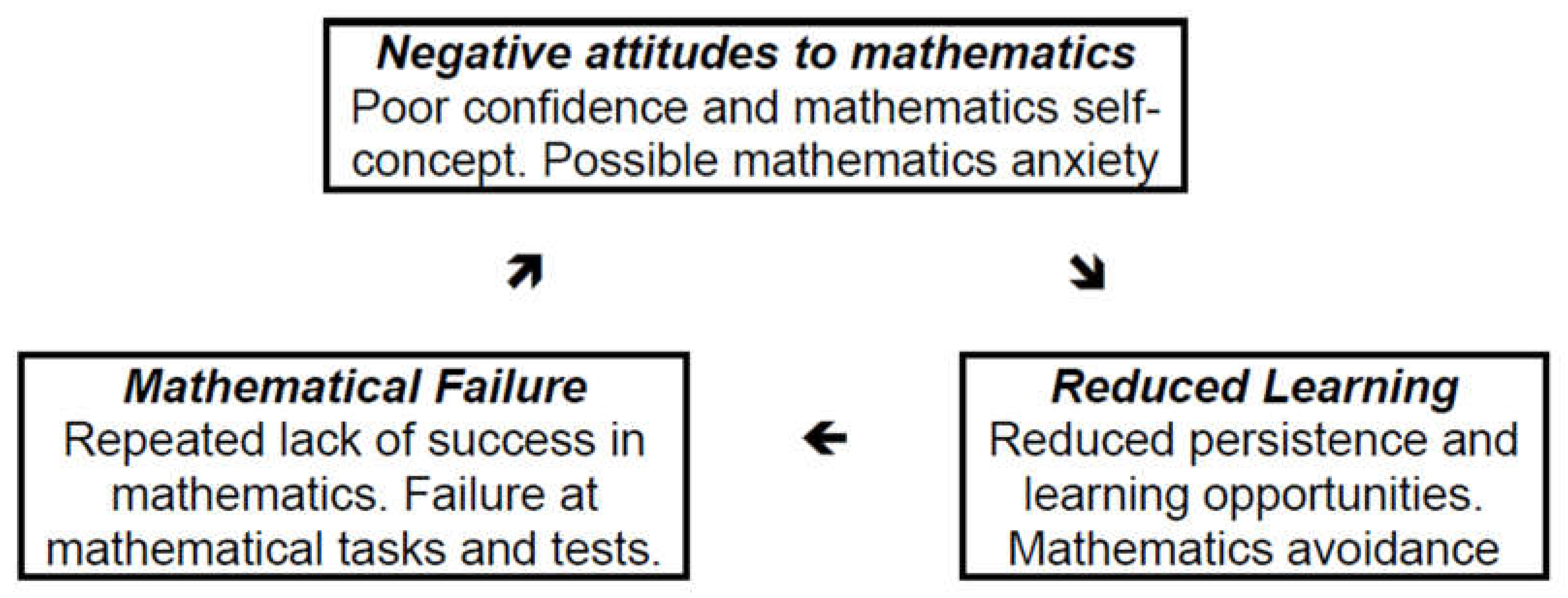
Some students develop negative feelings towards mathematics[
25], such as low confidence and anxiety, which can lead to avoiding math altogether. Accordingly [
25], people are motivated to avoid risks that could harm their self-esteem, especially in activities that are socially valued, like math. This avoidance results in fewer learning opportunities and repeated failures, which further reinforces their negative attitudes[
25], creating a cycle that makes it increasingly difficult for them to succeed in mathematics (
Figure 16 (c.f., [
26])).
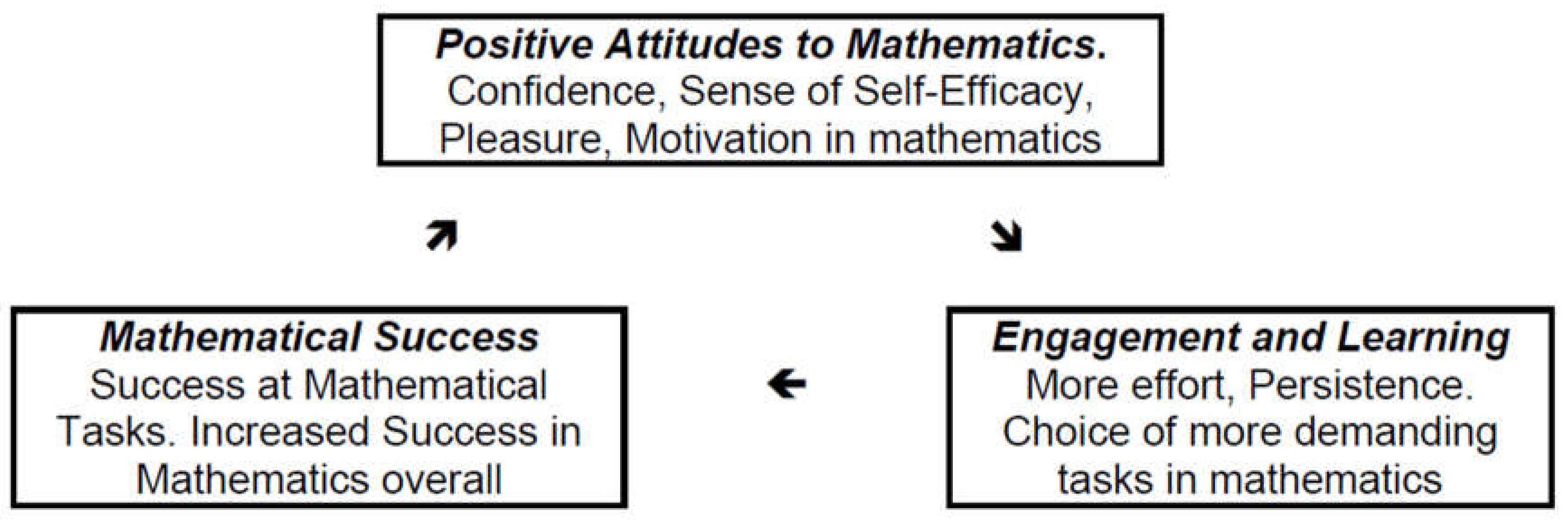
Positive student attitudes towards mathematics[
25], such as confidence and motivation, encourage them to put in more effort and tackle more challenging tasks. This is because they find intrinsic rewards[
25], like intellectual satisfaction and enjoyment from succeeding. As students engage more and experience success[
25], their learning improves, reinforcing their positive attitudes and creating a cycle of continued success in mathematics(
Figure 17 (c.f., [
26])).
The author[
25] has arguably stated that mathematics has both positive and negative aspects, describing it as having "two faces." On one hand, mathematics is a powerful tool that can promote human creativity and has many beneficial applications in society. On the other hand, it can lead to harmful outcomes, such as reinforcing social inequalities and fostering a mindset that neglects ethical considerations. To address these issues, the author suggests incorporating the philosophy and ethics of mathematics into education at all levels, helping students understand its broader implications and responsibilities.
The inclusion of philosophy and ethics in mathematics education at both school and university levels has been argued[
25]. This suggests that students should learn about the nature of mathematical knowledge[
25], its limitations, and the ethical implications of its applications in society. By understanding these concepts[
25], students can better recognize the social responsibilities of mathematics and its potential negative impacts, fostering a more critical and informed approach to its use in real-world situations.
The negative effects of placing too much importance on mathematics in education and society were deeply discuued[
25], which can harm students' confidence, especially among females and those who struggle with math. This overvaluation [
25] can lead to labeling students as failures, reducing their opportunities in life. It is argued that [
25] while mathematics itself isn't harmful, the way it is taught and applied can lead to ethical issues, and therefore, it's essential to include discussions about the philosophy and ethics of mathematics in education to ensure it contributes positively to society.
The research work [
27] outlined three ways mathematics relates to crises. First, mathematics can represent a crisis by creating models that depict real situations, like a pandemic. Second, it can be part of the crisis itself, as seen in the 2008 economic crisis, where mathematical systems influenced the dynamics of the situation. Lastly, mathematics can shape responses to a crisis, which can sometimes lead to ineffective or harmful actions, particularly in the context of climate change, highlighting the complex role of mathematics in understanding and managing crises.
This shines on [
27] how human activities are leading to more frequent and severe crises, such as environmental disasters, resource shortages, and social inequalities. It also emphasizes the connection between large-scale crises[
27], like epidemics and financial downturns, and personal crises that individuals may face as a result. Additionally[
27], This explores three ways mathematics relates to these crises: it can represent a crisis, be a part of a crisis, or influence how we respond to a crisis, highlighting the complex role of mathematics in understanding and managing critical situations.
In the Tractatus[
28], Ludwig Wittgenstein describes language as a way to represent or "picture" reality, and he specifically refers to mathematics as this language. He[
28] argued that mathematics can model real-world situations, like epidemics, by using mathematical concepts to create representations of how things behave. This means that mathematical models can help us understand and predict the dynamics of an epidemic[
28], such as how the number of infected people grows over time, and how interventions like social distancing can influence that growth.
When we shop at a supermarket[
27], the process of selecting items and paying involves complex mathematical algorithms that operate behind the scenes. These algorithms[
27] handle tasks like identifying credit cards, processing payments, and ensuring security, making the transaction seamless for us. This illustrates how mathematics is not just a tool for understanding transactions but is actively involved in shaping our daily experiences and can also contribute to larger economic issues[
27], such as financial crises.
Advanced mathematical modeling [
27] is essential for making weather forecasts and predicting long-term climate changes, as it relies on various mathematical techniques rather than laboratory experiments. A climate model typically includes components that represent the atmosphere[
27], ocean, land, and ice, and it uses equations to connect different parameters, like temperature and salinity. The process of creating these models involves making decisions about which parameters to include[
27], and the resulting predictions can influence how we understand and respond to climate change, highlighting the role of mathematics in shaping our actions and perceptions regarding environmental issues.
The key idea [
27] is that mathematics shapes how we understand and respond to climate change. Mathematical models don't just explain or predict climate situations; they influence our perceptions and actions[
27], often leading us to view climate change as something we can easily manage through technology. However[
27], these models are not neutral; they reflect specific viewpoints that may align with certain political or economic interests, which can affect how we approach climate-related issues.
This demonstrates how mathematical models[
27], like those used during the COVID-19 pandemic, not only describe situations but also influence our actions in response to crises. These models can prioritize certain groups of people based on factors like age[
27], education, and health, potentially leading to ethical concerns about valuing some lives more than others. This raises important questions about how society makes decisions during critical situations, balancing the costs of saving lives against economic considerations.
The author [
27] expressed concern that during future crises, decisions about saving lives versus saving money may rely on mathematical models that assign economic value to human lives. These models [
27] could lead to biased conclusions, prioritizing certain groups of people over others based on factors like age, education, or nationality. This reliance on mathematical reasoning might create a false sense of rationality[
27], potentially resulting in unethical decisions that devalue human life in critical situations.
The author [
29] discussed recent reforms in the education system of Uzbekistan, particularly focusing on the mathematics curriculum, highlighting the transition from an old curriculum, which emphasized theoretical knowledge and lacked practical application, to a new national curriculum designed to develop students' skills for real-life situations. This new approach[
29] included interactive textbooks that encourage independent thinking, practical exercises, and interdisciplinary integration, aiming to improve the overall quality of mathematics education and better prepare students for future challenges.
Another study [
30] has focused on creating math problems based on the PISA (Programme for International Student Assessment) standards to help students become more familiar with these types of questions. The researchers [
30] used a design research method to develop valid and practical math problems that relate to the Tanjung Kalian Lighthouse in Bangka, which also assess students' basic math skills. The results showed [
30] that students improved in areas such as communication, representation, reasoning, and problem-solving strategies through these context-based questions.
Based on the results from the PISA assessments [
30] in 2012 and 2015, Indonesian students have been performing below their neighboring countries, particularly in areas requiring problem-solving, reasoning, and effective communication in mathematics. The study[
30] highlighted the importance of mathematical literacy, which involves the ability to analyze and apply math in real-life contexts, and suggests that traditional teaching methods may not adequately prepare students for these types of problems. To address this, researchers [
30] have developed PISA-style math questions using local contexts to improve students' mathematical skills and better prepare them for future assessments.
The validators assess the developed math problems based on their content[
30], structure, and language to ensure they align with PISA standards, which focus on mathematical literacy. The study [
30] involved testing these problems with students to see if they could understand and effectively solve them, revealing that while many students showed good reasoning and communication skills, some struggled due to a lack of familiarity with creative and contextual problem-solving. Overall[
30], the research successfully created 11 valid and practical PISA-type math questions that helped enhance students' mathematical abilities.
More interstingly, [
31] focussed on creating a mathematics learning method that uses the local market in Telukdalam as a teaching tool. By engaging students in real-life scenarios involving price calculations and money management[
31], the research aimed to improve their mathematical skills while also connecting these concepts to their everyday experiences. The findings suggested that this approach not only boosts students' motivation and understanding of math but also helps them appreciate their local culture and environment, potentially leading to a more relevant mathematics curriculum.
The research on contextual mathematics learning at Telukdalam Market shows that involving students in real-life situations[
31], like shopping, has significantly improved their math skills, motivation, and social abilities. Students learned to apply basic arithmetic in practical scenarios, which made math more relevant and engaging for them [
31]. The study suggested that educators [
31] should incorporate more hands-on learning experiences and collaborate with local businesses to enhance students' understanding and appreciation of mathematics in their everyday lives.
Cell signaling mechanisms, which are essential for understanding physiology[
32], can be traced back to the earliest forms of life were discussed, suggesting that cells are interconnected with the universe, almost like a Mobius Strip, meaning they don't have a clear inside or outside and are continuously linked to the cosmos. This idea connects the concepts of physiology[
32], consciousness, and mathematics, proposing that our understanding of these areas can be unified in a new way.
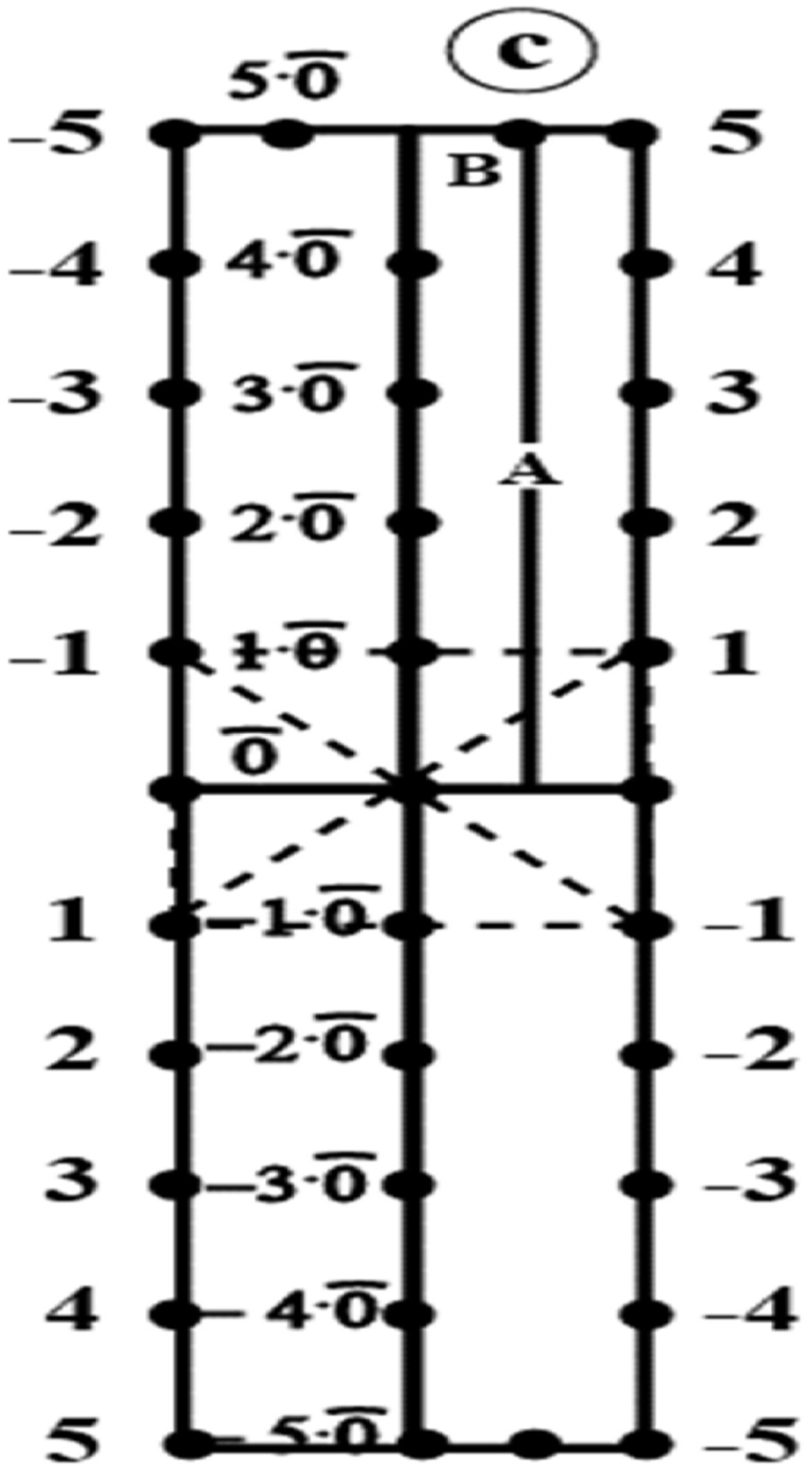
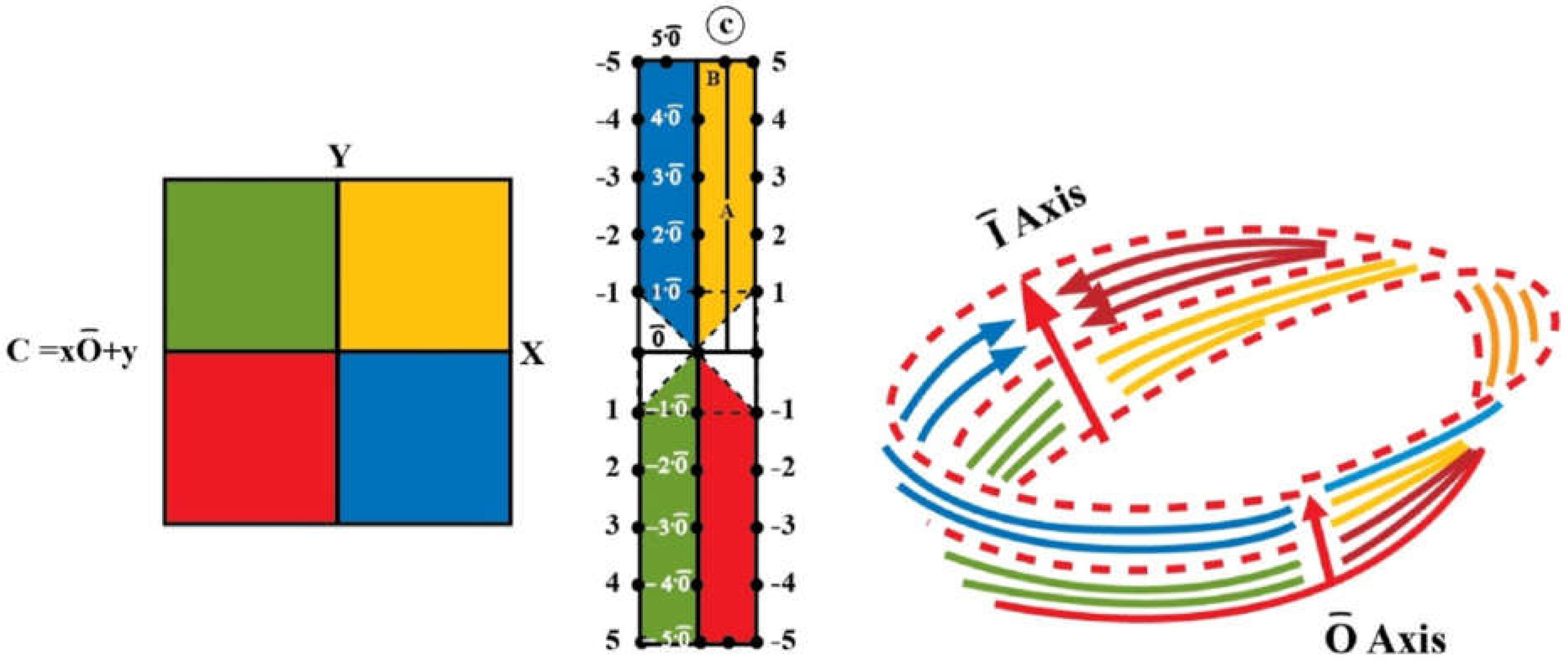
Figure 18 (c.f., [
32]) illustrtes a new Soft Coordinate System that visually represents mathematical concepts, particularly soft numbers, in a geometric space. This system features a zero axis and two one axes, allowing for the visualization of processes and relationships between different types of numbers. The Mӧbius function is used to illustrate how seemingly opposing points can be unified, reflecting deeper ideas about consciousness and the coexistence of duality and non-duality.
The Soft Möbius Map (
Figure 19 (c.f., [
32])) is a mathematical tool that converts points from a flat plane into a special type of number called "soft numbers," which are then represented on a Möbius strip. This transformation allows for a unique way to visualize and understand these soft numbers, as different areas or regions on the flat plane correspond to specific areas on the Möbius strip. Essentially, it helps to illustrate complex relationships in a more intuitive format by using the properties of the Möbius strip.
The idea of Soft Logic[
32], which is a flexible way of reasoning, and its potential role in epigenetic inheritance. Epigenetic inheritance refers to how organisms can adapt to changes in their environment and pass those adaptations to future generations without altering their DNA. The authors [
32] suggested that if everything in existence can be thought of as balancing out to zero, Soft Logic might help explain how these environmental changes are recognized and processed by living organisms to facilitate evolution.
Mathematics plays a crucial role in enhancing human thinking skills[
33], including rational, logical, and creative thinking, as well as problem-solving and communication abilities. The structure of school mathematics is designed to help students develop these skills progressively[
33], but its abstract nature can make it challenging for some students to grasp. To address these difficulties[
33], teachers should create effective learning designs and use approaches like Realistic Mathematics Education (RME), which connects mathematical concepts to real-life situations, making it easier for students to understand and engage with the material.
Several studies[
33] have shown that implementing Realistic Mathematics Education (RME) in classrooms can lead to improved learning outcomes compared to traditional teaching methods. However[
33], these findings have not yet been explored in schools located on islands, such as those in the Buton Islands region. Therefore[
33], further research is needed to assess the effectiveness of RME in enhancing mathematics learning outcomes for primary school students in that area.
This research began with a pre-test to assess students' prior knowledge of fractions before implementing RME. The results [
33] showed that students had some foundational understanding, which helped in applying RME effectively. After using RME[
33], both student participation and learning outcomes improved significantly, indicating that this teaching approach enhances students' engagement and understanding of mathematics in real-life contexts.
Teaching mathematics at the primary level is a complex task that requires teachers to understand both mathematical concepts and the specific language used in mathematics[
34], known as the mathematics register. This importance of helping students develop their mathematical understanding while also mastering the language of mathematics through problem-solving and communication with peers, was strongly evidenced and advocated by [
34]. By engaging in meaningful discussions and tackling challenging problems[
34], students can build their knowledge and improve their ability to express mathematical ideas effectively.
The academic language register [
34] is a specialized way of communicating that differs from everyday conversation, tailored for academic settings like classrooms and research. Each academic discipline[
34], such as mathematics or science, has its own unique language features and ways of expressing ideas, which students need to learn to succeed in that field. Understanding these specific language patterns requires students to develop metacognitive skills[
34], allowing them to think about and analyze their own use of language and discourse.
Eventually[
34], the complexity of academic language, particularly in disciplines like mathematics, where specialized vocabulary and structures are essential for effective communication and understanding, would predominatly indicate that students must learn to navigate this complex language, which includes precise terms and syntactic constructions, to demonstrate their knowledge and reasoning in mathematics. Additionally[
34], it emphasizes the importance of sociocultural contexts in learning, suggesting that proficiency in mathematics requires integrating linguistic, cognitive, and social skills.
Learning mathematics is a complex process that requires both students and teachers to use various types of knowledge[
34], including different ways to express mathematical ideas. Effective instruction involves creating opportunities for students to interact with each other and their teacher, allowing them to discuss and justify their solutions[
34], which helps reveal their understanding. In contrast[
34], assessment contexts focus on individual work, where students must demonstrate their knowledge without support, highlighting the importance of mastering language skills in both spoken and written forms for standardized tests.
The differences between everyday language and academic language[
34], particularly in the context of learning mathematics, were highlighted by a case study of a student named Ariel, who, despite being fluent in everyday English, struggled with the specialized language of mathematics, which includes technical vocabulary and complex grammatical structures. The author[
34] claimed that teaching should focus on helping students develop both their mathematical understanding and their ability to communicate mathematically, especially in preparation for standardized tests that require comprehension of complex language.
Undertaking an explorartory inverstigation[
34] of the language challenges students face when taking high-stakes tests, such as the Kenya Certificate of Secondary Education Mathematics Examination (KCSE) and the Program for International Student Assessment (PISA), has strongly identified how complex vocabulary and grammatical structures in test questions can make it difficult for students to understand and solve problems, as they need both mathematical knowledge and proficiency in academic language. This complexity[
34] can hinder their ability to demonstrate their understanding effectively, emphasizing the importance of clear language in educational assessments.
The main takeaway from [
34] is that mathematics teachers need to understand and teach the "mathematics register," which is the specific language and symbols used in math. This requires[
34] teachers to change their teaching methods to help students engage in discussions and tackle challenging problems, using both everyday language and formal mathematical language. By doing so[
34], teachers can better support students in understanding math concepts and improve their overall learning experience.
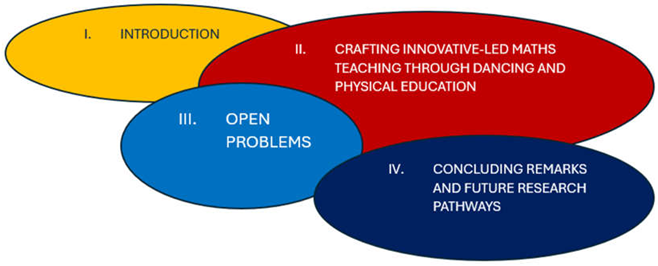
The current paper contributes to:
Putting in both theory an practice how dancing and physical education are employed to teach mathematics
The provision of open problems to enrich our way of thinking on how to think beyond classical frameworks of teaching mathematics
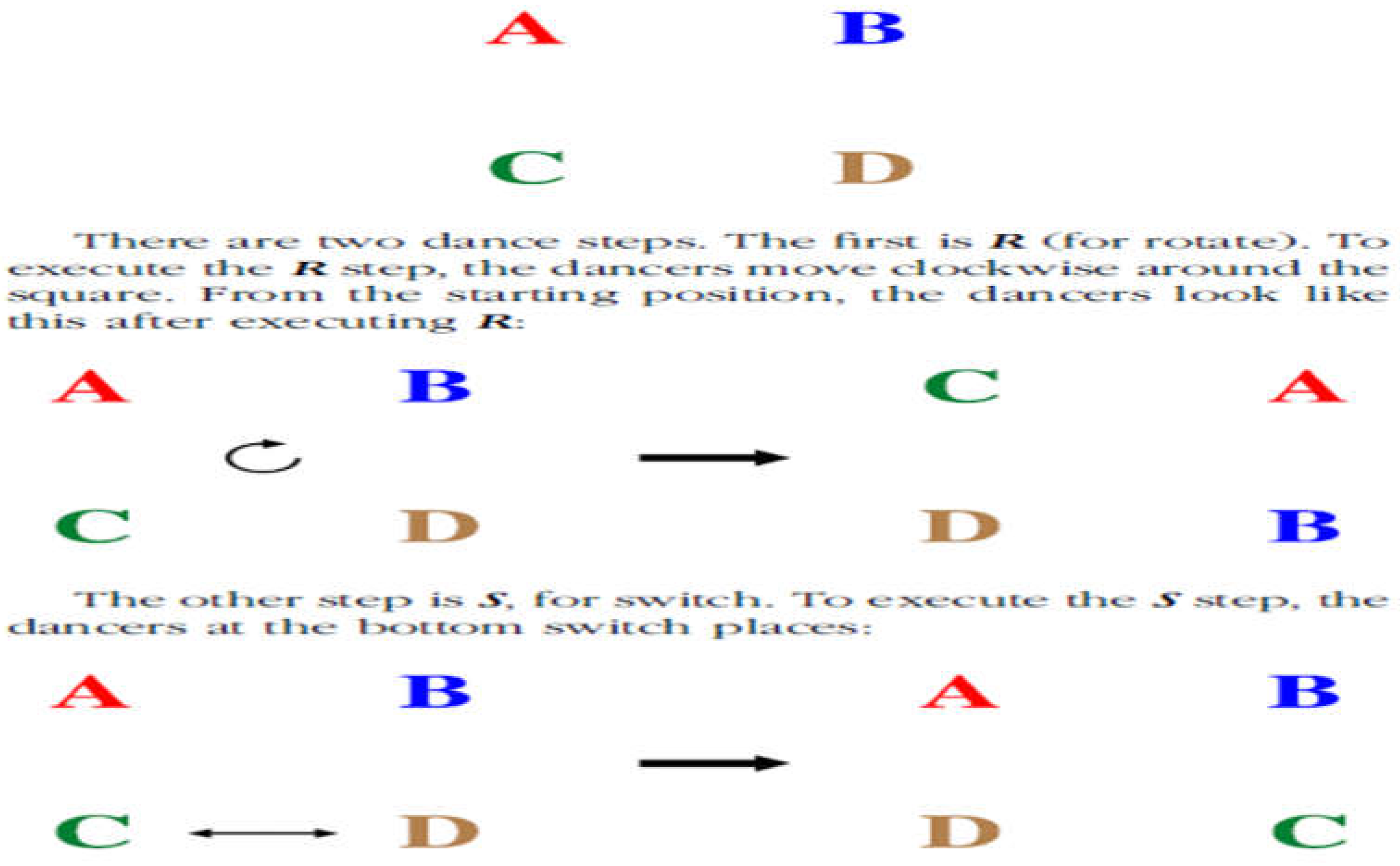
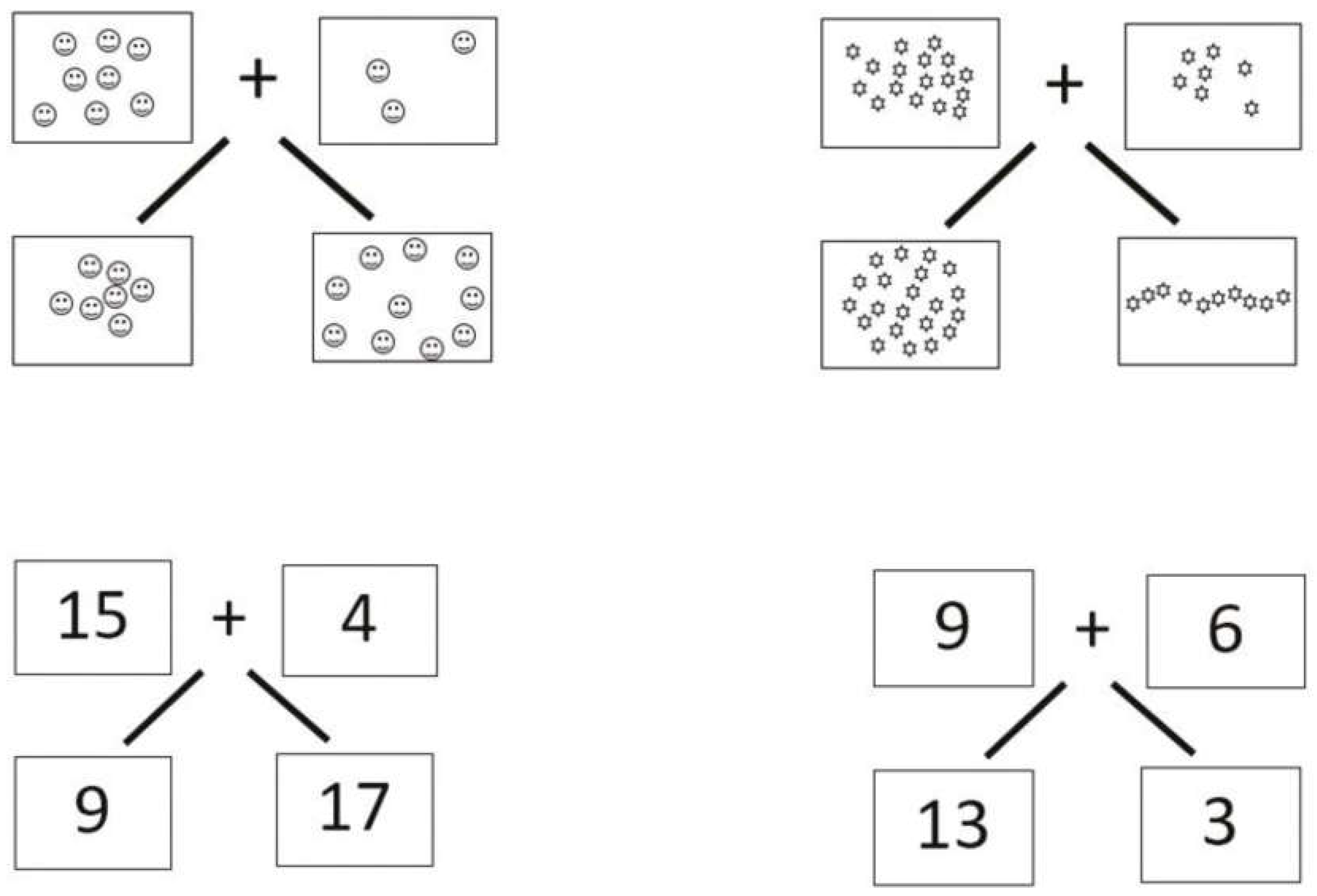
The paper is portrayed by the following schematic: