

Submitted:
03 January 2025
Posted:
07 January 2025
You are already at the latest version
Abstract
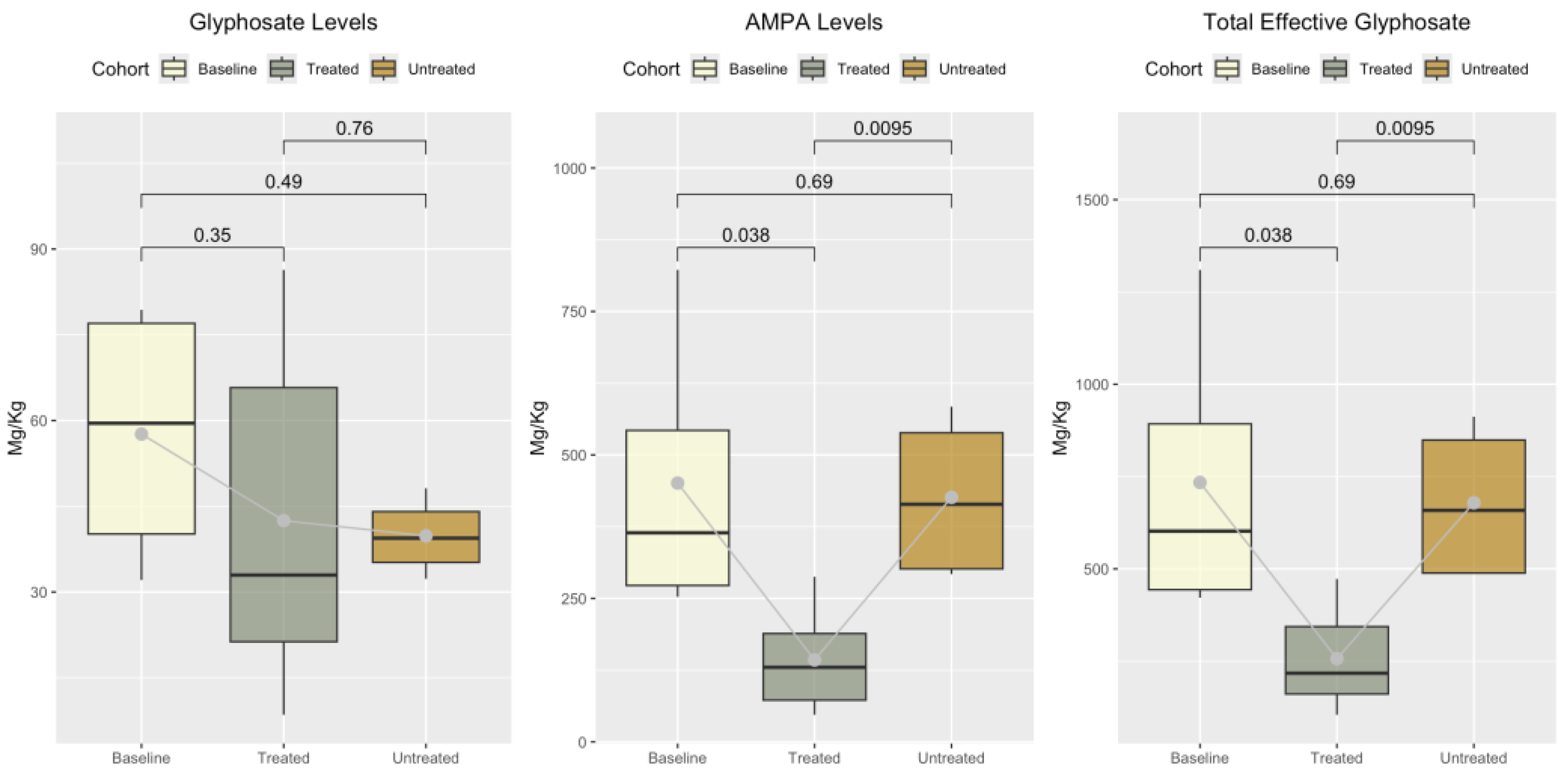
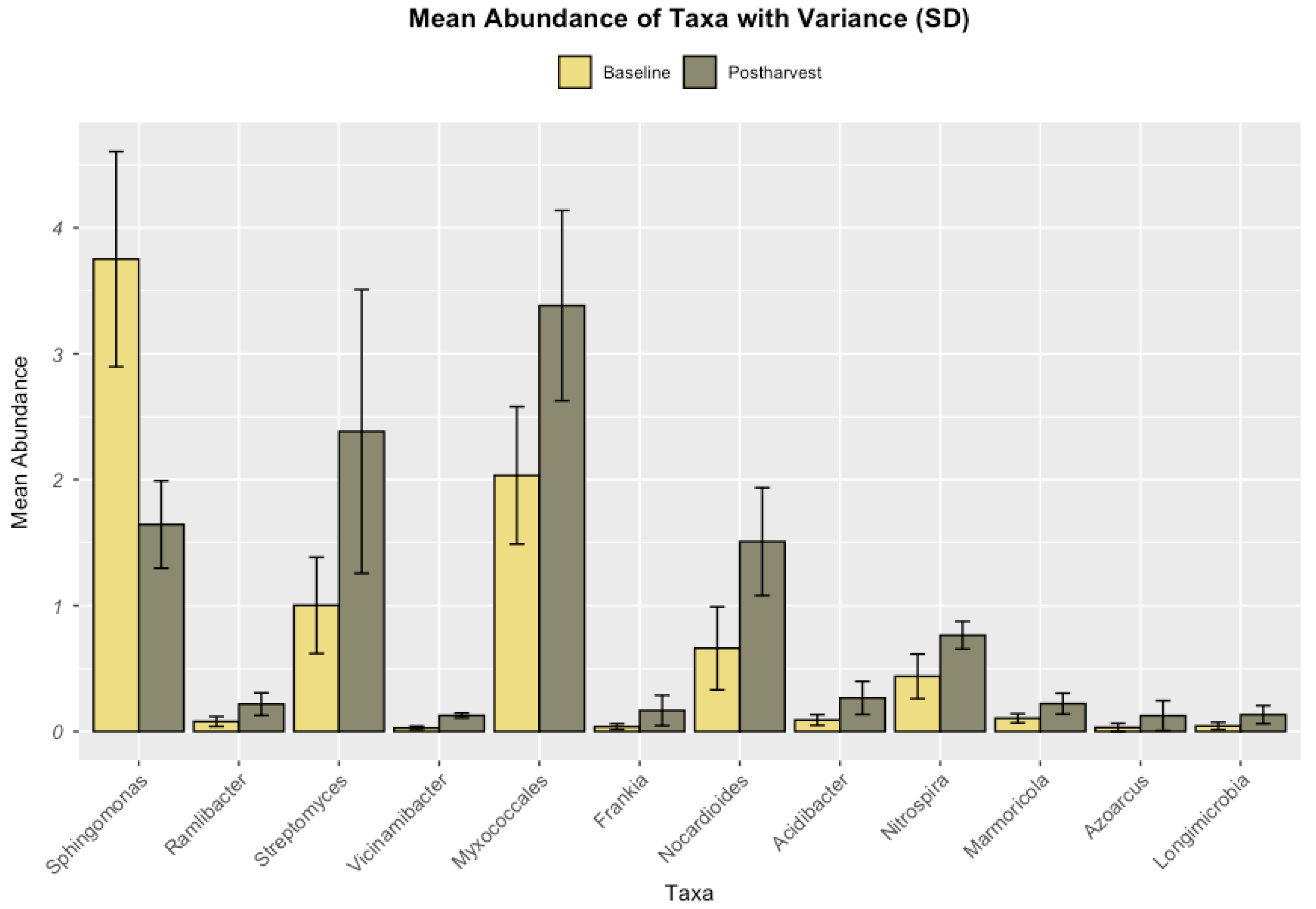
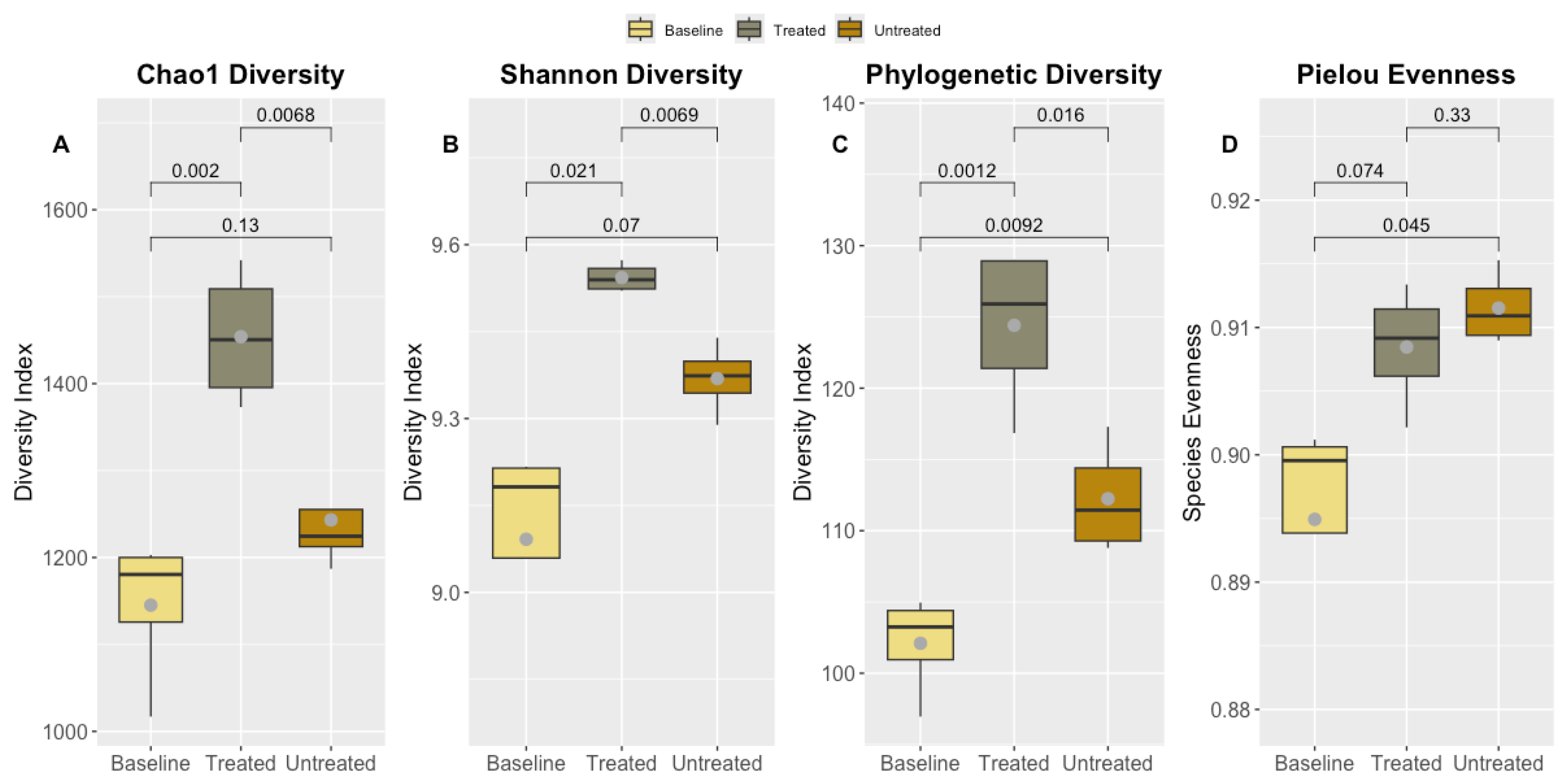
The extensive use of glyphosate-based herbicides has raised concerns about its impact on soil health and microbial communities, particularly due to the persistence of AMPA. This study evaluates the effects of PaleoPower, a co-fermented microbial inoculant, on soil microbial composition, diversity, and glyphosate degradation in a cotton field. PaleoPower, applied at 1.6 × 10⁸ CFU per square meter, introduced eight bacterial strains, bioactive postbiotics, and prebiotics into the soil. Post-harvest analyses revealed reductions in glyphosate and AMPA levels in the soil of 72% and 50%, respectively from baseline levels treated and untreated respectively in untreated soil. LEfSe analysis identified 206 taxonomic biomarkers, including increases in beneficial taxa like Actinobacteria and Clostridia, alongside declines in oligotrophic groups. Random Forest and correlation analyses highlighted key taxa like Sphingomonas and Mesorhizobium in glyphosate metabolism, while increased microbial diversity metrics indicated ecosystem recovery. Metabolic pathway analysis demonstrated upregulation of nutrient cycling, phosphate metabolism, stress resilience processes, increases in methane metabolism and oxidative stress response pathways. These results suggest PaleoPower enhanced glyphosate degradation, enriched microbial diversity, and improved soil health to offer a promising approach for sustainable agriculture. The small sample size and single-field study design highlights the need for further validation.
Keywords:
1. Introduction
2. Materials and Methods
2.1. Composition and Preparation of PaleoPower
2.1.1. Composition
2.1.2. Co-Fermentation Process
2.2. Application of PaleoPower and Soil Sampling in the Cotton Field
2.3. Determination of Soil Glyphosate Levels
2.4. Microbiome Analysis
2.4.1. 16S rRNA Gene Metagenomic Sequencing
2.4.2. Sequence Processing and Quality Control
2.4.3. Alpha Diversity Analyses
2.4.4. Beta Diversity Analysis
2.4.5. Taxonomic Analysis
2.4.6. Functional Analysis
2.5. Random Forest Modeling
2.6. Correlation Analysis
3. Results
3.1. Co-Fermentation Process of the 8 Bacteria Strains
3.2. Soil Application and Sample Collection
3.3. Glyphosate, Aminomethylphosphonic Acid (AMPA), and Total Effective Glyphosate (TEG) Levels Across Cohorts
3.4. Sequencing Run Validation and Metrics Summary
3.5. Taxonomic Features of the Soil Microbiome
3.6. Alpha Diversity Metrics Across Baseline, Treated, and Untreated Cohorts
3.7. Beta Diversity Analysis of Glyphosate Levels and Treatment Effects on Microbial Community Composition
3.8. Random Forest Analysis of Microbial Taxa and Diversity Indices in Glyphosate Dynamics
3.9. Correlation Analysis
3.10. Metabolic and Regulatory Adaptations Post-Harvest
4. Discussion
4.1. Multi-Functional Benefits of Co-Fermented Microbial Inoculant
4.2. Impact of PaleoPower Application on Indigenous Soil Microbial Communities and Glyphosate Residue Dynamics.
4.3. Impact of PaleoPower on Glyphosate Degradation and AMPA Reduction
4.4. Impact of PaleoPower on Soil Microbial Composition
4.5. Alpha Diversity Analysis
4.5.1. Correlation Between Glyphosate and Alpha Diversity Metrics
4.5.2. Treatment Effects on Microbial Diversity and Glyphosate Remediation
4.5.3. Implications for Soil Health
4.6. Beta Diversity Analysis
4.6.1. Microbial Community Homogenization in Glyphosate-Contaminated Soils
4.6.2. Recovery of Microbial Diversity and Functionality in Treated Soils
4.6.3. Functional and Ecological Implications
4.7. Correlation Analysis and Random Forest Evaluation of Microbial Taxa in Glyphosate Dynamics
4.7.1. Key Microbial Predictors Identified in Correlation Analysis
4.7.2. Random Forest Evaluation of Glyphosate Dynamics
4.7.3. Comparison Between Methods
4.7.4. Diversity Metrics and Functional Implications
4.8. Metabolic and Regulatory Adaptations Post-Harvest
4.8.1. Fundamental Processes
4.8.2. Phosphate Metabolism
4.8.3. Homeostasis and Osmotic Stress
4.9. Impact of Metabolic Shifts on Crops
4.10. Limitations of the Study
5. Conclusions
Author Contributions
Funding
Data Availability Statement
Acknowledgments
Conflicts of Interest
References
- Valavanidis, A. Glyphosate, the most widely used herbicide. Scientific Reviews 2018. [Google Scholar]
- Van Bruggen, A.H.; Finckh, M.; He, M.; Ritsema, C.; Harkes, P.; Knuth, D.; Geissen, V. Indirect effects of the herbicide glyphosate on plant, animal and human health through its effects on microbial communities. Frontiers in Environmental Science 2021, 9, 763917. [Google Scholar] [CrossRef]
- de Mesquita, C.P.B.; Solon, A.J.; Barfield, A.; Mastrangelo, C.F.; Tubman, A.J.; Vincent, K.; Porazinska, D.L.; Hufft, R.A.; Shackelford, N.; Suding, K.N. Adverse impacts of Roundup on soil bacteria, soil chemistry and mycorrhizal fungi during restoration of a Colorado grassland. Applied Soil Ecology 2023, 185, 104778. [Google Scholar] [CrossRef]
- Nabi, M. Role of microorganisms in plant nutrition and soil health. In Sustainable Plant Nutrition; Elsevier: 2023; pp. 263–282.
- Zhou, W.; Li, M.; Achal, V. A comprehensive review on environmental and human health impacts of chemical pesticide usage. Emerging Contaminants 2024, 100410. [Google Scholar] [CrossRef]
- Singh, R.; Shukla, A.; Kaur, G.; Girdhar, M.; Malik, T.; Mohan, A. Systemic analysis of glyphosate impact on environment and human health. ACS omega 2024, 9, 6165–6183. [Google Scholar] [CrossRef]
- Aslam, S.; Arslan, M.; Nowak, K.M. Microbial activity, community composition and degraders in the glyphosate-spiked soil are driven by glycine formation. Science of the Total Environment 2024, 907, 168206. [Google Scholar] [CrossRef]
- Grenier, V.; Laur, J.; Gonzalez, E.; Pitre, F.E. Glyphosate has a negligible impact on bacterial diversity and dynamics during composting. Environmental Microbiology 2023, 25, 2897–2912. [Google Scholar] [CrossRef]
- Van Bruggen, A.H.; He, M.M.; Shin, K.; Mai, V.; Jeong, K.; Finckh, M.; Morris Jr, J. Environmental and health effects of the herbicide glyphosate. Science of the total environment 2018, 616, 255–268. [Google Scholar] [CrossRef]
- Islam, W.; Noman, A.; Naveed, H.; Huang, Z.; Chen, H.Y. Role of environmental factors in shaping the soil microbiome. Environmental Science and Pollution Research 2020, 27, 41225–41247. [Google Scholar] [CrossRef]
- Philippot, L.; Chenu, C.; Kappler, A.; Rillig, M.C.; Fierer, N. The interplay between microbial communities and soil properties. Nature Reviews Microbiology 2024, 22, 226–239. [Google Scholar] [CrossRef]
- Kepler, R.M.; Epp Schmidt, D.J.; Yarwood, S.A.; Cavigelli, M.A.; Reddy, K.N.; Duke, S.O.; Bradley, C.A.; Williams Jr, M.M.; Buyer, J.S.; Maul, J.E. Soil microbial communities in diverse agroecosystems exposed to the herbicide glyphosate. Applied and environmental microbiology 2020, 86, e01744–e01719. [Google Scholar] [CrossRef]
- Li, W.; Wang, K.-B.; Wang, P.; Yang, P.; Xu, S.; Tong, J.; Zhang, Y.; Yang, Y.; Han, L.; Ye, M. Impact of Glyphosate on Rhizosphere Soil Bacterial Communities And Degradation Mechanisms in Large-Leaf Tea Plantations. Available at SSRN 493 7346.
- Mohy-Ud-Din, W.; Akhtar, M.J.; Bashir, S.; Asghar, H.N.; Nawaz, M.F.; Chen, F. Isolated bacterial strains efficiently degrade glyphosate under different environmental conditions. Pak. J. Bot 2024, 56, 765–774. [Google Scholar] [CrossRef] [PubMed]
- Epiktetov, D.O.; Sviridov, A.V.; Tarlachkov, S.V.; Shushkova, T.V.; Toropygin, I.Y.; Leontievsky, A.A. Glyphosate-Induced Phosphonatase Operons in Soil Bacteria of the Genus Achromobacter. International Journal of Molecular Sciences 2024, 25, 6409. [Google Scholar] [CrossRef] [PubMed]
- Harle, D.; McNeill, M.J.; Huber, D.M.; Maney, M.; Cano, R.J.; Carlin, M. Saga of Soggy Sauerkraut. HortScience 2024, 59, 1618–1628. [Google Scholar] [CrossRef]
- Heirendt, L.; Arreckx, S.; Pfau, T.; Mendoza, S.N.; Richelle, A.; Heinken, A.; Haraldsdóttir, H.S.; Wachowiak, J.; Keating, S.M.; Vlasov, V. Creation and analysis of biochemical constraint-based models using the COBRA Toolbox v. 3.0. Nature protocols 2019, 14, 639–702. [Google Scholar] [CrossRef]
- Arkin, A.P.; Cottingham, R.W.; Henry, C.S.; Harris, N.L.; Stevens, R.L.; Maslov, S.; Dehal, P.; Ware, D.; Perez, F.; Canon, S. KBase: the United States department of energy systems biology knowledgebase. Nature biotechnology 2018, 36, 566–569. [Google Scholar] [CrossRef]
- MERİÇ, Ç.S. A Step Beyond Prebiotics and Probiotics:“Postbiotics” Composition, Activities and Effects on Health. Current Debates in Health Sciences, 55.
- Chamkasem, N.; Morris, C.; Harmon, T. Direct Determination of Glyphosate, Glufosinate, and AMPA in milk by Liquid chromatography/tandem mass spectrometry. Journal of Regulatory Science 2015, 3, 20–26. [Google Scholar] [CrossRef]
- Jensen, P.K.; Wujcik, C.E.; McGuire, M.K.; McGuire, M.A. Validation of reliable and selective methods for direct determination of glyphosate and aminomethylphosphonic acid in milk and urine using LC-MS/MS. Journal of Environmental Science and Health, Part B 2016, 51, 254–259. [Google Scholar] [CrossRef]
- Bolyen, E.; Rideout, J.R.; Dillon, M.R.; Bokulich, N.A.; Abnet, C.C.; Al-Ghalith, G.A.; Alexander, H.; Alm, E.J.; Arumugam, M.; Asnicar, F. Reproducible, interactive, scalable and extensible microbiome data science using QIIME 2. Nature biotechnology 2019, 37, 852–857. [Google Scholar] [CrossRef]
- Callahan, B.J.; McMurdie, P.J.; Rosen, M.J.; Han, A.W.; Johnson, A.J.A.; Holmes, S.P. DADA2: high-resolution sample inference from Illumina amplicon data. Nature methods 2016, 13, 581–583. [Google Scholar] [CrossRef] [PubMed]
- Nearing, J.T.; Douglas, G.M.; Comeau, A.M.; Langille, M.G. Denoising the Denoisers: an independent evaluation of microbiome sequence error-correction approaches. PeerJ 2018, 6, e5364. [Google Scholar] [CrossRef] [PubMed]
- Chao, A. Nonparametric estimation of the number of classes in a population. Scandinavian Journal of statistics 1984, 265–270. [Google Scholar]
- Shannon, C.E. A mathematical theory of communication. ACM SIGMOBILE mobile computing and communications review 2001, 5, 3–55. [Google Scholar] [CrossRef]
- Simpson, E. Measurement of Diversity. Nature 1949, 163. [Google Scholar] [CrossRef]
- Faith, D.P. Phylogenetic pattern and the quantification of organismal biodiversity. Philos Trans R Soc Lond B Biol Sci 1994, 345, 45–58. [Google Scholar] [CrossRef]
- Pielou, E.C. The measurement of diversity in different types of biological collections. Journal of theoretical biology 1966, 13, 131–144. [Google Scholar] [CrossRef]
- Rosner, B.; Glynn, R.J.; Lee, M.L.T. The Wilcoxon signed rank test for paired comparisons of clustered data. Biometrics 2006, 62, 185–192. [Google Scholar] [CrossRef]
- Daniel, W.W. Kruskal–Wallis one-way analysis of variance by ranks. Applied nonparametric statistics 1990, 226–234. [Google Scholar]
- Benjamini, Y.; Hochberg, Y. Controlling the false discovery rate: a practical and powerful approach to multiple testing. Journal of the Royal statistical society: series B (Methodological) 1995, 57, 289–300. [Google Scholar] [CrossRef]
- Anderson, M.J. Permutational multivariate analysis of variance (PERMANOVA). Wiley statsref: statistics reference online 2014, 1-15.
- Wickham, H.; Çetinkaya-Rundel, M.; Grolemund, G. R for data science; " O'Reilly Media, Inc.": 2023.
- Oksanen, J.; Simpson, G.; Blanchet, F.; Kindt, R. vegan: Community Ecology Package. R package version 2.7-0. 2024.
- Bray, J.R.; Curtis, J.T. An ordination of the upland forest communities of southern Wisconsin. Ecological monographs 1957, 27, 326–349. [Google Scholar] [CrossRef]
- Kassambara, A. ggpubr:'ggplot2'based publication ready plots. R package version 2018, 2. [Google Scholar]
- DeSantis, T.Z.; Hugenholtz, P.; Larsen, N.; Rojas, M.; Brodie, E.L.; Keller, K.; Huber, T.; Dalevi, D.; Hu, P.; Andersen, G.L. Greengenes, a chimera-checked 16S rRNA gene database and workbench compatible with ARB. Applied and environmental microbiology 2006, 72, 5069–5072. [Google Scholar] [CrossRef] [PubMed]
- Segata, N.; Izard, J.; Waldron, L.; Gevers, D.; Miropolsky, L.; Garrett, W.S.; Huttenhower, C. Metagenomic biomarker discovery and explanation. Genome biology 2011, 12, 1–18. [Google Scholar] [CrossRef] [PubMed]
- Wickham, H.; Bryan, J. R packages; " O'Reilly Media, Inc.": 2023.
- Douglas, G.M.; Maffei, V.J.; Zaneveld, J.R.; Yurgel, S.N.; Brown, J.R.; Taylor, C.M.; Huttenhower, C.; Langille, M.G.I. PICRUSt2 for prediction of metagenome functions. Nature biotechnology 2020, 38, 685–688. [Google Scholar] [CrossRef]
- Wee, S.K.; Yap, E.P.H. GALAXY Workflow for Bacterial Next-Generation Sequencing De Novo Assembly and Annotation. Current Protocols 2021, 1, e242. [Google Scholar] [CrossRef]
- The Galaxy platform for accessible, reproducible, and collaborative data analyses: 2024 update. Nucleic Acids Research 2024, gkae410.
- Segata, N.; Waldron, L.; Ballarini, A.; Narasimhan, V.; Jousson, O.; Huttenhower, C. Metagenomic microbial community profiling using unique clade-specific marker genes. Nature methods 2012, 9, 811–814. [Google Scholar] [CrossRef]
- Cutler, A.; Cutler, D.R.; Stevens, J.R. Random forests. Ensemble machine learning: Methods and applications 2012, 157-175.
- Pearson, E.S. The test of significance for the correlation coefficient. Journal of the American Statistical Association 1931, 26, 128–134. [Google Scholar] [CrossRef]
- VanRossum, G.; Drake, F.L. The python language reference; Python Software Foundation Amsterdam, The Netherlands: 2010; Volume 561.
- Team, T.P.D. pandas-dev/pandas: Pandas. Zenodo, February 2020.
- Harris, C.R.; Millman, K.J.; Van Der Walt, S.J.; Gommers, R.; Virtanen, P.; Cournapeau, D.; Wieser, E.; Taylor, J.; Berg, S.; Smith, N.J. Array programming with NumPy. Nature 2020, 585, 357–362. [Google Scholar] [CrossRef]
- Spearman, C. The proof and measurement of association between two things. 1961.
- Vassileva, M.; Flor-Peregrin, E.; Malusá, E.; Vassilev, N. Towards better understanding of the interactions and efficient application of plant beneficial prebiotics, probiotics, postbiotics and synbiotics. Frontiers in plant science 2020, 11, 1068. [Google Scholar] [CrossRef] [PubMed]
- Prajapati, N.; Patel, J.; Singh, S.; Yadav, V.K.; Joshi, C.; Patani, A.; Prajapati, D.; Sahoo, D.K.; Patel, A. Postbiotic production: harnessing the power of microbial metabolites for health applications. Frontiers in Microbiology 2023, 14, 1306192. [Google Scholar] [CrossRef] [PubMed]
- Kouhounde, S.; Adéoti, K.; Mounir, M.; Giusti, A.; Refinetti, P.; Otu, A.; Effa, E.; Ebenso, B.; Adetimirin, V.O.; Barceló, J.M. Applications of probiotic-based multi-components to human, animal and ecosystem health: concepts, methodologies, and action mechanisms. Microorganisms 2022, 10, 1700. [Google Scholar] [CrossRef] [PubMed]
- Khani, N.; Noorkhajavi, G.; Reziabad, R.H.; Rad, A.H.; Ziavand, M. Postbiotics as potential detoxification tools for mitigation of pesticides. Probiotics and Antimicrobial Proteins 2024, 16, 1427–1439. [Google Scholar] [CrossRef]
- Ptaszek, M.; Canfora, L.; Pugliese, M.; Pinzari, F.; Gilardi, G.; Trzciński, P.; Malusà, E. Microbial-based products to control soil-borne pathogens: methods to improve efficacy and to assess impacts on microbiome. Microorganisms 2023, 11, 224. [Google Scholar] [CrossRef]
- Beleri, P.S. Microbial solutions to soil health: The role of biofertilizers in sustainable agriculture. Environmental Reports 2023. [Google Scholar] [CrossRef]
- Al-Kaisi, M.M.; Lal, R.; Olson, K.R.; Lowery, B. Fundamentals and functions of soil environment. In Soil health and intensification of agroecosytems; Elsevier: 2017; pp. 1–23.
- Akinrinde, E.A. Soils: Nature, Fertility Conservation and Management. AMS Publishing, Ibadan 2004.
- Newman, M.M.; Hoilett, N.; Lorenz, N.; Dick, R.P.; Liles, M.R.; Ramsier, C.; Kloepper, J.W. Glyphosate effects on soil rhizosphere-associated bacterial communities. Science of the Total Environment 2016, 543, 155–160. [Google Scholar] [CrossRef]
- Sviridov, A.; Shushkova, T.; Ermakova, I.; Ivanova, E.; Epiktetov, D.; Leontievsky, A. Microbial degradation of glyphosate herbicides. Applied biochemistry and microbiology 2015, 51, 188–195. [Google Scholar] [CrossRef]
- Helander, M.; Saloniemi, I.; Saikkonen, K. Glyphosate in northern ecosystems. Trends in plant science 2012, 17, 569–574. [Google Scholar] [CrossRef]
- Zobiole, L.H.S.; Kremer, R.J.; de Oliveira Jr, R.S.; Constantin, J. Glyphosate effects on photosynthesis, nutrient accumulation, and nodulation in glyphosate-resistant soybean. Journal of Plant Nutrition and Soil Science 2012, 175, 319–330. [Google Scholar] [CrossRef]
- Chen, Y.; Chen, W.-J.; Huang, Y.; Li, J.; Zhong, J.; Zhang, W.; Zou, Y.; Mishra, S.; Bhatt, P.; Chen, S. Insights into the microbial degradation and resistance mechanisms of glyphosate. Environmental Research 2022, 215, 114153. [Google Scholar] [CrossRef] [PubMed]
- Lancaster, S.H.; Hollister, E.B.; Senseman, S.A.; Gentry, T.J. Effects of repeated glyphosate applications on soil microbial community composition and the mineralization of glyphosate. Pest Management Science: formerly Pesticide Science 2010, 66, 59–64. [Google Scholar] [CrossRef] [PubMed]
- Aslam, S.; Arslan, M.; Nowak, K.M. Dynamics of Microbial Activity, Community Composition and Degraders in Soil Microcosms Treated with Glyphosate and its Three Degradation Products. Community Composition and Degraders in Soil Microcosms Treated with Glyphosate and its Three Degradation Products.
- Vishwakarma, K.; Kumar, N.; Shandilya, C.; Mohapatra, S.; Bhayana, S.; Varma, A. Revisiting Plant-Microbe Interactions and Microbial Consortia Application for Enhancing Sustainable Agriculture: A Review. Frontiers in microbiology 2020, 11, 560406–560406. [Google Scholar] [CrossRef] [PubMed]
- O'Callaghan, M.; Ballard, R.A.; Wright, D. Soil microbial inoculants for sustainable agriculture: Limitations and opportunities. Soil Use and Management 2022, 38, 1340–1369. [Google Scholar] [CrossRef]
- Sekhon, K.K.; Keshani. Microbial Inoculum Improvement for Soil Health. In Advancements in Microbial Biotechnology for Soil Health; Springer: 2024; pp. 49–65.
- Prasad, S.; Malav, L.C.; Choudhary, J.; Kannojiya, S.; Kundu, M.; Kumar, S.; Yadav, A.N. Soil microbiomes for healthy nutrient recycling. Current trends in microbial biotechnology for sustainable agriculture 2021, 1–21. [Google Scholar]
- Min, X.; Yang, L.; Jing, M.; Lulu, L.; Chao, C.; Gang, Y.; Chun, S.; Jun, W.; Zhang, X.; Peng, G. Biochar regulates biogeochemical cycling of iron and chromium in a soil-rice system by stimulating Geobacter and Clostridium. Pedosphere 2024, 34, 929–940. [Google Scholar]
- Hu, J.; Zhao, Y.; Yao, X.; Wang, J.; Zheng, P.; Xi, C.; Hu, B. Dominance of comammox Nitrospira in soil nitrification. Science of the Total Environment 2021, 780, 146558. [Google Scholar] [CrossRef]
- Nowka, B.; Daims, H.; Spieck, E. Comparison of oxidation kinetics of nitrite-oxidizing bacteria: nitrite availability as a key factor in niche differentiation. Applied and environmental microbiology 2015, 81, 745–753. [Google Scholar] [CrossRef]
- Song, M.; Wang, Y.; Jiang, L.; Peng, K.; Wei, Z.; Zhang, D.; Li, Y.; Zhang, G.; Luo, C. The complex interactions between novel DEHP-metabolising bacteria and the microbes in agricultural soils. Science of the Total Environment 2019, 660, 733–740. [Google Scholar] [CrossRef]
- Akinola, S.A.; Ayangbenro, A.S.; Babalola, O.O. Metagenomic insight into the community structure of maize-rhizosphere bacteria as predicted by different environmental factors and their functioning within plant proximity. Microorganisms 2021, 9, 1419. [Google Scholar] [CrossRef]
- Cheng, H.; Yuan, M.; Duan, Q.; Sun, R.; Shen, Y.; Yu, Q.; Li, S. Influence of phosphorus fertilization patterns on the bacterial community in upland farmland. Industrial Crops and Products 2020, 155, 112761. [Google Scholar] [CrossRef]
- Asaf, S.; Numan, M.; Khan, A.L.; Al-Harrasi, A. Sphingomonas: from diversity and genomics to functional role in environmental remediation and plant growth. Critical Reviews in Biotechnology 2020, 40, 138–152. [Google Scholar] [CrossRef] [PubMed]
- Singh, S.; Kumar, V.; Gill, J.P.K.; Datta, S.; Singh, S.; Dhaka, V.; Kapoor, D.; Wani, A.B.; Dhanjal, D.S.; Kumar, M. Herbicide glyphosate: toxicity and microbial degradation. International journal of environmental research and public health 2020, 17, 7519. [Google Scholar] [CrossRef] [PubMed]
- Guo, Z.; Han, J.; Zhang, Y.; Wang, H. Mineralization mechanism of organic carbon in maize rhizosphere soil of soft rock and sand mixed soil under different fertilization modes. Frontiers in Plant Science 2023, 14, 1278122. [Google Scholar] [CrossRef] [PubMed]
- Pan, Y.; Kang, P.; Qu, X.; Zhang, H.; Li, X. Response of the soil bacterial community to seasonal variations and land reclamation in a desert grassland. Ecological Indicators 2024, 165, 112227. [Google Scholar] [CrossRef]
- Al-Tammar, F.K.; Khalifa, A.Y. An update about plant growth promoting Streptomyces species. J. Appl. Biol. Biotechnol 2023, 1–10. [Google Scholar] [CrossRef]
- Nam, J.H.; Thibodeau, A.; Qian, Y.L.; Qian, M.C.; Park, S.H. Multidisciplinary evaluation of plant growth promoting rhizobacteria on soil microbiome and strawberry quality. AMB Express 2023, 13, 18. [Google Scholar] [CrossRef]
- Sellstedt, A.; Richau, K.H. Aspects of nitrogen-fixing Actinobacteria, in particular free-living and symbiotic Frankia. FEMS Microbiology Letters 2013, 342, 179–186. [Google Scholar] [CrossRef]
- Li, C.; Hu, H.-W.; Chen, Q.-L.; Chen, D.; He, J.-Z. Comammox Nitrospira play an active role in nitrification of agricultural soils amended with nitrogen fertilizers. Soil Biology and Biochemistry 2019, 138, 107609. [Google Scholar] [CrossRef]
- Petters, S.; Groß, V.; Söllinger, A.; Pichler, M.; Reinhard, A.; Bengtsson, M.M.; Urich, T. The soil microbial food web revisited: Predatory myxobacteria as keystone taxa? The ISME journal 2021, 15, 2665–2675. [Google Scholar] [CrossRef]
- Singh, D.P.; Singh, H.B.; Prabha, R. Microbial inoculants in sustainable agricultural productivity; Springer: 2016; Volume 2.
- Busby, P.E.; Soman, C.; Wagner, M.R.; Friesen, M.L.; Kremer, J.; Bennett, A.; Morsy, M.; Eisen, J.A.; Leach, J.E.; Dangl, J.L. Research priorities for harnessing plant microbiomes in sustainable agriculture. PLoS biology 2017, 15, e2001793. [Google Scholar] [CrossRef] [PubMed]
- Trivedi, P.; Leach, J.E.; Tringe, S.G.; Sa, T.; Singh, B.K. Plant–microbiome interactions: from community assembly to plant health. Nature reviews microbiology 2020, 18, 607–621. [Google Scholar] [CrossRef] [PubMed]
- Zhang, W.; Chen, W.-J.; Chen, S.-F.; Liu, M.; Ghorab, M.A.; Mishra, S.; Bhatt, P.; Chen, S. Complete biodegradation of glyphosate with microbial consortium YS622: Structural analysis, biochemical pathways, and environmental bioremediation. Journal of Environmental Chemical Engineering 2024, 12, 114344. [Google Scholar] [CrossRef]
- Behera, L.; Datta, D.; Kumar, S.; Kumar, S.; Sravani, B.; Chandra, R. Role of microbial consortia in remediation of soil, water and environmental pollution caused by indiscriminate use of chemicals in agriculture: Opportunities and challenges. New and Future Developments in Microbial Biotechnology and Bioengineering 2022, 399–418. [Google Scholar]
- Duke, S.O.; Powles, S.B. Glyphosate: a once-in-a-century herbicide. Pest Management Science: formerly Pesticide Science 2008, 64, 319–325. [Google Scholar] [CrossRef]
- Funke, T.; Han, H.; Healy-Fried, M.L.; Fischer, M.; Schönbrunn, E. Molecular basis for the herbicide resistance of Roundup Ready crops. Proceedings of the National Academy of Sciences 2006, 103, 13010–13015. [Google Scholar] [CrossRef]
- Samsami, H.; Maali-Amiri, R. Global insights into intermediate metabolites: Signaling, metabolic divergence and stress response modulation in plants. Plant Physiology and Biochemistry 2024, 108862. [Google Scholar] [CrossRef]
- Duke, S.O. Glyphosate: uses other than in glyphosate-resistant crops, mode of action, degradation in plants, and effects on non-target plants and agricultural microbes. Reviews of Environmental Contamination and Toxicology Volume 255: Glyphosate 2021, 1-65.
- Hertel, R.; Gibhardt, J.; Martienssen, M.; Kuhn, R.; Commichau, F.M. Molecular mechanisms underlying glyphosate resistance in bacteria. Environmental microbiology 2021, 23, 2891–2905. [Google Scholar] [CrossRef]
- Newman, M.M.; Lorenz, N.; Hoilett, N.; Lee, N.R.; Dick, R.P.; Liles, M.R.; Ramsier, C.; Kloepper, J.W. Changes in rhizosphere bacterial gene expression following glyphosate treatment. Science of the Total Environment 2016, 553, 32–41. [Google Scholar] [CrossRef]
- Lamb, E.G.; Kennedy, N.; Siciliano, S.D. Effects of plant species richness and evenness on soil microbial community diversity and function. Plant and Soil 2011, 338, 483–495. [Google Scholar] [CrossRef]
- Cuhra, M. Evolution of glyphosate resistance: Is the rhizosphere microbiome a key factor. J. Biol. Phys. Chem 2018, 18, 78–93. [Google Scholar] [CrossRef]
- Nakatani, A.S.; Fernandes, M.F.; de Souza, R.A.; da Silva, A.P.; dos Reis-Junior, F.B.; Mendes, I.C.; Hungria, M. Effects of the glyphosate-resistance gene and of herbicides applied to the soybean crop on soil microbial biomass and enzymes. Field Crops Research 2014, 162, 20–29. [Google Scholar] [CrossRef]
- Luo, D.; Shi, J.; Li, M.; Chen, J.; Wang, T.; Zhang, Q.; Yang, L.; Zhu, N.; Wang, Y. Consortium of Phosphorus-Solubilizing Bacteria Promotes Maize Growth and Changes the Microbial Community Composition of Rhizosphere Soil. Agronomy 2024, 14, 1535. [Google Scholar] [CrossRef]
- Motta, E.V.; Raymann, K.; Moran, N.A. Glyphosate perturbs the gut microbiota of honey bees. Proceedings of the National Academy of Sciences 2018, 115, 10305–10310. [Google Scholar] [CrossRef]
- Larkin, R.P. Soil health paradigms and implications for disease management. Annual Review of Phytopathology 2015, 53, 199–221. [Google Scholar] [CrossRef]
- Thomas, G.V.; Krishnakumar, V.; Prabhu, S. New Paradigms in Soil Health Management for Sustainable Production of Plantation Crops. In Soil Health Management for Plantation Crops: Recent Advances and New Paradigms; Springer: 2024; pp. 487–533.
- JADHAV, P.S.; INAMDAR, R.R.; KAMBLE, A.A.; GHANGAONKAR, N.M. RECENT TRENDS IN BIOTECHNOLOGY: NANOTECHNOLOGY. Frontiers in Chemical, Biological and Pharmaceutical Sciences Volume III ISBN: 978-93-95847-85-8, 79.
- Vidanaarachchi, R. Pattern Recognition for Complex Heterogeneous Time-Series Data: An Analysis of Microbial Community Dynamics. The Australian National University (Australia), 2021.
- Zabaloy, M.C.; Allegrini, M.; Hernandez Guijarro, K.; Behrends Kraemer, F.; Morrás, H.; Erijman, L. Microbiomes and glyphosate biodegradation in edaphic and aquatic environments: recent issues and trends. World Journal of Microbiology and Biotechnology 2022, 38, 98. [Google Scholar] [CrossRef]
- Arango, L.; Buddrus-Schiemann, K.; Opelt, K.; Lueders, T.; Haesler, F.; Schmid, M.; Ernst, D.; Hartmann, A. Effects of glyphosate on the bacterial community associated with roots of transgenic Roundup Ready® soybean. European Journal of Soil Biology 2014, 63, 41–48. [Google Scholar] [CrossRef]
- Kumar, P.; Singh, R.P. Microbial Diversity and Multifunctional Microbial Biostimulants for Agricultural Sustainability. In Climate Resilience and Environmental Sustainability Approaches; Springer: 2021; pp. 141–184.
- Goss-Souza, D.; Mendes, L.W.; Borges, C.D.; Baretta, D.; Tsai, S.M.; Rodrigues, J.L. Soil microbial community dynamics and assembly under long-term land use change. FEMS Microbiology Ecology 2017, 93, fix109. [Google Scholar] [CrossRef]
- Schlatter, D.; Kinkel, L.; Thomashow, L.; Weller, D.; Paulitz, T. Disease suppressive soils: new insights from the soil microbiome. Phytopathology 2017, 107, 1284–1297. [Google Scholar] [CrossRef]
- Correa Deza, M.A.; Salva, S.; Grillo-Puertas, M.; Font, G.M.; Gerez, C.L. Effect of culture parameters on the heat tolerance and inorganic polyphosphate accumulation by Lacticaseibacillus rhamnosus CRL1505, a multifunctional bacterium. World J Microbiol Biotechnol 2023, 39, 182. [Google Scholar] [CrossRef]
- Salsabila, N.; Fitriatin, B.N.; Hindersah, R. The Role of Phosphate-Solubilizing Microorganisms in Soil Health and Phosphorus Cycle: A Review. International Journal of Life Science and Agriculture Research 2023, 2, 281–287. [Google Scholar] [CrossRef]
- Gao, Y.; Wang, X.; Mao, Z.; Yang, L.; Jiang, Z.; Chen, X.; Aubrey, D. Changes in Soil Microbial Community Structure Following Different Tree Species Functional Traits Afforestation. Forests 2021, 12, 1018–2021. [Google Scholar] [CrossRef]
- Zhang, C.; Tayyab, M.; Abubakar, A.Y.; Yang, Z.; Pang, Z.; Islam, W.; Lin, Z.; Li, S.; Luo, J.; Fan, X. Bacteria with different assemblages in the soil profile drive the diverse nutrient cycles in the sugarcane straw retention ecosystem. Diversity 2019, 11, 194. [Google Scholar] [CrossRef]
- Li, C.; Chen, X.; Jia, Z.; Zhai, L.; Zhang, B.; Grüters, U.; Ma, S.; Qian, J.; Liu, X.; Zhang, J. Meta-analysis reveals the effects of microbial inoculants on the biomass and diversity of soil microbial communities Nature Ecology & Evolution 2024, 1-15.
- Palberg, D.; Kaszecki, E.; Dhanjal, C.; Kisiała, A.; Morrison, E.N.; Stock, N.; Emery, R.N. Impact of glyphosate and glyphosate-based herbicides on phyllospheric Methylobacterium. BMC Plant Biology 2024, 24, 119. [Google Scholar] [CrossRef] [PubMed]
- Kremer, R.J.; Means, N.E. Glyphosate and glyphosate-resistant crop interactions with rhizosphere microorganisms. European Journal of Agronomy 2009, 31, 153–161. [Google Scholar] [CrossRef]
- Dennis, P.G.; Kukulies, T.; Forstner, C.; Orton, T.G.; Pattison, A.B. The effects of glyphosate, glufosinate, paraquat and paraquat-diquat on soil microbial activity and bacterial, archaeal and nematode diversity. Scientific reports 2018, 8, 2119. [Google Scholar] [CrossRef]
- Shade, A.; Peter, H.; Allison, S.D.; Baho, D.L.; Berga, M.; Bürgmann, H.; Huber, D.H.; Langenheder, S.; Lennon, J.T.; Martiny, J.B. Fundamentals of microbial community resistance and resilience. Frontiers in microbiology 2012, 3, 417. [Google Scholar] [CrossRef]
- Philippot, L.; Griffiths, B.S.; Langenheder, S. Microbial community resilience across ecosystems and multiple disturbances. Microbiology and Molecular Biology Reviews 2021, 85. [Google Scholar] [CrossRef]
- Griffiths, B.S.; Philippot, L. Insights into the resistance and resilience of the soil microbial community. FEMS microbiology reviews 2013, 37, 112–129. [Google Scholar] [CrossRef]
- Dash, D.M.; Osborne, W.J. A systematic review on the implementation of advanced and evolutionary biotechnological tools for efficient bioremediation of organophosphorus pesticides. Chemosphere 2023, 313, 137506. [Google Scholar] [CrossRef]
- Ibijbijen, J.; Maldani, M.; Messaoud, B.B.; Nassiri, L. Assessment of the resistance of four nitrogen-fixing Bacteria to glyphosate. Atlas Journal of Biology 2018, 546–550. [Google Scholar] [CrossRef]
- Ahemad, M.; Khan, M.S. Effects of pesticides on plant growth promoting traits of Mesorhizobium strain MRC4. Journal of the Saudi Society of Agricultural Sciences 2012, 11, 63–71. [Google Scholar] [CrossRef]
- Rana, A.; Kumar, R.; Jangra, P.; Chahar, M.; Singh, A.P.; Kumar, A.; Sehrawat, S.K.; Dhaka, R.K. Microbial biomarkers for detection of environmental pollution. In Biomarkers in Environmental and Human Health Biomonitoring; Elsevier: 2024; pp. 127–147.
- Bender, S.F.; Wagg, C.; van der Heijden, M.G. An underground revolution: biodiversity and soil ecological engineering for agricultural sustainability. Trends in ecology & evolution 2016, 31, 440–452. [Google Scholar]
- Brown, R.W.; Chadwick, D.R.; Bending, G.D.; Collins, C.D.; Whelton, H.L.; Daulton, E.; Covington, J.A.; Bull, I.D.; Jones, D.L. Nutrient (C, N and P) enrichment induces significant changes in the soil metabolite profile and microbial carbon partitioning. Soil Biology and Biochemistry 2022, 172, 108779. [Google Scholar] [CrossRef]
- Richardson, A.E.; Barea, J.-M.; McNeill, A.M.; Prigent-Combaret, C. Acquisition of phosphorus and nitrogen in the rhizosphere and plant growth promotion by microorganisms. 2009.
- Timmis, K.; Hallsworth, J.E. This is the Age of Microbial Technology: Crucial roles of learned societies and academies. Microbial Biotechnology 2024, 17, e14450. [Google Scholar] [CrossRef]
- Tiedje, J.M.; Bruns, M.A.; Casadevall, A.; Criddle, C.S.; Eloe-Fadrosh, E.; Karl, D.M.; Nguyen, N.K.; Zhou, J. Microbes and climate change: a research prospectus for the future. MBio 2022, 13, e00800–e00822. [Google Scholar] [CrossRef]
- Dimkpa, C.; Weinand, T.; Asch, F. Plant–rhizobacteria interactions alleviate abiotic stress conditions. Plant, cell & environment 2009, 32, 1682–1694. [Google Scholar]
- Mendes, R.; Garbeva, P.; Raaijmakers, J.M. The rhizosphere microbiome: significance of plant beneficial, plant pathogenic, and human pathogenic microorganisms. FEMS microbiology reviews 2013, 37, 634–663. [Google Scholar] [CrossRef]
- Glick, B.R. Plant growth-promoting bacteria: mechanisms and applications. Scientifica 2012, 2012, 963401. [Google Scholar] [CrossRef]
- Eker, S.; Ozturk, L.; Yazici, A.; Erenoglu, B.; Romheld, V.; Cakmak, I. Foliar-applied glyphosate substantially reduced uptake and transport of iron and manganese in sunflower (Helianthus annuus L.) plants. Journal of agricultural and food chemistry 2006, 54, 10019–10025. [Google Scholar] [CrossRef]
- Alloway, B.J. Micronutrients and crop production: An introduction. In Micronutrient deficiencies in global crop production; Springer: 2008; pp. 1–39.
- Fierer, N. Embracing the unknown: disentangling the complexities of the soil microbiome. Nature Reviews Microbiology 2017, 15, 579–590. [Google Scholar] [CrossRef]
- Schlatter, D.C.; Yin, C.; Hulbert, S.; Burke, I.; Paulitz, T. Impacts of repeated glyphosate use on wheat-associated bacteria are small and depend on glyphosate use history. Applied and environmental microbiology 2017, 83, e01354–e01317. [Google Scholar] [CrossRef] [PubMed]

| Stain ID | Inoculum (CFU/mL) | BSL* | Primary Functional Role |
|---|---|---|---|
| PBI0113 | 1.0 x 10⁷ | 1 | Organic matter breakdown |
| PBI0111 | 1.0 x 10⁷ | 1 | Anti-pathogenic activity |
| PBI0106 | 1.0 x 10⁷ | 1 | Soil microbiome enhancer |
| PBI0122 | 1.0 x 10⁷ | 1 | Phosphorous solubilization |
| PBI1120 | 1.0 x 10⁷ | 1 | Phosphorous solubilization |
| LP-Onlly | 1.0 x 10⁷ | 1 | Glyphosate degradation |
| TBC0038 | 1.0 x 10⁷ | 1 | Glyphosate degradation |
| PBI0149 | 1.0 x 10⁷ | 1 | Nitrogen fixation |
| Sanple ID | Total Sequences | Percent Duplicates | Percent GC | Mean Sequence Length |
|---|---|---|---|---|
| Positive Control1 | 72,602 | 90 | 52.5 | 247.5 |
| Negative Control2 | 168 | 11.9 | 56.5 | 229.4 |
| M-1 | 67,348 | 86 | 57 | 247 |
| M-2 | 61,228 | 85.35 | 56 | 247.7 |
| M-3 | 68,060 | 85.29 | 57 | 246.7 |
| M-4 | 68,782 | 85.97 | 57 | 246.5 |
| M-5 | 67,182 | 85.56 | 56.5 | 246.7 |
| M-6 | 65,030 | 85.83 | 56 | 247.5 |
| GM-1 | 76,984 | 87.12 | 57 | 246.7 |
| GM-2 | 60,826 | 85.08 | 57 | 247.2 |
| GM-3 | 76,126 | 85.41 | 57 | 246.4 |
| GM-4 | 69,928 | 87.18 | 57 | 247.1 |
| GM-5 | 69,602 | 86.13 | 57 | 246.9 |
| GM-6 | 66,192 | 84.42 | 57 | 246.1 |
| Taxon Name | Taxon Rank | % Change in RA |
|---|---|---|
| Actinobacteria | Class | 52.4% |
| Clostridia | Class | 89.5% |
| Deltaproteobacteria | Class | 28.50% |
| Nitrospira | Genus | 22.4% |
| Chloroflexia | Class | -102.2% |
| Spartobacteria | Class | -103.7% |
| Sphingobacteria | Class | -66.4% |
| Taxon Name | Taxon Rank | LDA Effect Size | p-value | Relative Abundance (Utreated) | Relative Abundance (Treated) |
|---|---|---|---|---|---|
| Pseudomonas | Genus | 3.91 | 0.00395 | 1.29 | 2.86 |
| Ramlibacter | Genus | 2.76 | 0.01631 | 0.07 | 0.19 |
| Streptomyces | Genus | 3.35 | 0.00649 | 0.26 | 0.65 |
| Nitrospira | Genus | 3.30 | 0.01631 | 0.64 | 1.03 |
| Nocardioides | Genus | 2.61 | 0.02497 | 0.04 | 0.11 |
| Frankia | Genus | 2.40 | 0.01041 | 0.02 | 0.09 |
| Vicinamibacter | Genus | 2.35 | 0.02497 | 0.03 | 0.13 |
| Solirubrobacter | Genus | 2.51 | 0.01041 | 0.03 | 0.10 |
| Myxococcus | Genus | 2.77 | 0.03737 | 0.16 | 0.04 |
| Azoarcus | Genus | 2.36 | 0.01027 | 0.01 | 0.05 |
| Definition | Pathway | p-value | Relative Abundance | % Change Post Harvest | |
|---|---|---|---|---|---|
| Untreated | Treated | ||||
| FUNDAMENTAL PROCESSES | |||||
| Starch Sucrose Metabolism | K00500 | 0.02497 | 0.47470 | 0.48548 | 2.3% |
| Fatty acid biosynthesis | K00061 | 0.03737 | 0.44397 | 0.45540 | 2.6% |
| Oligogalacturonide transport system substrate-binding protein | K02010 | 0.02497 | 0.00006 | 0.00010 | 66.7% |
| N-glycan biosynthesis, high-mannose type | K00510 | 0.03737 | 0.01500 | 0.01637 | 9.1% |
| Ribosome biogenesis GTPase / thiamine phosphate phosphatase | K00730 | 0.03737 | 0.03702 | 0.04020 | 7.6% |
| POSPHATE METABOLISM | |||||
| PhoR-PhoB (phosphate starvation response) two-component regulatory system | K02020 | 0.02497 | 0.09049 | 0.09917 | 9.6% |
| Methane metabolism | K00680 | 0.01631 | 0.00823 | 0.59675 | 7150.9% |
| 1L-myo-inositol 1-phosphate cytidylyltransferase | K00562 | 0.01041 | 0.00035 | 0.00058 | 65.7% |
| multiple inositol-polyphosphate phosphatase / 2,3-bisphosphoglycerate 3-phosphatase | K00010 | 0.01041 | 0.00035 | 0.00058 | 65.7% |
| 3,4-Dideoxy-4-amino-D-arabino-heptulosonate 7-phosphate synthase | K01051 | 0.00395 | 0.00023 | 0.00041 | 78.3% |
| Phosphate acetyltransferase-acetate kinase pathway, acetyl-CoA => acetate | K00710 | 0.03737 | 0.04483 | 0.04833 | 7.8% |
| HOMEOSTASIS AND OSMOTIC STRESS | |||||
| Sulfiredoxin | K12260 | 0.00395 | 0.00004 | 0.00013 | 225.0% |
| Manganese/iron transport system | M00243 | 0.02497 | 0.02202 | 0.02295 | 4.2% |
| Ectoine hydroxylase | K10674 | 0.00649 | 0.00204 | 0.00241 | 18.1% |
| Anaerobic nitric oxide reductase transcription regulator | K05132 | 0.02497 | 0.00895 | 0.01103 | 23.2% |
Disclaimer/Publisher’s Note: The statements, opinions and data contained in all publications are solely those of the individual author(s) and contributor(s) and not of MDPI and/or the editor(s). MDPI and/or the editor(s) disclaim responsibility for any injury to people or property resulting from any ideas, methods, instructions or products referred to in the content. |
© 2025 by the authors. Licensee MDPI, Basel, Switzerland. This article is an open access article distributed under the terms and conditions of the Creative Commons Attribution (CC BY) license (http://creativecommons.org/licenses/by/4.0/).