

Submitted:
03 January 2025
Posted:
08 January 2025
You are already at the latest version
Abstract
Climate change has significantly affected various sectors, including public health, and information has become an essential aspect of daily life. This research aims to explore the informational and organizational behavior of employees in the healthcare sector, focusing on their perception of information literacy in a constantly changing environment. The study was conducted within the psychiatric department at the General Hospital of Katerini (GHK), which focuses on its workforce. The results showed that employees demonstrated a strong sense of duty and pleasure in their work and exhibited commendable information literacy. The primary sources of information used by employees included the internet, media outlets, colleagues' insights, printed materials, and online search engines. Notably, job satisfaction and information literacy are high, with individuals over age 36 showing stronger commitment to their roles. Education plays a significant role, with secondary education graduates valuing the resources available at the hospital's library for their informational needs.
Keywords:
Public health
; Healthcare sector
; Job satisfaction
; Climate change
; Hospital organization
; Organizational behavior
; Self-perceived performance
; General Hospital of Katerini
Introduction
This research deals purely with the theoretical background of the work where approaches to organizational behavior and culture take place, the connection of organizational culture and organizational behavior, and the advantages that organizational culture brings to the behavior of individuals [1]. In addition, informational behavior and identification models are discussed, and at the same time, the information needs of health professionals are investigated, with an emphasis on nurses. This research also explores barriers to seeking information for healthcare professionals [2,3]. Notably, reference to information literacy and its relationship with the health sector are considered very important [4,5]. Concluding the literature review, the relationship between information literacy in health and informational behavior is presented, whereas at the end of the study, a literature review is carried out on the correlation of the aspects that determine organizational behavior with information [6,7]. Organizational culture is a pervasive topic among policymakers, business consultants and researchers in academia [8]. In an effort to distinguish members of one group from those of another, organizational culture provides identity to organizations, groups and individuals [9,10]. Notably, there is no specific definition that defines the concept of organizational culture; for this reason, there are several ways to approach the concept through examples, such as the idea that organizational culture is a way of thinking that helps introduce a new member to a group from another member on the basis of cognitive thinking [11]. In addition, researchers worldwide [12,13,14,15,16] note that organizational culture refers to guiding success, which is based on different values and rules, making it more effective [17]. Another approach to organizational culture is that of [18], which emphasizes that it is the set of beliefs, behaviors, rules and values that contribute to an effective culture. Although there is no specific definition of organizational culture, even if cultures are very different from each other, there are several common elements [19]. A model was introduced in an attempt to cover the overall concept of culture, including four main aspects, symbols, heroes, rituals and values. These symbols represent the surface and value of the organization's culture, with all other aspects contained within it [19]. This study investigated the informative behavior of medical, nursing, administrative, and technical staff in the psychiatric sector structures of the GHK, focusing on their satisfaction with their work and the search for information about their work. There is a relationship between people's ability to access and use the information necessary for them (information literacy) and actions to obtain, avoid, and use information (informational behavior). However, the relationship between informational behavior and information literacy has not been thoroughly investigated [20,21]. Although these fields of research are quite foreign to each other [20,22], there is an overlap between information literacy and informational behavior at the conceptual and empirical levels [22]. Both concepts refer to the interaction and experience of an individual or group with information [23]. Research on informational behavior has focused on the aspects and factors that influence it, whereas research on information literacy studies the individual capabilities required to interact with information [4.8]. However, both sides have been approached from social, psychological, behavioral and environmental perspectives. In addition, information literacy research has focused on ways to improve individuals' information literacy, whereas studies on information behavior tend to have a greater theoretical focus [7,9]. Furthermore, they argued that information literacy could be considered a subset of information behavior and that one aspect of information literacy could be characterized as metacognition related to informational behavior [8]. In the health industry [24], the concept of information literacy in health was defined as the way to learn facts and extract information about health. The determinants of healthcare-related information behavior and information literacy among internet users in five European countries [25]. They focused, for example, on raising people's awareness of sources of health information, reading labels on their food items and searching for relevant information. However, the study did not present a clear definition of the concepts of information literacy and behavior or the correlation between them [5.7, 25]. Health information literacy to describe health-related informational behavior, including the need for, search for, and use of health or medical information, focuses on assessing the everyday health information literacy and health information needs of individuals, the use of information sources, perceptions of information quality and the ability to understand information [26]. This is one of the few studies to focus on the association between information health literacy (as skills or competences) and informational health behavior (as actions). Elements of health information literacy, such as the ability to decide when information is needed, trust in finding information, and assessing the reliability of information, are associated with seeking active health information. Similarly, among younger individuals with different health conditions, those who are more active in seeking information are more informed about health information [2,4,26]. Informational behavior, in relation to elements that could be understood as informational health literacy, also involves individuals' perceptions of costs, awareness of finding information, beliefs about the availability, accessibility and reliability of information, and ability to interpret or understand information and view it as barriers to informational behavior in an attempt to conceptually analyse cognitive barriers to information search [16,27]. Reported that high barriers to informational behavior correlated with passive information acquisition and emphasized that health information literacy can be influenced by a person's self-confidence, which in turn can affect the search for information [3,28]. A lack of understanding or misconceptions about health issues, including a person's perception of risk, can affect whether someone will seek information about a topic [28]. In general, understanding skills shortages can lead to a lack of interest in the study of internet use among older people [29]. The findings of these studies support this possibility, specifically, low-skilled participants doubted the quality of the information they found online, primarily because they doubted their own skills and noted that they easily extracted irrelevant information while spending time confirming information about their initial thoughts [30]. The research aims to understand basic concepts related to informational behavior, organizational behavior, and computer literacy and to investigate the informative and organizational behavior of individuals employed in different departments/services. This study aims to fill a gap in the literature by examining the relationship between information literacy in health and informational behavior, the profile of the survey, the methodology and development of the questionnaire, and the results of the survey. Research is crucial in the health sector, as it helps health professionals stay updated on the latest developments and technological advancements. This study focuses on the importance of information literacy and its relationship with the health sector.
Methodology Materials
This study attempts to fill this gap in the literature by linking the informational and organizational behavior of healthcare workers. For the completion of the research, a questionnaire was initially created, which was the main research tool on which the collection of data was based for fulfilling the objectives of the study. Upon completion of the writing of the questionnaire, this research tool was distributed on a pilot basis to a group of people to identify points that may not have been understood by the study participants. If no significant problems were identified, the questionnaire was distributed to the prospective participants of the survey, who were employed in the psychiatric sector structures of the GHK. The research received ethical approval from the Committee of Approvals of the Scientific Board of the Ministry of Health of the third Health Region (22729/17-12-2028) of the research study with protocol number Δ3β/49894/27-12-2018 from GHK. Participation was voluntary, and informed consent was provided prior to data collection. Confidentiality was assured for all participants, with the option to withdraw at any stage.
Research Profiles
The present study took place in December 2018, and the sample used for the survey was those employed in the Psychiatric Sector Structures of the GHK. The target number of survey participants was N=140, with a deviation of 20 people, and 126 questionnaires were collected. The present research is a primary survey whose population concerns the employees of the specific structure of the GHK over 18 years old, which is based on the criterion of good knowledge of the Greek language, to understand the questions of the research tool.
Methodology and Questionnaire Development
After the relevant literature was studied, a questionnaire was written, which was the main research tool used for data collection in this research. In view of the structure of the questionnaires that exist in the literature and in combination with the needs that the present study was asked to cover, a final questionnaire structure was created. The statistical analysis was conducted with SPSS v. 23 software (IBM from researchers).
The first category of the questionnaire (Section A) includes some sociodemographic characteristics and some categorical variables, which help to outline the profile of the survey participants. More specifically, the variables of this category concern gender, age, level of education, time of total professional experience, length of service in the present organization, length of experience in the current position, employment service, how useful survey participants feel that the internet helps them make health-related decisions and how important it is for respondents to have online access to health-related information sources.
The second category of questions (SectionB) includes questions related to human resource motivation (research participants) and organizational interest [31].
The third category of questions (Section C) includes questions concerning the use of the internet to search for information on specific issues and the frequency of searching for information through certain specific sources of information. More generally, it would be useful to note that in this category, the questions concern the sources and information needs of the survey participants [32,33].
The fourth category of questions (Section D) includes questions related to the information literacy of the survey participants [34].
The fifth category of questions (Section E) includes questions concerning altruism [35].
The sixth category of questions (Section F) includes questions concerning self-perceived performance and information. The entire questionnaire has a high degree of reliability, as the Cronbach's alpha coefficient is 0.917, whereas the values for the other subsections of the questionnaire are equally high, with coefficient values ranging between 0.890 and 0.933. However, for two sections of the questionnaire (altruism and self-perceived performance), the values of the reliability factor are acceptable, as they are 0.619 and 0.674, respectively.
Results
The survey participants numbered 126 people, of whom 32 were men (25.4%) and 94 were women (74.6%). The majority of the sample, namely, 85 people (67.5%), stated that they are older than 45 years, while 22 people (17.5%) reported that they belong to the age group of 36--45 years, 2 people (1.6%) reported that they are aged 26-35 years, and only 1 person (0.8%) stated that their age is between 18--25 years. With respect to the educational level of the survey participants, 48 people (38.1%) stated that they hold a secondary education title either high school (Gymnasium or Lyceum), 41 people (32.5%) reported that they have completed their studies at a Technological Educational Institute of Tertiary Education, 20 people (15.9%) reported that they hold a university degree, 5 people (4%) reported that they hold a master's degree, and 10 people (7.9%) reported having some other educational level. Additionally, according to the findings of the survey, 103 people (81.7%) reported having more than 15 years of experience, 11 people (8.7%) between 11 and 15 years, 7 people (5.6%) from 6-10 years, 2 people (1.6%) from 1-5 years and 3 people (2.4%) reported having no work experience at all. With respect to the previous experience of the study participants in the current employment agency, 88 people (69.8%) reported having more than 15 years of experience, 16 persons (12.7%) from 6-10 years, 9 persons (7.1%) from 1-5 years, 2 persons (1.6%) from 11-15 years, and 1 person (0.8%) stated that they have exactly 1 year of experience, whereas 10 persons (7.9%) reported that they have no previous service. Regarding previous service in the current job, 45 persons (35.7%) reported that their experience in this job was more than 15 years, 30 persons (23.8%) from 1-5 years, 27 persons (21.4%) from 6-10 years, 11 persons (8.7%) from 11-15 years, one person (0.8%) reported previous service equal to exactly one year, and 12 people (9.5%) stated that they had no previous experience in this position. With respect to their employment service, the persons who participated in the survey reported that 83 (65.9%) were employed in the nursing service, 18 (14.3%) in the administrative service, 13 (10.3%) in the medical service/scientific staff, 9 (7.1%) in the technical service and, finally, only three people (2.4%) stated that they belong to the other staff. In addition to sociodemographic study participants who answered questions about informational and organizational behavior, some questions about the importance of internet access for making important decisions at work and the importance of accessing online resources were included. More specifically, regarding the importance of the internet in making health-related decisions, 45 participants (35.7%) said that it is quite important, and 40 participants (31.7%) said that it is not important. Additionally, 24 people (19%) said that the internet is very important in health decision-making, four (3.2%) people said that it is very important, and 13 people (10.3%) said that the internet is not important at all. Finally, in relation to the importance of access to online sources of information related to health, 40 people (31.7%) reported that access to such information is quite important, 19 people (15.1%) reported that it is very important, 34 people (27%) reported that this form of access is very important, 30 people (23.8%) reported that it is of little importance, and only 3 people (2.4%) reported that access to this type of information is not important at all. Table 1 below presents the results of the descriptive analysis on the use of the internet by employees to search for various types of information. The variables presented in this section refer to elements of the third category of questions of the research tool used in this work. Observing Table 1, it is useful to note. For the variables "knowledge update-new skills", 43.7% reported that they use the internet a lot, 18.3% that they use it a little, 17.5% that they use it a lot, 13.5% that they use it too much and 7.1% that they do not use it at all. For the variable "Public Administration of psychiatric reform (legislation, circulars, opinions, etc.)", 38.1% reported using the internet a lot, 25.4% used it a lot, 17.4% used it a lot, 14.2% used it too much and 4.8% did not use it at all. For the variable "Staff Regulations (salary issues, changes in service, register)", 34.1% reported that they use the internet a lot, 30.2% that they use it a lot, 21.4% that they use it a lot, 7.9% that they use it very much and 6.3% that they do not use it at all.\ For the variable "Reassignment opportunities (transfers, secondments, new posts, etc.), 34.1% reported using the internet a little, 24.6% not using it at all, 20.6% using it a lot, 13.5% using it a lot and 7.1% using it too much. For the variable "Insurance-Labor", 31% reported that they use it little, 26.2% that they use it a lot, 23.8% that they use it a lot, 12.7% that they do not use it at all and 6.3% that they use it too much. For the variable "Financial Management (budget, cost, etc.)", 24.6% reported using it little, 25.4% not using it at all, 23% using it a lot, 7.9% using it a lot and 0.8% using it too much. For the variable "Survey", 32.5% reported that they use the internet little, 22.2% that they do not use it at all, 21.4% that they use it a lot, 16.7% that they use it a lot and 7.1% that they use it too much. For the variable "Statistical data (appropriations, funds, morbidity, epidemiological, etc.)", 29.4% reported using the internet a little, 28.6% not using it at all, 22.2% using it a lot, 15.1% using it a lot and 4% using it too much. For the variable "Organizational issues in the psychiatric sector (organizational chart, regulation of operation, etc.)", 31.7% reported using the internet a little, 24.6% used it a lot, 19.8% used it a lot and 11.9% used it too much or not at all. For the variable "Diagnosing people with mental illness", 31% reported that they use the internet a lot, 26.2% that they use it a lot, 17.5% that they use it little, 14.3% that they use it too much and 11.1% that they do not use it at all. For the variable "Treatment of people with mental illness", 27% reported using the internet extensively, 22.2% used it little, 21.4% used it frequently or excessively, and 7.9% did not use it at all. For the variable "Information about medicines", 28.6% reported that they use the internet a lot, 24.6% that they use it a lot, 17.5% that they use it little or not at all, and 11.1% that they use it too much. For the variable "Epidemiology", 32.5% reported that they use the internet a lot, 21.4% that they use it little, 19% that they do not use it at all, 17.5% that they use it a lot and 9.5% that they use it too much. For the variable "Educational materials for patients/instructions/protocols", 29.4% reported using the internet a lot, 23.8% used the internet a little, 19% used the internet a lot, 18.3% used the internet a little and 9.5% used the internet too much. For the variable "Teaching work/training colleagues", 27% reported that they use the internet a lot, 26.2% that they use it a little, 21.4% that they do not use the internet at all, 15.9% that they use the internet a lot and 9.5% that they use the internet a lot. For the variable "Clinical issues", 28.6% reported that they use the internet a lot, 24.6% that they use it a lot, 22.2% that they use it little, 15.1% that they do not use it at all, and 9.5% that they use it too much. For the variable "Administrative issues", 25.4% reported that they use the internet little, 22.2% that they use it a lot or not at all, 19.8% that they use it a lot and 10.3% that they use it very much. For the variable "Rules of conduct", 31.7% reported that they use the internet alot, 25.4% that they use it little, 19% that they use it a lot, 13.5% that they use it too much and 10.3% that they do not use it at all.
Table 1 shows that all the variables examined in the context of using the internet to search for information scored significant percentages, indicating that its use takes place quite a lot (ranking order = 3), except for some that scored higher percentages in the selection a little (ranking order = 2). These variables included reassignment opportunities (transfers, secondments, new positions, etc.) (average=2.44), financial management (budget, costing, etc.) (average=3.06), and surveys (average=2.54).
Table 2 below presents the results of the descriptive analysis of self-perceived performance, which is the last category of the questionnaire. According to the results presented, it is useful to note Table 2 above.
Additionally, as shown in Table 2, the majority of the variables in this category of questions scored high on the high grades of the answer scale. More specifically, the variables that also scored high in grade (rank order = 5) are fulfilling the obligations provided by my job description (average=4.44), performing the activities expected of me (average=4.46), and meeting the typical performance requirements of my job (average=4.47). The variables that scored high in grade a lot (ranking order=4) are as follows: I participate in activities that directly affect the evaluation of my performance (average=4.10), and I fail to perform the basic tasks (average=4.10). Finally, the answers that received the highest percentages in a low grade, such as that of none (ranking order = 1), are as follows: I adequately cope with the tasks assigned (average = 1.50), and I ignore parts of my job that I am obliged to perform (average = 1.55).
To search for statistically significant variations and correlations between the variables examined in the context of the present research, performing a regularity or nonregularity test of the distribution of the variables studied was considered useful. For this purpose, the regularity tests of the Kolmogorov‒Smirnov and Shapiro‒Wilk tests were used for each variable of the individual modules of the research tool used in the context of this study. The regularity tests satisfy the assumptions of the parametric statistical tests, while it is useful to note that the assumptions are formulated as follows.
H1:
The sample is distributed normally
H2:
The sample is not distributed normally
Notably, the null hypothesis is rejected when the control value is greater than the critical value at a level of statistical significance equal to α=5%. According to the results of the present study, the Kolmogorov‒Smirnov and Shapiro‒Wilk regularity tests led to the rejection of the null hypothesis (Appendix, Variable regularity check). For this reason, nonparametric tests were performed during the statistical analysis in the present study. The goal of factor analysis is to search for common factors among a group of variables. In this way, it is achieved to reduce the dimension of the problem, to interpret the correlation that is likely to exist in the data, to create new variables that may explain some measurable concepts and, finally, to create a set of factors whose variables are not correlated with each other. The most appropriate method for estimating factors is principal component analysis, which is widely used and essentially seeks a linear combination of variables to explain the greatest possible variability of the factors. Table 3 below presents the estimates for the value of KMO and Bartlett's test. According to the values presented, it becomes clear that variables can be used in factor analysis as long as the value of KMO>0.6 and the value of Bartlett's test<0.05.
Table 4 below presents the Communalities, with the percentage of variability of each variable, which is explained by the number of factors used. When the principal component analysis method is used, the first column is assigned a value of one. The adjusted model interprets only 44.7% for the variable "Many times I feel that I want to work in my free time", 47.1% for the variable "When I work on something, I do it for myself" and just 25% for the variable "The hospital where I work is interested in my opinions". This fact suggests that the model that has been adapted is not particularly good.
Figure 1.
Diagram Scree Plot of "Internal Motivation and Organizational Interests".
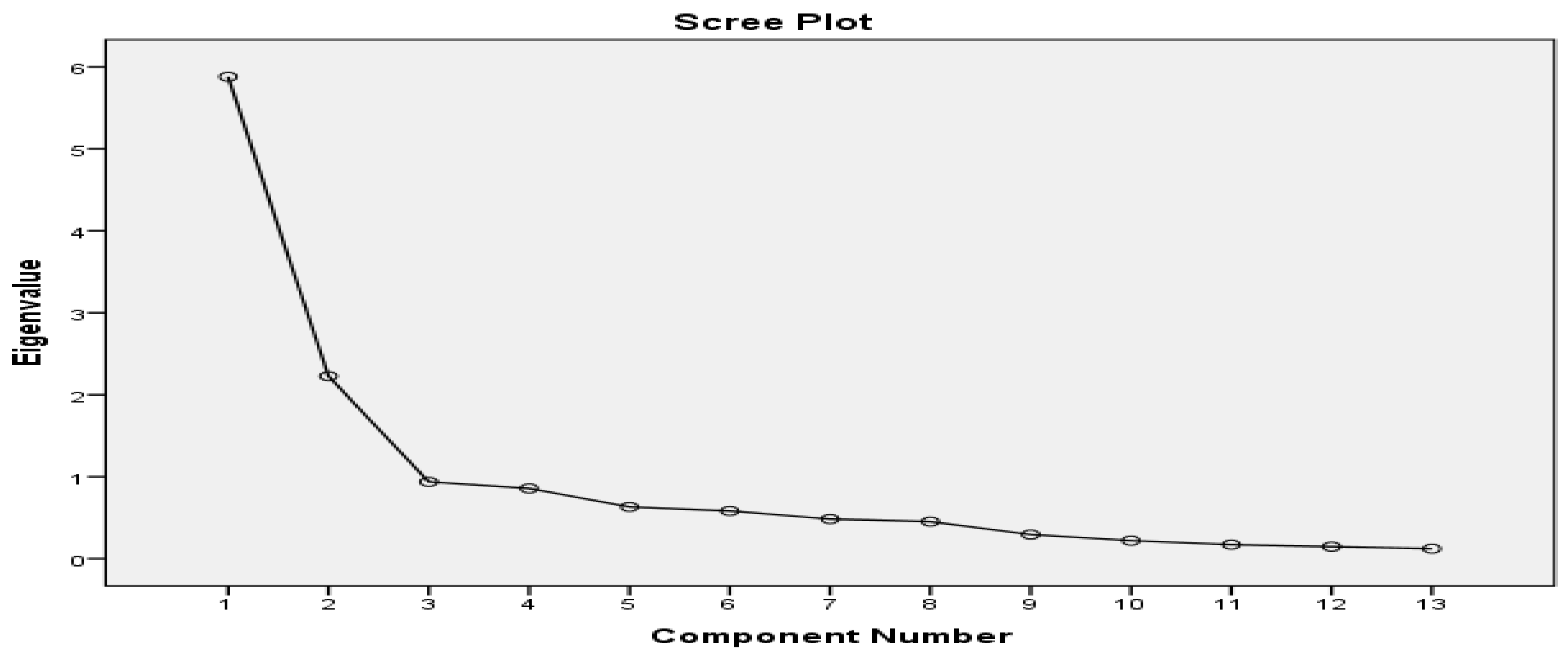
Table 5 presents the estimates regarding the interpretation of the total variance as derived after the estimation of the data at the factorial analysis stage. The Initial Eigenvalues column shows the eigenvalues and the percentage of variance that each eigenvalue can interpret. The column extraction sums of squared loadings provide the percentage of variance that each factor can explain if the Kaiser criterion is used to determine the factors.
The last column, the rotation sum of squared loadings, gives the percentage of variance, which is explained by the factors after rotation. The estimates in Table 5 indicate that 2 factors explain 62.35% of the total variation.
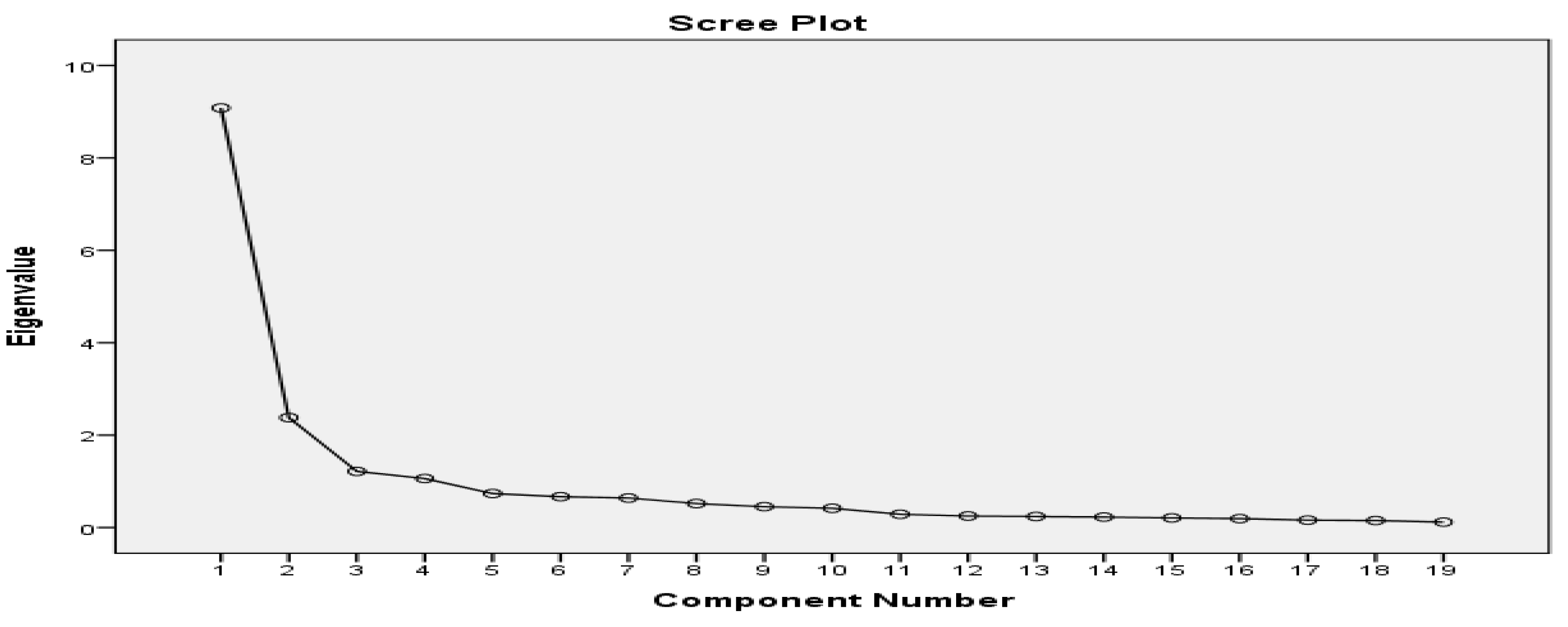
The estimates suggest that four factors explain 72.90% of the total variance of the custom model. The scree plot shown in Figure Chart 2 explains how many factors are used. The Initial Eigenvalues column shows the eigenvalues and the percentage of variance that each eigenvalue can interpret. The column extraction sums of squared loadings provide the percentage of variance that each factor can explain if the Kaiser criterion is used to determine the factors. The last column, the rotation sum of squared loadings, gives the percentage of variance, which is explained by the factors after rotation.
Figure 2.
Diagram Scree Plot for "Resources and Needs".
Discussion
According to what was presented regarding the organizational and informational behavior of the human resources of the General Hospital of Katerini, it is clear that the largest percentage of survey participants reported that they are satisfied with their work, which gives them beautiful feelings and therefore allows them to perform their duties with pleasure [4,23,31]. In addition, participants reported that during their work, they are cheerful but pay is a strong incentive [25,32], as if it were lower, they would not be so willing to continue in the same job. The people surveyed said that they would not want to work in their spare time [29,33] and were indifferent about whether they work because they enjoy it and that when they work [12,17,34], they do it for themselves [9,14,35,36]. The employees of the GHK moved in the same direction of indifference/neutral attitudes regarding whether the nature of their work motivates them to continue working, whether their employment agency is interested in their views and well-being[9,23,37], their goals and values and whether it shows the least interest in them[5,38].
Regarding the use of resources and the needs of human resources, a significant proportion of survey participants stated that they use the internet to update their knowledge, learn new skills and search for information about the public administration of psychiatric reform [18,19,39]. In addition, equally important was the percentage of people who stressed that the internet is used to search for information on staff status, possibilities for further development, and the diagnosis of people with mental illness. Treatment of people with mental illness, information on medications, epidemiology, educational material for patients, teaching work and training of colleagues, rules of ethics and various clinical issues[3,9,14,40]. In addition to the needs and sources of information, the main sources of information are the internet, workshops and seminars [4,9,42]. On the other hand, research participants [23,26,41,43] often use media, printed materials (magazines and encyclopedias), colleagues and searches on online search engines as sources of information searches. In addition, environmental factors, climate change, and the occupational workplace play key roles during pandemics, and burnout syndrome is correlated with job satisfaction [44,45]. The present research was limited not only to investigating the organizational behavior of the human resources of the General Hospital of Katerini but also to investigating their information literacy.
According to the results of the study, the majority of participants reported that they know what sources of health information exist online, while at the same time, they noted that they know where to find and how to find the necessary health information online. The percentage of survey participants who reported that they know how to use the internet to provide answers to health-related issues was also significant; therefore, it is understood that they know how to use the information they have found. With respect to the use of the internet, the people who participated in the survey stressed that they have the necessary knowledge and skills to evaluate the sources of information available online on health issues [34]. In addition, regarding altruism, the largest percentage of the human resources of the hospital under examination that participated in the survey reported that they provide information to strangers if they ask, do charities (donate money, clothes and related items), help strangers transport objects or luggage, hold the door of an elevator, and indicate a mistake to the cashier if a mistake is made [23,33].Prioritizing strangers helps people with disabilities and voluntarily cares for their neighbors' pets or children [38]. Finally, in the context of this research, the element of self-perceived performance of the employees of the General Hospital of Katerini was examined. The findings of this study showed that the majority of survey participants cope with the tasks assigned to them while fulfilling the obligations provided by their job descriptions.
Additionally, a large percentage of survey participants stressed that they perform the activities expected of them, meet the requirements for their job performance and participate in activities that may affect their job performance and evaluate their performance. At this point, it is useful to note that mainly people aged 36-45 years perform more of the activities expected of them than people aged 18-25 years or 26-35 years do. With respect to the sources and needs of the survey participants, the results of the research proved that secondary school seniors pay much more attention to the hospital library. In addition, the effect of educational attainment was significant for individuals' sense of having the necessary skills to assess health information sources found online. Finally, graduates of secondary and tertiary education stated that they perform all the necessary activities that are expected of them.
Limitations
In the context of this study, an attempt was made to investigate the organizational and informational behavior of the employees of the General Hospital of Katerini. In particular, the investigation focused on the psychiatric sector structure of that health care provider. The preparation of the study faced some problems initially with the identification of bibliographic references that frame the theoretical part of the research, as for some elements (organizational interest in the field of health, altruism and information or self-perceived performance and information in the field of health) presented, there is insufficient literature research. Other problems were the participants' ignorance of the importance of conducting research, the delay in obtaining permission for the research paper from the 3rd Health Region of Macedonia, which in turn led to delays in the preparation of the study, and the corrections of the questionnaire proposed by the director of the psychiatric clinic and the administrative director.
Conclusions
This study aimed to investigate the informational and organizational behavior of employees in the psychiatric sector structures of the General Hospital of Katerini. Adults working in this department were distributed a structured questionnaire developed by the researchers according to existing data in the international literature. The objectives were to understand basic concepts related to informational behavior, organizational behavior, and computer literacy, as well as to investigate the informational and organizational behavior of individuals employed in different departments/services. The study used an exploratory approach with an explanatory character to identify the elements that determine the informational and organizational behavior of the research participants. The quantitative approach was chosen to improve the understanding of healthcare workers' organizational interest and information literacy in seeking information on health-related issues. The majority of the respondents reported being satisfied with their work, which created beautiful feelings and made them work with pleasure. In terms of information literacy, the most important sources of information were media, printed materials, colleagues' knowledge, and internet searches. Surveys of the participants reported knowing what health information sources are available online and where to find necessary health information. They also had an altruistic attitude except when they had to lend money. The self-perceived performance of employees showed that participants coped with tasks assigned to them while fulfilling their expected obligations. The level of education (secondary or tertiary) affects people's feelings toward their work and their sense of how their employment provider treats them. The secondary school seniors paid attention to the hospital library, and educational level was an important factor influencing the image of survey participants in terms of the skills necessary to assess health information sources on the internet.
Author Contributions
Conceptualization, E.K. and I.A.; methodology, E.K. and I.A.; software, E.K. and I.A.; validation, E.K. and I.A.; formal analysis, E.K. and I.A.; investigation, E.K. and I.A.; resources, E.K. and I.A.; data curation, E.K. and I.A.; writing—original draft preparation, E.K. and I.A.; writing—review and editing, I.A.; visualization, E.K.; supervision, I.A.; project administration, I.A.; funding acquisition, I.A. All authors have read and agreed to the published version of the manuscript.
Funding
This research received no external funding.
Institutional Review Board Statement
Approval of the scientific board of the Ministry of Health of the third Health Region (22729/17-12-2028) of the research study with protocol number Δ3β/49894/27-12-2018
Informed Consent Statement
The study was conducted in accordance with the Declaration of Helsinki.
Data availability statement: The raw data supporting the conclusions of this article will be made available by the corresponding author upon reasonable request.
Acknowledgements
The authors are appreciated and are grateful for invitations from the Editors.
Conflicts of Interest
The authors declare that they have no conflicts of interest.
References
- Hegedűs M, Szivós E, Adamopoulus I, Dávid LD. (2024). Hospital integration to improve the chances of recovery for decubitus (pressure ulcer) patients through centralized procurement procedures. Journal of Infrastructure, Policy and Development. Eight (10): 7273. https://doi.org/10.24294/jipd.v8i10.7273. [CrossRef]
- Adamopoulos I, Syrou N, Lamnisos D, Boustras G. (2023d). Cross-sectional nationwide study in occupational safety & health: Inspection of job risks context, burn out syndrome and job satisfaction of public health Inspectors in the period of the COVID-19 pandemic in Greece. Saf Sci. 2023 Feb; 158:105960.
- Adamopoulos I, Lamnisos D, Syrou N, Boustras G. Public health and work safety pilot study: Inspection of job risks, burn out syndrome and job satisfaction of public health inspectors in Greece. Safety Science. 2022.
- Adamopoulos I, Frantzana A, Syrou N., 2024b. Climate Crises Associated with Epidemiological, Environmental, and Ecosystem Effects of a Storm: Flooding, Landslides, and Damage to Urban and Rural Areas (Extreme Weather Events of Storm Daniel in Thessaly Greece). Medical Sciences Forum. 2024; 25(1): seven. https://doi.org/10.3390/msf2024025007. [CrossRef]
- Adamopoulos IP, Bardavouras AN. Digital health literacy and quality of life association with perceptions about the disease COVID-19 in public health services. EUR J ENV PUBLIC HLT. 2024; 8(1):em0153. https://doi.org/10.29333/ejeph/14150. [CrossRef]
- Adamopoulos IP, Syrou NF. Administration safety and occupational risks relationship with job position training quality and needs of medical public health services workforce correlated by political leadership interventions. ELECTR J MED ED TE. 2023; 16(3):em2305. https://doi.org/10.29333/ejmets/13585. [CrossRef]
- Adamopoulos I., Bardavouras A., Syrou N. et al. Public Health Services, and the vaccination during COVID-19 period in Athens, Greece, 28 November 2023, PREPRINT (Version 1) available at Research Square [https://doi.org/10.21203/rs.3.rs-3660079/v1]. [CrossRef]
- Adamopoulos IP, Bardavouras AN, Syrou NF. Occupational safety, policy, and management in public health organizations and services. EUR J ENV PUBLIC HLT. 2023; 7(1):em0122. https://doi.org/10.29333/ejeph/12445. [CrossRef]
- Adamopoulos, I.; Frantzana, A.; Adamopoulou, J.; Syrou, N. Climate Change and Adverse Public Health affects Human Health and Water Resources. Environ. Sci. Proc. 2023, 26, 178. https://doi.org/10.3390/environsciproc2023026178. [CrossRef]
- Adamopoulos IP. Corruption and political interventions in public health authorities–Hellenic Republic Region of Attica: Conceptual analysis study. EUR J ENV PUBLIC HLT. 2023; 7(3):em0139. https://doi.org/10.29333/ejeph/13171. [CrossRef]
- Adamopoulos IP. Corruption and political interventions in public health authorities–Hellenic Republic Region of Attica: Conceptual analysis study. EUR J ENV PUBLIC HLT. 2023; 7(3):em0139. https://doi.org/10.29333/ejeph/13171. [CrossRef]
- Adamopoulos IP. Job Satisfaction in Public Health Care Sector, Measures Scales and Theoretical Background. EUR J ENV PUBLIC HLT. 2022; 6(2):em0116. https://doi.org/10.21601/ejeph/12187. [CrossRef]
- Khan, A. J. J.; Yar, S.; Fayyaz, S.; Adamopoulos, I.; Syrou, N.; Jahangir, A. From Pressure to Performance, and Health Risks Control: Occupational Stress Management and Employee Engagement in Higher Education. Preprints 2024, 2024121329. https://doi.org/10.20944/preprints202412.1329.v1. [CrossRef]
- Adamopoulos I, Syrou N, Climate Change, Air Pollution, African Dust Impacts on Public Health and Sustainability in Europe, European Journal of Public Health, Volume 34, Issue Supplement_3, November 2024, ckae144.1374, https://doi.org/10.1093/eurpub/ckae144.1374. [CrossRef]
- Sharma P, Adamopoulos I, Syrou N et al. The Impact of Health-Caregivers Emotional Nurturance on Cognitive Development in Preschoolers: A Nationwide Public Health Cross-Sectional Study, 12 December 2024, PREPRINT (Version 1) available at Research Square https://doi.org/10.21203/rs.3.rs-5600588/v1. [CrossRef]
- Hofstede, G., Hofstede, G. J., & Minkov, M. (2010). Cultures and Organizations. Software of the mInd. New York: McGrawHill.
- Schein, E. H. (2004). Organizational culture and leadership. (Third εκδ.). Jossey - Bass.
- Kotter, J., & Heskett, J. (1992). Corporate Culture and Performance. New York: Free Press.
- Hoffman, M. (2011). Does Higher Income Make You More Altruistic? Evidence from the Holocaust. The Review of Economics and Statistics, 93 (3), 876-887.
- Longo, D. R., Schubert, S. L., Wright, B. A., Lemaster, J., Williams, C. D., & Clore, J. N. (2010). Health information seeking, receipt, and use in diabetes self-management. Annals of Family Medicine, 8 (4), 334-340.
- Nesset, V. (2014). Depicting the intersection between information-seeking behavior and information literacy in the research process: a model. Bilal D & Beheshti J (Eds) New directions in children and adolescents’ information behavior research (pages 39-66). UK: Emerald Group Publishing Limited.
- Julien, H., & Williamson, K. (2011). Discourse and practice in information literacy and information seeking: gaps and opportunities. Information Research, 16 (1).
- Hepworth, M., Almehmadi, F., & Maynard, S. (2014). A reflection on the relationship between the study of people’s information behavior and information literacy: changes in epistemology and focus. at the Bruce C, Davis K, Hughes H, Partridge H & Stoodley I (eds) Information experience: approaches to theory and practice (Library and Information Science 9) (pages 51-65). UK: Emerald Group Publishing Limited.
- Yates, C., Stoodley, I., Partridge, H., Bruce, C., Cooper, H., Day, G. (2012). Exploring health infromation use by older Australians within everyday life. Library Trends, 60 (3), 460-478.
- Niedzwiedzka, B., Mazzocchi, M., Aschemann-Witzel, J., Gennaro, L., Verbeke, W., & Traill, W. B. (2014). Determinants of information behavior and information literacy related to healthy eating among internet users in five Europen countries. Information Research, 19 (3).
- Eriksson-Backa, K., Ek, S., Niemelä, R., & Huotari, M. L. (2012). Health information literacy in everyday life: a study of Finns aged 65–79 years. Health Informatics Journal, 18 (2), 83-94.
- Pálsdóttir, Á. (2010). The connection between purposive information seeking and information encountering. Journal of Documentation, 66 (2), 224-244.
- Andrews, J. E., Johnson, J. D., Case, D. O., Allard, S., & Kelly, K. (2005). Intention to seek information on cancer genetics. Information Research, 10 (4).
- Millward, P. (2003). The ’gray digital divide’: perception, exclusion and barriers of access to the internet for older people. First Monday, eight (7).
- Feufel, M. A., & Stahl, S. F. (2012). What do web-use skill differences imply for online health information searches? Journal of Medical internet Research, 14 (3).
- Khan K, Thapa PP, Adamopoulos IP. Awareness and practice regarding yoga among high school students in selected institutes of the Kathmandu District. PEDAGOGICAL RES. 2025; 10(1):em0225. https://doi.org/10.29333/pr/15475. [CrossRef]
- Ali G, Mijwil MM, Adamopoulos I, Buruga BA, Gök M, Sallam M. Harnessing the Potential of Artificial Intelligence in Managing Viral Hepatitis. Mesopotamian Journal of Big Data https://mesopotamian.press/journals/index.php/bigdata/article/view/484.
- Thapa PP, Thapa A, Ekrem EC, Bista AT, Lamichhane N, Adamopoulos IP. Analysing the link between emotional intelligence, education level, and quality of life in women of reproductive age. ELECTR J MED ED TE. 2024; 17(3):em2406. https://doi.org/10.29333/ejmets/14883. [CrossRef]
- Ali G, Mijwil MM, Bosco Apparatus Buruga, Abotaleb M, Adamopoulos I. A Survey on Artificial Intelligence in Cybersecurity for Smart Agriculture: State-of-the-Art, Cyber Threats, Artificial Intelligence Applications, and Ethical Concerns. Mesopotamian Journal of Computer Science 2024 Jul. 20 https://mesopotamian.press/journals/index.php/cs/article/view/455.
- Thapa P, Adamopoulos IP, Sharma P, Lordkipanidze R. Public hygiene and the awareness of beauty parlor: A study of consumer perspective. EUR J ENV PUBLIC HLT. 2024;8(2):em0157. https://doi.org/10.29333/ejeph/14738. [CrossRef]
- Benneh Mensah G, M. Mijwil M, Abotaleb M, Badr A, Adamopoulos I, S. Arafat A, Hameed M. Role of Food and Drugs Authority Act, 1992 (PNDCL 305B) and Legislative Instrument (LI) in Regulating Artificial Intelligence Based Medical Devices, Apps, and Systems to Prevent Negligence. BJIoT https://mesopotamian.press/journals/index.php/BJIoT/article/view/335.
- Mensah GB, Mijwil MM, Adamopoulos I, Bardavouras AN, Kayusi FO. Using Ghana’s Alternative Medical Healthcare Practice Act 2000 (Act 575) to Evaluate Doctor‒Patient Relationship and Medical Negligence Issues Arising from Integration of Artificial Intelligence in Healthcare. AJMS 2024 Jan. 30 https://journal.alsalam.edu.iq/index.php/ajbms/article/view/238.
- Mensah GB, M. Mijwil M, Adamopoulos I. Analysing Ghana’s Pharmacy Act, 1994 (Act 489) Regarding Quality Control and Negligence Liability Measures for Artificial Intelligence Pharmacy Systems. Babylonian Journal of Artificial Intelligence 2024 Feb. 15. https://mesopotamian.press/journals/index.php/BJAI/article/view/286.
- Mijwil M, Adamopoulos I, Pudasaini P. Machine learning Helps in Quickly Diagnosis Cases of "New Corona". MJAIH [Internet]. 2024 Jan. 16 [cited 2024 Dec. 31]; 2024:16-nine. Available from: https://mesopotamian.press/journals/index.php/MJAIH/article/view/239.
- Mohammed ashjan, Ghazi Metaab E, Muslim Aswad E, Ioannis Adamopoulos. The Role of Tumor Necrosis Factor Alpha in Adolescent Iraqi Children Infected with Toxoplasmasis. AJMS. 2024 Jan. 5; 3(1):37-44. https://journal.alsalam.edu.iq/index.php/ajbms/article/view/226.
- Adamopoulos, I.; Syrou, N.; Lamnisos, D.; Dounias, G. Public Health Inspectors Classification and Assessment of Environmental, Psychosocial, Organizational Risks and Workplace Hazards in the Context of the Global Climate Crisis. Preprints 2024, 2024120639. https://doi.org/10.20944/preprints202412.0639.v1. [CrossRef]
- Adamopoulos IP, Frantzana AA, Syrou NF. General practitioners, health inspectors, and occupational physicians’ burnout syndrome during COVID-19 pandemic and job satisfaction: A systematic review. EUR J ENV PUBLIC HLT. 2024;8(3):em0160. https://doi.org/10.29333/ejeph/14997. [CrossRef]
- Adamopoulos IP, Syrou NF, Adamopoulou JP. Greece’s current water and wastewater regulations and the risks they pose to environmental hygiene and public health, as recommended by the European Union Commission. Eur J Sustain Dev Res. 2024;8(2):em0251. https://doi.org/10.29333/ejosdr/14301. [CrossRef]
- Adamopoulou JP, Frantzana AA, Adamopoulos IP. Addressing water resource management challenges in the context of climate change and human influence. Eur J Sustain Dev Res. 2023;7(3):em0223. https://doi.org/10.29333/ejosdr/13297. [CrossRef]
- Adamopoulos I., Lamnisos D., Syrou N., Boustras G., Training Needs and Quality of Public Health Inspectors in Greece during the COVID-19 pandemic, European Journal of Public Health, Volume 32, Issue Supplement_3, October 2022, ckac131.373, https://doi.org/10.1093/eurpub/ckac131.373. [CrossRef]

Table 1.
Descriptive analysis of sources and needs.
| Frequencies (Valid Percent) | |||||||||
|---|---|---|---|---|---|---|---|---|---|
|
At all |
Little |
Enough |
Very |
Too |
Valid N |
Median |
Mean |
St. Dev. |
|
| Updating knowledge – new skills | 9 (7.1%) |
23 (18.3%) |
55 (43.7%) |
22 (17.5%) |
17 (13.5) |
126 | 3 | 2.98 | 1.258 |
|
Public Administration psychiatric reform (legislation, circulars, Opinions, etc.) |
6 (4.8%) |
32 (25.4%) |
48 (38.1%) |
22 (17.5%) |
18 (14.3%) |
126 |
3 |
2.83 |
1.146 |
|
Staff Regulations (salary matters, changes in service, register) |
8 (6.3%) |
38 (30.2%) |
43 (34.1%) |
27 (21.4%) |
10 (7.9%) |
126 | 3 | 2.94 | 1.045 |
|
Reassignment opportunities (transfers, secondments, new Positions, etc.) |
31 (24.6%) |
43 (34.1%) |
26 (20.6%) |
17 (13.5%) |
9 (7.1%) |
126 | 2 | 2.44 | 1.204 |
| Insurance-Labor | 16 (12.7%) |
39 (31%) |
30 (23.8%) |
33 (26.2%) |
8 (6.3%) |
126 | 3 | 2.83 | 1.146 |
|
Financial Management (Budget, costing, etc.) |
32 (25.4%) |
31 (24.6%) |
29 (23%) |
10 (7.9%) |
1 0.8%) |
125 | 2.50 | 3.06 | 5.529 |
|
Opportunities for further training (conferences- Workshops, postgraduate courses, specializations, etc.) |
17 (13.5%) |
29 (23%) |
39 (31%) |
21 (16.7%) |
20 (15.9%) |
126 |
3 |
2.98 |
1.258 |
| Research | 28 (22.2%) |
41 (32.5%) |
27 (21.4%) |
21 (16.7%) |
9 (7.1%) |
126 | 2 | 2.54 | 1.211 |
|
Statistical data (appropriations, funds, morbidity, epidemiological Etc.) |
36 (28.6%) |
37 (29.4%) |
28 (22.2%) |
19 (15.1%) |
5 (4%) |
126 |
3 |
2.88 |
1.211 |
|
Organizational issues in the psychiatric sector (Organizational chart, regulation of operation, etc.) |
15 (11.9%) |
40 (31.7%) |
31 (24.6%) |
25 (19.8%) |
15 (11.9%) |
125 |
3 |
2.88 |
1.211 |
|
Diagnosing people with mental illness |
14 (11.1%) |
22 (17.5%) |
33 (26.2%) |
39 (31%) |
18 (14.3%) |
126 | 3 | 3.20 | 1.213 |
| Treatment of people with mental illness | 10 (7.9%) |
28 (22.2%) |
27 (21.4%) |
34 (27%) |
27 (21.4%) |
126 | 3 | 3.32 | 1.256 |
| Medication information | 22 (17.5%) |
22 (17.5%) |
36 (28.6%) |
31 (24.6%) |
14 (11.1%) |
125 | 3 | 3.02 | 1.256 |
| Epidemiology | 24 (19%) |
27 (21.4%) |
41 (32.5%) |
22 (17.5%) |
12 (9.5%) |
126 | 3 | 2.73 | 1.311 |
|
Educational material for patients/instructions/protocols |
23 (18.3%) |
30 (23.8%) |
37 (29.4%) |
24 (19%) |
12 (9.5%) |
126 | 3 | 2.78 | 1.226 |
|
Teaching work/training of colleagues |
27 (21.4%) |
33 (26.2%) |
34 (27%) |
20 (15.9%) |
12 (9.5%) |
126 | 3 | 2.66 | 1.247 |
| Rules of conduct | 13 (10.3) |
32 (25.4%) |
24 (19%) |
40 (31.7%) |
17 (13.5%) |
126 | 3 | 3.13 | 1.233 |
| Clinical issues | 19 (15.1%) |
28 (22.2%) |
36 (28.6%) |
31 (24.6%) |
12 (9.5%) |
126 | 3 | 2.91 | 1.207 |
| Administrative matters | 28 (22.2%) |
32 (25.4%) |
25 (19.8%) |
28 (22.2%) |
13 (10.3%) |
126 | 3 | 2.73 | 1.311 |
Table 2.
Descriptive Analysis of Self-Perceived Performance.
| Frequencies (Valid Percent) | |||||||||
|---|---|---|---|---|---|---|---|---|---|
|
At all |
Little |
Enough |
Very |
Too |
Valid N |
Median |
Mean |
St. Dev. |
|
| I am coping adequately with the tasks assigned | 2 (1.6%) |
1 (0.8%) |
16 (12.7%) |
49 (38.9%) |
58 (46%) |
126 | 1 | 1.50 | 1.063 |
| I fulfil the obligations provided by | 1 | 13 | 41 | 71 | 126 | 5 | 4.44 | 0.711 | |
| my job description | (0.8%) | (10.3%) | (32.5%) | (56.3%) | |||||
| I perform the activities expected of | 13 | 42 | 71 | 126 | 5 | 4.46 | 0.677 | ||
| me | (10.3%) | (33.3%) | (56.3%) | ||||||
| I meet the typical performance | 10 | 47 | 69 | 126 | 5 | 4.47 | 0.641 | ||
| requirements of my work | (7.9%) | (37.3%) | (54.8%) | ||||||
| I participate in activities that | 3 | 3 | 27 | 39 | 54 | 126 | 4 | 4.10 | 0.975 |
| directly affect my performance | (2.4%) | (2.4%) | (21.4%) | (31%) | (42.9%) | ||||
| evaluation | |||||||||
| I ignore parts of the job I am | 90 | 20 | 4 | 7 | 5 | 126 | 1 | 1.55 | 1.063 |
Table 3.
KMO & Bartlett's Test of "Internal Motivation and Organizational Interest".
| KMO and Bartlett’s Test | ||
|---|---|---|
| Kaiser‒Meyer‒Olkin Measure of Sampling Adequacy | 0.853 | |
| Approx. Chi-Square | 1042.618 | |
| Bartlett's Test of Sphericity | Df | 78 |
| Mr. | 0.000 | |
Table 4.
Communalities in "internal motivation and organizational interest".
| Communalities | ||
|---|---|---|
| Initial | Extraction | |
| My work gives me beautiful feelings | 1.000 | 0.700 |
| I do my job with great pleasure | 1.000 | 0.554 |
| I feel happy during my work | 1.000 | 0.732 |
| I am cheerful when I work | 1.000 | 0.713 |
| Many times I feel that I want to work in my free time | 1.000 | 0.447 |
| I work because I enjoy it | 1.000 | 0.530 |
| When I work on something, I do it for myself | 1.000 | 0.471 |
| I am motivated by the work itself, not by its remuneration | 1.000 | 0.807 |
| The hospital where I work is interested in my views | 1.000 | 0.250 |
Table 5.
Total Variance Explained in "Internal Motivation and Organizational Interest".
| Component | Initial Eigenvalues | Extraction Sums of Squared Loadings | Rotation Sums of Squared Loadings |
||||
|---|---|---|---|---|---|---|---|
| Total | % of Variance |
Cumulative % |
Total | % of Variance |
Cumulative % |
||
| 1 | 5.879 | 45.226 | 45.226 | 5.879 | 45.226 | 45.226 | 5.462 |
| 2 | 2.226 | 17.126 | 62.352 | 2.226 | 17.126 | 62.352 | 3.733 |
| 3 | 0.937 | 7.207 | 69.559 | ||||
| 4 | 0.856 | 6.587 | 76.145 | ||||
| 5 | 0.631 | 4.856 | 81.001 | ||||
| 6 | 0.581 | 4.470 | 85.471 | ||||
| 7 | 0.483 | 3.717 | 89.187 | ||||
| 8 | 0.453 | 3.481 | 92.669 | ||||
| 9 | 0.294 | 2.258 | 94.926 | ||||
| 10 | 0.219 | 1.688 | 96.614 | ||||
| 11 | 0.171 | 1.316 | 97.930 | ||||
| 12 | 0.147 | 1.131 | 99.062 | ||||
| 13 | 0.122 | 0.938 | 100.000 | ||||
Disclaimer/Publisher’s Note: The statements, opinions and data contained in all publications are solely those of the individual author(s) and contributor(s) and not of MDPI and/or the editor(s). MDPI and/or the editor(s) disclaim responsibility for any injury to people or property resulting from any ideas, methods, instructions or products referred to in the content. |
© 2025 by the authors. Licensee MDPI, Basel, Switzerland. This article is an open access article distributed under the terms and conditions of the Creative Commons Attribution (CC BY) license (http://creativecommons.org/licenses/by/4.0/).
Copyright: This open access article is published under a Creative Commons CC BY 4.0 license, which permit the free download, distribution, and reuse, provided that the author and preprint are cited in any reuse.


