

Submitted:
15 December 2023
Posted:
18 December 2023
You are already at the latest version
Abstract
Since the start of the COVID-19 pandemic, the world has witnessed a digital revolution that has transformed the way information are broadcast and consumed. This rapid evolution was accompanied by an “infodemic” (Beaulieu, 2019), a transformation of workplaces (Lulli LG, 2021)and difficulties in managing information flows (Bendahan & Nader, 2020). In this scientific article, we examine the communication strategies adopted by hospital structures as they are perceived by staff, highlighting their psychological and professional experiences throughout the crisis period. The results of the study carried out among hospital staff (n=200) demonstrate that the perception of communication strategies is generally positive for 78.56% of participants (M=1.85). The assessments of the staff interviewed as for the effect of this communication on the psychological experience and on the management of professional tasks have a positive trend respectively (M=2.15) and (M=1.86)
Keywords:
Crisis
; Crisis communication of
; psychosocial risks
; covid19
; hospital staff
; infodemic
1. Introduction
The COVID-19 pandemic has presented unprecedented challenges for hospital staff across the world (Halley et al., 2021). For healthcare providers, the pandemic has brought increased pressure, lack of protective equipment, high infection risks and ongoing uncertainty (Lulli LG, 2021). In this context, communication practices become an essential component in the hospital environment and undoubtedly contribute to its configuration (Touhami, 2018).
During the pandemic, healthcare organizations have faced complex communications challenges. Information overload, frequent protocol changes, and conflicting guidelines created anxiety and confusion among staff. Additionally, a lack of transparent communication about infection risks, management decisions and action plans risks calling into question staff trust in the organization. Combined with lack of access to appropriate personal protective equipment (PPE), fear of being infected, and fear of infecting friends and family, uncertainty about the risks facing they were exposed, combined to inadequate communication, has led to increased anxiety, depression and post-traumatic stress among some staff (Elbay RY, 2020).
It should be noted that from May 2020, concerns about an information crisis linked to the pandemic were expressed by international organizations. On May 11, 2020, the UN published a guidance note on managing hate speech and rumors linked to the origin of the epidemic1. A week later, the WHO called on Member States to provide reliable and complete information on Covid-19, as well as the measures taken to respond to it, while emphasizing the need to combat the spread of false information and malicious cyber acts.2
On September 23, 2020, international organizations, such as the UN, UNESCO, UNICEF and WHO, jointly launched the alert on the term "infodemic" to warn of the risks linked to an overload of erroneous information both online and offline.
This media chaos (Bendahan & Nader, 2020) as communication researchers point out, is unprecedented (Devars, 2022) involving the individuals and organizations.
This article examines the impact of organizational communication in times of crisis, with a focus on the COVID-19 pandemic, and explores how preparedness must meet the demands of the pandemic via effective communication, which can act as a factor protective for the mental health of health professionals. We also analyze the challenges that healthcare organizations have faced in their communication during the pandemic.
2. Theoretical basis:
This section aims to establish the theoretical foundations of our research. It consists of clarifying the notion of risk and crisis, then focusing on the concept of “crisis communication” while highlighting its importance.
2.1. Risk and crisis
Risk is a polysemous concept, perceived differently depending on the authors. It can be defined as an absence of certainty (Sellnow, 2021), just like the ISO 31000 Standard of 2009, which characterizes it as the effect of uncertainty on the achievement of objectives3.Uncertainty here is the state, even partial, of lack of information concerning the understanding or knowledge of an event, its consequences or its likelihood.4
The crisis is multifunctional and affects different areas; this is a final phase resulting from uncontained dysfunctions, that is to say uncontrolled risks (Libaert, 2015).According to Sellnow (2021), the concept of crisis generally evokes the idea of a dramatic and unforeseen threat having a negative and widespread impact. Focusing on the definition put forward by Lerbinger (2012) for whom the crisis is “an unexpected event endangering the reputation and functioning of an organization” (Lerbinger, 2012). Libaret (2015) highlights two essential components of the crisis: the first is the unexpected nature and the surprise effect that the crisis generates. The second component relates to the entry of the organization concerned by the crisis onto the media scene. (Libaert, 2015), which calls for communication in times of crisis.
2.2. Communication in times of crisis
Although communicating seems to be a simple and accessible task, scientific advances in the field of communication demonstrate that it is actually a complex phenomenon and difficult to understand.(Sellnow, 2021)
To define risk and crisis communication, it is difficult to consider them separately, because they are closely linked (Lerbinger, 2012). As Bérubé expresses it, these two forms of communication are part of a continuity, where risk communication can serve as a solid preparatory basis in the event of the need for subsequent crisis communication. (Bérubé, 2016). In other words, they are intimately connected, and risk communication can prepare the ground for crisis communication if it becomes inevitable. The main distinction between these two processes lies in the timing of their implementation.
In the hospital environment, communication is considered a complex phenomenon, involving various operating modalities (verbal, non-verbal, para-verbal). Whether communication is verbal, non-verbal or para-verbal, it offers healthcare senior staff the opportunity to perceive the strengths and weaknesses of each member of the team, thus making it possible to provide personalized support. The communicative function must be integrated with that of the healthcare senior staff, because it constitutes the basis of coherent, productive, lasting and stable interpersonal relationships.(Baggio, 2011)
Furthermore, the success of an organization in general and the management of organizational risks more specifically rely on communication that is adapted and adjusted according to the evolution of the situation. This is why the healthcare executive plays the role of mediator and translator between the different stakeholders, such as management, medical and paramedical teams.(Kurschat, 2020)
Crisis communication is an essential component of risk management, complementing their identification from scientific sources and their control through policies.(Beaulieu, 2019). According to the World Health Organization (WHO), it is defined as a real-time exchange of information, advice and opinions between experts, community leaders, policy makers and populations exposed to risks5
The objective of crisis communication is to strengthen the decision-making capacities of managers for effective emergency management, with an emphasis on protection and prevention. This importance has been underlined by the International Health Regulations (IHR), which are based on three fundamental principles: providing information, mobilizing the public and reassuring them.
In the event of a public health emergency, particularly during an epidemic, risk communication strategies must involve all actors in the response. They must also maintain daily sources of information accessible to the media and the general population, select valid, relevant and understandable information, use communication media adapted to the needs of the populations, disseminate information and evaluate the quality of communication on risks. Guidelines from learned societies recommend that during a pandemic, such as COVID-19, all countries integrate risk communication into their core competencies and response strategies, while evaluating its performance.
3. Research question and hypotheses
Throughout the history of public health, we have witnessed major epidemics and health crises, such as the Spanish flu and the AIDS epidemic, which were widely publicized. However, the Covid-19 crisis stands out from previous ones because of the immense media coverage it has received. It attracted unprecedented media attention.(Devars, 2022), we then lead us to think that there is a before and an after Covid19.(Bendahan & Nader, 2020)
Additionally, this pandemic has taken place against a backdrop of significant transformation in the workplace (Lulli LG, 2021)and in our media environment where “communication is the key word; it imposes itself as a vital need, a survival tool and a remedy for isolation. Information and Communication Technologies are the essential catalyst and vector” (Bendahan & Nader, 2020). Which has had a considerable impact on our perception of health crises. These changes have also influenced our relationship to work (Devars, 2022) and highlighted the importance of communication strategies as an intermediary factor in this relationship to work to the extent that they promote or not the management of professional tasks and psychological experience.
Emergency communication during crises is an essential element in preparing hospital staff to adequately respond to the demands of the pandemic. It has been recognized as crucial for planning and responding to public health emergencies (Xiaohui Xin, 2020). Since the start of the COVID-19 pandemic, the world has witnessed a digital revolution that has transformed the way information is distributed and consumed. This rapid evolution was accompanied by an “infodemic” (Beaulieu, 2019)where misinformation has spread as quickly as established scientific facts.
Communication in the broad sense and internal communication within public health organizations have presented themselves as major challenges for public health structures and have had a significant impact on hospital staff. In addition to work readiness, communication has been identified as a controllable and modifiable factor in the workplace, which may be linked to psychiatric symptoms (Halley, et al., 2021). Healthcare professionals were faced with an overload of conflicting information, making information management complex and confusing.
In this scientific article, we focus on the communication strategies adopted by hospital structures throughout the pandemic, highlighting their psychological and professional experience to the extent that clear and effective communication between colleagues and supervisors is a key factor necessary to prevent poor mental outcomes (Lulli LG, 2021). We examine how hospital staff have had to cope with the increasing volume of information, sort out reliable sources from dubious information and maintain their own emotional and mental well-being.
Internal communication within healthcare establishments has become essential. Health managers and leaders had to ensure that essential information was communicated effectively to all staff members, requiring close coordination between different departments (Lebret, 2020). Work has demonstrated that providing adequate prior information to those working on the front line, explaining precise information about the disease, the risks of contagion and means of protection, establishing systematic diagnosis and treatment protocols with clear guidelines can help relieve stress and increase professional confidence.(Elbay RY, 2020)
However, despite efforts made to improve communication, hospital staff were under considerable stress due to hard work, fear of contagion and difficulty coping with conflicting information. Some healthcare workers have felt increased emotional pressure to provide quality care while navigating an ever-changing environment.
This article seeks to understand the relationship between communication strategies and the psychological experience of hospital staff through the study of work demands at the time of the crisis. The objective is to identify communication strategies in times of covid19 and to what extent they represent, according to the perception of hospital staff, a relevant psychosocial factor, negative or protective, contributing to professional stress during the current pandemic.
For the purposes of the study, we propose to test the following hypotheses:
- -
- We hypothesize that internal communication deployed during the COVID-19 pandemic has affected work and professional activity among public hospital staff, to the extent that it can facilitate or hinder the smooth running of work and the achievement of organizational objectives. (H1).
- -
- We hypothesize that internal communication deployed during the COVID-19 pandemic has had a multi-level impact on the psychological experience of public hospital staff, in the sense that it can alleviate or aggravate feelings of fear, anxiety and stress (H2).
4. Methodology :
The methodology part mainly deals with the study population, data collection method and analysis procedure.
4.1. Study sample
Within a total workforce of 1094 hospital professionals working in the provinces of Rabat, Témara, Salé, Kénitra, 200 people participated in the survey, thus representing 18.28% of the total. Among the respondents, the majority of participants were women (n=134, or 66%), while men represented 33% (n=66). The participants were mainly divided between doctors (n=99), nurses (n=89), psychologists (n=5) and technicians (n=6), with a predominance of workers in urban areas (91%) compared to rural areas (9%).

Chart 1.
Presentation of the study population.
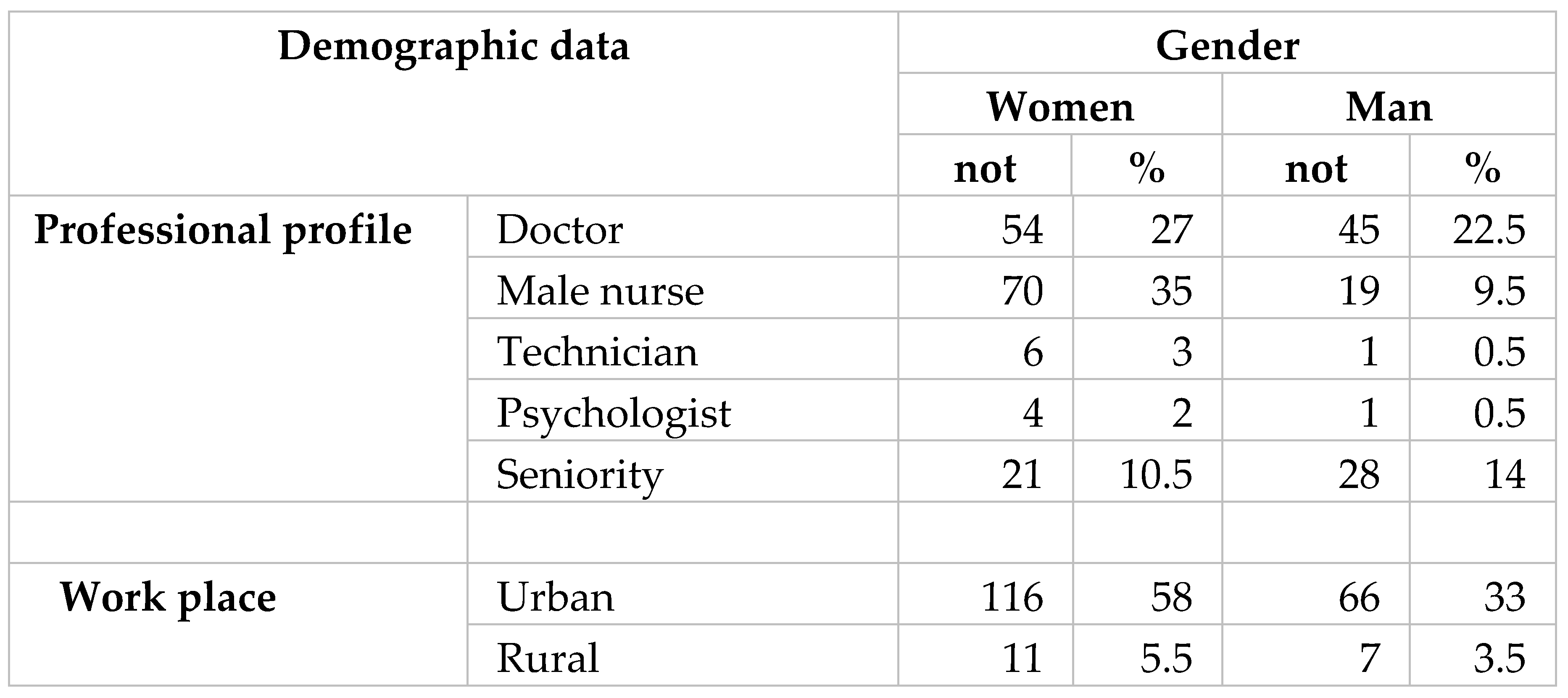
The average age of the participants was 34.66 years, with a variation of 5.76 years. Regarding seniority in the field, the average was 9.4 years, with a standard deviation of 5.68.
A key aspect of this study population was the nature of their work in relation to COVID19 cases. According to the results, 43.5% of participants (n=87) worked in special units and services dedicated to the management of COVID19 cases, while 56.5% (n=113) worked in regular services. Out of the 200 participants, 90% (n=180) had previously worked with COVID19 patients, while only 10% had never had to deal with such cases.
4.2. Data collection method and analysis procedure
We carried out a survey including 22 questions, which- in addition to the demographic aspects- covers four aspects. First, statements dealing with the communication strategy in times of crisis with (8 statements, e.g., “My establishment has implemented a specific communication strategy during times of crisis”). Second, aspect relating to the evolution of the communication strategy during the COVID-19 crisis (4 statements, e.g., “My establishment has implemented a specific communication strategy during times of crisis”). Third, psychological and professional experience of hospital staff that includes 8 assertions (8 statements, e.g., “The lack of information contributed to the intensification of my anxiety in the professional environment”). Fourth, two statements were devoted to the fake news aspect (2 statements, e.g., “The communication adopted by my establishment has mitigated the negative effect of fake news.
To validate the questionnaire, and after revision of the statements by two experts in communication and psychology, we have solicited different hospital staff members in the Rabat-Salé-Kénitra region, where our study was carried out. Interviews were conducted with a sample of 40 staff members to test the acceptability of the questions and to improve the presentation and wording of the survey. After the pilot phase, we prepared the final version of the questionnaire, which included 22 closed-ended and 2 open-ended questions to obtain qualitative feedback on risk communication strategies.
Concerning the calculation of internal consistency indices, the analyzes carried out reveal satisfactory results (α = .78).
The survey aimed to evaluate various aspects of communication strategies and psychological experience. To do this, we developed 22 questions covering these areas. Participants were asked to use a four-point Likert scale to express their agreement or disagreement with each statement. Numerical values were assigned as follows: “1 = Strongly Agree” and “2 = Agree” for positive ratings, while “3 = Disagree” and “4 = Strongly Disagree” were associated with negative evaluations. This gradual scale allowed respondents to qualify their answers, varying from “strongly disagree” to “strongly agree”. In order to avoid a neutral point, we chose a four-point scale.
Once the survey data is collected, we compiled for statistical analysis. The analysis was conducted using IBM SPSS Statistics version 25 software. It looked at various overall trends and made comparisons between significant groups. We started by analyzing the frequency of responses for each statement, followed by calculating the positive/negative trend by aggregating the averages of statements. To evaluate the overall attitude, we calculated the weighted average of the evaluations for each dimension, in particular the perception of communication strategies and psychological experience.
5. Presentation and analysis of findings
5.1. Communication strategies in times of crisis from the view of hospital staff?
This part summarizes the results that include the perception of hospital staff regarding the communication strategy adopted by the healthcare provider structures.
- ▪
- Communication strategies
Chart 2.
Perception of hospital staff regarding the communication strategy.
| Positive | Negative | |
| My establishment has implemented a specific communications strategy during times of crisis | 136(68%) | 64(32%) |
| Internal communication contributed to information sharing | 174(87%) | 26(13%) |
| During the pandemic, I had the right information at the right time through the communication supports put in place by my establishment | 155(77.5%) | 45(22.5%) |
| The circulation of information relating to covid-19 within my workplace is satisfactory | 168(84%) | 32(16%) |
| I felt overwhelmed by the flow of institutional information relating to the pandemic | 115(57%) | 85(425%) |
| My establishment was able to communicate well about the covid-19 pandemic internally | 178(89%) | 22(11%) |
| The communication adopted by my establishment facilitated crisis management | 189(94.5%) | 11(5.5%) |
| My establishment was able to communicate well about the covid-19 pandemic externally | 142(71%) | 58(29%) |
The overall perception of the communication strategy is evaluated positively by 78.56% of participants with an average of M=1.85. The results of the study indicate that 189 participants (94.5%) confirmed that communication approaches not implemented by their hospital structures have facilitated crisis management. Similarly, healthcare staff viewed internal communication practices positively with 178 occurrences (i.e. 89%).
A large majority of respondents (174 participants, i.e. 87%) believed that the communication methods put in place by their establishments contributed to the sharing of information. Additionally, 168 participants (84%) expressed satisfaction with the quality and dissemination of pandemic-related information on their workplace, highlighting that they had access to the necessary information at the right time through social media channels. communication established by their establishments (155 participants, i.e. 77.5%).
Despite the positive trend in the results, we were concerned by the percentage of participants who believe that their establishment's communication strategy was unsatisfactory and did not contribute to the sharing of information or the management of the crisis. Indeed, according to the results, 21.43% of participants described the communication strategy as unsatisfactory.
- ▪
- The impact of communication strategy on professional practices
Chart 3.
The impact of communication strategy on professional practices.
| Positive | Negative | |
| Internal communication (circulars, meetings, posters, etc.) adopted by my establishment has facilitated the management of my professional tasks | 177 (88.5%) | 23(11.5%) |
| Internal communication contributed to mastering the new professional tasks imposed by the pandemic | 178(89%) | 22(11%) |
| The communication strategy of my establishment has reduced task ambiguity professionals linked to the pandemic | 176(88%) | 24(12%) |
| I was well informed about the pandemic and the actions implemented to deal with it in my workplace | 171(85.5%) | 29(14.5%) |
The COVID-19 pandemic has considerably complicated the exercise of professional responsibilities of hospital staff. Rapid changes in protocols and the instant adoption of new protective measures have created major challenges in carrying out their tasks. According to the evaluations of participants in the field study, the communication strategy implemented by health establishments greatly reduced the uncertainty surrounding professional practices (76 occurrences, i.e. 88%). An in-depth analysis of the responses highlights the positive impact of this communication strategy on situation control (178 occurrences, i.e. 89%), management of challenges (177 occurrences, i.e. 88.5%) as well as access to essential information to deal with difficulties linked to the pandemic (171 occurrences, i.e. 85.5%).
In light of the results obtained, it is clear that the hospital staff members who participated in our study conclusively confirm that the communication strategies implemented during the period of the COVID-19 pandemic acted as catalysts to manage the health crisis and successfully accomplish the professional missions incumbent upon them. This corroboration provides substantial support for our prior hypothesis,which postulated on theInternal communication initiatives established during this exceptional period would have a direct impact on the work dynamics and professional commitment of staff operating within public hospitals.
5.2. Psychological experience of hospital staff
Chart 4.
The psychological experience of hospital staff.
| Positive | Negative | |
| The lack of information contributed to the intensification of my anxiety in the professional environment | 90(45%) | 100(55%) |
| Internal communication contributed to increasing my feelings of security | 171 (85.5%) | 29(14.5%) |
| My establishment's communication strategy reduced the pressure due to the health crisis | 176(88%) | 24(12%) |
| I felt reassured by the management and communication during the months following the declaration of the state of health emergency | 150(75%) | 50(25%) |
Chart 4 highlights staff evaluations of the influence of the communication strategy on their psychological experience at work. Despite the pressures and disruptions caused by the pandemic, the hospital employees participating in the study perceive the impact of communication positively. Analysis of the results reveals that 85.5% of them affirm that the communication strategy played a favorable role in strengthening their feeling of security at work. Furthermore, for 88% of participants, the communication strategy acted as a moderator reducing the pressure caused by the COVID-19 pandemic.
The findings presented in this Chart provide substantial validation to our hypothesis (H2). In fact, they highlight that the implementation of internal communication strategies during the period of the COVID-19 pandemic has had effects at several levels on the psychological experience of staff members working in public hospital establishments.
The in-depth analysis of the results significantly demonstrates that this proactive internal communication exerted a profound influence in alleviating negative emotions such as fear, anxiety and stress among frontline healthcare professionals. These findings align harmoniously with previous work such as that of (Afulani PA, 2021) who have also observed similar benefits from targeted communication approaches during times of health crises.
These findings strengthen our understanding of the mechanisms by which effective internal communication can act as a psychological bulwark for hospital staff, supporting them in moments of extreme tension. They highlight the crucial importance of organizational communication in managing health crises and highlight the need to develop specific communication strategies to improve the emotional resilience of medical staff, as discussed by(Parlapiano, 2020)
6. Discussion and conclusion:
The results of the study highlight the crucial importance of the communication strategy in managing the crisis caused by the COVID-19 pandemic within hospital establishments. The overall positive perception of the participants regarding the communication strategy and its positive effects on different aspects of their work and their psychological experience are significant indicators of its impact.
These findings are consistent with findings from other studies that have examined the effectiveness of preparedness in responding to the pressures and demands of the pandemic(Afulani PA, 2021). A study conducted by(Parlapiano, 2020)also noted a positive correlation between the communication approaches implemented and the psychological health of hospital staff. The results of the present study demonstrate that establishing clear and coherent communication can play a major role in how healthcare professionals perceive and respond to pandemic-related challenges, supporting the work of (Halley, et al., 2021)
In addition, the results regarding the reduction of professional uncertainty,the ability to master situations and meet challenges are in line with the findings of previous research conducted by(Lulli LG, 2021)which showed that well-planned communication approaches have a direct impact on employees' confidence and ability to adapt during times of crisis.
The feeling of personal effectiveness, one of the sources of which is the mastery of professional tasks, was raised by the awareness video launched by the Ministry of Health6.
The study also demonstrated that the communicative aspect is not limited to an information mission, but which can be an intermediary factor favoring organizational determinants known by their direct influence on the psychological health of workers. This is the role of communication practices in the genesis of the feeling of organizational support(Jour, A.; Paquet, S.; Scott, N.; Hambley, L., 2012).
The current study and the results it presents reinforce the idea that communication plays a central role in managing crises like the COVID-19 pandemic. Effective communication approaches not only contributed to information sharing and crisis management, but also had a positive impact on reducing uncertainty, controlling situations and providing psychological support to hospital staff. These results indeed attest that internal communication, orchestrated in a thoughtful manner and adapted to the unprecedented circumstances of the pandemic, played a crucial role in the fluidity of operations within hospital establishments. Not only has it helped to alleviate the challenges inherent in managing the health crisis, but it also acted as a driving force promoting efficiency in the execution of professional tasks. However, it is crucial to recognize areas where improvement is needed to ensure the communications strategy meets the needs of all staff members.
| 1 | “UN Guidance Note on Countering Hate Speech Related to Covid-19,” May 11, 2020, https://www.un.org/en/genocideprevention/documents/Guidance%20on%20Covid-19%20related%20 Hate%20Speech%20French.pdf. |
| 2 | Statement from the 73rd Assembly of the World Health Organization: “Response to Covid-19” (p. 4), May 19, 2020, https://apps.who.int/gb/ebwha/pdf_files/WHA73 / A73_R1-fr.pdf |
| 3 | Risk is often characterized by reference to potential events and consequences or a combination of the two. » (International Organization for Standardization, 2010, p. 1) |
| 4 | International Organization for Standardization, 2010, p. 2 |
| 5 | World Health Organization (2018):Risk communication during health emergencies: WHO strategic and practical guidelines for risk communication in emergencies |
| 6 |
References
- Afulani PA, Gyamerah AO, Nutor JJ, Laar A, Aborigo RA, et al. (2021). Inadequate preparedness for response to COVID-19 is associated with stress and burnout among healthcare workers in Ghana.. PLOS ONE, 4(16). [CrossRef]
- Beaulieu, M. (2019). Pandémie de COVID-19 : appel à l’engagement des universitaires dans l’espace public. Santé Santé Publique(33), 829-833. [CrossRef]
- Baggio, S. (2011). Psychologie sociale, concepts et expériences. Editions de Boeck.
- Bendahan & Nader. (2020, 12 2). "Communication de crise, médias et gestion des risques du Covid-19". Dans B. &. Nader, COVID-19 Au prisme de la communication digitale au Maroc (p. 13). L'Harmattan. Retrieved from http://www.refsicom.org/759.
- Bérubé, P. (2016). Communications en situation de crise : Caractéristiques des crises et des risques. Communications en situation de crise : Caractéristiques des crises et des risques, 27. Université du Québec à Montréal.
- Devars, T. (2022, janvier 5). Médiatisations et polarisations dans la crise du Covid-19. (F. ALLARD-HUVER, Intervieweur) CAIRN. [CrossRef]
- Elbay RY, Kurtulmuş A, Arpacıoğlu S, Karadere E. (2020, Aout). Depression, anxiety, stress levels of physicians and associated factors in Covid-19 pandemics. Psychiatry Research, 290.
- Halley, MC; Mathews, KS ; Diamant, LC ; Linos, E.; Sarkar, U. ; Mangurian, C.; Sabry, H.; Goyal, MK; Olazo, K.; Miller, EG; et coll. (2021). The Intersection of Work and Home Challenges Faced by Physician Mothers during the Coronavirus Disease 2019 Pandemic: A Mixed-Methods Analysis. J. Santé des femmes(30), pp. 514-524.
- Jour, A. ; Paquet, S.; Scott, N.; Hambley, L. (2012). Exigences perçues des technologies de l'information et de la communication (TIC) sur les résultats des employés : l'effet modérateur du soutien organisationnel des TIC. J. Occup. Santé Psychol. 2012, 17, 473. Journal of Occupational Health Psychology, 4 (17), 473–491. [CrossRef]
- Kurschat, C. (2020). Crise sanitaire 2020 : Entre Sens et Résilience organisationnelle, le cœur d’une équipe de soins. Projectics / Proyéctica / Projectique, (HS), pp. 11-32. [CrossRef]
- Lebret, A. (2020, Mai). OVID-19 pandemic and derogation to human rights. Journal of law and the biosciences. [CrossRef]
- Lerbinger, O. (2012). The Crisis Manager Facing Disasters, Conflicts, and Failures (éd. 2). London: Routledge.
- Libaert, T. (2015). La communication de crise. (Éd. 4). Paris : Dunod. https://www.dunod.com/sites/default/files/atoms/files/9782100722310/Feuilletage.pdf.
- Lulli LG, Giorgi G, Pandolfi C, Foti G, Finstad GL, Arcangeli G, Mucci N. (2021). Identifying Psychosocial Risks and Protective Measures. Durabilité, 13(24). [CrossRef]
- Matthew W. Seeger Timothy L. Sellnow. (2021). Theorizing Crisis Communication, (éd. 2). John Wiley and Sons.
- Mercier, A. (2021). « Carte blanche à Arnaud Mercier : pandémie de covid19 et infodémie de fake news ». Revue internationale d’intelligence économique, 13(1), pp. 15-36.
- Parlapiano, I. (2020). L’influence de la communication interne sur les risques psychosociaux durant une crise sanitaire. Étude de cas : Bio-Planet Mons. (U. c. Louvain, Éd.).
- Touhami, S. (2018). La communication organisationnelle en milieu hospitalier au Maroc. Dans M. B. Abderrahmane Amsidder, La communication publique en Afrique : regard croisé (p. 99). Agadir: LARLANCO.
- Xiaohui Xin, J. M. (2020, 12 12). Perception survey of Crisis and Emergency Risk. Research Square, p. 10.
Disclaimer/Publisher’s Note: The statements, opinions and data contained in all publications are solely those of the individual author(s) and contributor(s) and not of MDPI and/or the editor(s). MDPI and/or the editor(s) disclaim responsibility for any injury to people or property resulting from any ideas, methods, instructions or products referred to in the content. |
© 2023 by the authors. Licensee MDPI, Basel, Switzerland. This article is an open access article distributed under the terms and conditions of the Creative Commons Attribution (CC BY) license (http://creativecommons.org/licenses/by/4.0/).
Copyright: This open access article is published under a Creative Commons CC BY 4.0 license, which permit the free download, distribution, and reuse, provided that the author and preprint are cited in any reuse.


