
Submitted:
31 December 2024
Posted:
06 January 2025
Read the latest preprint version here
Abstract
Actually, liver pathologies pley a central role in medicine. So are differents studies in this research direction. In liver pathology, including liver cirrhosis, during illnes status, are implied three cytochrome P450 (P450 or CYP). In this direction play a role also gene families CYP 1, CYP2 and CYP3. Liver diseases are associated with metabolic activity changes. In cirrhosis diagnostic, more important are differents directions, including laboratory tests or management ideas, including historical key points.
Keywords:
liver
; pathology
; diagnosis
; investigations
; trends
1. Introduction
The liver play a significant role in research studies with applicabilitty in practice. Scientific knowledges referring to the severity of liver cirrhosis, as a disease with a bad prognostic on the public health, is still not well characterized. [1] Good to mention that in addition, in cirrhosis, that liver fibrosis is a common fact, that can conduct into an irreversible status, with implications in developing liver cancer. In recent years, there has been significant progress in basic and clinical research on liver cancer, leading to the identification of various signaling pathways involved in tumorigenesis. The signs and symptoms of patients diagnosed with cirrhosis, are promptly establish by medical specialists. [Figure 1]
Cytochrome P-450 (CYPs) is involved in the metabolism of drugs, chemicals and endogenous substrates. Another specific point, good to mention, reffers to cytochrome P-450 (CYPs) and CYP-mediated activation of toxic drugs with their metabolites which induces hepatotoxicity. More than, good to mention the usefulness of measuring CYP activity.[2,3] Liver diseases are associated with a decreasing drug elimination. [4,5,6] There are known that in research studies in liver pathologies, the prioritaire objectives were to determine the content and the activity of four CYP isoenzymes.[7,8,9] Studies results show that the content and the catalytic activity of CYP enzymes are without doubts altered in cirrhosis.
Taking in consideration the cause of cirrhosis could be possible a sub-classification as below. [Figure 2]
2. Cirrhosis and CYP Isoenzymes
Cirrhosis, as a curentlly disease, structurally is characterized by fibrosis and neoformation noduls in the liver architecture. More than, liver cirrhosis it is known as a injury, with alterations in lobular organization in liver. [10,11,12] Factors, such as life style, or environmental factors, play a great role in liver normally functionality. [13,14] Finally, after a long term alterations in liver functionalitty, develop in time cirrhosis, as a complex diseases. [15,16,17] The cause in cirrhosis of mortality, are illnes complications, such portal hypertension. [18,19]
Liver fibrosis it is known as a stage with an excessive deposition of connective tissue proteins in annex gland structure. Interstitial collagens in the extracellular matrix of the liver has been discovered in this liver pathology. The long term stimuli involved in the initiation of fibrosis leads to oxidative stress. Next point that concure to disease, include mediators of molecular events involved in the pathogenesis of hepatic fibrosis. These processes lead to cellular injury and initiate inflammatory responses. As a response, cytokines and growth factors play a role as trigger activation and transformation of resting hepatic stellate cells into myofibroblast like cells. At the end of the ill liver pathologically process, could be observe an excessive synthesis of connective tissue proteins, including collagens. Uncontrolled and hepatocyte fibrosis results in distortion of lobular architecture of the liver. Pathologists show the nodular formations in the liver as a diagnosis of cirrhosis. Finally, develop hepatocellular carcinoma. In the pathogenesis of hepatic fibrosis, molecular mechanisms play a role. [20,21] This scientifically team, include a pathologist, a gastroenterologist, a liver surgeon and additionally specialists. Therapy methods and drugs, are more important, in patients ill life.[22,23,24] Diferential diagnostic in liver pathology as cirrhosis, include research directions reffering to various medical fields with implication in this way. For monitorisation of liver disease, abdominal ultrasonography is useful. [25,26], [Figure 3]
3. Trends in Cirrhosis Diagnosis
We are lucky to mention about telemedicine as a nowadays trend in cirrhosis diagnosis. For their purpose we can mention that include specific directions, such us teleconsultation, telemonitoring and televisits. [27] .[Figure 4]
Machine learning algorithms and more than, artificial intelligence with their practicum application are used for in decompensated cirrhosis and are in development for the future.[28]
In all of the world, are statistically estimated people diagnosed with chronic liver disease. [29]
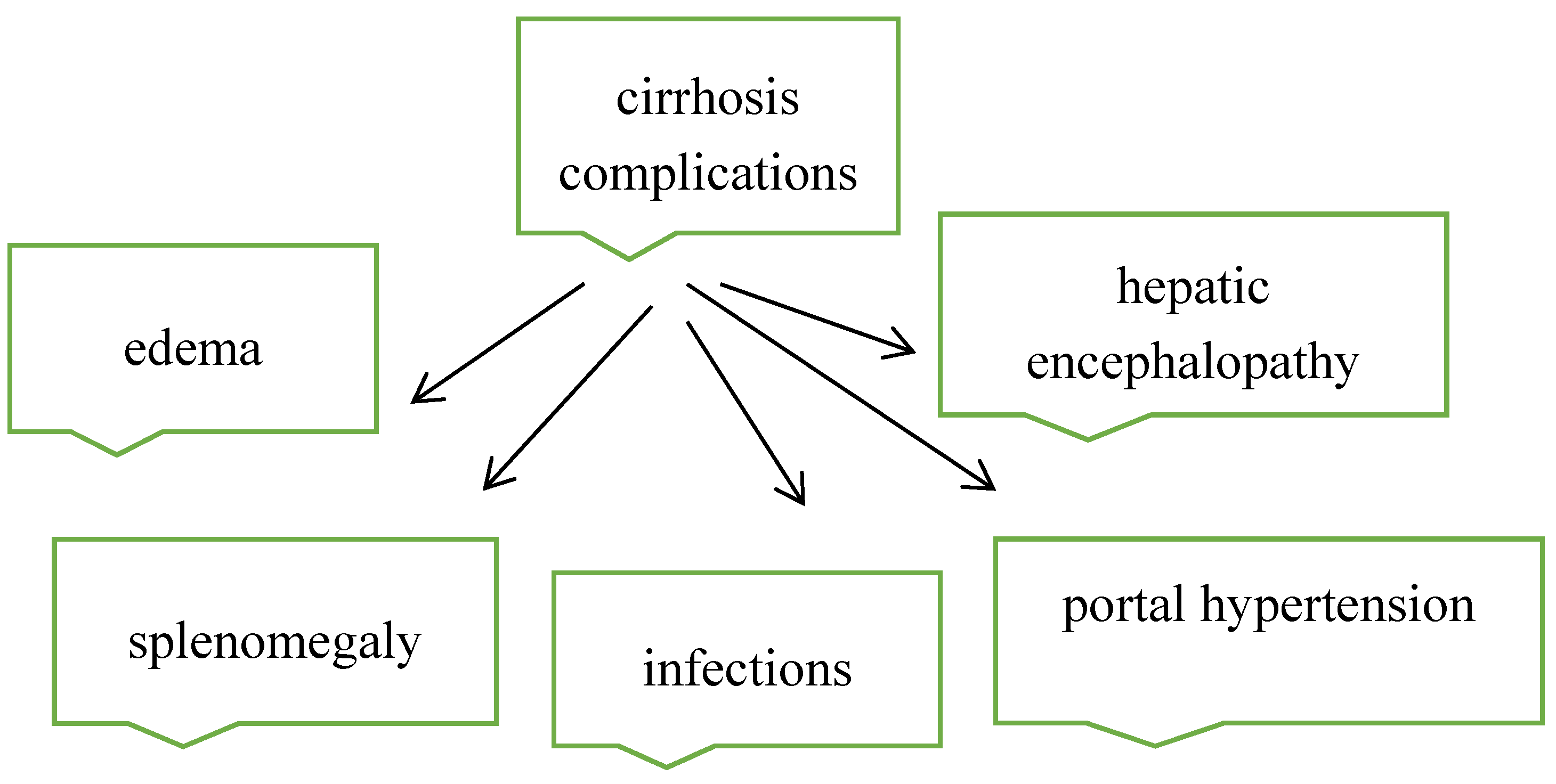
For the increased in cirrhosis cases, associated morbidity causes include acute decompensation events, it is going to finally status namely mortality. For understanding the pathophysiological directions in cirrhosis diagnosis, the management play a central role.[30] .[Figure 5]
Complications in liver cirrhosis are various, from simple to dangerous for the pacient life. Good to mention associated comorbidities in hepatic cirrhosis. A medical team could be able to decide about specific conduite., including a proper treatment. Management is also a great point, including their directions.[31,32]
A good management in hepatic cirrhosis complications, include the use of specific medical guidelines.[33,34]
Management directions reffers to application of a educational programme in diagnosed patients, for them faster recovery and including back in social medium For this purpose, management protocols with practicum applications are importants.
4. Paraclinic Key Points in Cirrhosis Diagnosis
In negative progression of liver pathology, into cirrhosis, it is know about AST/ALT ratio. As plaboratorytests for diagnostic in cirrhosis, are important results for alkaline phosphatase (ALP), 5'- nucleotidase, and gamma-glutamyl transferase (GGT). AST/ALT ratio in differents forms of chronic hepatitis with exception of alcoholic hepatitis, is less than 1. Laboratory results show us that in chronic hepatitis which conduct to cirrhosis, there is a reversal of this AST/ALT ratio. Another laboratory test namely alkaline phosphatase (ALP), 5'- nucleotidase, and gamma-glutamyl transferase (GGT) are important for diagnostic in liver pathology. [35] More than, results from specific tests such as aminotransferase; aspartate aminotransferase (AST); alanine aminotransferase (ALT);play a great role in . cirrhosis diagnostic and in diferential diagnostic. [36] Gamma fraction from immunoglobulins, is also good to mention in liver pathology diagnostic. [37]
There are known about new specific laboratory tests performing for cirrhosis diagnostic. So, serology and genetical tests such as PCR technique and autoimmune antibodies including anti-nuclear antibodies (ANA) and anti-smooth muscle antibodies (ASMA), anti-liver-kidney microsomal antibodies type 1 (ALKM-1).. Ferritin and transferrin saturation for hemochromatosis, ceruloplasmin, Alpha 1-antitrypsin level, and protease inhibitor phenotype for alpha 1-antitrypsin deficiency, pley a great point in diagnostic of cirrhosis.
Imagistical methods including ultrasound, CT, MRI, and transient elastography compose a specific part in the paraclinic diagnostic of cirrhosis Ultrasonography is a easier, faster and method for descovering demages in the liver structure.With this method, is possible to detect specific nodularity and beside also an increased echogenicity in liver structure.. [38] Aas a great curently imagistical method, MRI can also be used for detection liver alterations. For example, with MRI coud be possible to detect specific fat deposits in the liver consisit of hemochromatosis, steatosis, and possible others . [39,40]
5. Conclusions
Patient lifestyle changes, unfortunately cannot cure cirrhosis. Lifestyle changes, and a proper diet, conduct to amelioration of diseases simptoms. Regulate protein intake according to specialised doctor's indications and some medical recommandations, will be proper in the treatment of cirrhosis. Relatively recently research investigations try to elucidate the signal transduction pathways that link hepatocytes alterations including cellular disfunctionality. Knowing historical key points from the past time, for next coming period, hope to find and to apply educational programs in order to induce alcoholic persons to renounce to this dangerous consumtions witch play a role in liver damages with cirrhosis instalation.
References
- Kleinbloesem CH, van Harten J, Wilson JP, Danhof M, van Brummelen P, Breimer DD. Nifedipine: kinetics and hemodynamic effects in patients with liver cirrhosis after intravenous and oral administration. Clin Pharmacol Ther. 1986;40:21–8. [CrossRef] [PubMed]
- Morgan DJ, McLean AJ. Clinical pharmacokinetic and pharmacodynamic considerations in patients with liver disease. An update. Clin Pharmacokinet. 1995;29:370–91. [CrossRef]
- Lamba JK, Lin YS, Schuetz EG, Thummel KE. Genetic contribution to variable human CYP3A-mediated metabolism. Advanced Drug Delivery Reviews. 2002;54:1271–94. [CrossRef]
- George J, Liddle C, Murray M, Byth K, Farrell GC. Pre-translational regulation of cytochrome P450 genes is responsible for disease-specific changes of individual P450 enzymes among patients with cirrhosis. Biochem Pharmacol. 1995;49:873–81. [CrossRef] [PubMed]
- Guengerich FP, Turvy CG. Comparison of levels of several human microsomal cytochrome P-450 enzymes and epoxide hydrolase in normal and disease states using immunochemical analysis of surgical liver samples. J Pharmacol Exp Ther. 1991;256:1189–94. [CrossRef] [PubMed]
- Lown K, Kolars J, Turgeon K, Merion R, Wrighton SA, Watkins PB. The erythromycin breath test selectively measures P450IIIA in patients with severe liver disease. Clin Pharmacol Ther. 1992;51:229–38. [CrossRef]
- Kleinbloesem CH, van Brummelen P, Faber H, Danhof M, Vermeulen NP, Breimer DD. Variability in nifedipine pharmacokinetics and dynamics: a new oxidation polymorphism in man. Biochem Pharmacol. 1984 Nov 15;33(22):3721–3724. [CrossRef]
- Kleinbloesem CH, Van Harten J, Van Brummelen P, Breimer DD. Liquid chromatographic determination of nifedipine in plasma and of its main metabolite in urine. J Chromatogr. 1984 Jun 8;308:209–216. [CrossRef]
- van Harten J, van Brummelen P, Wilson JH, Lodewijks MT, Breimer DD. Nisoldipine: kinetics and effects on blood pressure and heart rate in patients with liver cirrhosis after intravenous and oral administration. Eur J Clin Pharmacol. 1988;34:387–94. [CrossRef]
- Bircher J, Benhamou JP, McIntyre N, Rizzetto M, Rodes J, editors. Oxford Textbook of Clinical Hepatology. 2nd Edition Oxford University Press; 1999.
- Sherlock S, Dooley J, editors. Diseases of the Liver and Biliary System. 11th Edition Blackwell Science; Oxford, UK; Malden, MA: 2002.
- Schiff ER, Sorrell MF, Maddrey EC, editors. Schiff’s Diseases of the Liver. 9th Edition Lippincott, Williams & Wilkins; Philadelphia: 2003.
- Desmet VJ, Roskams T. Cirrhosis reversal: a duel between dogma and myth. J Hepatol. 2004;40:860–7. [CrossRef]
- Wanless IR, Nakashima E, Sherman M. Regression of human cirrhosis. Morphologic features and the genesis of incomplete septal cirrhosis. Arch Pathol Lab Med. 2000;124:1599–607. [CrossRef]
- Poynard T, Bedossa P, Opolon P. Natural history of liver fibrosis progression in patients with chronic hepatitis C. The OBSVIRC, METAVIR, CLINIVIR, and DOSVIRC groups. Lancet. 1997;349:825–32. [CrossRef] [PubMed]
- Bellentani S, Pozzato G, Saccoccio G, et al. Clinical course and risk factors of hepatitis C virus related liver disease in the general population: report from the Dionysos study. Gut. 1999;44:874–80. [CrossRef] [PubMed]
- Bellentani S, Saccoccio G, Costa G, et al.The Dionysos Study Group Drinking habits as cofactors of risk for alcohol induced liver damage. Gut. 1997;41:845–50.
- Fracanzani AL, Fargion S, Romano R, et al. Portal hypertension and iron depletion in patients with genetic hemochromatosis. Hepatology. 1995;22:1127–31.
- Conn H, Atterbury C. Cirrhosis. In: Schiff L, Schiff E, editors. Diseases of the Liver. 7th edition Lippencott Company, Philadelphia; Philadelphia: 1993. pp. 875–934.
- Dienstag JL, Goldin RD, Heathcote EJ, et al. Histological outcome during long-term lamivudine therapy. Gastroenterology. 2003;124:105–17. [CrossRef] [PubMed]
- Everson GT. Management of cirrhosis due to chronic hepatitis C. J Hepatol. 2005;42(Suppl1):S65–74. [CrossRef] [PubMed]
- Lok AS, McMahon BJ. Practice Guidelines Committee, American Association for the Study of Liver Diseases (AASLD). Chronic hepatitis B: update of recommendations. Hepatology. 2004;39:857–61. 23.
- Van Thiel DH, Gavaler JS, Schade RR. Liver disease and the hypothalamic pituitary gonadal axis. Semin Liver Dis. 1985;5:35–45. 24. [CrossRef]
- Tangerman A, Meuwese-Arends MT, Jansen JB. Cause and composition of foetor hepaticus. Lancet. 1994;343:483. [CrossRef] [PubMed]
- Di Lelio A, Cestari C, Lomazzi A, Beretta L. Cirrhosis: Diagnosis with sonographic study of the liver surface. Radiology. 1989;172:389–92. [CrossRef]
- Tchelepi H, Ralls PW, Radin R, Grant E. Sonography of diffuse liver disease. J Ultrasound Med. 2002;21:1023–32. [CrossRef] [PubMed]
- Jansen C., Chatterjee D.A., Thomsen K.L.Al-Kassou B., Sawhney R., Jones H., et al., Significant reduction in heart rate variability is a feature of acute decompensation of cirrhosis and predicts 90-day mortality. Aliment Pharmacol Ther. 2019; 50: 568-579. [CrossRef]
- Moreau R., Jalan R., Gines P., Pavesi M., Angeli P., Cordoba J., et al., Acute-on-chronic liver failure is a distinct syndrome that develops in patients with acute decompensation of cirrhosis.Gastroenterology. 2013; 144 (37 e1-9): 1426-1437. [CrossRef] [PubMed]
- Moon A.M., Singal A.G., Tapper E.B., Contemporary epidemiology of chronic liver disease and cirrhosis.Clin Gastroenterol Hepatol. 2020; 18: 2650-2666. [CrossRef] [PubMed]
- Trebicka J., Fernandez J., Papp M., Caraceni P., Laleman W., Gambino C., et al. The PREDICT study uncovers three clinical courses of acutely decompensated cirrhosis that have distinct pathophysiology. J Hepatol. 2020; 73: 842-854. [CrossRef]
- Tapper E.B., Halbert B., Mellinger J., Rates of and reasons for hospital readmissions in patients with cirrhosis: a multistate population-based cohort study. Clin Gastroenterol Hepatol. 2016; 14: 1181-8 e2. [CrossRef] [PubMed]
- Bajaj J.S., Reddy K.R., Tandon P., Wong F., Kamath P.S., Garcia-Tsao G. et al. The 3-month readmission rate remains unacceptably high in a large North American cohort of patients with cirrhosis. Hepatology. 2016; 64: 200-208. [CrossRef] [PubMed]
- European Association for the Study of the Liver EASL Clinical Practice Guidelines for the management of patients with decompensated cirrhosis. Hepatol. 2018; 69: 406-460.
- Macdonald S., Jepsen P., Alrubaiy L., Watson H., Vilstrup H., Jalan R., Quality of life measures predict mortality in patients with cirrhosis and severe ascites. Aliment Pharmacol Ther. 2019; 49: 321-330. [CrossRef] [PubMed]
- Ballard HS. The hematological complications of alcoholism. Alcohol Health Res World. 1997;21(1):42-52.
- Ellis G, Goldberg DM, Spooner RJ, Ward AM. Serum enzyme tests in diseases of the liver and biliary tree. Am J Clin Pathol. 1978 Aug;70(2):248-5. [CrossRef]
- Tanaka S, Okamoto Y, Yamazaki M, Mitani N, Nakqjima Y, Fukui H. Significance of hyperglobulinemia in severe chronic liver diseases--with special reference to the correlation between serum globulin/IgG level and ICG clearance. Hepatogastroenterology. 2007 Dec;54(80):2301-5. [PubMed]
- Tchelepi H, Ralls PW, Radin R, Grant E. Sonography of diffuse liver disease. J Ultrasound Med. 2002 Sep;21(9):1023-32; quiz 1033-4. [CrossRef] [PubMed]
- Regev A, Berho M, Jeffers LJ, Milikowski C, Molina EG, Pyrsopoulos NT, Feng ZZ, Reddy KR, Schiff ER. Sampling error and intraobserver variation in liver biopsy in patients with chronic HCV infection. Am J Gastroenterol. 2002 Oct;97(10):2614-8.
- Halfon P, Munteanu M, Poynard T. FibroTest-ActiTest as a non-invasive marker of liver fibrosis. Gastroenterol Clin Biol. 2008 Sep;32(6 Suppl 1):22-39.
Figure 1.
Cirrhosis ethiology.
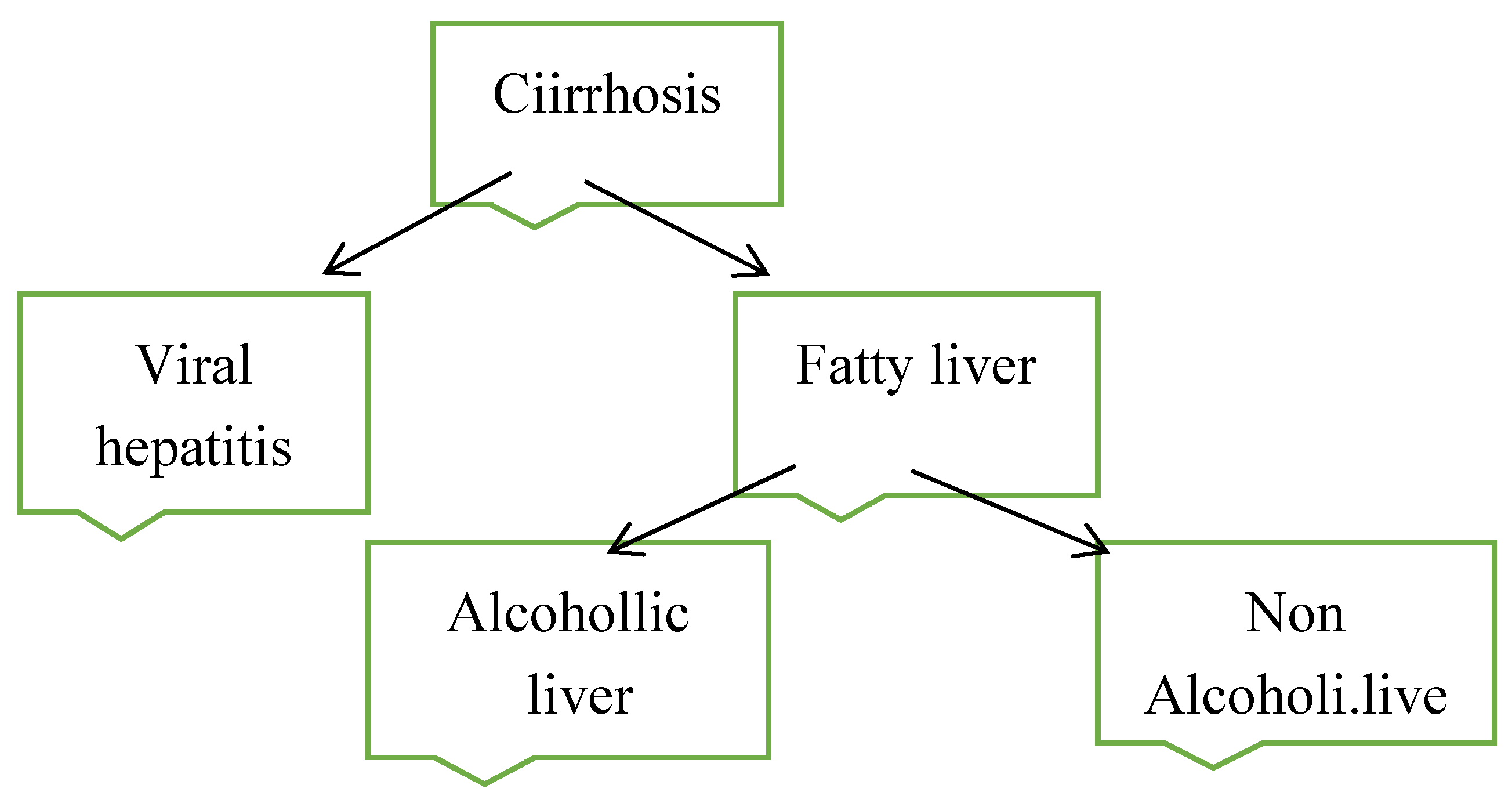
Figure 2.
Cirrhosis etiology sub-classification.
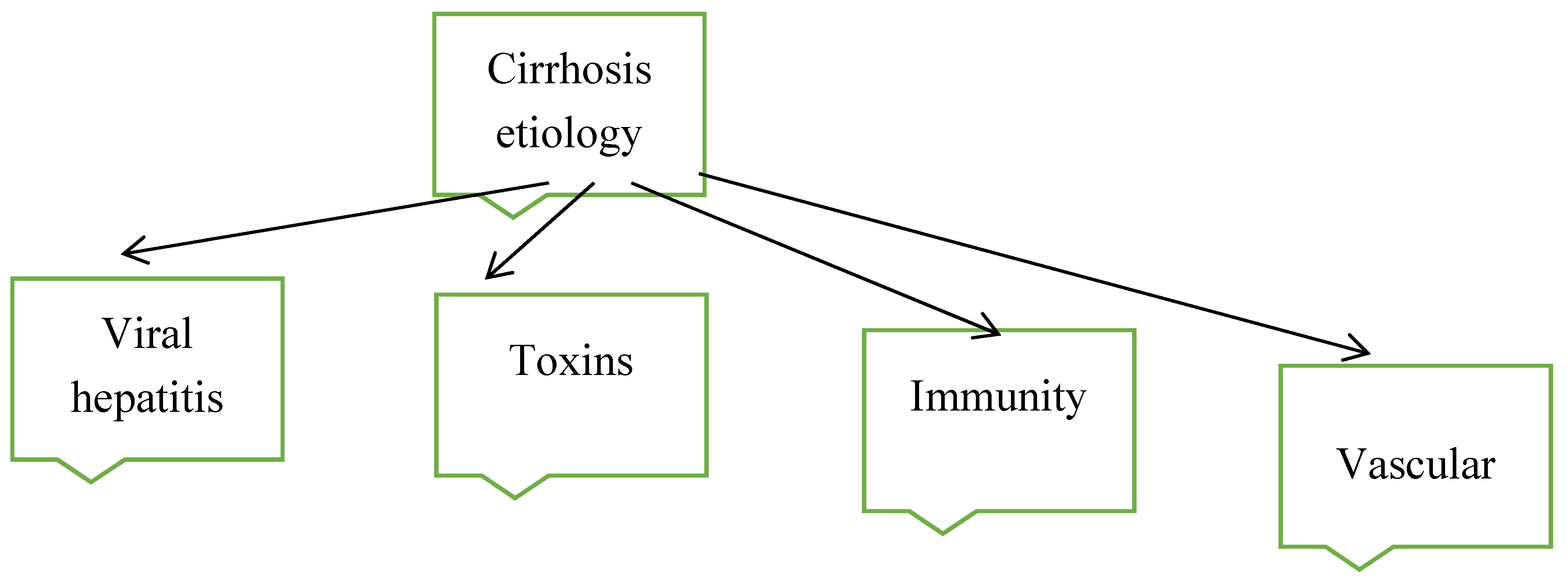
Figure 3.
Cirrhosis key points.
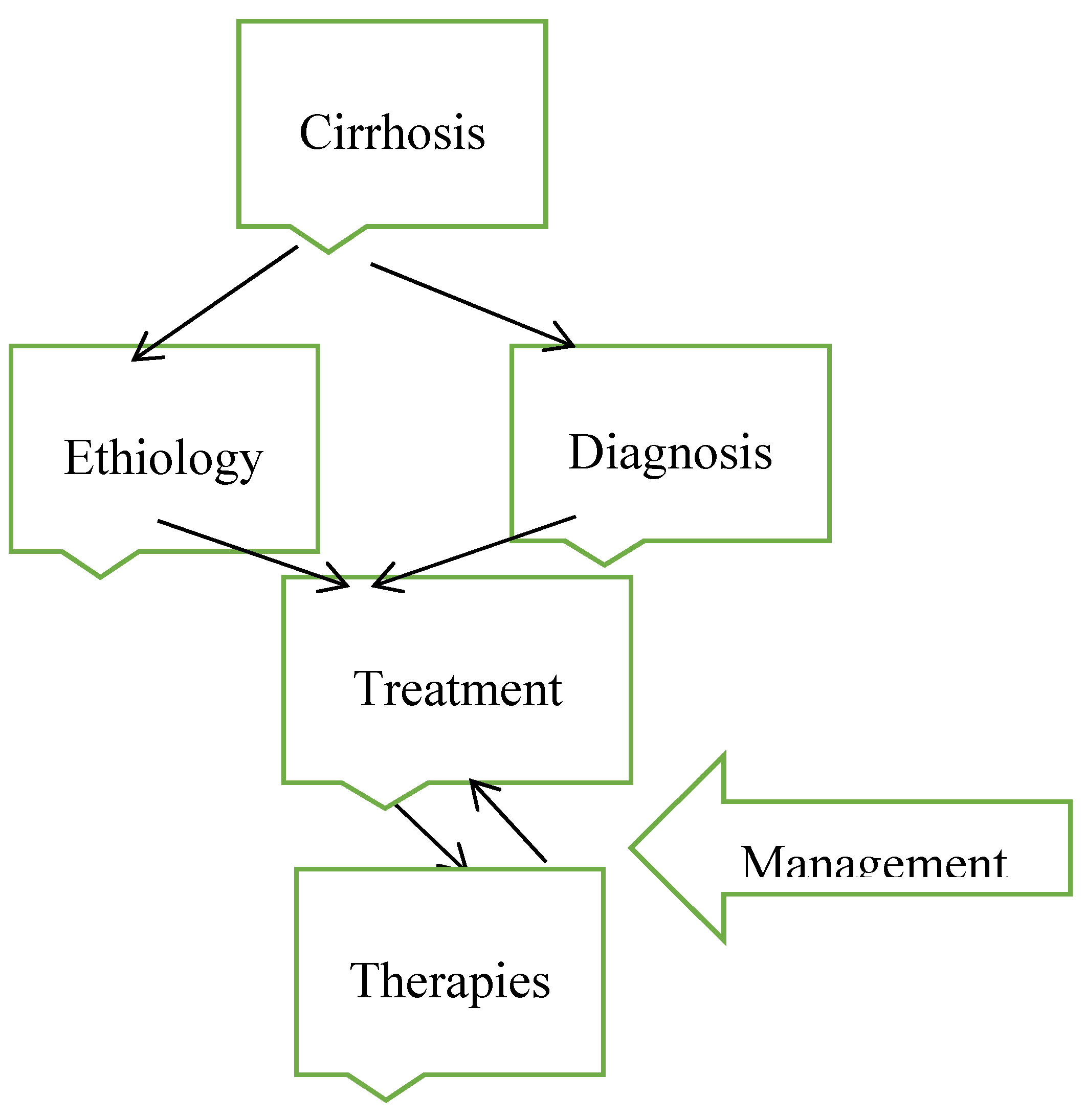
Figure 4.
Telemedicine practices for cirrhosis diagnosis.
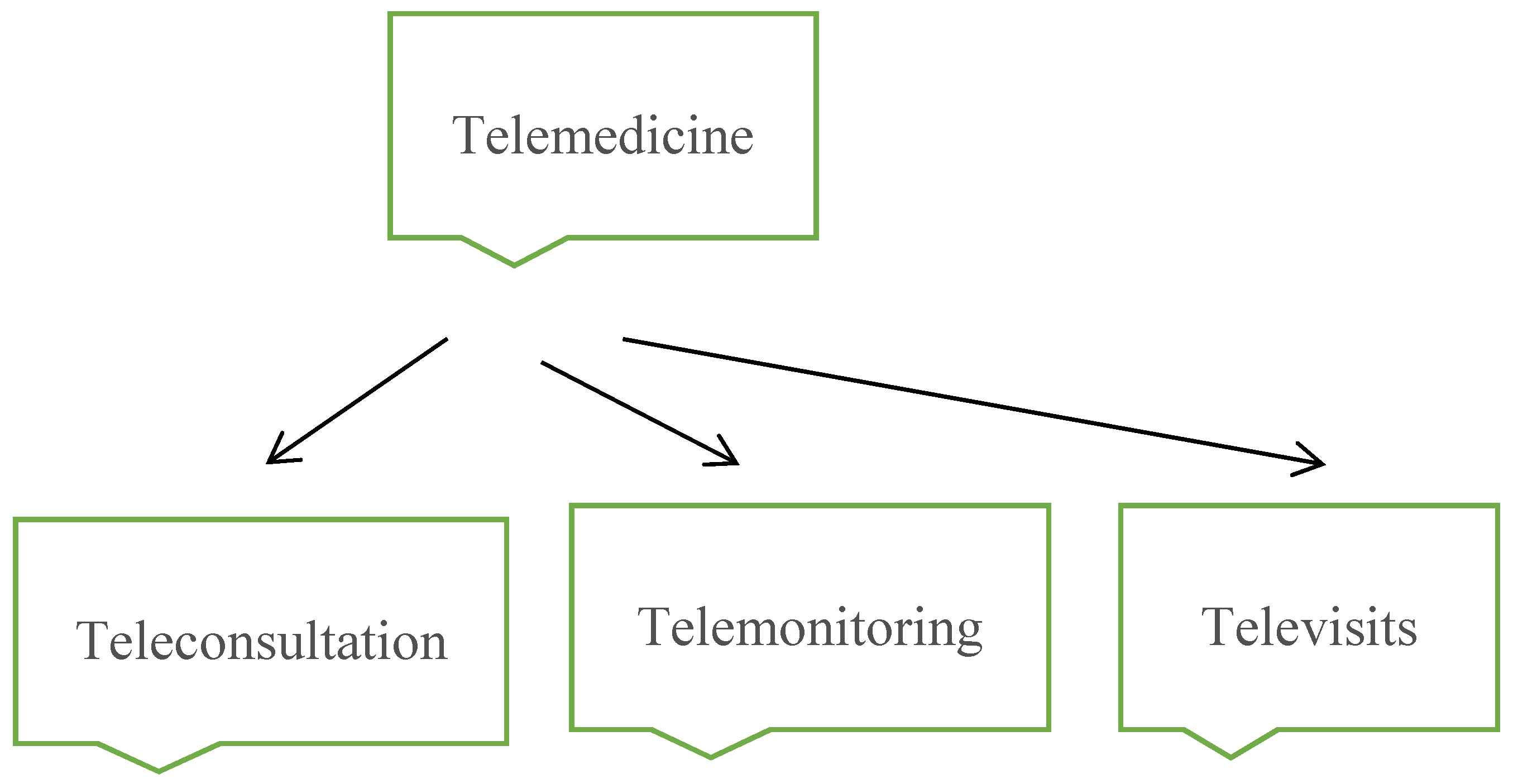
Figure 5.
Hepatic cirrhosis complications.
Disclaimer/Publisher’s Note: The statements, opinions and data contained in all publications are solely those of the individual author(s) and contributor(s) and not of MDPI and/or the editor(s). MDPI and/or the editor(s) disclaim responsibility for any injury to people or property resulting from any ideas, methods, instructions or products referred to in the content. |
© 2025 by the authors. Licensee MDPI, Basel, Switzerland. This article is an open access article distributed under the terms and conditions of the Creative Commons Attribution (CC BY) license (http://creativecommons.org/licenses/by/4.0/).
Copyright: This open access article is published under a Creative Commons CC BY 4.0 license, which permit the free download, distribution, and reuse, provided that the author and preprint are cited in any reuse.