
Submitted:
02 January 2025
Posted:
03 January 2025
You are already at the latest version
Abstract
The application of virtual reality (VR) has made its way into the healthcare field, however, its involvement in the management of insomnia has only recently started to be inves-tigated. With VR applications showing benefits in multiple areas of health management, including for anxiety, PTSD and depression, the management of insomnia via virtual reality may also be beneficial. The prevalence and incidence of insomnia is extremely high, affecting billions across the world. A silent disease that many do not even realize they have, insomnia carves a pathway leading to further clinical consequences including anxiety and depression. Current treatment regimens for insomnia have skyrocketed the use of medications such as Valium, barbiturates and even over-the-counter melatonin, however, the effects these external substitutes have on the quality of sleep one receives are detrimental. Non-detrimental and natural treatments may include the regulation of breathing and mental imagery. VR devices may be useful by providing an immersive visual experience integrated with breath work and specific imagery. In this article we review the current availability and applications of various virtual reality devices that may greatly aid in the natural management of insomnia around the world.
Keywords:
insomnia
; virtual reality
; biofeedback
; stress
; breathwork
; pranayama
; sleep hygiene
1. Introduction
Virtual reality (VR) is a rapidly developing technology that provides a computer generated 3-D environment for its user to interact with [1]. It is becoming a vital component of major fields including but not limited to, gaming, entertainment, business, healthcare, education and corporate training [2,3,4]. Immersive VR consists of wearing a head-mounted display (HMD) with sensors for motion identification, integrating the 3-D environment with the user’s position and movements [5]. The incorporation of both touch and proprioception, in addition to sight and sound plays a huge role in the immersivity of VR, creating a deep state of presence and physical involvement for users [6,7]. Modern VR devices and controllers have in-built sensors to detect movement patterns such as gyroscopes and accelerometers as well as eye sensors to track pupil dilation and movement [4,8]. Virtual reality has been evolving in its applications and use; in recent years it has become increasingly popular for personal at home use [5]. The feeling of “being there” provided by the immersion and presence that VR offers leads one to have an experience of the VR events really happening [9]. The immersive virtual reality provided by these devices allow for a controlled environment and the curation of stimuli that are both physiologically and emotionally captivating, making virtual reality a worthwhile application for mental health disorders [1,10]. Virtual spaces were first introduced into the healthcare field in the 1960s to facilitate training environments in orthopedics and then in the 1990s as a simulation tool for colonoscopies and endoscopies [11,12]. While it has since then been introduced to psychiatrics for the treatment of mental disorders, applications for insomnia have only recently been studied.
Insomnia has become increasingly common in the modern world, affecting over a billion people worldwide. Its prevalence has been found to be as high as 50-60% of a population [13]. Though insomnia is widespread, it can have far more detrimental effects on health than its commonality suggests. The changes in mood or cognition caused by a lack of sleep are associated with reduced cerebral metabolism in the prefrontal cortex [14]. Sleep deprivation has also been shown to decrease the ventilatory response to CO2 [15]. The annual loss of quality-adjusted-life years in the United States from insomnia is significantly higher than that of other medical conditions such as arthritis, depression and hypertension [16]. In addition, the presence of insomnia in one’s life opens up the doors to a myriad of other disorders such as hypertension, depression, migraines as well as metabolic conditions such as obesity and type 2 diabetes, going as far as doubling the odds of comorbidity [17,18,19,20]. The prevalence of insomnia sets off a chain reaction in one’s lifestyle, as it is closely linked to daytime fatigue, psychomotor deficits, reduced cognitive ability, and mood dysregulation [14,21,22]. In the workplace, insomnia is considered one of the most costly health problems, affecting employee safety, functionality and inviting greater absence due to sickness [21]. One study showed the cost of workplace accidents and errors to be as high as $100,000 and $1 million, respectively [21]. Nationally, Insomnia has been estimated to cost Americans nearly half a trillion dollars in reduced productivity and work hours [22]. Insomnia favors an allostatic overload-- “a state of chronic stress that occurs when the body’s ability to cope with environmental challenges is exceeded”. This can compromise brain neuroplasticity, stress, immune and endocrine pathways and also contribute to both mental and physical illness [19]. Current pharmaceutical and over the counter solutions for insomnia not only risk dependency and health issues, but also affect the natural architecture of sleep [23,24]. Both long and short acting benzodiazepines are often prescribed to assist with insomnia, however, the sedation from these hypnotics can last well into daytime hours, introducing an increased risk of unintended falls and accidents [25].
Studies show that breathwork and visualization are useful tools to regulate the otherwise involuntary autonomic nervous system and have been proposed to be useful in the management of insomnia [17]. Years of experimentation and research has allowed the development of protocols to help various types and severities of insomnia, ranging from mild to severe. We propose these protocols could be integrated into VR applications for optimal results in managing insomnia for people around the world. This article introduces an outline for an insomnia management protocol and systematically reviews VR devices in order to highlight the existing applications of VR and assess the needs for the use of VR in the management of insomnia.
2. Breathwork, Mental Imagery and Insomnia Management
While it may be an underrated and overlooked practice for the management of insomnia in current times, breathwork has been used in the management of sleep by sages thousands of years ago [26]. Physiological findings, sleep measures, EEG and HPA axis activity suggest that insomnia is often due to a condition of hyperarousal existent during the night and day, altering one’s natural biological cycle [27]. Regulation and control of the breath, also known as pranayama or conscious breathing, has been researched for its benefits in cardiovascular and pulmonary diseases, autonomic nervous system disorders as well as psychiatric mental disorders [28,29]. In addition, mental imagery, specifically pertaining to nature, has been shown to shift the autonomic nervous system from a sympathetic (“fight or flight”) state to a parasympathetic (“rest and digest”) state of being [30]. Visualizing expansive sky imagery can promote detachment from one’s everyday stressors via an alteration in the spatial foundation of one’s mind, and hence, their consciousness [30]. Imagery-based therapy has also shown to relieve chronic pain, food cravings, arthritis, hypertension and fibromyalgia [22]. to A study showed that in addition to the immersive aspect of VR, an increase in spatial sense of presence is vital when eliciting positive emotions through the use of VR. While these two are interconnected, it is through the sense of presence that greater arousal is reached [31]. Imagery of peaceful environments such as nature promote greater sense of presence.
Yoga Nidra is an ancient practice for sleep that incorporates both breathwork and visualization [26,32]. The objective in Yoga Nidra is to achieve a ‘sleep state’. The practice focuses on creating a passive sense of detachment from external experiences and situations that would normally create emotional arousal [33]. Scientifically, this is seen as the dissociation of mental awareness from the sensory channels of the body [26]. Studies have shown Yoga Nidra to produce a significant decrease in cortisol levels as well as improvement in both the N3 and N3 stages of sleep [33,34]. Studies also show Yoga Nidra to improve sleep onset latency, a key component when measuring one’s severity of insomnia [26]. The synchronicity of the breath via scientifically calculated inhalations and exhalations in the presence of an immersive night-time sky experience may increase the spatial awareness and sense of presence in a way that will reduce sympathetic activity and activate sleep-inducing physiological states. Pharmacological interventions for insomnia such as benzodiazepines may produce a hypnotic effect aiding in the onset of sleep, but have been proven to actually decrease both N3 and N4 stages [35,36]. This article’s proposed protocol guides awareness away from the objects and external stimulants of one’s day to day life using the imagery of a nighttime sky in an immersive virtual reality experience. This visual immersion, along with biometrics calculated and stored within VR technology, would allow for a tangible experience and evolution of one’s sleep patterns and hygiene, resulting in an improvement of sleep and thus daily function.
3. Virtual Reality and Insomnia
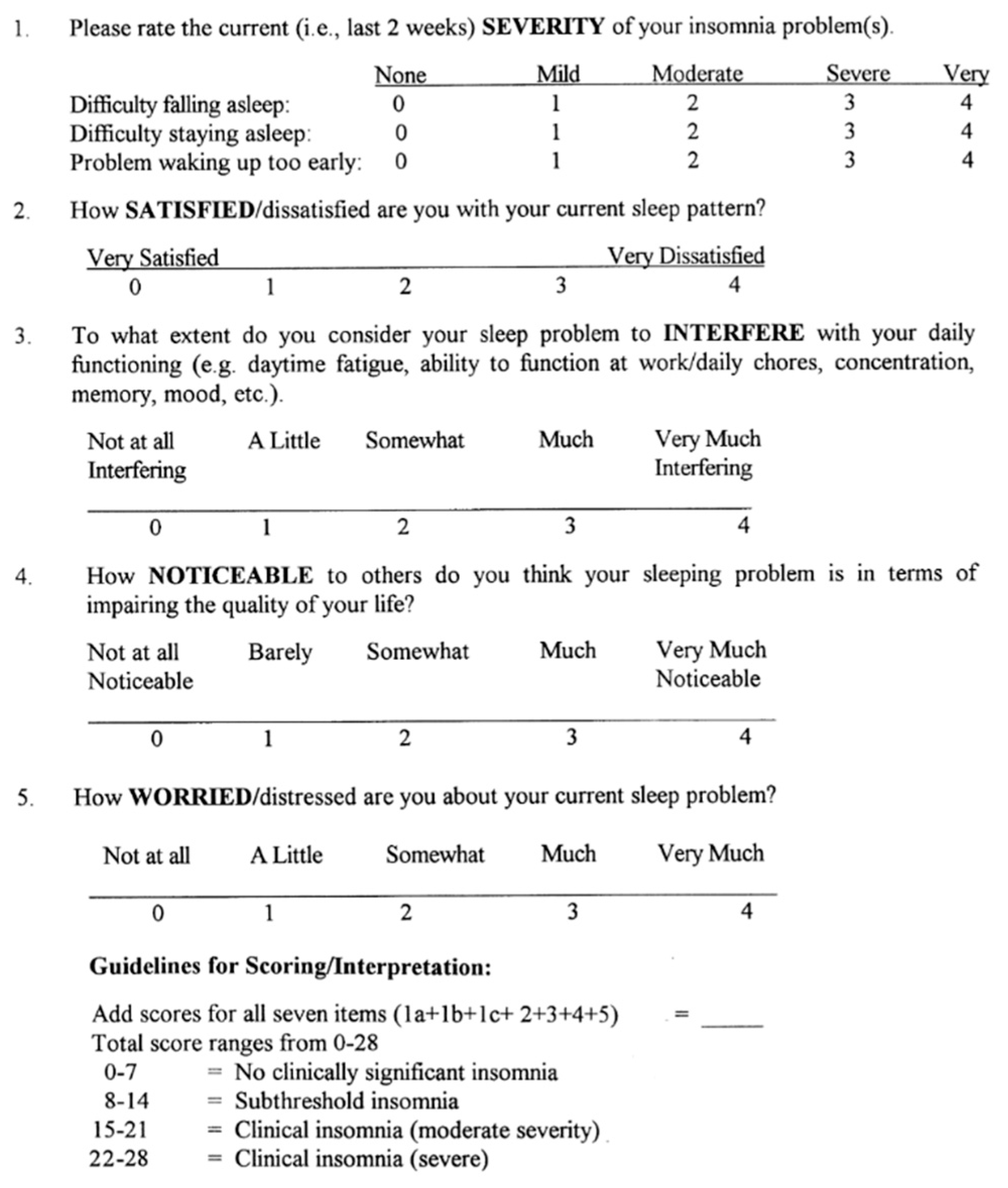
The presence of insomnia facilitates the onset of other conditions such as anxiety, depression and other mental and physical illnesses, eventually producing a feedback loop and chronic state of sympathetic activation. Chronic stress can trigger autoimmune conditions, which can then signal an inflammatory response, leading to possible neurotoxic changes, which then make the brain more prone to experiencing depression [30,37,38,39]. Those with major depression or anxiety are more likely to suffer from sleep disturbances and vice versa; insomnia can trigger symptoms of depression or anxiety. Due to this multidirectional nature, over-time conditions can become independent of their origin, let alone create a vicious cycle of chronic illness [30]. A common by-product of chronic stress, depression or anxiety is rumination, in which the mind is over-active, further fueling the prevalence of insomnia. While appearing harmless externally, actions such as rumination further enhance the already existing over-activity of the sympathetic nervous system [30,40]. The stress of modern-day life which has embedded into it, constant technology use, only promotes sympathetic activation further. The negligence of an active parasympathetic system has been implicated in the prevalence of insomnia [30,41]. A sleep training protocol paired with an immersive virtual experience will increase the affectability of insomnia management in a way that has not been touched on before. Visualization, specifically with immersion has been shown to decrease time needed to complete a task [42]. The use of VR applications that introduces expansive imagery that will take one away from sympathetic activation and all causing triggers, is what we propose as the next leading technique in insomnia management. Insomnia can be classified as acute or chronic; the diagnosis of insomnia varies in severity as well as duration. The Insomnia Severity Index (ISI), developed by Charles M. Morin in 1993, is a questionnaire that measures insomnia severity by evaluating sleep onset, maintenance, pattern satisfaction, interference with daily functioning and noticeability of impairment attributed to a sleep problem [43]. It has been proven to be an effective tool in measuring insomnia severity and can applied in VR to track progress of insomnia management. Another evaluation of sleep quality is the Pittsburgh Sleep Quality Index (PSQI). A 6-week study done on participants using VR therapy every evening showed a significant decrease in both ISI and PSQI scores, indicating an improvement of sleep quality [44]. A study done to evaluate the effects of VR on sleep deprived individuals not only showed an improvement in sleep evaluation scores, but also the maintenance of the scores weeks after the study was conducted [45]. These studies suggest VR being a useful tool for both acute and chronic insomnia.
Figure 1.
Insomnia Severity Index Questionnaire (Copyright, Charles M. Morin, 1993).
There are several aspects of insomnia that VR has the potential to target including sleep onset (beginning), sleep quality (middle) and sleep inertia (end). While a protocol would immediately show effects on sleep onset, meditative protocols using environments such as forests, nighttime skies and waterfalls have also been shown to decrease the wakefulness after sleep onset (WASO), as shown on a study done on nursing students. Positive changes were also seen on both stress and ANS balance [46]. Currently, virtual reality devices are equipped with systems such as accelerometers and gyroscopes which serve as sensors to detect bodily and eye movements of the user [47]. This provides VR headsets with the ability to measure biometrics such as heart rate, eye movements, muscle tension and facial expression. With the potential to incorporate more biometric and behavioral data, VR devices can make a great impact in the management of insomnia, while creating an experience for the user that can be measured, tracked, followed and conveniently implemented.
Neuroscientists and philosophers have proposed the foundation of the mind as a virtual 3D space in which all sensations, thoughts and feelings are experienced [30]. Also known as the subconscious mind, this 3D coordinate space is considered to orchestrate all conscious activity of the mind. Incorporated with consciousness is also self-perception and the perception of others; everything that shapes our reality [30]. The breathwork protocol, synchronized with immersive night-time sky imagery, that we are proposing could serve as a virtual reality-based reflection of this space.
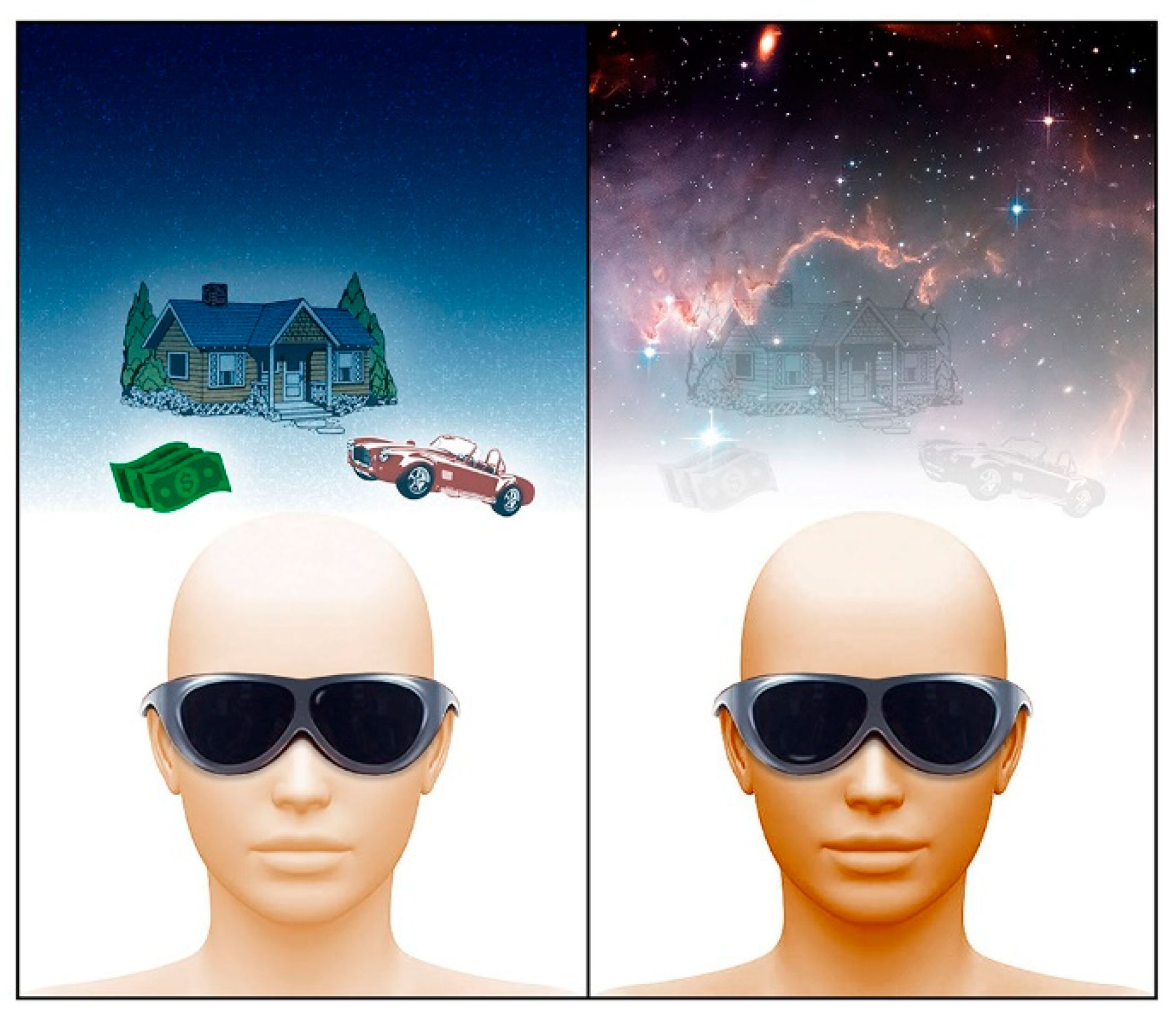
Figure 2.
Visual depiction of a virtual reality application that uses the cosmic sky to alter one’s 3D virtual space. The image on the left portrays one’s mind, focused on every day stressors. The image on the right shows a user participating in a virtual reality application that uses imagery such as the nighttime sky to gradually allow the stressors of every day life to vanish, activating parasympathetic activity and therefore, inducing a physiological state that induces sleep.
Figure 2.
Visual depiction of a virtual reality application that uses the cosmic sky to alter one’s 3D virtual space. The image on the left portrays one’s mind, focused on every day stressors. The image on the right shows a user participating in a virtual reality application that uses imagery such as the nighttime sky to gradually allow the stressors of every day life to vanish, activating parasympathetic activity and therefore, inducing a physiological state that induces sleep.
If integrated with biofeedback technology, breathing exercises and the induction of meditative states, users of this application may get a direct insight into their 3D virtual space, creating a true sense of authority over one’s own life. This further builds upon the concept of self-agency that virtual reality addresses [6]. An application as such in VR can create an avenue to alter the reality of many suffering from mental disturbances around the world.
VR also has the scope of being used in neurological testing, such as post-stroke assessments as well as an assessment tool for autism spectrum disorder [48]. In fact, VR is increasingly starting to be recognized as one of the most advanced tools for assessing human nature, offering unique insights into both body physiology and emotional states [48]. A study done on undergraduate students revealed that even just 3 minutes of VR exposure (healthy, safe and neutral environments), had a significant impact on each participant’s mood. Relaxed environments elicited happiness, peace and reduced anger while anxious environments had the opposite effect [9]. Self-agency is a highly valuable component of VR that allows for synchronicity between human and technology, increasing the likelihood of effect and presence [6]. Self-agency along with tangible data that provides an insight into the physiological changes occurring as a result of the immersive imagery and breathwork allow for the creation of an insomnia management protocol that may greatly connect with, motivate and significantly improve insomnia in patients from all walks of the world.
A key factor in using VR for the treatment of insomnia is patient acceptance; they should be willing to use VR for their health management. A study done on patient acceptability for the use of VR in the treatment of psychosis showed patients to have a positive attitude towards the use of VR for their symptoms [49]. VR devices offer a variety of features that each have their own benefits. Many applications that are prevalent in the VR market have been shown to induce stress and anxiety [8]. VR is also being used as exposure therapy for conditions such as phobias, anxiety and PTSD. The use of VR to promote relaxation and activation of parasympathetic activity is a counteractive force that will benefit many seeking sleep. Many studies have been done on the emotional responses that VR has the ability to create through the presence and immersion it offers. For example, one study showed the degree to which a person is emotionally aroused reflected in a specific form of rhythmic brain activity, also known as alpha oscillations [50]. While VR is emerging as a powerful tool to study emotional responses and hence aiding in the treatment of many mental disorders, further research can be done on aspects such as individual personality traits, cognitive capabilities and social history and encounters in order to create protocols more tailored to each individual. These variables could impact one’s reaction to VR and should be noted for further research and personalization.
4. Framework for Insomnia Protocol
The development of a VR application for a physician-designed insomnia management protocol1 could help bring professional help into the comfort and convenience of one’s home. The use of a protocol provides structure, consistency, reference and reliability in the management of one’s insomnia. In this protocol, breathing should be slow for variable length(s) of time depending on the severity, type and duration of insomnia [17]. The VR based imagery would be based on nature scenery of a nighttime sky as outlined in previous articles we have published[22,30]. The onset of relaxation would occur by replacing restrictive negative emotions and thoughts, which support hyperarousal, with expansive feelings of wonder that promote calmness [22]. Considering VR’s 3D virtual space to be a reflection of a cognitive foundation of mind, along with its immersivity and presence factors, allows mental imagery in this environment to serve as a tool in altering one’s state of mind [22]. Biofeedback from wearable devices such as a smartwatch or ring would provide metrics such as heart rate and heart rate variability; a display of this on the VR device could instruct a user to follow specific instructions regarding breathing frequency and depth. Creative video imagery of light and motion can generate a dream that will allow a user to fall asleep. This protocol can be tailored to an insomnia score based on a questionnaire that assesses insomnia severity such as the ISI. VR can enhance the ISI by keeping a track record of one’s sleeping patterns and ISI scores over time, allowing users to assess the improvement of their insomnia symptoms. Personalized variations of the protocol can be created based on the ISI score of each user along with age demographics, lifestyle and context of insomnia. We propose that this protocol, when used over-time, has the capability to break one out of the vicious cycles that insomnia both emerges from and creates [22].
5. Comparison of Virtual Reality Devices for Insomnia Management
The VR headset market size is predicted to grow at a rate as high as 30.6% by 2030. This product review of virtual reality devices produces a systematic ranking for each in accordance to use, convenience, resolution and price. Facebook’s Meta has been a leading brand for VR applications. While Apple’s Vision Pro headset has the best resolution, Meta Quest delivers a price point that is much more consumer friendly and accessible. For the purposes of insomnia management, in which a user would be in the supine position and preparing for sleep, headset weight and wireless connectivity were also two vital specifications to consider. Optimal resolution and field of view will ensure an optimal immersive experience to allow for a complete detachment from external stimuli and stressful thoughts. Bluetooth pairing allows for seamless mirroring of a smart phone screen to the virtual reality headset. While some VR headsets have had a steadfast foot in the market and evolution of VR, others are more novel without lacking in technology. Each headset provides a unique plus point; this study reviews headsets based on their benefit towards the management of insomnia using a breathwork protocol. Below is a table that compares specifications of Facebook’s Meta Quest 3S, Meta Quest 3, Pico 4, SONY PlayStation VR2, Pimax Crystal Light, Bigscreen Beyond, HTC Vive XR Elite, Microsoft Halolens 2 and Apple’s Vision Pro headsets. The prospective headsets are categorized based on price above and below $600.

Table 1.
Comparison among virtual reality headsets such as Meta Quest 3S, Pico 4, Meta Quest 3, SONY PlayStation VR2, HP Reverb G2, Pimax Crystal Light, HTC Vive XR Elite, Microsoft HoloLens 2 and Apple Vision Pro. Measurements Included are Price, Weight, Wireless and Bluetooth Connectivity, Resolution, Field of View, Battery Life and Software.
Table 1.
Comparison among virtual reality headsets such as Meta Quest 3S, Pico 4, Meta Quest 3, SONY PlayStation VR2, HP Reverb G2, Pimax Crystal Light, HTC Vive XR Elite, Microsoft HoloLens 2 and Apple Vision Pro. Measurements Included are Price, Weight, Wireless and Bluetooth Connectivity, Resolution, Field of View, Battery Life and Software.
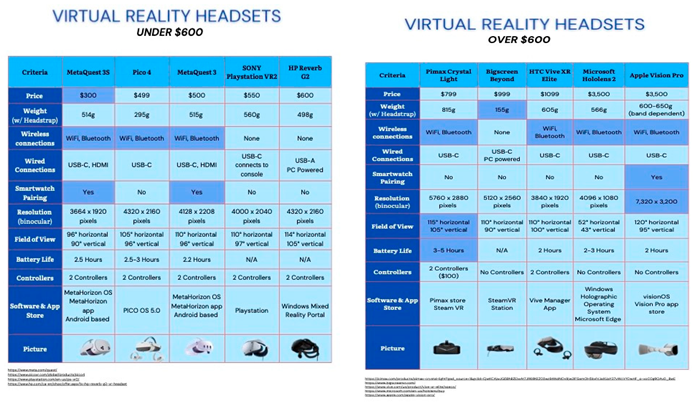
As shown, Meta Quest seems to be the company that offers the best qualities in VR headsets for the purpose of insomnia management. It comes with great resolution, screen refresh time, wireless connection and an affordable price point. While Meta Quest 3S offers a great price point, the Meta Quest 3 comes with a resolution that would enahnce the user’s experience during the insomnia management protocol. Contending with the Meta Quest 3 would be the Pico 4 VR glasses, however the app compatability may not be as convenient as the one offered by Facebook’s Meta. The Apple Vision Pro offers watch connectivity, which could aid in the measurement of repsiratory rate and other statistics while breathing, however, its price point is too expensive to reach many. The battery life for all relevant headsets are relatively low, but more than manageable for the purpose of insomnia management protocols. Below is a further comparison of the top 5 headsets of this review, listing pros and cons of each.
Table 2.
Comparison of Apple’s Vision Pro, Facebook’s MetaQuest 3 and MetaQuest 3S, HP’s Reserve G2 and the Pico 4 headset. The graph dispays pros and cons of each headset.
Table 2.
Comparison of Apple’s Vision Pro, Facebook’s MetaQuest 3 and MetaQuest 3S, HP’s Reserve G2 and the Pico 4 headset. The graph dispays pros and cons of each headset.
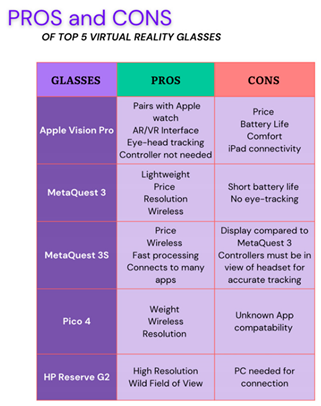
These comparisons create a clearer view of the most compatible virtual reality devices ou in the current market. Overall, the best device is dependent on one’s affordability, needs and desire for convenience. When looking from a price perspective, the Meta Quest 3S is the best option. From a resolution perspective, the Apple Vision Pro takes the lead. The Sony PlayStation VR2, HP Reverb G2 and Bigscreen Beyond glasses do not offer wireless connectivity and need a PC in order to operate. If one is looking for a headset that is extremely light in weight, the Bigscreen Beyond is optimal.
6. Conclusions
In recent years, the use and development of VR has increased exponentially in both professional and consumer use. From gaming to educational purposes as well as healthcare management and treatment, virtual reality is going to be utilized in a growing number of fields in the near future . Virtual reality has the potential to play a vital role in the management of psychological disorders such as insomnia. Current VR devices in the market do not seem to have a comprehensive or effective software for insomnia available. In this review, we have compared various VR devices and have not found clinically proven or well researched software options for insomnia treatment. The authors of this article have successfully published three articles based on evidence based medicine on the management of insomnia with VR. A breathwork protocol with imagery provides VR options for an effective management of insomnia. The evolution of VR devices to measure respiratory and cardiovascular biometrics directly would empower various forms of health management. Providing a protocol that is embedded as an application within VR for insomnia management can alter the course and quality of lives globally. Combining an immersive nighttime sky experience with methodical and calculated breathwork techniques may effectively reduce symptoms of insomnia, improve day to day function and promote relaxation in a world full of daily stress. While cognitive behavioral therapy is another form of non-interventional path to insomnia management, it is not as accessible as treatment through VR. A protocol that is supported with an immersive experience and real-time data collection will engage users in a way that motivates them to improve their sleep hygiene in the convenience of their own home. Supporting ancient methodologies and techniques such as Yoga Nidra, the protocol discussed in this article introduces a visual immersive experience, creating management that is reliable, easy to follow, interactive and can be tracked. The combination of VR technology with professional medical guidance will lead to a solidified approach to insomnia management. The incorporation of insomnia management for employees in corporations, healthcare and education fields is vital, as insomnia is a leading cause for both accidents as well as a decline in performance in the workplace. Extensive research done on VR devices for insomnia is needed as the bridge to help this protocol reach consumers around the world. This will also open doors for further non-pharmacutical interventions for the treatment and management of other psychological disorders and conditions.
Author Contributions
R.J. developed the theory and wrote the abstract. C.S. wrote the main manuscript. C.B. contributed in writing, reviewing and editing the manuscript. All authors conducted literature reviews and contributed to the article. All authors have read and agreed to the published version of the manuscript.
Funding
Smartwatches, Virtual reality headsets, Mobile and App were funded by Mind Body Technology.
Institutional Review Board Statement
Not applicable.
Informed Consent Statement
Not applicable.
Data Availability Statement
Not applicable.
Acknowledgments
All authors have consented to the acknowledgement.
Conflicts of Interest
The authors declare that the research was conducted in the absence of any commercial or financial relationships that could be construed as potential conflict of interest.
References
- Boeldt, D.; McMahon, E.; McFaul, M.; Greenleaf, W. Using Virtual Reality Exposure Therapy to Enhance Treatment of Anxiety Disorders: Identifying Areas of Clinical Adoption and Potential Obstacles. Front. Psychiatry 2019, 10, 773. [Google Scholar] [CrossRef] [PubMed]
- Raji, M.A.; Olodo, H.B.; Oke, T.T.; Addy, W.A.; Ofodile, O.C.; Oyewole, A.T. BUSINESS STRATEGIES IN VIRTUAL REALITY: A REVIEW OF MARKET OPPORTUNITIES AND CONSUMER EXPERIENCE. Int. J. Manag. Entrep. Res. 2024, 6, 722–736. [Google Scholar] [CrossRef]
- Asemi, A. and A. Ko. Contribution & Power of Virtual Reality in Corporate World: A Conceptual Review. in 2024 Third International Conference on Distributed Computing and High Performance Computing (DCHPC). 2024.
- Afsar, M.M.; Saqib, S.; Ghadi, Y.Y.; Alsuhibany, S.A.; Jalal, A.; Park, J. Body Worn Sensors for Health Gaming and e-Learning in Virtual Reality. Comput. Mater. Contin. 2022, 73, 4763–4777. [Google Scholar] [CrossRef]
- Hamad, A.; Jia, B. How Virtual Reality Technology Has Changed Our Lives: An Overview of the Current and Potential Applications and Limitations. Int. J. Environ. Res. Public Heal. 2022, 19, 11278. [Google Scholar] [CrossRef] [PubMed]
- Trotta, N.; Leccese, A.; Fiore, P.; Meyerbröker, K. Virtual Reality: Characteristics and application in anxiety disorders and other clinical settings. 2023; 92. [Google Scholar] [CrossRef]
- Rockstroh, C.; Blum, J.; Göritz, A.S. Combining VR and Biofeedback. J. Media Psychol. 2020, 32, 176–186. [Google Scholar] [CrossRef]
- Halbig, A.; Latoschik, M.E. A Systematic Review of Physiological Measurements, Factors, Methods, and Applications in Virtual Reality. Front. Virtual Real. 2021, 2. [Google Scholar] [CrossRef]
- de Zambotti, M. , et al., When sleep goes virtual: the potential of using virtual reality at bedtime to facilitate sleep. Sleep, 2020. 43(12).
- Vince, J. Introduction to Virtual Reality; Springer: New York, NY, USA, 2004. [Google Scholar]
- Javvaji, C.K.; Reddy, H.; Vagha, J.D.; Taksande, A.; Kommareddy, A.; Reddy, N.S.; Jr. , A.K. Immersive Innovations: Exploring the Diverse Applications of Virtual Reality (VR) in Healthcare. Cureus 2024, 16. [Google Scholar] [CrossRef]
- Jerdan, S.W.; Grindle, M.; van Woerden, H.C.; Boulos, M.N.K. Head-Mounted Virtual Reality and Mental Health: Critical Review of Current Research. JMIR Serious Games 2018, 6, e14. [Google Scholar] [CrossRef]
- Bhaskar, S.; Hemavathy, D.; Prasad, S. Prevalence of chronic insomnia in adult patients and its correlation with medical comorbidities. J. Fam. Med. Prim. Care 2016, 5, 780–784. [Google Scholar] [CrossRef] [PubMed]
- Kahn-Greene, E.T.; Killgore, D.B.; Kamimori, G.H.; Balkin, T.J.; Killgore, W.D. The effects of sleep deprivation on symptoms of psychopathology in healthy adults. Sleep Med. 2007, 8, 215–221. [Google Scholar] [CrossRef] [PubMed]
- Schiffman, P.L.; Trontell, M.C.; Mazar, M.F.; Edelman, N.H. Sleep Deprivation Decreases Ventilatory Response to CO2 But Not Load Compensation. Chest 1983, 84, 695–698. [Google Scholar] [CrossRef] [PubMed]
- Olfson, M.; Wall, M.; Liu, S.-M.; Morin, C.M.; Blanco, C. Insomnia and Impaired Quality of Life in the United States. J. Clin. Psychiatry 2018, 79. [Google Scholar] [CrossRef] [PubMed]
- Jerath, R.; Beveridge, C.; Barnes, V.A. Self-Regulation of Breathing as an Adjunctive Treatment of Insomnia. Front. Psychiatry 2019, 9, 780. [Google Scholar] [CrossRef] [PubMed]
- Knutson, K.L.; Spiegel, K.; Penev, P.; Van Cauter, E. The metabolic consequences of sleep deprivation. 11. [CrossRef]
- Palagini, L.; Bianchini, C. Pharmacotherapeutic management of insomnia and effects on sleep processes, neural plasticity, and brain systems modulating stress: A narrative review. Front. Neurosci. 2022, 16, 893015. [Google Scholar] [CrossRef] [PubMed]
- Roth, T. , Insomnia: Definition, Prevalence, Etiology, and Consequences. Journal of Clinical Sleep Medicine, 2007. 3(5 suppl): p. S7-S10.
- Shahly, V. , et al., The Associations of Insomnia With Costly Workplace Accidents and Errors: Results From the America Insomnia Survey. Archives of General Psychiatry, 2012. 69(10): p. 1054-1063.
- Jerath, R.; Beveridge, C.; Jensen, M.; Paladiya, R. The Therapeutic Role of Guided Mental Imagery in Treating Stress and Insomnia: A Neuropsychological Perspective. Open J. Med Psychol. 2020, 09, 21–39. [Google Scholar] [CrossRef]
- Manconi, M.; Ferri, R.; Miano, S.; Maestri, M.; Bottasini, V.; Zucconi, M.; Ferini-Strambi, L. Sleep architecture in insomniacs with severe benzodiazepine abuse. Clin. Neurophysiol. 2017, 128, 875–881. [Google Scholar] [CrossRef]
- Felipe Maraucci Ribeiro de, M. , et al., Benzodiazepines and Sleep Architecture: A Systematic Review. CNS & Neurological Disorders - Drug Targets, 2023. 22(2): p. 172-179.
- Avidan, A.; Palmer, L.; Doan, J.F.; Baran, R.W. Insomnia medication use and the probability of an accidental event in an older adult population. Drug, Heal. Patient Saf. 2010, 2, 225–232. [Google Scholar] [CrossRef]
- Datta, K.; Tripathi, M.; Mallick, H.N. Yoga Nidra: An innovative approach for management of chronic insomnia- A case report. Sleep Sci. Pr. 2017, 1, 7. [Google Scholar] [CrossRef]
- Basta, M.; Chrousos, G.P.; Vela-Bueno, A.; Vgontzas, A.N. Chronic Insomnia and the Stress System. 2. [CrossRef]
- Jerath, R.; Edry, J.W.; Barnes, V.A.; Jerath, V. Physiology of long pranayamic breathing: Neural respiratory elements may provide a mechanism that explains how slow deep breathing shifts the autonomic nervous system. 67. [CrossRef]
- Su, H.; Xiao, L.; Ren, Y.; Xie, H.; Sun, X.-H. Effects of mindful breathing combined with sleep-inducing exercises in patients with insomnia. World J. Clin. Cases 2021, 9, 8740–8748. [Google Scholar] [CrossRef] [PubMed]
- Jerath, R.; Beveridge, C. Harnessing the Spatial Foundation of Mind in Breaking Vicious Cycles in Anxiety, Insomnia, and Depression: The Future of Virtual Reality Therapy Applications. Front. Psychiatry 2021, 12. [Google Scholar] [CrossRef]
- Pavic, K.; Chaby, L.; Gricourt, T.; Vergilino-Perez, D. Feeling Virtually Present Makes Me Happier: The Influence of Immersion, Sense of Presence, and Video Contents on Positive Emotion Induction. Cyberpsychology, Behav. Soc. Netw. 2023, 26, 238–245. [Google Scholar] [CrossRef]
- Parker, S.; Bharati, S.V.; Fernandez, M. Defining Yoga-Nidra: Traditional Accounts, Physiological Research, and Future Directions. Int. J. Yoga Ther. 2013, 23, 11–16. [Google Scholar] [CrossRef]
- Pandi-Perumal, S.R.; Spence, D.W.; Srivastava, N.; Kanchibhotla, D.; Kumar, K.; Sharma, G.S.; Gupta, R.; Batmanabane, G. The Origin and Clinical Relevance of Yoga Nidra. Sleep Vigil. 2022, 6, 61–84. [Google Scholar] [CrossRef]
- Kavi, P.C. , Chapter 3 - Conscious entry into sleep: Yoga Nidra and accessing subtler states of consciousness, in Progress in Brain Research, T.D. Ben-Soussan, J. Glicksohn, and N. Srinivasan, Editors. 2023, Elsevier. p. 43-60.
- de Mendonça, F.M.R. , et al., Benzodiazepines and Sleep Architecture: A Systematic Review. CNS Neurol Disord Drug Targets, 2023. 22(2): p. 172-179.
- McEntire, D.M.; Kirkpatrick, D.R.; Kerfeld, M.J.; Hambsch, Z.J.; Reisbig, M.D.; Agrawal, D.K.; Youngblood, C.F. Effect of sedative-hypnotics, anesthetics and analgesics on sleep architecture in obstructive sleep apnea. Expert Rev. Clin. Pharmacol. 2014, 7, 787–806. [Google Scholar] [CrossRef] [PubMed]
- Stojanovich, L. , Stress and autoimmunity. Autoimmunity Reviews, 2010. 9(5): p. A271-A276.
- Stojanovich, L.; Marisavljevich, D. Stress as a trigger of autoimmune disease. Autoimmun. Rev. 2008, 7, 209–213. [Google Scholar] [CrossRef] [PubMed]
- Bierhaus, A., P. M. Humpert, and P.P. Nawroth, Linking Stress to Inflammation. Anesthesiology Clinics of North America, 2006. 24(2): p. 325-340.
- Carney, C.E.; Harris, A.L.; Falco, A.; Edinger, J.D. The Relation between Insomnia Symptoms, Mood, and Rumination about Insomnia Symptoms. J. Clin. Sleep Med. 2013, 09, 567–575. [Google Scholar] [CrossRef]
- Bonnet, M.; Arand, D. Hyperarousal and insomnia. Sleep Med. Rev. 1997, 1, 97–108. [Google Scholar] [CrossRef]
- Raja, D. , et al. Exploring the Benefits of Immersion in Abstract Information Visualization. 2004.
- Bastien, C.H., A. Vallières, and C.M. Morin, Validation of the Insomnia Severity Index as an outcome measure for insomnia research. Sleep Medicine, 2001. 2(4): p. 297-307.
- Wan, Y.; Gao, H.; Zhou, K.; Zhang, X.; Xue, R.; Zhang, N. Virtual reality improves sleep quality and associated symptoms in patients with chronic insomnia. Sleep Med. 2024, 122, 230–236. [Google Scholar] [CrossRef]
- Chitra, J.; Eremita, M.D.S. Effect of Virtual Reality on Sleep-Deprived Individuals. Indian J. Psychol. Med. 2023, 45, 610–613. [Google Scholar] [CrossRef]
- Kim, K.-Y.; Hur, M.-H.; Kim, W.-J. Effects of Virtual Reality (VR)-Based Meditation on Sleep Quality, Stress, and Autonomic Nervous System Balance in Nursing Students. Healthcare 2024, 12, 1581. [Google Scholar] [CrossRef] [PubMed]
- Floris, C.; Solbiati, S.; Landreani, F.; Damato, G.; Lenzi, B.; Megale, V.; Caiani, E.G. Feasibility of Heart Rate and Respiratory Rate Estimation by Inertial Sensors Embedded in a Virtual Reality Headset. Sensors 2020, 20, 7168. [Google Scholar] [CrossRef]
- Riva, G.; Serino, S. Virtual Reality in the Assessment, Understanding and Treatment of Mental Health Disorders. J. Clin. Med. 2020, 9, 3434. [Google Scholar] [CrossRef]
- Jawarneh, M.; Alshar'E, M.; Dewi, D.A.; Al Nasar, M.; Almajed, R.; Ibrahim, A. The Impact of Virtual Reality Technology on Jordan’s Learning Environment and Medical Informatics among Physicians. Int. J. Comput. Games Technol. 2023, 2023, 1–9. [Google Scholar] [CrossRef]
- Hofmann, S.M.; Klotzsche, F.; Mariola, A.; Nikulin, V.; Villringer, A.; Gaebler, M. Decoding subjective emotional arousal from EEG during an immersive virtual reality experience. eLife 2021, 10, e64812. [Google Scholar] [CrossRef] [PubMed]
1 Detailed specific protocols for different grades is an intellectual property of Mind Body Technologies located in Augusta GA. This protocol is designed for use by developers and can be obtained by contacting the company via contact information provided. |
Disclaimer/Publisher’s Note: The statements, opinions and data contained in all publications are solely those of the individual author(s) and contributor(s) and not of MDPI and/or the editor(s). MDPI and/or the editor(s) disclaim responsibility for any injury to people or property resulting from any ideas, methods, instructions or products referred to in the content. |
© 2025 by the authors. Licensee MDPI, Basel, Switzerland. This article is an open access article distributed under the terms and conditions of the Creative Commons Attribution (CC BY) license (https://creativecommons.org/licenses/by/4.0/).
Copyright: This open access article is published under a Creative Commons CC BY 4.0 license, which permit the free download, distribution, and reuse, provided that the author and preprint are cited in any reuse.