

Submitted:
03 January 2025
Posted:
03 January 2025
You are already at the latest version
Abstract
As the human population has grown and expanded, increasing pressure is being put on natural habitats in Sri Lanka. This situation has led to a noticeable increase in human-primate conflicts. To understand the situation, we studied the interactions between humans and macaques in three administrative divisions of Kurunegala District. Data was gathered from 875 informants through interviewer-administered questionnaires between 2020 and 2022. The monthly economic loss by commercial farmers due to macaque damage to fruits and vegetables doubled by 2022, amounting to approximately 5000 LKR. In non-fruiting seasons, losses from coconut damage increased, ranging from 3000 to 14,000 LKR/month, decreasing by over 50% during fruiting seasons. Property damage per household averaged between 850 ~4,000 LKR/month. A cost of approximately 1200~3000 LKR was borne per household/month to deter monkeys from the fields. Macaques were the primary culprits for crop damage in this area, and were also responsible for property damage, surpassing that of other animals. The consensus among the community is that either relocating macaques to other forested areas or sterilizing them to control their population could mitigate the issue to some extent. An integrated management plan involving relevant stakeholders is necessary to address the conflict arising from human-macaque crop utilization.
Keywords:
Agricultural and Property Damage
; Endemic species
; Human-wildlife Conflict
; Macaca sinica sinica
1. Introduction
Human-primate conflict in Sri Lanka predominantly involves three diurnal primate species; the toque macaque, purple-faced leaf langur, and gray langur. Conversely, the two nocturnal Loris spp. have minimal interactions with humans and are not associated with property damage, thus there is no conflict with them. Macaques, known for their sociable nature, frequently interact with humans and are often found near human settlements. In contrast, langurs generally prefer natural environments and natural diets, exhibiting less inclination towards human interaction [1,2,3]. Purple-faced leaf langurs are typically arboreal folivores with minimal human interactions, although this may vary regionally [2,3,4,5]. Gray langurs exhibit dietary preferences influenced by habitat; those in natural environments primarily consume plant material, while those in urban or temple areas often rely on food provided by pilgrims, particularly leftovers from temple offerings [1,2,6].
The history of conflict between humans and primates in Sri Lanka is well-documented. Robert Knox, an English traveler who spent approximately two decades living freely in various regions of the country under the terms of his imprisonment by the Kandyan King, recorded instances of macaques invading corn fields and home gardens despite concerted human efforts to guard them [7]. Additionally, folk poems have also portrayed incidents of crop raiding by primates [8]. Presently, crop raiding is widespread across all 25 districts of Sri Lanka, influenced by factors, also common to other countries, such as primate species, types of crops, seasonal variation, proximity of villages to forests, availability of natural food sources, and methods employed by humans to guard crops [9,10]. Macaques in Sri Lanka are responsible for more crop damage compared to langur species. Except for the nocturnal loris spp., all primates are considered pests to varying degrees in the provinces where they are found [2,3,6,11,12,13]. In areas where all three diurnal primates coexist, toque macaques generally cause the most crop damage, followed by gray langurs [6]. However, in certain regions of the North Central province, gray langurs inflict more damage than toque macaques [14].
Crop damage inflicted by animals poses a significant challenge for small-scale subsistence farmers, especially in countries like Sri Lanka, where around 28.5% of the population depends on agriculture [15]. Various animal species contribute to agricultural losses through foraging on crops [16]. Besides parasitic invertebrates, birds [17,18], rodents [19,20], mouse deer [21], porcupines [21], wild boar [22,23], and elephants [24,25,26] non-human primates [2,27] are recognized as pests causing negative interactions between humans and wildlife. Among these, non-human primates are globally acknowledged as the most destructive crop raiders [10,12,28,30,31]. Primates belonging to the genera Macaca, Papio, and Cercopithecus are frequently mentioned as problematic pest species [16]. Their social organization, cooperative behaviors, communication abilities, intelligence, dietary and behavioral flexibility, manual dexterity, and agility collectively present significant challenges for farmers endeavoring to safeguard their crops [16]. The interaction between humans and monkeys in Sri Lanka has intensified in recent decades due to various factors, including agricultural, irrigation, and industrial developments, as well as urban expansion and fragmentation of natural forest habitats driven by human population growth [31,32]. Forest fragmentation, particularly in the wet and dry zones, has led to primates increasingly encroaching on farms and agricultural lands in search of food, heightening conflicts [6]. Hence, our study seeks to evaluate the extent of human-monkey conflict by documenting crop and property damage caused by Macaca sinica sinica, and assessing the resulting household losses in villages adjacent to the Balagalla reserved forest, Kurunegala District in the North Western Province of Sri Lanka.
2. Materials and Methods
2.1. Study Area
Deegalla, Kabalewa, and Elathalawa Granaseva Niladari Divisions (GND) (7° 28' 19.6428" N & 80° 2' 40.6392" W) were selected based on initial observations indicating a higher intensity of interaction between humans and macaques compared to other GNDs (Figure 1). The predominant habitat in the study area consisted of village home gardens featuring tall fruit tree species such as Artocarpus heterophyllus (Jack fruits) (56%), Mangifera indica (Mango) (61%), Cocos nucifera (Coconut) (93%), and Areca (Areca nut) (34%). Medium-sized fruit tree species, including Nephelium lappaceum (Rambutan) (59%), Carica papaya (Papaw) (48%), Musa paradisiaca (Banana) (34%), and Psidium guajava (Guava) (20%) were also prevalent. These three GNDs are linked to the "Balagalla Reserved Forest". Deegalla GND is located approximately 50m from the forest, with the main road as the only boundary between Deegalla and the forest, which experiences low traffic. This area serves as a favored and proximal food source for macaques. Kabalewa GND is located approximately 100m - 150m away, while Elathalawa GND is the farthest, situated approximately 150m - 200m from the forest. Kabalewa lies between Deegalla and Elathalawa. The monthly average temperatures range between 19°C and 30°C, with monthly rainfall averaging from 152.21 mm to 200 mm.
2.2. Data Collection
Different sampling methods were used to select the sample size from the total number of families according to the situation of their category. In total, 875 samples were taken from two recognized categories (Table 1).
The three macaque troops in each GND were recognized (Deegalla: 27 (F), 10 (M), Kabalewa: 20 (F), 8 (M), and Elathalawa: 21 (F), 6 (M)) and were observed by using the focal animal sampling method [33].
The interviewer-administered questionnaire (N=875) was conducted from July 2020 to June 2022 to gather data from farmers (N=275) and villagers (N=600) across three GNDs. All interviews were conducted in Sinhalese, the major language used by people in the area, with verbal consent obtained to ensure comprehensive information. The questionnaire was comprised of closed- and open-ended questions as well as binary/polar (yes/no) inquiries. Participants who had suffered crop damage were asked to provide detailed information regarding their losses during those years, including the types of crops damaged and the quantity lost each month. Additionally, they were inquired about their annual expenditures on measures to protect their crops, referred to as damage control costs. Further, they were asked about the alteration of farming practices of the use of land in response to macaque damage.
Field observations amounted to 3,705 hours (1,871 hours in the coconut fields, 249 hours 15 minutes in home gardens, and 1,585 hours. within the villages), recording the property and crop damages at home gardens (fruits and vegetables) and coconuts. The number of coconuts destroyed, fruits and vegetables destroyed in kilograms, duration of the time macaques spent in the field, and weather condition data (raining/sunny) were collected daily. In the study area, coconut cultivation constituted a substantial source of revenue. We identified three primary coconut plantations to assess the financial impact of the predominant commercial crop. Coconut damage was calculated from a selected plantation from each GND, amounting in total to approximately 5.5. acres and 521 coconut trees. The total area of home gardens investigated was approximately 38 acres, with a variety of different vegetables and fruits grown.
At each home garden, kilograms of crops taken to the local markets monthly, and the approximate weight of the crops damaged (kgs) were recorded. Coconut damage was quantified as the number of destroyed coconuts counted per day from each plantation. Prices for each crop were averaged over the period from 2020 to 2022 according to DCS & CBSL data. These average values were then applied to calculate the monetary losses for each crop per year. The total cost was determined by summing the values of actual damage caused by macaques and total expenditures on damage control measures. Consequently, for each year, information was gathered on crops regarding the value of actual macaque damage to crops, losses incurred from discontinuation of crop cultivation due to crop loss by macaques, and expenditures on damage prevention measures. The data obtained were presented as a percentage of respondents for each response.
3. Results
3.1. Demographic Information of the Respondents
The economic structure of households in the study area reflects a typical rural Sri Lankan lifestyle, with 16.9% of individuals being employed while 83.1% are engaged in farming, with a small proportion also working as daily laborers. Despite their employment status, the majority of households are involved in cultivating fruit trees (N=821), and crop plants (N=791). All interviewed farmers were males, age ranging from 20 to 70 years.
Of the respondents, 21% percent had not received any formal education, while 79% had undergone some form of schooling. Among farmers, 43.8% have been engaged in farming throughout their adult lives, for an average duration of 12.1 years (SD = 6.7, range, 2 to 24 years), and 5.6% started farming after retiring from their previous jobs, with an average of 12.3 years farming experience (SD = 6.5, range, 5 months to 21 years). The majority of the informants (81.3%) own the coconut fields and home gardens that they cultivate, with ownership period ranging from 11 years to 4 generations. The household size of interviewees ranges from 1 to 6 people, with 0 to 4 dependents. The total income generated from the crops by each interviewee per month ranged between 10,000 LKR to 80,000 LKR.
The total income generated from the crops by each interviewee per month ranges between 10,000 LKR to 80,000 LKR. 10% of interviewees' main monthly income came from their respective jobs: 74.4% from coconut fields & home gardens, 8.7% from home gardening, and 6.9% from their respective jobs and coconut fields.
3.2. Crop and Property Damage Caused by Macaques
3.2.1. Types of Damage
Damage was classified into two categories: crop damage (Table 2, Table 4) and property damage (Table 3). The majority of the respondents experienced damage to fruits, leaves, and buds (98.2%), which are of commercial value. The preferred fruit species for macaques were banana, mango, and papaya (95%) (Table 2). Property damages were accounted as damage to water taps and water sources (72.63%), and the damage to roof tiles (68.2%). Such property damage resulted in an average loss ranging from 850 LKR to LKR 4,000 per household per month.
3.2.2. Seasonal and Diurnal Variation in Crop Damage
Respondents informed that the peak period of conflict was from July to September (rainy season), coinciding with the availability of fresh crops (vegetables and fruits), with 84.7% reporting this timeframe as the most problematic. In the dry season, the damage is reduced to 20%, however the cost is still considerable.
In the dry season (non-fruiting season) the damage to coconuts was higher because of the absence of other crops. In the day, morning (6:00 –11.00) and late afternoon to early evening (14:00 –18.00) were identified as the most critical times for human-macaque conflict to occur. Conversely, night-time (18:00 – 6.00) was perceived as the period when conflict occurred the least. During field observations, instances of attempted raids on home gardens by macaques were recorded as 3,312 times, successful raids 5,741 times, and failed entries into gardens 1871 times. In total, 502 individuals were recorded entering into gardens, and on average, foraging parties consisting of 32 ±individuals in a single crop raid (range 1 - 63 individuals. Although the frequency of macaque visits to the home garden remained more or less consistent throughout both non-fruiting and fruiting seasons.
3.2.3. Economic Loss Due to Crop Damage
Macaques were found to raid crops daily, resulting in an estimated loss of three kilograms of fruit per week, valued at approximately 1,800 LKR, and five kilograms of vegetables per week from home gardens valued at around 2,000 LKR. Most home garden produce was sold at local markets to generate daily or weekly income for households.
More than 81% of respondents stated that they had to purchase fruits from the market, despite growing them in their gardens, highlighting the impact of crop raiding on their expenses. Some vegetables, such as chilies, suffered damage from macaques traversing through home gardens.
A noticeable decrease in the number of trees and plants cultivated due to human-macaque conflict (HMC) (Table 2) was observed, resulting in increased household expenses. The majority of vegetable damage occurred due to the playful behavior of macaques and their careless roaming around croplands. Among the respondents, 89% reported that macaque damage led to either partial or complete abandonment of plants or cultivation, resulting in considerable economic loss. However, 11% of participants managed to continue harvesting as before, albeit with less profit. They had to spend approximately 550 LKR to 5,000 LKR to implement mitigation methods aimed at reducing crop damage caused by macaques (Table 2). Nevertheless, 94% of interviewees reported that expenditures for damage control were relatively minor compared to crop losses (Table 5).
We selected several fruits and vegetables that experienced significant crop damage from macaques to assess economic losses during the study period (Table 2). To quantify economic loss per year, the monthly average price per kilogram of vegetables and fruits from DCS and CBSL reports was utilized. The actual average monetary losses directly attributable to macaque activity increased annually, from over 2,300 LKR in 2020 to approximately 5,000 LKR by 2022.
3.2.4. Economic Loss Inflicted on Coconuts
Although the frequency of macaque visits to the coconut plantations remained more or less consistent throughout both non-fruiting and fruiting seasons, the number of coconuts destroyed monthly varied (Table).
The fruiting season is the time of year that is warm enough for growth, especially for cultivated plants to grow. In this research, we consider the fruiting season to be synonymous with the home garden growing season. Thus, we were able to analyze the different attractants for macaques during the fruiting season in home gardens and non-fruiting seasons in the coconut fields.
This variation can be attributed to the abundance of alternative fruits and vegetables in the villages, which diverted the macaques' attention away from coconut plantations. We assigned a monthly selling price of 60 LKR per coconut to estimate economic losses. During the non-fruiting season, monthly economic losses ranged from 3,000 LKR to 14,000 LKR, representing a visible decline of over 50% compared to the fruiting season, where losses ranged from 1,200 LKR to 6,000 LKR (Table 4).
3.2.5. Economic Loss and the Distance to the Nearest Forest Reserve
Deegalla (30m), the closest plantation to the forest, accounted for the highest number of coconuts destroyed during both seasons (105–220 coconuts destroyed per month in the non-fruiting season, 63–99 coconuts destroyed per month in the fruiting season), representing the highest economic losses (LKR 13,200 per month in non-fruiting season, LKR 5,940 per month in fruiting season). Macaques visited this plantation more frequently (28 days/month in non-fruiting season and 23 days/month in fruiting season) than the other two plantations, which were located further away from the forest reserve, indicating that proximity to the forest increases the visits of macaques. Kabalewa (150m) and Elathalawa (200m) plantations, which are farther away from the forest reserve, experienced comparatively low destruction and less economic loss. In Elathalawa, the farthest plantation from the forest reserve, the calculated economic loss was only 3,600 LKR per month in the non-fruiting season and 1,200 LKR per month in the fruiting season.
During non-fruiting seasons, destruction and economic losses were higher across all plantations (Table 5). This is likely due to macaques seeking coconuts when other food sources are less abundant. Fruiting seasons recorded comparatively lower losses, and in Deegalla, losses dropped from LKR 13,200 to LKR 5,940, indicating less damage when other food is available. When considering the relationship between plantation size and loss, it can be seen that larger plantations (e.g., Elathalawa with 3 acres and 200 trees) have lower per-tree destruction, suggesting that spread-out plantations may dilute the macaques' impact on individual trees. Conversely, smaller plantations like Deegalla experience more concentrated damage, compounded by the fact that it was more easily accessible from the forest.

Table 5.
Calculated economic loss during the non-fruiting season in the three coconut plantations.
| GND | Distance from the forest (m) |
Number of coconuts destroyed / per month during non-fruiting season | Monthly economic loss during the non-fruiting season (LKR) | Number of days macaques visited the plantation / per month during non-fruiting season |
|---|---|---|---|---|
| Deegalla (2 acres, 120 trees) |
30m | 105 - 220 | 13,200 | 28 |
| Kabalewa (1.5 acres, 90 trees) |
150m | 106 – 154 | 9,240 | 22 - 25 |
| Elathalawa (3 acres, 200 trees) |
200m | 36 - 60 | 3,600 | 15 - 17 |
3.2.6. Currently Used Deterrent Methods
The time needed to maintain and the cost of materials appears to have been a strong consideration when deciding what methods to use to keep monkeys out of the plantations and fields (Table 6). The most commonly used deterrent methods (firecrackers, and acrylic masks) incurred the lowest monthly costs on average.
4. Discussion
The phenomenon of wildlife foraging on human-grown crops has persisted since the advent of agriculture [34]. However, the severity of this issue is exacerbated in regions where human development encroaches upon previously untouched wildlife habitats [6]. Assessing the full extent of wildlife-related damage presents significant challenges [34]. Farmers often perceive losses to be greater than they are, especially when their plantations are near protected wildlife areas [35].
In our study, we estimated the annual economic losses incurred by commercial farmers due to macaques to be between 20,000 LKR and 25,000 LKR during the three years of our study. These figures likely underestimate the total damage caused by macaques to both human interests and agriculture, given the study's specific focus. We only accounted for the economic impacts on commercial farmers caused by macaques. Moreover, our estimation method may have underestimated losses, as it did not consider multiple harvests per year for certain fruits and vegetables in the study area. If interviewees had abandoned susceptible crops, they could have potentially yielded multiple harvests, significantly increasing their total income. Thus, while our study highlights substantial economic impacts on agriculture due to macaque crop raids, it is imperative to also assess damages caused by other wildlife species. The analyzed economic loss escalation in actual damage losses can largely be attributed to the expansion of the macaque population due to better and easily accessible good food resources and the absence of natural predators.
The economic ramifications on agriculture in the study area are significant. Despite our conservative estimates, the identified losses are considerable and are likely to escalate even more with the proliferation of macaque populations in terms of both number and distribution area. It comes as no surprise that the majority of these losses were attributed to macaques. Given that this species favors tropical forest habitats, prevalent in the study area and adjacent to the croplands primarily under consideration, this correlation is not unexpected. However, we anticipate that as macaque populations expand into more remote GNDs, they may encounter increasingly more forest habitats, potentially deterring their advancement into farming areas. Nevertheless, should macaques extend their range into these areas, they are anticipated to become the primary cause of agricultural damage, particularly targeting fruit crops.
The main resting place of macaques was the Balagalla Reserved Forest, which is situated in the study area (Figure 1). The damage was proportional to the distance from the forest reserve to each coconut plantation (Table 4). The farthest plantation, Elathalawa, received considerably less damage than the plantation nearest to the forest. When considering the impact of macaques on crop damage, the distance between their habitat and the plantations plays a crucial role. The nearest plantation had a higher frequency of raids. Plantations closer to macaque habitats were more accessible, leading to more frequent raids by the macaques. The shorter distance means that macaques can expend less energy to reach the crops, making these plantations more attractive targets. With the ease of access and higher frequency of visits, the nearest plantations often suffered extensive crop damage. Macaques sometimes visit these areas multiple times a day, leading to continuous damage over the growing season. Macaques that frequently raid plantations may become more accustomed to human presence, leading to bolder behaviors and potentially more aggressive crop raiding.
Plantations farther from macaque habitats are less likely to be raided as frequently. The greater distance requires more energy and time for macaques to travel, making these plantations less appealing, especially if closer food sources are available. Due to the low frequency of visits to these plantations, they often experienced less crop damage overall. The damage may be more sporadic, with macaques only visiting these distant plantations when food is scarce in closer locations. When macaques did visit more distant plantations, they mostly targeted attractive crops, which were also high-price value cash crops, which could still result in significant but less frequent damage.
Presently, communities are grappling with various challenges as primates increasingly encroach upon home gardens in search of food [1,3,11,12,13,14]. Most gardens in the study area are modest in size, typically less than an acre, and suffer extensive damage from macaques, particularly affecting the cultivation of these small-scale gardens. Residents expressed grievances over inadequate harvests for their daily needs, necessitating the purchase of coconuts and vegetables from the markets. This burden disproportionately affects low-income households, exacerbating economic hardships due to crop losses. Primarily targeted crops, including coconuts, bananas, and vegetables, are staple food items for these communities. Macaques, identified as the primary culprits, consistently damage coconut trees across all study locations, causing major losses by dropping young coconuts to the ground and consuming the soft flesh of mature ones. This destructive behavior results in a diminished overall harvest, evident from the accumulation of immature nuts beside garden plots during field visits. Moreover, macaque incursions occur indiscriminately throughout the day, prolonging the duration and scale of damage. Consequently, some people have abandoned coconut cultivation altogether, deeming it futile and costly. These residents now rely on purchasing coconuts from local markets, thereby foregoing an essential source of supplementary income.
Like elsewhere, the primary target of macaques in home gardens, besides coconuts, was bananas [1,3,6,10]. Macaques not only consume the banana fruits but also inflict damage to the trees themselves, diminishing future yields as well. Their preference lies in ripe yellow bananas, though they also feed on a variety of other fruits such as jackfruit, mango, and seasonal vegetables and yams. Being omnivorous, macaques have a broad diet, including leaves, bark, flowers, seeds, roots, cereals, insects, invertebrates, eggs, small mammals, birds, and even human-prepared food. Their adaptability to diverse environmental conditions and large group sizes renders them capable of causing more extensive damage compared to other species. A significant proportion (54%) of complaints received by the Wildlife Department were against macaques, with 70% of these complaints related to crop damage [11]. However, the specific primate species responsible for such damage varies across different regions of the country. For instance, in the Mihintale Kaludiyapokuna forest edge farms, Gray Langurs and Toque Macaques were accountable for 78% and 22% of reported crop damages, respectively [14]. Similarly, a study in Polonnaruwa [2] corroborated these findings, indicating Toque macaques and Gray Langurs as the main culprits behind the Human-Monkey Conflict. Other contributing factors in general to crop damage include the availability of natural foods, crop variety, seasonal variations, and distance from forests [16].
Aside from primates, crop damage in the area is also attributed to two nocturnal mammals, wild boars, and porcupines, primarily affecting vegetable and yam crops. After Toque macaques, wild boars are the next major animal species attributed to crop destruction, followed by porcupines. The pervasive impact of wildlife-induced crop damage has prompted many residents across the three GN divisions to cease home garden cultivation, resulting in decreased harvests and income. Apart from crop devastation, primates, particularly macaques, are responsible for property damage. The macaques have been observed damaging household items such as pots, pans, plates, rice cookers, and furniture. In unguarded moments, they infiltrate homes, steal stored food from cupboards and racks, defecate indoors, and damage roofs. A similar scenario was documented in the Kandy district, where macaques were reported to forcefully snatch food from peoples’ hands, damage roofs, and vandalize infrastructure [13].
5. Conclusions
The extent of crop damage inflicted by macaques on commercial farmers in the study area is significant and is likely to escalate without substantial interventions to control macaque populations. While unauthorized efforts to capture and remove macaques have been undertaken, there has been a lack of comprehensive, wide-scale initiatives to manage macaque populations effectively. The economic impacts outlined here represent the upper limit of the negative consequences associated with macaques. It is far more feasible and cost-effective to control the population of a pest species in its early stages than after it has proliferated. However, with their population growth and expanded range, containing or reducing their numbers now requires a significantly greater effort. If left unaddressed, the management challenges will multiply, and the resulting losses could become immeasurable. In conclusion, an integrated management plan involving relevant stakeholders is necessary to address the conflict between humans and macaques due to crop utilization by macaques.
Supplementary Materials
The questionnaire forms used for citizens, administrators, Focus Group Discussions, and the data analyzed in this paper come from the PhD. These can be downloaded at: Preprints.org.
Author Contributions
Conceptualization, S.D. Jayarathne, Charmalie Nahallage and Michael Huffman; Data curation, S.D. Jayarathne; Formal analysis, S.D. Jayarathne; Funding acquisition, Charmalie Nahallage; Investigation, S.D. Jayarathne; Methodology, S.D. Jayarathne and Michael Huffman; Project administration, Charmalie Nahallage; Resources, Charmalie Nahallage; Software, S.D. Jayarathne; Supervision, Charmalie Nahallage and Michael Huffman; Visualization, S.D. Jayarathne and Michael Huffman; Writing – original draft, S.D. Jayarathne; Writing – review & editing, Charmalie Nahallage and Michael Huffman.
Funding
The research was funded by the University of Sri Jayewardenepura research grant - ASP/ 01 / RE / HSS / 2021 / 02.
Institutional Review Board Statement
The study was conducted in accordance with the Declaration of Helsinki, and the protocol was checked by the Faculty of Graduate Studies, University of Sri Jayewardenepura, Project No. 1053SS201900, on January 1, .2020. All requirements and laws of the University of Sri Jayewardenepura, the Wildlife Conservation Department, and the applicable agencies of the Sri Lankan Government were abided by when conducting this research.
Informed Consent Statement
Informed consent was obtained orally from all citizens interviewed in the study. No images or identifying information is published. When administering non-invasive research including humans, in our case interviews, the accepted protocol in the Social Sciences in Sri Lanka is to obtain consent to participate verbally as a condition for collecting information. Respondents were given an information sheet stating that their privacy and anonymity were protected when publishing any data. The sheet included the Department phone to report any incidence of perceived invasion of privacy. Signatures were obtained from Administrators and Focus Group Discussion participants per government protocol. A separate guideline for interviews was used and is also attached in Supplementary Materials.
Data Availability Statement
The original data presented in this study are included in the Supplementary Materials or will be made available upon reasonable request to the author(s).
Acknowledgments
The authors thank the participating government agencies and citizens for participating in this study.
Conflicts of Interest
The authors declare no conflicts of interest.
Abbreviations
| GND | Gramasewa Niladari Division |
| DCS | Department of Census and Statistics |
| CBSL | Central Bank Sri Lanka |
| HMC | Human Macaque Conflict |
| LKR | Sri Lankan Rupee |
References
- Nahallage, C.A.D.; Huffman, M.A. Macaque–Human interactions in past and present day in Sri Lanka. In Macaque Connections: Corporation and Conflict Between Humans and Macaques; 2013; pp. 135–148.
- Dittus, W.P.J.; Gunathilaka, S.; Felder, M. Assessing Public Perceptions and Solutions to Human-Monkey Conflict from 50 Years in Sri Lanka. Folia Primatol. 2019, 90, 89–108. [Google Scholar] [CrossRef] [PubMed]
- Nahallage, C.A.D. An ethnological perspective of Sri Lankan primates. Vidyodaya Curr. Res. 2019, 1, 27–37. [Google Scholar]
- Dittus, W. Problems with pest monkeys: Myths and solutions. Loris 2012, 26, 18–23. [Google Scholar]
- Jayarathne, S.D.Y.; Nahallage, C.A.D.; Huffman, M.A. Assessing Public Perceptions toward Toque Macaques in Kuliyapitiya Divisional Secretariat to Mitigate the Human-Macaque Interactions in Sri Lanka. Int. J. Res. Sci. Innov. 2023, X, 280–288. [Google Scholar] [CrossRef]
- Nahallage, C.A.D.; Huffman, M.A. Diurnal primates in Sri Lanka and people’s perception of them. Primate Conserv. 2008, 23, 81–88. [Google Scholar] [CrossRef]
- Knox, R. An historical relation of the island Ceylon in East-Indies; Richard Chefwell: London, UK, 1681. [Google Scholar]
- Ananda, P.A.S. Sinhala Janashruthiya Saha Sathwa Lokaya; Godage Publishers: Colombo, Sri Lanka, 2000; p. 152. [Google Scholar]
- Fungo, B. A review of crop raiding around protected areas: Nature, control, and research gaps. Environ. Res. J. 2011, 5, 87–92. [Google Scholar] [CrossRef]
- Hill, C.M. A conflict of interest between people and baboons: Crop raiding in Uganda. Int. J. Primatol. 2000, 21, 299–315. [Google Scholar] [CrossRef]
- Prasad, T.; Cabral, S.J.; Weerakkody, S.N.; Rudran, R. Human monkey conflict in Sri Lanka and mitigation efforts. In Proceedings of the 5th Asian Primate Symp, 2016; University of Sri Jayewardenepura: Nugegoda, Sri Lanka; 2016; p. 45. [Google Scholar]
- Cabral, S.J.; Prasad, T.; Deeyagoda, T.P.; Weerakkody, S.N.; Nadarajah, A.; Rudran, R. Investigating Sri Lanka’s human-monkey conflict and developing a strategy to mitigate the problem. J. Threat. Taxa 2018, 10, 11391–11398. [Google Scholar] [CrossRef]
- Nahallage, C.A.D.; Dasanayake, D.A.M.; Hewamanna, D.T.; Ananda, D. Utilization of home garden crops by primates and current status of human-primate interface at Galigamuwa Divisional Secretariat Division in Kegalle District, Sri Lanka. J. Threat. Taxa 2022, 14, 20478–20487. [Google Scholar] [CrossRef]
- Perera, M.; Vandercone, R. Temporal patterns of crop raiding by diurnal primates in and around the Kaludiyapokuna Forest Reserve in the dry zone of Sri Lanka. In Proceedings of the 5th Asian Primate Symp, 2016; University of Sri Jayewardenepura: Nugegoda, Sri Lanka; 2016; p. 48. [Google Scholar]
- Central Bank of Sri Lanka (CBSL). Central Bank of Sri Lanka Annual Report: Prices, Wages, Employment and Productivity; Central Bank of Sri Lanka: Colombo, Sri Lanka, 2014. [Google Scholar]
- Hill, C.M. People, crop and primates: A conflict of interest. In Commensalism and Conflict: The Human–Primate Interface; Peterson, J.D., Wallis, J., Eds.; American Society of Primatologists: Norman, Oklahoma, 2005; pp. 40–59. [Google Scholar]
- Bruggers, R.L.; Rodriguez, E.; Zaccagnini, M.E. Planning for bird pest problem resolution: A case study. Int. Biodeterior. Biodegrad. 1998, 42, 173–184. [Google Scholar] [CrossRef]
- Maurice, M.E.; Fuashi, N.A.; Mengwi, N.H.; Ebong, E.L.; Awa, P.D.; Daizy, N.F. The control methods used by the local farmers to reduce Weaver bird raids in Tiko farming area, southwest region, Cameroon. 2019.
- Lathiya, S.B.; Khokha, A.R.; Ahmed, S.M. Population Dynamics of Soft-Furred field rat, Millardia meltada, in Rice and wheat Fields in Central Punjab, Pakistan. Turk. J. Zool. 2003, 27, 155–161. [Google Scholar]
- Sarwar, M. Pattern of damage by rodent (Rodentia: Muridae) pests in Wheat in conjunction with their comparative densities throughout growth phase of crop. Int. J. Sci. Res. Environ. Sci. 2015, 3, 159–166. [Google Scholar] [CrossRef]
- Linkie, M.; Dinata, Y.; Nofrianto, A.; Leader-Williams, N. Patterns and perceptions of wildlife crop raiding in and around Kerinci Seblat National Park, Sumatra. Anim. Conserv. 2007, 10, 127–135. [Google Scholar] [CrossRef]
- Shafi, M.M.; Khokhar, A.R. Some observations on wild boar (Sus scrofa) and its control in sugarcane areas of Punjab, Pakistan. J. Bombay Nat. Hist. Soc. 1986, 83, 63–67. [Google Scholar]
- Gobosho, L.; Feyssab, D.H.; Gutemac, T.M. Identification of crop raiding species and the status of their impact on farmer resources in Gera, Southwestern Ethiopia. Int. J. Sci.: Basic Appl. Res. 2015, 22, 66–82. [Google Scholar]
- Sukumar, R. Ecology of the Asian elephant in southern India. II. Feeding habits and crop raiding patterns. J. Trop. Ecol. 1990, 6, 33–53. [Google Scholar] [CrossRef]
- Barnes, R. The conflict between humans and elephants in the central African forests. Mammal Rev. 1996, 26, 67–80. [Google Scholar] [CrossRef]
- Chiyo, P.I.; Moss, C.J.; Alberts, S.C. The influence of life history milestones and association networks on crop-raiding behavior in male African elephants. Social Networks 2012, 7, 1–11. [Google Scholar] [CrossRef]
- Boulton, A.M.; Horrocks, J.A.; Baulu, J. The Barbados vervet monkey (Cercopithecus aethiops sabaeus): Changes in population size and crop damage. Int. J. Primatol. 1996, 17, 831–844. [Google Scholar] [CrossRef]
- Naughton-Treves, L.; Treves, A.; Chapman, C.; Wrangham, R. Temporal patterns of crop-raiding by primates: Linking food availability in croplands and adjacent forest. J. Appl. Ecol. 1998, 35, 596–606. [Google Scholar] [CrossRef]
- Hill, C.M.; Wallace, G.E. Crop protection and conflict mitigation: Reducing the costs of living alongside non-human primates. Biodivers. Conserv. 2012, 21, 2569–2587. [Google Scholar] [CrossRef]
- Hockings, K.J.; James, R.A.; Matsuzawa, T. Socioecological adaptations by chimpanzees, Pan troglodytes verus, inhabiting an anthropogenically impacted habitat. Anim. Behav. 2012, 83, 801–810. [Google Scholar] [CrossRef]
- Wickramagamage, P. Large-scale deforestation for plantation agriculture in the hill country of Sri Lanka and its impacts. Hydrol. Process. 1998, 12, 2015–2028. [Google Scholar] [CrossRef]
- Maurice, M.E.; Fuashi, N.A.; Mengwi, N.H.; Ebong, E.L.; Awa, P.D.; Daizy, N.F. The control methods used by the local farmers to reduce Weaver bird raids in Tiko farming area, southwest region, Cameroon. 2019.
- Altmann, J. Observational study of behavior: Sampling methods. Behav. 1974, 49, 227–267. [Google Scholar] [CrossRef]
- Garriga, R.M. Evaluation of the Wildlife Crop Raiding Impact on Seasonal Crops in Five Farming Communities Adjacent to the Gola Rainforest National Park in Sierra Leone 2013–2014; Tacugama Chimpanzee Sanctuary: Freetown, Sierra Leone, 2014. [Google Scholar]
- Hill, C.M. Farmers’ perspectives of conflict at the wildlife–agriculture boundary: Some lessons learned from African subsistence farmers. Hum. Dimens. Wildl. 2004, 9, 279–286. [Google Scholar] [CrossRef]
Figure 1.
The study area.
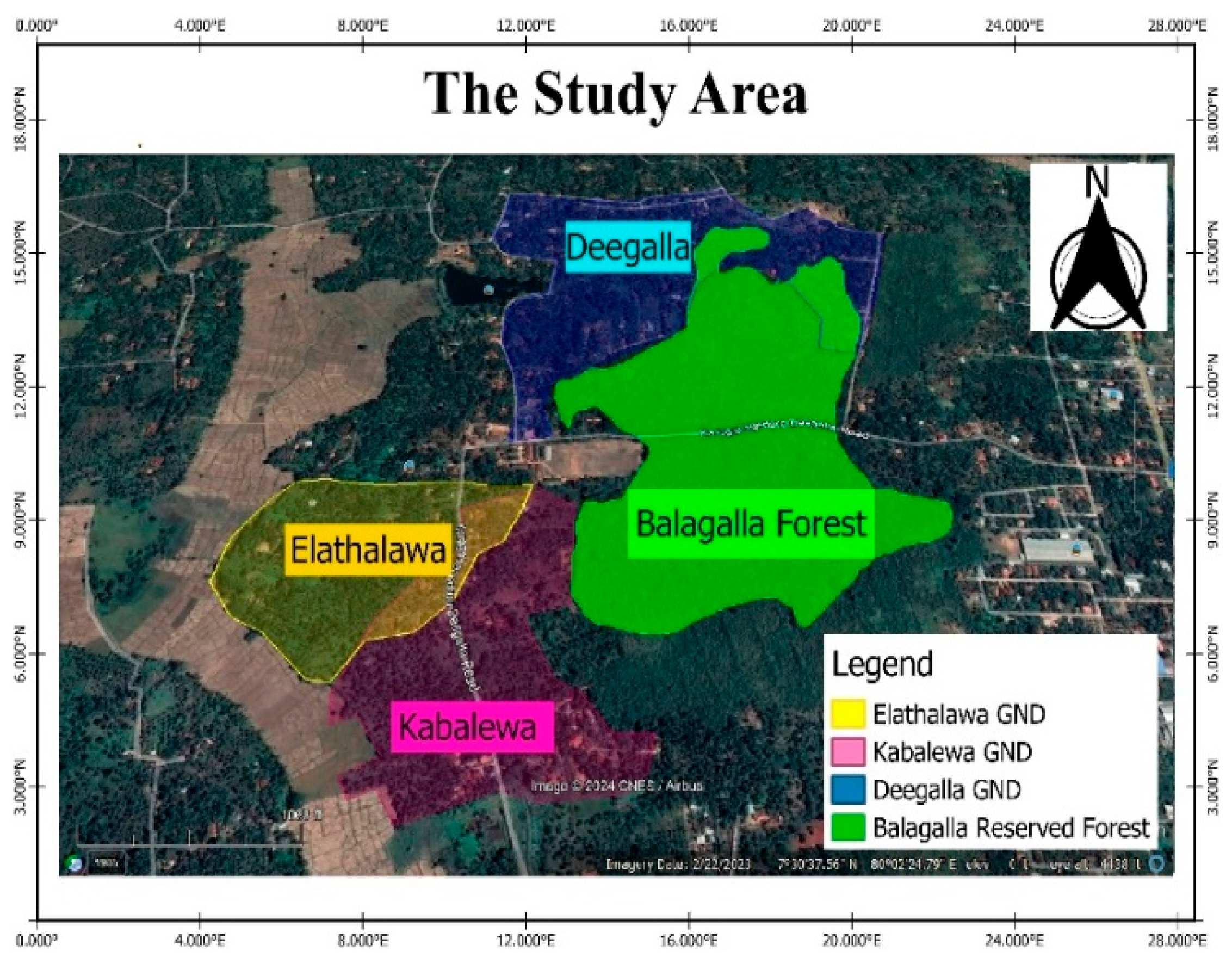
Table 1.
Sampling methods used to select sample size and sample sizes from respective GNDs.
| Sample Category | Sampling Method used to Select Sample Size | Sample Size of Deegalla GND | Sample Size of Kabalewa GND | Sample Size of Elathalawa GND |
|---|---|---|---|---|
| Families Cultivating Commercial Crops / Farmers | Included all the farmers | 135 | 120 | 20 |
| Families Cultivating Home Garden Crops / Villagers | The Krejcie and Morgan Formulae (95% of confidence level & 0.05% margin of error) |
200 | 230 | 170 |
Table 2.
Economic loss – Vegetables and Fruits.
| Crop name | No. of houses | Number of trees planted in home gardens before the onset of HMC (per house) |
Number of trees planted in home gardens with the onset of after HMC (per house) |
Loss of income (LKR/ per month) |
|---|---|---|---|---|
| Areca palm | 345 | 5 - 25 | 10 - 12 | 2500 |
| Sweet potato | 109 | 3 - 10 | 3 - 5 | 500 |
| Ceylon oak | 40 | 2 - 4 | 1 - 2 | 350 |
| Brindle berry | 178 | 3 - 10 | 3 - 4 | 800 |
| Banana | 596 | 2 - 5 | 1 - 2 | 1200 |
| Dwarf olive | 112 | 6 - 8 | 2 - 3 | 1000 |
| Mango | 687 | 6 - 10 | 2- 5 | 4000 |
| Papaya | 744 | 2 - 10 | 3 - 5 | 1500 |
| Maize | 287 | 5 - 6 | 2 - 3 | 600 |
| Passion Fruit | 368 | 4 - 6 | 2 - 3 | 1500 |
| Rambutan | 25 | 1 - 4 | 1 | 350 |
| Wax apple (Jambu) | 99 | 2 -5 | 1 - 2 | 300 |
| Lovi fruit | 129 | 3 - 4 | 1 - 2 | 250 |
| Graviola | 62 | 4 - 6 | 1 - 2 | 350 |
| Wood Apple | 165 | 3 - 5 | 1 - 2 | 250 |
| June plum | 47 | 3 - 6 | 2 - 3 | 300 |
| Cashew | 105 | 3 - 5 | 2 -3 | 400 |
| Orange | 116 | 4 - 6 | 1 -2 | 450 |
| Guava | 242 | 2 -6 | 1 - 2 | 300 |
| Sapodilla | 202 | 5 - 8 | 3 - 4 | 2500 |
| Betel | 404 | 5 - 10 | 5 - 6 | 700 |
| Bird chili | 300 | 20 | 10 - 12 | 800 |
| Brinjal | 229 | 3 - 8 | 2 - 4 | 600 |
| Cassava | 277 | 10 - 25 | 5 -10 | 1500 |
| Cantaloupe | 126 | 3 -6 | 2 -3 | 580 |
| Snake Gourd | 250 | 10 -15 | 4 -5 | 450 |
| Bitter melon | 61 | 10 -15 | 4 - 5 | 350 |
| Drumsticks | 65 | 6 -8 | 2 - 3 | 550 |
| Cowpeas | 185 | 3 -4 | 3 -4 | 380 |
| Ladies' Fingers | 403 | 20 - 40 | 8 -10 | 500 |
| Spinach | 250 | 10 -15 | 5 - 6 | 500 |
Table 3.
Property damages done by macaques.
| Types of Property damage | Incidence of damages (%) | Monthly cost for repairs or a replacement (LKR) |
| Damage to antennas | 58.6 | 1500 - 2500 |
| Damage to Water Taps and Water Sources | 72.6 | 3500 - 4000 |
| Roof damage | 68.2 | 1000 - 1500 |
| Damage to Garbage Bins | 63.8 | 500 - 1000 |
| Telephone wires / power lines / bulbs | 39.3 | 850 - 1500 |
| Home & vehicle mirrors | 32.2 | 2500 - 3500 |
| Clothes (stealing) | 33.2 | 3500 - 4500 |
| Essential Kitchen Items (Chill bottles, Rice pots etc.) | 40.6 | 1500 - 2500 |
Table 4.
Calculated economic loss during the fruiting season in the three coconut plantations.
| GND | Distance from the forest (m) |
Number of coconuts destroyed/ per month during the fruiting season | Monthly total economic loss during the fruiting season (LKR) |
Number of days macaques visited the plantation / per month during fruiting season |
|---|---|---|---|---|
| Deegalla (2 acres, 120 trees) |
30m | 63 – 99 | 5,940 | 23 |
| Kabalewa (1.5 acres, 90 trees) |
150m | 71 - 94 | 5,640 | 18 - 22 |
| Elathalawa (3 acres, 200 trees) |
200m | 12 -20 | 1,200 | 8 - 10 |
Table 6.
Deterrent methods used by locals against macaques.
| Mitigation Actions | Percentage of method users | Monthly cost (LKR) |
|---|---|---|
| Firecrackers | 90 | 880 – 1200 |
| Covering crops with nets | 23 | 2000 - 2500 |
| Applying black oil to fruit tree trunks | 36 | 1100 - 2500 |
| Using aluminum sheets to wrap around the coconut tree trunks | 41 | 850 – 5000 |
| Acrylic Masks | 79 | 550 - 680 |
Disclaimer/Publisher’s Note: The statements, opinions and data contained in all publications are solely those of the individual author(s) and contributor(s) and not of MDPI and/or the editor(s). MDPI and/or the editor(s) disclaim responsibility for any injury to people or property resulting from any ideas, methods, instructions or products referred to in the content. |
© 2025 by the authors. Licensee MDPI, Basel, Switzerland. This article is an open access article distributed under the terms and conditions of the Creative Commons Attribution (CC BY) license (http://creativecommons.org/licenses/by/4.0/).
Copyright: This open access article is published under a Creative Commons CC BY 4.0 license, which permit the free download, distribution, and reuse, provided that the author and preprint are cited in any reuse.


