

Submitted:
31 December 2024
Posted:
03 January 2025
You are already at the latest version
Abstract
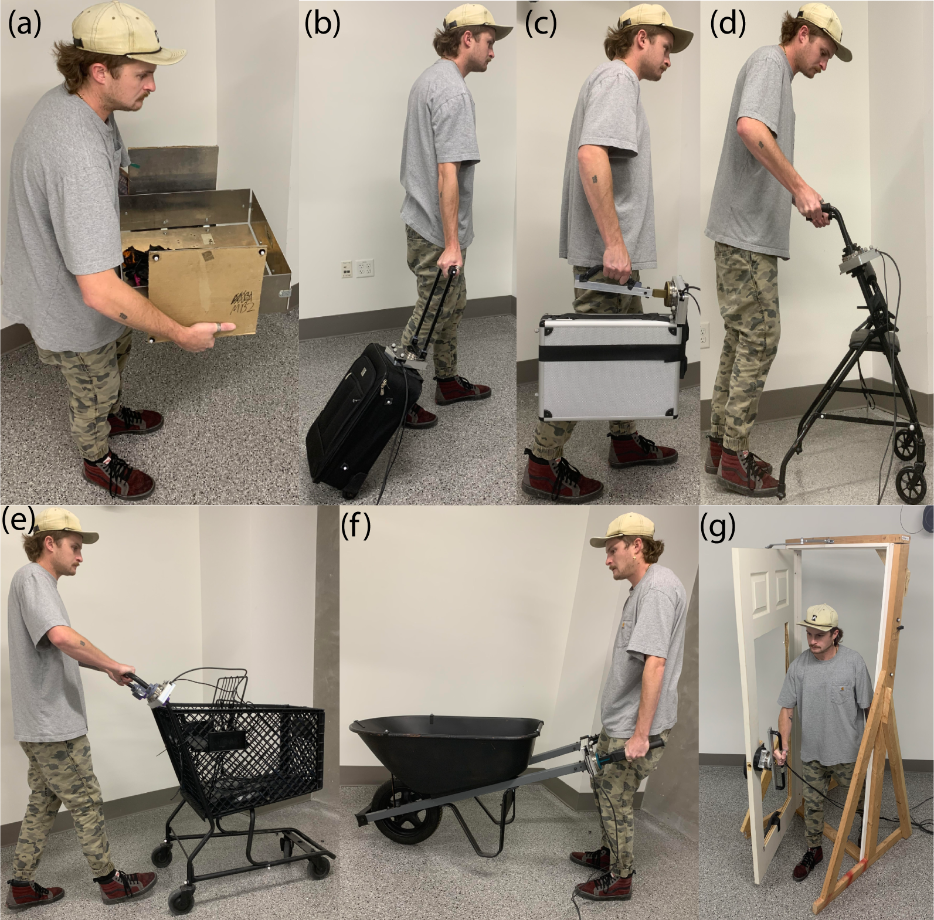
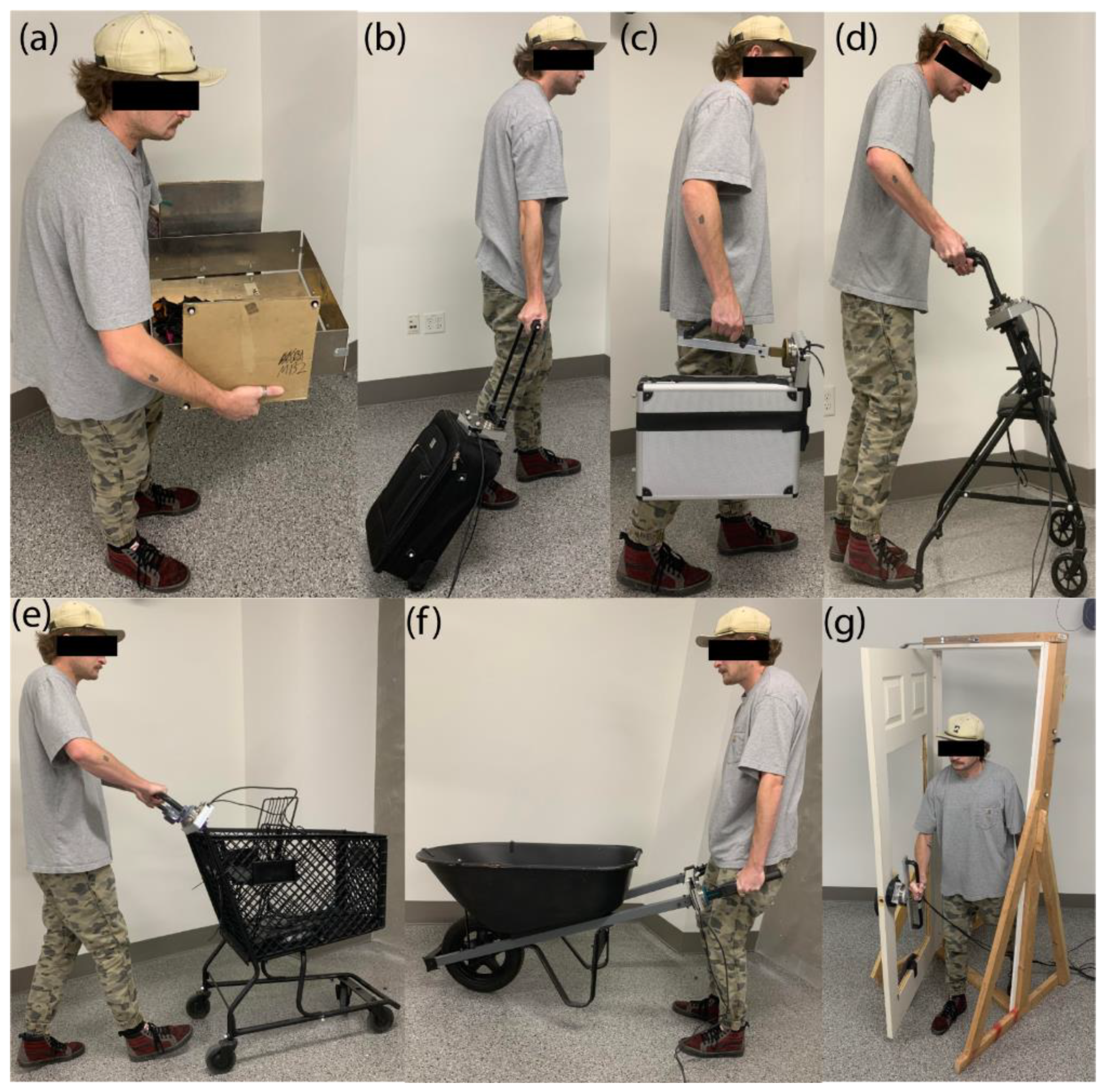
The purpose of this paper is to provide researchers with a description of a data library representing humans interaction with medium to large sized objects from everyday living. The library includes motion capture data characterizing human and object motion as well as data for characterizing haptic interaction with the object via force and torque measurements via a load cell and inertial measurement unit (IMU) readings of the object accelerations. Objects include a box, luggage, briefcase, walker, shopping cart, wheelbarrow, and door. Data collected includes multiple types of interactions with each object, such as manipulating the object and walking while interacting with the object (e.g., pulling, pushing, carrying, operating, etc.). Data processing techniques for synchronizing data, deriving human biomechanics, and segmenting trials are presented. The database will be available on AddBiomechanics, SimTK, and github.
Keywords:
1. Introduction
2. Motivation
3. Related Work
3.1. Haptics
3.2. Similar Databases

| Database | Human Sensing |
Haptic Sensing |
Object Sensing |
Object Size (S, M, L) |
Similar Objects |
Locomotion with Objects |
Number of Subjects |
|---|---|---|---|---|---|---|---|
|
Dataset of Human Motion and Muscular Activities [16] |
IMU, sEMG | None | None | M | B | Yes | 14 |
|
Dataset of Unscripted Human Motion [17] |
IMU | None | None | S, M, L | B, D, SC | Yes | 13 |
| HBOD [18] | MoCap, IMU | None | MoCap | S, M | None | No | 5 |
|
An Industry- Oriented Dataset [19] |
IMU, MoCap | Pressure Sensor | None | S, M, L | None | Yes | 13 |
| BEHAVE [20] | RGBD Images | None | RGBD Images | S, M, L | B, L | No | 8 |
| KIT [2] | MoCap | None | MoCap | S, M, L | B | Yes | 43 |
| Our Database | MoCap | Load Cell | MocCap, IMU | M, L | B, D, BC, L, W, WB, SC | Yes | 6 |
4. Tasks
5. Methods and Procedures
5.1. Motion Capture Volume
5.2. Marker Set
5.3. Instrumentation and Syncronization
5.4. Object Instrumentation
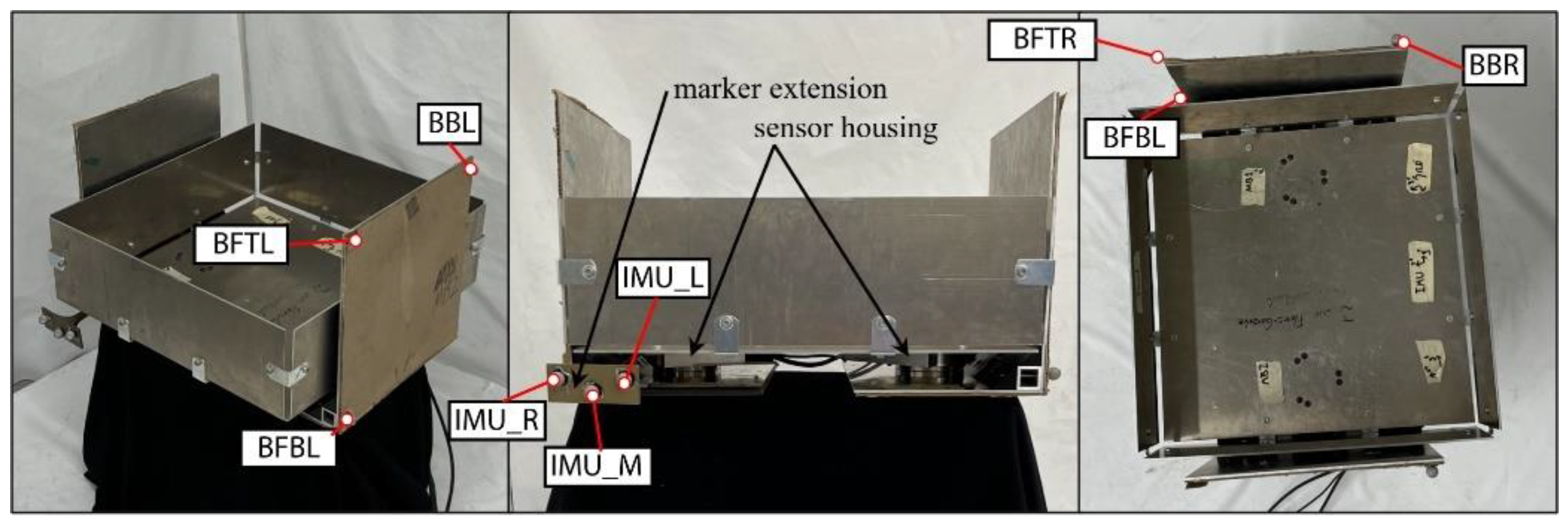
5.4.1. Box
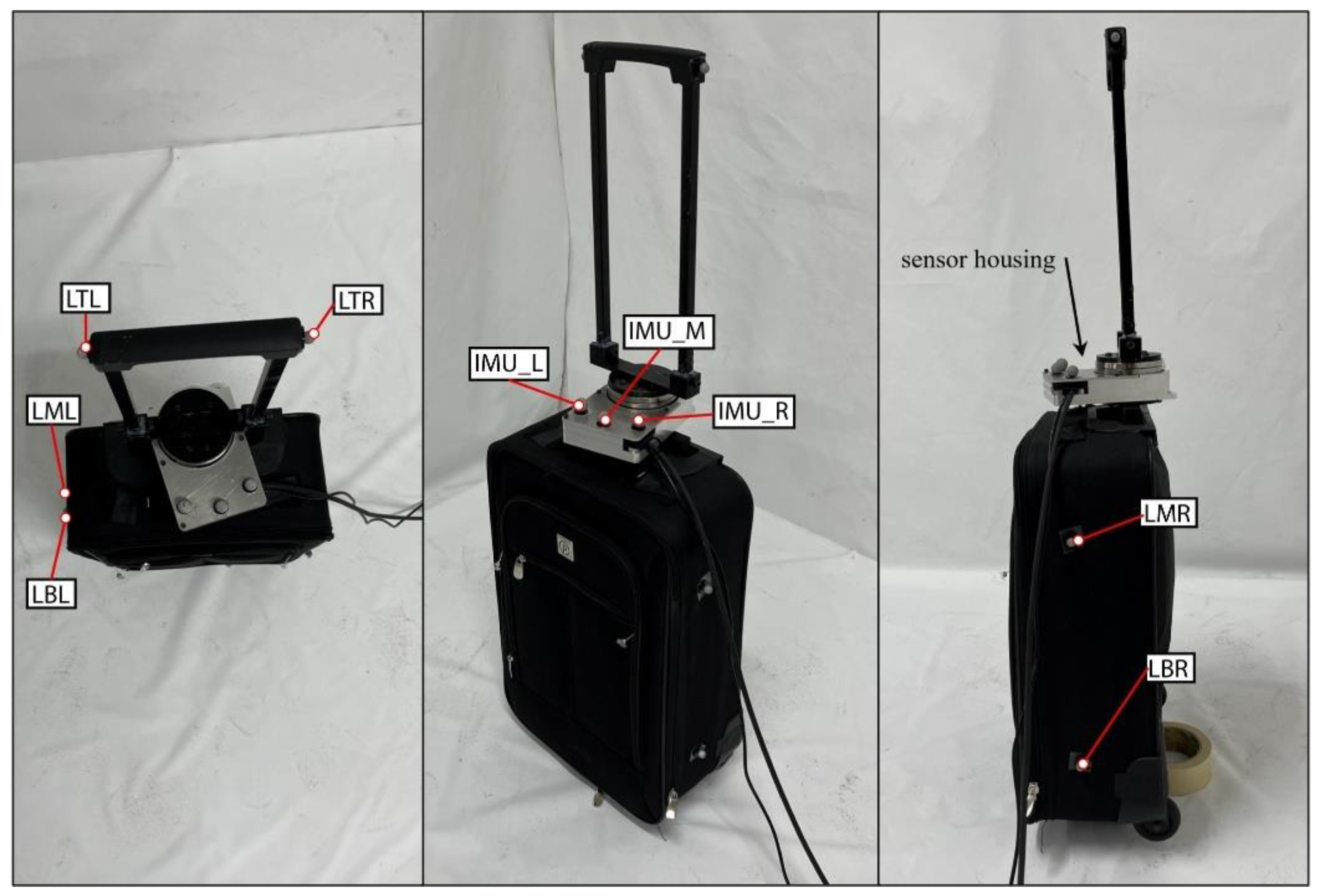
5.4.2. Luggage
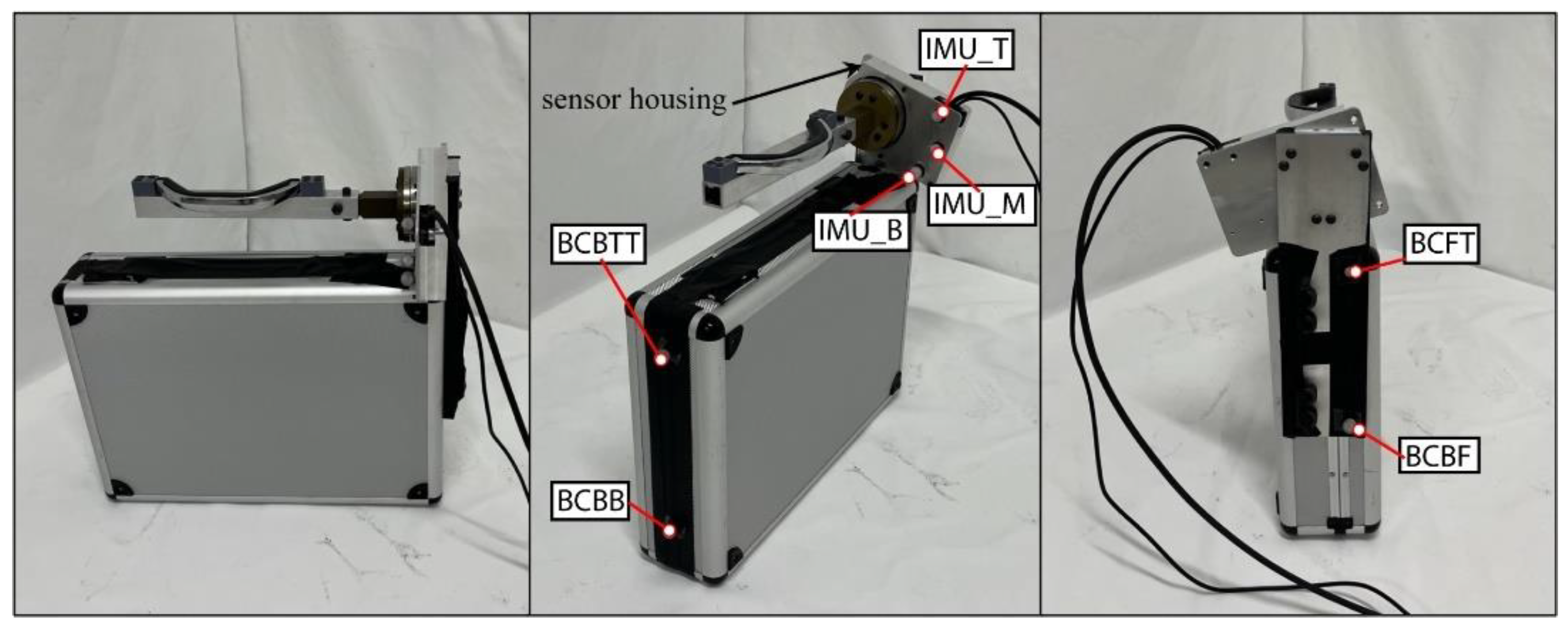
5.4.3. Briefcase
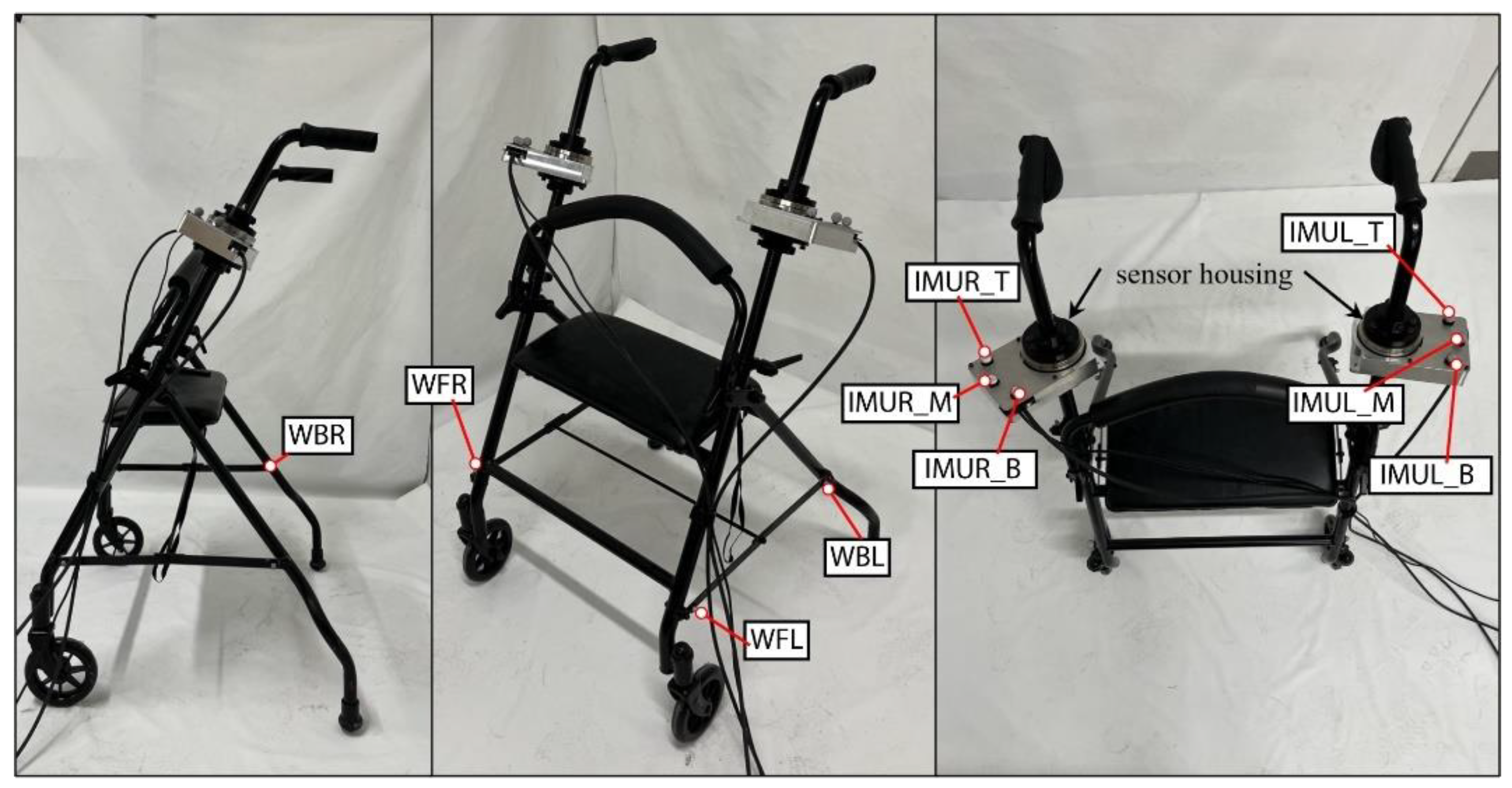
5.4.4. Walker
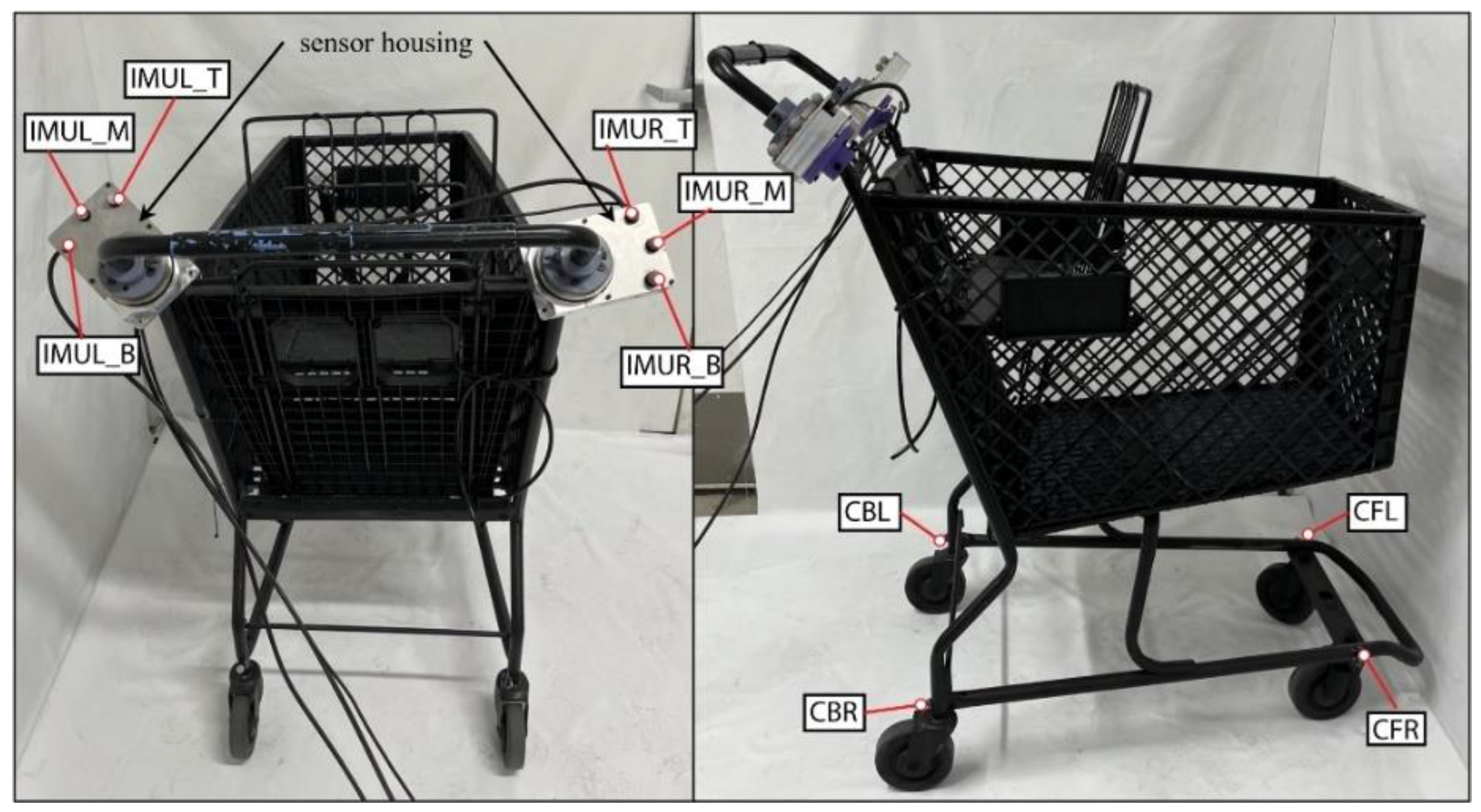
5.4.5. Shopping Cart
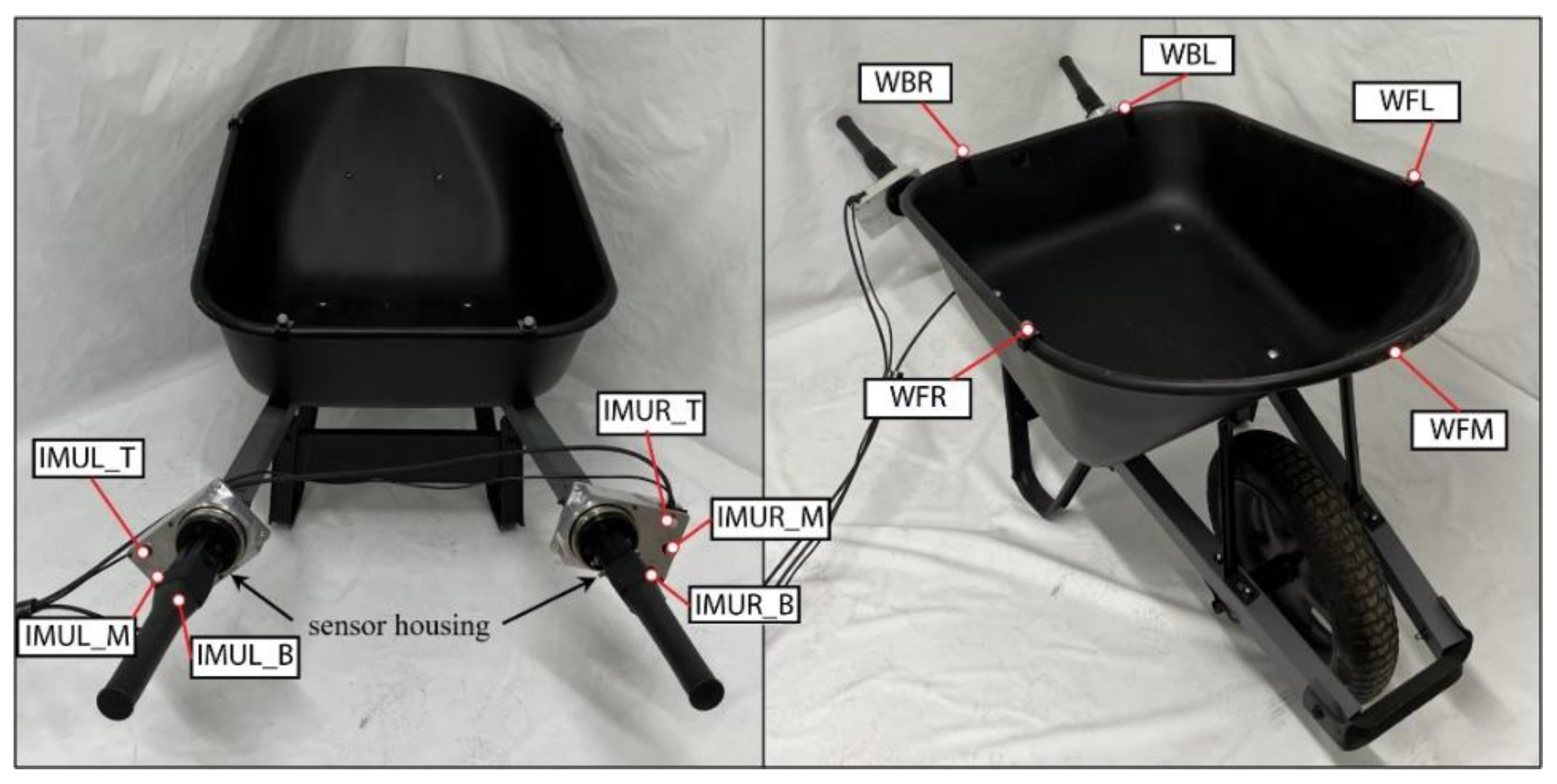
5.4.6. Wheelbarrow
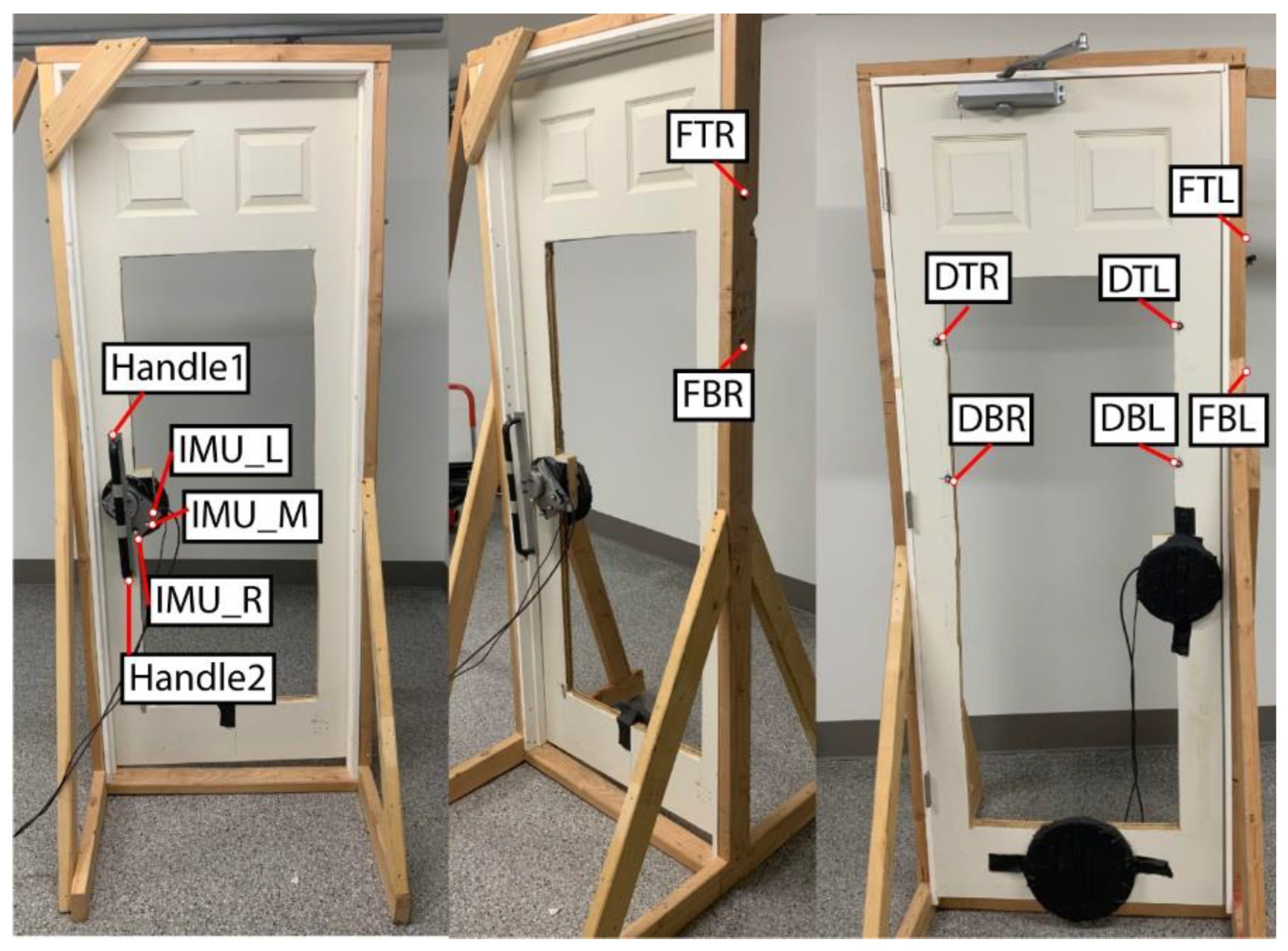
5.4.7. Door
5.5. Object Interaction Protocols
6. Data Processing
6.1. Vicon
6.2. AddBiomechanics
6.4. IMU
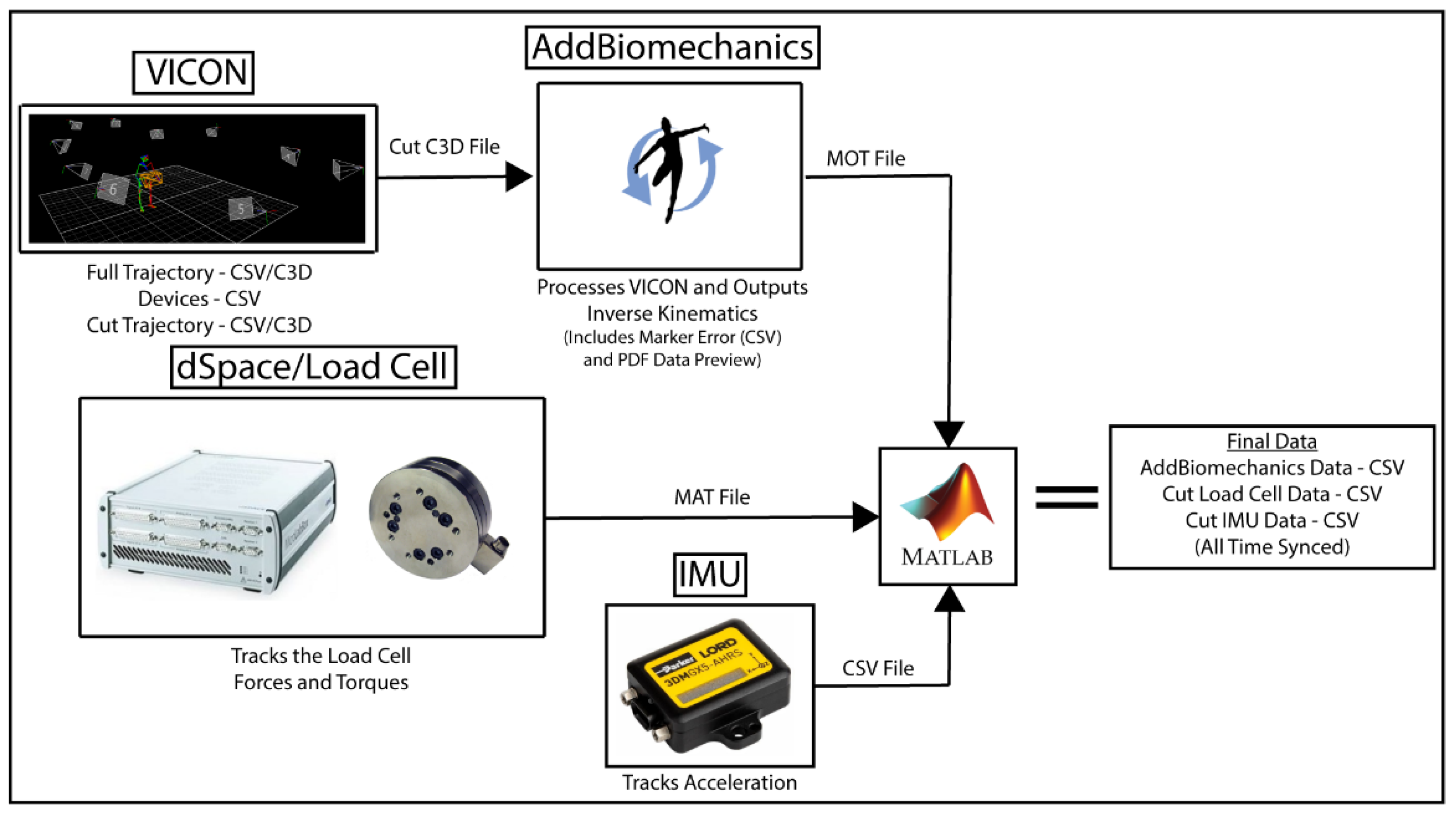
6.5. Final Data Synchronization and Export
- VICON trajectory CSV,
- VICON trigger data CSV,
- Cut VICON trajectory CSV,
- AddBiomechanics MOT motion file,
- Load Cell MAT file, and
- IMU CSV file.
7. Results
7.1. Subjects
7.2. Datasets
- 1)
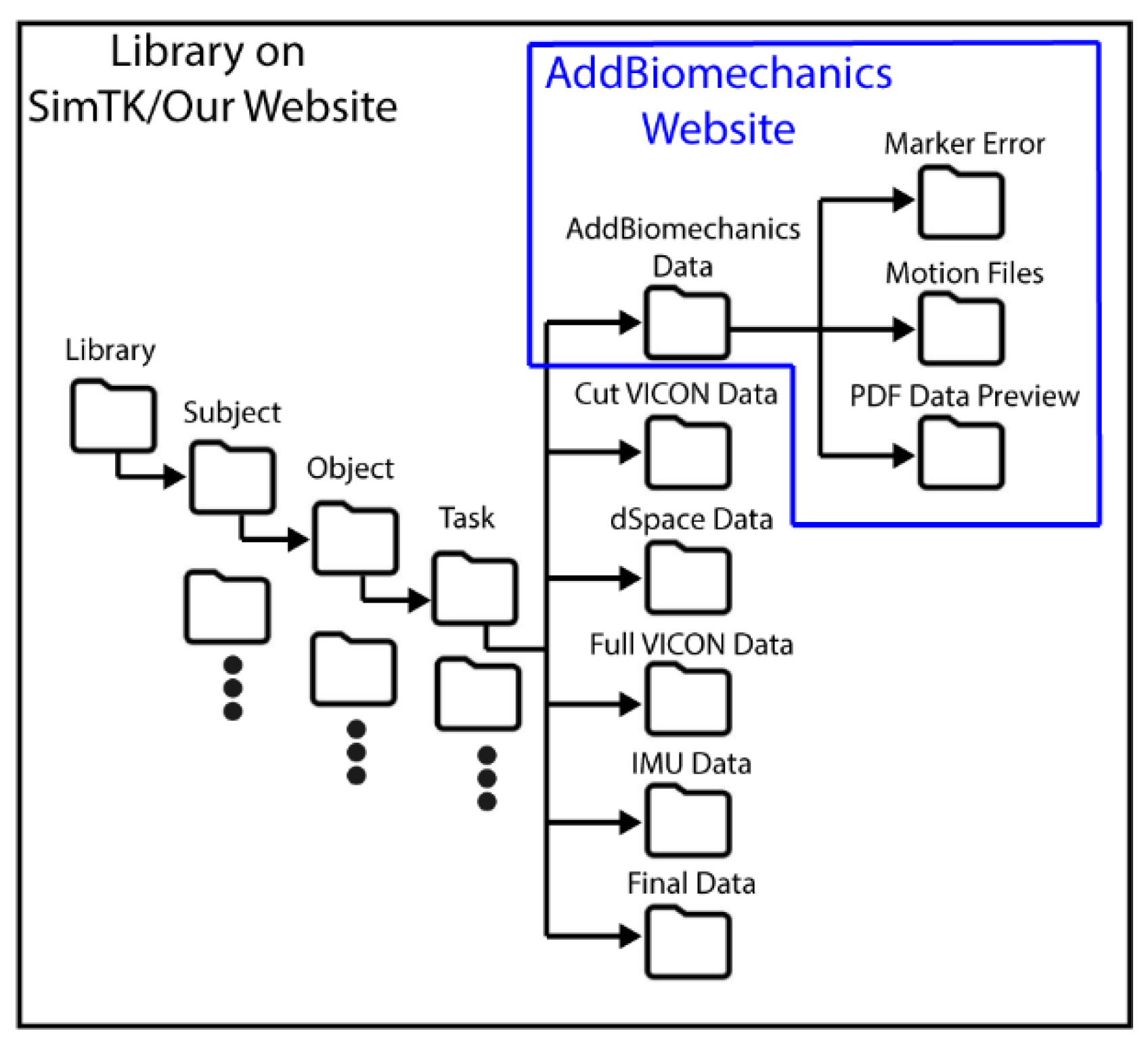
- The main dataset is located on our website and contains all the files described in Section 6 and shown in Figure 12. Data is arranged by subject, object, and task. The AddBiomechanics folder contains the data generated from the AddBiomechanics which is the Marker Error (CSV), Motion Files (MOT), and PDFs that show a preview of the data in the motion files. The Cut VICON Data folder contains the windowed marker data from VICON (CSV/C3D). The dSpace Data contains a MAT file of each load cell and additional data needed for time syncing. The Full VICON Data folder contains the whole marker trajectory file for each task (CSV/C3D) and the trigger data file for syncing (CSV). The IMU Data folder contains the IMU sensor data (CSV). The Final Data folder contains the synced AddBiomechanics full body joint and segment angles (CSV), the force and torque from the load cells (CSV), and the IMU data (CSV) of the windows of the VICON data. The entire library of data is available on our website and SimTK.
- 2)
- The AddBiomechanics data is also available on the AddBiomechanics website and contains everything that is in the main dataset. It also contains the uploaded files used to generate the AddBiomechanics data. It contains the PDF, the marker errors and the motion files described above. It contains the marker data in a (TRC) file, and the OpenSim models used to get this information. AddBiomechanics is provided so that other researchers can evaluate the data processing and have ready access to raw and processed data.
- 3)
- The main dataset is also available on SimTK and contains everything that is in the main database file described above. SimTK is commonly used amongst the biomechanics community.
7.3. Data Sample
8. Conclusion
Supplementary Materials
Author Contributions
Funding
Institutional Review Board Statement
Informed Consent Statement
Data Availability Statement
Acknowledgments
Conflicts of Interest
References
- T. Feix, I. M. Bullock, and A. M. Dollar, “Analysis of human grasping behavior: Object characteristics and grasp type,” IEEE transactions on haptics, vol. 7, no. 3, pp. 311-323, 2014.
- C. Mandery, Ö. Terlemez, M. Do, N. Vahrenkamp, and T. Asfour, “The KIT whole-body human motion database,” in 2015 International Conference on Advanced Robotics (ICAR), 2015: IEEE, pp. 329-336. [Online].
- C. Mandery, Ö. Terlemez, M. Do, N. Vahrenkamp, and T. Asfour, “Unifying representations and large-scale whole-body motion databases for studying human motion,” IEEE Transactions on Robotics, vol. 32, no. 4, pp. 796-809, 2016.
- A. Meixner, F. Krebs, N. Jaquier, and T. Asfour, “An Evaluation of Action Segmentation Algorithms on Bimanual Manipulation Datasets,” in 2023 IEEE/RSJ International Conference on Intelligent Robots and Systems (IROS), 2023: IEEE, pp. 4912-4919. [Online].
- S. Kang, K. Ishihara, N. Sugimoto, and J. Morimoto, “Curriculum-based humanoid robot identification using large-scale human motion database,” Frontiers in Robotics and AI, vol. 10, 2023.
- F. Krebs and T. Asfour, “A bimanual manipulation taxonomy,” IEEE Robotics and Automation Letters, vol. 7, no. 4, pp. 11031-11038, 2022.
- M. Emami, A. Bayat, R. Tafazolli, and A. Quddus, “A survey on haptics: Communication, sensing and feedback,” IEEE Communications Surveys & Tutorials, 2024.
- B. Varalakshmi, J. Thriveni, K. Venugopal, and L. Patnaik, “Haptics: state of the art survey,” International Journal of Computer Science Issues (IJCSI), vol. 9, no. 5, p. 234, 2012.
- A. El Saddik, “The potential of haptics technologies,” IEEE instrumentation & measurement magazine, vol. 10, no. 1, pp. 10-17, 2007.
- T. E. Truong et al., “Evaluating the Effect of Multi-Sensory Stimulation on Startle Response Using the Virtual Reality Locomotion Interface MS. TPAWT,” in Virtual Worlds, 2022, vol. 1, no. 1: MDPI, pp. 62-81. [Online].
- M. Russo, J. Lee, N. Hogan, and D. Sternad, “Mechanical effects of canes on standing posture: beyond perceptual information,” Journal of NeuroEngineering and Rehabilitation, vol. 19, no. 1, pp. 1-13, 2022.
- E. W. McClain, “Simulation and Control of a Human Assistive Quadrupedal Robot,” The University of Utah, 2022.
- E. W. McClain and S. Meek, “Determining optimal gait parameters for a statically stable walking human assistive quadruped robot,” in 2018 IEEE/RSJ International Conference on Intelligent Robots and Systems (IROS), 2018: IEEE, pp. 1751-1756. [Online].
- T. Shen, M. R. Afsar, M. R. Haque, E. McClain, S. Meek, and X. Shen, “Quadrupedal human-assistive robotic platform (Q-HARP): Design, control, and Preliminary Testing,” Journal of Mechanisms and Robotics, vol. 14, no. 2, p. 021004, 2022.
- W. Zhu et al., “Human motion generation: A survey,” IEEE Transactions on Pattern Analysis and Machine Intelligence, 2023.
- G. Bassani, A. Filippeschi, and C. A. Avizzano, “A Dataset of Human Motion and Muscular Activities in Manual Material Handling Tasks for Biomechanical and Ergonomic Analyses,” IEEE Sensors Journal, vol. 21, no. 21, pp. 24731-24739, 2021.
- J. H. Geissinger and A. T. Asbeck, “Motion inference using sparse inertial sensors, self-supervised learning, and a new dataset of unscripted human motion,” Sensors, vol. 20, no. 21, p. 6330, 2020.
- P. Kang, K. Zhu, S. Jiang, B. He, and P. Shull, “HBOD: A Novel Dataset with Synchronized Hand, Body, and Object Manipulation Data for Human-Robot Interaction,” in 2023 IEEE 19th International Conference on Body Sensor Networks (BSN), 2023: IEEE, pp. 1-4. [Online].
- P. Maurice et al., “Human movement and ergonomics: An industry-oriented dataset for collaborative robotics,” The International Journal of Robotics Research, vol. 38, no. 14, pp. 1529-1537, 2019.
- B. L. Bhatnagar, X. Xie, I. A. Petrov, C. Sminchisescu, C. Theobalt, and G. Pons-Moll, “Behave: Dataset and method for tracking human object interactions,” in Proceedings of the IEEE/CVF Conference on Computer Vision and Pattern Recognition, 2022, pp. 15935-15946. [Online].
- Y. Wang et al., “Augmenting virtual reality terrain display with smart shoe physical rendering: A pilot study,” IEEE Transactions on Haptics, vol. 14, no. 1, pp. 174-187, 2020.
- P. Sabetian, “Modular Cable-Driven Robot Development and Its Applications in Locomotion and Rehabilitation,” The University of Utah, 2019.
- L. D. Duffell, N. Hope, and A. H. McGregor, “Comparison of kinematic and kinetic parameters calculated using a cluster-based model and Vicon’s plug-in gait,” Proceedings of the Institution of Mechanical Engineers, Part H: Journal of Engineering in Medicine, vol. 228, no. 2, pp. 206-210, 2014.
- N. Goldfarb, A. Lewis, A. Tacescu, and G. S. Fischer, “Open source Vicon Toolkit for motion capture and Gait Analysis,” Computer Methods and Programs in Biomedicine, vol. 212, p. 106414, 2021.
- K. Werling et al., “AddBiomechanics: Automating model scaling, inverse kinematics, and inverse dynamics from human motion data through sequential optimization,” Plos one, vol. 18, no. 11, p. e0295152, 2023.
- A. Rajagopal, C. L. Dembia, M. S. DeMers, D. D. Delp, J. L. Hicks, and S. L. Delp, “Full-body musculoskeletal model for muscle-driven simulation of human gait,” IEEE transactions on biomedical engineering, vol. 63, no. 10, pp. 2068-2079, 2016.
Disclaimer/Publisher’s Note: The statements, opinions and data contained in all publications are solely those of the individual author(s) and contributor(s) and not of MDPI and/or the editor(s). MDPI and/or the editor(s) disclaim responsibility for any injury to people or property resulting from any ideas, methods, instructions or products referred to in the content. |
© 2025 by the authors. Licensee MDPI, Basel, Switzerland. This article is an open access article distributed under the terms and conditions of the Creative Commons Attribution (CC BY) license (http://creativecommons.org/licenses/by/4.0/).


