Introduction
Knee osteoarthritis (OA), is the most common multifactorial joint disease of adults worldwide, characterized by cartilage matrix degradation, chronic pain physical disabilities and reduction of quality of life (1, 2). From a histopathological point of view, there is an unbalance in cartilage homeostasis between the destruction and self-repair mechanisms: an increased expression of proinflammatory cytokines (IL-1, TNF alpha), of metalloproteinase of the matrix, of prostaglandins and nitric oxides; a reduced synthesis of growth factors, collagen, proteoglycans and anti-inflammatory cytokines (IL-4 and IL-10) (3.4).
Surgery is indicated in patients who are not responsive to conservative treatment and who therefore continue to show limitations in their daily activities with variations in their lifestyle. The most invasive surgical treatments include interventions such as osteotomy or arthroplasty. However, in those cases where the arthroscopic disease has not yet evidenced major anatomo-pathological alterations, a solution may be given by arthroscopic debridement (AD), possibly associated with hyaluronic acid (HA) infiltrations or, more recently, with mesenchymal stem-cell-rich adipose tissue (5): whilst the AD aims at eliminating intra-articular loose bodies, unstable meniscal injuries, and / or cartilage flaps, the purpose of HA infiltrations is to restore joint balance.
It is necessary to evaluate why arthroscopic complications are relatively low (0.56 / 1.68%) (6-8), but patients can still experience pain, swelling or stiffness during the post-operative period. In addition to being caused by surgical stress, these issues are also likely to depend on the negative influence of the irrigation fluid (saline) used during arthroscopy, (9-11) which has been shown to have an adverse effect, although temporary, on the metabolism of the articular cartilage promoting the release of catabolic molecules and pro-inflammatory factors. The rationale of administering HA infiltrations is directly connected to reducing cellular stress, reducing pain, facilitate shock absorption because of its viscoelastic properties, retain fluids in the joint cavity during movement thanks to its macromollar size, reduce deterioration and finally, by facilitating the synthesis of aggregates in the articular tissues, modulate inflammatory activities (12).
Based on the literature regarding the biomechanical and biological actions of hyaluronic acid (HA), an important role could be assigned to HA among the postoperative management options as a reliever accelerant and for recovery from pain.
The purpose of this study is to evaluate the clinical outcome of the effects of injecting a combination of hyaluronic acid (2%) + sorbitol (4%) (Synolis VA®) with high molecular weight in patients undergoing knee arthroscopy.
Materials and Methods
The study was a prospective, randomised, controlled, single-blind, single surgeon clinical trial. The study was carried out in our facility over a period of 12 months. Ethical approval was obtained by the local ethical committees (IRB 21.19 TS). The study was conducted according to the Helsinki Declaration.
Randomisation was obtained using a computer-produced causal number generator algorithm so as to form 2 groups:
Study Group (A): received a single injection consisting of a combination of hyaluronic acid (MW 2MDa, 40 mg/2 ml) and sorbitol (80 mg/2 ml) (SYNOLIS-VA®, Aptissen, Switzerland);
Control group (B): did not receive the injection after the procedure.
Inclusion criteria:
Patients aged between 18 and 60, BMI less than 30, who required knee arthroscopy for mechanical symptoms due to meniscal and/or cartilage lesions (younger patients) or signs of grade 1 or 2 osteoarthritis according to Kellgren-Lawrence.
Patients were excluded if any of the following applied: not within the age group limit, BMI> 30, ligamentous lesions, bone diseases, synovial membrane diseases, rheumatoid arthritis or other inflammatory diseases, pregnancy.
All patients underwent a clinical-instrumental screening (conventional X-rays and Magnetic Resonance Imaging (MRI)) prior to the operation and on the day of the procedure they signed an informed consent form to receive the treatment and participate in the study. The same senior surgeon performed all arthroscopic procedures in the same centre under subarachnoid anaesthesia, through standard antero-medial and antero-lateral portals. In all cases, an arthroscopic pump and Tourniquet (250 mmHg only during the surgical phase) were used. The procedures included treatment of any meniscal lesions, debridement of joint cartilage with the removal of any flaps. No microfractures were performed. At the end of the arthroscopic procedure, the injection was performed via the antero-lateral portal under dry-arthroscopic monitoring to be certain of the intra-articular insertion of the HA.
Both groups underwent an accurate drainage of arthroscopic irrigation fluids, arthroscopic portals were sutured, and no drainage was placed. The surgeon was not informed which group the patient belonged to until the end of the surgery, he then injected the product into the knee and did not participate in the subsequent collection of data and patient evaluation. Physical therapy was the same for both groups. All patients were evaluated before the operation (D0), a few hours after the surgical procedure (D1 - only for the WOMAC index), at 1 week (W1), 1 month (W4) and 3 months (W12) after the surgery. Further patient clinical parameters were recorded from week 3 (W3) to W12, via questionnaires to be filled out at home with the aim of evaluating pain and functional recovery every week from the third week after the procedure up to the final week. The self-evaluation questionnaires included: the subjective score of the International Knee Documentation Committee (IKDC), the Western Ontario and the McMaster University (WOMAC) stiffness sub-score and the WOMAC Pain sub-scales.
Results
A total of 60 patients were enrolled.
- -
Group A (30 patients): mean age 42 years (range 23-58); mean BMI 25.5 (range 20.1-29.6), 27% women and 73% men
- -
Group B (30 patients): mean age 41 years (range 19-59); mean BMI 23.4 (range 19.8-27.3), 30% women and 70% men.
Statistical analysis was performed using IBM SPSS Statistics for Windows, Version 28.0 (IBM Corp., Armonk, N.Y., USA). Analysis of variance (ANOVA) was performed according to compare outcome between groups. Differences were considered significant at the p < 0.05 level.
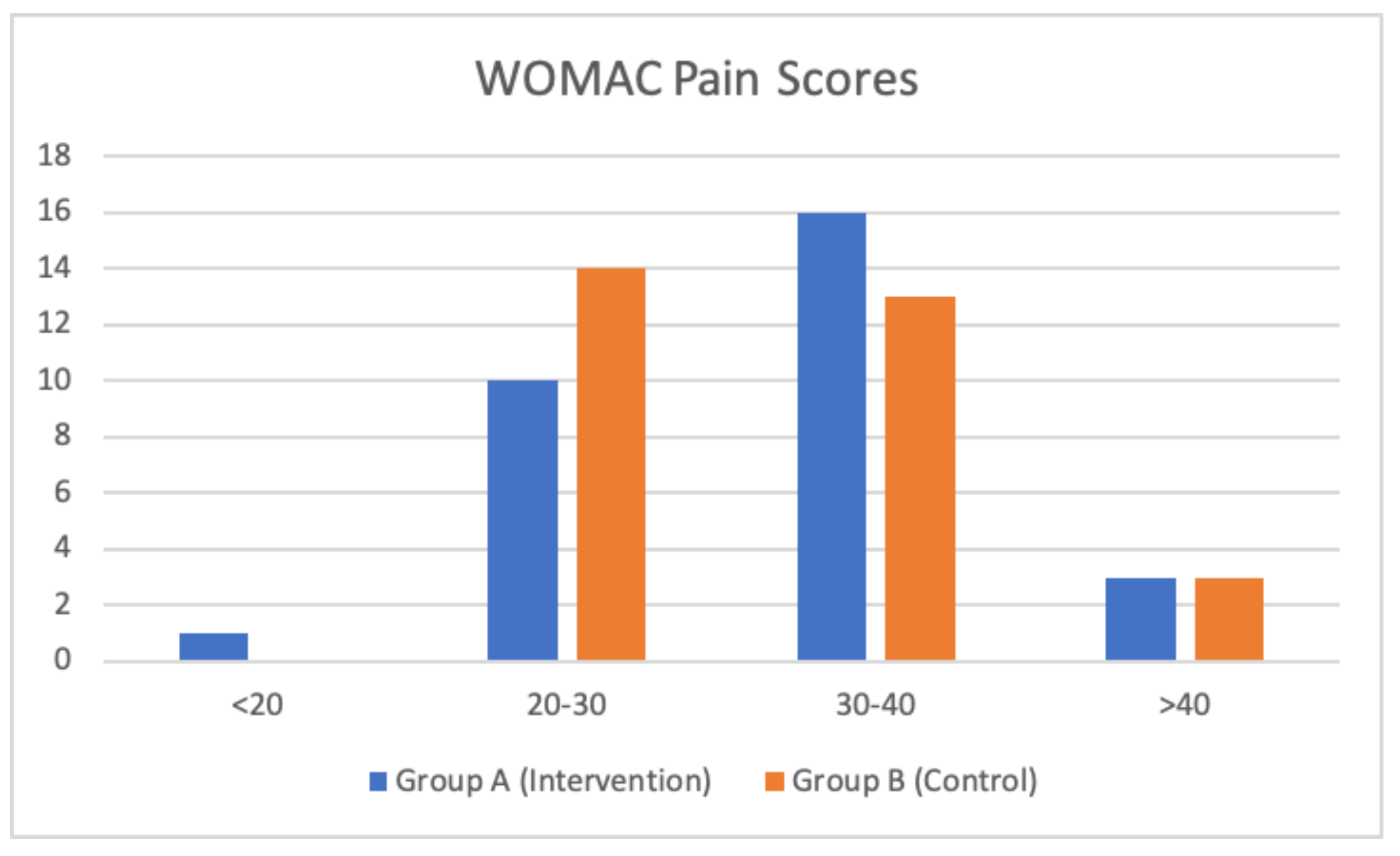
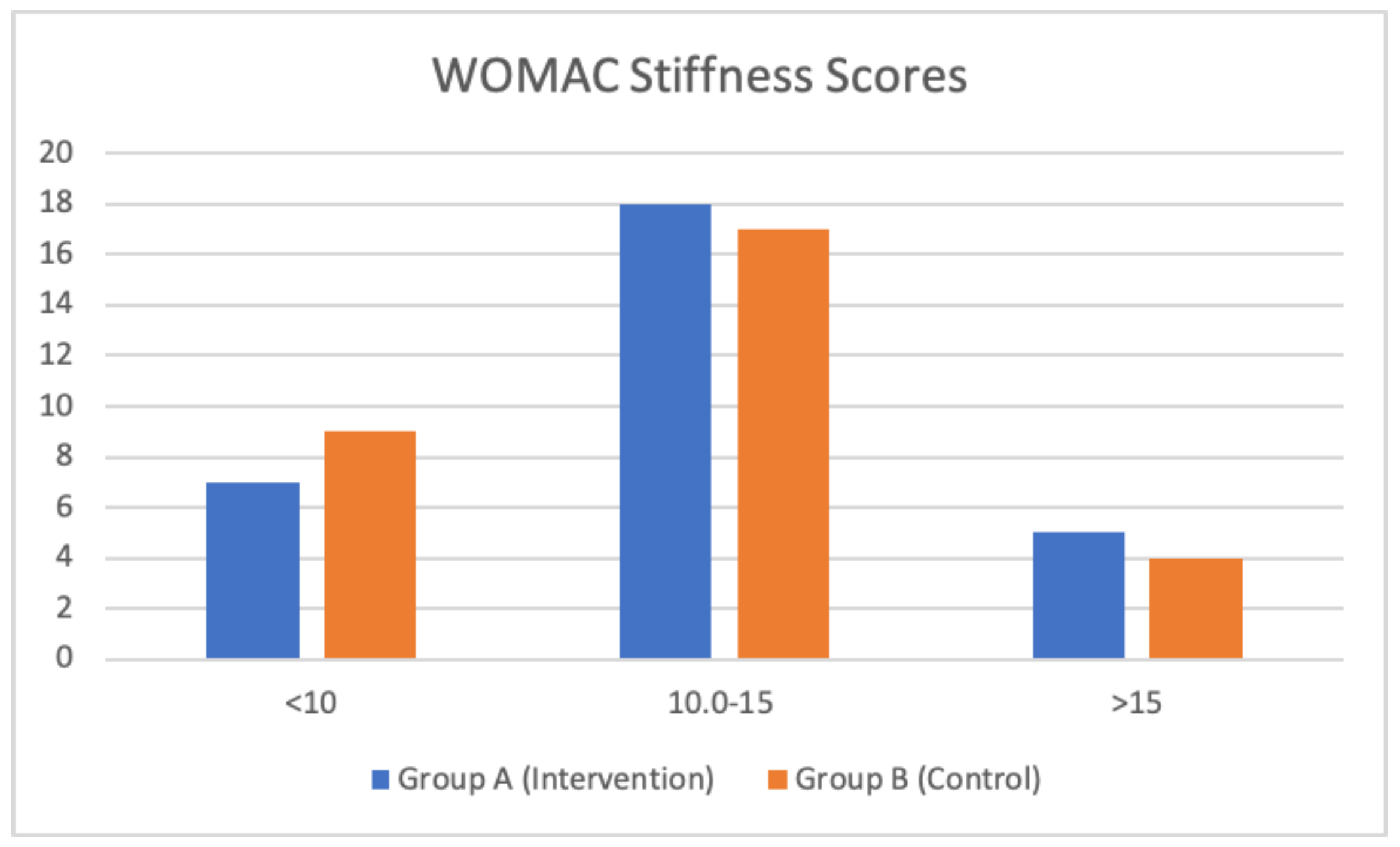
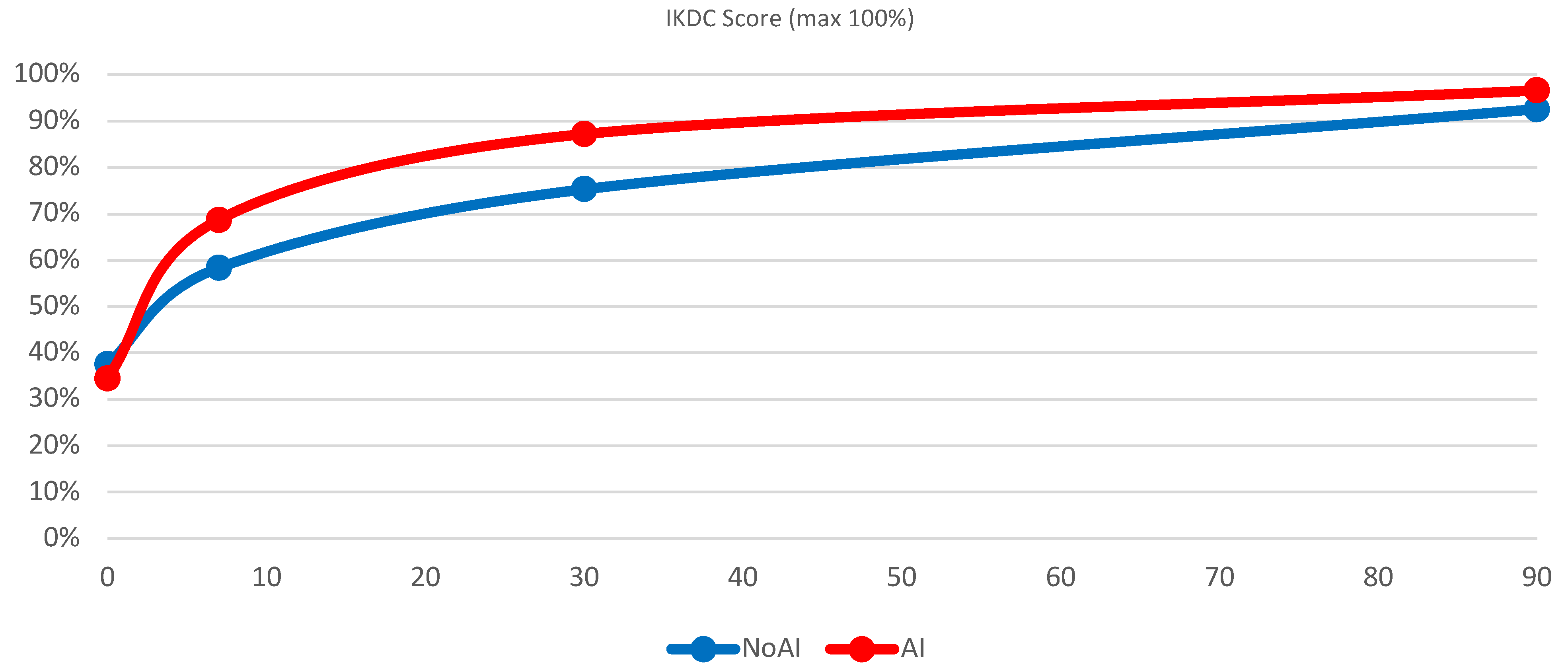
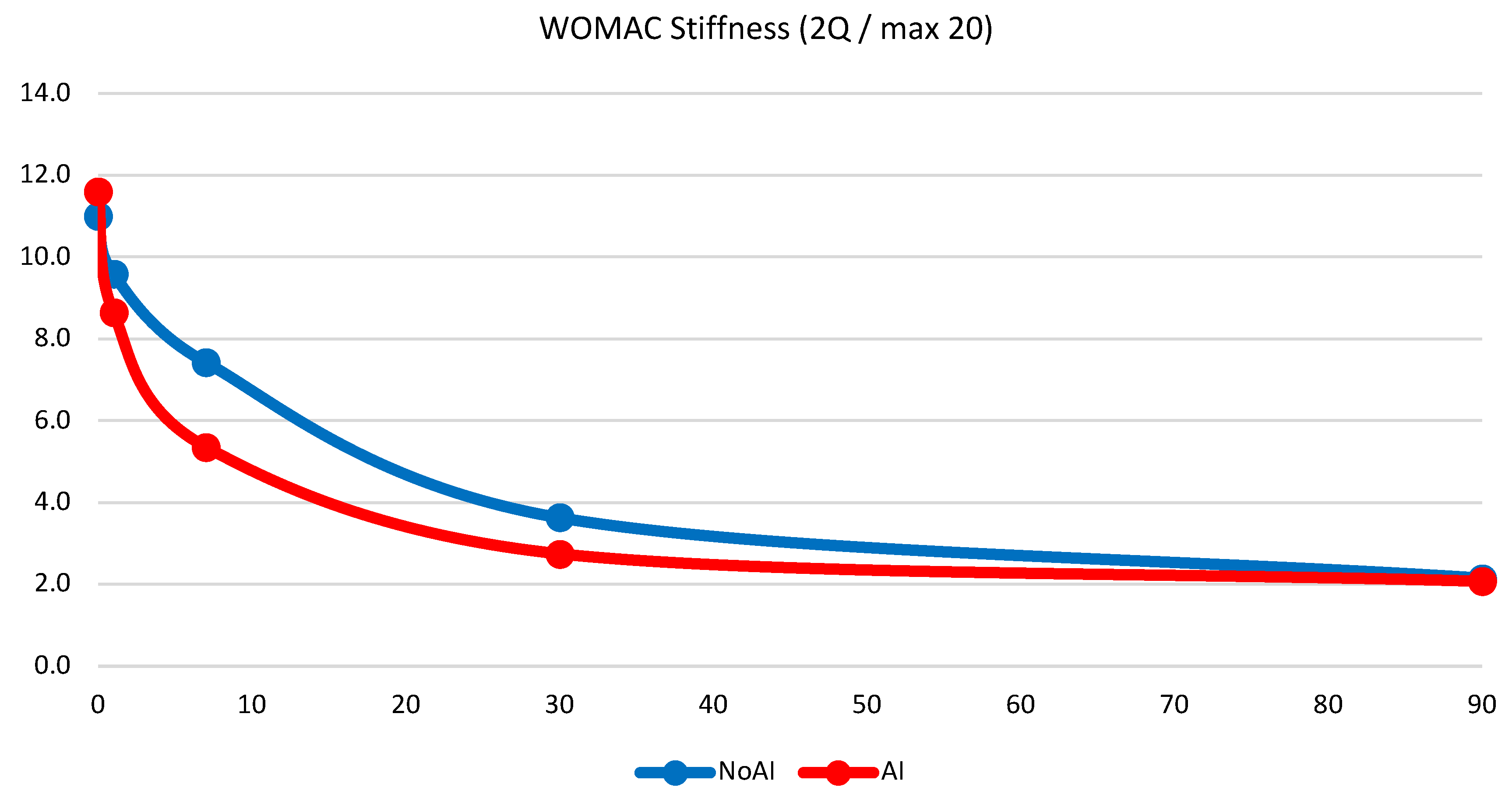
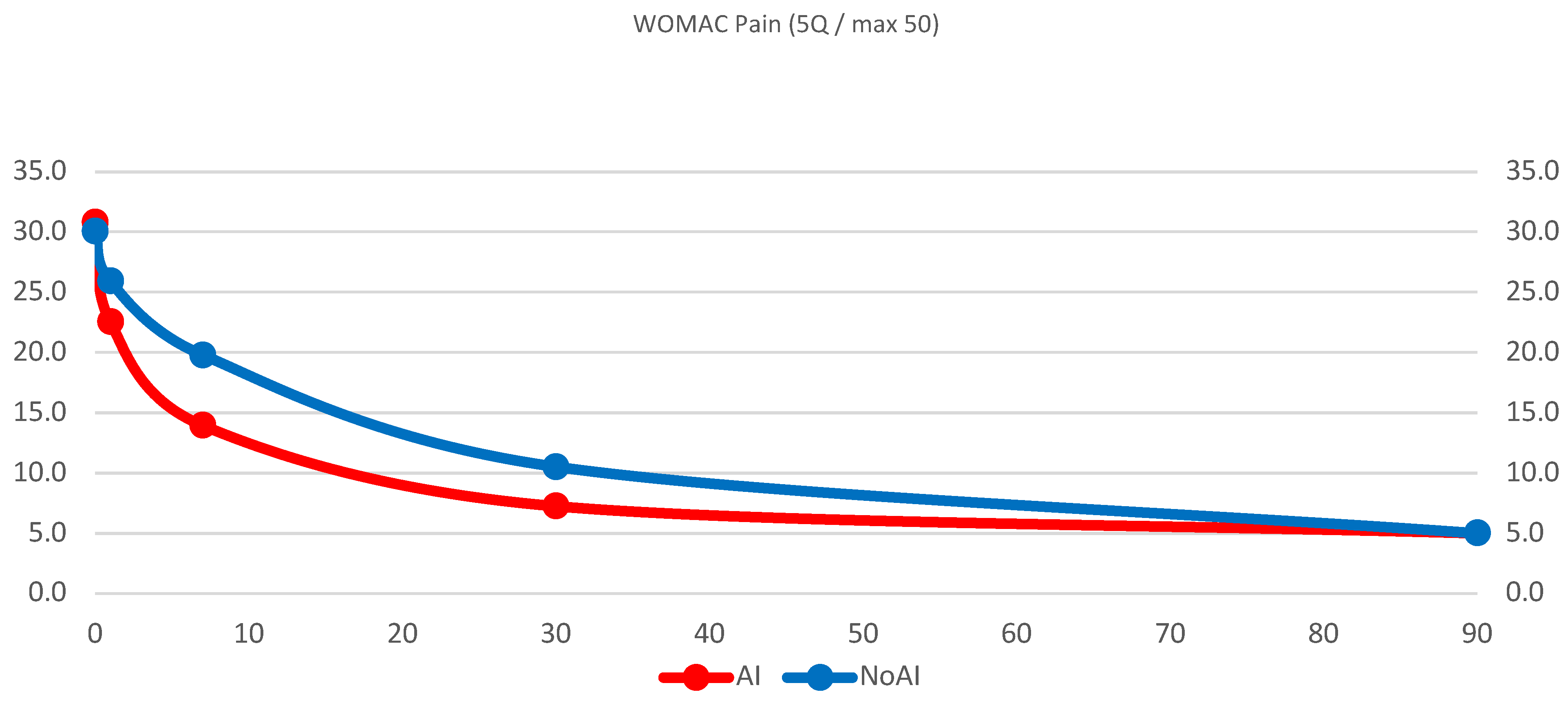
At D0 the majority patients had pain and functional limitation, expressed as stiffness, from moderate to severe (Tab 1,2,3). At W1 and W4 we observed an improvement in IKDC scale scores for both groups, however the improvement was greater in the intervention Group A. (Tab 4). Similar results were also seen when comparing WOMAC Pain and Stiffness scores where Group A patients had greater reduction in both pain and stiffness (Tab 5, 6). Furthermore, Group A patients reported a better performance in daily life activities 1 month after the procedure and less interference with sports participation (those who performed pre-operative amateur sports activities) during the first post-operative recovery phase. All of these findings were statistically significant (P<0.005). However, at the final W12 control we did not notice any statistically significant difference between the two groups in any of the parameters.
Table 1.
Preoperative Subjective IKDC.
Table 1.
Preoperative Subjective IKDC.
Table 2.
WOMAC Preoperative Pain.
Table 2.
WOMAC Preoperative Pain.
Table 3.
WOMAC preoperative stiffness.
Table 3.
WOMAC preoperative stiffness.
Table 4.
IKDC. score improvement at W1 and W4.
Table 4.
IKDC. score improvement at W1 and W4.
Table 5.
WOMAC stiffness. significant improvement at W1 and W4.
Table 5.
WOMAC stiffness. significant improvement at W1 and W4.
Table 6.
WOMAC pain. significant improvement at W1 and W4.
Table 6.
WOMAC pain. significant improvement at W1 and W4.
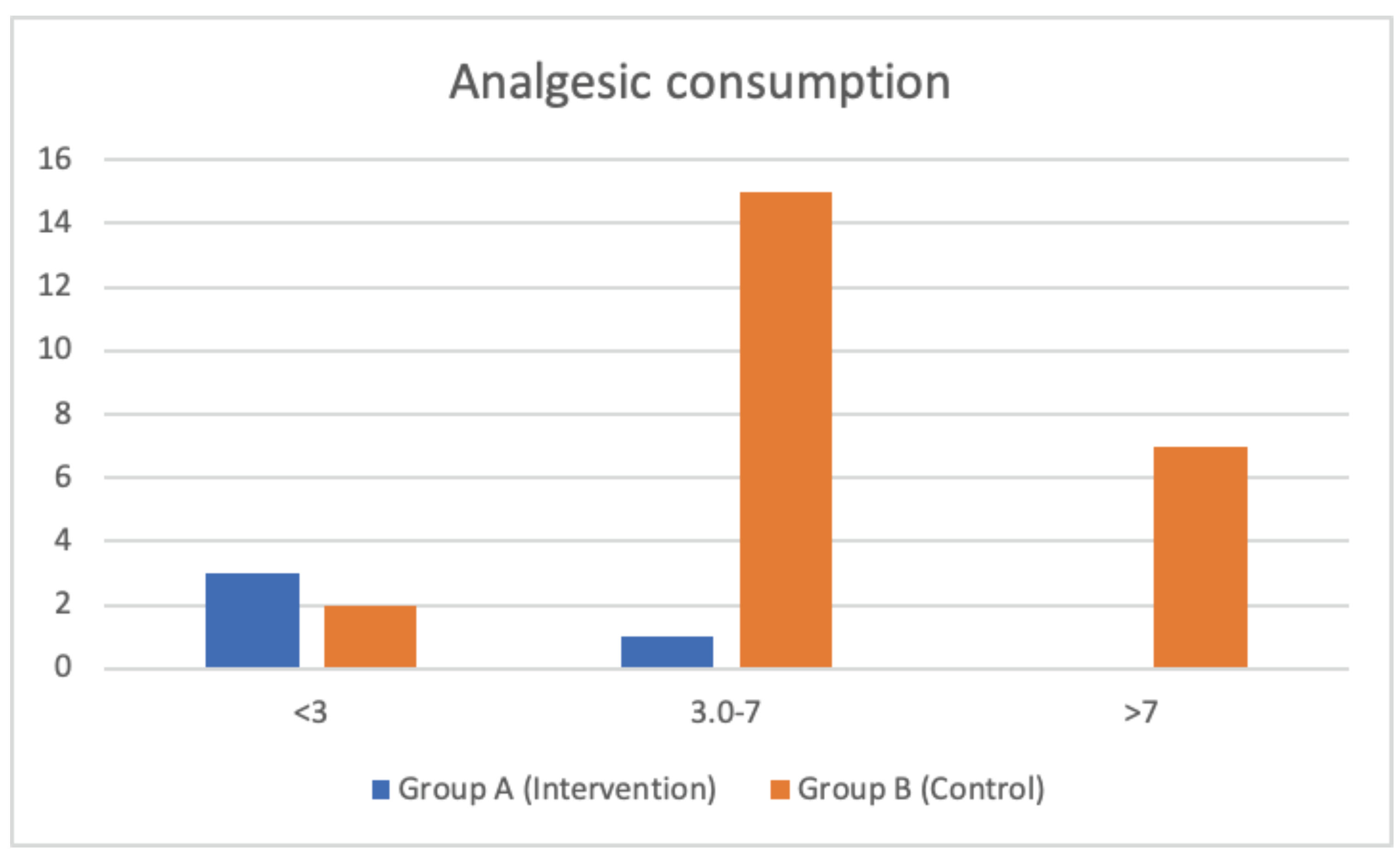
We also considered the administration of any type of analgesic, and we highlighted that in Group A only 5 patients (5%) took anti-inflammatory drugs compared to 24 patients in Group B (80%) (Table 7) – these findings were statistically significant.
Table 7.
Intake of analgesic medication in the postoperative period.
Table 7.
Intake of analgesic medication in the postoperative period.
Discussion
Knee arthroscopy is an option for treating cartilage, meniscal lesions and early OA pictures as it may result in symptomatic relief, thus improving the function and perception of the subject's health. It is also a procedure with minimum morbidity, which allows documenting the pathological process stage and one which in any case represents a therapeutic procedure (6).
Recent studies confirm that arthroscopic surgery may be an appropriate surgical treatment (13) in patients with preoperative mechanical symptoms caused by free bodies, chondral flaps, and meniscal disorder. In fact, it has been shown that more than 90% of patients with symptomatic knee OA will have magnetic resonance imaging indicating a meniscal pathology (14).
For these reasons, arthroscopy can be a viable option to perform joint wash with reduction of the biochemical agents of the inflammation, partial meniscectomy for unstable meniscus tears, partial synovectomy, removal of free bodies, and chondral cartilage shaving, resulting in symptomatic relief and functional improvement, reducing the need for major knee surgery. (15, 16) However, in some cases, there may be complications during the post-operative phase of an arthroscopy, such as persistence of swelling, pain, and sometimes reduction of the articular range. It is clear that these adverse events largely depend on surgical stress, but several studies have shown that the irrigation fluid can also be a contributing factor. (9, 10, 11, 17)
During arthroscopy, irrigation with NaCl solution results in a dilution of the synovial fluid with a decrease in hyaluronic acid (HA) concentrations and therefore a decrease in its physical characteristics and protective functions, which can lead to a greater cartilage vulnerability. According to various studies, this greater vulnerability to mechanical stresses of the cartilage may depend on the irrigation with NaCl which inhibits the metabolism of the chondrocytes during the first 7 days post-procedure. A serious reduction in the number of cells is in fact observed in an isotonic sodium chloride solution. The density reduction in the cells observed is not simply the result of the loss of adherence between them as is noted with a low pH, but also a reduced cellular vitality (10, 18). Similar effects are not however observed with Ringer’s lactate solutions which are able to maintain the cellular integrity and morphology and are therefore considered to be the gold-standard solution for arthroscopy irrigation (19).
Matsusue and Thomson (20) reported a positive result in 87% of patients undergoing arthroscopic meniscectomy with OA grade I or II. Bin et al. (21) observed that 90% of patients undergoing arthroscopic meniscectomy despite a 4th level chondropathy on the medial femoral condyle according to Outerbridge (22), had better subjective results on the VAS and Lysholm scoring scales. Therefore, it can be argued that arthroscopy constitutes a good therapeutic alternative for subjects without severe radiographic signs of OA or ones for whom the mechanical problem is dominant or arthroplasty is not recommended. However, the duration of the symptomatic benefits is extremely variable, and the procedure is often characterized by persistence of those same symptoms that led to the surgery (pain, functional limitation, reduction of patient comfort). This adverse event is often followed by a slower functional recovery.
Therefore, an increasing number of studies considers the possibility of terminating the surgical procedure with the use of an adjuvant capable of quickly restoring the correct equilibrium of the joint environment. In particular, the focus turned towards HA, which, amongst other things, shows alterations of its properties in the case of OA (reduction in molecular weight and concentration) which lead to a lower degree of viscosity of the synovial fluid (23, 24).
Marshall et al. (25) were amongst the first to report the intra-articular use of HA (hylan G-F 20) in patients with persistent symptoms after their AD. This study, published in 1996, showed that most patients had a "severe" or "marked" OA, but in 68% of cases no subsequent knee arthroplasty was required, and they were assessed as "recovered".
In 2002 Chen et al. (426) administered HA to 77 patients with OA after knee arthroscopy and compared these with the control group for which only the surgical procedure had been performed. The HA group had better results in terms of muscle strength and VAS, concluding that HA was an important element. In 2007, Hempfling (27) reported the results of a randomised, controlled, double-blind trial with 80 patients undergoing arthroscopic knee wash. 40 patients were also administered 10 ml of hyaluronic acid. Both groups had positive effects 3 months after the surgical procedure, but the effect lasted for 1 year for patients who received HA.
The rationale of the HA use derives from the fact that during the AD procedure, joint irrigation removes the synovial fluid and the HA layer above the cartilage with a loss of proteoglycans and this determines adverse effects on the metabolism and on the structure of the cartilage itself (28, 29). Jansen et al. (30) in a recent study showed that hyaluronic acid has a potential role in preventing the death of articular cartilage cells in the presence of joint lesions. Therefore, the main role of HA is to maintain the structural and functional characteristics of the extracellular matrix of the cartilage and of the biological fluids. HA improves the properties of synovial fluid after arthroscopy, allowing it to regain its physical properties, it acts as a lubricant and joint dampener, it reduces the risk of cell damage or of its development by diminishing any mechanical stress on the joint surface. This, together with its ability to "inhibit" nociceptors of the joint capsule, results in pain reduction, moreover, when HA is introduced into the joint, it contributes to "remove" the saline wash solution, preventing its harmful effects on the cartilage metabolism (31, 32).
In another trial, knees with cartilage lesions were irrigated with NaCl while another group was administered HA. 7 days later an improvement showed in the chondrocyte metabolism compared with the group without HA (10, 17).
HA also has a protective role against chondrocytes at the edge of the cartilage lesion. In fact, chondrocytes peripheral to cartilage lesions die due to mechanical compressions. Such apoptosis begins about 6h after the trauma and tends to increase as a percentage up to 7 days after the injury (33, 34).
In this regard, Diaz-Gallego et al have shown that intra-articular HA plays a protective role in cartilage by reducing cellular apoptosis when the treatment is started early following mechanical or physiological stress (35).
However, the long-term effect of HA in relation to the effects on cell death and on the chondrocyte metabolism is still unclear. And this strengthens the idea that there is a "therapeutic window" in which to use the HA to achieve maximum results.
As evidenced by the literature, our trial also showed how the group receiving HA infiltrations had an improved recovery in their daily activity during the first postoperative week and a faster recovery of amateur sports activity one month later compared with the control group. This improved functional aspect is clearly linked to a lower incidence of postoperative pain, which is also confirmed by the reduction in pain-killer usage. However, at the 3-month control no differences were observed in the functional results between the two groups, confirming that the use of HA does not affect the final outcome of the surgical procedure, but represents an adjuvant to an easier recovery. In particular, we have chosen Synolis V-A because it has a high concentration of NaHA (20 mg / ml, 2%) which helps to modulate the release of inflammatory agents and contributes to maintain the functional and structural features of the extracellular cartilage matrix (36, 37); high molecular weight (2.2 MDa), reduces the expression of the pro-apoptotic receptors of the chondrocytes (CD44) (, 38); the combination with a high dose of Sorbitol (40mg / ml) which on the one hand protects NaHA from the action of free articular radicals, indirectly promoting articular homeostasis, on the other it lowers the free radical concentration, inhibiting the migration of macrophages in the joint cavity and leading to a direct reduction of the inflammation and pain (37, 39).
Conclusion
Based on our results, it may be assumed that the use of HA infiltrations after AD on knees with mild or moderate OA leads to better results in terms of postoperative pain and short-term functionality. Further studies with greater follow-ups and larger patient groups are required to justify the use and cost of these post-routine arthroscopy procedures.
References
- Nam CW, Kim K, Lee HY: The influence of exercise on an unstable surface on the physical function and muscle strength of patients with osteoarthritis of the knee. J Phys Ther Sci, 2014, 26: 1609–1612. [CrossRef]
- Koca I, Boyacı A, Tutoglu A, et al.: The relation between quadriceps thickness, radiological staging and clinical parameters in knee osteoarthritis. J Phys Ther Sci, 2014, 26: 931–936. [CrossRef]
- Mangone G, Orioli A, Pinna A, et al.: Infiltrative treatment with Platelet Rich Plasma (PRP) in knee osteoarthritis. Clin Cases Min Bone Metab, 2014, 11: 67–72.
- Kim G, Kim E: Anti-inflammation effects of low intensity laser therapy on monosodium iodoacetate-induced osteoarthritis in rats. J Phys Ther Sci, 2013, 25: 173–175. [CrossRef]
- Bjordal JM, Johnson MI, Lopes-Martins RA, Bogen B, Chow R, Ljunggren AE. Short-term efficacy of physical interventions in osteoarthritic knee pain. A systematic review and meta-analysis of randomised placebo-controlled trials. BMC Musculoskelet Disord 2007;8:51. [CrossRef]
- DeLee JC; Committee on Complications of Arthroscopy Association of North America. Complications of arthroscopy and arthroscopic surgery: results of a national survey. Arthroscopy 1985;1(4): 214–220. [CrossRef]
- Small NC; Committee on Complications of the Arthroscopy Association of North America. Complications in arthroscopy: the kneeand other joints. Arthroscopy 1986;2(4):253–258. [CrossRef]
- Small NC. Complications in arthroscopic surgery performed by experienced arthroscopists. Arthroscopy 1988;4(3):215–221. [CrossRef]
- Reagan BF, McInerny VK, Treadwell BV, Zarins B, Mankin HJ. Irrigating solutions for arthroscopy. A metabolic study. J Bone Joint Surg Am 1983;65(5):629–631. [CrossRef]
- Bulstra SK, Kuijer R, Eerdmans P, van der Linden AJ. The effect in vitro of irrigating solutions on intact rat articular cartilage. J Bone Joint Surg Br 1994;76(3):468–470. [CrossRef]
- Straehley D, Hellar A, Solomons C, et al. The effect of arthroscopic irrigating solutions on cartilage and synovium. Trans Orthop ResSoc 1985;10:260.
- Kobayashi K, Matsuzaka S, Yoshida Y, Miyauchi S,Wada Y, Moriya H. The effects of intraarticularly injected sodium hyaluronate on levels of intact aggrecan and nitric oxide in the joint fluid of patients with knee osteoarthritis. Osteoarthritis Cartilage 2004; 12(7):536–542. [CrossRef]
- Dervin G, Stiell I, Rody K, Grabowski J. The effect of arthroscopic debridement for osteoarthritis of the knee on healthrelatedquality of life. J Bone Joint Surg Am 2003;85:10-19.
- Bhattacharyya T, Gale D, Dewire P, et al. The clinical importance of meniscal tears demonstrated by magnetic resonance imaging in osteoarthritis of the knee. J Bone Joint Surg Am 2003;85:4-9. [CrossRef]
- BJ, Cushner FD, Scott WN. Debridement arthroscopy. 10-year follow-up. Clin Orthop Relat Res 1999; (367):190-4.
- Day B. The indications for arthroscopic debridement for osteoarthritis of the knee. Orthop Clin North Am 2005;36: 413-7. [CrossRef]
- Bulstra SK, Douw C, Kuijer R. NaCL irrigation of the rat knee inhibits cartilage metabolism; hyaluranon restores this disturbed metabolism to normal. Presentation at the 45th Annual Meeting of the Orthopaedic Research Society, Anaheim, USA, 1–4 February 1999.
- Webber RJ, Zitaglio T, Hough Jr AJ. Serum-free culture of rabbit meniscal fibrochondrocytes: proliferative response. J Orthop Res 1988;6:13-23. [CrossRef]
- Shinjo H, Nakata K, Shino K, Hamada M, Nakamura N, Mae T, Miyama T, Horibe S, Yoshikawa H, Ochi T. Effect of irrigation solutions for arthroscopic surgery on intraarticular tissue: comparison in human meniscus-derived primary cell culture between lactate Ringer’s solution and saline solution. Journal of Orthopaedic Research 20 (2002) 1305-1310. [CrossRef]
- Matsusue Y, Thomson NL. Arthroscopic partial medial meniscectomy in patients over 40 years old: A 5- to 11-year follow-up study. Arthroscopy 1996;12:39-44. [CrossRef]
- Bin SI, Lee SH, Kim CW, Kim TH, Lee DH. Results of arthroscopic medial meniscectomy in patients with grade IV osteoarthritis of the medial compartment. Arthroscopy 2008; 24:264-268. [CrossRef]
- Outerbridge R. The etiology of chondromalacia of the patella. J Bone Joint Surg Br 1961;42:752-760. [CrossRef]
- Smith MD, Wetherall M, Darby T, Esterman A, Slavotinek J, Roberts-Thomson P, et al. A randomized placebo-controlled trial of arthroscopic lavage versus lavage plus intra- articular corticosteroids in the management of symptomatic osteoarthritis of the knee. Rheumatology 2003; 42:1477-85. [CrossRef]
- Conrozier T, Mathieu P, Schott AM, Laurent I, Hajri T, Crozes P, et al. Factors predicting long-term efficacy of Hylan GF-20 viscosupplementation in knee osteoarthritis. Joint Bone Spine 2003;70:128-33. [CrossRef]
- Marshall D, Johnell O, Wedel H. Meta-analysis of how well measures of bone mineral density predict occurrence of osteoporotic fractures. BMJ 1996;312:1254-1259. [CrossRef]
- Chen Y, Peng D, Sun CJ, Wang WC, Li JY, Zhang W. Clinical study on sodium hyaluronate intra-articular injection in treatmentof degenerative osteoarthritis of knee. Zhongguo Xiu Fu Chong Jian Wai Ke Za Zhi 2002;16:19-20.
- Hempfling H. Intra-articular hyaluronic acid after knee arthroscopy: A two-year study. Knee Surg Sports Traumatol Arthrosc 2007;15:537-546. [CrossRef]
- Tetik O, Doral MN, Atay AO, Leblebicioglu G. Influence of irrigation solutions combined with colchicine and diclofenac sodium on articular cartilage in a rat model. Knee Surg Sports Traumatol Arthrosc 2004;12:503-9. [CrossRef]
- Vad VB, Bhat AL, Sculco TP, Wickiewicz TL. Management of knee osteoarthritis: knee lavage combined with hylan versus hylan alone. Arch Phys Med Rehabil 2003; 84:634-7.
- Jansen EJ, Emans PJ, Douw CM, Guldemond NA, Van Rhijn LW, Bulstra SK, et al. One intra-articular injection of hyaluronan prevents cell death and improves cell metabolism in a model of injured articular cartilage in the rabbit. J Orthop Res 2008;26:624-30. [CrossRef]
- Scott JE. In: Evered D, Whelan J, eds. The biology of hyaluronan. Ciba Foundation Symposium 143. Chichester: John Wiley, 1989: pp 6–20.
- Balazs EA, Denlinger JL. In: Evered D, Whelan J, eds. The biology of hyaluronan. Ciba Foundation Symposium 143. Chichester: John Wiley, 1989: pp 265–75.
- Colwell CW Jr, D’Lima DD, Hoenecke HR, et al.. In vivo changes after mechanical injury. Clin Orthop Relat Res 2001. 116 – 123. [CrossRef]
- D’Lima DD, Hashimoto S, Chen PC, et al.. Human chondrocyte apoptosis in response to mechanical injury. Osteoarth Cart 2001 9:712 – 719. [CrossRef]
- Diaz-Gallego L, Prieto JG, Coronel P, et al.. Apoptosis and nitric oxide in an experimental model of osteoarthritis in rabbit after hyaluronic acid treatment. J Orthop Res 2005. 23:1370 – 1376. [CrossRef]
- Kobayashi K, Matsuzaka S, Yoshida Y, Miyauchi S, Wada Y, Moriya H. The effects of intraarticularly injected sodium hyaluronate on levels of intact aggrecan and nitric oxide in the joint fluid of patients with knee osteoarthritis. Osteoarthritis Cartilage. 2004 Jul;12(7):536-42. [CrossRef]
- Mongkhon JM1, Thach M, Shi Q, Fernandes JC, Fahmi H, Benderdour M. Sorbitol-modified hyaluronic acid reduces oxidative stress, apoptosis and mediators of inflammation and catabolism in human osteoarthritic chondrocytes. Inflamm Res. 2014 Aug;63(8):691-701. [CrossRef]
- Campo GM, Avenoso A, Capo S. Hyaluronan reduces inflammation in experimental arthritis by modulating TLR-2 and TLR-4 cartilage expression., Biochimica et Biophysica Acta 2009 Oct;1790(10):1353-67. [CrossRef]
- Amin AK1, Huntley JS, Patton JT, Brenkel IJ, Simpson AH, Hall AC. Hyperosmolarity protects chondrocytes from mechanical injury in human articular cartilage: an experimental report. J Bone Joint Surg Br. 2011 Feb;93(2):277-84. [CrossRef]
|
Disclaimer/Publisher’s Note: The statements, opinions and data contained in all publications are solely those of the individual author(s) and contributor(s) and not of MDPI and/or the editor(s). MDPI and/or the editor(s) disclaim responsibility for any injury to people or property resulting from any ideas, methods, instructions or products referred to in the content. |
© 2025 by the authors. Licensee MDPI, Basel, Switzerland. This article is an open access article distributed under the terms and conditions of the Creative Commons Attribution (CC BY) license (http://creativecommons.org/licenses/by/4.0/).