
Preprint
Review

This version is not peer-reviewed.

What We Know and Don’t Know About the Antenatal Care Utilization in Ethiopia: A Scoping Review of the Literature

Submitted:

02 January 2025

Posted:

02 January 2025

You are already at the latest version

Abstract

Introduction: In Ethiopia, there has been considerable recent investment and prioritization in the maternal health program. However, coverage rates have been low and stagnant for a long time, indicating the existence of systemic utilization barriers. Therefore, it is fundamental to synthesize the current body of knowledge to successfully address these problems and enhance program effectiveness to increase antenatal care (ANC) uptake. Methods: We conducted a scoping review of the literature. Using various combinations of search strategies, we searched Pubmed/Medline, WHO Library, ScienceDirect, Cochrane Library, Google Scholar, and Google for this review. Preferred Reporting Items for Systematic Reviews and Meta-Analyses Extension for Scoping Reviews (PRISMA-ScR) were used to conduct the review. We included studies that used any study design, data collection, and analysis methods related to antenatal care utilization. Results: A total of 76 studies, national surveys and estimates were included in this review. The analysis revealed that ANC utilization coverage varied greatly by region, from 27% in Somali to 90.6% in the Oromia region, with significant disparities in socioeconomic status, access to healthcare, and vaccination knowledge. Ten priority research areas covering various aspects of the national ANC services were identified through a comprehensive review of the existing body of knowledge led by experts using the Delphi method. Conclusion: The barriers to recommended ANC service utilization differ depending on the context, suggesting that evidence-based, locally customized interventions must be developed and implemented. This review also identified evidence gaps, focusing on health system-related utilization barriers at the lower level, and identified additional research priorities in Ethiopia’s ANC service. The first step in developing and executing targeted program approaches could be identifying coverage of ANC services utilization among those with disadvantages.

Keywords: 
;  ;  ;  ;  ;  ;  

Introduction

Pregnancy is a normal physiological process that all women experience in their lives [1]. However, each pregnancy has its own characteristics. Despite being viewed as an accomplished natural experience that is emotional or sensitive to women, a large proportion of women experience a variety of complications from which they suffer and, in some cases, die [2]. Every mother should have a positive experience, ensuring mothers and their children reach their full health and welfare potential during this critical period. Thus, to ensure that all mothers have access to caring, respectful, and high-quality maternal health care, addressing disparities that influence health outcomes, especially those related to maternal health, is crucial [1,2]. As a result, there is a need to invest in maternal health care. The investment could be made in a variety of ways, but some of the most important ones are financing or subsidizing the cost of healthcare, supporting the use of effective contraceptives, promoting ANC use, educating women about their health, and ensuring progressive follow-up on the health of women and their newborns [3].
In light of this, several global initiatives have been launched to examine various essential steps that can be taken to improve maternal health globally. These initiatives include the Nairobi Safe Motherhood Conference (1987) [4], the Cairo International Conference on Population and Development (ICPD) (1994) [5], the Millennium Development Goals (MDGs) conference (2000) [6], and the most recent global sustainable development goals conference (2016), which also focused on reducing maternal illness and death and improving child health [7]. Besides, the World Health Organization (WHO) is striving to improve maternal health by providing evidence-based clinical and programmatic guidance, improving research evidence, establishing global standards and criteria, and providing member nations with procedural or technical support in developing and implementing successful policies and programs [8].
The Ethiopian government has been working hard to improve maternal health through various types of basic measures as per WHO initiatives and programs. Among these measures is the development of a robust and comprehensive 20-year Health Sector Development Program (HSDP), which is broken down into four phases. The main goal of each phase is to improve the utilization of maternal health services through a five-year investment plan [9]. Health Extension Programs (HEPs), which were launched in 2003 with a particular emphasis on preventive health service provision and health education at the community level, are thought to be the most important interventions that can help lower the rate of maternal illness and death [10]. Six years after its inception, a new innovative approach, the Women’s Development Army (WDA), was linked with HEP in 2010. The WDA is a structural organization that includes one to five linkages and women’s development teams (WDTs). Six households in the same neighborhood are involved in one-to-five networks. The government restructured the community settings with the aim of early identification and linkage of pregnant women to nearby health facilities to increase the number of ANC use [11]. A national reproductive strategy (2016-2020) designed to enable communities, families, and women to recognize pregnancy-related ODS and foster safe motherhood [12]. A growth and transformation plan (GTP) that includes a pregnant women forum, which is essential for teaching about ODS and the BPCR plan, as well as the training and deployment of health extension workers (HEWs) and health care providers (HCPs), especially midwives, in rural areas to provide community-based maternal and child health services, and the expansion of health facilities to increase access to maternal health [13]. Despite all international and national efforts, measures, and commitments, maternal mortality remains unacceptably high, with one woman dying every two minutes from direct and indirect causes globally due to low maternal health service utilization [14].
ANC continues to be an important intervention for improving maternal and neonatal health outcomes [2,14]. It allows pregnant women and healthcare providers to talk about proper nutrition, identifying obstetrical danger signs (ODS), and developing a childbirth plan [15], preventive care, like the provision of folic acid or ferrous sulfate tablets and tetanus toxoid vaccination [2]. Because of the benefits listed above, the WHO recommends at least 8 ANC visits for women with a normal pregnancy in order to provide users with a more woman-centered and positive experience [2].
However, there was a significant gap between developed and developing countries, with ANC service utilization in developing countries being 53.3% and in developed countries being 93.3% [16]. Similarly, in Ethiopia, only 43% of pregnant women reported benefiting from four or more ANC visits [17]. Furthermore, according to study reports, the extent of ANC utilization differs by regions, sub-regions, and districts in Ethiopia. According to the findings of these studies, the use of the ANC ranged from 12 to 94.8% [17]. One of the main obstacles preventing Ethiopia from achieving maternal and newborn mortality statistics in accordance with SDG3 is the aforementioned variation in the coverage of ANC services [7].
According to the 2019 Mini Ethiopian Demographic and Health Survey (EDHS), utilization of at least one ANC service increased from 28% in 2005 to 74% in 2019 [17]. Yet, little achievement has been made in closing the regional state gap, and Ethiopia’s urban-rural disparity remains high [17,18,19,20]. Additionally, about one-third of women who use ANC services do not receive all services packages during their follow-up [17].
The Ethiopian government has developed several programs, strategies, and initiatives to overcome the low utilization rates of ANC and the disparity between regions and urban and rural settings. Yet, putting the plans and strategies into action is difficult due to several barriers, such as access, use, service delivery approaches, health facility and health professional shortages, ANC demand, community engagement, socio-cultural factors, and service quality, which are significant variables preventing ANC service delivery from reaching every woman [17]. There is also a lack of a comprehensive understanding of ANC service barriers, facilitators, determinants, and implementation bottlenecks that impede effective ANC coverage [17]. In response to this issue, a comprehensive review of existing published and grey literature was done to search for evidence to date or current knowledge (what is known or unknown) and identify research gaps on the epidemiology of ANC utilization in Ethiopia.

Rationale of the Scoping Review

Ethiopia’s ANC service utilization has risen gradually over the years, but not quickly enough to meet international and national targets. Large differences in ANC utilization rates between population groups and geographic areas also pose a challenge to the ANC service [17]. Given the circumstances, not much is known about the ANC service implementation issues in Ethiopia or their underlying causes, determinants, barriers, and facilitators. To close this knowledge gap, the scoping review of the literature helped to clarify the present level of understanding regarding the execution of the ANC service. Additionally, this scoping review prioritized future research areas related to Ethiopia’s ANC service utilization and found significant implementation gaps.

Objectives of the Review

General Objective

The general objective of this scoping review of the literature was to investigate the current level of knowledge regarding the barriers to ANC service utilization in Ethiopia that are related to the health system and community-level. Furthermore, the review highlighted potential research areas related to health systems and community-level determinants in Ethiopia that require critical analysis and additional research.
The specific objectives of the scoping review are:
  • To investigate the current state of comprehensive knowledge regarding national ANC utilization.
  • To identify the barriers influencing the utilization of ANC services.
  • To determine recent knowledge gaps and highlight potential research areas in the ANC service of Ethiopia.

Methods

Design

A scoping review was conducted to assess the utilization and determinants of ANC service in Ethiopia. The Arksey and O’Malley five-step scoping review framework was used as an organizing principle for the review process. It consists of the following steps: i) defining the research question; ii) finding pertinent studies; iii) choosing studies and reports; iv) charting the data; and v) compiling, summarizing, and reporting the results [21]. The Preferred Reporting Items for Systematic Reviews and Meta-Analyses extension for Scoping Reviews (PRISMA-ScR) Checklist is utilized when presenting the results of this review [22]. The checklist is provided as supporting information file 1 (S1 file).

Search Strategy

The Joanna Briggs Institute (JBI) PCC (Population/Concept/Context) framework [23] was utilized to present the search strategy and criteria for inclusion and exclusion.
All studies and reports were systematically searched from national and international databases utilizing Boolean operators with search terms such as antenatal care, maternal health care, prenatal care, utilization, predictors, determinants, associated factors, barriers, facilitators, women of reproductive age, and Ethiopia. PubMed, Medline, WHO Library, CINAHL, EMBASE, Science Direct, HINARI, Cochrane or Wiley Library, and Google Scholar were searched to obtain studies conducted in Ethiopia between 2002 and 2024. As supporting information, more details of the PubMed, Medline, CINAHL, and EMBASE search strategies are given (Supplementary File 2). By looking through the first ten pages of the Google search results, grey literature was found. Furthermore, the websites of the Multiple Indicator Cluster Surveys (MICS), the Reproductive Health Survey (RHS) database, the Demographic and Health Surveys (DHS) database, the United States Agency for International Development (USAID) publications were accessed. To ensure that no pertinent articles were missed during the search, the reference lists of the retrieved studies were examined. Furthermore, this review included unpublished papers, guidelines, and reports from the Ethiopian Federal Ministry of Health (FMOH). On October 1, 2024, the literature search was completed.

Selection Criteria to Include Studies

The studies in this scoping review were selected using the following inclusion criteria:
Study design: all studies reported ANC service utilization
Study setting: both community- and institution-based studies.
Study period: studies conducted from 2002 to 2024. The year 2002 was chosen as the starting point since the Ethiopian government launched focused ANC during this time.
Outcome: a woman who has had at least one ANC visit.
Language: a study accessible with only full text in English.
Publication status: both unpublished and published studies.
Administrative reports and national assessments that emphasized the utilization and barriers of ANC service in Ethiopia.
Publications that do not include comprehensive methods and results (for example, conference abstracts, commentary, and study protocols)
Ethics statement
Not applicable

Data Abstraction and Analysis

Citations were filled in into Rayyan, a web-based application designed to help with the screening of studies and data extraction procedures [24]. A standard data abstraction spread sheet was utilized to extract data from the included studies. Two authors (AY and FGG) were involved in data abstraction format development to ensure that the tool accurately captured all needed data to respond to the review queries. Two authors conducted data abstraction from the included studies independently. From each included study, the authors collected the name of the first author(s), years of publication, data collection period, the proportion of ANC service use, determinants, study settings, and design. Cohen’s Kappa was used to calculate the level of agreement among the two authors. Disagreements between the two authors were resolved through discussion and consultation with a third party for any ongoing disagreements. We utilized a descriptive synthesis technique to analyze the data. The analytical discussion centered on reviewing and summarizing ANC utilization coverage, determinants, and barriers to ANC utilization that require more focused attention.

Results and Discussion

Initially, the bibliographic database searches yielded 2350 titles and abstracts. An additional 101 titles and abstracts were discovered during the grey literature search. After removing duplicates, the 1491 title and abstract were screened, yielding 284 potential records for inclusion. The review included 76 records (62 peer-reviewed articles and 14 grey literature documents) after full text screening. Figure 1 [25] depicts a flowchart based on PRISMA guidelines.
We comprised 76 studies and national reports about Ethiopian maternal health programs (Figure 1). The majority of the studies was cross-sectional in design and was published. Two national maternal health service coverage surveys and four EDHS studies were among the included reports. Since 2000, the others have been conducted in various parts of the country. National documents and unpublished administrative reports from the Health Management Information System (HMIS) were also included for review.
The following themes were used to summarize the findings: ANC service coverage and timeliness of its initiation, dropout rate, determinants of ANC service utilization, health service availability, community involvement, and gender role.

Evidence on Use Of Antenatal Care Services in Ethiopia

ANC Service Utilization Coverage

Seven national surveys were carried out to evaluate ANC service coverage at the national level: two national maternal health care coverage surveys [26,27] and five EDHS studies [17,28,29,30,31]. Furthermore, three WHO/UNICEF reports [18,19,32] and three MOH administrative reports [20,33,34] were reviewed. According to these studies and administrative reports, Ethiopia’s ANC service utilization coverage has been rising recently. Based on the most recent mini-EDHS 2017 report, the country’s at least ANC utilization coverage has increased from 28% in 2000 to 74% currently, whereas four and more ANC service utilization increased from 12% in 2000 to 43% in 2019 [17]. However, there have been persistent regional differences since 2000, with developing regions consistently having very low ANC utilization rates. The rate of ANC service utilization coverage varies significantly between urban and rural areas over time. The EDHS surveys’ full completion of recommended ANC visits were found to be significantly lower than administrative reports, ANC coverage survey findings, and UNICEF/WHO estimates [17,19,20,32]. Overall, there was low access to and utilization of ANC services, according to the review’s findings. The Afar and Somalia regions had the least access to and utilization of ANC services, with the highest in Addis Ababa [17,20,27,32]. The trend in ANC service coverage also indicated that ANC coverage is far below the national target [17] (Table 1).
Additionally, 47 pocket studies were conducted to determine the ANC service utilization coverage in various areas of the nation, and utilization ranged between 27% in the Somali region [35] and 90.6% in the Oromia region [36]. Of them, 13 studies were conducted in the southern regions, where the ANC service utilization coverage ranged from 28.5 to 87.6% [37,38]. Eleven studies from the Amhara region also reported overall ANC utilization between 32.3-63.0% [39,40]. Further, nine studies from Oromia regional state reported variable coverage of ANC service utilization across the region, with the lowest 37.4% [41] and the highest 90.6% [36] whereas five studies from Tigray region reported utilization coverage between 54 and 76% [42,43]. Finally, studies from Afar, Somalia, and Benishangul Gumuz reported that utilization of ANC was 42.4%, 27-66%, and 36.1-66.1%, respectively (See supporting information in File 2). The majority of the studies’ findings generally indicated that ANC service utilization coverage was low and that progress was uneven throughout the country’s region. Variations in the study period, design, sample size, and methodology of the sample selection, along with disparities in the information source, health service availability and accessibility, health facility accessibility, level of socio-economic development, and health care providers to population density, may account for variations in the coverage.

Antenatal Care Dropout Rate

The national surveys, WHO/UNICEF estimates, and MOH administrative reports indicated that the ANC dropout rate was unacceptable and very high at the country level [18,19,20,26,33]. According to a recent EDHS report, the ANC dropout rate was not within an acceptable range (31%). This dropout rate is significantly higher than the target set under the health sector transformation plan for 2025 [13]. Similarly, in every small-pocket study reviewed, ANC 4 coverage was significantly lower than ANC 1 coverage, with unacceptable ranges in dropout rates leading to a greater proportion of women who received only partial ANC services [44,45,46,47]. The proportion of non-utilized women also differed between study areas, with the Somali region seeing a significant decline in this regard [35]. In general, the survey results were less than the national estimates and administrative reports [13,18,19,20,34]. These findings indicate that Ethiopian women are not getting the recommended ANC services as per the WHO recommendations.

Timely Initiation of the First Antenatal Care Visit

Timely initiation of the first antenatal care contact is defined as women who have their first visit within the first trimester of their pregnancy as per WHO recommendations on ANC for a positive pregnancy experience [15]. Evidence from the national surveys, WHO/UNICEF estimates, and MOH administrative reports indicated that the delayed initiation of ANC was very high, with high regional, urban, and rural disparities [18,19,20,26,33]. From 2005 to 2019, the percentage of women who had not received their first ANC visits during the recommended time (first trimester) remained consistently low and stable (11 vs. 28%) [17].
Timely initiation of ANC service was also assessed in 15 local studies, which showed that the early initiation of the first ANC visit ranged between 27.5 [48] and 58% [49] and had a much better figure as compared with the early initiation ANC coverage reported by national surveys [17]. The evidence also indicated that early initiation of ANC services is not given due consideration in the national maternal and child health program (Table 1).

Determinants of Antenatal Care Service Utilization

Barriers and facilitators of ANC service utilization were mostly tied to service access, appropriateness, acceptability, the health system, and health facility constraints. The main determinants linked to disparities in coverage of ANC service utilization are complex and include: place of residence, region, service access, media accessibility, distance from a health facility, and individual socio-demographic characteristics, which were found to be predictive of ANC service utilization based on the evidence currently available. The results of seven national surveys and 51 local studies on ANC service uptake barriers and facilitators are presented here. The findings from different works of literature were presented as follows.

Socio-Economic and Demographic Determinants

Several socio-economic and demographic determinants of the individual influence the basic use of ANC. For instance, women’s age, the levels of education of women and their spouse, place of residence, occupation, use of media, information about MHC, and household wealth index which have been frequently studied as determinants of ANC [50,51,52,53,54,55,56,57,58]. We will discuss each in detail below by using the evidence from different kinds of literature.

Maternal Age

Previous studies reported controversial findings of the relationship between maternal age and ANC. Numerous observational studies were conducted in Rural India [59], Wollega Zone [60], Tigray region [61], Munisa Woreda [62], and Kilite-Awlaelo Health and Demographic Surveillance System in the Tigray region of Ethiopian [63] reported an inverse relationship. Conversely, the studies conducted in Ethiopia reported a positive association [64,65,66].

Educational Status of Women and Their Husbands

Different studies reported that the educational status of women and their husbands is one of the key components in increasing utilization of ANC and is considered one of the most single important determinants associated with obtaining ANC [59,60,61,62,63,67,68,69,70,71]. In Ethiopia, 10 studies from different parts of Ethiopia and 3 systematic reviews and meta-analysis studies also confirmed that the education status of women was significantly associated with ANC [60,66,67,68,70,71]. In general, all studies that assess the association of educational status of women with ANC agree that the odds of ANC increased with women’s education status. The earlier studies reported that educated mothers have better exposure/access to health information regarding modern health care, better capability to communicate with HCPs, awareness, and knowledge to overcome traditional and cultural barriers and increased decision-making power. Also, a higher educational level authorizes mothers to control resources, health care, and increase the access to quality maternal health services. Moreover, education raises women’s incomes, so improving their capability to offer financial help to their families and consequently contribute to household decision-making actions comprising decisions on fiscal expenditure on their own and child health care.

Occupational Status of Women and Their Husbands

Different studies reported that women and their husbands’ occupation status are one of the key components in increasing utilization of ANC [61,63,69,70]. For instance, the community-based study from the Tigray region, Ethiopia showed that husbands’ occupation was significantly associated with maternal health service particularly ANC [61].

Place of Residence

In several studies, researchers found that the ANC is influenced by the place of residence. All of these studies reported a significant positive relationship between utilization of ANC and urban residence [60,61,63,68,69,70]. Similarly, the 2019 mini DHS of Ethiopia reported that the utilization of ANC increased in urban settings as compared to rural settings [51].

Household Wealth Index or Status

In general, mothers in the highest wealth index groups tend to reveal patterns of higher utilization of ANC than mothers in the lowest wealth index groups [66,67,70]. Similarly, the mini EDHS 2019 showed that the utilization of MHS increased with increased household wealth index or status [51].

Marital Status

Many studies conducted in different parts of Ethiopia reported that the utilization of ANC in married women is larger as compared to divorced, single, and widowed women [58,61,72]. On other hand, a study finding from the Tigray region, Ethiopia reported that the ANC utilization is higher in divorced women as compared to widowed and single women is a unique result [61].

Exposure to Media and Information

In several studies, researchers reported that the ANC is affected by the availability of information and exposure to media regarding the ANC [68,69,71].

Socio-Cultural Determinants

The other vital determinants of ANC particularly in Africa is the socio-cultural background of mothers. The socio-cultural view is an important determinant of ANC utilization and many studies suggested that medical need is not only determined by the presence of illness but also by the socio-cultural perspective of disease [73,74,75]. For instance, a qualitative study done in Ethiopia showed that mothers and their families only seek ANC during antepartum period for obstetric complications if prayer and herbal or local medicines are conquered [75].

Knowledge of Mothers Regarding the ODS and Practices of Women About BPCR

The individual-level determinants that influence the use of ANC are lack of knowledge of the benefit of maternal care and any potential complications of gestation and delivery, the experience of ODS, and practices of women about BPCR [69,71,76]. Studies conducted in different place reported that maternal individual knowledge regarding the ODS, the skill of BPCR was important determinants for the utilization of ANC [77,78,79,80]. Several previous studies reported that the major determinants for not utilizing ANC were maternal unawareness of the benefits of ANC, lack of enough information regarding the benefit of ANC, and unsatisfied with earlier ANC [58,61,72].

Maternal Decision-Making Authority and Gender Role

Women’s decision-making authority is one of the most significant determinants which affect ANC [59,60]. Men are the responsible person to make decisions and control all resources in the majority of households due to cultural reasons. Also, they make decisions about where and when mothers should obtain ANC. Therefore, the low status of mothers and gender role in the community influences them from identifying their problems regarding the health demands [81]. A study carried out in Ethiopia reported that around 5% of mothers who did not follow ANC at all provided husband‘s disagreement as a descriptive reason for non-utilizing the ANC service [82].
The decision to seek health care is a very important determinant for the utilization of MHS. However, the practice is still unsatisfactory, particularly in Ethiopia. A community-based study in Southern Ethiopia indicated that the autonomy of women to decide on health care was an independent determinant of ANC [83]. Similarly, the study from the West Shewa zone of Oromia regional state Ethiopia also reported that the autonomous decision-making power of women was a strong determinant of ANC [84]. Furthermore, several studies conducted in Ethiopia to assess ANC reported that maternal autonomy to make decisions in household issues was a significant determinant of ANC utilization [60,72,85].

Health Facility Related Determinants and Perceived Quality of ANC

Health facility related-determinants that influence ANC are the cost of services, availability, and accessibility of service, availability of medical supplies, drugs and important equipment, attitude or communication of health care provider, bad history and experience with health facilities and systems, and supposed quality of care [52,53,54,55,57,58,85,86]. The physical coverage of health institutions particularly in rural settings remains a huge challenge. In the majority of rural settings, 1 in 3 mothers exists greater than 5 km from the nearby health institution [87]. Lack of proper public transport and road infrastructure make service access challenging particularly at the time of obstetric complications. Also, walking is the major method of transport, even used for mothers in labor. Due to these reasons, poor mothers will obtain ANC from less-skilled health care providers who are considerably accessible in most remote settings [88,89,90].
The quality of ANC which is perceived as quality care plays a significant role in the decision to obtain care. It is also associated with an individual’s evaluation of service provision, which highly depends on his/her own experiences with the health care system and those individual knows [87]. Several studies conducted in developed and developing countries reported that maternal perception of quality of ANC was a significant determinant influencing maternal utilization of existing service during pregnancy periods [66,69,83]. Furthermore, different studies reported that distance from the health organization, lack of health insurance, ability to afford health care service at the health facility, lack of companionate and respectful care in the health facility, low skills of health care providers, information about maternal health care, and traveling time that takes to reach to health institution are significant determinants of ANC [61,66,83].

Obstetric Related Determinants

The obstetric determinants such as gravidity, parity, abortions, stillbirths, unplanned pregnancy, maternal age at marriage and first pregnancy, knowledge of ODS, the experience of ODS, place of delivery of the elder child, and birth spacing were significant determinants of ANC [66,68,77,78,79,80]. A study from Debre Tabor Town, Ethiopia indicated that planned pregnancy was found to be a major determinant for focused ANC service utilization [72]. Similarly, a systematic review and meta-analysis study from Ethiopia also reported that planned pregnancy was significantly associated with ANC [60].

The Identified Priorities Area for Research in the Antenatal Care Service

Based on a comprehensive review of the existing body of knowledge and expert reviews using Delphi method, the following top-priority areas for future studies have been identified:
  • Strengthening the linkage of community-based outreach services
  • Adoption and adaptation of new technologies for the antenatal care service
  • Availability of supplies, equipment, and drugs at the health facility level
  • A comprehensive community-level data confirmation mechanism for the antenatal care service
  • Active community engagement and health care provider-client communication
  • Effects of electronic community health information system implementation on antenatal care services
  • Women’s autonomy and empowerment in antenatal care services
  • Antenatal care service provision mechanisms in displaced communities
  • Revitalizing antenatal care services in pastoralist communities and slum urban settings
  • Mechanisms that increase husband involvement

Conclusions

The available evidence indicates that the national ANC service coverage is below the target, despite the fact that the proportion of women who have received recommended ANC visits is rising over time. The timely initiation of ANC visits is much lower than the total ANC service coverage. Survey findings, administrative reports, and global estimates all show large disparities. The evidence also showed that there were significant disparities in ANC service coverage based on socioeconomic status. Additionally, there is inadequate community involvement in the ANC service. In general, the factors influencing ANC service coverage vary by context, necessitating the development and implementation of targeted interventions. Nationwide, there is a dearth of implementation science evidence. Concerning ANC service barriers, there is sufficient evidence on individual-level determinants, but evidence on community-level and health system-level determinants is limited. Additional research priorities have been identified, and it is necessary to investigate any remaining utilization barriers for the ANC service while focusing more on the research priorities that have been identified.

Supplementary Materials

The following supporting information can be downloaded at the website of this paper posted on Preprints.org.

Author Contributions

Conceptualization: Amanuel Yoseph. Data curation: Amanuel Yoseph. Formal analysis: Amanuel Yoseph. Investigation: Amanuel Yoseph, Kibru Kifle, Yohans Seifu, Mehretu Belayneh, Alemu Tamiso. Methodology: Amanuel Yoseph, Kibru Kifle, Yohans Seifu, Mehretu Belayneh, Alemu Tamiso. Project administration: Amanuel Yoseph, Kibru Kifle, Yohans Seifu, Mehretu Belayneh, Alemu Tamiso. Resources: Amanuel Yoseph. Software: Amanuel Yoseph, Kibru Kifle, Yohans Seifu, Mehretu Belayneh, Alemu Tamiso. Supervision: Amanuel Yoseph, Kibru Kifle, Yohans Seifu, Mehretu Belayneh, Alemu Tamiso. Validation: Amanuel Yoseph, Kibru Kifle, Yohans Seifu, Mehretu Belayneh, Alemu Tamiso. Visualization: Amanuel Yoseph, Kibru Kifle, Yohans Seifu, Mehretu Belayneh, Alemu Tamiso. Writing – original draft: Amanuel Yoseph, Kibru Kifle, Yohans Seifu, Mehretu Belayneh, Alemu Tamiso. Writing – review & editing: Amanuel Yoseph, Kibru Kifle, Yohans Seifu, Mehretu Belayneh, Alemu Tamiso

Acknowledgments

We would like to acknowledge Hawassa University staffs for their technical support.

References

  1. World Health Organization (2022) Promoting healthy pregnancy. Available online from https://www.who.int/activities/promoting-healthy-pregnancy.
  2. World Health Organization (2023) Maternal health. Available online from https://www.who.int/health-topics/maternal-health#tab=tab_1.
  3. Boston Consulting Group (2023) Investing in the Next Generation of Women’s Health. https://www.bcg.com/publications/2023/investing-in-future-of-womens-health.
  4. Sai FT (1987) Sai FT. The Safe Motherhood Initiative: a call for action. IPPF Med Bull. ;21(3):1-2.
  5. UNFPA (1994) International Conference on Population and Development. Available from https://www.unfpa.org/icpd.
  6. UNDP (2000) Millennium Development Goals. Available from https://www.undp.org/content/undp/en/home/sdgoverview/mdg_goals.html.
  7. Global University Network for Innovation (2016) Global University Network for Innovation. International Conference on Sustainable Development Goals: Actors and Implementation. Available from http://www.guninetwork.org/activity/international-conference-sustainable-development-goals-actors-and-implementation.
  8. World Health Organization (2023) WHO announces the Technical Advisory Group meeting on Maternal Perinatal Health. Available online from https://www.who.int/news/item/22-10-2023-who-announces-the-technical-advisory-group-meeting-on-maternal-perinatal-health.
  9. EFMOH (2010) Ministry of Health Ethiopia, Health sector Development Program (HSDP IV). MoH,.
  10. Negussie A, Girma G (2017) Is the role of Health Extension Workers in the delivery of maternal and child health care services a significant attribute? The case of Dale district, southern Ethiopia. BMC Health Services Research 17: 1-8.
  11. Yitbarek K, Abraham G, Morankar S (2019) Contribution of women’s development army to maternal and child health in Ethiopia: a systematic review of evidence. BMJ open 9: e025937.
  12. FMOH (2016) National Reproductive Health Strategy to Improve Maternal and Child Health, FMOH, Addis Ababa, Ethiopia, 2016-2022.
  13. EFMOH (2020) Ethiopia Health Sector Transformation Plan (2020/21-2024/25).
  14. World Health Organization (2023) Maternal mortality. Available online from https://www.who.int/news-room/fact-sheets/detail/maternal-mortality.
  15. World Health Organization (2016) WHO recommendations on antenatal care for a positive pregnancy experience. Available online from https://www.who.int/publications/i/item/9789241549912.
  16. Arsenault C, Jordan K, Lee D, Dinsa G, Manzi F, et al. (2018) Equity in antenatal care quality: an analysis of 91 national household surveys. The Lancet Global Health 6: e1186-e1195. [CrossRef]
  17. CSA (2019) CSA. Ethiopia Demographic and Health Survey 2019. Addis Ababa, Ethiopia.
  18. UNICEF. (2017) UNICEF Annual Report 2017 Ethiopia;1–69.
  19. WHO (2022) WHO Ethiopia Annual Report 2022. Available from https://www.afro.who.int/countries/ethiopia/publication/who-ethiopia-annual-report-2022.
  20. FMOH (2018) Annual Health Sector Performance report, 2010 E.C.
  21. Arksey H, O’Malley L (2005) Scoping studies: towards a methodological framework. International journal of social research methodology 8: 19-32.
  22. Tricco AC, Lillie E, Zarin W, O’Brien KK, Colquhoun H, et al. (2018) PRISMA extension for scoping reviews (PRISMA-ScR): checklist and explanation. Annals of internal medicine 169: 467-473.
  23. Pollock D, Davies EL, Peters MD, Tricco AC, Alexander L, et al. (2021) Undertaking a scoping review: A practical guide for nursing and midwifery students, clinicians, researchers, and academics. Journal of advanced nursing 77: 2102-2113.
  24. Moller A-B, Newby H, Hanson C, Morgan A, El Arifeen S, et al. (2018) Measures matter: a scoping review of maternal and newborn indicators. PloS one 13: e0204763. [CrossRef]
  25. PRISMA https://prisma-statement.org//PRISMAStatement/FlowDiagram.aspx. Accessed 12 December 2022.
  26. Worku AG, Tilahun HA, Belay H, Mohammedsanni A, Wendrad N, et al. (2022) Maternal Service Coverage and Its Relationship To Health Information System Performance: A Linked Facility and Population-Based Survey in Ethiopia. Glob Health Sci Pract 10. [CrossRef]
  27. EPHI (2022) Understanding the Drivers of Reduction in Maternal and Neonatal Mortality in Ethiopia — An in-depth Case Study of the Global Health Exemplars.
  28. CSA. (2001) Ethiopia Demographic and Health Survey 2000. Addis Ababa, Ethiopia.
  29. CSA (2006) Ethiopia Demographic and Health Survey 2005. Addis Ababa, Ethiopia.
  30. CSA (2011) CSA. Ethiopia Demographic and Health Survey 2010. Addis Ababa, Ethiopia.
  31. CSA (2016) CSA. Ethiopia Demographic and Health Survey 2015. Addis Ababa, Ethiopia.
  32. UNICEF (2022) UNICEF Ethiopia Annual Report 2022. Available online from https://www.unicef.org/ethiopia/media/3941/file/Annual%20Report%202020.pdf.
  33. FMOH (2007) FMOH. Health and health related Indicators;1–66.
  34. FMOH (2014) Policy and practice information for action: Quarterly Health Bulletin;6(1).
  35. Umer A, Zinsstag J, Schelling E, Tschopp R, Hattendof J, et al. (2020) Antenatal care and skilled delivery service utilisation in Somali pastoral communities of eastern Ethiopia. Tropical Medicine & International Health 25: 328-337. [CrossRef]
  36. Jira C, Belachew T (2005) Determinants of antenatal care utilization in Jimma Town, SouthWest Ethiopia. Ethiopian journal of health Sciences 15.
  37. Tewodros B, Dibaba Y (2009) Factors affecting antenatal care utilization in Yem special woreda, southwestern Ethiopia. Ethiopian Journal of health sciences 19.
  38. Dutamo Z, Assefa N, Egata G (2015) Maternal health care use among married women in Hossaina, Ethiopia. BMC Health Services Research 15: 1-9.
  39. Workie MS, Lakew AM (2018) Bayesian count regression analysis for determinants of antenatal care service visits among pregnant women in Amhara regional state, Ethiopia. Journal of Big Data 5: 1-23.
  40. Worku AG, Yalew AW, Afework MF (2013) Factors affecting utilization of skilled maternal care in Northwest Ethiopia: a multilevel analysis. BMC international health and human rights 13: 1-11.
  41. Tadele F, Getachew N, Fentie K, Amdisa D (2022) Late initiation of antenatal care and associated factors among pregnant women in Jimma Zone Public Hospitals, Southwest Ethiopia, 2020. BMC Health Services Research 22: 632.
  42. Melaku YA, Weldearegawi B, Tesfay FH, Abera SF, Abraham L, et al. (2014) Poor linkages in maternal health care services—evidence on antenatal care and institutional delivery from a community-based longitudinal study in Tigray region, Ethiopia. BMC pregnancy and childbirth 14: 1-13. [CrossRef]
  43. Tsegay Y, Gebrehiwot T, Goicolea I, Edin K, Lemma H, et al. (2013) Determinants of antenatal and delivery care utilization in Tigray region, Ethiopia: a cross-sectional study. International journal for equity in health 12: 1-10.
  44. Zelka MA, Yalew AW, Debelew GT (2022) Individual-level and community-level determinants of use of maternal health services in Northwest Ethiopia: a prospective follow-up study. BMJ open 12: e061293.
  45. Woldeamanuel BT (2022) Factors associated with inadequate prenatal care service utilization in Ethiopia according to the WHO recommended standard guidelines. Frontiers in Public Health 10: 998055.
  46. Hailemariam T, Atnafu A, Gezie LD, Tilahun B (2023) Utilization of optimal antenatal care, institutional delivery, and associated factors in Northwest Ethiopia. Scientific Reports 13: 1071.
  47. Gebrekirstos LG, Wube TB, Gebremedhin MH, Lake EA (2021) Magnitude and determinants of adequate antenatal care service utilization among mothers in Southern Ethiopia. Plos one 16: e0251477.
  48. Gebresilassie B, Belete T, Tilahun W, Berhane B, Gebresilassie S (2019) Timing of first antenatal care attendance and associated factors among pregnant women in public health institutions of Axum town, Tigray, Ethiopia, 2017: a mixed design study. BMC pregnancy and childbirth 19: 1-11.
  49. Gulema H, Berhane Y (2017) Timing of First Antenatal Care Visit and its Associated Factors among Pregnant Women Attending Public Health Facilities in Addis Ababa, Ethiopia. Ethiop J Health Sci 27: 139-146.
  50. Geleto A CC, Taddele T, Loxton D, (2020) Association between maternal mortality and caesarean section in Ethiopia: a national cross-sectional study. BMC Pregnancy Childbirth. 2020 Oct 6;20(1):588. [CrossRef]
  51. Central Statistical Agency (CSA) EaI, ” Ethiopia Minin Demographic and Health Survey 2019: Key Indicators Report: Addis Ababa, Ethiopia, and Rockville, CSA and ICF, Maryland, USA.
  52. Borde MT, Loha E, Johansson KA, Lindtjorn B (2019) Utilisation of health services fails to meet the needs of pregnancy-related illnesses in rural southern Ethiopia: A prospective cohort study. PLoS One 14: e0215195.
  53. Borde MT, Loha E, Johansson KA, Lindtjørn B (2020) Financial risk of seeking maternal and neonatal healthcare in southern Ethiopia: a cohort study of rural households. Int J Equity Health 19: 69.
  54. Borde MT, Loha E, Lindtjørn B (2020) Incidence of postpartum and neonatal illnesses and utilization of healthcare services in rural communities in southern Ethiopia: A prospective cohort study. PLoS One 15: e0237852.
  55. Abosse Z WM, Ololo S, (2010) Factors influencing antenatal care service utilization in hadiya zone. Ethiop J Health Sci. 2010 Jul;20(2):75-82. [CrossRef]
  56. SA. M (2020) Magnitude and Determinants of Postnatal Care Service Utilization Among Women Who Gave Birth in the Last 12 Months in Northern Ethiopia: A Cross-Sectional Study. Int J Womens Health. 2020 Nov 13;12:1057-1064. [CrossRef]
  57. Berelie Y YD, Yismaw L, Alene M, (2020) Determinants of institutional delivery service utilization in Ethiopia: a population based cross sectional study. BMC Public Health. 2020 Jul 8;20(1):1077. [CrossRef]
  58. Kifle D, et al., (2017) Maternal health care service seeking behaviors and associated factors among women in rural Haramaya District, Eastern Ethiopia: a triangulated community-based cross-sectional study. Reprod Health, 2017. 14(1): p. 6.
  59. Arvind Kumar Yadav et al. (2019) Trends, Differentials, and Social Determinants of Maternal Health Care Services Utilization in Rural India: An Analysis from Pooled Data. Women’s Health Reports. [CrossRef]
  60. Tekelab T, B. Yadecha, and A.S. Melka, (2015) Antenatal care and women’s decision making power as determinants of institutional delivery in rural area of Western Ethiopia. BMC Research Notes, 2015. 8(1): p. 769. [CrossRef]
  61. Tsegay Y GT, Goicolea I, et al., (2013) Determinants of antenatal and delivery care utilization in Tigray region, Ethiopia: a cross-sectional study. Int J Equity Health. 2013 May 14;12:30. [CrossRef]
  62. Amano A GA, Birhanu Z, (2012) Institutional delivery service utilization in Munisa Woreda, South East Ethiopia: a community based cross-sectional study. BMC Pregnancy Childbirth. 2012 Oct 8;12:105. [CrossRef]
  63. Melaku YA WB, Tesfay FH, et al. (2014) Poor linkages in maternal health care services-evidence on antenatal care and institutional delivery from a community-based longitudinal study in Tigray region, Ethiopia. BMC Pregnancy Childbirth. 2014 Dec 19;14:418. [CrossRef]
  64. Dhakal P MS SMM, Baral D MS, et al., (2018) Factors Affecting the Place of Delivery among Mothers Residing in Jhorahat VDC, Morang, Nepal. Int J Community Based Nurs Midwifery. 2018 Jan;6(1):2-11.
  65. Mrisho M SJ, Mushi AK, et al., (2007) Factors affecting home delivery in rural Tanzania. Trop Med Int Health. 2007 Jul;12(7):862-72. [CrossRef]
  66. Yoseph M AS, Mekonnen FA, Sisay M, Gonete KA, (2020) Institutional delivery services utilization and its determinant factors among women who gave birth in the past 24 months in Southwest Ethiopia. BMC Health Serv Res. 2020 Mar 30;20(1):265. [CrossRef]
  67. Adu J TE, Banchani E, Allison J, Mulay S, (2018) The effects of individual and community-level factors on maternal health outcomes in Ghana. PLoS ONE 13(11): e0207942. [CrossRef]
  68. Nigusie A AT, Yitayal M. (2020) Institutional delivery service utilization and associated factors in Ethiopia: a systematic review and META-analysis. BMC Pregnancy Childbirth. 2020 Jun 15;20(1):364. [CrossRef]
  69. Tessema ZT YL, Tesema GA, et al., (2020) Determinants of postnatal care utilization in sub-Saharan Africa: a meta and multilevel analysis of data from 36 sub-Saharan countries. Ital J Pediatr. 2020 Nov 27;46(1):175. [CrossRef]
  70. Birhan TY SW (2020) Trends and determinants of an acceptable antenatal care coverage in Ethiopia, evidence from 2005-2016 Ethiopian demographic and health survey; Multivariate decomposition analysis. Arch Public Health.Dec 4;78(1):129. [CrossRef]
  71. EE. C (2020) Examining Individual- and Community-Level Factors Affecting Skilled Delivery Care among Women Who Received Adequate Antenatal Care in Ethiopia: Using Multilevel Analysis. Biomed Res Int. 2020 Sep 28;2020:2130585. [CrossRef]
  72. Ayalew TWaAMN (2017) Focused antenatal care utilization and associated factors in Debre Tabor Town, northwest Ethiopia, 2017. BMC Research Notes, 2018. 11(1): p. 819.
  73. Addai (1998) Demographic and sociocultural factors influencing use of maternal health services in Ghana, Afr. J. Reprod. Health, vol. 2, no. 1, pp. 73–80,.
  74. MacLeod J, Rhode R (1998) Retrospective follow-up of maternal deaths and their associated risk factors in a rural district of Tanzania. Trop Med Int Health 3: 130-137.
  75. Charlotte Warren (2010) Care seeking for maternal health: challenges remain for poor women, Ethiop J Health Dev, vol. 24 Special Issue 1:100–104], no. Special issue 1, pp. 100 – 104,.
  76. Zelalem Ayele D, et al., (2014) Factors Affecting Utilization of Maternal Health Care Services in Kombolcha District, Eastern Hararghe Zone, Oromia Regional State, Eastern Ethiopia. International Scholarly Research Notices, 2014. 2014: p. 917058.
  77. Maseresha N, Woldemichael K, Dube L (2016) Knowledge of obstetric danger signs and associated factors among pregnant women in Erer district, Somali region, Ethiopia. BMC Womens Health 16: 30.
  78. Amenu G, Mulaw Z, Seyoum T, Bayu H (2016) Knowledge about Danger Signs of Obstetric Complications and Associated Factors among Postnatal Mothers of Mechekel District Health Centers, East Gojjam Zone, Northwest Ethiopia, Scientifica 2016: 3495416.
  79. Doctor HV, Findley SE, Cometto G, Afenyadu GY (2013) Awareness of critical danger signs of pregnancy and delivery, preparations for delivery, and utilization of skilled birth attendants in Nigeria. J Health Care Poor Underserved 24: 152-170.
  80. Tura G, Afework MF, Yalew AW (2014) The effect of birth preparedness and complication readiness on skilled care use: a prospective follow-up study in Southwest Ethiopia. Reprod Health 11: 60.
  81. United Nations (2011) Men in families. Available online from https://www.un.org/esa/socdev/family/docs/men-in-families.pdf.
  82. Bahilu Tewodros AGM, and Yohannes Dibaba, Factors affecting antenatal care utilization in YEM special woreda, Southwestern Ethiopia, Ethiop. J. Health Sci., vol. 19, no. 1,2009.
  83. Anteneh Asefa SG, Tamiru Messele,Yohannes Letamo,Endashaw Shibru. (2019) Mismatch between antenatal care attendance and institutional delivery in south Ethiopia: A multilevel analysis. [CrossRef]
  84. Dida N BZ, Gerbaba M, (2014) Modeling the probability of giving birth at health institutions among pregnant women attending antenatal care in West Shewa Zone, Oromia, Ethiopia: a cross sectional study. Afr Health Sci,.
  85. Tsegaye B SE, Yoseph A, Tamiso A, (2021) Predictors of skilled maternal health services utilizations: A case of rural women in Ethiopia. PLoS ONE 16(2): e0246237. [CrossRef]
  86. Hagos S SD, Assegid M, et al. (2014) Utilization of institutional delivery service at Wukro and Butajera districts in the Northern and South Central Ethiopia. BMC Pregnancy Childbirth. 2014 May 28;14:178. [CrossRef]
  87. MoFED (2010) Growth and Transformation Plan (GTP) 2010/11-2014/15. The Federal Democratic Republic of Ethiopia, 2010.
  88. Mekonnen Y MA (2003) Factors influencing the use of maternal healthcare services in Ethiopia. J Health Popul Nutr. 2003 Dec;21(4):374-82.
  89. Sundari TK (1992) The untold story: how the health care systems in developing countries contribute to maternal mortality. Int J Health Serv. 1992;22(3):513-28.
  90. Ganatra BR CK, Rao VN. (1998) Too far, too little, too late: a community-based case-control study of maternal mortality in rural west Maharashtra, India. Bull World Health Organ. 1998;76(6):591-8.
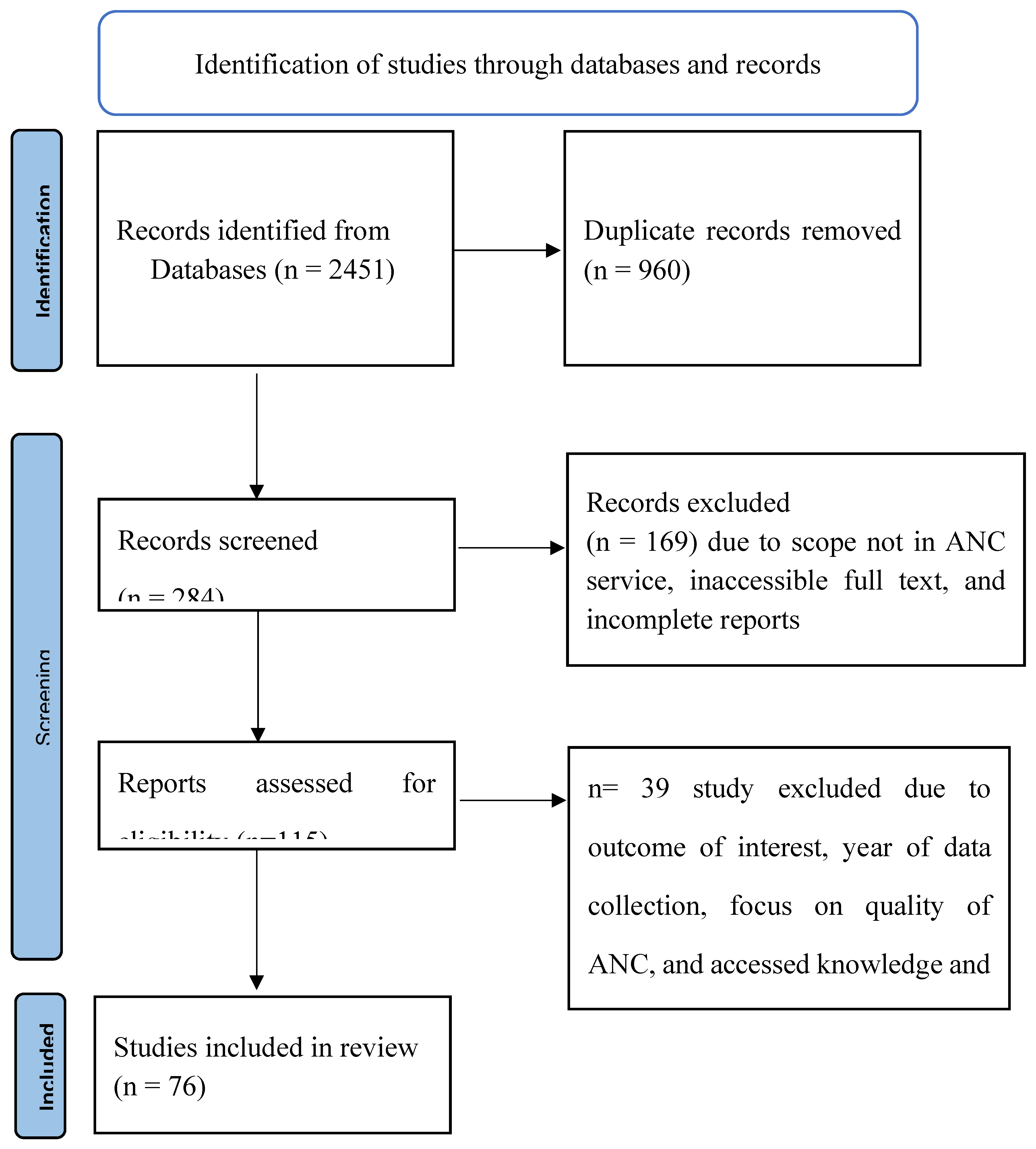
Figure 1. Review profile.
Preprints 144883 g001
Table 1. The Ethiopian national evidence on ANC utilization coverage and timeliness.
S.n Author Design Results Conclusions
1 CSA, 2000 Cross-sectional ANC once = 26%
ANC+4 = 11%
ANC use in first 3 months = 5%
  • Significant variations in the coverage between regions
  • High urban and rural difference and dropouts
2 CSA, 2005 Cross-sectional ANC once = 28%
ANC+4 = 12%
ANC use in first 3 months = 6%
  • Significant variations in the coverage between regions
  • High urban and rural difference and dropouts
3 Worku et al., 2022 Cross-sectional ANC once = 93%
ANC+4 = 54%
ANC use in first 4 months = 61%
  • High progress but not uniform in all districts of the state
  • Significant dropout rate
4 CSA, 2011 Cross-sectional ANC once = 34%
ANC+4 = 19%
ANC use in first 4 months = 11%
  • Inequality between regions persisted with a significant dropout rate
5 EPHI, 2022 Cross-sectional ANC once = 79%
ANC+4 = 49%
ANC use in first 4 months = 32%
  • Access and utilization is increased in most regions
  • Regional, urban and rural disparity slightly closing
6 FMOH, 2014 HMIS ANC once = 97%
Somali region = 41.6%
Tigray, Oromia, SNNP, Harari, and Dire Dawa = 100%
  • Achievement above target bust significant regional variation
7 CSA, 2016 Cross-sectional ANC once = 62%
ANC+4 = 32%
ANC use in first 4 months = 20%
  • The EDHS surveys report showed a slow progress in ANC coverage
8 CSA, 2019 Cross-sectional ANC once = 74
ANC+4 = 43%
ANC use in first 4 months = 28%
  • Showed progress with significant dropout rate, great regional, urban and rural disparity
8 FMOH,2014 HMIS ANC+4 = 70%
Afar region = 46%
Addis Ababa = 100%
Showed good progress since 2010 coverage of 86%
9 UNICEF, 2022 Estimates ANC once = 84
ANC+4 = 68%
ANC use in first 4 months = 38%
Revealed improvement from previous estimates but huge disparity between regio
10 FMO, 2018 HMIS ANC once = 99% Above target but significant regional variation
Disclaimer/Publisher’s Note: The statements, opinions and data contained in all publications are solely those of the individual author(s) and contributor(s) and not of MDPI and/or the editor(s). MDPI and/or the editor(s) disclaim responsibility for any injury to people or property resulting from any ideas, methods, instructions or products referred to in the content.
Copyright: This open access article is published under a Creative Commons CC BY 4.0 license, which permit the free download, distribution, and reuse, provided that the author and preprint are cited in any reuse.
Prerpints.org logo

Preprints.org is a free preprint server supported by MDPI in Basel, Switzerland.

Subscribe

Disclaimer

Terms of Use

Privacy Policy

Privacy Settings

© 2025 MDPI (Basel, Switzerland) unless otherwise stated
