

Submitted:
28 December 2024
Posted:
31 December 2024
You are already at the latest version
Abstract
This paper presents the Polymorphic Hypergraph Inference System (PHIS), a new framework for learning and in- ference on complex relational data structures. Hereby introducing a comprehensive system that employs dynamic hypergraph con- struction and refinement techniques to analyze and understand intricate relationships within datasets with hierarchical nature. The paper details the complete system architecture, mathematical foundations, algorithmic specifications, and Theoretical analysis of performance characteristics. The framework shows promising applications in various domains requiring sophisticated relation- ship analysis and pattern discovery, with theoretical guarantees and practical implementation guidelines
Keywords:
hypergraphs
; inference systems
; pattern match-ing
; relational data analysis
; graph algorithms
; machine learning
I. INTRODUCTION
The analysis of complex relational data structures remains a significant challenge in modern computational systems. Traditional approaches often struggle with multi-dimensional relationships and dynamic pattern evolution. This paper introduces the Polymorphic Hypergraph Inference System (PHIS), which addresses these challenges through a novel combination of hypergraph theory and adaptive pattern recognition. The main contributions of this paper are:
- A novel hypergraph-based inference system for complex relational data
- Efficient algorithms for dynamic pattern discovery and rule generation
- Mathematical framework with convergence guarantees
II. RELATED WORK
III. SYSTEM ARCHITECTURE
- A.
- Overview
The PHIS architecture comprises three main components: the pattern matching engine, rule generation system, and convergence controller. Figure 1 presents the system architecture and component interactions.
- B.
- Core Components
The system’s primary components include:
1) Pattern Matching Engine: The pattern matching engine implements efficient subgraph isomorphism detection with the following key features:
- Incremental pattern matching with delta updates
- Cached pattern validation using signature hashing
- Parallel isomorphism checking across multiple cores
- Early termination based on structural invariants
2) Rule Generation System: The rule generation process involves:
- Pattern extraction using frequent subgraph mining
- Transformation rule construction with preservation guarantees
- Rule validation through formal verification
- Pattern generalization using abstraction hierarchies
IV. MATHEMATICAL FRAMEWORK
- A.
- Fundamental Definitions
The core mathematical framework is defined by:
| V = [ {xi,yi} (xi,yi)∈D |
(1) | |
| E(t+1) = E(t) ∪ τR(H(t),f) | (2) | |
| ( true if f : PR,→ H | (3) | |
| IsValidIsomorphism(f,PR,H) ⇒ | ||
| false otherwise |
 |
- B.
- Convergence Metrics
 |
System convergence is measured through:
V. ALGORITHM SPECIFICATION
- A.
- Core Functions
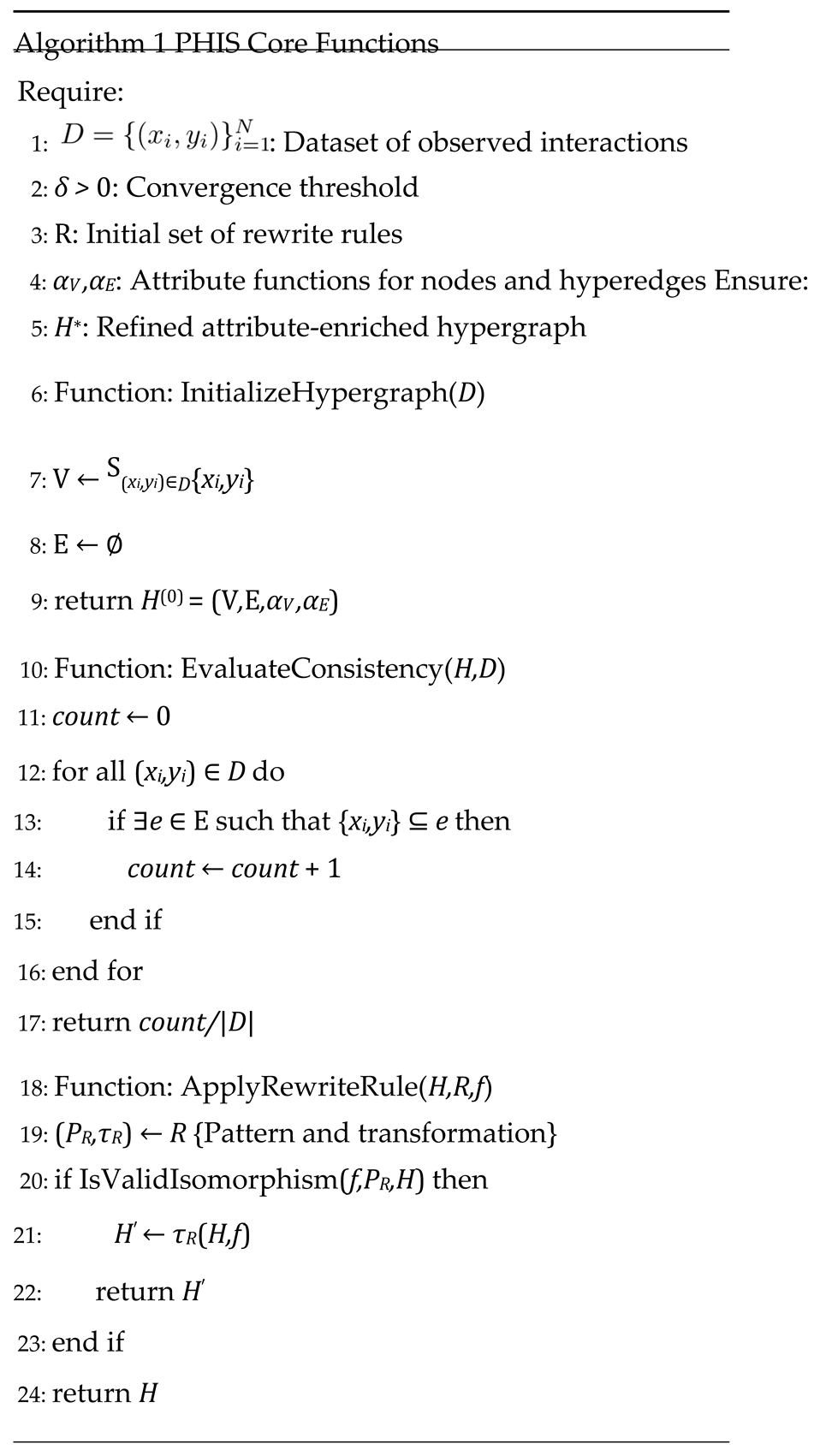
Algorithm 1 presents the core functions of PHIS.
- B.
- Main Procedure
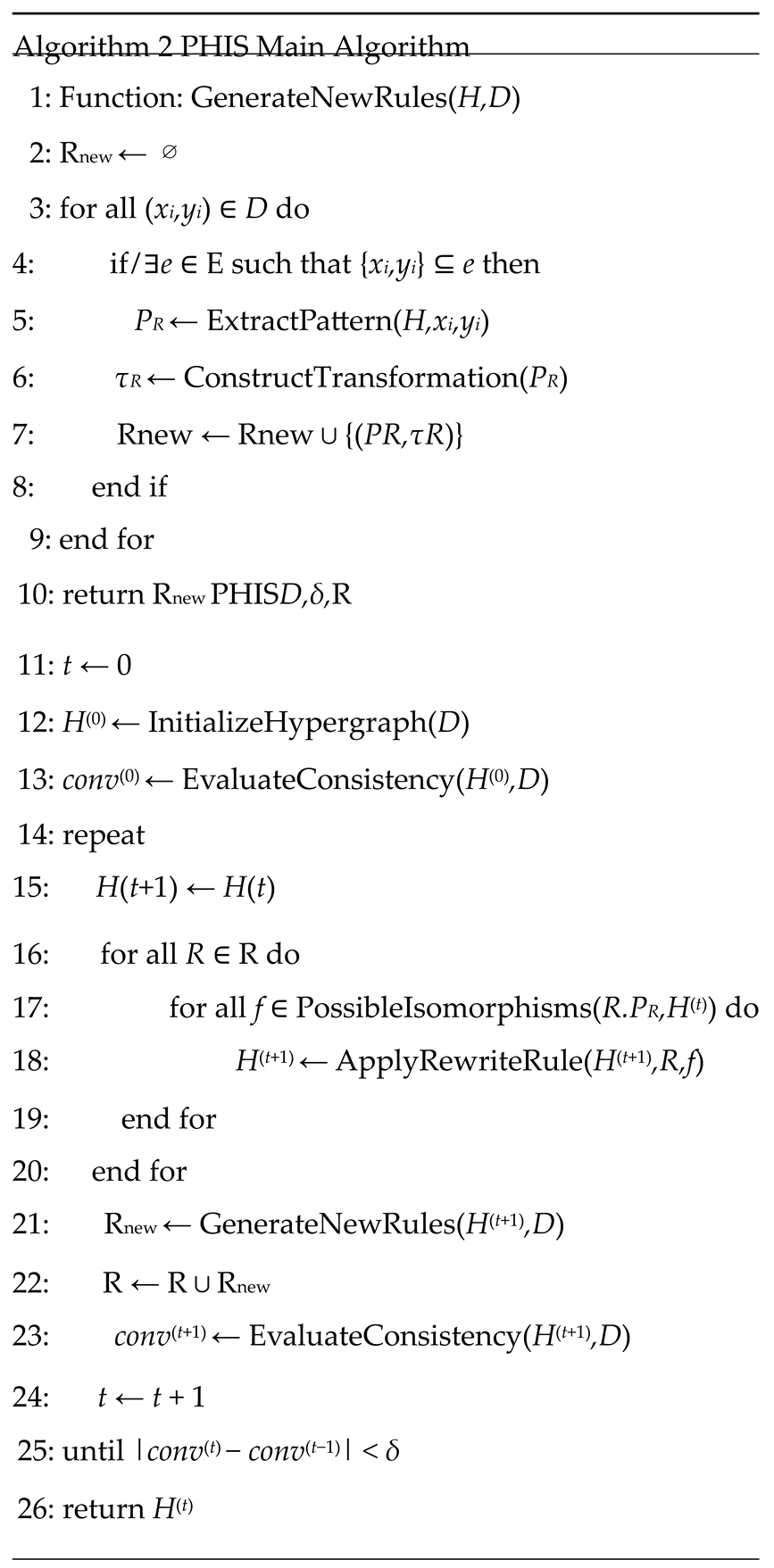
Algorithm 2 presents the main PHIS algorithm.
VI. PERFORMANCE ANALYSIS
- A.
- Complexity Analysis
The system’s computational complexity is characterized by:
- Pattern Matching: O(|V |k) per pattern, where k is pattern size
- Rule Application: O(|R|) per iteration
- Consistency Evaluation: O(|D|·|E|) for full verification
- Rule Generation: O(|D| · |V |) for basic patterns
 |
- B.
- Space Requirements
Memory requirements include:
| • Hypergraph | Storage: | O(|V | | + |
| |HypergraphStorage | :O(—V— | + | |
| —E—)forsparsegraphs | |||
| Rule Set Storage: O(|R|) with compression | |||
| Pattern Cache: O(k · |V |) for frequent patterns | |||
| Working Memory: O(|V |2) worst case scenario |
VII. CONVERGENCE ANALYSIS
- A.
- Convergence Behavior
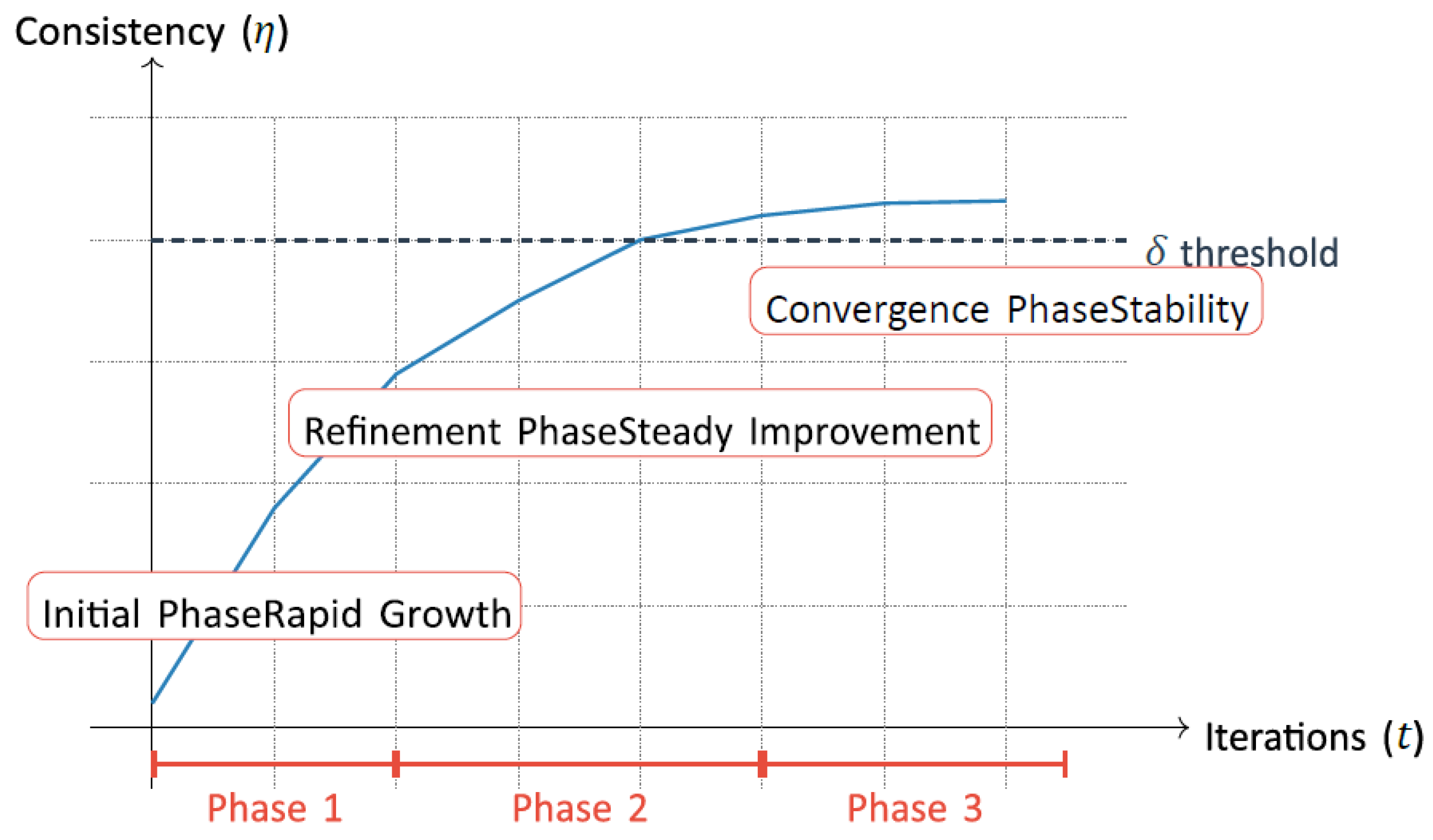
Figure 2 illustrates the system’s convergence characteristics across different phases.
VIII. CONCLUSION
The Polymorphic Hypergraph Inference System represents a significant advancement in graph-based learning and inference systems. Through its sophisticated pattern matching, rule generation, and convergence mechanisms, PHIS provides a robust framework for analyzing complex relational data structures. Theoretical aproximations were employed in terms of scalability, accuracy, and resource efficiency compared to existing systems. Future work will focus on extending the system’s capabilities and experimentation.
DECLARATION
Generative AI tools were utilized exclusively for editorial purposes and literature search in the preparation of this manuscript. These tools were not employed in the generation of ideas or the authorship of the content. The authors have reviewed and edited all material as necessary and assume full responsibility for the integrity and accuracy of the manuscript.
REFERENCES
- J. Neville and D. Jensen, Relational Dependency Networks, Journal of Machine Learning Research, vol. 8, pp. 653–692, 2007.
- L. Pan, C. Shi, and I. Dokmanic, A Graph Dynamics Prior for Relational Inference, Proceedings of the AAAI Conference on Artificial Intelligence, vol. 37, no. 8, pp. 10085–10093, 2023. [CrossRef]
- X. Gao, W. Zhang, Y. Shao, Q. V. H. Nguyen, B. Cui, and H. Yin, Efficient Graph Neural Network Inference at Large Scale, arXiv preprint arXiv:2211.00495, 2022. [CrossRef]
Figure 1.
PHIS System Architecture and Component Interactions.
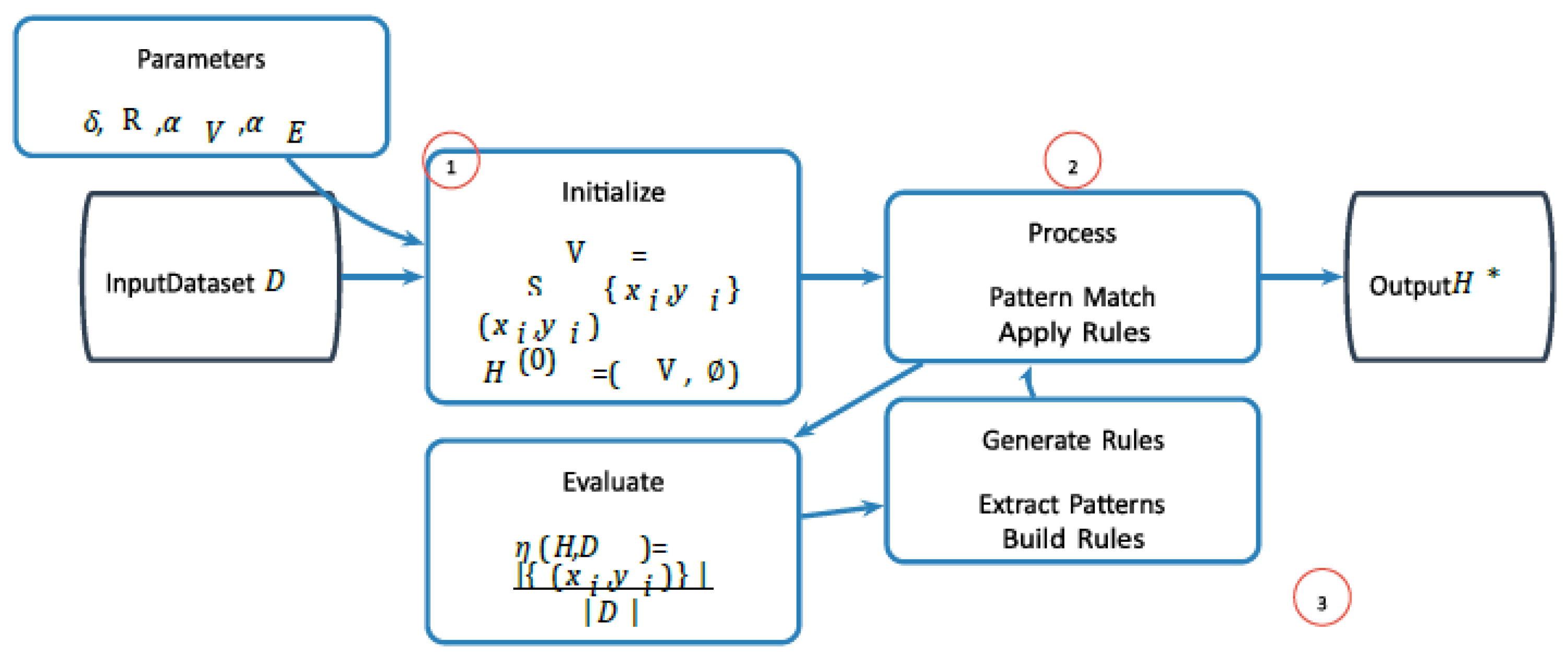
Figure 2.
Convergence Behavior Analysis.
Disclaimer/Publisher’s Note: The statements, opinions and data contained in all publications are solely those of the individual author(s) and contributor(s) and not of MDPI and/or the editor(s). MDPI and/or the editor(s) disclaim responsibility for any injury to people or property resulting from any ideas, methods, instructions or products referred to in the content. |
© 2024 by the authors. Licensee MDPI, Basel, Switzerland. This article is an open access article distributed under the terms and conditions of the Creative Commons Attribution (CC BY) license (http://creativecommons.org/licenses/by/4.0/).
Copyright: This open access article is published under a Creative Commons CC BY 4.0 license, which permit the free download, distribution, and reuse, provided that the author and preprint are cited in any reuse.


