

Submitted:
24 December 2024
Posted:
25 December 2024
You are already at the latest version
Abstract
Introducing vegetation is an effective strategy for improving air quality and mitigating the heat island effect. Green façades, which consist of modules that support substrates and various plant species, integrate these elements. This study analyzes the acoustic absorption properties of a specific green wall module using an impedance gun and the Scan and Paint method for laboratory and on-site measurements. The impedance gun method is effective for in-situ analysis, offering advantages over standardized techniques for inhomogeneous samples. We measured the sound absorption coefficient of the substrate and the effects of different plant species. Key findings reveal that the substrate primarily influences sound absorption, with its coefficient increasing with frequency, similar to porous materials Vegetation enhances acoustic absorption of the substrate, depending on coverage and thickness, with 80-90% of absorption attributed to the substrate and 4-20% to vegetation. However, not all dense plant species improve absorption; some configurations may decrease it. Improvement correlates with substrate coverage and vegetation layer thickness, while the impact of plant morphology remains unclear. These findings confirm vegetation's potential as an acoustic absorption tool in urban settings. Additionally, green walls can enhance acoustic comfort in indoor environments such as offices and schools by reducing reverberation. They also improve air quality and provide aesthetic appeal, making them a multifunctional solution for modern architecture.
Keywords:
1. Introduction
2. Materials and Methods
2.1. Green Wall Modules
2.2. Lab Measurements
2.3. Green Wall Façade
2.4. Impedace Gun
2.5. Metodology
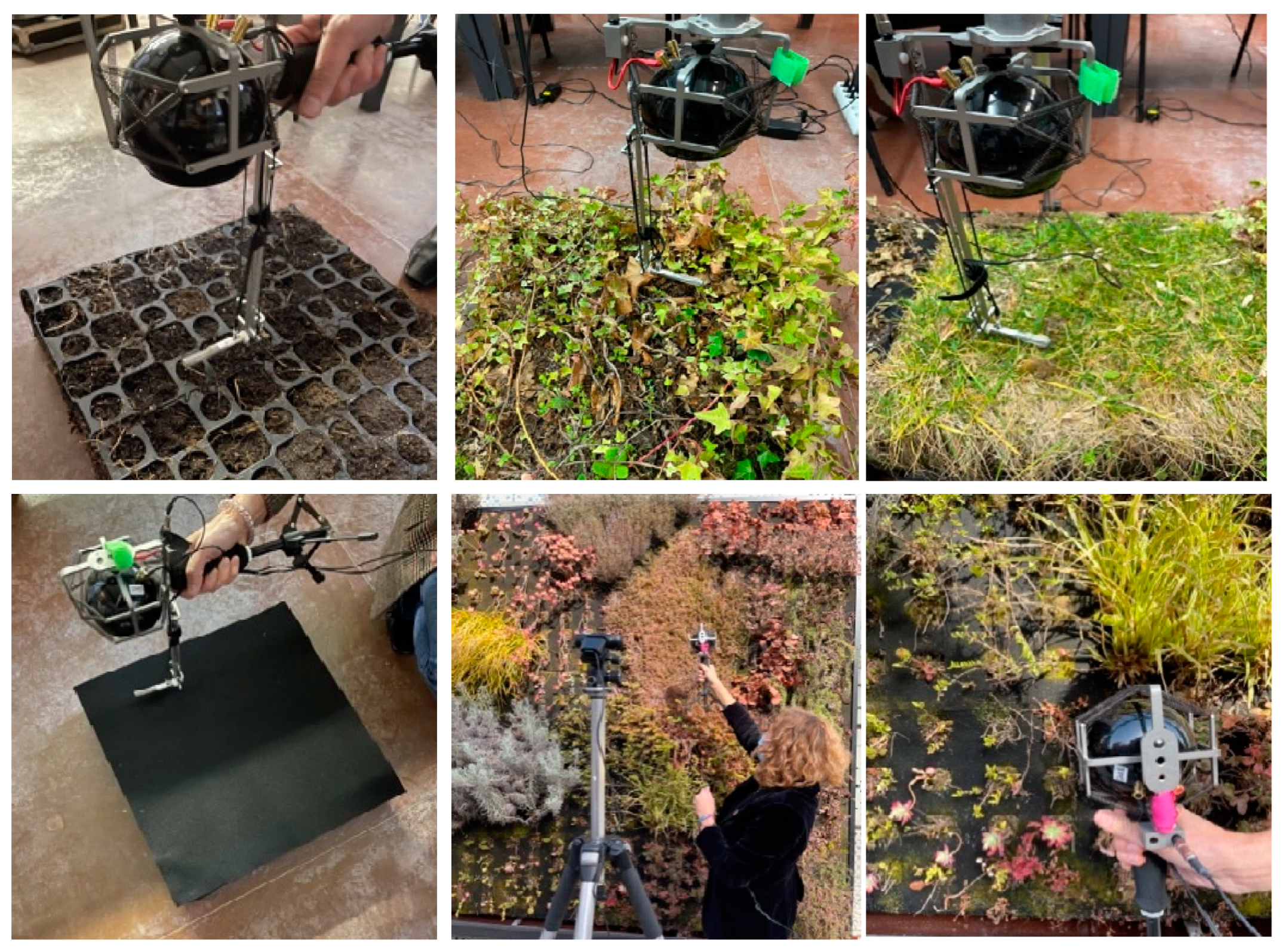
3. Results and Discussion
3.1. Laboratory Measurements
3.2. In Situ Measurements
3.2.1. Low Sound Absorption Increase

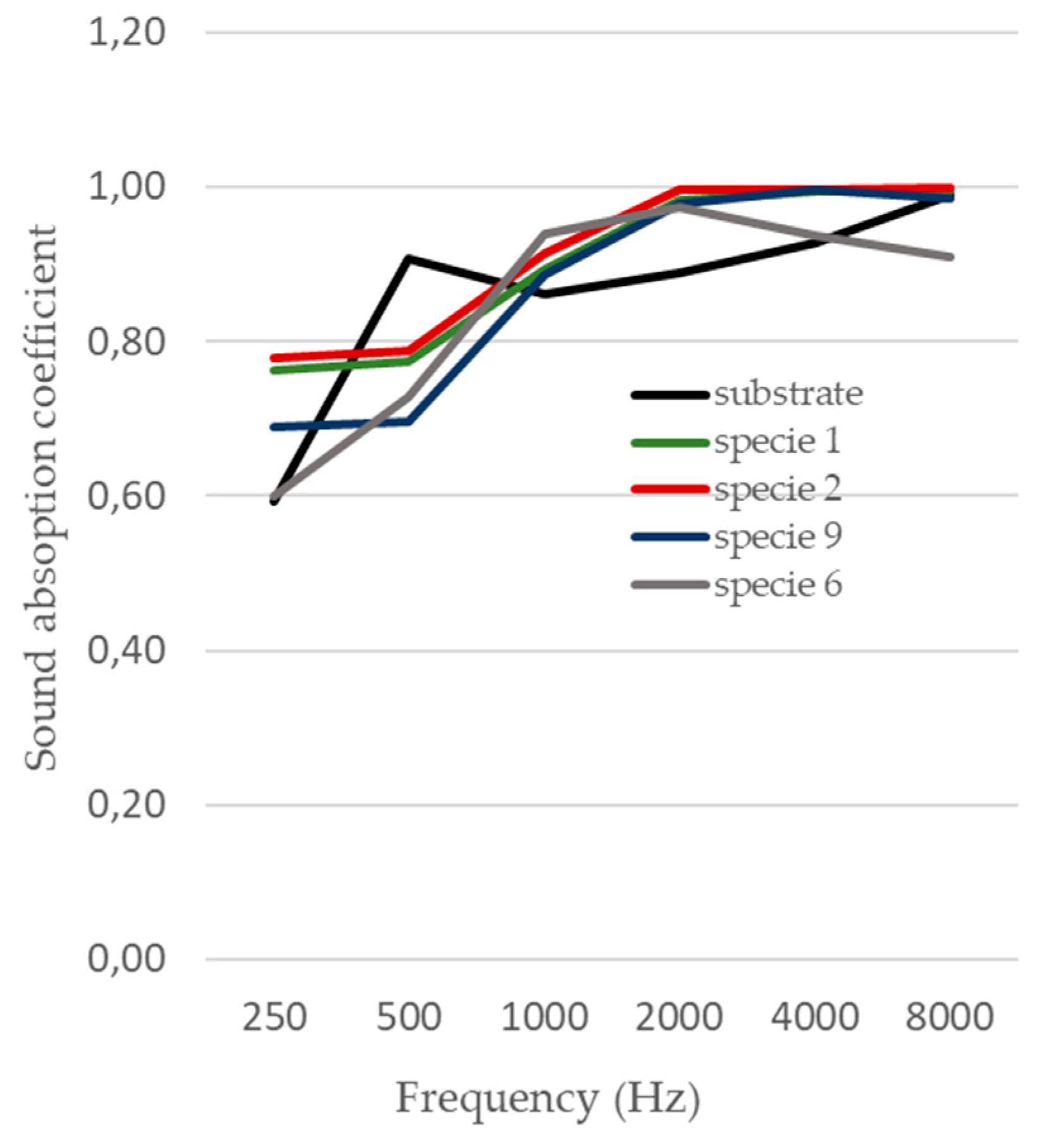
| Samples | Sound Absorption Coefficient | △ Sound Absorption Coefficient | ||||
|---|---|---|---|---|---|---|
| Low | Med | High | Low | Med | High | |
| Substrate | 0,59 | 0,88 | 0,96 | |||
| Specie 1 | 0,76 | 0,93 | 0,99 | 0,17 | 0,05 | 0,03 |
| Specie 2 | 0,77 | 0,95 | 0,99 | 0,18 | 0,07 | 0,03 |
| Specie 9 | 0,68 | 0,93 | 0,99 | 0,09 | 0,05 | 0,03 |
| Specie 6 | 0,60 | 0,95 | 0,92 | 0,01 | 0,07 | -0,04 |
3.2.2. Medium Sound Absorption Increase
3.2.3. High Sound Absorption Increase
- Species 3 (Sedum album "coral carpet"): Measured at two different developmental stages, initially classified as medium density and later as high density.
- Species 2 (Sedum acre "golden carpet"): A succulent, perennial, evergreen plant characterized by short, dense leaves that do not exceed 15 cm in height.
- Species 10 (Thymus vulgaris): A shrub featuring woody stems at the base and herbaceous stems at the top, with abundant minute leaves measuring between 5 and 8 mm in length.
- Species 7 (Carex oshimensis): A herbaceous perennial plant with thin, narrow leaves forming rounded, compact clumps spanning 25-30 cm in diameter.
- Species 4 (Thymus communis): An aromatic, perennial plant with a robust habit, reaching a height of 30-45 cm.
| Nº specie | Name specie | Photo specie |
|---|---|---|
| 3 | Sedum album "coral carpet” | 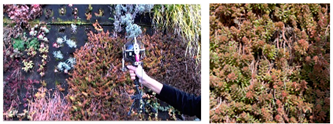 |
| 2 | Sedum acre “golden carpet” | 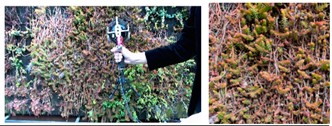 |
| 10 | Thymus vulgaris | 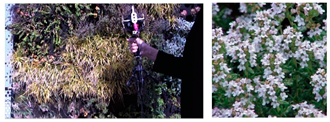 |
| 7 | Carex oshimensis | 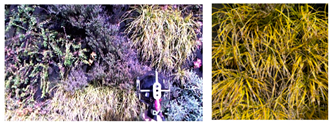 |
| 4 | Thymus communis | 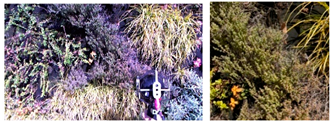 |
4. Conclusions
Author Contributions
Data Availability Statement
Conflicts of Interest
References
- Directive 2002/49/EC of the European Parliament and of the Council of 25 June 2002 relating to the assessment and management of environmental noise, European Parliament, 2002.
- Den Boer, L.C. (Eelco) and Schroten, A. (Arno) (2007). Traffic noise reduction in Europe. Health effects, social costs and technical and policy options to reduce road and rail traffic noise. Report commissioned by T&E from CE Delft.
- Salomons, E. M., & Janssen, S. A. (2011). Practical ranges of loudness levels of various types of environmental noise, including traffic noise, aircraft noise, and industrial noise. Int. J. Environ. Res. Public Health, 8(6), 1847-1864. [CrossRef]
- Klæboe, R., Amundsen, A. H., Fyhri, A., & Solberg, S. (2004). Road traffic noise – the relationship between noise exposure and noise annoyance in Norway. Appl. Acoust., 65(9), 893-912. [CrossRef]
- Oquendo-Di Cosola, V., Olivieri, F., & Ruiz-García, L. (2022). A systematic review of the impact of green walls on urban comfort: temperature reduction and noise attenuation. Renew. Sust. Energ. Rev., 162, 112463. [CrossRef]
- Manso, M., Teotónio, I., Silva, C. M., & Cruz, C. O. (2021). Green roof and green wall benefits and costs: A review of the quantitative evidence. Renew. Sust. Energ. Rev., 135, 110111. [CrossRef]
- Lacasta, A. M., Peñaranda, A., & Cantalapiedra, I. R. (2018). Green streets for noise reduction. In Nature Based Strategies for Urban and Building Sustainability (pp. 181-190). Butterworth-Heinemann. [CrossRef]
- Paull, N. J., Krix, D., Torpy, F. R., & Irga, P. J. (2020). Can green walls reduce outdoor ambient particulate matter, noise pollution and temperature? Int. J. Environ. Res. Public Health, 17(14), 5084. [CrossRef]
- Van Renterghem, T., Dekoninck, L., & Botteldooren, D. (2020). Multi-stage sound planning methodology for urban redevelopment. Sustain. Cities Soc., 62, 102362. [CrossRef]
- Aletta, F., Kang, J., Astolfi, A., & Fuda, S. (2016). Differences in soundscape appreciation of walking sounds from different footpath materials in urban parks. Sustain. Cities Soc., 27, 367-376. [CrossRef]
- Xiao, X. D., Dong, L., Yan, H., Yang, N., & Xiong, Y. (2018). The influence of the spatial characteristics of urban green space on the urban heat island effect in Suzhou Industrial Park. Sustain. Cities Soc., 40, 428-439. [CrossRef]
- Teotónio, I., Silva, C. M., & Cruz, C. O. (2021). Economics of green roofs and green walls: A literature review. Sustain. Cities Soc., 69, 102781. [CrossRef]
- Jamei, E., Rajagopalan, P., Seyedmahmoudian, M., & Jamei, Y. (2016). Review on the impact of urban geometry and pedestrian level greening on outdoor thermal comfort. Renew. Sust. Energ. Rev., 54, 1002-1017. [CrossRef]
- Tong, Z., Baldauf, R. W., Isakov, V., Deshmukh, P., & Zhang, K. M. (2016). Roadside vegetation barrier designs to mitigate near-road air pollution impacts. Sci. Total Environ., 541, 920-927. [CrossRef]
- Van Renterghem, T., Botteldooren, D., & Verheyen, K. (2012). Road traffic noise shielding by vegetation belts of limited depth. J. Sound Vib., 331(10), 2404-2425. [CrossRef]
- Pérez, G., Coma, J., Barreneche, C., De Gracia, A., Urrestarazu, M., Burés, S., & Cabeza, L. F. (2016). Acoustic insulation capacity of Vertical Greenery Systems for buildings. Appl. Acoust., 110, 218-226. [CrossRef]
- D'Alessandro, F., Asdrubali, F., & Mencarelli, N. (2015). Experimental evaluation and modelling of the sound absorption properties of plants for indoor acoustic applications. Build. Environ., 94, 913-923. [CrossRef]
- Scamoni, F., Scrosati, C., Depalma, M., & Barozzi, B. (2022). Experimental evaluations of acoustic properties and long-term analysis of a novel indoor living wall. J. Build. Eng., 47, 103890. [CrossRef]
- Davis, M. J. M., Tenpierik, M. J., Ramírez, F. R., & Pérez, M. E. (2017). More than just a Green Facade: The sound absorption properties of a vertical garden with and without plants. Build. Environ., 116, 64-72. [CrossRef]
- Wong, N. H., Kwang Tan, A. Y., Tan, P. Y., Chiang, K., & Wong, N. C. (2010). Acoustics evaluation of vertical greenery systems for building walls. Build. Environ., 45(2), 411-420. [CrossRef]
- Azkorra, Z., Pérez, G., Coma, J., Cabeza, L. F., Bures, S., Álvaro, J. E., Erkoreka, A., & Urrestarazu, M. (2015). Evaluation of green walls as a passive acoustic insulation system for buildings. Appl. Acoust., 89, 46-56. [CrossRef]
- Horoshenkov, K. V., Khan, A., Benkreira, H., Smyrnova, Y., Rehioui, K., & Kang, J. (2013). Acoustic properties of low growing plants. Proceedings of 42nd International Congress and Exposition on Noise Control Engineering 2013, 3912-3917. [CrossRef]
- Thomazelli, R., Caetano, F. D. N., & Bertoli, S. R. (2016). Acoustic properties of green walls: Absorption and insulation. Proceedings of Meetings on Acoustics, Acoustical Society of America. [CrossRef]
- Yang, H. S., Kang, J., & Cheal, C. (2013). Random-incidence absorption and scattering coefficients of vegetation. Acta Acust. United Ac., 99(3), 379-388. [CrossRef]
- Attal, E., Côté, N., Shimizu, T., & Dubus, B. (2019). Sound absorption by green walls at normal incidence: Physical analysis and optimization. Acta Acust. United Ac., 105(2), 301-312. [CrossRef]
- Romanova, A., Horoshenkov, K. V., & Hurrell, A. (2019). An application of a parametric transducer to measure acoustic absorption of a living green wall. Appl. Acoust., 145, 89-97. [CrossRef]
- Liu, C., Georgiou, F., & Hornikx, M. (2021). Characterization of the acoustic impedance of in-situ vegetated roofs. Appl. Acoust., 171, 107514. [CrossRef]
- Attal, E., de l'Epine, Y. B., Dauchez, N., & Dubus, B. (2021). Experimental investigation of the effect of moisture on the acoustic properties of lightweight substrates used in green envelopes. Appl. Acoust., 180, 108108. [CrossRef]
- Cameron, R. W. F., Taylor, J., & Emmett, M. (2015). A Hedera green façade - Energy performance and saving under different maritime-temperate, winter weather conditions. Build. Environ., 92, 111-121. [CrossRef]
- Hoelscher, M. T., Nehls, T., Jänicke, B., & Wessolek, G. (2016). Quantifying cooling effects of facade greening: Shading, transpiration and insulation. Energ. Buildings, 114, 283-290. [CrossRef]
- Benkreira, H., Horoshenkov, K. V., Khan, A., Mandon, A., & Rohr, R. (2011). The Effect of Drying on the Acoustic Absorption of Novel Green Noise Insulation. European Drying Conference 2011, 26-28.
- de Bree, H. E., & Tijs, E. (2006). Two complementary Microflown based methods to determine the reflection coefficient in situ. ISMA International Conference on Noise and Vibration Engineering, Heverlee, Belgium.
- de Bree, H. E., Tijs, E., & Basten, T. (2007). An Ultra Miniature Measurement Tool to Measure the Reflection Coefficient of Acoustic Damping Materials in Situ. SAE 2007 Noise and Vibration Conference and Exhibition. SAE International. [CrossRef]
- Tijs, E., & de Bree, H. E. (2008). Recent developments free field PU impedance technique. SAPEM 2008, Symposium on Acoustic Poro-elastic Materials, Bradford, UK.
- de Bree, H. E., Nosko, M., & Tijs, E. (2008). A handheld device to measure the acoustic absorption in situ. Proceedings of SNVH 2008, 5th International Styrian Noise Vibration & Harshness Congress, Graz, Austria.
- Tijs, E. (2013). Study and development of an in situ acoustic absorption measurement method. University of Twente.
- Kinsler, L. E., Frey, A. F., Coppens, A. B., & Sanders, J. V. (2000). Fundamentals of acoustics (4th ed.). John Wiley & Sons.
- Pedrero, A., Navacerrada, M. Á., de la Prida, D., Iglesias, L., & Díaz-Chyla, A. (2020). On the accuracy of the sound absorption measurement with an impedance gun. Appl. Acoust., 158, 107039. [CrossRef]
- Comesaña, D. F., Steltenpool, S., Carrillo Pousa, G., de Bree, H. E., & Holland, K. R. (2013). Scan and Paint: Theory and Practice of a Sound Field Visualization Method. ISRN Mech. Eng., 2013, 241958. [CrossRef]
- Fernandez Comesaña, D., Holland, K. R., & Fernandez-Grande, E. (2016). Spatial resolution limits for the localization of noise sources using direct sound mapping. J. Sound Vib., 375, 53-62. [CrossRef]
- Tijs, E., de Bree, H. E., & Steltenpool, S. (2010). Scan and Paint: a novel sound visualization technique. Proceedings of the 39th International Congress on Noise Control Engineering 2010 (Inter-noise 2010), Lisbon, Portugal.
- Brandao, E., Lenzi, A., & Cordioli, J. (2012). Estimation and minimization of errors caused by sample size effect in the measurement of the normal absorption coefficient of a locally reactive surface. Appl. Acoust., 73(6-7), 543-556. [CrossRef]
- Navacerrada, M. A., Barbero-Barrera, M. M., Fort, R., de la Prida, D., Núñez, J. C., & Gómez, T. S. (2022). Application of acoustic impedance gun to non-destructively monitor stone damage. Constr. Build. Mater., 323, 126510. [CrossRef]
- Siano, D., Viscardi, M., & Panza, M. A. (2016). Automotive Materials: An Experimental Investigation of an Engine Bay Acoustic Performances. Energy Procedia, 101, 598-605. [CrossRef]
- Navacerrada, M. A., Oquendo-Di Cosola, V., Ruíz García, L. & Olivieri, F., Absorción acústica de una fachada vegetal mediante una pistola de impedancia, XIII Congreso Ibérico de Acústica Proceedings.
- Attal, E., Dubus, B., Leblois, T., & Cretin, B. (2021). An optimal dimensioning method of a green wall structure for noise pollution reduction. Build. Environ., 187, 107362. [CrossRef]
- Bullen, R., & Fricke, F. (1982). Sound propagation through vegetation. J. Sound Vib., 80(1), 11-23. [CrossRef]
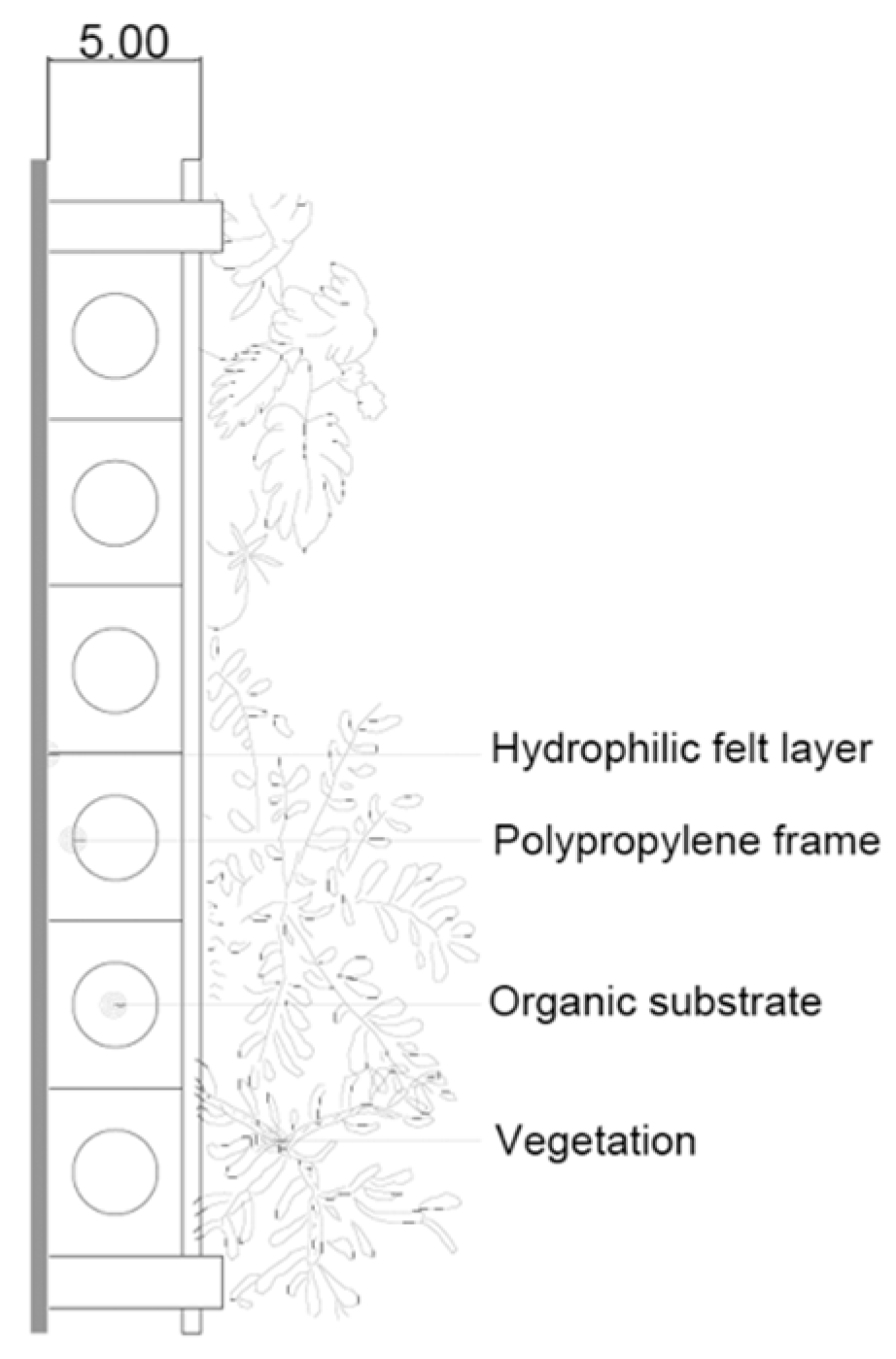
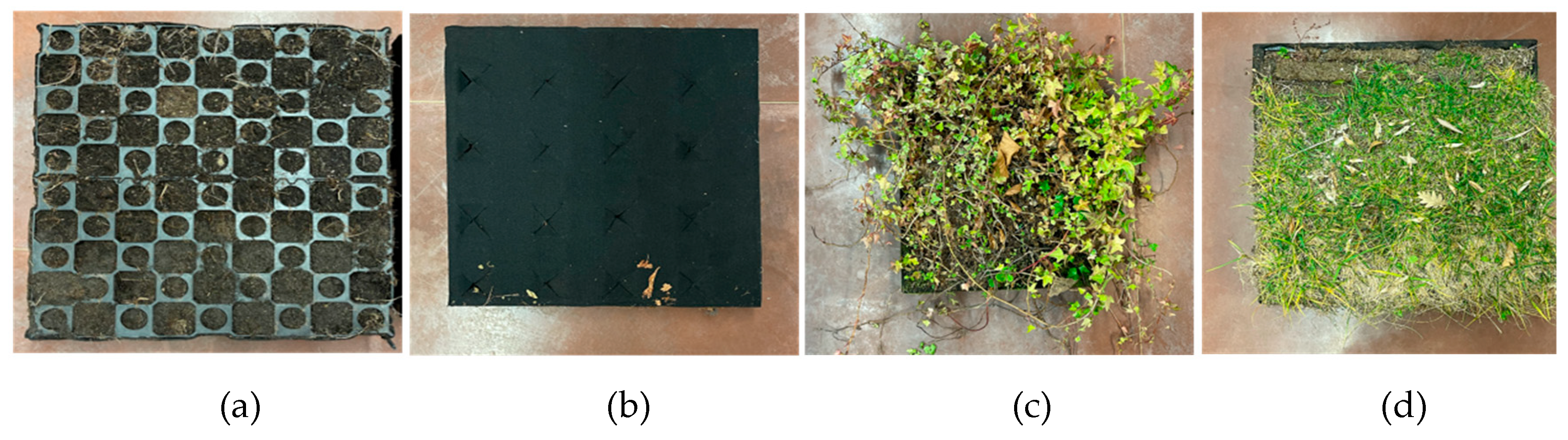
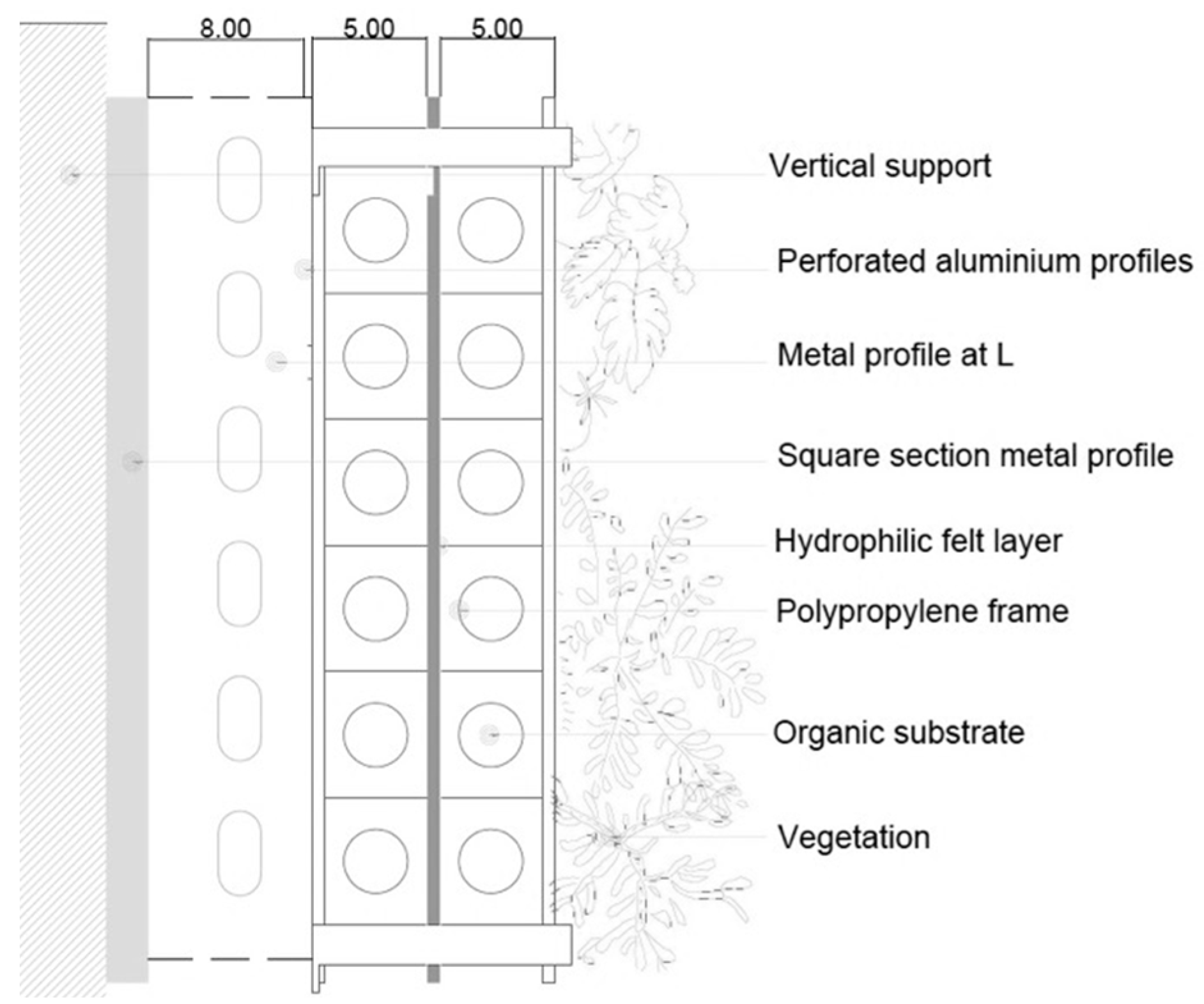
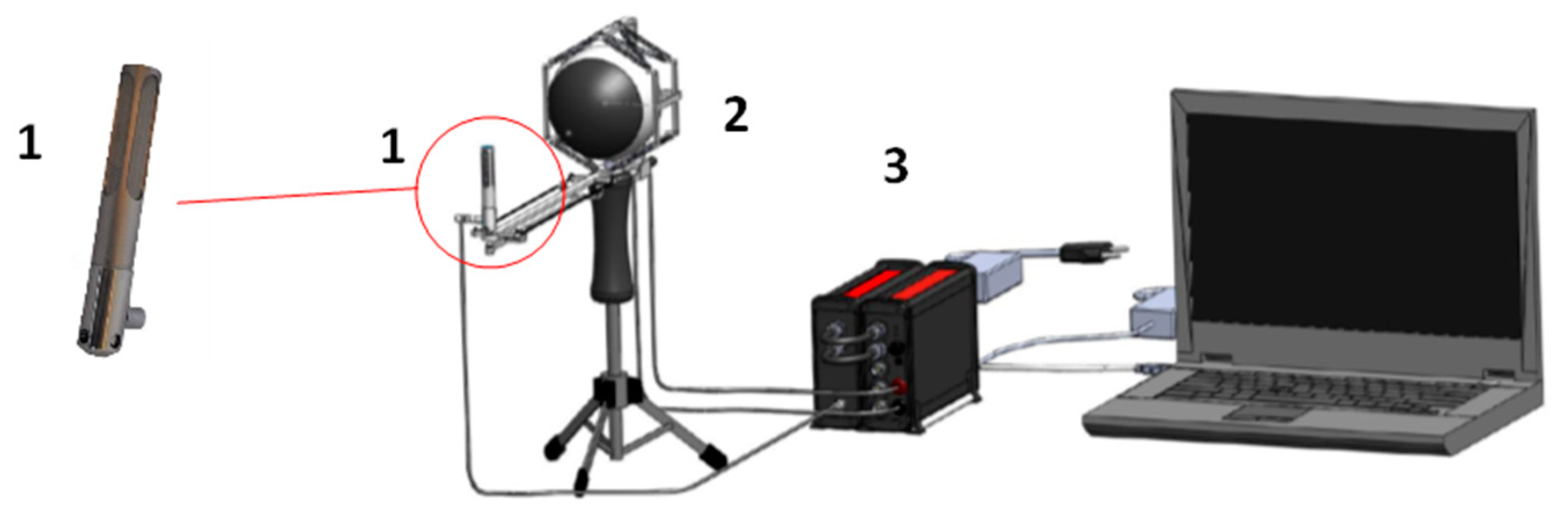
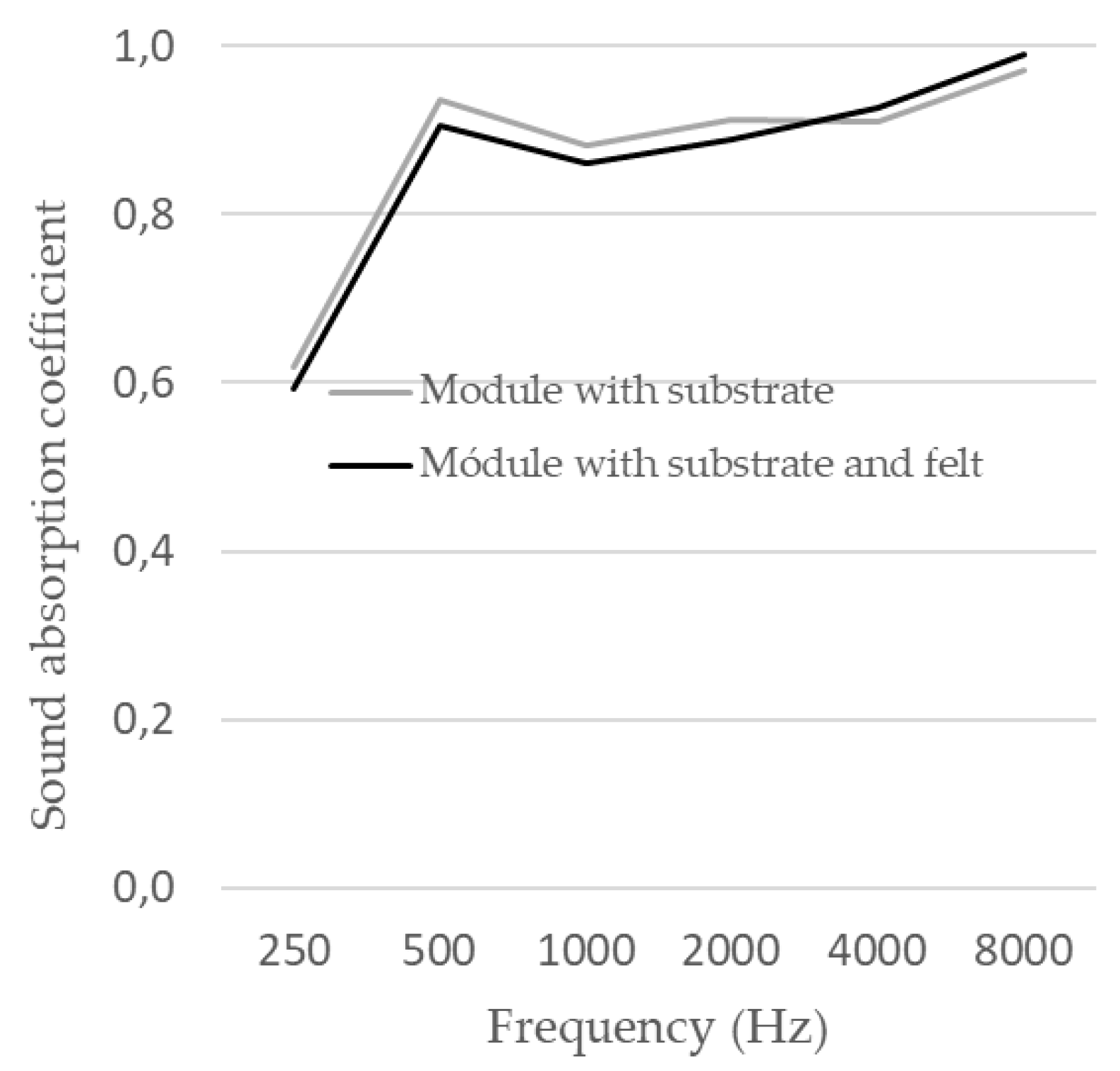
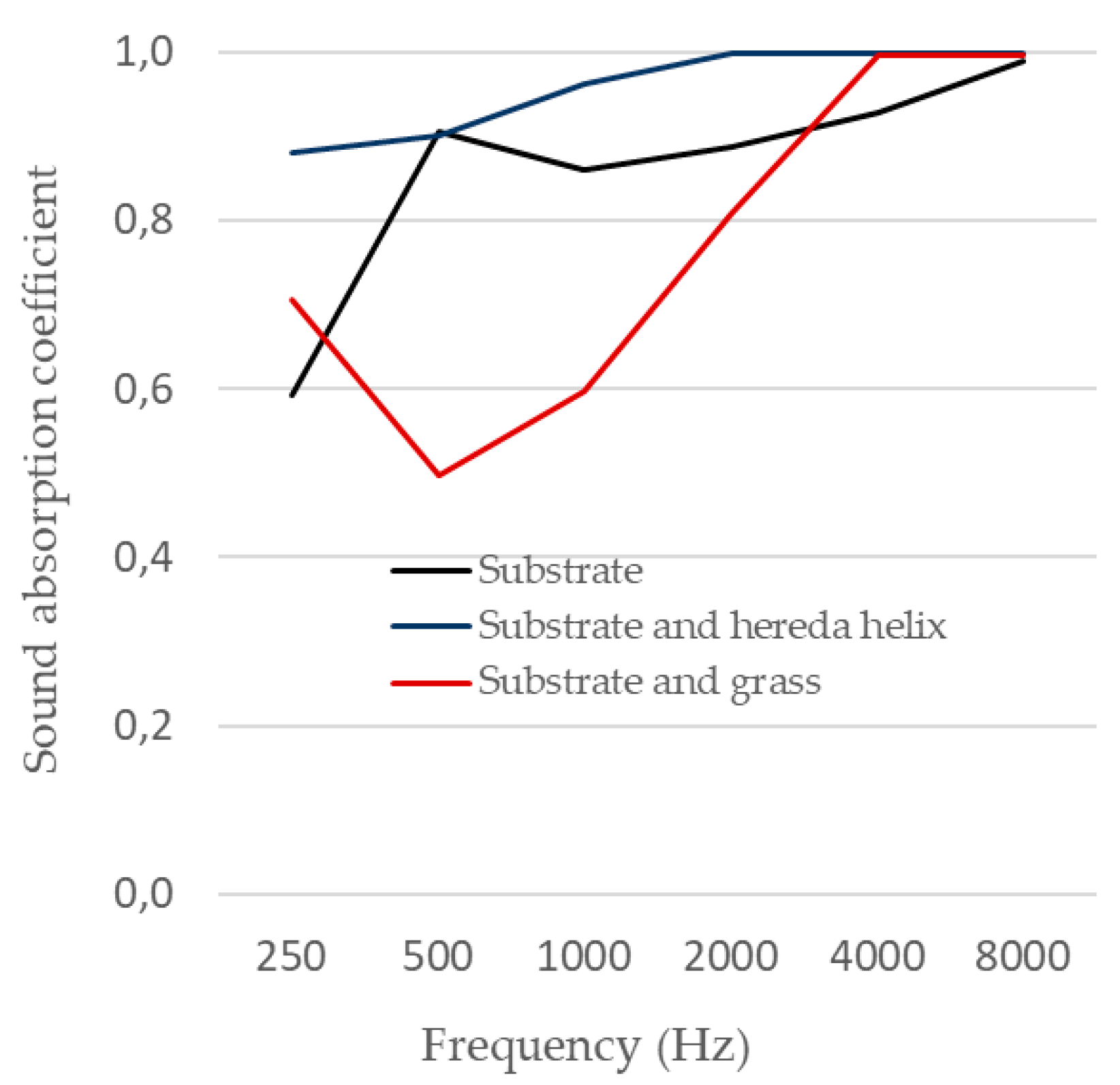
| System components and characteristics | Description |
|---|---|
| Polyethylene module | 50 x 50 x 5 cm |
| Weight without plants | 2 kg / module |
| Number of plants | 12 per module |
| External finishing layer | Polyester |
| Bearing structure | Polypropylene boxes |
| Hydrophilic layer | Polyester |
| Growing medium | Coconut fibre, turf, and humus |
| Name | Leaf shape | Leaf area (cm2) | Plant/foliage density |
|---|---|---|---|
| Hedera helix | 3-5 lobed | 26.94 | Medium |
| Grass | Long and narrow, with parallel margins | 5.00 | High |
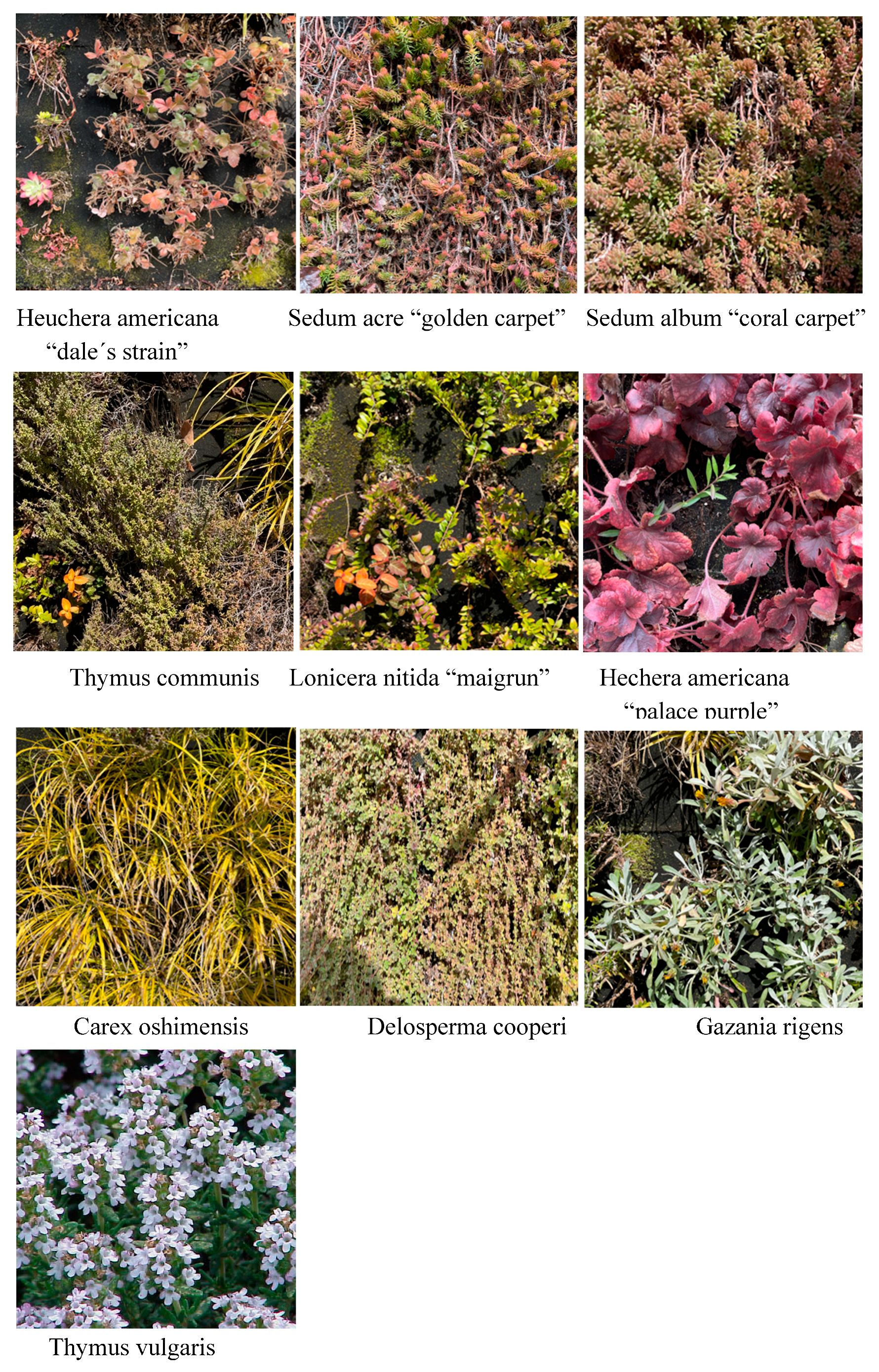
| Specie | Name | Leaf shape | Leaf area (cm2) | Plant/foliage density |
|---|---|---|---|---|
| 1 | Heuchera americana “dale’s strain” | 7-9 shallowly lobed | 5.00 | Low |
| 2 | Sedum acre “golden carpet” | Alternate, fleshy and shortly cylindrical with a rounded tip | 2.00 | Medium-high |
| 3 | Sedum album “coral carpet” | Alternate, fleshy and shortly cylindrical with a rounded tip | 2.00 | High |
| 4 | Thymus communis | Narrow and elliptical | 0.10 | High |
| 5 | Lonicera nitida “maigrun” | Ovate | 4.00 | Low |
| 6 | Heuchera americana “palace purple” | 7-9 shallowly lobed | 7.06 | Medium |
| 7 | Carex oshimensis | Narrow, sword-shaped | 30.00 | High |
| 8 | Delosperma cooperi | Cylindrical | 0.4 | High |
| 9 | Gazania rigens | Lanceolate | 12.70 | High |
| 10 | Thymus vulgaris | Narrow and elliptical | 0.15 | High |
| Nº specie | Name specie | Photo specie |
|---|---|---|
| 1 | Heuchera americana “dale’s strain” | 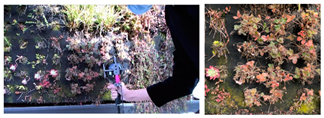 |
| 2 | Sedum acre “golden carpet” | 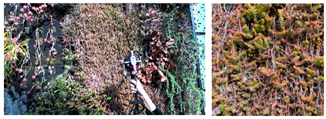 |
| 9 | Gazania rigens | 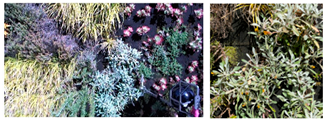 |
| 6 | Heuchera americana “palace purple” | 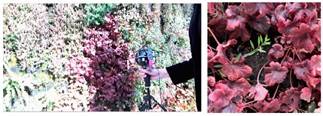 |
| Nº specie | Name specie | Photo specie |
|---|---|---|
| 8 | Delosperma cooperi | 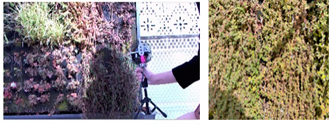 |
| 5 | Leonicera nitida “maigrun” | 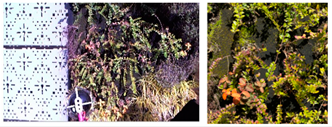 |
| 3 | Sedum album “coral carpet” | 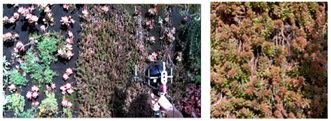 |
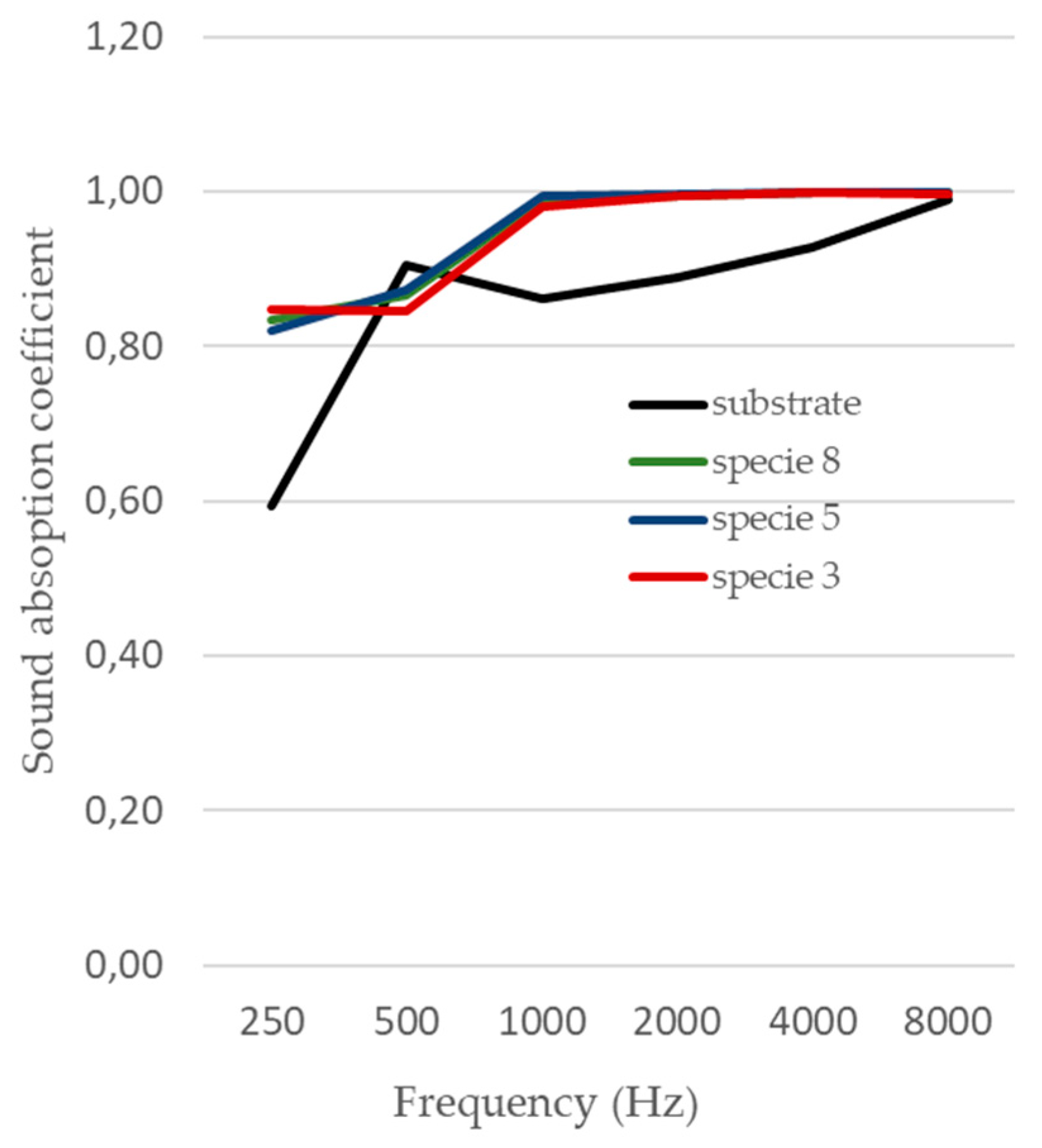
| Samples | Sound Absorption Coefficient | △ Sound Absorption Coefficient | ||||
|---|---|---|---|---|---|---|
| Low | Med | High | Low | Med | High | |
| Substrate | 0,59 | 0,88 | 0,96 | |||
| Specie 8 | 0,83 | 0,99 | 0,99 | 0,24 | 0,11 | 0,03 |
| Specie 5 | 0,82 | 0,99 | 0,99 | 0,23 | 0,11 | 0,03 |
| Specie 3 | 0,85 | 0,99 | 0,99 | 0,26 | 0,11 | 0,03 |
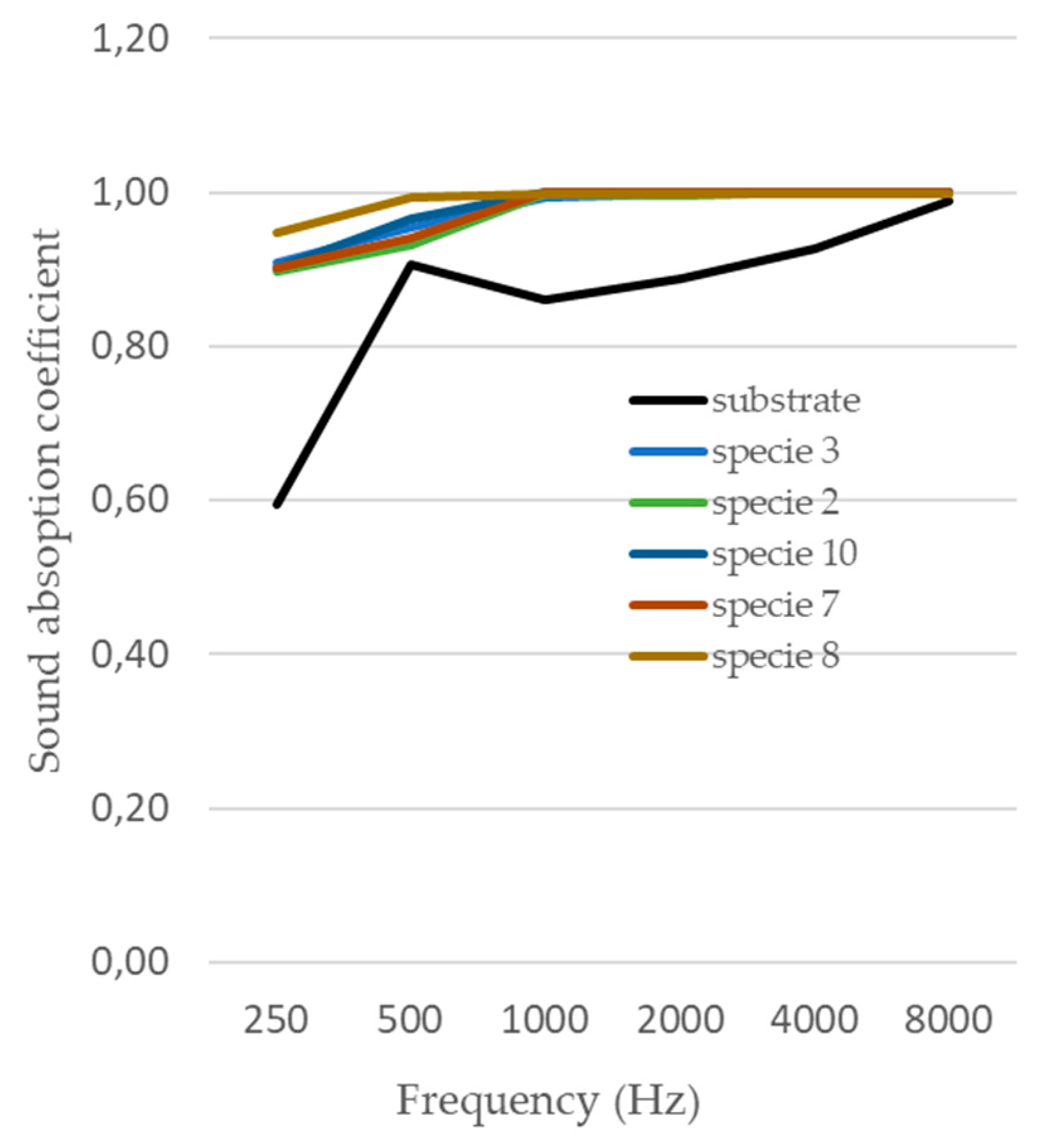
| Samples | Sound Absorption Coefficient | △ Sound Absorption Coefficient | ||||
|---|---|---|---|---|---|---|
| Low | Med | High | Low | Med | High | |
| Substrate | 0,59 | 0,88 | 0,96 | |||
| Specie 3 | 0,90 | 0,99 | 0,99 | 0,31 | 0,11 | 0,03 |
| Specie 2 | 0,90 | 0,99 | 0,99 | 0,31 | 0,11 | 0,03 |
| Specie 10 | 0,90 | 0,99 | 0,99 | 0,31 | 0,11 | 0,03 |
| Specie 7 | 0,90 | 0,99 | 0,99 | 0,31 | 0,11 | 0,03 |
| Specie 8 | 0,92 | 0,99 | 0,99 | 0,31 | 0,11 | 0,03 |
Disclaimer/Publisher’s Note: The statements, opinions and data contained in all publications are solely those of the individual author(s) and contributor(s) and not of MDPI and/or the editor(s). MDPI and/or the editor(s) disclaim responsibility for any injury to people or property resulting from any ideas, methods, instructions or products referred to in the content. |
© 2024 by the authors. Licensee MDPI, Basel, Switzerland. This article is an open access article distributed under the terms and conditions of the Creative Commons Attribution (CC BY) license (http://creativecommons.org/licenses/by/4.0/).


