Preprint
Article

This version is not peer-reviewed.

Analysis on the Epidemiological Characteristics of Breakthrough Varicella Cases and Incremental Effectiveness of 2-Dose Varicella Vaccine in China

A peer-reviewed article of this preprint also exists.

Submitted:

23 December 2024

Posted:

24 December 2024

You are already at the latest version

Abstract

The 2-dose varicella vaccination strategy has been implemented in Shanghai, China since 2018. This study aims to analyze the epidemiological characteristics of breakthrough varicella cases and to evaluate the incremental effectiveness of the 2-dose varicella vaccination among Chinese children. We enrolled children born from 2015 to 2019 who experienced varicella breakthrough infections following the administration of the receiving varicella vaccine (VarV) that occurred on or before December 31, 2023 in Pudong New Area, Shanghai. Demographic information and data regarding varicella vaccination were collected by Shanghai Immunization Information System, while information on varicella infections was obtained from China Information System for Disease Control and Prevention. The incremental vaccine effectiveness (VE) for varicella was defined as (1-relative risk (RR)) *100%, where RRs were calculated based on the rate of breakthrough infections. The overall rate of breakthrough varicella infections was found to be 0.25%, corresponding to 1,182 cases. Specifically, the rates of breakthrough varicella infections for individuals who received 1-dose and 2-dose VarV were 0.39% (977 cases) and 0.10% (205 cases), respectively. The average ages of onset for these infections were 2.13±0.99 years and 5.52±1.18 years, respectively. Furthermore, the breakthrough varicella infection rate among individuals born between 2015 and 2019 exhibited a decline, decreasing from 0.52% to 0.26% for those who received 1-dose of VarV, and from 0.23% to 0.01% for those who received 2-dose. The incremental VE for the two-dose regimen was recorded at 56% and 57% for individuals born in 2015 and 2016, respectively, which was significantly lower than the VE of 94% and 95% observed for those born in 2018 and 2019. The incidence of breakthrough varicella among children in Pudong, Shanghai, has shown an upward trend over time following the implementation of Varicella vaccination. Furthermore, the 2-dose VarV vaccination strategy significantly reduced breakthrough incidence, which should be recommended to prevent the varicella disease among children in other provinces of China.

Keywords: 
;  ;  ;  

1. Introduction

Varicella, caused by Varicella-zoster virus (VZV), is an acute, multiple infectious disease that spread primarily through respiratory and contact. The typical symptoms include systemic papules and pruritic varicella rashes, which are common in children and can lead to serious complications, such as pneumonia, encephalitis and even death[1]. Contagiousness begins 1–2 days before the onset of the disease and lasts until the rash has reached the dry and crusted stage, with transmission caused by exposure to air droplets from infected individuals[2]. The disease can occur in all seasons of the year, more prevalent in winter and spring[3,4], which can easily cause clustered epidemics in schools and kindergartens[5].
World Health Organization global data showed that there were at least 1400 million new cases of varicella every year, of which 4.2 million cases were associated with serious complications, and approximately 4200 varicella-related deaths[6]. Recent studies had shown that the number of VZV infections worldwide increased 17.85% in 2019 compared to 1990[7].The burden of disease caused by varicella is also high.A study in the United States showed that varicella-related illness causes $90 million in medical costs annually and 4.39 billion in unemployment costs[8]. An economic evaluation study of varicella in Spain[9], which analyzed from a social perspective, the total cost of varicella treatment was about 1.723 billion over a 50-year period after unvaccinated. In the absence of uni-versal varicella vaccination, 31 European countries had an annual economic burden of more than 6600 million euros[10].
Varicella vaccine (VarV) is the most effective way to prevent and control varicella[11]. The World Health Organization advises routine childhood immunization in countries with a significant public health impact of the disease[1]. In the United States, varicella hospitalizations and outpatient visits decreased by 88% and 59% respectively when varicella vaccine was first into national immunization program (NIP) after one dose of varicella vaccine between 1994 and 2012[12]. In Brazil, 1 dose of varicella vaccine was administered to children aged 15 months in 2013, and three years later the rate of hospitalizations for varicella in the vaccinated population decreased by 47.6%; The varicella vaccine is 93% effective in preventing severe varicella and an average prevention efficiency of 86% against varicella[13].
In 1998, China introduced the self-paid varicella vaccine[14], which has been regarded as an effective measure to prevent and control the spread of the disease. Long-term epidemiological surveillance has found that a certain proportion of breakthrough varicella cases can still occur after one dose of VarV vaccination in children, and the incidence rate shows an upward trend with the extension of vaccination time. For example, a 14-year follow-up study in California, USA, showed that the average annual incidence of breakthrough varicella cases was 15.9 ‰[15,16]. In 2012, two doses of VarV immunization strategy were introduced in some parts of China and had good protective effect, however varicella breakthrough cases still occurred[15]. The clinical symptoms of varicella breakthrough cases are usually mild, and occasionally serious complications[17]may still be transmitted and cause varicella public health emergency[18].
A recently published[19] post-licensure evaluation of vaccine effectiveness (VE) analyzed 42 articles published between 1995 and 2014 and found that for one dose, VE was 81% (95%CI: 78%---84%) against all varicella infections, 98% (95%CI: 97%---99%) against moderate/severe varicella, and 100% for prevention of severe disease.7 The pooled two-dose VE against all varicella diseases was 92% (95% CI: 88%---95%),with no significant differences between VE and vaccine type or study design. An Italian study showed[20] that the most effective strategy was two doses of varicella vaccine, which caused a 66% reduction in varicella cases and a 30% reduction in varicella-related deaths compared to without VarV immunization strategy. This analysis showed that varicella vaccination had a significant role in reducing varicella incidence and social costs, sup-porting the Italian policy of varicella vaccine into the NIP.
Different immunization strategies require different amounts of financial support, and the choice of one or two doses is a matter of concern. To better prevent varicella, Shanghai began to implement emergency vaccination with VarV at schools and kindergartens in 2014[21]. In 2018, a vaccination strategy involving two free doses of VarV was implemented in Shanghai. This study aimed to analysis on the epidemiological characteristics of varicella breakthrough cases after 1 and 2 doses of VarV for children born in Shanghai from 2015 to 2019, and to examine incremental effectiveness of 2-dose varicella vaccination among Chinese children, providing reference for optimizing the strategy of VarV immunization.

2. Methods

2.1. Varicella Cases Surveillance

Pudong New Area is situated in the east of Shanghai Municipality, China. Pudong has approximately 5.81 million residents, which account for 20% of the Shanghai population. The demographic features like age structures in Pudong are consistent with those in Shanghai according to the national census. In addition, as the disease surveillance system and immunization program in Pudong are implemented in accordance with the relevant regulations of Shanghai municipality, the data in this study can be a good representation of Shanghai. Since 2006, local health providers and physicians have been required to report a varicella case electronically via China Information System for Disease Control and Prevention (CISDCP) within 24 h. The epidemiologic information was recorded for a clinically diagnosed varicella case: age, sex, current home address, household registration, symptoms onset date, diagnosis date. A voluntary two-dose VarV schedule has been recommended in Shanghai, China, since November 2017 and was included in the immunization program of Shanghai in August 2018. The vaccination records of children are registered on Shanghai Immunization Information System, including demographic and vaccination information.

2.2. Varicella Vaccination

Shanghai began to implement emergency vaccination with VarV at schools and kindergartens in 2014. Before 2018, 1-dose varicella vaccine was recommended for children aged 12 months in Shanghai, and from August 2018, the two free doses of VarV are respectively administered at 12-28 months of age and 4 years of age. Children born on or after August 1, 2014 are eligible for a free second dose of VarV after 4 years of age, while children born before August 1, 2014 may receive a charged second dose of VarV.

2.3. Data Sources

The demographic information and VarV vaccination information of children born between January 1, 2015 and December 31, 2019 in Pudong New Area of Shanghai were obtained through the Shanghai Immunization Information System. The incidence information of varicella cases with onset date from January 1, 2016 to December 31, 2023 were obtained through the China Information System for Disease Control and Prevention. Matched child onset and vaccination records based on date of birth, name and gender. The data collection process was a part of the routine varicella surveillance program and exempt from ethical approval after review by the Ethics Committee of the Shanghai Municipal CDC.

2.4. Definitions

Breakthrough varicella was defined as a case that developed >42 days after vaccination. Breakthrough infection rate was defined as the proportion of breakthrough infection among children who had received varicella vaccinations.

2.5. Data Analysis

The basic characteristics were compared between the breakthrough cases with 1-dose and 2-dose using Pearson’s Chi-square test, Fisher’s exact test, or the Wilcoxon rank-sum test, as appropriate. The varicella incremental VE was defined as (1-relative risk (RR)) *100%, where RRs were calculated by the breakthrough infection rate. The 1-dose recipients served as a reference group for calculating incremental VE, defined as the additional protection conferred by 2-dose vaccination compared with 1-dose vaccination. Data were entered into Microsoft Excel 2010. Statistical analyses were performed using SPSS 22.0. A P value of <0.05 was considered statistically significant.

3. Results

3.1. Population Description

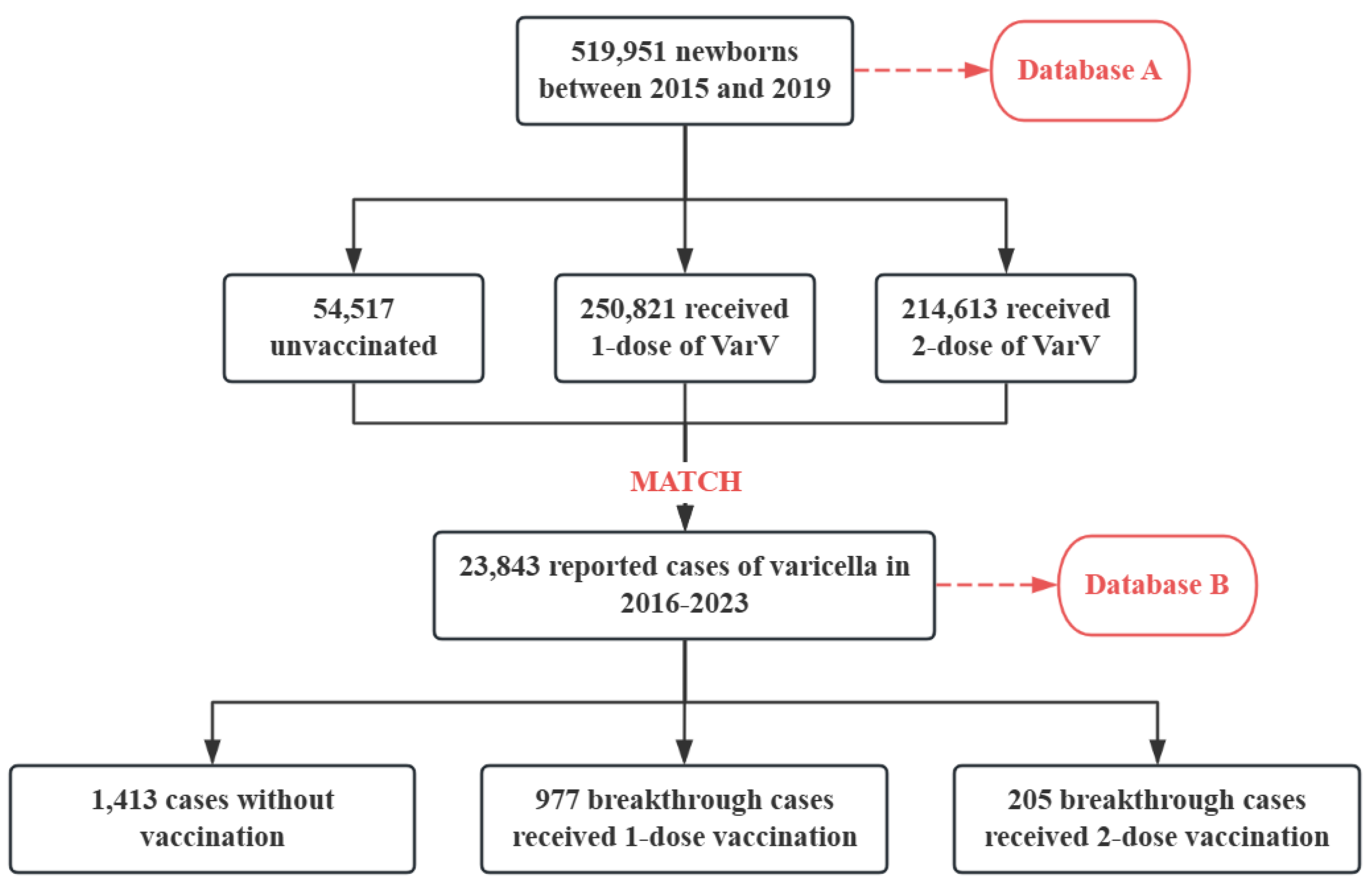
A total of 519,951 newborns in the Pudong New Area of Shanghai between 2015 and 2019, included demographic information and VarV vaccination information, were obtained from the Shanghai Immunization Information System, which called as “Database A”. Among database A, 54,517 children without varicella vaccination, 250,821 children had received 1-dose of VarV and 214,613 had received 2-dose of VarV. Additionally, 23,843 cases of varicella with onset dates ranging from 2016 to 2023 were obtained through the China Information System for Disease Control and Prevention, which called as “Database B”. Matched Database A and B based on name, gender and date of birth, a total of 1,182 breakthrough varicella cases were obtained, of which 977 cases received a 1-dose of VarV, while 205 cases received 2-dose of VarV (Figure 1).

3.2. Overall Breakthrough of Varicella Infection

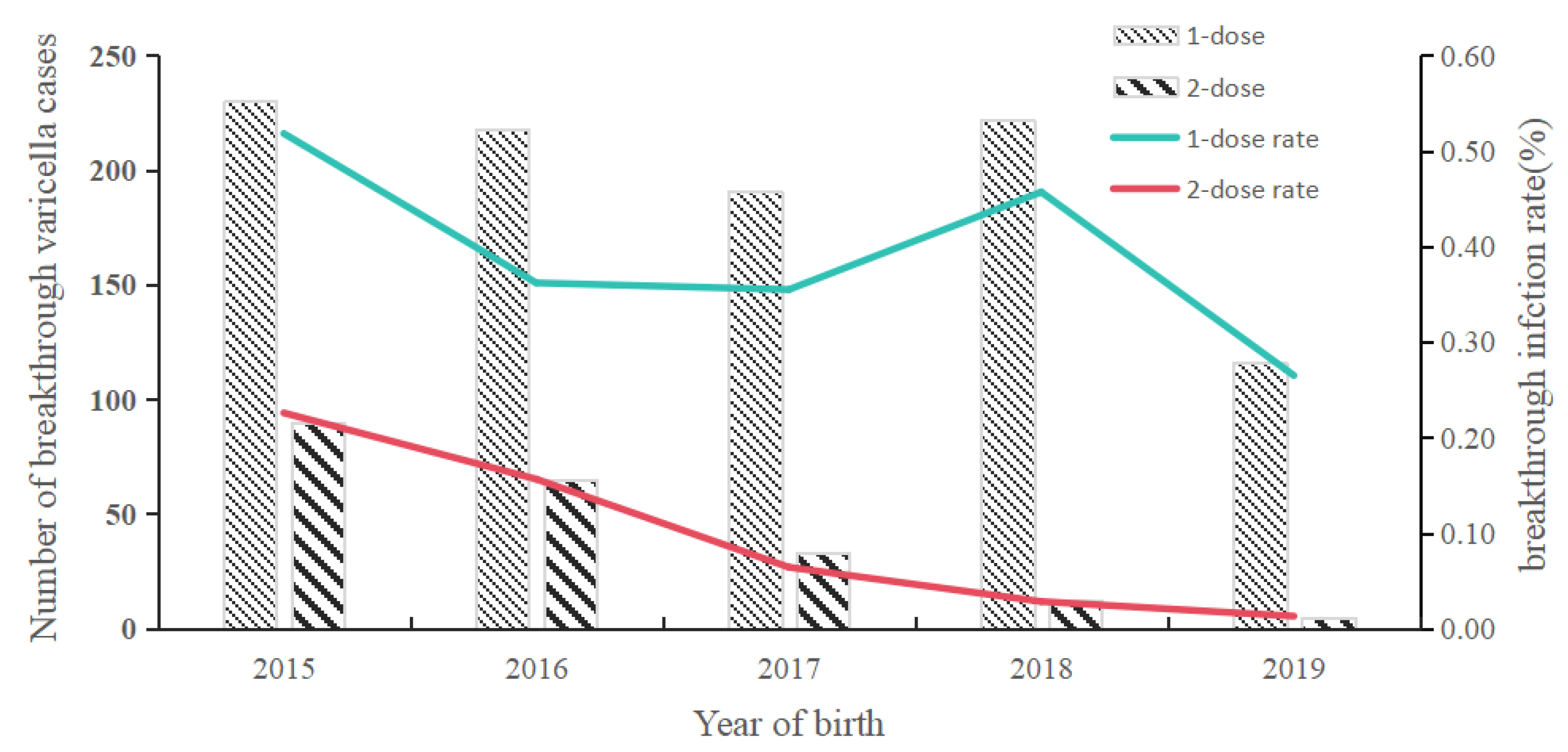
The overall rate of breakthrough varicella infections among children born between 2015 and 2019 was 0.25%, corresponding to 1,182 cases. The rate for children who received 1-dose and 2-dose VarV were 0.39% (977 cases) and 0.10% (205 cases), respectively. Specifically, the breakthrough varicella infection rates for 1-dose recipients by year of birth from 2015 to 2019 were as follow: 0.52%, 0.36%, 0.35%, 0.46%, and 0.26%. In contrast, the rates for 2-dose recipients were 0.23%, 0.16%, 0.06%, 0.03%, and 0.01% (Figure 2). In each year of birth, the 1-dose vaccinated children had a significantly higher percentage of varicella infection than the 2-dose vaccinated children (P < 0.0001). Furthermore, the infection rates for both 1-dose and the 2-dose vaccinated children demonstrated a declining trend (Figure 2).

3.3. Comparison of Basic Characteristics

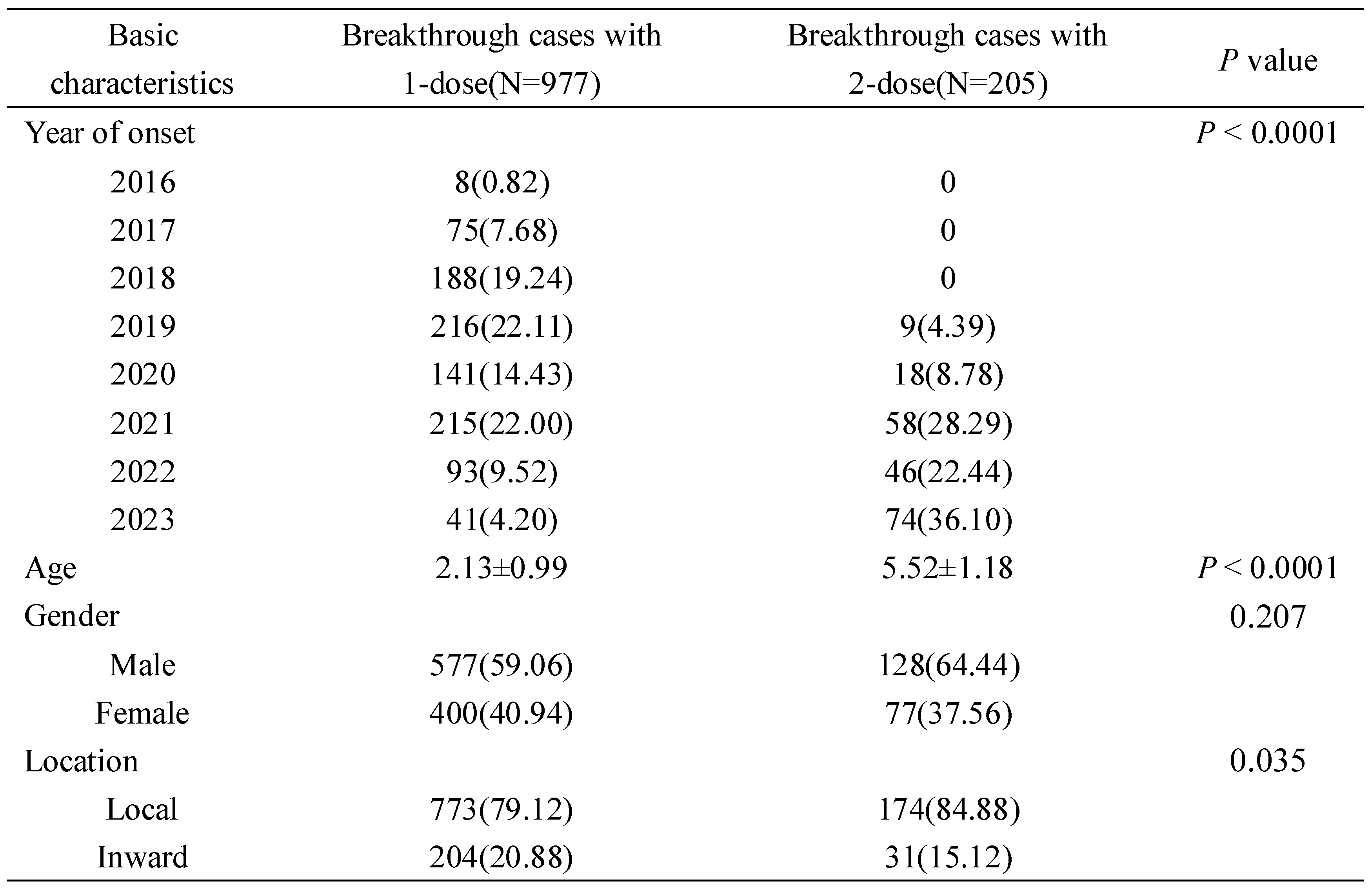
The proportion of breakthrough cases following 1-dose from 2016 to 2023 was recorded at 0.82%, 7.68%, 19.24%, 22.11%, 14.43%, 22.00%, 9.52%, and 4.20%. In contrast, the proportion of breakthrough cases following 2-dose from 2019 to 2023 was 4.39%, 8.78%, 28.29%, 22.44%, and 36.10%. The average ages of onset for breakthrough cases with 1-dose and 2-dose were 2.13 ± 0.99 years and 5.52 ± 1.18 years, respectively (P < 0.0001). The distribution of breakthrough cases by gender for the 1-dose was 59.06% male and 40.94% female, while for the 2-dose, it was 64.44% male and 37.56% female. Statistically significant differences were observed in the year of onset, age and location between breakthrough cases associated with 1-dose and those associated with 2-dose (all p < 0.05) (Table 2).
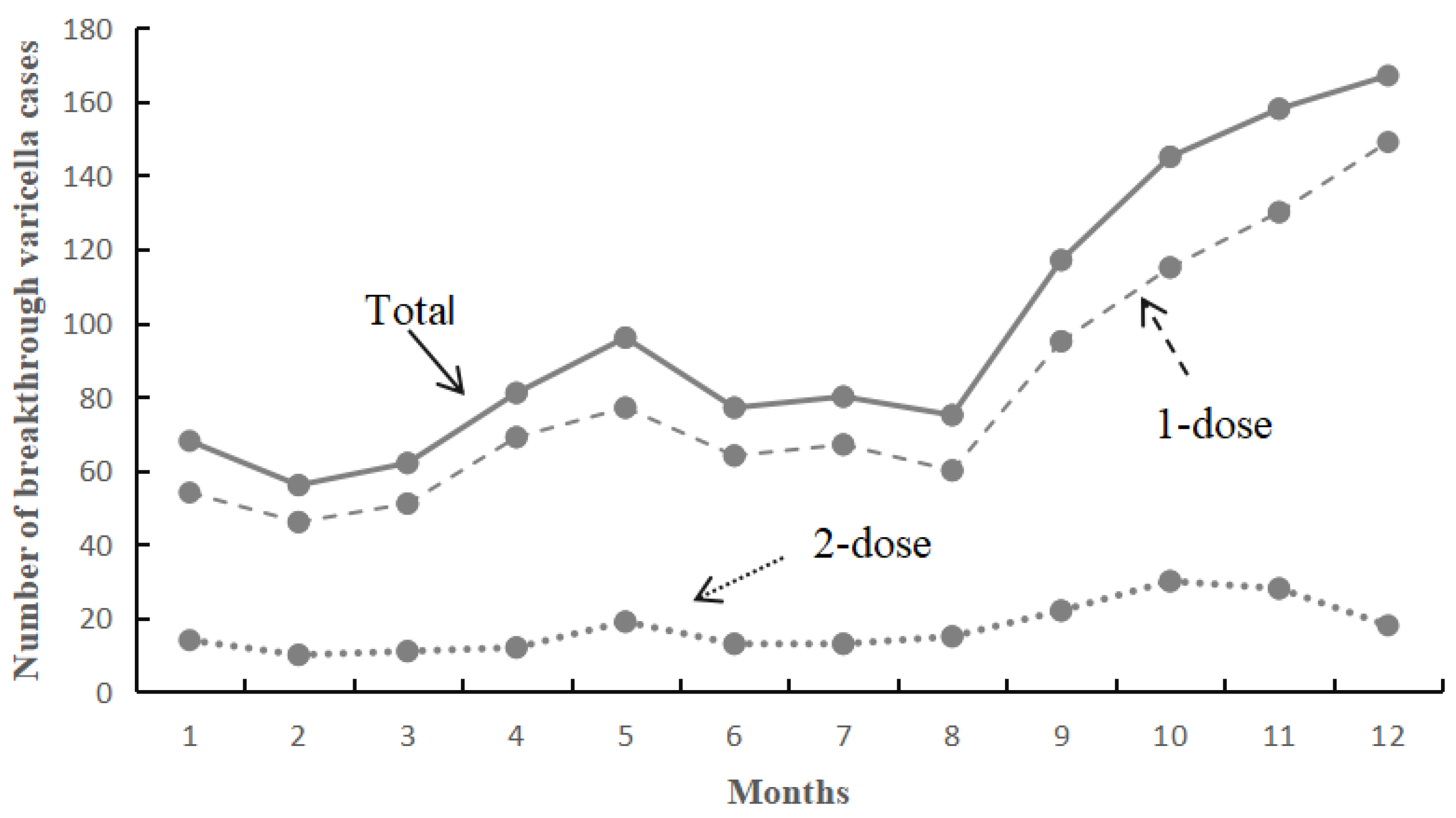
The incidence of breakthrough varicella cases among children born between 2015 and 2019 varied monthly, with reported cases ranging from 56 to 167. Specifically, the number of breakthrough cases among those who received 1-dose ranged from 46 to 149, while those who received 2-dose ranged 10 to 30. The proportion of breakthrough cases for 1-dose and 2-dose recipients from September to December was 50.05% and 47.80%, respectively (Figure 3).

3.4. Time Interval Between VarV Vaccination and Onset

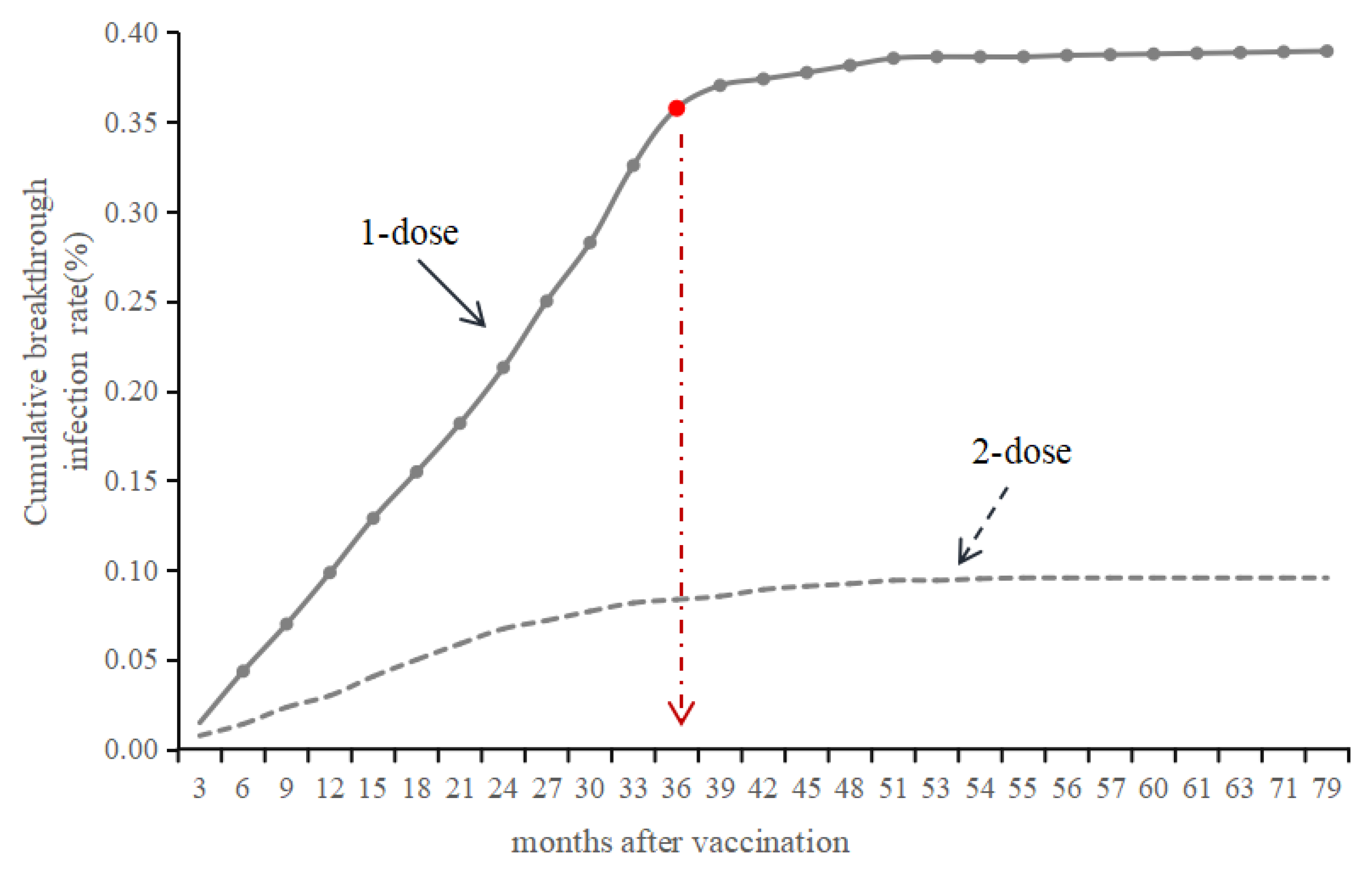
The longest interval observed between vaccination and the onset of 1,182 breakthrough varicella cases was 80.49 months, while the shortest interval was 1.49 months, with a median duration of 22.70 months. For breakthrough varicella cases following 1-dose and 2-dose vaccinations, the intervals between vaccination and onset were recorded as 1.49 to 80.49 months and 1.56 to 56.69 months, respectively. The median intervals were 23.79 months and 18.35 months. The cumulative breakthrough infection rate in 1-dose increased rapidly to 0.36 within the first 36 months, followed by a gradual increase. In contrast, the 2-dose group exhibited a slow increase to 0.08 before 36 months, after which it stabilized (Figure 4).

3.5. Vaccine Effectiveness

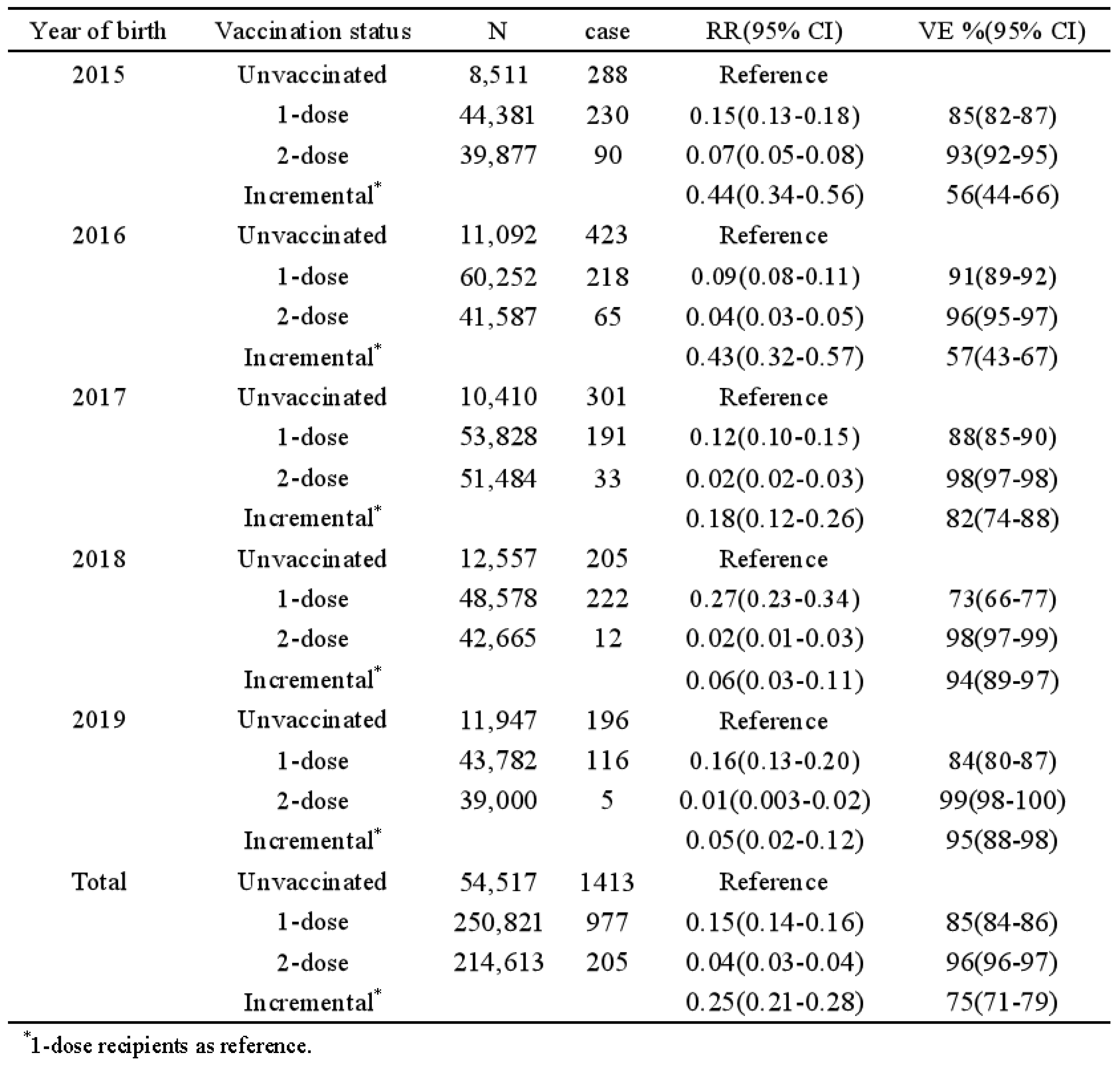
The total varicella vaccine effectiveness (VE) of 1-dose VarV was 85% (95% confidence interval: 84-86), of 2-dose was 96% (95% confidence interval: 96-97). The VE of 1-dose VarV in the five birth cohorts was lower than which of 2-dose, with a minimum value of 73% and a maximum value of 91%. The VE of 2-dose VarV was increased year by year, with a minimum of 93% and a maximum of 99%. The incremental varicella vaccine effectiveness (VE) of 2-dose varicella vaccination regimen, in comparison to the 1-dose regimen, exhibited an increase for individuals born between 2015 and 2019, rising from 56% (95% confidence interval: 44.43-65.87) to 95% (95% confidence interval: 88.16-98.02). Furthermore, the overall incremental VE of the 2-dose relative to the 1-dose was determined to be 75% (95% confidence interval: 71.49-78.91). Specifically, the incremental VE for individuals born in 2018 and 2019 was found to be 94% (95% confidence interval: 89.00-96.56) and 95% (95% confidence interval: 88.16-98.02), respectively (Table 3).

4. Discussion

Varicella is classified as a non-notifiable infectious disease in China. Since 2006, it has been incorporated into the surveillance framework for infectious diseases in Shanghai, necessitating medical institutions at all levels report case of varicella through the China Information System for Disease Control and Prevention. This study established a database of breakthrough varicella cases in Shanghai utilizing both the China Information System for Disease Control and the Shanghai Immunization Information System. The objective was to analyze the epidemiological characteristics of breakthrough varicella cases and to assess the incremental effectiveness of 2-dose varicella vaccination compared to 1-dose among Chinese children. The results indicated that the cumulative incidence of breakthrough varicella cases among children born in the Pudong New Area of Shanghai from 2015 to 2019, during the period from 2016 to 2023, was 0.25%. Furthermore, the incidence of breakthrough varicella cases in children who received one or two doses of the varicella vaccine (VarV) increased with the duration of VarV vaccination. The findings demonstrated that the 2-dose was significantly more effective than the 1-dose VarV in preventing varicella infection, with an incremental VE of 75% (confidence interval: 71.49-78.91). Additionally, the incremental VE of 2-dose among children born in 2018 and 2019 was 94% (confidence interval: 89.00-96.56) and 95% (confidence interval: 88.16-98.02), respectively.
The incidence of breakthrough varicella infections among individuals born between 2015 and 2019 has demonstrated a decline, decreasing from 0.52% to 0.26% for those receiving a single dose of varicella vaccine, and from 0.23% to 0.01% for those receiving two doses. Previous studies[22,23] have indicated that breakthrough varicella cases can occur following both 1-dose and 2-dose of VarV, with the incidence of breakthrough varicella cases being lower in individuals who received 2-dose compared to those who received 1-dose [24]. This finding aligns with the results of current study, which further suggested that the protective efficacy of 2-dose is superior to that of 1-dose. The protective effect of the varicella vaccine diminishes over time, eventually leading to breakthrough varicella cases. Research conducted in the United States had demonstrated that varicella outbreaks and breakthrough varicella cases still occurred following one dose of VarV vaccination, and indicated that even with high coverage of VarV vaccination, the protective effect was approximately 85%, which was insufficient to prevent varicella outbreaks in educational settings such as schools and kindergartens[25,26]. Consequently, it is imperative to revise the vaccination strategy for varicella in China.
The results indicated that the vaccine effectiveness (VE) of 1-dose ranged from 73%(66%–77%) to 91% (89%–92%), with a mean effectiveness of 84.2%, which is consistent with similar studies conducted in China[4]. This study was performed in a community-based environment characterized by high natural exposure and transmission rates of varicella, where exogenous exposure may contribute to a prolonged enhancement of immunity in vaccinated individuals, potentially leading to an overestimation of the efficacy of f one dose of vaccination[27]. In contrast, the VE for 2-dose ranged from 93% (92%–95%) to 99% (98%–100%) with a mean effectiveness of 96.8%. these results aligin with findings from a study conducted in the United States[28], where the one-dose VarV vaccination program was initiated in 1996, followed by the introduction of the two-dose VarV vaccination program in 2006. The first dose was administered at 12–15 months of age, while the second dose was given at 4–6 years of age[29]. The protective effect of the two-dose VarV strategy in the United States was reported to be between 94% and 98% in the United States[25]. Additionally, a study by Kauffmann and colleagues further corroborated that the two-dose VarV strategy demonstrated greater effectiveness compared to the one-dose VarV strategy in Germany[30].
This study indicated that the majority of breakthrough cases with 1-dose and 2-dose vaccinations occurred in males. It is possible that boys have greater opportunities for exposure to the virus. However, some research has demonstrated that there is no significant gender difference in varicella infection rates[31], while other studies have reported a higher incidence of varicella in females compared to males[7]. These discrepancies may be attributed to varying exposure risks associated with different genders in distinct geographical regions. Additionally, existing literature suggested that treatment bias and sample collection methods may also contribute to observed gender differences between males[32]and females, as varicella zoster virus is considered a non-gender-specific disease[33].
The incidence of breakthrough varicella cases exhibits distinct seasonal patterns, with elevated rates observed from April to June and September to December [34]. The incidence of breakthrough varicella cases among individuals who received 1-dose and 2-dose VarV was significantly higher during these months, accounting for 50.05% and 47.80%, respectively. The period from April to June and September to December coincide with the academic calendar, during which susceptible populations congregate indoors, thereby increasing the risk of infection. This phenomenon may be attributed to the clustering characteristics of susceptible individuals. Furthermore, related research indicates that varicella is more likely to manifest in winter and spring within warm tropical regions, as the climatic conditions during these seasons facilitate the proliferation and transmission of the varicella virus [35].
Several studies have indicated that the median time interval between varicella vaccination and the occurrence of breakthrough varicella cases is approximately 7 years, with the shortest interval reported being 1.5 years [22]. These intervals are notably longer than the findings of the present study, which may be attributable to factors such as the age at which vaccination was administered and the duration of observation for the study participants. Additionally, another investigation revealed that the time interval between the administration of 1-dose and the onset of varicella was 2.3 years [36], a finding that aligns closely with the results of the current study. In this study, we observed that the cumulative reported incidence of breakthrough varicella cases following 1-dose of VarV increased rapidly to 0.36 within the first 36 months, subsequently exhibiting a gradual disease. In contract, the incidence following 2-dose of VarV increased slowly to 0.08 before 36 months and then stabilized. Notably, the cumulative breakthrough infection rate in 1-dose was significantly higher than that in 2-dose, indicating that the 2-dose was much effective in delaying the onset of breakthrough varicella cases compared to the 1-dose of VarV. These findings suggest that administering a 2-dose of VarV conld potentially reduce the incidence of breakthrough varicella cases, which aligns with previous conclusions indicating that the protective effect of the in 2-dose is superior to that of the 1-dose [23,37,38]. Furthermore, the incremental VE of 56% and 57% for 2-dose in individuals born in 2015 and 2016 was considerably lower than 94% and 95% observed in those born in 2018 and 2019. This discrepancy may be partially attributed to the waning of immunity or an increased risk of exposure among older children [39] (those born in 2015–2016 were 7–8 years old at the end of 2023), which also suggests a trend of decreasing VE over time.
This study acknowledges several limitations. The incidence of varicella breakthrough cases across various birth cohorts was only monitored until the conclusion of 2023. Consequently, the cumulative rates at different intervals post-vaccination were not comprehensively documented. Additionally, some breakthrough varicella cases exhibited varying clinical symptoms. Mild or atypical infections may not prompt individuals to seek medical attention, which could result in an underestimation of the incidence of breakthrough varicella cases.

5. Conclusion

In conclusion, the incidence of breakthrough varicella infections among individuals who received 2-dose vaccination was significantly lower than that observed in those who received 1-dose varicella vaccine. Additionally, the effectiveness of the 2-dose vaccine exceeded 90% in comparison to the 1-dose, indicating that the 2-dose vaccination schedule provides substantially greater protection than the 1-dose vaccination schedule. Therefore, it is recommended that the expanded 2-dose regimen of the varicella vaccine be advocated for the prevention of varicella infections among children in China.
Author’s contribution: M.L. and C.X. designed the study protocol; T.Y., P.D. and C.Y. collected the data; M.L. and T.Y. completed data analysis and wrote the original draft; L.Y. and C.X. were responsible for funding, resource, supervision and writing-reviewing, and editing. All authors have read and agreed to the published version of the manuscript.

Funding

This research was supported by the Key Discipline Program of Pudong New Area Health System [Number: PWZxk2022-25], Shanghai Three-year Action Plan to Strengthen the Construction of Public Health System Excellent Academic Leader Project (2023–2025)[Number GWVI-11.2-XD08], Shanghai Pudong New Area Science and Technology Development Fund Project [Number PKJ2023-Y34] and Shanghai Pudong New Area Eagle Talent Program [Number PDCDC-XY-2024-09].

Informed Consent Statement

Not applicable. Case data were collected as part of a routine work and analyzed to guide public health programming.

Data Availability Statement

Restrictions apply to the availability of these data, which were collected from the Shanghai Pudong and National Information System. Data are available from the authors with permission from the Shanghai Pudong New Area Center for Disease Control and Prevention.

Conflicts of Interest

The findings and conclusions in this report are those of the authors and do not necessarily represent the official position of the Chinese Center for Disease Control and Prevention. The authors declare no conflicts of interest.

References

  1. Gershon AA. Is chickenpox so bad, what do we know about immunity to varicella zoster virus, and what does it tell us about the future? J Infect. 2017;74 Suppl 1(Suppl 1):S27-S33. [CrossRef]
  2. Xiu S, Xu Z, Wang X, Zhang L, Wang Q, Yang M, Shen Y. Varicella vaccine effectiveness evaluation in Wuxi, China: A retrospective cohort study. Epidemiol Infect. 2024;152:e105. [CrossRef]
  3. Hu P, Yang F, Li X, Wang Y, Xiao T, Li H, Wang W, Guan J, Li S. Effectiveness of one-dose versus two-dose varicella vaccine in children in Qingdao, China: a matched case-control study. Hum Vaccin Immunother. 2021;17(12):5311-5. [CrossRef]
  4. Xu Y, Liu Y, Zhang X, Zhang X, Du J, Cai Y, Wang J, Che X, Gu W, Jiang W, Chen J. Epidemiology of varicella and effectiveness of varicella vaccine in Hangzhou, China, 2019. Hum Vaccin Immunother. 2021;17(1):211-6. [CrossRef]
  5. Kawamura Y, Hattori F, Higashimoto Y, Kozawa K, Yoshikawa T. Evaluation of varicella vaccine effectiveness during outbreaks in schools or nurseries by cross-sectional study. Vaccine. 2021;39(21):2901-5. [CrossRef]
  6. Varicella and herpes zoster vaccines: WHO position paper, June 2014. Wkly Epidemiol Rec. 2014;89(25):265-87.
  7. Huang J, Wu Y, Wang M, Jiang J, Zhu Y, Kumar R, Lin S. The global disease burden of varicella-zoster virus infection from 1990 to 2019. J Med Virol. 2022;94(6):2736-46. [CrossRef]
  8. Lieu TA, Cochi SL, Black SB, Halloran ME, Shinefield HR, Holmes SJ, Wharton M, Washington AE. Cost-effectiveness of a routine varicella vaccination program for US children. JAMA. 1994;271(5):375-81.
  9. Lenne X, Diez Domingo J, Gil A, Ridao M, Lluch JA, Dervaux B. Economic evaluation of varicella vaccination in Spain: results from a dynamic model. Vaccine. 2006;24(47-48):6980-9. [CrossRef]
  10. Pawaskar M, Meroc E, Samant S, Flem E, Bencina G, Riera-Montes M, Heininger U. Economic burden of varicella in Europe in the absence of universal varicella vaccination. BMC Public Health. 2021;21(1):2312. [CrossRef]
  11. Zha WT, Pang FR, Zhou N, Wu B, Liu Y, Du YB, Hong XQ, Lv Y. Research about the optimal strategies for prevention and control of varicella outbreak in a school in a central city of China: based on an SEIR dynamic model. Epidemiol Infect. 2020;148:e56. [CrossRef]
  12. Leung J, Harpaz R. Impact of the Maturing Varicella Vaccination Program on Varicella and Related Outcomes in the United States: 1994-2012. J Pediatric Infect Dis Soc. 2016;5(4):395-402. [CrossRef]
  13. Scotta MC, Paternina-de la Ossa R, Lumertz MS, Jones MH, Mattiello R, Pinto LA. Early impact of universal varicella vaccination on childhood varicella and herpes zoster hospitalizations in Brazil. Vaccine. 2018;36(2):280-4. [CrossRef]
  14. Wang Z, Yang H, Li K, Zhang A, Feng Z, Seward JF, Bialek SR, Wang C. Single-dose varicella vaccine effectiveness in school settings in China. Vaccine. 2013;31(37):3834-8. [CrossRef]
  15. Pan X, Shu M, Ma R, Fang T, Dong H, Sun Y, Xu G. Varicella breakthrough infection and effectiveness of 2-dose varicella vaccine in China. Vaccine. 2018;36(37):5665-70. [CrossRef]
  16. Chaves SS, Gargiullo P, Zhang JX, Civen R, Guris D, Mascola L, Seward JF. Loss of vaccine-induced immunity to varicella over time. N Engl J Med. 2007;356(11):1121-9. [CrossRef]
  17. Leung J, Broder KR, Marin M. Severe varicella in persons vaccinated with varicella vaccine (breakthrough varicella): a systematic literature review. Expert Rev Vaccines. 2017;16(4):391-400. [CrossRef]
  18. Suo L, Lu L, Wang Q, Yang F, Wang X, Pang X, Marin M, Wang C. Varicella outbreak in a highly-vaccinated school population in Beijing, China during the voluntary two-dose era. Vaccine. 2017;35(34):4368-73. [CrossRef]
  19. Vitale F, Amodio E. Evaluation of varicella vaccine effectiveness as public health tool for increasing scientific evidence and improving vaccination programs. J Pediatr (Rio J). 2020;96(6):670-2. [CrossRef]
  20. Azzari C, Baldo V, Giuffrida S, Gani R, O'Brien E, Alimenti C, Daniels VJ, Wolfson LJ. The Cost-Effectiveness of Universal Varicella Vaccination in Italy: A Model-Based Assessment of Vaccination Strategies. Clinicoecon Outcomes Res. 2020;12:273-83. [CrossRef]
  21. Wu QS, Wang X, Liu JY, Chen YF, Zhou Q, Wang Y, Sha JD, Xuan ZL, Zhang LW, Yan L, Hu Y. Varicella outbreak trends in school settings during the voluntary single-dose vaccine era from 2006 to 2017 in Shanghai, China. Int J Infect Dis. 2019;89:72-8. [CrossRef]
  22. Liu B, Li X, Yuan L, Sun Q, Fan J, Jing Y, Meng S. Analysis on the epidemiological characteristics of varicella and breakthrough case from 2014 to 2022 in Qingyang City. Hum Vaccin Immunother. 2023;19(2):2224075. [CrossRef]
  23. Shu M, Zhang D, Ma R, Yang T, Pan X. Long-term vaccine efficacy of a 2-dose varicella vaccine in China from 2011 to 2021: A retrospective observational study. Front Public Health. 2022;10:1039537. [CrossRef]
  24. Zhu S, Zeng F, Xia L, He H, Zhang J. Incidence rate of breakthrough varicella observed in healthy children after 1 or 2 doses of varicella vaccine: Results from a meta-analysis. Am J Infect Control. 2018;46(1):e1-e7. [CrossRef]
  25. Bonanni P, Zanobini P. Universal and targeted varicella vaccination. Lancet Infect Dis. 2021;21(1):11-2. [CrossRef]
  26. Lachiewicz AM, Srinivas ML. Varicella-zoster virus post-exposure management and prophylaxis: A review. Prev Med Rep. 2019;16:101016. [CrossRef]
  27. Yin M, Xu X, Liang Y, Ni J. Effectiveness, immunogenicity and safety of one vs. two-dose varicella vaccination:a meta-analysis. Expert Rev Vaccines. 2018;17(4):351-62. [CrossRef]
  28. Shapiro ED, Vazquez M, Esposito D, Holabird N, Steinberg SP, Dziura J, LaRussa PS, Gershon AA. Effectiveness of 2 doses of varicella vaccine in children. J Infect Dis. 2011;203(3):312-5. [CrossRef]
  29. Lopez AS, Zhang J, Marin M. Epidemiology of Varicella During the 2-Dose Varicella Vaccination Program - United States, 2005-2014. MMWR Morb Mortal Wkly Rep. 2016;65(34):902-5. [CrossRef]
  30. Kauffmann F, Bechini A, Bonanni P, Casabona G, Wutzler P. Varicella vaccination in Italy and Germany - different routes to success: a systematic review. Expert Rev Vaccines. 2020;19(9):843-69. [CrossRef]
  31. Iftimi A, Montes F, Santiyan AM, Martinez-Ruiz F. Space-time airborne disease mapping applied to detect specific behaviour of varicella in Valencia, Spain. Spat Spatiotemporal Epidemiol. 2015;14-15:33-44. [CrossRef]
  32. Koshy E, Mengting L, Kumar H, Jianbo W. Epidemiology, treatment and prevention of herpes zoster: A comprehensive review. Indian J Dermatol Venereol Leprol. 2018;84(3):251-62. [CrossRef]
  33. Johnson RW, Wasner G, Saddier P, Baron R. Herpes zoster and postherpetic neuralgia: optimizing management in the elderly patient. Drugs Aging. 2008;25(12):991-1006. [CrossRef]
  34. Sumi A. Role of temperature in reported chickenpox cases in northern European countries: Denmark and Finland. BMC Res Notes. 2018;11(1):377. [CrossRef]
  35. Gershon AA, Gershon MD, Breuer J, Levin MJ, Oaklander AL, Griffiths PD. Advances in the understanding of the pathogenesis and epidemiology of herpes zoster. J Clin Virol. 2010;48 Suppl 1(Suppl 1):S2-7. [CrossRef]
  36. Huang WC, Huang LM, Chang IS, Tsai FY, Chang LY. Varicella breakthrough infection and vaccine effectiveness in Taiwan. Vaccine. 2011;29(15):2756-60. [CrossRef]
  37. Shapiro ED, Marin M. The Effectiveness of Varicella Vaccine: 25 Years of Postlicensure Experience in the United States. J Infect Dis. 2022;226(Suppl 4):S425-S30. [CrossRef]
  38. Shi L, Lu J, Sun X, Li Z, Zhang L, Lu Y, Yao Y. Impact of Varicella Immunization and Public Health and Social Measures on Varicella Incidence: Insights from Surveillance Data in Shanghai, 2013-2022. Vaccines (Basel). 2023;11(11). [CrossRef]
  39. Bonanni P, Gershon A, Gershon M, Kulcsar A, Papaevangelou V, Rentier B, Sadzot-Delvaux C, Usonis V, Vesikari T, Weil-Olivier C, de Winter P, Wutzler P. Primary versus secondary failure after varicella vaccination: implications for interval between 2 doses. Pediatr Infect Dis J. 2013;32(7):e305-13. [CrossRef]

Table 2. Comparison of basic characteristics between breakthrough cases with 1-dose and 2-dose varicella vaccination among the children birth of 2015-2019.
Preprints 143889 i001
Table 3. The overall and incremental vaccine effectiveness of 2-dose varicella vaccination among the children birth of 2015-2019.
Preprints 143889 i002
Figure 1. Flowchart for breakthrough varicella cases inclusion.
Preprints 143889 g001
Figure 2. The number of breakthrough varicella cases and breakthrough infection rate among different year of birth.
Preprints 143889 g002
Figure 3. The number of breakthrough varicella cases in different month of onset among the children.
Preprints 143889 g003
Figure 4. The time interval between VarV vaccination and onset among the children birth of 2015-2019.
Preprints 143889 g004
Disclaimer/Publisher’s Note: The statements, opinions and data contained in all publications are solely those of the individual author(s) and contributor(s) and not of MDPI and/or the editor(s). MDPI and/or the editor(s) disclaim responsibility for any injury to people or property resulting from any ideas, methods, instructions or products referred to in the content.
Copyright: This open access article is published under a Creative Commons CC BY 4.0 license, which permit the free download, distribution, and reuse, provided that the author and preprint are cited in any reuse.
Prerpints.org logo

Preprints.org is a free preprint server supported by MDPI in Basel, Switzerland.

Subscribe

Disclaimer

Terms of Use

Privacy Policy

Privacy Settings

© 2025 MDPI (Basel, Switzerland) unless otherwise stated